5 feminist books to read.

A Vindication Of The Rights Of Women by Mary Wollstonecraft.
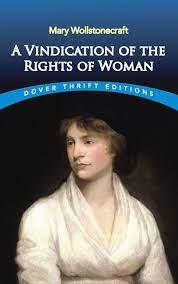
Mary Wollstonecraft’s feminist essay A Vindication of the Rights of Women was published in 1792 as a book-length feminist essay. A Vindication of Women’s Rights campaigned for female equality, especially in the field of education. Wollstonecraft criticised the cultivation of conventional feminine qualities like as submission and service, arguing that women who were not well-educated could not be excellent mothers, spouses, or household administrators. She said that women were supposed to devote too much time to maintaining their delicate look and soft attitude, forsaking brains for beauty and transforming themselves into flower-like playthings for males.

Wollstonecraft addressed themes such as the need of educating women equally, treating women with respect, and giving women with the appropriate training to be excellent spouses and mothers, as well as educated companions for their husbands, in thirteen chapters.Women spend many of their initial years of life accumulating a scattering of achievements, while body and mental strength are sacrificed to libertine ideas of beauty… Can they run a family with prudence or look after the babies they bring into the world?How could women educate, raise children, and maintain a household if they were only concerned with their personal looks and minor achievements such as speaking French fluently, playing the piano, and sketching, Wollstonecraft argued? Such achievements made a woman appealing to a man as a source of entertainment, but not as an equal partner.Although Wollstonecraft recognised that raising a family would be the primary responsibility of many women at the time, she insisted that a husband and wife whose relationship was founded on reason and equality would parent happier and more well-rounded children than families governed by strict discipline and parental inequality. To that aim, she suggested a national education system in which boys and girls would be taught together and all classes would have access to education. Wollstonecraft warned against false sensibility, while writing during the time of Romanticism, a movement renowned for emphasising sensibility/feeling above sense/rational reasoning.

A Room of One’s Own by Virginia Woolf.
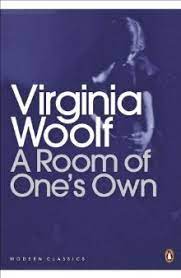
Virginia Woolf’s A Room of One’s Own is a long essay. The article, which was first published on October 24, 1929, was based on a series of lectures she gave in October 1928 at Newnham College and Girton College, two women’s institutions at Cambridge University. Despite the fact that this long essay uses a fictitious narrator and narrative to investigate women as authors and characters in fiction, the manuscript for the Women and Fiction lecture series, and therefore the essay, is deemed nonfiction. The essay is regarded as a feminist text, and it is notable for its argument for a literal and figurative place for women authors in a patriarchal literary world.

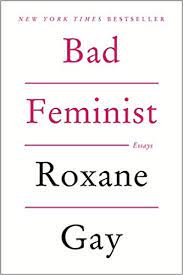
Bad Feminist – Roxane Gay.
How could women educate, raise children, and maintain a household if they were only concerned with their personal looks and minor achievements such as speaking French fluently, playing the piano, and sketching, Wollstonecraft argued? Such achievements made a woman appealing to a man as a source of entertainment, but not as an equal partner.

Sister Outsider by Audre Lorde
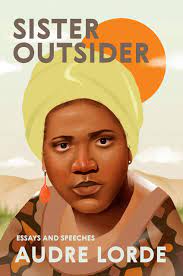
Audre Lorde’s literary and philosophical personae are brought to life in this collection of fifteen articles published between 1976 and 1984. These articles delve into and illustrate Lorde’s intellectual growth, as well as her long-standing worries about how to increase empowerment among minority women authors and the critical need to define difference—difference in terms of sex, ethnicity, and economic position. Sister Outsider is a title taken from her poetry book The Black Unicorn (1978). Sister Outsider’s poetry and articles emphasise Lorde’s recurring subject of continuity, notably the geographical and intellectual relationship.

The Handmaid’s Tale by Margaret Atwood
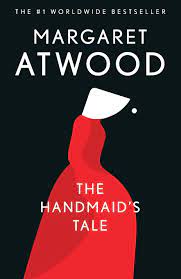
In the Republic of Gilead, Offred is a Handmaid. She is permitted to leave the Commander and his wife’s house once a day to stroll to the local grocery market, where the signs are now images rather than words because women are no longer allowed to read. Because, in an era of diminishing births, Offred and the other Handmaids are valued only if their ovaries are viable, she must lie on her back once a month and hope that the Commander gets her pregnant. Offred recalls the years when she lived with and made love to her husband, Luke; when she played with and protected her daughter; and when she had a career, her own money, and knowledge. But that’s all gone now.
About that author- Oscar Wilde

Oscar Wilde, a writer and a dramatist, this name noticeably sits on the plays that he wrote in the last decade of his life. 

Oscar Fingal O’Flahertie Wills Wilde, was an Irish poet and a playwright born in 1854 in Dublin, Ireland. Oscar’s father, William Wilde was Ireland’s foremost ear and eye surgeon, his mother was an Irish poet who wrote under the pseudonym Speranza which is “hope” in Italian. Wilde was homeschooled till he was 9 and learnt German and French. Later he went to the  Portora Royal School with his brother Willie. At school, Wilde was exceptional, academically and was also popular among his peers for his funny stories.

After attending the Portora School Wilde got into Trinity College, Dublin through multiple scholarships and later to Magdalen College, Oxford.

During his time in Magdalen College he wrote a poem Ravenna which won the Newdigate Prize.

Here is an excerpt from Ravenna

“Taken from life where life and love were new,

He lies beneath God’s seamless veil of blue;

Tall lance-like reeds wave sadly o’er his head,

And oleanders bloom to deeper red,

Where his bright youth flowed crimson on the ground”

He was highly inspired by the likes of John Ruskin, a writer and philosopher of the Victorian era  and Walter Pater, who was a writer and an art critic, just like many others in his time. 

Wilde had established himself in the world of literature in the early 1880s.

In 1881, he published his first book “Poems” , which received quite jumbled reviews. A periodical called “Punch” was at the forefront of this criticism and made him out to be a caricature. 

After a few years of the release of “Poems’ ‘, he went to America to deliver a few lectures and was more accepted by the American readers.

Wilde got married in 1884, to Constance Lloyd and gave birth to two children Cyril and Vyvyan.

He became the editor of Woman’s World,  a fashion magazine in 1887. During his time as an editor he published The Happy Prince and Other Tales (1888), which is a collection of stories for children though it consists of some stories that do not pertain to the young readers. The Happy Prince and Other Tales received positive reviews overall and Wilde was even validated by Walter Pater, who wrote to him praising the book.

In 1889, after giving up the editorship at the Woman’s World Wilde started working on The Picture of Dorian Gray, which is a philosophical novel with witty dialogues, wilde was able to blend gothic themes with French decadence. Despite all his great, articulately written novels his success is attributed to his dramas. He wrote over 10 plays in his lifetime, some of the most famous being Lady Windermere’s Fan (1893), A Woman of No Importance (1893), An Ideal Husband (1899). These plays were all societal comedies, most of them but one Salomé , which offended a lot of people for it’s violent acts and the representation of biblical characters.

After the essay “The Decay of Lying” was published in 1889 , Wilde was accused of indulging in sodomy and was found guilty 4 years later. He was released in 1897, and had gone bankrupt. A year after his release, he died due to acute meningitis followed by an ear infection.

About that author- Virginia Woolf

A woman must have money and a room of her own if she is to write fiction. 

Adeline Virginia Stephen, popularly known as Virginia woolf was born in 1882 in London, England. Her father was a famous literary figure and her mother was someone with artistic connections. Virginia grew up with 3 of her own siblings and 3 half siblings playing and bickering with them. 

In 1891, Virginia and her siblings started Hyde Park Gate News recounting the shenanigans of the Stephen family. Virginia ran this paper until 1895, when her mother died. 2 years later her half sister, Stella Duckworth died as  well. This was also the year when Virginia started keeping a diary. In 1904, her father passed away, after which the Stephen siblings moved away from their half siblings and started living on their own. They would host weekly gatherings. In 1906, her brother Thoby died of typhoid fever, which made Virginia lose her brother to a disease and then later she “lost” Vanessa when she got engaged. 

Virginia was secretly writing “Reminiscences” in which she describes the loss of her mother. This was published in 1908. She had seen a lot of death in her family and was almost always grieving for one of them.

In 1912, Virginia married Leanord Woolf and continued working on her first novel.

her novel the voyage out involves the protagonist going on a trip to south America and finds out about herself. A lot of characters in her novels are based on real life people, mostly her siblings. Her novel “the voyage out” was published in 1915 .

Virginia attempted to kill herself in 1913, because she felt unloved by her sister and her husband and was consumed with self doubt, feeling that she is not a good enough writer. Later in life, she never encountered such thoughts.

In 1917, the wool’s bought a printing press and the same year jointly published Two Stories.

Woolf was a very skilled and innovative writer of the 20th century.  Mrs Dalloway, one of her most famous novels published in 1925, revolves around a day in the life of Clarissa Dalloway. She goes around the city in the morning reminiscing about her youth and pondering over her choices.

In 1927 she published To the Lighthouse , about a family’s visit to Scotland.

Woolf experimented with a lot of genres in her lifetime and her writing is characterized by absolutely fine and also fluid narrative. Her writing style is quite modernist, meaning a style of writing which is characterized by “self conscious  breaks with traditional ways of writing”.

Woolf published a novel Between the Acts in 1941 and received good reviews but despite that she felt that this novel was not enough considering at that time England was at the brink of invasion. This rendered her depressed and unable to write. The thoughts she had encountered during her first suicide attempt all came back to her.

in march, 1941 she walked behind a monk’s house, filled her pockets with stones and drowned herself. Her novel Between the Acts was published posthumously later that same year. 

About that author- Emily Dickinson

One of the most prominent 19th century poet, who sharpened her skill with self reflection and seclusion and made such a huge impact in literature

Emily Elizabeth Dickinson born in 1830, in Amherst, Massachusetts, U.S. her father Edward Dickinson was a Whig lawyer and her mother was a docile housekeeper. Her parents were loving but strict with their 3 children. So Emily and her siblings Austin and Lavinia got closer. The 2 sisters never got married and stayed at home.

Emily was a well behaved, docile little girl just like anyone would expect a 19th century girl to be like. All the siblings went to the same school where Emily excelled academically and was particularly good in music and composition and she also played the piano. 

Emily’s family was highly religious and she grew up with religious faith all around her household and it inspired some of her work as well. Contrary to her family’s beliefs, Emily herself was not particularly religious and was the only member from her family who did not join Amherst’s First Congregational Church.

Dickinson was introduced to the works of  William Wordsworth,  Ralph Waldo Emerson by one of her father’s friends Benjamin Franklin Newton, who she also talks about in one of her poems.

It was during her late teens when Dickinson started writing poetry consistently. And later her poems took the form of letters assorted with a little bit of humor which she sent to her brother and her friends, one of whom was married to Austin. She was especially close with Susan Gilbert, her brother’s wife and sent more than 300 letters to her. Susan was very supportive of Dickinson’s work and was a very dear friend.

Her poems also possessed a sense of alienation and seclusion as she faced loss of friends in her life. 

As time passed Emily withdrew to herself and became isolated from the outside world. This was because of her mother’s illness and someone had to stay with her at all times. During this time she found comfort in reading and writing. In 1858, she started rewriting her previously written poems. Between 1858 and 1865 she wrote around 800 poems, which no one was aware of until after her death. These are the works that Dickinson is most famous for.

Dickinson’s work possessed a certain melancholy to it, the kind that can also be seen in Sylvia Plath’s work, which shows that Plath was inspired by Dickinson. Her poems mostly revolved around death, which for some weird reason she seemed aggressive, self reflection and immortality. Her poems have been punctuated with dashes that critics are still not sure as to why they were used by the poet.

The last few years of Emily’s life were extremely tough for the Dickinsons; one death followed another. In an 1884 poem she wrote “The Dyings have been too deep for me, and before I could raise my Heart from one, another has come.” In 1886 she died, her physician gave the cause of her death as Bright’s disease. Before her death she asked her sister Lavinia to burn all her poems. Lavinia found 1800 poems after her sister’s death. Her first volume of poems was published four years after her death and Thomas H. Johnson published Dickinson’s Complete Poems in 1955.   

About that author- Edgar Allan Poe

Edgar Allan Poe established his name in literature majorly as a short story writer and poems with his great command in writing. He is also considered as the architect of the modern short story. Edgar Allan Poe, often discussed through his writing which was usually in the horror genre.

Early Life 

Edgar Allan Poe was born in 1809 in Boston, Massachusetts, U.S. his parents were both actors. He was very young when he lost both his parents and was then taken care of by John Allan and his wife. In 1824 Poe got into the University of Virginia and was doing well academically but had to leave due to financial stress. 

Early career 

After living with Allan for sometime Poe went to Boston and published a collection of poems Tamerlane, and Other Poems in 1827. He also was forced to join the army, because of his poverty. 

He published his next collection of poetry Al Aaraaf, Tamerlane, and Minor Poems in 1829. Both of the collections that were published did not receive much attention. The same year Poe’s father helped him secure him an appointment at the U.S. Military Academy at West Point.

About 2 years later Poe moved to New York  , where he published another collection of his works, Poems.

He later went back to Baltimore to his aunt and began writing stories. His stories were getting published in newsletters, he also won a 50 USD cash prize for one of his short stories MS. Found in a Bottle involving an unnamed narrator who sails a ship and encounters a bunch of terrifying situations along his journey.

Poe was offered the position of an editor at Southern Literary Messenger in Richmond where he married his 13 year old cousin, which is bizarre but it was 1836. 

Poe established himself as a fine literary critic over the years although his writing did not grab people’s eyes until the late 1930s. 

Later Years 

His career was going well but he was still not earning enough, his jobs were not getting him enough money so he went to New York again, where he was often seen drinking. In 1838, he published The Narrative of Arthur Gordon Pym, the only complete novel by him.

A year later, he was the editor of Burton’s Gentleman’s Magazine in Philadelphia and after that he was the editor of Broadway Journal in New York City. While editing in Philadelphia and New York he published several stories like Broadway Journal in New York City. which was published in Burton’s Gentleman’s Magazine while he was editing there, Burton’s Gentleman’s Magazine, his first detective story published in 1842 in Graham’s magazine.

Poe’s work grabbed national attention after the publishing of his poem The Raven which led him to become an editor of the Broadway Journal. Virginia, Poe’s wife passed away due to tuberculosis in 1847 after which he was involved romantically with multiple women. 

Poe moved to Baltimore in 1849, where one morning Poe was discovered lying, almost unconscious and a few days later, he died. The cause of his death is still not known  

5 spooky books to read this fall.

Since it is October, it is time for some spooky reads to make this month a little more exciting.

Here are 5 books to read, to satisfy your spooky soul.

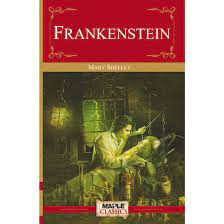
  • Frankenstein by Mary Shelley:

The  Frankenstein portrays the narrative of Victor Frankenstein, a brilliant scientist who triumphs in giving life to a creature he created. However, this is not the ideal specimen he had envisioned, but rather a repulsive creature despised by Victor and mankind in general. The Monster seeks vengeance by murdering and terrorising others.

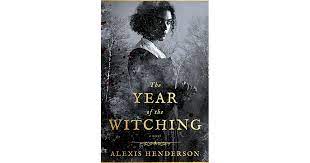
  • The Year of the Witching by Alexis Henderson:

Immanuelle Moore’s entire existence is blasphemy in Bethel, where the Prophet’s word is law. Immanuelle does her best to worship the Father, observe Holy Protocol, and live a life of submission, devotion, and absolute conformity, much like the other women in the settlement, because her mother’s union with an outsider of a different race has brought shame to her once-proud family. A accident, however, leads her into the forbidden Darkwood that surrounds Bethel, where the first prophet once pursued and killed four formidable witches. Their ghosts are still present, and they bestow upon Immanuelle a gift: the journal of her deceased mother, who Immanuelle learns once sought refuge.Immanuelle is fascinated by the mysteries revealed in the journal, but she can’t comprehend how her mother could have mingled with the witches. However, when she learns more about the Church and its history, she understands Bethel’s ultimate threat is its own darkness. And she realises that if Bethel is going to change, it has to start with her.

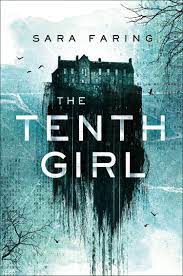
  • The Tenth Girl by Sara Faring:

An isolated finishing school stands at the very southern tip of South America. According to legend, people who settle on the land will be cursed. However, for Mavi, a fiery Buenos Aires native fleeing the military government that murdered her mother, it represents an opportunity to start a new life as a young teacher to Argentina’s finest girls.Despite cautions not to wander at night, threats from an intriguing young man, and stories of mysterious Others, Mavi attempts to embrace the weirdness of the enormous home. However, one of Mavi’s 10 pupils has gone missing, and when students and instructors alike begin acting possessed, the powers haunting this unholy cliff will no longer be overlooked. One of these ghosts is guarding a secret.

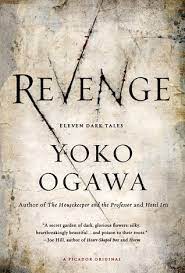
  • Revenge by Yōko Ogawa,  Stephen Snyder (Translator):

After moving into a new flat, an aspiring writer discovers that her landlord has murdered her husband. Years later, the writer’s stepson thinks on his stepmother’s bizarre anecdotes. Meanwhile, a surgeon’s boyfriend threatens to kill him unless he divorces his wife. The surgeon, however, will come across another exceptional woman, a cabaret singer whose heart beats delicately outside of her body, before she can carry out her crime of passion. When the surgeon promises to fix her ailment, however, he piques the interest of another guy who wants to keep her heart in a custom-tailored bag. Murderers and mourners, mothers and children, lovers and bystanders—their destinies intersect in a darkly beautiful web from which none of them can escape. Yoko Ogawa’s Revenge weaves a macabre tapestry of death—and the afterlife of the living—that is macabre, fiendishly brilliant, and tinged with the occult.

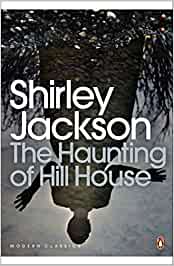
  • The Haunting of Hill House by Shirley Jackson,  Laura Miller (Introduction):

It tells the storey of four seekers who arrive at Hill House, a famously hostile pile: Dr. Montague, an occult expert in search of strong evidence of a “haunting”; Theodora, the lively assistant; Eleanor, a friendless, vulnerable young woman well-versed in poltergeists; and Luke, the future heir of Hill House. Their stay seemed to be destined to be nothing more than a scary experience with unexplainable events at first. Hill House, on the other hand, is gathering its powers and will soon choose one to claim as its own.

Mcaffeine Neem Face Wash

Mcaffeine Neem Face Wash Cleanser With Argan Oil & Vitamin E For Men And Women – 150 ml https://www.amazon.in/dp/B071X49GR9/ref=cm_sw_r_apan_glt_fabc_9B6RQWH965EW0W12D2T2

Factors used in this face wash are Caffeine, Neem, Argan Painting and Vitamin E. These all factor are skin-friendly. They not only clean your skin but also secure your skin. It’s extremely delicate to the skin, makes the skin smoother and vigour.

Greenberry Organics Detox activated Charcoal Face Wash

Greenberry Organics Detox activated Charcoal face wash for anti-pollution Oil control and anti-acne with the goodness of Tea tree, Mulberry and Grapefruit combo with Bio active Intense Night cream Unisex (100ml + 50ml) https://www.amazon.in/dp/B076PG55CF/ref=cm_sw_r_apan_glt_fabc_SFDCQPP9A8T30JCWP80Q

 Factors used in this face wash are Tea trees & fruits, charcoal and Vitamin c helps in keeping the skin healthy and soft. Makes the skin acne-prone and keeps it hydrated. Suitable for all types of skin.

Lotus Herbal Tea & Tree Anti Acne Face Wash

Lotus Herbals Tea Tree And Cinnamon Anti Acne Oil Control Face Wash, 80g https://www.amazon.in/dp/B0079Z7N3G/ref=cm_sw_r_apan_glt_fabc_D8N53Y620HHW1X1KDEBG

Lotus Herbals Tea Tree And CinnamonAnti-Acne Oil-control face Wash controls skin break out and lessens plenitude canvas without deserting any cleft- clogging buildup. It further controls sebum creation, lessens dry patches, and hydrates your skin. The cinnamon in it goes about as a natural constituent that evacuates dead skin cells and enhances blood income to make you look replenished and immature.

Clean & Clear Foaming Face Wash

Clean & Clear Foaming Face Wash For Oily Skin, 150ml https://www.amazon.in/dp/B00CI3HDMU/ref=cm_sw_r_apan_glt_fabc_HKAP31DH2V0G6FYKDJP1

A pomade-free facial cleanser that removes extra slick to help heal and avert boils. Formulated specially for gushy and combination skin types, this detergent flushes supererogatory canvas and contaminations. It helps combat papules and prevents them from returning. The detergent has a gentle formula suitable for everyday use.

Mama Earth Charcoal Face Wash

Mamaearth Charcoal Face Wash with Activated Charcoal & Coffee for Oil Control (100) https://www.amazon.in/dp/B07FPNW916/ref=cm_sw_r_apan_glt_fabc_dl_YSBZ7WZ30HTZNWR5C6K8?_encoding=UTF8&psc=1

Tired of the day-to-day struggle with gushing skin, choked pores, and dull skin? Bring back immaculate skin that looks immature and canvas-free with the power of Cranked Charcoal &Coffee.Crafted with the integrity of nature, Mamaearth Charcoal Face Wash pulls out poisons and contaminants from deep within the pores. The integrity of Coffee tightens skin pores and promotes yea skin tone to give you an canvas-free glowing complexion.

Neutrogena Deep Clean face wash

Neutrogena Deep Clean Facial Cleanser For Normal To Oily Skin, 200ml https://www.amazon.in/dp/B006LXDQRY/ref=cm_sw_r_apan_glt_fabc_dl_0F1YKXWWE1NGE0KQYS20

 Neutrogena is notable for making face fens for fulsome, acne-prone skin. This is your most solid option in the event that you have fulsome, and acne-prone skin. Delicate on your skin yet extreme on skin inflammation, the specific canvas-free equation tenderly purifies your skin from deep out. This face fen for fulsome skin contains Salicylic acid which is known to dispose of skin break out and reduces coming bunks.

Himalaya Neem Face Wash

Himalaya Herbals Purifying Neem Face Wash, 100ml https://www.amazon.in/dp/B002Q5JE2C/ref=cm_sw_r_apan_glt_fabc_1D670NAQADQ4RFK07F0X

Himalaya Herbals Purifying Neem Face Wash reduces skin inflammation and hickeys for all skin types. It has the combination of neem and turmeric for deep purification the skin from out without drying it out. It battles bacterial complications and forestalls there-occurrence of facial irregularities and calms your skin. It likewise improves the adaptability of the skin and positions out its tone.

Oily Skin

Soapy skin is more prone to acne, whelks, and pustules and hence you need an painting-free face swampland to remove supernumerary sebum and painting. So, to get relieve of the towering painting on your skin, you need to start using an painting- control face swampland.

Hagiographic skin is the main reason behind theover-creation of sebum in your skin. It makes your skin inclined to skin break out, pocks and operatives. It effectively catches other skin pollution which will in general obstruct pores and do your skin to appear dull and glutinous. But fret not as canvas control face mire is there for your deliverance. Use a face mire that suits your skin and mitigates you from your over the top creation of sebum. The worst part is soapy skin looks slippy and sticky which in turn results in occasion of whelks, pustules, and warts.

How we create equality

While surfing through linkdein I came across a post where a doctor sir Ganeshan, he was providing free medical deliveries to girl. Many people of community have distinct view of it as if it is a right way and right thing.

In my view, this is how we create equality,
there are two ways
first, we share everything we have equally and eventually with time everything gets equalize,
another way is we try balancing both sides like if people are not happy after having girl child we will free them from fee charge(its temporary solution of a big part of solution) and as societies are progressing they will learn and improve with time.
Example of first one is colonized countries they doesn’t got support from developed countries and they got bullied many time but we are slowly progressing toward equality,
Example of second one is solutions for girl equality by indian govt, it involves temporary(situation based) solution like dowry punishment to educating and reservation, the benefits of having second way is it’s fast, and it has lots of temporary solution to big problems like girl foeticide case.

You can see post here

https://www.linkedin.com/posts/ashwini-mahesh_activity-6846473782144630785-ZcoR

Connect me on LinkedIn here

https://www.linkedin.com/in/shivam-soni-a99a4a186