The Power of ATTITUDE💪 – Lion & Eagle

There are only two animals on the planet that the creator identified himself with the first one is the eagle and the second animal is the lion and when we study these two animals because if he is the leader of the universe and we want to be a leader on earth we need to better find out the nature of these animals and also the up attitude of those animals.

If we discover that both of them are the kings of their domain the Eagle is the king of the bird Kingdom and the lion is the king of the animal kingdom but let’s talk a little bit about the lion, the lion has the spirit of leadership and this word spirit here is referring to attitude everybody’s attitude a leader has attitude that makes him or her different from followers now the lion is the king of the jungle but the lion to is a great source of encouragement to all of us. I want you to write down this down remember this as long as you reside favorite the lion isn’t the tallest animal within the jungle number two the lion is not the largest animal in the jungle number three the lion is not the heaviest animal in the jungle number four the alliant is not the smartest animal or the foremost intelligent animal within the jungle and yet when he shows up all of them run away.

Your attitude matters in your life – Journey of life Continues
It really brings home the purpose a military of sheep led by a lion will always defeat a military of lions led by a sheep and therefore the answers thereto dilemma is that this because leadership can transform cowards into violent warriors the proper quite leadership can transform a timid into bold people that are fellows leadership is that powerful leadership can walk into a camp of depressed people on in 20 minutes. They are turned on into unbelievable powerful armies because leadership determines everything the lion is that the king of the jungle due to one-word attitude.

Attitude is Everything (@attitudetweets) | Twitter
Lion features a different attitude that creates every animal scared of him now we do not want to steer by fear but it does take respect for you to become a leader once I use the word fear within the jungle we’re talking about respect the elephant respects the lion the hyenas respect the lion they the giraffes they respect the life what makes these massive animals respect such a small cap the attitude is the difference for example, a lion will see an elephant and the thing that counts with mine one word lunch I could eat this thing and he acts the way he thinks now here’s another amazing mystery the elephant is larger, bigger, stronger, more powerful, heavier and more intelligent and yet when the elephant sees the lion one word involves mind eater attitude may be a product of belief you can’t have an attitude beyond your belief so your attitude comes from your belief system the lion is that the king due to what he believes about himself.

HRD Minister Calls Exams Mandatory for Final Year Students

DU Exams 2020 : HRD Minister Calls Exams Mandatory for Final Year Students

The Union Minister of HRD, in an interview with the Zee News last night, addressed the speculations concerning the fate of the examinations in the universities and the colleges across the country.

The minister highlighted the formation of a UGC taskforce to receive recommendations in order to orchestrate the examinations of the graduation and the post-graduation courses. He mentioned that the students in their first semester/year of study will be entirely evaluated on the basis of their Internal Assessments. The students in their intermediate semester/year will be awarded a composite grade on the basis of their marks in the previous semester/year and the Internal Assessment marks of the present semester/year. These were the provisions for the promotion of the students to the next academic year.

The minister, however, clarified the stance on the examinations of the final year students and emphasized on the necessity of their examinations to be conducted. He said that though the examinations cannot be conducted in the month of July because of the health crisis across the country, the students will have to appear for their final examinations when the situation improves. The new academic session, he declared, will begin only after the final examinations are conducted.

Swarm Of Locusts Reaches Gurugram, But Will They Enter Delhi?

Houses and trees were covered by locusts in some parts of Gurugram as the swarm continues to advance from west to east with steady wind.

A swarm of locusts, about 3 km in length, has hit Gurugram and it is flying across the city in the NCR region from west to east, according to officials.

The Gurugram administration is sounding sirens and blowing horns to make noises so that the locusts don’t settle on green vegetation and destroy them.

Besides, we have been spraying chemicals through vehicle-mounted pump sets in rural areas,” said Amit Khatri, Gurugram Deputy Commissioner (DC).

There is disagreement amid different administrations over whether the swarm will enter Delhi.

“They are flying across the city West to East due to the steady wind. They will most likely enter Delhi,” said Khatri.

Delhi Air Traffic Control (ATC) on Saturday directed pilots of all airlines to take necessary precautions during landing and take-off of aircraft in view of locust swarms seen near the airport in areas along Gurugram-Dwarka Expressway, news agency ANI reported. A team has been set up to monitor the situation.

However, KL Gujjar, deputy director, Plant Protection, Quarantine and Storage (PPQS), Faridabad, says that it is unlikely that they will reach Delhi because they are moving in East direction. PPQS comes under the Ministry of Agriculture and Farmers Welfare and it is a nodal body to take locust control measures with its various sub-offices across the country.

“They have entered India from Pakistan through Jaisalmer and Barmer border area and reached Jhujhuna. From there, they travelled to Rewari. From Rewari, they came to Jhjhar and from there they have reached Gurugram. Now from here, they will fly to Faridabad and then considering the current wind direction they will move towards Palwal side. I don’t see that they will enter Delhi,” he said.

Meanwhile, Delhi Environment Minister Gopal Rai called an emergency meeting to discuss the situation following a locust attack in Gurugram. The minister also directed the administration to be alert, an official said.

“After the emergency meeting, an advisory will be issued on steps to be taken to deal with the situation,” Rai told PTI.

He asked the officials of the Agriculture department to make field visits to areas close to Gurugram.

On Friday, Gurugram administration reportedly warned its residents about the attack, urging them to keep their windows shut as a precautionary measure. The administration also asked them to make clanging noise by beating utensils to repel the crop-eating insects.

The locust attack has ravaged parts of Uttar Pradesh, Rajasthan, Punjab and few other states for over a month.

Experts say that the present locust crisis that many Indian states are faced with is intense due to the younger population of the insect, swarms of which have entered the country from the north-west areas bordering Pakistan.

A young locust is far more dangerous for crops than a mature and older one. While the mature locusts cover shorter distances and focus more on breeding, the younger ones can fly 150 km in a day and devour more green vegetation.

Experts believe that the current locust invasion was part of the residue population that survived after February 17, 2020, in the deserts of Pakistan and Iran. After 1993, for the first time on May 22, 2019, large swarms of locusts invaded areas bordering Pakistan. Locust controlling units thought that they could finish them by the end of October 2019 but the invasion continued till early February 2020.

“On February 17, 2020, we either killed all the locusts or forced them to go across the border in Pakistan and Iran. We stopped our locust control measures and expected that Pakistan and Iran would take similar measures to eliminate them. But somehow, the residue population continued breeding and in April they attacked,” said Dr Rajesh Kumar, Plant Protection Officer, Jaisalmer.

Is Wearing a Face Mask All Summer Bad for Your Skin?

Look, no one wants to wear a face mask. But even as states open back up and the urge to forget COVID-19 ever happened becomes almost irresistible, it’s good to remember that wearing a mask in public places is not about you, it’s about keeping other people safe from a disease that has killed more than 115,000 people in the U.S. alone.

That said, if wearing a face mask has proved problematic in late winter and spring, it’s going to get much worse when the sweat, sunscreen and sweltering temperatures of summer come into play. You may have already dealt with an unfortunate bout of maskne (that’s mask acne, for people who aren’t keeping up on the new COVID lingo), but when you’re essentially creating a hot box around half your face, strange skin issues will follow.

To help you save face this summer, literally, we got in touch with Dr. Jaime Davis, Board Certified Dermatologist and Medical Director and CEO of Minnesota’s Uptown Dermatology and SkinSpa, who has already been dealing with these conditions among patients.

What sunscreen pairs best with a face mask? What materials should you avoid when buying one? And what issues should men, a generally dermatologically naive bunch, be aware of? Dr. Davis answered all these questions and more.

What kind of face mask should I wear in summer?

Before even talking about the type of mask, Dr. Davis pointed out that many issues are cropping up due to overuse. “Wear the mask when necessary, but remove it as soon as it is not necessary,” she said. “Try to avoid prolonged stretches of mask wearing.” This falls in line with current CDC guidelines that recommend “wearing cloth face coverings in public settings where other social distancing measures are difficult to maintain.” Also, if you have severe breathing issues, it’s important to note that the CDC exempts you from that recommendation.

In terms of materials, Dr. Davis recommends masks with moisture-venting features, which it should be said does not mean cutting a hole in it. While she says that medical-grade options are the most protective, they’re also the most occlusive (in other words, they provide the tightest seal, which is good for stopping virus transmission but potentially bad for your skin); instead, she recommends homemade alternatives “made from tightly woven soft cotton fabric that has been washed in unscented soap, rinsed well of any residual detergent, and dried without fabric softener.”

I’ve developed a rash from my mask. What is it?

While you shouldn’t self-diagnose a rash or other skin irritation, one issue Dr. Davis has dealt with at her practice that people should be aware of is allergic reactions to face-mask materials. She points specifically to “the metal nose bridge (if nickel is in the alloy) or elastic (rubber allergy) or any textile-specific coatings on the fabric.” The nickel issue will be familiar to people who wear earrings or other jewelry, and may be more of a concern for people wearing medical or medical-style coverings.

If you think you’re experiencing an allergic skin reaction, be sure to seek out professional help from a dermatologist. Even if you’re nervous about venturing out to a doctor’s office, Dr. Davis notes that her Minneapolis practice has been offering e-visits which have been, in her words, “freaking fantastic!” She notes that insurance is covering the online sessions, care can be delivered quickly and there’s always the potential for an in-person follow-up, so check with your local dermatologist.

How do I avoid and treat maskne?

Not all acne is the same and it should not be treated the same; the same goes for maskne. Dr. Davis says she’s dealt with both acne rosacea (“inflammatory acne exacerbated by heat and humidity of occlusive masks”) and acne vulgaris (“pimples and plugs from excess oil”) in the current mask-wearing age, but notes people should seek a professional opinion if their acne doesn’t go away. If face wash isn’t part of your regular grooming arsenal, she says to use a mild cleanser like Cetaphil twice a day, which may solve your problem.

What sunscreens go well with masks?

The biggest conversation around sunscreen in recent years has been mineral versus chemical. Basically, chemical sunscreens are the most popular products you’ll find on shelves, available from companies like Banana Boat and Coppertone, but some of them are being banned because they’re unsafe for marine life. Mineral sunscreens are generally considered to be friendlier to oceans and the environment, but in terms of protecting you from skin cancer while wearing a mask, Dr. Davis says you’ll be better off with chemical versions.

“Mineral-based sunscreens sit on top of the skin and could be rubbed off by the mask. Chemical-based sunscreens absorb into the skin and generally provide longer-lasting protection,” she says. “Brands that are generally well tolerated by sensitive skin include Vanicream and Cetaphil.” If you have a favorite brand already, she suggests using SPF 30 or higher for normal daily use. And yes, you should be applying sunscreen on your face every day. However, Dr. Davis also notes that if you’re wearing a snug-fitting or tightly sealed mask, you could develop a sensitivity to the sunscreen.

If you do end up with an unfortunate mask-shaped sunburn, the dermatologist-recommended salve is a cool, moist compress on the burn over a thin layer of 1% Hydrocortisone cream, which is available over the counter at local drugstores.

What other skin issues should I be aware of?

If you’ve got facial hair, you may be having problems with beard folliculitis, which is basically inflammation or infection in the hair follicles, similar to razor bumps. Dr. Davis says men have been experiencing this issue when short whiskers get caught in masks as their facial hair grows out. To avoid it, she advocates for beard commitment: either let it grow out or keep a close shave. “It’s that five o’clock shadow or weekend of not shaving that is the stuff which gets caught and causes folliculitis,” she says.

In a similar vein, the last issue she’s noticed is seborrheic dermatitis, which is a condition that generally leads to dandruff on the scalp but can also manifest in dandruff of the face (yes, 2020 is only getting worse). Thankfully, the solution is generally simple. “People are skipping showers during the pandemic and we’re seeing a lot more dandruff,” Dr. Davis says. So to keep face dandruff at bay just do what she already recommended and wash your face at least once a day.

Copyright © 2020 InsideHook. All rights reserved.

Google adds more security features, New users to benefits the Most

So Google adds more security features for new users. We all know that Google collects our statistics to make the user journey better. But that is simply the vibrant factor we are looking at. But no longer the security and privacy worry being raised. To make things extra impervious and better, Google has now determined to exchange the way it collects and save users’ data. Hence Google adds more security features. According to these features, it will now delete them by using default.

Google’s attempt for better security

The new Google privacy function will now auto-delete your place History, search, voice and YouTube undertaking records through default. This has been announced via a blog post. So, if you enable get entry to your area history, search history, and extra data, you will be capable to allow the auto-delete alternative. All can be done from the Activity settings. However, if you have already finished that, your settings won’t trade. But instead, Google will give you a regular reminder about the auto-delete controls. By this, you can change them each time and also alternate them every time you desire.

Announcement

Alphabet and Google Sundar Pichai have announced new security improvements. It will keep your information safe. This includes adjustments to its statistics reservation practices throughout core merchandise. This is necessary because it holds much less information by way of default.
Location History is off by default. Your auto-delete option will be set to 18 months by default when you first turn it on. This is starting from today itself.
Web and App Activity auto-delete will also default to 18 months for new accounts.

Flip the setting

“It simply indicates the data will be assembled through all the actions you do. It will then mechanically and continuously deleted right after 18 months. This will be done as a substitute than stored until you select to delete it.
“You can continually flip these settings off. And even trade your auto-delete option as well,” Pichai stated in a statement late Wednesday.

Auto-delete control

Google final the latest year to gave rise to auto-delete controls. This control gives customers the desire to have Google robotically. And it can help continuously delete Location History, search, voice and YouTube history. But it may take from 3 t0 18 months. Google says it’s only possible when location and web history are turned on.

“But we will keep reminding you about the auto-delete controls. This can be done via in-product notifications and emails. Hence you can choose the auto-delete setting that works for you,” stated Pichai.

On YouTube, auto-delete will be set to 36 months via default. But this is only if you create a new account or turn on your YouTube History for the first time.
Current customers can, however, choose the 3 or 18 months auto-delete option.

Is this also applicable for Gmail and Drive?

“Default retention periods will now not follow to other products like Gmail, Drive and photos,” stated Pichai.
Google stated it will make it simpler to access key Google Account controls from Search.

Soon, when you’re signed in to your Google Account, you’ll be able to search for matters. This may include “Google Privacy Check-up” and “Is my Google Account secure?” And discipline only viewed to you will exhibit your privateness and protection settings. This is important so that you can except issues assessment or alter them.

Access to Incognito mode

“We’re also making it less complicated to access Incognito mode in our most popular apps, with the aid of long-pressing on your profile picture in Search, Maps and YouTube,” stated Pichai.

It’s on hand on the Google App for iOS and coming quickly to Android and different apps.

We’re also in progress to make it work to continue to be in Incognito mode. This would be available across Google apps, like Maps and YouTube, and will have greater to share soon,” he added.
Each year, extra than 200 million human beings go to privacy Checkup.
The organization is increasing it to new programming languages entirely of Java and Go. And also releasing additional tools to assist builders to use machine getting to know to beautify privateness protections.

Upcoming features

Furthermore, Google will make Password Checkup (the tool to be aware of if your password has been compromised) a part of Security Checkup (the device to shield your Google account). They will continue to invest in the privacy and security of the users. Google adds more security features will help more in securing our privacy. Already added features as well as the upcoming features, is the parts by which we can take a breath of relaxation for the security of our data.

>Coronavirus update: Record 18,500 new cases in India in 24 hours, 2.9 lakh cured so far

Coronavirus cases in the country have breached the 5 lakh-mark after India registered 18,552 new cases in the last 24 hours. The new cases have crossed the previous record of 17,296 that was registered on Friday. The total number of people in India who tested positive for coronavirus has reached 5,08,953.

The current total includes 1,97,387 active cases. 2,95,881 Covid-19 cases have been cured or discharged from the hospital. The total recovery now stands at 58.13%. The death tally has also increased to 15,685.

Maharashtra continues to be the worst affected state in the country with 1,52,765 cases. Out of the total cases in the state, 79,815 have recovered from the coronavirus disease and 65,844 are still active. The state has reported a total of 7,106 deaths so far.

The national capital is second in terms of total cases. Delhi’s Covid-19 tally now stands at 77,240. The capital has registered 2,492 deaths, so far and 47,091 have recovered out of it. The tally of active cases stands at 27,657.

Delhi Chief Minister conducted a press conference on Friday claiming that the current situation in the capital is under control. He also claimed that the testing rate has been increased by three times.

Tamil Nadu has reported 74,622 total cases of coronavirus and the death tally in the state has grown to 957. Out of the total cases in the state, 32,308 are active and 41,357 have recovered.

Globally, the Covid-19 cases have increased to over 9.4 million and the death toll has reached over 4,80,000, as per the World Health Organisation on Friday. The total increase in cases was over 1,77,000 in 24 hours and the deaths over the same period were reported at 5,116. The United States continues to be the worst affected country with over 4.7 million cases. Brazil is the second-worst affected country with over 1.1 million positive cases. India is fourth in the list.


GTU to conduct Examination for final year students, here’s how it will be conducted…!

GTU – Gujarat Technological University to conduct online as well as offline exams on 2nd of July. V.C. of GTU Navin Seth and V.C. of MS University Parimal Vyas raised an issue about exams and said that:

“All private universities are conducting examinations and if state universities do not conduct exams, the students enrolled with them are going to face serious repercussions for the same – in terms of not being able to go for higher study, or even bag a job. “Their competence in the time to come will be challenged.”

So, the GTU has decided to conduct examination for final year candidates.

GTU (@GTUoffice) | Twitter

“Allow universities to frame examination guidelines as per their requirement and local dynamics. The new proposed guidelines may create further issues, so the framework of new guidelines regarding cancellation of examination must incorporate the flexibility of giving autonomy to individual universities for taking the decision regarding the date, mode of examination and other related guidelines in line with the set norms of UGC,” – the V.C. said.
GTU also plans to conducts for those who have fear and lives in containment zone via online mode as well as off in the month of September-October.
We have students from 32 states. To bring uniformity in exam patterns for Gujarat, out of state and of India students, we decided to conduct online exams for all. I raised only one point and asked All India University members that they should convey to UGC that universities should be given autonomy to decide and conduct exams. No mandatory guidelines for all universities should be set for blanket implementation,” Vyas said
GTU gets 'Most Trusted State University' - Times of India
The online mode of exam will be conducted with high safety in hand on hand with varasity, and planned to conduct exams of around 1600+ students with 1 supervisor for each 15 student and the computers will be completely checked there will be no copy-paste option available as well as browsing on the internet will also be disabled for an additional security each and every 1600+ students movement will be recorded, computers will be properly sanitized before and after use.
The offline exams will be conducted for those who are willing to go for offline mode. There will only 15 students on each class and 1 supervisor for each 15 students proper distance will be allotted between each student and proper sanitation procedure will be followed up.
The timings of the online mode is 2.5 hours where as for offline mode is 2 hours with the reduced question. For different typing speed of each student differs additional half hour time is allotted for students of online mode of examination.
GTU diploma, PDDC and BPH December 2018 exam result declared at ...

Maharashtra, Delhi, amongst five states to receive the first batch of COVID-19 drug

Hetero Drug Limited, which is one of India’s leading pharmaceutical companies, has the approval to manufacture and market the generic version of the experimental COVID-19 drug Remdesivir. The company has sent 20,000 vials to five states which include Maharashtra and Delhi.

Both Maharashtra and Delhi happen to be the worst affected states when it comes to the coronavirus. Gujarat and Tamil Nadu are the other two states that will receive the first batch of the drug. The drug Remdesivir is being marketed under the brand name COVIFOR in India.

The capital of Hyderabad, Telangana, where the company is based, will also receive the first batch of the drug. The next batch of the drug is to be shipped to Kolkata, Indore, Bhopal, Lucknow, Patna, Bhubaneshwar, Ranchi, Vijayawada, Kochi, Trivandrum and Goa.

According to the pharmaceutical company, a 100-milligram vial of the drug will cost ₹5,400. The recommended dose for both adults and the paediatric patients are said to be 200 mg on day one followed by a maintenance dose of 100 mg for five days.

At the moment, the drug is being manufactured at the company’s formulation facility in Hyderabad. The active pharmaceutical ingredient (API) is being made in the firm’s Visakhapatnam facility, as per reports by a news agency.

The DCGI had earlier approved the generic versions made by Cipla and Hetero for emergency use in severe cases of coronavirus. The treatment was the first to show results in trials conducted on patients suffering from the disease. It has won approval for emergency use in patients from the US, South Korea and has further received full approval in Japan.

Maharashtra, which is the worst affected state in the country because of the pandemic can, therefore, use this drug to treat critically ill patients. The state currently has 1,47,738 cases of coronavirus with 70,878 cases in Mumbai only.

WHO : Astrazeneca leading in Covid-19 vaccine race, Moderna not far behind

The WHO is in talks with multiple Chinese manufacturers, including Sinovac, on potential vaccines

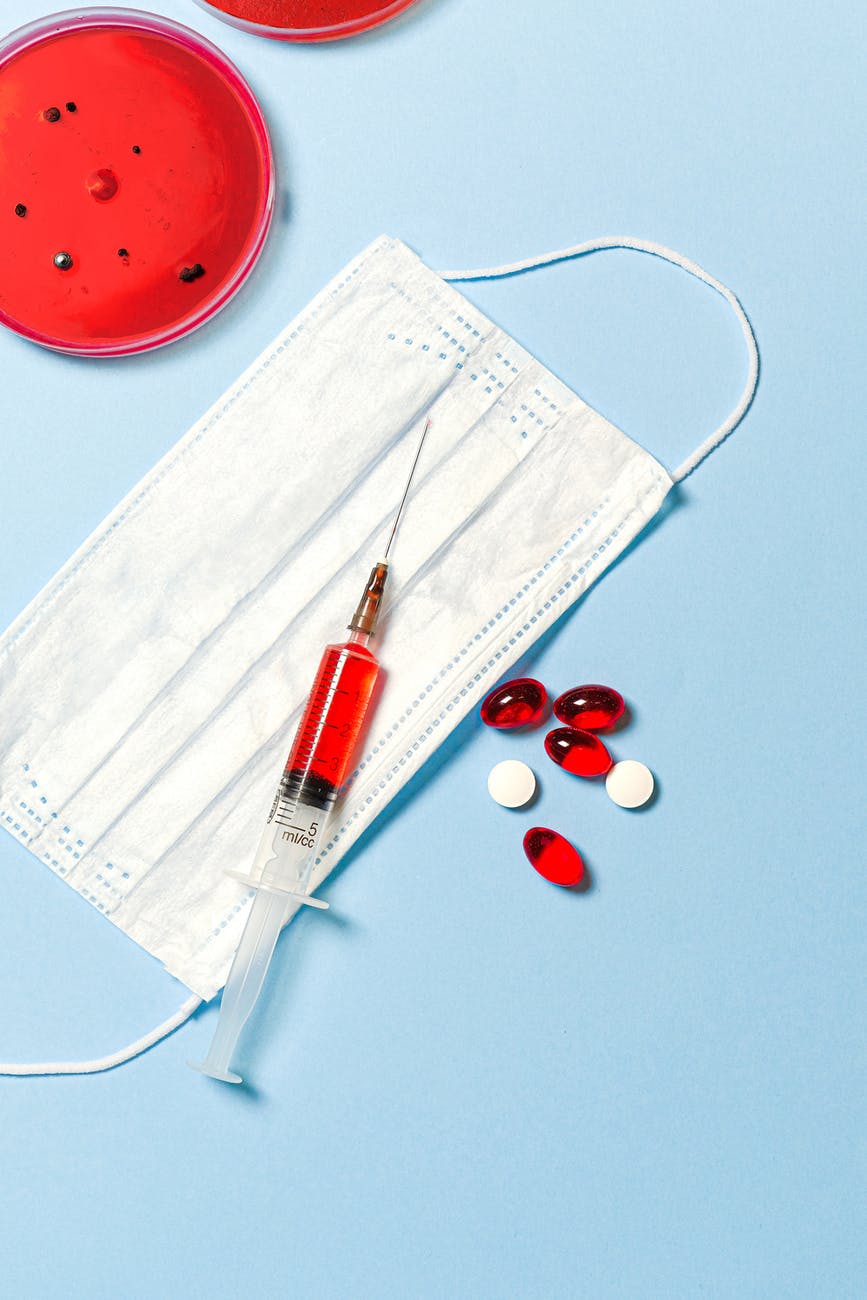
syringe and pills on blue background
Photo by Anna Shvets on Pexels.com

AstraZeneca’s experimental Covid-19 vaccine is probably the world’s leading candidate and most advanced in terms of development, the World Health Organization’s (WHO) chief scientist said on Friday.

The British drugmaker has already begun large-scale, mid-stage human trials of the vaccine, which was developed by researchers at University of Oxford.

This week, AstraZeneca signed its tenth supply-and-manufacturing deal.

“Certainly in terms of how advanced they are, the stage at which they are, they are I think probably the leading candidate,” WHO chief scientist Soumya Swaminathan told a news conference.

“So it’s possible they will have results quite early.”

Swaminathan said Moderna’s Covid-19 vaccine candidate was “not far behind” AstraZeneca’s, among more than 200 candidates, 15 of which have entered clinical trials.

ALSO READ: Coronavirus LIVE: Vaccine tests need over $30 bn in 12 months, says WHO

“We do know that Moderna’s vaccine is also going to go into phase three clinical trials, probably from the middle of July, and so that vaccine candidate is not far behind,” she said.

“But I think AstraZeneca certainly has a more global scope at the moment in terms of where they are doing and planning their vaccine trials.”

The WHO is in talks with multiple Chinese manufacturers, including Sinovac, on potential vaccines, as well as with Indian researchers, Swaminathan said.

She called for drugmakers to consider collaborating on Covid-19 vaccine trials, similar to the WHO’s ongoing Solidarity trial for drugs. A WHO-led coalition fighting the pandemic on Friday asked government and private sector donors to help raise $31.3 billion in the next 12 months to develop and deliver tests, treatments and vaccines for the disease. The initiative is called the ACT-Accelerator.

Andrew Witty, Special Envoy for the ACT-Accelerator, said it was important to consider a “portfolio of research efforts” for vaccines.

“It’s still very early days in this journey, we may be super lucky – which would be terrific – and have an early win,” Witty said. “Even if it takes 12 to 18 months that would be without precedent, the world’s fast development of vaccine.”


How television shaped our views on police

Television and media, the one source for early all people to tune to whether they need entertainment, news or anything else. It is a portal which connects us to others within the world. It is also a place from where we form most of our opinions. In the wake of the Black Lives Matter movement, many are wondering not just in US but throughout the world as to why this chain of thoughts not grip us sooner. Why is it that most of the people were oblivious to the abuse of power police use throughout the world? One of the main reasons for this are cop shows and movies. Its usually because as individuals not many of us have much actual experience with the police. We form our opinions through the junk that is fed to us by the television.

Photo by Alou00efs Moubax on Pexels.com

It can be noted by anyone that most tv shows and movies far too readily show the cops as trustworthy and infallible, all the while undermining real life claims of systemic racism and abuse of power. There are many reasons for this, ranging from the money hungry producers simply chasing after TRP to negligence from the writers and directors about not showing realism within the shows. However one of the main reasons for this is that no matter whether it is a movie or a TV show cops are not only consulter during the making of such shows but are also aware that their portrayals impact public perception and thus have a vested interest in making sure that the portrayal stays positive. A 2015 study showed that viewers of crime dramas are more likely to believe that police are very often successful at lowering crime, use force only when necessary and misconduct never results in false arrests. Now part of it is due to the viewers human nature, everyone wants to believe that the people who enforce laws do so effectively and fairly so that we as citizen don’t have to take the burden. The shows and movies like Law and order or Singham and Dabangg show the cops using force only when they necessarily have to. They make it seem that bending the rules set in place to govern their misbehaving is the only way to keep the general populace safe.  This is the power of such shows they make us believe that the only way the police can truly be effective is if they broke the rules that society created to protect us from the police. And the way they show mainstream cops bending the rules is by plain torturing a suspect who may have committed the crime. And showing that if the suspect hadn’t committed the crime it would serve as a deterrent from committing one in the first place. By that logic a parent should pre-beat their children to make sure that they do not stray to a bad path, but that is not the case. One has to realize that the cop shows are the only profession-based show where they show wanton unwarranted abuse of power as a good thing. However, beating a suspect in real life makes a person confess to a crime they didn’t commit. Which means an innocent was locked away while the real guilty party walks free. Beating a suspect to solve crimes has the same effect that washing a computer to remove a virus would have, sure the virus is gone but so is the computer.

What we do further is upon us but as Trevor Philips once said “The media and the government would have us believe that torture is some necessary thing. We need it to get information, to assert ourselves…… Torture’s for the torturer or for the guy giving orders to the torturer. You torture for the good times – we should all admit that. It’s useless as a means of getting information.”

Justice for Jayraj and Fenix – The Need To Stop Custodial Deaths

More than 1,000 people of Sathankulam town in Tamil Nadu’s Thoothukudi district staged a dharna Tuesday after two persons were allegedly killed in police custody here. In a chilling case of police torture, a father and son died in a span of 10 hours, in judicial custody in Thoothukudi, a coastal town in south Tamil Nadu, allegedly after being subjected to third-degree tre­at­ment by the police. The incident triggered widespread political and societal outrage.

The deceased have been identified as Jayaraj (59) and his son Fenix Emmanuel (31).  Two sub-inspectors have been suspended. According to the protesters and other local residents, Jayaraj along with Fenix ran a mobile shop named APJ in the town. On Friday, he closed his shop around 8:15 pm. Personnel from the Sathankulam police station, who was on patrol duty, reportedly pulled him up for running the store beyond the permitted time, and an argument took place.

On Saturday evening, the police personnel visited the shop again and had an altercation with Jayaraj.  When Fenix intervened, both father and son were taken to the police station and booked under several sections of the IPC, including Section 188 (disobedience to order duly promulgated by public servant) and 353 (use of force to deter public servant from duty).

On Sunday, after a medical check-up, the duo was lodged in the Kovilpatti sub-jail. That evening, local residents alleged, Fenix complained of chest pain and Jayaraj had a high fever. Both were taken to the Kovilpatti government hospital, where Fenix died on Monday evening and Jayaraj succumbed to respiratory illness Tuesday morning.

Jayaraj’s wife Selvarani has lodged a complaint, alleging that police brutality led to the death of her husband and son. In her complaint letter to the district criminal court and Assistant Commissioner, she said the police brutally attacked her husband and son, used curse words, and threatened to kill them. She urged them to book the police officers responsible under section 302 of the IPC and suspend them from duty.Condemning the killing, all trader union bodies, various political outfits, activists, and the local public staged protests in various parts of the town. Kanniyakumari MP Vasanthakumar, former AIADMK MP Sasikala Pushpa, and other party functionaries participated in the protest. Their demands include the arrest and suspension of the police officers responsible for the incident, compensation of Rs 50 lakh to the family members of the deceased, a doctor from the protesters’ side to be allowed during the autopsy, and a government job to one member of the deceased’s family.

The series of violations in the case mock our procedures. Whenever there is a death in police custody, the concerned police officers are duty-bound to bring it to the notice of senior officers expeditiously.

In view of the perception that custodial deaths take place because of reckless incidents of arrest, amendments have been effected to the Criminal Procedure Code, stating arrests be made only in offences which attract punishment of more than seven years or in those offences where there is apprehension that the accused may commit similar offences or assist other accused to escape. As soon as the accused is arrested, he should be medically examined by competent government medical officers and necessary medical assistance should be provided as per the requirement. Information about the arrest should be communicated to his advocate and relatives/family members. Details of his arrest need to be conveyed to the police control room and displayed on the unit website. In addition, following directives from the Supreme Court, a State Police Complaints Authority has been formulated under the chairmanship of a retired High Court judge to look into grievances in this regard. All complaints about custodial death are also looked into minutely by NHRC and SHRC from time to time.

Even though all these directives are being underlined and well-published from time to time, it is a matter of concern why these are not implemented at the ground level. Once one gets a job in the police department and wears the police uniform, there is a misconception that this is a blanket approval to arrest anyone and obtain a confession by indulging in physical harassment. Several times, suspecting someone for petty theft or because of personal rivalry, complaints are registered by people of means, and this is followed by arrest and physical torture.

If the police officer does not do so, he is declared a good-for-nothing. Many a time, a police officer who indulges in beating a citizen in public and violates all norms is appreciated by people and he is considered a hero.  Kamte was working as officer-in-charge of detecting crimes in Sangli police station for the last three years, and had reportedly detected several offences using high handed tactics and was applauded by the public from time to time. This must-have led him to believe he is beyond any law.

NHRC, as well as SHRC, have clarified more than once that unless a person has gone to a police station to lodge a complaint, whether he is in the lock-up or outside, he would be treated as under arrest and it is the responsibility of the police officer in charge of the police station to take care of his health. The study of custodial deaths reveals that more than 65 per cent are attributed to suicide, about 25 per cent to mental shock and less than five per cent to police harassment. These are official statistics and they tell us that we need a whole range of steps – from safety measures to psychological inputs and an array of methods and systems to keep a check on these violations and create a culture of fair and proper investigations.

Acting with impunity

These incidents have brought into sharp focus the way Indian policemen torture and interrogate suspects in their custody leading to death in several cases. As a result, policemen all over the country have been severely criticised and condemned. Strictures passed against policemen from time to time by learned judges of various courts notwithstanding, the police continue to brazenly torture suspects in their custody.

The Central Bureau of Investigation too uses torture as a method of investigation. In September 2016, B.K. Bansal, Director General of Corporate Affairs, and his son Yogesh committed suicide. In their suicide note, the two men listed the names of officers who had tortured their family in connection with a case of disproportionate assets. Bansal’s wife and daughter too had committed suicide two months earlier. On the directions of the National Human Rights Commission, an inquiry was held by the CBI. Expectedly, the agency exonerated all the accused. Taking cognisance of the matter, the Central Vigilance Commission published a standard operating procedure laying down guidelines for interrogation of accused officials.

Custodial deaths have been on the increase in recent years. They increased by 9% from 92 in 2016 to 100 in 2017, according to the National Crime Records Bureau. Since policemen responsible for custodial deaths rarely get punished, they feel emboldened to continue using torture as the tool to get to the truth. In 2015, for instance, the police registered cases against fellow police officers in only 33 of the 97 custodial deaths.

A historic order

The Supreme Court delivered a historic order in 2006 on police reforms. It stated, among other things, that every State should have a Police Complaints Authority where any citizen can lodge a complaint against policemen for any act of misdemeanour. However, only a few states such as Kerala, Jharkhand, Haryana, Punjab and Maharashtra have implemented the order. Others have not taken the matter seriously.

Until exemplary punishment is meted out to policemen who are responsible for custodial deaths after proper judicial inquiry, not much can be expected to ameliorate the situation. Proper interrogation techniques coupled with the use of scientific methods to extract the truth from suspects can go a long way in reducing custodial deaths.

Therfore, It should be mandatory for every officer in charge of the unit to visit immediately all incidents of escape of prisoners or deaths in custody. If the unit in charge does not reach the spot of the incident promptly, she or he should be held accountable. Otherwise, such serious incidents would continue to recur. The time is now ripe for the Indian government to consider ratifying the international treaty against torture and declare her commitment to human dignity.

Who Is Responsible If People Die From Coronavirus On A Reopened Campus?

The loss of lives that could have been otherwise avoided, will attract the most serious penalty and incrimination. Institutional authorities must keep this in mind as they consider the decision to open campus while the pandemic continues to pose threat to life.

Students wearing protective masks appear in the higher secondary school examinations of Madhya Pradesh Board of Secondary Education, during the fifth phase of ongoing COVID-19 lockdown, in Bhopal.

July is almost here, and the autumn semester is not far away. Are we in a position to reopen schools, colleges and universities? What are the implications if we do? Who suffers if COVID-19 attacks campus, and who is responsible if lives are lost?

To open or not to open. Worldwide, this brings together three major crises: a public health crisis, an economic crisis, and the long crisis of higher education. For instance, in the US, due to the high cost of college and the importance of residential education, it is likely that a number of small colleges will go bankrupt, large number of jobs will be lost, and the quality of education will almost invariably suffer. “A kind of a shock therapy,” predicts The Chronicle of Higher Education, “will permanently restructure the higher-education sector.”

Few things in recent history have foregrounded social inequalities as the education sector under the pandemic. Here in India, poor and rural students have suffered the most, lacking the infrastructure to participate meaningfully in online education. In the West, the heads of institutions for racial minorities have championed reopening, pleading that institutions are the safest places for them, as their poor home networks make them more vulnerable to the disease than on campus.

Almost everywhere, education experts have argued that rich and well-prepared students will do fine online, but students from weaker segments of society, including those with poorer academic preparation and lower familiarity with technology, are certain to suffer if on-campus instruction does not resume.

On the other hand, if the campus of a school or college opens and people die from contracting the virus, who holds the legal (to say nothing of the human) liability of such deaths?

The leadership of a number of American colleges are scrambling to get people to sign waivers. However, as the Chronicle has pointed out, this is a fantasy: “No waiver can resolve all those headaches, according to a dozen lawyers who work with colleges.” More than ever, in this circumstance, asking something to sign a waiver is essentially telling them: “I might be doing something that could do you harm.”

Hope Sarah Goldstein, a partner with Bryan Cave Leighton Paisner, told the Chronicle that an employer cannot ask employees to sign away future claims from workplace-related injuries covered by workers’ compensation. Waivers cannot annul liability. On the other hand, a disclosure can raise awareness and underscore communal responsibilities that must be held in a public-health crisis.

What about institutions in India? What are their responsibilities on event of COVID-related fatalities due to virus contracted on a reopened campus?

Dr Abhik Majumdar, a faculty member at the National Law University, Odisha, elaborates on a range of possibilities. The liability of an institution depends on whether or not it reopens following a government order; whether the order in question is mandatory or merely an authorisation given to institutions to reopen at their discretion; and whether the institution is a private or a state body.

If an institution opens contrary to government orders, Prof Majumdar points out, it will attract punishment under Section 3 of the Epidemic Diseases Act 1897, read with Section 188 of the Indian Penal Code 1860. Sections 269 and 271 of the Penal Code might also become applicable in such a situation. It is, however, unlikely to happen, as no institution will be so reckless as to flout governmental orders in the present situation.

It remains important to note, however, that if the government orders educational institutions to open, then liability in case of untoward incidents will lie mainly with the Government. Institutions may incur liability if they fail to adequately provide for safety measures such as dispensing masks, maintaining social distancing, and so forth.

In the last situation, if the government merely permits (as opposed to compelling) institutions to open at their own discretion, the institution becomes liable if their action leads to the spread of the disease and fatalities resulting from the spread. The nature of liability will depend on whether it is a private institute or a state body. In the first case, the institution may incur liability in tort law. It may also be liable under the Epidemic Diseases Act as mentioned earlier, if it is found deficient in implementing appropriate rules. State bodies’ liability features an added dimension. Any deficiency on their part cam be construed as a violation of the right to life under Article 21 of the Constitution.

Surabhi Singh, an alum of NLU Odisha and a current LLM student at the University of Toronto points out that under the current legal regime, State institutions run the risk of being sued for a violation of broader constitutional rights as they are an arm of the government, under writ jurisdictions of the Supreme Court as well as the respective High Courts. A writ jurisdiction is broad, and the relief granted by the courts can range from asking the institute to shut in person classes, award compensation to affected students, refund fees etc. “All of this is of course speculative,” she says, “but as a practicing lawyer I can foresee it being asked for from courts.”

However, Singh thinks that this writ-based relief is less likely with private institutions. Also, should some student fall sick and die, there is the risk of being sued for criminal negligence, which can implicate individual administrators of the institute concerned. Tort claims of negligence can also be made by the students who may claim damages. If the infection spreads through food or water, State based laws on food and water safety may apply.

Life, livelihood, and learning – or at least its best practice. It may seem like a lose-lose situation. This is, however, an extended emergency, and in the end, loss of lives that could have been otherwise avoided, will attract the most serious penalty and incrimination. Institutional authorities must keep this in mind as they consider the decision to open campus while the pandemic continues to pose threat to life.

SAIKAT MAJUMDAR

Second Film on Sushant Singh Rajput’s Life to be Titled ‘Sushant’, by Sanoj Mishra

Sushant Singh Rajput’s Life Story Inspires a Second Film ‘Sushant’ by Sanoj Mishra

Actor Sushant Singh Rajput’s death has led to debates and discussions around the existence of nepotism, favouritism, lobbying, camps in Bollywood. It’s been more than a week and two films are already in the plan related to Sushant. Earlier, director Shamik Maulik shared his idea of making a film on Sushant’s life titled Suicide or Murder: A Star Was Lost. It is based on how actors with no film background are treated by the industry when they try to make their career in the movie world. Also Read – Sushant Singh Rajput’s Demise: Ranvir Shorey Speaks on Nepotism, Godfathers And Award Shows in Bollywood

After Shamik Maulik, Sanoj Mishra has announced his film and titled it Sushant. The director wants to frame the late actor’s journey in a film. Also Read – OPINION | Fans’ Cringeworthy Reactions to 16-Year-Old TikTok Star Siya Kakkar’s Death by Suicide Brings us to Square One of Mental Health discussion.

Sanoj Mishra, who is known for films such as Srinagar, Nawab, Lafange, Gandhigiri, revealed in a statement made to a news publication that film Sushant will tell the story of people pushed to take drastic measures due to the struggle and the harassments in the industry. Also Read – Dil Bechara: Mukesh Chhabra Misses Sushant Singh Rajput, Says ‘Can Visualise You With Your Beautiful Smile’

According to reports, the film is being bankrolled by Road Production and Sanoj’s own production. The location of the film will be Bihar and Mumbai.

Meanwhile, Sushant’s close friend and producer Sandip Ssingh shared a poster for his directorial debut Vande Bharatam, which had Sushant in the lead. In an Instagram post, Sandip wrote, “You made me a promise. We, the Bihari brothers, will one day rule this industry and be the inspiration/support system for all young dreamers like you and me bhai. You promised me that my directorial debut will be with you. Raaj Shaandilyaa wrote this and we were to produce this together. I need your belief, that faith you showed, that was my strength. Now, with you gone…I’m lost…but I promise you this my brother. Now tell me how do I fulfil this dream? Who will hold my hand like you did? Who will give me the power of SSR, my brother?”

Record recoveries in India,  highest new cases in 24 hours

Total coronavirus cases in India crossed 4.9 lakh

The number of active coronavirus cases in India stands at 189463 while 285636 people have recovered

The death toll has risen to 15,301

The total number of coronavirus cases in India jumped to 4,90,401 after 17,296 new cases were reported in 24 hours. This is the highest number of new cases reported in 24 hours. According to health ministry’s numbers released today morning, the number of active cases stands at 1,89,463 while 2,85,636 people have recovered and one patient has migrated. A record total of 13,940 COVID-19 patients were declared cured in a single day. The recovery rate has improved to 58.24%.

Covid-related deaths rose to 15,301 after 407 fatalities were reported in 24 hours.

Coronavirus testing facilities have been ramped up across the country with 1,007 diagnostic labs currently offering covid diagnostic facilities, the government said.

Medical research body ICMR has said that a total of 77.76 lakh samples have been tested up to June 25. And on Thursday over 2.15 lakh samples were tested.

According to figures released by the government on Thursday, coronavirus cases per lakh in India stand at 33.39 against the world’s average of 120.21 cases/lakh. Also, death/lakh in the country is currently amongst the lowest in the world with 1.06 deaths/lakh against the world average of 6.24 deaths/lakh, the government said.

A team from Union Ministry of Health and Family Welfare will visit Gujarat, Maharashtra and Telangana this weekend to interact with the state officials and coordinate with them to strengthen ongoing efforts for management of Covid-19.

Maharashtra, the worst affected state, has reported over 1,47,741 cases and 6,931 fatalities. Among other states, Delhi has reported 73,780 cases, Tamil Nadu 70,977 and Gujarat 29,520.

Globally, total coronavirus cases moved past 95 lakh while the death toll has crossed 4.8 lakh. US on Thursday reported record number of 37,000 cases in a day, taking its overall count to over 24 lakh. The country has reported over 1.24 lakh coronavirus-related fatalities.


Pros of mobile phones for students !

The device which you are holding right now in your hand for reading this article has changed the world. It is not only providing us with a calling facility but also something much more. Mobile phones have changed the pattern of study for students. The time when we found knowledge between the pages of books has gone now. The mobile phone has diversified the area of knowledge. In this article, we have enlisted some of the advantages of mobile phone for students.

Now let us discuss how the mobile phone has changed the lives of students. What are the advantages of the same.

  • Great source of knowledge

Whenever you got confused and you don’t get a clear idea of some topic, then at that time the mobile phone will be of great use for you. You can search for that particular topic and can get a mirror image of the topic. It also provides knowledge regarding similar topics.

  • Helps to be prompt and punctual 

The mobile phone helps in managing the data. You can manage and make notes regarding important things. Then you will not going to miss something really important. You can also set alarms with a title so that on time you get reminders for the things, that will help you to be punctual and be available on time for your things.

  • Helps in Navigation and Finding Place

Mobile phones now come with a feature known as GPS  which helps to track your location. It is very helpful for navigation purposes too. If sometimes student got stuck anywhere, at that time having a mobile phone in their hand will be bliss. They can use google map to know their exact location. Then they can inform their parents about their location and can easily reach to their places. You can also share your location with your parents so that they can know where you are.

  • Help in learning left topics

Sometimes the situation arises when students are not able to attend the classes. So if at that time teacher has taught something really important then what to do? There is nothing to worry about this. You can simply google out the topic and can get a full explanation for the same. And Yes one more thing there is not only one option or site for the topic, but there are many sites you can access according to your requirement for the same topic written by various experts.

  • Great source of entertainment

Whenever students feel bored or get tired of studying for hours and hours, at that time they can listen to their favourite music, or watch movies sitting at home itself in their mobile phone. This will help them to get rid of boredom and feel fresh. Students can also read novels or even listen to audible stories whenever they get the time or they need some relaxation. There are various apps available such as Kindle, Wattpad, Novel cat, Aldiko, etc. They can access to these apps easily. This will not only help them to overcome boredom but also help them in learning something new.

  • Introduce you to the various social media platform

Facebook, Tweeter, Instagram and many more social media platforms are available now on play store where students can make their account and get connected to more number of peoples, friends, family members which are far away. They can post their activities and can see other activities too. They can also get the latest news of Hollywood, Bollywood, and their favourite celebrities.

  • Helps in Collecting proofs

Whenever students find something black lentils or they feel some types of exploitation done to them by a teacher such as when they think teacher do favouritism to students who are taking coachings from them, and not giving deserving marks to other students. Then, they can record this and show it to a higher authority and save themselves from favouritism. Or if they feel exploitation or being bullying from other students then they can record the incident and collect evidence regarding the matter in their mobile phones and can help in catching the culprit red-handed.

  • Provides Various Apps for learning

Nowadays, there are hundreds of learning apps available on mobile phones for every standard students. They can use them in free for learning, various courses are available which helps in their skill development. They can also use a mobile phone in time when they are not having books with them. So, they can use these apps to get their course-related topics cleared. This will also save their time to wait for the books.

  • Capture the moment

Students can capture their significant and sizzling moments in their mobile phones. Students who have an interest in photography, and purchasing any professional camera is not possible for them at that time they can use their mobile phones for their passion.

  • Helps in building a bright future

Mobile phones can be used in various ways and for various purposes by the students. But everything is useless until we use it for some useful purpose. There are various apps available such as LinkedIn, Internshala, freelancer, etc. Nowadays, world is on the way of digitalization. There are various types of jobs and internships available for students on these apps. They can grab them and add something useful to their CV and to their life as well.

  • Dictionary: Improve your Vocabulary

Carrying Huge dictionary everywhere with you is really a tough task. So, now they need of lifting it is over. The mobile phone provides you with various types of offline and online dictionary such as Oxford online and offline dictionary, V-Dictionary, Color Dict dictionary, Concise Oxford Dictionary by, where you can find the meaning of each and every word you are stuck at.

  • Storage of Data

The best use of the mobile phone is that you can store huge amount of data in it. Students who want to learn something new, they can download the matter and various pdfs, documents, about the same topic and they can even take notes from their friends and teacher through WhatsApp. This will prevent making any hard copies of the topic. You can even store data for a long time and even can keep it till you don’t want to erase it.

  • Easy Money Transfer

Mobile phones are primarily used for online transactions nowadays. People sitting at home can easily transfer and receive money to someone else in just some quick steps. Students who are living away from home can use these applications such as google pay, phone pay, pay pal, Paytm and many more to receive money from their parents to submit free or for their basic expenses.

  • Online Shopping

Students can use various online shopping apps such as Amazon, Flipkart, Myntra, Nykaa, etc to get their desired and essential products at their doorsteps. This will save their time and they don’t have to roam here and there to grab things.Advertisements