\’Betaal\’ review: These undead shouldn’t have come to life

 Living dead: Betaal could have been a worthy contribution to Indian horror.
    
Instead of soaring, the Netflix\’s steady start crashes and burns, just like its zombies
For any film or television venture into the paranormal to resonate widely, there requires a certain suspension of belief. This rings true in the case of Betaal, Netflix’s latest four-part horror show. Created by Patrick Graham, who also made Ghoul, the series attempts to reinvent the zombie genre with an army of British Redcoats who return from the dead to victimise a village of tribals. Simultaneously, the unfortunate villagers are also slandered as naxals by corrupt industrialists hungry to further their own nefarious agendas.
The premise is original with enough heft to carry forward its zombie central theme, especially in its treatment of adapting the story of Vikram Aur Betaalinto a contemporary setting. Graham’s zombies are part vampires with the powers of hypnosis and a chilling blood thirst that ticks off all the right horror boxes. As promised, the directors, Graham with Nikhil Mahajan slowly build the fear factor introducing the ‘Betaal’ curse that could wipe out humanity. The show’s characters are well fleshed-out, from Vikram Sirohi (Vineet Kumar Singh) battling his own past and moral compass to Panya (Manjiri Pupala), a fiercely brave tribal woman intent on saving humanity.
For the first three episodes, Betaalcomes along nicely, even if it doesn’t reinvent the horror wheel. As the climax approaches, the show loses its somewhat firm tether to the plot. The term kid gloves, doesn’t come close to the imbecilic explanations provided. Whatever benefit of doubt has been doled out is shattered. A particular scene involving the repair of an ancient cannon (in mere minutes with magically procured tools) is jaw dropping. Not in the good way. Other realisations come into focus: zombies awake after centuries with fetid faces and rank hair have pristine red coats and boots. At some point, they drag themselves as if in a stupor. Other times, they’re faster than quicksilver. A child (Syna Anand) – the object of boss zombie, Colonel Lynedoch’s (Richard Dillane) sacrificial desires – continues to gnaw on nerves with her inability to contribute to saving her own life.
As far as performances go, the actors have played their parts with what has been offered to them: perfectly adequate. With above par production value, Betaal at least looks and feels the part of a grim zombie escapade. But its shaky narrative, which violently falls apart, wrecks what could have been a worthy contribution to the oft-wronged genre. It’s unfortunate because the show is not only backed by Shah Rukh Khan but horror behemoth Blumhouse Productions too. To put it succinctly, Betaal tried to deliver the chills but spectacularly froze instead.
Betaal is currently streaming on Netflix

GULABO SITABO: Not the “Pehle Aap” Lucknow

The two puppets are being played on the stage, as sisters, named, Gulabo, and Sitabo. They seem to fight a lot. Hence here’s the movie “Gulabo Sitabo”. Amitabh Bacchan as Mirza, who was deeply in love with the mansion, for which he married a woman 19 years older than him, named Fatima Begum. This is the love story of a landlord and his mansion whose lovestory gets introduced by a villain as the tenant named Bankey Rastogi, owner of a flour mill. He made his work place, his place to romance with his girlfriend, whom he wanted to marry, but as the women’s legacy continues, no money, no honey.
Beside having issues in love stories, Bankey has several other issues in his life, like Mirza, to be sure. Mirza steals his 100watt bulb and sells those in the nearby Bhangar Shop at a very low price, this clearly shows, Mirza had no idea of the market and the price. 
One day, Bankey gets a hard nature’s call and amidst the pressure he pressurises the old wall of the loo, and eventually it rolls down. And the case goes to police station, and a new character gets introduced, Gyanesh Shukla, the ASI expert, also a dealer for the ex-MLA of Lucknow, as his boss was the brother in law of the MLA. This all chaos resembles the confusion and entanglement in Mirza’s love story. 
Gyanesh and Bankey gets teamed up to posses the mansion, which creates a sense of insecurity in Mirza, and he teams up with a lawyer who tries to empty the mansion from the tenants. And than this chaotic love story of an Old Man and his Wife’s mansion continues with the tenants as major villains. This whole story can be streamed on Amazon Prime, anywhere, anytime. 
There are many scenes which will make you think about the character Mirza, beside the acting of Sir Amitabh Bacchan, who is outstanding in doing justice to the character, and there’s other great actors too, like Ayushmaan Khurrana, Vijay Raaz. All actors were brilliant in direction of Director Shoojit Sircar. The story of materialistic love is very beautifully shown and the story gets a mixed rating everywhere. IMDb rates it 6+ out of 10. Whereas on other platforms it has the same mid range rating. 
The Lucknow’s polite ‘Pehle Aap’ is shattered in this movie, the conversation of Bankey and Mirza shows the bitter relationship of a landlord and tenant. The story also shows, that Mirza has his own world created within the mansion, and he didn’t have much idea about the outer world and its rapid changing rates. Bankey who lived with 3 sisters and his mother in a 1 room house, shows though he owned a flour mill and everyone expected him to be rich, but his untimely failed romance led him to a filty lifestyle. The story has many other symbolic and memorable events with a touch of comic. Lastly, this is a perfect movie to watch with your family, and if you have a landlord or tenant, than you can invite them too for occupying the seat beside you. 😉

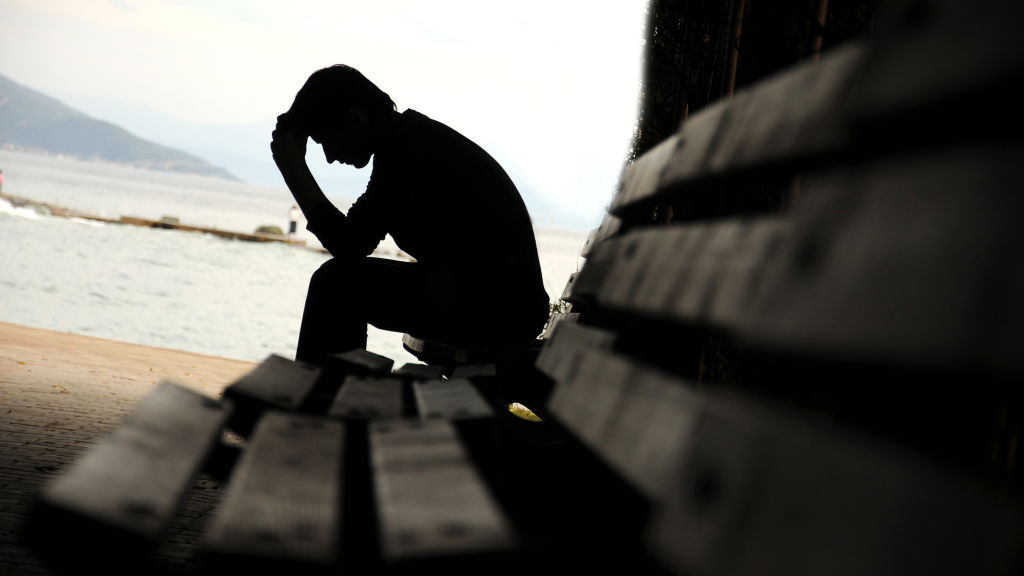
How Depression Impacts the Immune system!!!

Major depression is a common and sometimes fatal disorder that has been identified by the World Health Organisation as a leading cause of disability worldwide. While antidepressants are undoubtedly effective treatments in about 70% of cases, a substantial proportion of patients remain partially or totally unresponsive to treatment. There is no simple explanation for treatment resistance but there is a possibility that the current antidepressants do not effectively target all of the pathological processes that are responsible for the major symptoms of depression. Thus there is an urgent need to broaden the targets upon which antidepressants are considered to act.

The concept of a disordered immune system playing a major role in the mental state can be traced back to antiquity. However, it is only in the past 30 years or so that clinical and experimental evidence has been obtained clearly demonstrating that aspects of both cellular and humoral immunity were dysfunctional in major depression. In the past 20 years, attention has been directed to the role of the immunomodulators and immunotransmitters, in particular the pro- and anti-inflammatory cytokines. Thus, Maes and coworkers reported that interleukin-6 (IL-6), a major proinflammatory cytokine, was increased in the blood of depressed patients.

It was also apparent that about 45% of patients being therapeutically treated with the proinflammatory cytokine interferon-alpha (IFN) developed major symptoms of depression that terminate when the cytokines was withdrawn. Recently a meta-analysis of 9 cytokines in major depression in which 24 studies were assessed concluded that only the basal levels of IL-6 and TNF were significantly raised. Such clinical observations suggest that proinflammatory cytokines contribute to the major symptoms of depression and now forms the basis of the inflammation, cytokine or inflammatory response hypothesis of depression.

When considering cause and effect, there are three possibilities that may explain the tie between depression and immune system:-

  1. Depression may weaken the immune system and cause increased susceptibility to illness.
  2. Major or long term illnesses may cause mood disorders such as depression.
  3. In some cases, illnesses or conditions may be caused by the same triggers as depression.

New research published has taken an exciting new approach, offering hope for those who currently don’t have effective treatments. It’s part of a growing evidence base that shows our immune system can directly affect our mood – and for some may even be a cause of their depression, rather than a consequence of it. Essentially, we are learning that our immune system can alter the workings of the brain. With around one-third of depressed patients showing consistently high levels of inflammation.

It comes down to the inflammation that is part of the immune’s system response to danger. It is a hugely complicated process that helps our body fight off hostile forces. But if the inflammation gets out of hand then it can cause damage to our body and brain.

Treating Depression and improving Health:-

  1. Get in a Routine:- If you are depressed, you are really in need to get in a routine. A routine will help to stay busy and keeping away the negative thoughts.
  2. Set goals:- When you’re depressed, you may feel like you can’t accomplish anything. That makes you feel worse about yourself. To push back, set daily goals for yourself.
  3. Exercise:- It temporarily boosts feel-good chemicals called endorphins. It may also have long-term benefits for people with depression.
  4. Eat Healthy:- There is no magic diet that fixes depression. It’s a good idea to watch what you eat, though. If depression tends to make you overeat, getting in control of your eating will help you feel better.
  5. Get Enough Sleep:- Depression can make it hard to get enough shut-eye and too little sleep can make depression worse.

These are the five things one need to give priority to, during depression. Other things a person could do to feel good is engaging in fun activities. They would do really good to the person who is depressed. Next thing we could do is to consult a psychologist.

Refrences:-

http://www.healthline.com

Make In India and Self-Reliant

Make in India is a iniciative started by the Union Government of India.This iniciative was started in September of 2014. 25 sectors were considered under this iniciative to manufacture most of the products in India.

The sole motive of this iniciative is to make India a global manufacturing hub. To invite foreign investors, Our government has allowed 100% foreign direct investment in key sectors of the economy.

25 sectors are-

1. Automobiles

 2. Auto components

 4. Biotechnology

 3. Aviation

 5. Chemicals

 6. Construction

 7. Defense manufacturing

 8. Electrical machinery

 9. Electronic system design and manufacturing

 10. Food processing

 11. IT and BPM

 12. Leather

 13. Media and entertainment

 14. Mining

 15.Oil and gas

 16. Pharmaceuticals

 17. Ports

 18.Railways

 19.Renewable energy

 20.Roads and highways

 21. Space

 22.Textiles

 23.Thermal power

 24.Tourism & Hospitality

 25. Wellness

Manufacturing sector contributes 16% to the GDP in India which is aimed to make 25% by 2022.

It is worth mentioning here that chinese manufacturing sector contributes 34% to the china’s GDP.

And in this way there would also be produced millions of job opportunities.

Recently honourable PM Modi announced ‘Aatmnirbhar’ package. here, self-reliance and make in india are co-related to each other.

The dream of being self reliant can’t be made true without active participation of make in india iniciative.

recent clashes are creating situation to put chinese product aside and go with make in india.Now the iron is hot, and there only need is to hit it with mass support.

SELF CONTROL

Self-control is the ability to regulate and Change responses in order to avoid undesirable behaviors, increase desirable ones, and achieve your aim. Self-control can be important for health and well-being of mind stability.1 Common goals such as losing weight, exercising regularly, eating healthy, giving up bad habits, and saving money are just a few goal that people believe require self-control for being a good person in life.

“Once who control himself can win the world” – Vivekananda. our all great great scholars, Sant, even ruler accepted this great power and determination, patience and performance so they advise and acted, that’s why they got or called the greats of their time.

What Is Self-Control?

People often use a variety of terms for self-control, including discipline, determination, willpower, and fortitude, adequate to live life etc.

  • The ability to control behaviors in order to avoid temptations/ anger and to achieve goals
  • The ability to delay gratification and resist unwanted behaviors or urge
  • Stop your mind to being divert from any useless things.

Importance

Whether your goal is to lose weight, earn a college degree, or quit smoking, it is easy to believe that achieving a goal is simply a matter of controlling your behaviors. The majority of people surveyed believe that self-control can be both learned and strengthened. Researchers have also identified a number of different factors and strategies that can help people improve their self-control.

Who have better self-control tend to be healthier and happier.

In one experiment, students who exhibited greater self-discipline had better grades, higher test scores, and were more likely to be admitted to a competitive academic program. The study also found that when it came to academic success, self-control was a more important factor than IQ scores.4

The benefits of self-control are not limited to academic performance. One long-term health study found that people who were rated as having high levels of self-control during childhood continued to have high levels of physical and mental health in adulthood.

Delaying Gratification

Delaying gratification involves putting off short-term desires in favor of long-term rewards. Researchers have found that the ability to delay gratification is important not only for attaining goals but also plays an important part in well-being and overall success in life.

Health Benefits

Self-control is also important for maintaining healthy behaviors. What you eat for breakfast, how often you work out, and whether you go to the doctor regularly are all decisions that are impacted by your levels of self-control and have the potential to affect your health.

Researchers have found that self-control can have a number of potential influences on health and well-being:

  • In one study, children who had higher levels of self-control were less likely to become overweight during adolescence.
  • Another study found that participants who had depleted their willpower on an unrelated task were more likely to give in to temptation when later presented with a treat.
  • Studies have also shown that kids who struggle with self-control during childhood are also more likely to use drugs and alcohol in high school.

The belief that self-control alone can help us reach our goals can lead to people to blame themselves when they are unable to resist temptation. It may also lead to feelings of learned helplessness where people feel that they cannot do anything to change a situation.

Tips for Improving Self-Control

Avoid Temptation

Whether it’s the desire to eat, drink, spend, or indulge in some other undesired behavior, one way to avoid temptation is to find a healthy distraction. Go for a walk, call a friend, throw in a load of laundry, or do whatever it takes to get your mind off the thing that is tempting you at the moment.

Plan Ahead

For example, if you know you have a hard time controlling those late afternoon snack attacks, eat a well-balanced lunch packed with plenty of fiber, protein, and whole grains that will keep you full longer.

Practice Using Self-Control

While your control might become depleted in the short-term, regularly engaging in behaviors that require you to exert self-control will improve your willpower over time. Think of self-control as a muscle. While hard work may exhaust the muscle in the short-term, the muscle will grow stronger over time as you continue to work it.

Focus on One Goal at a Time

Setting a lot of goals at once (such as making a list of New Year’s resolutions) is usually an ineffective approach. Depleting your willpower in one area can reduce self-control in other areas. It is best to choose one specific goal and focus your energy on it. Once you turn the behaviors needed to reach a goal into habits, you will not need to devote as much effort toward maintaining them. You can then use your resources to achieve other goals.

Meditate

Meditation is a great way to strengthen your self-control muscle. This technique can also help you learn to slow your thoughts, which can help you control any gut impulses getting in the way of your self control.

Remind Yourself of the Consequences

Reminding yourself of these consequences can help you stay motivated as you work to control your self-control. Remind your goal time to time.

A Word From Verywell

Self-control is an important skill that allows us to regulate behavior in order to achieve our long-term goals. Research has shown that self-control is not only important for goal attainment. While self-control is a limited resource, research also suggests that there are things that you can do to improve and strengthen your willpower over time.

Deforestation : Causes and Impact

Forests provide more than a home for a diverse collection of living things. They are also an important resource for many around the world and are home to 80% of terrestrial biodiversity, containing a wide array of trees, plants, animals and microbes. Over the last century, the forest cover around the globe has been significantly compromised.  This removal of forest or trees from a land and converting it for non -forest use is called deforestation. Deforestation is the destruction of natural forests due to cutting tress and making space for cattle grazing, mining, extraction of oil and natural gas, building dams, bridges and population expansion.

Often, deforestation occurs when forested area is cut and cleared to make way for agriculture or grazing. The other causes for deforestation include:

1.Construction of roads through the forests leads to a division of habitation of animals , birds and other species . It poses a barrier for free movement of wildlife and also encourages uncontrolled activity of timber production along with providing easy access to logging.

2.Natural fires in tropical forests tend to be rare but intense . Human-lit fires are commonly used to clear the land for agricultural use. First, valuable timber is harvested, then the remaining vegetation is burned to make way for crops like soy or cattle grazing. According to recent reports, more than 80,000 fires burned in the Amazon, an increase of almost 80% from 2018.

3.Timber production is another prime cause of deforestation. It is not only used as an important construction material but also forms an important source of raw material for paper production.

4.Many forests are cleared to make way for palm oil plantations (a commonly produced vegetable oil). It’s cheap, versatile and can be added to both food and personal products like lipsticks and shampoo. Its popularity has spurred people to clear tropical forests to grow more palm trees. Growing the trees that produce the oil requires the leveling of native forest and the destruction of local farmlands — which doubles the effect on the ecosystem.

5.Grass lands are needed for cattle feeding and developing the cattle growing industry. In order to raise the cattle cheaply, several countries tend to deforest as it is cheap and allows the local industry to meet the demand of multinationals for cheaper animal products.

Deforestation not only removes vegetation that is important for removing carbon dioxide from the air, but the act of clearing the forests also produces greenhouse gas emissions (around 20% according to a recent study). It results in a decline in biodiversity and increases rates of soil loss.  Deforestation also results in changes in precipitation and river flow as it  reduces the content of water in the soil and groundwater as well as atmospheric moisture.

Forests can also be restored, through replanting trees in cleared areas or simply allowing the forest ecosystem to regenerate over time. Everyone can do their part to curb deforestation. We can adopt sustainable farming practices, make factories more cleaner and monitor their emissions, forest management and strict monitoring of tree cutting should be carried out by various government and other NGOs and plant a tree when possible. 

Meetings in India to topple my govt., says Nepal PM K.P. Oli

 Prime Minister K.P. Sharma Oli of Nepal on Sunday said meetings are being organised in India to topple his government.

Addressing a gathering at his official residence to mark the 69th birth anniversary of the late communist leader Madan Bhandari, Mr. Oli said his government enjoys parliamentary majority and the ouster plans will fail.

“There is news coming from Delhi about this. Look at the meetings being organised in India against Nepal’s decision to amend the Constitution to place the revised map of the country in the national emblem,” said Prime Minister Oli, pointing at the alleged plot to overthrow his government.

The lower house of Nepal’s parliament unanimously passed the Second Constitution Amendment on June 13, which gave constitutional status to the new map of the country including the disputed Limpiyadhura-Kalapani-Lipulekh region that is in the Indian state of Uttarakhand. The bill was signed by President Bidhya Devi Bhandari on June 18.

Mr. Oli said India was upset by Nepal’s territorial assertion.

“Nepal’s nationalism is not so weak. We have changed our map and if the prime minister of the country is deposed, then that will be unthinkable to Nepal,” he said. Hinting at India, he said some people consider the new map of Nepal a “crime”. He also indicated at an external plot against his government in 2016 and recollected that the government fell at that time because he had reached out to China and signed transit agreements which reduced dependence on land connectivity through India “I clearly remember that I was toppled when I signed transit agreement with China,” he remarked during the meeting.

“You must have heard that the Prime Minister will be changed in 15 days. If I am removed at this time, no one will dare to speak in favour of Nepal because that person will be dismissed immediately. I am not speaking for myself. I speak for the country. Our party, our parliamentary party will not fall into such traps. Those who are trying, let them try,” said Mr. Oli.

Despite the popular and emotive move on the new map, Mr. Oli has been criticised by colleagues from the faction of Pushpa Kamal Dahal ‘Prachanda’ in the ongoing meeting of the powerful Standing Committee of the ruling Nepal Communist Party. The hostility between the two factions was evident on Friday when Mr Oli did not attend the Standing Committee’s meeting.

The members of the Committee have been critical of the Prime Minister’s handling of the COVID-19 pandemic in Nepal. It is understood that of the 44 members in the Standing Committee, around 30 are with co-chair Prachanda, considered a challenger to Mr. Oli.

The political parties of Nepal put up a joint front during the debates on the new map in parliament but soon thereafter fissures appeared in the Nepal Communist Party over the issue of leadership as Prime Minister Oli is holding both the post of the prime minister as well as chairman of the ruling party. It is being speculated that Mr. Prachanda, though not as popular as Mr. Oli, has support from the opposition and the Madhesi members of the parliament.

Diversity of India

India is one of the richest country when it comes to culture. It’s each state represents a unique culture. It has different religion of people who has their very own unique and different culture. Everyone has different style of dressing, food, different god & methodology to worship, different customs, different languages.

Indian constitution itself recognises 22 official languages spoken in india, while there are many other languages which are spoken too in india.

In south india people genrally speaks Telugu, Tamil, Kannada, Malayalam language. Their women’s wear silk, cotton and kalamkari sarees, long skirt and blouse while men’s wear shirt, dhoti, Pancha, lungi and pants. Dosa, idli, vada, uttapam are some of the famous dishes there. Bharatanatyam, mathak, kuchipudi, odissi, kathakali, sattriya, manipuri and mohiniyattam are some of the famous dance forms of South India.

In north India people generally speaks Hindi, punjabi, kashmiri. Their women’s wear saree, salwar suits, pherans, ghagra choli and men’s wears kurta, pajama, turban, pathani suits, shirt. Chole bature, palak paneer, dal makhni, daal baati are some of the famous dishes there. Khatak, bhangra, rouf are the dance forms of North India.

In west india people speaks gujrati, rajashtani, marathi launguages. Their women wears chaniya choli, ghagra, nauwari saree, and men’s wear kurta pajama, dhotar, kurta pajama. Vada pav, bhelpuri, pav bhaji, khaman dhokla, jalebi, puran poli are the famous dishes there. Garbha, ghoomar, lavani are the dance forms of west india.

In east India people speaks maithili, bengali, mizo, assamese and odia. Their women wears angami, Dumvum, Sanatpuri style saree, men’s wear Jymphong, dhoti, pajama. Pitha, smoked pork, Kelli chala, khar, rasgulla are some of the popular food there. Manipuri, odissi, bihu, Sattriya  are the dance forms of East india.

There are different festivals in india but each and every people celebrates them together with full rituals, customs and enjoyment. That’s the beauty of india, people has different customs but everyone respects each other’s custom and celebrates and lives together.

Escapism

Escapism is the tendency to find as escape from the real world amidst the monotonous complexities of our daily lives. Escapist approach aims at bringing about a sense of peace and harmony that helps us to move forward.

Considering the growing digital advancements of this era, it is clearly visible how often people find it necessary to have a time off from their real world. Taking some off from the virtual world is also very important to keep our sanity intact. The world is going through a difficult time and everyone at some point or the other feels the need to take a break from the digital, virtual, societal and environmental world in order to find inner peace that is nowhere but within ourselves. With the hectic daily schedules of our lives we often forget to take spend some time with ourselves but at the end of the day it is this off time that boosts our psychological immunity and makes us strong enough to return to our real world with a lot more positive energy and enthusiasm.

Different people follow different escapist methods. For some people, music, movies or other means of entertainment serves the purpose and some people take up reading and writing to be their escapist mechanism. Meditation, on the other hand is a really remarkable method that calms our mind and serves the purpose in a more scientific way than the other methods. However, the tendency to take up escapist methodologies in order to find solace can lead to a huge amount of procrastination that affects our flow of life in a bad way.

Sigmund Freud believed an escapist fantasy to be a necessary element in the life of humans and similarly J.R.R Tolkien while talking about escapism in Popular Literature mentioned how an escapist approach gives birth to a secondary imaginary world that works as a driving force in a natural way in our lives. Many critics have argued how Escapism is an art and how the constant practice of Escapism can lead us to create a parallel reality beyond our mortal and physical world.

Escapism is not only an avoidance of the inevitable. It is a tendency that aims at negotiating between the real and the imaginary in a subtle yet an effective manner which leads to creating an otherwise real/parallel dimension.
However, there have also been critics and experimentalists who have studied Escapism and its probable consequences in human life. Many of them consider an excessive practice of Escapism to be a harmful one. One of them is Lyn Reed who studied Escapist ideologies and eventually came to the conclusion that although many people try seeking peace and normalcy in an alternative imaginary world, an excessive practice of escapism can bring about negative effects in human lives. It indeed serves a purpose of being a coping mechanism for many, but it can also be harmful for some who simply choose it to be the only way to deal with their complex reality.

-Suvasree Bandyopadhyay

Swacch Bharat Abhiyan: Take initiative to keep your surrounding clean..

Swacch Bharat Abhiyan is the most significant cleanliness campaign by government of India. It is an initiative taken to clean our country.

But apart from it what the government is doing, it is the duty of each one of us to keep our surrounding clean. Whenever we go out we see piles of litter are present on the sides of the road, in water bodies due to which the clear water bodies is changing into drains. Any empty plot in our colony is filled with the garbage. So, inshort garbage is present everywhere.

So, if each of us will not take initiative to clean our surrounding or not to threw garbage here and there, then only we will be able to clean our country

So there are some steps through which we are able to make our environment clean:

  1. Always keep a bag with you- Whenever you are travelling in your car or in any public transport or went to a vacation, always keep a bag, with you, and whenever you eat something keep the waste in that bag and throw it when you back home or wherever you find a dustbin, don’t throw it here and there on road. If each one of us will do this, one day will come when there is no garbage present on the road.
  2. Refuse single-use items- Try to replace single use items. Take your own containers for leftovers and refuse disposable cutlery. Also refuse the use of plastic straws in shops. If you want to use straws, take your own straws or go for biodegradable straw. Similarly bring your own mugs to coffee shops as regular disposable cups leads to lots of waste.
  3. Use Cloth bags- Always bring cloth bag to grocery stores or wherever you go for shopping and avoid the use of disposable bags which creates lots of waste.
  4. Use reusable water bottle- Instead of using single-use plastic, use water bottles which you can reuse, it will save your money too.
  5. Put your waste on right place- Always use different bins to separate waste. Peels of fruits and vegetables and other biodegradable waste should be put in one bin which can be used as a compost for farming. Waste which are recyclable are put in another so that we can recycle these waste. And after that we will be only left with non- biodegradable waste. So in this way you can minimise your waste

So these are some small steps which can bring a big change. So start applying these steps in your life and help to make our country clean.

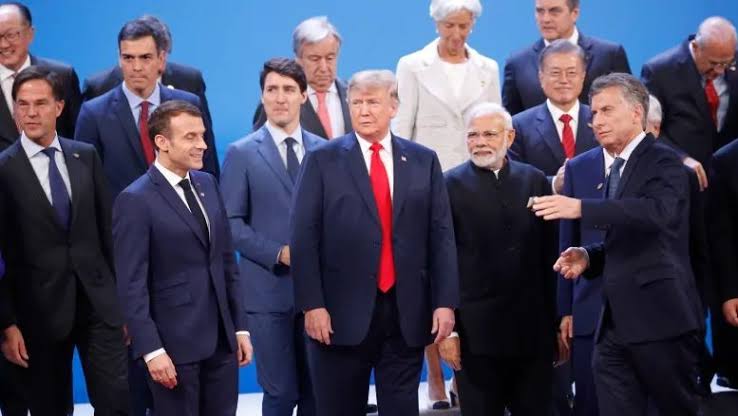
G-20 Grouping

G20 consists of 19 individual countries and the European Union. The EU is represented by the European Commission and by the European Central Bank.

the G20 economies account for around 90% of the gross world product (GWP), 80% of world trade (or, if excluding EU intra-trade, 75%), two-thirds of the world population and approximately half of the world land area.

The G-20’s primary mandate is to prevent future international financial crises and shape the global economic agenda.

The finance ministers and central bank governors of the G-20 countries meet twice a year.

The G-20 members include the G-7 nations-Canada, France, Germany, Italy, Japan, the United Kingdom, and the United States—and 11 emerging market and smaller industrialized countries—Argentina, Australia, Brazil, China, India, Indonesia, Mexico, Russia, Saudi Arabia, South Africa, South Korea, and Turkey. The EU is also a member of the G-20.

The growth of Brazil, Russia, India, and China (the BRIC countries) has driven the growth of the global economy. The G-7 countries grow slower. Therefore, the BRIC countries are critical for ensuring continued global economic prosperity.

In the past, the leaders of the G-7 could meet and decide on global economic issues without much interference from the BRIC countries, but those nations have become more critical in providing the needs of the G-7 nations. For example, Russia delivers most of the natural gas to Europe. China produces much of the manufacturing for the United States. India provides high-tech services.

Himachal Pradesh Has Been Killing Monkeys for Four Years. Will It End in 2020?

For the fourth straight year, the Himachal Pradesh government has received approval from the Union environment ministry to declare rhesus macaque monkeys ‘vermin’, opening them up to be hunted and killed.

Rhesus macaques are classified as being of ‘least concern’ in the IUCN Red List.

Principal chief conservator of forests wildlife and chief wildlife warden Savita told The Wire Science, “In our latest monkey population estimation, [we recorded] 1.36 lakh monkeys – a decrease of 33.5% since the last count five years ago.”

This survey was conducted by researchers from the Salim Ali Center for Ornithology and Natural History, Coimbatore, on December 4 and 5 last year. The results were published in March 2020.

“Around 5,000 forest staff and officials were engaged in this survey. The monkey-infested areas were divided in line transit patterns. The monkeys in each transit were counted thrice,” Savita said.

Since 2007, around 1.62 lakh monkeys have been sterilised in Himachal Pradesh’s seven sterilisation centres, according to her, preventing the birth of around four lakh rhesus macaques.

“With further reduction of monkey population achieved this year, we may not [have to] declare them vermin next year.”

But even without culling, Savita said the state would continue with its plan to sterilise 20,000 monkeys next year.

Sumanth Madhav, a campaign manager at the Humane Society International, isn’t a fan of Himachal Pradesh’s approach, however. He doesn’t think monkeys turn to human localities because forests have run out of food. “The degradation and fragmentation of habitat in forests is factual. But there is no evidence to support the assertion that there is not enough food for monkeys in the forest.”

Instead, Madhav said, monkeys enter human-settled areas for the easy access to food.

However, Savita and Madhav agree that the more food the monkeys find, the more their population increases, and have called for municipal corporation officials, local bodies and gram panchayats to coordinate and ensure proper disposal of garbage.

Under Section 62 of the Wildlife Protection Act 1972, animals designated ‘vermin’ – because they damage crops – can be killed without inviting punishment. However, animals that move in groups, including rhesus macaques, often have a hierarchy among themselves. When this ordering is suddenly disrupted, there could be unforeseen consequences.

“If an alpha male in a troupe, who manages the entire group, is killed, the younger ones are left headless,” Madhav said. “These babies or sub-adults don’t know how to behave and they create a ruckus. So one troupe becomes fragmented into smaller chunks, with rowdy youngsters.”

So in the absence of a policy on the right way to cull rhesus macaques, many are doing it wrong and potentially making a bad problem worse.

Some farmers, for example, have taken to poisoning the monkeys. Last year, officials spotted the carcasses of a hundred monkeys around Shimla.

Kuldip Tanwar, president of Kisan Sabha Himachal, said, “The Himachal Pradesh government prohibited arms and ammunition use in 1983. Those guns have become obsolete, and their users have lost practice.”

Nine-tenths of the people of Himachal Pradesh live in rural areas. Only a few rich farmers among them can afford guns, pistols and cartridges; the rest use poison. “The farmers are accustomed to using pesticide for their crops, so using another form of poison for monkeys comes easy,” Tanwar said.

In the case of the hundred that had died last year, Tanwar said some people had mixed corn paste with the poison, smeared it on slices of bread and laid them out in places the monkeys visit often. Once a monkey consumed the slice, it would wander off in search of water. If there was a water body nearby, the poisoned monkeys’ carcasses would collect there.

Tanwar used to work with the Indian Forest Service until about a decade ago.

Savita said a carcass that hadn’t been properly disposed could subsequently threaten any animals or birds that may come in contact with it or the water.

And at least one sign points to farmers not disposing of the carcasses: Savita said the wildlife department has declared a cash prize of Rs 500 for every monkey killed – but a single farmer hasn’t come forward to claim it.

She thinks it could be because of the stigma attached to killing monkeys, given the importance of the monkey-god Hanuman in Hinduism. But this reverence is part of why farmers have such a tough time with monkeys in the first place: people often feed monkeys because they’re thought to be venerable in some way.

And this is why, Savita continued, no other state in India might have declared monkeys ‘vermin’.

“Though no method of culling has been prescribed by the wildlife department, the farmers have been directed to hand over the monkeys’ carcasses after they have been killed for a proper disposal,” Savita said. “However, we haven’t received any complaints about farmers resorting to poison.”

Need for a multifaceted strategy

In the past, farmers used to protect their crops with community-watch programmes. Tanwar suggested the government could deploy people through the MGNREGA scheme as ‘community watchers’.

In keeping with that, Madhav said culling must be more humane. “It is a debatable subject, though there is no evidence culling can help in a conflict. It is more politically motivated and psychologically comforting for the people.”

He also said the people as well as state officials could be confusing “population management as a tool for conflict management” when really they ought to be guided by different strategies.

“Population management may help but it is not the only solution.” Monkeys that are “sterilised may live for another ten or more years, so conflicts will continue.” As a result, “unscientific population control and sterilisation in isolation will never give optimum results.”

Instead, he stressed the need for a multi-pronged approach that works with other important factors to ease human-monkey conflicts, including an “awareness programme” to have farmers shift to “crop rotation or [to growing] unpalatable crops for monkeys”. He also said, “The government should introduce a crop insurance scheme and make timely ex gratia payments [for] crop loss to farmers.”

“These measures over a period of long time will help people live alongside animals.”

Decimation of primary herbivores

Such peaceful coexistence pertains not just to the rhesus macaques but also to wild boars, porcupines, rabbits and peacocks, all of which have been blamed for crop depredation in the state.

While Himachal Pradesh is alone in designating monkeys ‘vermin’, Uttarakhand has accorded the wild boar this status (as has Kerala) and Bihar, the nilgai.

Savita said all of these animals – and bird – have been forced to wander towards human settlements because human settlements have encroached on their habitats.

Suresh Bhai, an environmentalist, said however that wild boars and nilgai are primary herbivores. So manipulating their population could in turn affect the survival of tigers, leopards and other carnivores in the same ecosystem.

Seema Sharma is a Chandigarh-based independent journalist. She previously worked at The Tribune and The Times of India. She writes on forest, wildlife, environment, social and rural issues.


 

The Incredible month of Football.

Since the lockdown has been raised and the world is trying to live with the corona virus while taking precautions. Its been a month since football was given a green light in various parts of world but as a precautionary measure the matches had to be played behind closed doors without any audience. With the change in certain rules there will be 2 cooling breaks in a 90 minutes match including the halftime break. The players are not allowed to spit on the pitch. All the players who have started training for their respective clubs have tested negative for the virus. The previous week of football was something incredible and no football fan would want to miss it. Here we have what all happened during this week of football around the world.

Liverpool crowned Premiere League Champions.

Liverpool were crowned the premiere league champions on Thursday as Chelsea beat Manchester city by a score of 2-1. This ended the 30 year long wait of the reds to win the English Premiere League. This was the 19th league title for the reds. Liverpool still got seven games to play as they are now 23 points clear on top with Manchester city on the 2nd position. In the 31 league games played Liverpool were able to win 28 of them which prompted the Liverpool star Mohamed Salah to speak up and he said “now is our time to win the league”. It has been a tough time for the Liverpool fans as due to the pandemic there were chances of the league being called off and there would have been no declared winner on the other hand Liverpool had not won the trophy from the past 30 years but the wait was worth it as now all the Liverpool fans are celebrating around the world chanting “YOU WILL NEVER WALK ALONE”.

Barcelona’s La Liga title slipping away.

Barcelona drew with a score of 2-2 against Celta the previous night. With suarez opening the scoring for barcelona was a good sign for the striker as he had returned from an injury. Both the goals were scored by suarez and were assisted by messi. Everytime celta moved forward they seemed dangerous as they created many chances from the wings but failed to score in the first half. With the second half in hand celta looked to hurt barca on the counter and as they got the chance they scored to level the score 1-1 but later on suarez score another goal to make it 2-1 for the spanish giants. The twist came in the 87th minute of the match where celta had a freekick just outside the box. The captain stood up to take the freekick and scored an absolute beauty which leveled the scoreline and fortunately the final whistle was called off. Barcelona move on top of the table by just one point clear ahead of real madrid. The whites play espanyol today and if the zinedine zidane man pull off the victory they would move 2 points clear on top ahead of barcelona.

Juventus loose Coppa Italia to Napoli.

Napoli stunned the former Italian champions by dragging the match into the penalty shootout. Most of the talk was on ronaldo’s form as he was not able to make any major impact to the game. Ronaldo did not even get a chance to take a penalty as napoli won 4-2 on penalties. The Juventus coach spoke up and said “Cristiano Ronaldo is struggling to regain his famous acceleration speed after the shutdown forced by the corona virus pandemic”. After the result Cristiano Ronaldo’s sister slammed the Juventus coach and his tactics. She wrote on Instagram “what more can you do?This is it and that’s all, that’s why my darling cant work miracles on his ow… I don’t understand how you can play like this anyway … head up,my king.”

The return of football has already caused a lot of excitement, tension and controversies in just one month we look forward to the return of champions league which is expected to return on 7th of august.

The Architecture of the Rathas of Mamallapuram

The Rathas or the Panch Rathas of Mamallapuram are the temple complex containing five temples of the monolithic Indian rock- cut architecture. The geographical location of the Rathas at present is Mahabalipuram, (or Mamallapuram) on the Coromandel Coast of the Bay of Bengal, in the Kanchipuram district of Tamil Nadu.

According to the historical records, these Rathas were built in the early 7th century CE by the Pallava Rulers. These were carved out from a single large boulder.

The Panch Rathas

Basically, these monolithic temples were named after the protagonist characters of Mahabharat – the Pandavas. Although the five temples are named after the Pandavas and Draupadi but they do not have any connections with the Mahabharat. One more fact is supposed to be considered:- the nomenclature of the temple suggests that Pallavas had the knowledge of Mahabharat during their ruling period.

So the names of these temples are –

  • Dharmaraj Ratha
  • Bheem Ratha
  • Arjun Ratha
  • Nakul- Sahadev Ratha
  • Draupadi Ratha

It was said that the Pallava ruler Mahendravarman-I commenced the construction of these Rathas.Among the forty heritage sites in Mahabalipuram, the Pancha Rathas hold a rather unique position. However, built under the patronage of Narasimhavarman I,these rathas are five monolithic free-standing temples that were cut out from solid granite and diorite rocks.

Now let us figure out the architectural features of these Rathas.

Dharmaraj Ratha – named after the Mahabharat character of Yudhishthir, this Ratha is the largest of the rest of the Rathas. It contains a sanctuary of 3 storeys, bordered by miniature buildings and surmounted by an octagonal dome. This shrine is purely dedicated to Lord Shiva even though it’s named after Yudhishthir. It has engravings in Pallava Granth script of the titles of Narsimhavarman-I, which mentions the fact that it was created as a Shiva temple of Ayantahama Pallava.Thus, this justifies the making of Dharmaraj Ratha.

Bheem Ratha– it’s perhaps the longest of all the Rathas, measuring 12.8m in length, 7.3m in width and 7.6m in height. It is said that the Ratha is devoted to Lord Vishnu in the form of Sayanmurti or in simpler terms Vishnu Anantasayyan mudra. Also, the building remains unfinished and the sanctuary has a circumambulatory passage around it, while the pillars of this shrine are adorned with engravings of lions.

Arjun Ratha- it’s a small structure in the shape of a wooden shrine, facing towards the east. Its dimensions are – 11 x 16 x 30 feet and is 3 storeyed structure. No carvings have been found inside the temple, although we find various Gods including Indra on the outer walls of the Ratha.

Nakul-Sahadev Ratha- it’s exceptional as it’s the only one which is not placed in a linear position and stands aside. The roof of the shrine is in the shape of an elephant’s back, while the relief sculpture of the Ardhanareshwar adorns the walls and the pillars are decorated with seated lions.

Nakul-Sahadev Ratha

Draupadi Ratha- is the smallest of all the Panch Rathas. This has been dedicated to Goddess Durga in the form of Mahishaasurmarddini (where She’s standing on the head of the demon Mahisasur). This shrine has a thatched hut like shape with a square roof. The presence of a carved panel makes it more detailed as this finely carved panel shows Goddess Durga on a lotus pedestal. Additionally, a carved sea- monster lies on the entrance door too.

So, these were the major architectural traits of the Panch Rathas that reflected the typical Pallava architectural features. Not only this but they belong to very rare examples where the entire buildings with ornate interior and exterior designs are made out from the live cliff, as each one of these are carved out from one single large piece of stone, hence.