Top 10 Teacher Super Powers

In honor of Teacher Appreciation Week, we want to recognize the superhuman feats teachers perform every day.

Here is the top 10 list of Teacher Super Powers:

X-Ray Vision

Superman’s X-ray vision has nothing on you. You can see eyes roving onto their neighbor’s test, covert texts, uniform infractions or a dozing student from a mile away.

Super Educational Gadgets

Batman’s known for his gadgets, just like those techie teachers who rock the projectors, interactive whiteboards and all things e-learning to live up to 21st century expectations… and beyond.

Elasti-teacher

Physics can’t explain how you’ve stretched yourself to do everything a crazy classroom requires – from differentiating instruction for every student, finishing mountains of paperwork in a single bound, keeping in touch with parents, researching new teaching tools and techniques, attending innumerable meetings and much more.V

Teaching Strategies to Deal with “Switching Teachers”

If it hasn’t happened yet, it will: A parent will ask that his or her child be removed from your class and placed into another teacher’s class.

It can big ego blow, and it can be attributed to parents simply not liking you or a personality conflict.

With that in mind, today on TeachHUB.com, frequent contributing writer Janelle Cox, who is a veteran teacher based in Upstate New York, takes a look at some teaching strategies to 
deal with this difficult situation. Janelle’s ideas include:

  • Try Not to Be So Defensive
  • Agree to Disagree
  • And More!


Janelle sums up her article like this: “You must accept the fact that not every parent is always going to like you. You can be the kindest, most generous, hardworking teacher on the planet and there will still be a parent who does not like you. Instead of taking this to heart, just learn to accept it. Always be yourself, and know that you are doing your best and that should be enough for you.”

Has this ever happened to you in your classroom? If so, how did you handle this situation? Please share your thoughts.


The PARCC Test: An Overview
In many classrooms around the country right now, the Partnership for Assessment of Readiness for College and Career (PARCC) tests are sending teachers and students alike into new levels of anxiety.
For the uninitiated, the PARCC tests are born out of the Common Core State Standards. Thosee standards mandate very specific skills that students of each grade level should accomplish, and PARCC is designed to specifically assess whether or not students are meeting those metrics.
Recently, frequent TeachHUB.com contributing writer Jordan Catapano takes a long look at the PARCC tests, including what’s on the test, how it works, and how to practice and prepare for it.
It’s a timely read and definitely worth a look as your school prepares for the PARCC tests.
What are your thoughts on the PARCC exam? How is your state or district going about implementing it … or has your state avoided it completely?

The Homework Wars

Kids don’t want to do it.

Teachers don’t want to grade it.
Experts don’t even know if it has any true education value.
So the question is: Is homework really necessary?

No thorough answer to the homework question would be complete without the input of students.
After surveying 72 students in the south Los Angeles middle and high school, students expressed a desire to move beyond the “how many pages?” homework mentality. Many of the surveyed students preferred challenging homework assignments that “make us think” or “involves a part of our lives.”

Top 12 Free Ways Teachers Can Rock Spring Break

Let’s admit it, we’d all like to spend our spring breaks relaxing on a beach or on some once-in-a-lifetime trip, but that’s not always in the budget. That doesn’t mean you can’t avoid the everyday routines of home and truly enjoy your vacation!

Here are 12 ways to make the most of your spring break without spending any cash.

Turn Parents into Partners

A high school English teacher told me about a student who struggled with analytical writing and avoided it by skipping her homework assignments. The students’ parents constantly pressured the teacher to overlook the missed assignments.

A third grade teacher told me the mother of one of his students left twenty-minute messages on his voice mail every day and showed up in his classroom unannounced.

A middle school teacher who gave an exam the day after Halloween said she received an e-mail from a parent containing a four-paragraph poem titled, “The Grinch That Stole Halloween.”

Adversarial parents can create frustration and impede your progress with their child. To foster positive relationships with your students’ parents and encourage their cooperation and support, try the following three-part approach:

WHY MICROLEARNING IS BECOMING A MAINSTREAM STRATEGY

It\’s taken a while, but the corporate world has started to recognize the power of bite-sized, timely, highly specific training—known as microlearning.
These micro-lessons—usually packaged as a 3 or 4 minute video, podcast, infographic, game, whiteboard animation or quiz—give learners what they need to know in a quick and engaging way. It\’s no coincidence that many of these formats are highly visual; while we can process and understand images in blink of an eye, it actually takes twice as long to process words. In fact, 80 to 90 percent of the information our brains process is visual.
According to a 2017 report, 38 percent of talent development professionals already use microlearning—and another 41 percent plan to start within the next year. The reason for the growth is simple: It produces results.

Jogging the Memory

One of the key ways microlearning produces results is through its ability to tackle the most significant problems facing traditional training—most notably, the retention rate of information.
In 1895, Herman Ebbinghaus discovered that within 24 hours of learning something new, 67 percent of that learning will be forgotten. That\’s because too much information will cause what psychologists term \”cognitive overload\”—in other words, it will halt or slow down the transfer of information into long-term memory. Chopping up the information into tasty small morsels, tackling one or two key points, will lessen that cognitive load. Better yet, presented in different ways, it could even boost memory.

The Impact of Technology

While this information about memory and learning retention is old news, it\’s only now taking off to such an extent because digital technology makes it easy and accessible to create such \”microlearning\” content. People don\’t need to step away from the workplace to learn, they can learn during the day at a time and pace that suits them. They are in control.
Home décor firm, At Home, for example, uses microlearning to help with everything from onboarding to training in customer service and compliance. The company was able to train 2,500 staff members in four weeks instead of six months, and reduce onboarding time by 90 percent. Not only that, but it raised employee knowledge about critical safety topics by 14 percent. And since it takes just a few minutes a day, it is easy for workers to fit it in their everyday tasks.

Grab Their Attention

Making learning short is not enough to make microlearning a success; you still need engaging content that is more than simply a condensed version of an hour-long training course.
Combining gaming with microlearning is a great way of ensuring that people engage with the content. Medical device brand Philips Healthcare, for example, used gamified microlearning to teach sales training about a new sleep therapy platform. The company replaced their WebEx classroom training sessions with a sales performance platform, which has built-in competitive gaming. They soon saw engagement rates soar as high as 99 percent for their voluntary training—unprecedented engagement rates for the company.
The key to remember is this: Microlearning content may be short, but that doesn\’t make it simple. Find ways for employees to be actively engaged with the content—whether that\’s incorporating quizzes, gamifying the experience, or providing personalized suggestions—and you\’re guaranteed to get much better results than if they were passively reading a training guidebook or sitting in a classroom

Teaching Strategies to Aid Your Gifted Students

For many teachers, the most difficult part of being an educator isn’t the mountains of paperwork due at the end of the semester, mastering the Common Core State Standards or even disciplining the naughty kids.
Rather, many teachers struggle with engaging the gifted students in their classes — the ones who always seem to finish their work early and find themselves sitting idly waiting for their classmates to finish.
Today, frequent TeachHUB.com contributor Janelle Cox offers up some suggestions on how to keep the gifted students engaged throughout the school day, including:
Differentiate Instruction
Involve Parents
Allow Students to Accelerate Their Learning
And More!
Teacher Team-Building Activities
At this time of the year, it’s important that teachers maintain the good relationships they’ve worked hard to forge with their own colleagues.
As the year speeds on, though, it’s easy to let your professional relationships erode.
But we all know that staying in close contact with fellow educators is of the paramount importance. Therefore, it’s worth reading about some team-building activities you can embark upon at your next in-service session, including:
Who Am I
Six Degrees of Separation
Candy Conffessions
Let TeachHUB run your next in-service session

Did you know that TeachHUB offers top solutions for your school’s in-service sessions? It’s true! Our tailored, professional training is designed to fit any budget.
Meanwhile, we’ll do all the heavy lifting for you, which will save you valuable energy and time!
The topics our talented professionals are prepared to address include:
Here’s an endorsement from a professional:
\”When considering professional development for our teachers it is very difficult to find quality Presenters on a specific topic at a reasonable cost. In my case, the K-12 Teachers Alliance (the TeachHUB parent company) produced an expert speaker who provided outstanding training to our teachers. I would not hesitate to reach out to them again in the future and would highly recommend their services to other administrators.”
— Pamela Angelakis, Principal, Stanley Elementary School

Technology in the Classroom: How to Assess Writing

If you’re like most teachers, teaching the craft of writing is a task that goes across multiple educational platforms: A history teacher for instance, must instruct on how to write a five-paragraph essay, synonyms, plan-revise-edit-rewrite, persuasive essays, letter writing, and more.
With this in mind, today on TeachHUB.com, frequent contributing writer Jacqui Murray, who is a seasoned technology teacher based in Northern California, takes a look at how to use technology in the classroom to assess writing.
Jacqui begins by calling out what writing brings about, including:
  • Conduct research based on focused questions that demonstrate understanding of the subject.
  • Gather relevant information, assess the credibility and accuracy of each source, and integrate the information while avoiding plagiarism.
  • Draw evidence from literary or informational texts to support analysis, reflection, and research.
  • Write routinely for a range of tasks, purposes, and audiences.
She also notes what shouldn’t be assessed when grading writing, including:
  • Ability to catch typos: Even excellent typists make typos. Don\’t let keyboarding errors affect a writing grade. You may assess keyboarding as a separate skill, deducting from the final grade for each mistake, but don\’t blend that into the writing grade. 
  • Skill with technology: If a writing project requires a student to create a digital timeline, trifold, or poster, don\’t assess how well they blend colors, use tools, or mash up apps. That\’s a separate skill. You want to only assess how well they communicate ideas.
Jacqui sums up her article like this: “By mentally removing the detractors that obfuscate good writing and providing students with the tools they require to communicate in the manner best suited to them, writing assessment becomes more authentic, granular, dynamic, and personalized.”

Classroom Activities: Discussions With Your Feet

Lively classroom activities like classroom discussions are fun for teachers and students alike, and technological advances have made discussions even livelier.
But today on TeachHUB.com, longtime contributing writer Jordan Catapano extols the joys of discussions wherein students physically move around to participate.
These classroom activities include games like Cross the Line, a game whose variations include:
  • Answer the Question
  • Race to the Answer
  • Last Student Standing
  • And More!

Remember, as Jordan says, “As long as you ask meaningful questions and allow students an opportunity to figure out something new about themselves and their peers, the activity will be a hit and lead to greater thinking in the days to come.”
What are some of your favorite activities to get students on their feet? Any variations on the suggestions above?
Budget cuts have historically leveled arts and music programs in schools first. It’s too bad, because for many kids, art and music are two of the subjects that are favorites.
Beyond that, research has shown that art and music curriculums help kids with language development and IQ, they help students visualize elements like solving math problems, and they help improve test scores.
If your district has slashed arts and music programs, we’re sorry. But with a little outside-the-box thinking, you can use return music and art to your own classroom in creative ways. Frequent TeachHUB.com contributor Janelle Cox today outlines some easy ways that teachers can do just that.
Subscribe to the TeachHUB.com newsletter
The TeachHUB.com weekly e-newsletter is the best way for you to learn about what’s new on TeachHUB.com any given week. It’s a top-to-bottom rundown of the best articles we’ve published every week, and it’s delivered straight to your inbox every Friday – for FREE!
By subscribing, you’ll receive the latest, cutting-edge educational news, free lesson plans, and more!

First Day of School Activities Students Love

The first day of school will be here before you know it. Most teachers face the big day with enthusiasm, but they dread the inevitable challenge: what to do on the first day of school.

Every teacher’s approach is different. Whatever your goal, here are a few things to try to get the school year off to a great start!

Are School Libraries Expendable?

\”Don\’t tell me where your priorities are. Show me where you spend your money and I\’ll tell you what they are.” ~James W. Frick

Frick would tell California, and their out-of-control budget, that school libraries are NOT on their list of priorities.

When budgets are hurting, arts are always the first to go. No Child Left Behind made social studies the low subject on the totem pole. Now, it seems, libraries are on the chopping block.

Asking for Help in the Teaching Profession

NOV
4

Asking for Help in the Teaching Profession

Sometimes, the hardest thing to do is ask for help. If you’re in teaching profession, you know this: Perhaps you’ve even told yourself that asking for help indicates a weakness. Or perhaps you think that asking for help is a sign of weakness in the teaching profession.
But asking for help, although nervewracking, is also helpful. Today on TeachHUB.com, frequent contributing writer Janelle Cox, who is a seasoned elementary school educator based on the East Coast, discusses asking for help. Here’s what she says about asking for help in a paragraph entitled “Teachers Helping Their Fellow Teachers”: “There is no denying the fact that when you are a first-year teacher you will have questions. Even if you have been teaching for a while, you will have questions. If your school doesn’t have a mentoring program, then you must seek out your own mentor. Many veterans are happy to take on a mentoring role because they’ve been in your shoes, and know how you feel. You want to find someone that has been in the profession for quite some time and who knows the ropes; Someone who you can openly address your concerns with and freely speak your mind.”
Janelle sums up her article like this: “In short, asking for help isn’t a sign of weakness, but actually a sign of competency. People won’t perceive you as weak if you need to assistance, they will see you as self-aware and with great strength. It means that you are self-assured enough to know when it’s time to call in the reinforcements. The next time you have a question, please don’t hesitate to ask.”
Do you think asking for help makes you look incompetent in the teaching profession? What is your view on this topic? Please share your thoughts and expertise in the comment section, we would love to hear what you have to say.

Classroom Activities About Hibernation

Are you stumped about finding some perfect, wintertime classroom activities that will keep your kids stimulated through the cold winter months?

It’s a January-February conundrum for most educators, but with a little creativity, some classroom activities lend themselves perfectly to those cold, recess-less days. To point you in the right direction (NOT toward the North or South Poles), today on TeachHUB.com, our regular Monday-Wednesday-Friday contributor Janelle Cox, herself a veteran teacher in Upstate New York, looks at some of the ways that the animal activity of hibernation can lend itself naturally toward classroom activities.

Janelle’s mammal-inspired classroom activities include:  

  • Bear-ing the Cold
  • Freezing Food
  • And More!


Janelle sums up her article by recommending you hold a hibernation day in your class: “To end your unit on hibernation, have a class hibernation day! Tell students just as the animals reserve time in the winter to slow down and rest, they too will have a special day of hibernation. On this day encourage students to bring in their sleeping bags and pillows. Assign each student to bring in a special snack as well as a favorite “quiet” game, book, or puzzle. Then, on this day, allow students to find a space in the classroom to build their “nest” and quietly hibernate with their games, books, and puzzles. Younger students can put their heads down for a winter nap.

What classroom activities do you teach your students about hibernation? Do you have any fun, new ideas that you would like to share?


Classroom Games: Winter Brain Breaks
It’s been universally proven that brain breaks, or brief intermissions from coursework often involving physical activity, are great ways to split up a day and are beneficial on the mental front too.
During the winter, like now, in many parts of the world, when freezing conditions make activities like recess impossible, brain breaks are even more crucial to the academic process.
Today on TeachHUB.com, frequent contributing writer Janelle Cox, also a licensed educator, sings the praises of brain breaks this time of year, and outlines some great ideas for classroom games that can serve as brain breaks, including:
•    Snowball Fight
•    Winter-Themed Yoga Poses
•    And More!
All in all, Janelle notes that, “The best way to deal with the student wiggles in the wintertime is to just get your kids up and moving. As soon as you do that you will find that extra pent up energy that they all have will just melt away.”
Do you have any fun winter brain break ideas that students love in your classroom?
Try Out TeachHUB magazine – for FREE!
TeachHUB magazine is the perfect, award-winning companion to our website, TeachHUB.com, and it offers up useful content that is helpful for all educators.
You’ll get cutting-edge articles, brain-enriching classroom ideas, and reviews of the hottest apps – all updated once a month. Best of all, it’s free!
You’ll also get a monthly dose of classroom humor, easy-tom-make recipes, and more!


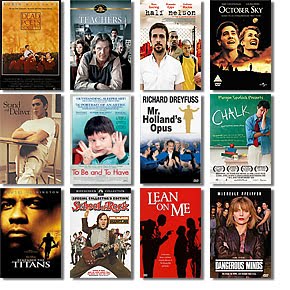
Top 12 Must-See Teacher Movies

After polling teachers, checking box office numbers, critical reviews and teacher forums, we\’ve compiled a list of the Top 12 must see teacher movies.

They appear in no particular order.

1. Dead Poets Society (1989)
Robin Williams gives a shockingly understated, touching portrayal of a teacher who brings inspiration to the lives of his straight-laced prep school students. A little saccharine but mostly sincere, Dead Poets Society is guaranteed to infuse poetry into the most prosaic days.

2. Teachers (1984)
Teachers taps into the realities of teaching with over-the-top satire, including disappearing desks, a brawl over the copy machine and a star substitute who is actually an escaped mental patient. Nick Nolte stars as the slacker hero who brings heart to this spoof.

3 WAYS MAN AND MACHINES CAN WORK IN HARMONY

Artificial Intelligence, machine learning and cognitive computing are slinking into every nook, cranny and call center of the workplace. But this is not a dystopian future where man is pitted against the evil machine. Instead, the future is much more likely to look like man and machine working in harmony—combining complementary strengths to transform business for the better.
Yes, it would make a lousy sci-fi movie. But if done right, it will make for a great work environment.
In some ways, the future is already here. From Siri and Alexa to self-driving cars, there is technology already capable of mimicking human behavior. Businesses have received the message loud and clear that it’s time to integrate with technology: The Deloitte Human Capital Trends 2017 report revealed that 38 percent of companies will fully implement robotics and automation in the next five years.
What can HR do to prepare their workforce for the imminent arrival of tomorrow’s technology?

Create a Liquid Workforce

There are no jobs for life in the digital age, so workers constantly need to reinvent their skills to keep up with business needs. With the pace of change ever quickening, companies need what Accenture calls a “liquid workforce” of employees—agile enough to perform a range of tasks, who can grow and adapt with the company rather than perform one fixed task.
Josh Bersin, principal and founder of Bersin by Deloitte, talks about the rise of the Hollywood model or a network of teams approach, where people band together for a specific project and then move on when it’s complete (similar to a film crew and actors work on a movie and then move to a new production).
This should be a good thing for employees, offering them the chance to grow and learn and ultimately do more interesting and varied jobs. It should also keep boredom at bay, which is great for engagement.
If that’s the future, the role of HR and the rest of the senior team is to identify key areas where AI will have the biggest impact and start putting programs in place to help people learn new skills or widen their learning. It also means HR must hit home the importance of life-long learning, and provide opportunities for employees to constantly upgrade their skills and experiences.

Foster Soft Skills

The ironic consequence of more automation is that our unique human qualities are becoming more important. Soft skills are more in demand than ever: A 2015 LinkedIn survey found that 59 percent of hiring managers found it difficult to hire staff with the soft skills they required.
While machines are better than humans at repetitive tasks, people are good with uncertainty. For the most part, we excel at empathy and dealing productively with other people. HR needs to both recognize and nurture talented employees in these areas, while helping others improve the soft skills they lack.
These people skills will be particularly important in the Bersin work model, where people are continually being asked to join new teams and work with different people across departments.

Prioritize Right-Brain Thinking

HR needs to hire and inspire their workers to do more strategic thinking, aided by technology. Alongside soft skills, creativity is becoming a prized quality in the age of AI and automation. Lateral thinking and the ability to analyze and interpret the cold, hard data that machines provide and turn that into useful insight is a key skill. It’s the perfect melding of machine and human intelligence.
That means that HR needs to think about hiring people who have creative flair, rather than just a checklist of qualifications. There are many ways HR can identify these people, but a simple way at interview stage is to ask them competency-based questions about how they used creative thinking in previous roles.
The robots are coming, but it isn’t a threat. It’s an opportunity for humans to be more creative and productive at work.