
- Model Positive Behaviors
- Be an Active Listener
- Ask Questions
- And More!
Comprehensive, up-to-date news coverage, aggregated from sources all over the world by EduindexNews.
Now, I’d give almost anything to have 34 students in my classroom. This year, I have 40 in every single section (that’s five sections…200 kids.) I’m sure one or two may drop eventually, but there’s no way to know.
When I tell colleagues that I have 40 students per section, the first reaction is disbelief. Surely I’ve counted wrong? No, afraid not.
In my son’s elementary school, things aren’t much better. He is in third grade, and has 30 little souls in his classroom. Two teachers share the contract for his classroom, and they do an outstanding job. Still, handling 30 8-year-olds is a feat, and trying to teach them something? Well, miracles happen every day.
With this disturbing trend, schools, teachers and most importantly students are learning the devastating effects of overcrowded classrooms.
English-Language Learners are one of the fastest growing student populations in the United States: in fact, the percentage of ELL students grew 60% between 1995 and 2005, according to the New York Times.
Many teachers worry about effectively teaching English learners while still meeting the needs of their other students. Here are some classroom strategies are actually good for both types of students.
As the new school year begins, there are plenty of rituals that teachers observe: the trips to office supply stores for those things that we “need” in the year ahead, the faculty meetings to welcome everyone back, and the inevitable classroom preparations that we look forward to every fall.
When that first bell rings, I want to be motivated, inspired, and contagiously happy. One ritual I\’m using to achieve that mindset is creating a list of twelve things that make me passionate for the profession:
Rather than fighting a losing battle with video games, it\’s time to start brining gaming into learning. There are a ton of free interactive gaming sites with serious educational value.
Lately it seems as if every time I turn around, someone (It doesn’t really matter who the someone is…although it always seems to be someone who has never taught before.) is pointing their finger at, blaming or ridiculing the work of teachers.
Yet we still need to slap a smile on our faces, get up at the crack of dawn and troop into our classrooms to do actual, meaningful work. Despite the pervasive Debbie Downer spirit which seems to be all the rage right now. Here are some tips to stay sane admist the education world\’s insanity.
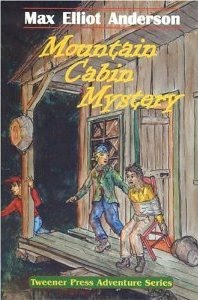
Max Elliot Anderson grew up as a reluctant reader. After his own experience and surveying the market, he sense the need for action-adventures and mysteries for readers 8 – 13, especially boys.
Using his extensive experience in the production of motion pictures, videos, and television commercials, Anderson brings the same visual excitement and heart-pounding action to his stories. Each book has completely different characters, setting, and plot.
Anderson has published eight books so far with many more on the horizon. He shares how his distaste for reading as a boy led him to writing childrens books in this TeachHUB exclusive
There are times when my political leanings–my voter registration cards reads \”Libertarian\”–come into disagreement with my educational philosophy, and it can be very difficult to reconcile the differences. It gets worse when my views are tinted by my experience as a scientist.
This kind of perfect storm of personal dilemma has occurred recently on the issue of national education standards. read more
I simply remember my favorite (teacher) things and then I don\’t feel so sad.
We\’re looking for more recommended websites and teaching tools to share, so please please please visit the recommedations page and share your favorite things.
Even though in our current educational climate it might seem unpopular, I’m just going to say it —I am getting tired of hearing about Race and Ethnicity in Education.
The reason for this could not be simpler: When we talk about the special needs of black and Latino students, the unsaid inference is that they are somehow deficient because they are black and Latino. I’m tired of ONLY talking about how different they are, and how we need to approach our minority students in a different way because of their culture or the color of their skin.
Believe it or not, there is something more important we should be talking about: poverty.