UPI accounted for more than half of the digital transaction in FY 22.

Unified Payments Interface (UPI), the digital payment system that rides on smartphones and increased internet connectivity, has shown a quantum jump and is now a preferred mode of payment.

The Economic Survey released on 31st January  said “the progress of UPI has been remarkable”. In the fiscal year ending March 31, 2022, UPI accounted for 52 per cent of the total 8,840 crore financial digital transactions. “In December 2022, UPI touched its highest-ever mark with Rs 12.8 lakh crore worth of transactions,” the survey said.

It showed that UPI transactions touched a new high in December with 782 crore transactions worth Rs 12.8 lakh crore. On an average, over 2019-22 calendar years, the growth in UPI-based transactions in value and volume terms has been 121% and 115%, respectively.

UWI Discrimination: Why no Hindu or Islamic BA Theology degree?

 By Dr. Kumar Mahabir


It sits innocently in the Undergraduate Humanities Programmes list, alphabetically bookended by Theatre Arts and Visual Arts. Yet the University of the West Indies (UWI) Bachelor of Arts BA Theology degree is a jarring testament to the religious and ethnic discrimination that still exists in the highest institution of education in our nation, paying lip service to diversity, equity and inclusion as core values. 


Taught every year at the St Augustine (Trinidad) campus by members of the Seminary of St John Vianney and the Ugandan Martyrs since 1970, UWI’s Theology degree is unapologetically Christian and Catholic in content. The syllabus comprises courses in Biblical and Pastoral Studies, History of the Christian Church in the Caribbean, Perspectives in Christology, and Principles of Christian Ethics.


But Trinidad and Tobago is an ethnically diverse society. While the largest segment of the population is Christian, a significant portion – almost 20% – is Hindu, 5.7% is Spiritual Baptist /Shouter, 5% is Muslim, and a small proportion is Rastafarian, Orishan and other denominations. Moreover, a growing percentage considers itself non-religious (2.2%) or does not choose to state its religion (11.1%).  Ideally, the theology programme at the nation’s prime tertiary institution should reflect this diversity. But this is not the case, despite it not even being the first time that this concern has been raised. 


Almost 20 years ago, Parshuram Maharaj, an executive member of the Sanatan Dharma Maha Sabha, wrote a well-reasoned letter, published in the Newsday on October 7, 2003. He pointed out that while the meaning of theology has traditionally been restricted to a narrow understanding due to its Greek and Christian origin, in the broadest sense, it is widely accepted as meaning “the science of God or of religion; the science which teaches of the existence, character and attributes of God, his laws and government, the doctrines we are to believe, and the duties we are to practice; divinity”. He called on UWI to offer a Theology degree that reflected and represented the entire religious spectrum, as many of the leading universities of the world now do.


The University of Oxford, for example, which has a long history of preparing young men for the church, now offers Sanskrit, Pali and Qur’anic Arabic with New Testament Greek, Biblical Hebrew and Church Latin, and includes courses on Buddhism, Hinduism, Islam and Judaism. Harvard University provides courses in African and Afro-Atlantic Religions, Ancient Near Eastern / Israelite religions, Buddhism, Christianity, East Asian religions, Greek-Hellenistic-Roman religions, Hinduism, Islam, Judaism, Religion in the Modern West / Religions of the Americas, and South Asian religions. 


While no one is expecting UWI to provide so many alternatives, what it offers now fails the needs of this nation’s diverse population. There are private universities in Trinidad and Tobago that offer exclusively Christian theology programmes, as is their right to do so. But UWI is a not a private university. It is a public institution funded by taxpayers – Christian, Hindu, Muslim, Spiritual Baptist /Shouter, Orishan, Rastafarian, atheist, etc. – all taxpayers.


Since Maharaj’s impassioned plea 20 years ago, nothing has changed. Is it any wonder, though, for according to UWI’s most recent prospectus, the Theology Department comprises 2 bishops, 2 monseigneurs, 5 nuns and 16 reverends among its 27 academic staff? Not a lot of religious diversity there. In UWI’s Theology degree, Hinduism, Islam and “Afro-Caribbean Expressions” are mentioned in just one course – Comparative Religion – out of a total of 38. 

But this must change, even it has to be taken to the Privy Council by my eminent attorney, Anand Ramlogan, SC. 


In her induction speech on January 22, 2023, the new Principal of the St Augustine Campus of UWI, Professor Rose-Marie Belle Antoine, spoke compellingly of the need for UWI to be more inclusive and to play a key role in healing wounds in our society. An excellent starting point for this, if such encouraging words are to be taken seriously. The new Principal should now remove religious bias from the Theology Department and provide complementary Hindu and Islamic programmes, while a certificate or diploma programme can be introduced for smaller religious groups.


Why not allow non-Christian religious denominations to design and deliver their own programmes with university funding, support, cooperation and supervision, as the Catholic seminary has been doing since 1970? There could at least be a Centre for Hindu Studies similar to the Oxford Centre for Hindu Studies. Muslims and others could also create their own syllabi. The sooner this happens the better. In 2019, UWI registered only 11 new admissions to, and 4 graduates from, the Theology Department, suggesting that a serious overhaul is needed in order to create dynamic programmes relevant to our whole society. This will be a vital step on the path to making Trinidad and Tobago a nation where “every creed and race” can truly “find an equal place”.


Dr. Kumar Mahabir is an anthropologist, university lecturer, and the Executive Director of the weekly Indo-Caribbean Cultural Centre ZOOM programme. dmahabir@gmail.com WhatsApp +1 868 756 4961



5 must-visit places in Bhubaneshwar


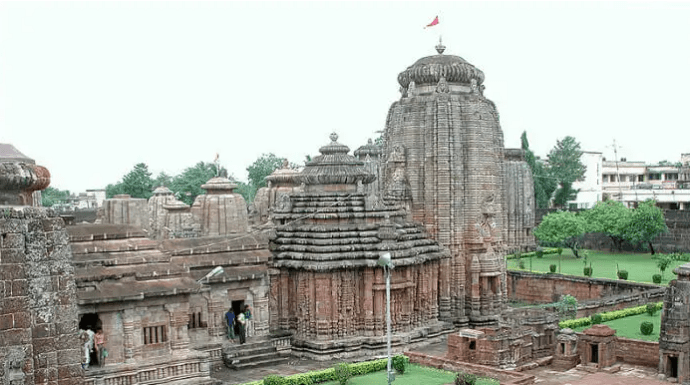
Lingaraja Temple

This image has an empty alt attribute; its file name is image-58.png

The 54m-high Lingaraj Mandir dedicated to Shiva dates from 1090 to 1104 – though some parts are more than 1400 years old–and is surrounded by several smaller temples and shrines. The granite block within, representing Tribhubaneswar (Lord of Three Worlds), is bathed daily with water, milk and bhang (marijuana). The main gate, guarded by two mustachioed yellow lions, is a spectacle in itself as lines of pilgrims approach with offerings in hand. The temple is closed to non-Hindus.

Given the high compound wall, foreigners can view the temple’s interiors only from a viewing platform (this may also include Hindu foreigners). Face the main entrance, walk right, then follow the wall around to the left and find the viewing platform on your left, just before you reach Chitrakarini Temple. There is occasional aggressive hassling for ‘donations’ at the viewing platform. The money will not go to the temple, so stand your ground and do not pay.

Location: Lingaraj Road, Old Town Bhubaneswar, Odisha
Timings: 5:00 AM to 9:00 PM
Entry Fees: No entry fee

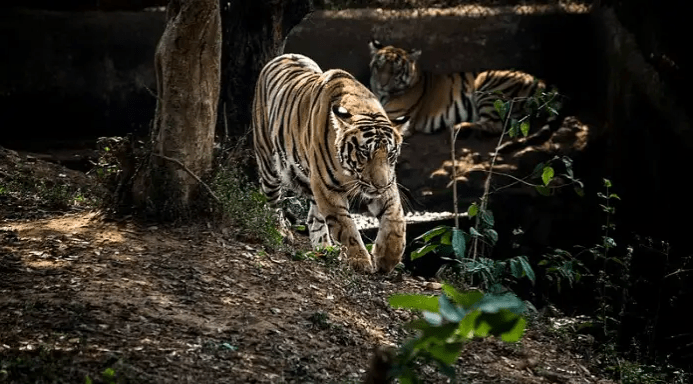
Nandankanan Zoological Park

This image has an empty alt attribute; its file name is image-54.png

Spread over 400 hectares in the Chandaka forest lies the impressive Nandankanan Zoological Park. Located on the banks of Kanjia Lake, this zoo is home to over 67 kinds of mammals, 81 species of birds and 18 varieties of reptiles. It was the first zoo in India to join the World Association of Zoos and Aquariums (WAZA) and also houses a botanical garden. Visitors can see black panthers, white tigers, gharial crocodiles and many other animals, birds and reptiles in an attempt to maintain the natural balance of nature against the growing urbanisation of Bhubaneswar.

Price: Budget

Opening hours: 7.30am-5.30pm (April–September), 8am-5pm (October–March); Closed Monday.

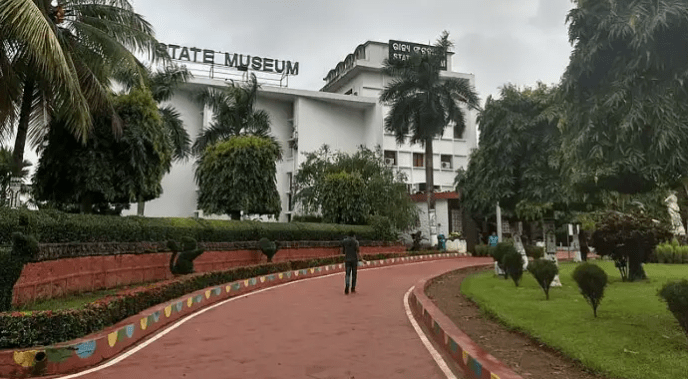
Odisha State Museum

This image has an empty alt attribute; its file name is image-55.png

Wondering what to do in Bhubaneswar? Visit Odisha State Museum, which houses a treasure trove of artifacts emphasizing the magnificent history of the state and the families which ruled it for centuries. The museum, established in the year 1948, houses the best collection of erratic palm-leaf manuscripts, scroll paintings, folk musical instruments, and Bronze Age tools.

Location: Near Lewis Road, Kalpana Square, BJB Nagar Bhubaneswar, Odisha
Timings: 10 AM to 5.00 PM
Entry Fees: INR 10 for Indians and INR 50 for foreigners

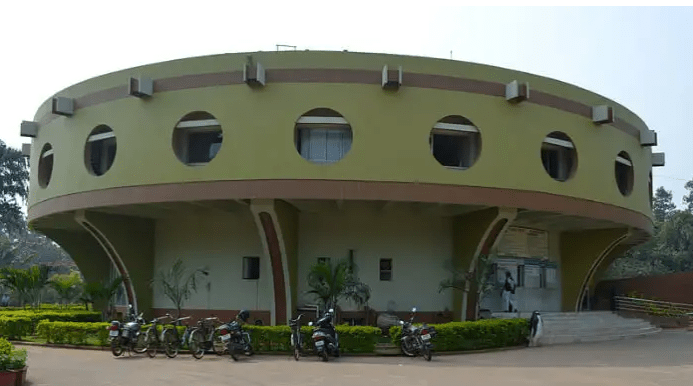
Pathani Samanta Planetarium 

This image has an empty alt attribute; its file name is image-56.png

The Pathani Samanta Planetarium was recognized to create awareness of astrophysics, astronomy, and space science. Multiple shows, workshops, regular conferences about outer space are organized here. There is an extensive library with an impressive number of books from the field of astronomy, science and technology are there.

Location: Sachivalaya Marg Acharya Vihar, Bhubaneswar, Odisha
Timings: 1.00 PM to 5:45 PM
Entry Fees: INR 30

Udayagiri & Khandagiri Caves

This image has an empty alt attribute; its file name is image-57.png

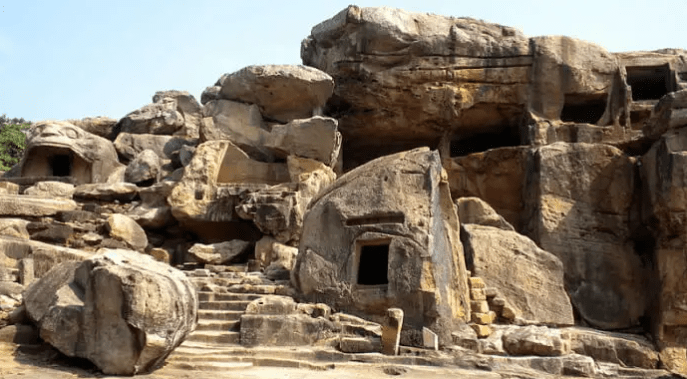
Udayagiri and Khandagiri caves are located six kilometres to the west of Bhubaneswar. These caves offer a brief look into the history of Jain religion and Kalinga Empire. The names of these caves were derived from the hills on which they are located. The caves have been numbered according to the Archaeological Survey of India, Hatigumpha, and Ganesha Gumpha are the most popular in the area. Cave 1 is decked out by sculptural wall painting with carved figures of athletes, women, elephants, and geese carrying flowers.

Location: Khandagiri, Bhubaneswar, Odisha
Timings: 9.00 AM to 6.00 PM
Entry Fees: INR 15 for Indians and INR 200 for foreigners

7 intriguing facts of Jagannath Puri

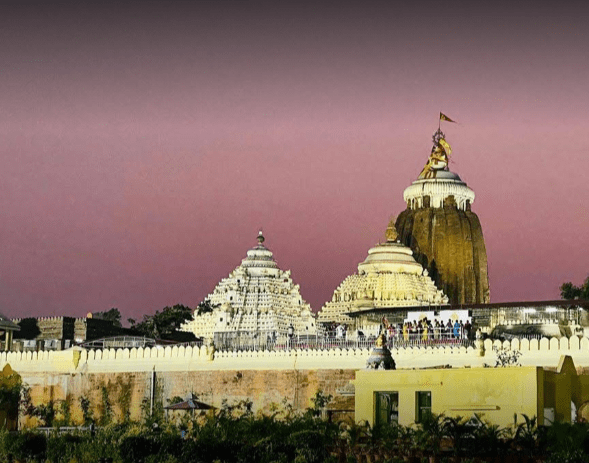
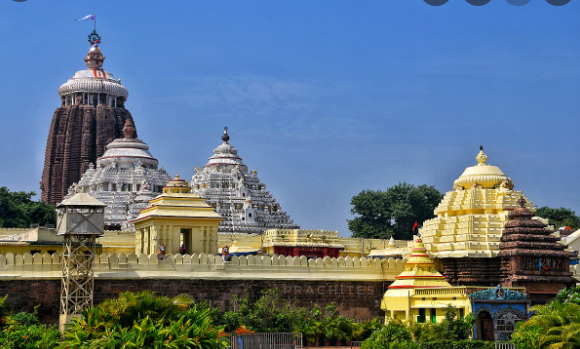
 Shri Jagannath’s Temple in Puri has uttermost importance for the Hindu devotees as it is one of the Char-Dham pilgrimages i.e. Puri, Dwaraka, Badrinath, and Rameshwar. This temple is famous for its annual Rath Yatra, but that’s not the sole reason people worship Lord Jagannath and Devi Subhadra and elder brother Lord Balabhadra.

Jagannath Puri is also famous for the mysteries and undefinable facts that catch the traveler’s eye worldwide. Devotees believe that all these are blessings of Lord Jagannath, and people who consider these as myths should visit the place themselves and find themselves dumbfounded. So, here are some most intriguing facts about Jagannath Puri.

1. No birds, no planes fly above the Lord

They say no one’s above God, so nothing flies above it. It’ll leave you surprised to encounter such a divine miracle that no birds, no planes fly above the temple. This is a rare contrast compared to other temples, as we have always seen birds resting on the top of temples are other entities. The temple is considered as a no-fly zone, not by any state government orders but by the Lord himself. And this phenomenon apparently has no scientific explanation.

2. Flag defying the power of wind

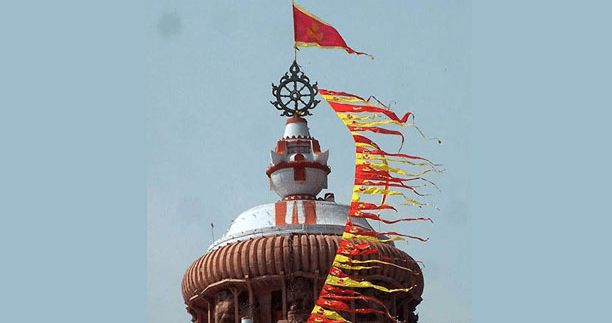
All of us know that any cloth flows towards wind direction, be it the sails of ship or the kites we flew in our childhoods. But here, the flag that flies atop of the Jagannath temple is an exception to this common principle. No scientific explanations reason the flag flow in the opposite direction of wind.

3. Mute oceans

Odisha Tourism : Puri Beach
As soon as you step inside the main door, i.e. Singha Dwara entrance of the temple, you can’t hear the burble of water. And this phenomenon is more prominent in the evenings. But once you step out the audibility of water returns. It’s said that Devi Subhadra wished for serenity inside the temple walls and by this her wish was duly fulfilled.

4. Neela Chakra at the pinnacle

The riddle of Neela Chakra (Blue wheel) has still been unsolved. First, just think about the fact, how did the wheel made of 8 different alloys and a 36 feet circumference get up there at the pinnacle with just a human force of that century. Second, the view of this wheel doesn’t really depend on the direction that we look at it from. It’s like it was designed to look the same from all directions.

5. The temple casts no shadows

Every small object/thing/ peoples have shadows. But ever wondered what if something doesn’t have a shadow? The temple Jagannath Puri doesn’t cast any shadow on any part of the day under sunlight. If this is not a miracle, what would it be; just an unexplained phenomenon with no scientific reason to back up.

6. The magical techniques to cook

The traditional methods for cooking the mahaprasadam have been preserved here from the start. They place exactly 7 pots, one above the other on the firewood. Enchantingly, the upper pot gets cooked first, followed by the rest in order.

7. Mahaprasad never goes vain here

In India, wasting food is considered as a bad sign; the temple crew lives by this same. So, here at Jagannath temple the food is never futile, even if the crowd of devotees may vary from 2,000 to 2,00,000. Miraculously, the Parsadam prepared every day is never wasted, not even a bite. Could this be an effective management or the Lord’s will?

After reading such celestial facts, you might want to see them yourself. So, do not forget to check these facts on your next trip to Odisha and share your experience with me.

Types of Data in Statistics

 There are different types of data in Statistics, that are collected, analysed, interpreted and presented. The data are the individual pieces of factual information recorded, and it is used for the purpose of the analysis process. The two processes of data analysis are interpretation and presentation. Statistics are the result of data analysis. Data classification and data handling are important processes as it involves a multitude of tags and labels to define the data, its integrity and confidentiality. In this article, we are going to discuss the different types of data in statistics in detail.

What are Types of Data in Statistics?

The data is classified into majorly four categories:

  • Nominal data
  • Ordinal data
  • Discrete data
  • Continuous data

Further, we can classify these data as follows:

Let us discuss the different types of data in Statistics herewith examples.

Qualitative or Categorical Data

Qualitative data, also known as the categorical data, describes the data that fits into the categories. Qualitative data are not numerical. The categorical information involves categorical variables that describe the features such as a person’s gender, home town etc. Categorical measures are defined in terms of natural language specifications, but not in terms of numbers.

Sometimes categorical data can hold numerical values (quantitative value), but those values do not have a mathematical sense. Examples of the categorical data are birthdate, favourite sport, school postcode. Here, the birthdate and school postcode hold the quantitative value, but it does not give numerical meaning.

Nominal Data

Nominal data is one of the types of qualitative information which helps to label the variables without providing the numerical value. Nominal data is also called the nominal scale. It cannot be ordered and measured. But sometimes, the data can be qualitative and quantitative. Examples of nominal data are letters, symbols, words, gender etc.

The nominal data are examined using the grouping method. In this method, the data are grouped into categories, and then the frequency or the percentage of the data can be calculated. These data are visually represented using the pie charts.

Ordinal Data

Ordinal data/variable is a type of data that follows a natural order. The significant feature of the nominal data is that the difference between the data values is not determined. This variable is mostly found in surveys, finance, economics, questionnaires, and so on.

The ordinal data is commonly represented using a bar chart. These data are investigated and interpreted through many visualisation tools. The information may be expressed using tables in which each row in the table shows the distinct category.

Quantitative or Numerical Data

Quantitative data is also known as numerical data which represents the numerical value (i.e., how much, how often, how many). Numerical data gives information about the quantities of a specific thing. Some examples of numerical data are height, length, size, weight, and so on. The quantitative data can be classified into two different types based on the data sets. The two different classifications of numerical data are discrete data and continuous data.

Discrete Data

Discrete data can take only discrete values. Discrete information contains only a finite number of possible values. Those values cannot be subdivided meaningfully. Here, things can be counted in whole numbers.

Example: Number of students in the class

Continuous Data

Continuous data is data that can be calculated. It has an infinite number of probable values that can be selected within a given specific range.

Example: Temperature range

Trending words of 2022.

Moonlighting

This was the most controversial and debated word that became a trend this year.

Meaning: “Moonlighting” refers to doing many jobs in addition to one’s regular job. In simpler words, it means a ‘side job’.  

Metaverse

Meaning: A virtual reality space in which users can interact with a computer-generated environment and other users.

Finfluencer

Meaning: Finfluencers are people with public social media platforms offering advice and sharing personal experiences about money and investment in stocks

Cockroach Startup

Meaning: A cockroach startup is the one which keeps struggling, going forward in spite of changing environments, market conditions and investment scenarios, just like a cockroach.


Stagflation
Meaning: Stagflation is defined as an economy that is suffering both an increase in inflation and a stagnation in economic output at the same time.

Trending words of 2022.

Moonlighting

This was the most controversial and debated word that became a trend this year.

Meaning: “Moonlighting” refers to doing many jobs in addition to one’s regular job. In simpler words, it means a ‘side job’.  

Metaverse

Meaning: A virtual reality space in which users can interact with a computer-generated environment and other users.

Finfluencer

Meaning: Finfluencers are people with public social media platforms offering advice and sharing personal experiences about money and investment in stocks

Cockroach Startup

Meaning: A cockroach startup is the one which keeps struggling, going forward in spite of changing environments, market conditions and investment scenarios, just like a cockroach.

Stagflation
Meaning: Stagflation is defined as an economy that is suffering both an increase in inflation and a stagnation in economic output at the same time.

7 tips to crack GATE 2024

Picture Credits – GeekforGeeks

1. The Early You Start, The Better It Is.

GATE is an exam that usually entails consistent study. It is advantageous to begin early as you’ll have enough time to thoroughly study the topics and revise on a regular basis. GATE preparation is best done in the third year of engineering. You must devote at least a few hours per week, preferably on weekends, to GATE preparation. Aspirants have been studying for the exam for over two years, so competition is fierce.

2. Know the GATE Exam Pattern and Syllabus

Before you begin your GATE preparation, familiarize yourself with the GATE 2024 exam pattern and syllabus. The exam contains both MCQ and numerical questions. There is negative marking as well except for the numerical type questions.
The following step is to review the GATE Syllabus 2024. Subjects and topics should be prioritized based on your conceptual knowledge and understanding of the subject. Categorize the topics based on your strengths and weaknesses to help you decide which ones to focus on more. Aside from that, select the core subjects that you must thoroughly study in order to score higher.

3. Make a proper study plan

The study plan will differ depending on whether the candidate is a first-timer or a repeater, as well as on their strengths and weaknesses. Examine the exam pattern, syllabus, and difficulty level carefully before creating an effective study plan. Create a long-term, monthly, and daily plan. Experiment with a variety of problems from various sources. Practice a variety of problems from different sources. Take as many mock tests as possible, solve previous year’s papers, and sample papers.

4. Manage your time effectively

Time management is crucial in GATE preparation. Make a workable schedule and make good use of your time. Plan out the time needed to cover the syllabus and set aside time for each task related to your GATE preparation. Revision is essential; take it seriously and practice a variety of question papers to better manage time during the exam.

5. Take Mock Tests and Analyze the Results

Taking mock tests can help you keep track of your performance at every stage of your preparation. It is not enough to simply take mock tests; it is also necessary to analyze the results. Recognize your mistakes and areas for improvement.

6. Focus on General Aptitude and Engineering Mathematics

If you want to pass GATE 2024, concentrate on Mathematics and Aptitude. Prepare thoroughly for these two subjects because you will score much higher in this section than in the others. The Aptitude section is worth 15 points, as is the Mathematics section. As a result, preparing for this section without fail is an excellent strategy. 

7. Join an online test series

One of the best ways to determine your level of preparation is to take an online test series. These are created by expert faculty and include previous year questions. These will help you compete with the actual candidates who will be appearing for the year, and you can also analyze your AIR. You can get information about the best test series from your seniors and teachers, who may already be enrolled.
Think beyond the textbook and look for real-world applications of engineering concepts. This will assist you in making things more interesting and realistic. Develop your visualization skills and look for connections and relationships between concepts. This will assist you in learning more effectively. Make analogies to help you explain topics and concepts. 
Take good care of your health and get enough sleep. Revise frequently and keep a cool head on exam day.
Do you want to know about the tracks you can opt after you qualify GATE?
You can read my other article, which is linked below, to learn more about the various opportunities available after passing the GATE exam.

More sector should be added to current PLI scheme says expert.

A proposal to extend PLI scheme benefits to different sectors such as toys and leather is at advanced stages of finalisation and there is a likelihood that it may figure in the Budget, expert says.

The 14 sectors are mobile manufacturing, manufacturing of medical devices, automobiles and auto components, pharmaceuticals, drugs, specialty steel, telecom & networking products, electronic products, white goods (ACs and LEDs), food products, textile products, solar PV modules, advanced chemistry cell (ACC) battery, and drones and drone components.

The key objective of the PLI schemes is to make domestic manufacturing globally competitive by boosting existing capacities in manufacturing for sunrise (new businesses) and strategic sectors, creating global champions in manufacturing and curbing cheaper imports, while also reducing import bills, enhancing export capacity and generating employment.

Different Opportunities after GATE Exam


Picture Credits: Raudra Eduservices

In present, being a graduate alone will not secure you a great job as we are all well aware of India’s declining employment rates. Higher education is therefore recommended for an unprecedented career. This will not only open doors to a bright future for you, but it will also help your career. As a result, students preparing for higher education nowadays prefer competitive exams.

One such well-known exam is the GATE (Graduate Aptitude Test in Engineering). Almost all science and engineering students take the exam and are aware of the various opportunities.

If you want to continue your education after graduation, you can pursue M. Tech. or ME degrees. Then you should take this competitive exam. 

Let me list few of the advantages of qualifying the GATE exam.

Higher Studies 

If you pass the exam with a decent score, you will have the best chance of getting into one of India’s prestigious institutes such as IITs, NITs, or IISC. You can select your favorite institutes based on your specialization and interests. Following the completion of your higher education, firms such as Google, Samsung, Tata, Maruti, Cisco, and several other eminent companies with salaries ranging from 8 lakhs to 30 lakhs per annum bestow upon you truly excellent campus placement opportunities. And if you have always dreamt of getting that tag of an “IITian” before your name, this is the exam that paves the path towards it.

Public Sector Units

PSUs are government-owned establishments that are established and owned by the Government of India or state governments in India. Candidates qualifying GATE with excellent ranks is directly called for interviews by these organizations. PSUs like BHEL, IOCL, ONGC, SAIL, NTPC, HPCL, PGCIL, BARC, and over 200 other PSUs in the country, regard GATE scores as a satisfactory criterion in their recruitment process. A job in a PSU keeps you in loop with intriguing engineering advances while providing the security and benefits of a government job. Working in a PSU will not only help you live a affluent life, but it will also allow you to serve your country.

Research 

If you are passionate about your subject and want to learn more, you can pursue a Junior Research Fellowship in CSIR Laboratories after completing your M. Tech or ME. Research is an area that is underdeveloped in our country, despite the fact that it holds great promise. Few people stay in the country to complete their research fellowships; other choose to travel abroad in search of a better future. But why should you go to a foreign university and conduct research while also working part-time to make ends meet? You can conduct the same outstanding and groundbreaking research in your own country while earning a pretty hefty stipend. Isn’t it a viable option for you? You can make your country and people proud by conducting research in your own country.

Joining foreign universities after GATE

Another fantastic opportunity after GATE is to pursue your higher education at a foreign university and realize all of your dreams. Many universities in Germany and Singapore consider a valid GATE score, i.e. one that is higher than the 90th percentile, as a criterion for admission. While many German universities waive tuition for their various M. Tech. and MS programmes. So, put in the effort for your GATE exam preparation and you will be one step closer to realizing your dream.
If you are in your third year of engineering, now is the time to begin your GATE preparation. 

No pre installed Google application on new phones, read more about CCI and Google case.

Google has been making the headlines with hefty fines imposed by the Competition Commission of India (CCI) in recent months, alleging the company of abusing its position as a market leader with Android, and not allowing other companies to grow on the platform. Google has been legally battling these accusations in the country but it seems the company is ready to comply with the terms issued by the antitrust body.

Having limited choices of apps as an alternative to Chrome, Pay and Drive among others has worked in Google’s favour in India, but the ruling means other app developers might finally get the chance to catch your eye and allow it to be used on Android devices.

Google makes Chrome the default search option for Android users in India, but soon that will not be the only option for users. Android devices will give you a choice screen through which you can select which search engine is going to be your default option. The details are not clear for now, but it is likely that people will have the freedom to choose between Chrome, Bing or any other search option compatible on Android.

Unfortunate happenings in West Bengal

After 34 years of Left –front rule (communist rule) in West Bengal a political change took place in 2011 in the State. The people of West Bengal expected lots of development from the new government under the leadership of Mamata Banerjee, the first woman Chief Minister of the State.   When I was in service (now retired Professor) in an organization of the Government of India for official and academic purposes I visited the State.  I observed serious unemployment, poverty, refugee issues, high density of population, low agricultural land holding, etc were the major issues in the State.  It is pertinent to mention that as per the ‘Refugee Relief and Rehabilitation Department of the Government of West Bengal, “the census figures show the number of refugees from East Pakistan in 1971 was nearly 6 million (60 lakh) and in 1981, the number was assessed at 8 million (80 lakh)”. Anyway, the people of West Bengal had lots of expectations from the present State Government but the loose -talk of some leaders, criticizing central leaders, scandals, etc., have lowered the image of the All-India Trinamool Congress (AITC/TMC). Indians always want to see a political leader should be free from all sorts of corruption and also from the loose talk. But under the AITC/TMC rule situation is different. 

I am pained to see the unfortunate happenings in the State because the State produced a number of great personalities, and great stalwarts in all the fields – cultural, religion, literature, science, and the freedom movement. The first case took place in 2014 June, “TMC MP Tapas Pal has threatened to kill opposition CPM workers and have their women raped if a single ruling party worker was attacked. The comments triggered an uproar and sparked condemnation by opposition parties with CPM demanding that the Lok Sabha Speaker take suo motu cognizance of Pal’s outburst and disqualify him. (The Times of India, 30/6/2014). Tapas Pal was a great actor and I had the opportunity to watch many movies acted by him but after such a statement I was dejected.   Another highly deplorable issue is that after the Assembly elections in West Bengal (2021), many violent incidents took place in different forms which did not happen recently in any State assembly elections but the worst things happened after the Assembly election in West Bengal. Now worst case in the State is the ‘Teachers recruitment scam’ which cannot be imagined in a culturally developed State like West Bengal. Thanks to Calcutta High Court otherwise probably 10th failed persons would have got teachers’ jobs by paying bribes to the ruling party leaders. I am presenting here a case, Trinamul Congress youth leader Kuntal Ghosh, who was arrested by the Enforcement Directorate (ED) on 21 January 2023, told media persons on Wednesday (25/01/23) that “he is confident that someday the masterminds of the scam will be arrested. Corruption is sky-high. Let there be a proper investigation and everything will be revealed. The names of the masterminds in the matter will surface. It will be revealed who is guilty and who is not. A grand conspiracy has been hatched in the matter, which is the biggest in recent times.  However, he did not specify who these ‘masterminds’ are” (The Statesman, 26/01/23).  It is pertinent to mention here that on 23 July 2022, former Education Minster of the State Partha Chatterjee was arrested by the Enforcement Directorate in connection with the alleged State School Service Commission (SSC) recruitment scam cases along with his aide actress Arpita Mukherjee. We all know crores and crores of rupees were recovered. Another corrupt leader of TMC is Anubrata Mandal and I am simply quoting India TV( 11/08/22)  “Who is Anubrata Mondal: Bengal’s ‘Bahubali’ politician and trusted aide of Mamata. Mondal (62), who is presently TMC’s Birbhum district president and member of the party’s national working committee, rose to prominence in the 11 years of the TMC regime in Bengal, mostly for his audacious statements and browbeating”. Such types of leaders are dominating the TMC/AITC. While watching TV discussions, I observed some TMC representatives, refer to law and order or corruption cases of a few ‘BIMARU’ States but they should remember how the States, of the South of India, have been developing. Many persons from other parts of India including West Bengal for employment, medical treatment, and education are coming to the States of South India. Anyway, even some Calcutta High Court judges are also facing problems. Justice Rajasekhar Mantha and Justice Abhijit Gangopadhyay of Calcutta High Court were criticized by TMC leaders for their judgment. It seems some TMC leaders desired corruption, scams, etc., should not be highlighted by the judges. Recent incidents with Indian Secular Front (ISF) MLA, Naushad Siddique were very unfortunate and deplorable. It seems TMC  leaders do not want ISF should emerge as a big political party.   Lastly, my personal opinion is that among the Chief Ministers of West Bengal, the real and productive development took place during the legendary physician and the second Chief Minister of West Bengal, Dr. Bidhan Chandra Roy popularly known as Dr. B.C. Roy’s regime. He had done highly positive politics and developed the State as a sequel the State reached its zenith in those days. 

Dr Shankar Chatterjee, Hyderabad

Unfortunate happenings in West Bengal

After 34 years of Left –front rule (communist rule) in West Bengal a political change took place in 2011 in the State. The people of West Bengal expected lots of development from the new government under the leadership of Mamata Banerjee, the first woman Chief Minister of the State.   When I was in service (now retired Professor) in an organization of the Government of India for official and academic purposes I visited the State.  I observed serious unemployment, poverty, refugee issues, high density of population, low agricultural land holding, etc were the major issues in the State.  It is pertinent to mention that as per the ‘Refugee Relief and Rehabilitation Department of the Government of West Bengal, “the census figures show the number of refugees from East Pakistan in 1971 was nearly 6 million (60 lakh) and in 1981, the number was assessed at 8 million (80 lakh)”. Anyway, the people of West Bengal had lots of expectations from the present State Government but the loose -talk of some leaders, criticizing central leaders, scandals, etc., have lowered the image of the All-India Trinamool Congress (AITC/TMC). Indians always want to see a political leader should be free from all sorts of corruption and also from the loose talk. But under the AITC/TMC rule situation is different. 

I am pained to see the unfortunate happenings in the State because the State produced a number of great personalities, and great stalwarts in all the fields – cultural, religion, literature, science, and the freedom movement. The first case took place in 2014 June, “TMC MP Tapas Pal has threatened to kill opposition CPM workers and have their women raped if a single ruling party worker was attacked. The comments triggered an uproar and sparked condemnation by opposition parties with CPM demanding that the Lok Sabha Speaker take suo motu cognizance of Pal’s outburst and disqualify him. (The Times of India, 30/6/2014). Tapas Pal was a great actor and I had the opportunity to watch many movies acted by him but after such a statement I was dejected.   Another highly deplorable issue is that after the Assembly elections in West Bengal (2021), many violent incidents took place in different forms which did not happen recently in any State assembly elections but the worst things happened after the Assembly election in West Bengal. Now worst case in the State is the ‘Teachers recruitment scam’ which cannot be imagined in a culturally developed State like West Bengal. Thanks to Calcutta High Court otherwise probably 10th failed persons would have got teachers’ jobs by paying bribes to the ruling party leaders. I am presenting here a case, Trinamul Congress youth leader Kuntal Ghosh, who was arrested by the Enforcement Directorate (ED) on 21 January 2023, told media persons on Wednesday (25/01/23) that “he is confident that someday the masterminds of the scam will be arrested. Corruption is sky-high. Let there be a proper investigation and everything will be revealed. The names of the masterminds in the matter will surface. It will be revealed who is guilty and who is not. A grand conspiracy has been hatched in the matter, which is the biggest in recent times.  However, he did not specify who these ‘masterminds’ are” (The Statesman, 26/01/23).  It is pertinent to mention here that on 23 July 2022, former Education Minster of the State Partha Chatterjee was arrested by the Enforcement Directorate in connection with the alleged State School Service Commission (SSC) recruitment scam cases along with his aide actress Arpita Mukherjee. We all know crores and crores of rupees were recovered. Another corrupt leader of TMC is Anubrata Mandal and I am simply quoting India TV( 11/08/22)  “Who is Anubrata Mondal: Bengal’s ‘Bahubali’ politician and trusted aide of Mamata. Mondal (62), who is presently TMC’s Birbhum district president and member of the party’s national working committee, rose to prominence in the 11 years of the TMC regime in Bengal, mostly for his audacious statements and browbeating”. Such types of leaders are dominating the TMC/AITC. While watching TV discussions, I observed some TMC representatives, refer to law and order or corruption cases of a few ‘BIMARU’ States but they should remember how the States, of the South of India, have been developing. Many persons from other parts of India including West Bengal for employment, medical treatment, and education are coming to the States of South India. Anyway, even some Calcutta High Court judges are also facing problems. Justice Rajasekhar Mantha and Justice Abhijit Gangopadhyay of Calcutta High Court were criticized by TMC leaders for their judgment. It seems some TMC leaders desired corruption, scams, etc., should not be highlighted by the judges. Recent incidents with Indian Secular Front (ISF) MLA, Naushad Siddique were very unfortunate and deplorable. It seems TMC  leaders do not want ISF should emerge as a big political party.   Lastly, my personal opinion is that among the Chief Ministers of West Bengal, the real and productive development took place during the legendary physician and the second Chief Minister of West Bengal, Dr. Bidhan Chandra Roy popularly known as Dr. B.C. Roy’s regime. He had done highly positive politics and developed the State as a sequel the State reached its zenith in those days. 

Dr Shankar Chatterjee, Hyderabad

Stock market highlights. Will it crash?

Benchmark equity indices BSE Sensex and NSE Nifty extended their losses for the second straight session on 27th January amid heavy selling in index heavyweights including Reliance Industries, Adani Enterprises and Adani Ports among others. The 30-share index Sensex traded over 1,800 points down at 59,108  against the 60,978.75 mark on January 24, 2023. Likewise, the 50-share NSE Nifty index retreated more than 550 points to 17,566 from 18,118 during the same period.

Selloff in Adani Group companies’ stocks, that was triggered by the Hindenburg Research report, which disclosed that the company was short on Adani Group companies could be factor behind the market crash. Sentiments came under pressure after the United Nations on 25th January cut down India’s growth forecast by 20 basis points to 5.8 per cent for the ongoing calendar year due to higher interest rates and risks of recession in the developed world weighing on investment and exports.

If you wish to learn more about stock market, then explore wiki-360.com

What is options trading?

Photo by Ivan Babydov on Pexels.com

An investor’s portfolio consists of various financial instruments like stocks, exchange traded funds (ETFs), mutual funds and bonds. However, the Options are altogether different. Options are used in different ways depending upon investors’ goals and how they plan to use them. Investors often use options to reduce the risk associated with the stock they have in their portfolio. Similarly, others may use options to earn additional income. Most importantly, options provide an opportunity to traders or investors to benefit from the price movement without paying the full price of a security or taking delivery.

In India, the National Stock Exchange (NSE) launched index options on 4 June 2001, and stock options were launched on 4 July 2001. In the year 2020, NSE also surpassed America’s Chicago Mercantile Exchange to become the world’s largest derivatives market exchange by volume.

What are options?

Options are defined as derivatives instruments that enable the buyer (holder or owner) of the instrument to buy or sell the underlying asset. The right to buy or sell is without any obligation. The seller of the option is, however, obligated to buy or sell, should the buyer exercise his or her right. 

Simply put, option trading includes: 

  • A right to buy or sell, but not an obligation
  • Buy or sell at predetermined price
  • Buy or sell on or before predetermined date

Types of options

There are two types of options: Call and Put. A call option gives the buyer the right to “buy” the underlying security but not the obligation to do so at a predetermined price and date. A put option gives the buyer the right to “sell” the underlying security but not the obligation to do so at a predetermined price and date.

How does options trading work?

Before we come to the options trading guide, a beginner must understand the two essential derivativesconcepts — long and short. When a trader goes long on an index or a stock, it means he or she believes that the price of the underlying will increase. On the contrary, if the trader goes short on any index or a stock, it means he or she believes that the price of the underlying will fall.