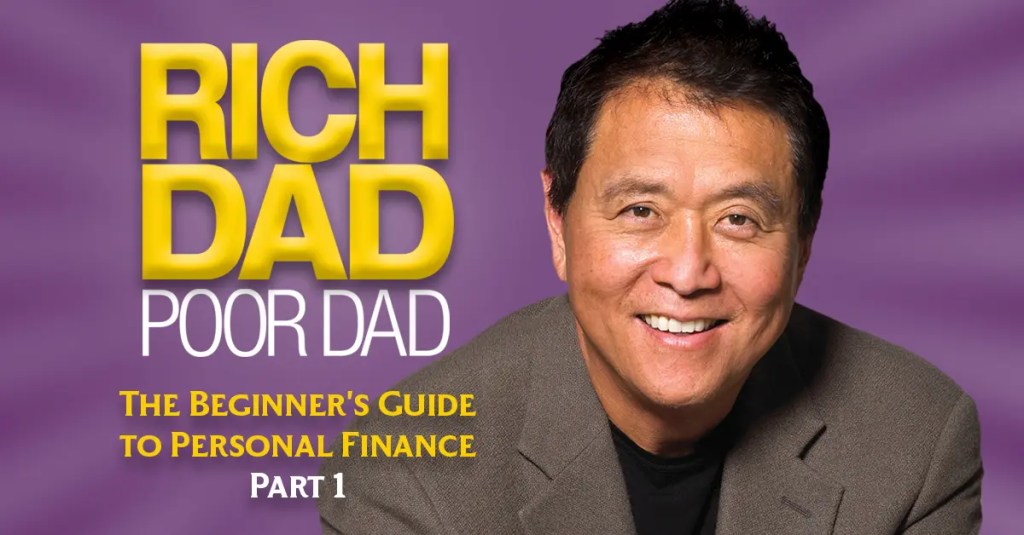
What The Rich Teach Their Kids About Money—That The Poor And Middle Class Do Not!

To parents everywhere,
a child’s first and most important teachers,
and to all those who educate, influence,
and lead by example

The Richest Businessmen
In 1923 a group of our greatest leaders and richest businessmen
held a meeting at the Edgewater Beach hotel in Chicago. Among
them were Charles Schwab, head of the largest independent steel
company; Samuel Insull, president of the world’s largest utility;
Howard Hopson, head of the largest gas company; Ivar Kreuger,
president of International Match Co., one of the world’s largest
companies at that time; Leon Frazier, president of the Bank of
International Settlements; Richard Whitney, president of the
New York Stock Exchange; Arthur Cotton and Jesse Livermore,
two of the biggest stock speculators; and Albert Fall, a member of
President Harding’s cabinet. Twenty-five years later, nine of these
titans ended their lives as follows: Schwab died penniless after
living for five years on borrowed money. Insull died broke in a
foreign land, and Kreuger and Cotton also died broke. Hopson
went insane. Whitney and Albert Fall were released from prison,
and Fraser and Livermore committed suicide.
So here is the argument I put forth. I really don’t expect most
people to agree with it because your home is an emotional thing
and when it comes to money, high emotions tend to lower financial
intelligence. I know from personal experience that money has a way
of making every decision emotional.
• When it comes to houses, most people work all their
lives paying for a home they never own. In other words,
most people buy a new house every few years, each time
incurring a new 30-year loan to pay off the previous one.
• Even though people receive a tax deduction for interest
on mortgage payments, they pay for all their other
expenses with after-tax dollars, even after they pay off
their mortgage.
• My wife’s parents were shocked when the property taxes
on their home increased to $1,000 a month. This was
after they had retired, so the increase put a strain on their
retirement budget, and they felt forced to move.
• Houses do not always go up in value. I have friends who
owe a million dollars for a home that today would sell
for far less.
• The greatest losses of all are those from missed opportunities.
If all your money is tied up in your house, you may be forced
to work harder because your money continues blowing
out of the expense column, instead of adding to the asset
column—the classic middle-class cash-flow pattern. If a
young couple would put more money into their asset column
early on, their later years would be easier. Their assets would
have grown and would be available to help cover expenses.
All too often, a house only serves as a vehicle for incurring a
home-equity loan to pay for mounting expenses.

Mind Your Own Business

In summary, the end result in making a decision to own a house
that is too expensive in lieu of starting an investment portfolio impacts
an individual in at least the following three ways:

  1. Loss of time, during which other assets could have grown
    in value.
  2. Loss of additional capital, which could have been invested
    instead of paying for high-maintenance expenses related
    directly to the home.
  3. Loss of education. Too often, people count their house
    and savings and retirement plans as all they have in their
    asset column. Because they have no money to invest, they
    simply don’t invest. This costs them investment experience.
    Most never become what the investment world calls “a
    sophisticated investor.” And the best investments are usually
    first sold to sophisticated investors, who then turn around
    and sell them to the people playing it safe.

Work to Learn—Don’t Work for Money

I remind people that financial IQ is made up of knowledge from
four broad areas of expertise:

  1. Accounting
    Accounting is financial literacy or the ability to read numbers.
    This is a vital skill if you want to build an empire. The more
    money you are responsible for, the more accuracy is required,
    or the house comes tumbling down. This is the left-brain
    side, or the details. Financial literacy is the ability to read and
    understand financial statements which allows you to identify
    the strengths and weaknesses of any business.
  2. Investing
    Investing is the science of “money making money.” This
    involves strategies and formulas which use the creative
    right-brain side.
  3. Understanding markets
    Understanding markets is the science of supply and demand.
    You need to know the technical aspects of the market, which are
    emotion-driven, in addition to the fundamental or economic
    aspects of an investment. Does an investment make sense or does
    it not make sense based on current market conditions?
  4. The law
    A corporation wrapped around the technical skills of
    accounting, investing, and markets can contribute to explosive
    growth. A person who understands the tax advantages and
    protections provided by a corporation can get rich so much
    faster than someone who is an employee or a small-business
    sole proprietor. It’s like the difference between someone walking
    and someone flying. The difference is profound when it comes
    to long-term wealth.
    • Tax advantages
    A corporation can do many things that an employee cannot,
    like pay expenses before paying taxes. That is a whole area of
    expertise that is very exciting. Employees earn and get taxed,
    and they try to live on what is left. A corporation earns,
    spends everything it can, and is taxed on anything that is
    left. It’s one of the biggest legal tax loopholes that the rich
    use. They’re easy to set up and are not expensive if you own
    investments that are producing good cashflow. For example,
    by owning your own corporation, your vacations can be
    board meetings in Hawaii. Car payments, insurance, repairs,
    and health-club memberships are company expenses. Most
    restaurant meals are partial expenses, and on and on. But it’s
    done legally with pre-tax dollars.
    • Protection from lawsuits
    We live in a litigious society. Everybody wants a piece of
    your action. The rich hide much of their wealth using
    vehicles such as corporations and trusts to protect their
    assets from creditors. When someone sues a wealthy
    individual, they are often met with layers of legal protection
    and often find that the wealthy person actually owns
    nothing. They control everything, but own nothing. The
    poor and middle class try to own everything and lose it to
    the government or to fellow citizens who like to sue the
    rich. They learned it from the Robin Hood story: Take
    from the rich, and give it to the poor.

Which one sounds harder to you?

  1. Work hard. Pay 50% in taxes. Save what is left.
    Your savings then earn 5%, which is also taxed.
    OR
  2. Take the time to develop your financial intelligence
    Harness the power of your brain and the asset column.

I have said it before, but it’s worth repeating. Financial intelligence
is made up of these four main technical skills:

  1. Accounting
    Accounting is financial literacy, or the ability to read
    numbers. This is a vital skill if you want to build
    businesses or investments.
  2. Investing
    Investing is the science of money making money.
  3. Understanding markets
    Understanding markets is the science of supply and
    demand Alexander Graham Bell gave the market what it
    wanted. So did Bill Gates. A $75,000 house offered for
    $60,000 that cost $20,000 was also the result of seizing
    an opportunity created by the market. Somebody was
    buying, and someone was selling.
  4. The law
    The law is the awareness of accounting corporate, state and
    federal regulations. I recommend playing by the rules.

Getting Started

  1. Find an opportunity that everyone else missed.
    You see with your mind what others miss with their eyes.
    For example, a friend bought this rundown old house. It was
    spooky to look at. Everyone wondered why he bought it.
    What he saw that we did not was that the house came with
    four extra empty lots. He discovered that after going to the
    title company. After buying the house, he tore the house
    down and sold the five lots to a builder for three times what
    he paid for the entire package. He made $75,000 for two
    months of work. It’s not a lot of money, but it sure beats
    minimum wage. And it’s not technically difficult.
  2. Raise money.
    The average person only goes to the bank. This second type
    of investor needs to know how to raise capital, and there are
    many ways that don’t require a bank. To get started, I learned
    how to buy houses without a bank. It was the learned skill
    of raising money, more than the houses themselves, that
    was priceless.
  1. Organize smart people.
    Intelligent people are those who work with or hire a
    person who is more intelligent than they are. When you
    need advice, make sure you choose your advisor wisely.

Still Want More? Here Are Some To Do’s

The main management skills needed for success are:

  1. Management of cash flow
  2. Management of systems
  3. Management of people

What The Rich Teach Their Kids About Money—That The Poor And Middle Class Do Not!

To parents everywhere,
a child’s first and most important teachers,
and to all those who educate, influence,
and lead by example

The Richest Businessmen
In 1923 a group of our greatest leaders and richest businessmen
held a meeting at the Edgewater Beach hotel in Chicago. Among
them were Charles Schwab, head of the largest independent steel
company; Samuel Insull, president of the world’s largest utility;
Howard Hopson, head of the largest gas company; Ivar Kreuger,
president of International Match Co., one of the world’s largest
companies at that time; Leon Frazier, president of the Bank of
International Settlements; Richard Whitney, president of the
New York Stock Exchange; Arthur Cotton and Jesse Livermore,
two of the biggest stock speculators; and Albert Fall, a member of
President Harding’s cabinet. Twenty-five years later, nine of these
titans ended their lives as follows: Schwab died penniless after
living for five years on borrowed money. Insull died broke in a
foreign land, and Kreuger and Cotton also died broke. Hopson
went insane. Whitney and Albert Fall were released from prison,
and Fraser and Livermore committed suicide.

So here is the argument I put forth. I really don’t expect most
people to agree with it because your home is an emotional thing
and when it comes to money, high emotions tend to lower financial
intelligence. I know from personal experience that money has a way
of making every decision emotional.
• When it comes to houses, most people work all their
lives paying for a home they never own. In other words,
most people buy a new house every few years, each time
incurring a new 30-year loan to pay off the previous one.
• Even though people receive a tax deduction for interest
on mortgage payments, they pay for all their other
expenses with after-tax dollars, even after they pay off
their mortgage.
• My wife’s parents were shocked when the property taxes
on their home increased to $1,000 a month. This was
after they had retired, so the increase put a strain on their
retirement budget, and they felt forced to move.
• Houses do not always go up in value. I have friends who
owe a million dollars for a home that today would sell
for far less.
• The greatest losses of all are those from missed opportunities.
If all your money is tied up in your house, you may be forced
to work harder because your money continues blowing
out of the expense column, instead of adding to the asset
column—the classic middle-class cash-flow pattern. If a
young couple would put more money into their asset column
early on, their later years would be easier. Their assets would
have grown and would be available to help cover expenses.
All too often, a house only serves as a vehicle for incurring a
home-equity loan to pay for mounting expenses.

Mind Your Own Business

In summary, the end result in making a decision to own a house
that is too expensive in lieu of starting an investment portfolio impacts
an individual in at least the following three ways:

  1. Loss of time, during which other assets could have grown
    in value.
  2. Loss of additional capital, which could have been invested
    instead of paying for high-maintenance expenses related
    directly to the home.
  3. Loss of education. Too often, people count their house
    and savings and retirement plans as all they have in their
    asset column. Because they have no money to invest, they
    simply don’t invest. This costs them investment experience.
    Most never become what the investment world calls “a
    sophisticated investor.” And the best investments are usually
    first sold to sophisticated investors, who then turn around
    and sell them to the people playing it safe.

Work to Learn—Don’t Work for Money

I remind people that financial IQ is made up of knowledge from
four broad areas of expertise:

  1. Accounting
    Accounting is financial literacy or the ability to read numbers.
    This is a vital skill if you want to build an empire. The more
    money you are responsible for, the more accuracy is required,
    or the house comes tumbling down. This is the left-brain
    side, or the details. Financial literacy is the ability to read and
    understand financial statements which allows you to identify
    the strengths and weaknesses of any business.
  2. Investing
    Investing is the science of “money making money.” This
    involves strategies and formulas which use the creative
    right-brain side.
  3. Understanding markets
    Understanding markets is the science of supply and demand.
    You need to know the technical aspects of the market, which are
    emotion-driven, in addition to the fundamental or economic
    aspects of an investment. Does an investment make sense or does
    it not make sense based on current market conditions?
  4. The law
    A corporation wrapped around the technical skills of
    accounting, investing, and markets can contribute to explosive
    growth. A person who understands the tax advantages and
    protections provided by a corporation can get rich so much
    faster than someone who is an employee or a small-business
    sole proprietor. It’s like the difference between someone walking
    and someone flying. The difference is profound when it comes
    to long-term wealth.
    • Tax advantages
    A corporation can do many things that an employee cannot,
    like pay expenses before paying taxes. That is a whole area of
    expertise that is very exciting. Employees earn and get taxed,
    and they try to live on what is left. A corporation earns,
    spends everything it can, and is taxed on anything that is
    left. It’s one of the biggest legal tax loopholes that the rich
    use. They’re easy to set up and are not expensive if you own
    investments that are producing good cashflow. For example,
    by owning your own corporation, your vacations can be
    board meetings in Hawaii. Car payments, insurance, repairs,
    and health-club memberships are company expenses. Most
    restaurant meals are partial expenses, and on and on. But it’s
    done legally with pre-tax dollars.
    • Protection from lawsuits
    We live in a litigious society. Everybody wants a piece of
    your action. The rich hide much of their wealth using
    vehicles such as corporations and trusts to protect their
    assets from creditors. When someone sues a wealthy
    individual, they are often met with layers of legal protection
    and often find that the wealthy person actually owns
    nothing. They control everything, but own nothing. The
    poor and middle class try to own everything and lose it to
    the government or to fellow citizens who like to sue the
    rich. They learned it from the Robin Hood story: Take
    from the rich, and give it to the poor.

Which one sounds harder to you?

  1. Work hard. Pay 50% in taxes. Save what is left.
    Your savings then earn 5%, which is also taxed.
    OR
  2. Take the time to develop your financial intelligence
    Harness the power of your brain and the asset column.

I have said it before, but it’s worth repeating. Financial intelligence
is made up of these four main technical skills:

  1. Accounting
    Accounting is financial literacy, or the ability to read
    numbers. This is a vital skill if you want to build
    businesses or investments.
  2. Investing
    Investing is the science of money making money.
  3. Understanding markets
    Understanding markets is the science of supply and
    demand Alexander Graham Bell gave the market what it
    wanted. So did Bill Gates. A $75,000 house offered for
    $60,000 that cost $20,000 was also the result of seizing
    an opportunity created by the market. Somebody was
    buying, and someone was selling.
  4. The law
    The law is the awareness of accounting corporate, state and
    federal regulations. I recommend playing by the rules.

Getting Started

  1. Find an opportunity that everyone else missed.
    You see with your mind what others miss with their eyes.
    For example, a friend bought this rundown old house. It was
    spooky to look at. Everyone wondered why he bought it.
    What he saw that we did not was that the house came with
    four extra empty lots. He discovered that after going to the
    title company. After buying the house, he tore the house
    down and sold the five lots to a builder for three times what
    he paid for the entire package. He made $75,000 for two
    months of work. It’s not a lot of money, but it sure beats
    minimum wage. And it’s not technically difficult.
  2. Raise money.
    The average person only goes to the bank. This second type
    of investor needs to know how to raise capital, and there are
    many ways that don’t require a bank. To get started, I learned
    how to buy houses without a bank. It was the learned skill
    of raising money, more than the houses themselves, that
    was priceless.
  1. Organize smart people.
    Intelligent people are those who work with or hire a
    person who is more intelligent than they are. When you
    need advice, make sure you choose your advisor wisely.

Still Want More? Here Are Some To Do’s

The main management skills needed for success are:

  1. Management of cash flow
  2. Management of systems
  3. Management of people

What is Building Performance and Simulation

 When used appropriately, building performance simulation has the potential to reduce the environmental impact of the built environment, to improve indoor quality and productivity, as well as to facilitate future innovation and technological progress in construction. Since publication of the first edition of Building Performance Simulation for Design and Operation, the discussion has shifted from a focus on software features to a new agenda, which centres on the effectiveness of building performance simulation in building life cycle processes.

A new round of simulation tools puts the power of building-performance analysis—long the domain of engineers and energy consultants—into the hands of architects. 

Predicting a building’s post-occupancy performance early in the design process gives teams the greatest opportunities to optimize a project and understand which decisions will have a significant impact on carbon footprint. Generally speaking, tools that provide real-time feedback and order-of-magnitude comparisons are best suited for the conceptual and schematic design phases, given the rate of design changes. In later phases of the design process, accuracy takes precedence over immediacy as a building becomes more defined.

In the past, designers seeking performance-analysis software had to sacrifice accuracy for ease of use. High-end simulation engines, such as DOE-2.2 and EnergyPlus, required a lot of detailed information and time to compute—two things that are in short supply in the early design phases. Recognizing these constraints, several software companies have developed tools and plug-ins that integrate almost seamlessly into existing BIM software and facilitate early-and-often checks on building performance. Below are five such products to consider for your next project.

Vabi Software provides a suite of apps for calculating and visualizing a project’s environmental, financial, and programmatic performance. The Thermal Comfort Optimizer calculates ideal heating and cooling set points for each room in a building, while the Daylight Ratio Evaluator calculates the amount of daylight a space is receiving and highlights rooms that do not meet requirements. The Energy Assessor, which is forthcoming, estimates the project’s monthly and yearly energy use and costs.

Results from all of the developer’s apps are summarized on a single interface, Vabi’s building performance dashboard, which tallies an overall score based on each criteria for a project. While Vabi Apps do not provide as much detail as some of the other products listed here, their affordability and ease of use are a plus.

Green Building Studio (GBS) is available as a standalone cloud-based service or as part of Revit’s add-on Energy Analysis tools. Using the DOE-2.2 analysis engine, this service provides a very detailed analysis and, as a cloud service, runs quickly on Autodesk’s servers.

Ordinarily, the DOE-2.2 engine requires a thorough description of a building’s envelope and mechanical systems. However, GBS makes assumptions for many of these parameters using ASHRAE standards, allowing architects to focus on the design areas that have the most significance on the building’s overall energy footprint without getting bogged down in technical details. In addition to calculating energy consumption, electricity use, and annual carbon emissions, GBS also estimates the building’s Energy Star score, points for glazing factor and water credits for the U.S. Green Building Council’s LEED rating system, and solar energy potential.

One downside to the cloud-based approach is that the analysis is provided in a report format rather than interactively in the model itself. However, the GBS report viewer does allow for side-by-side comparisons of simulation results.

Green Building Studio estimates a project's heating and cooling loads.
Michael KilkellyGreen Building Studio estimates a project’s heating and cooling loads.
Green Building Studio breaks down several building performance metrics.
Michael KilkellyGreen Building Studio breaks down several building performance metrics.

Melting of Glaciers – A topic which should not be avoided.

Glaciers are persistent chunks of dense ice that are constantly moving under their own weight. Glaciers are formed where snow accumulation exceeds its erosion over the years, and often centuries.

Rising global temperatures have undoubtedly been the cause of glacier melting throughout history. Due to the rate at which climate change is occurring today, it can become extinct at record rates.

Some of the other reasons:
Carbon dioxide gases Emissions: Atmospheric concentrations of carbon dioxide and other greenhouse gases (GHGs) produced by human activities such as industry, transportation, deforestation, and burning fossil fuels warm the earth and melt glaciers. Glacier savings can be achieved if CO2 emissions can be reduced by 45% over the next decade before reaching zero by 2050.
Ocean warming: The ocean absorbs 90% of the earth’s heat. This fact mainly affects the melting of sea glaciers near the poles and on the coast of Alaska (USA) and other heavy snow covered areas.

The main consequences of melting glaciers are:
Sea Level Rising- Sea level is rising and covers most of the continental region. This means that which means within years most of the areas can be a complete flooded regions.
Less freshwater – No glaciers also mean less water for population consumption, less hydropower capacity, and less water available for irrigation.
Climate change-The balance between cyclone and anticyclone structure and meteorological patterns is deteriorating.
Food Chain Imbalances-The habitats of some marine and terrestrial species are changing and they may harms to them in maintaining their natural circulation and habitat.

Temperature imbalances, extensive processes of deforestation, and rainfall can be other reasons for global warming that lead to glacier melting.
Glaciologists believe that despite the massive ice loss, there is still time to save the glacier from the predicted disappearance. It can done through to curb climate change and save glaciers from getting extinct. Scientists believe that controlling climate change can prevent glaciers from melting and disappearing.

“The earth has a skin and that skin has diseases; one of its diseases is called man.”

– Friedrich Nietzsche

What is SIP? Full details of SIP

Do you know what is SIP? How to invest in SIP? So friends, today we are going to tell you everything from SIP Meaning In Hindi to everything about it. So read this article completely and thoroughly.

Perhaps you must have heard about SIP from someone, invest in SIP, it is very good or someone must have told you that you know about SIP, only then today you come here to know about SIP.

That’s why today we are going to give you a lot of information about SIP. This information will be very useful for you, and you will get to know a lot about SIP, which you will hardly know.

What is SIP? Full details of SIP

What is SIP? Full details of SIP

Today in this article we are going to tell you, what is SIP and what is its work? More information will be given to you through this article, so let’s go ahead.

Your emphasis should always be on saving money. With this, you will be able to achieve your financial goals, and you will be able to face problems in the future.

Investing in mutual funds through SIPs has grown exponentially in the last few years. If you also want to earn a good return on your savings, then we are telling you how you can easily invest in SIP, so let’s know about SIP.


What is SIP?

SIP i.e. Systematic Investment Plan This is a facility given by mutual funds to its investors, which allows them to invest in the fund for a fixed time period, and which is called SIP.

Investors can also start investing in mutual funds through SIP with a minimum amount of Rs 500. Every month a fixed amount is invested in the chosen mutual fund from the investor’s bank account. The investor is then given a fixed number of mutual fund units in return, based on the Net Asset Value (NAV).

If you want to get a regular and balanced wealth, then you should invest your saved amount through SIP. By doing SIP, not only are we increasing our savings, but through this we also get tax exemption.

SIP is mostly used to invest in Mutual Funds. In this method, instead of investing the entire amount at once, the investor keeps on investing a fixed amount at a fixed time interval.

Like the investor has started SIP of 1000 rupees per month, then he will keep investing 1000 rupees in that mutual fund every month.

Investing your small amount every month or every quarter does not increase the financial burden on the investor. Therefore, even a person with very low income can make this investment.

Benefits of SIP


A disciplined approach towards investing helps a lot in building wealth in the long run.

The earlier you invest, the more your money grows over time.

According to the income and saving capacity, the amount of SIP can be increased or decreased.

It allows you to start and stop SIP as per your wish.

After starting the SIP without any restriction, the date of its tenure can also be changed.

You can reap the benefits of a huge amount of your investment after some time.

If you close the S.I.P in a poorly performing fund, the fund house does not charge a fee.

If you want to increase the amount of your SIP, then you do not need to start a new SIP for this. You can increase the amount by increasing the existing SIP.

There are many benefits to investing in SIP. You can start SIP for any number of years. On the other hand, if you want, you can also stop it in the middle. There is no penalty for stopping the SIP in between. Apart from this, you can also change your SIP amount in between.

In every scheme of mutual funds, several dates are given for SIP. You can choose any date. If you want, you can also start different SIPs of the same mutual fund scheme for more than one date.

Another good thing about investing through SIP is that it is a hassle free process. All an investor has to do is instruct his bank to enable auto-debit from his account.

This way the investor does not need to go through manually and pay his installment amount, the technology works for him.

In most mutual fund schemes, SIPs are allowed to start from Rs.500. There are only a few schemes where SIP can be started with a minimum of Rs 1000.

If you start any good mutual fund scheme with a SIP of Rs 500 a month, then it will grow in this way. Here the return is considered to be up to 12 percent.

Best mutual funds to invest in.

HDFC Small Cap Fund

DSP BlackRock Midcap Fund

HDFC Mid-Cap Opportunities Fund

Axis Focused 25 fund

ICICI Prudential Bluechip Fund

L&T India Prudence Fund

Mirae Asset India Opportunities Fund-Reg

SBI Blue Chip Fund-Reg

Franklin India Prima Plus Fund

TATA India Consumer Fund

What is the risk in SIP?

Lack of money every month.

Currency and foreign investment risk.

liquidity risk.

Market and policy change risk.

Hidden charges and fraud.

how to invest in SIP


To start investing in SIP, you have to first complete the KYC formalities. For this, you will have to keep a check book ready to give PAN card, address proof, passport size photograph and bank details.

In the next step, you go to the website of the fund house where you want to invest through SIP. Here you have to give basic information like your name, date of birth. Softcopy of PAN card, address proof and photo will also have to be uploaded.

After this, an appointment for a video call will have to be taken for verification. During the videocall verification, you will also have to show your Aadhar card and PAN card.

After the verification process is completed, you have to choose the mutual fund scheme of your choice, in which you want to invest. To register a new account, you need to fill an application form. After giving all the information here, the ID password will also have to be selected. Here you will also give bank details.

When the registration is complete and you get the confirmation from the fund house, then you can start investing.


Conclusion-

Friends, in this way now you must have come to know what is SIP? And at the same time you must have got to know many more information about SIP. Today you must have got some information about SIP through this article. Which would have worked for you.

If you still don’t understand anything, or you want to ask us something, then you can ask us in the comment box given below. We will do our best to help you.

And also, if you liked this article, and you got to learn something good from it today, then definitely share it with your friends and also inform them about SIP.

how to become an app developer from scratch

Hello friends, today we are telling you about how to become an app developer from scratch, if you are interested in the field related to computer or technology, then app developer is a very good option for you in which you can make your best future and if you want to become an app developer. If you do not have detailed information about it, then you should read our article carefully.

how to become an app developer from scratch

how to become an app developer from scratch

Today many people are earning lakhs of rupees every day by becoming an app developer and there are many different ways to earn money from it so that you can earn lakhs of rupees a day, but before that, it is very important for you to have information about becoming an app developer. Only then you will be able to make a better future in it by becoming an app developer and earning well from it.

Earlier, people had to work hard to become an app developer, but recently due to new technology it has become very easy to become an app developer recently working as an app developer earns a lot, which People have a lot of interest in this, but before becoming an app developer, it is very important to keep the following things in mind so that you do not have any kind of problem later.

To become an app developer, you must have a good command of English.

To become an app developer, it is very important to have an interest in com computers and mobile.

To do this work, you should know about surfing.

It is very important for the app developer to be interested in learning new things.

Keeping the following things in mind, you do this course and if you have the following qualifications, then you can easily become an app developer and you will not have any kind of problem later.

What is App Developer

The main job of an app developer is to create an application and an app developer creates applications for Android, iOS, and computers, recently you can use whatever application like whatsapp, Instagram, Youtube etc. are used, they are all made by some app developer and after doing this course, you can earn crores of rupees by making such an app as well as illuminate your name in the world.

Which course to do to become an App Developer


To become an app developer, you need to do this course because through this you will be able to create applications and learn about computer language recently there are many different courses for an app developer, after which you can make an app. One can make a career as a developer and for this, the following types of courses can be done.

IT Engineering

B.Sc. i.e. Computer Science

B.Voc.ie Software Development

M.Voc.ie Software Development

Diploma in Computer Engineering

M.E. ie M.Tech. Software Development

PG Diploma i.e. Software Development

B.E. ie B.Tech. Software Development

BCA – Bachelor of Computer Applications

B.E. ie B.Tech. Computer Science Engineering

M.E. ie M.Tech. Computer Science Engineering

All these courses are very good courses to become an app developer, if you want, after doing these courses, you can become an app developer.

What is required to become an App Developer


To become an app developer, it is very important to know rough this you can create any kind of professional app, along with this, if there is any problem etc. And along with this y,  ou youed t learn the following things.

  • Java
  • Kotlin
  • C#
  • SQL
  • Python
  • HTML + CSS + JavaScript
  • XML

All these things are needed to make the application and if you learn all of them, then after that you will be able to make the app very easily as you want.

How does App Developer earn?


App developer earns in many ways and you can earn a lot from it by adopting many different methods, for this, we are telling you some ways, by adopting those methods, you will be able to earn a lot from it.

By making your app – Often after becoming an app developer, people earn money from it by making their app, this can be earned very well for a long time and this you have to make your popular app, after that if you want to sell, then you can sell money by selling it. You can earn and if you want, you can also earn money from it through advertising.

By doing a job in a company – if you become an app developer, then you can easily get a job in a big company and you are also given a very good post in this so that your earnings will be very good, many companies like this Which also gives salary of lakhs of rupees every month to the app developer, it all depends on your knowledge.

By giving service to the people – recently many people and companies etc. need to make an app, in such a situation, they choose the app developer to work and give a very good amount in exchange for making the app if you want Fiverr etc. Through this, you can give your services to the people and in return, you can earn very good money.

Conclusion – In this article, we have given you information about how to become an app developer from scratch, we hope you have found the information given about becoming an app developer useful, if you like the information, then definitely share it with your friends and related to it. If you want to ask any other questions, you can also tell through comments.

12U2 Summit 2022: I2U2 Meeting Today, Modi-Biden Attends Virtually; The eyes of the world on the meeting

Prime Minister Narendra Modi will attend the first I2U2 Leaders’ Summit on July 14 with leaders from Israel, the United Arab Emirates and the United States.I2U2 aims to make joint investments in six mutually recognized sectors such as water, energy, transport, space, health and food security.The first I2U2 Leaders Summit will take place today at around 4:00 p.m.

A major topic of the meeting will also be how the partnership between the companies of these four countries can be advanced in order to overcome the great economic challenges. Joining this group of four countries (Quad) has many meanings for India.First, this will be the second quad with the US that India will be a member of.There is currently a quad coalition of India, America, Australia and Japan whose heads met in May 2022.At that meeting, these four countries had announced a grand agenda of economic cooperation and the Indo-Pacific economic framework.What is the I2U2 Summit?I2U2 stands for I2 for India and Israel while U2 stands for USA and UAE .I2U2 is a group of four countries namely India, Israel, USA and United Arab Emirates.These four nations will focus on food security and defense to create a new global standard.At this meeting, the future agenda of six key areas will be discussed.These will mainly include energy and food security.Another important topic of the meeting will be how to advance the partnership between the companies of these four countries to tackle the major economic challenges.The four countries are making efforts to strengthen economic parity partnerships in other areas of interest as well.Member countries will work to carry trade and investment to areas other than their region.The joint statement issued after the meeting will be monitored.
These leaders, including Modi and Biden, will attend the I2U2 meeting

The information from the Indian Ministry of Foreign Affairs on the forthcoming meeting on Tuesday indicates that it is only about economic, social and infrastructure cooperation. The Foreign Ministry has announced that Prime Minister Narendra Modi will attend the first I2U2 meeting, Israel’s Prime Minister Yar Lapid, UAE President Sheikh Mohamed bin Zayed Al Nahyan and US President Joe Biden. The decision regarding I2U2 was made at the meeting of the foreign ministers of the four countries mentioned above on October 18, 2021.After that, Sherpa-level talks between the four countries will also continue on an ongoing basis.

12U2 Summit 2022: I2U2 Meeting Today, Modi-Biden Attends Virtually; The eyes of the world on the meeting

Prime Minister Narendra Modi will attend the first I2U2 Leaders’ Summit on July 14 with leaders from Israel, the United Arab Emirates and the United States.I2U2 aims to make joint investments in six mutually recognized sectors such as water, energy, transport, space, health and food security.The first I2U2 Leaders Summit will take place today at around 4:00 p.m.

A major topic of the meeting will also be how the partnership between the companies of these four countries can be advanced in order to overcome the great economic challenges. Joining this group of four countries (Quad) has many meanings for India.First, this will be the second quad with the US that India will be a member of.There is currently a quad coalition of India, America, Australia and Japan whose heads met in May 2022.At that meeting, these four countries had announced a grand agenda of economic cooperation and the Indo-Pacific economic framework.What is the I2U2 Summit?I2U2 stands for I2 for India and Israel while U2 stands for USA and UAE .I2U2 is a group of four countries namely India, Israel, USA and United Arab Emirates.These four nations will focus on food security and defense to create a new global standard.At this meeting, the future agenda of six key areas will be discussed.These will mainly include energy and food security.Another important topic of the meeting will be how to advance the partnership between the companies of these four countries to tackle the major economic challenges.The four countries are making efforts to strengthen economic parity partnerships in other areas of interest as well.Member countries will work to carry trade and investment to areas other than their region.The joint statement issued after the meeting will be monitored.
These leaders, including Modi and Biden, will attend the I2U2 meeting

The information from the Indian Ministry of Foreign Affairs on the forthcoming meeting on Tuesday indicates that it is only about economic, social and infrastructure cooperation. The Foreign Ministry has announced that Prime Minister Narendra Modi will attend the first I2U2 meeting, Israel’s Prime Minister Yar Lapid, UAE President Sheikh Mohamed bin Zayed Al Nahyan and US President Joe Biden. The decision regarding I2U2 was made at the meeting of the foreign ministers of the four countries mentioned above on October 18, 2021.After that, Sherpa-level talks between the four countries will also continue on an ongoing basis.

What is Energy Conservation Building Code (ECBC)

The Energy Conservation Building Code (ECBC) set minimum energy performance standards for commercial buildings. Under section 14 (p) of the Energy Conservation Act, 2001, Central Government has powers to prescribe ECBC for non-residential buildings, having connected load of 100 KW and above or a contract demand of 120 KVA and above or recommended built-up area of 1000 sqm and above. or building complex for efficient use of energy and its conservation. The state governments have the flexibility to modify ECBC to suit local or regional needs. Energy performance standards for the following building systems will be included in the ECBC:

  1. Building Envelope
  2. Heating Ventilation and Air Conditioning
  3. Lighting
  4. Service Water Heating
  5. Electric Power and Distribution

The salient features of the ECBC for the Composite Climate Zone are as under:

1. Building Envelope:

ECBC compliant design strategy for a building is as under:
Heat/Moisture Losses Walls Roof Window
Minimize Conduction Losses Use insulation with low U-value Use insulation with low U-value Use material with low U-factor
Minimize Convection Losses & Moisture Penetration Reduce air leakage & use vapor barrier Reduce air leakage & use vapor Barrier Use prefabricated windows and seal the joints between windows and walls.
Roof Requirement:
Climate Zone Hospitals, Hotels, Call Centres, (24-hours) Other Building types (Daytime)
Maximum U-factor of the overall assembly (W/sq.m-0 C) Minimum R-value of insulation alone (W/sq.m-0 C) Maximum U-factor of the overall assembly (W/sq.m-0 C) Minimum R-value of insulation alone (W/sq.m-0 C)
Composite U-0.261 R-3.5 U-0.409 R-2.1
Wall Requirement:
Climate Zone Hospitals, Hotels, Call Centres, (24-hours) Other Building types (Daytime)
Maximum U-factor of the overall assembly (W/sq.m-0 C) Minimum R-value of insulation alone (W/sq.m-0 C) Maximum U-factor of the overall assembly (W/sq.m-0 C) Minimum R-value of insulation alone (W/sq.m-0 C)
Composite U-0.440 R-2.10 U-0.440 R-2.10

<td data-th="Maximum SHGC WWR 0.25

<td data-th="Maximum SHGC 40% < WWR 0.20

<td data-th="Maximum SHGC WWR 0.25

<td data-th="Maximum SHGC 40% < WWR 0.20

<td data-th="Maximum SHGC WWR Minimum VLT

<td data-th="Maximum SHGC WWR 0.27

<td data-th="Maximum SHGC WWR 0.20

<td data-th="Maximum SHGC WWR 0.16

<td data-th="Maximum SHGC WWR 0.13

Glazing requirements:
Climate Maximum U-factor Maximum SHGC WWR < 40% Maximum SHGC 40% < WWR <60%
Composite 3.3
Composite 3.3
Minimum Visible Light Transmittance
Window –Wall-Ratio
<30%
31%-40%
41%-50%
51%-60%
Defaults for Unrated Vertical Fenestration (Overall Assembly including the Sash and Frame)
Clear Glass Tinted Glass
Frame Type Glazing Type U- Factor(W/m2-0C) SHGC VLT U-Factor SHGC VLT
All frame types Single Glazing 7.1 0.82 0.76 7.1 0.70 0.58
Wood, vinyl, of fiberglass frame Double Glazing 3.3 0.59 0.64 3.4 0.42 0.39
Metel and other frame type Double Glazing 5.1 0.68 0.66 5.1 0.50 0.40
Envelope Performance Factor Coefficients for Composite Climate (under review)
Daytime Occupancy 24- Hour Occupancy
U – Factor SHGC U – Factor SHGC
Mass Walls 6.01 – 13.85 –
Curtain Walls, Other 15.72 – 20.48 –
Roofs 11.93 – 24.67 –
North Windows -1.75 40.65 -4.56 58.15
Non-North Windows -1.25 54.51 0.68 86.57
Skylights -96.35 311.71 -294.66 918.77
Comfort requirements and Physical manifestations in Buildings of Composite Climate Zone
Thermal Requirements Physical Manifestation
Reduce Heat Gain in Summer and Reduce Heat Loss in Winter
Decrease exposed surface area Orientation and shape of building. Use of trees as wind barriers
Increase thermal resistance Roof insulation and wall insulation
Increase thermal capacity (Time lag) Thicker walls
Increase buffer spaces Air locks/Balconies
Decrease air exchange rate Weather stripping
Increase shading Walls, glass surfaces protected by overhangs, fins and trees
Increase surface reflectivity Pale color, glazed china mosaic tiles, etc.
Reduce solar heat gain Use glazing with lower SHGC and provide shading for windows. Minimize glazing in East and West
Promote Heat Loss in Summer/Monsoon
Increase air exchange rate ( Ventilation) Courtyards/wind towers/ arrangement of openings
Increase humidity levels in dry summer Trees and water ponds for evaporative cooling
Decrease humidity in monsoon Dehumidifiers/ desiccant cooling

Source:- Nayak and Prajapati (2206), Handbook on Energy Conscious Buildings.

2. Heating, Ventilation and Air Conditioning (HVAC):

i) Minimum Efficiency for Chillers:
Equipment Class Minimum COP Minimum IPLV Test Standard
Air Cooled Chiller <530KW (<150 tons) 2.90 3.16 ARI 550/590-1998
Air Cooled Chiller>=530KW(>=150 tons) 3.05 3.32 ARI 550/590-1998
Centrifugal Water Cooled Chiller <530KW(<150 tons) 5.80 6.09 ARI 550/590-1998
Centrifugal Water Cooled Chiller >=530KW and =150 tons and <300 tons) 5.80 6.17
Centrifugal Water Cooled Chiller >=1050KW(>=300 tons) 6.30 6.61 ARI 550/590-1998
Reciprocating Compressor, Water Cooled Chiller all sizes 4.20 5.05
Rotary Screw and Scroll Compressor, Water Cooled Chiller <530KW(<150 tons) 4.70 5.49 ARI550/590-1998
Rotary Screw and Scroll Compressor, Water Cooled Chiller>=530 and =150 and <300 tons) 5.40 6.17
R Rotary Screw and Scroll Compressor, Water Cooled Chiller>=1050KW(>=300 tons) 5.75 6.43 ARI 550/590-1998

ii) Unitary Air

Conditioning Equipment:
Equipment Class Minimum COP Minimum IPLV Test Standard
Unitary Air Cooled Air Conditioner >=19 and =5.4 and <11 tons) 3.08 ARI 210/240
Unitary Air Cooled Air Conditioner >=40 to =11 to <20 tons) 3.08 ARI 340/360
Unitary Air Cooled Air Conditioner >=70KW(>=20 tons) 2.93 2.99 ARI 340/360
Unitary Water Cooled Air Conditioner<19KW(<5.4 tons) 4.10 ARI 210/240
Unitary Water Cooled Air Conditioner>=19 and =5.4 and <11 tons) 4.10 +++ ARI 210/240
Unitary Water Cooled Air Conditioner>==11 tons) 3.22 3.02 ARI 210/240

3. Lighting:

i) Lighting Power Requirement: Table 7.3.1 Interior Lighting Power-Building Area Method
Building Area Type LPD (W/sq.m) Building Area Type LPD (W/sq.m)
Automotive facility 9.7 Multifamily 7.5
Convention Center 12.9 Museum 11.8
Court House 12.9 Office 10.8
Dining: Bar Lounge/Leisure 14.0 Parking Garage 3.2
Dinging: Cafeteria/Fast Food 15.1 Performing Arts Theater 17.2
Table 7.3.2 Interior Lighting Power –Space Function Method
Space Function LPD (W/sq.m) Space Function LPD (W/sq.m)
Lobby 14.0 Hospital
For Hotel 11.8 Emergency 29.1
For Performing Arts Theater 35.5 Recovery 8.6
For Motion Picture Theater 11.8 Nurse Station 10.8
ii) Exterior Building Lighting Power:
Exterior Lighting Applications Power Limits
Building entrance (with canopy) 13 W/m2 (1.3 W / ft2) of canopied are
Building entrance (without canopy) 90 W/lin m (30 W/lin f) of door width
Building exit 60 W/lin m (20 W/lin f) of door width
Building facades 2 W/m2 (0.2 W/ ft2) of vertical facade area
iii) Interior Lighting Power – Space Function Method:
Space Function LPD (W/m2) Space Function LPD (W/m2)
Office-enclosed 11.8 For Reading Area 12.9
Office- open plan 11.8 Hospital
Conference/Meeting/Multipurpose 14.0 For Emergency 29.1
Classroom/Lecture Training 15.1 For Recovery 8.6
Lobby 14.0 For Nurse Station 10.8
For Hotel 11.8 For Exam Treatment 16.1
For Performing Arts Theater 35.5 For Pharmacy 12.9
For Motion Picture Theater 11.8 For patient Room 7.5
Audience/Seating Area* 9.7 For Operating Room 23.7
For Gymnasium 4.3 For Nursery 6.5
For Convention Center 7.5 For Medical 23.7
Audience/Seating Area* 9.7 For Operating Room 15.1
Atrium –first three floors 6.5 For Low Bay (<8m celling) 12.9
Atrium-each additional floor 2.2 For High Bay (>8m ceiling) 18.3
Lounge/Recreation* 12.9 For Detailed Manufacturing 22.6
For Hospital 8.6 For Equipment Room 12.9
Dining Area* 9.7 For Control Room 5.4
For Hotel 14.0 Hotel/Motel Guest Rooms 11.8
For Motel 12.9 Dormitory- Living Quarters 11.8
For Bar Lounge/Leisure Dining 15.1 Museum
For Family Dining 22.6 For General Exhibition 10.8
Food Preparation 12.9 For Restoration 18.3
Laboratory 15.1 Bank office- Banking Activity Area 16.1
Restrooms 9.7 Retail
Dressing/Locker/Fitting Room 6.5 For Sales Area 18.3
Corridor/Transition* 5.4 For Mall Concourse 18.3
For Hospital 10.8 Sports Arena
For Manufacturing Facility 5.4 For Ring Sports Area 29.1
Stairs-active 6.5 For Court Sports Area 24.8
Active Storage* 8.6 For Indoor Field Area 15.1
For Hospital 9.7 Warehouse
Inactive Storage* 3.2 For Fine Material Storage 15.1
For Museum 8.6 For Medium /Bulky Material Storage 9.7
Electrical /Mechanical Facility 16.1 Parking Garage- Garage Area 2.2
Workshop 20.5 Transportation
Convention Center- Exhibit Space 14.0 For Airport- Concourse 6.5
Library For Air/Train/Bus- Baggage Area 10.8
For Card File & Cataloging 11.8 For Ticket Counter Terminal 16.1
For Stacks 18.3

4. Service Water Heating:

Mandatory Requirements

a) Solar water heater or heat recovery for at least 20% of the design capacity

Minimum efficiency for service water heating equipment

Piping insulation

India’s last village Mana.

Mana Village is located in the Chamoli district of Uttarakhand, at an altitude of 3200 m , on the banks of the Saraswati River, about 5 km from the famous Hindu pilgrimage site Badrinath. This beautiful place is located 26 km from the border between India and Tibet and is the last village of India.
According to the 2011 census, the village was home to about 558 households and with population of about 1214 people . Most of the population here belong to Marchhas and Jads or Bhotias. During the winter, the area is covered with snow, so the entire population moves to lower altitudes. Many cafes here tell people that their store is the last cafe on the Indian border. Most of the people here speaks Garhwali Or Hindi languages.
If you visit this place, you will notice that the shopkeepers in the area sell their products under the title “Last Village”, such as “The Last Tea and Coffee Corner in India”.

Religious importance of mana village:

The village of Mana is of great religious importance to Hindus as it is associated with the Mahabharata era. Pandavas, the five mythical figures of the epic Mahabharata, is believed to have passed through the village of Mana on his final journey to heaven. There is also a stone bridge called “Bheempul” near the Saraswati River. It is believed to have been created by Bheem, one of the Pandava’s .

How do you get to Mana village?
You can reach Mana village easily as it is easily accessible from Rishikesh / Haridwar/Dehradun and situated just 5 km from Badrinath Temple. The nearest train station is located in Haridwar, about 275 km away, and you can reach the village by bus / taxi from outside this station. Mana is just 315 km from Dehradun and there is a regular bus in front of the train station.

Mana attractions :

Neelkanth Peak: At an altitude of 6597 feet above sea level, Neelkanth Peak is one of the region’s main attractions. Also known as the “Queen of Garhwal”, this snow-capped peak rises beautifully above the Badrinath Temple and is a must-see for adventure and trekking lovers.

Tapt Kund: According to Hindu mythology, Tapt Kund is the Sanctuary of the Lord of Agni (Fire). This natural hot spring is thought to have medicinal properties, and it is said that soaking in Tapt Kund water will cure skin diseases.

Vasudhara: This is a scenic waterfall about 9km from Badrinath Temple. According to Legend it is the place where Pandavas stayed for some time during their exile.

Vyas Gufa: As the name implies, Ved Vyas, a famous scholar and author of the epic Mahabharata, lived in this cave while writing the four famous vedas. What makes this cave interesting is a small shrine dedicated to him, which is said to be over 5,000 years old.

Beehma Pul: One of Mana Village’s main attractions is Beehma Pul. Beehma is said to have built this Bheem Pul, a stone bridge to allow his wife Draupadi to cross the Saraswati River on a journey to heaven.

What is IPO? All you need to know about IPO

Who does not love money, and then if even more money is made by investing money somewhere, then you will also know how good it will be.

In the same way, many big and small companies also keep investing in the same way, and at the same time many ways are brought to invest in them, one of them is IPO.

So today we are awake to tell you what this IPO is, and how you can get a lot of returns by investing in a good IPO.

A company planning an IPO will typically select an underwriter or underwriter. They will also choose an exchange in which the shares will be issued and subsequently publicly traded.


Are you planning to invest in IPO? So get ready, because there are lots of good IPOs coming up next week. So, if you want to invest, you need to have complete knowledge about it. Let’s know what is IPO?

What is IPO


What is IPO?

IPO means Initial Public Offering which is called IPO in short. When a company issues its common stock or shares to the public for the first time, it is called an IPO, Initial Public Offering.

This IPO is issued by limited companies so that they can get listed on the stock exchange. After listing on the stock exchange, the shares of the company can be bought in the stock market.

In IPO, when a company issues its common stock or shares to the public for the first time, it is called IPO (Initial Public Offering).

IPOs are mostly issued by smaller, newer companies that want capital to grow their business, but they can also be issued by large privately-owned companies that enter the public market. She wants to do business (publicly traded).

What is IPO

Typically a large IPO is underwritten by a syndicate of investment banks, led by one or more large investment banks.

On the sale of shares, underwriters receive a commission based on the value of the shares sold. Typically, the lead underwriter, the underwriter who has sold the largest portion of the IPO, receives the highest commission – 8 % in some cases.

How do IPOs work?

Before an IPO, a company is considered private. As a private company, the business has grown with a relatively small number of shareholders, including early investors such as founders, family and friends, as well as professional investors such as venture capitalists or angel investors.

When a company reaches a stage in its growth process where it believes it is mature enough to meet the rigors of SEC regulations, as well as the benefits and responsibilities to public shareholders, it may advertise its interest in going public.

Typically, this stage of growth will occur when a company has reached a personal valuation of about $1 billion, also known as unicorn status.

However, private companies with different valuations with strong fundamentals and proven profitability potential may also qualify for an IPO based on market competitiveness and ability to meet listing requirements.

An IPO is a big step for a company. This facilitates the company to raise a lot of money. This gives the company more potential to grow and expand. The increased transparency and credibility of share listings can also help in getting better terms along with borrowing funds.


Some important things about IPO.

IPO refers to the process of offering shares of a private corporation to the public in a new stock issuance.

Companies must meet requirements by exchanges and the SEC to hold an initial public offering.

Companies hire investment banks to market, solicit demand, price and date IPOs, and more.

An IPO can be viewed as an exit strategy for company founders and early investors, to realize the full benefits from their personal investments.

The company that offers its shares, known as the ‘issuer’, does so with the help of investment banks. After the IPO, the company’s shares are traded on an open market. Those shares can be further sold by investors through secondary market trading.


What is IPO?

The company that offers its shares, known as the ‘issuer’, does so with the help of investment banks. After the IPO, the company’s shares are traded on an open market. Those shares can be further sold by investors through secondary market trading.

The stages of an IPO include the following:

Underwriters submit proposals and valuations that discuss their services, market offerings

The best type of security to offer the price for, the quantity of shares and the estimated time frame.

The company chooses its underwriter and formally agrees to underwrite the terms through an underwriting agreement.

IPO teams are formed of underwriters, attorneys, certified public accountants, and Securities and Exchange Commission experts.

Ensure procedures for reporting auditable financial and accounting information every quarter.

What is the reason for bringing IPO?

When a company needs additional capital, it issues an IPO. This IPO company can issue even when it is short of funds, it considers it better to raise money from IPO instead of taking loan from the market.

This is the expansion plan of any company. After listing on the stock exchange, the company can invest its shares in other schemes.

Securities and Exchange Board of India i.e. SEBI (Securities and Exchange Board of India) is a government regulator for companies that bring IPO.

It makes the companies bringing the IPO strictly follow the rules. Companies are obliged to give all kinds of information to SEBI.

The money raised through IPO is generally used for the expansion of the company, its technological development, to buy new assets, to clear debts, etc.


How many types of IPO are there? (Types of IPO)

There are two types of IPO. First Fixed Price IPO and second Book Building IPO Let us know about both.

Fixed Price IPO

Fixed price IPO can be referred to as the issue price that some companies set for the initial sale of their shares.

Investors get to know about the price of the shares that the company decides to take public.

The demand for shares in the market can be ascertained after the issue is closed. If investors participate in this IPO, they must ensure that they pay the full price of the shares while applying.

Book Building IPO

In terms of book building, the company initiating an IPO offers investors a 20% price band on the shares. Interested investors place bids on the shares before the final price is fixed.

Here investors need to specify the number of shares they wish to buy and the amount they are willing to pay per share.

The lowest share price is known as the floor price and the highest stock price is known as the cap price. The final decision regarding the price of the shares is determined by the bids of the investors.

How to invest in IPO?

The IPO issuer opens its IPO for investors for 3-10 days. Meaning when any IPO comes, any investor can buy it within 3 to 10 days.

Some companies keep their IPO issuance period for only 3 days and some keep more than three days.

You can invest in an IPO within these specified days by visiting the company’s site or through a registered brokerage.

Now if IPO is a fixed price issue then you have to apply for IPO at the same fixed price, and if IPO is a book building issue then you have to bid on that book building issue only.

IPO Allotment Process

When the IPO opening closes, the company allots the IPO. In this process, the company allots the IPO to all the investors and after the IPO is allotted to the investors, the shares get listed on the stock exchange (STOCK MARKET).

After listing in the stock market, shares are bought and sold in the secondary market. Unless the shares are listed in the stock market, you cannot sell them. Once the shares are listed in the stock market, the money and the shares are exchanged between the two investors.

Once listed, you can also sell and buy shares according to the stock market timing.


Is it good to invest in IPO?

Investing in IPO is a good idea but investing in every single IPO may not be the same. After all, the course of each IPO is different.

Initial Public Offerings present a convenient platform, especially for early investors. This is a good opportunity for them to enter the market at the best possible rates.

How does IPO make money?

A bank or group of banks put money to fund an IPO and buy shares of the company even before it is listed on a stock exchange.

Banks make their profit on the difference in price paid before the IPO and when the shares are officially offered to the public.

Overall, the road to IPO is very long. Thus, interest-generating public investors can develop headlines and other information along the way to help them complement the valuation of the best and potential offering price.

The pre-marketing process typically involves demand from large private accredited investors and institutional investors that influence the opening day of the IPO.

Investors are not included in the public until the day of the final offering. All investors can participate but individual investors must have exclusive trading access.

The most common way for an individual investor to obtain shares is to have an account with a brokerage platform that itself receives an allotment and wishes to share it with its clients.

So friends, you must have understood that what is IPO? Or what is IPO, although we have tried to give you some information about IPO, but still if you have any problem or you want to ask something from us, you can ask in the comment box given below. We will do our best to help you.

Metaverse what is it

Do you know what the metaverse is? Today we are going to tell you a lot about Metaverse. Today you will get to know a lot about the Metaverse in this article.

As you already know that ever since the Internet has come into our lives, we have seen many changes all over the world. Today, with the help of the internet, we can get information about anything and anywhere sitting at home, as today you have reached here with the help of the internet to know about Metaverse.

Friends, the world is progressing very fast, and we should also know about these new things, what the changes happening around us and in the world, as a new change is this metaverse, so let’s tell you today What is the metaverse, and what will it benefit us, as well as how it is useful for us.

You must have used Facebook because Facebook is one of the first social media platforms in the world. Now Facebook’s parent company is named Meta. Which is derived from the word metaverse. After all, what is this metaverse, let us know.

What is Metaverse?


Metaverse what is it


The Metaverse is a virtual world where you can do everything you would do in the real world. Simply put, in a world where you have an identity, you will be at home, but your avatar will be in the metaverse.

There are many different technologies used in the metaverse. It uses Augmented Reality, Virtual Reality and video tools. The concept of the Metaverse is that people digitally connect in a digital space.

For example, if you want to attend a live concert on the Metaverse, you can do that too. This will be different from a concert in video format, as your avatar will be present with other people at this concert.

You will be able to feel like you are participating in that concert and enjoying with the people through the device you use for the metaverse because there will be other people in the form of avatars and you will see them right there You can also have a conversation.

Metaverse can be used in different places. From the gaming sector to meeting and interacting with each other will be included in this.

People will be able to meet each other, talk and do gaming together in the digital space through their avatar sitting at home. People can even take virtual trips around the world through their avatars in the digital space.

How did the metaverse start?


In 1992, Steven Stephenson used the term Metaverse in his science fiction novel Snow Crash.

He envisioned that the metaverse would be a space where people would be able to interact with each other through their avatars. Have you ever thought that people will give billions of rupees to buy virtual land? It is true.

People are buying virtual land in Metaverse now, and it is very much in trend.

What is the future of the metaverse?


The way the Metaverse is becoming popular right now, this is going to change our lives very soon. Friends, 20 to 30 years ago hardly anyone would have thought that the world would become dependent on the internet, similarly, if you think that the metaverse will flop then you are wrong.

Because as of Web 3.0, the metaverse looks like a solid future. Barbados has become the first country to announce the opening of its embassy in the metaverse. Barbados is building its diplomatic compound in the Decentraland of the Metaverse.

People are also seeing this as a new way to earn money in the metaverse. Because the price at which plots are available in the metaverse right now is expected to increase prices as fast as cryptocurrencies in the future, and then everyone will have a different property of theirs in the metaverse.

The term that will trend after Cryptocurrency for the next few years is Metaverse. You should not see it by associating it with Facebook, since recently Facebook has changed its name to Meta, so people are seeing Metaverse associating it with Facebook, but it is not so.

Metaverse is a term, for the real world where you and I live and you can think of Metaverse as a virtual world.

Just like in the real world you need land to build a house or open a shop, so in the Metaverse, people are buying virtual plots to live, open a shop, play or hold a concert.


What would the world of the Metaverse be like?


The world of the Metaverse can be understood with a simple example in such a way that if a person is married, then in today’s time people gather in one place.

But with the arrival of the metaverse, it will happen that the bride and groom may also stay at their home and the rest of the guests too, just all in their virtual way.

-Gather through your image and talk to each other through 3D images and perform other rituals.

A few years ago a film was made in Hollywood called Avatar. This film was very much liked all over the world. Let us tell you that the world shown in the film Avatar is the world of the metaverse, in which a person will remain at his home but his virtual avatar can be anywhere in the world.

The world of Metaverse has started to form, it can be gauged from the fact that gaming company Epic Games organized a music concert in the past, which was virtual and people participated in it virtually.

This means people were dancing in concert with pop stars sitting in their homes, similarly, office meetings and classes can also be organized in future.

Metaverse land

In the metaverse, land means virtual land. Like you buy land or plot in the real world. Similarly, land can be bought or sold in the metaverse as well.

conclusion-

So in this way today you have learned what is the metaverse, and at the same time today, you must have got to know a lot more about the metaverse.

By the way, today in this article we have tried to tell you a lot about Metaverse, if you also know something about Metaverse, then you can share it with us, through the comment box given below.

And if you liked this article, and you got to learn something good from it today, then definitely share it with your friends too, and they too can get more information about what is Metaverse and about it. help.