Let It Snow: A Book Review

A contented sigh. That’s it. That is what this beautifully woven book is. And so so much more at the same time. A warm, cozy, funny, bright, and snug tale, Let It Snow by Maureen Johnson, John Green, and Lauren Myracle will spread the Christmas magic whenever you’re reading it. And I am NOT kidding about the warmness, it’s extreme. I mean, I couldn’t hide a smile away from my face while reading this beautiful tale, or tales may I add (there are 3, each by one author)

Set in the frosty ground of Gracetown, This story is about not just one but many interesting persons. Though the fun begins when we discover that these stories are interrelated, deeply. After all, what is it but a small tiny town, lumped with snow, and ice streams?

The first story, The Jubilee Express by Maureen Johnson is impeccably warm and sets the tone for the book ahead. It is a story about a girl named Jubilee. Yeah. Let that sink in. So, Jubilee is, like her name, unique, quirky, and fun. For the most part at least. As Christmas approaches, she faces a series of chronicles and perils that completely change her life. Mind it, in just one day. It is super adventurous and crazy. You would love it as soon as you read it. Also, the thing about Johnson is that she writes with relativity to her readers, so that they feel connected to the character and grow more interested in the book as the story goes. I have to say, she has done a significant job at that. I could totally relate to her, the sarcasm, the unique interpretations of things we see in everyday life(like where you can read about wherever the cat sits, we’ll build a house(understood only when the book is read)).

The next story is A Cheertastic Christmas Miracle by John Green. It lets us in Tobin’s life. A simple guy with a clever mind and succint but explanatory way of speech. He has two friends, the duke(who is actually a girl) and a Korean mate who is obsessed with the word “asshat” , JP. There monotonous life watching james bond movies gets a turning point with a call, It’s Kuen, another of the only 2 Korean guys in Gracetown. Who also works at the nearby waffle house. There is some engrossing news which makes them scurry into a frenzy. And then, as any other mushy, happy and warm holiday book, there life changes. John Green, as always, puts his charm into the book, with his use of everyday lingo, he makes the story light, fun and merry, just like a Christmas should be.

The last one is The Patron Saint Of Pigs by Lauren Myracle. In this story, we witness the life of Addie, a girl with serious emotional problems, but still cheery and fun. A barista, Her aura is full of drama and chaos, but she gets through it sailing. Though we see her a lot on the verge of emotional and mental breakdowns, her friends, Tegan and Dorrie are always by her side. Not throwing any major spoilers, I can’t resist to say that this story is touching, hilarious and absolutely breathtaking. Lauren Myracle has moulded a marvellous creation by writing this.

Christmas is a state of mind.

-Mayzie

Harnessing the Youth Power

By – Supriya

The greatest wealth and strength of any nation is its youth. The future of a nation lies in the hands of its posterity . The quality of its youth determines the kind of future the nation will have . Therefore, if we want to ensure a bright future for our country, we first need to strengthen and empower our youth. The youth of any nation and society are its potential energy. They are the powerhouse and storehouse of infinite energy. They are the ones who are the pride of the nation. It is the youth which bring laurels to their country . These are only a few examples of all the sung and unsung heroes and heroines who have left their imprints on the sands of time and have led our country forward. In fact, we owe our present to the youth of the previous generation who forsook their everything , even their lives for the freedom of their motherhood. Who can forget the great sacrifices of Rajguru, Chandra Shekhar Azad, Bhagat Singh, Mangal Pandey etc who surrendered everything for their country.
Youth make up about 34% of the total population of the country. This 34% constitutes the country’s future. If we can harness this powerhouse of the nation in the right direction, then the country can reach untold heights. All we need is to direct the energy of our youth in constructive channels that lead to development and progress. The creative potential of the younger generation coupled with their zeal, enthusiasm , energy and versatility can work wonders for the country. We need to empower our youth so that they can make a better tomorrow. The best and the first and foremost way to strengthen our youth is to provide them education. Not just any kind of education , but the right kind of education which makes them scientific , logical , open – minded , self respecting, responsible , honest and pathetic . Without these virtues being developed, our youth cannot walk in the desired way and they will remain in a deep slumber of complacency. Unless harnessed and tapped in the right way, this very energy of the youth can tip over the other side and become destructive and dangerous for the society; crime is on high and violence is increasing in today’s time. If we look at the data, we realise that our youth is losing touch with a sense of right and wrong or good and bad.
This is because , as a nation , we have failed in our duty to capture their energy and mould it in the right direction. Due to increasing unemployment , we have been unable to keep our youth busy in constructive works. We fail to help them realise their dreams and hence they get lost and go in the wrong direction , as the saying goes ” An empty mind is the devil’ s workshop”. We have failed to give them the right kind of opportunities . Look at our own youth settled overseas – they are working wonders there. Why can’t they do it here, in their own country? The answer lies in the lack of opportunities , which they find in plenty in other countries. The loss is completely ours. An entire nation will, in a few years be empty of its posterity due to this increasing tendency to go abroad and get settled – called the Brain Drain of the country. It is high time we prevent our youth from leaving the country or giving into violence and terrorism by providing them better options ,by strengthening and empowering them. Let us focus on constructively using the power of the youth for the betterment of the nation. Let us frame such policies which aim at empowering our youth so that we can be assured of a better future and a brighter tomorrow.

THANKYOU !

Reservation Issue

By – Supriya

The concept of reservation was enshrined in the Constitution to allow the so – called deprived classes to come at par with the so – called privileged ones. The Constitution of India allows this kind of positive discrimination in order to bring about equality of opportunity and status to the underprivileged in the society. The founding fathers had never intended Reservation to be a temporary phenomenon. Reservations to the underprivileged were to be extended until they were uplifted socially and stabilized economically . Reservations, with the view of helping the deprived classes to gain a better footing and avail equal benefits of an independent and free nation, was introduced in the system. Yet, the various governments till now have failed to truly uplift the backward sections of the society and failed to provide them with equal opportunities even after 64 years of independence. Freedom and application of a reservation policy, has changed nothing. In reality, reservation has failed at all fronts. Not only has it failed to achieve the desired aim of bringing the non – privileged classes into mainstream , it has marginalized them all the more and deepened the caste system even more. Moreover, reservations is now used not as an effective means of eliminating discrimination but as a vile instruments for increasing vote – bank. The 93 Rd amendment and the recent declaration of the government for reservation in institutions of higher education has once again stirred the anger of the youth in general all over the country. The moral ground in favour of reservations still holds good. What is needed is to formulate a well – balanced policy of reservation, which opens equal doors of opportunity to all . Development of one section of the society should not be at the cost of the other section. Development of the society can be possible only if all the sections of the society are given equal opportunities. Opportunity for development should be judiciously distributed among all the sections of society. Development should not be an exclusive commodity of a privileged section of the society. Opportunity in education , jobs and other fields of life should be equally distributed.
If one takes a look at the issue objectively one will realise that the intention behind reservations is not faulty at all but it is the implementation and the application of it that has proved ineffective . The way reservation has been implemented all these years has deepened and aggravated the caste distinctions in the society, marginalized the poor and the needy and has benefited only the topmost layer of the so – called Backward Classes. The benefit of reservation has failed to trickle down to the lowest section of the society. Moreover, it has killed the spirit of brotherhood and healthy competition , the desire to surge forward and to work hard. Reservations based on the narrow concept of caste is, thus, fundamentally wrong and hence has proved to be a failure. Thus, it is time to introspect ,by keeping aside the greed of political mileage , and thinking objectively about where things have gone wrong. It seems that nobody really cares about the welfare of the underdog but wants to gain a bit of the large chunk of political boost for the next elections. Reservation should not be forsaken because, in fact , every one wants that society should develop as a whole and everyone should reap the benefits of development . But reservations instead of being caste – based to meet the political needs of our power hungry politicians , should be based on a more acceptable criteria through which every section of the society is benefited. For instance, it can be based on economic status or anything else that can work truly for our society and state. We should take a lesson from the United States in this regard . It is the most market – oriented country in the world and has a policy of affirmative action. US universities and the government give preference to Black and Hispanic applicants in admission as well as jobs. Yet the US economy remains among the most competitive in the world. The trick lies in undertaking affirmative action by providing incentives rather than quota – based restrictions.We need to identify the ones who are really needy, downtrodden and underprivileged . Then ,we need to provide them with proper incentives such as education, opportunities and financial backing. After that real talent and hardwork should be awarded and accepted instead of blindly guaranteeing anyone a secure future merely on the basis of caste even though he/she is least deserving . Merit should be the criteria because the country needs the best of its people in order to develop and not those who are harnessing the unmerited and undeserved benefits just because they belong to a section of society which has been luckily marked in the Constitution as underdeveloped. It is so disheartening to see a well – deserving candidate with a promising future to lose out to another less deserving candidate because he happens to be from a reserved section of the society. Why should a deserving individual suffer only because he happens to be a part of the so – called privileged class of society – unfortunately or merely because of the faulty policy of the state? Instead of encouraging this kind of lethargy, the policy should be formulated in such a way as to harness the real cream of every section of the society regardless of their caste or commodity for the betterment of the society. In view of the present scenario, it is needed to keep aside the narrow vote bank politics and think truly of the betterment of the underprivileged and honestly pursue policies and programmes for their upliftment.

THANKYOU !

HUMAN RIGHTS IN INDIA

Human rights day celebrated in 10th December.The National Human Rights Commission of India defines human rights as provided under the Protection of Human Rights Act (PHRA), 1993, as Rights Relating To Life, liberty, equality and dignity of the individual guaranteed by the constitution or embodied in the international covenants and enforceable by courts in India.Human Rights Day is observed on December 10 every year, since it was on this very day in 1948 that the United Nations General Assembly (UNGA) adopted the Universal Declaration of Human Rights, a milestone document that enshrines the rights and freedoms of all human beings.The international document also commits nations to recognise all humans as being “born free and equal in dignity and rights” regardless of “nationality, place of residence, gender, national or ethnic origin, colour, religion, language, or any other status

7 human rights in India:-

* Origins.


* Significance and characteristics.


* Right to equality.


* Right to freedom.


* Right against exploitation.


* Right to freedom of religion.


* Right to life.


* Cultural and educational rights.

An Act to provide for the constitution of a National Human Rights Commission, State Human Rights Commissions in States and Human Rights Courts for better protection of human rights and for matters connected therewith or incidental thereto. Ministry: Ministry of Home Affairs. Department: Department of States.Protection of human rights is essential for the development of the people of the country, which ultimately leads to development of the national as a whole. The Constitution of India guarantees basic human rights to each and every citizen of the country.The Constitution of India guarantees to all Indian women equality (Article 14), no discrimination by the State (Article 15(1)), equality of opportunity (Article 16), equal pay for equal work (Article 39(d)) and Article 42.

Human rights are important because no one should be abused or discriminated against, and because everyone should have the chance to develop their talents. Unfortunately, many people around the world don’t have these basic rights and freedoms.It is constitutional mandate of judiciary to protect human rights of the citizens. Supreme Court and High Courts are empowered to take action to enforce these rights. Machinery for redress is provided under Articles 32 and 226 of the constitution.

The most significant human rights issues included police and security force abuses, such as extrajudicial killings, disappearances, torture, arbitrary arrest and detention, rape, harsh and life-threatening prison conditions, and lengthy pretrial detention.

In India, a child has the right to be protected from neglect, exploitation, and abuse at home and elsewhere. Children have the right to be protected from the incidence of abuse, exploitation, violence, neglect, commercial sexual exploitation, trafficking, child labour, and harmful traditional practices.

Liberalism

Introduction
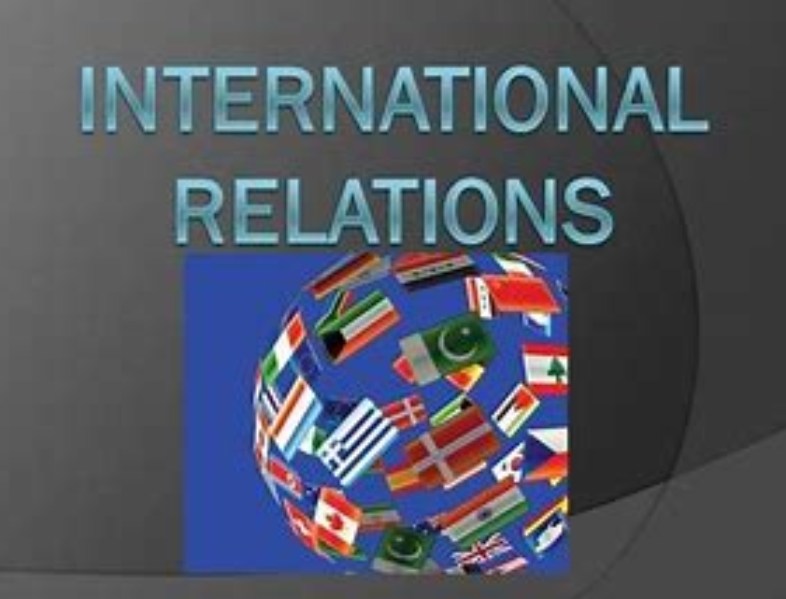
The most keenly debated issue in international relations has been the pessimistic view of realism and the optimistic view of liberalism. Realism is regarded as the dominant theory of international relations, while liberalism has a strong claim to being the historic alternative. Comparing the two to the main political parties in a democracy, Timothy Dunne wrote, ‘Rather like political parties, realism is the natural party of the government, and the liberalism is the leader of the opposition.’

The liberal tradition in international relations in its is closely connected with the emergence of the modern liberal state. The focus of liberalism has been on freedom, cooperation, peace and progress. It has often been identified with individualism, as it insists on freedom of the individual, his rights and property. It is also closely associated, mainly by its critics, with capitalism. Liberalism is sometimes associated with the views of Mo Ti, who was a contemporary of realist Chinese scholar Sun Tzu. Both gave their opposing views more than 2,000 years ago.

Basic Assumptions Of Liberalism
Liberalism assumes instead portraying lust of power as the international conflict liberalism fights for the basic rights of the people. It insists on pursuing the political reforms establish democracies. It emphasizes on the value of the free trade on the basis that it will help in preventing the conflicts between nations as it reduces the national selfishness and enhances the communication.

Liberalism advocated the formation of the global institutions such as the United Nations which sees any threat to any individual nation as a threat to everyone. The institutions help in resolving the conflicts by mediating the conflicts in the event of any misunderstanding.

Basically liberals assume that states will act in a rational manner and they are a unitary actor.

The liberalists fell into three different groups as classified by the realists: The first group advocated league of the nations was formed with the objective to consider the attack on the nation as an attack on all. The second group formed the Permanent Court of International Justice that would lead to formation of judicial body capable of issuing justices to the disputes. The third group sort to avoid war by advocating “Disarmament“ in order to reduce the international tension.

Neoliberalism
Neoliberalism is a policy model that encompasses both politics and economics and seeks to transfer the control of economic factors from the public sector to the private sector. Many neoliberalism policies enhance the workings of free market capitalism and attempt to place limits on government spending, government regulation, and public ownership.https://a6c140989941be06481216af16f29a9b.safeframe.googlesyndication.com/safeframe/1-0-38/html/container.html

Neoliberalism is often associated with the leadership of Margaret Thatcher–the prime minister of the U.K. from 1979 to 1990 and leader of the Conservative Party from 1975 to 1990–and Ronald Reagan, the 40th president of the U.S. (from 1981 to 1989). More recently, neoliberalism has been associated with policies of austerity and attempts to cut government spending on social programs.

Liberalism VS Neoliberalism
At its core, liberalism is a broad political philosophy; it holds liberty to a high standard and defines all social, economic, and political aspects of society, including–but not limited to–the role of government. The policies of neoliberalism, on the other hand, are more narrowly focused. They are primarily concerned with markets and the policies and measures that influence the economy.

How was your 2021?


Since we all are dealing with the pandemic since 2020, it has been almost two years that most of us are not that social. There has not been much communication with most of the people that we used to before the pandemic. Follow these tips to spread happiness among those who put efforts to make your 2021 a year:

  1. Greet: Make a greeting card for one of your friends, or family members. you can also make a colllage of your pictures that represents the best moments together. If you are not much good at making cards then you can do these online as there are some websites that provide customized greeting cards.
  2. Show Gratefulness: Be grateful to those who always have put effort into your relationship. It can be anyone your parents, siblings or friends. Thank them for being always there for you.
  3. Surprise: you can plan gifts for anyone. It can be the people who have been always happy to help you like watchmen, milkmen, vegetable sellers etc.
  4. Plan a trip: It would have been a lot many days that you went out with one of your family members or friends so plan a trip or a nightout or a party at home to recollect all the memories together.
    Likewise you can enjoy the last days of the year and refresh yourself before your the new year starts and be ready for the new challenges to face!!

What is SWAYAM

SWAYAM is a programme initiated by Government of India and designed to achieve the three cardinal principles of Education Policy viz., access, equity and quality. The objective of this effort is to take the best teaching learning resources to all, including the most disadvantaged. SWAYAM seeks to bridge the digital divide for students who have hitherto remained untouched by the digital revolution and have not been able to join the mainstream of the knowledge economy.

This is done through a platform that facilitates hosting of all the courses, taught in classrooms from Class 9 till post-graduation to be accessed by anyone, anywhere at any time. All the courses are interactive, prepared by the best teachers in the country and are available, free of cost to any learner. More than 1,000 specially chosen faculty and teachers from across the country have participated in preparing these courses.
The courses hosted on SWAYAM are in 4 quadrants – (1) video lecture, (2) specially prepared reading material that can be downloaded/printed (3) self-assessment tests through tests and quizzes and (4) an online discussion forum for clearing the doubts. Steps have been taken to enrich the learning experience by using audio-video and multi-media and state of the art pedagogy / technology.
In order to ensure that best quality content is produced and delivered, nine National Coordinators have been appointed. They are:
AICTE (All India Council for Technical Education) for self-paced and international courses
NPTEL (National Programme on Technology Enhanced Learning) for Engineering
UGC (University Grants Commission) for non technical post-graduation education
CEC (Consortium for Educational Communication) for under-graduate education
NCERT (National Council of Educational Research and Training) for school education
NIOS (National Institute of Open Schooling) for school education
IGNOU (Indira Gandhi National Open University) for out-of-school students
IIMB (Indian Institute of Management, Bangalore) for management studies
NITTTR (National Institute of Technical Teachers Training and Research) for Teacher Training programme
Courses delivered through SWAYAM are available free of cost to the learners, however learners wanting a SWAYAM certificate should register for the final proctored exams that come at a fee and attend in-person at designated centres on specified dates. Eligibility for the certificate will be announced on the course page and learners will get certificates only if this criteria is matched. Universities/colleges approving credit transfer for these courses can use the marks/certificate obtained in these courses for the same.
School
Education
NIOS
NCERT
Out-of-School
Education
IGNOU
NITTTR
Under-Graduate
Education
NPTEL
AICTE
CEC
IIMB
Post-Graduate
Education
NPTEL
AICTE
IIMB
UGC
Credit Transfer
UGC has already issued the UGC (Credit Framework for online learning courses through SWAYAM) Regulation 2016 advising the Universities to identify courses where credits can be transferred on to the academic record of the students for courses done on SWAYAM. AICTE has also put out gazette notification in 2016 and subsequently for adoption of these courses for credit transfer.
The current SWAYAM platform is developed by Ministry of Education and NPTEL, IIT Madras with the help of Google Inc. and Persistent Systems Ltd.
Guideline for Developing Online
Courses for SWAYAM
University Grants Commission Gazette: Credit Framework
for Online Learning Courses
through SWAYAM
All India Council for
Technical Education Gazette:
Credit Framework for Online Learning Courses
through SWAYAM

Scope of Teacher Education in India

Teacher Education is one of the important components to determine the quality of a teacher. Untrained teachers remains deprived of becoming aware realising many good qualities of a teacher. Teaching is a profession which requires the development of typical the feelings and skills of harnessing the good qualities in a learner. To ensure that all untrained teachers acquire the requisite qualifications, SSA provides for 60 days of training for teachers who have not received any training before their recruitment. But this training cannot be deemed to be equivalent to requisite training qualification as prescribed by the NCTE. However, after the notification of the ” Right of Children to Free and Compulsory Education Act 2009 effective from 1st April 2010, it is imperative that all teachers teaching at the elementary level, if not trained, shall have to acquire training qualification within a period of five years. 

The number of untrained teachers is so large that it may not be possible to train all of them through face to face formal system. Alternative strategies like Open & Distance Learning system is considered to be an effective strategy to complete this gigantic task. With this backdrop, it has been decided to develop and implement an elementary teacher training programme through Open & Distance Learning mode for untrained teachers teaching in elementary schools. The entire training strategies for in-service untrained teachers need to be based on the basic principles enumerated below:
i. Promotion of child friendly and barrier free education for all children,
ii. Promotion of child centred pedagogical processes leading to more of activities for experiential learning, exploration, inquiry, discovery, etc.
iii. Based on NCF 2005 and to guide all our plans for facilitating teaching-learning processes in different subject areas. It centers around five key guiding principles:
· Connecting knowledge to life outside the school;
· Ensuring that learning shifts from rote methods;
· Enriching the curriculum so that it goes beyond textbooks;
· Making examinations more flexible and integrating them with classroom life;
· Nurturing an overriding identity informed by caring concerns within the democratic polity of the country.
iv. Promoting a non-threatening assessment system with in-built process for a continuous assessment system. Teacher preparation needs to look at CCE as an important area of learning for the teachers.
v. RTE Act 2009 bans corporal punishment and private tuitions by teachers. Accordingly the teacher preparation plan also will provide ways and means of making the classrooms more child friendly for children so that every child learns well as desired under the Act.
The objectives of the Programme are to :
· enable teachers to understand and address diversity in their context;
· empower them to improve quality of classroom processes/transaction;
· develop capacity in them to promote child friendly, child cantered processes in school;
· familiarize them with appropriate teaching learning processes;
· facilitate them to develop leadership & problem-solving skills among children;
· sensitize them to contribute towards safeguarding child rights

ONLINE EDUCATION

WHAT IS ONLINE EDUCATION:-

A classroom is method of using cell phones and computers to make teacher and student in connection.This method of education is popularized during the corona.

ONLINE EDUCATION IS EFFECTIVE:-

In my perception online education is not that much effective when compare to the offline classes.Because we started schooling in offline class,Immediate change in method is not acceptable.In offline class we can ask doubts.But in online classes some not get good network.

ADVANTAGES OF ONLINE EDUCATION:-

* It reduce financial costs for students in transportation,meals.

* we can feel more comfortable than offline class.

* Another advantage of online education is that it allows students to attend classes from any location of their choice.

* online lectures can be recorded, archived, and shared for future reference.


DISADVANTAGES OF ONLINE EDUCATION:-

* Little or no face-to-face interaction.

* In online education we have to see screen more time cause headache,damage eyes.

* Another disadvantage is some have network issues unable to ask questions.

* Online courses require more time than on-campus classes.

* Online courses may create a sense of isolation.


HOW WE CAN MAKE ONLINE EDUCATION EFFECTIVE:-

* By Creating shorter content.

* Assign group and pair work.

* Take care in setting up your home environment.

* By giving break or reducing time of class.

* By creating individual learning plans.