IMMUNOLOGY SERIES- PART 8- INFLAMMATION

The previous article dealt with the types and functions of immunoglobulin. This article provides a complete explanation of the process of inflammation.

Inflammation is the process of protection which was seen as one of the six mechanisms of innate immunity.

Inflammation is one of the body’s responses to the invasion of foreign particles. This is an important process in the human body that occurs to drive away from the pathogen. Inflammation is one of the stages seen in healing. Some of the changes that can be seen in the target site are:-

  • Changes in blood flow (mostly blood loss)
  • Increase in platelets (to plug the damaged vessel)
  • Increase in immune cells
  • Supply of nutrients

The word inflammation refers to a burning sensation. Hence there are five cardinal signs in inflammation namely:-

  • Rubor (redness)
  • Tumor (swelling)
  • Calor (heat)
  • Dolor (pain)
  • Functioleasia (loss of function)

These cardinal signs as well as the changes occur due to some mediators which are basically chemicals and also due to the action of various immune cells.

Mediator nameIt’s effect
Bradykinin, histamine, serotoninIncrease permeability
ProstaglandinDecreases blood pressure
CytokinesProduce fever
Toxic metabolitesDamage tissue

This inflammation can be either acute or chronic. As seen earlier, acute stays for a shorter time but produces more vigorous pain whereas chronic stays for a longer time with less vigorous pain. If the causative agent has been driven away then healing occurs either by complete restoration or scar formation. There are chances that the acute inflammation can become chronic which can be worse. It can lead to several diseases and complications.

The pathogen in order to establish its supremacy in the human body, it has to pass through the epidermis which is the outermost layer of the human body. This is known as SALT skin-associated lymphoid tissues. Hence T and B lymphocytes are prominent in the skin. Most of the pathogens get destroyed in this stage. Let us assume that our pathogen is strong and it had passed through it. The next layer it encounters is the dermis. As we go deep inside the skin, more and more immune cells get involved. In the dermis the following immune cells are seen:-

immunity in the skin
  • Macrophage
  • NK cells
  • Mast cell – produce histamine and serotonin
  • T helper cells – it provides help to other immune cells

The next stage is the hypodermis which has a large number of macrophages and neutrophils that phagocytosis the pathogen. Hence these following processes help in defending against the pathogens.

When a particular pathogen say a virus enters the cell, the immune system will get alerted through signals and they immediately send the correct immune cell to the target site. This occurs since either the immune system gets information naturally or artificially through previous infection or vaccine. This leads to the classification of immunity in humans.

So now we will consider a new and strong pathogen that has not been recognized by the immune system and has dodged those barriers and has entered inside the skin. Now it multiplies at a rapid rate and colonizes that particular area. Hence the cells in that area start to die and they release several signals like TNF, cytokines, interleukins. This gets combined with other signals like histamine, serotonin released from immune cells. Some of these signals produce direct effects on the target site as seen in the table.

An array of these signals triggers the immune system and it, in turn, starts the inflammation process and the cardinal signs are observed. This process lasts for some time and as it occurs; the pathogens decrease in number through phagocytosis and subsequently vanishes from the body. This can be observed by a decrease in the signs. After this process, the targeted site starts to heal and the immune system learns how to defend the pathogen when it enters the next time.

Now the damage caused by the pathogen has to be repaired by the process of healing.

  1. Haemostasis
  2. Inflammation
  3. Proliferation
  4. Maturation/Remodelling

The pathogen will rupture and damage the outer layer of blood vessels known as endothelium resulting in blood loss. Hence the blood vessels start to contract to prevent further loss. Also, a plug is formed at the site of leakage by the platelets. Then the process of inflammation occurs; clearing out the dead cells and the pathogen. In the proliferative stage, new blood cells are formed by a process known as neovascularisation and the new epithelium is formed. In the last phase, the newly formed cells become stronger and flexible. Hence the combination of these steps brings the affected area back to normal.

Hence the inflammation is an essential process in the immune system and it has to occur to prevent the conspiracy of the microbes. The next article is about vaccines and their principle of working.

HAPPY READING!!!

Consumer Rights and Responsibilities

 In the highly competitive and profit-driven business world, Consumer Rights play a key role to protect them from any kind of unfair trade practices. It also protects the consumers from the unsafe or dangerous products that can harm their health and well-being. The Consumer Protection Act of 1986 aims to give consumers rights to fight any injustice. The Act has gone through some changes over the years, the latest change took place in 2019. 

The Consumer Protection act aims to provide easy compensation to those affected by any injustice, and encourages the consumers to speak up and take action against it. It covers all the goods and services by all the public, private and cooperatives, except some exempted by the government. The Act promotes settlement of consumer disputes. 

What are Consumer Rights ?

Right to safety: It provides the consumers safety against goods that are hazardous and have the potential to affect life and property. Consumers should emphasize on the quality and safety factors of the product before buying it. Quality marked products such as ISI, AGMARK, etc. should be prefered. 

Right to be Informed: It consists of the right of the consumers to be informed about the quality, purity, standard, and price of the goods properly. Before deciding to buy, the consumers must consider knowing all of this information related to the product. 

Right to Choose: This includes the rights to access the variety of goods and services at competitive prices, wherever it is possible. With the case of monopoly markets, it refers to the right to be assured of good quality at a fair price. 

Rights to Consumer Education: It includes the rights of the consumer to gain the knowledge and become an informed consumer. It is extremely important to be informed, because most of the exploitation takes place with the advantage of lack of awareness and ignorance among the consumers. 

Right to be Heard: This means that consumers have the right to raise or represent their concern and interests at various consumer forums to ensure their welfare. The consumer’s interests will be given due consideration under this right. 

Right to seek Redressal: It is one of the most important rights of a consumer to seek redressal against any unfair trade practice experienced by them. It can help them to have a fair settlement or get the required compensation. They can also take the help of the consumer organisations in the process of seeking redressal. 

In case of any trouble or injustice, the consumers can file a complaint within two years of buying the product. The details of the problem should be mentioned in the complaint along with relevant bills and receipts attached to it. The written complaint should be submitted to the consumer forum for further action. 

As a consumer, it is our duty to be aware about the rights and responsibilities before buying a product or service, in order to avoid any injustice or exploitation.


The Role of students in removing illiteracy

 By: Astha Raghav 

It is unfortunate that even after sixty years of our independence we have not been able to eradicate illiteracy from our country. In fact, illiteracy is the root cause of all the major maladies that afflict India today. If we wish to be counted among the top leading countries of the world, we have got to eradicate illiteracy. Besides, education is necessary for personal growth of any individual. It helps to promote self respect of a person. It increases participation in the democratic processes by bringing about an awareness about rights and duties as the citizen of our country. Something surely has to be done on the war footing to see more and more literates in our country.

The responsibility, however, doesn’t lie with the government alone. It is the moral duty of each and every citizen of India who is fortunate enough to be educated to offer his voluntary services to promote literacy. In fact, students in schools and college can play a vital role in the direction by taking literacy classes for at least two hours every week. They can form teams for different age groups by identifying some adults/ children in their neighbourhood and organise classes in a common hall in the locality. Even in school, teachers can organise some groups and allot the willing school students the duties to teach the illiterates after school hours.

Another way to contribute to this literacy mission is to follow the concept of ‘Each one Teach one’. Every students should take up the responsibility of teaching at least one illiterates person- possibly the domestic help or a vendor. Nothing is impossible and with earnest efforts and strong will power of the youth a lot can be achieved to bring down the rate of illiteracy and improve the quality of life for the illiterate counterparts of our country. 

Thank You!

Retirement Planning


What is Retirement
Planning?

 According to Investopedia , Retirement planning is
the process of determining 
retirement income goals, and the actions and decisions necessary to
achieve those goals. 
Retirement planning includes identifying sources of income, sizing up
expenses, implementing a savings program, and managing assets and
risk.

 One should have a fixed budget for retirement. One should start
retirement planning a early as possible and they should also track and review
their plan wisely.


How to make an effective Retirement Plan?


Let us understand the same through an example:

 (You can get retirement calculator online)

ANSHUL’S RETIREMENT
PLAN

Current Age

25

Monthly expense

179500

Retirement Age

50

No of years for
retirement

25

Life expectancy

75

% expenses after
retirement

100%

Inflation Rate

7%

Value of  monthly expenses post retirement

Rs. 9,74,224.16

No of years in
retirement

25

Return on Corpus

8%

Corpus required to
account for retirement expenses

Rs. 25,87,17,770.81


MONTHLY EXPENSE SHEET

Particulars

Amount

Groceries

5000

Fruits and vegetables

1500

Clothing

1000

Electricity

1500

Water supply

500

Medical expenses

1000

Medical insurance

2000

 Loans
and interest

100000

Maintenance expenses

5000

Other insurance

2000

Education expenses

20000

Servant Salaries

40000

Total 
monthly expenses

Rs.179500


Analysis from the preparation of Retirement Plan

In
the above plan, assuming that I will start earning at the age of 25, it can be
seen that monthly expense of Rs.179500 will translate into Rs.9.74 lacs at the
time of retirement which needs a huge corpus or saving of almost Rs. 25.87
crores given the inflation rate of 7%.It also becomes clear that financial
security is much dependent on proper and adequate financial planning. One also comes to know that the value obtainable for money will be far less at a future date.


                                                                       Conclusion 

 One can  even personally in order to maintain a similar lifestyle to their current
lifestyle, it is necessary to begin saving for retirement as early as possible.
So, when I will start retirement planning, generally 50%, 30%,20% rule is
applied where 50% of the income goes to your needs, 30% for wants and 20% for
savings.  One can  follow the same rule to make my retirement plan more
effective.

COACHING INSTITUTES EXPLOIT STUDENTS

 By: Astha Raghav 

Coaching institutes have mushroomed in every nook and corner of all major cities over the past few years. These so called “temples of learning” are exploiting the young minds just for their financial grains. The misleading advertisements given by these Institutes act as  Magnets to attract the innocent, inexperienced students, who are seeking for sincere counseling and proper direction.

Coaching institutes have only one purpose while teaching their students: to get them to IITs, NITs or AIIMS, GMC, etc. Such beliefs and ideologies being inculcated in students at such a young age seriously compromise their prospects of being an effective member of the society in the future. We all are aware of how fancy coaching for engineering and medical courses are running all over the country. But I am not concerned about those foundation courses, rather for a seven-year-old child carrying 7kg heavy bag on his back and going to a coaching class.

Coaching has became an inevitable part of student life; be it second standard or 12th standard students. Earlier it was for those who found a school is not enough for clearing their doubts in studies. But now it’s religiously important to join a coaching institute.

Students pay thousands of rupees in school just to get the tag of a prestigious school and get the attendence marked. But what is the point of spending so much money that could not even clear the basics of the majority of the class?

Coaching is not only making parents’ money wash away like waves but also ruining the creative and thoughtful minds of a child. Nowadays, PM Modi is stressing very much over developing one’s skills. Perhaps that coaching for child below ninth standard is itself ruining the skillful mind of a child. They get everything cooked and served, every note and all answers. “The search of an answer is the essence of education”, which children are losing day by day.

<

p style=”border: 0px;color: #5c5c5c;line-height: 28px;margin: 0px;padding: 10px 0px;vertical-align: baseline”>The other dimension of the increasing dependency on coaching is the lack of attention of parents towards their child. Nowadays both the parents are earners of the house, which causes them to give less time to their child or you can say no time at all.
The need of the hour is to let the child search their answers on their own; let them be good learners on their own and let them be creative souls rather than making them robots whose whole day is spending in attending coaching and schools.

THANK YOU!

NGO

 NGO means non governmental organization 

Its an organization which is not included in governmental organization to help needy people to provide basic amenities and solve their basic problems

NGO play a major role in imparting education to poor guys or disabled children by providing them education, resources 

Also it helps to avoid child labour 

Farmhouse

 Farmhouse is type of house which everybody desire to have in his or her life 

Farmhouse consist  of big garden, swimming pool and all items which is needed to live luxurious life 

Life is short to live So we should try to spend it happily and live comfortable and luxurious life 

Farmhouse cost is very high which makes it difficult to buy for normal people

Computer

 Computer is an electronic item which is generally used by most people .Computer solves almost all financial , business related problems like keeps records in tally ,making payment, keeping management record and so on .

Unlike other non electronic or paper terms it can be preserved for lifetime without any fear of losing any data 

Mobile

 Mobile is electronic device  which is used by almost all people in this world . Through mobile we can communicate to anybody irrespective of long distance . Mobile is needed to solve basic problems like sending email , calling someone for any issue 

Its also used for entertainment purpose like playing games and using other apps

Fit in bit

Commit to be fit..!! What exactly fitness is? Is it that walking for 5 minutes ? , Is it that sweating through talks ?

Fitness is the most concerned issue nowadays. Fitness is the state of a healthy mind , healthy heart and a healthy life. Everyone is coming back towards a healthy body . It gives you the pleasure of living a peaceful life just like meditative peace. But the question arises how to stay fit? Don’t worry , A person can stay fit in a busy schedule too .You just need to be persistent either for 5 mins or 5 hours . The main thing is you don’t have to skip the regularity of your fitness exercises. You need to be mentally prepared that yes now onwards you will be regular , its not about the particular same time , its just that you need to do your exercises whenever you got time.

Something is always better than nothing . Keep your mind concentrated, just focus on the goal , be regular.

Thank you..!!

HEAT(1995)- MOVIE REVIEW

Heat no doubt is one of the best crime dramas I have ever seen. It pits probably two of the greatest actors of our generation against each other to produce what I can only call a masterpiece. The rivalry between the two most definitely carries the movie through its two hours forty-five-minute run time. This is a very different kind of movie as opposed to the normal glamour or glory associated with other heist movies. It focuses more on its characters and there are actually very few scenes pertaining to heisting. Right from the opening scene, the movie establishes itself as a serious crime drama and takes its time in setting up its main characters, with both Robert De Niro’s and Al Pacino getting an equal amount of screen time. And this is especially important as I was ambivalent on who to root for since the movie explores these two characters so well and makes us understand what these two characters are going through.

What stood out to me the most was definitely the cinematography, almost every single scene felt so palpable and I still remember most of them vividly, especially the night ones. I could also appreciate how some of the shots were helmed with long takes panning across the characters and some clever cuts. The score for this movie is also really good and it is also used sparingly so it is not overbearing. I rarely ever talk about sound mixing but I thought I would mention it as it makes the movie feel rawer, thus enhancing its immersive experience. I was pleasantly surprised to learn that most of the screen time is dedicated towards the individual characters, while I enjoyed Val Kilmer’s and Al Pacino’s character growth, I personally was not all that invested in De Niro’s love life and the whole ordeal seemed to just slow the movie down, although, it has more payoff toward the end.

This is an extremely riveting movie that I could see myself regularly rewatching despite its long run time.

HOW TO SET YOUR PRIORITIES: SACRIFICES, STRUGGLE AND SUCCESS

Scheduling priorities in life is a significant task to undertake. Setting priorities helps you to reserve time, carry out logical decisions, and improvise your way of living. 

It takes time for you to decide your priorities because  it is a decision that is going to be continued for a span of time. 

Therefore, it is substantial to make an apt choice. You  discover many of your interests that you might have left behind someday. It motivates you to have a clear picture of what you are supposed to do.

Way to set priorities in life :

  • Make a note of your top interests.
  • Decide on what is important to you.
  • Think whether the task you are undertaking is indeed worthy to do so. If not, then prioritize accordingly.
  • After doing so, decide how to approach and complete them.
  • Do have the ability to compromise. You evidently can’t handle all tasks you decide.
  • Set proper time and date so that the tasks you do are completed on time.
  • The most crucial point is to not distract yourself.

The 3’S- Sacrifice, Struggle, and Success make it our way while planning, performing, and achieving them. Let’s have a look at them.

  1. SACRIFICE:
  • Sacrificing our decision, or plans for something good isn’t bad at all.
  • If you do it with all love, you will surely be unhurt. Sacrificing for someone shows your love for them.
  • Sacrificing for one’s happiness shows your true personality. This can change one’s life, may it be a small sacrifice too.

Where are sacrifices done?

  • Family: Parents sacrifice their comfort, sleep so that their children can leave happily in the future without any problems.
  • Sleep: You let go of sleep when you have many works to do. If the work you are doing is going to yield you thumbs up and that really costs you your sleep, never step back.

Sacrifices are immeasurable. If your sacrifice is benefitting someone, support them by doing so.

2. STRUGGLE:

  • Life doesn’t always fall in the way you seek. There are frequent ups and down on your way to reaching your goal.
  • You work hard to achieve success. Sometimes you achieve and sometimes you don’t. That doesn’t mean you lose hope.
  • We encounter a lot of barriers that prevent us, distract us and examine our abilities.
  • Each person’s struggle is clearly different from others. Some of the struggles maybe- Career pressure, Financial crisis, Failure, Arguments.

How to overcome struggle?

  • Explore the world. Relax your mind and soul.
  • Don’t hide your difficulties. Share it with your peers so that you feel light.
  • Stop comparing yourself with others. Comparison lowers one’s self-confidence. You have your identity.
  • Stay focused on the work you are performing.
  •  Never force yourself to finish the work you aren’t able to. It will absolutely let you down if you can’t accomplish it.
  • Try being positive even at the worst time so that you’ll at least have a ray of hope in one corner.

3. SUCCESS:

The result of your actions that brings happiness to your face is SUCCESS. Gaining success isn’t that easy. You have to be extremely dedicated, punctual, and determined. When you build interest in the work you do, success is automatically activated to reach your goal.

How to achieve success?

  • Work hard: Achieving success isn’t easy always. You might feel you are having many works to do, but a dedicated person never thinks about it. So rather than investing time in thinking negatively, work hard.
  • Push your limits: Always try upgrading your interests. Don’t revolve around the same topics. Go out of your comfort zone and try new things.
  • Develop ideas: Invest your timing in bringing out the best ideas to implement in your work.
  • Save time: Don’t waste your time unnecessarily on silly things. Don’t dig up deep into the answers you don’t receive. Relax your mind, understand the topic clearly and then move forward.


Never try getting down your self-esteem. Try hard to achieve your goals. Prioritize your options and work accordingly. Success is always there in everyone. You achieve it when you make a way for it through your actions.

Angels and Demons – book summary

IMPORTANT CHARACTERS

  • Robert Langdon: A professor of symbology at Harvard University and the protagonist of the novel. He is flown to CERN to help investigate the murder of Leonardo Vetra. He is described as wearing a Harris Tweed jacket, a turtleneck sweater, and a pair of chino pants. His name is a tribute to John Langdon.

  • Leonardo Vetra: A scientist working at CERN and a priest. He is researching on antimatter when he is murdered by the assassin. He is also the adoptive father of Vittoria.

  • Vittoria Vetra: The adopted daughter of Vetra. She, like her father, works with CERN. She is a strict vegetarian. Her research focuses on biology and physics. The reader learns early in the novel that Vittoria worked with her father in their research of antimatter.

  • Camerlengo Carlo Ventresca: The Camerlengo (papal chamberlain) during the conclave. He murdered the pope, who is later revealed to have been his biological father. His code name for dealing with the assassin is “Janus,” taken from the two-faced Roman god of beginnings and ends.

  • Commander Ernesto Olivetti: The commandant of the Swiss Guard. He is initially skeptical about the claims of Langdon and Vittoria until he talks with the Hassassin. He, along with other Swiss Guards, searches desperately for the missing antimatter hidden somewhere in the Vatican. He is killed by the Hassassin at the church of Santa Maria della Vittoria

  • Captain Elias Rocher: The second-in-command after Commander Olivetti. He is contacted by Maximilian Kohler about his knowledge on the real cause of the events. He is killed by Lt. Chartrand, who was under the impression that Rocher was an Illuminatus.

  • Hassassin: The killer hired by Janus to fulfill his plans. He is of Middle Eastern origin and displays his sadistic lust for women throughout the novel. He murders Leonardo Vetra, the Preferiti, and Commander Olivetti. He dies after being pushed from a balcony by Langdon at Castel Sant’Angelo and breaking his back on a pile of cannonballs below.

  • Maximilian Kohler: The director of CERN. He is feared at CERN despite his paralysis. His wheelchair contains electronic gadgets such as a computer, telephone, pager, video camera, and a gun. He contacts Langdon to help him find the killer of his friend, Leonardo Vetra. He blames the Church for his disability, due to his highly religious parents denying him medical care as a child and becomes a scientist as a way to rebel.

  • Gunther Glick and Chinita Macri: A reporter and his photojournalist for the BBC. They are contacted by the Hassassin regarding the events happening in the Vatican. Glick has a notorious reputation as a sensationalist and conspiracy theorist journalist. Macri, meanwhile, is a veteran camerawoman and a foil to Glick. They have the first hand account on the events in the novel, from the beginning of the conclave to the election of Mortati as pope.

  • Lieutenant Chartrand: A young Swiss Guard. He, together with Commander Olivetti and Capt. Rocher, searches desperately for the antimatter hidden somewhere in the Vatican. He shoots and kills Captain Rocher after he is mistaken as an Illuminatus. Near the end of the novel, he is sent by the new pope to give the Illuminati Diamond to Langdon on indefinite loan

  • Cardinal Ebner: One of the four preferiti from Frankfurt, Germany. He is killed by smothering, via dirt and soil forced into his mouth.

  • Cardinal Lamassé: One of the four preferiti from Paris, France. He is killed by punctures to his lungs from which he bled to death.

  • Cardinal Guidera: One of the four preferiti from Barcelona, Spain. He is burned alive.

  • Cardinal Baggia: One of the four preferiti from Milan, Italy; the favorite to succeed as the new pope. He is drowned by the assassin.

STORY PLOT

CERN director Maximilian Kohler discovers one of the facility’s top physicists, Leonardo Vetra, murdered, his chest branded with an ambigram of the word “Illuminati.” Kohler contacts Robert Langdon, an expert on symbology, who determines that the ambigram is authentic. Kohler calls Vetra’s adopted daughter Vittoria home and it is ascertained that the Illuminati, an ancient anti-religious organization thought extinct, have stolen a canister containing antimatter, a substance with destructive potential comparable to a nuclear weapon. When at CERN, the canister is stored in a unique electrical charger which ensures the antimatter’s stability, but when removed, its backup battery provides power for 24 hours, after which the antimatter would fall out of suspension and, on coming into contact with the physical matter of the container, explode. The canister is located somewhere in Vatican City, with a security camera in front of it, as its digital clock counts down to an explosion due to occur at midnight, which will wipe out the Vatican.

Langdon is initially convinced that the Illuminati cannot be responsible for two reasons: 1) the Illuminati went extinct centuries ago, and their remnants were absorbed into the Freemasons and 2) the Illuminati, as men of scientific truth, would never sanction the murder of a fellow scientist. Kohler explains that Vetra might be an exception, as he was also an ordained Catholic priest.

Langdon and Vittoria make their way to Vatican City, where the Pope has recently died. They are told that the four Preferiti, the cardinals who are most likely to be elected pope, are missing. Langdon and Vittoria search for the preferiti in hopes that they will also find the antimatter canister. Their search is assisted by Camerlengo Carlo Ventresca (the late pope’s closest aide), the Vatican’s Swiss Guard and Commander Olivetti.

Langdon tells Vittoria how the Illuminati created a citywide map known as the “Path of Illumination,” a trail once used by the Illuminati as a means of inducting new members; aspirants who wanted to join the Illuminati were required to follow a series of subtle clues left in various churches in and around Rome. The clues indicate the secret meeting place of the Illuminati. Langdon’s theory is that the Path was marked by sculptures created by a mysterious Illuminati artist: an Illuminati member placed as a mole within the Vatican itself. Langdon is granted access to the Vatican Archives by the camerlengo, where he believes a document containing the clues to the Path of Illumination is located. The clues to the Illuminati markers are placed inside Galileo’s famous book called ‘Diagramma.’ Langdon then sets off on the Path of Illumination in hopes of saving the preferiti and recovering the antimatter canister.

The Path leads Langdon and Vittoria to four churches in Rome, each one containing works of art by Baroque artist Gian Lorenzo Bernini (who Langdon realizes is the Illuminati artist) depicting angels and associated with one of the primordial elements: Earth, Air, Fire and Water. Langdon realizes the four preferiti will be murdered in a way thematically related to each location’s related element. The first cardinal is branded with an Earth ambigram and has soil forced down his throat, suffocating him; the second is branded with an Air ambigram and has his lungs punctured; the third is branded with a Fire ambigram and is burned alive; and the fourth is branded with a Water ambigram and is wrapped in chains and left to drown at the bottom of a fountain.

During their search for the Illuminati lair, Langdon and Vittoria are seen getting closer.

After finding the bodies of the first two preferiti, Langdon hurries to the Santa Maria della Victoria Basilica and finds the preferiti’s abductor in the act of setting the third cardinal on fire. The kidnapper is an unnamed assassin who is working under the orders of the Illuminati master “Janus,” whose true identity is unknown. Commander Olivetti is killed and the assassin kidnaps Vittoria. Langdon escapes and accosts the assassin at the final element’s marker (Water) but he is unable to save the cardinal.

Langdon must complete the Path of Illumination in order to find the assassin and rescue Vittoria. His search leads him to Castel Sant’Angelo which he realizes is the “Church of Illumination,” the Illuminati’s secret lair. Under the papal fortress is a tunnel which leads directly into the pope’s private library in the Vatican. Langdon frees Vittoria and together they send the assassin falling several hundred feet to his death. The two hurry back to St. Peter’s Basilica, where they find that Kohler has arrived to confront the camerlengo in private. Langdon and Vittoria fear that Kohler is Janus and that he has come to murder the camerlengo. Hearing the camerlengo scream in agony from being branded with the Illuminati Diamond (a symbol combining all four Illuminati ambigrams), the Swiss Guards burst into the room and open fire on Kohler. Just before he dies, Kohler gives Langdon a mini video camera containing a video Kohler made while confronting the camerlengo and tells him to give it to the media.

With time running out, the Swiss Guard evacuates the Basilica. The camerlengo rushes back in, claiming that he has received a vision from God, who has revealed the location of the antimatter canister to him. With Langdon in pursuit, the camerlengo ventures into the catacombs and finds the canister sitting atop the tomb of Saint Peter. Langdon and the camerlengo retrieve the antimatter and get in a helicopter with only minutes to spare. The camerlengo manages to parachute safely onto the roof of St. Peter’s just as the canister explodes harmlessly in the sky. The crowd in St. Peter’s Square look in awe as the camerlengo stands triumphantly before them. Because of this “miracle,” the cardinals debate whether to elect the camerlengo as the new Pope. Langdon manages to survive the explosion using a window cover from the helicopter as a parachute, a trick he learned while touring CERN with Maximillian Kohler and lands in the Tiber River.

As Langdon regains consciousness, he finds himself in a hospital located on an island. He is given the video camera which he placed in the pocket of his tweed jacket. He is shocked when he hears the footage and becomes desperate to head back to the Vatican. The video shows the camerlengo branding himself with the Illuminati diamond and confessing that he himself is Janus, and who set in motion the night’s chain of events in order to sabotage the Vatican. He also confesses that he killed the Pope with an overdose of heparin, a powerful anticoagulant because the Pope revealed he had fathered a child.

After viewing Kohler’s tape, Langdon, Vittoria, and the cardinals confront the camerlengo. Shortly before the novel began, the Pope met with Leonardo Vetra, who believed that antimatter was capable of establishing a link between science and God. Vetra’s beliefs caused great discomfort to the camerlengo. While discussing Vetra, the pope revealed that his support was caused by science having given him a son. Without waiting to hear the explanation (that the child was the result of artificial insemination) and horrified that the Pope appeared to have broken his vow of chastity, the camerlengo plotted to rectify the situation. He poisoned the pope and, under the guise of an Illuminati master (Janus), recruited the assassin to kill Vetra, steal the antimatter and kidnap and murder the preferiti. The camerlengo planted the antimatter in St. Peter’s Basilica, feigned his last-minute vision from God, and retrieved the canister just in time to save the Vatican from the ensuing explosion, hoping to unite the struggling Catholic Church. The Illuminati involvement was merely a plot engineered by the camerlengo to cover his own involvement.

Upon the discovery and the camerlengo’s attempts to justify his murder of the Pope, Cardinal Saverio Mortati, Dean of the College of Cardinals, reveals that the camerlengo is, in fact, the late pope’s biological son, conceived with a nun through artificial insemination. Overcome with guilt, Ventresca soaks himself in oil and sets himself on fire before a crowd of onlookers in St. Peter’s Square. His ashes are recovered by Mortati, who places them in an urn which is placed inside his father’s sarcophagus. It is revealed that the cardinals’ endorsing of him would have made him Pope by acclamation. Mortati is unanimously elected pope by the cardinals, and Langdon and Vittoria reunite at Hotel Bernini. The last brand, the Illuminati Diamond, is given to Langdon on indefinite loan, provided that he return it to the Vatican in his will.

WINTER SEASON

Winter is the coldest season of the year in some parts of the northern and southern hemisphere, this season is characterized by falling snow and freezing cold temperatures, usually exacerbated by strong winds,… The sun comes out very late on winter mornings and when it does is not hot.

  1. Winter is the coldest season which starts in the month of December and last till mid of March.
  2. After autumn season winter season arrives, mainly due to the orientation in the axis of earth away from the sun.
  3. December and January are the coldest months of winter season.
  4. Winter season have temperature dropping of 3 degree to 5 degree in night in northwest region.
  5. During this season high speed of cold wings blows from north region in peak months.
  6. Winter seasons leads to the formation of thick fog because air is cooled to the fog droplets sue to low temperature.
  7. During winter season, nights become long and day becomes of shorter duration.
  8. Winter season is an ideal season for tours and travels to hilly region.
  9. It is the season of healthy fruits and green leafy vegetables.
  10. This season comprises of snowfall, winter storms, old rains, frost, fogs, and very low temperature most of the time.

Major festivals like Deepawali, Makar Sankranti, and Republic day fall in winter season. People enjoy many activities in hilly areas like ice skating, skiing, ice hockey, etc… Winter season gives relief from heat and humidity after long summer. Many people plan vacation and adventurous trips to tourist places during winter season.

Various beautiful birds like Siberian cranes and blue throat migrate to India during winter season. Rain during winter season has disadvantages too as it destroys crops, vegetables and fruits. Day during winters are pleasant because of the low heat intensity of sun. Excess cold during winter season also brings a period of discomfort to old and poor people.

I personally love winter season. This season brings a lot of happiness to all of us. All people get the chance to eat fresh fruits, vegetables and more. Apart from all of this things lots of flowers bloom during this winter season.

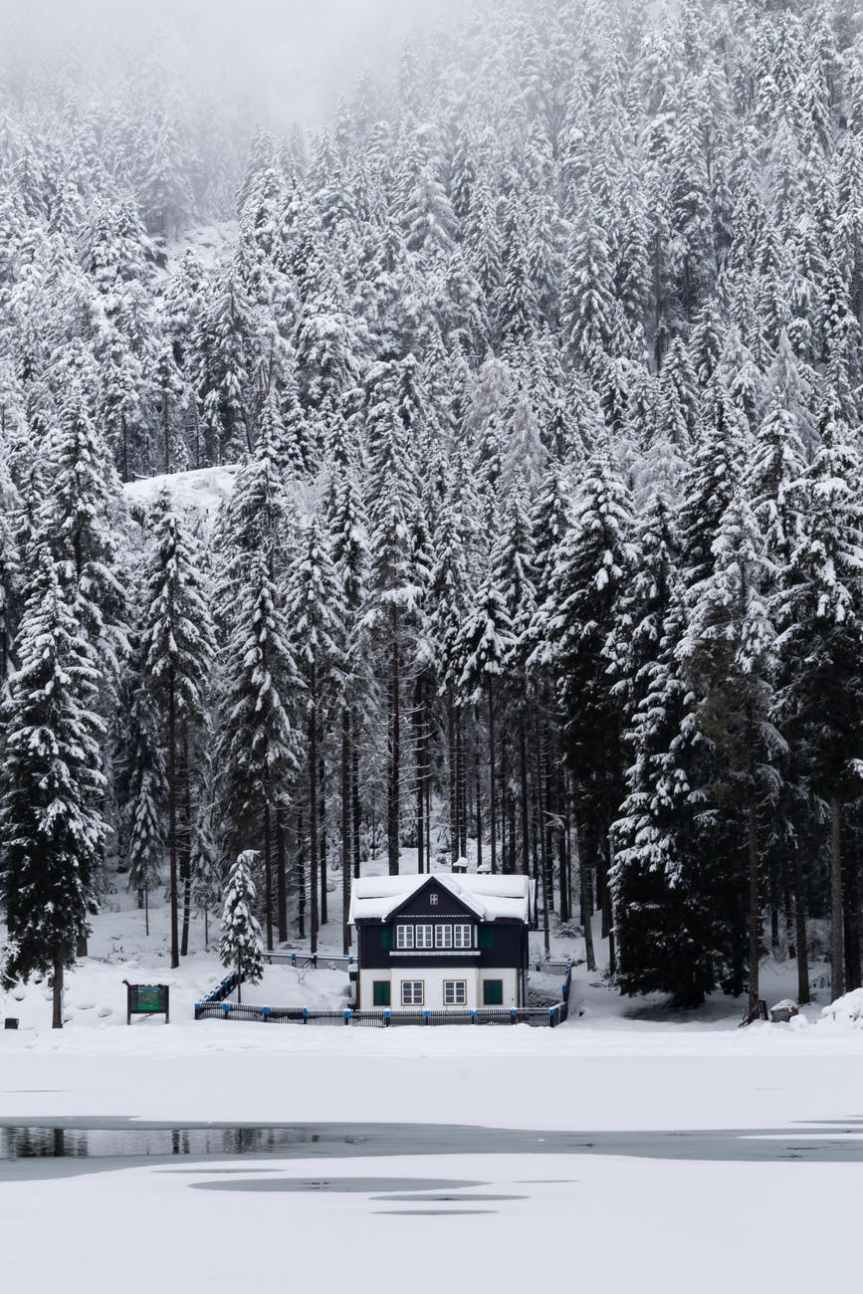
Photo by eberhard grossgasteiger on Pexels.com

The season are defined as spring (March, April, May), summer(June, July, August), Autumn( September, October, November) and winter (December, January, February) .

Antarctica is certainly the coldest country in the world , with temperature sinking as low as -67.3 degree celsius.

YAKUTSK:

Yakutsk, Russia – The capital city of the vast (1.2 million square miles). Siberian region known as the Sakha Republic, Yakutsk is widely identified as the world’s coldest city. ” No other place on the Earth experiences this temperature extreme”.

HARBIN:

Under the koppen climate classification , Harbin features a monsoon-influenced , humid continental climate (Dwa). Due to the Siberian high and its location above 45 degree north latitude, the city is known for its cold weather and ong winter.

Dras:

The coldest place in India. Dras is a lonely town in the infamous Kargil district of Jammu and Kashmir, popularly known as ‘The gateway to Ladakh’ . Dras is the coldest place in India and often touted as second to the coldest place inhabited on Earth.

LEH:

Leh, no doubt, Leh is one of the coldest places to visit in India. Perched in the newly formed Union Territory of Ladakh, the temperature is known to drop to as less as -13 degrees celsius!.

INTRESTING ABOUT WINTER- Delhi is the city which is coldest in December one

Delhi, which is shivering under on intense spell of cold wave for two weeks, experienced its coldest recorded December day on Monday, with the maximum temperature being at just 9.4 degrees celsius, the IMD announced.

” WINTER FORMS OUR CHARACTER AND BRINGS OUT OUR BEST ” .

A new way: Startups

Startups wow….. The newest way to an innovative world. Startups can be the most appropriate option for today’s world. Startups create job opportunities with better knowledge, technique, skill and experience. We can say these things provide a perfect balance for a good startup. Earlier startup was not seen as a career objective because there is high risk and no surity that the individual will succeed. But when people realised that there is so much competition and it’s almost impossible for any government to provide a secured job to every individual, start-ups came into existence . Startup does not need a qualified degree. It can be a group of people of village or an MBA individual. It’s just that one must have the passion to do it. Startups are employment creators and as we are seeing in the world the problem of unemployment, population crisis, lack of jobs people are thinking about it. People are accepting the fact that starups can be proved as a game changer in any economy. The youth is taking interest and participating into the startup programs and enhancing their skills. Not only the youth, there is a section which is neglected and that section is of our senior citizens. Yes u read it right senior citizens , they are in the habit of doing a particular job for a long period of time and once they get retired they can’t accept the fact mentally. They are in habit of doing something. Startups can be a good way to utilise their knowledge and experience. Start-ups makes an individual to be a boss of your own and who doesn’t like it. A tea seller who is selling tea is also doing a startup and a businessman too is doing the startup. By this we can say that startup not only creates employment opportunities but also eliminates the feeling of being superior. Any individual from any background can start his startup. It’s like a dream to come true and you are not being judged by the society at that time.

The world is looking towards India in the field of start-ups. The government is also understanding the need of startups and they have launched many schemes and loans for the people to do their own startup. Startup makes an individual self reliant and self dependent. Startup also develops communication and leadership skills to deal with the outside world with your own thoughts and ideas. A platform for a person to prove himself that nothing is greater than knowledge. If you have the correct guidance and passion you can do your work with complete devotion and that’s what startup is.

Hope you will like reading the article and encourage yourselves!!! Thank you