

Chief Minister Uddhav Thackeray has urged people to behave in a Covid-appropriate manner, warning that if the number of coronavirus cases in the state rises, the state will be forced to reimpose a lockdown. Thackeray made the remarks after unfurling the national flag at the state secretariat ‘Mantralaya’ on the 75th anniversary of the country’s independence. “The majority of the COVID-19 restrictions have been lifted. However, the danger is far from finished. As new strains of the virus are discovered in other nations, we must remain vigilant to ensure that the threat does not reach us. Given the scarcity of medical oxygen, if the number of daily COVID-19 cases rises, the state will be placed under lockdown, according to Thackeray.
Category: News
Comprehensive, up-to-date news coverage, aggregated from sources all over the world by EduindexNews.
Ways to practice self-love
Hey! Smile please….
Yes yes you only, you’re very special. Did you know that you’re very special. There’s nobody like you on the whole planet. You deserve to be loved immensely not only by the creatures around you but by the most important person in your life and that’s YOU. If you ever desire to be in a relationship, be in the everlasting one with yfourself first. Practicing self-love can be challenging for many of us, especially in times when we face serious challenges. It’s not about being self-absorbed or narcissistic, it’s about getting in touch with ourselves, our well-being and our happiness. We practice self-love so we can push through our limiting beliefs and live a life that truly shines.
So do yourself a favor, take a deep breath, give yourself a little hug and start practicing the following:
▪Begin each day by telling yourself something positive. It can be anything which makes you feel pleasant. How adorable you look today. How well you handled a situation.
▪ Fill your body with food and drink that nourishes it and makes it thrive.
▪ Move that gorgeous body of yours every single day and learn to love the skin you’re in. You can’t hate your way into loving yourself.
▪ Don’t believe everything which hits your mind. There is an inner critic inside of us trying to keep us small and safe. The downside of this also stops us from living a full life.
▪ Surround yourself with people who love and encourage you. Let them remind you just how amazing you are.
▪ End all toxic relationships. Seriously. Don’t just waste your time in it. Anyone who makes you feel anything less than amazing doesn’t deserve to be a part of your life.
▪ Avoid the comparisons. There is no one on this planet like you, so you cannot fairly compare yourself to someone else. The only person you should compare yourself to is you.
▪ Step outside of your comfort zone and try something new. It’s incredible the feeling we get when we realize we have achieved something we didn’t think we could do before.
▪ Celebrate your wins no matter how big or small. Pat yourself on the back and be proud of what you have achieved.
▪ Embrace and love the things that make you different. This is what makes you special.
▪ Take time out to calm your mind every day. Breathe in and out, clear your mind of your thoughts and just be you.
▪ Follow your passion. You know the thing that gets you so excited but scares you at the same time. The thing you really want to do but have convinced yourself it won’t work. You should go do that!
▪ Be patient but persistent. Self-love is ever evolving. It’s something that needs to be practiced daily but can take a lifetime to master. So be kind and support yourself through the challenging times.
▪ Be mindful of what you think, feel and want. Live your life in ways that truly reflect this.
▪ Treat others with love and respect. It makes us feel better about ourselves when we treat others the way we hope to be treated. That doesn’t mean everybody will always repay the favor, but that’s their problem not yours.
▪ Find something to be grateful for every day. It’s inevitable that you are going to have your down days. This is fine and very human of you. It’s especially important on these days to find at least one thing you are grateful for as it helps to shift your mind and energy around what’s going on.
▪ Reach out to family, friends, healers, whomever you need to help you through the tough times. You are not expected to go through them alone.
▪ Learn to say no. Saying no sometimes doesn’t make you a bad person, it makes you a smart person.
▪ Forgive yourself. You know that thing you did one time (or maybe a few times) that made you feel bad, embarrassed, ashamed? It’s time to let that go. You can’t change the things you have done in the past but you can control your future. Look at it as a learning experience and believe in your ability to change.
▪ Write it down. So many thoughts running in your mind gives you headache? Write them all down on a piece of paper, no matter how crazy, mean, sad, or terrifying they are. Keep it in a journal, tear it up, burn it, whatever you need to do to, just let it go.
▪ Just you. Grab a cup of your favorite tea, coffee, wine, whatever your choice of drink, and sit down for a few minutes on your own. No TV or distractions, just you. Think about the wonderful things that are happening in your life right now, what your big dreams are and how you can make them happen.
▪ Give up the need for approval from others. Believe in yourself and go for it.
▪ Be realistic. There is no person on this earth that is happy every single moment of every single day. It’s because we are all human. We make mistakes, we feel emotions (good and bad) and this is OK. Allow yourself to be human.
▪ Get creative and express yourself in whatever way you like. Painting, writing, sculpting, dancing, reading, music, whatever takes your fancy, and make sure you leave your inner critic at the door. There are nothing called PERFECT to be creative.
▪ Find your happy place. Where’s the one place you feel totally at ease, calm, happy, positive, high on life? Go to that place when you are going through hard times, or imagine yourself being there. Adore each and every thing you’re surrounded with.Think about how it feels, what it smells like, what it looks like.
▪ Let go of past trauma and wounds. This can be a really tough one and it may be one of those times you need to turn to others for support. The truth is though, when we let go of things that have happened to us it’s almost like a weight is lifted off our shoulders. We don’t have to carry that around with us anymore. We deserve better.
▪ The next time you are feeling happy and on top of the world make a list of your best qualities and accomplishments. It may sound a little corny, but it can be a wonderful reminder when you are having a day that’s less than amazing.
▪ Get in touch with your inner self. If it’s anything less than loving, encouraging and supportive, it’s time to make a change. You deserve to be spoken to in the same way you would speak to your best friend, sister, brother, daughter, or son.
▪ Have fun! Get out there and do the things that light your fire. Enjoy them, enjoy being you and enjoy your incredible life.
Be happy:)
Khoob ladi Mardani Voh toh Jhansi Waali Raani thi…

Remember Something, or felt something? Or the memories of primary days of Hindi classes? If yes, then let me tell you the story of this Indian Poetess who wasn’t just dedicated to her literature and poems but also she was the first Satyagrahi to get an order of court arrest during our fight for freedom.
She wrote many poems which moved millions of hearts from its feeling of patriotism that she was able to awake in people through her writings.
The poetess wrote this down by remembering the sacrifices and courage of yet another freedom fighter but today it feels like she was defining herself too through the blend of different words under the impression of bravery and courage of Jhansi Ki Rani.
Shubharda Kumari Chauhan
Today on the 16th of Aug, this day is celebrated as the 117th birth anniversary of Indian Poetess Mrs. Shubhadra Kumari Chauhan Ji.
She was a writer with a promising future and great importance even in the era wherein India there was male dominance in every field out there.
She was born in Nihalpur village in Allahabad (Prayagraj) and she started her first fight against Britishers at the age of 9 by writing a poem full of patriotism and inspiration to come forward and fight along with every Indian out there to restore India’s Independency.
To overcome every boundary
Being a dedicated wife and all above being a woman didn’t ever hinder the path of her tremendous willpower to always fight for her Country alongside everyone.
She took part in many marches alongside Gandhi Ji and even discarded every point of view that can differentiate people based on caste, creed, etc.
Even though she was sent to Jail she continued her participation in the activity of freedom and contributed her part nevertheless.
The Calls
She was always enthusiastic and eager to help others and motivate them to help for the Country’s cause. She called for people’s unity and help through her poem and as result, the poem of this poetess now is of great Importance in Hindi literature.
She even took an active part in National Indian Movement resulting in inspiring many more women especially when she overcome the society norms, hardships and contributed her part as an independent individual.
She published many poems and short stories around 100 in number during her awakening of patriotism in countrymen and made many revolutionary statements too.
She lives
After one year of our independent India our poetess, our warrior, and yet another one of our gems gone away too soon.
Once she was returning from an event in Nagpur the poetess met with a car accident resulting in the passing away of our first-ever woman Satyagrahi.
Even though her body passed away and her soul reached the height of salvation yet she lives through her writing, she is living through every young mind who all are getting inspired by her writing even at this modernized age of thoughts.
Oracle PL/SQL Exception Handling: Examples to Raise User-defined Exception
What is Exception Handling in PL/SQL?
An exception occurs when the PL/SQL engine encounters an instruction which it cannot execute due to an error that occurs at run-time. These errors will not be captured at the time of compilation and hence these needed to handle only at the run-time.
For example, if PL/SQL engine receives an instruction to divide any number by ‘0’, then the PL/SQL engine will throw it as an exception. The exception is only raised at the run-time by the PL/SQL engine.
Exceptions will stop the program from executing further, so to avoid such condition, they need to be captured and handled separately. This process is called as Exception-Handling, in which the programmer handles the exception that can occur at the run time.
In this tutorial, you will learn the following topics-
- Exception-Handling Syntax
- Types of Exception
- Predefined Exceptions
- User-defined Exception
- PL/SQL Raise Exception
- Important points to note in Exception
Exception-Handling Syntax
Exceptions are handled at the block, level, i.e., once if any exception occurs in any block then the control will come out of execution part of that block. The exception will then be handled at the exception handling part of that block. After handling the exception, it is not possible to resend control back to the execution section of that block.
The below syntax explains how to catch and handle the exception.

BEGIN
<execution block>
.
.
EXCEPTION
WHEN <exceptionl_name>
THEN
  <Exception handling code for the “exception 1 _name’' >
WHEN OTHERS
THEN
  <Default exception handling code for all exceptions >
END;
Syntax Explanation:
- In the above syntax, the exception-handling block contains series of WHEN condition to handle the exception.
- Each WHEN condition is followed by the exception name which is expected to be raised at the run time.
- When any exception is raised at runtime, then the PL/SQL engine will look in the exception handling part for that particular exception. It will start from the first ‘WHEN’ clause and, sequentially it will search.
- If it found the exception handling for the exception which has been raised, then it will execute that particular handling code part.
- If none of the ‘WHEN’ clause is present for the exception which has been raised, then PL/SQL engine will execute the ‘WHEN OTHERS’ part (if present). This is common for all the exception.
- After executing the exception, part control will go out of the current block.
- Only one exception part can be executed for a block at run-time. After executing it, the controller will skip the remaining exception handling part and will go out of the current block.
Note: WHEN OTHERS should always be at the last position of the sequence. The exception handling part present after WHEN OTHERS will never get executed as the control will exit from the block after executing the WHEN OTHERS.
Types of Exception
There are two types of Exceptions in Pl/SQL.
- Predefined Exceptions
- User-defined Exception
Predefined Exceptions
Oracle has predefined some common exception. These exceptions have a unique exception name and error number. These exceptions are already defined in the ‘STANDARD’ package in Oracle. In code, we can directly use these predefined exception name to handle them.
Below are the few predefined exceptions
| Exception | Error Code | Exception Reason |
|---|---|---|
| ACCESS_INTO_NULL | ORA-06530 | Assign a value to the attributes of uninitialized objects |
| CASE_NOT_FOUND | ORA-06592 | None of the ‘WHEN’ clause in CASE statement satisfied and no ‘ELSE’ clause is specified |
| COLLECTION_IS_NULL | ORA-06531 | Using collection methods (except EXISTS) or accessing collection attributes on a uninitialized collections |
| CURSOR_ALREADY_OPEN | ORA-06511 | Trying to open a cursor which is already opened |
| DUP_VAL_ON_INDEX | ORA-00001 | Storing a duplicate value in a database column that is a constrained by unique index |
| INVALID_CURSOR | ORA-01001 | Illegal cursor operations like closing an unopened cursor |
| INVALID_NUMBER | ORA-01722 | Conversion of character to a number failed due to invalid number character |
| NO_DATA_FOUND | ORA-01403 | When ‘SELECT’ statement that contains INTO clause fetches no rows. |
| ROW_MISMATCH | ORA-06504 | When cursor variable data type is incompatible with the actual cursor return type |
| SUBSCRIPT_BEYOND_COUNT | ORA-06533 | Referring collection by an index number that is larger than the collection size |
| SUBSCRIPT_OUTSIDE_LIMIT | ORA-06532 | Referring collection by an index number that is outside the legal range (eg: -1) |
| TOO_MANY_ROWS | ORA-01422 | When a ‘SELECT’ statement with INTO clause returns more than one row |
| VALUE_ERROR | ORA-06502 | Arithmetic or size constraint error (eg: assigning a value to a variable that is larger than the variable size) |
| ZERO_DIVIDE | ORA-01476 | Dividing a number by ‘0’ |
User-defined Exception
In Oracle, other than the above-predefined exceptions, the programmer can create their own exception and handle them. They can be created at a subprogram level in the declaration part. These exceptions are visible only in that subprogram. The exception that is defined in the package specification is public exception, and it is visible wherever the package is accessible. <
Syntax: At subprogram level
DECLARE
<exception_name> EXCEPTION;
BEGIN
<Execution block>
EXCEPTION
WHEN <exception_name> THEN
<Handler>
END;
- In the above syntax, the variable ‘exception_name’ is defined as ‘EXCEPTION’ type.
- This can be used as in a similar way as a predefined exception.
Syntax:At Package Specification level
CREATE PACKAGE <package_name>
 IS
<exception_name> EXCEPTION;
.
.
END <package_name>;
- In the above syntax, the variable ‘exception_name’ is defined as ‘EXCEPTION’ type in the package specification of <package_name>.
- This can be used in the database wherever package ‘package_name’ can be called.
PL/SQL Raise Exception
All the predefined exceptions are raised implicitly whenever the error occurs. But the user-defined exceptions needs to be raised explicitly. This can be achieved using the keyword ‘RAISE’. This can be used in any of the ways mentioned below.
If ‘RAISE’ is used separately in the program, then it will propagate the already raised exception to the parent block. Only in exception block can be used as shown below.

CREATE [ PROCEDURE | FUNCTION ]
 AS
BEGIN
<Execution block>
EXCEPTION
WHEN <exception_name> THEN
             <Handler>
RAISE;
END;
Syntax Explanation:
- In the above syntax, the keyword RAISE is used in the exception handling block.
- Whenever program encounters exception “exception_name”, the exception is handled and will be completed normally
- But the keyword ‘RAISE’ in the exception handling part will propagate this particular exception to the parent program.
Note: While raising the exception to the parent block the exception that is getting raised should also be visible at parent block, else oracle will throw an error.
- We can use keyword ‘RAISE’ followed by the exception name to raise that particular user-defined/predefined exception. This can be used in both execution part and in exception handling part to raise the exception.

CREATE [ PROCEDURE | FUNCTION ]
AS
BEGIN
<Execution block>
RAISE <exception_name>
EXCEPTION
WHEN <exception_name> THEN
<Handler>
END;
Syntax Explanation:
- In the above syntax, the keyword RAISE is used in the execution part followed by exception “exception_name”.
- This will raise this particular exception at the time of execution, and this needs to be handled or raised further.
Example 1: In this example, we are going to see
- How to declare the exception
- How to raise the declared exception and
- How to propagate it to the main block


DECLARE
Sample_exception EXCEPTION;
PROCEDURE nested_block
IS
BEGIN
Dbms_output.put_line(‘Inside nested block’);
Dbms_output.put_line(‘Raising sample_exception from nested block’);
RAISE sample_exception;
EXCEPTION
WHEN sample_exception THEN
Dbms_output.put_line (‘Exception captured in nested block. Raising to main block’);
RAISE,
END;
BEGIN
Dbms_output.put_line(‘Inside main block’);
Dbms_output.put_line(‘Calling nested block’);
Nested_block;
EXCEPTION
WHEN sample_exception THEN
Dbms_output.put_line (‘Exception captured in main block');
END:
/
How Does an Engineer Create a Programming Language?

Besides being a software engineer, Marianne Bellotti is also a kind of technological anthropologist. Back in 2016 at the Systems We Love conference, Bellotti began her talk by saying she appreciated the systems most engineers hate —”messy, archaic, duct-tape-and-chewing-gum.” Then she added, “Fortunately, I work for the federal government.”
At the time, Bellotti was working for the U.S. Digital Service, where talented technology workers are matched to federal systems in need of some consultation. (While there, she’d encountered a web application drawing its JSON-formatted data from a half-century-old IBM 7074 mainframe.)
The rich experiences led her to write a book with the irresistible title “Kill It with Fire: Manage Aging Computer Systems (and Future Proof Modern Ones).” Its official web page at Random House promises it offers “a far more forgiving modernization framework” with “illuminating case studies and jaw-dropping anecdotes from her work in the field,” including “Critical considerations every organization should weigh before moving data to the cloud.”

Bellotti is now working on products for defense and national security agencies as the principal engineer for system safety at Rebellion Defense (handling identity and access control).
But her latest project is a podcast chronicling what she’s learned while trying to write her own programming language.
“Marianne Writes a Programming Language” captures a kind of expedition of the mind, showing how the hunger to know can keep leading a software engineer down ever-more-fascinating rabbit holes. But it’s also an inspiring example of the do-it-yourself spirit, and a fresh new perspective on the parsers, lexers and evaluators that make our code run.
In short, it’s a deeply informative deconstruction of where a programmer’s tools really come from.
Going Deep
In one blog post, Bellotti invited listeners to “start this strange journey with me through parsers, grammars, data structures and the like.”
And it is a journey, filled with hope and ambition — and a lot of unexpected twists and turns. “Along the way, I’ll interview researchers and engineers who are active in this space and go deep on areas of programming not typically discussed,” the podcast host promised. “All in all, I’m hoping to start a conversation around program language design that’s less intimidating and more accessible to beginners.”
But the “Marianne Writes a Programming Language” podcast also comes with a healthy dose of self-deprecation. “Let’s get one question out of the way,” her first episode began. “Does the world really need another programming language? Probably not, no.” But she described it as a passion project, driven by good old-fashioned curiosity. “I have always wanted to write a programming language. I figured I would learn so much from the challenge.”
“In an industry filled with opinions, where people will fight to the death over tabs -vs.- spaces, there isn’t much guidance for would-be program language designers.”
—Marianne Bellotti, software engineer and podcast host
Fifteen years into a sparkling technology career, “I feel like there are all these weird holes in my knowledge,” Bellotti told her audience. And even with the things she does know — like bytecode and logic gates — “I don’t have a clear sense of how all those things work together.”
In the podcast’s third episode, Bellotti pointed out that, “for me at least, the hardest part of learning something is figuring out how to learn it in the first place.” She discovered a surprising lack of best-practices documents, she wrote in an essay in Medium. “In an industry filled with opinions, where people will fight to the death over tabs -vs.- spaces, there isn’t much guidance for would-be program language designers.”
Still, her podcast’s first episode showed the arrival of those first glimmers of insight. “Even knowing very little upfront, I had a sense that in order for a programming language to work, there had to be some sense of cohesion in its design.”
Where to Begin?
Her Medium post cited a 2012 article titled “Programming Paradigms for Dummies: What Every Programmer Should Know,” which offers a taxonomy of language types based on how exactly they’re providing their abstractions. That article apparently got her thinking about how exactly a programming language helps communicate the connections that exist between its various data structures — which led to more insights. (In a later podcast, Bellotti even says “technology suggests to its user how it should be used.”)
“Eventually I came to my own conclusions,” she wrote in her Medium article. To be successful at creating her own language, she realized that she needed to think of programming paradigms like object-oriented or functional programming “as logical groupings of abstractions and be as intentional about what is included and what isn’t.”
Bellotti is also trying to design a language that will work for her specific needs: to know how likely certain types of problems are in a given system, to achieve model resilience. But on her first podcast episode, Bellotti acknowledged that she still had to begin by typing, “How do you design a programming language” into Google —and was surprised by how little came up. (Although she did discover “there’s a whole world of obscure experimental languages that appear in research papers, rack up a host of citations, and never touch an actual computer other than their inventor’s.”)
“I feel like I’ve been struggling to hang pictures around my home and one day someone knocks on my door and introduces me to the hammer,”
—Marianne Bellotti, software engineer and podcast host
So where to begin? Avoiding the standard dry collegiate textbooks like “Compilers: Principles, Techniques, and Tools,” she instead found her way to the book Writing an Interpreter in Go, a book which by necessity also created its own programming language (a modified version of Scheme called Monkey) for its interpreter.
That book’s author, Thorsten Ball, became her podcast’s first guest, explaining that his language was not so much designed as experimented into existence. (Later, other people suggested something similar — that Bellotti “pick something you like in another language and copy the implementation to start, because figuring out all the edge cases from scratch is really hard.”)
In that first podcast episode, Bellotti explained her concern that “tiny little design decisions I don’t even realize I’m making could have dramatic impacts… it does seem to be the case that programmers create languages without being able to fully anticipate exactly how they will be used or how technology will change around them.”
Things Get Complicated
There are moments where it all sounds so simple. (“What you’re doing when you write a programming language is actually writing a series of applications that take string input and translate it into something the machine can execute.”)
But things get complicated pretty quickly, and by episode three Bellotti started to see a pattern: “Confronting what feels like a tidal wave of information is becoming an all too familiar feeling on this project.” Yet, while considering a need for her language’s source code-interpreting parser, she realized that parsers can be auto-generated — as long as she can supply that tool with the necessary grammar rules.
“I feel like I’ve been struggling to hang pictures around my home and one day someone knocks on my door and introduces me to the hammer,” she told her podcast audience.
She ends up talking to a linguist who studied under Noam Chomsky, who refers her to another linguistics professor, who begins by discussing whether language can be learned through the brute-force assimilation of machine learning, and ends up explaining why Chomsky’s “context-free grammar” ultimately became the basis for programming languages and compilers.
But there are resources to discover. Along the way, Bellotti found a Reddit forum about programming language design. (“This subreddit is full of great stories and people will give detailed explanations and encouragement, which is rare on the internet these days.”) She’s also found a forum for people building Domain Specific Languages.
By December, she’d received a comment from a grateful listener who was also writing their own programming language, and was glad to find a relevant podcast. And Bellotti acknowledged in a response that her whole journey “has been so much fun so far.”

Progress is clearly being made. By episode 12, Bellotti considered how hard it would be to add modules to her language. (“From my vantage point, being able to split a system specification into smaller parts means you get to reuse those parts and build progressively more complex systems that are in easily digestible chunks.”) And there’s also already an empty repository on GitHub that’s waiting expectantly for the code to arrive.
Then, in mid-April Bellotti announced that episode 12 would be the last one “for a while. I’ve made some design decisions that I feel really good about, but it’s clear that the only way to validate them is to write code and try things out.”
She’s also spending some time researching how to optimize her compiler, “But really, I just need to just be heads-down, hands-on-a-keyboard for a while on this.”
And so, the podcast has entered a productive hiatus, leaving listeners with this tantalizing promise.
“I’ll be back in a couple of months to let you know how that went.”
A Pipe Dream: Decline of Humanity

A pipe dream is something for which we are hopeful for but it seems fancy enough to be the reality of the present.
Does this indicate any incident which is happening right now but all we can do is hope for Pipe Dream to happen?
If you haven’t guessed yet but here I am talking about the Afghanistan crisis, the shift in the power of the country to the Taliban’s clutches.
The power shift, the race of afghans to save their lives everything happened just because a few people decided on their own that it’s time to let people die there, let people run for their lives just because that few people are strong and have power enough to do so or are there any reason behind the pullout?
But before diving into the conclusion, we all need to know some facts and reasons why they did that and even if they did can’t someone help them?
Many questions like this might be arising in many of our minds, So to answer a few and to find more this article is here.
The Story from the beginning
The army of the USA went to Afghanistan in 2001 to get even with the terrorist group involved in the 9/11 attack on Newyork and Washington under the supervision of leader Bin Laden.
Bin Laden was getting protection from the Taliban who were in power since 1996 and that was the point the USA needed to take things into their hand and hence with Nato allies a new government took place in 2004, but still, the Taliban was adamant with the attacks killing many in the process.
With this in 2014, the allies of Nato came to an end, handing over the responsibility to the Afghan army, allowing the Taliban for having more than half control over what was left.
And finally, in 2020 even America decided it’s time to save their troop and people from the Taliban and agreed on withdrawing in return for the safety of Americans and their allies from terrorist attacks in the future.
The turn of the Taliban
Was the Taliban always like this? And if they were always like this how did they had gained this power and why?
They emerged in the civil war of Afghanistan promising a decline in corruption and providing security to the people and just like that they started spreading and till 1998 they were all over the country and had almost complete control over people.
They started enforcing many rigid laws for men and women and even TV, music, and cinema all were banned.
And just like this, it was the rise of the fall of civil rights of people of Afghans.
The Catastrophe
The president of the US Mr. Joe Biden decided to plow away all the troops from the Afghans in the name of relocating their troops where they are needed most and where they can strengthen the USA army.
According to him, they were in Afghanistan to take revenge for the 9/11 attack and not to make any relation there and so now this will be the decision of the Afghans to decide what future they want for their own country and they will have to work for their self.
The catastrophe, the people of Afghans are being subject to is very near even though president Joe Biden believes that they have equipped and trained enough soldiers for this fight against the Taliban, the stats and predictions are predicting the fall of the Afghanistan army by the end of 6 months after the removal of army troops.
Top 5 crocodiles that are famous for their attacks
Crocodiles a huge creature indeed. And when this creature attacks then the scenerio is probably the deadliest. But these creatures have attacked not once or twice but uncountable times on humans. Here are 5 famous attacks of crocodiles, which will definitely give you goosebumps. They are known to kill 1000 people per year.
1) Gustave

Gustave a large male Nile crocodile from Burundi. He is regarded as man-eater and is rumoured to kill more than 300 people from the banks of the Ruzizi river and northern shores of Lake Tanganyika. He was greatly feared by the people. His age was approximately 65-66 years and he has a massive weight of 900kg.
2) Ricky Ganya- A teen who was eaten alive
In 2020, Ricky Ganya a teen who was just 14 years old, when this terrifying creature arrived, clawed and jumped on the boy and dragged him underwater. Boy’s aunt wittnessed the horrific incident and called for help. The emergency service help arrived but all in vain the deadly creature had fled with the boy.
They used chicken to lure the 14ft crocodile out of the water and then his stomach was checked where sadly the human remains of this missing teen was found.
3) Consumed whole
In June 2020, a woman named Fatimah, 45 was fishing in a river in north Kalimantan, Indonesia when she was attacked by the monsterous reptile. Her friends wittnessed the incident and heard the horrifying scream of Fatimah as the reptile dragged her underwater.
The next day this giant 19 foot long giant crocodile was caught by the angry residents. They cut opened the stomach of the giant croc and remove the limbs of the victim. Her head and other parts were later found nearby after been discarded by the massive croc.
4) Monster who fed upon 80 people
A 16ft, 75 years old beast named osama got his name after the notorious terrorist behind 9/11 attack. The reptile reign of terror took place from 1991-2005. This beast wiped out a tenth of the village’s population. According to reports,the beast would emerge from Lake Victoria, Africa’s largest lake to snatch kids and swim beneath fishing boats purposely to capture then. It bought a great terror among villagers.
Paul narrated that he and his brother was fishing. He was rowing the boat while his brother Peter was fishing from the front when osama arrived and snatched his brother. Peter was screaming from pain and for help he hold his brother and for five minutes they fought until Paul heard a tearing sound. Paul added that Peter shouted that he has broken his leg then he let go his brother and he was dragged by the monster into the water. A few days later Peter’s head and arms were found.
5) Dad’s attempt to save his son
On 3rd March 2021, Dimas mulkan a 8 year old boy was the victim of the massive 26ft crocodile.
The little boy was fishing with his father, when he strayed further from the shore where this massive croc suddenly jumped on him in Tempakul river, East Kalimantan. Seeing this massive monster dragging his son Dimas father, subliansyah sawn after the crocodile and punched him and tried to release it’s son but all in vain the deadly monster swallowed the little boy.
Next day on March 4 the crocodile was found and Dimas body was found inside the monsters stomach,lifeless.
Mini Movie Review|It touched the hearts but not the brains
A character played by Kirti Sanon personifies surrogacy through Mimi who was aspired to chase her dreams but couldn’t fulfill it.

Nothing like you are expecting!!
Cast: Kirti Sanon, Pakaj Tripathi, Sai Tamhankar, Supriya Pathak, Manoj Pahwa
Director: Laxman Utekar

In a patriarchal society like India, women have always been under the umbrella of the community. It’s barely seen in the families who support a girl’s dream and accept her to be a dancer.
The movie begins with the introduction of a foreign couple who came to India in the search of a surrogate. After long hours of work, they were finally able to find a girl with the help of the driver (a role played by Pankaj Tripathi) in a hotel. Mimi(the girl) was a dancer and getting influenced by its flexibility they decided to offer her 20 lakhs to be the surrogate. Being an ambitious 25-year old woman agrees to take the risk for the same of becoming a famous Bollywood actress. She decides to live at her friend’s house by convincing the parents saying, she is going to a film shoot. With the required procedure, Mimi becomes the surrogate, and for the first four months, she was having a good time with the pregnancy. However, after eight months tests revealed that the baby is suffering from some mental disorder. This news outraged the couple and they decided not to accept the baby after birth and told Mimi to abort. This became the turning point in her life. She sacrificed all her dreams by deciding to give birth to the child and raise him. Later, the couple returned to her after 2 years when they came to know that the baby was born healthy. Mimi refused to give the child back and in the end, they decided to adopt a girl.
Message
- A girl is also born with a dream and her character is not decided with what she pursues but what she is.
- The support of family is crucial in the darkest times. Mimi faced all the criticisms from society but her parents never let her alone and accepted her as she was.
- Killing is not an option. It’s not the fault of a child to be born unhealthy.
- One loyal friend is more important than a group of unloyal ones. The driver and the friend were with Mimi till the end, helping her go through all the difficulties with a smile.
Every coin has two sides. Even though the movie won the hearts of the audience, it faced several criticisms like not following the laws related to a sensitive topic of surrogacy, using the term casually, and disrespect towards the decision of abortions.
It played with the emotions well, yet failed to manipulate the thoughts.
Writs and its types

INTRODUCTION
When we got independence, our forefathers gave us some rights and provided us with some rules and regulations with common consensus in the name of the constitution. The objective was to create a superstructure that could govern the nation by installing the rights in the hands of people and whenever there is a threat to human rights, the constitution will safeguard the innocent.
In our Constitution, fundamental rights hold extraordinary significance as they guarantee basic civic liberties for the citizens. Notwithstanding, note that these rights will lose all their importance if a wronged individual doesn’t have any component to move toward the court for infringement of his basic rights. Subsequently, keeping in see this need, the forefathers of our Constitution give us the “right to constitutional remedy” under Article 32 and 226 of the constitution. We can move toward the court for the issuance of a specific writ for the insurance of our privileges. In this article, we will investigate the importance of Article 32 and 226. We will likewise dive profound into the significance and sort of writs that can be given by our hon’ble courts.
Presently the inquiry emerges that what is a writ? The significance of the word ‘Writs’ signifies order recorded as a hard copy for the sake of the Court. It is an authoritative record given by the court that arranges an individual or element to play out a particular demonstration or to stop playing out a particular activity or deed. Orders, warrants, bearings, summons and so forth are all writs. A writ appeal is an application recorded under the watchful eye of the skilled Court mentioning it to give a particular writ.
There are five kinds of writ – habeas corpus, mandamus, quo-warranto, prohibition and certiorari.
Who can file a writ petition? A writ request can be documented by any individual whose Fundamental Rights have been encroached by the State. Under a Public Interest Litigation, any open energetic individual may document a writ request in light of a legitimate concern for the overall population regardless of whether his Fundamental Right has not encroached.
Where can a writ petition be filed? Under Article 32, a writ appeal can be documented in the Supreme Court. The Supreme Court can give a writ in particular if the candidate can demonstrate that his Fundamental Right has encroached. Under Article 226, a writ appeal can be documented under the steady gaze of any High Court inside whose purview the reason for activity emerges, either entirely or to some extent.
TYPES OF WRIT:

1. HABEAS CORPUS.
It signifies “to have a body of”. This writ is utilized to deliver an individual who has been unlawfully confined or detained. By ideals of this writ, the Court coordinates the individual so confined to be brought before it to analyze the legitimateness of his detainment. Assuming the Court reasons that the detainment was unlawful, it guides the individual to be delivered right away.
Conditions of unlawful detention are: The confinement was not done as per the method set down. For example, the individual was not created before a Magistrate within 24 hours of his arrest. The individual was captured when he didn’t abuse any law. A capture was made under a law that is illegal.
This writ guarantees a quick legal audit of the supposed unlawful detainment of the detainee and prompt assurance of his entitlement to opportunity. Nonetheless, Habeas corpus can’t be allowed where an individual has been captured under a request from a skilled court and when at first sight the request doesn’t give off an impression of being completely unlawful or without locale. This writ can be recorded by the kept individual himself or his family members or companions for his benefit. It very well may be given against both public specialists and people.
2. MANDAMUS
A writ of mandamus, which in Latin signifies “we order, or once in a while “we command”, is the name of this right writ in the common law. It is given by a better court than force a lower court or an administration official to perform obligatory or ecclesiastical obligations accurately.
Mandamus is an order by the Supreme Court or High Courts to any open power to do or not to accomplish something in the idea of public obligation. It is given against the people or specialists who neglect to play out their compulsory obligations. For the motivation behind giving writ of mandamus, the official should have a pubic obligation and should neglect to perform such obligation. The applicant of this writ should likewise have an option to constrain the presence of some obligation cast upon the power.
3. QUO-WARRANTO
It signifies ‘what is your authority?’ It is an Order scrutinizing the authority of an individual holding a public office. It is given against the holder of a public office calling upon him to show with what authority he holds such office. The object of this writ is to control the leader activity in making arrangements to the public workplaces furthermore to shield general society from usurpers of public workplaces.
The Writ of Quo Warranto isn’t given when the workplace is a private office. At the point when the holder of the workplace is able to hold that office. At the point when the holder accordingly gets equipped for the workplace. At the point when the issue of writ gets useless. It implies if the writ doesn’t fill any need.
4. PROHIBITION
It signifies ‘to prevent’. Each Court is relied upon to act inside the restrictions of their purview. A writ of preclusion is given to keep a substandard Court or Tribunal from surpassing its locale, which isn’t legitimately vested, or acting without a ward or acting contrary to the standards of common equity. The writ of Prohibition can be given against the Courts as well as against the specialists practising legal or semi-legal capacities.
When can a Writ of Prohibition be granted? When the inferior Court or quasi-judicial authority exceeds its jurisdiction. When the inferior Court acts without lawful jurisdiction. When the inferior Court or quasi-judicial authority acts against the rule of natural justice. When there is an apparent error on the face of the judicial record.
When the Writ of Prohibition not issued? At the point when the Court acts inside its legitimate ward. At the point when the Court notices standards of normal equity.
5. CERTIORARI
It intends ‘to certify’. Certiorari is a curative writ. It is an Order by the Supreme Court or the High Courts to a substandard Court to eliminate a suit from such second rate Court and mediate upon the legitimacy of the procedures or to suppress the Orders of the sub-par Court. Writ of Certiorari can be given against any second rate Courts as well as against a body practising legal or semi-legal capacities. This writ is given under the administrative or unique ward and not under the redrafting purview. Any individual whose central right is abused can apply for the writ of Certiorari.
When a writ of Certiorari can’t be allowed? To eliminate pastoral demonstrations. To eliminate or drop leader acts. To pronounce an Act as unlawful or void.
CONCLUSION
The privilege to protected cure is a piece of our fundamental construction and it can never be repealed. Our Constitution has conceded the preeminent ability to give the writ to the Supreme Court and the High court according to Article 32 and 226 individually.
There are predominantly 5 kinds of writs in which the extent of mandamus is the greatest one while other writs are issued in specific conditions only. These writs play an important role in the enforcement of justice.
Anxiety and its effect on health.

Anxiety is your body’s natural response to stress. It’s a feeling of fear or apprehension about what’s to come. The first day of school, going to a job interview, or giving a speech may cause most people to feel fearful and nervous.
But if your feelings of anxiety are extreme, last for longer than six months, and are interfering with your life, you may have an anxiety disorder. However, people with anxiety disorders frequently have intense, excessive and persistent worry and fear about everyday situations.
Anxiety is just the exaggerated response of body to a situation that is out of one’s comfort zone, when this response lasts for so long this is when you need to address the issue and look for a medical professional.

Symptoms of Anxiety disorder
- Signs and symptoms of anxiety may be physical, emotional and behavioral such as nervous habits, compulsions and cognitive including racing thoughts, worries, obsessions. Many of these signs and symptoms are similar to the body’s normal “fight-or-flight” response to danger.
- Children and adolescents may have symptoms of anxiety either similar to or quite different from those of adults, depending on the specific diagnosis and age of the individual.
- There also seem to be gender-related differences in how many men and women experience and show anxiety.
- While obsessive-compulsive disorder (OCD) used to be classified as an anxiety disorder, it is now grouped with other compulsive disorders.
- Posttraumatic stress disorder (PTSD) has been reclassified as a trauma-related disorder instead of an anxiety disorder.
- Generalized anxiety disorder (GAD) is an anxiety disorder that is characterized by excessive worries that interfere with the person’s life in some way.
Types of Anxiety disorder
Anxiety disorders are differentiated based on the type of object or situation that causes fear, anxiety, or avoidance as well as the thought patterns associated with the fear or anxiety.
The most common anxiety disorders are specific phobias. Specific phobias are an excessive fear of a specific object or situation, such as spiders i.e.arachnophobia, heights as in acrophobia, flying, or closed spaces i.e.claustrophobia. Most people are aware that their fears are excessive, but they often feel powerless to control them. Sometimes a phobia may start after a traumatic event for example, being stuck in a small space; seeing someone injured by an animal, but the symptoms are related to the fear and not related to re-experiencing the trauma (for example, the symptoms don’t better fit a post-traumatic stress disorder diagnosis.
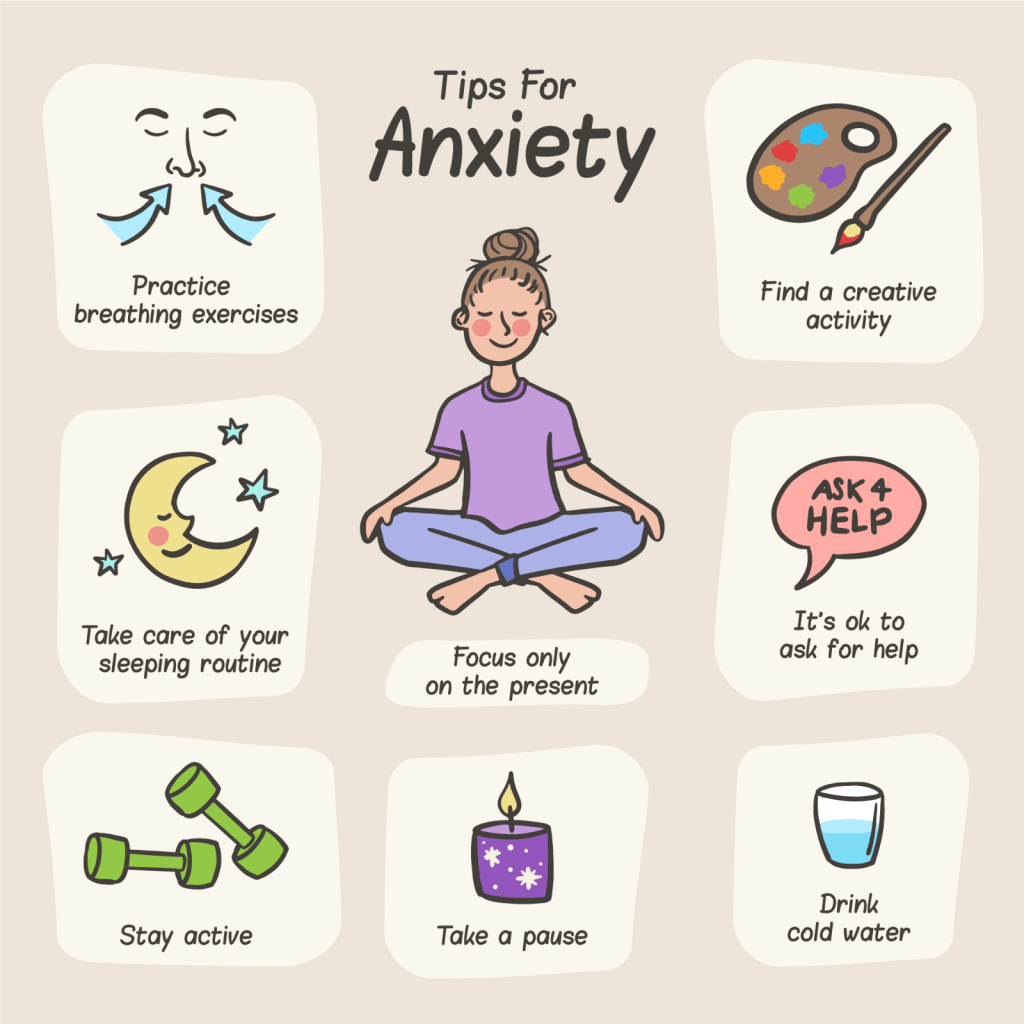
Coping Strategies
Try these when you’re feeling anxious or stressed:
- Take a time-out. Practice yoga, listen to music, meditate, get a massage, or learn relaxation techniques. Stepping back from the problem helps clear your head.
- Eat well-balanced meals. Do not skip any meals. Do keep healthful, energy-boosting snacks on hand.
- Limit alcohol and caffeine, which can aggravate anxiety and trigger panic attacks.
- Get enough sleep. When stressed, your body needs additional sleep and rest.
- Exercise daily to help you feel good and maintain your health.
MODERN SOCIETY- HOUSE HUSBANDS AND WORKING WOMEN

INTRODUCTION
The idea of working wife and househusband is getting popular. Househusbands, otherwise called stay-at-home husbands, are men who stay at home while their companions are working spouses. They take up all the family obligations that are generally done by a housewife while the life partner assumes the part of the provider. They go about as the primary guardians of the family-a job that was just taken up by ladies till now. Ladies today are presently not bound to the home space as prior. They work side by side with men in each field of work-life expressions, science, music, innovation, organization, news-casting, and so on. Step by step, we are moving forward towards sex correspondence. However, the advancement is slow. It is occurring in any case.
CHANGE IN THE MINDSET
The main change in the general public identified with sexual orientation balance is a house spouse. Men taking up jobs generally accepted to be finished by ladies is an incredible advance for equity of genders. At the point when we talk about correspondence, it needs to occur from the two sides. This implies that assuming we need ladies to have equivalent rights, then they should have equivalent obligations as well. We can’t say yes to one and no to another. The mark of distinction here is that men will, in general, have various abilities to ladies with regards to running a family – that has kids in or something else. This can help us move towards equity. For example, both the functioning spouse and househusband can see the value in one another’s work. It would set a genuine model in their youngsters’ eyes.
House spouses essentially need to rehearse, similar to what ladies have been accomplishing for quite a while, to guarantee that they complete every one of the obligations that are offered to them. It varies from one family to another. However, house spouses would attempt to adjust to whatever they need to do to keep their family cheerful. The best point about house spouses is that we get which job ladies acted in the public eye till now. It takes us further toward the balance of genders. Numerous men have in the past questioned and messed with the measure of time and exertion it takes to adapt. This subverting of the housework is being broken as an ever-increasing number of men are picking to become stay-at-home spouses.
POSITION OF SOCIETY
The circumstance is undeniably challenging for stay-at-home fathers. As indicated by the cultural jobs, men should be the providers, and ladies should be parental figures. This is the most prominent attitude assumption. All types of people working is another less famous yet acknowledged conclusion. Notwithstanding, ladies working and men assuming the part of parental figures are peered downward on.
Our general public has set extremely brutal guidelines for what ought to be finished by men. In the event that anybody dares to go against them, they are despised. Also, when men work at home as parental figures, they are ridiculed by others who have customary mentalities. Such deriding may make them feel terrible about themselves. It can even bring about limits like gloom. It is because of such uncontrolled jokes that men think that it’s hard to be parental figures while their life partner works. We need to quit taking a gander at men attempting to assume the part of guardians. It might happen that they might be demotivated subsequent to paying attention to every one of the insults. I accept that assuming an individual truly needs to accomplish something great, he should not be halted or reprimanded.
MONETARY STANCE
Throughout recent years, it has been the provider of the family who settles on every one of the significant choices. It has been inserted in our general public since the days of yore. We have frequently seen situations where ladies don’t have a say in family matters since they don’t contribute monetarily. The contention I need to introduce here is that there is no guarantee that a similar situation will not occur when men accept the job of guardians.
We don’t need the circumstance going from one limit to the next. There can be no fairness if that occurs. Thus, it is important that we attempt to adjust the two things. The choice ought to be totally emotional. In other words, if a couple commonly chooses which one should remain at home or, on the other hand, assuming both should work, we as a general public reserve no privilege to pass judgment.
Best David Fincher Movies

1. Zodiac

Fincher’s best film also feels the most like a window into his mind, an obsessive movie about obsessives. Opening with a series of murders by the Zodiac killer, who haunted the San Francisco Bay Area in the late ’60s and early ’70s, Fincher vividly captures the uneasy tenor of a city that was held captive by a psychopath’s cryptic threats and deadly actions. But that’s only the beginning of a case that would go cold for everyone but the men who devote every spare minute of their lives to it. Played by Jake Gyllenhaal, Robert Downey Jr., and Mark Ruffalo in performances of steady deterioration, they follow every bread crumb through dead-ends and red herrings, so transfixed by the process that they don’t realize the extent to which it’s ruined them. It’s these men — the evidence collectors, the archive trollers, the puzzle solvers — that are aligned most closely with Fincher, keeping up their pursuit for the Zodiac as much to scratch an intellectual itch as to find justice for his victims. In fact, the film itself is a gripping reinvestigation of sorts, with Fincher validating and dismissing theories on the near-unsolvable case, and, as ever, fussing over every detail that goes into the hunt.
2. Se7en

After the false start of Alien 3, Fincher set the table for his entire career with his next project, a serial-killer thriller that’s so unrelentingly grim and unsettling that it’s a small miracle mainstream audiences went along with it. The premise is pure hokum, with two detectives following the trial of a serial murderer inspired by the Seven Deadly Sins, but Fincher takes it seriously enough to develop deeper themes about sin and evil and whether the world itself can be redeemed. Morgan Freeman and Brad Pitt play off each other nicely as a measured, seen-it-all detective and his new brash, emotional young partner, and Gwyneth Paltrow is affecting as Pitt’s lonely wife, who reluctantly supports his transfer to a more dangerous beat. The final “sin” is a gut punch that Fincher times out for maximum impact, and the conclusion he reaches is bleak and uncompromising while simultaneously full of genuine feeling for the lonely, dedicated humans beating back the darkness.
3. The Social Network

In the eight years since The Social Network was released, the diminished public image of Silicon Valley, epitomized by the fake news and data breaches of Facebook in particular, has only further validated Fincher’s portrait of founder Mark Zuckerberg as a bloodless creature of ambition. Fincher and screenwriter Aaron Sorkin understand Facebook as coded by Zuckerberg’s DNA, in essence the social network of a sociopath — wholly reflective of his ambition, arrogance, neediness, and petty disregard for other people. Sorkin’s hypercaffeinated voice tends to overwhelm less assertive filmmakers, but his dialogue has never found a more suitable vessel than Zuckerberg, and Fincher counterbalances all the talkiness with moments of pure cinema. The unsettling ambience of Trent Reznor and Atticus Ross’s Oscar-winning score sets the surprisingly portentous tone, and Jesse Eisenberg’s performance is blessedly free of ingratiation — he doesn’t care if the audience likes him, because Zuckerberg doesn’t seem to care, either. The sequence where Zuckerberg slaps together Facemash in a fit of juvenile brilliance from his Harvard dormitory is a thrilling synthesis of campus life and one man’s half-inspired/half-pathetic effort to bottle it in pixels. The Social Network respects his vision and hustle, but keenly recognizes the flaws that are now readily apparent.
4. Gone Girl

After The Girl With the Dragon Tattoo, it fell to Fincher once again to adapt the literary phenomenon of the moment, in this case Gillian Flynn’s delectably batshit thriller about a woman’s disappearance and the cracks it reveals in her marriage. This is Fincher’s idea of a love story, much more so than gauzy convention of The Curious Case of Benjamin Button, and within this public game of cat and mouse between husband (Ben Affleck) and wife (Rosamund Pike), the film finds a perverse sort of equilibrium. It helps, too, that Fincher is a master of the twist: From page to screen, the big revelations from Flynn’s book could have easily sunk into “oh, come on now” territory, but Fincher plants them elegantly within the flow of the narrative, which weaves through different time periods to tell the complete story of a wounded relationship. He squares his particular sensibility with the lurid social commentary of Flynn’s book, carving out a pop provocation that entered the culture like a shiv.
5. Fight Club

Adapted from Chuck Palahniuk’s short novel about young men finding an outlet for their inchoate anger and frustration, Fight Club will be a rich text for cultural anthropologists of the future, who might wonder why privileged white guys were feeling so aggrieved at the turn of the millennium (and beyond). The film has become an inadvertent touchstone for disaffected Gen-Xers, but it’s also remarkably perceptive about what happens when bruised masculinity manifests itself in violent rebellion. The movie’s first half is like a two-fisted Office Space, perfectly articulating the soul-withering drudgery of a white-collar office drone who longs to break free of his ready-to-assemble, Ikea-box lifestyle. The anarchy that breaks out in the second is harder to track, but Fincher remains plugged in to the potent fantasy of razing the system and hoping something new will rise from the ashes.
Tips to learn a new language faster
Learning a new language often considered as really tough task, but is it true? Maybe for some, but the real truth is if followed right resources and direction is definitely an task to do so. So for this here are some tips that might help you.
1) Know about the language that you are going to learn
By writing this I mean one should know what language is he or she going to learn. If you have clear idea of what actually you are going to learn will help you to set almost perfect goals which will ultimately help you to do what you want.
2) Set goals
Setting goals to learn a new language will help you to go far and keep yourself ahead. Goal setting should be done after being familiar by the subject.
3) Set small goals
Setting small goals will help you to complete your work on given time. Setting small goals will also help you to analyse yourself and keep your records on track.
4) Analyse yourself
Analysing is an art if done properly will take you way to far. Whenever do things do them on time and analyse what mistakes you make or what are the problem that you have encountered.
5) Challenge yourself
This part will help you to grow. grow beyond your limits. But one thing to keep in mind while doing so is do not challenge yourself more than what will harm you. Doing this in moderation will definitely help but if done excessive will also harm.
6) Use the language as frequently as you can
If you do so it will help you to retain things faster. It will also help you to clear your vocabulary and pronunciation and also will help you to keep everything you learn stored in your brain for a long time.
7) Test yourself
At the end complete your learning and test your self this will help you to know how much you have learn about the language.
Hope you will like my blog follow the steps and go ahead. Happy learning!

360 Wander Writer
Welcome to world of Disney
PART 1

Welcoming you all to the discussion forum of the Mile cast presented to you by the Entrepreneurship development cell of Coimbatore institute of technology. Apart from different industrial revolutions there are certain creations that stand in the hearts of the people forever. Have you wondered what that is? Yes! One such creation is the Comic World. Who else in the comic world does not like MickyMouse and who have not grown up without hearing the stories of Cinderella. There lies a man behind this marvelous creation. It is none other than Walt Disney. In this let us know about this man and his masterpiece establishment ‘The Walt Disney Company’ .
He has grown from a small boy who was interested in drawings and pursuing an illustrator career to a man who has raised his standards to a co-founder of the leading media company. The establishment of this company was started in the later period of 1923. The path to success is not a bed of roses. Yup! This establishment was made after facing a bankruptcy due to the failure of his early firm. All our dreams can come true, if we have the courage to pursue them.- was his motto which made him proceed. His creations started with Alice in Wonderland , which was purchased by the Winkler Productions.

He faced many ups and lifts, during which he started creating his new creation MickyMouse inorder to recover from his previous creation ‘Oswald the Lucky Rabbit’. The film Steamboat Wille with starrer MickyMouse was an immediate smash hit. This was the first Sound film by Disney which he achieved with the feature of Synchronising sound system. Due you know something, it is not only because of the fondness towards the character that made his project successful. It is because of the features and technology that he introduces that makes his work different from others.
Soon after this release in the same year ‘The Walt Disney ‘ was reorganized to a corporation as ‘The Walt Disney Production’ and thus earned a name and became known to everyone. And in the earlier period the whole shares were withheld within the Disney family. Disney and his wife held about 60% of the shares and his brother Roy owned the rest of the shares. Introducing a different feature that makes it more appealing to the audience in each creation is the specialty of this production and thus establishing it as a powerful media company.

You can very well know that he is a man of patience , perseverance and innovation. Which was made sure when he began his first feature lengthened film ‘ Snow White And The Seven Dwarfs’ in the year of 1934 . It premiered 3 years later in 1937. Undoubtedly it was a box office hit and became the highest grossing film of the time. His studio continued with the release of successful hits like Pinocchio , Fantasia and Dumbo . Later the profits of the company declined during World War II due to the drafting of the animators into the armed forces.
During this time the Government commissioned the studio to make films that support the war effort. It is during this time the famous character Donald Duck . Further the release of Cinderella in 1950 and Alice in Wonderland in and Peter pan in the consecutive years was a success. His mastermind came up with the new idea of creating his first all -live action feature film ‘Treasure Island’. The company has grown to the height of establishing its own distribution. He always thought that it’s a kind of fun to do impossible things. Walt Disney and Coca Cola teamed up for the first Disney’s venture into television.

WOMEN EMPOWERMENT
Women empowerment is one of the most
critical and essential things that everyone should support. It is when women
are given the most power and right to make decisions for themselves. Women have
been subjected to injustice through decades. They have been treated as non-existent
for decades. Women were else was always making decisions for them. This is one
of the biggest reasons for women’s empowerment. It was one of the essential
things which were the need of the hour. Women were made aware of their rights.
Along with their rights, women were taught how to be self-independent in all
aspects of their lives. They were taught how to create a space for them where
they can grow and become the people they want to be.
Need for Women Empowerment
Almost every country, no matter how
progressive has a history of ill-treating women. In other words, women from all
over the world have been rebellious to reach the status they have today. While
the western countries are still making progress, third world countries like
India still lack behind in Women Empowerment. In India, women empowerment is
needed more than ever. India is amongst the countries which are not safe for
women. There are various reasons for this. Firstly, women in India are in
danger of honour killings. Their family thinks its right to take their lives if
they bring shame to the reputation of their legacy.
How to Empower Women?
There are various ways in how one can
empower women. The individuals and government must both come together to make
it happen. Education for girls must be made compulsory so that women can become
illiterate to make a life for themselves. Women must be given equal
opportunities in every field, irrespective of gender. Moreover, they must also
be given equal pay. We can empower women by abolishing child marriage. Various
programs must be held where they can be taught skills to fend for themselves in
case they face financial crisis.
A woman is the one who has the power to
create, nurture and transform. Below are some right that every woman in our
society should have –
Ø have
equal employment opportunities without any gender bias,
Ø have
equal education opportunities as they are equally competent.
Ø have
right to make independent decisions at home as well as at office, feel safe and
comfortable inside and also outside the home, know about their social and legal
rights, have economical and financial choices
Ø live
with dignity and self-respect
Empowering women economically, socially,
educationally politically and legally is going to be a difficult task. It is
not going to be easy to change the culture of disrespect for women which are so
deep inside in Indian society. But it does not mean that it is impossible. An
empowered woman can be a fundamental asset for the society, let her enjoy the
freedom and you will feel the change. It is the need of
the hour that we stop exploiting women and give them their rights. People must
show supportive attitude towards women so that they get equal opportunities to
move ahead towards a better society. ‘Beti Bachao, Beti Padhao’ is one scheme
started by the government to educate the girl child. People must change their
attitude towards women and give them their due place in the society.


You must be logged in to post a comment.