'Netaji'

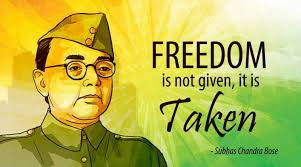
Subhash Chandra Bose is fondly remembered as one of the greatest freedom fighters of India, and popularly known by the name of ‘Netaji’ (Respected Leader). He was strongly influenced by Swami Vivekananda’s teachings, and also believed that the Bhagavad Gita was a great source of inspiration for the struggle against the British. Bose was an Indian nationalist, and a prominent figure of the Indian independence movement. The leader spearheaded the revolutionary Indian National Army during World War II. He always pitched for complete and unconditional independence of India from the British Rule.
S. C. Bose was a twice-elected President of the Indian National Congress (INC), founder and President of the All India Forward Bloc, and founder and Head of State of the Provisional Government of Free India, which he led alongside the Indian National Army from 1943 until his demise in 1945. Spoken as a part of a motivational speech for the Indian National Army at a rally of Indians in Burma in July 1944, Bose’s most famous slogan was “Give me blood, and I shall give you freedom!”
Early Life of S. C. Bose

Subhash Chandra Bose, popularly known by the name of ‘Netaji’ (Respected Leader), was born to Prabhavati Devi and Janakinath Bose on January 23 in 1897 in Odisha. He took admission into the Protestant European School which was run by the Baptist Mission. He did B A in Philosophy from the Presidency College in Calcutta, and was later expelled for assaulting Professor for the latter’s anti-India remarks. After the incident, Bose was considered as one of the rebel-Indians. During his college days, he gradually developed nationalistic temperament, and became socially and politically aware. He found Britishers’ insults to Indians in public places as offensive. In December 1921, Bose was arrested and imprisoned for organising a boycott of the celebrations to mark the Prince of Wales’s visit to India. Bose left for England in 1919 to appear for Indian Civil Service Examination. 

Political Life of Subhash Chandra Bose

After a few years, Bose returned to India as he resigned from his civil service job in April 1921, and later joined the Indian National Congress to fight for the independence of India. Subhash Chandra Bose started the newspaper known as ‘Swaraj’, and took charge of publicity for the Bengal Provincial Congress Committee. In 1923, Bose was elected as the President of All India Youth Congress and as the Secretary of Bengal State Congress. He was also editor of the newspaper called ‘Forward’, founded by his mentor Chittaranjan Das, and he served as the CEO of the Calcutta Municipal Corporation. By December 1927, Bose was appointed as the General Secretary of the INC. In November 1934, he wrote the first part of his book ‘The Indian Struggle’, which was about nationalism and India’s independence movement during 1920–1934, but the British government banned the book. By 1938, he agreed to accept nomination as the Congress President, and presided over the Haripur session. However, due to his strong differences with Mahatma Gandhi and Jawaharlal Nehru, he resigned in 1939. 

Subhash Chandra Bose’s Role in India’s Independence

S C Bose was always in favour of armed revolution in order to expel the Britishers from India. During the time when the Second World War took place, Bose revived the Indian National Army (INA) with the help of the Imperial Japanese Army, and also founded an Indian Radio Station called ‘Azad Hind Radio’. A few years later, he travelled to Japan, where more soldiers and civilians joined the INA. Even when faced with military reverses, Bose was able to maintain support for the Azad Hind movement. In Europe, S C Bose sought help from Adolf Hitler and Benito Mussolini for the liberation of India. Bose had struck an alliance with Japan and Germany as he felt that his presence in the East would help India in the freedom struggle against the British. 

Subhash Chandra Bose’s famous quotes

S C Bose’s most famous slogans/quotes are “Give me blood and I will give you freedom”, Dilli Chalo (“On to Delhi)!” This was the call he used to give to the INA army to encourage them. “Jai Hind”, or, “Glory to India!” was another slogan used by him, and later adopted by the Government of India and the Indian Armed Forces. Another slogan coined by him was “Ittefaq, Etemad, Qurbani” (Urdu for “Unity, Agreement, Sacrifice”). INA also used the slogan “Inquilab Zindabad”, which was coined by Maulana Hasrat Mohani. In July 1944, in a speech broadcast by the Azad Hind Radio from Singapore, Bose addressed Mahatma Gandhi as the “Father of the Nation”. 

Death of Subhash Chandra Bose

Subhash Chandra Bose is believed to have died in a plane crash in Taiwan in 1945, but his body was never found. There have been several theories regarding his disappearance. The government had set up a number of committees to investigate the case and come out with the truth.

How does blogging gain you money?

Is it not interesting when you get income by pursuing your passion? Bloggers are people who write blogs and put forth their opinions or pen their thoughts which are incorporated into websites. While blogging was initially an opportunity to outbring an individuals writing skills like a diary or journal, it has grown more over the years from which you can even acquire income. These days blogging has taken in its form in a video material called video blog or video log condensed to vlog. Blogging has grown by 12% since 2015 and presently there are roughly over 1.9 billion web pages. Bloggers come up with a wide range of contents like food blogging, travel blogs, fashion blogs, fitness blogs, DIY blogs, finance blogs, business blogs, parenting, news blogs, gaming, and many such things that fascinates our interest. People visit such blogging pages when they are looking out for ideas and information about a particular area of field where there is a lack of grip and that’s where the blogging becomes a popular tool, bloggers bring the outside world more closer to us, of things which we may not be aware of and want to acquire knowledge about. This is how the bloggers bring traffic to their page and gain profit.

A blogger can earn anything between $100 and $10000 per month. On an average a typical blogger earns around $300-$400 per month. If the blogger is more experienced they can earn up to $30000 + also. There are various income streams and lets have a look at some of them.

  • One of the most common ways to make money is affiliate marketing. It is just promoting other’s products on your blog and when someone makes a purchase of that product, you get paid for it, like a paid promotion not necessary that bloggers have to come up with their products/services.
  • When you a have a large amount of followers on your page people offer advertisements and pay the website owners based on how many people have seen their ads. Cost per click ads are usually banners that bloggers place in their content/sidebar. Each time a reader clicks on the ad, they are paid for that click. Click per impression are ads that pay the bloggers a fixed amount of money based on the views.
  • Bloggers also make ventures by introducing their own products through the websites and gain money by selling them online.
  • Paid reviews are also one of the common modes of gaining income. This is making a review about the product that the bloggers use and get paid for making such reviews in their videos, the bloggers need to be mindful about the products reviewing on the blog.
  • Launching online courses is a very consistent way to make income. It is a form of selling what you know which just needs an investment in time and work. The topics that can be covered in the online courses is very vast including language, educational courses, parenting, make up artistry, technology, marketing, finance etc.
  • There are also social media applications which can provide you income just on the views you bring to your blogs or vlogs.

So there are numerous streams to make money through blogging. The most prominent factor to dwell as a successful blogger is the consistent work and the quality of content. You should have a well built connection and never be reluctant or cease building great connections, acquire adequate knowledge about the websites and the topic. It may take time to become successful in the field, all you need is endurance, real focus, SEO knowledge, flexibility, strong work ethics and be passionate and the victory is never afar.

THE HANDMAID'S TALE

The Handmaid’s Tale is a dystopian novel by Canadian author Margaret Atwood, published in 1985. It is set in a near-future New England, in a strongly patriarchal, totalitarian theonomic state, known as Republic of Gilead, that has overthrown the United States government.The central character and narrator is a woman named Offred, one of the group known as “handmaids”, who are forcibly assigned to produce children for the “commanders” – the ruling class of men.The novel explores themes of subjugated women in a patriarchal society and the various means by which they resist and attempt to gain individuality and independence. The novel’s title echoes the component parts of Geoffrey Chaucer’s The Canterbury Tales, which is a series of connected stories (such as “The Merchant’s Tale” and “The Parson’s Tale”)

Plot

After a staged attack that killed the President of the United States and most of Congress, a radical political group called the “Sons of Jacob” uses theonomic ideology to launch a revolution.[7] The United States Constitution is suspended, newspapers are censored, and what was formerly the United States of America is changed into a military dictatorship known as the Republic of Gilead. The new regime moves quickly to consolidate its power, overtaking all other religious groups, including traditional Christian denominations. In addition, the regime reorganizes society using a peculiar interpretation of some Old Testament ideas, and a new militarized, hierarchical model of social and religious fanaticism among its newly created social classes. Above all, the biggest change is the severe limitation of people’s rights, especially those of women, who are not allowed to read, write, own property, or handle money. Most significantly, women are deprived of control over their own reproductive functions.

The story is told in first-person narration by a woman named Offred. In this era of environmental pollution and radiation, she is one of the few remaining fertile women. Therefore, she is forcibly assigned to produce children for the “Commanders,” the ruling class of men, and is known as a “Handmaid” based on the biblical story of Rachel and her handmaid Bilhah. Apart from Handmaids, other women are also classed socially and follow a strict dress code, ranked highest to lowest: the Commanders’ Wives in blue; the Handmaids in red with white veils around their faces; the Aunts (who train and indoctrinate the Handmaids) in brown; the Marthas (cooks and maids) in green; Econowives (the wives of lower-ranking men who handle everything in the domestic sphere) in blue, red and green stripes; young, unmarried girls in white; and widows in black.

Offred details her life starting with her third assignment as a Handmaid to a Commander. Interspersed with her narratives of her present-day experiences are flashbacks of her life before and during the beginning of the revolution, including her failed attempt to escape to Canada with her husband and child, her indoctrination into life as a Handmaid by the Aunts, and the escape of her friend Moira from the indoctrination facility. At her new home, she is treated poorly by the Commander’s wife, a former Christian media personality named Serena Joy who supported women’s domesticity and subordinate role well before Gilead was established. To Offred’s surprise, the Commander requests to see her outside of the “Ceremony,” a reproductive ritual obligatory for handmaids and intended to result in conception in the presence of his wife. The two begin an illegal relationship where they play Scrabble and Offred is allowed to ask favours of him, whether in terms of information or material items. Finally, he gives her lingerie and takes her to a covert, government-run brothel called Jezebel’s. Offred unexpectedly encounters Moira there, with her will broken, and she learns that those who are found breaking the law are sent to the Colonies to clean up toxic waste or are allowed to work at Jezebel’s as punishment.

In the days between her visits to the Commander, Offred also learns from her shopping partner, a woman called Ofglen, of the Mayday resistance, an underground network working to overthrow the Republic of Gilead. Not knowing of Offred’s criminal acts with her husband, Serena begins to suspect that the Commander is infertile, and arranges for Offred to begin a covert sexual relationship with Nick, the Commander’s personal servant. After their initial sexual encounter, Offred and Nick begin to meet on their own initiative as well, with Offred discovering that she enjoys these intimate moments despite memories of her husband, and shares potentially dangerous information about her past with him. However, shortly after, Ofglen disappears (reported as a suicide), and Serena finds evidence of the relationship between Offred and the Commander, which causes Offred to contemplate suicide.

Offred tells Nick that she thinks she is pregnant. Shortly afterward, men arrive at the house wearing the uniform of the secret police, the Eyes of God, known informally as “the Eyes”, to take her away. As she is led to a waiting van, Nick tells her to trust him and go with the men. It is unclear whether the men are actually Eyes or members of the Mayday resistance. Offred is still unsure if Nick is a member of Mayday or an Eye posing as one, and does not know if leaving will result in her escape or her capture. Ultimately, she enters the van with her future uncertain.

The novel concludes with a metafictional epilogue, described as a partial transcript of an international historical association conference taking place in the year 2195. The keynote speaker explains that Offred’s account of the events of the novel was recorded onto cassette tapes later found and transcribed by historians studying what is then called “the Gilead Period”.

Bhimrao Ramji Ambedkar

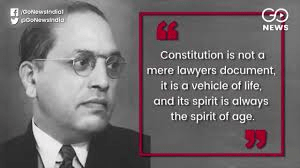
Bhimrao Ramji Ambedkar, (born April 14, 1891, Mhow, India—died December 6, 1956, New Delhi), leader of the Dalits (Scheduled Castes; formerly called untouchables) and law minister of the government of India (1947–51).

Born of a Dalit Mahar family of western India, he was as a boy humiliated by his high-caste schoolfellows. His father was an officer in the Indian army. Awarded a scholarship by the Gaekwar (ruler) of Baroda (now Vadodara), he studied at universities in the United States, Britain, and Germany. He entered the Baroda Public Service at the Gaekwar’s request, but, again ill-treated by his high-caste colleagues, he turned to legal practice and to teaching. He soon established his leadership among Dalits, founded several journals on their behalf, and succeeded in obtaining special representation for them in the legislative councils of the government. Contesting Mahatma Gandhi’s claim to speak for Dalits (or Harijans, as Gandhi called them), he wrote What Congress and Gandhi Have Done to the Untouchables (1945).

In 1947 Ambedkar became the law minister of the government of India. He took a leading part in the framing of the Indian constitution, outlawing discrimination against untouchables, and skillfully helped to steer it through the assembly. He resigned in 1951, disappointed at his lack of influence in the government. In October 1956, in despair because of the perpetuation of untouchability in Hindu doctrine, he renounced Hinduism and became a Buddhist, together with about 200,000 fellow Dalits, at a ceremony in Nagpur. Ambedkar’s book The Buddha and His Dhamma appeared posthumously in 1957, and it was republished as The Buddha and His Dhamma: A Critical Edition in 2011, edited, introduced, and annotated by Aakash Singh Rathore and Ajay Verma.

Bhimrao Ramji Ambedkar

Bhimrao Ramji Ambedkar, (born April 14, 1891, Mhow, India—died December 6, 1956, New Delhi), leader of the Dalits (Scheduled Castes; formerly called untouchables) and law minister of the government of India (1947–51).

Born of a Dalit Mahar family of western India, he was as a boy humiliated by his high-caste schoolfellows. His father was an officer in the Indian army. Awarded a scholarship by the Gaekwar (ruler) of Baroda (now Vadodara), he studied at universities in the United States, Britain, and Germany. He entered the Baroda Public Service at the Gaekwar’s request, but, again ill-treated by his high-caste colleagues, he turned to legal practice and to teaching. He soon established his leadership among Dalits, founded several journals on their behalf, and succeeded in obtaining special representation for them in the legislative councils of the government. Contesting Mahatma Gandhi’s claim to speak for Dalits (or Harijans, as Gandhi called them), he wrote What Congress and Gandhi Have Done to the Untouchables (1945).

In 1947 Ambedkar became the law minister of the government of India. He took a leading part in the framing of the Indian constitution, outlawing discrimination against untouchables, and skillfully helped to steer it through the assembly. He resigned in 1951, disappointed at his lack of influence in the government. In October 1956, in despair because of the perpetuation of untouchability in Hindu doctrine, he renounced Hinduism and became a Buddhist, together with about 200,000 fellow Dalits, at a ceremony in Nagpur. Ambedkar’s book The Buddha and His Dhamma appeared posthumously in 1957, and it was republished as The Buddha and His Dhamma: A Critical Edition in 2011, edited, introduced, and annotated by Aakash Singh Rathore and Ajay Verma.

PROUD TO BE AN INDIAN..AND ENJOY LIFE AS IT IS SHORT..( POEMS ) BY ME..

                                PROUD TO BE AN INDIAN

                                                                   -ANGELIN DIANA.G 


We are the people of power 

 And we rise up to a tower 

We belong to one brand

Moving hand in hand

We are still standing 

On our own understanding 

We do follow different trends 

But we are all good friends 

We always share 

Because we care 

We are from different stations 

But belong to one nation 

For our failures, we don’t cry 

But we always make a try 

We have no fear 

Because we are crystal clear 

We are happy citizens 

We are Indian citizens 


                             ENJOY LIFE AS IT IS SHORT 

                                                                                                 – ANGELIN DIANA. G

A Cupful of Coffee

And Mindful of Thoughts..

Sweet dreams for the nights 

And Cool creams for the teeth at mornings..

Frozen breeze for Shivering 

And hot sun for Sweating..

We achieve in dreams 

And we arrange in life..

Caring for others in life

And daring for our self..

Crying for the failures 

But trying for the next..

Life full of up and downs 

But thrill of lessons…..

KEEP SMILING ALWAYS ☺☺..

Hardware :

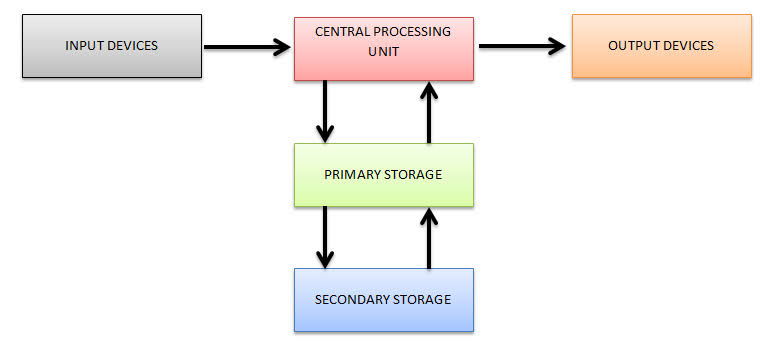
🔹️A computer is a machine that can be programmed to accept data (input), and process it into useful information (output).

🔹️It also stores data for later reuse (storage). The processing is performed by the hardware.

🔹️The computer hardware responsible for computing are mainly classified as follows:

🌟Input device
🌟CPU
🌟Main memory
🌟Secondary memory
🌟Output devices

Input devices allows the user to enter the program and data and send it to the processing unit. The common input devices are keyboard, mouse and scanners.

The processor ,more formally known as thr central processing unit (CPU), has the electronic circuitry that manipulates input data into the information as required. The central processing unit actually executes computer instructions.

Memory from which the CPU fetches the instructions and data is called main memory. It is also called as primary memory and is volatile in nature.

Output devices show the processed data – information – thr result of processing. The devices are normally a monitor and printers.

Storage usually means secondary storage, which stores data and programs. Here the data and programs are permanently stored for future use.

The hardware devices attached to the computer are called peripheral equipment. Peripheral equipment includes all input, output and secondary storage devices.

Hardware :

🔹️A computer is a machine that can be programmed to accept data (input), and process it into useful information (output).

🔹️It also stores data for later reuse (storage). The processing is performed by the hardware.

🔹️The computer hardware responsible for computing are mainly classified as follows:

🌟Input device
🌟CPU
🌟Main memory
🌟Secondary memory
🌟Output devices

Input devices allows the user to enter the program and data and send it to the processing unit. The common input devices are keyboard, mouse and scanners.

The processor ,more formally known as thr central processing unit (CPU), has the electronic circuitry that manipulates input data into the information as required. The central processing unit actually executes computer instructions.

Memory from which the CPU fetches the instructions and data is called main memory. It is also called as primary memory and is volatile in nature.

Output devices show the processed data – information – thr result of processing. The devices are normally a monitor and printers.

Storage usually means secondary storage, which stores data and programs. Here the data and programs are permanently stored for future use.

The hardware devices attached to the computer are called peripheral equipment. Peripheral equipment includes all input, output and secondary storage devices.

The latest autonomous drone technology and its capabilities

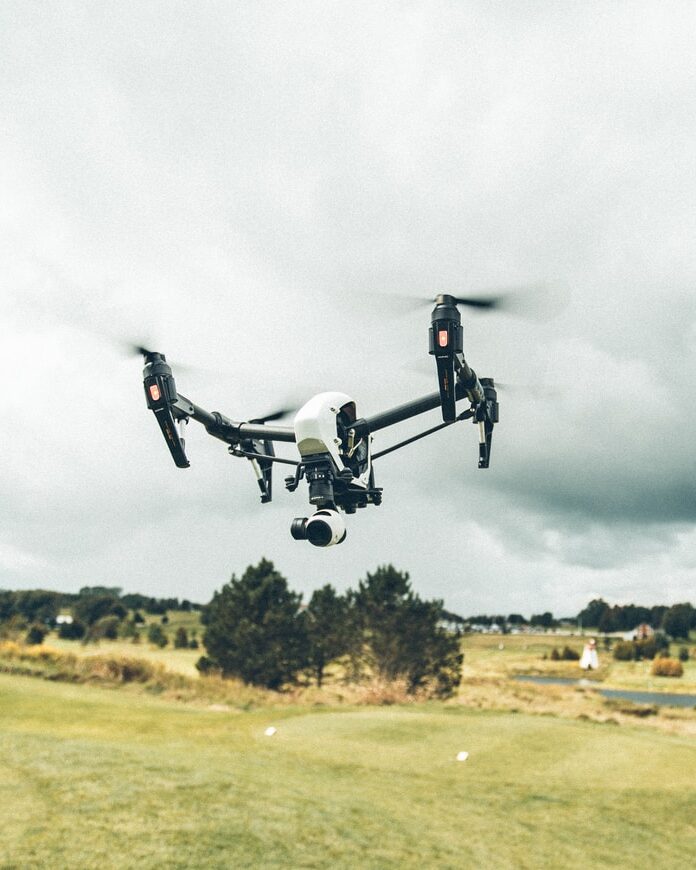
The scout drone 137

American Robotics’ autonomous drone has been certified by the Federal Aviation Administration, making it the first federally licensed drone on the market.

Drones that operate independently are a significant technical advancement. Not for domestic use because safety is still an issue, but this could boost productivity in a variety of industries because it’s nearly impossible to have someone operate multiple drones from day to night all of the time.

The autonomous drone is a fully integrated system that automates everything from landing to charging to data processing, making it an all-in-one solution.

Scout, the AI-powered autonomous drone, Soutbase, the weatherproof charging, and edge computing station, and Scoutview, the fleet management, and analytics software, are the solution’s three key components.

The Scout base is where the Scout is charged and data is processed. Scoutview allows businesses to monitor and communicate with drones without the need for a human operator.

The drone is equipped with visual, multispectral, and infrared cameras, making data collection quick and straightforward. The acquired data may be accessed instantaneously in real-time. The Scout systems will be able to perform missions independently after the installation is complete, collecting, processing, and analyzing data.

Demands for Autonomous Drones and the Market

Drones that can be used for commercial purposes have a huge market. Its TAM is expected to be worth 100 billion dollars (total addressable market). Drones might thus be utilized in a variety of areas, including industry, agriculture, and defense.

It might be used in industrial markets for asset inspection, tracking, security, and safety. It may be used for weed identification, disease detection, plant counting, research, harvest planning, and harvest timing in the agricultural market.

You’re in luck if you’re seeking surveillance and reconnaissance in the defense industry! As a consequence, these markets and sectors may use autonomous drones to perform work in broad fields that are difficult to analyze swiftly by people. It also makes data collection easier thanks to its integrated software and solutions.

Ondas has bought the Software Defined Radio platform for Mission Critical IoT applications. To manage thousands of connected devices over long distances,

Ondas provides a choice of trustworthy and secure broadband networks. With the help of Ondas’ high-bandwidth network, American Robotic’s autonomous drones will be able to send and receive long-range data, with thousands of drones continually gathering and processing high-resolution data.

This, we believe, is the way industrial data will be collected in the future. The combined company can provide the ultimate autonomous drone with unrivaled capabilities that can boost production in a variety of sectors.

The latest autonomous drone technology and its capabilities

The scout drone 137

American Robotics’ autonomous drone has been certified by the Federal Aviation Administration, making it the first federally licensed drone on the market.

Drones that operate independently are a significant technical advancement. Not for domestic use because safety is still an issue, but this could boost productivity in a variety of industries because it’s nearly impossible to have someone operate multiple drones from day to night all of the time.

The autonomous drone is a fully integrated system that automates everything from landing to charging to data processing, making it an all-in-one solution.

Scout, the AI-powered autonomous drone, Soutbase, the weatherproof charging, and edge computing station, and Scoutview, the fleet management, and analytics software, are the solution’s three key components.

The Scout base is where the Scout is charged and data is processed. Scoutview allows businesses to monitor and communicate with drones without the need for a human operator.

The drone is equipped with visual, multispectral, and infrared cameras, making data collection quick and straightforward. The acquired data may be accessed instantaneously in real-time. The Scout systems will be able to perform missions independently after the installation is complete, collecting, processing, and analyzing data.

Demands for Autonomous Drones and the Market

Drones that can be used for commercial purposes have a huge market. Its TAM is expected to be worth 100 billion dollars (total addressable market). Drones might thus be utilized in a variety of areas, including industry, agriculture, and defense.

It might be used in industrial markets for asset inspection, tracking, security, and safety. It may be used for weed identification, disease detection, plant counting, research, harvest planning, and harvest timing in the agricultural market.

You’re in luck if you’re seeking surveillance and reconnaissance in the defense industry! As a consequence, these markets and sectors may use autonomous drones to perform work in broad fields that are difficult to analyze swiftly by people. It also makes data collection easier thanks to its integrated software and solutions.

Ondas has bought the Software Defined Radio platform for Mission Critical IoT applications. To manage thousands of connected devices over long distances,

Ondas provides a choice of trustworthy and secure broadband networks. With the help of Ondas’ high-bandwidth network, American Robotic’s autonomous drones will be able to send and receive long-range data, with thousands of drones continually gathering and processing high-resolution data.

This, we believe, is the way industrial data will be collected in the future. The combined company can provide the ultimate autonomous drone with unrivaled capabilities that can boost production in a variety of sectors.

ASTEROIDS

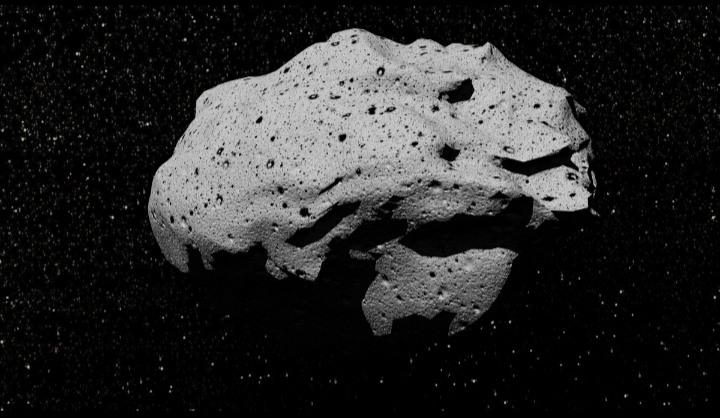
Asteroids are small, atmosphere-less rocky objects orbiting the Sun. Here are 10 things that you might not know about these planet-like celestial bodies that can crash into the Earth and create havoc.

10 Things You Need to Know about Asteroids:

  1. They were Created at the Same Time as the Earth:

Many astronomers believe that asteroids are rocky leftovers from the formation of the Solar System 4.6 billion years ago. One theory is that after the Big Bang, dust particles came together to form celestial objects through a process called accretion – smaller objects came together with other small objects, creating larger space rocks. Some of these celestial rocks were able to grow large enough to develop their own gravity and became planets. Many others were held back from getting together by Jupiter’s gravitation force. These became asteroids.

Because they revolve around the Sun like planets do, asteroids are also sometimes called planetoids or minor planets.

  1. Most are Found in One Area:

Of the millions of asteroids that inhabit our solar system, a majority can be found in a region between the orbits of Mars and Jupiter. This region is called the Asteroid Belt.

3.A Very Lonely Area:

Imagining the Asteroid Belt as in the movies – a small strip of space littered with huge rocks intent on mowing down your space ship?

Well, imagine again because the Asteroid Belt is nothing like that. In fact it is a very lonely place for an asteroid. Astronomers estimate that the average distance between two asteroids in the asteroid belt is about 600,000 miles (966,000 km). This is about 2.5 times the distance between the Earth and the Moon. That is a lot of space between two neighboring asteroids!

  1. Not all of Them Reside in the Belt:

While most of the known asteroids live in the Asteroid Belt, there are many that orbit the Sun outside this belt. For example, Trojan Asteroids, named after the Trojan Wars in Greek Mythology, follow the orbits of a planet. Jupiter has two clusters of Trojans following its orbit around the Sun – the one ahead of the planet is called the Greek Camp and the one behind is known as the Trojan Camp.

In 2010, scientists discovered the first Trojan Asteroid, 2010 TK7, that follows the Earth’s orbit.

Asteroids that are pushed close to the Earth’s orbit are known as Near Earth Asteroids.

  1. They Come in Different Sizes:

Asteroids can measure anywhere between a few feet to several hundred miles in diameter. The largest asteroid known to man, Ceres, is about 590 miles (950 km) in diameter.

Astronomers estimate that if all the asteroids in the Solar System were put together, the size of the resulting rock will be much smaller than our Moon!

  1. And Yet, some Asteroids have Moons:

About 150 Asteroids are known today to have one or more moons orbiting them. The most famous of these is Dactyl, a small moon orbiting Ida, an Asteroid Belt asteroid.

7.They can be Classified According to their Composition:

Most Asteroids fall into one of three groups based on their composition: C, S and M types. The composition is determined by how far the asteroid was from the Sun during the time of its formation.

About two-thirds of all asteroids are thought to be C type asteroids. These asteroids are very dark, with an average albedo of about 0.06 and are thought to have a similar composition as the Sun. They can be found in the outer regions of the Asteroid Belt

S type asteroids are considerably brighter with an average albedo of 0.16. These asteroids are usually found in the inner regions of the Asteroid Belt and are composed of iron and magnesuim silicates.

M type asteroids can be found in the middle of the Asteroid Belt and are much brighter than an average albedo of 0.19. These are mostly composed of Iron.

8.This makes Asteroids Attractive to Miners:

Asteroid mining? That is no longer in the realm of science fiction. Asteroids are rich sources of metals like Iron, Platinum and Titanium, metals that humans use daily to build and create things. In addition, scientists believe that water present on the surface of these asteroids could be broken down and used as fuel for space vehicles.

While asteroid mining hasn’t started yet, many companies around the world have started exploring the idea seriously.

9.Close Encounters of the Asteroid Kind:

The Earth’s atmosphere acts as a shield protecting us from meteoroids and other objects that populate space. When a meteoroid enters the atmosphere, it usually burns up before hitting the surface of the Earth. If any part of the meteoroid survives and hits the surface of the Earth, it is called a meteorite.

What are Meteor Showers?

Sometimes however larger space objects collide with the Earth’s atmopshere and impact the surface of the Earth. Scientists have identified about 100 sites on Earth that may have been impacted by a large asteroid or comet.

While no humans have been killed due to a meteorite in recent history, there is some worry among the scientific community about the possiblity of a large asteroid impact and the effect it may have on human life.

  1. An Asteroid may have Killed the Dinosaurs:

In fact, there is a theory prevalent among the scientific community that it was an asteroid that wiped out the dinosaurs. Many scientists believe that the epicenter of the mass extinction of the dinosaurs lies in the Chicxulub Crater, an impact crater that was discovered under the Yucatán Peninsula in Mexico.

ASTEROIDS

Asteroids are small, atmosphere-less rocky objects orbiting the Sun. Here are 10 things that you might not know about these planet-like celestial bodies that can crash into the Earth and create havoc.

10 Things You Need to Know about Asteroids:

  1. They were Created at the Same Time as the Earth:

Many astronomers believe that asteroids are rocky leftovers from the formation of the Solar System 4.6 billion years ago. One theory is that after the Big Bang, dust particles came together to form celestial objects through a process called accretion – smaller objects came together with other small objects, creating larger space rocks. Some of these celestial rocks were able to grow large enough to develop their own gravity and became planets. Many others were held back from getting together by Jupiter’s gravitation force. These became asteroids.

Because they revolve around the Sun like planets do, asteroids are also sometimes called planetoids or minor planets.

  1. Most are Found in One Area:

Of the millions of asteroids that inhabit our solar system, a majority can be found in a region between the orbits of Mars and Jupiter. This region is called the Asteroid Belt.

3.A Very Lonely Area:

Imagining the Asteroid Belt as in the movies – a small strip of space littered with huge rocks intent on mowing down your space ship?

Well, imagine again because the Asteroid Belt is nothing like that. In fact it is a very lonely place for an asteroid. Astronomers estimate that the average distance between two asteroids in the asteroid belt is about 600,000 miles (966,000 km). This is about 2.5 times the distance between the Earth and the Moon. That is a lot of space between two neighboring asteroids!

  1. Not all of Them Reside in the Belt:

While most of the known asteroids live in the Asteroid Belt, there are many that orbit the Sun outside this belt. For example, Trojan Asteroids, named after the Trojan Wars in Greek Mythology, follow the orbits of a planet. Jupiter has two clusters of Trojans following its orbit around the Sun – the one ahead of the planet is called the Greek Camp and the one behind is known as the Trojan Camp.

In 2010, scientists discovered the first Trojan Asteroid, 2010 TK7, that follows the Earth’s orbit.

Asteroids that are pushed close to the Earth’s orbit are known as Near Earth Asteroids.

  1. They Come in Different Sizes:

Asteroids can measure anywhere between a few feet to several hundred miles in diameter. The largest asteroid known to man, Ceres, is about 590 miles (950 km) in diameter.

Astronomers estimate that if all the asteroids in the Solar System were put together, the size of the resulting rock will be much smaller than our Moon!

  1. And Yet, some Asteroids have Moons:

About 150 Asteroids are known today to have one or more moons orbiting them. The most famous of these is Dactyl, a small moon orbiting Ida, an Asteroid Belt asteroid.

7.They can be Classified According to their Composition:

Most Asteroids fall into one of three groups based on their composition: C, S and M types. The composition is determined by how far the asteroid was from the Sun during the time of its formation.

About two-thirds of all asteroids are thought to be C type asteroids. These asteroids are very dark, with an average albedo of about 0.06 and are thought to have a similar composition as the Sun. They can be found in the outer regions of the Asteroid Belt

S type asteroids are considerably brighter with an average albedo of 0.16. These asteroids are usually found in the inner regions of the Asteroid Belt and are composed of iron and magnesuim silicates.

M type asteroids can be found in the middle of the Asteroid Belt and are much brighter than an average albedo of 0.19. These are mostly composed of Iron.

8.This makes Asteroids Attractive to Miners:

Asteroid mining? That is no longer in the realm of science fiction. Asteroids are rich sources of metals like Iron, Platinum and Titanium, metals that humans use daily to build and create things. In addition, scientists believe that water present on the surface of these asteroids could be broken down and used as fuel for space vehicles.

While asteroid mining hasn’t started yet, many companies around the world have started exploring the idea seriously.

9.Close Encounters of the Asteroid Kind:

The Earth’s atmosphere acts as a shield protecting us from meteoroids and other objects that populate space. When a meteoroid enters the atmosphere, it usually burns up before hitting the surface of the Earth. If any part of the meteoroid survives and hits the surface of the Earth, it is called a meteorite.

What are Meteor Showers?

Sometimes however larger space objects collide with the Earth’s atmopshere and impact the surface of the Earth. Scientists have identified about 100 sites on Earth that may have been impacted by a large asteroid or comet.

While no humans have been killed due to a meteorite in recent history, there is some worry among the scientific community about the possiblity of a large asteroid impact and the effect it may have on human life.

  1. An Asteroid may have Killed the Dinosaurs:

In fact, there is a theory prevalent among the scientific community that it was an asteroid that wiped out the dinosaurs. Many scientists believe that the epicenter of the mass extinction of the dinosaurs lies in the Chicxulub Crater, an impact crater that was discovered under the Yucatán Peninsula in Mexico.

How to do a case study ?

Preparing the Case

Before you begin writing, follow these guidelines to help you prepare and understand the case study:

  1. Read and Examine the Case Thoroughly
    • Take notes, highlight relevant facts, underline key problems.
  2. Focus Your Analysis
    • Identify two to five key problems.
    • Why do they exist?
    • How do they impact the organization?
    • Who is responsible for them?
  3. Uncover Possible Solutions/Changes Needed
    • Review course readings, discussions, outside research, your experience.
  4. Select the Best Solution
    • Consider strong supporting evidence, pros, and cons. Is this solution realistic?

Drafting the Case

Once you have gathered the necessary information, a draft of your analysis should include these general sections, but these may differ depending on your assignment directions or your specific case study:

  1. Introduction
    • Identify the key problems and issues in the case study.
    • Formulate and include a thesis statement, summarizing the outcome of your analysis in 1–2 sentences.
  2. Background
    • Set the scene: background information, relevant facts, and the most important issues.
    • Demonstrate that you have researched the problems in this case study.
  3. Evaluation of the Case
    • Outline the various pieces of the case study that you are focusing on.
    • Evaluate these pieces by discussing what is working and what is not working.
    • State why these parts of the case study are or are not working well.
  4. Proposed Solution/Changes
    • Provide specific and realistic solution(s) or changes needed.
    • Explain why this solution was chosen.
    • Support this solution with solid evidence, such as:
      • Concepts from class (text readings, discussions, lectures)
      • Outside research
      • Personal experience (anecdotes)
  5. Recommendations
    • Determine and discuss specific strategies for accomplishing the proposed solution.
    • If applicable, recommend further action to resolve some of the issues.
    • What should be done and who should do it?

Finalizing the Case

After you have composed the first draft of your case study analysis, read through it to check for any gaps or inconsistencies in content or structure:

  • Is your thesis statement clear and direct?
  • Have you provided solid evidence?
  • Is any component from the analysis missing?

Informal Communication-Improve English Conversations

When we communicate with our family, friends, relatives or even strangers in a casual set up, it is called Informal communication. This includes exchange of casual words- views or opinions, ideas or other interactions where the intention is only to know the person or acquire some knowledge. It is not meant for formal expression or behaviour.

It is important that we communicate effectively even if we are in an informal set up. It gives an impact and creates an impression in the mind of the other person about you. Good communication helps you enhance your growth as an individual. There is some framework you would work upon in order to be a good communicator.

It is important that your message reaches the intended person the way you mean it. There are some behavioural patterns to be followed when you interact with somebody regardless of the person’s age or gender. The most important thing to keep in mind is to respect them.

  • Never use rude words with anyone. Always be calm and speak softly. Nobody likes a person who is aggressive and harsh in his/her behaviour.

Whenever you are talking with somebody, give that person the time to complete his point. Listen carefully to what the other person is trying to convey through his words to you.

  • Never jump in between a conversation or disturb/stop somebody in-between. Let them complete and then you speak.

Keep your lines precise and avoid useless information or words which may lengthen the message and the real meaning gets lost.

  • Avoid jargon so as to make the message understandable. Also, speak only what is necessary. Speaking out unnecessary stuff may get your real message lost in the conversation.

Your body language should go with what you are conveying to the speaker/listener. The other person should not feel you are trying to dominate him/her.

  • Don’t be too loud with your body language when you are speaking and express your alertness through your body language while listening to somebody. It will assure the person of interaction from your side.
Photo by Matheus Bertelli on Pexels.com

The way you address the other person is important in deciding the response you will get from him/her. It is also the case of a formal discussion or conversation.

It is all upto you that how well you express yourself in front of others, the similar response you will get! Also, you should take into consideration whom are you talking with. This simply focus on the personality or behaviour of the person you are trying to communicate.

It is often a problem that people don’t know how to start a conversation with a stranger or a high official person. Making new friends is included in this. Since English as a language is preferred all across , the basics you can start with is to address the person saying hello, with a smile or in the formal manner(good morning) as the case may be. Initiate with what you want to say, with clarity of thought. Don’t mix up your words and make sure the person is listening to you and is interested in continuing the talk. There needs to be some common topics to make up a friend otherwise you won’t get expected response.

The way you address should be in accordance with the personality of the person; whether he/she accept frank behaviour or likes to talk about information, entertainment, etc. All such aspects help ending up with an engaging conversation. There might be people who don’t like talking much. In that situation, you avoid it and let them have their space.

29 Interesting facts about 29 different states(part-2)

Here is the part-2 of this article, in part-1, we have seen some interesting facts about some states in India. In this article, we are going to see some facts about rest of the states.

Telangana

Do you know once a Indian ruler was the world’s richest person in the world. He is Osman Ali Khan Bahadur, the last ruler of Nizam. In 1937, the time magazine featured Mir Osman Ali Khan Bahadur in there cover page as the world’s richest person. His estimated net worth is $2 billion in 1940, as of now $236 billion.

Karnataka

Do you know that 5 rivers flow in a single district in Karnataka. Vijayapura district in Karnataka witness flow of five rivers through it, they are Krishan, Doni, Bhima, Ghataprabha and Malaprabha. This district is also known as land of five rivers.

Haryana

Several historic battles like Mahabharata were fought in Haryana. Haryana is the home land for Indus and Vedic civilizations.

Punjab

According to the world records, The Golden Temple in Amritsar is the most visited place. The golden temple is located in Punjab. As by its name, it is really made of gold. This is the most popular tourist attraction in Punjab.

Odisha

In Odisha, you can find some of the oldest rocks in the world. The old rocks are about 3 Billion years ago. Our earth is believed to 4.5 Billion years old.

Sikkim

Each and every state in India have there own official language. Every state in India, have up to 1 or 2 official language. But Sikkim is the only state in India which 11 official languages.

Arunachal Pradesh

Do you known earlier Arunachal pradesh was a union territory, but later on 20th February it become a independent state.

Manipur

It is believed that the sport polo has originated in Manipur and was spread in the western countries by the Britishers during the colonial rule.

West Bengal

Have you ever wondered West Bengal is located at east but called as West Bengal? The answer is when India got its independence, the Bengal region was partitioned, the western part went to India and the eastern part went to Pakistan(Now Bangladesh). That’s why it is called West Bengal.

Chattisgarh

In Chattisgarh, motorcycle ambulances are used to save people life in the remote villages where ambulances cannot reach. So far it has saved about 200 pregnant women.

Bihar

Nalanda University is one of the world’s oldest university is located at Bihar. It was established in 5th century and it was functioned between 5th to 13th century. However it was destroyed in during some battles.

Tripura

Do you know 91 percent of the land in Tripura is under Cultivation? Rice is the crop of Tripura.

Meghalaya

Mawsnyram is the place located in Meghalaya, which receives highest amount of rainfall on this planet. The average rainfall here is 11,871mm.

Jharkhand

The state Jharkhand is rich in minerals such as iron ore, coal, mica, and limestone. It accounts for 40 percent of the total minerals found in India.

Nagaland

Nagaland is the only state in India to register population decline from 2001 to 2011 by 0.46 percent.

Himachal Pradesh

There is a village in Himachal Pradesh, which is called village of taboos. You cannot touch anything in there villages without there permission. If you touch anything without there permission then you have to pay fine to them.

Goa

Portuguese ruled Goa for more than 450 years. The rule of ended on 17th December 1971, by the invasion of Indian army.

That’s all from my side. I hope you like it.