

The most common sites nowadays in homes as well as at public spaces are people with their necks bent and eyes focused on the screen of their mobile phones. Though not the only but a major portion of the screen time is devoted to the social media applications like Facebook, WhatsApp or Instagram. The invention of social media is considered to be a blessing as it has enabled us to overcome the greatest barrier to communication- distance. We can now chat with our friends or relatives thousands of kilometers apart in a matter of seconds. But we often tend to overlook the vices associated with social media. It has been found in several studies that excess use of social media is linked with higher levels of anxiety and depression.
Focusing first on the brighter side, the apps like Instagram and Facebook have provided a platform for the unheard to speak. The marginalized and the minority section, whose views are often suppressed by the mainstream media, is able to mobilize the public opinion by using the social media. With family members moving apart nowadays due to jobs or studies, using these applications the people can still keep in touch without bearing the humungous bills of the telecom services. Also newer job opportunities have also accompanied with the social media, the most remarkable being that of the content creators. If nothing, social media has become the best pastime for people especially the younger generation (who get easily bored of anything except Instagram).
Now coming to the part which is less often appreciated adequately by people. The social media usage has significant adverse affects on our mental health and wellbeing. These apps have become platforms for social comparison, the people inculcate a feeling of inferiority complex seeing the ones who are better off in looks,wealth etc. Another stressor on social media is the “social currency” in terms of likes,comments and shares which have introduced a number game for judging the person. Seeing others being a part of an event or an opportunity also causes FOMO which is actual social anxiety of being missed out. The menace of online harassment has come into significance too.
The social media in itself is neither good nor bad, rather just a tool to communicate. The dark side of social media is actually nothing but the dark side of the humans. What is required is actually the audit of our social diet i.e. what we see on social media. The duality of appearance and reality should be kept in mind and we should rationally analyze the content we watch on these platforms. It is the same Facebook and Instagram that can tear you up, harming your mental health as well as lift you up, having an actual LOL! It’s upto us what we want to chose.
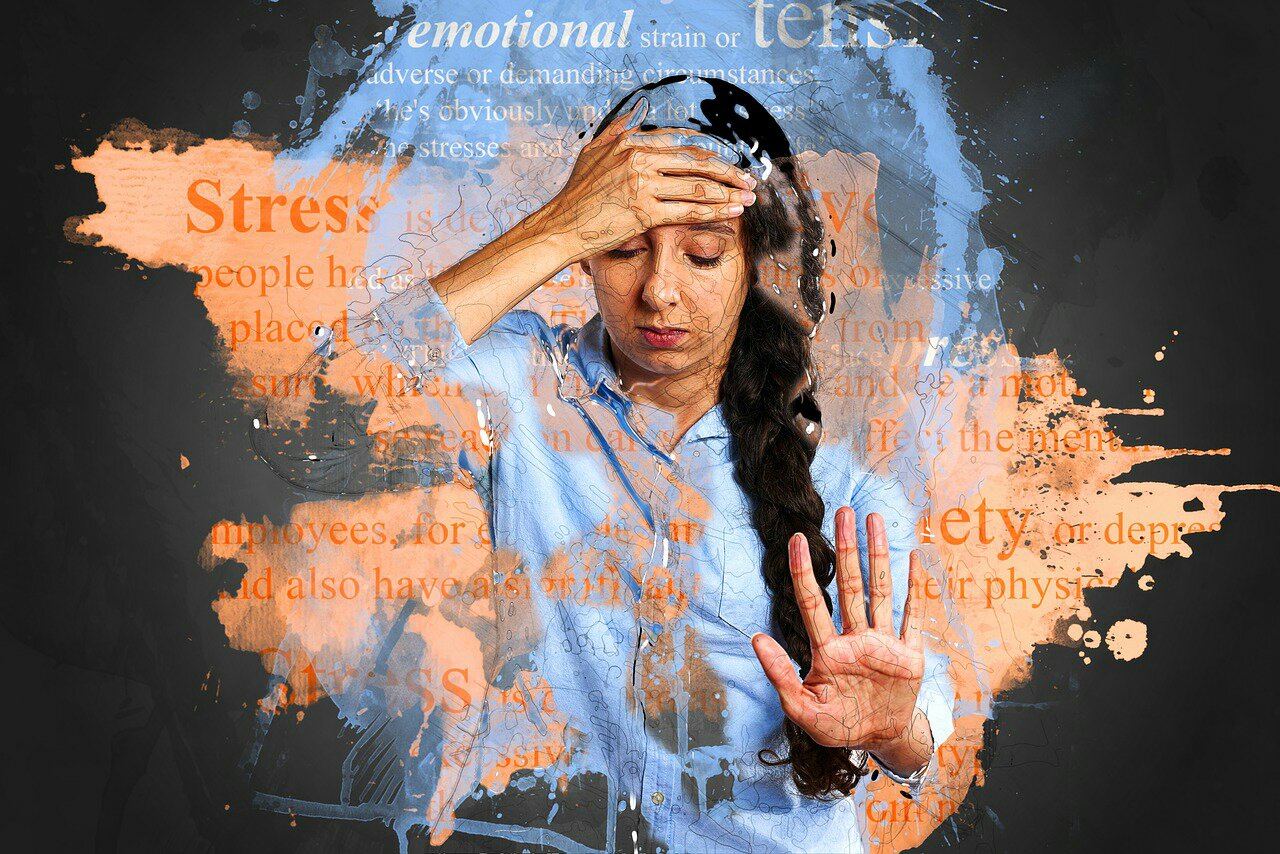 Anxiety and Fear is a common reaction to present or live events, like taking a final exam or speaking in front of a crowd. But when it becomes really uncomfortable and makes day to day life hard to live, then it’s a problem, or even what we call disorder. Some people have lived with anxiety for a long time. For them, their own anxiety feels like it’s about everything. They worry about so many things in so many ways. And it impacts their life for a long time. They stress about things that are about to happen or might happen, it means they can’t really focus or where they are or whom they are with. Sometimes it results in pounding of the heart, they speak really fast, and can kinda snap at people. Their family could get really frustrated with them. When it’s really bad, they experience having a knot in their stomach all the time. They can even feel depressed and just want to be alone. They feel like if they do something, they will screw it up or something will go wrong. So, a lot of times those people would just rather avoid it all. They feel much better just staying at home and maybe having a drink. Commute out anxiety is a very common mental health symptom. It can be the main sign for Generalized Anxiety Disorder (GAD), which they have, or Social Anxiety Disorder (SAD), which is when people have a fear of being in public or meeting new people. For those of us with social and Generalized Anxiety Disorder, it’s really difficult to live in the way we want to live. Some people have anxiety about really specific things, are afraid of heights, snakes, spiders or something else. Now, these are called Phobias and when people avoid these things, the anxiety mostly stays away. But when people can’t avoid their phobias, that’s a real problem. Some people experience anxiety and Post Traumatic Stress Disorder (PTSD) or Obsessive Compulsive Disorder (OCD), which can make people really overcome with anxiety. In these conditions, anxiety can be so intense, that people are at the risk of suicide and they use alcohol and drugs to cope. Sometimes their lives feel like they have come to a halt. Some people are lucky ones, they reach out to doctors without considering it a taboo who tells them how to get the treatment that would help them. And it does, they understand now what their anxiety feels like, why it happens, what they can do about it. They got to learn some great coping skills. And just naming it helps them keep it in perspective. Sometimes their anxiety can still get pretty big, but it doesn’t seem to last quite as long as it used to. The anxiety is treatable. For most people, this is true. We can get our life back to where we want it to be.
 Eduindex
You must be logged in to post a comment.