Antibiotics produced by microbes are regarded as one of the most significant discoveries of the twentieth century and have greatly contributed towards the welfare of the human society.
“Anti is a Greek word that means ‘against’ , and bio means ‘life’, together they mean ‘against life'( in the context of disease causing organisms).”
Antibiotics are chemical substances, which are produced by some microbes and van kill or retard the growth of other disease casing microbes.
“Penicillin was the first antibiotic to be discovered by Alexander Fleming while working on Staphylococcus bacteria”
He observed a mould growing in one of his unwashed culture plates around which Staphylococcus could not grow. He found out that it was due to chemical produced by the mould and he named it Penicillin after the mould Penicillium notatum.
However, it’s full potential as an effective antibiotic was established much later by Ernest Chain and Howard Florey. This antibiotic was extensively used to treat American soldiers wounded in World War II.
Antibiotics have greatly improved our capacity to treat deadly diseases such as plague, whooping cough( Kali khansi) , diptheria(gal ghotu) and leprosy (kusht rog), which used to kill millions all over the globe.
“Vaccines and antibiotics have made many infectious diseases a thing of the past; we’ve come to expect that public health and modern science can conquer all microbes. But nature is a formidable adversary.”
“When antibiotics became industrially produced following World War II, our quality of life and our longevity improved enormously. No one thought bacteria were going to become resistant.”
Insulin is a type of protein hormone produced by pancreatic cells islets of Langerhans. It controls the glucose level in the blood for the body to function properly. Glucose is absorbed from the blood with help of insulin into the liver, fat and skeletal muscle cells and converted into glycogen Without insulin glucose forms in the blood due to which there is a lack of glucose in the cells. This may result in fatigue numbness increased thirst etc. Therefore insulin is very important for our body. A lot of researchers worked on making insulin as a drug for the treatment of diabetes and to treat high blood potassium levels.
THE NEED
In 1921, Frederick G. Banting and Charles H. Best were able to purify insulin from a dog’s pancreas Latter it was extracted from porcine or bovine pancreases, But this insulin had its problems. Although the structure of this insulin was similar to human insulin due to minute differences it leads to coagulation and inflammation in patients. Thus it was very vital to produce human insulin for curing diabetes which was later resolved with the advent of DNA technology.
RESEARCH
In 1955, Sanger determined the pattern of insulin concluding that proteins are made up of specific amino acids which are attached in a peptide chain. The research in the production of human insulin began in the 1980s using genetic engineering. Recombinant DNA (rDNA) is DNA which particularly encodes a protein. Human insulin is developed in the lab in bacteria like Escherichia coli which is the most widely used type of bacterium and yeast can be used too. These bacteria are grown and replicate so that the insulin gene replicates millions of times.
Bacteria produce the protein, and insulin which was named Humulin was similar to that of humans can be produced. This can be used to treat people suffering from diabetes without any inflammation. In the 1990s improvement in insulin began by modifying its amino acid sequence creating insulin which leads to fewer clumps and diffuses rapidly into the blood. Later even faster-acting insulin was developed named Ultrapid insulin which was first approved by FD as first in 2017 which was more than five times faster. A lot of research is still going on to modify it for better results like correcting its gene’s mutation so that diabetics would be able to produce insulin on their own.
The advent of recombinant DNA technology proved to be very beneficial for developing and modifying insulin. Had it not been developed people would have been suffering from diabetes and various other diseases. The application of DNA technology is so vast that every research in it opens new possibilities and new fields.
Time travel is the concept of movement between certain points in time, analogous to movement between different points in space by an object or a person, typically with the use of a hypothetical device known as a time machine. Time travel is a widely recognized concept in philosophy and fiction, particularly science fiction. According to scientists time travel can be possible in recent years due to certain theories based on famous scientists.
Time travel.
HISTORY OF TIME TRAVEL
Some ancient myths depict a character skipping forward in time. In Hindu Mythology a king named kakudmi traveled to Time to meet Brahma and he was surprised when he saw time has passed when he returned to earth. The concept of universal time sphere was shown in the stories ages ago. In Jewish tradition, the 1st-century BC scholar Honi ha-M’agel is said to have fallen asleep and slept for seventy years. When waking up he returned home but found none of the people he knew, and no one believed his claims of who he was.
Time travel used to be thought of as just science fiction, but Einstein's general theory of relativity allows for the possibility that we could warp space-time so much that you could go off in a rocket and return before you set out.
      Stephen Hawking
SCIENCE FICTION IN TIME TRAVEL
Christmas Carol by Charles Dickens has early depictions of mystical time travel in both directions, as the protagonist, Ebenezer Scrooge, is transported to Christmases past and future. Other stories employ the same template, where a character naturally goes to sleep, and upon waking up finds themself in a different time. A clearer example of backward time travel is found in the popular 1861 book Paris avant les hommes (Paris before Men) by the French botanist and geologist Pierre Boitard, published posthumously.
TIME TRAVEL IN PHYSICS
Some theories, most notably special and general relativity, suggest that suitable geometries of spacetime or specific types of motion in space might allow time travel into the past and future if these geometries or motions were possible. Many in the scientific community believe that backward time travel is highly unlikely. Any theory that would allow time travel would introduce potential problems of causality. The classic example of a problem involving causality is the “grandfatherparadox“: what if one were to go back in time and kill one’s own grandfather before one’s father was conceived? Some physicists, such as Novikov and Deutsch, suggested that these sorts of temporal paradoxes can be avoided through the Novikov self-consistency principle or a variation of the many-worlds interpretation with interacting worlds.
The art of time
GENERAL RELATIVITY
Time travel to the past is theoretically possible in certain general relativity spacetime geometries that permit traveling faster than the speed of light, such as cosmic strings, traversable wormholes, and Alcubierre drives.:33–130 The theory of general relativity does suggest a scientific basis for the possibility of backward time travel in certain unusual scenarios, although arguments from semiclassical gravity suggest that when quantum effects are incorporated into general relativity, these loopholes may be closed.These semiclassical arguments led Stephen Hawking to formulate the chronology protection conjecture, suggesting that the fundamental laws of nature prevent time travel,but physicists cannot come to a definite judgment on the issue without a theory of quantum gravity to join quantum mechanics and general relativity into a completely unified theory
QUANTUM PHYSICS
The Quantam Physics
THEORIES OF QUANTAM PHYSICS IN TIME TRAVEL
Coming up with a quantum version of time travel requires physicists to figure out the time evolution equations for density states in the presence of closed timelike curves (CTC). Two main routes has been taken in the application of self consistency in Quantam Physics.
Quantum physics theories
LLOYD’s PRESCRIPTION
Based on path Integral and post selection Seth Lloyds proposed a new Alternative. In particular, the path integral is over single-valued fields, leading to self-consistent histories. He assumed it is ill-defined to speak of the actual density state of the CTC itself, and we should only focus upon the density state outside the CTC. His proposal for the time evolution of the external density state
“People like us, who believe in physics, know that the distinction between past, present and future is only a stubbornly persistent illusion.” – Albert Einstein.
Many people think that in the professional world, selfishness and greed are the characteristics that pay dividends. But the truth is, excepting win-lose situations, that the most successful people in the medium and long term are those who are the most generous in their business and personal lives.
Ambition is a desire to take on more than you can realistically accomplish, to constantly strive for improvement, to grow both personally and professionally, and, of course, the desire to generate more income. However there comes a time when ambition crosses a line, and when that happens it becomes greed. Greed is the desire to chew more than you can eat, a desire that distracts you from realistically possible goals. Greed is wanting to get more than what you have actually earned, obtaining maximum profit at minimum cost, or as an old adage has it: “Grasp all, lose all.”
Today there is an abundance of courses and books on finance, limitless knowledge on hand with a simple click. But to know what is right, to subdue the pirates of greed and to follow your trading plan- this is another story. People who look for easy money invariably find that there is no such thing, paying a heavy price for this lesson. Ego, vanity, and revenge play a part, causing people to fail on their trading accounts. This is one of the factors that explains why people might not fall into the exclusive 10% that ‘win’, and find themselves one of the 90% that lose.
Literature and film are full of greedy and stingy characters, and the moral of films like ‘A Christmas Carol’ or ‘The Wolf of Wall Street’ is always the same: the fate of the greedy is heartbreaking. Their addiction to work means that they live a lonely life, and their search for wealth means that at the end of their lives, they have only the sober memory of their friends from the Stock Exchange.
GIVE AND TAKE
People do not realize that giving without expecting something in return could be a competitive advantage, as well as making ones outlook more positive. Studies have shown that the most successful people are generous. At least this is the affirmation of Adam Grant, a psychologist and professor at Wharton and author of “Give and Take”.
A generous person builds bigger and stronger networks, improves communication with their existing contacts, and also finds it easier to interact with people outside of their core network- this gives them access to new contacts and valuable sources of information. Generous people inspire in others a predisposition, or positive receptivity, to reconnect with them, as well as a greater willingness to collaborate.
Moreover, being a giver encourages persistence because givers are able to enthusiastically motivate people, inspiring confidence, because they are liberal with praise. They create a generally positive environment. Talent is important, but the most important factor in success is persistence. And what’s even more interesting is that being a giver has an energizing effect that increases levels of happiness.
According to Bill Williams, famous trader and writer of “Trading Chaos”, people with a ‘giving’ mindset enjoy more happiness and success. For example, later in his career Bill always traded two accounts, one for himself and one for his charities. The charity account always made more money, even though he traded using the same method with both accounts. In the charity account he never veered from his strategy, while in his own account he would sometimes take a trade based on a “feel”, or get in a trade before the actual signal. This shows us the importance of sticking to a plan, but also the importance of being a ‘giver’.
Giving distracts us from our problems, adds meaning to our lives and helps us feel valued by others. This explains why avidity and egoism are the trader’s worst enemy. Having a benevolent mindset while trading helps the trader to increase performance. Happy people earn more money on average, score higher yields, make better decisions and contribute more to their organizations. Furthermore, traders who are givers are at the top of the most successful trading operations.
THE GREED EFFECT
Focusing only on money results in the ‘greedy effect’, something that all professional traders know. In fact, one of the most common pieces of (rarely followed) advice that newbies receive is to shift their focus from trade results to the trading process, analyzing and following the rules of their trading system. Another suggestion is to start reasoning in pips and ticks instead of dollars. This reduces the greedy mindset and develops a more reliable attitude.
However we can make a further effort to improve our performance by shifting our focus to be more generous. One example is trading for charitable purposes like the aforementioned Bill Williams, another could be simply committing a small part of your monthly or annual profit to microcredits, which promote a world of stability and self-sufficiency, key to overcoming poverty.
Material things can be recovered, but feelings of guilt, helplessness and loneliness cannot be solved with money. If humans would be more understanding of and generous to others, the world would be a very different place. And that is why those who practice generosity, making it part of their daily lives, experience an uplifting of their mental and emotional state, and are generally filled with more satisfaction in their professional and personal lives.
In conclusion, we see that generous people are the most successful in their daily trading performance for the reasons described above. Having a giving mindset helps professionals become part of that exclusive group, the 10% of winners.
Anger is one of the basic human emotions, as elemental as happiness, sadness, anxiety or disgust. These emotions are tied to basic survival and were honed over the course of human history. Anger is related to the “fight, flight, or freeze” response of the sympathetic nervous system, it prepares humans to fight. But fighting doesn’t necessarily mean throwing punches. It might motivate communities to combat injustice by changing laws or enforcing new norms.
Of course, anger too easily or frequently mobilized can undermine relationships or damage physical health in the long term. Prolonged release of the stress hormones that accompany anger can destroy neurons in areas of the brain associated with judgment and short term memory and weaken the immune system. For those who struggle with chronic anger, or for those who only experience occasional outbursts, learning skills to identify and navigate this powerful emotion can lead to growth and change.
What causes anger?
The question of why some shrug off annoyances while others explode in rage is a fascinating one. One model of anger, put forth by psychologist Jerry Deffenbacher, posits that anger results from a combination of the trigger event, the qualities of the individual, and the individual’s appraisal of the situation.
The trigger is the event that provokes anger, such as being cut off in traffic or yelled at by a parent. The qualities of the individual include personality traits, such as narcissism, competitiveness, and low tolerance for frustration, and the pre-anger state, like levels of anxiety or exhaustion. Perhaps most importantly is cognitive appraisal—appraising a situation as blameworthy, unjustified, punishable, etc. The combination of these components determines why and if people get mad.
How can I manage my anger?
If you are often carried away by anger, it can be helpful to understand the patterns that trigger you. It’s possible to intervene at different points along the way to deal with anger effectively.
1. Sleep: Sleep deprivation makes it harder to control angry impulses, so regular, healthy sleep can prevent you from being provoked.
2. Consider alternative interpretations: And ask yourself what evidence you have to support your angering interpretation. Consider different perspectives.
3. Take deep breaths: Take long, slow, deep breaths, using the diaphragm rather than the chest.
4. Avoid the “catharsis myth”: Venting anger, acting with aggression, and viewing aggressive content does not tend to release anger effectively.
5. Know that it’s ok to get mad: If you have been wronged, treated unfairly, or provoked, you should get angry, but express it assertively instead of aggressively.
How can I manage anger that’s warranted?
In cases of warranted anger, such as a coworker who never contributes to collaborative projects, you may want to use a different set of anger management tips. In those situations:
1. Distance yourself from the angering situation. This will help you stop ruminating and develop a clear path forward.
2. Dedicate time to thinking about how to solve the root problem so it doesn’t occur again.
3. Express your anger assertively, with a solutions-oriented approach, rather than aggressively.
Sanskrit is a standardized dialect of Old Indo-Aryan, originating as Vedic Sanskrit as early as 1700-1200 BCE. One of the oldest Indo-European languages for which substantial documentation exists, Sanskrit is believed to have been the general language of the greater Indian Subcontinent in ancient times.
Sanskrit ; attributively संस्कृत-, saṃskṛta-; nominaly संस्कृतम्, saṃskṛtam, is a classical language of South Asia belonging to the Indo-Aryan branch of the Indo-European languages. It arose in South Asia after its predecessor languages had diffused there from the northwest in the late Bronze Age. Sanskrit is the sacred language of Hinduism, the language of classical Hindu philosophy, and of historical texts of Buddhism and Jainism. It was a link language in ancient and medieval South Asia, and upon transmission of Hindu and Buddhist culture to Southeast Asia, East Asia and Central Asia in the early medieval era, it became a language of religion and high culture, and of the political elites in some of these regions. As a result, Sanskrit had a lasting impact on the languages of South Asia, Southeast Asia and East Asia, especially in their formal and learned vocabularies.
Sanskrit generally connotes several Old Indo-Aryan varieties. The most archaic of these is Vedic Sanskrit found in the Rig Veda, a collection of 1,028 hymns composed between 1500 BCE and 1200 BCE by Indo-Aryan tribes migrating east from what today is Afghanistan across northern Pakistan and into northern India. Vedic Sanskrit interacted with the preexisting ancient languages of the subcontinent, absorbing names of newly encountered plants and animals; in addition, the ancient Dravidian languages influenced Sanskrit’s phonology and syntax. “Sanskrit” can also more narrowly refer to Classical Sanskrit, a refined and standardized grammatical form that emerged in the mid-1st millennium BCE and was codified in the most comprehensive of ancient grammars, the Aṣṭādhyāyī (“Eight chapters”) of Pāṇini.The greatest dramatist in Sanskrit, Kālidāsa, wrote in classical Sanskrit, and the foundations of modern arithmetic were first described in classical Sanskrit. The two major Sanskrit epics, the Mahābhārata and the Rāmāyaṇa, however, were composed in a range of oral storytelling registers called Epic Sanskrit which was used in northern India between 400 BCE and 300 CE, and roughly contemporary with classical Sanskrit. In the following centuries, Sanskrit became tradition-bound, stopped being learned as a first language, and ultimately stopped developing as a living language.
Social media is a big tool and has a huge impact on individuals and their lives. While some impacts can be positive, social media has been shown to negatively affect things like our moods and stress levels. Addiction is caused by social media too. With access to it anytime of day on our phones, it’s easy to fall into the bad habit of checking it everywhere – during a meal, in class when a professor is talking, or even in bed when it’s time to sleep!
Genrally what we consume daily is what we become eventually many people get confuse in their life because they are not ableto enjoy their life as they are comparing their luife with life of someone they haver followed virtually,
social media create fake scenarios among young individual, only some percent of people use it wisely other just get depressed by seeing other persons life.
Social media has been a part of our lifestyle since last few years but eventually it is more disturbing now, social media was created to share information’s, to communicate with people, to make friends but now its idea has been changed widely its used for posting pictures, posting about how they buy new car its a whole show off business this can adversely affect young minds i think their should be some age restriction regarding use of social media
AT last I would say, Blaming someone or some users wont help well who are users they are people like us scrolling Instagram or Facebook hours by hours and wasting their time, i think we have power to use it in positive way just wasting time wont help
The story of human origins is complicated since our ancestors swapped genes (and probably skills).
The first humans emerged in Africa around two million years ago, long before the modern humans known as Homo sapiens appeared on the same continent.
There’s a lot anthropologists still don’t know about how different groups of humans interacted and mated with each other over this long stretch of prehistory. Thanks to new archaeological and genealogical research, they’re starting to fill in some of the blanks.
The First Humans
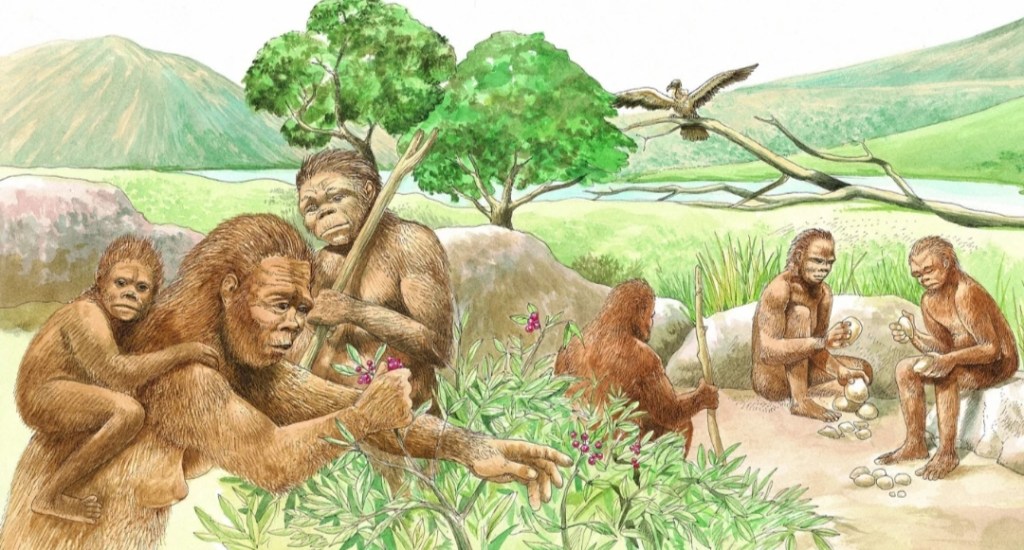
Homo habilis individuals chip away at rocks, sharpening them for cutting up game or scraping hides while a woman, with her child, gathers wild berries to eat and branches to make shelters.
First things first: A “human” is anyone who belongs to the genus Homo (Latin for “man”). Scientists still don’t know exactly when or how the first humans evolved, but they’ve identified a few of the oldest ones.
One of the earliest known humans is Homo habilis, or “handy man,” who lived about 2.4 million to 1.4 million years ago in Eastern and Southern Africa. Others include Homo rudolfensis, who lived in Eastern Africa about 1.9 million to 1.8 million years ago (its name comes from its discovery in East Rudolph, Kenya); and Homo erectus, the “upright man” who ranged from Southern Africa all the way to modern-day China and Indonesia from about 1.89 million to 110,000 years ago.
In addition to these early humans, researchers have found evidence of an unknown “superarchaic” group that separated from other humans in Africa around two million years ago. These superarchaic humans mated with the ancestors of Neanderthals and Denisovans, according to a paper published in Science Advances in February 2020. This marks the earliest known instance of human groups mating with each other—something we know happened a lot more later on.
After the superarchaic humans came the archaic ones: Neanderthals, Denisovans and other human groups that no longer exist.
Archaeologists have known about Neanderthals, or Homo neanderthalensis, since the 19th century, but only discovered Denisovans in 2008 (the group is so new it doesn’t have a scientific name yet). Since then, researchers have discovered Neanderthals and Denisovans not only mated with each other, they also mated with modern humans.
“When the Max Plank Institute [for Evolutionary Anthropology] began getting nuclear DNA sequenced data from Neanderthals, then it became very clear very quickly that modern humans carried some Neanderthal DNA,” says Alan R. Rogers, a professor of anthropology and biology at the University of Utah and lead author of the Science Advances paper. “That was a real turning point… It became widely accepted very quickly after that.”
As a more recently-discovered group, we have far less information on Denisovans than Neanderthals. But archaeologists have found evidence that they lived and mated with Neanderthals in Siberia for around 100,000 years. The most direct evidence of this is the recent discovery of a 13-year-old girl who lived in that cave about 90,000 years ago. DNA analysis revealed that her mother was a Neanderthal and her father was a Denisovan.
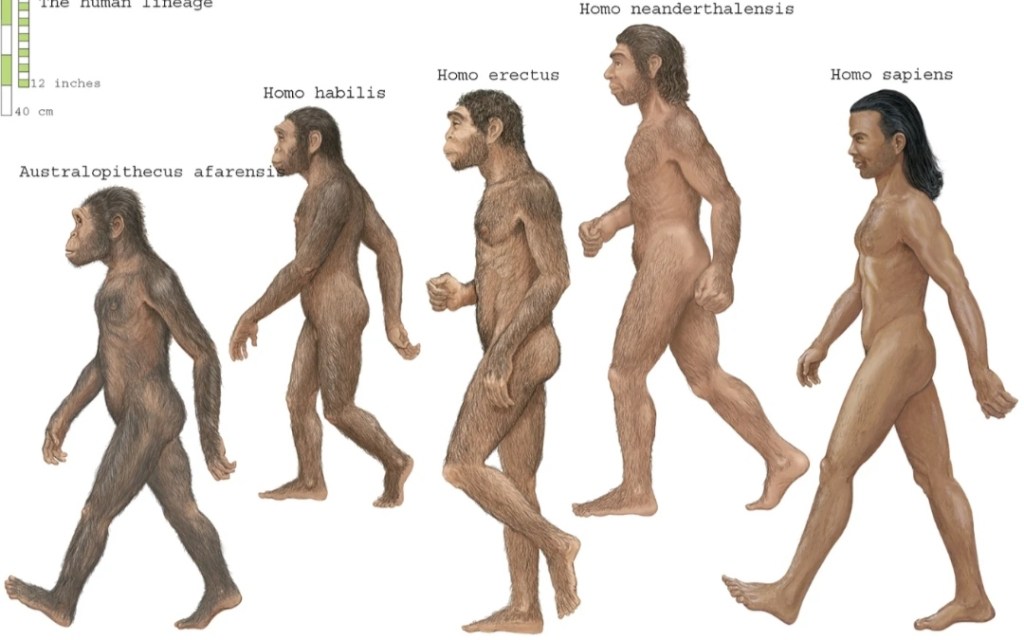
The human lineage of Australopithecus afarensis, Homo habilis, Homo erectus, Neanderthals and Homo sapiens.
Scientists are still figuring out when all this inter-group mating took place. Modern humans may have mated with Neanderthals after migrating out of Africa and into Europe and Asia around 70,000 years ago. Apparently, this was no one-night stand—research suggests there were multiple encounters between Neanderthals and modern humans.
Less is known about the Denisovans and their movements, but research suggests modern humans mated with them in Asia and Australia between 50,000 and 15,000 years ago.
Until recently, some researchers assumed people of African descent didn’t have Neanderthal ancestry because their predecessors didn’t leave Africa to meet the Neanderthals in Europe and Asia. But in January 2020, a paper in Cell upended that narrative by reporting that modern populations across Africa also carry a significant amount of Neanderthal DNA. Researchers suggest this could be the result of modern humans migrating back into Africa over the past 20,000 years after mating with Neanderthals in Europe and Asia.
Given these types of discoveries, it may be better to think about human evolution as a “braided stream,” rather than a “classical tree of evolution,” says Andrew C. Sorensen, a postdoctoral researcher in archaeology at Leiden University in the Netherlands. Although the majority of modern humans’ DNA still comes from a group that developed in Africa (Neanderthal and Deniosovan DNA accounts for only a small percentage of our genes), new discoveries about inter-group mating have complicated our view of human evolution.
“It seems like the more DNA evidence that we get—every question that gets answered, five more pop up,” he says. “So it’s a bit of an evolutionary wack-a-mole.”
Early Human Ancestors Shared Skills
Human groups that encountered each other probably swapped more than just genes, too. Neanderthals living in modern-day France roughly 50,000 years ago knew how to start a fire, according to a 2018 Nature paperon which Sorensen was the lead author. Fire-starting is a key skill that different human groups could have passed along to each other—possibly even one that Neanderthals taught to some modern humans.
“These early human groups, they really got around,” Sorensen says. “These people just move around so much that it’s very difficult to tease out these relationships.”
You tube! One of the biggest social media platform, whose content is in the form of Vedio. This was first launched in February 2005. Now It hosts biggest content creators of on variety of content from arts to science. You tube has become one of the income sources option or we can say a career option now. There are many educators who found career in you tube. In this situation of pandemic, You tube educators have saved many students education.
You tube has now become a source of information for everything. It is the biggest search engine after google. being a science enthusiast i always watch Scientific you tube channels. There are many YouTube channels doing a great job in giving perfect information with beautiful illustrations and examples. But here are the some I think which are worth subscribing.
Vsause
One of the best you tube channel hosted by Michel David Stevens. He is an American educator The channel has scientific, psychological, Mathematical, philosophical Vedios. Channel is currently on 1.7 crore subscribers and 380 Vedios on the channel. The best thing about the channel is detailed research that is done on the topics presented. And also the host Michel Stevens steals your attention by his method of explanation. He makes the Vedio interesting by scratching your brain and increasing the curiosity. The series called “Mind field” which has 3 seasons is one of the best Vedio series I have watched. They have mind blowing experiments and explorations done by the host himself.
This channel is worth subscribing.
veritasium
Another you tube channel which has the best science Vedios. This channel is hosted by Derek Muller, who is Australian-Canadian science communicator, filmmaker. The channel now has 94.8 lakh subscribers and 313 Vedios. Derek, In his Vedios answers very simple questions in a way that you would never thought of having it. He conducts many street interviews about the topics or you may call it surveys to get the public mindset and information. In may of his Vedios he breaks many Myths around science and psychology.
The best things about the Veritasium channel are the experiments and the execution. The animations used to explain things are very cool to watch. And obviously the perfect information is what you always get.
The royal institution
This is the official you tube channel of the Royal institution situated in great Britain. It is the organization for scientific education and research founded very long back in 1799. The institution holds lectures on various science topics. Many famous scientists gave their lectures here. The you tube channel has the recorded Vedios of this lectures. The channel has 10.4 lakh subscribers and 925 Vedios.
What’s the best thing? The Vedios are genuine lectures from the scientists you admire! You get the whole lecture recorded and what’s better than that. You get to know about the new discoveries and advancements in detail. Vedios make you think more deeply about science. I think that’s more than enough to make you subscribe if you are a science geek.
lectures by walter lewin They will make you love physics
Who doesn’t know Walter Lewin and his love for physics. He is the former professor of physics at Massachusetts institute of technology. He has written a book called “For the love of Physics”. He is one of the best teachers you would ever get. His fun demonstrations of theories, and facts are loved by students around the world. The channel has 10.8 lakh subscribers. His lectures make you really fall in love with physics.
there are many more YouTube channels that provide quality science Vedios. PBS spacetime, Parth G, Periodic Vedios are some other to mention. But the above four channels are my personal favorite and I think are worth giving a try.
Modern world has opened the doors for newer technologies. Every day, people bring new ideas to transform the way of thinking and doing things. Stories from all over the world from different fields influence many to pursue with their field of interest. There are several successful women in many fields in India also; they become true inspiration to all the young dreamers. Moreover, this pandemic have also taught us to be more skillful to achieve success and continuous growth in our lives.
One of the inspiring stories that have made young girls believe in their dreams is that of P.V. Sindhu. She started playing Badminton at the age of 8 and made her international debut when she was 17 yrs old. After tremendous hard work and with constant learning she became the World’s 6th Ranking Women in Single Badminton. This dedication and her constant efforts are real inspiration for the women out there who believe on themselves.
Image: Sports24
Likewise, Sharanya a 24 yr old young junior doctor who treated the victims of the Kozhikode Plan Crash. After working for 1 year at Kozhikode General Hospital,she quits to start preparing for her NEET exams. On one of the fateful night, when the hospital needed all hands on deck, she jumped into help without a second thought.
12 year old Haaziq from Pune came up with ingenious innovation- Ervis – which is a prototype ocean cleaner ship that can suck out plastic from the surface of the ocean. The picture of a young whale that died of intestinal blockage after consuming huge amount of plastic is what made this 12 year old to wage war against plastic. His novel idea received global attention and he got a chance to present this idea before audience through TED-X club.
India is one of the countries having most number of youths; the need is to give them a proper direction to think and to bring a change. Engagement of young people at local, national and global levels is impacting lives. The more they explore the more idea they collect. At this stage of confusion and uncertainty youths from different part of India are setting examples for others. No talent should be wasted, because they are capable of much more. But due to societal pressure and constant discouragements they often confused to choose their field of interests.
Image: Rightful Owner
The 22 year old a Haimanti founder of the NGO Junoon, is the inspiration for people who want to bring a change in the field of education especially for underprivileged children. Since May 2018, she has been on a mission to equip them with necessary skills along with education that will enable her to enroll them in a regular school under the Right to Education Act.
There are several more tales of young minds whose acts inspire us to work towards innovative methodologies. A young regular college student from Palakkad district, Shahinsa belongs to an agrarian family from the Panamanna village have deep passion for farming and finds the time to grow crops using modern technology in the fields.
Sriya Donepudi (15), a school going girl from Khajaguda started an initiative to recycle used flowers after social functions. She collected discarded flowers from various events and with the help of women from economically weaker sections they made soaps, paper-weights and other items from floral waste. According to The New Indian Express, this initiative made her bag The Diana Awards of 2020.
In the year 2017, Malhar and his friends collected the garbage thrown by visitors at Dadar Beach. Earlier, they started it as a weekend activity that gradually turned into a fully fledged cleanup movement engaging over 20,000 Mumbaikers. Collectively they have gathered 1000 tonnes of waste including plastics, stale food and religious offerings that had been cleared from the beach side. His efforts for this cleaning drive recognized globally when United Nations felicitated him on the International Volunteer Day.
Most of Indian startup and innovation landscape provide opportunity to young inventors to bloom. Their keen observations combined with deep sense of strategic ideas helps them in dealing with various problematic situations in the field of technology. These tales not only made us proud but also inspire us to build a new India with innovative thoughts.
Image : Shutterstock
Each of us is great in our own fashion. Even a tiny story of inspiration can influence thousands of youngsters to pursue their dream; each act can impact the world. Every one of us has that hidden power, the requirement is to have faith and continue our work with relentless efforts. These tiny tales of youths inspires many to pursue their dream . This pandemic is really tough and a challenging time for all the innovators but if you’re passionate enough to achieve your goal, you should continue with perseverance and patience.
Diseases or infections which are transmitted through sexual intercourse are collectively called sexually transmitted diseases (STDs) or venereal diseases (VD) or reproductive tract infections (RTI).
Gonorrhoea, syphilis, genital herpes, chlamydiasis, genital warts, trichomoniasis, hepatitis-B and HIV leading to AIDS are some of the common STDs.
Some of these infections like hepatitis-B and HIV can also be transmitted by sharing of injection needles, surgical instruments, etc., with infected persons, transfusion of blood, or from an infected mother to the foetus too. Except for hepatitis-B , genital herpes and HIV infections, other diseases are completely curable if detected early and treated properly.
” Early symptoms of most of these are minor and include itching, fluid discharge, slight pain, swellings etc., in the genital region.”
Infected females may often be asymptomatic and hence, may remain undetected for long. Absence or less significant symptoms in the early stages of infection and the social stigma attached to the STDs, deter the infected persons from going for timely detection ne proper treatment.
Syphilis
This could lead to complications later, which include pelvic inflammatory diseases(PID), abortions, still births, ectopic pregnancies, infertility or even cancer of the reproductive tract.
” STDs are a major threat to the society. Therefore, prevention or early detection and cure of these diseases are given prime consideration under the reproductive health-care programmes.”
Though all persons are vulnerable to these infections, their incidences are reported to be very high among persons in the age group of 15-24 years.
Gonorrhoea
Prevention
Avoid sex with unknown partners/multiple partners
Always use condom during coitus
In case of doubt, go to a qualified doctor for early detection and get complete treatment if diagnosed with disease.
Water is the basic needs of the individual for the Survival. Some of the things like oxygen, water, food are very essential for the individual to live. After the oxygen, water is very much important for the individual survival and for the whole environment as well. Water is used in the daily basis for many of the activities like drinking, cleaning, watering, and also for some of the electric purposes etc.
There are plenty of water in the seas but there is no use of them. Because, all the seawater are salty and not food for drinking purpose. They can be made for drinking by some of the beautification methods which takes lots of processes and also the time. Scarcity of the water is not only the India’s problem but also the global problem.
If the wasteage of water is continued in the same way, there will be a day where no water can be found for drinking purposes and for some of the utility purposes. Most of the people waste water without any need. Using water for the purposes are all good but Wasting the water without any reason is a bad habit that an individual must not develop. It is very easy to waste water rather than saving the drop.
The main sources of water are surface water, ground water and rain water.
Importance of water :
Water is very important to the human body. Every one of your cells,organs and tissues use water to help with temperature regulation, keeping hydrated and maintaining bodily functions. In addition, water acts as a lubricant and cushions your joints. Driniking water is great for your overall health. Because your body loses water through breathing, sweating, and digestion, it’s important to rehydrate by drinking fluids and eating foods that contain water.
Water delivers important nutrients to all of our cells,especially muscle cells, postponing muscle fatigue. Water helps weight loss. Water helps you feel full longer,without adding any additional calories.
Benefits of Drinking water :
* Increases Energy & Relieves Fatigue. Since your brain is mostly water, drinking it helps you think, focus and concentrate better and be more alert.
* promotes weight loss.
* Flushes out Toxins.
* Improves skin complexion
* Maintains Regularity.
Best source of water :
1. Watermelon – water content : 92%
2. Strawberries – water content : 91%
3.cantaloupe – water content : 90%
4.peaches – water content : 89%
5.oranges – water content : 88%
6. Skim Milk – water content : 91%
7. Cucumber – water content : 95%
8. Lettuce – water content : 96%
9. Broths and soups – water content : 92%
10. Zucchini – water content : 94%
11. Celery – water content : 95%
12. Plain yogurt – water content: 88%
13. Tomatoes – water content : 94%
14. Bell peppers – water content : 92%
15.cauliflower – water content : 92%
16. Cabbage – water content : 92%
17. Grape fruit – water content : 88%
18. Coconut water- water content : 95%
19. Cottage cheese – water content: 80%
Disadvantages of water :
It is said that too much consumption of water can lead to fluid overload in the body and imbalance in the body. Excess water can lead it lower sodium levels in the body, which may further lead to nause, vomthing, cramps, fatigue. This condition is known as hyponatremia.
The best method to save water is to use in limited amounts. That is, to limit the water without wasting much water.
The contraindications to second dose of vaccine are:
Severe allergic reaction after a previous dose of this vaccine. If your treating physician considered this event as a severe allergic reaction to the vaccine, then you should not take second dose of vaccine. If you experience any other adverse event (known or unknown) after first dose, you can take the second dose.
Patients who have experienced major blood clotting (venous and/or arterial thrombosis) in combination with low platelet count (thrombocytopenia) following first dose of vaccine.
“Extinction is the process of evolution that leads to the dissappearence of a population or species.”
When a species becomes extinct, all its genetic heritage is lost. The species evolve into new species in order to adapt to the environmental changes or changes in the genetic heritage.Over 99% of all the species that once lived on the Earth amounting to over five billion species are estimated to be extinct. As per the estimations on the number of current species, a range from 10 -14 million, of which more than 1.2 million have been studied and more than 86% have not yet been discovered.This could happen naturally due to a change in the climate or because of human activities like overhunting or due to the destruction of habitat.
Despite the uncertainties, extinction has three major elements:
For species collectively, extinction is a probability if the killing stress is so rare beyond their experience and therefore outside the reach of natural selection.
The mass extinctions would pave way for the major restructuring of the biosphere where a few successful groups are eliminated allowing minor groups to expand.
In a few cases, there is evidence that extinction is selectively argued by Darwin. It has been made impossible to predict which species are going to be the next victim of an extinction event
1.THE DODO:
The Dodo was a flightless bird native to Mauritius whose population began dwindling and eventually became extinct over the short course of a century when sailors began arriving on the East African island nation.The last of the Dodos were seen in the 1660s and because there really wasn’t an emphasis on specimen preservation, many of the remaining fossils were lost or destroyed.
Even though the Dodo went extinct more than 150 years ago, their story is important. People didn’t believe that God would take away a creature’s existence after having gone through the trouble of creating them, so no one was truly alarmed at their disappearance. This led people to believe that there were more Dodos tucked away somewhere in nature and so, specimens weren’t handled as carefully as they should have been.In fact, Dodo specimen damage and loss was common in 17th and 18th centuries.
Cause of Extinction:
popular belief has sailors hunting and eating the Dodo to the point of extinction, but it’s more likely that the rats (and other animals) the sailors brought with them caused the Dodo’s decline. The BBC reports that rats likely ate dodo eggs and other animals outcompeted the bird for food sources.
2.SCHOMBURGSK’S DEER:
Schomburgk’s deer was native to Thailand and was named after German-born explorer, Sir Robert H. Schomburgk, who was knighted in 1844.Some scientists believe that there may still be a few of these deer in the wild even though they were officially declared extinct in 2006 with the last known deer reportedly killed in captivity in 1938.
Cause of Extinction:
Besides humans, Schomburgk’s deer were hunted by native tigers and leopards. Today, we only know of one mounted deer head which resides in Paris’ Muséum National d’Histoire Natural.
SUMATRAN RHINO:
The last Sumatran rhino in Malaysia passed away in November, 2019, making the extremely rare species locally extinct. The rhino was named Iman and she died due to cancer.The death of Iman made the species critically endangered, with less than 80 Sumatran rhinos left all over the world, primarily in Indonesia. Currently, Sumatran rhinos are the smallest rhino species in the world.
Cause of Extinction:
Iman, the last Sumatran rhino left in Malaysia, died over the weekend after a long battle with uterine tumors.
The fate of this critically endangered species now lies with a tiny population of no more than 80 individuals in Indonesia, where captive breeding has yielded some success in recent years.
The critically endangered species was decimated by poaching and habitat loss in the past, but today observers say the small and fragmented nature of their populations, and a correspondingly low birthrate, is the biggest threat to their survival. Few of the remaining populations left in the wild are believed to be large enough to support natural reproduction, and isolated individuals have been found to be prone to developing reproductive pathologies like the uterine tumors suffered by Iman(rhino).
INDIAN CHEETAH :
In a report by ANI in September, 2019, it was stated that the Indian Cheetah, along with three other species is now extinct in India due to desertification. The numbers dropped down to 150 and eventually the species died out.This intense desertification was caused due to the excessive use of pesticides and heavy industrialisation in agricultural areas. The report also showed how this desertification had a negative impact on the entire food chain.
Cause of Extinction:
Trapping of large numbers of adult indian cheetah’s, who had already learned hunting skills from wild mothers, for assisting in royal hunts is said to be another major cause of the species rapid decline in india as they never bred in captivity with only one record of a litter ever.The animal is believed to have disappeared from india when Maharaja Ramanuj Pratap Singh Deo of Koriya hunted and shot the last three recorded Asiatic cheetahs in india in 1947. It was declared extinct by the government in 1952.
INDOCHINESE TIGER :
This species was mainly found in southeast Asia before it became critically endangered. Its numbers reduced to 1500 and then eventually the species became extinct.The species is completely extinct in the wild but there are a few tigers that are living in captivity. It is completely wiped out in Cambodia and the largest number of tigers are now residing in Thailand. The main reason for its extinction is hunting and poaching.
According to a lot of media and UN reports, the world is on track to lose two-thirds of its wildlife population by the end of 2020. Even common wildlife species like Koala bears are now prone to extinction because of the Australian bushfires, which happened due to climate change in the area.
Cause of Extinction:
According to the World Wildlife Fund (WWF), indochinese tiger numbers are in shocking decline across its range because of shrinking habitats, expanding human populations, poaching, and illegal wildlife trade. Vital tiger populations are also depleted by a growing commercial demand for wild meat in restaurants
Hunting for trophies, poaching by farmers, and the growing demand for tiger bones in Oriental medicine are key factors for the indochinese tiger decline. Habitat loss due to population growth is also a major concern.It’s believed there are around 350 indochinese tiger leftin the world. This low population is due to poaching and habitat loss.
CATARINA PUPFISH :
Catarina pupfish is a freshwater fish found in Mexico. The species got extinct when their natural habitat got disrupted due to groundwater extraction.The fish was living in the wild till 1994, but due to the rapid loss, the species was moved to captivity. It survived till 2012 and then got completely extinct in 2019.
Cause of Extinction:
The species got extinct when their natural habitat got disrupted due to groundwater extraction. The fish was living in the wild till 1994, but due to the rapid loss, the species was moved to captivity. It survived till 2012 and then got completely extinct in 2019.
Habitat loss caused the extinction of the Catarina pupfish, and it is threatening thousands of species. Humans have modified more than 70% of terrestrial and 60% of marine habitats. The most recent report from the UN estimates that one million animal and plant species are facing extinction in the next few decades as a result of habitat loss and degradation, overexploitation, poaching, climate change, pollution, and invasive species.
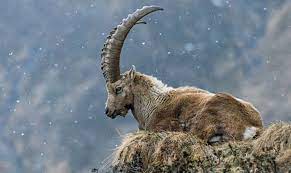
PYRENEAN IBEX :
The Pyrenean ibex was a type of goat abundant across the Pyrenees mountains. It declined over two centuries from hunting, disease and inability to compete with other species. The last was a female called Celia, who died in 2000. In a first, it was declared “unextinct”in 2003 when a cloned female ibex was born alive, but died several minutes later from lung defects.The Pyrenean ibex, a subspecies of the Spanish ibex, is one more recently extinct animals.
Cause of Extinction:
The ibex, native to the Pyrenees Mountains on France and Spain’s border, was declared extinct in 2000. During medieval times, the Pyrenean ibex was abundant, but their population decreased due to hunting. 21 years ago this month, a wild goat species went extinct — and kicked off a bizarre but ultimately hopeful scientific adventure. The pyrenean ibex became extinct in January of 2000, when a falling tree landed on the last surviving member of the species.
SPLENDID POISON FROG :
In 2020, the IUCN (International Union for Conservation of Nature) declared that the splendid poison frog was extinct. Sadly, that makes the splendid poison frog one of the most recently extinct animals on the planet.The small red frog, a species of poison dart frog, lived in the neo-tropical forests of Panama in the mountain ranges adjacent to Costa Rica. Common names of the splendid poison frog in Spanish are Rana venenosa and Sapito venenoso
Cause of Extinction:
Deforestation and habitat degradation are the primary threats to the splendid poison frog. Human activities such as logging, expansion of urban and suburban areas, and the construction and use of rail lines have had a significant impact on population numbers.The splendid poison frog or splendid poison-arrow frog (Oophaga speciosa) was a species of poison dart frog endemic to the eastern end of Cordillera de Talamanca, western Panama.
SPIX’S MACAW:
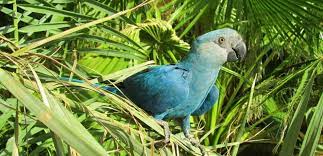
The Spix’s macaw is a recently extinct animal from near the Rio São Francisco in Bahia, Brazil. In 2019, the bird known as the “Little Blue Macaw” because of its vibrant blue feathers was declared extinct in the wild. Fortunately, experts have documented about 160 Spix’s macaws in captivity. Scientists and the Brazilian government are working on a planned release of the parrots to the wild in 2021.
The species was popularized in 2011 when the animated movie “Rio” depicted a cartoon characterization of the breed. Early scientists named the species for the German naturalist who documented them in 1819.
Cause of Extinction:
Though it perished in 2000, some 60-80 are still being bred in captivity. 5. While they were driven to extinction by human factors like the building of dams and trapping for trade, there is still hope to clone and revive these birds in wild populations.Since the year 2000, the species has been considered extinct in the wild. In addition to illegal trafficking, the destruction of habitat due to human influences was the main reason for the extinction of the species.
Habitat destruction and illegal trapping and trade are what caused the wild Spix’s macaw’s demise.A female spix’s macaw released from captivity at the site in 1995 was killed by collision with a power line after seven weeks. The last wild male disappeared from the site in October 2000; his disappearance was thought to have marked the extinction of this species in the wild.
PASSENGER PIGEON :
Although the passenger pigeon went extinct over 100 years ago, you could say that it is one of the recently extinct animals in relation to the earth’s age. The passenger pigeon’s abundant numbers made the species seem ineradicable, but it became the poster child of animal conservationist groups after its demise. Most ecologists estimate that passenger pigeons numbered in the millions when Europeans began settling North America. Eyewitnesses reported that skies would darken when flocks flew overhead on sunny days.
Cause of Extinction:
Passenger pigeons vanished after farmers cleared their habitat and hunters netted, shot and poisoned them to the point of extinction. The extermination of the passenger pigeon was part of the motivation for the birth of 20th century conservation. The last known bird died in the Cincinnati Zoo in 1914.People ate passenger pigeon in huge amounts, but they were also killed because they were perceived as a threat to agriculture. As Europeans migrated across North America, they thinned out and eliminated the large forests that the pigeons depended on.The last passenger pigeon died in the Cincinnati Zoo in 1914
THE QUAGGA :
Another of the relatively recently extinct animals is the Quagga. The odd-looking animal resembled a cross between a stout pony and a zebra. With the zebra’s dazzling stripes across its head, mane, and neck, and the chestnut colouring of a pony or horse throughout the rest of its body, the quagga was hunted to extinction in the late 1800s by European settlers.
The somewhat recently extinct animal was native to South Africa and was a subspecies of the plains Zebra. Named by the African tribe of Hottentots for its distinctive ‘kwa-ha-ha’ call, quagga is an onomatopoeia. The last animal died in the Amsterdam Zoo in 1883.Interestingly, scientists of the Quagga project are using selective breeding of zebras in an attempt to revive the extinct quagga.
Cause of Extinction:
The Quagga’s extinction is generally attributed to the “ruthless hunting”, and even “planned extermination” by colonists. Wild grass eating animals such as the Quagga were perceived by the settlers as competitors for their sheep, goats and other livestock.Quagg’s extinction a Nasty Surprise. 1883: The quagga goes extinct when the last of these South African zebras dies at the Amsterdam Zoo.
MAMMOTH:
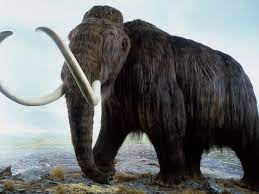
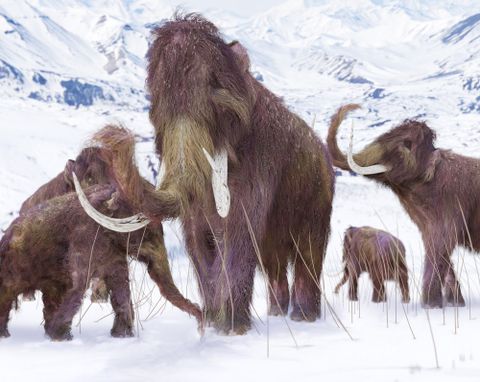
Woolly mammoths lived during the last ice age, and they may have died off when the weather became warmer and their food supply changed. Humans may also be partly responsible for their disappearance due to hunting. Although the word “mammoth” has come to mean “huge,” woolly mammoths were probably about the size of africian elephants. Their ears were smaller than those of today’s elephants. This was probably an adaptation to the cold climate that kept their ears closer to their heads and kept them warmer. Their tusks were very long, about 15 feet (5 meters) and were used for fighting and digging in the deep snow. Mammoths were herbivores and ate mostly grass, but also ate other types of plants and flowers.
Cause of Extinction:
Most woolly mammoths went extinct roughly 10,000 years ago amid a warming climate and widespread human hunting.They pinpointed a collection of genetic mutations in the Wrangel Island mammoth and synthesized these genes in the laboratory to test their functionality.While woolly mammoths were once plentiful across the northern hemisphere, they actually went extinct in two separate events. The first wave of mammoth extinction occurred on the heels of the last ice age and global warming led to the loss of their habitat, around 10,500 years ago.
REASONS FOR EXTINCTION OF SPECIES:
The important causes of extinction include:
Asteroid Strikes:
A meteor strike on the Yucatan peninsula in Mexico led to the disappearance of dinosaurs millions of years ago. Most of the mass extinctions, such as KT-extinction or Permian-Triassic extinction were caused due to such events. The astronomers constantly keep an eye on comets or meteors that could lead to the end of human civilization.
Climate Change:
Climate change is yet another factor that could destroy terrestrial organisms. During the end of the last ice-age, most of the megafauna were unable to adapt to the changing warm temperatures. They died due to lack of food and hunting by early humans. Even modern civilization is stepping towards the threat of extinction due to global warming.
Disease:
Various epidemics had been the cause of extinction of a large population of humans and animals on earth. The Black Death wiped out one-third of the European population in the Middle Ages.
Loss of habitat:
Every animal has its own comfort zone where it can breed and raise its young ones. For eg., a bird is comfortable only on the branch of a tree. Due to the expansion of human civilization and industrialization, the forests have been destroyed which are an abode to most of the animals. Due to lack of space and eventually food, the populations of many organisms have been minimised.
Better Adapted Competition:
The better-adapted populations win over the ones that lag behind. For eg., the pre-historic mammals were better adapted than the dinosaurs. The ones which are well-adapted survive, while the others become extinct.
Pollution:
The pollution from the industries and vehicles have led to a drastic change in the oxygen levels in the atmosphere as well as water. This has led to the extinction of most of the aquatic as well as terrestrial species.
When scientists talk about the expanding universe, they mean that it has been growing ever since its beginning with the Big Bang.
The galaxies outside of our own are moving away from us, and the ones that are farthest away are moving the fastest. This means that no matter what galaxy you happen to be in, all the other galaxies are moving away from you.
However, the galaxies are not moving through space, they are moving in space, because space is also moving. In other words, the universe has no center; everything is moving away from everything else. If you imagine a grid of space with a galaxy every million light years or so, after enough time passes this grid will stretch out so that the galaxies are spread to every two million light years, and so on, possibly into infinity.
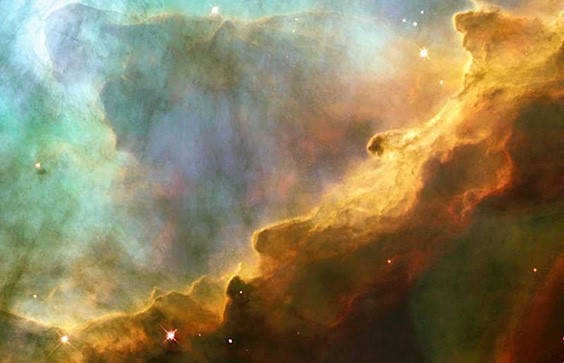
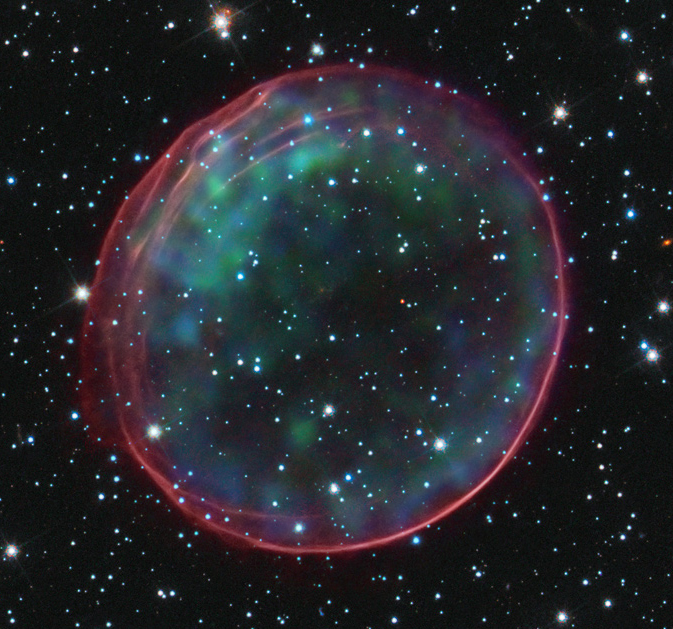
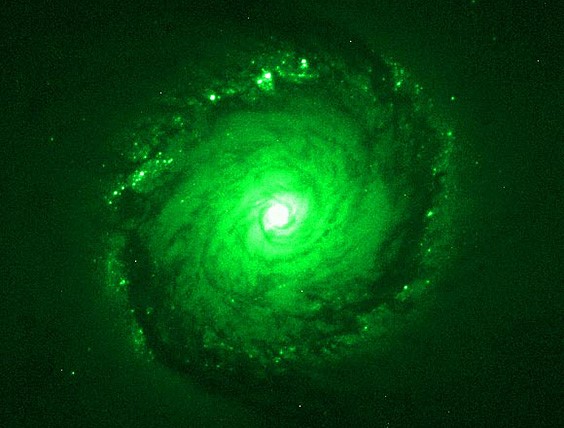
The universe encompasses everything in existence, from the smallest atom to the largest galaxy; since forming some 13.7 billion years ago in the Big Bang, it has been expanding and may be infinite in its scope. The part of the universe of which we have knowledge is called the observable universe, the region around Earth from which light has had time to reach us.
One famous analogy to explain the expanding universe is imagining the universe like a loaf of raisin bread dough. As the bread rises and expands, the raisins move farther away from each other, but they are still stuck in the dough. In the case of the universe, there may be raisins out there that we can’t see any more because they have moved away so fast that their light has never reached Earth. Fortunately, gravity is in control of things at the local level and keeps our raisins together.
Who Figured This Out?
The American astronomer Edwin Hubble made the observations in 1925, proving that there is a direct relationship between the speeds of distant galaxies and their distances from Earth. The observation that galaxies are moving away from the Earth at speeds proportional to their distance has traditionally been known as Hubble’s Law, although it should be noted that, in 2018, the International Astronomical Union (IAU) voted to recommend amending the name to the Hubble–Lemaître law, in recognition of the contributions of both Hubble and the Belgian astronomer Georges Lemaître to the development of modern cosmology.
The Hubble Space Telescope was named after Edwin Hubble, and the single number that describes the rate of the cosmic expansion, relating the apparent recession velocities of external galaxies to their distance, is called the Hubble Constant.
Is the Universe Infinite?
It might be easier to explain about the beginning of the universe and the Big Bang Theory, than to talk about how it will end. It is possible that the universe will last forever, or it may be crushed out of existence in a reverse of the Big Bang scenario, but that would be so far in the future that it might as well be infinite. Until recently, cosmologists (the scientists who study the universe) assumed that the rate of the universe’s expansion was slowing because of the effects of gravity. However, current research indicates that the universe may expand to eternity. But research continues and new studies of supernovae in remote galaxies and a force called dark energy may modify the possible fates of the universe.


































 Eduindex
You must be logged in to post a comment.