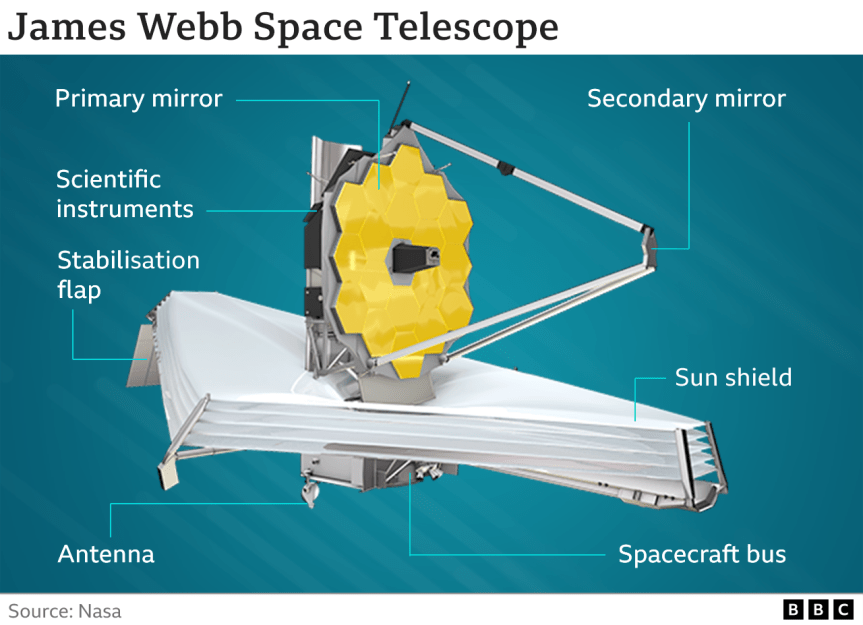
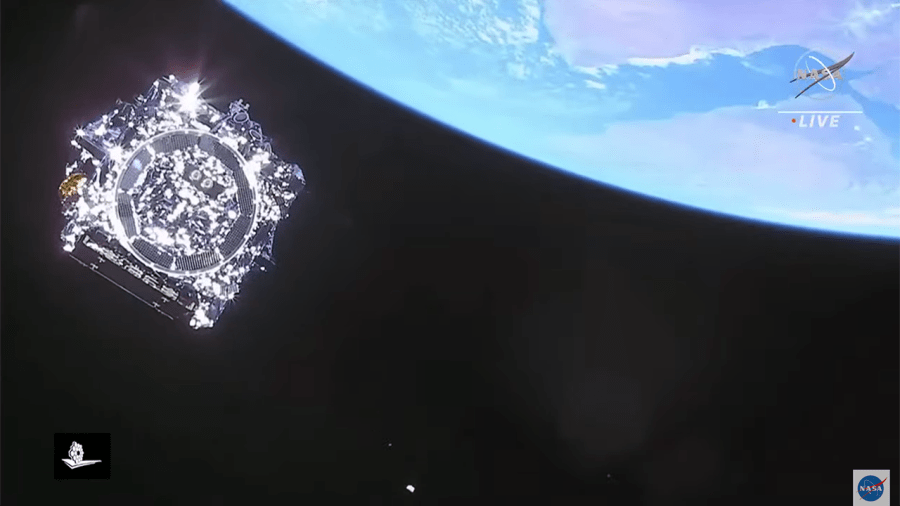
The European Ariane 5 rocket launched NASA’s James Webb Space Telescope (JWST), the biggest and most powerful space telescope yet constructed, from French Guiana, on the northeast coast of South America.
It is the successor of the Hubble Telescope and most powerful infrared telescope of National Aeronautics and Space Administration (NASA).
It is designed to explore a period known as the Epoch of Reionization, which came after the dark ages that followed the big bang. The telescope will study the atmospheres of a wide diversity of exoplanets. It will also search for atmospheres like Earth’s, and for the signatures of key substances such as methane, water, oxygen, carbon dioxide, and complex organic molecules, in hopes of finding the building blocks of life.
Goals
Search for the first galaxies that formed after the Big Bang.
Determine how galaxies evolved from their earlier formation until now.
Observe the formation of stars from the first stages to the formation of planetary systems.
Measure the physical and chemical properties of planetary systems and investigate the potential for life in such systems
ORBIT
JWST will be finally placed in second Lagrange Point (L2).
Webb’s orbit follows a special path around L2 that allows it to stay on Earth’s night side (directly ‘behind’ the Earth as viewed from the Sun) and track along with Earth while moving around the Sun.
As an infrared observatory, Webb must be protected from all bright, hot sources to see the faint heat signals of distant objects in the universe. Because Webb will always stay on Earth’s night side as it moves around the Sun, its orbit ensures that one side of its sunshield will continuously face the Sun, Earth and Moon to block their view from the telescope’s optics.
Features that make it special
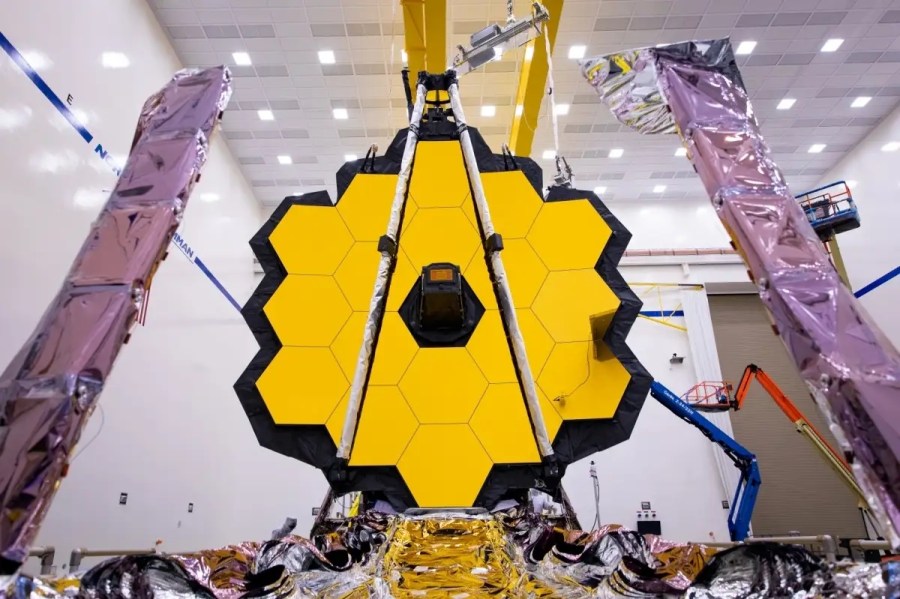
While looking away from the Sun, JWST features one huge mirror with a diameter of 21 feet (the height of a standard two-story structure) that will collect infrared light flowing in from the deep space.
It will be protected by a five-layer, tennis court-sized, kite-shaped sunscreen that will block the sun’s heat and maintain the exceptionally cold temperatures that the sensors are meant to work at.
Temperatures on the sun-facing side may reach 110°C, while the temperature on the opposite side is kept at –200° to –230°C.
To detect the exceedingly weak heat signals from faraway galaxies, extremely low temperatures are required.
The mirror, as well as the sunscreen, are much too huge to fit inside any rocket. They were designed to be collapsible and would be unfolded in space.
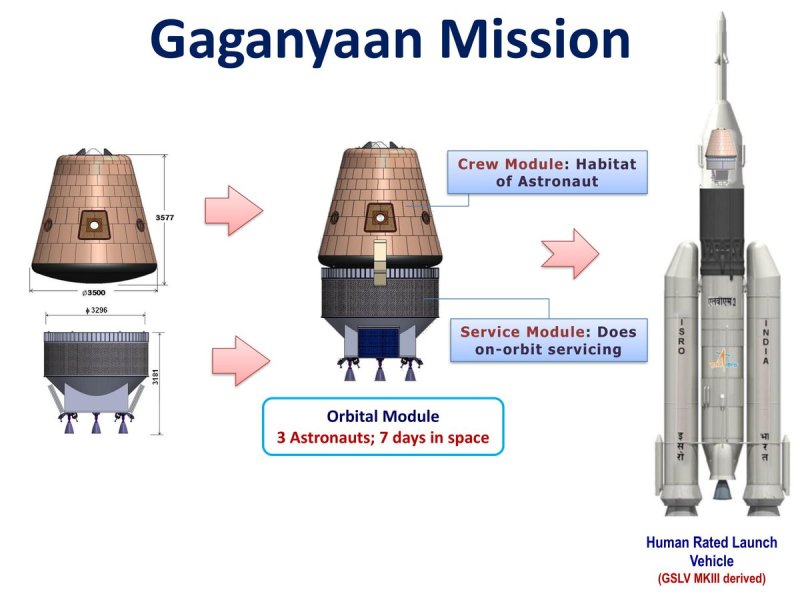
Recently the Union Cabinet approved Rs 10,000 crore for India’s 1st Human spaceflight programme, Gaganyaan, to be launched by 2022. It will include two unmanned flights and one human space flight. India’s first human spaceflight will carry 3 astronauts to a low earth orbit of 300 to 400 kilometres on board GSLV Mark III vehicle, for at least 7 days. ISRO is also launching test flights with humanoids to conduct micro-gravity experiments. If successful, India would be the 4th country to send manned mission after Russia, USA, and China.
COMPONENTS OF GAGANYAAN
1. Rocket
The rocket will take the crew to the low-earth orbit (300-400 km)
2. Crew Module
A crew module carrying three Indians will be attached with a service module. The crew members will be selected by the IAF and ISR. The crew will perform micro-gravity and other scientific experiments for a week.
It is an emergency accident avoidance measure designed to quickly get astronauts and their spacecraft away from the launch vehicle if a malfunction occurs during the initial stage of the launch.
5. Environmental Control & Life Support System (ECLSS)
It will maintain steady cabin pressure and air composition, remove carbon dioxide and other harmful gases and control temperature and humidity o manage parameters like fire detection and suppression.
Daylight Saving Time (DST) is the practice of setting the clocks forward one hour from standard time during the summer months, and back again in the fall, in order to make better use of natural daylight. The purpose of doing so is that people will have one more hour of daylight in the afternoon and evening during the warmer season of the year.
The daylight saving time is followed in over 70 countries on various dates. In the Northern Hemisphere, Daylight Saving Time usually starts in March-April and ends in September-November. India does not follow daylight saving time; countries near the Equator do not experience high variations in daytime hours between seasons. It is mainly preferred in countries located around the Arctic Circle, as they experience large variation in daylight in the course of the year.
Several countries, including Australia, Great Britain, Germany, and the United States, adopted summer Daylight Saving Time during World War I to conserve fuel by reducing the need for artificial light.
A century ago, when DST was introduced, more daylight did mean less use of artificial light. But modern society uses so many energy-consuming appliances all day long that the amount of energy saved is negligible.
DST clock shifts sometimes complicate timekeeping and can disrupt travel, billing, record keeping, medical devices, and sleep patterns. Computer software generally adjusts clocks automatically.
There is also a disadvantage of DST which includes disruption of the body clock or circadian rhythm.
Circadian rhythm is the 24-hour cycle that tells our bodies when to sleep, rise, and eat—regulating many physiological processes.
Internal body clock is affected by environmental cues, like sunlight and temperature, and determines whether one feels wide-awake and energized or tired.
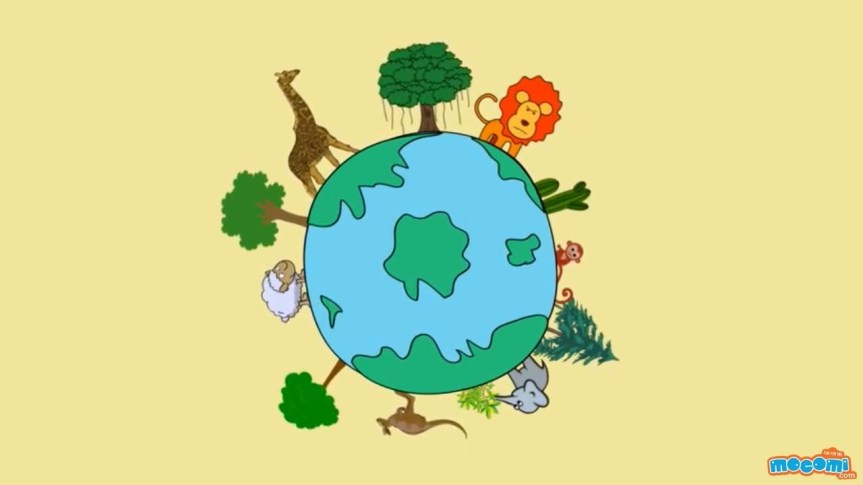
Diversity at all the levels of the biological organisation ca be classified into-
(i) Genetic diversity: A single species might show high diversity at the genetic level over its distributional range. India has more than 50,000 genetically different strains of rice and 1,000 varieties of mango.
genetic diversity
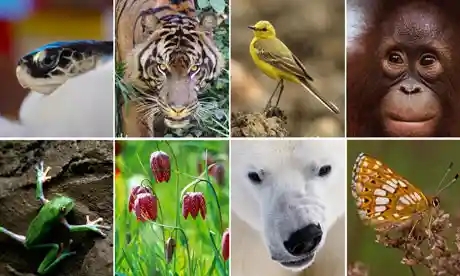
(ii) Species diversity: The diversity at the species level; for example, the Western Ghats have a greater amphibian species diversity than the Eastern Ghats.
Species Diversity
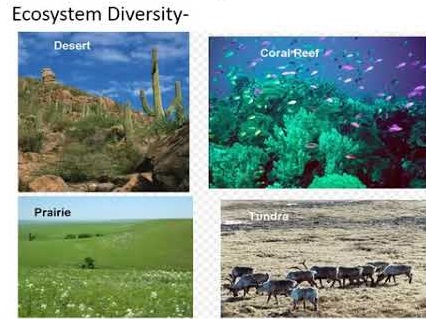
(iii)Ecological diversity: At the ecosystem level, India, for instance, with its deserts, rain forests, mangroves, coral reefs, wetlands, estuaries, and alpine meadows, has a greater ecosystem diversity than a Scandinavian country like Norway.
Ecological diversity
Patterns of Biodiversity
Latitudinal gradients: Species diversity decreases as we move away from the equator toward the poles. A forest in a tropical region like Equador has up to 10 times as many species of vascular plants as a forest of equal area in a temperate region like the Midwest of the USA.
What is so special about tropics that might account for their greater biological diversity?
(a) Speciation is generally a function of time, unlike temperate regions subjected to frequent glaciations in the past, tropical latitudes have remained relatively undisturbed for millions of years and thus, had a long evolutionary time for species diversification,
(b) Tropical environments, unlike temperate ones, are less seasonal, relatively more constant and predictable. Such constant environments promote niche specialisation and lead to a greater species diversity
(c) There is more solar energy available in the tropics, which contributes to higher productivity; this in turn might contribute indirectly to greater diversity.
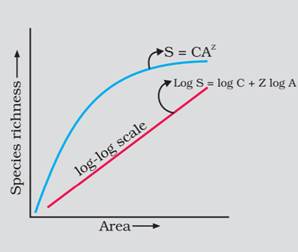
Species-Area relationships: Within a region species richness increases with increasing explored area, but only up to a limit. The relation between species richness and area for a wide variety of taxa is a rectangular hyperbola.
log S = log C + Z log A, where,
S= Species richness
A= Area
Z = slope of the line (regression coefficient)
C = Y-intercept
Causes of biodiversity losses
The accelerated rates of species extinctions that the world is facing now are largely due to human activities. There are four major causes ( ‘The Evil Quartet’ )
(i) Habitat loss and fragmentation
(ii) Over-exploitation
(iii) Alien species invasions: When alien species are introduced unintentionally or deliberately for whatever purpose, some of them turn invasive, and cause decline or extinction of indigenous species
(iv) Co-extinctions: When a species becomes extinct, the plant and animal species associated with it in an obligatory way also become extinct.
A black hole is not really an empty hole or space. Black holes are points in space that are so dense they create deep gravity sinks.
It is formed by a death of a massive star. A black hole takes up zero space but does have mass, that used to be a star. And black holes get more massive as they consume matter near them.
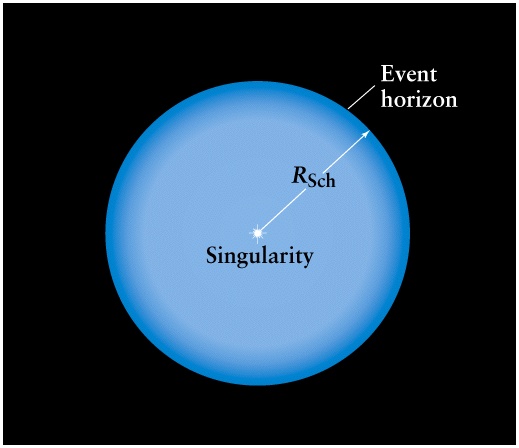
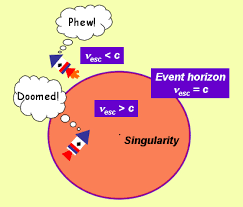
There’s a boundary at the edge of a black hole called the event horizon, which is the point of no return — any light or matter that crosses that boundary is sucked into the black hole. It would need to travel faster than the speed of light to escape, which is impossible.
Event Horizon and Singularity
When a massive star (more than 8 times bigger than Sun) runs out of nuclear fuel in its core hen it’s gravity causes the core to collapse upon itself. This huge weight of its constituent matter falling in compresses the dying star to a point of zero volume and infinite density– called the singularity.
A black hole cannot be observed but only detected by the effects of its enormous gravitational fields on nearby matter.
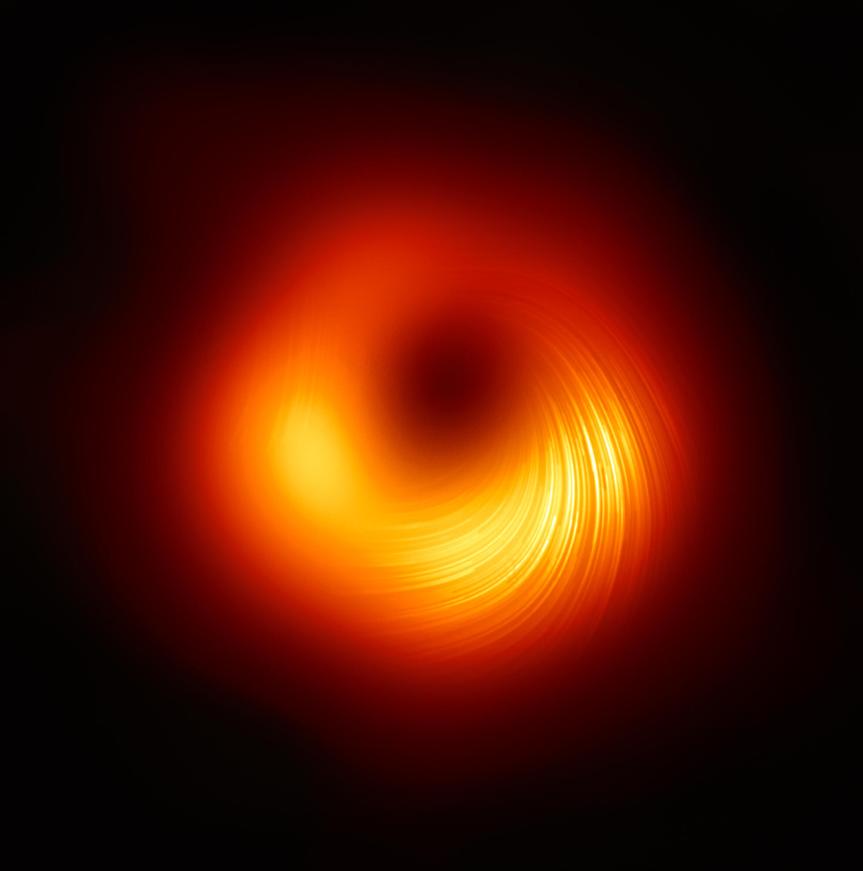
In April 2019, the scientists at the Event Horizon Telescope project released the first-ever image of a black hole.
Supermassive black holes are found at the centre of most galaxies, including our own Milky Way. The one in our galaxy is called Sagittarius A*.
Interesting Facts-
If our Sun were suddenly replaced by a black hole with Mass equal to that of sun, the orbits of the planets wouldn’t change.
If you travelled close to the black hole, you could escape, as long as you don’t enter the event horizon.
If you entered the black hole, you could still see everything outside, since light can enter a black hole.
You wouldn’t notice anything special about the event horizon, since it isn’t a solid surface.
Once you enter the event horizon, you will pulled into the singularity.
Have you ever wondered how do scientists decides the name for cyclones? Read the whole article to learn it.
Weather forecasters give each tropical cyclone a name to avoid confusion. Each year, tropical cyclones receive names in alphabetical order. Women and men’s names are alternated. The name list is proposed by the National Meteorological and Hydrological Services (NMHSs) of WMO Members of a specific region, and approved by the respective tropical cyclone regional bodies at their annual/bi-annual sessions.
HISTORICAL BACKGROUND
The practice of naming storms (tropical cyclones) began years ago in order to help in the quick identification of storms in warning messages because names are presumed to be far easier to remember than numbers and technical terms. In the beginning, storms were named arbitrarily. An Atlantic storm that ripped off the mast of a boat named Antje became known as Antje’s hurricane. Then the mid-1900’s saw the start of the practice of using feminine names for storms.
In the pursuit of a more organized and efficient naming system, meteorologists later decided to identify storms using names from a list arranged alphabetically. Thus, a storm with a name which begins with A, like Anne, would be the first storm to occur in the year. By the end of the 1900’s, forecasters started using male names for those forming in the Southern Hemisphere.
Since 1953, Atlantic tropical storms have been named from lists originated by the National Hurricane Centre. The original name lists featured only women’s names. In 1979, men’s names were introduced and they alternate with the women’s names.
Six lists are used in rotation. Thus, the 2019 list will be used again in 2025.The names of tropical cyclones over the north Indian Ocean is however not repeated.Once used, it will cease to be used again.
Why are cyclones given a name ?
Naming of Tropical Cyclones (TCs) helps the scientific community, disaster managers, media and general masses to
identify each individual cyclone.
use of short, distinctive given names in written as well as spoken communications is quicker and less subject to error than the older more cumbersome latitude-longitude identification methods.
create awareness of its development.
remove confusion in case of simultaneous occurrence of TCs over a region
rapidly and effectively disseminate warnings to much wider audience
These advantages are especially important in exchanging detailed storm information between hundreds of widely scattered stations, coastal bases, and ships at sea.
Criteria for name selection
The proposed name should be neutral to (a) politics and political figures (b) religious believes, (c) cultures and (d) gender
Name should be chosen in such a way that it does not hurt the sentiments of any group of population over the globe
It should not be very rude and cruel in nature
It should be short, easy to pronounce and should not be offensive to any member
The maximum length of the name will be eight letters
The proposed name should be provided along with its pronunciation and voice over
Protocol to Select a name for a cyclone
For north Indian Ocean including Bay of Bengal and Arabian Sea, the RSMC, New Delhi assigns the name to tropical cyclones following a standard procedure.
The naming of the tropical cyclones over the north Indian Ocean commenced from September 2004. This list contained names proposed by then eight member countries of WMO/ESCAP PTC, viz., Bangladesh, India, Maldives, Myanmar, Oman, Pakistan, Sri Lanka and Thailand. A new list containing 169 names has been made available in 2020.
Source : Regional Specialised Meteorological Centre, New Delhi and World Meteorological Organisation
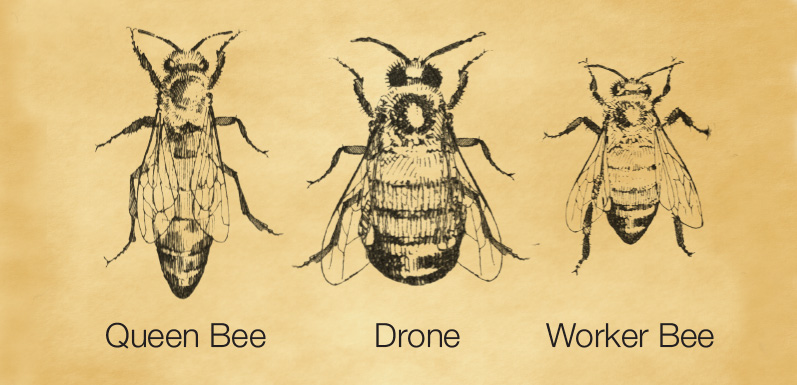
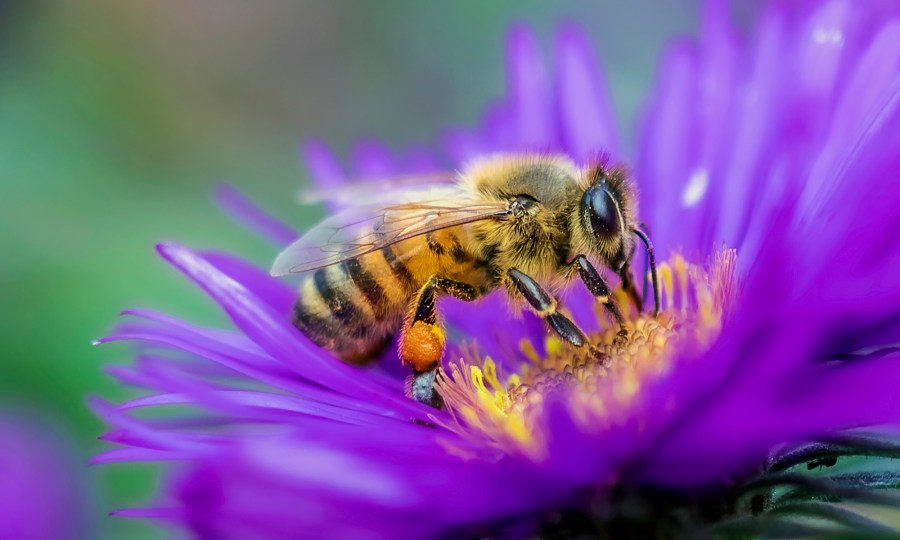
There are almost 20,000 different species of bees in the world. Bees live in colonies and in each colony, there are three types of bees, the queen bee, the worker bee, and the drone. The worker and the queen bee both are females, but only the queen bee can reproduce. All drones are male.
Types of Bees
World Bee Day is celebrated annually on 20th of May. The day marks the birth anniversary of Anton Jansa, a pioneer of modern apiculture. Anton Jansa hailed from a family of beekeepers in Slovenia, where beekeeping is an important agricultural activity with a long-standing tradition. His book ‘Discussion on Bee-keeping’ was also published in German.
Theme for 2022:Bee Engaged: Celebrating the diversity of bees and beekeeping systems.
World bee day – 20 May
Significance of Beekeeping?
Pollinators: Bees are some of the most important pollinators, ensuring food security, sustainable agriculture, and biodiversity.
Contribute to the Mitigation of Climate Change: the protection of bees and the beekeeping sector can help reduce poverty and hunger and preserve a healthy environment and biodiversity.
Sustainable Agriculture and Creating Rural Jobs: By pollinating, they increase agricultural production, thus maintaining diversity and variety in the fields and provide millions of people with jobs.
Status of the Apiculture in India
India is the sixth major natural honey exporting country.
The major export destinations are the USA, Saudi Arab, Canada, and Qatar.
The Indian apiculture market size is expected to reach a value of Rs 33,128 million by 2024, expanding at a CAGR of nearly 12% by 2024.
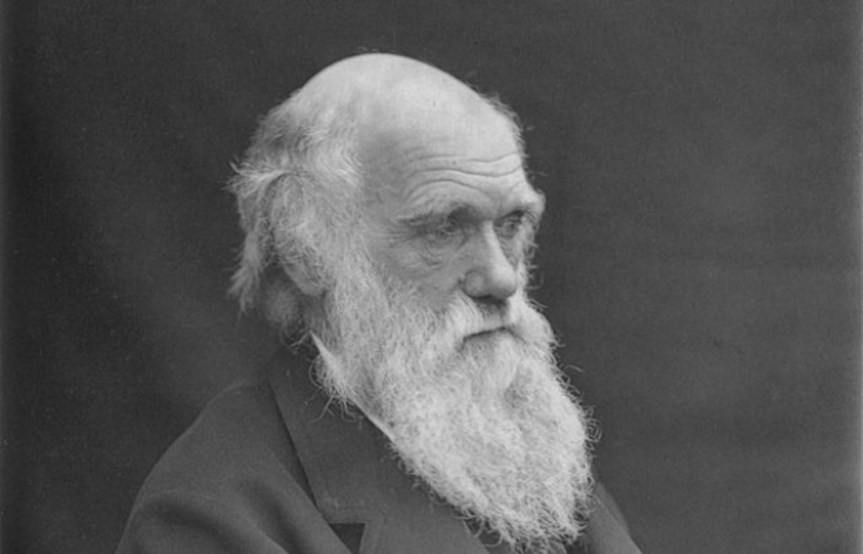
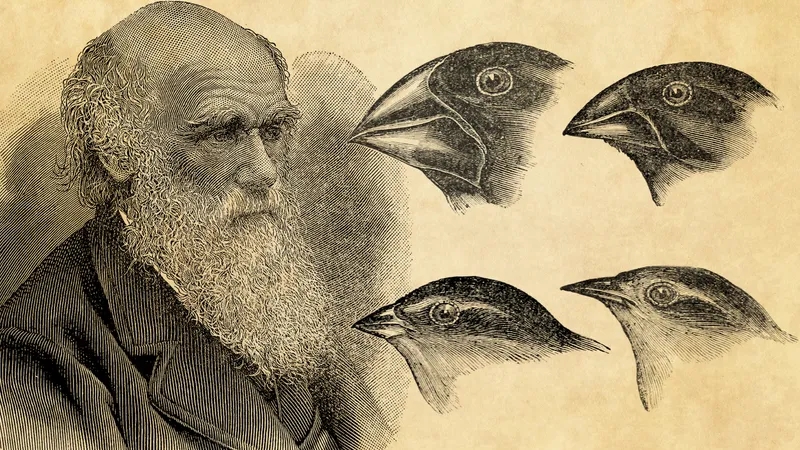
Charles Robert Darwin (1809-1882) was a British biologist, born on 12th February 1809 in Shrewberg, England.
He presented his theory of evolution in the book On the Origin of Species by means of natural selection in 1859. Darwin argued that new species had evolved from older species, and he described the mechanism behind the transformation process. Darwin’s theory of evolution is based on the following five principles:
Organisms produce more offspring than can possibly survive.
Organisms face a constant struggle to survive.
Organisms within a species vary.
Organisms best suited to their environment survive.
Those organisms which survive will reproduce and pass on their genes to the next generation.
Over-production: All species have a tendency to produce more and more offspring in order to increase the population. For example, a salmon produces 28,000,000 eggs in a single season; a single spawning of an Oyster may yield as many as 114,000,000 eggs; a common roundworm lays about 70,000,000 eggs in a day. This huge production is to ensure the survival of the species. Even though species are produced in larger numbers, the population of a particular organism remains more or less constant.
Struggle for Existence: Darwin claimed that there was a continual ‘struggle for existence in nature, in which only the fittest would survive. As a result of overproduction, there is a struggle for existence among organisms. Since the number of is persons is large, there is competition for food, shelter, mates etc.
struggle for existence may be of different types as follows:
a. Intra-specific (Intra-species) struggle: The members of the same species struggle among themselves for food, shelter and mates.
b. Inter-specific (Inter-species) struggle: The members of different species may go on fighting for survival. A member from one species may hunt other members of other species for food.
c. Environmental struggle: Organisms of different species struggle against the environmental hazards like earthquake, flood, drought etc. Only those species with better adjustment with the environment will survive.
Variations: Variation is the tendency of an organism to deviate from the parental generation. These variations play a very important role for adaptations in the environment. Some variations are considered as favourable and others are unfavourable. Organisms with unfavourable variations easily get defeated in the struggle for survival. Variations that are useful to adapt to the pressures of the environment survive long. The new trait of advantageous characteristics is passed on to the future generations.
Survival of the Fittest: The struggle for existence leads to the survival of the fittest. When there are too many of an organism in an area, they compete for resources such as food and perhaps shelter, for example trees and caves.The surviving species will reproduce more offspring than those who are less adaptive.
Natural Selection: The surviving individuals will give rise to the next generation. The successful variations are transmitted to the succeeding generations. The accumulation of advantageous traits in future generations gradually brings changes in species. Successive generations in this way tend to become better adapted to their environment. Eventually, a new species may evolve.
Furthermore, certain members of a population with one group of variations may become adapted to the environment in one way, while others, with a different set of variations, become adapted in a different way or become adapted to different environments. In this way, two or more species may arise from a single ancestral stock.
Examples of Natural Selection
1. The finches of Galapagos : Some species of finches have short thick beaks. They are used to eating seeds, fruits and buds. Some others have long straight beaks. They subsist primarily on nectar from flowers. If environmental condition suddenly changes some characteristics may be more favoured than others.
2. Industrial melanism in moth : Before Industrialisation, the tree trunks were lighter and light coloured moths were predominant. Dark coloured moths were also present but they were limited in number. As a result of industrialisation, the pollution resulted in the darkening of tree trunks. So the light coloured moths become more visible to birds and were therefore eaten by their predators. As a result of this at the end of 19th century the common light coloured moths were almost completely replaced by the black variety.
The theory of origin of species by natural selection is regarded as a major advancement in evolutionary thought. Darwin contributed to the modern understanding of biological evolution by documenting the variation of living forms and identifying the key process of natural selection.
Like most 19th century scientists, however, he did not understand heredity or how specific traits are passed from one generation to the next. His theory lacked the knowledge of modern genetics. However, mutation theory explained the causes of variations among organisms.
The most important question that has always been exciting to human mind is about human origin and destination. Where did we come from and where are we heading to?
To understand the human origin and evolution, we have to first look in to the emergence of life on the earth. It is believed that life is originated from inorganic matters due to many physical-chemical conditions
Theories of Organic Evolution
The term evolution was first applied by the English philosopher Herbert Spencer, to mean the historic development in life. Evolution is a process that results inheritable changes in a population spread over many generations.
Lamarckism
Jean Baptist de Lamarck (1744-1829) was a French biologist. He spent the early part of his life as a botanist. Then at the age of 50, he turned his attention to zoology, particularly to the study of invertebrates. His extensive studies on invertebrates formed a base in zoological classification. As a result of his systematic studies, he became convinced that species were not constant but rather were derived from pre-existing ones. By consolidating all these ideas, he proposed his theory of evolution in his book Philosophie Zoologique 1809 which is known as Lamarckism.
Lamarck believed that organic changes seen in animals resulted from the influence of environment. According to him, when the environment changes, animals need to change their body structure as well. He proposed his ideas as two different laws as the following-
i) The law of use and disuse: A living body is influenced by environmental factors, and ultimately this phenomenon initiates an adaptation of organisms to their surroundings. As per the necessity, some parts of the body may be used more and more. Therefore, those parts tend to show more development or changes in the course of time, while the other parts of the body, which may not be required much, will become weak or degenerate due to constant disuse.
ii) Inheritance of acquired characters: Modifications produced during the lifetime of organisms become hereditary and will be inherited by the offspring. All the modifications that the organism acquires during its lifetime in adaptation to the environment are automatically transmitted to the next generation and so become a part of heredity
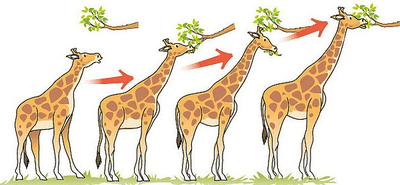
To support his theory, Lamarck presented several examples. The most remarkable one is associated with the long neck and tall front legs of giraffes. According to Lamarck, the ancestors of giraffe were normal animals with reasonably long neck and forelimbs. They depended on grass and bushy vegetation for their survival. But a sudden scarcity of leafy vegetation due to some environmental factors, forced the giraffe to depend on leaves of tall trees and for that they had to stretch their neck and forelimbs. The continuous stretching of these organs resulted in the long neck and long forelimbs of present day giraffe.
In another example, he mentioned that the ducks are unable to fly because their wings became weak, when they stopped flying. Again, the birds that started to live in an aquatic environment, gradually acquired webbed feet through the conquest of survival.
Criticism of Lamarckism
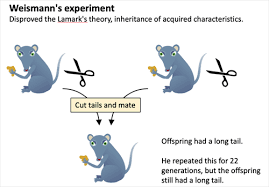
Lamarck’s theory has been criticised from many angles. The German scientist August Weismann criticised the essence of Lamarck’s theory of inheritance acquired characters by his experiments, which involved cutting off the tails of mice for over twenty-one generations. All tailless mice in all generations produced their offspring with tails. Therefore, he reached to the conclusion that the environmental factors might influence the body cells, but it is not enough to profess a change of reproductive cells. Characters of an organism would not be inherited unless the change could occur in the reproductive cells.
Characters of an organism would not be inherited unless the change could occur in the reproductive cells. According to Weismann the body of an animal is composed of two parts viz. germ plasm (germ cells) and somato plasm (body cells). Only those characters which are located in the germ plasm will be inherited.
As a result of these experiments, Lamarckian law of inheritance of acquired characters lost its evolutionary ground. But the effort towards finding facts related to organic evolution continued. Charles Darwin’s interest in this field gave birth to new findings (Darwinism).
Many modern-day scientists see themselves as the first to create all the technological advancements we use today. Yet many of the so-called discoveries are nothing more than re-inventions created by examining the knowledge of the ancients. Many things related to science and invention have their origins in the thoughts and imagination of the sages of Ancient India. Indian culture has evolved over the ages by India’s ancient Rishis, who at the banks of its holy rivers had ‘discovered’ the Vedic literature – the very foundation of Indian civilization. The term ‘Rishi’ originally denoted the composers and singers of Vedic hymns. However, the Rishi is also a ‘sage’ to whom the Gods revealed the Vedas (knowledge of the eternal truths about the Creator, His creation and means to preserve it).Some lost works of science by Indian sages are-
Acharya Sushruta – Father of Surgery
Acharya Sushruta was a great Indian Physician and was known to be as the Father of Surgery or Father of Plastic Surgery. The Sushruta Samhita is one of the most important survived ancient texts on medicine and it is considered a foundational text of Ayurveda. He was the world’s first surgeon who performed complicated surgeries 2600 years ago.The Sushruta Samhita has 184 chapters containing descriptions of 1,120 illnesses, 700 medicinal plants, 64 preparations from mineral sources and 57 preparation based on animal sources. It describes thoroughly the surgical techniques of making incisions, extractions of foreign body or particles, how to probe, excisions, tooth extraction, how to remove prostate gland, dilation of Urethral stricture, vesicolithotomy, hernia surgery, how to do C-section (Caesarian for baby delivery), laparotomy, management of intestinal obstruction, perforated intestines and accidental perforation of the abdomen with protrusion of omentum and the principle of fracture management. He also classified the eye diseases including cataract surgery.It is interesting to note that when surgery was not even heard and performed by the other parts of the world, here Sushruta was performing Rhinoplasty and many other challenging operations.
Panini – Father of Linguistics
Panini was an ancient Sanskrit philologist, grammarian and a received scholar in ancient India. He is considered as First Descriptive Linguist and is known as the Father of Linguistics. He is well known for his text Astadhyayi, a Sutra on Sanskrit grammar. He analyzed the noun compounds which is still been followed in the theories of the Indian language. Panini’s comprehensive and scientific theory on grammar is conventionally taken to mark the start of Classical Sanskrit.The Astadhyayi is the oldest linguistic and grammar text of any language and of Sanskrit surviving in its entity. His rules have a reputation for perfection – he described the Sanskrit morphology completely. Panini made use of technical metalanguage consisting of syntax, morphology and Lexicon. This metalanguage is organized according to a series of Meta – rules, some of which are explicitly stated while others can be deduced.The Astadhyayi consists of 3,959 sutras in eight chapters. This text attracted many of the ancient authors to upgrade their text in terms of Language.
Acharya Nagarjuna – Master of Chemical Science
Nagarjuna was a great Indian metallurgist and alchemistHe did his research for around 12 years in the field of chemistry and metallurgy. Textual masterpieces like “Ras Ratnakar”, “Rashrudaya” and “Rasebdramangal” are his renowned contributions to the science of chemistry. He also discovered the alchemy of transmuting base metals into gold. He did his experiments especially on mercury. He distinguished between the metals and the sub metals and also between solvents and soluble. He stated that Mercury could dissolve all metals. He also invented the processes of “Distillation” and “Calcinations”. He was the first person in the planet to use a Mercury as medicine. He found five types of mercury: red and grey were good; yellow, white or multi colored had so much of bad qualities and this should use as a medicine after several treatments.Alchemist or today what we called as Chemist was the Gifts for Nagarjuna. He made several discoveries which was the path to the other discovers to lead in this field.
Baudhayana – Discovered Pythagoras Theorem
Baudhayana was a great Mathematician, who was also called a priest. He is the author of the Sulba Sutra which contained several important mathematical results. He discovered the several concepts in mathematics which was later rediscovered by the other scientist in the western world. The value of the pie was discovered by him. Today all know how to use the pie and where to use (calculating the area and the circumference of a circle). He also discovered Pythagoras Theorem in Sulba Sutra. He provided how to find a circle whose area is the same as that of a square. The other theorems includes the diagonals of rectangle bisect with each other, diagonals of rhombus bisect at right angles, area of square formed by joining the mid points of a square is half of original.The mathematics given in the Sulba Sutras is there to enable the accurate construction of altars needed for sacrifices. It is clear from the writing that Baudhayana must have been a skilled craftsman. He was a great Practitioner.
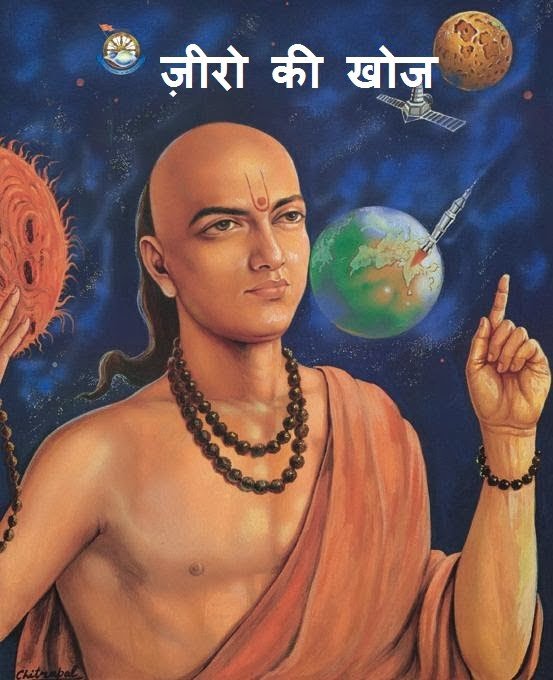
Acharya Aryabhata – Motions of the Solar System
Acharya Aryabhata was the first mathematician astronomer from the classical age of Indian mathematics and Indian astronomy and is not an unknown name. His major work on Aryabhatiya was very successful. It is extensively referred in the Indian mathematical literature and has been survived to modern times.
Acharya Aryabhata correctly stated that the earth rotates about its axis dailyr. He also stated that the motion of the stars are being observed just because the earth is rotating. He was also succeeded in explaining the geocentric model of the Solar System. The positions and periods of the planet was calculated relative to uniformly moving points. He stated that the Mercury and Venus move around the earth at the same speed as of the sun. He was also succeeded in explaining eclipses in terms of shadows cast by and falling on earth. He also mentioned Units of Time or the Sidereal rotation that earth takes 23 hours, 56 minutes and 4.1 second to complete one revolution and the sidereal year has 365 days, 6 hours, 12 minutes and 30 seconds which in turn adds an extra one day every after four years which is called a leap year.Calendric calculation which was devised by him is still being used in India for Practical purposes for fixing the Hindu calendar. India’s first satellite Aryabhata and the lunar crater Aryabhata are both named in his honor.
Maharishi Bharadwaj –Invention of the First Airplane of Earth
In 1875, the Vymaanika Shaastra, a 4th Century BC text written by Sage Bharadwaj was discovered in a temple in India. The book greatly deals with the operation of ancient vimanas and included information on steering, precautions for long flights, protection of the airships from storms and lightning and how to switch the drive of solar energy or some other form of energy.
One of the chapter will reveal the secrets of constructing aeroplanes that cannot be broken or cut, that is indestructible, that is fire resistant. It also deals with the secret of making planes motionless and invisible. It also describes how to defeat the enemy planes etc. as per the Sage Bharadwaj the vimanas were classifies as per the Yugas. During the period of Krita Yuga, Dharma was establishes firmly. The pushpak Vimana which was used by Ravan was an Aerial vehicle. He used this vehicle to kidnap Sita from jungle and took him to his Kingdom Srilanka. Ramayana was during the Treta Yug in which the Vimanas were highly discovered. During this period “Laghima” gave them the power to lighten their vehicle do they can travel freely in the air.In present Kaliyuga both Mantra and Tantra Shakti are almost vanished from the earth and so the ability to control vehicle has also been gone. Today the artificial vehicles are built which is called as Kritaka Vimanas.
If I ask you what is music for you? Your answer must be entertainment, time pass or just a hobby. Sometime, we don’t understand the importance of small things and avoid them without thinking. We listen to music just for entertainment or for refreshing our mind but we have never given a thought about why we feel refreshed after listening to good music. It plays an important role in a Student’s life, work professionals and even housewives. According to various researchers, music students have higher academic exam score than their non-musical peers.
How it helps in concentration?
With no doubt it improves one’s mood and thus it helps students to focus better in their studies. It provides motivation and an urge to learn more. It makes the students positive and most likely to memorise clearly which indirectly boosts memory formation.
Not just for students it is helpful for working professionals as well. They listen to their favourite songs when they feel tired or when they don’t find any motivation to work during their working hours. It helps them concentrate more after with an optimistic approach.
Not just students and employers, housewives also feel better after listening to their favourite track. They make their work joyful by playing songs at the side of the table and runs their daily errands by humming their favourites.
Science behind correlation between music and brain
Studies have shown that music produces several positive effects on a human’s body and brain. Music activates both the left and right brain at the same time, and the activation of both hemispheres can maximize learning and improve memory.
Music is a way to process emotions and strengthen oneself from being overwhelmed.
It triggers the release of a chemical called dopamine in a part of the brain called the striatum which helps one feel good.
Research has shown that listening to music can reduce anxiety, blood pressure, and pain as well as improve sleep quality, mood, mental alertness, and memory.
Improve your performance
Music is found to help people perform better in high pressure situations. Studies show that it changes a student from coal to diamond under pressure. For instance there was a research done where basketball player were pressured and didn’t perform well in the match but the other team which was also under pressure but listened to music before coming to the court performed very well.This is how music plays a very significant role in a student’s as well as in a human life.This is how music plays a very significant role in a student’s as well as in a human life.
Music is found to help people perform better in high pressure situations. Studies show that it changes a student from coal to diamond under pressure. For instance there was a research done where basketball player were pressured and didn’t perform well in the match but the other team which was also under pressure but listened to music before coming to the court performed very well.This is how music plays a very significant role in a student’s as well as in a human life.This is how music plays a very significant role in a student’s as well as in a human life.
We now understand, that music and memory are strongly linked together in the brain, and that music can be beneficial for studies.Not just the rap or upbeat music but classical music has been proved to be the most effective in treating insomnia and helps one from spending thousands on sleep-inducing meds.
Not just the rap or upbeat music but classical music has been proved to be the most effective in treating insomnia and helps one from spending thousands on sleep-inducing meds.
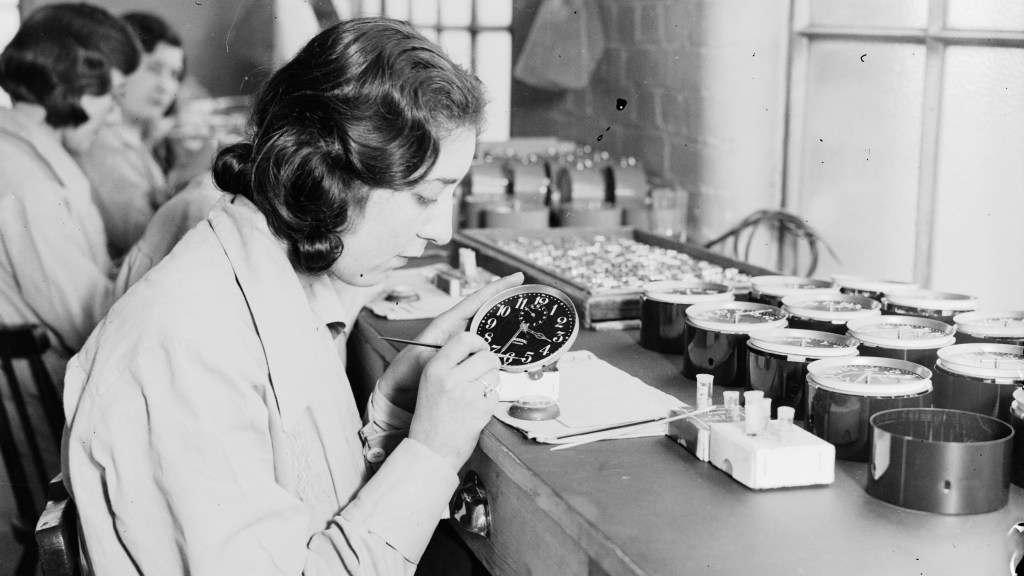
With war declared, hundreds of working-class women flocked to the studio where they were employed to paint watches and military dials with the new element radium, which had been discovered by Marie Curie a little less than 20 years before. Dial painting was “the elite job for the poor working girls”; it paid more than three times the average factory job, and those lucky enough to land a position ranked in the top 5% of female workers nationally, giving the women financial freedom in a time of burgeoning female empowerment. Radium’s luminosity was part of its allure, and the dial painters soon became known as the “ghost girls” — because by the time they finished their shifts, they themselves would glow in the dark. They made the most of the perk, wearing their good dresses to the plant so they’d shine in the dance halls at night, and even painting radium onto their teeth for a smile that would knock their suitors dead.
What’s more, the painters ingested the radioactive substance as part of their job. Because some of the watch dials on which they worked were extremely small, they were instructed to use their lips to bring their paint brushes to a fine point. When they asked about radium’s safety, they were assured by their managers that they had nothing to worry about.Of course, that wasn’t true. Radium can be extremely dangerous, especially with repeated exposure. Marie Curie suffered radiation burns while handling it, and she eventually died from radiation exposure.
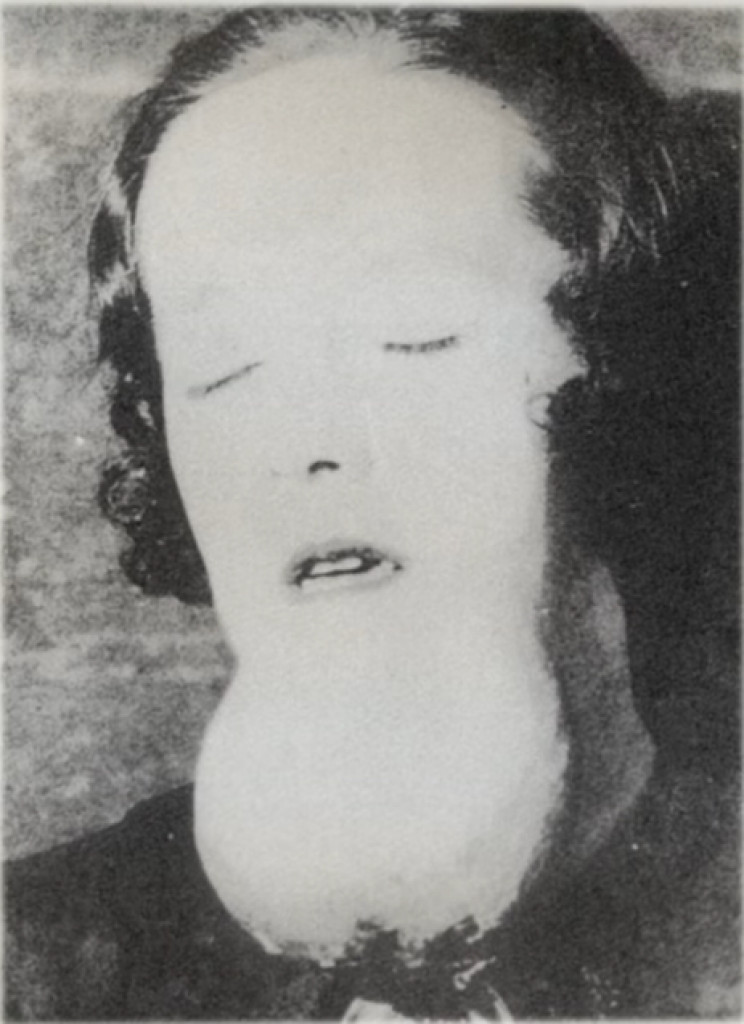
It wasn’t long before the “Radium Girls” began to experience the physical ravages of their exposure. Among the first was Amelia (“Mollie”) Maggia, who painted watches for the Radium Luminous Materials Corp. Maggia’s first symptom was a toothache, which required the removal of the tooth. Soon the tooth next to it also had to be extracted. Painful ulcers, bleeding and full of pus, developed where the teeth had been. Maggia died on September 12, 1922, of a massive hemorrhage. Doctors were puzzled as to the cause of her condition. In growing numbers, other Radium Girls became deathly ill, experiencing many of the same agonizing symptoms as Maggia. For two years their employer vociferously denied any connection between the girls’ deaths and their work. Facing a downturn in business because of the growing controversy, the company finally commissioned an independent study of the matter, which concluded that the painters had died from the effects of radium exposure.
In 1925 a pathologist named Harrison Martland developed a test that proved conclusively that radium had poisoned the watch painters by destroying their bodies from the inside. The radium industry tried to discredit Martland’s findings, but the Radium Girls themselves fought back. Many knew that their days were numbered, but they wanted to do something to help their colleagues still working with the deadly substance. Ingested radium had subsequently settled in the women’s bodies and was now emitting constant, destructive radiation that “honeycombed” their bones. It was literally boring holes inside them while they were alive. It attacked the women all over their bodies.
In 1927, a smart young lawyer named Raymond Berry accepted their case, and Grace (along with four colleagues) found herself at the canter of an internationally famous courtroom drama. The women had been given just four months to live, and the company seemed intent on dragging out the legal proceedings. The New Jersey radium girls’ case was front-page news, and it sent shockwaves across America.
It was the mid-1930s: America was in the grip of the Great Depression. Catherine and her friends , victims of this heinous poisoning, were shunned by their community for suing one of the few firms left standing. Though close to death when her case went to court in 1938, Catherine ignored her doctors’ advice and instead gave evidence from her deathbed. In doing so, and with the help of her lawyer, Leonard Grossman, she finally won justice not only for herself, but for workers everywhere.
The radium girls’ case was one of the first in which an employer was made responsible for the health of the company’s employees. It led to life-saving regulations and, ultimately, to the establishment of the Occupational Safety and Health Administration, which now operates nationally in the United States to protect workers. . The women also left a legacy to science that has been termed “invaluable.”
Hydrogen is the chemical element with the symbol H and atomic number 1. Hydrogen is the lightest element. At standard conditions hydrogen is a gas of diatomic molecules having the formula H2. It is colorless, odorless, tasteless,[8] non-toxic, and highly combustible. Hydrogen is the most abundant chemical substance in the universe, constituting roughly 75% of all normal matter.
In the era of sustainability, Hydrogen could contribute significantly. It is considered as the fuel for future. It could be used in nuclear fusion and other innovative ideas which could be a game changer in current scenario.
Realizing the role of hydrogen, it has been classified into different categories based on color. They are:
Green hydrogen
Green hydrogen is hydrogen produced by splitting water by electrolysis. This produces only hydrogen and oxygen. We can use the hydrogen and vent the oxygen to the atmosphere with no negative impact. To achieve the electrolysis we need electricity, we need power.
Blue hydrogen
Blue hydrogen is touted as a low-carbon fuel that is used for generating electricity, heating buildings, and powering cars, trains, trucks etc. It is produced by separating natural gas into hydrogen and carbon dioxide (CO2). Blue hydrogen is often touted as a low-carbon fuel for generating electricity and storing energy, powering cars, trucks and trains and heating buildings.
Grey hydrogen
Grey Hydrogen is hydrogen produced using fossil fuels such as natural gas. Unfortunately, this accounts from roughly 95% of the hydrogen produced in the world today. Most of the hydrogen produced today is gray hydrogen. It is relatively inexpensive and commonly used in the chemical industry to make fertilizer and for refining oil.
Black or brown hydrogen
Black or brown hydrogen is produced from coal. The black and brown colors refer to the type bituminous (black) and lignite (brown) coal. The gasification of coal is a method used to produce hydrogen. It’s considered the least environmentally friendly, creating as much carbon dioxide as burning the source fuel would have in the first place. For every tons of brown hydrogen produced, around 10-12 tons of CO2 are produced.
Turquoise hydrogen
Turquoise hydrogen is made using a process called methane pyrolysis to produce hydrogen and solid carbon. In the future, turquoise hydrogen may be valued as a low-emission hydrogen, dependent on the thermal process being powered with renewable energy and the carbon being permanently stored or used.
Purple hydrogen
Nuclear-produced hydrogen can also be referred to as purple hydrogen or red hydrogen. In addition, the very high temperatures from nuclear reactors could be used in other hydrogen productions by producing steam for more efficient electrolysis or fossil gas-based steam methane reforming.
Pink hydrogen
Pink hydrogen is generated through electrolysis powered by nuclear energy. Nuclear-produced hydrogen can also be referred to as purple hydrogen or red hydrogen. The Saudi royal and politician said that women are particularly pleased to see progress being made in this industry.
White hydrogen
White hydrogen is a naturally-occurring geological hydrogen found in underground deposits and created through fracking. There are no strategies to exploit this hydrogen at present.
After two long years of Covid 19 and its difficulties world is getting back to normalcy. Covid vaccines are the most important weapon which helped the human kind to defeat this virus which bought the entire world to a halt. Similarly, there are several instances when vaccines came to the rescue of mankind.
Recognising the significance of immunization, world health organization observes the last week of April as world immunization week every year. It aims to highlight the need for collective action to promote the use of vaccine. The theme for this year is “Life for all”. On this instance, let us learn more about vaccines:
What are vaccines?
A vaccine is a biological preparation that provides active acquired immunity to a particular infectious disease. A vaccine typically contains an agent that resembles a disease-causing microorganism and is often made from weakened or killed forms of the microbe, its toxins, or one of its surface proteins. The agent stimulates the body’s immune system to recognize the agent as a threat, destroy it, and to further recognize and destroy any of the microorganisms associated with that agent that it may encounter in the future.
The administration of vaccines is called vaccination. Vaccination is the most effective method of preventing infectious diseases widespread immunity due to vaccination is largely responsible for the worldwide eradication of smallpox and the restriction of diseases such as polio, measles, and tetanus from much of the world.
Even though vaccines have got all these positives many are still hesitant to get vaccinated. This is termed as vaccine hesitancy. The major reasons are:
Lack of confidence
Most of the times people will show hesitancy towards vaccine if they are not confident about the manufacturers. In order to solve this issue, the government has to ensure the general public about the reliability of vaccines.
Lack of sufficient testing
In some cases, vaccines may not be pre tested sufficiently before administering to the general public. In such instances government has to clarify regarding the surety of vaccines.
Illiteracy
Lack of knowledge among people also act as a barrier to vaccination drives. Due to ignorance people will not give importance to vaccine.
Religious and cultural beliefs
Some religions lay down restrictions to their followers in case of immunization. As a part of cultural or religious beliefs there exists some inherent resistance towards vaccination
Lack of access
Inaccessibility to vaccines also restricts vaccination process. Lack of health care services and facilities in remote areas prevents vaccination.
Inconvenience
Sometimes the long process and follow ups are difficult for people and many people find it inconvenient. In this case people should be made aware of the importance of vaccination. Also, efforts should be made to make the process less tiring.
Economic barriers
In many cases the vaccines are costly and downtrodden masses are unable to pay the price for vaccines. The government subsidies must be provided properly to solve this issue.
Future health implications
Some people don’t take vaccines fearing the health impacts in future. Believing the rumours many people fear to take loans.
Personal beliefs
The inherent beliefs and thoughts May also restrict people from getting vaccinated. Their political inclination and other such factors will affect this process.
Ultimately, it is the duty of general public to educate the hesitant population about the benefits of vaccination. The government should also play significant role in educating people and encouraging research.
So, let us work together and ensure a healthy life for all.
The first Earth Day in 1970 launched a wave of action, including the passage of landmark environmental laws in the United States. The Clean Air, Clean Water, and Endangered Species Acts were created in response to the first Earth Day in 1970, as well as the creation of the Environmental Protection Agency (EPA). Many countries soon adopted similar laws. Earth Day continues to hold major international significance: In 2016, the United Nations chose Earth Day as the day when the historic Paris Agreement on climate change was signed into force.
Now, the fight for a clean environment continues with increasing urgency, as the ravages of climate change become more and more apparent every day. As the awareness of our climate crisis grows, so does civil society mobilization, which is reaching a fever pitch across the globe today. Earth Day was a unified response to an environment in crisis — oil spills, smog, rivers so polluted they literally caught fire. On April 22, 1970, 20 million Americans — 10% of the U.S. population at the time — took to the streets, college campuses, and hundreds of cities to protest environmental ignorance and demand a new way forward for our planet. The first Earth Day is credited with launching the modern environmental movement and is now recognized as the planet’s largest civic event.
Earth day continues to grow as a worldwide event focused on promoting clean living and a healthy, sustainable habitat for all living beings. The day also reminds us how fragile our planet is and how it is important to save it from the global climate crisis that is worsening with each passing day. The theme of Earth Day 2022 is to ‘Invest in our planet’, urging businesses to shift towards sustainable practices. According to the UN, “Despite on-going efforts, biodiversity are deteriorating worldwide at rates unprecedented in human history. It is estimated that around one million animal and plant species are now threatened with extinction”. As per Earth Day Organization, “We need to act (boldly), innovate (broadly), and implement (equitably). It’s going to take all of us all in. Businesses, governments, and citizens — everyone accounted for, and everyone accountable. A partnership for the planet.”
On the occasion of Earth Day 2022, American tech giant Google also dedicated the artwork through its Doodle to raise awareness about climate change. The artwork showcases real time-lapse imagery from Google Earth Time-lapse and other sources to showcase the impact of climate change across different regions.
Every year we celebrate earth day on 22nd of April as a reminder for the mankind to protect and safeguard the mother earth and its species, to make Earth a better place for the coming generations. It’s gained a lot of popularity and significance in the world in the recent years as to global crisis relating to environment like global warming, deforestation, climate change etc.
We celebrate our mother earth with ‘World Earth Day, which marks the anniversary of the Modern Environmental Movement, which started in 1970. World Earth Day is a reminder for mankind to protect and safeguard the mother earth and its species, to make Earth a better place for the coming generations. April 22, 2022, will mark 52 years of Earth Day. Today, Earth Day is widely recognized as the largest secular observance in the world, marked by more than a billion people every year as a day of action to change human behaviour and provoke policy changes.




























 Eduindex
You must be logged in to post a comment.