‘Aryabhata’- Father Of Indian Mathematics

Aryabhata was one of the first Indian mathematicians and astronomers belonging to the classical age. He was born in 476 BC in Tarenaga, a town in Bihar, India. His major work, Aryabhatiya, a compendium of mathematics and astronomy, was extensively referred to in the Indian mathematical literature and has survived to modern times. The mathematical part of the Aryabhatiya covers arithmetic, algebra, plane trigonometry, and spherical trigonometry. It also contains continued fractions, quadratic equations, sums-of-power series, and a table of sines. It is however definite that he travelled to Kusumapara for studies and even resided there for some time. It is mentioned in a few places that Aryabhata was the head of the educational institute in Kusumapara. The University of Nalanda had an observatory in its premises so it is hypothesized that Aryabhata was the principal of the university as well. On the other hand some other commentaries mention that he belonged to Kerala.

Mathematical Work

Aryabhata wrote many mathematical and astronomical treatises. His major work, Aryabhatiya, a compendium of mathematics and astronomy, was extensively referred to in the Indian mathematical literature and has survived to modern times. The mathematical part of the Aryabhatiya covers arithmetic, algebra, plane trigonometry, and spherical trigonometry. It also contains continued fractions, quadratic equations, sums-of-power series, and a table of sines. His chief work was the ‘Aryabhatiya’ which was a compilation of mathematics and astronomy. The name of this treatise was not given to it by Aryabhata but by later commentators. A disciple by him called the ‘Bhaskara’ names it ‘Ashmakatanra’ meaning ‘treatise from the Ashmaka’. This treatise is also referred to as ‘Arya-shatas-ashta’ which translates to ‘Aryabhata’s 108’. This is a very literal name because the treatise did in fact consist of 108 verses.

Aryabhata worked on the place value system using letters to signify numbers and stating qualities. He also came up with an approximation of pi and area of a triangle. He introduced the concept of sine in his work called ‘Ardha-jya’ which is translated as ‘half-chord’.

Astronomical Work

Aryabhata also did a considerable amount of work in astronomy. He knew that the Earth is rotating on an axis around the sun and the moon rotated around it. He also discovered the position of nine planets and stated that these also revolved around the sun. He pointed out the eclipses, both lunar and solar. Aryabhata stated the correct number of days in a year that is 365 days. He was the first person to mention that the earth was not flat but in fact a spherical shape. He also gave the circumference and diameter of the earth and the radius of the orbits of 9 planets.

More about Aryabhata

Aryabhata was a very intelligent man. The theories that he came up with at that time present a wonder to the scientific world today. His works were used by the Greeks and the Arabs to develop further. A commentary by Bhaskara I, a century later on Aryabhatiya says:

‘Aryabhata is the master who, after reaching the furthest shores and plumbing the inmost depths of the sea of ultimate knowledge of mathematics, kinematics and spherics, handed over the three sciences to the learned world.’

Aryabhata’s Legacy

Aryabhata was an immense influence to mathematics and astronomy. Many of his works inspired Arabs more particularly. His astronomical calculations helped form the ‘Jalali calendar’. He has been honored in many ways. The first Indian satellite is named after him as ‘Aryabhata’, so is the lunar crater. An Indian research center is called ‘Aryabhata Research Institute of Observational Sciences’.

Who is Aryabhatta? What is he known for? - Quora

Covid-19:India adds 24,879 new cases, total cases 7,67,296.

India had a record single-day surge of 24,879 Corona cases taking the cases to 7,67,296 on Thursday, with Maharashtra, Tamil Nadu, Karnataka, Delhi, Telangana, UP and Andhra Pradesh contributing to around 75 per cent of the new cases, according to the Union Health Ministry data.

The death toll climbed to 21,129 with 487 new deaths, the updated data at 8 am showed.

There have been 4,76,377 recovered cases, while there are 2,69,789 active cases of coronavirus infection in the country.

“Around 62.08 per cent of patients have recovered so far,” an official said.

The total number of confirmed cases included foreigners.

Of the 487 deaths reported in the last 24 hours, 198 are from Maharashtra, 64 from Tamil Nadu, 54 from Karnataka, 48 from Delhi, 23 from West Bengal, 18 from Uttar Pradesh, 16 from Gujarat, 12 from Andhra Pradesh, 11 from Telangana, 10 from Rajasthan, seven from Madhya Pradesh, six each from Jammu and Kashmir and Odisha, three each from Bihar, Uttarakhand, Punjab and Haryana and two from Assam.

India is seeing huge surge in cases with almost 20,000 to 25,000 new cases every day. The positive fact is that recovery rate is very good around 61 % and death rate is also nearly 4-5% .India is facing many tensions amid such pandemic ie border disputes with China, terrorist attacks from Pakistan as well as internal attacks from gangsters. But India would soon sort out things and pave way for world to recover from this crisis.

Asia cup 2020 officially postponed,ACC hoping to conduct it in coming june 2021.

Asia Cup 2020 officially postponed, ACC hopeful of hosting it in June 2021.The Asian Cricket Council on Thursday announced that the 2020 Asia Cup has been postponed. ACC stated that it is hopeful to conduct and schedule tournament on June 2021.

In the press release, ACC stated that the travel restrictions, different quarantine rules of countries, health risks and social distancing norms have posed as challenges to the conduct of the Asia Cup.The Asian Cricket Council on Thursday announced that the 2020 Asia Cup has been postponed. ACC stated that it will try to secure the window of June 2021 to schedule the tournament.

Right from the beginning the board was to organise the tournament as per the original schedule.However, travel restrictions, country-specific quarantine requirements, fundamental health risks and social distancing norms have posed as substantial challenges to the holding of the Asia Cup. Above all, the risks related to health and safety of participating players, support staff, commercial partners, fans and the cricketing community were deemed to be significant,” ACC quoted in the release.

The ACC is hopeful to schedule the Asia Cup in 2021 are looking for the June window to host the tournament.

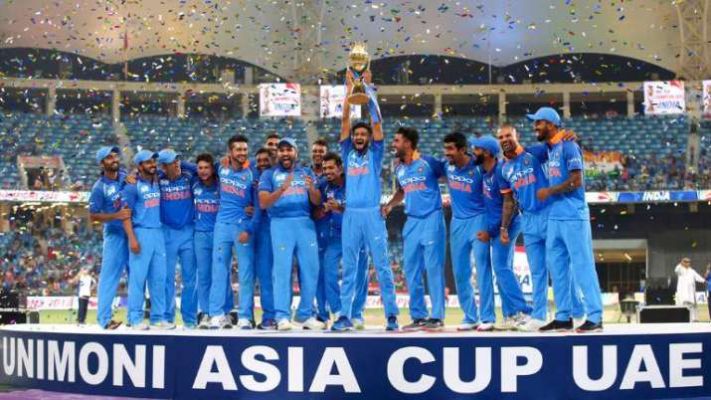
Captains posing with the Asia Cup in 2018.

” The Board, after careful consideration of all the above factors, has confirmed that the Asia Cup 2020 be postponed. Conducting the event with all due safety is major responsibility of ACC and the Board is hopeful that the tournament will be held in 2021. The ACC is currently working towards securing June 2021 as a option for the same,” quoted ACC.

ACC also cleared the air on the hosting nation of the next Asia Cup as it said the Pakistan Cricket Board has exchanged hosting rights with Sri Lanka Cricket Board.

“It can be possible that Sri Lanka hosts for the Asia Cup 2020, Pakistan Cricket Board (PCB), has exchanged hosting rights for the tournament with Sri Lanka Cricket (SLC). Through this arrangement, the SLC will now host the rescheduled Asia Cup expected in June 2021 while the PCB will host the Asia Cup 2022,” the ACC press release stated.

Indian option of CamScanner launched with name BharatScanner.

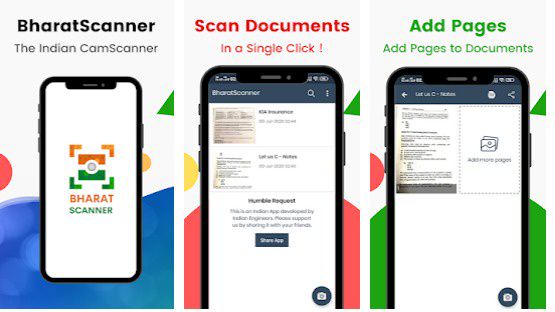
The BharatScanner mobile app, an Indian alternative to cam scanners, has been launched. In this app, users have got the facility from scanning documents to creating PDFs. The special thing is that this app is completely free and users will not have to pay a separate charge to use any feature.

Rating of 4.4 points found on Google Play Store

Bharat Scanner app is available on Google Play Store for users. This app has downloaded more than 10 thousand users so far and it has got a rating of 4.4 points on the Google Play-Store. At the same time, this app size is 36 MB. .

Features of BharatScanner .

Some current features of BharatScanner are as follows: .

  • Users can scan documents easily.
  • Filters have been supported in this app.
  • Users can keep their documents as PDF.
  • Users have got the facility to share documents in this app on mail and Whatsapp.

Indian government imposes ban on Chinese mobile app .

Under Section 69A of the Information Technology Act, the Government of India decided to block 59 apps as these apps were a threat to India’s sovereignty and integrity, defense of India, security of the state and public order. The government had received many complaints about these apps from various sources, including about the misuse of many mobile apps. These apps were stealing data from both iPhone and Android users.

  • लॉन्च हुआ CamScanner का भारतीय विकल्प Bharat Scanner, जानें इसकी खासियतें

Ban on these Chinese apps

Tiktok, CamScanner, Shareit, Kwai, UC Browser, Baidu Map, Shein, Clash of Kings, DU Battery Saver, Helo, Likee, YouCam makeup, Mi Community, CM Browers, Virus Cleaner, APUS Browser, ROMWE, Club Factory, Newsdog these 59 apps are banned, including BeutryPlus, WeChat, UC News, QQ Mail.

Government concerned over return of large number of Indian students from US due F1 visa issues.

The US order of July 7 stating that F1 visas will not be renewed for students if they are attending only online- lectures in the US is a concerning mater for India since the highest number of foreign students in the US are from India. The US government has announced those F-1 and M-1 (non-academic and vocational students) visa holders attending only online classes will not be allowed to remain in the US.

US Noted India's Concerns Regarding F-1 Visa Issue: Centre

India on Thursday said it has reported its concerns to the US govt about the new rule on F1 visa and urged to keep in mind the role education have played in the developing relationship between the two countries.

The concerns were expressed during the virtual foreign office consultations between Foreign Secretary Harsh Vardhan Shringla and US political affairs secretary David Hale on Tuesday. Ministry of External Affairs’ spokesperson Anurag Srivastava said that the US government has looked into the concern regarding the new rule.

During virtual meeting, Srivastava said that India is concerned about the possibility of the return of a large number of Indian students studying in the US due to new rules in visa.

The Immigration and Customs Enforcement (ICE), an agency of the US Department of Homeland Security (DHS) on Monday said that the foreign students pursuing courses in the US must return to their country if their institutes are conducting only online course due to covid-19 pandemic.

ICSE, ISC exam result 2020 to be announced tomorrow at 3 PM. All you need to know

ICSE, ISC Exam 2020 Result to be Declared Tomorrow at 3 PM | All You Need to Know

ICSE, ISC Exam 2020 Result: The Council for the Indian School Certificate Examination (CISCE) on Thursday said that ICSE (class 10) and ICS (class 12) exams results will be declared tomorrow at 3 PM, on the official website ‘cisce.org’ and ‘results.cisce.org. All students who have appeared for the exams are advised to keep an eye on the website and check their results.

To check the results once they are out, follow this steps:

step 1-Visit the official website at https://www.cisce.org/

step 2-Go on the ‘Careers’ portal on the homepage.

Step 3: Now, click on the relevent exam link.

Step 4: Enter all the details asked including your roll number, click submit

Step 5: You result will now appear on the screen.

Step 6: Download and take a print-out for a future reference.

Icse result 2020, icse board result 2020, isc result 2020, isc board result 2020

To get results on SMS, students can send their Unique id to 09248082883 in this format: ‘ICSE/ISC (Unique ID)’.

Earlier in the day, the CISCE board reduced 25 per cent syllabus from this year’s curriculum in view of the coronavirus pandemic.

According to the latest notification issued by the ICSE Board, the decision to reduce the syllabi will be applicable for Class 9 to Class 12 students and has been taken to reduce the burden amid limited teaching via online classes. The CISCE stated that the reduced syllabus aims to cope with the loss of instructional hours due to the difficulties faced in the academia in the lockdown situation.

WORLD CHESS DAY: Move in silence, only speak when its time to checkmate

Move in Silence only speak when it's time to say checkmate

Every year on July 20, International Chess Day is celebrated to honour the founding of the Federation Internationale des Echecs, also known as FIDES, in the year 1924. Since ancient times Chess has been a popular game and has been played around the world. ‘With the time Chess game and its rules are evolving. As per reports, Chess became a game of class and only upper class were able to afford this game in a long way. However, the merchandise class later went on to introduce this game to the rest of the people while travelling around the world.

World Chess Day history:

In the fifth century, chess was invented in India. It was called “Chaturanga” at the time. Chess is one of the most ancient games of the period. This game was then spread to Persia. When the Arabs invaded Persia, Chess became an important part of the Muslim population’s life and from there it spread to Southern Europe. Chess evolved in its current form in Europe during the 15th century. And by the late 15th century, it took the shape of a modern game. And beginning on July 20, 1966, the International Chess Day began to celebrate FIDE’s establishment.

CELEBRATION:

World Chess Day, celebrated around the world, is now also recognised by the United Nations. According to reports, UNESCO proposed the idea to celebrate this day as the International Chess Day, and it has been marked as such since 1966 after it was established by FIDE. However, plenty of professional chess players around the world already celebrate the day. A survey published on FIDE reveals that a surprisingly stable 70% of the adult population has played chess at some point during their lives. In countries as diverse as the US, UK, Germany, Russia and India, this number holds approximately the same amount.

CHESS RULES:

The ultimate aim in the chess game is to deliver a checkmate – trapping your opponent´s king. The term checkmate is an alteration of the Persian phrase “Shah Mat”, meaning literally, “the King is ambushed”, and not “the King is dead”, that is a common misconception.

The chessboard is made up of eight rows and eight columns for a total of 64 squares of alternating colors. Each square of the chessboard is identified with a unique pair of a letter and a number. The vertical files are labeled a through h, from White´s left (i.e. the queen side) to White´s right. Similarly, the horizontal ranks are numbered from 1 to 8, starting from the one nearest White´s side of the board. Each square of the board, then, is uniquely identified by its file letter and rank number. In the initial position setup, the light queen is positioned on a light square and the dark queen is situated on a dark square. The diagram below shows how the pieces should be initially situated.

chess rules clip
Chess moves:
  • King can move exactly one square horizontally, vertically, or diagonally. At most once in every game, each king is allowed to make a special move, known as castling.
  • Queen can move any number of vacant squares diagonally, horizontally, or vertically.
  • Rook can move any number of vacant squares vertically or horizontally. It also is moved while castling.
  • Bishop can move any number of vacant squares in any diagonal direction.
  • Knight can move one square along any rank or file and then at an angle. The knight´s movement can also be viewed as an “L” or “7″ laid out at any horizontal or vertical angle.
  • Pawns can move forward one square, if that square is unoccupied. If it has not yet moved, the pawn has the option of moving two squares forward provided both squares in front of the pawn are unoccupied. A pawn cannot move backward. Pawns are the only pieces that capture differently from how they move. They can capture an enemy piece on either of the two spaces adjacent to the space in front of them (i.e., the two squares diagonally in front of them) but cannot move to these spaces if they are vacant. The pawn is also involved in the two special moves en passant and promotion.
Castling:

Castling is the only time in the chess game when more than one piece moves during a turn. This chess move has been invented in the 1500´s to help speeding up the game and improving balance of the offense and defense. During the castling, the king moves two squares towards the rook he intends to castle with, and the rook moves to the square through which the king passed.

Castling is only permissible if all of the following conditions hold:

  • Neither king nor rook involved in castling may have moved from the original position
  • There must be no pieces between the king and the rook

The king may not currently be in check, nor may the king pass through or end up in a square that is under attack by an enemy piece (though the rook is permitted to be under attack and to pass over an attacked square)

En Passant:

En Passant may only occur when a pawn is moved two squares on its initial movement. When this happens, the opposing player has the option to take the moved pawn “en passant” as if it had only moved one square. This option, though, only stays open for one move. The En Passant move was developed after pawns were allowed to move more than one square on their initial move. The idea behind this rule was to retain restrictions imposed by slow movement, while at the same time speeding up the game.

Pawn promotion:

If a pawn reaches the opponent´s edge of the table, it will be promoted – the pawn may be converted to a queen, rook, bishop or knight, as the player desires. The choice is not limited to previously captured pieces. Thus its´ theoretically possible having up to nine queens or up to ten rooks, bishops, or knights if all pawns are promoted.

First of all, One of the oldest games that is still in existence and is very popular so it tells how humans used to think back then and what’s the difference now.Earlier it was used to make war strategies . Now it enhances your problem solving capabilities. Nowadays whatever we do, whatever place we work in, the most important thing required to grow is the problem solving skills.

Chess improves the logical part of the brain. Every time you learn a new move, a new neuron is developed in your brain, which increases the size and capability of your brain’s neural network thus making your brain fast. So, in simple terms a person playing chess from his childhood will be grown up into a smarted person who will be good with logic, remembering stuffs and numbers.

Role of science in making india

In the last few years, science has helped a lot in the development of India. Science has contributed to all the sectors. Science has improved the global economy, increased employment opportunities, saved millions of lives and has played a major role in a lot of industries. Science is very important for the growth and development of India. It even plays a key role in our daily lives. Every country should invest as much as possible in research and development for scientific technologies. In this essay on the role of science in making India we will see how science has helped India to grow in different sectors.

How Indian Scientists have Helped India Grow?

When it comes to Indian Scientists, the first name comes to my mind is CV Raman. CV Raman was the first Asian who won the Nobel Prize. His work was related to light and sound. He investigated that when light passes through a transparent material, some of the deflected light waves see the change in its amplitude and wavelength.

APJ Abdul Kalam is the second name that comes in my mind in Indian Scientists. APJ Abdul Kalam worked as an Aerospace engineer with ISRO and DRDO. He was also president of India from 2002 to 2007. Abdul Kalam contributed a lot to Aerospace. One of the contributions is deploying Rohini Satellite near Earth’s orbit. A few more names are Homi Bhabha, Visvesvaraya, V Radhakrishnan, Satyendra Nath Bose and many more… 

How has Science Increased Employment Opportunities?

Whenever any new technology is discovered it leads to new industries. For example, if any new scientific device is invented it will require eligible professionals to control the device. Such inventions help in increasing employment opportunities. This also helps in growth in many businesses which in turn develops the Indian economy.

Curing Diseases and Saving Lives

In the last few years, medical science has evolved so much and saved billions of lives. New technologies like wireless brain sensors, artificial organs, smart inhalers, robotic surgery, virtual reality are making work easier for thousands of doctors around the world. And also these technologies are saving millions of lives and curing diseases. 

Role in Agriculture Sector

Science has played a very major role in the Agriculture sector. Food is one of the basic needs of our lives. And science has now invented so many new agriculture techniques which have increased production drastically. The old mundane techniques farmers used to follow was very slow, expensive, and required too much effort. Science has made everything a lot easier for farmers. Improved facilities in irrigation, modern fertilizers, advanced equipment, and pesticides are all helping farmers to work faster, and save more money. 

Science has helped us a lot in many ways and it will keep helping. Everyone should not only invest as much as possible in science and technology but also should stay aware of all new technologies developed around the world. 

India’s Pro-Choice Struggle

“No woman can call herself free until she can choose consciously whether she will or will not be a mother.”

Margaret Sanger

What is ABORTION?

Abortion refers to the termination of pregnancy by the removal or expulsion of an embryo or fetus. It is also referred to as termination of pregnancy.

What is PRO-CHOICE?

Pro-Choice refers to the argument that the mother has the choice to decide to either carry-out the pregnancy or terminate the fetus. A woman alone has the right to her body and no one holds the authority to decide on her behalf. The choice is about who gets to make the decision, WOMEN do.

What is PRO-LIFE?

Pro-Life is the argument that a fetus, no matter how small, is entitled to basic Human Right to life. From the moment a pregnancy is conceived, a fetus is considered a human.

What is PRO-ABORTION?

Pro-Abortion refers to the possibility for a woman to get an abortion, just to delay parenthood or because she doesn’t want a baby. Pro-abortion is vital for a mother and child’s health. Pro-Abortion is different than Pro-Choice, in the sense that Pro-Life is for when a woman who contemplates whether or not to terminate the pregnancy, but Pro-Abortion is for women who know for sure they want to terminate the pregnancy.

India’s Abortion Laws History:

Until 1971, Abortion was a criminal offence under Section 312 of the Indian Penal Code, 1860. The IPC didn’t (still doesn’t) include the word abortion, and instead referring to it as “intentionally causing miscarriage.” This had to be as a result of centuries of patriarchy. Except for in cases where abortions were carried out to save the mother’s life, it was a crime. Women have been denied basic rights including freedom of speech, education, and freedom to choose anything for themselves. Denying women reproductive rights is one more pillar of patriarchy.

In 1960, 15 countries legalized abortion, and as a result, debates around the abortion laws started in India. In 1964, the Ministry of Health and Family Welfare (MoHFW) and the Government of India set up a committee led by Shantilal Shah to make a better decision. The committee carried out an extensive review of the socio-cultural, legal, and medical aspects of abortion and found that 6.5 million abortions took place each year, most unsafe and unsanitary.

In 1971, the Medical Termination of Pregnancy (MTP) Act legalized the termination of pregnancy (still not using the word abortion) with several conditions up to 20 weeks (from the first day of the last menstrual period). The conditions are:

  • “When continuation of pregnancy is a risk to the life of a pregnant woman or could cause grave injury to her physical or mental health;
  • When there is substantial risk that the child, if born or dead would be seriously handicapped due to physical or mental abnormalities;
  • When pregnancy is caused due to rape (presumed to cause grave injury to the mental health of the woman);
  • When pregnancy is caused due to failure of contraceptives used by a married woman or her husband (presumed to constitute grave injury to mental health of the woman).”

The MTP Act specifies who can terminate a pregnancy, till when a pregnancy can be terminated, where a pregnancy can be terminated. 

The MTP Act also specifies who is legally allowed to terminated a pregnancy, a practitioner who, “has a recognized medical qualification under the Indian Medical Council Act, whose name is entered in the State Medical Register, and who has experience or training in gynaecology and obstetrics.”

India’s Abortion Laws:

Abortion in India is only legal when performed on various grounds until 20 weeks of pregnancy. In exceptional cases (rape, incest, medical emergency), any Indian court may allow the termination after 20 weeks.

While India’s abortion laws seem liberal, they are far from it. India’s abortion laws, although legal, are neither pro-choice, pro-life nor pro-abortion. 

The MTP Act doesn’t allow women to terminate their pregnancy to delay parenthood or because they don’t want to be a mother. Unless a woman’s life is at substantial risk or if her pregnancy is causing her physical, emotional, and psychological distress, she isn’t allowed to abort.

Instances Where the Indian Abortion Laws have been Problematic

  • Savita Sachin vs Union of India
    • Indian court rejected the request to terminate a 27-week pregnancy on the base that there was no physical harm to the mother
    • The fetus, however, had several physical anomalies.
  • Alakh Alok Srivastava vs Union of India
    • A 10-year-old rape victim was denied permission to abort her 32-week pregnancy
    • The court felt responsible for the fetus’s life.
  • May 2017
    • Patna High Court denied an abortion for a 26-week pregnant, HIV-positive rape victim because the court felt responsible to keep the child alive.

Why do Women decide to ABORT?

There are multiple reasons why women might want to abort. A few reasons include:

  • When the parent(s) is financially unprepared
  • Unplanned/Accidental
  • Bad/Abusive Partner
  • Conception by Rape, Incest, or any other sexual assault 
  • Teen/Early Pregnancy
  • Health Issues
  • Dependent and/or Unprepared
  • Addiction
  • No longer want kids
  • Delaying Parenthood
  • Unwilling to be a parent
  • Not ready to have a kid
  • Pregnancy interfering with Education, Work, Promotion.
  • Any other unique reason a woman wants to terminate her pregnancy.

Why is this discussion important?

Each year millions of women, terminate their pregnancies. 56% of whom have unsafe abortions, resulting in death and other serious physical, reproductive, and psychological problems. 

Most of India’s rural population is unaware of the legality of abortions and even more, have to travel 20-30kms to get an abortion. Those who know, are unaware of the legalities and terms attached.

Furthermore, a woman is the one carrying a child and has many medical implications during pregnancy and after childbirth. Apart from the physical strain on the body, many women go through postpartum depression. She holds the sole right to choose to either carry or terminate her pregnancy. Unfortunately, many countries, including India do not give that right to women.

Until a woman has the right to make that decision herself, women will never be truly free from this Patriarchal prison.

Further, a fetus is considered human by many pro-life activists. What they fail to understand is a fetus comes into this world and becomes a child. If an unwilling mother births a child and neglects them, then a child is traumatized for years to come. Millions of children are orphans and in the foster system. A mother’s responsibility doesn’t end at childbirth. It carries on for the rest of the child’s life. If a person unwilling to take on that kind of responsibility, it is better to terminate that pregnancy than to birth a kid who’d have to suffer later in life.

The world population is also another factor in support of Pro-Choice and Pro-Abortion. Willing Partners (who don’t want kids) can adopt kids and provide them a loving and safe environment. 

How does Pro-Choice vs Pro-Life affect others?

Abortion was introduced first by the Roman Law, performed only on the biological father’s consideration. For centuries, women who had an abortion without consent from their partners were exiled or sentenced to death.

Many Asian and Middle-Eastern countries still permit abortion only after consent from the biological father. A mother who aborts without consent can be sued by the father, but a father who gets the mother to abort the fetus without the mother’s consent cannot take any legal action. The double standard that exists even in the 21st Century is outrageous. 

Abortion is a serious and important decision. While it is the woman who carries the child, the partner has a right to the baby as well. Both partners need to discuss because abortion affects men as well.

Fathers do not hold any rights over their unborn child. It is a hard fact that most times when a mother doesn’t want to carry out a pregnancy, the father might want. A child, however, still, in this day and age is more a mother’s responsibility. The father provides and the mother cares for the child and house. Despite the ongoing patriarchy, many women are standing strong with full-blown careers and don’t want to settle down with a kid. 

Men with kids have a career advantage, they are paid more and are considered trustworthy. Women with children are considered a liability and are affected by the Motherhood Penalty

While it is true that men too are humans and form an attachment with their unborn children, the repercussions of childbirth are more severe on women than men. 

Armin Bortt said, “A woman can legally deprive a man of his right to become a parent or force him to become one against his will.” While Armin Brott is right, he forgets that this works both ways. A man too legally deprives a woman of her right to become a parent or forces her to become one against her will. Parenthood should include two consenting parents who want a child. 

IS ASTROLOGY A MYTH OR FACT?

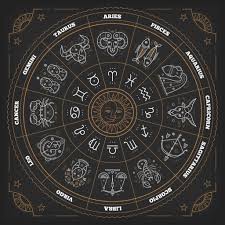
Astrology and Free Horoscopes | Jessica Adams Astrologer

Astrology is the study of the movements of the planets, sun, moon, and stars in the belief that these movements can have an influence on people’s lives. Astrology originated in Babylon far back in antiquity, with the Babylonians developing their own form of horoscopes around 2,400 years ago. Then around 2,100 years ago, astrology spread to the eastern Mediterranean, becoming popular in Egypt, which at the time was under the control of a dynasty of Greek kings.

Astrology is a very vast science. It is practiced in almost all the religions of world and each religion have different principles and methods for predicting future and revealing destiny. Many cultures have attached importance to astronomical events, and the Indians, Chinese, and Maya developed elaborate systems for predicting terrestrial events from celestial observations. In the West, astrology most often consists of a system of horoscopes  purporting to explain aspects of a person’s personality and predict future events in their life based on the positions of the sun, moon, and other celestial objects at the time of their birth. The majority of professional astrologers rely on such systems.

They made the calendar, predicted the tides, estimated the harvest season, followed the stars in the sea, and so forth. It helped, so it became the science of the day.

Things moved in the sky, but they always came back. Always. And they came in patterns. Just like how humans are born and dead. The cycle – the cycle of life. Maybe, just maybe, the celestial alignment breathes the very same cycle of life? A few thought so anyways.

With a gripping delusion, they projected everything up high, to the sky; the joy, the suffering, the pain, the flood, the death, the birth, the entire human existence. And right there in the night, under the gazing stars and the moon, astrology was born. An ancient pattern matching scheme – a manual one. And, astrology thrived.

They started manually collecting the celestial alignment at birth data of all the kings, queens, royals, servants, saints, widows and witches. And, then they manually labelled it, and looked for patterns. They checked if all royals had some celestial alignment in common, and the same went for the poor and the misfortunate. Criss-cross. Cross-criss. Thus began the humongous scheme of pattern matching.Through years and years of data collection, pattern matching and model learning, they tuned their model and churned out the model that best fits their data.A chart was stuck to you upon birth. A lifeline that tells your destiny, your personality, your likes and your dislikes. The one that indicates everything; your everything, even your sex life.To be honest, it’s an ingenious idea, and great efforts too. Mind the time, this is thousands of years ago, when they didn’t even have a WiFi.

As years roll on, the scientific community rejects astrology as it has no explanatory power for describing the universe, and considers it a pseudoscience. Scientific testing of astrology has been conducted, and no evidence has been found to support any of the premises or purported effects outlined in astrological traditions. There is no proposed mechanism of action by which the positions and motions of stars and planets could affect people and events on Earth that does not contradict well understood, basic aspects of biology and physics. Those who continue to have faith in astrology have been characterised as doing so. In spite of the fact that there is no verified scientific basis for their beliefs, and indeed that there is strong evidence to the contrary.

Confirmation bias is a form of cognitive bias, a psychological factor that contributes to belief in astrology. Astrology believers tend to selectively remember predictions that turn out to be true, and do not remember those that turn out false. Another, separate, form of confirmation bias also plays a role, where believers often fail to distinguish between messages that demonstrate special ability and those that do not. Thus there are two distinct forms of confirmation bias that are under study with respect to astrological believe.

Across several centuries of testing, the predictions of astrology have never been more accurate than that expected by chance alone. One approach used in testing astrology quantitatively is through blind experiment.

To MARS, Or Not To MARS ?

Strap yourself in, we are going on a trip in our favorite rocket ship, steering through the clouds like little Einsteins. Climb aboard and get ready to explore, the Red Planet- Mars. From hostile deserts, to lonely islands and the highest mountains, wherever there is space to expand into, humans do so.

Hence it is hardly surprising that we are all ready to set foot into Mars and create the first permanent colony outside of Earth maybe even terraform another planet and turn it into a second blue home.

If you don’t know who is Elon Musk, then you better start googling his name and get to know him. Not only is he the billionaire founder of Tesla Motors, this a.k.a. Iron man superhero Tony Stark has ambitious plans to send humans to Mars by 2025.

If this is a trip then like any other, there is a need for a checklist with list of items to be taken to Mars and items we can conveniently leave back on Earth. Let’s get started fellow Martians.

A MARS COLONY CHECKLIST :

  • PORTABLE OXYGEN GENERATOR- You need to breathe. In case of emergency, a standby kit to generate oxygen is required. But considering humans, we might need a mask too because air is our favourite natural element to pollute.
  • PORTABLE SOLAR POWER KIT- Low battery and no charger sounds as scary as the trip itself. Whatever electronics you are bringing, as long as there is no electricity, forget about your entertainment. You don’t want to die of boredom.
  • PORTABLE WATER FILTER- We know there is frozen water on the planet. But we dont know if ita drinkable. All the ice deserves a drink, so bring a filter and soda-making machine if excess luggage permits (check with your airline)
  • PLANT SEEDS- Once you run out of your snacks you should look into farming. Be prepared, bring some seeds and check some tutorials on gardening (preferably in space).
  • LONELINESS- Self isolation might be needed to avoid radioactive exposure, well looks like the year 2020 is indeed a good practice for it. Also aren’t we all lonely from inside (No? just me? Okay…. *crawls back into my hole*)
  • NUCLEAR REACTORS- For creating a safe atmosphere and not the nuclear weapons that Nations own for “defense purposes” Let those weapons stay on Earth along with the people who threaten to use them because there isn’t much spice in their lives.
  • MULTIMILLION DOLLAR SPACESHIP – So large that it could fit the 150 Million homeless around the world, people who have been disappointed by the Politicians and their promises.
  • A HIGH TOLERENCE – A tolerance level higher than what we have to everything on social media and to the lifestyle of new generations.
  • MAA KE HAAT KA KHANA – A nice Tupperware tiffin box with food made by your Moms because, The M.O.M on Mars doesn’t cook or do ALL your work. (M.O.M –Mars Orbiter Mission also called Mangalyaan)

Lastly a desire to get away from it all. Elon Musk is not crazy, but a visionary, a modern adventurer who dares to dream. NASA is behind him by committing to send the first batch of astronauts on his mission. More than 200,000 people have signed up for the one-way ticket to Mars including Leonardo DiCaprio. Musk hopes to send 1 million people to the Red Planet and a ticket is estimated to cost around USD200,000 for each passenger (Hefty I know, but you get to travel with Leo as your travel buddy, hopefully this space- SHIP doesn’t sink).

Well as scary and uncertain as everything sounds it all comes down to one very important factor, Does Mars have Wi-Fi?

SRINIVASA RAMANUJAN: A man with an infinite sense of numbers

Srinivasa ramanujan (1887-1920) was born on 22nd Dec 1887, Thursday Kumbakonam city, Erode District at Tamilnadu. Mother’s name was Komlattamal and father’s name was Srinivas Iyengar. He learnt bhajan, Ramayana and mahabharata stories from his parents. Srinivasa Ramanujan was an Indian mathematician who lived during the British Rule in India. He made great contributions in such areas as number theory, continued fractions, and infinite series, despite not having any formal education in math.

 Ramanujan’s primary education was started on 1st Oct 1892 and day was Vijayadhashami. One day in maths class, teacher taught if you distribute 8 bananas into 8 children, each will get 1 banana. It means if you divide any number by same number then result comes out be 1.

Ramanujan :- What if we divide 0 from 0.

Teacher :- Obviously 1.

Ramanujan :- It’s not 1 sir, it’s undefined actually. If there is no banana and nobody then how it is possible to distribution of banana.

Teacher was baffled.

During school time, he had solved college level Mathematics. His estimated IQ was 185. Srinivasa was in such poverty that he often sustained on minimal foods and did not even have enough money to obtain paper for his studies. As a result, he used slates for his mathematics and cleaned them with his elbow, leading to bruises and marks. A child prodigy by age 11, he had exhausted the mathematical knowledge of two college students who were lodgers at his home. He was later lent a book written by S. L. Loney on advanced trigonometry. He mastered this by the age of 13 while discovering sophisticated theorems on his own. By 14, he received merit certificates and academic awards that continued throughout his school career, and he assisted the school in the logistics of assigning its 1,200 students (each with differing needs) to its approximately 35 teachers.

At the age of 15, Srinivasa Ramanujan obtained a copy of Synopsis on Elementary Results in Pure and Applied Mathematics, which contained 5,000 theorems, but had either brief proofs or did not have any. C Ramanujan then took to solving each of the theorems, eventually succeeding. Ramanujan had obtained a scholarship for the University of Madras, but he ended up losing it because he neglected his studies in other subjects in favor of mathematics.

On 14 July 1909, Ramanujan married Janaki ammal (1899 – 1994). After the marriage, Ramanujan developed a hydrocele testis. The condition could be treated with a routine surgical operation that would release the blocked fluid in the scrotal sac, but his family could not afford the operation. In January 1910, a doctor volunteered to do the surgery at no cost. After his successful surgery, Ramanujan searched for a job. He stayed at a friend’s house while he went from door to door around Madras looking for a clerical position. To make money, he tutored students at Presidency College who were preparing for their F.A. exam. In 1913, he sent a letter of 11 pages with 120 theorems to Cambridge University Professor G.H.Hardy. He invited him to England. Overcoming his religious objections, Ramanujan traveled to England in 1914, where Hardy tutored him and collaborated with him in some research.

some of his integration work

With the help of Hardy within 1 year he published 9 research papers. Just because of his research papers he got degree of B.A. and he was elected as Fellow of Royal Society. He was the youngest Indian to receive this honor.

Ramanujan’s knowledge of mathematics (most of which he had worked out for himself) was startling. Although he was almost completely unaware of modern developments in mathematics, his mastery of continued fractions was unequaled by any living mathematician. He worked out the Riemann series, the elliptic integrals, hyper geometric series, the functional equations of the zeta function, and his own theory of divergent series. On the other hand, he knew nothing of doubly periodic functions, the classical theory of quadratic forms, or Cauchy’s theorem, and he had only the most nebulous idea of what constitutes a mathematical proof. Though brilliant, many of his theorems on the theory of prime numbers were wrong.

In England Ramanujan made further advances, especially in the partition of numbers (the number of ways that a positive integer can be expressed as the sum of positive integers,for instance, (4 can be expressed as 4, 3 + 1, 2 + 2, 2 + 1 + 1, and 1 + 1 + 1 + 1). His papers were published in English and European journals, and in 1918 he was elected to the Royal Society of London. In 1917 Ramanujan had contracted tuberculosis, but his condition improved sufficiently for him to return to India in 1919. 

Once a interesting incident took place. Ramanujan was ill and admitted at hospital. Prof. Hardy came to visited him. Then midst conversation Hardy said, i came from the cab and number of that cab was 1729.

“It is a very interesting number, it is the smallest number expressible as the sum of two cubes in two different ways.”
He found a special property, and even tested that it was the smallest number with such a property, all in a few seconds.

1729 = (10)3 + (9)3 = (12)3 + (1)3.

After that this kind of numbers were known as Ramanujan Numbers. 1729 is smallest Ramanujan number.

After contracting tuberculosis, eventhough the mathematician recovered enough in 1919 to return to India, but died the following year, without much recognition. However, the mathematics community recognized him as a genius without peer.The genius mathematician left as his legacy three notebooks and a huge bundle of pages, which contained unpublished result which were being verified by mathematicians many years after his death.

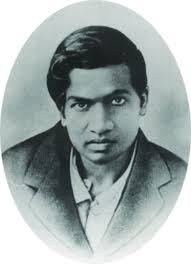
Remembering Ramanujan and his contributions on his birth ...

Energy conservation

Energy conservation refers to the efforts made to reduce the consumption of energy. The energy on Earth is not in unlimited supply. Furthermore, energy can take plenty of time to regenerate. This certainly makes it essential to conserve energy. Most noteworthy, energy conservation is achievable either by using energy more efficiently or by reducing the amount of service usage.

Importance of Energy Conservation

First of all, energy conservation plays an important role in saving non-renewable energy resources. Furthermore, non-renewable energy sources take many centuries to regenerate. Moreover, humans consume energy at a faster rate than it can be produced. Therefore, energy conservation would lead to the preservation of these precious non-renewable sources of energy. Energy conservation will reduce the expenses related to fossil fuels. Fossil fuels are very expensive to mine. Therefore, consumers are required to pay higher prices for goods and services. Energy conservation would certainly reduce the amount of fossil fuel being mined. This, in turn, would reduce the costs of consumers. Consequently, energy conservation would strengthen the economy as consumers will have more disposable income to spend on goods and services. Energy conservation is good for scientific research. This is because; energy conservation gives researchers plenty of time to conduct researches. Therefore, these researchers will have more time to come up with various energy solutions and alternatives. Humans must ensure to have fossil fuels as long as possible. This would give me enough time to finding practical solutions. Another important reason for energy conservation is environmental protection. This is because various energy sources are significantly harmful to the environment. Furthermore, the burning of fossil fuels considerably pollutes the atmosphere. Moreover, nuclear energy creates dangerous nuclear waste. Hence, energy conservation will lead to environmental protection.

Energy conservation would also result in the good health of humans. Furthermore, the pollution released due to energy sources is harmful to the human body. The air pollution due to fossil fuels can cause various respiratory problems. Energy sources can pollute water which could cause several harmful diseases in humans. Nuclear waste can cause cancer and other deadly problems in the human body.

Measures to Conserve Energy

Energy taxation is a good measure from the government to conserve energy. Furthermore, several countries apply energy or a carbon tax on energy users. This tax would certainly put pressure on energy users to reduce their energy consumption. Moreover, carbon tax forces energy users to shift to other energy sources that are less harmful.

Building design plays a big role in energy conservation. An excellent way to conserve energy is by performing an energy audit in buildings. Energy audit refers to inspection and analysis of energy use in a building. Most noteworthy, the aim of the energy audit is to appropriately reduce energy input.

Another important way of energy conservation is by using energy-efficient products. Energy-efficient products are those that use lesser energy than their normal counterparts. One prominent example can be using an energy-efficient bulb rather than an incandescent light bulb.

In conclusion, energy conservation must be among the utmost priorities of humanity. Mahatma Gandhi was absolutely right when he said, “the earth provides enough to satisfy every man’s needs but not every man’s greed”. This statement pretty much sums up the importance of energy conservation. Immediate implementation of energy conservation measures is certainly of paramount importance.

Malnutrition In India

Malnutrition is one of the world’s highly overlooked issues. Many still believe that malnutrition is restricted to the African continent, which is the biggest myth this article will bust. If the first image that pops into your mind when you think of malnutrition is a scrawny African kid, this is the article to educate you about our world.

Malnutrition, as the name suggests, is the deficiency of the required nutrients in one’s body. A properly balanced diet should constitute sufficient energy/calorie requirements and also meet our diverse nutritional requirements. Our biology tells us more about our ailments than our body weight and structure.

Another myth associated with malnutrition is that only those without timely meals are malnourished. Malnourishment exists in three main forms: under-nourished, over-nourished, and targeted nourishment.

  • Under-Nourished: A person who is not consuming a timely balanced diet
  • Over-Nourished: A person consuming more nutrients than needed, they are over-nourished, or obese
  • Targeted Under-Nourishment: A person consuming timely food, but lacking a balanced food intake

Malnourishment is less about how much you eat and more about what you eat. To further bust the myth, Africa might be the continent with the highest malnourished population, but the country with the highest malnourished population is, Yemen.

The Double-Burden of Malnourishment is a crisis that almost all countries are facing, trying to end under-nourishment while tackling an increasingly obese population.

Food Security is the availability of food and one’s access to it. Food insecurity is when there’s an infrequent availability and one’s eating habits are disrupted as a result of lack of money and other resources.

9.2% of the world was severely affected by food insecurity, and 1-in-4 are moderately affected by food insecurity in 2018.

As a result of this, many people fail to avail of the basic requirement, food.

Over 1 billion people were undernourished in 1990, 795 million as of 2014. The number soon reaching 821 million by 2017.

Contrary to popular belief, India is one of the highest-ranking countries in the world worst affected by malnutrition amongst children. About 30% of Indian children are underweight, almost twice than in Sub-Saharan Africa.

Over 5% of the Indian population is morbidly obese. Processed, sugar-free, and other un-healthy options have substituted our diets. Organic options have become a thing of luxury. The National capital surpasses every other state and union territory with 45.5% men and 49.8% women obese population (Transgender data not given). While Madhya Pradesh and Rajasthan exceed in the undernourished population.

Fad Diets promising quick weight shedding are part of the problem. While you may shed the “few extra pounds,” they leave you with a malnourished body. Omitting fats from our diets does us more harm than good. Take, for instance, potatoes and sugars, high in starch and carbohydrates, are still vital for our body.

Each year, enough food is produced to feed more than 12 billion people. The world population is 7 billion!

A country as a whole very rarely struggles with food insecurity. It is a group or even a marginalized community that struggles with finding proper access. Haddad in their article, “Lifting the Curse: Overcoming Persistent Undernutrition in India” wrote, “A poor capacity to deliver the right services at the right time to the right populations, an inability to respond to citizens’ needs and weak accountability are all features of weak nutrition governance.” While government officials claim that it is a challenge for every country to provide people with access to healthy food.

While it is debatable as to how much the government does or can do, many factors come into play. To name a few, the socio-economic status, region, religion, and relationships.

One strong link to malnutrition in India is domestic violence. Domestic violence brings with it emotional and physical abuse. The dual-abuse affects one’s oxidative stress, hemoglobin blood levels, and produce anemic malnutrition.

Another link is that of religion, scientific studies prove that in India, Hindus and Muslims tend to be more malnourished than those from Christian, Sikh or Jain backgrounds.

Each type of malnutrition brings with it many diseases and high mortality rates. Visible signs of malnutrition and dehydration are most common include, including moon face, dry eyes, periorbital edema, glossitis, enamel mottling, dull-sparse-brittle hair, alopecia, thin and soft nail plates, muscles wasting, calcium-vitamin D-vitamin C deficiencies, and more.

With the ongoing pandemic and the related lockdown, many families have lost their source of income. People are struggling to choose between food and rent. The malnutrition rates have been higher in the last few months than last year. UNICEF’s plan to achieve Zero Hunger by 2030 seems unlikely.

INFERTILITY HURTS!

6 Things to Know Before Starting Infertility Treatments
source: www.chicagohealthonline.com

Infertility means not being able to get pregnant after one year of trying (or six months if a woman is 35 or older). Women who can get pregnant but are unable to stay pregnant may also be infertile.

Pregnancy is the result of a process that has many steps. To get pregnant:

  • A woman’s body must release an egg from one of her ovaries (ovulation).
  • The egg must go through a fallopian tube toward the uterus(womb).
  • A man’s sperm must join with (fertilize) the egg along the way.
  • The fertilized egg must attach to the inside of the uterus (implantation).

Infertility can happen if there are problems with any of these steps.

Is infertility a women problem?

No, infertility is not always a woman’s problem. Both women and men can have problems that cause infertility. About one-third of infertility cases are caused by women’s problems. Another one third of fertility problems are due to the man. The other cases are caused by a mixture of male and female problems or by unknown problems.

Most cases of female infertility are caused by problems with ovulation. Without ovulation, there are no eggs to be fertilized. Some signs that a woman is not ovulating normally include irregular or absent menstrual periods.

Ovulation problems are often caused by polycystic ovarian syndrome (PCOS). PCOS is a hormone imbalance problem which can interfere with normal ovulation. PCOS is the most common cause of female infertility. Primary ovarian insufficiency (POI) is another cause of ovulation problems. POI occurs when a woman’s ovaries stop working normally before she is 40. POI is not the same as early menopause.

Less common causes of fertility problems in women include:

  • Blocked fallopian tubes due to pelvic inflammatory disease, endometriosis, or surgery for ectopic pregnancy
  • Physical problems with the uterus
  • Uterine fibroids, which are non-cancerous clumps of tissue and muscle on the walls of the uterus.

Many things can change a woman’s ability to have a baby. These include:

  • Age
  • Smoking
  • Excess alcohol use
  • Stress
  • Poor diet
  • Athletic training
  • Being overweight or underweight
  • Sexually transmitted infections (STIs)
  • Health problems that cause hormonal changes, such as polycystic ovarian syndrome and primary ovarian insufficiency.

Infertility in men is most often caused by:

  • A problem called varicocele. This happens when the veins on a man’s testicle(s) are too large. This heats the testicles. The heat can affect the number or shape of the sperm.
  • Other factors that cause a man to make too few sperm or none at all.
  • Movement of the sperm. This may be caused by the shape of the sperm. Sometimes injuries or other damage to the reproductive system block the sperm.

Sometimes a man is born with the problems that affect his sperm. Other times problems start later in life due to illness or injury. For example, cystic fibrosis often causes infertility in men.

A man’s sperm can be changed by his overall health and lifestyle. Some things that may reduce the health or number of sperm include:

  • Heavy alcohol use
  • Drugs
  • Smoking cigarettes
  • Age
  • Environmental toxins, including pesticides and lead
  • Health problems such as mumps, serious conditions like kidney disease, or hormone problems
  • Medicines
  • Radiation treatment and chemotherapy for cancer

Infertility can be treated with medicine, surgery, artificial insemination, or assisted reproductive technology. Many times these treatments are combined. In most cases infertility is treated with drugs or surgery.

Doctors recommend specific treatments for infertility based on:

  • Test results
  • How long the couple has been trying to get pregnant
  • The age of both the man and woman
  • The overall health of the partners
  • Preference of the partners

Doctors often treat infertility in men in the following ways:

  • Sexual problems: Doctors can help men deal with impotence or premature ejaculation. Behavioral therapy and/or medicines can be used in these cases.
  • Too few sperm: Sometimes surgery can correct the cause of the problem. In other cases, doctors surgically remove sperm directly from the male reproductive tract. Antibiotics can also be used to clear up infections affecting sperm count.
  • Sperm movement: Sometimes semen has no sperm because of a block in the man’s system. In some cases, surgery can correct the problem.

In women, some physical problems can also be corrected with surgery.

A number of fertility medicines are used to treat women with ovulation problems. It is important to talk with your doctor about the pros and cons of these medicines. You should understand the possible dangers, benefits, and side effects.

Intrauterine insemination (IUI) is an infertility treatment that is often called artificial insemination. In this procedure, the woman is injected with specially prepared sperm. Sometimes the woman is also treated with medicines that stimulate ovulation before IUI.

IUI is often used to treat:

  • Mild male factor infertility
  • Women who have problems with their cervical mucus
  • Couples with unexplained infertility

Intrauterine insemination (IUI) is an infertility treatment that is often called artificial insemination. In this procedure, the woman is injected with specially prepared sperm. Sometimes the woman is also treated with medicines that stimulate ovulation before IUI.

IUI is often used to treat:

  • Mild male factor infertility
  • Women who have problems with their cervical mucus
  • Couples with unexplained infertility

Intrauterine insemination (IUI) is an infertility treatment that is often called artificial insemination. In this procedure, the woman is injected with specially prepared sperm. Sometimes the woman is also treated with medicines that stimulate ovulation before IUI.

IUI is often used to treat:

  • Mild male factor infertility
  • Women who have problems with their cervical mucus
  • Couples with unexplained infertility

Intrauterine insemination (IUI) is an infertility treatment that is often called artificial insemination. In this procedure, the woman is injected with specially prepared sperm. Sometimes the woman is also treated with medicines that stimulate ovulation before IUI.

IUI is often used to treat:

  • Mild male factor infertility
  • Women who have problems with their cervical mucus
  • Couples with unexplained infertility

Assisted reproductive technology (ART) is a group of different methods used to help infertile couples. ART works by removing eggs from a woman’s body. The eggs are then mixed with sperm to make embryos. The embryos are then put back in the woman’s body.

Common methods of ART include:

  • In vitro fertilization (IVF) means fertilization outside of the body. IVF is the most effective ART. It is often used when a woman’s fallopian tubes are blocked or when a man produces too few sperm. Doctors treat the woman with a drug that causes the ovaries to produce multiple eggs. Once mature, the eggs are removed from the woman. They are put in a dish in the lab along with the man’s sperm for fertilization. After 3 to 5 days, healthy embryos are implanted in the woman’s uterus.
  • Zygote intrafallopian transfer (ZIFT) or Tubal Embryo Transfer is similar to IVF. Fertilization occurs in the laboratory. Then the very young embryo is transferred to the fallopian tube instead of the uterus.
  • Gamete intrafallopian transfer (GIFT) involves transferring eggs and sperm into the woman’s fallopian tube. So fertilization occurs in the woman’s body. Few practices offer GIFT as an option.
  • Intracytoplasmic sperm injection (ICSI) is often used for couples in which there are serious problems with the sperm. Sometimes it is also used for older couples or for those with failed IVF attempts. In ICSI, a single sperm is injected into a mature egg. Then the embryo is transferred to the uterus or fallopian tube

Assisted reproductive technology procedures sometimes involve the use of donor eggs (eggs from another woman), donor sperm, or previously frozen embryos.

Donor eggs are sometimes used for women who cannot produce eggs. Also, donor eggs or donor sperm are sometimes used when the woman or man has a genetic disease that can be passed on to the baby.

An infertile woman or couple may also use donor embryos. These are embryos that were either created by couples in infertility treatment or were created from donor sperm and donor eggs. The donated embryo is transferred to the uterus. The child will not be genetically related to either parent.

Surrogacy

Women with no eggs or unhealthy eggs might also want to consider surrogacy. A surrogate is a woman who agrees to become pregnant using the man’s sperm and her own egg. The child will be genetically related to the surrogate and the male partner.

Gestational Carrier

Women with ovaries but no uterus may be able to use a gestational carrier. This may also be an option for women who shouldn’t become pregnant because of a serious health problem. In this case, a woman uses her own egg. It is fertilized by her partner’s sperm and the embryo is placed inside the carrier’s uterus.

Just because something isn’t happening for you right now doesn’t mean that will never happen. Even miracles take little time.