The ability to build real relationships is one of the most important aspects of social media and a key factor in attracting people of all ages, genders and nationalities. It is an important part of developing healthy social networks and powerful social network tools. People can share their business, products and services with the world as long as they stay connected and use social media. Social networks allow people to communicate, and everyone can update and report at any time. Companies make full use of social media to improve your online reputation and greatly help increase sales and personal income.
You need to make sure to use all social media platforms to gain insight into the needs of your customers. To make the most of social media for your business, make sure you have a content marketing plan. If you need content on any social media platform, you can use social media asset management tools to create high-quality content.
You can also use social media to track what people say on social media. Although social media is mainly used by the public, the government also uses it to raise public awareness.
Although the use of social media for teaching can be distracting, educators can do everything they can to guide students to develop good habits and practices, Benefit. Regarding the advantages provided by social networks.
If you consistently and continuously invest time and effort, you will see the real benefits of social media marketing. Social media can give your business a huge advantage by helping you connect with your target audience. It can cover a large number of people, but for social media, it is also a media sharing network.
Social media advertising is one of the two components used together to attract potential customers and spread information and brand awareness. Different from classic ads. When you actively post on social media pages, social media marketing is easy.
SOCIAL MEDIA AS A BLESSING
There are some people who actually make a good or can say the best use of the social media. Like if we talk about the young entrepreneurs who have just begun with a start up but is lacking in public attraction and funding so they create a short 30seconds advertisement and attach it with the trending apps which work through network connection . Talking about the awareness ;both the social media and mass media have been playing their roles very well by keeping their viewers updated with the latest screamers , exposing the Scams ,scandals , and even the worse parts of humanity .
The developing utilization of online applications has opened diverse vocation roads for youth across the globe. Regardless of an applicant is a fresher or an accomplished one, these new position profiles help one in better proficient future and furthermore great motivations.
One of such occupation profile is of Search Engine Optimization (SEO) proficient. As a large portion of individuals across the world use web crawlers like Google to determine their questions. Website design enhancement is one of the advanced showcasing methods that assistance in better streamlining of a site and rank it top in web search tools for applicable questions.
There are many type of improvement, for example, on location content and site page enhancement or site backlink streamlining. Web optimization not just plans to rank better sites or drive quality traffic yet in addition assist with building brand perceivability in the online world.
Different ongoing investigations recommend that SEO will be a significant showcasing device for creating leads and procuring new clients. It has constrained pretty much every organization to put more in SEO prompting expanded interest of SEO experts in India. The developing interest of SEO experts has constrained alumni and website specialists to learn SEO for a superior profession ahead.
While self-improvement is essentially a solo act i.e. usually picking up a book and learning the technique of improving the target area on your own and at your own pace. Personality Developing on the other hand, usually involves some external help. … You cannot get there without Personal Development and self-improvement.
Self help:-
SELF Help Group are small groups of 15-20 members of rural people in particular women belonging to one neighbouhood who meet and saves regularly. The members of the group can take small loan to meet their needs on low interest rate.
Functioning:
Most of the decisions regarding the savings and loan activities are taken by the group members.
The group decides as regards the loans to be granted- the purpose, amount, interest to be charged, repayment schedule etc.
Group is responsible for the repayment of the loan.
Any case of non-repayment of loan, by any one member is followed up seriously by other members in the group.
The SHG help borrowers overcome the problem of collateral.
They provide timely loans for a variety of purposes and at a reasonable interest rate.
The group provrdes a platform to discuss and act on a variety of social issues such as health, nutrition, domestic violence, etc.
Personality development:-
Definition:
Personality development is the development of the organized pattern of behaviors and attitudes that makes a person distinctive. Personality development occurs by the ongoing interaction of temperament , character, and environment.
Description:
Personality is what makes a person a unique person, and it is recognizable soon after birth. A child’s personality has several components: temperament, environment, and character. Temperament is the set of genetically determined traits that determine the child’s approach to the world and how the child learns about the world. There are no genes that specify personality traits, but some genes do control the development of the nervous system, which in turn controls behavior.
A second component of personality comes from adaptive patterns related to a child’s specific environment. Most psychologists agree that these two factors—temperament and environment—influence the development of a person’s personality the most. Temperament, with its dependence on genetic factors, is sometimes referred to as “nature,” while the environmental factors are called “nurture.”
While there is still controversy as to which factor ranks higher in affecting personality development, all experts agree that high-quality parenting plays a critical role in the development of a child’s personality. When parents understand how their child responds to certain situations, they can anticipate issues that might be problematic for their child. They can prepare the child for the situation or in some cases they may avoid a potentially difficult situation altogether. Parents who know how to adapt their parenting approach to the particular temperament of their child can best provide guidance and ensure the successful development of their child’s personality.
Finally, the third component of personality is character—the set of emotional, cognitive, and behavioral patterns learned from experience that determines how a person thinks, feels, and behaves. A person’s character continues to evolve throughout life, although much depends on inborn traits and early experiences. Character is also dependent on a person’s moral development .
Finally, the third component of personality is character—the set of emotional, cognitive, and behavioral patterns learned from experience that determines how a person thinks, feels, and behaves. A person’s character continues to evolve throughout life, although much depends on inborn traits and early experiences. Character is also dependent on a person’s moral development .
In 1956, psychiatrist Erik Erikson provided an insightful description as to how personality develops based on his extensive experience in psychotherapy with children and adolescents from low, upper, and middle-class backgrounds. According to Erikson, the socialization process of an individual consists of eight phases, each one accompanied by a “psychosocial crisis” that must be solved if the person is to manage the next and subsequent phases satisfactorily. The stages significantly influence personality development, with five of them occurring during infancy, childhood, and adolescence .
Infancy:
During the first two years of life, an infant goes through the first stage: Learning Basic Trust or Mistrust (Hope) . Well-nurtured and loved, the infant develops trust and security and a basic optimism. Badly handled, the infant becomes insecure and learns “basic mistrust.”
Toddlerhood:
The second stage occurs during early childhood, between about 18 months to two years and three to four years of age. It deals with Learning Autonomy or Shame (Will) . Well-parented, the child emerges from this stage with self-confidence, elated with his or her newly found control. The early part of this stage can also include stormy tantrums , stubbornness, and negativism, depending on the child’s temperament.
Preschool:
The third stage occurs during the “play age,” or the later preschool years from about three to entry into formal school. The developing child goes through Learning Initiative or Guilt (Purpose) . The child learns to use imagination; to broaden skills through active play and fantasy; to cooperate with others; and to lead as well as to follow. If unsuccessful, the child becomes fearful, is unable to join groups, and harbors guilty feelings. The child depends excessively on adults and is restricted both in the development of play skills and in imagination.
School age:
The fourth stage, Learning Industry or Inferiority (Competence) , occurs during school age, up to and possibly including junior high school. The child learns to master more formal skills:
relating with peers according to rules
progressing from free play to play that is structured by rules and requires teamwork (team sports)
At this stage, the need for self-discipline increases every year. The child who, because of his or her successful passage through earlier stages, is trusting, autonomous, and full of initiative, will quickly learn to be industrious. However, the mistrusting child will doubt the future and will feel inferior.
Adolescence:
The fifth stage, Learning Identity or Identity Diffusion (Fidelity) , occurs during adolescence from age 13 or 14. Maturity starts developing during this time; the young person acquires self-certainty as opposed to self-doubt and experiments with different constructive roles rather than adopting a negative identity, such as delinquency. The well-adjusted adolescent actually looks forward to achievement, and, in later adolescence, clear sexual identity is established. The adolescent seeks leadership (someone to inspire him or her), and gradually develops a set of ideals to live by.
The Child Development Institute (CDI) rightfully points out that very little knowledge is available on the type of specific environment that will result, for example, in traits of trust being more developed in a person’s personality. Helping the child through the various stages of emotional and personality development is a complex and difficult task. Searching for the best ways of accomplishing this task accounts for most of the research carried out in the field of child development today.
The Child Development Institute (CDI) rightfully points out that very little knowledge is available on the type of specific environment that will result, for example, in traits of trust being more developed in a person’s personality. Helping the child through the various stages of emotional and personality development is a complex and difficult task. Searching for the best ways of accomplishing this task accounts for most of the research carried out in the field of child development today.
Renowned psychologist Carl Rogers emphasized how childhood experiences affect personality development. Many psychologists believe that there are certain critical periods in personality development—periods when the child will be more sensitive to certain environmental factors. Most experts believe that a child’s experiences in the family are important for his or her personality development, although not exactly as described by Erikson’s stages, but in good agreement with the importance of how a child’s needs should to be met in the family environment. For example, children who are toilet trained too early or have their toilet training carried out too strictly may become rebellious. Another example is shown by children who learn appropriate behavior to their sex lives when there is a good relationship with their same-sex parent.
Another environmental factor of importance is culture. Researchers comparing cultural groups for specific personality types have found some important differences. For example, Northern European countries and the United States have individualistic cultures that put more emphasis on individual needs and accomplishments. In contrast, Asian, African, Central American, and South American countries are characterized more by community-centered cultures that focus on belonging to a larger group, such as a family, or nation. In these cultures, cooperation is considered a more important value than competitiveness, which will necessarily affect personality development.
Common problems:
Infants who are just a few weeks old display differences between each other in how active they are, how responsive they are to change, and how irritable they are. Some infants cry constantly while others seem happy and stay fairly quiet. Child development research conducted by the CDI has identified nine temperamental traits that may contribute to a child’s personality development being challenging or difficult:
activity level (how active the child is generally)
distractibility (degree of concentration and paying attention when the child is not particularly interested)
intensity (how loud the child is)
regularity (the predictability of biological functions like appetite and sleep)
sensory threshold (how sensitive the child is to physical stimuli: touch, taste, smell, sound, light)
approach/withdrawal (characteristic responses of a child to a new situation or to strangers)
adaptability (how easily the child adapts to transitions and changes such as switching to a new activity)
persistence (stubbornness, inability to give up)
mood (tendency to react to the world primarily in a positive or negative way)
Temperamental traits are enduring personality characteristics that are neither “good” nor “bad.” Early on, parents can work with the child’s temperamental traits rather than oppose them. Later, as the child grows up, parents can help the child to adapt to his or her own world in spite of inborn temperament.
Parental concerns:
Most children experience healthy personality development. However, some parents worry as to whether their infant, child, or teenager has a personality disorder. Parents are usually the first to recognize that their child has a problem with emotions or behaviors that may point to a personality disorder.
Children with personality disorders have great difficulty dealing with other people. They tend to be inflexible, rigid, and unable to respond to the changes and normal stresses of life and find it very difficult to participate in social activities. When these characteristics are present in a child to an extreme, when they are persistent and when they interfere with healthy development, a diagnostic evaluation with a licensed physician or mental health professional is recommended.
When to call the doctor:
Parents who suspect that their child has a personality disorder should seek professional help. It is a very important first step in knowing for sure whether there is a disorder, and if so, what treatment can best help the child. Child and adolescent psychiatrists are trained to help parents sort out whether their child’s personality development is normal.
KEY TERMS:
Behavior —A stereotyped motor response to an internal or external stimulus.
Character —An individual’s set of emotional, cognitive, and behavioral patterns learned and accumulated over time.
Cognition —The act or process of knowing or perceiving.
Cognitive —The ability (or lack of) to think, learn, and memorize.
Gene —A building block of inheritance, which contains the instructions for the production of a particular protein, and is made up of a molecular sequence found on a section of DNA. Each gene is found on a precise location on a chromosome.
Identity —The condition of being the same with, or possessing, a character that is well described, asserted, or defined.
Maturity —A state of full development or completed growth.
Personality —The organized pattern of behaviors and attitudes that makes a human being distinctive. Personality is formed by the ongoing interaction of temperament, character, and environment.
Socialization —The process by which new members of a social group are integrated in the group.
Temperament —A person’s natural disposition or inborn combination of mental and emotional traits.
Resources:-
BOOKS:
AACAP and David Pruitt. Your Child: Emotional, Behavioral, and Cognitive Development from Infancy through Pre-Adolescence. New York: Harper Collins, 1998.
AACAP and David Pruitt. Your Adolescent: Emotional, Behavioral, and Cognitive Development from Early Adolescence through the Teen Years. New York: Harper Collins, 1999.
Allen, Bem P. Personality Theories: Development, Growth, and Diversity. Harlow, UK: Allyn & Bacon, 2002.
Berger, Elizabeth. Raising Children With Character: Parents, Trust, and the Development of Personal Integrity. Lanham, MD: Rowman & Littlefield Publishers, 1999.
Erikson, Erik. Childhood and Society. New York: W.W. Norton & Company, 1993.
Erikson, Erik. The Erik Erikson Reader. New York: W.W. Norton & Company, 2000.
Goleman, Daniel. Working With Emotional Intelligence. New York: Bantam, 1998.
Rogers, Carl. On Becoming a Person. Boston: Mariner Books, 1995.
Shaffer, David R. Social and Personality Development. Independence, KT: Wadsworth Publishing, 1999.
“Social, Emotional, and Personality Development.” Handbook of Child Psychology , edited by William Damon and Nancy Eisenberg. 5th ed. New York: Wiley, 2000.
PERIODICALS:-
Biesanz, J. C. et al. “Personality over time: Methodological approaches to the study of short-term and long-term development and change.” Journal of Personality. 71, no. 6 (December, 2003): 905–41.
Hart, D. et al. “Personality and development in childhood: a person-centered approach.” Monographs in Social Research on Child Development. 68, no. 1 (2003): 1–119.
Jensen-Campbell, L. A. et al. “Interpersonal conflict, agreeableness, and personality development.” Journal of Personality. 71, no. 6 (December, 2003): 1059–85.
Roberts, B. W. and R. W. Robins. “Person-Environment Fit and its implications for personality development: a longitudinal study.” Journal of Personality. 72, no. 1 (February, 2004): 89–110.
Roberts, B. W. et al. “The kids are alright: growth and stability in personality development from adolescence to adulthood.” Journal of Personality & Social Psychology. 81, no. 4 (October, 2001): 670–83.
Shiner, R, and A. Caspi. “Personality differences in childhood and adolescence: measurement, development, and consequences.” Journal of Child Psychology & Psychiatry. 44, no. 1 (January, 2003): 2–32.
ORGANIZATIONS:-
American Academy of Child & Adolescent Psychiatry (AACAP). 3615 Wisconsin Ave., N.W., Washington, DC. 20016–3007. (202) 966–7300. Web site: http://www.aacap.org.
American Academy of Pediatrics (AAP). 141 Northwest Point Boulevard, Elk Grove Village, IL 60007–1098. (847) 434–4000. Web site: http://www.aap.org.
American Psychological Association (APA). 750 First Street, NE, Washington, DC 20002–4242. (800) 374–2721. Web site: http://www.apa.org.
Child Development Institute (CDI). 3528 E Ridgeway Road, Orange, California 92867. (714) 998–8617. Web site: http://www.childdevelopmentinfo.com.
UNIX development was started in 1969 at Bell Laboratories in New Jersey. Bell Laboratories was (1964–1968) involved on the development of a multi-user, time-sharing operating system called Multics (Multiplexed Information and Computing System). Multics was a failure. In early 1969, Bell Labs withdrew from the Multics project.
Bell Labs researchers who had worked on Multics (Ken Thompson, Dennis Ritchie, Douglas McIlroy, Joseph Ossanna, and others) still wanted to develop an operating system for their own and Bell Labs’ programming, job control, and resource usage needs. When Multics was withdrawn Ken Thompson and Dennis Ritchie needed to rewrite an operating system in order to play space travel on another smaller machine (a DEC PDP7 [Programmed Data Processor 4K memory for user programs). The result was a system called UNICS (UNiplexed Information and Computing Service) which was an ’emasculated Multics’.
Unix Development
The first version of Unix was written in the low-level PDP-7 assembler language. Later, a language called TMG was developed for the PDP-7 by R. M. McClure. Using TMG to develop a FORTRAN compiler, Ken Thompson instead ended up developing a compiler for a new high-level language he called B, based on the earlier BCPL language developed by Martin Richard. When the PDP-11 computer arrived at Bell Labs, Dennis Ritchie built on B to create a new language called C. Unix components were later rewritten in C, and finally with the kernel itself in 1973.
Since it began to escape from AT&T’s Bell Laboratories in the early 1970’s, the success of the UNIX operating system has led to many different versions: recipients of the (at that time free) UNIX system code all began developing their own different versions in their own, different, ways for use and sale. Universities, research institutes, government bodies and computer companies all began using the powerful UNIX system to develop many of the technologies which today are part of a UNIX system. By the late 1970’s, a ripple effect had come into play.
Key Factors
1969 The Beginning
The history of UNIX starts back in 1969, when Ken Thompson, Dennis Ritchie and others started working on the “little-used PDP-7 in a corner” at Bell Labs and what was to become UNIX.
1980 Xenix
Microsoft introduces Xenix. 32V and 4BSD introduced.
1983 System V
Computer Research Group (CRG), UNIX System Group (USG) and a third group merge to become UNIX System Development Lab. AT&T announces UNIX System V, the first supported release. Installed base 45,000.
1991
UNIX System Laboratories (USL) becomes a company – majority owned by AT&T. Linus Torvalds commences Linux development. Solaris 1.0 debuts.
1998 UNIX 98
The Open Group introduces the UNIX 98 family of brands, including Base, Workstation and Server. First UNIX 98 registered products shipped by Sun, IBM and NCR. The Open Source movement starts to take off with announcements from Netscape and IBM. UnixWare 7 and IRIX 6.5 ship.
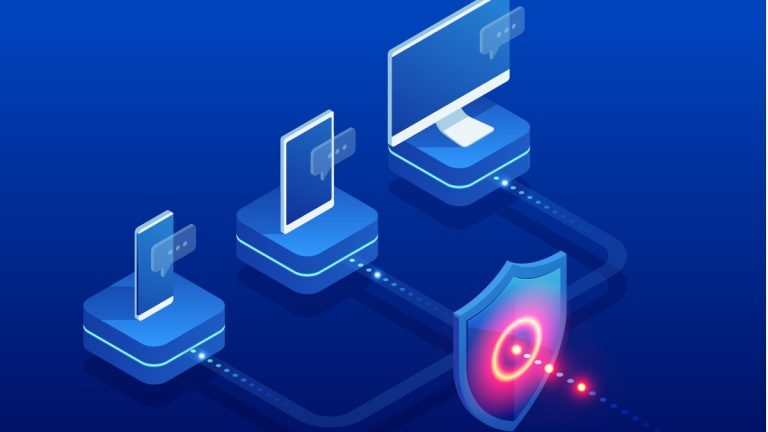
A firewall forms a barrier through which the traffic going in each direction must pass. A firewall security policy dictates which traffic is authorized to pass in each direction. A firewall may be designed to operate as a filter at the level of IP packets, or may operate at a higher protocol layer. Firewalls can be an effective means of protecting a local system or network of systems from network-based security threats while at the same time affording access to the outside world via wide area networks and the Internet.
TYPES OF FIREWALLS
Packet Filtering Firewall
It is simplest, fastest firewall component. It is Foundation of any firewall system. Examine each IP packet (no context) and permit or deny according to rules. Hence restrict access to services (ports). A packet filtering firewall applies a set of rules to each incoming and outgoing IP packet and then forwards or discards the packet. The firewall is typically configured to filter packets going in both directions (from and to the internal network).
2. Stateful Packet Filters
A traditional packet filter makes filtering decisions on an individual packet basis and does not take into consideration any higher layer context. To understand what is meant by context and why a traditional packet filter is limited with regard to context, a little background is needed. Most standardized applications that run on top of TCP follow a client/server model. A stateful packet inspection firewall reviews the same packet information as a packet filtering firewall, but also records information about TCP connections.
3. Application Level Gateway (or Proxy)
An application-level gateway, also called an application proxy, acts as a relay of application-level traffic. Application-level gateways tend to be more secure than packet filters. Rather than trying to deal with the numerous possible combinations that are to be allowed and forbidden at the TCP and IP level, the application-level gateway need only scrutinize a few allowable applications. In addition, it is easy to log and audit all incoming traffic at the application level. A prime disadvantage of this type of gateway is the additional processing overhead on each connection.
4. Circuit Level Gateway
This can be a stand-alone system or it can be a specialized function performed by an application-level gateway for certain. A circuit-level gateway does not permit an end-to-end TCP connection; rather, the gateway sets up two TCP connections, Between itself and a TCP user on an inner host. Between itself and a TCP user on an outside host.
Lifestyle (sociology), the way a person lives Otium, ancient Roman concept of a lifestyle Style of life, dealing with the dynamics of personality.
Lifestyle is the interests, opinions, behaviours, and behavioural orientations of an individual, group, or culture. The term was introduced by Austrian psychologist Alfred Adler in his 1929 book, The Case of Miss R., with the meaning of “a person’s basic character as established early in childhood”. The broader sense of lifestyle as a “way or style of living” has been documented since 1961. Lifestyle is a combination of determining intangible or tangible factors. Tangible factors relate specifically to demographic variables, i.e. an individual’s demographic profile, whereas intangible factors concern the psychological aspects of an individual such as personal values, preferences, and outlooks.
But why does everyone wants a good standard of living life. As in this is a mental tandancy human wants are unlimited. And the resources are scarce but that doesn’t matter the thing is lifestyle as all of us want to live a good life eat what we want Live where we want and spend the whole money where we want to the best.
Lifestyle may also refer to:
*Lifestyle business, a business that is set up and run with the aim of sustaining a particular level of income. *Lifestyle center, a shopping center or mixed-used commercial development that combines the traditional retail functions of a shopping mall with leisure amenities. *Lifestyle (department store), a retail fashion brand which is part of the Dubai-based Landmark Group.
And many more, but all this centers, businesses offers the best for an individual’s lifestyle.
News is information about current events. This may be provided through many different media: word of mouth, printing, postal systems, broadcasting, electronic communication, or through the testimony of observers and witnesses to events. … The genre of news as we know it today is closely associated with the newspaper.
What is current affairs
Technically Current Affairs is defined as a genre of broadcast journalism where the emphasis is on detailed analysis and discussion of news stories that have recently occurred or are ongoing at the time of broadcast.
Difference
Current affairs is a genre of broadcast journalism. This differs from regular news broadcasts that place emphasis on news reports presented for simple presentation as soon as possible, often with a minimum of analysis.
Day to Day life many things happened that information will pass to us in the form of news and current affairs
colour (Commonwealth English), is the characteristic of visual perception described through color categories, with names such as red, orange, yellow, green, blue, or purple. This perception of color derives from the stimulation of photoreceptor cells (in particular cone cells in the human eye and other vertebrate eyes) by electromagnetic radiation (in the visible spectrum in the case of humans). Color categories and physical specifications of color are associated with objects through the wavelengths of the light that is reflected from them and their intensities. This reflection is governed by the object’s physical properties such as light absorption, emission spectra, etc.
By defining a color space, colors can be identified numerically by coordinates, which in 1931 were also named in global agreement with internationally agreed color names like mentioned above (red, orange, etc.) by the International Commission on Illumination. The RGB color space for instance is a color space corresponding to human trichromacy and to the three cone cell types that respond to three bands of light: long wavelengths, peaking near 564–580 nm (red); medium-wavelength, peaking near 534–545 nm (green); and short-wavelength light, near 420–440 nm (blue). There may also be more than three color dimensions in other color spaces, such as in the CMYK color model, wherein one of the dimensions relates to a color’s colorfulness).
The photo-receptivity of the “eyes” of other species also varies considerably from that of humans and so results in correspondingly different color perceptions that cannot readily be compared to one another. Honey bees and bumblebees have trichromatic color vision sensitive to ultraviolet but insensitive to red. Papilio butterflies possess six types of photoreceptors and may have pentachromatic vision.The most complex color vision system in the animal kingdom has been found in stomatopods (such as the mantis shrimp) with up to 12 spectral receptor types thought to work as multiple dichromatic units.
“ A reader travels a world of visionary thoughts where his real self creates an extraordinary idol of thoughts without being judged and scared which they can’t do in the real world”.
The above quote straightaway refers to a person who is fascinated with books or popularly known as a “Bibliophile” in today’s era. Often, we as non-readers don’t even consider reading as a daily habit because we are so much absorbedwith our bustling life that reading is merely a tedious job and a waste of time.
We have dwelled our body and mind into the materialistic things of the world and in that process, we don’t even invest 1% in self-productivity. Self-Productivity is one of the significant elements in which we all as humans lack in and therefore, the ones who accomplish by being self-productive reach their destination of living a successful life. The moto of our rustic life is also to become productive in our jobs and careers rather than being focused on ourselves.
Reading is not only a key to the unexplored ideas of great thoughts, but it is also a doorstep to explore yourself. Still, you might be reluctant with my perspective of reading books, so let’s give you some major reasons as to what happens if you have reading as a daily habit:
You have a Critical Mindset: When you start thinking out of the box, your mindset and persona arebroadened. The more you read the better you will understand yourself. Reading is just not only mere streaming of words by your brain and mind, but it also provides a quick start for your inner mind to think critically.
Reading is like watering your mind and soul to grow in a fruitful manner. So, watering your plants daily provides the roots to live a long time, similarly, reading every day is like you are watering your soul, mind, and thoughts with a decent quality of information that will help you think critically in any situation.
Bingo! Having a critical mind will make your perspective for your life in a different way. The way we think is the way we, our thoughts develop and so our life provides experiences accordingly.
Reading equals No Insomnia: Another prominent cause which we humans face in this era is having sleep problems and living an unhealthy life. Lack of sleeping also gives birth to other sicknesses like depression, anxiety, obesity, etc.
We are addictive to so much of tech life that we have started to ignore ourselves and our body which faces certain inconvenience which occurs by our ignorance towards our body. Spending so much time on social media and scrolling till 2 am makes our eyes tired but still we continue to scroll up. Staying awake makes us insomniacs, that we feel lethargic and drowsy the whole day.
But have you ever tried reading a book, instead of using your phones? Reading is the best medicine to cure your insomnia because when you develop a good reading habit then you dedicate your whole brain and concentration to reading which will help you to sleep faster in no time.
Hence, reading is also a secret to living a long and happy life as it inculcates certain elements that you only experience if you are an ardent reader.
Reading welcomes all sorts of readers! : Most of the times, the non-readers don’t believe that reading is their cup of tea and give up easily due to the fact that, they don’t connect themselves. But one must know that there are several types of genres and sections in books which is easily available and one can choose according to their taste for books.
Whether it is Fictional, Non- fictional, Biographical, Historical, etc, and to be surprised that there are many unexplored sections that are yet to discover. Reading is a vast ocean and when you pour yourself into it, you will recognize a radical change in your personality and your way of living life.
Finding a connection with the book also helps a person understand the book better and improve themselves better. While reading when a person goes through the process of catharsis; it also releases their emotional and mental stress.
Helps to Flush your Intrusive Thoughts: A very common tip to everyone: “When you overthink, write; and when you underthink then read and when you feel both then do both.
Reading is a mental therapy that will help you as a reader to get away from those intrusive thoughts which always make you distant from yourself. To avoid those unwanted emotions and thoughts which runs into your head, you must keep yourself with a good book and read it daily so that your mind will be occupied with a beautiful vibe of quality content.
Remember, whenever you have such an intrusive thought, it is better to do something that will provide your mind with something positive connection between you and the mind. In this instance, reading is one of them that will help you get away from those unwelcome thoughts.
It Boosts your Concentration: Reading can be one of those habits which will help to deal with a good concentration level in your everyday life. Your brain cells are often guided right when they are on the pages rather than being on addictive sites. These days, attractive sites are often a cobweb of distracting your mind by spending more time on these unwanted platforms which will reduce the creative level of our brains and the capacity to think precisely.
Technology advancement has taken the perks of pleasure reading, so in short, when we are reading books, we are helping our mind to focus on the book rather than on other elements.
In short, it’s better to meddle with books and travel each letter of the world through your fingertips rather than meddling with your brain to do unwanted misadventures. Therefore, one should prefer a book to read to keep yourself wise , knowledgeable and sane!
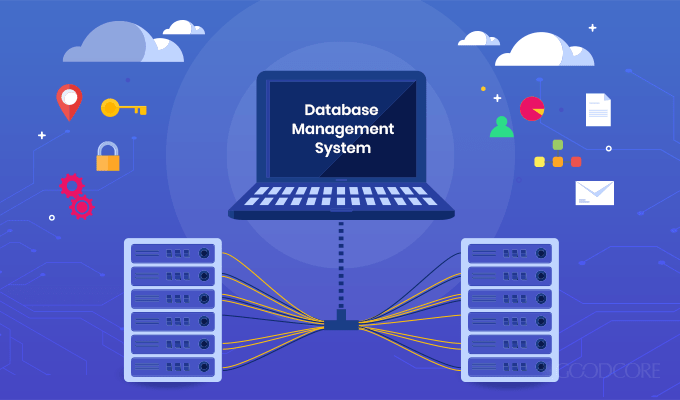
Data processing has undergone evolutionary changes in the past 30 years. Processing with a database management system offers a number of advantages. Presents the basics of today′s dynamic database management systems. Reviews the relevant professional magazines and concludes that systems now are more user‐friendly. A collection of interrelated data together with a set of programs to access the data, also called database system, or simply database. The primary goal of such a system is to provide an environment that is both convenient and efficient to use in retrieving and storing information. A database management system (DBMS) is designed to manage a large body of information. Data management involves both defining structures for storing information and providing mechanisms for manipulating the information. In addition, the database system must provide for the safety of the stored information, despite system crashes or attempts at unauthorized access. If data are to be shared among several users, the system must avoid possible anomalous results due to multiple users concurrently accessing the same data. Examples of the use of database systems include airline reservation systems, company payroll and employee information systems, banking systems, credit card processing systems, and sales and order tracking systems.
A major purpose of a database system is to provide users with an abstract view of the data. That is, the system hides certain details of how the data are stored and maintained. Thereby, data can be stored in complex data structures that permit efficient retrieval, yet users see a simplified and easy-to-use view of the data. The lowest level of abstraction, the physical level, describes how the data are actually stored and details the data structures. The next-higher level of abstraction, the logical level, describes what data are stored, and what relationships exist among those data. The highest level of abstraction, the view level, describes parts of the database that are relevant to each user; application programs used to access a database form part of the view level. The overall structure of the database is called the database schema. The schema specifies data, data relationships, data semantics, and consistency constraints on the data. Underlying the structure of a database is the logical data model: a collection of conceptual tools for describing the schema. The entity-relationship data model is based on a collection of basic objects, called entities, and of relationships among these objects. An entity is a “thing” or “object” in the real world that is distinguishable from other objects. For example, each person is an entity, and bank accounts can be considered entities. Entities are described in a database by a set of attributes. For example, the attributes account-number and balance describe one particular account in a bank. A relationship is an association among several entities. For example, a depositor relationship associates a customer with each of her accounts. The set of all entities of the same type and the set of all relationships of the same type are termed an entity set and a relationship set, respectively .
The information in a database is stored on a nonvolatile medium that can accommodate large amounts of data; the most commonly used such media are magnetic disks. Magnetic disks can store significantly larger amounts of data than main memory, at much lower costs per unit of data. To improve reliability in mission-critical systems, disks can be organized into structures generically called redundant arrays of independent disks (RAID). In a RAID system, data are organized with some amount of redundancy (such as replication) across several disks. Even if one of the disks in the RAID system were to be damaged and lose data, the lost data can be reconstructed from the other disks in the RAID system. Data manipulation is the retrieval, insertion, deletion, and modification of information stored in the database. A data-manipulation language enables users to access or manipulate data as organized by the appropriate data model. There are basically two types of data-manipulation languages: Procedural data-manipulation languages require a user to specify what data are needed and how to get those data; nonprocedural data-manipulation languages require a user to specify what data are needed without specifying how to get those data. A query is a statement requesting the retrieval of information. The portion of a data-manipulation language that involves information retrieval is called a query language. Although technically incorrect, it is common practice to use the terms query language and data-manipulation language synonymously. Database languages support both data-definition and data-manipulation functions. Although many database languages have been proposed and implemented, SQL has become a standard language supported by most relational database systems. Databases based on the object-oriented model also support declarative query languages that are similar to SQL. SQL provides a complete data-definition language, including the ability to create relations with specified attribute types, and the ability to define integrity constraints on the data. Data Security: The DBMS can prevent unauthorized users from viewing or updating the database. Using passwords, users are allowed access to the entire database or a subset of it known as a “subschema.” For example, in an employee database, some users may be able to view salaries while others may view only work history and medical data. See database security. Data Integrity: The DBMS can ensure that no more than one user can update the same record at the same time. It can keep duplicate records out of the database; for example, no two customers with the same customer number can be entered. Intelligent Databases: All DBMSs provide some data validation; for example, they can reject invalid dates or alphabetic data entered into money fields. But most validation is left up to the application programs. Intelligent databases provide more validation; for example, table lookups can reject bad spelling or coding of items. Common algorithms can also be used such as one that computes sales tax for an order based on zip code. When validation is left up to each application program, one program could allow an item to be entered while another program rejects it. Data integrity is better served when data validation is done in only one place. Mainframe DBMSs were the first to become intelligent, and all the others followed suit.
The word fear is what comes between us and our dreams. It stops us from reaching our potential. It makes us think about questions like what will happen if we don’t succeed or what if I end up making a fool out of myself?
Think about the number of times you did not do things because of the fear of failure.
It stops you from doing simple tasks like giving an answer in class because you are afraid of the answer being wrong. You are afraid of what the teacher and the students will think. Well, the teacher must have appreciated the efforts of trying and would have corrected you and the students don’t care. Do we care if people give the wrong answer? No right
Here is the thing about people, they simply don’t care about us. They are way too involved in their own lives. People sometimes do try to bring us down but, they are just transferring their fear in our lives. So, we don’t have to listen to them nor care about how they are going to react.
“Life begins at the end of your comfort zone,” rightly said by Neale Donald Walsch. I can tell you by my experience the best decisions that I took in my life were after overcoming my fear. I wanted to start a YouTube channel ever since I was 14. Now at the age of 19, I actually started it. It took me a long time to start it simply because, I was unsure of how people around me would react. But, recently enough I stopped caring about what people have to say. I uploaded the video for my happiness without thinking about people or the number of likes or views I will get. My video did get a lot of support and appreciation from people. I succeeded and got a good response but, even if I hadn’t I wouldn’t have stopped I would keep trying without letting fear take over me.
Failing is totally fine. We learn so many new lessons from our failures. We get more knowledge from failure than we ever would get from succeeding the first time.
Our life is all about trying new things so stop sticking to your comfort zone. Stepping out of the comfort zone is a big step in itself. It gives us more courage and confidence. So, keep trying even if it comes with the cost of failure.
We need to stop thinking of failure as a big thing. We need to start treating it as a step towards success. Even the most successful people faced failure and that’s how they got on top.
So, keep challenging yourself to come out of your comfort zone and try things you want. Give yourself regular tasks which you don’t do because of fear. Go volunteer to speak in front of people, even if you mess it up it is okay. Next time you will be way more confident. The only way to grow in life is through failure.
“One day you’ll leave this world behind, So, live a life you will remember” a great line from a song by Avicii, and to live the life you will remember you need to stop fearing things.
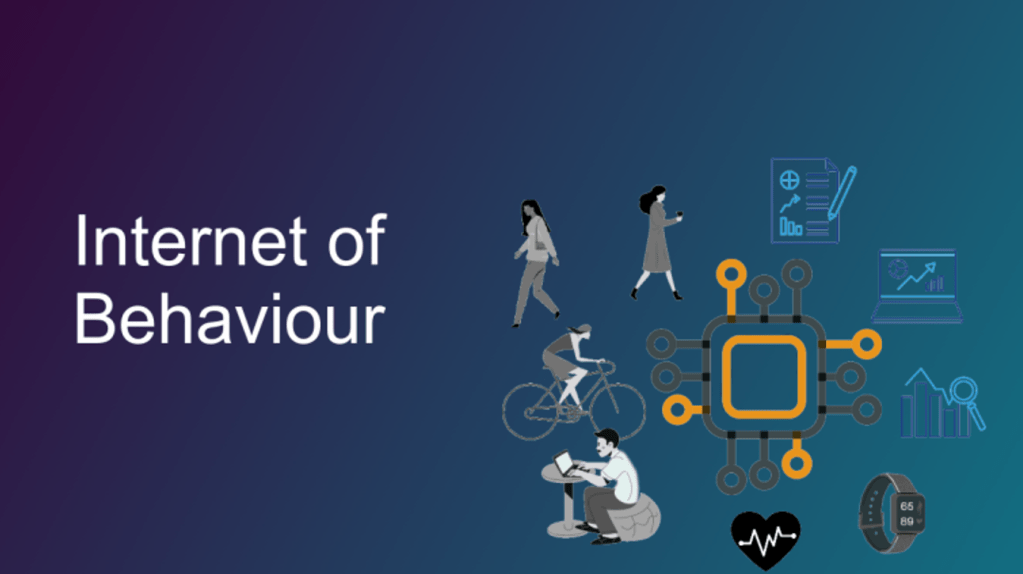
The collection and use of data to drive behaviors is called the Internet of Behaviors (IoB).
An example of it is industrial sites having employed computer vision to determine if employees were complying with mask protocol and then collecting this behavioral data to be analyzed by the organizations to influence people to follow government protocols at work.
What does the IoB mean ?
The purpose of the IoB is to capture, analyze, understand and respond to all types of human behaviors. In a way that allows tracking and interpreting those behaviors of people using emerging technological innovations and developments in machine learning algorithms. People’s behaviors are monitored and incentives or disincentives are applied to influence them to perform towards a desired set of operational parameters. Data collection (BI, Big Data, CDPs, etc.) provides valuable information about customer behaviors, interests and preferences, and this has been referred to as the Internet of Behavior (IoB). The IoB attempts to understand the data collected from users’ online activity from a behavioral psychology perspective. It seeks to address the question of how to understand the data, and how to apply that understanding to create and market new products, all from a human psychology perspective.
The IoB influences consumer choice, but it also redesigns the value chain. For companies, this means being able to change their image, market products more effectively to their customers or improve the Customer Experience (CX) of a product or service. Hypothetically, information can be collected on all facets of a user’s life, with the ultimate goal of improving efficiency and quality.
What does the IoB contribute?
Firstly, before the creation of the application, it is important to imagine the user’s interaction patterns and touch points. Involve them in the creation process, understand their needs, keep the app experience unified and cohesive, make navigation simple and meaningful so that the app is relevant and useful. Once the app is up and running, convey its purpose, create a user guide and reward by gamifying the CX in the app. Strong user engagement is required.
Secondly, solid tools are required such as multi-format support platforms (XML, JSON, PHP, CVS, HTML, etc.) That can connect to any API, that can upload data to the cloud, i.e. the fundamental features of platforms such as Google or Facebook. Platforms should allow for multi-channel personalization, centralized updates that are replicated, sending unique notifications that turn users into contributors to the personalization of the app, allow for social media integration and maintain an interactive interface.
Finally, it is the data captured through the app that serves to model user behavior. And in turn, this is the actionable data that can be sent in the form of pop-ups and notifications to the customer to encourage and incentivise them to adhere to a desired behavior. Analytics are necessary so that essential information can be extracted from all the data.
Benefits of IoB
uAnalyse customer buying habits across all platforms. uStudy previously unattainable data on how users interact with devices and products. uObtain more detailed information about where a customer is in the buying process. uProvide real-time POS notifications and targeting. uResolve problems quickly to close sales and keep customers happy. uCitizen data processed by public-sector uCommercial customer data uGovernment agencies uSocial media uPublic domain uLocation tracking.
Problemwith IoB
The problem that can occur with this technology is not of a technical nature. The IoB is confronted with the adversity of how data is collected, stored and used. Its level of access is difficult to control and therefore all companies need to be aware of the liability of IoB use. Google, Facebook or Amazon continue to acquire software that potentially brings the user from a single app to their entire online ecosystem, without their permission. This presents significant legal and security risks to privacy rights, which also vary between jurisdictions around the world
Behavioral data can allow cybercriminals to access sensitive data that reveals customer patterns, collect and sell property access codes, delivery routes and even banking codes. These cybercriminals could take phishing to another level by generating more advanced scams, tailored to the habits of individual users, and thus maximizing the likelihood that users will be scammed. uIt is therefore important to have a secure platform, storage and execution of data with the use of tools such as Confidential Computing, E2E encryption or SDP tools.
Programming is one of the most sought after skills in the professional market. It is an nothing more than an interesting way to solve problems. Programming presents you with unique solutions to real world problems and tends to help develop logical thinking. Many people think programming is memorizing statements and words to make a computer do your bidding but let me tell you otherwise. Programming is using your knowledge to solve problems thrown at you in the most effective way.
Let me nudge you on the right path to starting programming.
What is your goal ?
Programming can be for different tasks like :-
solving problems based around management of data
solving problems related to math and statistics
creating a utility for a specific task
creating games
automating daily tasks
to develop a new skill
There are many more forms that programming could take but focussing on your end goal will help you achieve it quickly and efficiently. Let me elaborate the aforementioned paths.
Solving Problems based around management of data.
To start with these problems you’ll need some knowledge of data structures so I recommend doing a basic course to learn what data structures are. Not only data structures but you may require knowledge of some oop concepts. There is no specific language specifically made for this task but learning C would be the best path to strengthen oop concepts and data structures as C works very closely with the operating system.
Instead of just starting coding you should first pickup a notebook to practice these concepts logically. Building a strong base of algorithms instead of trying to memorize a set of instructions in a particular language is the most important step.
A simple project can then be made to bolster these concepts. Create a data structure like a linked list, heap or any semi-complex data structure in whatever language you choose. Creating a program even to store and retrieve names would be helpful enough to start your journey.
Solving Problems related to maths and statistics.
To start with these problems you’ll require a knowledge of statistical methods and formulas. In these kind of problems generally data can be manipulated and analysed for interpretation as per requirements. The most recommended language for such problems would be R. It is tailored to be able to work with large data sets and has many inbuilt functions to make working with such data easy.
As our teachers stopped us from using calculators when we were younger I would similarly ask you to first try making the functions yourselves before using the in-built functions as knowing how to solve something manually would help you work through issues when automating the tasks.
A simple project can be undertaken to interpret freely available datasets. These datasets when worked upon can give a plethora of information.
Creating a utility for a specific task
This would depend on the type of utility you want to create. In such a situation you’d want to research the utility you want to make and decide for yourself what language you want to use. You’d want to check for the pros and cons of the technology you would want to use. Every language excels at some specific task and we want to be able to use the advantage to the fullest.
A simple project can be undertaken to set as an end goal while starting to learn the language.
Creating Games
This is a vast field with an even bigger community. To be able to make games you need to know some basics like the geometric world space and logic to be able to craft a game. There are quite a few game engines but probably the most recommended game engine for beginners would be Unity. it uses C# as the backend language so picking up basics of the language would be a good place to start.
Unity boasts a node based system for materials and setting up the scene. Many tutorials are available online for free so they would be your biggest reference points. The online community is not just large but helpful too. A lot of new users post questions about all the aspects of the process so don’t be shy to look something up online.
A simple project to be undertaken to make a basic game to imbue the basics of the process into yourself. There are many tutorials that start off from basics and ultimately combine the concepts to create a complete game.
Automating daily tasks
The use of smart home technology is very prominent in todays world and more and more stuff is being connected to the internet for easier use. The use of IOT can help you automate your house. technology like Arduino uses C or C# as their programming languages while raspberry pi uses node.js and python prominently. These technologies can be used to solve actual real world problems.
Smart switches and devices can be programmed to start up on a predefined time or on a set action. Even software tasks like backups can be automated with some simple shell scripting. Now automation of tasks is a 2 pronged path. Physical tasks can be automated using IOT and software based tasks can be automated using some scripting.
A simple project can be undertaken to bolster these concepts. A simple software automation task would be starting a download manager or torrent client and prioritising the downloads on the basis of speed and importance.
To Develop a new skill
Now this is where the learner has the most control. You can choose whatever language you’d like to learn and not limit yourself to a certain technology you could learn whatever you want to.
Depending on the path you would want to take you could choose to learn a language used for application design, web design, work with databases, etc the possibilities are endless. You just have to commit to the learning process and learn the basics which you could implement in any further projects.
Conclusion
No programming language is particularly difficult or easy to learn. Programming languages are nothing but tools and to wield any kind of tools you need to be capable. When your basics are clear you can implement them in any languages you learn.
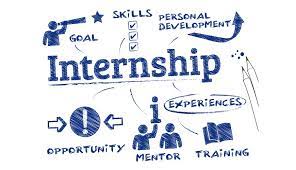
In the early days of our university, we will all live in a fantasy world, where we will feel that we have everything we want. The future is bleak If we start the internship after the first year of study, whether it is a remote internship or a full-time internship, this situation can be easily resolved. Choose according to your convenience and university practice.
“Your greatest opportunity may be by your side”-Napoleon Hill
Your interns can choose from several trusted websites such as:
Internshala
Letsintern
In the college, we will have a group of friends and we will be happy to play with them. In the workplace, this may or may not happen, but you have to adapt to the environment as soon as possible to deal with different types of people. I’m sure some companies offer internship extensions and full-time performance based on the attitude of interns, depending on their Attitude Pages An easy process If this is a paid internship, you will understand the value of the funds you have used in the past, which will help you make better use of the economy. During the internship, you will need you to manage your studies, study and test results. Although once you have mastered the multitasking and time management skills that can be solved in real-time with World Problems , the process may seem daunting at first, but if your internship skills are not too passionate for Asmara, then your internship skills are also something Good things signal that they ignored the option very early. Work hard, study, and then forget to make the most of it. Don’t hesitate, don’t be afraid to start again. Because experts say you don’t start from scratch, but from experience.
You can learn how to apply the knowledge you have acquired during an internship to your future workplaces. In addition to this, it is an excellent learning curve for young graduates and students while meeting new people and making connections in the professional world
The Android device market is growing day by day, and companies are taking advantage of it by developing Android applications and selling them on the market. Google Mobile Operating System. It is designed to be open source so that Android application developers can take advantage of the operating system and create innovative new applications. The app makes everything easier. But anyone can simply download and use the application; developing an application is not easy. It takes months or even years of brainstorming and deciding on technical details to finally develop an application that can prove itself in the market. To cope with fierce competition in the market, it is important to ensure that everything is done under the latest trends and technological updates in the development industry. Mobile application development is the process of creating software applications that run on mobile devices, and a typical mobile application Use network connections to handle remote computing resources.
Basics of Android development
Android application development consists of one or more of the following four categories:
Operation-an application that provides visible user operations. On the start screen or application Start the operation in the launcher.
Service-You can use service for any application that needs to run for a long time, such as a B. Network monitor or application to check for updates.
Content provider. The easiest way to think about content providers is to think of them as database servers. The job of the content provider is to manage access to persistent data, such as contacts on mobile phones. If your application is very simple, you don’t need to create a content provider. However, if you are building a larger application or application that makes the data available for multiple operations and/or applications, the content provider is a medium that prohibits access to your data.
Streaming media receiver. You can launch Android applications to process data about specific items or respond to events, for example to Receive SMS.
In the past 10 years, Android has become the most popular operating system in many ways.This is a very flexible and user-friendly system that can change anything unrecognizable.It can be done at any stage of the Android application development process, which is impossible to buildanapplication from scratch on a traditional linear platform











 Eduindex
You must be logged in to post a comment.