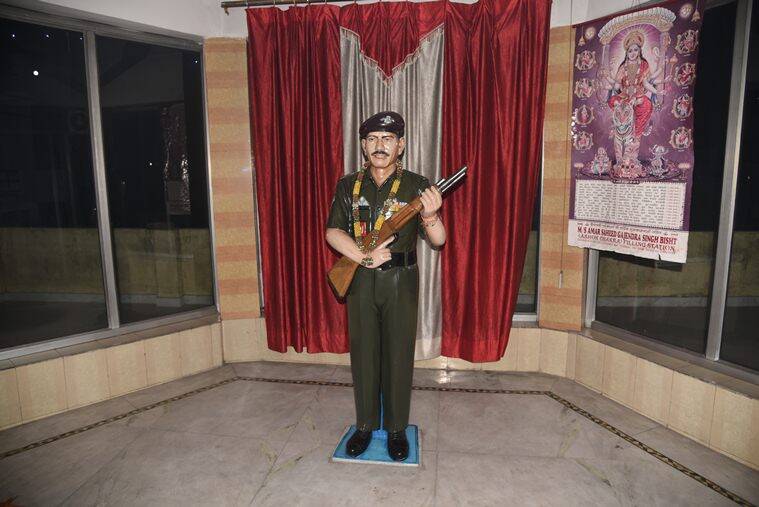
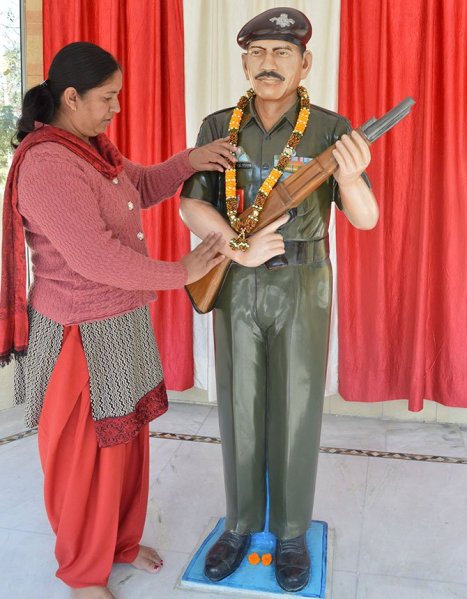
A warrior who can not be forgotten Hav. Gajender Singh Bisht.

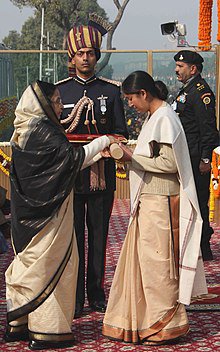
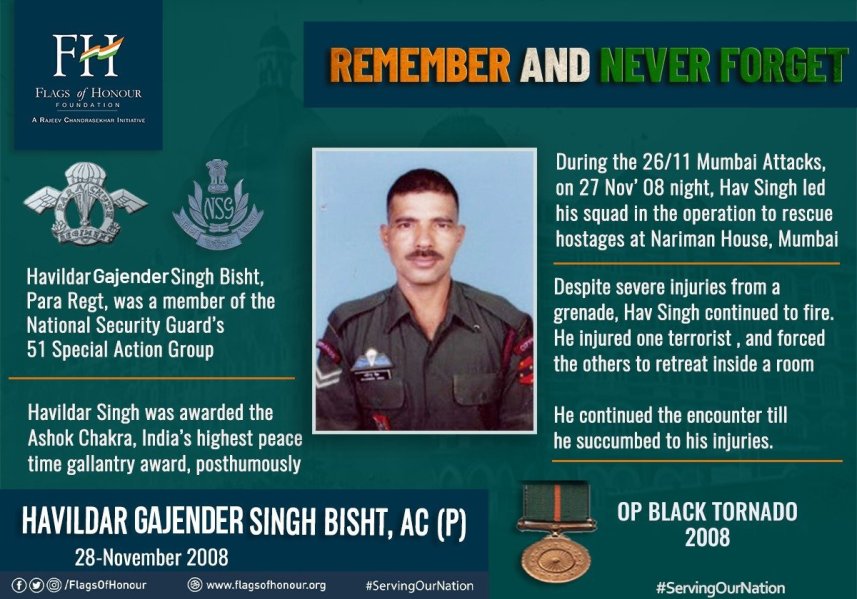
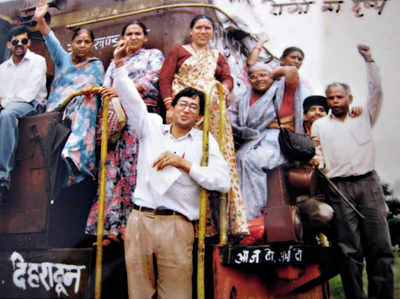
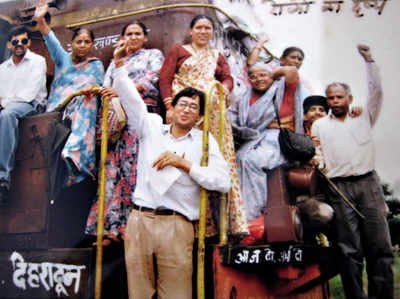
Havaldar Gajender Singh Bisht was an NSG commando who was martyred in the 2008 Mumbai attack. His bravery received the Ashoka Chakra Award from the President of India on January 26, 2009, on the Anniversary of the Republic of India.
He was born on 1 July,1972 in Dehradun, Uttarakhand.

He persued his education from the Janata Inter College in Naya Gaon.As a student he used to participate in every event organised in the school, sports or cultural activities. But he had a particular interest in boxing. Havaldar Gajendra Singh joined Garhwal Rifles in 1991 and later decided to become part of the 10 Para (Special Forces). Havaldar Gajendra also actively participated in Operation Kargil in 1999. Havaldar Gajendra was a trained commander of the Indian Army Special Forces, but he was commissioned to serve the National Security Guard’s Elite Special Action Group.
Gajendra Singh Bisht was a member of the 51st Special Action Group of the National Guard. He was part of a team of NSG Command rushed to the roof of Nariman’s house to neutralize an terrorist inside the building who had at least six hostages.


According to NSG Secretary Jyoti Krishna Dutt, Bisht led one of the teams entering the building. The team was hit by a violent terrorist attack and returned to fire while trying to contain the situation. Terrorists also threw some grenades at Commando. At this point,Bisht had the opportunity to retire with his team. But he realized they needed to seize this opportunity and went forward with thier mission.Instead of turning his back on the militants, he made the way to other troops instead, despite the grenades being thrown. He suffered multiple gunshot wounds in the process, but moved forward and was eventually injured. This allowed his team to secure a dominant position in the encounter. On the night of November 27, 2008, Havildar Gajender Singh Bisht led his army in an operation to rescue hostages from terrorists at the Nariman House in Mumbai. While securing the Nariman House during Operation Black Tornado, Bisht got fatally injured at Jewish center attack and died.

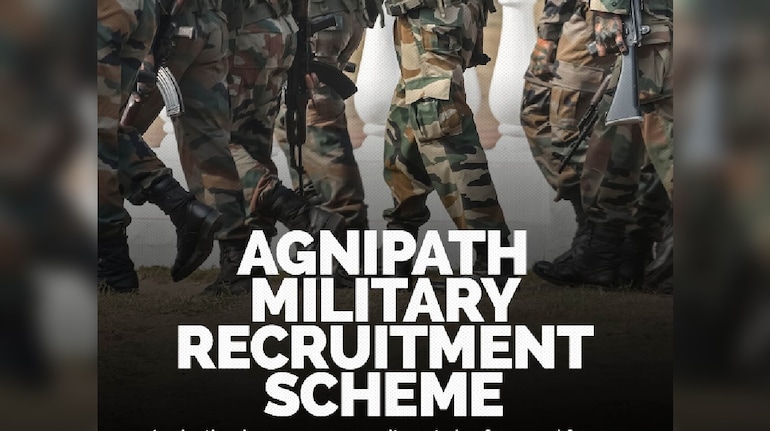
Agnipath Scheme a new vision for future India?


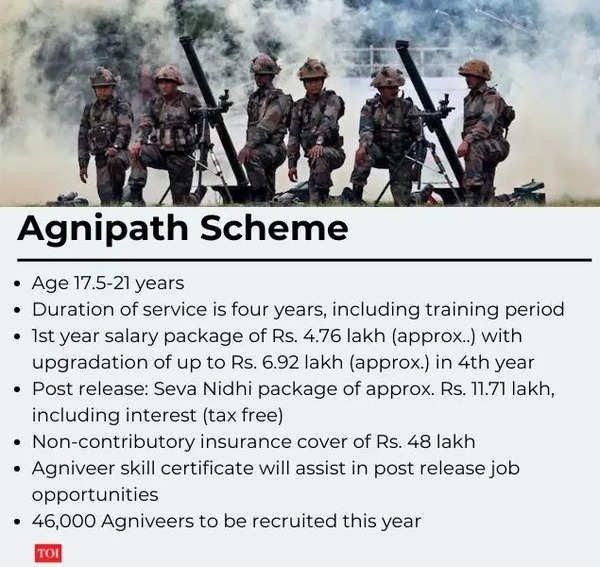
The Agnipath Program is a new program launched by the Government of India on June 14, 2022 to recruit soldiers under Corporal into three armies. The Agnipath program will be the only means of recruiting the military. All new employees will only be hired for 4 years. The personnel hired under this system are called Agniveers, a new military rank. The introduction of this system has been criticized for lack of consultation and open debate. The program is scheduled to start in September 2022. The Agnipath program was approved by the Government of India in June 2022 and will be implemented from September 2022. The announcement was made on June 14, 2022. This program is intended for both male and female applicants between the ages of 17.5 and 21. In widespread protests against the Agnipath program, the central government raised the cap from 21 to 23, but only in 2022. Recruitment under this program is held twice a year by the Indian Army, Indian Navy, and Indian Air Force. The available posts are below the executive list. The Agnipath program is the only way to serve in the army.


New employees, under the Agnipath scheme will be called “Agniveers,”who will have a four-year tenure, including six months of training followed by a 3.5-year deployment. After leaving the service, they have the opportunity to apply to continue in the army. Less than 25 percent of the retired group’s total strength is selected for the permanent roster. Employees who retire after four years of work are not eligible for a pension, but will receive a lump sum of approximately Rs 11,71,000 at the end of their tenure. The Government of India plans to hire 45,000-50,000 new employees each year through this program. In September 2022, 46,000 young people will be hired through this program. Prior to the start of the Agnipath program, soldiers were in the army for more than 15 years of service on a lifetime pension. As of 2019, there was no military recruitment for three years. The Government of India quoted the COVID-19 pandemic in India tye reason for no recruitment. Meanwhile, 50,000 to 60,000 soldiers continued to retire each year, leading to labor shortages and beginning to affect the military’s operational capabilities.


On June 16, 2022, fierce protests took place in several Indian states, where military candidates who were preparing for the armed forces were angry at the new system, demanding its rollback, and damaging public property. By June 17, 12 trains had been fired, affecting the movement of 300 trains. 214 trains were canceled, 11 trains were detoured, and 90 trains ended short of their destination. This scheme does not include long-term holdings, pensions and other benefits that existed in the old scheme. Individuals who wanted to join the army were disappointed with the rules of the new system. Of particular concern were short tenure, no early retirement pension, and an age limit of 17.5-21 years, making many of the current candidates unsuitable for serving in the Indian Army.

On June 20, a national strike called Bharat Bandh was summoned by a protesting organization calling for the withdrawal of the program. The call was made via social media without naming the organization. More than 600 trains were canceled due to a strike. Section 144 was imposed in parts of Rajasthan, Punjab, Uttar Pradesh and Haryana.

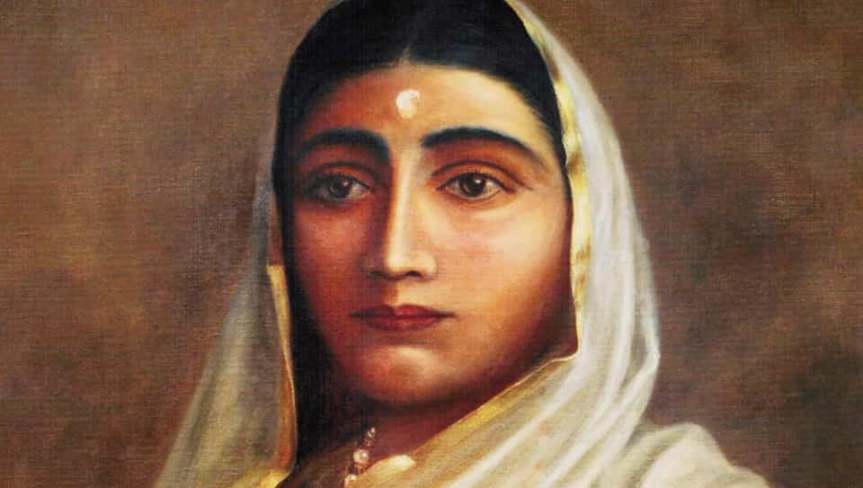
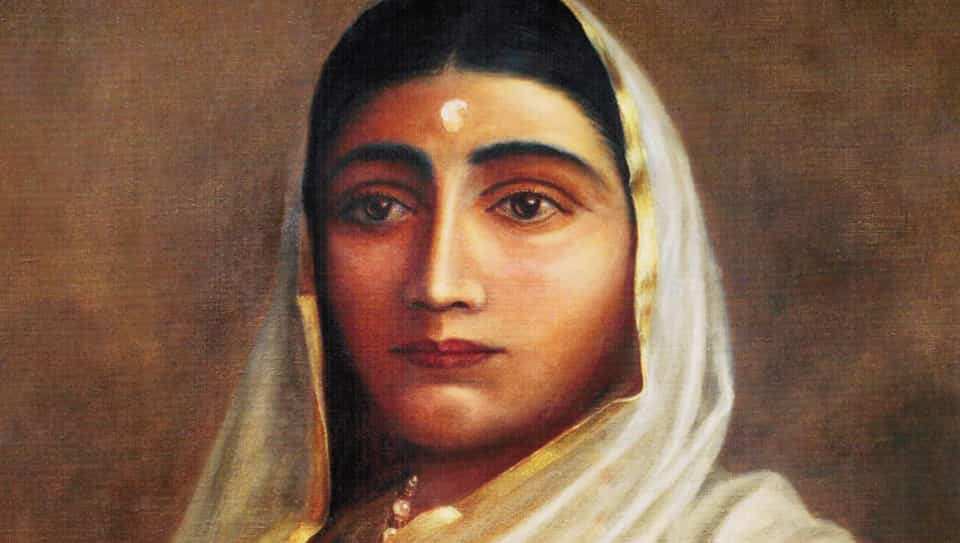
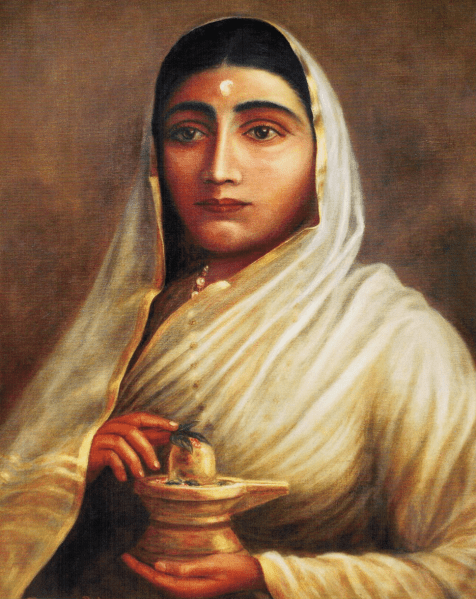
Noble Queen of the Maratha Empire Rani Ahilyabai.

Ahilya Bai was born write to Mankoji Shinde and Sushila Shinde in the village of Chaundi (now Ahmednagar district) in Maharashtra, and was born in the Marathi Hindu family. His father, Mankoji Shinde, a descendant of the magnificent Dhangar family, served as a patil. At that time, the woman were not allowed to attend school , but her father taught her how to read and write.


According to one legend, Ahiliya once stopped by Chaundi on her way to Pune, where Bajirao I, commander of the Maratha army, and Marhar Rao Holker, the ruler of Malwa, saw eight-year-old Ahilya in a temple worship service. Impressed by her devotion and her personality, Marhar, on the advice of Peshwa, married Ahilya and his son Khande Rao. She married Khande Rao in 1733. Ahilya accompanied Khande Rao on many campaigns. Throughout her marriage, she was raised by her mother-in-law, Gautama Bai. Gautama Bai is believed to have played an important role in bringing out the values that she had planted in Ahiliya. She trained them in administration, accounting, politics, etc. and finally delivered their Khasgi Jagir in 1759.

In 1754, Candelao, along with his father Marharla O’Holker, besieged Fort Kumar in Jatrajas Rajimar in Bharatpur at the request of Imadulmark and General Mirbakshi of Mugar Emperor Ahmadsha Bahadur. Suraj Mal supported Emperor Mugar’s rebellious Wajir Safdar Jang. Khande Rao was inspecting his army with an open litter when a shell fired by the Jat army during the battle hit him and died.
After the death of her husband, Ahilya Bye was prevented from playing sati by her father-in-law. After the death of her husband, she received military training by Malhar Rao Holker. After the death of Khande Rao.Ahilya Bai gave up all the desires of life and decided to perform a sati to accompany her husband’s funeral cremation. Her people urged her not to commit sati, but she said her husband promised to accompany her for the rest of her life, and now he walked in the middle of her. Finally, when she decided to play Sati and did not forgive her, it was her father-in-law, Malhar Rao, who made a fervent emotional plea to stop her from doing suicide. .


Marhar Rao Holker died in 1766, twelve years after his son Khande Rao died. Male Rao,the grandson of Marhar Rao and the only son of Khande Rao became the ruler of Indole under the rule of Ahilya Bai in 1766, but he also died within a few months in April 1767.

Ahiliya Bai died on August 13, 1795, at the age of 70. The reign of the modern woman Ahiliya Bai is remembered as a golden age in the history of the Maratha Empire. Ahiliya Bai was taken over by her nephew Tucozy Rao Holker, her commander-in-chief. He immediately abandoned the throne in 1797 in support of his son Kashi Rao Holker.

Ahiliya Bai was a great pioneer and builder of Hindu temples and built hundreds of temples and Dharmashala throughout India. Especially well known for the refurbishment and re-dedication of some of the most sacred sites of Hindu pilgrimages that were desecrated and destroyed by Emperor Aurangzeb in the last century.

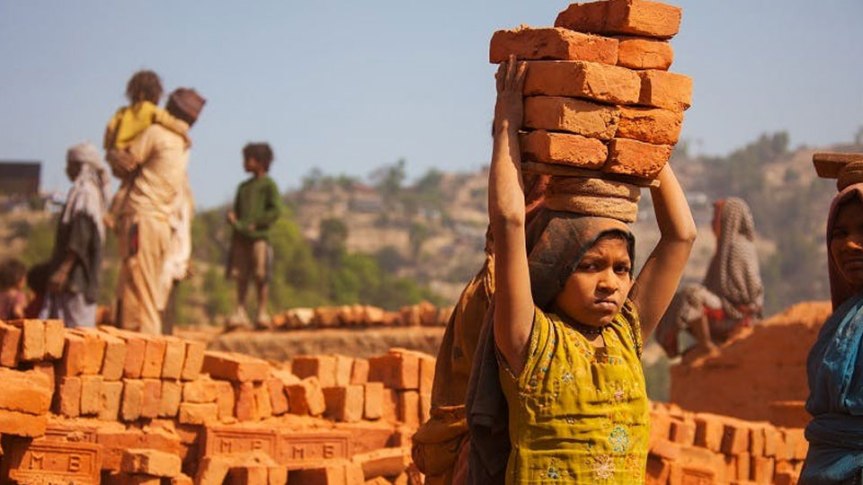
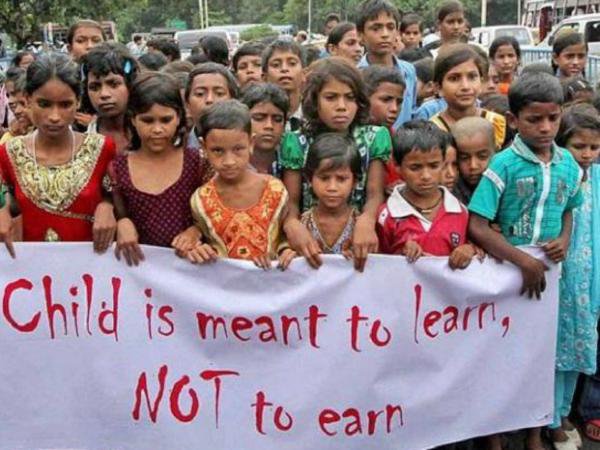
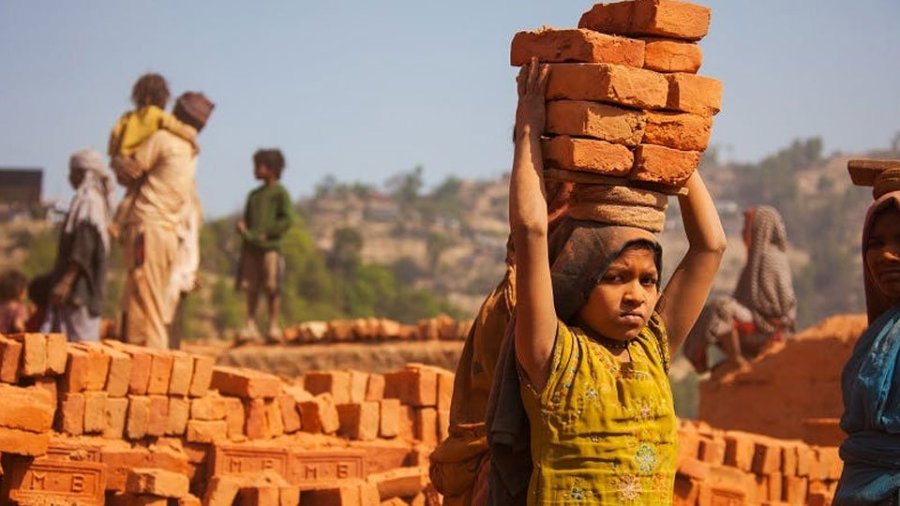
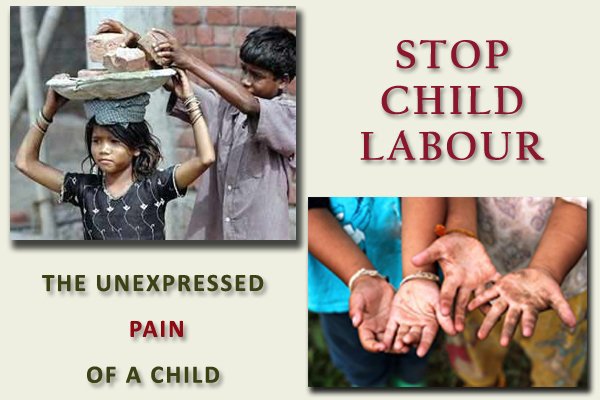
Child Labour in India.

Child labor is the deprivation of children’s childhood, affecting their ability to attend regular school and exploiting them through all forms of work that are mentally, physically, socially and morally harmful.

After gaining independence from colonial rule, India enacted many constitutional protections and child labor laws. The Constitution of India in the principles of basic rights and public policy prohibits child labor under the age of 14 in factories, mines, castles or other dangerous occupations (Article 24). The Constitution also stipulated that by 1960 India would provide all children aged 6 to 14 with the infrastructure and resources for compulsory free of charge education . (Articles 21-A and 45).
In 2011, the Indian Census found that of the 259.64 million children in this age group, the total number of child laborers [ages 5-14] was 10.1 million. The problem of child labor is not unique to India. Approximately 217 million children work worldwide, many of whom work full-time.

In India child labour is defined as the involvement of children under the age of 17 in economically productive activities, with or without compensation and wages . Such participation can be physical, mental, or both. This work includes part-time or unpaid work on farms, family businesses, or other economic activities such as cultivation or milk production for sale or personal consumption. The Government of India divides child labor into two groups. The main workers are those who work more than 6 months a year. And marginal child laborers are workers who work all year round, but less than six months a year. In 1979, the Government of India established the Gurupadswamy Commission to learn about child labor and how to fight it. The Child Labor Probation and Regulation Act was enacted in 1986 on the recommendation of the Commission. A national child labor policy was developed in 1987 focusing on the rehabilitation of children working in dangerous professions. Since 1988, the Ministry of Labor and Employment has established approximately 100 industry-specific national child labor projects to rehabilitate child laborers.

The Government of India has enacted numerous laws, organizations and institutions to combat the issue of child labor. Some initiatives include child labor bans and regulations, laws prohibiting the employment of children in certain occupation and regulating the working conditions of children. The National Child Labor Policy attempts to take a sequential approach with a primary focus on the rehabilitation of children working in dangerous professions and processes of works. The Ministry of Labor and Employment is responsible for providing and supervising a range of child labor policies in India. In addition, as Osment reported, NGOs such as Care India, Child Rights and You, and Global March Against Child Labor were implemented to tackle child labor through access to education and resources. However, these efforts were of little success.

Non-governmental organisations:
Bachpan Bachao Andolan, Child Rights and You, ChildFund, CARE India, GoodWeave India,Talaash Association, Global March for Child Labor, and many other NGOs are campaigning to eliminate child labor in India. increase.

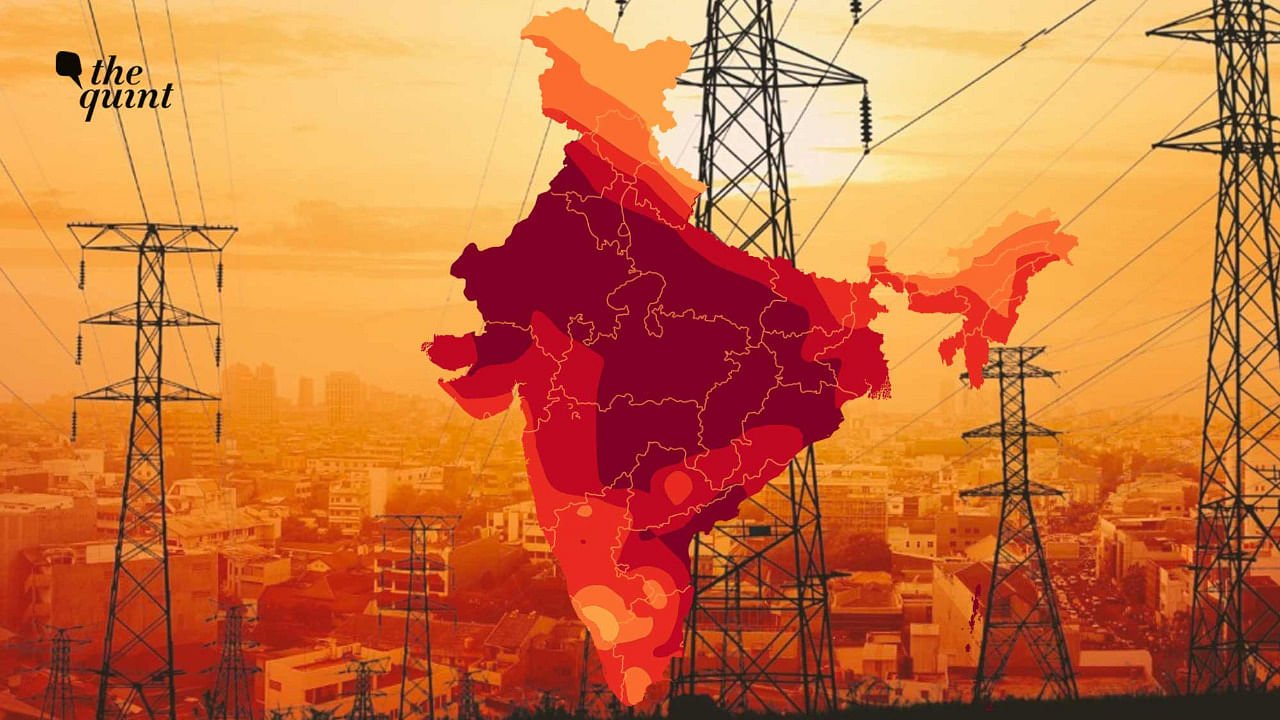
Shortage in Indias Power Supply.

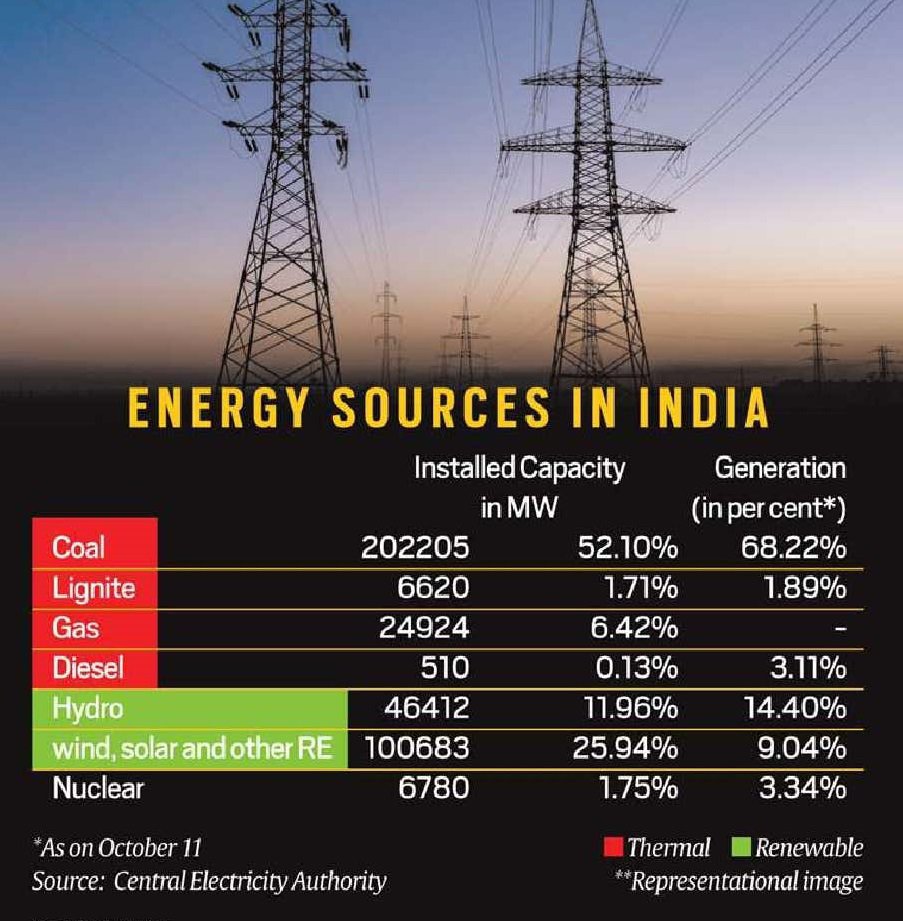
India has the fourth largest coal deposit in the world. It is the second largest fossil fuel producer after China and is home to Coal India, the world’s largest coal mining mine, which accounts for 80% of domestic production. Already allocated coal block mining capacity exceeds expected demand in 2030 by approximately 15% to 20%.


So why are India’s power plants facing coal shortages each year, leading to widespread power outages, exposing parts of the country to darkness and endangering industry?
There are several factors. India has a long time policy of minimizing coal imports. In February 2020, Coal Minister Pralhad Joshi announced that the country would stop importing steam coal from 2023 to 2024.
Mr Joshi said the Ministry of Coal will work with the Ministry of Railways and the Ministry of Shipping to allow Coal India, prisoners and commercial miners to discharge more coal from their supply by 2030. And the coal supply at power plants is running out at an alarming rate. The Department of Energy is currently blaming the decline in coal imports due to the current crisis. In 2018-19, 21.4 million tonnes of coal were imported for mixing, down to 23.8 million tonnes in 2019-20 and 8.3 million tonnes in 2021-22.


Power plant coal inventories have fallen by about 13% since April, reaching pre-summer lows. And for the first time since 2015, Coal India will import fuels used by state-owned and private power companies. The Ministry of Energy said almost all states showed that multiple state bids for coal imports would cause confusion and that the decision was made after calling for centralized procurement by Coal India.
Imported coal costs five times as much as domestic mining, so the center is being pushed back by the state.
Recently, the government has also pressured utilities to increase imports to mix with local coal. Last year, after a two-year break, three tranches of coal auctions were held and nine blocks were successfully awarded.

In September 2021, the Ministry of Coal issued a strict warning to owners of confined coal blocks, stating that their mines should increase production or face restrictions on coal supply by the CIL.
The ministry has discovered that these mines are producing below target.

Of the 43 coal mines outsourced to private companies in the energy, steel and metals sectors, none have met their annual production targets.
On May 6, Coal India announced that it would provide the private sector with 20 closed and abandoned underground coal mines and reopen and operate its revenue sharing model.

According to journalist Shreya Jai the current power supply chain does not seem ready to handle periods of high growth and state discos cannot pay gencos, but the power supply chain starts with state discos and needs repairs. Railroads, on the other hand, are struggling to align the thermal power industry’s demands for faster coal supply with those from other industries. Rakes must be prepared to meet the growing demand for almost all other bulk commodities, from cement and steel to sand and edible grains. By strengthening the value chain of the electric power sector, it is possible to resolve the coal supply-demand mismatch in the long run.

HUSTLE CULTURE A TREND OR TRENDING PROBLEM FOR THE YOUTH?

Image courtesy : thesolmag.com
http://thesolmag.com

The youth are more affected by this culture & it’s making their life miserable and the most important thing is they just don’t know how to stop worrying enough about it. 

The Orthodox or popular opinion of becoming successful and achieving it all very fast ; the ultimate respect status that comes with being the all achiever is Hustle culture, driven by the desire for more. 

We are compelled to believe that time is running out and that we must do more, achieve more in less time. The most essential goal in your life should be to prioritise achievement over anything else. It shouldn’t be a big deal to sacrifice your mental and physical health for your life satisfaction. As a consequence, the youth begins to believe. We are constantly seeking more from ourselves, others, and our life. Hustle culture arose from this constant desire for more. It’s also on the upswing.

Now wanting more isn’t necessarily a bad thing, but when it becomes excessive, it’s time to act.

Signs that you are a hustler :

1. You never stop overthinking –
Overanalyzing your life and ambitions lead you to constantly put self-limiting beliefs on yourself. Resulting in dread of the judgement, and assumption of the consequences which makes it worse.


2. You want to accomplish everything in one day – Being impatient with your goals and believing that completing more tasks more quickly than others will give you greater recognition and popularity.

3.You want to attain long-term goals in the short term- You focus on making the big leap instead of comprehending that it takes time, patience, and efforts to accomplish anything. Trying to skip the intermediate phases but fail and are left feeling unmotivated.


4. Trying to do all and more at once – You multitask all the time and put your work and aspirations before your needs for rest, sleep, and self-care.


5. Validation is what matters most to you – when people appreciate your achievements and proficiencies, your desire is stoked, but when it doesn’t, you spiral into self-doubt.

6.You are a materialistic life seeker – Quality of life and ideas don’t interest you & latest trends do. You are leading a typical life because you don’t know how to live otherwise

7.You feel guilty for not being productive enough– Often you feel terrible for putting comfort before your goals. Exhausting yourself completely is part of the process towards success.

8. Being ignorant about you mental health– As you pursue a career-oriented lifestyle, believing that this is the only way to gain respect and prestige, you start comparing yourself to others who are ahead of you and the seeds of self-doubt begin to grown in you.

9.You don’t put your health first – Your health is your most valuable asset and should always be prioritised above all else. Unfortunately, people frequently disregard this and endanger it in pursuit of mediocre accomplishments.

If you think you’re hustler, it’s time to take a moment and reflect. Hope you found this helpful.

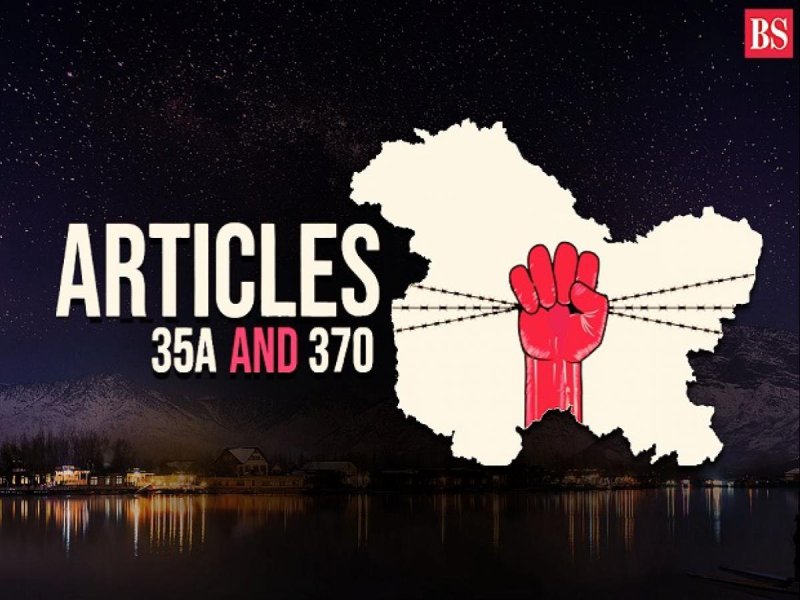
Article 370 & Article 35A

Article 370
The first accession of Jammu and Kashmir, like all other princely states, involved three issues: defense, diplomacy, and communications. All princely states were invited to send representatives to the Constitutional Parliament, which drafted the Constitution across India. They were also encouraged to establish a constituent parliament for their own state. Most states were unable to establish a parliament in time, but some states, especially Saurashtra Union, Travancore-Cochin, and Mysore. The State Department had drafted a model state constitution, but on May 19, 1949, the governors and Chief ministers of each state met in the presence of the State Department and agreed that no separate state constitution was needed. They accepted the Indian Constitution as their own constitution. The state in which the elected constituent council proposed some changes that were accepted. Therefore, the status of all states has been placed on par with the status of ordinary Indian states. In particular, this meant that the subjects available for legislation by central and state governments were consistent and same throughout India.

In the case of Jammu and Kashmir, state politicians have decided to establish a separate constitutional council for the state. Representatives of the Indian Constitutional Assembly applied only the provisions of the Indian Constitution corresponding to the original accession documents to the state, and demanded that the state Constitutional Assembly decide on other matters. The Government of India agreed to the request shortly before its meeting with the other states on 19 May. Therefore, Article 370 was included in the Constitution of India, which provided that other provisions of the Constitution empowering the central government would apply to Jammu and Kashmir only with the approval of the State Constitutional Assembly.This was a “provisional provision” because it was applicable until the State Constitution was enacted and adopted. However, the State Constitutional Assembly was dissolved on January 25, 1957, and did not recommend the abolition or amendment of Article 370. This article was considered an integral part of the Indian Constitution, as confirmed by various recent April 2018 rulings by the Supreme Court of India and the Supreme Court of Jammu & Kashmir.

Article 35A
Article 35A of the Constitution of India was a provision authorized by state to define the “permanent residents” of Jammu and Kashmir State and to give them special rights and privileges. It was added to the Constitution by an Executive Order, the 1954 Constitutional Order (application to Jammu and Kashmir). It was issued by the President of India under Article 370. Jammu & Kashmir has these privileges, the ability to acquire land and real estate, vote and participate in elections, pursue government employment, and receive the benefits of other governments such as higher education and medical expenses. Defined to include. Non-permanent residents of the state were not eligible for these “privileges”, even if they were Indian citizens.

A piece of mind

Photo by Miguel u00c1. Padriu00f1u00e1n on Pexels.com

Your mind is a garden, your thoughts are the seeds, the harvest can either be flowers or be weeds.

– William Wordsworth

Mind, as psychology defines is broadly, all intellectual and psychological phenomena of an organism, encompassing motivational, affective, behavioral, perceptual, and cognitive systems; that is, the organized totality of an organism’s mental and psychic processes and the structural and functional cognitive components on which they depend. In simple words, our mind is what we are and what we perceive. All of our actions and reactions are the result of what our mind thinks is the best to do being in a particular situation. Our mind is no doubt an indispensable part of our body and no human being on the face of earth can function properly without being in the “correct/ right state of mind”, as said by many.

Every single person present on the surface of the earth has a mind of his own. People think differently, talk differently, react to a same thing differently and so on. Everything we do differs from the other person. It is all because we have different minds. For example, some people like to listen slow songs whereas some prefer upbeat songs, some like to watch football whereas others watch cricket and the list goes on. Even while being in the midst of a discussion, we find many different opinions and ideas from the people present in the discussion. This is how different and varied our thoughts or our minds are. It is not that we are not aware of this fact that all people have a mind of their own and it is hard for any two people to be totally alike in their thoughts and perceptions, but still here we are fighting for the superiority of our thoughts and beliefs.

This blog is not about staying quiet even if you see something very wrong happening or someone with wrong beliefs imposing himself on you/ others. This blog is about what actually we should fight for. These days it is very clear from the ongoing scenarios that how fragile our minds have become and how we live in the constant fear that someone might come at us telling that our thoughts are wrong, because we all believe that our beliefs are free from any flaws. We get angered by small disruptions in our thoughts and vent in out on anyone who differs with our opinion. These all may seem very complicated to understand and anyone reading it must feel this to be some sort of rubbish. But all I ask of you is to take a moment and sit quietly for a moment, put our egos aside and retrospect what we are fighting for. Let’s put ourselves in the place of the other person and think why he/she feels that they are correct and what would we have done being in their place. It is very easy to point fingers at others and do our level best in proving someone wrong just to get the euphoria of being correct but it is very difficult to get to the mind of the other person and understand his thoughts and beliefs. I am not saying this justifies the crimes committed by a criminal or it justifies the actions of any violent protester burning the vehicles in road just to prove that what they believe in is true in all forms and there should be no debate about it. What I want to convey with this is know what you are fighting for, ask yourselves whether it is worth arguing others, ask yourselves what you will gain from proving yourselves correct and try to understand the other’s point of view before jumping into an argument. I know it I not easy to understand someone, but what I know is being patient will help a lot in this regard. It will take a lot of time to be able to actually put ourselves in someone’s shoes. But it is not impossible to do. Although it will take some time, I hope we all grow up from the constraints of our thoughts and be the one in command of our mind.

Photo by Arthur Brognoli on Pexels.com

Story of a fierce Queen, Rani Karnavati.

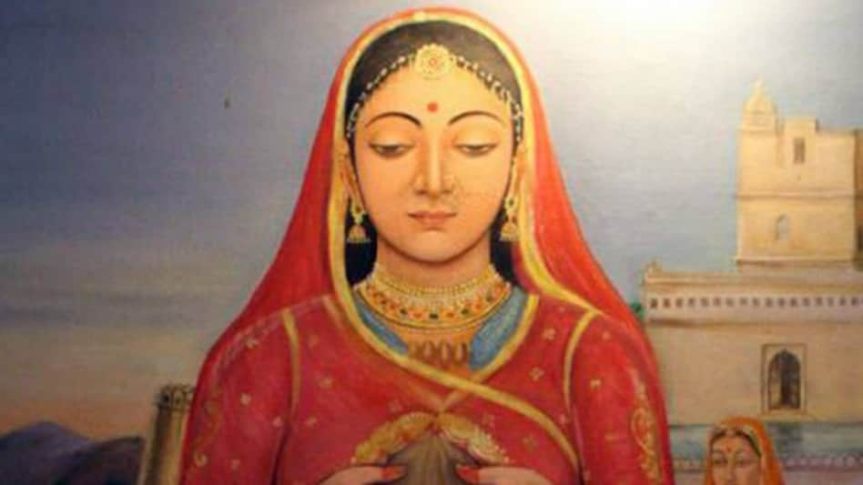
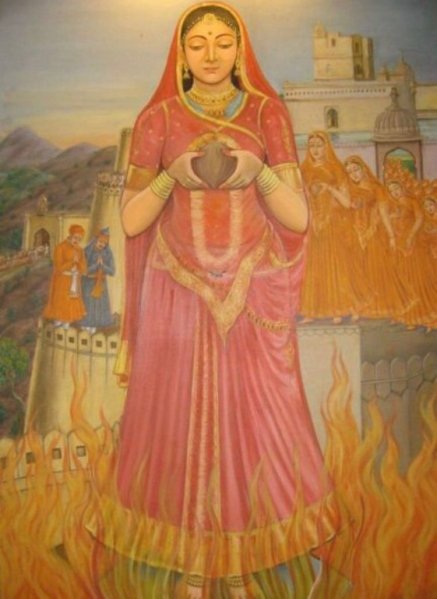
Rani Karnavati was a princess and temporary ruler from Bundi, India. She married Rana Sanga of Mewar in Chittorgarh, the capital of the Kingdom of Mewar. She was the mother of Rana Vikramaditya and Rana Uday Singh, and the grandmother of the legendary Maharana Pratap. During 1527 to 1533 the minority years of her sons she served as a regent for Mewar. She died on 8th March 1535.

After Babur seized the throne of Delhi in 1526, Rana Sanga of Mewar led a coalition of Rajput Kings against Babur to seize the throne of Delhi. In the starting Rana Sanga was able to defeat Babul in the Battle of Bayana, but in the Battle of Kanua, he was defeated because of Babur’s excellent tactics, guns, and artillery.Rani Karnavati took over as regent on behalf of his eldest son Vikramaditya who was a minor at that time. Meanwhile, Mewar was attacked a second time by Gujarat’s ruler Bahadur Shah against whom Vikramaditya had previously been defeated. It was very important issue for Rani Karnavati.

The nobles of Mewar Kingdom did not want to fight for Vikramaditya, and as the upcoming battle will certainly be another stain in the history of Sisodias. Rani Karnavati was able to persuade nobles to fight for Mewar and honor of Sisodias . Their only condition was that Vikramaditya and Uday Singh should go to Boondi for their personal security during the war. In some legends some also said, that Rani Karnavati also sent Rakhi to Emperor Humayun of Mugals calling him his brother and asking for help. Therefore, her name was irreparably linked to the Raksha Bandhan Festival. However, this is not supported by modern writers, and modern historians such as Satish Kumar consider it a fable rather than a historical fact.

Rani Karnavati agreed to send her sons to Bundi ,while knowing the situation being very critical and which can be dangerous for her two sons and send her trusted maid Panna Dai to accompany them and take care of them. Panna hesitated, but she left for Bundi with Vikramaditya and Uday Singh and accept the Queen’s wishes.

The Sisodias dynasty fought bravely, but the army of Mewar was outnumbered by Bahadur Shah army and they were defeated. Bahadur Shah entered Chittorgarh and it was his second attack on Chittor. The male nobles donned with saffron cloths fought with the enemy till thier death and commited Saka.Karnavati and other noble court women realized that defeat was imminent and to save their honour they committed suicide on March 8, 1534, in a fire called Jauhar. This was the second of the three Jauhar to take place in Chittor.

A Struggle of many people to make Uttarakhand a state.

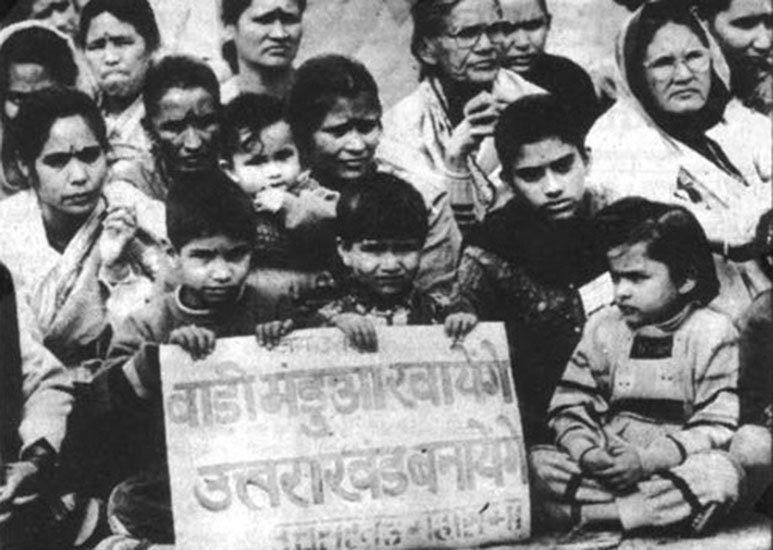
Uttarakhand became a state on November 9, 2000. The establishment of Uttarakhand was achieved after a lot of hard work and sacrifice. The voice for Uttarakhand to become a state was first raised in a special session of the Indian National Congress in Srinagar, May 5-6, 1938. In 1994, after a series of events, demand gradually increased for another state eventually which took the form of a mass movement, leading to the formation of India’s 27th state by 2000.

In March 1994, Uttar Pradesh Chief Minister Mulayam Singh Yadav recommended the Mandal Commission to secure 27% of government positions and places in schools and universities for socially and economically weaker classes,which was later on carried on. The Hill region OBC population was very small at 2.5% and reserving OBC seats meant that all government seats would go to the plains of Uttar Pradesh. This led to intensified protests against the nation.

In 1994, the students throughout the region participated in separate state and group movements for reservations. The Uttarakhand movement was further intensified locally by the anti-Uttarakhand statement by then-Chief Minister of Uttar Pradesh, Mulayam Singh Yadav. Uttarakhand leaders continued to support their call for another state until their death. State officials went on strike for three months, and the Uttarakhand movement was exacerbated by the blockade and confrontation with police. Uttarakhand activists in Mussoorie and Khatima were shot dead by police. On October 2, 1994, in Delhi, the capital of the country, a large-scale demonstration and protest was held in support of the state under the support of Samyukta Morcha. Uttarakhand activists marched to Delhi to participate in the struggle. Activists who participated in peaceful demonstrations near Ranpur Tiraha Junction in Muzaffarnagar were tortured and shot dead openly without warning. Police officers were also charged with obscene behavior and rape with female activists. Satya Pokhriyal was a leader who led all people out of misery and other Andolankari helped others and showed courage. Several people were killed and many were injured. These incidents has fueled the Uttarakhand movement. The next day, October 3, the destruction of gunfights across the region and protests over multiple deaths broke up.

On October 7, 1994, a female activists died after police brutally attacked her in Dehradun while she protested against the shooting at Rampur Tiraha and many activists attacked the police station in return. A curfew was imposed in Dehradun on October 15, and one activists was also killed on the same day. On October 27, 1994, then Indian Minister of Home Affairs Rajesh Pilot met with state activists. Meanwhile, a brutal police attack in Srinagar’s Sriyantra Tapu killed several activists while they were protesting.


On August 15, 1996, then Prime Minister H.D. Deve Gowda announced at the Red Fort of Delhi the forming of a new state Uttarakhand.

In 1998, the BJP-led coalition government at the centre sent the “Uttarakhand Bill” through the President of India to the Uttar Pradesh state government . The Uttar Pradesh State Assembly passed , the Uttarakhand bill with 26 amendments and sent back to the central government. On July 27, 2000, the central government submitted the 2000 Uttar Pradesh Reorganization Bill to the Parliament of India. Lok Sabha passed the bill on August 1, 2000, and Rajya Sabha passed the bill on August 10, 2000. The Uttar Pradesh Reorganization Act was approved by then President of India, K.R. Narayana on August 28, 2000 and on November 9, 2000, the new state of Uttaranchal was established as the 27th state of India, now known as Uttarakhand.

Gender inequality: a hindrance to a better future

Gender is a widely used term in the society. No matter where we go, the term gender is mentioned in some way or the other, the very first place being the hospital where we are born. From there on gender becomes a persistent part of our life. However, with gender comes certain disparities which are faced by the people who are categorized under it.

Male and female, the two categories of gender, are assumed to do specific roles from which if they waver in some ways, then are heavily criticized. Male is visualized as the breadwinner in the society whereas the female is visualized as the one taking care of the household. Although in the modern world these assumptions do not hold a strong stance, there are still certain areas where gender inequality strongly prevails.

Whenever there is a talk about gender inequality the category that is affected the most by it is the female part. There are certain restrictions for the females which they are forced to abide by. In many parts of the society, a female child is seen as a burden to the family. She is not given proper educational, social as well as political opportunities in comparison to men. Although we say that our generation has rose above those stereotypes, we all know it is a big lie. People still do not see women to be skilled enough to hold higher positions than men or do any kind of skilled labor. Women are still seen as some fragile and weak section of the society who need to stay at home rather than go out and break the stereotypes and toxic social barriers. In many parts of the world, cases of female infanticide are still prevalent. The women in the certain areas are still denied access to education and most importantly proper health and sanitation. In the universal picture, no matter what field it is, the gender participation graph is not very promising for the case of women. Women also do not get equal pay as per men for the same work that they do. In many so-called developed as well as developing countries, the women are still criticized and are bashed publicly for being confident and breaking the socio political barriers. Although men also face certain discriminations, the struggles faced by women is an important global issue that needs to be solved as soon as possible.

In the world where the death does not discriminate between men and women, then why do we human still be bound by those stereotypes? Men and women both are the two faces of the same coin and are equally important for the smooth functioning of the society. Through the participation of women there can be a lot more opinions and solutions to many problems that are prevalent in the world. Gender equality today can prove to be beneficial in many ways and pave the way to a better and sustainable tomorrow.

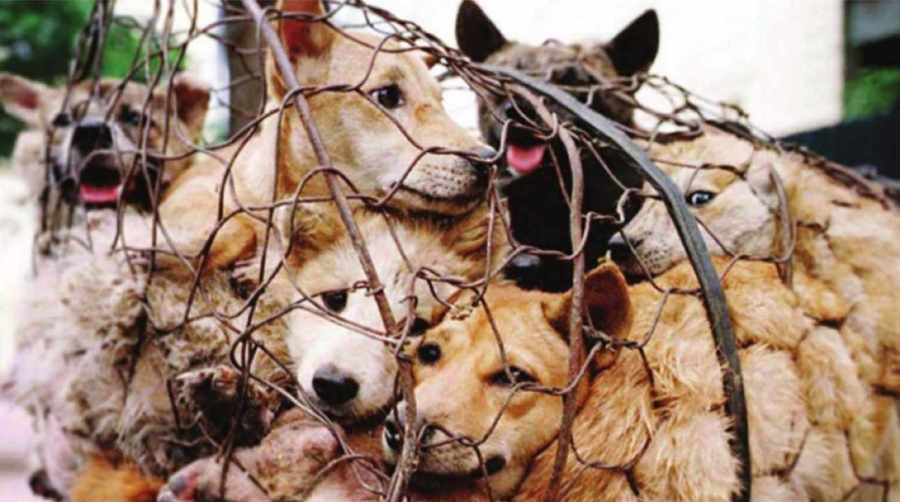
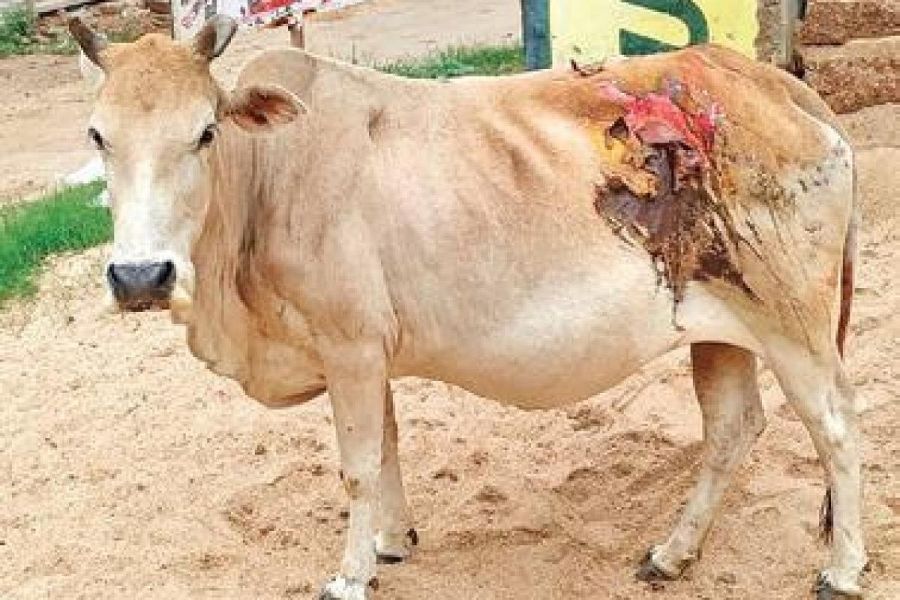
Animal Cruelty is a heinous crime which should be stop .

Animal Cruelty :
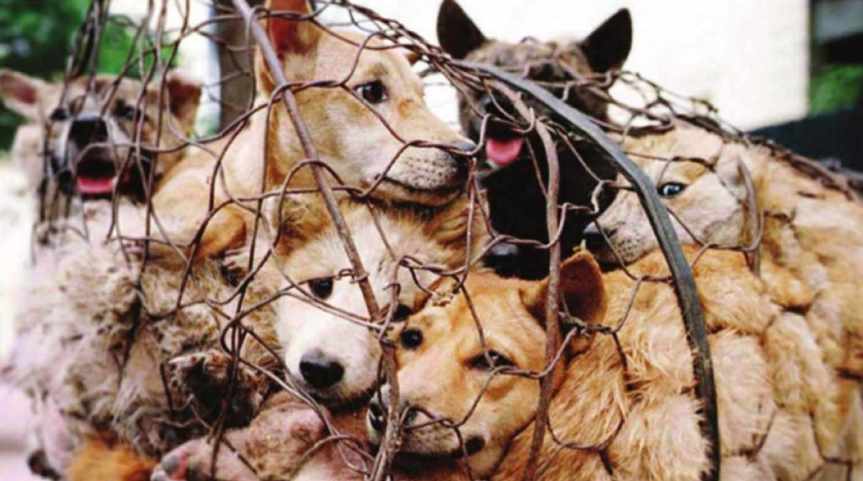
Simply put, animal cruelty harms animals, whether intentional or negligent. While certain activities  such as animal cruelty are generally perceived as cruel, the specific actions that make up animal cruelty vary from person to person and from places to places or different countries. Many  argue that docking a piglet’s tail without anesthesia is cruel, while others say it is common in meat production to prevent injuries later  in the pig’s life.  Animal cruelty defination is different in different areas due to countries laws.
Animal abuse is an pervasive problem which often  is difficult to detect. No species or community is spared from experiencing animal cruelty and neglect. Understanding what animal cruelty means and what it doesn’t mean is one of the first steps to  prevent it from happening again. Animals, whether it’s the food, cosmetics, entertainment, or  pet industry, don’t deserve to suffer.

Is Animal Cruelty Illegal:
The legality of  animal cruelty depends largely  on where the activity takes place . For example,  cruelty to farms and laboratory animals that is illegal in some countries may not be considered banned animal cruelty in some countries, due to differences in national law. In the United States, the best-known legislation to prevent animal cruelty excludes both livestock and laboratory animals from registration.

Animal cruelty in India:
Recently, cases of animal cruelty are increasing in India. The same began to discuss animal rights and the extent of legal protection that  current law provides to animals. The problem is that most of these crimes are either unreported or face disappointing legal responses, as some of the 1960 Animal Cruelty Prevention  Act  and  the Indian Criminal Code are obsolete.
SS Rithika an social activist in context to animal writes about common scenarios of animal cruelty and current laws, procedures, and court decisions dealing with animal cruelty in India. Rithika is also pushing for amendments to these laws to curb the rise in atrocities against animals.

Law related to animal cruelty in India:
The Animal Cruelty Prevention Act of  1960 was amended in 1982. Under India’s newly amended 2011 Animal Welfare Act, animal abuse is a criminal offense  with a fine of at least 10,000 rupees, a fine of up to 25,000 rupees for the first violation, or upto two years of imprisonment. For the second and subsequent violations, a fine of 50,000 rupees or more  and imprisonment of 1 year or more upto 3 years or less. This amendment is currently awaiting approval by the Government of India.  The 1962 law is the law currently in force. The maximum fine under the 1962 Act is  50 rupees (less than $ 1). Many organizations, including  local SPCA, PF, A, Fosterdopt, etc., are actively involved in reporting cases of atrocities to police and assisting the general public in bringing perpetrators to justice. For this reason, there are many changes in the subcontinent.
Under IPC sections 428 and 429, causing mischief by killing or amputating an animal worth more than 10 rupees  is a recognizable crime punishable by two years’ imprisonment, a fine, or both.

Some of the campaign toward animal cruelty:#NoMore50 , #RespectForAnimals , #FarmedAnimals etc.

Caste in the Modern Age

Caste system is an extreme form of stratification peculiar to India and is hereditary in nature. The above stated system of stratification offers no vertical mobility. One is ascribed his caste from his/her birth and does not have the liberty to choose his/her caste.

Characteristics of Caste System:

  1. Caste: As a hierarchical division of society: The Hindu society is a gradational one. It is divided into several castes and subcastes. A sense of ‘highness’ and ‘lowness’ or ‘superiority’ and ‘inferiority’ is associated with this gradation.
  2. Restrictions on food habits: The restrictions on food habits of the members differ from caste to caste. “Who should accept what kind of food from whom?” is often decided by the caste.
  3. Restrictions on social relations: The idea of ‘pollution’ makes this point clear. It means a touch of a lower caste man would pollute or defile a man of higher caste. Even his shadow is considered enough to pollute a higher caste man.
  4. Social and religious disabilities of certain castes: In the traditional caste society, some lower caste people [particularly, the Harijans] suffered from certain civil or social and religious disabilities. Generally, the impure castes are made to live on the outskirts of the city or the village. Educational facilities, legal rights and political representation were denied to them for a long time.
  5. The civil and religious privileges of certain castes: If the lower caste people suffer from certain disabilities, some higher caste people enjoy certain privileges.
  6. Restrictions on occupational choice: In a caste ridden society, there is a gradation of occupations also. Each caste has its own specific occupation and these were almost hereditary.
  7. Restrictions on marriage: Caste is an endogamous group. Endogamy is a rule of marriage wherein a person has to marry within his or her own caste group.

Changes in the caste system:

The caste system which is an integral part of the Indian system, prior to the coming of the British, had grown into a powerful social institution, with the dominance of Brahmins at the top of the hierarchy. The modern period saw some major developments taking place in the caste system during the two stages:

  1. Caste during the British rule
  2. Caste in Independent India

Caste during the British rule:

  1. Declining hold of Caste Panchayats: The British introduced throughout India uniform legal, legislative and judicial systems. They transferred the judicial powers of the caste councils to the civil and criminal courts which affected the authority which the caste panchayats held on its members.
  2. Influence of social legislation: Some legislations which the British introduced shook the integrity of the caste system. A few of the legislations are as follows:
    1. The Caste Disabilities Removal Act of 1850.
    2. The Special Marriage Act of 1872
    3. The Hindu Widows Remarriage Act of 1856
  3. Impact of social reform movements: The social reforms launched by social reformers during the British rule attacked the caste system and its inequalities. The Brahma Samaj, The Prarthana Samaj, The Arya Samaj, etc focused on condemning and iradicating some stern beliefs related to the Caste system.
  4. Spread of english education and influence of western Ideas: With the establishment of British rule in India came the inflow of many western ideologies such as equality, liberty, democracy, etc.
  5. Influence Of Industrialization: The growth of industries destroyed the old crafts and household industries and provided for countless ways of earning livelihood. People of all castes started making use of new economic opportunities.
  6. Impact of urbanization: In order to reap the benefits of the new opportunities, people started moving towards towns and cities in large numbers.
  7. Influence of freedom struggle and Gandhiji: The freedom struggle organized by the Indian National Congress brought together people of different castes, classes and religions under one banner.

Caste in Independent India:

The political independence of the country brought in a series of changes in the caste system.

  1. The religious beliefs of the caste has been attacked. Caste is no more believed to be divinely ordained.
  2. The restrictions on food habits have been relaxed.
  3. Caste is not very much associated with hereditary occupations.
  4. Endogamy, although still prevails, is not seen as an obligation to all.
  5. The special civil and religious privileges which the Brahmins enjoyed are no more being enjoyed by them.

Although caste still continues to be a segmental division of Hindu society, it is not as much strict as it was before th modern era. There have been certain changes in the role of caste as well in the independent India. Caste has now become an inseparable part of politics. The caste- consciousness of the members has been increasing making every caste wanting to safeguard its interests. The constitution of India has made enough provisions to protect the interests of the Scheduled Castes and the Scheduled Tribes. Caste has its roots embedded deep within the social structure of India and it is next to impossible to completely eradicate it from the social structure of India.

Caste: the historical facet peculiar to India

The caste system, the joint family system and the village system of life are often regarded as the three basic pillars of the historical Indian social system. The caste system as a form of stratification is peculiar to India. The caste system is an inseparable aspect of the Indian society. It is peculiarly Indian in origin and development. Caste is closely connected to Hindu philosophy and religion, customs and traditions, marriage and family, morals and manners, food and dress habits, occupations and hobbies. The caste system is believed to have divine origin and sanctions. The caste stratification of the Indian society has had its origin in the Chaturvarna system. According to the Chaturvana doctrine, the Hindu society was divided into four main varnas namely: the Brahmins, the Kshatriyas, the Vaishyas and the Shudras. The caste system owes its origin to the varna system.

Definition of Caste as given by some prominent sociologists:

MacIver and Page: “When status is wholly predetermined so that men are born to their lot without any hope of changing it, then the class takes the extreme form of caste.”

C. H. Cooley: “When a class is somewhat strictly hereditary, we may call it caste.”

D. N. Majumdar and T. N. Madan have said that caste is a ‘closed group’.

Perspectives on caste system in India:

The perspectives on the study of caste system include Indological or ideological, social anthropological and sociological perspectives. The Indological or ideological perspective takes its cue from the scriptures about the origin, purpose and future of the caste system, whereas the cultural perspective of the social anthropologist looks the origin and growth of caste system, its development, and the process of change in its structure or social structural arrangements as well as in the cultural system also view caste system not only as unique phenomenon found in India, but also in ancient Egypt, medieval Europe, etc. But the sociological perspective views caste system as a phenomenon of social inequality. Society, especially, Hindu social system has certain structural aspects, which distribute members in different social positions. It shows concerns with growth of the caste system. Many sociologists put forward their theory of caste with respect to Indian society. Some prominent sociologists in this regard are, G. H. Ghurye, Louis Dumont and M. N. Srinivas.

G. H. Ghurye theory of caste:

G. H. Ghurye is regarded as the father of Indian sociology. His understanding of caste in India can be considered historical, Indological as well as comparative. In his book, “Caste and race in India” he agrees with Sir Herbert Risley that “Caste is a product of race that came to India along with the Aryans”. According to him caste originated from race and occupation stabilized it. Ghurye explains caste system in India based on six distinctive characteristics:

1. Segmental division of society: Under caste system, society is divided into several small social groups called castes. Additionally, there are multiple divisions and subdivisions of caste system.

2. Hierarchy: According to Ghurye, caste is hierarchical. Theoretically, Brahmins occupy the top position ad Shudras occupy the bottom. The castes can be graded and arranged into a hierarchy on the basis of their social precedence.

3. Civil and religious disabilities and privileges: This reflects the rigidity of the caste system. In a caste system, there is an unequal distribution of disabilities and privileges among its members. While the higher castes enjoy all the privileges, the lower castes suffer from various types of disabilities.

4. Lack of unrestricted choice of occupation: The occupations in caste system are fixed by heredity and generally members are not allowed to change their traditional occupations. The higher caste members maintain their supremacy in their jobs and do not allow other caste group to join in the same occupation.

5. Restriction on food, drinks and social intercourse: Restriction on feeding and social intercourse are still prevalent in Indian society. There are two types of food I.e., Kacha (cooked) food and Pakka (raw) food upon which certain restrictions are imposed with regard to sharing.

6. Endogamy: Every caste insists that its members should marry within their own caste group.

Louis Dumont theory of caste:

Louis Dumont was a French Sociologist and Indologist. His understanding of caste lays emphasis on attributes of caste that is why; he is put in the category of those following the attributional approach to the caste system. Dumont says that caste is not a form of stratification but a special form of inequality, whose essence has to be deciphered by sociologists. Dumont identifies hierarchy as the essence of caste system. According to Dumont, Caste divides the whole Indian society into a larger number of hereditary groups, distinguished from each other and connected through three characteristics:

1. Separation on the basis of rules of caste and marriage,

2. Division of labor, and

3. Gradation of status.

He also put forward the concept of ‘pure’ and ‘impure’ which was widely seen in the Caste ridden society. The Brahmins were assigned with priestly functions, occupied the top rank in the social hierarchy and were considered “pure” as compared to other castes. The untouchables being “impure”, were segregated outside the village and were not allowed to drink water from the same wells from which the Brahmins did so. Besides this, they did not have any access to Hindu temples and suffered from various disabilities.

M. N. Srinivas theory of caste:

M. N. Srinivas was one of the first-generation Indian sociologists in post-Independence period. Srinivas approach to study of caste is attributional I.e., analyses caste through its attributes. He assigned certain attributes to the caste system. These are:

1. Hierarchy

2. Occupational differentiation

3. Pollution and Purity

4. Caste Panchayats and assemblies

5. Endogamy

Besides caste, Srinivas looks for yet another source or manifestation of tradition. He found it in the notion of ‘dominant caste’. He had defined dominant caste in terms of six attributes placed in conjunction:

Sizeable amount of arable land,

Strength of numbers,

High place in the local hierarchy,

Western education,

Urban sources of income and

Jobs in the administration

Of the above attributes of the dominant caste, the following two are important:

Numerical strength, and

Economic power through ownership of land

He also introduced the concept of “Brahmanisation” wherein the lower caste people imitate the lifestyle and habits of the Brahmins. This concept was further changed to “Sanskritisation”.

These are a few theories of caste system that prevailed before the rise of modern India owing to the revolutions undergone during the British rule.


The refusal to face reality

Photo by Polina Zimmerman on Pexels.com

Living in the 21st century, life has become much easier with the advent of much advanced technology. We all are connected to each other via multiple social media platforms and no longer rely on postcards and letters to convey our message to our dear ones. These new platforms have also made it easier to communicate with new people and widen our social circle. No doubt, these platforms provide us with thousands of opportunities for our own benefit. Many people have sought to their personal small businesses owing to the ease of access to higher number of people and minimum marketing cost and labour. Unfortunately, even if we live in the world that has made life much easier, the modern generation is much more isolated than ever and is at the higher risk of facing mental health issues such as depression and anxiety more often as compared to the previous generations. In the modern world, statistics show that depression has become a common illness worldwide affecting 3.8% of the total world population, approximately 280 million people worldwide.

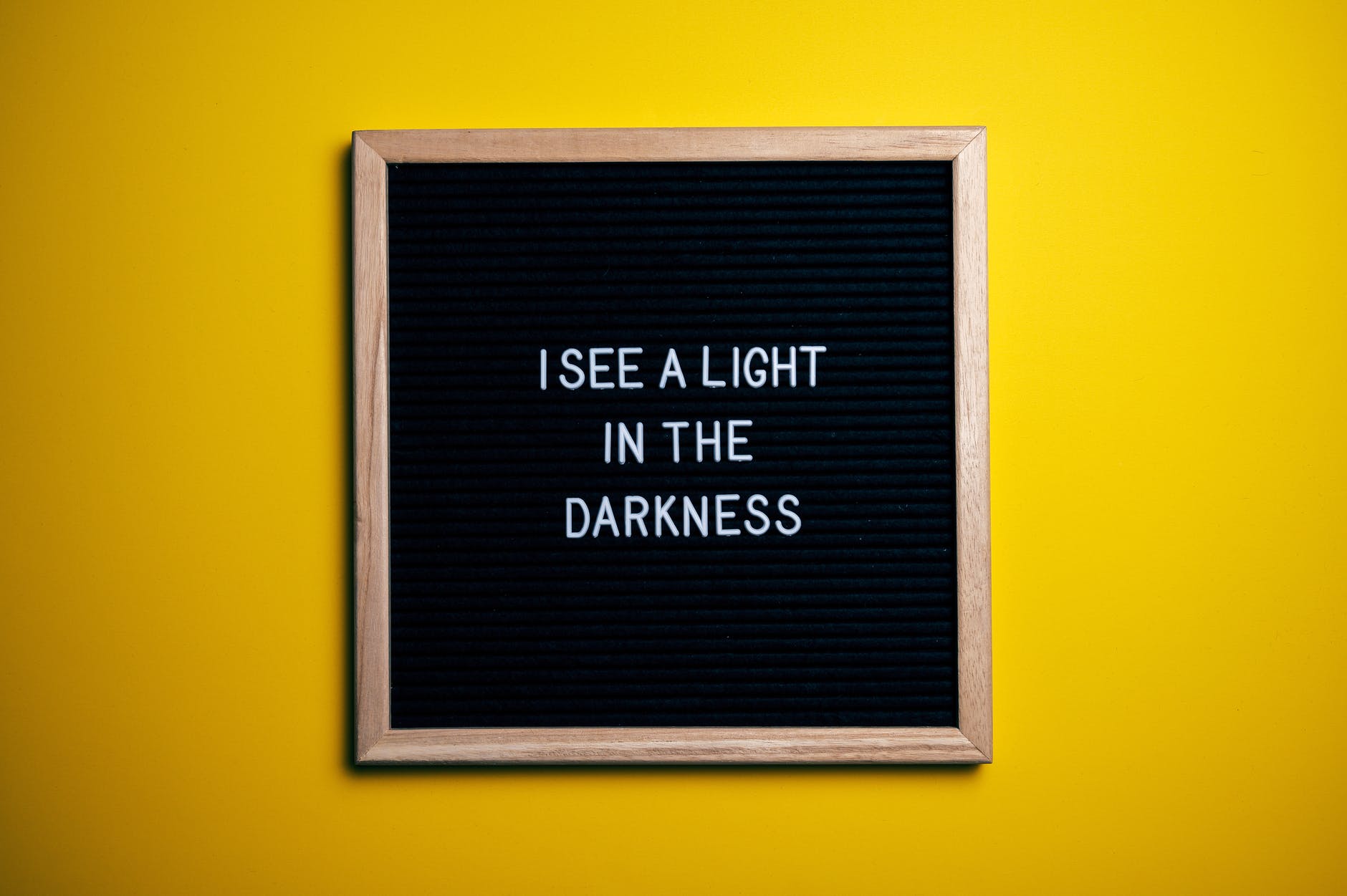
Mental health is often considered as a byproduct of physical health and nobody actually sees that both are equally important and are equally responsible for a person to live a longer and happier life. There are many examples where we see a physically fit person committing suicide or doing any other unacceptable actions. Suicide is one of the leading causes of death in young people. Globally 800,000 people die from suicide every year. The number is quite overwhelming! But the reason behind this is something that may seem very trivial but is very deadly at times! This reason is nothing but “not facing the reality” and “not accepting the truth”. It is all about seeing the light even in the darkness.

Photo by Brett Sayles on Pexels.com

Something that we all can agree is that the modern generation is very good at is running away from the consequences of their actions and they refuse to face the reality. Every single day we see people posting certain good moments of their lives, people being successful in their lives, people tirelessly working hard, some success gurus giving tips on how to become successful and so much more. All these posts do make us rethink our own decisions and choices. We start questioning what we are doing in our life and by what level are we able to be called successful. We start following those online success and motivational speakers who tell us to work tirelessly, forget our own needs and wishes and just jump into the marathon even if we don’t want to be a part of it. This is mostly because when we see others achieve their dream job or what they desired for, we subconsciously start getting compelled to do better than them. There is the thought of doing the exact same thing better and quicker (in some cases) than others. We too want to feel the sense of achievement. We too feel the obligation to prove ourselves to others. We want our life to hold some worth in the society by doing things that don’t even entertain us or don’t even tingle our excitement. We just jump into the race without being equipped with proper protective gears. And what comes next is the inevitable, failure. And this failure brings with it an immense mountain of disappointment, self-doubt and fear. The question here is, did we think before jumping into the race? Did we ask ourselves if we really want this? Did we care about failure or the consequences of our actions before going on the path? The simple answer is NO. We did not. We just saw someone do it and succeed and we decided to do the same without analyzing the intensity of the result.

Photo by Andrea Piacquadio on Pexels.com

The most saddening part of the picture is after failing the task, the blame game starts. Self- blame, blaming others for their own failure and this process continues. We cannot accept the fact that we failed and we get stuck at that only. We prohibit ourselves from moving on and kill our own determination. This further results on nothing but self deterioration and leads us to take extreme steps. But what changes occur in the society? Nothing, absolutely nothing. The world still goes on and people still jump into the race and on the other side of the picture there exists a person who once failed, stands up again and fights for what he desires. He accepts the failure and learns from it about what his actual destination is.

Fear of failure and lack of the ability to accept failure does no good instead of bringing ourselves down to the point where we can’t get up on our feet again. Fear of facing the reality and accepting it leads to nothing but self doubt and lower self esteem. All these unnecessary thoughts leads us to nowhere other than self deterioration. Thus, it is really important to learn and accept the fact that failure is an inevitable part of life. We all know “failure is the pillar of success”, as it is taught to us at the very early age. But what we do is just forget this important fact and stress over the term “failure” only. We forget the fact that even the person whom we saw getting successful online has undergone many hardships and even in many cases faced a number of failures but still they never gave up on themselves or neither their hard work. Thus, it is very important for us to face our fears, face the challenges and face our fears in order to move forward in life. It is ok to not feel ok. It is totally fine to say that you are not fine. It is absolutely ok to fail. But it is absolutely not ok to let that failure push you down. Enjoy the little things in life. Learn to accept the reality and move on with life. Get the happiness in little things and it is never an obligation for things to work out your way.