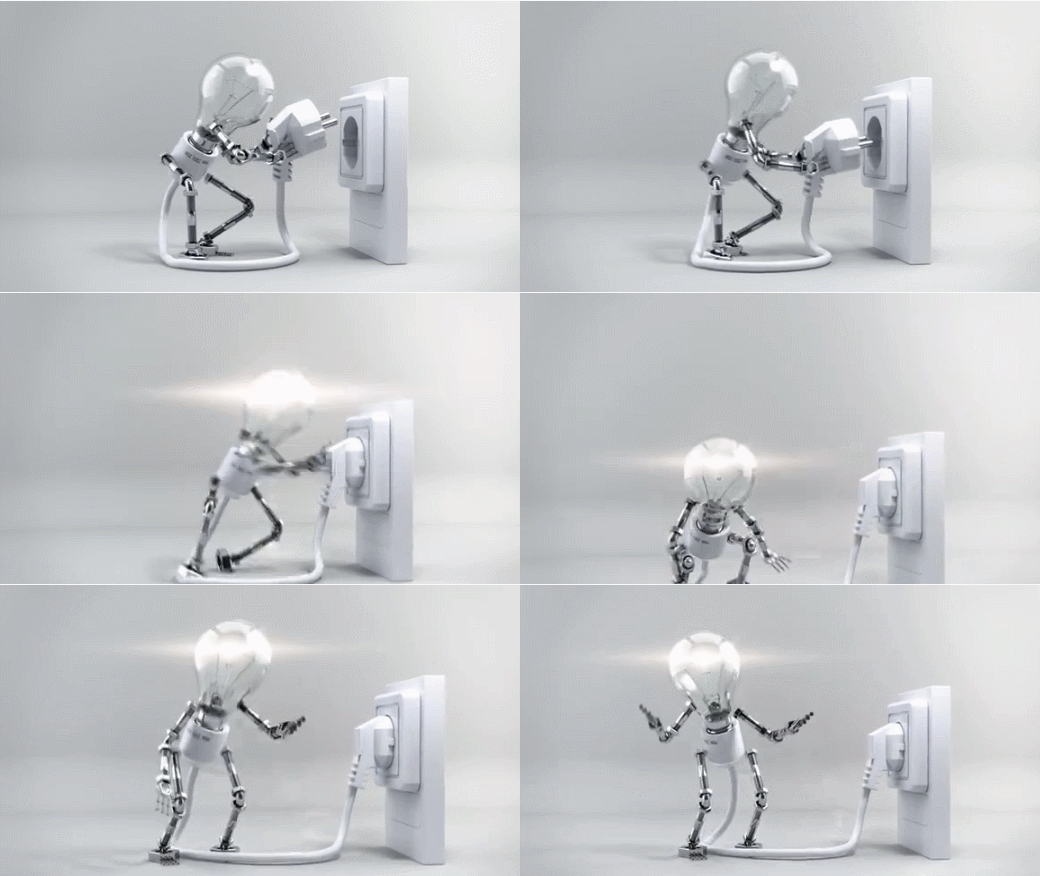
Turning heat into electricity.

Study finds topological materials could boost the efficiency of thermoelectric devices.

MIT researchers, looking for ways to turn heat into electricity, find efficient possibilities in certain topological materials.

What if you could run your air conditioner not on conventional electricity, but on the sun’s heat during a warm summer’s day? With advancements in thermoelectric technology, this sustainable solution might one day become a reality.

Thermoelectric devices are made from materials that can convert a temperature difference into electricity, without requiring any moving parts — a quality that makes thermoelectrics a potentially appealing source of electricity. The phenomenon is reversible: If electricity is applied to a thermoelectric device, it can produce a temperature difference. Today, thermoelectric devices are used for relatively low-power applications, such as powering small sensors along oil pipelines, backing up batteries on space probes, and cooling minifridges.

But scientists are hoping to design more powerful thermoelectric devices that will harvest heat — produced as a byproduct of industrial processes and combustion engines — and turn that otherwise wasted heat into electricity. However, the efficiency of thermoelectric devices, or the amount of energy they are able to produce, is currently limited.

Now researchers at MIT have discovered a way to increase that efficiency threefold, using “topological” materials, which have unique electronic properties. While past work has suggested that topological materials may serve as efficient thermoelectric systems, there has been little understanding as to how electrons in such topological materials would travel in response to temperature differences in order to produce a thermoelectric effect.

In a paper published this week in the Proceedings of the National Academy of Sciences, the MIT researchers identify the underlying property that makes certain topological materials a potentially more efficient thermoelectric material, compared to existing devices.

“We’ve found we can push the boundaries of this nanostructured material in a way that makes topological materials a good thermoelectric material, more so than conventional semiconductors like silicon,” says Te-Huan Liu, a postdoc in MIT’s Department of Mechanical Engineering. “In the end, this could be a clean-energy way to help us use a heat source to generate electricity, which will lessen our release of carbon dioxide.”

A path freely traveled

When a thermoelectric material is exposed to a temperature gradient — for example, one end is heated, while the other is cooled — electrons in that material start to flow from the hot end to the cold end, generating an electric current. The larger the temperature difference, the more electric current is produced, and the more power is generated. The amount of energy that can be generated depends on the particular transport properties of the electrons in a given material.

Scientists have observed that some topological materials can be made into efficient thermoelectric devices through nanostructuring, a technique scientists use to synthesize a material by patterning its features at the scale of nanometers. Scientists have thought that topological materials’ thermoelectric advantage comes from a reduced thermal conductivity in their nanostructures. But it is unclear how this enhancement in efficiency connects with the material’s inherent, topological properties.

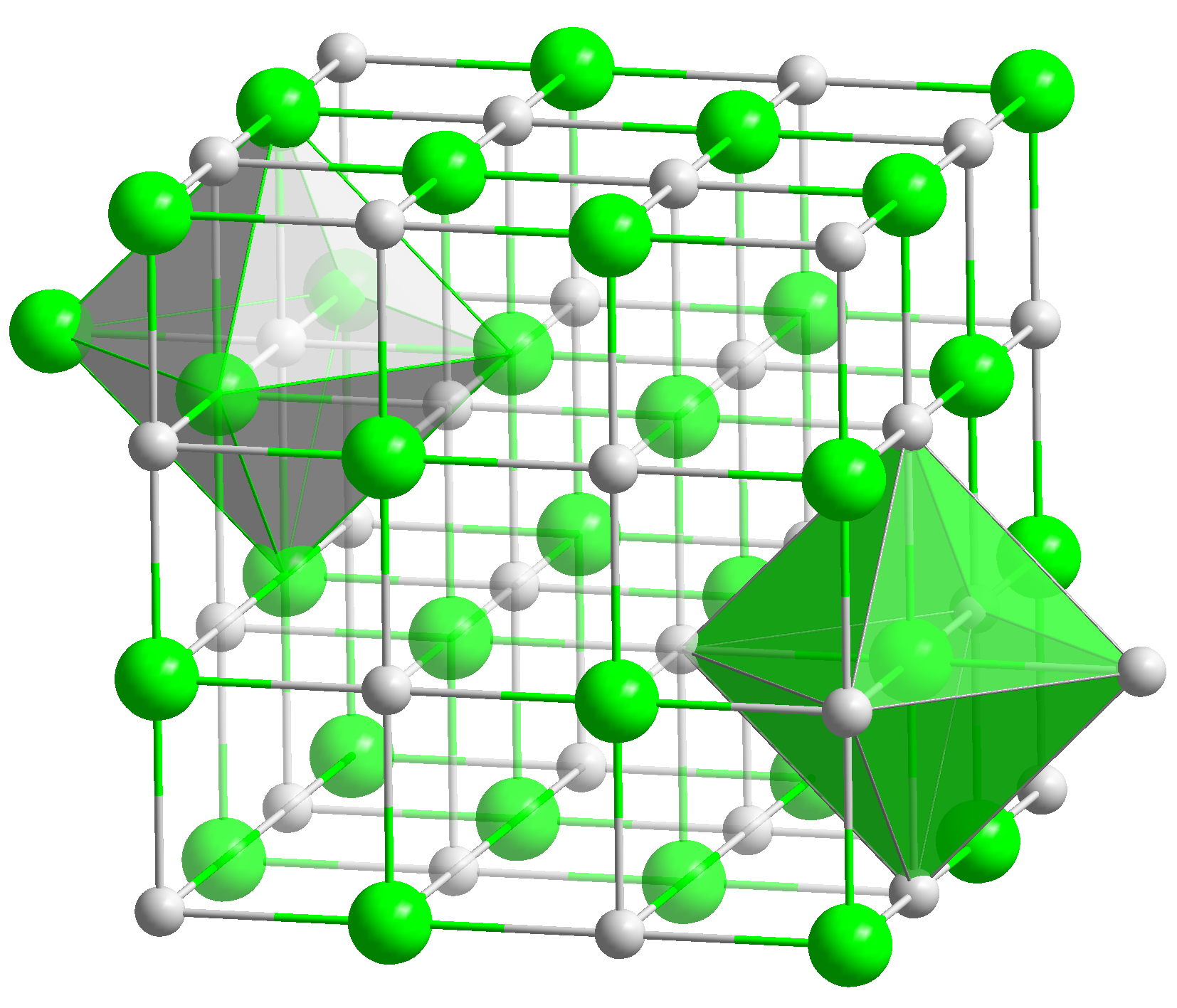
To try and answer this question, Liu and his colleagues studied the thermoelectric performance of tin telluride, a topological material that is known to be a good thermoelectric material. The electrons in tin telluride also exhibit peculiar properties that mimic a class of topological materials known as Dirac materials.

The team aimed to understand the effect of nanostructuring on tin telluride’s thermoelectric performance, by simulating the way electrons travel through the material. To characterize electron transport, scientists often use a measurement called the “mean free path,” or the average distance an electron with a given energy would freely travel within a material before being scattered by various objects or defects in that material.

Nanostructured materials resemble a patchwork of tiny crystals, each with borders, known as grain boundaries, that separate one crystal from another. When electrons encounter these boundaries, they tend to scatter in various ways. Electrons with long mean free paths will scatter strongly, like bullets ricocheting off a wall, while electrons with shorter mean free paths are much less affected.

In their simulations, the researchers found that tin telluride’s electron characteristics have a significant impact on their mean free paths. They plotted tin telluride’s range of electron energies against the associated mean free paths, and found the resulting graph looked very different than those for most conventional semiconductors. Specifically, for tin telluride and possibly other topological materials, the results suggest that electrons with higher energy have a shorter mean free path, while lower-energy electrons usually possess a longer mean free path.

The team then looked at how these electron properties affect tin telluride’s thermoelectric performance, by essentially summing up the thermoelectric contributions from electrons with different energies and mean free paths. It turns out that the material’s ability to conduct electricity, or generate a flow of electrons, under a temperature gradient, is largely dependent on the electron energy.

Specifically, they found that lower-energy electrons tend to have a negative impact on the generation of a voltage difference, and therefore electric current. These low-energy electrons also have longer mean free paths, meaning they can be scattered by grain boundaries more intensively than higher-energy electrons.
Tin telluride - Wikipedia

Sizing down

Going one step further in their simulations, the team played with the size of tin telluride’s individual grains to see whether this had any effect on the flow of electrons under a temperature gradient. They found that when they decreased the diameter of an average grain to about 10 nanometers, bringing its boundaries closer together, they observed an increased contribution from higher-energy electrons.

That is, with smaller grain sizes, higher-energy electrons contribute much more to the material’s electrical conduction than lower-energy electrons, as they have shorter mean free paths and are less likely to scatter against grain boundaries. This results in a larger voltage difference that can be generated.

What’s more, the researchers found that decreasing tin telluride’s average grain size to about 10 nanometers produced three times the amount of electricity that the material would have produced with larger grains.

Liu says that while the results are based on simulations, researchers can achieve similar performance by synthesizing tin telluride and other topological materials, and adjusting their grain size using a nanostructuring technique. Other researchers have suggested that shrinking a material’s grain size might increase its thermoelectric performance, but Liu says they have mostly assumed that the ideal size would be much larger than 10 nanometers.

“In our simulations, we found we can shrink a topological material’s grain size much more than previously thought, and based on this concept, we can increase its efficiency,” Liu says.

Tin telluride is just one example of many topological materials that have yet to be explored. If researchers can determine the ideal grain size for each of these materials, Liu says topological materials may soon be a viable, more efficient alternative to producing clean energy.

“I think topological materials are very good for thermoelectric materials, and our results show this is a very promising material for future applications,” Liu says.

This research was supported in part by the Solid-State Solar Thermal Energy Conversion Center, an Energy Frontier Research Center of U.S. Department of Energy; and the Defense Advanced Research Projects Agency (DARPA).
Semantic Web: The Next Step of World Wide Web

In 1989 Tim-Berners-Lee invented the internet as we know it today and the fundamental building block for this framework is the hyperlink. With the use of hyperlinks, different documents are connected and any document on the web can be identified with that link. This is also known as Web 1.0 (Web of Documents) and its main goal was to exchange information between different machines together on an interconnected network.

The Semantic Web is a collaborative effort led by the World Wide Web Consortium (W3C). Semantic Web which is also called Web 3.0 or web of data links to a specific piece of information contained in that document or application. The semantic web is also modular and dynamic because if the information is ever updated, users can automatically take advantage of any updates. Scalability is an essential requirement of the semantic web as well. In the semantic web, we go beyond the documents and we go towards the lower (data) level.

Some of the main underpinnings of The Semantic Web are as follows:

  • Building models: the quest for describing the world in abstract terms to allow for an easier understanding of a complex reality.
  • Computing with knowledge: the endeavor of constructing reasoning machines that can draw meaningful conclusions from encoded knowledge.
  • Exchanging information: the transmission of complex information resources among computers that allows us to distribute, interlink, and reconcile knowledge on a global scale.

Linked Data is used to connect the web of data in the Semantic Web. Links are made so that a user or a computer can explore the web of data. Linked data is much more interactive, visibility, powerful and useful in retrieving, finding, and determining its relation with other data on the web.  So instead of having URLs (Links) between documents, in Semantic Web, we have URLs between facts. To present knowledge about the data in a much more organized manner. It also seamless data integration and it can bring intelligence to the system.  URIs consists of two entities: URL (Uniform Resource Locator) and URN (Uniform Resource Name).

The Basic Structure of The Semantic Web

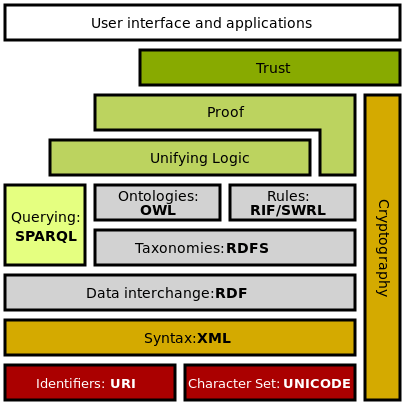
To implement these URIs we need Resource Description Frameworks (RDFs). RDF is a standard model for data interchange on the Web. It is a framework or a data model for describing resources. RDFs are the formal language to describe the information in the Semantic Web. The goal of RDF is to enable applications to exchange data on the Web while still preserving their original meaning. RDFs comprise  triples. A triple gives a unique identifier so that we can link the data and form a relation between various other data nodes. Multiple triples connected are called Graphs.

In metadata terms, RDF and expressed in (Triples). Triples comprise of three fundamental entities:

  • Object is the resource being described by the metadata record
  • Predicate is an element in that record
  • Subject is a value assigned to that element

SPARQL (SPARQL Protocol and RDF Query Language) and OWL (Web Ontology Language) are the other two technical standards used in the Semantic Web.

Semantic the web is an extension to the World Wide Web and it has made significant strides towards making the internet more seamless, efficient, and scalable. Linked Data is very critical in making this happen. But still, Semantic is not yet adopted and many corporations and organizations are unaware of it. So the focus should be to promote wider adoption of the Semantic Web with better availability of the learning resources.

Impact of Covid-19 on Digital Education In India

“Education is the strongest weapon that can be used to change the world.”

– Nelson Mandela

As rightly said by Mr. Mandela ,education gives us knowledge which in turn gives us wisdom which teaches us to differentiate between good and bad. Education is not only needed to have a good economic strata but also to have a righteous sense of living . It gives us the power to stand for ourselves when we are being wronged.

The global pandemic which we are facing today has imposed many restrictions on us and in order to keep ourselves safe we are supposed to maintain social distancing as a result of which all the places which wholeheartedly invited the crowd before, are closed down now, the educational institutes being one among them. Read this blog further to know how covid-19 has affected education in the country like ours where during pre pandemic times also many loopholes were present.

The Indian Education system

Around 60% of the total Indian population is considered to be in poverty that is they barely manage a hand to mouth existence . In this case education is definitely a luxury to them . The Constitution of India has declared an individual’s Right to Education as a fundamental right under which children between 6 to 14 years of age are eligible to get free education in government schools across the country. Also, according to section 12(1)(c) of the Right to Education Act of 2009, all the private schools in the country are supposed to reserve 25% seats for the children belonging to the EWS Category(Economically Weaker Section).

Now, Private schools in India also falls in two categories: one is the category belonging to the government recognized schools which charges fair amount of fees and claims to provide quality education. They are affordable by the middle class families and the families falling about them in the economic strata. Second category belongs to the schools which are not recognized by government, charge decent fees and are affordable by the lower middle class families who has a option of government schools but don’t want their child going there due to the below mentioned reasons.

Now coming upon the schools funded by the government, these schools are generally in the limelight for their poor infrastructure, absentee teachers, low student ratio(**this was the case before the commencement of the pandemic). In the pandemic times, the government schools which are well equipped like the ones in Delhi, witnessed only 25 to 30% attendance. The condition of rest of the government funded schools which were just for the namesake can be imagined.

With people adapting to “new normal” in these pandemic times, the world has turned digital and so has the education system. Gone are the times where children would wake up early in the morning, go through their own struggles of going to school to study in the TRADITIONAL WAY OF LEARNING where teachers would come and address a section of class. This “new normal” is the time for ONLINE CLASSES where what matters the most in just learning as to not face a complete loss and at least take out the best in these times . The education in the “new normal” has lost its essence, punctuality , discipline and integrity.

Covid-19 and Indian Education

With the commencement of the pandemic around 1.5 million schools have been closed affecting almost 286 million children in one way or the other from primary to the secondary levels. According to a report released by UNICEF, “The pandemic has affected over 90% of the total student population of the world”. In India itself, the main problem is that not every area has been digitalized yet and in the digitalized areas also not everyone has access to required number of devices and good internet connectivity. Only 24% of the total houses in India have access to internet whereas in rural areas these numbers have dropped upto 4%. Further a survey conducted by the Niti Aayog in 2018 reported that around 55000 villages have no mobile network coverage let alone the internet connectivity and around 35 % schools operate without electricity. In these circumstances, many students have been forced to dropout of the schools which is a destruction of India’s bright future and talent.

Steps taken to solve the digitalization issue

  • The introduction of the BHARATNET project which ensure the broadband connectivity to over 2,50,000 gram panchayats through optic fiber technology which will enhance the network quality .
  • Many Government schools have started training teachers on how to teach through net which is important for the successful accomplishment of the project which involves ensuring that no child looses his/her right to education even in these pandemic times.
  • Many crowd funding platforms have been launched by the government and individuals which aims on providing devices and enhancing infrastructure to enable online classes. The Government of Maharashtra through one such platform has managed to generate rupees 216 crores which will be further used towards the cause. Also, in Kerala 4 tenth standard students have managed to generate rupees four lakhs through one such platform which they will use to buy devices for the students who are not able to afford.

WE CAN JUST HOPE THAT THE COMING TIME WILL NOT BE A DOOM AND WE WILL GET SOME IMPROVEMENTS .

Jobs and career

What is a JOB ?

A job is something you simply do for the money. Usually, jobs have a small impact on future resumes because they aren’t typically related to what your career is or will be. Also, jobs usually offer less networking opportunities because your coworkers often won’t be continuing on to the same field as you in your future career.

Most jobs consist of hourly wages, are more short-term, and focus on getting a task done.

What is a career ?

A career is all about building up skills through various employment opportunities, giving you the ability to move on to higher paying and more prestigious ones. Careers provide a foundation of experiences that help fuel your professional life for many years.

Careers are more long-term and are about learning, gaining experience, building connections, and putting yourself in the right position for promotions and raises. Also, careers tend to be more salary based, as opposed to hourly based like jobs, and often include benefits such as paid time off and healthcare.

While more education is often required for a career, you don’t need to spend the rest of your life in school just to get ahead. South College offers many associate degree programs that can be completed in just two years, getting you started on your new career before you know it.

If you’re interested in finding out what your future career should be or in getting the right education to put you there, contact us today!

That’s not to say that jobs aren’t valuable. Jobs show your work ethic, which is important to future employers, and money pays the bills! Jobs can help prepare you for a career by providing you with valuable skills like time management and communication.

DIFFERENCE

A job is more short-term oriented and tends to focus purely on earning money. On the other hand, a career is a series of related employment in one field that provides experience for your future and helps you earn a better paycheck and living status

7 Strategies to Build A Successful Career

  • Identify with Your Goals. Before even considering following a career route, you must get to know yourself. …
  • Build a Professional Resume. …
  • Become Aware of Your Strengths. …
  • Assume Full Responsibility for Your Life. …
  • Always Raise Your Standards. …
  • Brand Yourself. …
  • Network — A LOT. …
  • Conclusion

SCIENCE AND TECHNOLOGY

Science, technology and innovation each represent a successively larger category of activities which are highly interdependent but distinct. Science contributes to technology in at least six ways: (1) new knowledge which serves as a direct source of ideas for new technological possibilities; (2) source of tools and techniques for more efficient engineering design and a knowledge base for evaluation of feasibility of designs; (3) research instrumentation, laboratory techniques and analytical methods used in research that eventually find their way into design or industrial practices, often through intermediate disciplines; (4) practice of research as a source for development and assimilation of new human skills and capabilities eventually useful for technology; (5) creation of a knowledge base that becomes increasingly important in the assessment of technology in terms of its wider social and environmental impacts; (6) knowledge base that enables more efficient strategies of applied research, development, and refinement of new technologies.

The converse impact of technology on science is of at least equal importance: (1) through providing a fertile source of novel scientific questions and thereby also helping to justify the allocation of resources needed to address these questions in an efficient and timely manner, extending the agenda of science; (2) as a source of otherwise unavailable instrumentation and techniques needed to address novel and more difficult scientific questions more efficiently.

Specific examples of each of these two-way interactions are discussed. Because of many indirect as well as direct connections between science and technology, the research portfolio of potential social benefit is much broader and more diverse than would be suggested by looking only at the direct connections between science and technology.

Social Network As the Main Way of Communication in the Modern World

Social Networking has become a predominant part in the modern world. It is recognized as a revolutionary powerful medium of communication. It has an enduring impact on the way people communicate and how it has become an indispensable part of our lives. It is routinely used for social interaction, access to information and news, spread information, generate awareness and so on. The significance of social networking can be seen in various fields like lifestyle, business, entertainment, news etc. The mass number of people using social media is increasing with time and that clearly specifies the importance of it. There are numerous benefits of being on a social platform that has contributed in enhancing the way the world works. Social networking is not only used to make brands and customers meet. In fact, it’s about connecting people from all over the world irrespective of their gender, caste, religion, colour etc. There are ways to grow you network on a social media platform tremendously. It increases connectivity in a modern world. From nations which are progressed to under developed nations everyone is grasping the benefits of social networking and utilizing its power to enhance their lives.

It has been a little more than a decade ever since social networking has made its place in our lives; the influence of social media has gone from an entertaining form to a fully integrated shares of nearly every aspect of daily lives of people. The beauty of the social world is that you can connect with anyone to share and learn irrespective of distance or educational background. Initially the world of social media gained attention because it could connect people from all over the world. It has become very easy for to educate people especially students via social media and networking. Anyone can learn any field of work or can connect with people from that field to have first hand knowledge about their areas of interests. One can update themselves from anywhere about anything. If you have a business, you can reach out to a larger audience in no time. Social networking can benefit in making communities come together, help noble causes, creates awareness among people and invites people to communicate.

However, on the other hand it has affected the world in a negative way as well.  At the end of the day, it is in the hands of the user to use its advantages or disadvantages. One of the major concerns of a social platform is privacy, personal data of anyone can easily be taken out from the internet. Many individuals have scammed and committed fraud through social media. It decreases face to face encounters with people and also lacks emotional connection which can have a huge effect on people. Using social media excessively can lead to having unrealistic expectations.

But nonetheless internet allows people to improve their quality of life in numerous ways. It encourages people to get out of their comfort zone and explore different spheres of life. Moreover, it has opened its access to inaccessible things. With millions of users, social media and networking are emerging as the main way of communication in the modern world.

Science and technology related

INTRODUCTION:-

The evolution of science is like a boon to the world, as human beings come to know a lot about the world they are living in including the activities they indulge into. Furthermore, the development of technology along with the advancement in Science helps to bring in a revolution in various fields such as medicine, agriculture, education, information and technology, and many more.In the present world, if we think of any sort of development, then the presence of science and technology cannot be ignored.

What is Science?

Science fundamentally is the systematic study of the structure and behavior of the natural and physical world through observations and experiments.
Study of science evolved with the civilization of human beings.

What is Technology?

Technology (which is basically derived from the Greek word ‘technologia’) is an art, skill or ability, which is used to create and develop products and acquire knowledge.
Scientists used their knowledge to develop technology and then used technology to develop Science; so, because of this reason science and technology are an integrated term in today’s world.
Consider the following points to understand the relationship between Science and Technology −
  • Contribution of Science to Technology
  • Contribution of Technology to Science
Let us discuss these points in brief.

Contribution of Science to Technology

Let us now understand how Science has contributed to Technology −

Science as a direct source of new technological ideas

For example, innovation and development medical instruments; nuclear technology, radar system, etc.
Contribution of Science

Science as a source of engineering

Most of the technical knowledge used in the designing and development of tools and techniques is actually an outcome of ‘engineering science’.
Engineering Science
Science has also helped in the development of human skills. This is one of the fundamental contributions of Science.

Contribution of Technology to Science

Consider the following points to understand the contribution of Technology to Science −

Technology as a source of scientific challenges

The development in the field of technology paves way for research and development in the field of Science. For example, space science is one of them. Technological development likewise indirectly stimulates basic research in the field of science.

Instrumentation and measurement techniques

Development of advanced instruments facilitated scientists to measure the distance between sun and earth, the intensity of sun’s rays, the revolution of celestial bodies, internal problems of human beings, life of a bridge, etc.

Connection between science and technology:-

Science is the study of the natural world by scientific method i.e. collecting data through a systematic process. And technology is where we apply science to create devices that can solve problems and perform different tasks. Technology is literally the application of science. So, it is really impossible to separate the two.
Science, innovation, and technology each represent a successively larger category of activities that are highly interdependent from each other but distinct. Science contributes to technology generally in six ways:
  • New knowledge which serves as a direct source of ideas for new technological innovations.
  • Source of tools and techniques for more efficient engineering designs and a knowledge base for evaluation of the feasibility of different new designs.
  • Research instrumentation and laboratory techniques used in research eventually find their way into the design or industrial practices, through different methods in different areas.
  • The practice of research as a source for the development and assimilation of new human skills and capabilities useful for different innovative technologies.
  • Creating a knowledge that becomes increasingly important in the assessment of technology in terms of its wider social and environmental impacts.
  • Develops knowledge that enables more efficient strategies of applied research, development, and refinement of new technologies.
The confer impact of technology on science is of equal importance as a source of unavailable instrumentation and techniques needed to address difficult scientific questions more efficiently.

Reference Links:-

https://www.tutorialspoint.com/fundamentals_of_science_and_technology/fundamentals_of_science_and_technology_introduction.htm
https://timesofindia.indiatimes.com/readersblog/tech-freek/connection-between-science-and-technology-23913/

Drone Technology


Unmanned aerial vehicles (UAVs), sometimes known as “drones,” are aircraft that have been in use since the early 1900s but do not have human pilots. Drones’ role developed to include not only more specialised military activities but also civilian applications as the digital revolution brought in tiny microprocessors and the ability to communicate over vast distances. Drones are frequently equipped with a variety of sensors, including GPS navigation systems, TV cameras, image intensifiers, radars, infrared imaging devices, and lasers, to aid in round-the-clock monitoring and targeting. Drones used by the military are also outfitted with laser-guided missiles.


Drones are classified into several types.
A drone can operate in one of two modes:

Preprogrammed to run autonomously without human involvement or remotely operated by a pilot sitting in a faraway place.
Drones can be divided into two categories: surveillance drones and unmanned aerial vehicles (UAVs).
Drones with fixed wings and rotors.


The following are a few examples of drone applications in India:

Development of the city
•Drones are being used by the Andhra Pradesh government to monitor development efforts in the capital city region, namely Amaravati, through dron-ebased outputs.
•The Karnataka government is deploying drones as part of a pilot project to estimate property taxes and create a base map of a city or town for detailed planning and long-term governance.
•Drones have been used by the Chandigarh administration as part of a pilot project to gain an overhead view of all properties in the city.


Transport
•Drones were employed to monitor the 25-kilometer Seawoods-Belapur-Uran15 corridor by the Indian Railways.
•The National Highways Authority of India (NHAI) has used drones to check accuracy in the Salem-Chennai green corridor highway project.
•The Maharashtra government has deployed two drones as part of a trial project to monitor weekend rush hour traffic and accidents on the 95-kilometer section of the Mumbai-Pune Expressway between the Lonavala Exit and Khalapur Toll Plaza, as well as the six-lane Mumbai-Pune Expressway.

Agriculture
•In 2016, a general insurance firm used drones to analyse crop damage caused by floods in a specific district in Maharashtra.
•Drones were employed by the Maharashtra government above farms in the Marathwada region to estimate crop loss due to low rainfall.
•Drones are being used by individual farmers in Andhra Pradesh’s capital region to spray crop pesticides and fertilisers in limited crop zones.

Management of Natural Disasters
•In flood-ravaged Uttarakhand, the National Disaster Management Authority (NDMA) used four drones to scan areas where search and rescue crews couldn’t get to.
•In Mandi, Himachal Pradesh, the National Disaster Relief Force deployed drones to track down 24 engineering students from Hyderabad who were swept away by the Beas river.
•Several agencies used drones to seek for survivors to document toppled monuments, shattered heritage sites, and destroyed homes during the Nepal earthquake.


Conclusion
Drone technology implementation necessitates a collaborative and inclusive approach that includes governance, strategic planning, security, legislation, and correct awareness. The successful adoption of drone technology necessitates the involvement of a variety of stakeholders.

E-COMMERCE

What is e-commerce?

“E-commerce” and “online shopping” are often used interchangeably, but the scope of e-commerce is much broader: it embodies the concept of doing business on the Internet, for example, it includes many different services. Make online payments, book flights, etc. Buying and selling goods or services electronically via the Internet is called e-commerce.

Why buy online?

  • Lower prices
  • Affordability and convenience
  • More options

Higher profits
Scalability
Consumer knowledge/technology

E-commerce fulfillment model overview

Courier delivery model
Traditional order fulfillment model

Ecommerce

Including network marketing, also known as online marketing. Internet marketing is the process of using tools that help generate potential customers and sales to promote a company or brand and its products or services on the Internet.

Content marketing
Content marketing aims at
Your personal brand and your target audience
Keywords and research.
Focus and content commitment. What will you create? How often do you post? Where will you post? You need to define these basics to create consistent and quality content.
Content Creation
Content Promotion

SEO (Search Engine Optimization)

The process of maximizing the number of visitors to a given website by placing the websiteat the top of the search engine results list. SEO
stands
for search engine optimization, which means increasing the quantity and quality of website traffic through regular search results.

SEM (Search Engine Marketing)

Search Engine Marketing(SEM) is one of the most effective ways to develop business in an increasingly competitive market.
Online advertising is important to millions of businesses, and search marketing is the most effective way to promote your products and grow your business.

Email marketing

Email marketing is an efficient digital marketing strategy for sending emails to potential customers and customers. Effective marketing emails turn potential customers into customers and long-term customers into loyal and enthusiastic followers.

INDIA AND INDUSTRIAL REVOLUTION 4.0 Part-3

This article is in continuation with the previous part INDIA AND INDUSTRIAL REVOLUTION 4.0 Part-2.

Solutions-

1. The product manufacturing unit in a factory is referred to as the shop floor. It is that place where production tasks are performed in a continuous flow while manufacturing a product.

The efficiency is determined by the amount of work done by a person as well as the machine in a particular time frame.

Shop floor automation is the integration of manufacturing hardware with software. Human pace cannot match with a machine’s speed, hence shop floor automation proves to be a great breakthrough for industrial advancement. As we all know the Industrial Revolution 4.0 is mainly about integrating new technology to a very great extent in the industries, or the manufacturing sector, hence making way for automated machines to do precise jobs can be helpful.

A manufacturing task requires high precision. So, if a person is considered, it is his skill, speed and accuracy that determines the quality of a product and that too, for every single piece.

Compare this to a machine that is programmed to do a particular task. It reuses the code and hence only the code mainly determines the quality of the product.

Automation saves time, reduces wastage and increases productivity. Hence large industries can apply this

2. IoT can help us send information regarding delivery insufficiencies and this void can be filled with the help of drones for small products for faster delivery in a specific radius.

3. We know that India has a large potential for utilizing its human resource, but the problem is illiteracy, lack of digital resources etc.

If these people are given proper training in small skills such as hardware and software development and maintenance, it would prove helpful in the proper utilization of human resources in the digital domain. More importantly, with a large digital setup in the whole country, more technical problems would arise. With these skilled people in the picture, problems can be resolved in a much quicker manner and efficiently.

As we all know that there is that more and more startups are coming up these days. For this technological revolution among people, startups and youth having basic knowledge of software can help to make technology available for all. Startups do not have many liabilities as compared to tech giants. Hence, they can be more helpful at the ground-zero level. Doing this can also bring startups to the attention of many techies, and it would be an innovational breakthrough.

4. Securing the Network Against Cyber Threats- This applies to companies currently having a large digital base. Although rare, a cyberattack could be devastating to your organization’s reputation and bottom line. Whether it’s ransomware or a targeted, zero-day attack, these incidents can be detected and prevented with the right plan in place. First, your organization must have an up-to-date inventory of its digital assets to develop an understanding of its network to pinpoint any existing vulnerabilities within it. Second, you need to have authentication processes in place to guard your digital and physical assets. Third, your organization needs to have the ability to detect anomalous activity. The most effective way to achieve this is to deploy a continuous monitoring solution. Finally, your organization should have a contingency plan in place to quickly respond and recover from a potential cyberattack.

5. It is estimated that by 2023, industry 4.0 and cyber-physical systems will be at a much larger level as compared to today. With changing scenarios of technology, the current technology will not be sufficient. The nature of jobs will change. Hence, keeping that in mind, upcoming techies and also the current techies in the market should be given the knowledge of A.I., machine learning, big data analytics and IoT to efficiently adapt to the changing nature of work.

CONCLUSION

“Industry 4.0 is opening significant opportunities for organizations,” says Stankard. “From re-evaluating business models to new data-driven revenue streams, the sky is the limit and we’ve only begun to see the possibilities.“ But on the other side of the coin, there is going to be a significant incremental risk, likely posed by cyber and the immense – and growing –the amount of connectivity. There is a risk reduction element here as well. With such levels of connectivity, Industry 4.0 is likely to isolate and improve quality issues and enhance the overall customer experience. Rising to these challenges is going to be key if we are to fully take advantage of the amazing new opportunities the fourth industrial revolution will offer.”

Optic Fibers in Communication

What are optical fibers ?

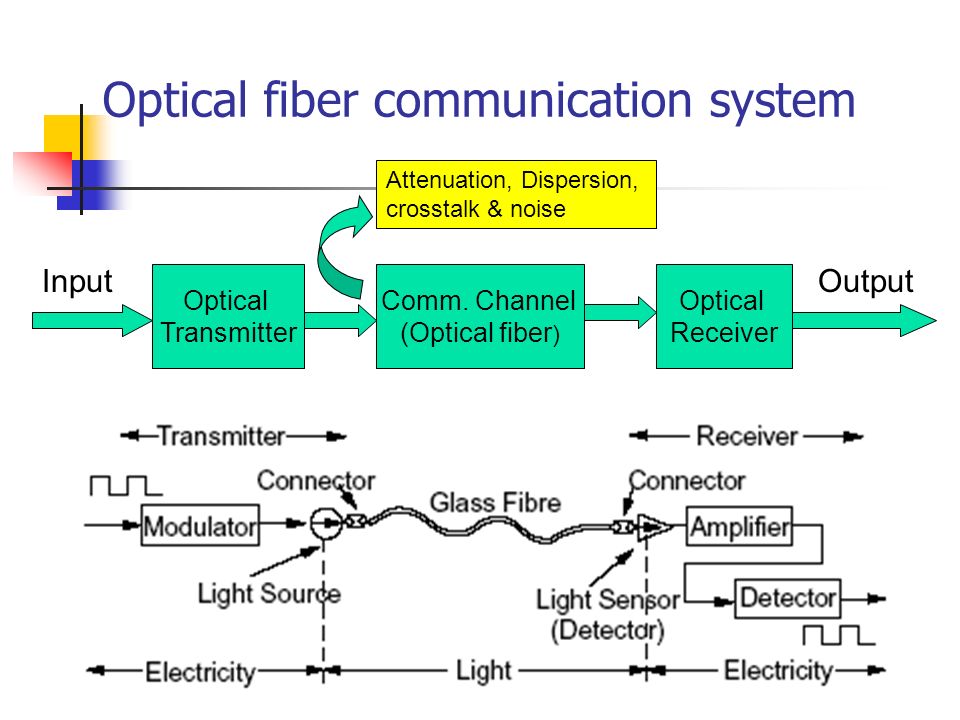
It is thin strands of pure glass which carry data over long distances. At very high speeds. The Fiber can be bent or twisted. Fibers are used instead of metal wires because signals travel without loss. Also, fibers are immune to the electromagnetic interference.

In an general optic fiber there is a core which is surrounded by cladding material which has lower refraction index than core.

Communication Systems

Basic Blocks

  • Transmitter : transmitter is one of the key elements of any fiber optic communications system and the choice of the correct one will depend upon the particular application that is envisaged.
  • Communication channel (medium) :fiber-optic link (or fiber channel) is usually a part of an optical fiber communications system which provides a data connection between two points.

Communication channel

  1. Wired
  2. Wireless Glass
  • Destinations and Receiver : Fiber optic receivers convert light signals into electrical signals for use by equipment such as computer networks.

Advantages of optical fibers

  • Can carry much more information
  • Easily available & cheaper
  • Much longer distances than co-axial cables
  • Immune to electromagnetic noise
  • Light in weight
  • Unaffected by atmospheric agents
  • Longer life Not hazardous

Disadvantages of Optical fibers

  • Expensive to install
  • They have to be installed by specialists
  • More costly to repair
  • Can only be used on ground
  • The distance between transmitter and
  • Receiver should keep short

How To Make Your System And Network Safe?

Network security management is the process of managing a network in such a manner that it is capable of dealing with all types of network threats and virus issues and solving them.

The following are the most important criteria to consider while ensuring the security of your system:

  1. Use Strong Passwords & Passphrases: To safeguard your system or network from malicious threats, create a strong password for login and access that includes a variety of letters, symbols, and numbers. Birthdays should not be used as a password since hackers may quickly crack them.
  2. Establish a Firewall: To secure your networking system from unauthorized access and other dangers, always establish a powerful firewall.
  3. Antivirus Protection: Antivirus software should always be installed on your computer and laptop. The antivirus program will scan, detect, and filter infected files, as well as resolve any issues that emerge as a result of viruses.
  4. Update Software: It’s important to keep your system and network up to date with the newest antivirus software and to install the latest patches and scripts for the system as needed. Virus threats will be less likely, and the network will be more secure as a result.
  5. Secure Mobile Devices: Mobile devices such as laptops, smartphones, and tablets are vulnerable to network attacks. To keep these gadgets safe, use a strong password to access their different resources. To gain access to smart devices, it is preferable to utilize a biometric fingerprint password.
  6. On-Time Backups: Files, documents, and other essential data on our system or hard drive should be backed up on a regular basis and saved to a centralised server or another secure location. This must be completed without fail. This will assist with the rapid restoration of the system in the event of an emergency.
  7. Smart Surfing on Websites: Before downloading or visiting any website on the Internet, we should keep in mind that a single incorrect click might invite a slew of viruses onto our network. As a result, always download material from trustworthy and secure sources, and stay away from unfamiliar links and websites. Also, whenever you connect to the Internet, avoid clicking on ads and offers that are regularly shown on online pages.
  8. Filter and Delete Spam Emails: Hacker-created phishing emails are designed to lure you to read them and click on exciting offers or links. Spam filters have come a long way and should be used to their full potential. Even yet, spam emails may get through, especially if a hacker is impersonating someone you know, such as a professional colleague or a firm with whom you do business.
  9. Encrypt Your Files: Using software particularly intended to disguise your IP address, encryption may safeguard critical data on Windows or macOS. Look for “HTTPS” in the URL bar, along with a padlock icon, to see if a website has been secured using encryption.
  10. Secure Configuration: The setup of devices such as routers, smart devices, and any other device that contains sensitive data must be very secure. Operating systems must be appropriately hardened. Passwords that are set by default must be updated.
  11. Removable Media Control: When introducing removable devices into the system, such as pen drives, dongles, and data cards, they should always be scanned. Removable gadgets should be used cautiously.
  12. Shut Down Computers When Not in Use: If your computer is linked to your company’s network and sits idle overnight, it becomes more visible and vulnerable to hackers. You’re restricting their access to your network by shutting off your PC. You’re also breaking their connection if they’ve already gotten access.

The Dark Side of Social Media

The internet has been taken over by Facebook and other forms of social media. People use social media because they believe it improves their life. Is it, however, true? Is it true that people go on Facebook to socialise or to study other people’s posts to see what’s going on? Are they expressing their dissatisfaction with politics or government entities in general? (Venting has been demonstrated to increase rather than decrease anger.) Are individuals battling on Facebook or other social media platforms, ruining relationships rather than strengthening them or people’s lives? Instead, it was shown that the majority of people use it to consume knowledge, which experts discovered leaves them feeling empty and unfulfilled. Another study published in the journal “Current Opinion in Psychology” in 2016 found that envying other individuals on social media leads to depression. When you’re sick, sad, or alone, browsing through vacation images from someone’s recent trip to Hawaii, positive relationship statuses, parties, or people having a good time in general makes you feel even more alone and melancholy.

What Motivates People to Use Social Media?

People use social media for a variety of reasons, including keeping in touch with others and monitoring them. Surveillance has been utilised throughout history to protect people from danger and to keep them safe. However, the majority of social media monitoring of partners or ex-partners does not fulfil that criterion. “Interpersonal electronic surveillance monitoring” is the phrase for this. Low-quality relationships, low happiness, and terrible connections in general are all indicators of online surveillance.

What Happens When People Spend Too Much Time on Social Media?

Researchers at the University of Michigan found that the more time people spend on Facebook, the more miserable they get. When browsing through the wonderful aspects of other people’s lives, it can also cause sentiments of jealously, resentment, and inadequacy. “Results showed that Facebook usage had a strong negative link with self-esteem,” according to a study conducted at the University of Gothenburg in Sweden. In other words, those who spent more time on Facebook had poorer self-esteem, according to the findings.”

For some people, Facebook might be a trigger for P.T.S.D. For many African Americans and others, the footage of Philandro Castro and Sterling being streamed live on Facebook sparked their P.T.S.D. There were many expressions of mental and psychological concerns on Facebook in the week following Sterling’s and Castro’s deaths. The African-American community was one of the hardest hit. They are not, however, the only ones who have been touched by such horrific recordings of individuals dying at the hands of police officers.

Finally, social media can have a detrimental impact on people. It’s a public bulletin board where anyone can publish anything. However, there is research underway that suggests that this type of “socialising” is actually harmful to humans. It can stymie the healing process that people go through after rejection, heighten feelings of inadequacy and jealously, and cause P.T.S.D., as well as make people feel worse.

Sources

Science Explains How Facebook Makes You Sad | Psychology Today
The most popular social media platform could be wreaking havoc on your emotional health.

How To Keep Social Media From Complicating Your Relationship | Psychology Today
It’s usual for love partners to use social media and social networking sites to keep tabs on each other. So, how can you avoid your love connections becoming more complicated as a result of social media? What are some of the thorny topics you should be aware of?

Does Social Media Help or Hurt Relationships? | Psychology Today
Do you argue with your partner as a result of Facebook use?

http://journals.sagepub.com/doi/abs/10.1177/0265407514568749?cited-by=yesl33%2F2%2F171r33%2F2%2F171p

When black death goes viral, it can trigger PTSD-like trauma | PBS NewsHour
“We’re witnessing mentally and emotionally traumatizing videos and pictures. It’s enough, it’s just enough. It’s just so overwhelming all the time.” – April Reign

Types of Security Attacks

Active Attacks

It is an attempts to alter system resources or affect their operation. It includes Modification of data, or creation of false data.

Four categories
 Masquerade
 Replay
 Modification of messages
 Denial of service

  1. Masquerade : It takes place when one entity pretends to be a different entity. For example, authentication sequences can be captured and replayed after a valid authentication sequence has taken place, thus enabling an authorized entity with few privileges to obtain extra privileges by impersonating an entity that has those privileges.
  2. Replay : Replay involves the passive capture of a data unit and its subsequent retransmission to produce an unauthorized effect.
  3. Modification of Messages : Modification of messages simply means that some portion of a legitimate message is altered, or that messages are delayed or reordered, to produce an unauthorized effect.
  4. Denial of Service : The denial of service prevents or inhibits the normal use or management of communications facilities. This attack may have a specific target; for example, an entity may suppress all messages directed to a particular destination (e.g., the security audit service). Another form of service denial is the disruption of an entire network, either by disabling the network or by overloading it with messages so as to degrade performance.

Passive Attacks

It attempts to learn or make use of information from the system but does not affect system resources. Passive attacks are in the nature of eavesdropping on, or monitoring of, transmissions. The goal of the opponent is to obtain information that is being transmitted.

Two types of passive attacks:

  • Release of Message Contents
  • Traffic Analysis
  1. Release of Message Contents : A telephone conversation, an electronic mail message, and a transferred file may contain sensitive or confidential information. We would like to prevent an opponent from learning the contents of these transmissions.
  2. Traffic Analysis : The opponent could determine the location and identity of communicating hosts and could observe the frequency and length of messages being exchanged. This information might be useful in guessing the nature of the communication that was taking place.

Computers in detail

Definition

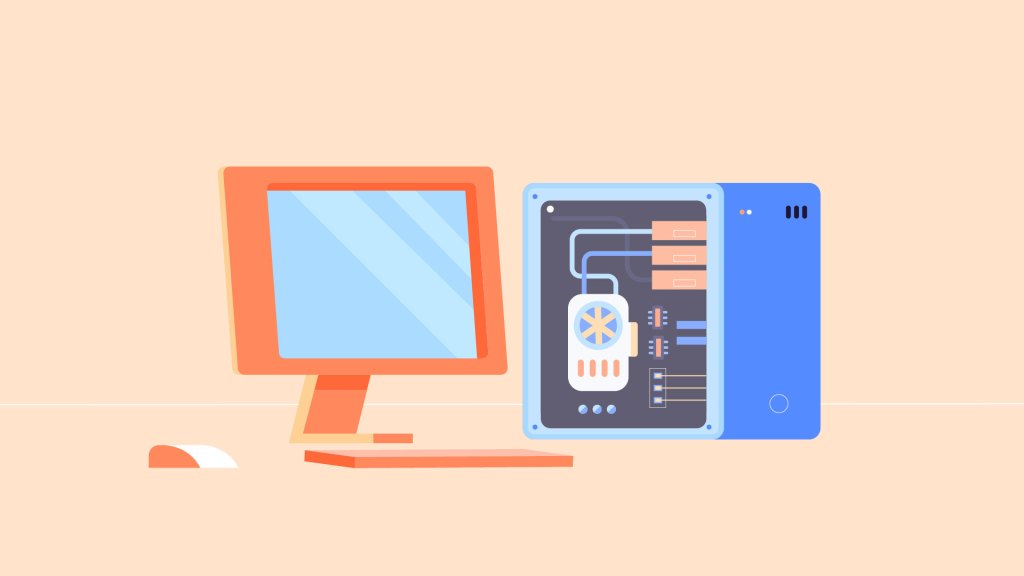
A computer is a machine that performs tasks and calculations according to a series of instructions or program operations (circuits, etc.) and software (OS, the underlying software that controls the hardware when the user issues instructions).

Programming

You don’t need a car, its function is the same as a jukebox that keeps playing tracks. For example, they want to tell the music box to play different music every time. They want to program the music box so that it can play different music. This part of the history of computers is called “the history of programmable machines.” “This is a concise sentence in the history of machines. When I speak their language, I can order to do different things.”

The role of computers in daily life

Today’s computers are fast, small and small. Powerful. Computers can save money, time and labor; otherwise it would take months or years to complete in a few seconds with computers. Launch satellites using a simple application on our desktop. According to the requirements, the storage capacity and speed of the computer will be different. For example, NASA and other companies that use high-speed supercomputers, because speed is an important part of your business. Computers are cheaper than smart phones. The essence is in hand. At home, computers provide opportunities to access social networks, read books, or work from home.In the office, they are the most important because they are the most important form of work. Although computers can help with almost everything from shopping to work to taking notes or playing games, people rely heavily on computers for almost everything. Computers make life easier and faster than ever. Large storage rooms are of great help to today’s business. The data received from different systems is stored on the computer for later use. In addition, previous shopping, reading, work, arithmetic, calling appointments and events or activating alarms all occurred in different places. Now everything can be done with our smart phone. If the book is bulky, it would be great to bring ten books. Now; millions of books are within reach. There is no need to check calendars anymore, because they have been replaced by reminders that automatically remind us of important events and clocks that only need to be activated once. These are some basic tasks that are performed daily, and it is difficult to work without a computer. Computers are no longer a luxury, they can be used in different forms on different platforms, for example as smart phones. Computers are also very helpful in medicine and have undergone extensive development in the past decade. Addictive.All in all, we can say that computers have profoundly affected our lives, and changes are no longer associated with ease, habit, and popularity.

The above is a small example of computers, but as far as modern technology is concerned, computers have changed our way of life. Computers are not only used for arithmetic but are now active in teaching, industrial purposes, automated processes, data management, analysis, personal and group entertainment, Music synthesis, professional photo and video editing, hardcore games, research goals, creating new software and applications to make life easier, shopping, banking, marketing, and even participating in the artificial creation of intelligent creatures with deep learning concepts and machine learning.