OSTEOARTHRITIS GRADING SYSTEM

Osteoarthritis can be mainly classified into two. They are primary and secondary. The criterion for this classification is based on the different types of risk factors. Primary OA is mainly due to age where the reason for cartilage breakdown is not known or maybe due to genetics. Secondary OA is due to direct injury through sports or trauma, stress, inflammation, or other metabolic diseases. In this case, the cause may localize.

OA grading

Grading is the process of classifying the disease based on its extent or severity. OA has been graded into 5 from grade 0 to grade 4

Stage numberCondition
 0Normal
1Minor
2Mild
3Moderate
4Severe

This was proposed by Kellgren and Lawrence and it is known as KL grading. The five grades have been proposed based on radiographic analysis of subjects. This was accepted as a standard measure by WHO in 1961. The grading has been done based on the narrowing of joint space and the formation of osteophytes.

  • grade 0 (normal): no changes in knee x-ray
  • grade 1 (minor): minimalistic joint space narrowing with possible osteophyte lipping
  • grade 2 (mild): definite osteophytes and  joint space narrowing
  • grade 3 (moderate): multiple osteophytes, definite narrowing of joint space and some sclerosis and possible deformity of bone ends
  • grade 4 (severe): large osteophytes, marked narrowing of joint space, severe sclerosis and definite deformity of bone ends

Grade 0

Grade 0 is considered normal. The subject will not exhibit any features for OA. The x-ray image from this grade is taken as a standard and the other grades are compared with this grade.

Credit:- Häggström, M (2014). “Medical gallery of Mikael Häggström 2014“. WikiJournal of Medicine 1 (2). doi:10.15347/wjm/2014.008. ISSN 2002-4436. Creative Commons CC0 1.0 Universal Public Domain Dedication
X-ray of a healthy knee 
Credit:- Häggström, M (2014). “Medical gallery of Mikael Häggström 2014“. WikiJournal of Medicine 1 (2). doi:10.15347/wjm/2014.008. ISSN 2002-4436. Creative Commons CC0 1.0 Universal Public Domain Dedication
This is the joint space which is observed in healthy patients.

Grade 1

Grade 1 is known as the minor. It can be considered as the initial grade. The joint space has just started to decrease. Osteophyte refers to excess bone growth. It is also known as bone spurs since spur refers to kind to sharp material. This bone growth can be observed as sharp spikes. Here there is very minimal growth of excess bone. Bone spurs occur only at the bones adjacent to the joint. There will be very minor loss of cartilage but this does not contribute to the narrowing of the joint space. Subject in this stage is not confirmed with osteoarthritis. However, subjects having any of the risk factors become more prone to the disease

Grade 2

Grade 2 is known as mild. In this grade, the narrowing of the joint space is more and is visible through the x-ray. There will be also more formation of osteophytes. This grade can be considered as the precursor to many complications like bone dislocation and rubbing. None of these complications are seen in this grade but these complications are soon to occur. The subject in this grade is confirmed with osteoarthritis. Special care has to be taken by those in this grade and through proper medications, they can prevent those further complications.

Grade 3

Grade 3 is known as moderate. Obvious damage occurs to the cartilage and the joint space narrows even at a faster rate. Swelling of the joints starts to occur in this stage. Erosion of cartilage becomes prominent in this stage. The joints become rougher due to spurs leading to stiffness. Inflammation occurs at regular intervals. Subjects can experience popping sounds from the knee.

Grade 4

Grade 4 is known as severe. It is the worst and highest grade of all. The changes become prominent and occur at larger scales. There will be no gap literally meaning the joint is absent. The bones start to rub over each other causing pain. The joint becomes stiff like a rock. The cartilage wears down and maximum growth of osteophyte is seen. Various cytokines are released at cartilage resulting in further death. Life would be dreadful for those in this grade. The arrow in the given X-ray indicates the bones are touching each other and there is no gap in between them.

Grade 4 osteoarthritis
Courtesy: – James Heilman, MD Osteoarthritis of the left knee. Note the osteophytes, narrowing of
 the joint space (arrow), and increased subchondral bone density (arrow). the joint space (arrow), and increased subchondral bone density (arrow). Creative Commons Attribution-Share Alike 3.0

HAPPY READING!!

THE DREADFUL DISEASE FOR THE AGED- THE OSTEOARTHRITIS

Osteoarthritis is the most well-known type of joint pain, influencing a huge number of individuals in the world. It occurs as a result of the wearing down of the cartilage that cushions the ends of your bone over time. It is a complex disease that integrates biomechanics and biochemistry associated with the knee. This is the standard way of defining OA which will be difficult to understand. Hence let us try to understand what OA is. The best way is by splitting the word and analyzing it part by part

Osteo- bone

Arth- joint                        

It is- inflammation    

Knee, Old, Care, Injury, Pain, Knee Pain
x-ray of the osteoarthritic knee joint


As mentioned earlier, the unit of bone is called osteon and any word ending with itis refers to inflammation. Also, arthro term refers to joints in general. Hence the combination of the terms corresponds to inflammation of bones in the joint. This rather sounds simplified. The previous definition had complex terms like biomechanics and biochemistry. Biomechanics refers to the study of movement in living beings. Biochemistry refers to the study of the reactions occurring in living things. So in short, osteoarthritis is such a disease that results in inflammation of joints that occur due to wearing down of the bones surrounding the joint hence affecting the movement and chemical reactions which used to occur properly during normal conditions.

Osteoarthritis can occur in any joint in the human body like elbows, hips, knees, etc. Since our primary focus is on the knee, we will take a deep dive into it. In view of its expectancy and the tolerance that goes with sickness in the knee osteoarthritis represents more prevalence with daily activities like climbing steps and walking when compared to other diseases. Osteoarthritis is the most standardized reason for total knee replacement. As a result of the frequency of this disease especially in middle-aged people, osteoarthritis can act as an extensive barrier towards work and can lead to early retirement.

Coining of OA

Many say that the term osteoarthritis was coined by the British physician John Kent Spender but it was Richard Von Volkmann who tried to separate it from rheumatoid arthritis. The other names which were offered to this disease were ‘chronical rheumatism’

‘senile arthritis’

‘hypertrophic arthritis’

‘arthritis deformans’.

Effect of age

Osteoarthritis can affect people of any age group but it majorly affects old age people. National Library of Medicine suggests that people with an age greater than 70 have more risk to get osteoarthritis. The reason lies in the definition of osteoarthritis. The definition says that disease occurs due to the wearing down of bones. So the bones don’t get worn down the next instant a baby is born. Every process requires time to occur. A mother has to wait for a minimum of 9 months to give birth to a healthy baby. A student must wait for 4 years to get a degree from college. Similarly, it takes time for the bones in the knee to get worn down.

This disease has always troubled old aged people in their lives. Living with osteoarthritis is dreadful. Even climbing the stairs will be a difficult task for them. Hence it is worth knowing about the disease.

HAPPY READING!!

Tips for Share Market

The potential of large gains from share markets can entice you as an investor. To a novice, the stock market may appear to be a place where you may obtain quick returns on your investments or make millions in a flash. On the other hand, the reality is rather different. It’s difficult to make money in the stock market. You’ll need patience and a long-term investment horizon, as well as a deep understanding of the market. You should only employ share market advice from a professional financial advisor, and your investing ideas should correspond with your financial objectives and risk tolerance.

Different investors have different investment objectives when they enter the stock market. Some investors seek rapid and huge profits, while others seek long-term investments and a well-balanced portfolio. However, to prevent volatility, every investor should follow a few share market guidelines during their trading journey.

Best tips for Share Market

1. Prior to investing, set goals

Goal-based investing can assist you in accomplishing your financial objectives. Determine your financial needs and develop short- and long-term goals to meet them. This will assist you in determining the length of your investment, the amount you want to invest, and the best investment channel for your needs. Let’s say you have a short investing horizon. Then you might try to profit on short-term stock price swings. If you have a longer timeline, on the other hand, you may invest in blue-chip stocks, which are renowned to provide strong long-term returns.

2.  Recognize Your Risk Tolerance

Given the volatility of the stock market, it’s a good idea to figure out your risk tolerance before investing. Risk tolerance is an important part of the investment process, and it varies from investor to investor. It primarily refers to the ability to withstand market fluctuations and their impact on the investment’s value. An investor’s low-risk tolerance is determined by his or her hunger for loss or ability to cope with worry in a highly volatile market. Low-risk investors are more likely to sell their stocks in a panic at the wrong time.

3. Choosing a Stock Broker

One of the most important decisions you’ll have to make early in your trading career is which stockbroker to use. In India, there are a plethora of stock brokers to choose from, making it tough for newcomers to make an informed decision. Consider factors such as the broker’s reputation, trading portal or software, and brokerage while making a decision. Keep an eye on the brokerage because you’ll have to pay it whether you make a profit or a loss on a deal. Brokerage fees can be levied as a flat fee or as a percentage of the trade value. This is especially significant for stock traders because the brokerage fees for repeated trades can soon add up.

4. Learn the fundamentals of the stock market

Learn the fundamentals of the stock market before investing your hard-earned money. Learn how the stock market works, what drives it, how stock prices are influenced, trading and investing tactics, and more. To make informed investments, you’ll also need to get familiar with a variety of technical terms. Those who invest without first learning the basics risk losing their money. Learn about the market before you begin your stock market trip if you desire strong and regular results.

5. Choose companies that are fundamentally sound

Consider investing in companies that have solid fundamentals. These businesses not only deliver better long-term returns to investors but also provide more liquidity. Companies with good fundamentals can also withstand share market volatility and changes. As a result, they are a generally safe investment option. Large-cap mutual funds are another option for mutual fund investors.

Conclusion

The potential of big profits tempts many to invest in the stock market. Keep in mind that markets are volatile, and stock prices can swing dramatically. Experienced investors, on the other hand, do not let these dangers affect their decision-making. Instead, they concentrate on research and analysis to determine whether or not to invest, where to invest, and whether or not to buy, hold, or sell a stock. If you’re just getting started, the above share trading advice can help you get started. Use them to create a successful stock market investment strategy that yields consistent profits.

Writing Good Articles Article Submission Tips And Writing

It is no secret that a good way to gain publicity and visitors for your website is to submit articles on quality sites. At the same time I strongly believe that submitting your articles on sites which share the same niche (or category) as yours is a better way to indicate search engines about the category of your article. For example it does not make a lot of sense to publish an article of travel or tourism on a finance website or a technology blog. The visitors of a travel website are likely to be in a mindset of vacation ideas, hotels, airline deals, events and travel attractions. Now if a visitor comes across your article on a travel site, it not only provides a reference link back to your website but most important the person is actually interested in that niche.

We will briefly put together a few points which one should consider while submitting their articles. We have selected travel niche as an example for these article writing tips.

1. Basic strategy of writing articles:

Your article should be written in simple English and easily understandable my most users. It does not need to be too long but usually recommended no little than 300 words, preferably more around 500 words. Clearly state what the travel article is about, use short paragraphs and bullet points. Always provide true facts, good or bad. Consider using use numbers and figures in the text in your articles wherever applicable.

2. Title:

Always use good attention-grabbing titles which not only contain your main keywords, but also give the brief idea to the users that what your travel article is about.

3. Keyword density:

Well if your article is about New York tourism then we recommended that you should have it in your title and multiple times in the body of your article. There are several free tools available on the internet to evaluate your article’s keyword density.

4. Link to your site:

If you have a website, then you should certainly provide a link back to your site, if this article is about a section inside your site then consider giving the inner link over your homepage.

5. Bookmark your article with Sites: Once submit travel article and it is published you should consider it book marking using Delicious, Reddit, Digg and Stumble upon. Since these are social bookmark sites, this will also deliver significant traffic to your website. Similarly subscribing to the RSS feed using sites like bloglines and netvibes has similar advantages.

6. Write often: People and search engines are always looking for new articles. You will not only have more links pointing back to your site but also real organic traffic.

INTRODUCTION TO THE KNEE DISORDERS

When there are some imbalances within the knee then it can lead to disorders which can be indicated by deviation of the knee in terms of function. Most of these disorders occur due to some conditions imposed onto the structures present inside the knee.

BURSITIS: – inflammation (burning sensation) of the bursa causes pain.

(TIP- a word ending with itis refers to inflammation)

FAT PAD IMPINGEMENT: – the fat pad gets swollen heavily and can burst due to over-expansion.

TENDINITIS: – inflammation of a tendon

TORN MENISCUS: – a sudden twist of the knee can tear the rubbery cartilage leading to serious issues.

FRACTURE: – the bones surrounding the joint may get broken especially the patella is viable to damage in the case of accidents.

DISLOCATION: – the knee bone slips and comes out from its original location leading to excruciating pain.

ACL AND PCL INJURY: – the anterior and posterior cruciate ligament gets torn which may occur when there are a lot of instantaneous turns. However, this occurs rarely since these are very strong ligaments naturally. 

OSGOOD-SCHLATTER DISEASE: – this is the swelling of the tendon between the tibia and patellar muscles.

STRAIN AND SPRAIN: – both are injuries but strain occurs in ligaments whereas sprain occurs in tendons.

These are some of the common disorders occurring to the knee. All of these disorders have something in common….PAIN but the intensity can vary based on time and severity of the disorder

ARTHRITIS                                                      

Arthritis is a commonly used word referring to the inflammation of joints. In fact, many people have an intuition that severe pain in the knee corresponds to arthritis mainly in old age groups. This is potentially a dreadful disease and can mainly affect the old aged. Most arthritis occurs over time but some can occur suddenly. Old-aged persons are more prone to this disease. This disease is likely to affect all age groups. This disease is more prevalent in women rather than men since their joints are weaker and more susceptible to motion when compared to men.

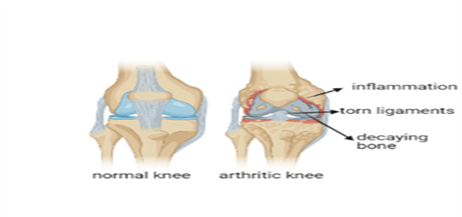
differences between normal and arthritic knee joint


In the case of arthritis, the bones start to wear down, the ligaments can tear, inflammation and swelling can occur, and also lead to internal bleeding (hematoma). There are about 100+ types of arthritis with different causes and symptoms.

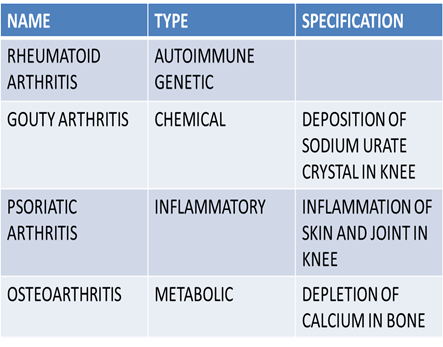
comparisons between some of the arthritis

The different types of arthritis have symptoms different from each other. But arthritis, in general, shows some symptoms irrespective of the type.

Joint pain, stiffness in joints, red swollen mass, deranged and irregular motion is some of the common symptoms exhibited during arthritis. These symptoms are easy to identify by a common man and hence one can consult a medical practitioner known as a rheumatologist. The study of joints is known as arthrology and it is recommended to consult such a person.

As mentioned earlier cartilage is the one that protects the bones and also acts as a shock absorber. In the case of Osteoarthritis, this cartilage starts to vanish slowly. In the case of rheumatoid arthritis, the synovial fluid gets attacked by its own antibodies!!! This phenomenon in medicine is known as autoimmune disease and occurs due to error in the programming of these cells leading to the attack on their own cells.

In the case of gouty arthritis, there is a deposition of sodium urate crystals in the joints. It can lead to redness, pain, and heat around the joint. Uric acid which is generated in our body gets converted to purines (an essential component in DNA). Increased uric acid levels can lead to its deposition in the form of crystals. The best way is to remove the synovial fluid.

So these are the different types of disorders that can be seen in the knee. Proper diet and exercise and a healthy lifestyle can prevent most of them. So it is essential to be healthy to prevent the occurrence of these diseases.

HAPPY READING!!

INTRODUCTION TO THE BONES AND JOINTS

Our human body can be compared to a machine in terms of its functioning, but the magnanimous human can perform extremely better than a machine. As there are many nuts and bolts to connect many parts in a machine, there are too some bolts and nuts in our body which join several parts of the body like arms and legs. The so-called nuts and bolts of the human body are known as JOINTS. A joint in general is the articulation that is present in between two bones. This sounds a bit complex. So joint in the English language refers to the association. So the joints in the human body associate something. The something defined previously is bones. In order to understand this, we have to know about the structure of bone in detail.

Fig 1.1- structure of a bone 


The above image depicts the structure of a bone in general. Important information to be known is that the unit of a bone is called an osteon. Many osteons combine together to form a bone. Bone-destroying cells are known as osteoclasts and bone-forming cells are known as osteoblasts. The external structure of a bone has two parts namely epiphysis and diaphysis. Physis refers to the growing plate. An increase in the bone’s height corresponding to bone growth. Epi means above and dia means through. Hence diaphysis is found in between two epiphysis which acts as the head and tail to the bone. The point of attachment of muscle in this bone is known as the trochanter. Everything present in the human body has some kind of protection. In the case of bone, that protection is offered by the periosteum. The inner layers can be visualized by peeling off those previous layers hindering them. Next, we have the cartilage which is a rubbery kind of protection to the bone. Hyaline cartilage present in bone is rather glassy in nature. The bone also has nerves and blood vessels since the bone requires nourishment and a proper message for its functioning. Bone marrow is the spongy tissue inside the bones. It contains stem cells. The stem cells can develop into the red blood cells that carry oxygen through your body, the white blood cells that fight infections, and the platelets that help with blood clotting. Bone marrow can be considered the mother of blood cells. This table provides insights on the types.

Type namePrevalenceContent
RedChildrenBlood
YellowAdultsFat

So now we move onto how a joint connects two bones. Consider this situation where there are two pipes and we want to connect them. The best way to connect so as to minimize their loss is by using a junction. There may be other options also, but there is no need to make a fuss about it.

Fig 1.2- the structure of a healthy joint

Hence from all these, we can come to an understanding of the importance of joints in the human body. To be short, the human body is meaningless and fragmented as the face, trunk, hands, and legs are separated without the joints.

HAPPY READING!!

From Salem to Sydney , Natarajan’s cricketing journey is nothing but full of inspiration

“ If you travel deep inside some 340 +km  from Chennai, you get to see a small village called Chinnappampatti. With barely any transportation available you would only find buses that will take you there. If you happen to visit the place , ask for Natarajan , the whole village loves to talk about their humble chella paiyan, which loosely  translates into  go boy ,” says a local resident .

 And rightly said . Cricket has no limits. It doesn’t have the foggiest idea where and which place you are .  In India , people are so determined  by cricket that each and everyone wants to break into the national  team as if it is super easy and then you will find strict mothers who chase you  for playing the game and breaking the windows. Having said that , nobody believes in you as they do.

 In Tamil Nadu, cricket was never a career option but a pass time . however , with hard work , proper path and determination some do make it . And one of them is  Thangarasu Natarajan .

 Natarajan’s family wasn’t monetarily wealthy. While his dad functioned as a coolie at a railroad station , his mother ran a road side snack stall. being the eldest child  , Natarajan was constantly stressed  about his family , but cricket has been a friend in need for the Natarajan family .

In an interview with Times of India ,the left arm quick recalled his early  days of struggle , “ We didn’t had enough food on the table, it was truly a struggle .”

“ we all studied in a government school and there were no facilities or mentors who could help me with my cricketing ambitions ,”  says Natarajan.

At a time when basic necessities  like food and water were hard to come by  let alone cricket gear , the bowler sharpened his skills  by playing tennis ball cricket .

His fortunes started changing after his breakthrough performances in Tamil Nadu premier league (  TNPL) , first with dindigul dragons and then with lyca kovai kings that caught the attention  of former kings XI Punjab ( now Punjab kings ) coach , Virender Sehwag , and was bought for a Whooping 3 crore,  making  him the highest unpaid Indian uncapped player in the auction .

However , his dream came true when he was selected for the Indian national team , after some stellar performances for the  Sunrisers Hyderabad in the Indian premier league 2020.

The left arm quick picked up two wickets in his ODI debut and three wickets for 30 runs in his T20 Debut , helping the team win on each occasions . Upon his return from Australia , the Yorker king was taken  on a chariot in his village in Salem district of Tamil Nadu.

Natarajan’s cricketing journey is full of inspiration. It teaches us that with hard work and dedication , anything can be accomplished . We , as Indian cricket fans , wish Natarajan carries his good form for  team India in the foreseeable future and keep on making his fans and his loved ones proud .

Top 5 Freelancing platforms to know about (Part 2)

https://wordpress.com/post/eduindex.org/63783

Be it any field, any job, or any work we are about to do. Always be cautious and be careful of frauds. This information is purely based on providing you dome platforms to know about.

Trivium Education (Services Subject Matter Expert)

Trivium is a process outsourcing company focused on the Education Vertical. Trivium was founded in 2010 by the Master franchisee of The Princeton Review In India. Trivium offers services in assessment development, eTutoring, hand grading and content support to education companies globally. Our key markets currently are the US,UK and India.

People have had good experiences with them and the salary is said to be good compared to other SME jobs. You do have learn everything about jobs on your own. Like every first job, you will have dedicate yourself completely and work hard.

WorkNhire

About them: WorknHire.com, a product of WorknHire Technologies Pvt Ltd,  has been created to bridge the gap between Freelancers and Client in India by bringing them under one roof. The idea of WorknHire came to us seeing the demand generated by the numerous start-ups and small business to find freelancers/contractors for their work and hence a customized solution for the Indian market.

Projects can be posted and found on various categories like IT & Programming, Graphic Design, Content Writing, Data Entry, Finance and Sales & Marketing. Creating an account, finding work or posting a project is free of cost on WorknHire.

It is mainly based in India. It’s free for clients to register on Worknhire.com. There are fees to post jobslike 200(INR) fee to post a job and few more for it to be featured. Worknhire charges a 5.6% service fee on all invoices.

Guru

Guru.com is an expression of our beliefs that we hold close to our hearts. It’s one thing to simply provide a platform where Employers and Freelancers can work together. It’s another to do it in our own unique way. We strive to be the premier platform where professionals go to connect, collaborate, and get work done.

We strive to be the premier platform where professionals go to connect, collaborate, and get work done. We believe that the best work is done in a flexible and secure environment. With transparency comes trust, and with a community that’s built on meritocracy, people are eager to set aside differences in geography, politics and religion to share and profit from economic opportunities.

Since 1998, we have been working tirelessly out of our offices in Pittsburgh, PA and Noida, India to turn these aspirations into reality. We have developed a close bond with our users. As their needs have changed, we have evolved our platform to provide the tools and support they want. Our users teach us, we learn and we grow. We invite you to become a part of our expanding community!

  – Guru

They do charge fees, you will be charged 8.95% on your earnings. People have found jobs with adequate pay. It can be confusing but there’s flexibilty.

Youth4Work

Founder: Rachit Jain Founded: 2012

About: We at Youth4work, help the youth to improve their talents and use them for professional achievements, through self-assessment. We strive to use the connected human needs, enabling the transparent flow of hiring demands and talents supply. By helping the companies into insights of the young talent, Youth4work enables the seamless engagement and interaction of the users, through an online assessment program

It is a platform are aiding the youth right from their education and preparation, and eventually in their career journey and professional growth.

Areas: India, Argentina, Mexico, Chile, Columbia, and Peru.

It is a good platform which provides means to study, clear their doubts regarding various topics, self study time, exam tips, find jobs as a student. People have cracked their entrance exams through this and applied for various jobs as well.

Working Nomads

WorkingNomads.co curates lists of the most interesting remote job offers in many professional career areas. We connect professionals who want to work remotely with innovative companies offering independent positions. Working nomads is a remote job board with a curated list of reliable remote positions from around the world. 

Working Nomad has several fields of jobs. You can find new updated job postings every day in many different areas such as development, management, marketing, design, sales and so on. You have choice of temporary projects or regular employment. A remote career is flexible kind of work and most of their job postings are fully remote with availability to work from anywhere in the world. For recruiters, one job posting costs $149 and a free service for job seekers.

The reviews have been positive till now. Yet, always remain cautious about the information you give, clear every suspicion without fear, and be within safe limits by keeping in touch with HR.

WEIGHT BEARERS OF THE BODY- THE KNEE JOINT

The knee joint is one of the biggest and most important joints in the lower part of the body. The knee plays an important role in distributing the body weight throughout the body. It is worth studying about this joint.

The knee joint is the tibiofemoral synovial hinge joint. This seems a bit complex. This can be easily understood by splitting each term.

  • Tibio- tibia bone
  • Femoral- femur bone
  • Synovial- freely movable joint
  • Hinge- swinging motion

We can consider the knee joint as a castle with the patellar bone as a castle wall protecting it from the front, the femur from top, tibia and fibula from bottom and muscles aiding these bones. In general, the massive structures protect the joint from mechanical damage like banging the knee onto a hard surface etc…

                      the detailed structure of knee joint.
                   Credit:- OpenStax College Anatomy & Physiology, Connexions Web site. http://cnx.org/content/col11496/1.6/, Jun 19, 2013

The above diagram shows the complete parts of the knee joint. There are some terms that were not explained earlier. Bursa can be compared to a tin of oil or any other lubricant and structurally is like a sac containing fluid to reduce friction. Friction is      

A physical quantity develops when two things come in contact and the lubricant is the one that provides a medium between the two objects thus reducing friction.

Here are the anatomical terms and their meaning:-

  • Anterior-front
  • Posterior-back
  • Supra-upper
  • Infra-lower
  • Cruciate-cross shape
  • Pre-before

The fat pad is the one present beneath the knee bone and acts as a cushion for the joint. Ligaments are the primary elements of the knee joint which connect bone to bone.

There are two types of ligaments namely ACL and PCL. They connect the tibia to the femur as mentioned earlier through the term tibiofemoral. ACL is medial (present more close to centre) than PCL and PCL are lateral (present far from the centre).

NOTE:-Understanding these structures are very important as an imbalance in each structure can lead to a disorder.

The knee is the largest known joint in the human body which performs very complex functions. The various functions are:-

  1. It bears the weight load and prevents the lower legs to take in all the weight.
  2. Acts as a supportive agent to the body.
  3. Provides motion but is limited.
  4. Coordination of the movement of upper and lower legs
  5. Fat present in knee acts as thermal insulator
  6. Bursa reduces friction between the bones
  7. Synovial fluid acts as medium for bones to articulate with.

As mentioned earlier motion is a key aspect amongst the functions of the knee. The following table shows the various movements exhibited directly or indirectly using the knee.

Knee movements are of two types- primary and secondary.

NameMeaning
FlexionDecreasing the angle
ExtensionIncreasing the angle
Medial rotationRotating towards centre
Lateral rotationRotating away from centre
AdductionMoving towards middle
AbductionMoving away from the middle
Anterio-posterior displacementFront and back movement

Flexion, extension, medial and lateral rotations constitute the primary movements. Adduction, abduction and anterio-posterior displacement constitute secondary movements. Hence all these movements can be offered by the knee. In addition to that knee joint also has sensory receptors and produce proprioreceptic information about the position of knee.

The ligaments contribute more towards the stability of the joint as compared to other elements.  The several structures inside the knee must perform perfectly so that the knee functions properly as a whole. The knee joint is hinge type and hence it is more vulnerable to injury (stretching beyond the limit leads to injury). In case of injury, the damaged cells start to heal when the stress is removed but there is a chance of losing their functions as there is a chance of them getting replaced with scars.

It is absolutely worth knowing about the structure and function of the knee joint and how they help to carry ourselves on.

HAPPY LEARNING!!

MENSTRUATION!!!

Menstruation, when we say this word some people will feel awkard or uncomfortable in their point of view. This is a God given gift to every women. They carry a life within them. This cannot be felt by men. But I don’t know why men feel uncomfortable when we talk about Menstruation in front of them. In early days, our grandmother used to say not to talk about this mentruation in front of everyone. In girls life, if the menstrual cycle starts, they are abide by many rules by the elderly. I am happy that mentruation has became a common thing now-a-days. Men also understand women’s pain and feeling during this mentruation. Now, let’s see about menstruation and menstrual hygiene.

During menstrual period, girls will have back pain, periodical cramps, mood swings etc. The child birth pain and periodical pain cannot be explained in words. Understand the pain of your mother or sister or wife and be helpful to them during these menstrual days.

Menstrual Cycle

Menstrual Cycle

The cyclic events that occurs during the reproductive phase of every women’s life is called Menstrual cycle or period. The menstrual cycle starts at the age of 11-13 which is the onset of puberty that is called, menarche and this menstrual cycle stops around the age of 48-50 years and this is called menopause. This reproductive period is marked by series of events repeated almost every month in physiologically normal women in the form of menstrual flow. This menstrual flows occurs once in 28 days with slight variation.

This menstrual cycle consists 4 phases;

  1. Menstrual phase
  2. Follicular phase
  3. Ovulatory phase
  4. Luteal phase

These phases shows simultaneous synchorny of events in both ovary and uterus. The changes in ovary and uterus are due to induced pituitary hormones and ovarian hormones. Let’s see about each phase of the menstrual cycle.

MENSTRUAL PHASE

This phase is also called destructive phase. The cycle starts with menstrual flow and occurs upto 4-5 days. Menstrual flow is nothing but the breaking of the endometrial lining of the uterus and its blood vessels due to the decreased level of progesterone and estrogen.

FOLLICULAR PHASE

The follicular phase extends from 5th day of the cycke until ovulation. During this phase, the primary follicle in the ovary matures and the endometrium regenerates through proliferation. As said earlier, these changes are due the hormones induced by the secretion of gonadotropins. It stimulates follicular development and secretion of estrogen.

OVULATORY PHASE

The induced hormones like Follicular Stimulating Hormone and Lutenizing Hormone attain its peak level in the 14th day of the menstrual cycle. In this phase ovum is released into the peritoneal cavity.

LUTEAL PHASE

During luteal phase, the remaining part of the Graafian follicle is transformed into a transitory endocrine gland called corpus luteum. The corpus luteum secretes large amount of progesterone which is essential for the maintenance of the endometrium.

If fertilization takes place, it gives way to the implantation of the fertilized ovum. Menstruation occurs only if the released ovum is not fertilized. The absence of menstruation maybe an indicator of pregnancy. This could be also due to stress and anaemia. If you have irregular or absence of period, consult a doctor immediately.

World Menstrual Hygiene Day 2018. Good menstrual hygiene management (MHM)…  | by International Med. Corps | International Medical Corps | Medium

MENSTRUAL HYGIENE

The health of every individual depends on the cleanliness of oneself. However, women should be hygienic in order to be healthy. This hygiene keep them free from skin and genitourinatory tract infection. It is vital for good health, well-being, dignity, empowerment and productivity of women. The impact of poor menstrual hygiene on girls is increased stress levels, fear and embarrassment during menstruation. This can keep girls inactive during such periods leading to absenteeism from school.

The basic menstrual hygiene ways are

  1. Sanitary pads should be changed regularly, to avoid infections due to microbes from vagina and sweat from genitals.
  2. Use of warm water to clean genitals helps to get rid of menstrual cramps.
  3. Wearing loose clothing rather than tight fitting clothes will ensure the airflow around the genitals and prevent sweating.

NAPKIN HYGIENE

  1. The sanitary pad and tampons should be wrapped properly and discarded because they can spread infections.
  2. Sanitary pad or tampon should not be flushed down the toilet.
  3. Napkin incinerators are to be used properly for disposal of used napkins.

I hope you would have some basic knowledge about menstruation and its hygiene. There are still people who don’t have menstrual education and awareness about the infections caused without menstrual and napkin hygiene.

Creating awareness on menstrual hygiene through pictures - The Week

DS0101EN: Introduction to Data Science course by edX

Hey peeps! Here is a course for all the engineering students out there who want to pave their way towards being a data scientist. So, gear up and tighten the seat belts. Let’s get into the world of data science.

Top 10 Careers in Data Science that are Shaping the Future

In this course you will:

  • Meet people who work in data science
  • Explore definitions of data science
  • Learn about data science in a business context
  • Discover some use cases and applications of data science

Syllabus

Module 1 – Defining Data Science

  • What is Data Science?
    • Fundamentals of Data Science
    • The Many Paths to Data Science
    • Advice for New Data Scientists

Module 2 – What Data Scientists Do

  • A Day in the Life of a Data Scientist
    • Old problems, new problems, Data Science solutions
    • Data Science Topics and Algorithms
    • Cloud for Data Science

Module 3 – Data Science in Business

  • Foundations of Big Data
    • How Big Data is Driving Digital Transformation
    • What is Hadoop?
    • Data Science Skills and Big Data
    • Data Scientists at New York University

Module 4 – Use Cases for Data Science

  • What is the Difference?
    • Neural Networks and Deep Learning
    • Applications of Machine Learning

Exercise – Computer Vision with IBM Watson

Module 5 – Data Science in Business

  • How Data Science is Saving Lives
    • How Companies Should Get Started in Data Science
    • Applications of Data Science

Module 6 – Careers and Recruiting in Data Science

  • How Can Someone Become a Data Scientist
    • Recruiting for Data Science
    • Careers in Data Science
    • High School Students and Data Science Careers

MODULE 1:

Learning Objectives

In this module you will:

  • Hear from data science professionals to learn what data science is.
  • Learn about the many paths to data science.
  • Hear from data science professionals as they give advice to anyone who is passionate about data science.
  • Learn some statistics about the field of data science, the demand for data scientists, and some of the qualities of excelling data scientists.
  • Learn why data science is the sexiest job of the 21st century.

SUMMARY:

In this module, you have learned:

  • Data science is the study of large quantities of data, which can reveal insights that help organizations make strategic choices.
  • There are many paths to a career in data science; most, but not all, involve a little math, a little science, and a lot of curiosity about data.
  • New data scientists need to be curious, judgemental and argumentative.
  • Why data science is considered the sexiest job in the 21st century, paying high salaries for skilled workers.

MODULE 2:

Learning Objectives

In this module you will:

  • Hear from data scientists as they share with you what a typical day in the life of a data scientist looks like.
  • Hear from data scientists as they share with you what tools, algorithms, and technologies they use on a daily basis.
  • Hear from data scientists as they try to explain the term “cloud”.
  • Learn about data science, data scientists, and how each is defined.

In this module, you have learned:

  • The typical workday for a Data Scientist varies depending on what type of project they are working on.
  • Many algorithms are used to bring out insights from data. 
  • Accessing algorithms, tools, and data through the Cloud enables Data Scientists to stay up-to-date and collaborate easily.

MODULE 3:

In this module, you have learned:

  • How Big Data is defined by the Vs: Velocity, Volume, Variety, Veracity, and Value.
  • How Hadoop and other tools, combined with distributed computing power,  are used to handle the demands of Big Data.
  • What skills are required to analyse Big Data. 
  • About the process of Data Mining, and how it produces results.

MODULE 4:

Learning Objectives

In this module you will:

  • Hear from Norman White, the Faculty Director of the Stern Centre for Research Computing, at New York University.
  • Hear from Norman White as he talks about data science and what skills are required for anyone interested in pursuing a career in this field.
  • Hear from Norman White as he explains some of the popular data science tools and algorithms.
  • Hear from Norman White as he gives advice to high schools students, in particular, and anyone, in general, who are looking to start a career in data science.
  • Learn about data mining, and the steps the comprise the process of mining a given dataset.
  • Learn about regression and what questions can be put to regression analysis.

SUMMARY:

In this module, you have learned:

  • The differences between some common Data Science terms, including Deep Learning and Machine Learning.
  • Deep Learning is a type of Machine Learning that simulates human decision-making using neural networks.
  • Machine Learning has many applications, from recommender systems that provide relevant choices for customers on commercial websites, to detailed analysis of financial markets.
  • How to use regression to analyze data.

MODULE 5:

Learning Objectives

In this module you will:

  • Learn about what companies need to do in order to start with data science.
  • Learn about some of the qualities that differentiate data scientists from other professionals.
  • Learn about some applications of data science.
  • Learn about analytics and what important role data scientists play in this process.
  • Learn about story-telling and the importance of an effective final deliverable.
  • Learn about the main components of an effective final deliverable.
  • Apply what you learned about data science to answer open-ended questions.
  • Demonstrate your understanding of the readings to define what data science and data scientist mean.
  • Demonstrate your understanding of the readings to answer a question about the final deliverable of data science project.

Summary:

In this module, you have learned:

  • Data Science helps physicians provide the best treatment for their patients, and helps meteorologists predict the extent of local weather events, and can even help predict natural disasters like earthquakes and tornadoes.
  • That companies can start on their data science journey by capturing data. Once they have data, they can begin analysing it.
  • Some ways that data is generated by consumers. 
  • How businesses like Netflix, Amazon, UPs, Google, and Apple use the data generated by their consumers and employees.
  • The purpose of the final deliverable of a Data Science project is to communicate new information and insights from the data analysis to key decision-makers.

MODULE 6:

Learning Objectives

In this module you will:

  • Learn about what companies need to do in order to start with data science.
  • Learn about some of the qualities that differentiate data scientists from other professionals.
  • Learn about some applications of data science.
  • Learn about analytics and what important role data scientists play in this process.
  • Learn about story-telling and the importance of an effective final deliverable.
  • Learn about the main components of an effective final deliverable.
  • Apply what you learned about data science to answer open-ended questions.
  • Demonstrate your understanding of the readings to define what data science and data scientist mean.
  • Demonstrate your understanding of the readings to answer a question about the final deliverable of data science project.

SUMMARY:

In this module, you have learned:

  • The length and content of the final report will vary depending on the needs of the project.
  • The structure of the final report for a Data Science project should include a cover page, table of contents, executive summary, detailed contents, acknowledgments, references, and appendices.
  • The report should present a thorough analysis of the data and communicate the project findings.

What Is Hypnotherapy?

Hypnotherapy is an adjunctive technique that utilizes hypnosis to aid in the treatment of specific symptoms or health conditions. Hypnotherapy works by inducing a hypnotic state marked by waking awareness that allows people to experience detached external attention and to focus on inner experiences. It is sometimes used as part of a treatment plan for phobias and other anxiety disorders. It is also sometimes used for pain management, weight loss, smoking cessation, and a variety of other applications. Formal explorations in the therapeutic uses for hypnosis began in the late 1700s but did not gain scientific credibility until much more recently. Modern researchers have further explored how hypnosis can be used, which conditions it can treat, and how effective it may be compared to other treatments.

What Hypnotherapy Can Help With

There are many different reasons why a person might want to try hypnotherapy. Research suggests that some possible applications include:

  • Chronic pain conditions
  • Dementia symptoms
  • Nausea and vomiting related to chemotherapy
  • Pain during childbirth, dental procedures, or surgery
  • Skin conditions, such as psoriasis and warts
  • Symptoms of irritable bowel syndrome (IBS)
  • Symptoms of attention-deficit/hyperactivity disorder (ADHD)

Hypnotherapy may also be used by licensed physicians and psychologists in the treatment of conditions like anxiety disorders, depression, eating disorders, and post traumatic stress disorder (PTSD).

Benefits of Hypnotherapy

Some people may experience dramatic results with hypnotherapy. In other cases, people may simply feel very relaxed. Some of the benefits of hypnotherapy may include:

  • Awareness: Some people remain fully aware during the entire experience. They recall everything that happens and are even able to have conversations while under hypnosis. Other people may experience states of relaxation that are so deep that they may even feel detached from what is happening.
  • Focus: Most of the time, we are distracted by our surroundings. Whether the TV is blaring, your kids are demanding attention or your spouse wants to talk, it can be difficult to fully focus on yourself. Our conscious minds are also cluttered. You may be worried about paying a bill, concerned about an upcoming project, or planning tonight’s dinner. The therapy session is intended to break through these day-to-day concerns and allow you to focus completely on the problem at hand.
  • Relaxation: In the hypnotic state, you are deeply relaxed. Your conscious mind is quieted, allowing your unconscous mind to deeply focus on your issue. You are also calmer, and therefore more receptive to facing your problems or fears.

Most hypnotherapists utilize a series of calming messages, such as “you are safe” and “no one can harm you” to reassure their clients that during hypnosis they can objectively face their problems without having a panicked reaction.

Effectiveness

The effectiveness and impact of hypnotherapy can vary based on the individual and how the treatment is used. Hypnotherapy has been shown to have some degree of efficacy for certain applications, particularly:

  • Pain reduction and control during dental procedures and childbirth
  • Reduction in nausea and vomiting in individuals being treated for cancer with chemotherapy
  • Reduction in the severity of symptoms associated with irritable bowel syndrome (IBS)

While it may help people cope with problems related to stress and anxiety, it may be best applied when used in conjunction with first-line treatments such as cognitive behaviour therapy (CBT) and medications.

Things to Consider

While hypnotherapy is generally safe and well-tolerated, that does not mean that it doesn’t pose some potential risks, such as: 

  • Hypnotherapy can produce false or distorted memories in some cases.
  • People who are very suggestible may experience a decreased sense of personal control while under hypnosis.
  • Some people can experience side effects such as anxiety, headaches, or dizziness.
  • Hypnotherapy may not be appropriate for people who are experiencing symptoms of psychosis such as hallucinations and delusions

Common Misconceptions

Hypnotherapy is still considered controversial, as many mental health professionals dispute its effectiveness. There are a number of myths and misconceptions about hypnotherapy that can affect how people view this therapeutic tool.

  • Hypnotherapy is often confused with stage hypnosis. Stage hypnotists are performers who are excellent at reading people. They seekextroverts who will put on a great show for the crowd. Whether or not their subjects are truly hypnotized is debatable, but they are willing to go along with the sometimes outrageous suggestions of the stage hypnotist.
  • Hypnotherapy doesn’t cause you to forget what happened. You will remember the things that occur during your hypnotic state, you will not be asleep or unconscious, and you will be able to break the hypnotic trance at any time.
  • Hypnotherapy doesn’t cause you to lose control. During hypnotherapy, you remain in control. It is not possible for anyone to force you to do anything against your will, even under hypnosis. You will be tuned in to the work at hand, and so may not pay attention to your surroundings, but you will always be in charge of your own actions, behaviors, and statements.
  • Being hypnotizable doesn’t mean you are less intelligent. While some people believe that they cannot be hypnotized, research suggests that most people are hypnotizable to a certain degree. Only about 10% of people are difficult or impossible to hypnotize.

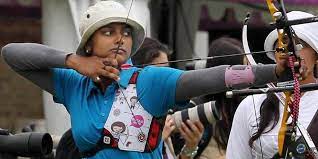
DEEPIKA KUMARI – INDIAN ARCHER!!!

Everyone in the world have some unique talent. The talent to do something vary from person to person. Yes, I believe I have the talent of writing articles. I would say this is my unique talent. Likewise, we haven’t heard a lot about the so called unpopular games. Archery is not as famous a cricket. But Archery is a wonderful sport. The people who has interest in this is also low. This game needs a free and concentrated mind. In this game, concentration plays a major role. Let me ask you a question? Do you know the name of any archers in India? Have you heard of Deepika Kumari? I would say I have heard her name and now I know about her a little bit by writing this article. Come on! Let’s see about Deepika Kumari.

Deepika Kumari Mahato was born on 13th June 1994 in Ranchi, Jharkand. Her father, Shivnarayan Mahato, is an auto-driver and her mother Geeta Mahato, a nurse at Ranchi Medical College. Her interest in Archery came from hitting the mangoes with stones. Many of us did this, but this has laid the strong foundation for her archery career. Deepika’s family was financially unstable and they cannot buy her new equipments to practice. So she used bamboo bow and arrow. After that her cousin helped her to develop and improve her talent.

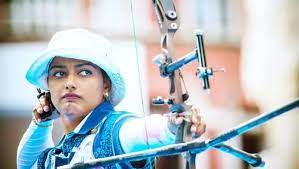
DEEPIKA KUMARI

DEEPIKA’S PROFESSIONAL CAREER:

  • She made her breakthrough in 2005, by entering the Arjun Archery academy run by Wife of Jharkand Chief Minister Arjun Munda.
  • Her professional career started in 2006 by joining Tata Archery Academy in Jhamsedpur. After being sent there, she had uniform and professional equipments and she praticed hard. She only returned home after three years, by winning Cadet World Championship title in November 2009. She is the one to get first medal for India in Archery.
  • Deepika became the second women to win the World Archery Competition held in 2006.
  • She won the 11th Youth World Archery Championship in 2009 at her age of fifteen.
  • In 2010 Common Wealth Games, She won two medals, one in individual event and the other in team event. In the same year, she was awarded Outstanding performance at CWG in the women’s catergory at the Sahara Sports ceremony.
  • In the 2010 Asian games, she lost in the individual Archery game to a North Korean player in the Bronze-level playoffs. But as a recurve team defeated Taipei of China in the Bronze-level playoffs.
  • In 2012, She won her first Word Cup individual stage, held in Turkey.
  • In London Olymbics 2012, She lost to Amy Oliver of Britain in the opening rounds due to relatively high fevers and winds.
  • In July 2013, she won the gold medal in Archey World Cup stage 3 held at Mendellin.
  • In September 2013, she won silver in the FITA Archery World Cup.
  • In 2015, in Stage 3 Archery world Cup, she won bronze in the individual event. She won team Silver with her teammates in the same World Cup.
  • In November 2015, she won a bronze medal in the Asian Championship with Jayanth Taldukar in the Recurve Mixed Team event.
  • In April 2016, at the first stage of the World Cup in Shangai, Deepika equaled the Ki-Bo-Bae’s world record of (686/720) in the women’s recurve event.
  • In November 2019, Deepika Kumari secured an Olympic quota at the Continental Qualification Tournament being held on the sidelines of the 21st Asian Archery Championships in Bangkok.
  • She won three gold medals In Stage Three World Cup held in Paris 2021.
  • She recorded the 13th triple gold and became the 11th archer to achieve the feat – in the 15-year history of the Hyundai Archery World Cup.

In 2017, a Biographical Documentry called Ladies First, flimed the life of Deepika Kumari. This movie won at London Independent Festival and was screened in  Mallorca Film Festival in October 2017. This movie has also been submitted in Short Documentary category at Oscars.

Deepika Kumari - Wikipedia
PadmaSri awarded by Hon’ble Pranab Mukerjee.

AWARDS WON BY DEEPIKA KUMARI

  • 2012 – Arjuna Award by the Government of India
  • 2014 – FICCI Sportsperson of the Year Award
  • 2016 – Padmasri by the Government of India
  • 2017 – Young Achievers award which is felicitated by Vogue.

Read more;

https://en.wikipedia.org/wiki/Deepika_Kumari

WHY INDIA STRUGGLES TO WIN MEDALS IN OLYMPIC ?

India is nation of 1.3 billion individuals yet we are aching for gold medals. Though little nations like France, Japan and Germany have more gold medals than our complete awards till now. What could be the explanation ? Do our people need potential or difficult work ? No, we have potential however we don’t utilize it.

Since our youth we are advised to do well in examinations, we scarcely have any games period in our school. Numerous nations have sports like gymnastic, volleyball and swimming in their school however we don’t have any. A few guardians don’t permit their children to play any games since they imagine that it could influence their scholarly.

In our nation sports like cricket are given more significance. Cricketers are viewed as God though scarcely anybody knows the names of our Hockey players which is our national sport. Cricket isn’t directed in Olympics. Simply 10 to 12 nations play cricket and we feel extraordinary in the wake of winning a World cup directed between those 12 nations. Cricket is a game which brought by Britishers while games like Kabaddi and wrestling are from India.

Tokyo Olympics Daily: India wins hockey bronze after years of  disappointment | Financial Times

Our Government additionally spend extremely less cash on sports. A portion of the players don’t have appropriate equipment. They additionally need to battle a great deal since some of them come from small towns. They need to confront analysis which the players of different nations don’t confront.

After this load of issues we anticipate that our country should win medals and assuming we don’t, we censure our players. We have been playing Olympics from 100 years while China from 69 years then additionally they have all out 250 gold medals though our all out awards are scarcely 40. Our players are not lacking anyplace they simply need our help and legitimate offices. Assuming we need our nation to more win medals in next Olympics then we should chip away at these issues.

Tokyo Olympics​: India celebrates wrestler Bajrang Punia's wrestling  bronze- The New Indian Express

URBAN FARMING: AN INITIATIVE FOR FOOD SECURITY

Even after living or residing in a city, a person can start his or her business in agriculture industry and it is sustainable also. The business will provide food into the busy and populated areas and cities. Urban Farming.

WHAT IS URBAN FARMING?

In simple terms Urban farming is the process of producing or cultivating food inside the city limits. This business has both pros and cons. This business faces challenges but it also offers many benefits to the city, like increased food security, decreased waste, community involvement and many more. Urban Farming is also known as Urban Gardening or Urban Agriculture and it means the practice of cultivating, processing and distributing food in and around cities or towns or urban areas. It involves animal husbandry. bee keeping, horticulture, aquaculture etc.

NEED OF URBAN FARMING:

  • Provide Food to the growing population
  • Reduce pressure on the traditional methods of cultivation
  • Help improve Quality of Life
  • Reduce Food Security
  • Reduce Environmental Impact
  • Help improve the landscape of the city

TYPES OF URBAN FARMING

Urban Farming is of many types, like: Street Landscaping, Tactical Gardening, Backyard Gardens etc.

VERTICAL FARMING
  1. Backyard Gardens: It generally means growing food in the property of a home and sharing it with family, friends or neighbors.
  2. Street Landscaping: Improving the landscape of the streets with the help of living street design or community gardens etc.
  3. Tactical Gardens: Utilizing small spaces available in a practical way (that doesn’t involve much expenses). Ex: Keyhole Garden which replace parking spot in streets.
  4. Forest Gardening: Gardens in urban forests including crops, fruits or herbs or nuts and even vegetables.
  5. ROOFTOP GARDENS: Using spaces of roof for growing food. This method helps in reducing Urban Heat Island effect and help in improving the quality of air.
  6. Green Walls : Using the space on internal and external walls to grow food.
  7. Vertical Farms: Planting or cultivating vertically for reducing the usage of land and land footprint of agriculture.
  8. Animal Husbandry: Raising animals for food and cities also allow residents to raise a limited number of such animals.
  9. Urban Beekeeping: It is a very common hobby and has many benefits for the local environment.
  10. Aquaponics: Raising aquatic animals such as fish etc. and in urban areas this can be done by capturing storm water and creating self sustaining system.
ROOFTOP FARMING

IMPORTANCE OF URBAN FARMING:

Urban Farming is an essential part of urban ecological and urban ecosystem and helps in improving the sustainability of the area. It plays an important role in Urban management system . A growing city will produce large number and amount of waste and urban agriculture acts like a solution for solving this issues by turning urban wastes into productive resource system. It helps in bringing original and nurtitious food to the local communities which has many direct health benefits. It reduces the risk of harmful conditions and vulnerability to get exposed to different chemicals used for increasing the longevity of the food and fruits.