E-LEARNING-CHANGING THE WAY OF EDUCATION.

ABOUT

In this era of Technological boom, e-learning has placed knowledge right at our finger tips, no matter where we are and at what time of the day we wish to study. Literature, Science, Math, Geography, History – you name it; we have it on the display screen of our tablets or phones at the swipe of our fingers.
Just one smart device and some nominal charge for internet connection would take us from the primary level of learning to even college education!e-learning doesn’t In this era of Technological boom, e-learning has placed knowledge right at our finger tips, no matter where we are and at what time of the day we wish to study.

E-learning doesn’t differentiate between a slow learner or a studious one because it helps set up an individualized pattern according to the pace of every student. It doesn’t even matter what our life situation is or how old we are, and is an affordable option for people who can’t meet expenses to purchase lots of books or enroll for tuition or coaching classes website.

WHAT E-LEARNING PROVIDES?

Online learning provides us with an audio-visual treat and 3-dimensional perception that help us comprehend concepts in a much better way. We are open to taking tutorials not only from Indian teachers, but also from people belonging to different parts of the world.

We also get to divide study timings as per our convenience. Literally, no more carrying around books and bags – just sit, stand and walk while learning!

Yet, online learning tempts one to browse through various subjects on a superficial level, rather than going into deep study. This practice, in turn, leads to insufficient understanding of certain basic concepts which might affect our advanced learning.

This is because most online courses do not follow a structured pattern or work assessment. So some students might fail to meet the expected standard of education.

Also, using technology has its own issues like slow internet connection, power shortage crises and cyber security concerns.

If learners use e-learning software, they require devices that are only compatible with that software which is quite a costly investment, at least initially.

One ought to admit though , communication via human connections is a different pleasure altogether, that cannot be substituted by electronic devices in which computer proficiency is essential.

E-LEARNING OVER CLASSROOM LEARNING :

In traditional classroom settings, getting to share ideas with friends, playing with them during break-time, spending some time with nature and listening to encouraging talks from elderly teachers do develop kids’ social skills and empathetic approach.

We cultivate mutual respect and take responsibility for our actions and become better individuals through human connections.

Speaking of health issues, prolonged screen time and sedentary habits eventually lead to dry eyes and obesity. Unhealthy sitting postures cause backache and stiff neck too.

When bored with studies, students play online games and watch inappropriate stuff that could lead them to bad ways or unhealthy lifestyle. Online addiction has been lately categorized as a mental disorder.

In short, e-learning can either shape us into brilliant personalities or can degrade us to lazy and indifferent individuals, depending on our responsible usage & proper supervision of students by adults

 between a slow learner or a studious one because it helps set up an individualized pattern according to the pace of every student.

It doesn’t even matter what our life situation is or how old we are, and is an affordable option for people who can’t meet expenses to purchase lots of books or enroll for tuition or coaching classes.

Online learning provides us with an audio-visual treat and 3-dimensional perception that help us comprehend concepts in a much better way. We are open to taking tutorials not only from Indian teachers, but also from people belonging to different parts of the world.

We also get to divide study timings as per our convenience. Literally, no more carrying around books and bags – just sit, stand and walk while learning!

Yet, online learning tempts one to browse through various subjects on a superficial level, rather than going into deep study. This practice, in turn, leads to insufficient understanding of certain basic concepts which might affect our advanced learning.

This is because most online courses do not follow a structured pattern or work assessment. So some students might fail to meet the expected standard of education.

Also, using technology has its own issues like slow internet connection, power shortage crises and cyber security concerns.

If learners use e-learning software, they require devices that are only compatible with that software which is quite a costly investment, at least initially.

One ought to admit though , communication via human connections is a different pleasure altogether, that cannot be substituted by electronic devices in which computer proficiency is essential.

In traditional classroom settings, getting to share ideas with friends, playing with them during break-time, spending some time with nature and listening to encouraging talks from elderly teachers do develop kids social skills and empathetic approach.

We cultivate mutual respect and take responsibility for our actions and become better individuals through human connections.

Speaking of health issues, prolonged screen time and sedentary habits eventually lead to dry eyes and obesity. Unhealthy sitting postures cause backache and stiff neck too.

When bored with studies, students play online games and watch inappropriate stuff that could lead them to bad ways or unhealthy lifestyle. Online addiction has been lately categorized as a mental disorder. In short, e-learning can either shape us into brilliant personalities or can degrade us to lazy and indifferent individuals, depending on our responsible usage & proper supervision of students by adults.

Designer masks: the new fashion statement

If we have to live with a face mask in the foreseeable future, let it be a designer one. Luxury brands to corporate fashion, artisanal communities to even turban designers are redefining the face mask into a fashion accessory, albeit one that follows all the norms of WHO safety protocols.

The bizarre situation arising out of the COVID-19 pandemic has sparked an amazing amount of creativity among designers and artisans. Glamorous to the artistic, the range of masks flooding the market is exhilarating.

While the initial intention of designers and brands was to create masks for a more altruistic purpose — to rush supplies to frontline workers as a contribution to the fight against the pandemic, it is turning into another vertical of their business. For artisans, on the other hand, it is a means to survive the financial constraints imposed by the lockdown and tide over these uncertain times.

Globally, fashion brands such as Dior, Prada, Gucci and Louis Vuitton recalibrated their manufacturing units to make masks, protective gear and sanitizers. Their masks initiative has moved from public-spirited to a fashion offering. Indian designers and savvy artisans are fast catching up. Face masks are a canvas for self-expression and a means of survival at a time when most business has come to a halt. According to the book History of Surgical Face Masks by John L. Spooner, masks first made an appearance as protective gear for medical practitioners in the 19th century. They were adapted in China in 1910 to prevent spread of pneumonic plague.

Fashion in Asian countries such as China, Korea and Japan included designer face masks as a shield to deal with rising pollution. The rest of the world is waking up to the fact that your mask does not have to be boring or surgical if you aren’t a frontline healthcare worker or afflicted by COVID-19.

The Savile Row mask

huntsman

Established tailors on this iconic London street are handcrafting and retailing face masks, which is now an essential accessory in our fight against the coronavirus. Huntsman, a big name on Savile Row, handcrafts soft masks made using 100 percent Egyptian cotton. The double-layered masks are embroidered with their signature alphabet ‘H’ and are sold in a classic box pleat design with elasticated straps.

The luxury monogrammed masks

lv-mask

LVMH, owner of brands such as Louis Vuitton, Dior, Givenchy and Fendi, has employed 300 additional artisans to make non-surgical face masks. The LV masks feature the classic brown monogram pattern in tan suede with gold rivets reinforcement and costs up to $1800. Pretty much like LV, Fendi has put out a logo-monogrammed mask in deep tan/brown shade that has been designed and hand-stitched by artisans in their Paris atelier.

The signature pattern face masks

ampm-amhale-safari-edit-face-mask-1-286x258-1

Most designers have signature prints that they are known for. Priyanka Modi, creative Director of AMPM, an edgy fashion brand has dovetailed their prints with some colour “added keeping in mind the universal dreariness, to lift up the spirits of the people who end up wearing them”. The result is a collection of snug textured, patterned masks with contemporary aesthetics and angular lines. Functional to the tee, these masks can be bought online as well as at AMPM stores, and retail between Rs 4,000 to Rs 5,000.

The quilted ones

hemant-258x258-1

Leconet Hemant’s dreamy signature patterns and prints make way on to their 3-and-5 ply face masks. “We have used cotton poplin with polyester interlining, which feature prints and light quilting with fabric. Each mask undergoes UV-ray sterilisation before being packed in a fabric pouch made from the off cuts,” says designer and co-founder Hemant Sagar. The prices of the masks range from Rs 999 and Rs 1499 and they are being sold via the brand’s stores.

The Rajput-style masks

1

Rajputs are famous for their swag and their style, on display even in the most stressful of situations. Udaipur-based safa and turban designer Harendra Jodha, who studied the Rajput lifestyle at Chopasin School (they teach you how to live a life of leisure like a Rajput!) created a range of beautiful handloom cotton 3-ply masks to match the safas that the men wear, particularly at weddings or important ceremonies.


15 best ways to meet someone in real life, if you hate online dating.

As in today’s world considering the People of this generation and the high tech technology which allows you to connect with anyone around anywhere in the world and therefore people tend to try something new and therefore experiment online dating but not all of them succeed in finding the right one and leads them in an inappropriate position. Later on they don’t tend to try the platform because it is mainly filled with bots and fake people. So if you hate online dating and want to meet someone in real life and make a bond this article is for you.

The benefits of meeting in real life and the disadvantages of online dating.

The major advantage of meeting the person in real  is that you don’t have to deal with a person behind the screen, so now you can observe their body language their curiosity towards you and more importantly you know who you are dealing with as in online dating there are chances that you don’t even know who is on the other side of the screen and you will be played until you meet and find out.

When you meet the person in real you can feel the vibe and the chemistry if there is any on the other hand in the case of online dating the person has the time to type up and make things which are obviously manipulative.

Different ways to meet people in real life.

  • Remove all the dating apps from your device –  Yes, you heard that right, set yourself free from all the bots and scams where there are a lot of choices to swipe upon which obviously don’t match up your vibes.
  • Try something new – Apply for that job, Go to that class, take that tour, attend that party, get over your comfort zone and you will be meeting new people on the way.
  • Being an extrovert – Try being socially confident and Interact with all sorts of people where ever you go. This will build your confidence and get you off your comfort zone.
  • Take yourself on a date – indulge in some conversation with the opposite gender and and see where the conversation leads to.
  • Gym – People be like how’s gym gonna help? Keeping your body fit helps your mind to stay healthy and think better and will eventually lead to better results.
  • Social media – you can hit someone on social media like Facebook or Instagram  rather than a dating site and eventually lead up dating them.
  • Take yourself outside on a weekend – Get of that couch and go engage yourself in some social activity.
  • Meeting the friends of your friends – This is the easiest way to meet people and be socially active.
  • Travel – Never miss an opportunity to travel as you get to spend time with the people and know them exactly.
  • Literally just move outside there are many weird people that you may find.

Some other simple methods to meet people in real life.

  • Move out.
  • Be socially active.
  • Talk more.
  • Take that extra step.
  • Get off your comfort zone.

You can follow this simple guide to know your worth and get along the real world in no time.

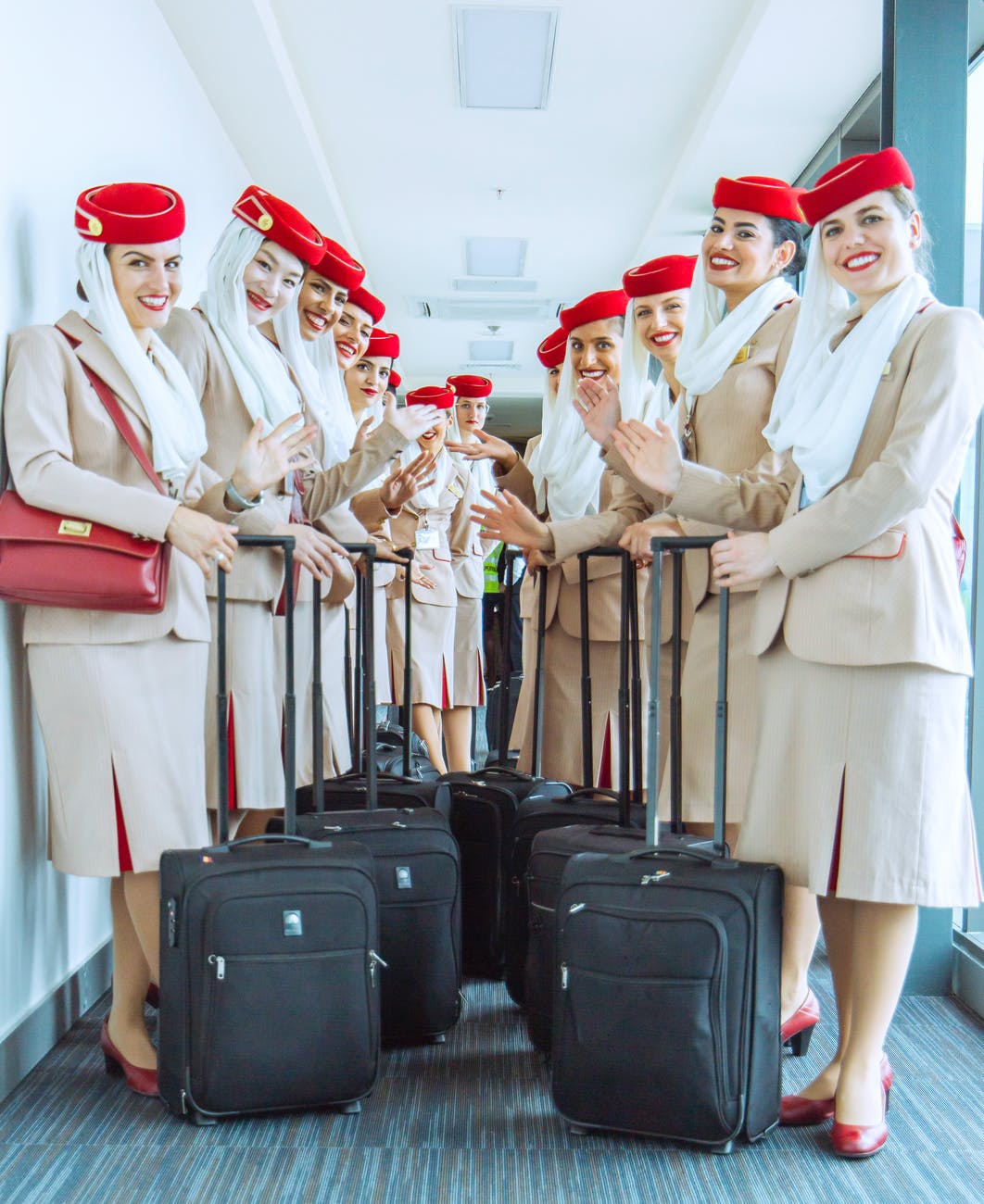
Checklist for domestic travel via flights

women in brown blazer and brown skirt set

  1. Plan, Plan & Plan

A lot has changed as per the new guidelines, so it’s best to plan ahead. As per the new rule, you have to reach the airport at least 2 hours in advance, as opposed to the earlier 40 minutes cut off. Also keep in mind, how you will be travelling to the airport as public transport will not be easily available.


  1. Be Vigilant About Your Hygiene & Safety

Now I know that this one isn’t easy. We’ve never had to live or travel in a time with a highly infectious virus. So the best thing to do is not let your guard down. Start from the basic level and ensure that you are packed well. In an ideal scenario, ensure that you do not have to buy anything from a shop or from the airport. Make sure you have a mask, sanitizer and gloves easily accessible in your handbag. Ensure that you take maximum protection while heading to the airport and leaving your destination airport. You can never be too careful.

  1. Pack Only One Hand Bag & One Carry On Bag . As per the new rules, only one hand bag and one cabin luggage is allowed. So make sure you pack light and pack efficiently. Only carry what you need. Also remember, to carry a handbag that is not so heavy that you have to leave it on the floor of the airport. Another important point to note is that metal & plastic are better breeding grounds for viruses. So ensure that you carry a bad that is made of fabric instead of metal.
  2. Rethink Your Airport Look

Well, remember when airport looks were all the rage? You’re probably going to have to rethink that look now since the new look is all about hazmat suits, masks, sanitizers and gloves. As part of the new guidelines, just before you board the flight you have to compulsorily mask up and suit up to prevent infection and the spread of it. Wear comfy clothes underneath your protective gear and ideally pick a hazmat suit that you can dispose off with ease once you reach your destination.

  1. Eat Well Before The Flight/Carry Food

As per the new guidelines no meals will be served onboard the flight, so do ensure that you either eat well before the flight or carry your own food that you can eat after the flight.

  1. Let Your Loved Ones Know When You Are Travelling

We are not asking you to take permission, but do inform your friends and family about your travels and ideally do keep a backup option for stay and help at the destination you will be visiting. Mark your emergency contacts clearly.

  1. Carry Enough Cash & Have Ready Finance Available

No, we are not asking you to carry a briefcase full of money like in those old Bollywood films, but do ensure that you have both some liquid cash available with you and some easily available money in the bank. In case you do have to be quarantined or in the unfortunate situation that you get infected, ensure you have enough money for treatment and for stay.


Pride Month 2020: #21daysallychallenge

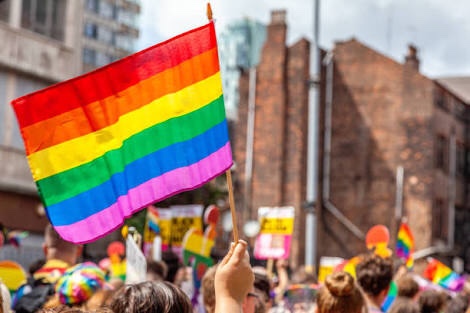
Pride march

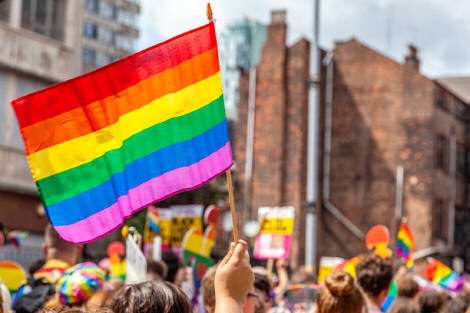
Every year, in the month of June, the LGBTQ community hosts pride celebration in various ways. It is a month long celebration of diversity, love, acceptance, inclusion and unabashed self-pride. Various events are held across the globe during this commemorative month as a way of recognising the LGBTQ community and their influence around the world.

Why the month of June?

The month of June was chosen for LGBTQ pride month to memorialise the riots held by LGBTQ community members against a police raid that occured at the Stonewall Inn, a gay club, in New York City on June 28, 1969.

The message was clear; to peacefully protest and raise political and social awareness of the issues facing by the community. The queer community wanted to be open about their sexual orientation and be free to go anywhere without the fear of being arrested.

Pride Month 2020: #21daysallychallenge

This year, because of the social distancing norms across the world, many pride parades and events are on hold. But still we would not be restricted to celebrate all forms of love. Due to the global pandemic concerns, this year a different approach have been taken by the Pride Circle to take aware and conscious steps to acknowledge and redress stereotypes and biases about the LGBTQ community and bring about social change.

The aim of the challenge is to bring together individuals and influencers from over 28 countries and 70 organisations to establish a global community of LGBTQ allies. It started on June 1, there will be 21 mini-challenges extended over a period of 21 days in the month of June. As per the Pride Circle’s Statement, “this is based on science that it takes 21 days to form a new habit. Anyone can participate free-of-cost and sign up for it by clicking on the link – https://thepridecircle.com/21daysallychallenge/

Some of the challenges of the initiative include building awareness about the existence and journey of an LGTBQ person, for instance, read or watch or find out about the coming out story of an LGTBQ person, laws associated with the community; show your allyship, test your biasness- have you ever made fun of or discriminated an LGBTQ. Wear something symbolic or just shout out, let the world know that you’re an ally. Build your knowledge about the community. Learn about the art and literature by them and go all out. Don’t hold back, talk about the stigma and bias against LGBTQ persons.

In our country, decriminalisation of homosexuality is yet to complete 2 years, this initiative which has sprouted in India could become our leap of faith to ignite a global movement to look out for equal rights and fair treatment for the people belonging to that community. Allies would be able to contribute in creating a safe space where people of every sexual orientation is welcome and respected. It will help bridge the gap and let people understand the importance of treating others, who may be different from them, with equality, fairness, acceptance and mutual respect. The #21daysallychallenge could be a favourable step in the direction of building and inclusive and conscientious society with support and trust.

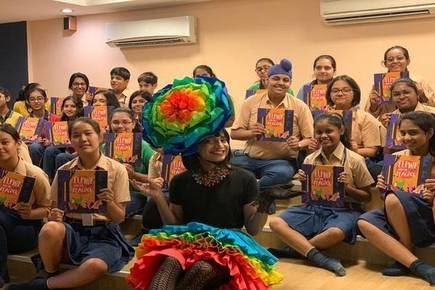
The movement is supported by various organisations, along with eminent academic institutions such as IIMs, IITs, NMIMS, MICA and the only school in India participating in Pride month celebrations, Tagore International School, Vasant vihar. This is a great achievement towards creating safer schools, workplaces and society for the coming generation. Such support from organisations like these is the need of the hour as it plays a vital role in the bigger fight to advance the community and promote inclusion in all spheres of life.

Pic credit: The Hindu

https://www.google.co.in/amp/s/www.thehindu.com/society/celebrating-pride-month-in-june-with-the-21daysallychallenge/article31720256.ece

Now, more than ever, we, the people of India, should encourage everyone who believes in LGTBQ equality to come out and be an ally or support in the best possible way. It’s time we move towards being a more accepting society and initiatives like these is the fundamental step towards that larger goal of “vasudhaiva kutumbakam”, i.e. “the world is one family”.

Should we use a smartphone?

Mobile is the essential thing nowadays, we all know that food, clothes, and shelter these are the basic requirement of the human cycle, however, in this cycle human added mobile phone as a basic need, because of the advancement of the technology, furthermore, majority people on earth have own smartphone from old age people to a small child have it.

in modern times, no one can live without a cellphone, people forget to eat and take care of their child, but never lost or forget their phone. According to the article which was published by Global System for Mobile Communications, in that post, they declared the ratio of cellphone user around the globe, and the ratio is 5.13 billion people have owned a mobile phone, and the ratio is increasing day by day. from around the globe, many companies like GSMA have an eye on the users and what they surf on the cellphone and how much time people spent on it in the day.

As we all know that without the internet, mobile is like empty and codless phone, which our grandparents use at their young age, we can find each and everything on the internet, whenever we stuck any were in education or on the place at the time mobile phone help us, by finding the solution, google has all answer of the question, which we have in our mind, just we have to ask to google and it displays on the screen, and the speed is like no one can beat it.

Capture

Here are some advantages of using a smartphone:

1) Communication: with the help of a cellphone one can connect themselves with others ever living far distance with the help of audio as well as video call.

2) Social media: in the age of social media, the whole world is like a small global village, people can share a post, communicate by messaging, and displaying the timeline, many time people make their friends online, chat with them and enjoy the company and never get bored in free time.

3) Daily News: on the mobile phone there are many news applications, where we are connected to the things happening around the world, we can find news regarding sports, politician, current affairs, daily stories, and we also get pop-up notification daily morning and a whole day, so we do not have to turn on the television and change the channels.

4) Photography: with the help of mobile phone all youngster becomes the photographer, additionally, mobile companies also focus and endorse the features of the camera with high resolution, which capture the important and long life memories, whenever people see in future they can recognize well.

5) Online services: nowadays each and every item available online on our phone, by playing games on can earn money, on can maintain their financial balance, banking also be done online, shopping, booking a ticket for holidays, and ordering food. and these all things can be done by just tapping on the screen.

6) Education: Parents and children can learn many things online from anywhere and every ware at any place and the choices of times is according to us. in the situation like COVID-19 we can see that all classes held online even student who studied in 6th grade they also have online classes on that way it will help us.

If we consider the downside of mobile phone:

1) when people use a mobile high rate then they may be addicted to the cell phone they never left this addiction and it will affect the time and health like insomnia.

2) If people use a smartphone till late night, they will not gonna have proper sleep and rest, so,it will harm full for their eyesight

3) sometimes people use a phone for the whole day, they will miss the outdoor fun with friends, or if they are in the home, they will miss the quality time with there family, and it will lead to the communication gap between family members.

4) whenever we use the smartphone touch screen, there may behave millions of micro germs, and when we use those hands while eating, it will spread in the whole body and our body might be infected.

Every people, know the famous personality steve jobs, the owner of the Application company. in the year 2011, the new york times published the interview of the MR.steve and he told that “he prohibited his kids from using the newly launched IPad and other product” and he also limited the technology in his house. he also told, ” he knows that he made monster in the form of Apple product”. Furthermore, Bill Gates also said in the public press “he never allows their child to use the smartphone until the child becomes over 14 years old.

So, by taking motivation from those two legends parents should restrict the usage of mobile phone at their home.

thanks for reading.


APOCALYPSE – Are u afraid to die?

Humans have a macabre fascination with the end of the world — will humankind go out with a bang or disappear with a whimper? Are we the architects of our own demise or cosmic pawns in a game we can’t control?

Apocalypticism is the religious belief that there will be an apocalypse, a term which originally referred to a revelation, The original word in Greek — apokalypsis means an unveiling, a revelation i.e. to disclose , but now it is usually referred to the belief that the end of  the world is impending, This credence is usually accompanied by the idea that civilization will soon come to a tumultuous end due to some sort of catastrophic global event.

ORIGIN

The notion of apocalypse originated from The Book of Revelation (often called the Revelation to John, Apocalypse of John, the Revelation from Jesus Christ ,which is the final book of the New Testament which is the final book of the Christian bible. Revelation is an apocalyptic prediction and  is the only book of the New Testament classified as apocalyptic literature with extensive use of visions, symbols etc. especially in connection with future events. The Book of Revelation was written probably in around the year 96, right at the end of the first century.

The book spans three literary genres: the epistolary, the apocalyptic, and the prophetic. The Revelation of John, the Apocalypse, also must be looked at from the perspective that it’s not the only such piece of apocalyptic writing  that we have. In fact there are lots of writings from the ancient world that we know by name and we can actually read today also.  So when the author of the Book of Revelation sat down to write, there was a very strong paradigm of what revelation literature should look like and sound like.

But the story of apocalypse is an old one, one of the oldest humans tell. In ancient religious traditions beyond Christianity — including Judaism, Islam and Buddhism — it is a common narrative that arises in moments of social and political crisis, as people try to process unusual or shocking events.

HERE ARE SOME APOCALYPTIC BELIEFS OF VARIOUS FAITHS:

Christianity: Some Christians believe that the New Testament’s book of Revelation(the second part of the Christian Bible), isn’t just metaphorical, but a literal description of a final battle on Earth between God and the forces of Satan. Before that happens, there is a series of horrific events—including an earthquake, lightning, and a fiery hailstorm that burns up a third of the trees on Earth etc.it is also believed by the idea that Christ will return.

Islam: Prophet Muhammad—describes the events that lead to the end of the world. Natural disasters increase, and society undergoes a moral decline that leads to a surge in violence, bloodshed, anarchy, and sexual immorality. In the Islamic tradition, the Quran tells stories of plagues and of a final earthquake that will tear the earth apart. Amir Hussain, professor of theology at Loyola Marymount University, said, “Apocalypse also includes what happens when one’s eyes are opened”.

Hinduism: Hindus apocalyptic beliefs are different from other religions, because they believe that the universe goes through endless cycles of creation and destruction. In that cycle, three gods—Brahma, Vishnu and Shiva—all play a role. Brahma is the creator of the universe, while Vishnu preserves it during its existence. Shiva’s job is destroying the universe, so that it can be recreated.

 Buddhism: In Buddhism, time is cyclical, not linear, making apocalypse both an end and a beginning. “Apocalypse happens and then a new order starts, a new social order, new moral order,” said Vesna Wallace, professor of Buddhism at the University of California, Santa Barbara. “The story repeats itself.”

Modern, secular American life is filled with its own apocalyptic visions. Movies and television shows depict civilization on the brink of extinction. “The Walking Dead” explores life amid the zombie apocalypse. “The Hunger Games” presents a dystopian future after conflict and ecological disasters have destroyed much of the world.

WHY DO PEOPLE BELIEVE IT ?

I think history will tell you that end time predictions increase when people are being ill-treated  or feel oppressed and this increases when despair hits – in terms of how the world is experiencing economic and political turmoil.   The people who are most likely to believe in doomsday predictions are those who are religious, because there are many religious texts that  indicates end of days.  Even today, people continue to make predictions about dates in the future in which the world will inevitably end.  It is an extraordinary belief because there is little proof to back these claims, and they are often the result of someone trying to interpret ambiguous information that is in religious or other ancient texts. 

Very popular source of doomsday predictions is the Mayan Calendar.  One of the most famous end of world predictions was for December 21st, 2012.  People took this prediction seriously, and they stocked up on food and read up on survival skills.  The reason that the Mayan Calendar was proof of this end was because the most popular Mayan calendar abruptly ended on December 21st, 2012. Whether one believes in doomsday predictions or not, it is hard to deny that it is a very common belief that has scared all of us at one point or another.

 According to psychologists, possible explanations for why people believe in modern apocalyptic predictions include an innate human fascination with fear, personality traits of paranoia and powerlessness and a modern romanticism involved with end-times due to its portrayal in contemporary fiction.

HOW TRUE ARE THESE PREDICTIONS ?

Predictions of apocalyptic events that would result in the extinction of humanity or the destruction of the planet have been made since at least the beginning of the Common Era. The 2012 phenomenon predicted the world would end by Earth getting destroyed by an asteroid,or an alien invasion; or a supernova. Scientists from NASA, along with expert archaeologists, stated that none of those events were possible.

Every year, new apocalyptic predictions waft through the the internet and the tabloid media. In 2019, for example, the world was predicted to end in a nuclear war, an asteroid impact, and a new ice age, Modern doomsayers have been predicting climate and environmental disaster since the 1960s. They continue to do so today. None of the apocalyptic predictions with due dates as of today have come true.  More than merely spotlighting the failed predictions, this collection shows that the makers of failed apocalyptic predictions often are individuals holding respected positions in government ,science or hold strong religious beliefs . While such predictions have been and continue to be enthusiastically reported by a media eager for sensational headlines, the failures are typically not revisited.

APOCLYPSE 2020

Nostradamus, the world’s most famous 16th-century prophet and mystic, is believed to have prophesied the year 2020 and has called for both disasters and revelations. A year marked with both favorable and dangerous results. Pandemics are surrounded by a sense of impending apocalypse. Throughout history, they have been understood as final tribulations, a sign of the end time, It is also quite extraordinary to believe that you can pinpoint, to the exact day, when the entire world will end.

The end of the world is near—again! For centuries, doomsdayers have prophesied the apocalypse. But there’s a tiny catch: None of the end-of-world predictions ever come true.

Born a crime: Trevor Noah

I know Trevor doesn’t need an introduction. Trevor Noah is the best dailyshow host so far and famous for his consistant laugh inducing way of anchoring the show with such relevant topics.

In his book Born A Crime, he narrates his South African childhood stories. He was born to a black xhosa mother and white Swiss father at a time when interracial relationships were illegal. Therefore he always stayed indoor. Even when they went out his mother would pretend like he isn’t hers otherwise she will be jailed for kidnapping a white boy.

His mother is the main character of the book. Such a powerful women who even had the courage to approach a white man to have a baby because she never wanted her child to suffer like her. She named him trevor that does not have any meaning in South Africa. She wanted her child beholden to no fate. She wanted him to go anywhere and do anything.

The book goes through a lot of emotional states that trevor had to suffer because he was born coloured. He had gone through a lot that we can’t ever imagine just because he was black. Their natives were even manipulated to fight each other based on the community they belong to.

Trevor mastered all their traditional languages. “I soon learned that the quickest way to bridge the race gap was through language. ” He says. His mother knew xhosa, zulu, German, afrikaans, sotho and used this knowledge to go anywhere they want. Thus Trevor learned them too. This saved him to handle several situations. She also made sure that English is the first language her son spoke because that was the one thing that will make you a leg up in South Africa.

English is the language of money” Noah says. If you are looking for a job english is the difference between getting the job or staying unemployed. Thus Trevor learned to become a chameleon to get accepted wherever he goes.

If you spoke to me in Zulu, I replied to you in Zulu,” he writes. “If you spoke to me in Tswana, I replied to you in Tswana. Maybe I didn’t look like you, but if I spoke like you, I was you.

The book is full of humor of course we could expect that when it’s written by a comedian. But it also go through the darkest times of Trevor’s childhood. How he was raised in Apartheid South Africa under racism, abuse, colonialism, poverty, living under a police state such that we could connect it parallel to the current racial tension in America.

Oh god, Trevor was such a terror child his mother really had a hard time looking after him. He even burnt down a house where his mother worked. He was dangerously naughty. I would highly recommend it to everyone.you will enjoy and learn important things. Only Trevor could write such sufferings in such a humorous manner. We will laugh out aloud but we can also feel those pathetic situations he had to go through.

Missions to exploring Sun: World Exclusive Report @2020-21

The Indian Space Research Organization (ISRO) is preparing for its first scientific expedition to study the Sun, Aditya-L1. It would be placed into a point in space known as the L1 Lagrange point.

  • Aditya L1 will be ISRO’s 2nd space-based astronomy mission after AstroSat, which was launched in 2015.
  • Aditya 1 was renamed as Aditya-L1. The Aditya 1 was meant to observe only the solar corona.

AstroSat

  • AstroSat, was launched in September, 2015, by PSLV-C30 from Sriharikota (Andhra Pradesh).
  • It is the first dedicated Indian astronomy mission aimed at studying celestial sources in X-ray, optical and UV spectral bands simultaneously.

Key Points

  • Launch Vehicle: Aditya L1 will be launched using the Polar Satellite Launch Vehicle (PSLV) XL with 7 payloads (instruments) on board.
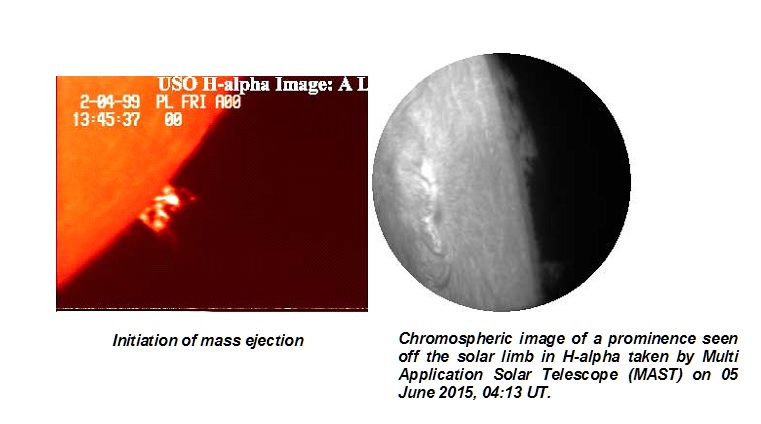
  • Objective: Aditya L1 will study the Sun’s corona (Visible and Near infrared rays), Sun’s photosphere (soft and hard X-ray), chromosphere (Ultra Violet ), solar emissions, solar winds and flares, and Coronal Mass Ejections(CMEs), and will carry out round-the-clock imaging of the Sun.
  • Challenges: The distance of the Sun from Earth ( approximately 15 crore kms on average, compared to the only 3.84 lakh kms to the Moon).This huge distance poses a scientific challenge.
    • Due to the risks involved, payloads in earlier ISRO missions have largely remained stationary in space; however, Aditya L1 will have some moving components which increases the risks of collision.
    • Other issues are the super hot temperatures and radiation in the solar atmosphere. However, Aditya L1 will stay much farther away, and the heat is not expected to be a major concern for the instruments on board.
Credits- Third Party Reference

Importance

  • Evolution of every planet, including Earth and the exoplanets beyond the Solar System, is governed by its parent star i.e the Sun in our case. The Solar weather and environment affects the weather of the entire system. Therefore, it is important to study the Sun.
  • Effects of Variation in Solar Weather System: Variations in this weather can change the orbits of satellites or shorten their lives, interfere with or damage onboard electronics, and cause power blackouts and other disturbances on Earth.
  • Knowledge of solar events is key to understanding space weather.
  • To learn about and track Earth-directed storms, and to predict their impact, continuous solar observations are needed.
  • Many of the instruments and their components for this mission are being manufactured for the first time in the country.

Lagrange Point 1

  • Lagrange Points, named after Italian-French mathematician Josephy-Louis Lagrange, are positions in space where the gravitational forces of a two-body system (like the Sun and the Earth) produce enhanced regions of attraction and repulsion.
  • The L1 point is about 1.5 million km from Earth, or about 1/100th of the way to the Sun.
  • L1 refers to Lagrangian/Lagrange Point 1, one of 5 points in the orbital plane of the Earth-Sun system.
  • These can be used by spacecraft to reduce fuel consumption needed to remain in position.
  • A Satellite placed in the halo orbit around the Lagrangian point 1 (L1) has the major advantage of continuously viewing the Sun without any occultation/ eclipses.
  • The L1 point is home to the Solar and Heliospheric Observatory Satellite (SOHO), an international collaboration project of National Aeronautics and Space Administration (NASA) and the European Space Agency (ESA).

Aditya L1 Mission

The Aditya-1 mission has conceived as a 400kg class satellite carrying one payload, the Visible Emission Line Coronagraph (VELC) and was planned to launch in a 800 km low earth orbit.  A Satellite placed in the halo orbit around the Lagrangian point 1 (L1) of the Sun-Earth system has the major advantage of continuously viewing the Sun without any occultation/ eclipses.  Therefore, the Aditya-1 mission has now been revised to “Aditya-L1 mission” and will be inserted in a halo orbit around the L1, which is 1.5 million km from the Earth.  The satellite carries additional six payloads with enhanced science scope and objectives.

The project is approved and the satellite will be launched during 2019 – 2020 timeframe by PSLV-XL from Sriharikota.

Aditya-1 was meant to observe only the solar corona.  The outer layers of the Sun, extending to thousands of km above the disc (photosphere) is termed as the corona.  It has a temperature of more than a million degree Kelvin which is much higher than the solar disc temperature of around 6000K. How the corona gets heated to such high temperatures is still an unanswered question in solar physics. 

Aditya-L1 with additional experiments can now provide observations of Sun’s Corona (soft and hard X-ray, Emission lines in the visible and NIR), Chromosphere (UV) and photosphere (broadband filters).  In addition, particle payloads will study the particle flux emanating from the Sun and reaching the L1 orbit, and the magnetometer payload will measure the variation in magnetic field strength at the halo orbit around L1.   These payloads have to be placed outside the interference from the Earth’s magnetic field and could not have been useful in the low earth orbit.

Credit- Third Party Reference

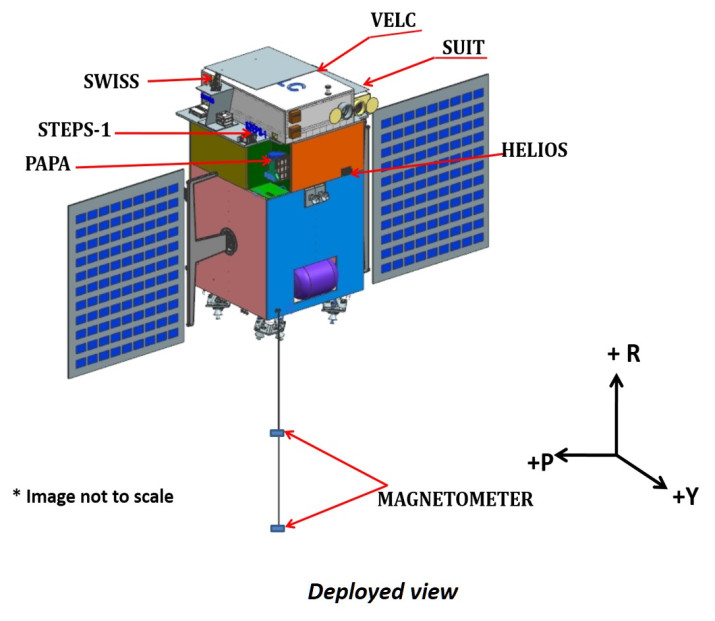
The main payload continues to be the coronagraph with improved capabilities.  The main optics for this experiment remains the same.  The complete list of payloads, their science objective and lead institute for developing the payload is provided below:

  • Visible Emission Line Coronagraph (VELC): To study the diagnostic parameters of solar corona and dynamics and origin of Coronal Mass Ejections (3 visible and 1 Infra-Red channels); magnetic field measurement of solar corona down to tens of Gauss – Indian Institute of Astrophysics (IIA)
  • Solar Ultraviolet Imaging Telescope (SUIT): To image the spatially resolved Solar Photosphere and Chromosphere in near Ultraviolet (200-400 nm) and measure solar irradiance variations – Inter-University Centre for Astronomy & Astrophysics (IUCAA)  
  • Aditya Solar wind Particle Experiment (ASPEX) : To study the variation of solar wind properties as well as its distribution and spectral characteristics – Physical Research Laboratory (PRL)        
  • Plasma Analyser Package for Aditya (PAPA) : To understand the composition of solar wind and its energy distribution – Space Physics Laboratory (SPL), VSSC        
  • Solar Low Energy X-ray Spectrometer (SoLEXS) : To monitor the X-ray flares for studying the heating mechanism of the solar corona – ISRO Satellite Centre (ISAC)
  • High Energy L1 Orbiting X-ray Spectrometer (HEL1OS): To observe the dynamic events in the solar corona and provide an estimate of the energy used to accelerate the particles during the eruptive events – ISRO Satellite Centre (ISAC)and Udaipur Solar Observatory (USO), PRL
  • Magnetometer: To measure the magnitude and nature of the Interplanetary Magnetic Field – Laboratory for Electro-optic Systems (LEOS) and ISAC.

With the inclusion of multiple payloads, this project also provides an opportunity to solar scientists from multiple institutions within the country to participate in space based instrumentation and observations.  Thus the enhanced Aditya-L1 project will enable a comprehensive understanding of the dynamical processes of the sun and address some of the outstanding problems in solar physics.

Other Missions to the Sun

  • NASA’s Parker Solar Probe’s aim is to trace how energy and heat move through the Sun’s corona and to study the source of the solar wind acceleration.
    • It is part of NASA’s ‘Living With a Star’ programme that explores different aspects of the Sun-Earth system.
  • The earlier Helios 2 solar probe, a joint venture between NASA and space agency of erstwhile West Germany, went within 43 million km of the Sun’s surface in 1976.

A more recent technical report on this topic by Dr. Angel, in which the idea is taken to another stage in development using only electromagnetic launch from Earth and no construction on the Moon or at L1

So we hope these mission will able to unveiled the secret of Sun’s Atmosphere and its Corona. Aditya L1 mission will create history for Indian Space Program and proved to be landmark as expected.

Reference- https://www.drishtiias.com/

Junk this food

One of the most doable memory of everyone’s school life is the joy of hearing the arrival of those hawkers and peddlers selling spic & spicy snacks and mouth watering sweets.

But it’s a thorny pricky fact too, tgat due to the consumption of all these flavor boosters or mood swingers, our lovely little Angels are sitting and playing in the lap of deadly diseases known to all as obesity and food poisoning.

brown woven basket on brown brick floor
Photo by Ajay Singh on Pexels.com


Throughout the developed world, with every passing second, with every single tik-tok of your clock, obesity is becoming a grave problem. Many greybeards are offering a suggestion to confort this issue i.e. debarring those unhealthy food (read junk) hawkers from entering the school premises. This way one can stop them to lure the Little education seekers towards theirnasty and unhygienic snacks.

This cumbersome suggestion needs to be executed in a well planned manner. Firstly, teachers and proffs are needed to make students aware about the fact that rather than helping in growth, that delicious looking all sort of mouth watering snack is harmful for their well being.

Just like every thing has two sides, one good and another dark and pitch black, similarly one can say that all this of shunning and restricting sort of stuff’s not good. Thinking as a child, by banning the presence of hawkers , you are basically denying the children of enjoyment (which they think is their birthright). Or, at worse the schools may resemble an Olympic size swimming pool filled with tears of those little Angels.

All and all, instead of a strick prohibition, a regular monitoring of street vendors can be done to ensure that the snacks they’re offering are not stale or made in unhygienic way. Many other diamond solid steps should be taken to ensure that the youth of your nation mustn’t fall in the hands of the demon of diseases like obesity and food poisoning.

Stories of Tragedy: Chernobyl

Sky documentary The Real Chernobyl tracks the true tragedy | Metro ...

Hello Reader.

Today we look back at one of the worst man made disasters of our civilization. The Chernobyl Nuclear Accident. Late 20th century, times of nuclear expansion. Soviet Union, under the leadership of General Secretary Mikhail Gorbachev, was steaming forward with their nuclear policy. Several nuclear plants were setup to harness clean energy. But several policy decisions and human elements came back to haunt mankind after the reactor 4 of the Vladimir Ilyich Lenin Nuclear Power Plant, Chernobyl, Ukraine, exploded early in the night of April 26, 1986, giving out huge quantities of radiation in the surrounding areas.

Town of Pripyat

Chernobyl and Pripyat: where time came to a standstill in 1986 ...

The plant was located 130 km North of Ukraine capital Kiev, near the Belarusian border. To accommodate the families of people working at the plant, a new town was built about 3 km away in 1970. They called it Pripyat. During the accident it was host to nearly 49,000 souls. The town was surrounded by woodland and was a pleasant place. There were several schools, parks, theaters, hospital. Everything a town can ask for. This was the worst affected human settlement in the accident. Everyone was forced to evacuate within three days of the accident. People were told it would be for a couple of weeks. But they never returned. Radiation level to this day remains too high for this place to be inhabited. Today this town stands covered by the woods, infested by wild animals and everything it’s inhabitants left behind, a true ghost town.

April 26, 1986

What went wrong on that fateful night? Some human error coupled with some huge design flaws of the reactor put a question mark in global nuclear safety for decades to come. Chernobyl, like most Soviet nuclear power plants back in the day, used Soviet made RBMK-1000 reactors with Uranium as it’s chief fuel. This fuel when starts reacting through fission generates huge amount of energy in form of heat. That heat is used to convert water into pressurized steam and then steam is channeled on to turbines to generate electricity. Simple. But there’s a catch. The energy rising from fission is too high if remained unchecked and this energy release is continuous as Uranium neutrons doesn’t stop reacting. So to control this high rate they had something called Control rods. These are columns made of Boron which enters the reactor and reduces this huge energy surge. So when there was too much output, you simply push the control rods in and reduce reactivity.

Scientists Develop New Theory on Chernobyl Blasts

But this system had a design flaw. For a fraction of second control rods increased reactivity, instead of reducing it. They were lined with graphite as a measure to cut costs. This was not known to the operators. And on the day of accident, a test was going on to reduce the output of the reactor to see if it can still support the water pumps through turbine. The output went too low, but the management still went ahead with the test and the result was a huge surge. Seeing this, the operator decided to push the control rods to kill the reactor function, unaware of the hidden consequence. Just as he pushed the button, the reactivity skyrocketed, converting every bit of water into steam and under high pressure there was an explosion. Hydrogen was produced from the fuels reaction with the steam and another explosion blew the roof off. Oxygen from outside rushed in and several fires started. Reactor with a capacity of 3200 MW output showed a last recorded output of 12000 MW before going off. Open roof carried the radioactive vapor into the atmosphere and wind distributed it all over Europe. It was felt in far away places like Sweden and England.

Consequences

Chernobyl New Safe Confinement - Wikipedia

2 operators died due to the explosion. 28 others died due to radiation related causes within few weeks. Thousands were exposed to radiation. There was an instant spike in cancer rates in the areas of Ukraine and Belarus after this accident. A 30 km Chernobyl exclusion zone was declared by Soviets. Thousands had to leave never to return. State did their best to hide the actual causes and consequences. Eventually had to give in and review the safety norms. The world scientific community blamed the Soviet isolation policy of the cold war era as a catalyst for this disaster. Maybe they were right. 34 years have passed since. Life has moved on. A steel structure, called New Safe Confinement, has recently been mounted over the old sarcophagus of Reactor 4 to keep the radiation in check. But Chernobyl still stays one of the most costly and haunting tragedies of the era.

Until next time…

Racism a common Practice

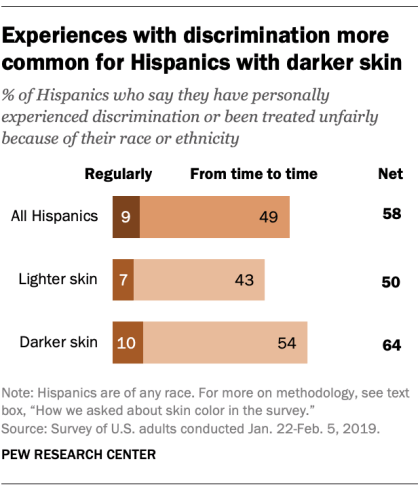
Racism is a term that is being used only when there is a need but, everyone in every walk of life does use this term to discriminate every person they meet and this discrimination does not have any religion or region but by their skin color as Martin Luther King Jr. rightly said: ” The ultimate measure of a man is not where he stands in moments of comfort and convenience, but where he stands at times of challenge and controversy”. When the civil rights moment was won in 1968 it bought a sense of relief to a black person thinking that Racism is the end but history has its play but in 2014 a black 18-year-old student, Micheal Brown was shoot down by a White Police officer and currently this is the time where the man has to measure himself as the United States is Gripping itself to its laws and the protests are erupting across the districts of the United States and all across the globe and the reason behind this simply a term that has a deep meaning ” Racism” and this term led to the death of a man named of George Floyd who was killed by a White Policeman by strangling George’s neck with his knees for about 9 minutes. This act of the white policeman has condemned by many citizens across the globe and demonstrations and protests and clashes with the police in the United States very saddening. Due to this crisis, there have been curfews in several districts in the United States and with the COVID-19 cases escalating past 6 million all over the globe and the United States being in the epicenter of this pandemic and many experts feel that due large gathering there may a large hike in the COVID-19. This is a disaster for mankind as this has violent eruptions during this pandemic crisis as there is spread of violence, clashes with police, looting and burning the stores and currently, the actions of the Civil rights movement is trending all over the internet and all the facts and related to racism is true as it is proven by everyone and by Statistics, in 2019 around 58% of people have been or felt discriminated by fellow mates or by society, but the real question here is “Whether the real heroes of the Civil rights movement would have wanted this clashes or the activities that are taking place”?

ACCORDING TO PEW RESEARCH CENTRE

A LOOK BACK TO PAST

Oppression of the black people and colored have been in the history of human civilization a long time ago and as the civilization was becoming modernized the idea of this oppression was expected to be dropped but it gained momentum and made the oppressed people fight for equal rights and this fights have been in many countries like South Africa, United States, India, Britain and in other many countries as well and in the United States it gained momentum when Rosa parks refused to give her seat to the white that resulted in starting the Civil rights movement by Martin Luther King. Jr and this became a mass movement until the Civil rights bill was passed and this idea inspired to banish the Apartheid idea in South Africa by Nelson Mandela. Martin Luther King always stood by the side of Non-Violence and this was his Philosophy until death and his inspiration behind this is Mahatma Gandhi who used the same Non-Violence for the freedom.

Martin Luther King considered the triple evil of the society like poverty, Militarism, and racism and always stood against it and proved to be true. Martin Luther King has leaven behind a legacy to win a battle using Non-Violence as a tool but is his idea is being heard and those who use violence in this situation needs to rethink about their actions as it cause good in any way, of course not it just causes spreading of hatred among all the people and this has to be stopped and if anyone wants to prove that the reason for this protests and demonstrations is equal rights then bring back the Civil rights Movement as 2.0 and recreate the Civil Rights Movement again to win this battle with Non-Violence.

E-learning boon or bane

Nowadays, there is an increase in trend of distance learning. Several people believe that this method has a total of positive impacts and it will alter conventional education while others say that argue that it is impossible to eliminate brick and mortal classroom.

To begin with, there are some advantages in attending virtual classroom. First and foremost, learning via internet is time-saving for both students and schools. For example, students can learn anything and anywhere provided that they have computer connecting the internet. In terms of teachers, they can deliver a lesson to all classes by video instead of teaching the same things again and again. Secondly, online education saves costs for country. For instance, schools can reduce overheat costs or decline budget for investing on facilities since expanding campus is not necessary. In addition, e-learning provides opportunity for people who live far from university. The fact shows that many residents in remote rural area still have chances to achieve degree thanks to this advanced technology.


On the other hands, face – to – face learning plays an integral part in education. Firstly, interactive learning is more effective than online learning. In detailed, when discussing about one topic, teachers can give some feedback for students to make sure that they understand all their mistakes and improve these errors. Moreover, studying under supervision motivates students to learn hard. Due to the fact that there are a huge number of students who are lazy and not self-awareness is learning, it is essential for them to have tutors who control students’ studies and help them have good academic results.


In conclusion, although there are a bunch of positive influences which online learning brings, I strongly believe that traditional education is a good teaching method which is irreplaceable. It not only helps students have more interaction with classmates but also provide them an environment to improve skills and learn new things together.

US Prez Trump calls for expansion of G7; Seeks inclusion of India, Russia, Australia & South Korea

US President Donald Trump has said that he will postpone a meeting of Group of 7 nations until fall and called for an expansion of the group’s membership. Mr Trump told reporters that that he has not yet set a new date, but it can take place in September around the time of the annual meeting of the United Nations.
 
The leaders of the world’s major economies were slated to meet in June in the US. Mr Trump said he considers the G7 an outdated group that doesn’t properly represent what’s taking place in the world. The US President singled out India, Russia, Australia and South Korea as possible additions.  The G7 members are US, Canada, France, Germany, Italy, Japan, and UK.

Aarogya Setu is now open source

On 2nd April 2020, India launched Aarogya Setu mobile App for helping augment the efforts of limiting the spread of COVID19, with an objective of enabling Bluetooth based contact tracing, mapping of likely hotspots and dissemination of relevant information about COVID19. The App has over 114 million users as on 26th May, which is more than any other Contact Tracing App in the world. The App is available in 12 languages and on Android, iOS and KaiOS platforms. Citizens across the country are using Aarogya Setu to protect themselves, their loved ones and the nation. Many youngsters also call Setu as their Bodyguard. The key pillars of Aarogya

Setu have been transparency, privacy and security and in line with India’s policy on Open Source Software, the source code of Aarogya Setu has now been made open source. The source code for the Android version of the application is available for review and collaboration at https://github.com/nic-delhi/AarogyaSetu_Android.git.The iOS version of the application will be released as open source within the next two weeks and the server code will be released subsequently. Almost 98% of Aarogya Setu Users are on Android platform.

Opening the source code to the developer community signifies our continuing commitment to the principles of transparency and collaboration. Aarogya Setu’s development has been a remarkable example of collaboration between Government, Industry and Academia and citizens. It is also a product of the hard work of the talented young technological experts of our country who have worked day in and out to make this world class product. With the release of the source code in the public domain, we are looking to expanding collaboration and to leverage the expertise of top technical brains amongst the talented youth and citizens of our nation and to collectively build a robust and secure technology solution to help support the work of frontline health workers in fighting this pandemic together.

Coronavirus-structure explained

The App offers a comprehensive suite of interventions against COVID-19 and has registered several firsts in the eight weeks since its launch. The App possibly has the most reach and impact when compared to all other COVID-19 contact tracing and self-assessment tools combined globally, while pioneering new data driven epidemiological flattening of the curve through syndromic mapping. Of the more than 114 million registered users, two-thirds have taken the self-assessment test to evaluate their risk of exposure to COVID-19. The App has helped identify about 500,000 Bluetooth contacts. Those who are identified as Bluetooth contacts of COVID19 positive cases or are classified as needing assistance based on their self-assessment, are contacted by National Health Authority. So far, the platform has reached out to more than 900,000 users and helped advise them for Quarantine, caution or testing. Amongst those who were recommended for testing for COVID19, it has been found that almost 24% of them have been found COVID19 positive. Compare this to the overall COVID19 positive rate of around 4.65% – 145380 COVID19 positive from a total of 3126119 tests done as on 26th May 2020. This clearly illustrates that Contact tracing is helping focus efforts on those who need testing and this will greatly augment the efforts of the Government in containing the pandemic. Analytics of Bluetooth contacts and location data has also helped identify potential hotspots with higher probability of COVID cases allowing State Governments and District Administration and Health authorities to take necessary steps for containment of the pandemic, early, which is critical for controlling the spread of the pandemic. This approach of syndromic mapping, a novel approach of combining principles of path tracing and movement patterns of COVID-19 positive people, population level epidemiology modelling and the prevalence of COVID-19 in different regions of the country, the Aarogya Setu team has identified more than 3,500 hotspots across the country at sub-post office level. The Aarogya Setu data fused with historic data has shown enormous potential in predicting emerging hotspots at sub post office level and today around 1264 emerging hotspots have been identified across India that might otherwise have been missed. Several of these predicted hotspots have been subsequently verified as actual hotspots in the next 17 to 25 days. As an example, a district with 3 cases on a particular date when Aarogya Setu engine predicted it as a hotspot registered 82 cases in the next 15 days. The precision achieved by this unique combination of Bluetooth-based contact tracing and identification of hotspots may hold the key to effectively breaking the chain of infection, flattening the curve and saving lives.

Releasing the source code of a rapidly evolving product that is being regularly used by more than 114 million users, is challenging. Developing and maintaining the source code is a huge responsibility, both for Team Aarogya Setu and the developer community. The repository now being shared is the actual production environment. All subsequent product updates will also be made available through this repository.

The process of supporting the open source development will be managed by National Informatics Centre (NIC). All code suggestions will be processed through pull request reviews. Aarogya Setu’s source code has been licensed under Apache License

Version 2.0, and is available on “As-Is” basis. Any reuse of the source code with changes to the code requires the developer to carry a notice of change. More details can be found in the Frequently Asked Questions document available at https://www.mygov.in/aarogya-setu-app/


While making the code Open Source, Government of India also seeks the developer community to help identify any vulnerabilities or code improvement in order to make Aarogya Setu more robust and secure. Towards this objective, Government has also launched a Bug Bounty Programme with a goal to partner with security researchers and Indian developer community to test the security effectiveness of Aarogya Setu and also to improve or enhance its security and build user’s trust. Details of the Bug Bounty Programme along with the rewards therein are being shared separately. Details of the Bug Bounty Program is available on the innovate portal of MyGov at https://innovate.mygov.in/

The Government of India, by opening the product design and code, has also demonstrated its strong commitment to contributing to the global good. India is keen to share learnings from our approach to technology to fight COVID-19 and make the benefits of the solution available to the rest of the world and any government can use it for fighting the pandemic. Together we can, and we continue supporting the doctors and frontline health work in helping fight this pandemic.

मैं सरक्षितु हम सरक्षितु भारत सरक्षितु