Should Plastic be Banned?

A truly wonderful and magical material, plastic was invented in the year 1907 by Leo Hendrick Bakeman in New York, United States of America. This wondrous material was made from phenol and formaldehyde in a cheap and easy method. Ever since this revolutionary invention, the world as we knew it changed. Plastic replaced many materials in industries. Plastic is so widely used around the world because of its following properties:

  • Plastic is a hard material
  • Plastics are a highly dense material
  • Its tensile strength is high
  • It is resistant to heat and high temperatures
  • It is a non-conductor of electricity and heat
  • It is light in weight
  • The production of plastic is cheap and simple

All these properties make plastic the most popular material for factories as well as consumers. With the invention of plastic bags, things started to take nosedive in terms of the per capita plastic produced in the world. Everything was hunky-dory until people started to realise that plastic can’t be degraded by natural causes. Its a non-degradable material and will stay in the environment for more than 500 years to come. It is estimated that more than 6 billion metric tons of plastic waste are lying on our earth with no place to go.

Enzymes and bacterias cannot degrade plastic because plastic is not made up of naturally occurring materials. It is a purely man-made material. Most of the plastic is dumped in open lands and far away in oceans. While this seemed like a logical idea until people released that they were polluting the environment, air, water and land. The hazardous chemical in the plastics started to be seen in fishes and crops we eat which ultimately meant that plastic waste that we assumed was gone, was slowly making its way back to our bodies through our food chain. It is said that human beings have already started consuming plastics in small portions and a plastic worth the weight of a debit card in consumed every year by a person.

While plastics can’t be banned completely, because it has made our lives better. Plastic is used in advanced medical equipment to save lives. They are used in the pharma industry, the travel industry and clothing industry and the truth is, human beings cannot live without plastic. But we can surely reduce the consumption of plastic. Banning plastics completely is not a sensible idea.

Why plastic bags should be banned?

There are various alternatives to plastic bags. Jute bags, paper bags and gunny bags are some of them. Plastics bags are not so much necessary that man cannot live without it. And certain kind of plastic bags can not be recycled as well. But they surely can be reused. The habit of reusing the same plastic bags comes into effect only when the manufacture of new plastic bags are banned.

More than 20 million metric tonnes of plastic waste is dumped in the ocean and open lands. More than 50% of these are plastic bags. They are creating enormous pressure on our environment and causing irreversible pollution. It will take a herculean task to get rid of all the plastic that is produced in the world as of now. If it is not banned, then it will be impossible to get rid of it ever and the existence of the human race will be in question.

There are areas in several parts of our ocean which is covered with plastic as big as the size of India. The aquatic life is consuming these plastics and we are consuming them which disturbs the whole food cycle in our ecosystem. Banning plastic bags will at least, if not totally eliminate plastic from our earth, reduce this disturbance to our environment.

The Bishnois of Rajasthan

Formation of the Bishnoi sect— India’s original environmentalists

Bishnoism originated in the 1485AD by Saint Guru Jambheshwar in theThar Desert of Rajasthan, India. Long before the world came to know about the environmental crises, Bishnois have been cognizant of man’s relationship with nature and the importance to maintain its delicate balance. It is remarkable that these issues were considered, half a century ago by Bishnoi visionaries. No other secthas given this level of importance to environment value, protection and care.


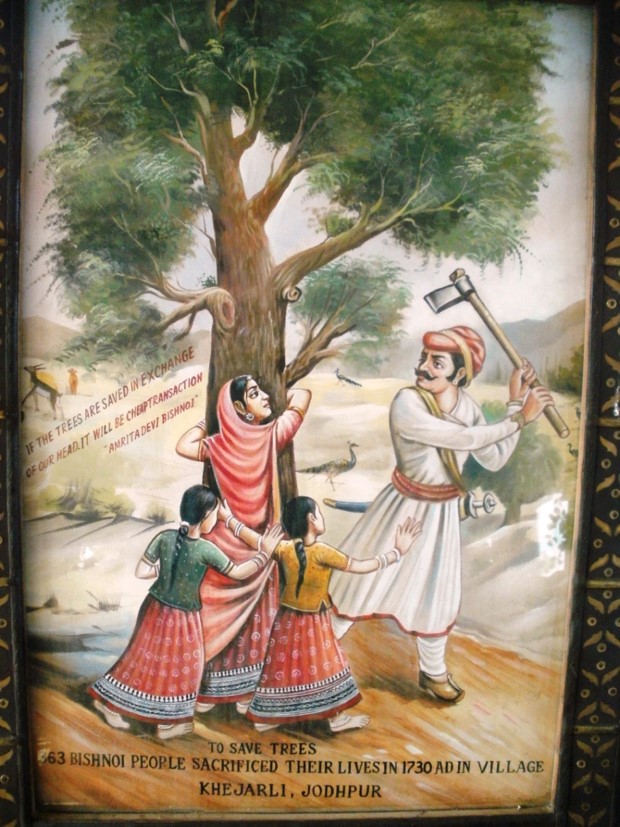
Not many of us know that the concept of Tree Huggers and Tree-Hugging, have roots within the Bishnoi community. The famous ‘Chipko Movement’ was inspired by a true story of a brave lady called Amrita Devi Bishnoi who refused to let the kingsmen cut the trees and sacrificed her life to save the trees.

Sundarlal Bahuguna

This sacrifice not only inspired the “Chipco Andoloan” by Sunder Lal Bahuguna but also the Indian government. The “Amrita Devi Bishnoi Smrithi Paryavaran Award” for contributing to environment conservation is given to those who have significantly contributed for environment conservation.  

The Bishnois are one of the first organized communities that have collectively sought for eco-conservation, wildlife protection, and green living. The ideals and tenets of the bishnois and bishnoism mentioned in the 29 religious tenets are very crucial and relevant to our ever evolving world.

The social concern, in medieval Rajasthan, manifested itself in various forms. To unite the people for a common cause, Guru Jambheswar Ji advised 29 principles to become a Bishnoi. The word ‘Bishnoi’ stands for ‘bish’ which means 20 and ‘noi’ which means 9; derived from these 29 principles out of which 6 principles are dedicated to environmental protection and compassion for all living beings.

 Of the 6 tenets that focus on protecting nature, the two most profound ones are:

Jeev Daya Palani – Be compassionate to all living beings.

Runkh Lila Nahi Ghave – Do not cut green trees.

Though these rules date back centuries, they still hold the morals and the beliefs for which the bishnois stand and are more than relevant to the environmental problems faced in today’s world.

Conservation as a practical necessity

In the arid and semi-arid regions of western Rajasthan, Bishnoism as a sect has over the ages has not only proposed, but also internalised their practices in an effort to usher in new practices of conservation ethics in Rajasthan. A majority of the Bishnoi rules suggested maintenance of harmony with the environment, like the prohibition on cutting green trees and animal slaughter. One plausible explanation is that the economy was primarily sustained by animal rearing. Hence, any slaughter, even during droughts, would have affected their means of livelihood.

Similarly, the cutting of green trees was prohibited, as it would scale back the availability of green fodder for the cattle, especially in the dry region where natural vegetation was very thin and sparse. Jambhoji’s teachings, which were in line with the interests of the folk, became immensely popular primarily in the arid regions of Bikaner and Jodhpur. The number of his followers increased manifold in these regions. His principles became so influential that the rulers of these states were forced to respect his teachings and sermons. The Bishnois have since long proposed for placing restrictions and punishments for cutting trees.

Rajasthan’s landscape demands dependence on agricultural and cattle-rearing practices. The conservation of natural vegetation of the region helped sustain superior breeds of cattle for export to other regions, exports such as sheep for wool, and camels for transport proved beneficial. Trade and commerce were also an important component of these economies as is evident in the nature of taxation where non-agricultural production was also taxed extensively (Kumar 2005).

Protection of wildlife and animals

The Bishnois consider the blackbucks as pavitra, or sacred. They follow what is perhaps the only environment-friendly religion in the world and recognise the rights of all kinds of birds, animals and trees and believe in living with peace and harmony with them. Reports show that in 2016, over 1,700 people who were involved in wildlife crimes in Rajasthan were arrested owing to the tireless efforts of the bishnoi community.

Some of their commandments mention to “provide shelters for abandoned animals to avoid them from being slaughtered in abattoirs,” making clear the Bishnoi’s reverence of all life on the planet.

The Khejarli massacre

Khejarli or Khejadli is a village situated in Jodhpur district of Rajasthan, just 26 km southeast of the main city of Jodhpur. The name of the town is derived from khejri trees, which were in abundance in the village. In the year 1730 AD (Vardhan 2014), the king of Jodhpur sent-out his army to cut trees in order to build his palace. When his army started to cut down and log a Bishnoi forest, the bishnois organised a non-violent protest, offering their bodies as shields for the trees. The soldiers had warned that anyone intending to stand in their way would share the fate of Amrita (or Imarta/Imarti as she is often also referred to by the locals) and her three daughters who had taken the bold step of hugging trees following their mother’s action, and had been killed by the soldiers. Men, women and children from 83 different villages stepped forward, embraced the trees and sacrificed themselves one after the other.

The army’s axes had already slain 363 people, when the king, Maharaja Abhay Singh, hearing the whole incident and their perseverance and courage, halted the logging and declared the Khejarli region a preserve, issued a royal decree engraved on a tambra patra (a letter engraved on a copper plate), prohibiting the felling of trees and hunting in the Bishnoi areas. The Bishnois as well as non-Bishnois consider the tambra-patra declaration as a victory of the communities efforts at conservation.

Till date, the Bishnoi community commemorates and celebrates this collective sacrifice as a symbolic victory in Khejarli by maintaining the place as a heritage site. An annual fair is organised at the village near Jodhpur, which also maintains a functional temple. In 1988, the Government of India commemorated the massacre formally, by naming the Khejarli village as the first National Environmental Memorial (Clarke 1991). A cenotaph now stands at the site as a memorial to the Bishnoi lives lost at the massacre site, which is collectively maintained through community funding as well as by private donations.

Incidentally, Imarta Devi, the first woman who died in defence of the khejri trees during the 1730 Khejarli massacre, uttered her last words as follows: Sar sāntey rūkh rahe to bhī sasto jān (even if one were to get their head severed to save a tree, still it is a cheap bargain).

The Fight is Not over Yet- Farmer’s Protest

“Let us not forget that the cultivation of the Earth is the most important labor of man. When tillage begins, other arts will follow. The farmer’s, therefore are the founders of the civilization.”

Daniel Webster

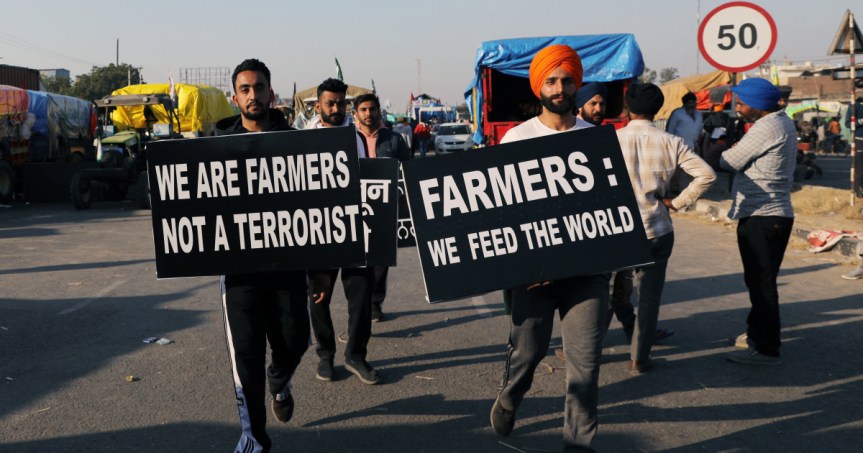
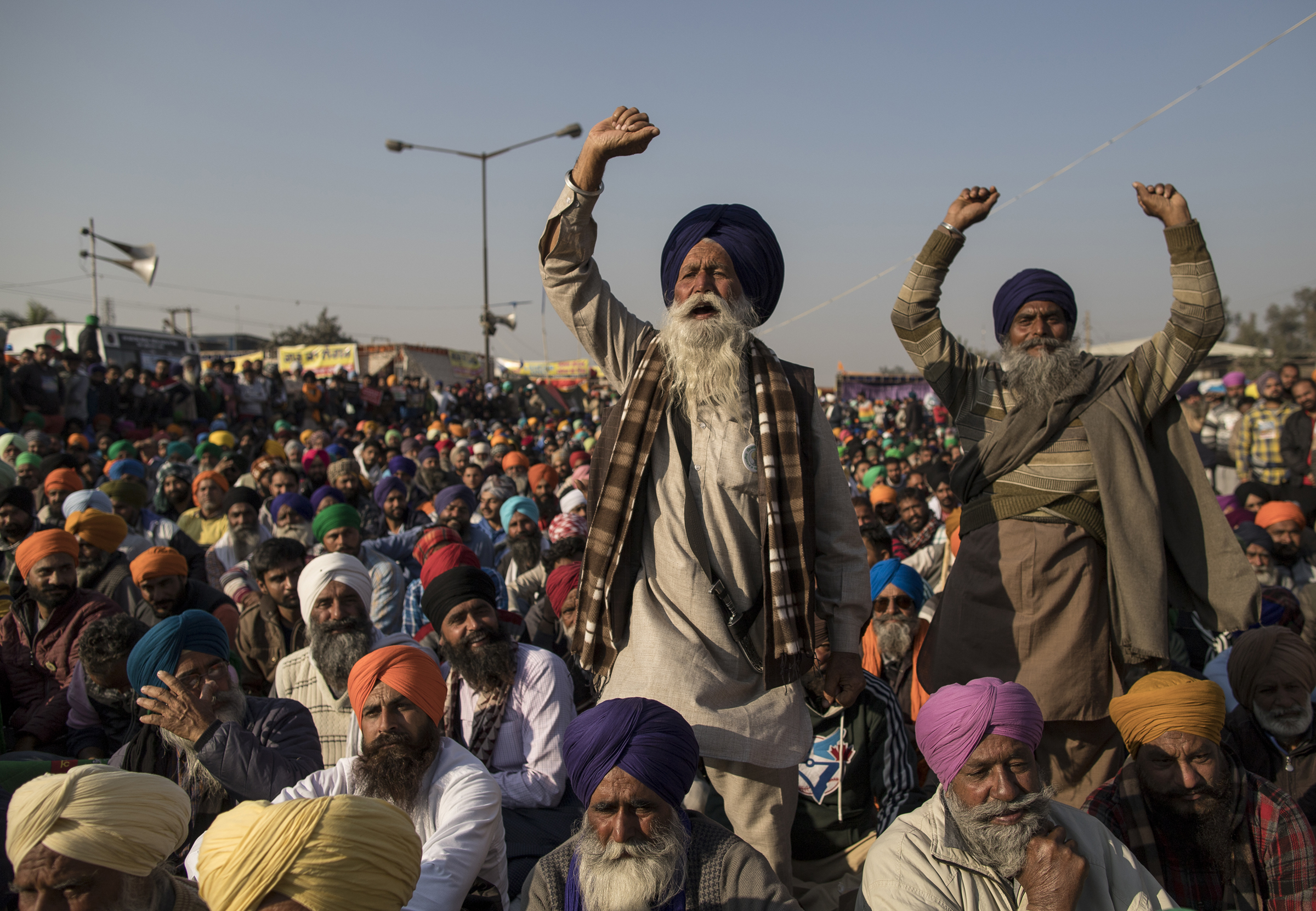
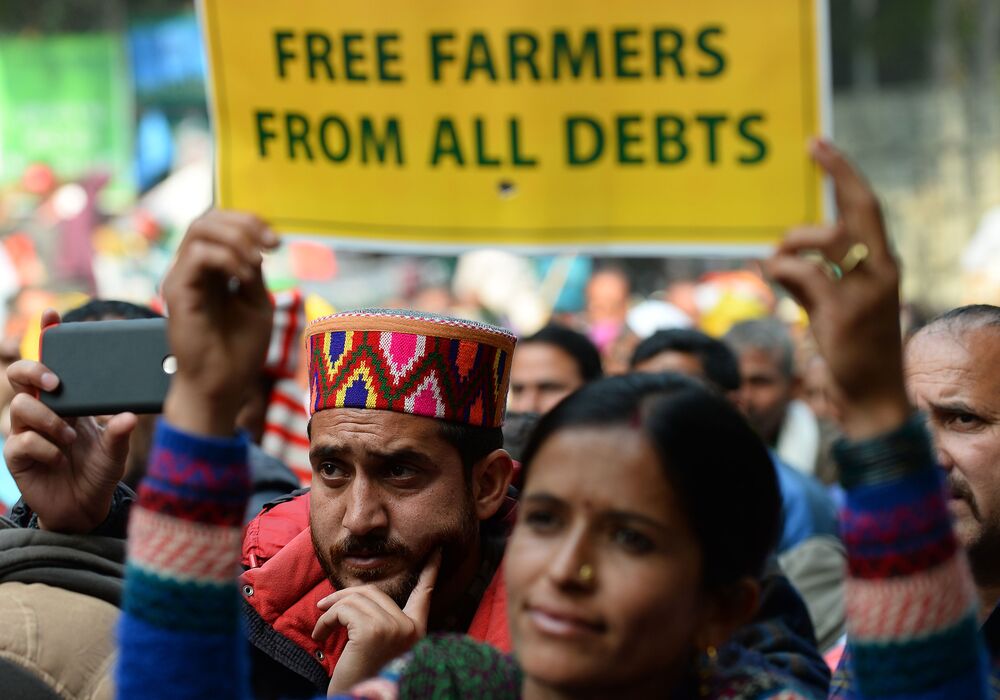
On August 9, 2020, Farmers from Punjab and Haryana laid siege to the national capital region. They are raising their voices against the recently passed farm bills. It has been five months since they have left their houses and have suffered hardships from the changed weather to farmer’s giving up and dying. But no beneficial approach has been taken for them, the fight continues to go on.

After 1947, the zamindari system was abolished in the nation. The farmlands were divided into smaller parts and the tiller became the owner of those parts but still they did not acquire bargaining power for their own crops which led to traders taking advantage of this drawback. Traders used to give credit then used to buy crops during the harvest season at lower prices. The farmer used to stay poor because he never got the good price for his crop production. To decide what the right price should be in the year 1960, when the country was going through the “Green Revolution”, APMC’S (Agriculture Produce Marketing Committees) were introduced which began to regulate the farm produce. Except the committee no one was allowed to buy produce from farmers. They will give traders a license and space to buy. In this system farmer is supposed to get different rates at which he wants to sell his production.

The Farmers' Protests Are a Turning Point for India | Time

But, till today unfortunately the farmers don’t decide the price the traders do. Even today the farmer is a price taker and not a price maker. No matter who makes the laws or tries to raise their opinions and concerns the atrocities have to be faced by the farmer’s.  As a result, they are dealing through several problems like lack of mechanization, soil erosion, agriculture marketing and so on. In India 76% of the farmer’s want to give up farming. The market needs to have a good buyer to pay a fair price. 

Amidst protest from the opposition and farmers organization, the monsoon session of the Lok Sabha passed three agricultural bills which were: – 

  1. Farmer’s Produce Trade and Commerce (promotion and facilitation) Bill, 2020 – to create a system where farmers and traders have the freedom to sell and purchase outside APMC’s, to promote barrier free inter state farmer produce, reduce facilitative framework for electronic trading.  If this is implemented the states will lose its revenue there are also chances that it may end the MSP based procurement system.
  • The Farmer (Empowerment and Protection) Agreement of Price Assurance and Farm Services Bill, 2020 – enable farmers too access modern technology, reduce cost marketing which will boost farmers income, effective dispute resolution. If this is implemented sponsors may not like to deal with small and marginal farmers, farmers who are into contract farming will get weak in terms of negotiating.
  • The Essential Commodities (Amendment) Bill, 2020- removing commodities like some important food items. Essential commodities, bring investment for farm infrastructure, help both farmers and consumers by bringing price stability. If this is implemented big companies will stock commodities, which means they will dictate whatever price they say.

Before helping the farmers, we should understand what problems they are facing. Firstly, we should strengthen the dispute redressal problem. There should be an intermediary body between the traders and the farmers. So, that they understand their rights and know what contract they are signing. They can get a guarantee for their crops and expand their growth if they have someone to help them. Secondly, they should have a bargaining power on what they have produced. This should be their basic right. Lastly if the government provides the farmers with people who can help them it will create massive trust on the government. 

The success or failure of the bill depends on the implementation. It will be unfair if the farmers think that this bill is their biggest enemy which is supposed to be helping them in ways which will change the entire agricultural system of the country. If the government genuinely wants to take up an initiative to help the famers and to end the protest, they should hear the perspective of the farmers because at the end of the day it is their livelihood which is being talked about. An industry that feeds you is worth fighting for.

Farmers' Protest Underscores Modi's Challenges Before Elections - Bloomberg

What lies ahead for Afghanistan

On July 2, U.S. troops departed from the Bagram Air Base that coordinated the 20-year-long war in Afghanistan, effectively ending their military operations in the country. The exit is part of President Joe Biden’s plan to withdraw American troops from Afghanistan by September 11, the 20th anniversary of the terrorist attack on the twin towers of the World Trade Center and the Pentagon. Ever since the remaining U.S. troops began pulling out on May 1, the Taliban have made rapid territorial advances. If the Taliban had controlled 73 of Afghanistan’s 407 districts before May 1, the number of districts went up to 157 in two months as of June 29. They contest another 151 districts, which leaves 79 districts firmly in the hands of the government. The Taliban’s military offensive is focussed on the northern districts, far away from their southern strongholds, and several provincial capitals are under threat.

Why did the U.S. invade Afghanistan?

Weeks after the September 11, 2001 terrorist attacks, U.S. President George W. Bush declared war on Afghanistan, which was then ruled by the Taliban. Mr. Bush said the Taliban regime had turned down his demand to hand over al-Qaeda leaders, including Osama bin Laden, who plotted the attacks. Inside Afghanistan, the NATO coalition troops led by the U.S. quickly dislodged the Taliban regime and established a transitional government. Al-Qaeda’s leaders and key operatives fled to safe havens in Pakistan. The U.S. rejected an offer from the Taliban to surrender and vowed to defeat the insurgents in every corner of Afghanistan. In May 2003, Defense Secretary Donald Rumsfeld announced that major military operations in the country were over. The U.S. focus shifted to the Iraq invasion, while in Afghanistan, western powers helped build a centralised democratic system and institutions. But that neither ended the war nor stabilised the country.

Why is the U.S. pulling back?

The U.S. had reached the conclusion long ago that the war was unwinnable. Presidents, starting with Barack Obama, had promised to bring American troops back home from Afghanistan. But the U.S. wanted a face-saving exit. In July 2015, the Obama administration had sent a representative to the first-ever meeting between the Taliban and the Afghan government that was hosted by Pakistan in Murree. The Murree talks did not progress as the Afghan government disclosed after the first round that Taliban leader Mullah Omar had died two years earlier.

Later, President Donald Trump appointed a special envoy for Afghanistan, Zalmay Khalilzad, with a mandate to directly negotiate with the Taliban. Mr. Khalilzad and his team held talks with Taliban representatives in Doha that led to the February 2020 agreement between the U.S. and the insurgents. In the agreement, the Trump administration promised that it would withdraw all American troops from Afghanistan by May 1, 2021. President Joe Biden endorsed the Trump-Taliban deal, but pushed the deadline for withdrawal to September 11. Mr. Biden said on Friday, “We’re on track, exactly where we expected to be.”

What are the terms of the Trump-Taliban deal?

Before the Doha talks started, the Taliban had maintained that they would hold direct talks only with the U.S., and not with the Kabul government, which they did not recognise. The U.S. effectively accepted this demand when they cut the Afghan government off the process and entered direct talks with the insurgents. The February deal dealt with four aspects of the conflict — violence, foreign troops, intra-Afghan peace talks and the use of Afghan soil by terrorist groups such as al-Qaeda and the Islamic State (the IS has an Afghan unit, the Islamic State Khorasan Province, or ISKP, which largely operates from Nangarhar in eastern Afghanistan). According to the agreement, the Taliban promised to reduce violence, join intra-Afghan peace talks and cut all ties with foreign terrorist groups, while the U.S. pledged to withdraw all its troops, roughly 12,000 at the time of the signing of the agreement in February 2020, by May 1, 2021.

After the agreement was signed, the U.S. put pressure on the Afghan government to release thousands of Taliban prisoners — a key Taliban precondition for starting intra-Afghan talks. Talks between Taliban representatives and the Afghan government began in Doha in September 2020 but did not reach any breakthrough. At present, the peace process is frozen. The Taliban reduced hostilities against foreign troops but continued to attack Afghan forces even after the agreement was signed. Afghanistan also saw a series of targeted killings of journalists, activists and other civil society figures over the past many months, which the Afghan government says is a Taliban act. Kabul maintains that the Pakistan support for the Taliban is allowing the insurgents to overcome military pressure and carry forward with their agenda.

Is the Afghanistan government doomed?

The American intelligence community has concluded, according to The Wall Street Journal, that Kabul could fall within six months. None of the American leaders, from General Austin Miller to President Biden, is certain about the survival of the Afghan government. When Mr. Biden was asked this question on Friday, he didn’t say that the government would survive, but said, “They have the capacity to sustain the government”. One thing is certain — the American withdrawal has turned the balance of power in the battleground in favour of the Taliban. They are already making rapid advances, and could launch a major offensive targeting the city centres and provincial capitals once the Americans are out.

So, there could be three scenarios, according to experts. One, there could be a political settlement in which the Taliban and the government agree to some power-sharing mechanism and jointly shape the future of Afghanistan. As of now, this looks like a remote possibility. Two, an all-out civil war may be possible, in which the government, economically backed and militarily trained by the West, holds on to its positions in key cities and the Taliban expand its reach in the countryside, while other ethnic militias fight for their fiefs. This is already unfolding. A third scenario would be of the Taliban taking over the country.

PREPAREDNESS FOR COVID 3-WAVE

All state governments are tightening their preparedness in anticipation of a third wave as restrictions begin to ease across the country.maharashtra government is concerned of Covid 3- wave chief minister Uddhav Thackeray directed officers and doctors to check medical supplies.Delhi Chief minister Arvind Kejriwal also announced to train 5000 youth to help doctors.Country is preparing to fight with Covid 3-wave.

WE CAN STOP COVID 3-WAVE

Photo by cottonbro on Pexels.com

HELP TIPS FOR CHILDREN

Children may worry about themselves, their family, and friends getting ill with COVID-19. Parents, family members, school staff, and other trusted adults can play an important role in helping children.

children should stay home ,Stop visiting relatives/friends.

Do not take your children to social gathering.

◾Do not allow children to rub their eyes and noses, sanetize their hand regularly.

Sanetize playing items twice a day.

Give them warm water for gargling.

Follow SMS:Social distance,Mask, Sanetization.

Wearing and Caring

Early detection and diagnosis

*Fever /Headache,pain in cheeks/eyes

*Body Pain /Sour throat

*Dry cough/Weakness/loss of appetite

*Parents must bring their children to near by Covid OP if they find any above symptoms.

As the number of COVID-19 cases and test positivity rates are showing signs of plateauing in major urban centres across India, we see desperate scenes in small towns and villages. We read about people dying in their homes unable to access medical care. We see pictures of people waiting for their turn to cremate their loved ones in funeral grounds. COVID-19 is a humanitarian disaster where no state is spared, poor or rich.

Now there is a talk of a COVID-19 third wave, if we are not able to vaccinate the population fast enough or if citizens do not follow the ‘social vaccines’ (hand washing, use of masks and physical distancing). Let’s examine the truth about the possibility of a third wave.

The WavesThe first wave usually affects the most vulnerable sections of the population: the old, sick and the immuno-compromised. The second wave starts when the epidemic spreads into the general population, which may not have got the infection during the first wave and who do not have protective antibodies against the pathogen.

The second and third waves of the infection is usually due to mutant strains, which may partially escape the immunity offered by previous infections.In the case of Spanish Flu, the destruction caused by World War I and lack of laboratory surveillance capacity may have played a part in augmenting the spread and increasing mortality; but the learnings from that outbreak is definitely applicable in the case of COVID-19.We have seen a lot of parallels between the Spanish Flu virus and the one causing COVID-19, though they are very different phylogenetically. Therefore, it is only reasonable to anticipate a third wave of virus infections and prepare for it.Vaccine is the most potent tool that we have against COVID-19 infections.

Though we do not have concrete data on the level of protection offered by the various vaccines against the mutant strains, most of the experts agree that some degree of protection against severe infections do exist. Therefore, relying on vaccines is the most rational way to prevent a third wave.Short TermBut at present, we do not have the capacity to produce vaccines fast enough to vaccinate our entire population in the next few months. The combined production capacity of Covishield and Covaxin is only around 60-70 million doses/month and at this rate it may take more than two years to vaccinate India’s population.

So we have to look at other options, like scaling up capacity and ready-made vaccines from abroad.The scaling up of capacity promised by the Serum Institute of India (SII) and Bharat Biotech, which manufactures the vaccines currently used in India, is going to take time and we cannot rely on that process to rapidly increase the rate of vaccination.In the short term, pre-prepared vaccines from abroad seem to be the only viable option if we want to vaccinate the most vulnerable groups and economically-productive sections of the population rapidly. The decision to allow the import and use of Russian-made Sputnik V is a welcome step in this regard. We need more such vaccines, including China’s Sinopharm which was recently approved for emergency use by World Health Organization.

Medium TermIn the medium-term, our existing vaccine manufacturing capacity should be repurposed to make COVID-19 vaccines. India supplies a major proportion of the vaccine requirements of Gavi-the vaccine alliance and has access to most of the technology platforms for vaccine production. When the United States has supported lifting the patent protection available to COVID-19 vaccines, India should be able to leverage its production capabilities and rapidly augment capacity.Besides vaccination, in the short and medium term, we should also aim to increase the testing capacity. Only rapid identification of cases and strict isolation can help to flatten the curve till the vaccine rollout is adequate.

Apart from this, we need to institutionalise the processes to ensure adherence to social vaccines. This can be done through a mix of behaviour change communication, regulatory efforts and community mobilisation. All of this has to be continued till we achieve a vaccination coverage of more than 80 percent.

Photo by Anna Shvets on Pexels.com

To beat this worldwide pandemic, the world has to, must come together.

Should Employers Check Social Media Accounts of Potential Employees?

In today’s world everyone has at least one social media account. This shows how much social media has gained popularity especially among youth. With this rise, an increasing number of companies are utilizing it to screen job prospects which means they check their potential employee’s social media account. So, make sure your social media profiles are appropriate for work because it could possibly have negative impact on your work life. It has the potential to cost you your present work as well as future career chances. According to a poll conducted by career builder in 2018, the result depicted that 70% of employers use social media to evaluate candidates throughout the recruiting process, while 43% use it to check on current employees.

Employers examine social media accounts for a variety of reasons, but the most common one is to ensure that a candidate is a good match for their firm. they do so because social media accounts allow them to get a look of a person’s personality outside of their resume, which aids them in finding the best candidate for their company.

However, Before relying on any information obtained from social networking sites such as Facebook, Twitter, Instagram, or LinkedIn, it’s vital to understand that there are several flaws to be wary of. When checking a candidate’s social media history, employers and HR professionals should be cautious. A social media history should only be evaluated as part of a comprehensive background check on job applicants. A criminal history record, as well as academic and job verifications, should all be included in a background check that can easily be done by hiring a third-party who is good in running background checks on applicants. 

Everyone who is seeking for a job or will be applying in the future should examine their social media profiles and not entirely delete their online presence. Because as per statistics 47% Employers do not call  people for interviews if they can’t locate them online. More than a quarter of employers say they like to acquire more information before phoning a candidate, and 20% say they expect candidates to have an online presence. so, deleting a social media account out of fear of shame is a no-no. you can simple keep it clean anyway. 

Now, the question of privacy comes into play. So, Employers are perfectly legal to examine public social media platforms, but anything beyond public accounts is a murky area. As long as the employer has access to public information that everyone can see, there should be no privacy concerns.  But a major pitfall is that A social media search, on the other hand, cannot provide a check on the authenticity or veracity of the material. As with any other background or reference check, the information obtained through social media must be checked for accuracy because a person’s whole career is dependent on that 1 job. Employers should use extreme caution when using social media searches to gather information about job candidates. At the absolute least, companies should consult their attorneys before obtaining information for employment reasons via social media. 

As per the data collected, following are the types of posts and behaviors that left a negative impression on employers. It is essential to know this because more than half of the employers i.e. 57% polled claimed that they discovered something through their social screenings that caused them to reject a candidate. 

Provocative or improper photos, videos, or information were shared by a job candidate: 40%
job applicants disclosed details regarding their drinking or drug use: 36%
Discriminatory remarks on color, gender, religion, and other factors were made by a job candidate: 31%
The following job contender was related to illegal activity: 30%
An applicant for a job lied about their qualifications: 27%
Candidate’s communication abilities were poor: 27%
A job seeker slandered their prior employer or coworkers: 25% 
The screen name of a job seeker was unprofessional: 22%
Former employers’ private information was disclosed by a job candidate:  20% 
Candidate for a job lied about an absence: 16%
Candidate postings are very frequent: 12%

Professionals should not take any shortcuts when it comes to establishing a positive internet presence once they have landed a job. According to the survey, 48% of companies visit social networking sites to do background checks on existing employees and as per sources they had fired them too. So one seeking job or an employee should keep his/her social media accounts clean in order to secure their jobs. 

Genghis Khan: The Universal Ruler

Genghis Khan, originally known as Temujin, is known today as the man who established the largest land empire known in history. He had united the various nomadic tribes in Mongolia, and then went on to conquer huge parts of central Asia and China. Even after his death, his descendants expanded the empire to much greater lengths up to places like Poland, Vietnam, Syria and Korea. At their peak, the Mongols controlled around 12 million square miles of land. This is an area around the size of Africa, all controlled by a single empire. In contrast, the Roman empire was only about half the size of the USA. Hence, it is evident that Genghis Khan was a legendary ruler and is remembered well by history, but he is also regarded as the very avatar of savagery and barbarism. 

The Rise of Genghis Khan

Temujin, later Genghis Khan, was born around 1162 near the border of Mongolia and Siberia. At that time, many nomadic tribes in the central Asian steppes were constantly fighting and killing each other, and life for Temujin was violent and unpredictable. Before turning even 10 years of age, his father was poisoned to death by an enemy clan and his own clan had deserted him and his family. Following this, Temujin killed his older half-brother and took over the reins as the head of his abandoned and poverty-stricken family. He soon began making alliances, building a reputation as a warrior and attracting a growing number of followers. Most of what we know about Genghis Khan’s childhood comes from “The Secret History of the Mongols,” the oldest known work of Mongolian history and literature. Going against custom, Temujin preferred to put competent allies rather than relatives in important positions in his tribe. He also executed the leaders of enemy tribes, and incorporated the remaining members into his clan. By 1205, Temujin had vanquished all his rivals.

The Establishment of an Empire

Temujin thereby became the leader of a Mongol confederation consisting of all the tribes and territories that he had united. He established a nation similar in size to modern Mongolia, and was also proclaimed Chinggis Khan, which roughly translates to ‘Universal Ruler,’ a name that has now become bastardized to be known as Genghis Khan. After this, he started his conquests outside of Mongolia and garnered his brutal reputation through continuous invasions. Genghis Khan’s first campaign outside of Mongolia took place against the Xi Xia kingdom of north-western China, after which went to war against the Khwarazm Empire in present-day Turkmenistan, Uzbekistan, Afghanistan and Iran. He gradually expanded the borders of the Mongol Empire over the years of his reign, and many surrounding empires had started becoming wary of the Mongol threat. Genghis Khan also had an extensive network of spies which used to detect his enemy’s weaknesses, and made use of advanced military equipment like catapults and mangonels while attacking large cities. By 1227, the Khan had conquered much of Central Asia and made incursions into Eastern Europe, Persia, and India.

It is important to highlight here that it was not only because of his aggressive invasions and warfare that he was successful, but also because of his administrative capabilities. For example, he forbade the selling and kidnapping of women, banned enslavement and torture, and made livestock theft punishable by death. Moreover, he ordered the adoption of a writing system, conducted a regular census, granted diplomatic immunity to foreign ambassadors and allowed freedom of religion and protection within his empire.

The Fall of Genghis Khan

Genghis Khan eventually died in 1227, at the age of 65. But there is a lot of mystery and uncertainty surrounding his death. Some stories suggest that he died from injuries sustained after falling from his horse, while others suggest it was while he was trying to put down a rebellion in China. Furthermore, the final resting place of the Khan is unknown, as he wanted his death to be a secret.

Regardless, Genghis Khan conquered more than twice as much land as any other person in history, bringing Eastern and Western civilizations into contact in the process. Though he has a unfavourable reputation because of all the killing, plunder and rape he had caused, one cannot deny that he is among the greatest, if not the greatest conqueror in history.

5 BEST ANDROID GAMES OF 2021

How do you like to chill out? Ya, I’m sure you wanna have that fun gaming life. Here are the names of the top 5 Android games of 2021 and everyone is excited to play:

Pokémon go:

Published by Niantic in collaboration with Nintendo and the Pokémon company, this augmented reality-based mobile app that lets you discover Pokémon in the real world. Who knows if a Pokémon is hiding behind you! You can grab the Pokémon by throwing a ball on it. It’s exactly how it happens in the Pokémon: the series. Just with access to your current location let’s GET UP AND GO!!

Among us:

 An online multiplayer developed by American game studio Inner sloth social deduction game where each player uncovers the hidden role of others.  Up to three players will be chosen as an imposter in a spaceship called “The Skeld” a headquarters building called “Mira HQ” a planet base called “The Airship”. If you are a crewmate you are supposed to find the imposter and complete the tasks. But if you are an imposter then you have to kill the crewmates.

Garena Free Fire:

Developed by 111 dots studio published by Garena is a quick free-to-play battle royale game consisting of 50 players falling from parachutes, landing on an island searching for weapons and utility items. Players must make sure that they fall away from the enemies.  All the player has to do is survive and conquer till the end. Apart from CoD and PUBG, Free Fire is the most optimized game to run on low-end smartphones.

Call of duty: 

A massive new combat experience of war and adventure, developed by TiMi studios. You can play Battle Royale or a Multiplayer game. Multiplayer mode is the basic first-person shooter, the game includes “Scorestreaks” which are special weapons that are available when the player reaches certain points. Battle royale mode features up to 100 players where you can choose to be in a squad or single. After you jump out of the plane the game begins, you will only have a knife with you, the zone begins to shrink so you have to kill other teams to survive. 

  • Clash of clans: An online multiplayer war game, developed by Supercell. The players are provided with a social network of live chat so it will be easy to connect with their team and form communities called clans, you can be the clan leader, train the troops to attack others to earn the resources. There are four resources called GOLD, ELIXIR, DARK ELIXIR, GEMS. All you have to do is to protect your castle and destroy others. These resources are also used to train and upgrade your troops and spells.

credits to the right owners of the images used

Greed vs Generosity: Which Gives a Better Competitive Advantage?

Many people think that in the professional world, selfishness and greed are the characteristics that pay dividends. But the truth is, excepting win-lose situations, that the most successful people in the medium and long term are those who are the most generous in their business and personal lives.

Ambition is a desire to take on more than you can realistically accomplish, to constantly strive for improvement, to grow both personally and professionally, and, of course, the desire to generate more income. However there comes a time when ambition crosses a line, and when that happens it becomes greed. Greed is the desire to chew more than you can eat, a desire that distracts you from realistically possible goals. Greed is wanting to get more than what you have actually earned, obtaining maximum profit at minimum cost, or as an old adage has it: “Grasp all, lose all.”

Today there is an abundance of courses and books on finance, limitless knowledge on hand with a simple click. But to know what is right, to subdue the pirates of greed and to follow your trading plan- this is another story. People who look for easy money invariably find that there is no such thing, paying a heavy price for this lesson. Ego, vanity, and revenge play a part, causing people to fail on their trading accounts. This is one of the factors that explains why people might not fall into the exclusive 10% that ‘win’, and find themselves one of the 90% that lose.

Literature and film are full of greedy and stingy characters, and the moral of films like ‘A Christmas Carol’ or ‘The Wolf of Wall Street’ is always the same: the fate of the greedy is heartbreaking. Their addiction to work means that they live a lonely life, and their search for wealth means that at the end of their lives, they have only the sober memory of their friends from the Stock Exchange.

GIVE AND TAKE

People do not realize that giving without expecting something in return could be a competitive advantage, as well as making ones outlook more positive. Studies have shown that the most successful people are generous. At least this is the affirmation of Adam Grant, a psychologist and professor at Wharton and author of “Give and Take”.

A generous person builds bigger and stronger networks, improves communication with their existing contacts, and also finds it easier to interact with people outside of their core network- this gives them access to new contacts and valuable sources of information. Generous people inspire in others a predisposition, or positive receptivity, to reconnect with them, as well as a greater willingness to collaborate.

Moreover, being a giver encourages persistence because givers are able to enthusiastically motivate people, inspiring confidence, because they are liberal with praise. They create a generally positive environment. Talent is important, but the most important factor in success is persistence. And what’s even more interesting is that being a giver has an energizing effect that increases levels of happiness.
According to Bill Williams, famous trader and writer of “Trading Chaos”, people with a ‘giving’ mindset enjoy more happiness and success. For example, later in his career Bill always traded two accounts, one for himself and one for his charities. The charity account always made more money, even though he traded using the same method with both accounts. In the charity account he never veered from his strategy, while in his own account he would sometimes take a trade based on a “feel”, or get in a trade before the actual signal. This shows us the importance of sticking to a plan, but also the importance of being a ‘giver’.

Giving distracts us from our problems, adds meaning to our lives and helps us feel valued by others. This explains why avidity and egoism are the trader’s worst enemy. Having a benevolent mindset while trading helps the trader to increase performance. Happy people earn more money on average, score higher yields, make better decisions and contribute more to their organizations. Furthermore, traders who are givers are at the top of the most successful trading operations.

THE GREED EFFECT

Focusing only on money results in the ‘greedy effect’, something that all professional traders know. In fact, one of the most common pieces of (rarely followed) advice that newbies receive is to shift their focus from trade results to the trading process, analyzing and following the rules of their trading system. Another suggestion is to start reasoning in pips and ticks instead of dollars. This reduces the greedy mindset and develops a more reliable attitude.

However we can make a further effort to improve our performance by shifting our focus to be more generous. One example is trading for charitable purposes like the aforementioned Bill Williams, another could be simply committing a small part of your monthly or annual profit to microcredits, which promote a world of stability and self-sufficiency, key to overcoming poverty.

Material things can be recovered, but feelings of guilt, helplessness and loneliness cannot be solved with money. If humans would be more understanding of and generous to others, the world would be a very different place. And that is why those who practice generosity, making it part of their daily lives, experience an uplifting of their mental and emotional state, and are generally filled with more satisfaction in their professional and personal lives.

In conclusion, we see that generous people are the most successful in their daily trading performance for the reasons described above. Having a giving mindset helps professionals become part of that exclusive group, the 10% of winners.

Anger

Anger is one of the basic human emotions, as elemental as happiness, sadness, anxiety or disgust. These emotions are tied to basic survival and were honed over the course of human history. Anger is related to the “fight, flight, or freeze” response of the sympathetic nervous system, it prepares humans to fight. But fighting doesn’t necessarily mean throwing punches. It might motivate communities to combat injustice by changing laws or enforcing new norms.

Of course, anger too easily or frequently mobilized can undermine relationships or damage physical health in the long term. Prolonged release of the stress hormones that accompany anger can destroy neurons in areas of the brain associated with judgment and short term memory and weaken the immune system. For those who struggle with chronic anger, or for those who only experience occasional outbursts, learning skills to identify and navigate this powerful emotion can lead to growth and change.

What causes anger?

The question of why some shrug off annoyances while others explode in rage is a fascinating one. One model of anger, put forth by psychologist Jerry Deffenbacher, posits that anger results from a combination of the trigger event, the qualities of the individual, and the individual’s appraisal of the situation.

The trigger is the event that provokes anger, such as being cut off in traffic or yelled at by a parent. The qualities of the individual include personality traits, such as narcissism, competitiveness, and low tolerance for frustration, and the pre-anger state, like levels of anxiety or exhaustion. Perhaps most importantly is cognitive appraisal—appraising a situation as blameworthy, unjustified, punishable, etc. The combination of these components determines why and if people get mad.

How can I manage my anger?

If you are often carried away by anger, it can be helpful to understand the patterns that trigger you. It’s possible to intervene at different points along the way to deal with anger effectively.

1. Sleep: Sleep deprivation makes it harder to control angry impulses, so regular, healthy sleep can prevent you from being provoked.

2. Consider alternative interpretations: And ask yourself what evidence you have to support your angering interpretation. Consider different perspectives.

3. Take deep breaths: Take long, slow, deep breaths, using the diaphragm rather than the chest.

4. Avoid the “catharsis myth”: Venting anger, acting with aggression, and viewing aggressive content does not tend to release anger effectively.

5. Know that it’s ok to get mad: If you have been wronged, treated unfairly, or provoked, you should get angry, but express it assertively instead of aggressively.

How can I manage anger that’s warranted?

In cases of warranted anger, such as a coworker who never contributes to collaborative projects, you may want to use a different set of anger management tips. In those situations:

1. Distance yourself from the angering situation. This will help you stop ruminating and develop a clear path forward.

2. Dedicate time to thinking about how to solve the root problem so it doesn’t occur again.

3. Express your anger assertively, with a solutions-oriented approach, rather than aggressively.

East Timor: Brief analysis of its history & independence.

East Timor or Timor-Leste is a tiny island country in Southeast Asia nestled between Australia and Indonesia.

For more than 300 years the territory of East Timor was ruled by Colonial Portugal (Portuguese Timor). They set up both commercial outposts and catholic missions. On 28 November 1975, Portugal withdrew from the island territory when the Revolutionary Front for an Independent East Timor had declared the territory’s independence. But this exit from East Timor was not at all smooth and this enraged bitter rivalry between various local groups. Just nine days later in December 1975 East Timor was invaded and occupied by the Indonesian military. Suharto, the Indonesian president at that time didn’t receive much resistance from the western countries due to the left-leaning stance of East Timor at that time (Cold war).  The Indonesian occupation was a brutal and violent period in East Timor’s history with various suppression tactics many people lost their lives during that period.

The following decades were highly violent with many conflicts between the separatist groups known as Fretilin and the Indonesian military. The military fought a continuous guerilla war with the rebels in the island’s interior mountains. There were numerous rights violations and over 100,000 people died under the occupations of Indonesia.

One of the most defining instances happened on November 12, 1991, when the Indonesian military shot and killed over 250 people who had come for the memorial procession in honor of Sebastio Gomez, a pro-independence supporter killed by the Indonesian military. The events occurred in the Santa Cruz Cemetery in Dili, East Timor’s capital. This tragedy is known as the Santa Cruz Massacre. The event gained international media attention. Although the Indonesian occupation did not cede until eight years later in 1999, the Santa Cruz massacre was a defining moment in the island nation’s quest for independence.

In 1998 president Suharto resigned from his position after more than 30 years in power due to growing pressure and protests against him from within the country. His replacement was open towards more open towards the autonomy of East Timor. International pressure for East Timor grew in 1998. During the downfall of the New Order government, as part of Reformasi, a referendum was held in East Timor to ask whether they wished to remain in Indonesia with increased autonomy or become independent. On August 30, 1999, about 78% of the population of East Timorese chose to remain independent.

Following the referendum, violence again erupted in East Timor as Indonesian-backed militias increased their activities across the country. In September UN peacekeeping let by Australia force took control of the situation but a lot of damage was already done. In 2002 Xanana Gusmão was elected as the first president after three years of transitional governance by the UN.

As of today, the country has been relatively stable but the economic conditions have not been improved. Indonesia’s Timor has fared comparatively better than East Timor. It was also discovered that Australia, a country that East Timor considered as their ally had spied on East Timor to gain leverage over negotiations on the exploitation of natural resources in the Timor Sea. On a positive note, the country has comparatively good relations with Indonesia now.

References:

Sanskrit.

Sanskrit is a standardized dialect of Old Indo-Aryan, originating as Vedic Sanskrit as early as 1700-1200 BCE. One of the oldest Indo-European languages for which substantial documentation exists, Sanskrit is believed to have been the general language of the greater Indian Subcontinent in ancient times.

Sanskrit ; attributively संस्कृत-, saṃskṛta-; nominaly संस्कृतम्, saṃskṛtam, is a classical language of South Asia belonging to the Indo-Aryan branch of the Indo-European languages. It arose in South Asia after its predecessor languages had diffused there from the northwest in the late Bronze Age. Sanskrit is the sacred language of Hinduism, the language of classical Hindu philosophy, and of historical texts of Buddhism and Jainism. It was a link language in ancient and medieval South Asia, and upon transmission of Hindu and Buddhist culture to Southeast Asia, East Asia and Central Asia in the early medieval era, it became a language of religion and high culture, and of the political elites in some of these regions. As a result, Sanskrit had a lasting impact on the languages of South Asia, Southeast Asia and East Asia, especially in their formal and learned vocabularies.

Sanskrit generally connotes several Old Indo-Aryan varieties. The most archaic of these is Vedic Sanskrit found in the Rig Veda, a collection of 1,028 hymns composed between 1500 BCE and 1200 BCE by Indo-Aryan tribes migrating east from what today is Afghanistan across northern Pakistan and into northern India. Vedic Sanskrit interacted with the preexisting ancient languages of the subcontinent, absorbing names of newly encountered plants and animals; in addition, the ancient Dravidian languages influenced Sanskrit’s phonology and syntax. “Sanskrit” can also more narrowly refer to Classical Sanskrit, a refined and standardized grammatical form that emerged in the mid-1st millennium BCE and was codified in the most comprehensive of ancient grammars, the Aṣṭādhyāyī (“Eight chapters”) of Pāṇini.The greatest dramatist in Sanskrit, Kālidāsa, wrote in classical Sanskrit, and the foundations of modern arithmetic were first described in classical Sanskrit. The two major Sanskrit epics, the Mahābhārata and the Rāmāyaṇa, however, were composed in a range of oral storytelling registers called Epic Sanskrit which was used in northern India between 400 BCE and 300 CE, and roughly contemporary with classical Sanskrit. In the following centuries, Sanskrit became tradition-bound, stopped being learned as a first language, and ultimately stopped developing as a living language.

LEARN FROM FAULTS-STORY OF A TEENAGER

” I know that changes in me are due to activation of hormones in teenage. The cuddle hormone is responsible for that. I’m the one who likes to enjoy my life to the fullest and I could not control the thoughts that are running at high speed with new energy. I’m curious about to join in a college where I can find many new friends to enjoy the college life along with my academics. I can still remember the first day in my college where I met an unforgettable person in my life.

At initial days I felt delighted to go college and enjoyed my studies along with my friend whom I met on the first day. With in few weeks we both became best friends and we used to bunk the classes when we feel bore. After some days my attendance report was sent to my parents, by seeing my attendance report my parents scolded me a lot. I felt very bad on that day and next day when I went to college I discussed every thing that was happened in my home with my bestie. After listening to my words he cooled down me and made me to feel better from my guilt. At that day I felt happy to have such a friend.

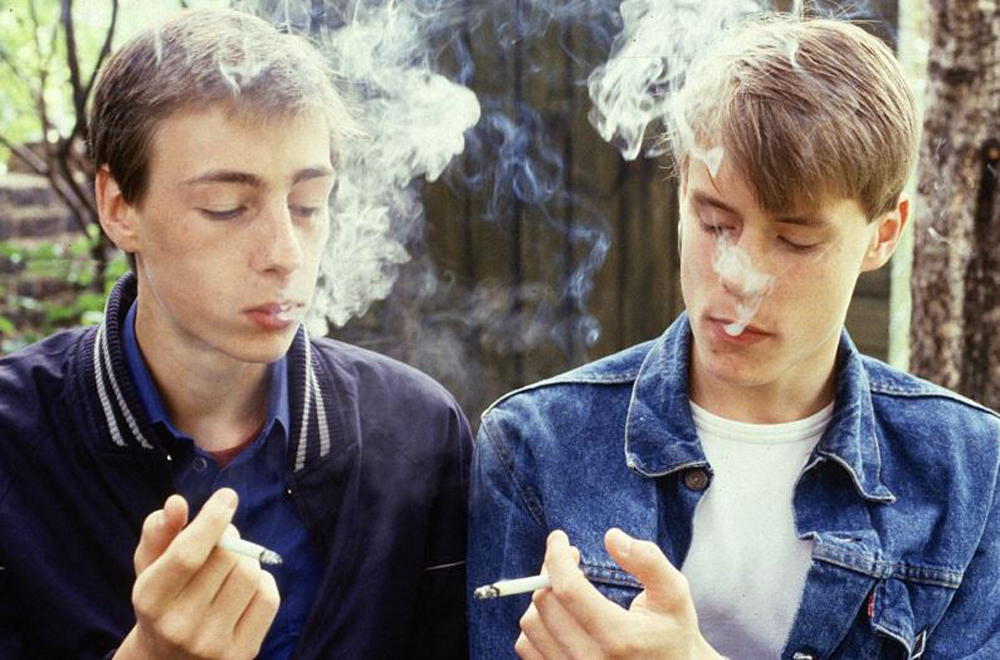
His presence made me to do crazy things with a pretty smile on my face but I have never recognized that I’m neglecting my studies. Slowly my mind got turned to bad things, I started smoking along with my friend with out knowing the consequences. At that time I don’t know that those cigars contain drugs in them. I have addicted to those cigars a lot and my studies got damaged totally. One day, my parents got to know about me through my principle because of a robbery that was made by me and my friend.

When my principle asked me and my friend about the robbery, he simply throwed that mistake on me and escaped from their. I never expected that from him and I regretted a lot for having such a worst person as a friend in my life. I said every thing that happened to me with my parents on that day but they didn’t spill a word on me and immediately next day they took me for counselling. Slowly I started understanding my parents and their love and care on me but I bagged a bad name in front my lecturers and my cousins insulted my parents a lot because of me.

After a lot of counselling sessions I realized about the importance of career in my life and started my new journey with focused mind and today I owned a job in an MNC with an outstanding salary. Guys, I just want to convey you one thing that, be conscious while choosing your friends and don’t neglect the words of your parents especially when your are in teenage. Never forget to learn from your previous mistakes. ”

From the above story, I can definitely say that most of the teenagers have confronted with various situations where they can distract from their studies. The teenager life is too complicated in every persons life and we have to understand that it is a phase where everyone want freedom and wishes to fly heights. So my dear teenagers, beware of your root point where you have to come back though you fly at heights and always remember that time is the precious gift that can’t bring back once if you wasted it. So please use your time wisely to reach your motives with out any distractions.

Drug Addiction

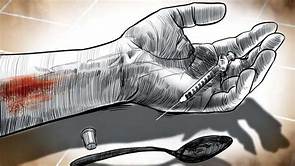
Drug Addiction has now become one of the major problem of our society, particularly in the urban areas. Sometimes frustration and sometimes temptation are the cause of this addiction. Many youngsters are falling victim’s of this deadly curse. As a result, possibilities of these young men and women society are being nipped in the bud. The dishonest traders operate underground, and the deadly narcotics and drug are smuggled into country. It is really surprising to note that these traders manage to thrive at the cost of precious lives and rosy possibilities to our young generation. Many of these drug addict crazy young men are tempted to continue these drugs. Once they take it, they are caught in a death trap. Slowly but surely they are led to death.

One thing that many of these dangers have in common is that they affect not only the user but also have a negative impact on those around them.

Physical dangers to the user include:

• Developing a tolerance to the drug.

• Withdrawal symptoms when trying to cut back or quit.

• Health problems, like irregular heart rate, high blood pressure, lung damage, and seizures.

• Injury, both accidental and self-inflicted.

• Overdose.

• Death.

Dangers can also have social, professional, or interpersonal consequences. These can include:

Becoming pregnant while using drugs and harming the fetus and newborn baby.

Jeopardizing relationships with friends and family.

Neglecting work and school responsibilities.

Involvement in criminal activity and a greater risk of being victimized by crime.

The exact cause of drug addiction is unknown; however, there are factors that may contribute to drug addiction:

An underlying mental disorder, like schizophrenia, post-traumatic stress syndrome (PTSD), depression or anxiety.

  • A low sense of self-worth.
  • Emotional distress due to personal, professional, or financial difficulties.
  • Exposure to an environment where drug use is accepted and drugs are readily available.
  • Peer pressure.
  • Genetics.

But we have a duty to fight against this dangerous enemy of our social life. The alarming nature of the problem must be highlighted and people must be made aware of this evil with the help of the mass media. Seminars should be organized in schools and colleges. In west Bengal an anti narcotic cell has been established in Lal bazar, Kolkata. Drug business is punishable and the highest punishment is death sentence in Bangladesh. But no government action can be fruitful unless it is backed by a strong public opinion, especially of the young generation.

Section 66A Of IT Act,still relevant ?

How does this act came into existence ?

Section 66A of the Information Technology Act (“IT Act”), 2000, came into existence through an amendment in 2008. This  section penalised sending “offensive messages” via online communication. provision was often misused by enforcement authorities and caused problems over freedom of speech on  internet.

Case of shreya singhal vs Union of India

Two girls were arrested in Mumbai over criticising the bandh in maharashtra over demise of shiv sena chief Bala sahib Thackeray in November 2012. One of them posted illegal content while another one simply liked it, both of them were booked under section 66A of IT ACT and section 295A of IPC.

Although,both of girls were released and charges were dropped but this act invited criticism from all over the country.
Shocked by misuse of law by the authorities, Shreya singhal filed an PIL in 2012 to declare section 66A of IT ACT 2000 as unconstitutional.

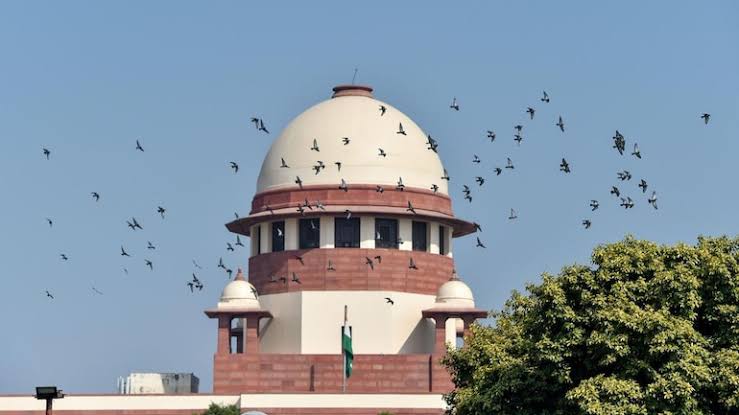
On March 24, 2015 the Hon’ble Supreme Court of India passed a landmark judgement in this matter. The Hon’ble Supreme Court  came out with judgement that Section 66A of the IT Act is arbitrarily and disproportionately affects the right to freedom of speech. Also, all the pending cases were directed to be dismissed and no fresh cases were to be registered under this scrapped section 66A of IT ACT.

Why is section 66A of IT Act in news in 2021 ?

Even,after this section was scrapped,many fresh cases were registered under this section of IT act. A plea was filed by PUCL ,it came into light that even after 7 years of the law being scrapped. total of 745 cases are still pending and active before the district courts in 11 states, under Section 66A of the IT Act. Supreme court have sent a notice to centre, demanding why this scrapped section is still in use and why not proper measures are taken till now.