The Current World powers have always had some sort of geographical shields protecting them. India is no exception and is blessed by many natural geographical factors which has effectively shielded the country from various external forces. The Himalayas, Indian Ocean and the Thar desert are some of the of regions which act as a shield for India.
The Himlayas
The Himalayas
The Himalayas are largest and tallest mountain ranges in the world. Many of the world’s tallest peaks like Mt.Everest, K2, Kanchenjunga, Nanda Devi are situated in this majestic range. The Himalayas stretch from the edges of the Hindu Kush mountains of northeastern Afghanistan, through the Indian states of Jammu & Kashmir, Ladakh, Himachal Pradesh, Uttarakhand, Sikkim and Arunachal Pradesh and countries like China(Tibet), Nepal, Bhutan and Northern Myanmar. The Himalayas have historically acted as a buffer between India and China and was even considered as a factor which prevented Genghis Khan’s ferocious Mongol Armies from invading India. During the 1971 Bangladesh Liberation war, India chose to declare war on Pakistan in winter as it was almost impossible for China to mobilize their armies during the brutal Himalayan winter. India has fought many wars with it’s neighbor Pakistan in the region to maintain the status quo as both understand how vital control over this region is.
The Thar Desert
The Thar desert in Rajasthan acts as a natural border between India and Pakistan. The scorching desert and sand means it’ll be difficult for Pakistan to maintain supply lines and logistics incase of an invasion of India. This applies for India as well but it would be far easier to defend than to attack through this frontier.
The Seas
India is a peninsula, as it is surrounded by water on three sides. The Arabian sea to the west, Indian ocean to the south and the Bay of Bengal to it’s east. All these water bodies ensure India will be well protected by a natural barrier as it would require an external navy to invade, ensure naval supremacy so a land invasion is possible which is an almost impossible task given India’s naval strengths.
As the United States of America continues to pull out its troops out of Afghanistan, there has been wide discussions as to who would fill that vacuum
Biden’s decision to remove all US soldiers from Afghanistan has fueled domestic unrest in the nation, where violence is on the rise as the Taliban scores more combat successes against the Afghan government and foreign forces disengage. However, Washington’s decision to withdraw has prompted a regional struggle for power, with many parties ranging from China to Turkey, Russia to India, trying to capitalise on the diplomatic power vacuum in Afghanistan.
India, which has long provided diplomatic and financial assistance to the Afghan government, has allegedly altered its long-held policy of not interacting with the Taliban and is now engaging in direct discussions with the rebel group’s leadership. However, India’s presence in Afghanistan has long been balanced by the presence of the one nation that, whether it wants to or not, will have to pick up the majority of the pieces America leaves behind: Pakistan.
India is engaging with the Taliban because the Taliban are winning. Conservative, largely rural, and illiterate Afghans defeated the Soviet Union at its peak as the Mujahideen. They achieved it with enormous support from the United States, Pakistan, Saudi Arabia, China, and others. The same group has now vanquished the world’s sole superpower. They’ve done it with only Pakistan’s aid.
Before delving into the risks and advantages of dealing with the Taliban, it is important to reaffirm the primary objective of India’s Afghanistan policy, which is to maintain a strategic balance between Kabul and Islamabad. Despite the disparity of strength between two nations, India wants to guarantee that nationalist Afghan thought, which is critical of Pakistan’s interventionism, stays active and aggressive. This is why New Delhi has maintained its support for a “Afghan-owned, Afghan-led” peace process. Engaging with the Taliban is an exercise in averting harm to India’s interests as it is in determining the extent of the group’s nationalism.
The advantages of this successful outreach are obvious. The Taliban recognises India’s beneficial role in Afghanistan and does not want its diplomatic presence to be reduced.The outreach in Doha has given Indian authorities cautious hope that the Taliban will not be openly antagonistic and may even want deeper ties in the medium term.
However, the outreach is not without danger. One possibility is that the Taliban would break its pledges and, with a shove from Pakistan, will strike Indian interests. If this does not happen, the Taliban interlocutors with whom India is negotiating may be marginalised, or worse, replaced by pro-Pakistan supporters such as the Haqqanis. Second, reaching out to the Taliban might hasten the fall of Kabul while complicating India’s ties with existing allies.
Despite these concerns, India has solid reasons to engage the Taliban. For one thing, these worries would persist regardless of India’s approach. If nothing else, undoubtedly India’s absence from the Taliban’s calculus makes it much more vulnerable if the Islamic republic falls apart. For India, the only way to achieve long-term peace in Afghanistan is for there to be peace within Afghanistan and peace around Afghanistan, which will need aligning the interests of everybody, both inside and outside that country.
Lifestyle (sociology), the way a person lives Otium, ancient Roman concept of a lifestyle Style of life, dealing with the dynamics of personality.
Lifestyle is the interests, opinions, behaviours, and behavioural orientations of an individual, group, or culture. The term was introduced by Austrian psychologist Alfred Adler in his 1929 book, The Case of Miss R., with the meaning of “a person’s basic character as established early in childhood”. The broader sense of lifestyle as a “way or style of living” has been documented since 1961. Lifestyle is a combination of determining intangible or tangible factors. Tangible factors relate specifically to demographic variables, i.e. an individual’s demographic profile, whereas intangible factors concern the psychological aspects of an individual such as personal values, preferences, and outlooks.
But why does everyone wants a good standard of living life. As in this is a mental tandancy human wants are unlimited. And the resources are scarce but that doesn’t matter the thing is lifestyle as all of us want to live a good life eat what we want Live where we want and spend the whole money where we want to the best.
Lifestyle may also refer to:
*Lifestyle business, a business that is set up and run with the aim of sustaining a particular level of income. *Lifestyle center, a shopping center or mixed-used commercial development that combines the traditional retail functions of a shopping mall with leisure amenities. *Lifestyle (department store), a retail fashion brand which is part of the Dubai-based Landmark Group.
And many more, but all this centers, businesses offers the best for an individual’s lifestyle.
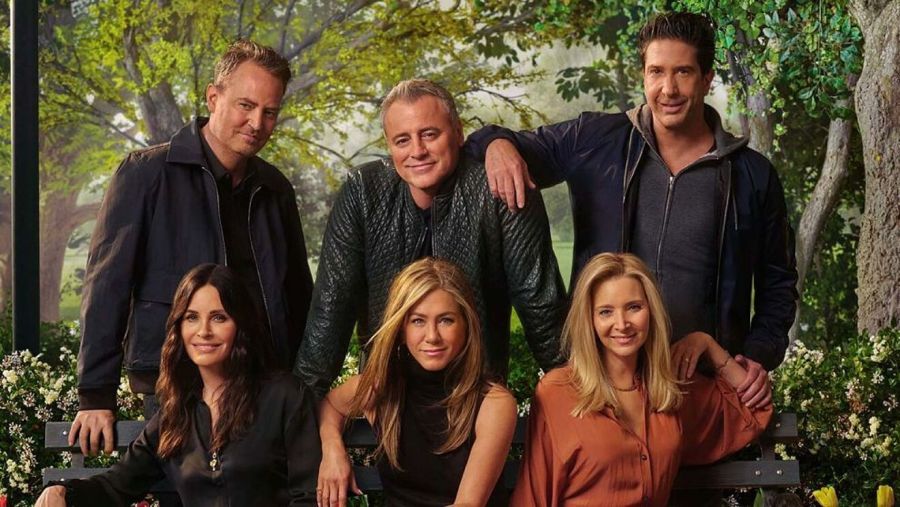
Friends is one of the best sitcoms that it just as funny watching it for the first time as it was watching it for the 10th time. The humor is universal. There has never been a sitcom this amazing. It is not just episode of comedy but it truly identifies the real-life situation that one faces. It feels like that you are part of it when you watch it every time because you go through different emotions they go through.
FRIENDS is an American sitcom. This show was aired on September 22, 1994 on NBC and since then it has been one of the greatest hits. The show was directed by James Burrows. He has been working in television since the 1970s. He has directed over 50 television pilots and co-created the long-running television series Cheers. Some of shows directed by him includes Wings, The Class, Back to You, The Big Bang Theory and much more. The show consisted of 10 seasons. The plot of the show revolves around 6 main characters Ross, Rachael, Monica, Joe, Phoebe and Chandler. Wherein Ross and Monica are siblings. Friends wasn’t actually filmed in New York. Session was filmed on Stage Five of Warner Bros, Studios in Burbank California. IMDB rating of the show is 8.9. the show has earned many awards which includes Primetime Emmy Award, Golden Globe Award and many more. It has been nominated for many awards and won many too
Let’s talk about the character of the show. For all those teens who were spoiled on their dad’s money could relate to Rachael as she was one initially. Later on, became independent. Racheal here is played by Jennifer Anigston. For all those who were insecure about their bodies in their school time and had an OCD of perfection and cleanliness could relate to Monica Gallan played by Courtney Cox. Chandler being the king of sarcasm-initiated sarcasm in our lives played by Mathew Perry. There are many who have lost their families and still strive to struggle through the lives with a smile on their faces and then there is Phoebe who gives people ray of hope.
The show is a reflection of our lives wherein six friends grow up through different phases of lives. Learning a lot from situations and people. The show ended with a best happy ending one could ever ask for. The show might have ended but the legacy remains in our hearts and soul.
News is information about current events. This may be provided through many different media: word of mouth, printing, postal systems, broadcasting, electronic communication, or through the testimony of observers and witnesses to events. … The genre of news as we know it today is closely associated with the newspaper.
What is current affairs
Technically Current Affairs is defined as a genre of broadcast journalism where the emphasis is on detailed analysis and discussion of news stories that have recently occurred or are ongoing at the time of broadcast.
Difference
Current affairs is a genre of broadcast journalism. This differs from regular news broadcasts that place emphasis on news reports presented for simple presentation as soon as possible, often with a minimum of analysis.
Day to Day life many things happened that information will pass to us in the form of news and current affairs
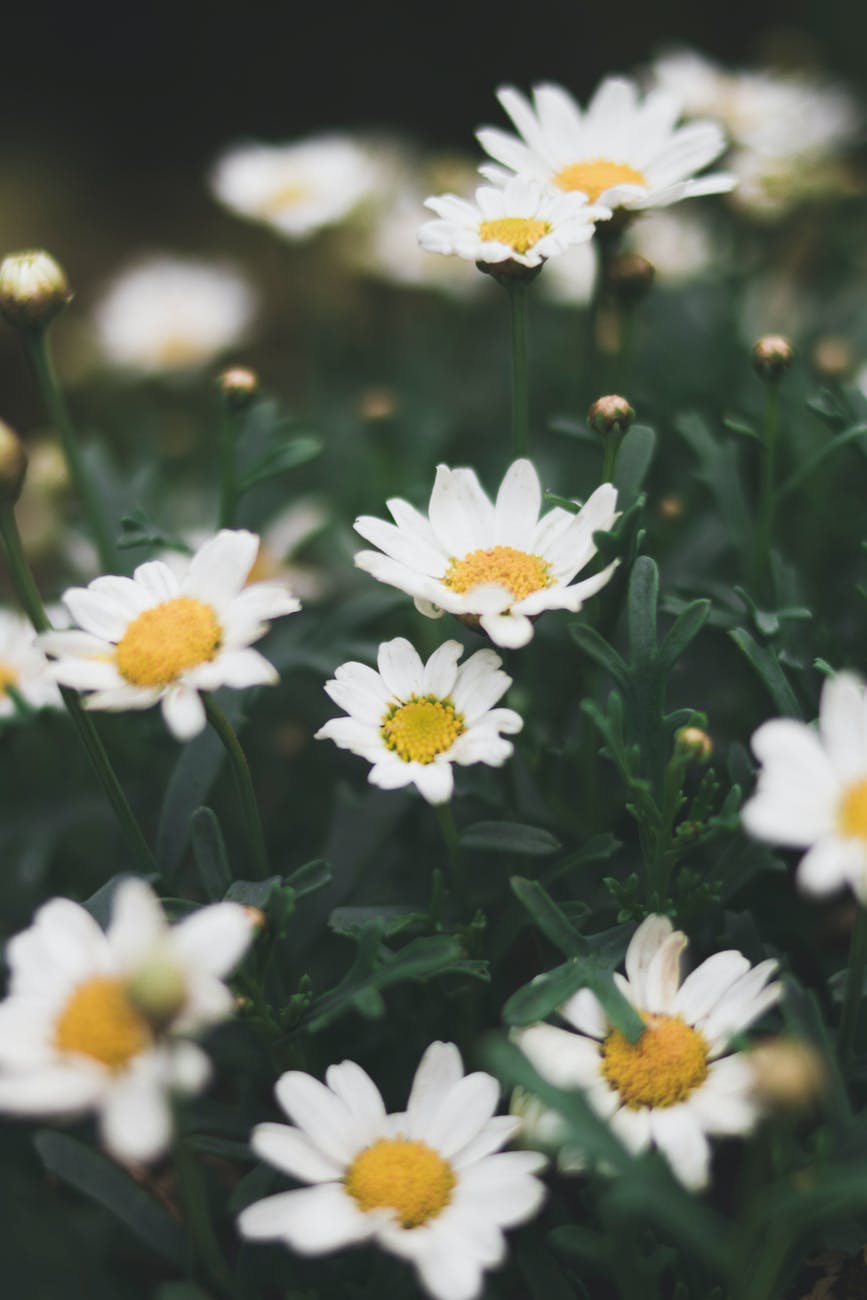
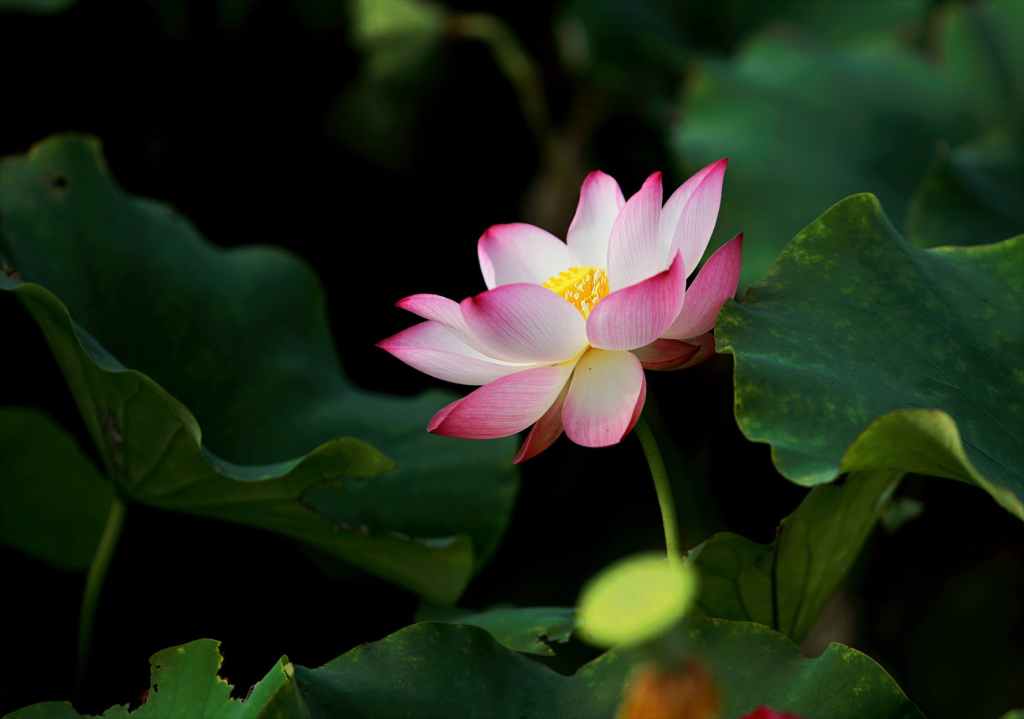
Flowers can be of various types various colours, different kinds and their uses are also different.
Flowers assure us of existence of beauty in the whole world, IF the world is a canvas they fillthis black and white world into that of colourful. So today I am going to write about the flawless nature of flowers that I am aware of.
Do you guys watch anime? .If you notice there will one common thing in all of those anime’s, yes I am talking about the sakura (cherry blossoms),I have heard that people from many different countries visit japan during spring time for flower viewing.
Have you ever heard of edible flowers, yes! not only they look beautiful but some flowers also are used in various food items that we eat, they use these flowers as a decoration on the cakes, and flowers with medicinal values are used to make tea, they give a refreshing vibe to the tea and calms the nerves.
Flowers are used to decorate as they exude the classiness and turns a plain place into a wholesome place, a place where the view turns refreshing, flowers are used in weddings, they are used for proposals, flowers are exchanged on various occasion as each and every flower has a very significant meaning.
DO you guys now that each and everyone of us has a birth flowers that is different for each and everyone based on their birth dates, month and year. so knowing which flower you represent is very exciting .
we definitely have to talk about their fragrance, the perfumes we wear also use the flowers essence, the floral perfumes are mostly liked by everyone as most of them give calming and fresh vibes, Flowers like hyacinth, freesia, lilies, roses are some of the most fragrant flowers.
Flowers can also poisonous depending on the type of environment they grow in, such as
The elegant Nerium oleander, the blossoms of which are crimson, magenta or creamy white, is one of the most toxic plants in the world. Every part of the plant, from its stem to its sap, is incredibly poisonous if ingested. Even inhaling the smoke from a burning oleander is a health threat.
livescience.com
There is a saying goes
“The more you love roses the more you must bear with thorns.”
similarly life also has its ups and downs but what you must never forget is at the end there will definitely be a beautiful destination.
Flowers are pretty at this stage only because they had to go through difficult process of budding. As they say nothing lasts forever, after sometime even these flawless flowers also will wither and fall on to the ground but a new flower will be born so endings are the new beginnings.
“So the flawless here is appreciating its nature of gracefully passing through all stages of its life .”
colour (Commonwealth English), is the characteristic of visual perception described through color categories, with names such as red, orange, yellow, green, blue, or purple. This perception of color derives from the stimulation of photoreceptor cells (in particular cone cells in the human eye and other vertebrate eyes) by electromagnetic radiation (in the visible spectrum in the case of humans). Color categories and physical specifications of color are associated with objects through the wavelengths of the light that is reflected from them and their intensities. This reflection is governed by the object’s physical properties such as light absorption, emission spectra, etc.
By defining a color space, colors can be identified numerically by coordinates, which in 1931 were also named in global agreement with internationally agreed color names like mentioned above (red, orange, etc.) by the International Commission on Illumination. The RGB color space for instance is a color space corresponding to human trichromacy and to the three cone cell types that respond to three bands of light: long wavelengths, peaking near 564–580 nm (red); medium-wavelength, peaking near 534–545 nm (green); and short-wavelength light, near 420–440 nm (blue). There may also be more than three color dimensions in other color spaces, such as in the CMYK color model, wherein one of the dimensions relates to a color’s colorfulness).
The photo-receptivity of the “eyes” of other species also varies considerably from that of humans and so results in correspondingly different color perceptions that cannot readily be compared to one another. Honey bees and bumblebees have trichromatic color vision sensitive to ultraviolet but insensitive to red. Papilio butterflies possess six types of photoreceptors and may have pentachromatic vision.The most complex color vision system in the animal kingdom has been found in stomatopods (such as the mantis shrimp) with up to 12 spectral receptor types thought to work as multiple dichromatic units.
The favourite season of India – Monsoon! Doesn’t only bring us lots of rains but also some tremendous amounts of magnificent and calming naturic beauty too. While the fragrance of soil and tasty snacks brewing up in our houses encourages one to be happy dancing like peacocks in rains, the greens spread everywhere gives away utter positivity and peace to our minds. The cheerfulness of kids when playing and getting drenched in the rains even rejoys the child within adults. And as soon as the moist clouds fill the skies families wish to go out together for small time rides on their vehicles or for the car rides to hill stations or other beautiful places to enjoy the views and have famous snacks of moonsoon like tea, corn, etc. While sitting in front of an alluring landscape and not to forget the most necessary part of trips these days, clicking pretty pictures for one’s social media handles and creating lots of memories. So, in order to help you get the best experiences and even more attractive pictures with enticing backgrounds. Here I have some great suggesstions for adding up to your travel plans this moonsoon.
WESTERN GHATS, KARNATAKA
Western Coastal regions of karnataka with an average annual rainfall of 3456mm is one of the most rainy regions of the country. Karnataka is a home to several famous and beautiful waterfalls, namely Hebbe waterfalls, Abbey falls, Magod falls, Dudhasagar falls out of which the most famous waterfall is Jog Falls, is a waterfall on the sharvati river located in the Western Ghats Siddapur taluk, near Shimoga district. It is the second highest Plunge waterfall in India. It is a major attraction for tourists. While, karnataka’s greenery, rich biodiversity and culture catches an eye of every nature lover, it’s long list of tremendously amazing hill stations, forest reserves, destinations such as Nandi hills, Coorg famous for pleasant nature all around, Agumbe for pristine waterfalls, Chikamagalur famous for it’s huge Coffee producing estates. It is said that Western Ghats in karnataka is the birth place of almost all the rivers like Tunga, Harangi, Sipa, Kali, Bhadra and many more.
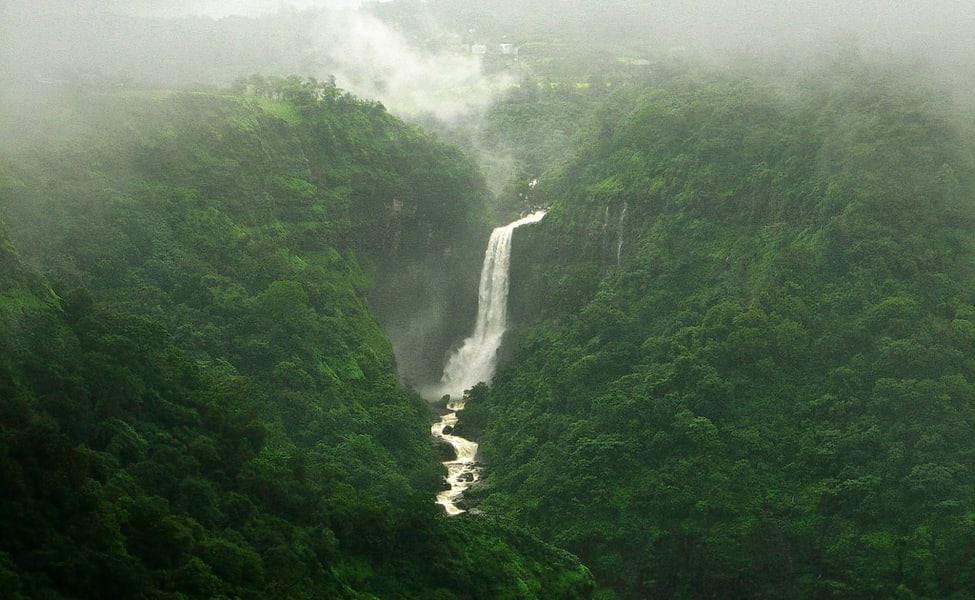
Lonawala is one of the most famous hill stations in Maharashtra. It lies within the shayadri range with an altitude of 625 m above the sea level and is 95 kms away from Mumbai in the Southweat direction. It’s covered with pretty dense forests all around with uniquely structured waterfalls flowing from amidst the greens and damns. Lonavala haves a variety of adventurous places to serve you an absolute and most satisfactory fun holiday. The popular tourist attractions here are Bhaja caves, Bushi dam, Karla caves, Rajmachi fort, Ryewood lake, among others. Lonavala is also very popular for the treks like the Andharban trek that starts from a village called Pimpri and ends in Bhira. It’s also very famous for production of ‘chikki’ – hard bars made up of nuts and jaggery. There exists another destination with exhilarating views here, Tiger’s Leap is an unusual name given to this place due to the resemblance of the shape with that of a tiger leaping into the valley. This point, which provides an interesting view of the valley below, is just a short distance away from INS Shivaji. It’s popularly known for appealing sunrise and sunset views seen from here. Another venturesome sites here are Ambey valley a beautiful township situated near about 24km from Lonavala, and ‘Imagica’ which is one of the largest and a very famous amusement park in the country, being a must visit place for children especially.
MAHABALESHWAR, MAHARASHTRA
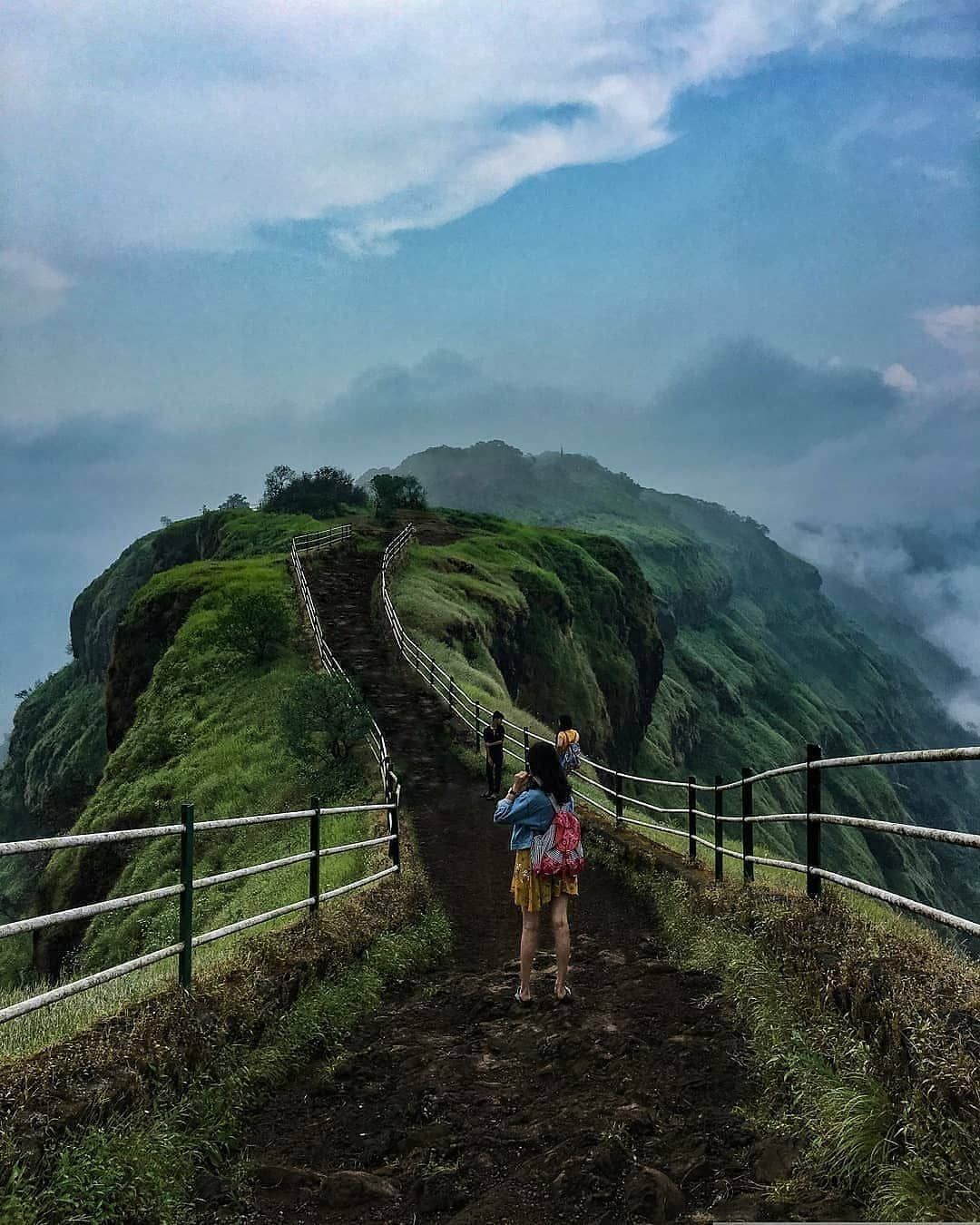
Another one of the most famous hill stations in Maharashtra is Mahabaleshwar know for it’s cloudy, pleasant weather all throughout the year. You could find a good range of visitors up here during every time of the year. Though, Moonsoon is generally considered the best due to the presence of moisture filled air and a picturesque village feeling you get. Even this place has a lot to serve you with. Firstly, you get to taste the best ‘Vadapavs’ here, the most favourite snack of Mumbaikars. Mahabaleshwar is enriched with stunning strawberry farms which are sold on main street market which is also charmingly constructed with colorful figures and public attractions. From the beginning of journey to Mahabaleshwar until the time you enter the main town there are some stupendous valleys, waterfall and majestic peaks. There are approx five hill top points which are mainly visited by tourists here, visiting these places inculcate a sense of freshness in your mind, the calm breeze, the mind blowing views are all rejuvenating for one’s soul. There are also other activities which you can do here are boating in the lake with mountains surrounding it, buy lots of tasty candies, feed monkeys playing on the hill tops, etc.
Munnar, kerala
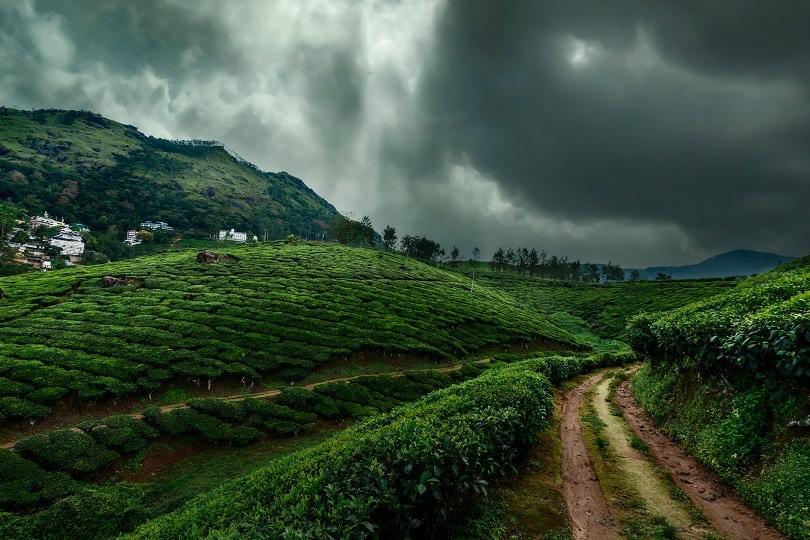
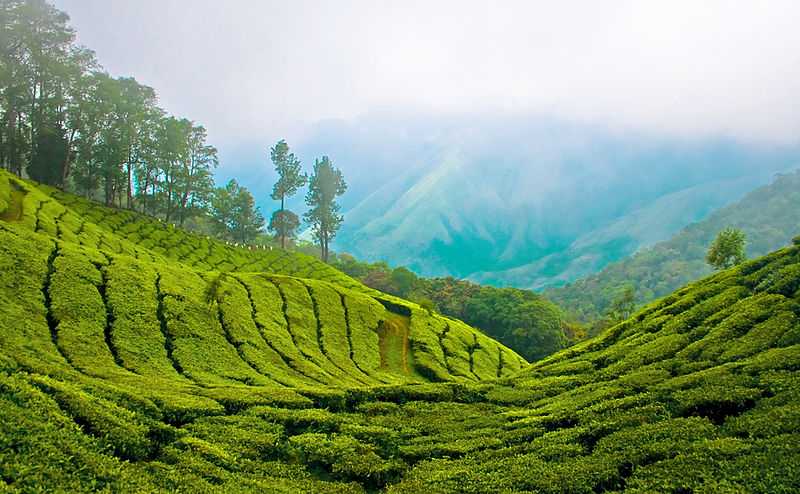
Munnar’s sceneric beauty comes to life due to moonsoon rains. It is popularly known for it’s elegant tea plantation estates. The landscape of the place reminds you of those pretty, magistic paintings which would seem unreal to the eyes, but memorises your heart inside. It is the most preferred holiday destinations by travellers in Kerala. It is situated in Idukki district of kerala. It is worth a while to take a cycle tour here and enjoy stupendous views of valleys around. This place has a lot more activities to offer such as camping under the starry night sky; staying in a tree house covered with grassy tea gardens; wildlife sight seeing in Eravikulam National Park; Shikara ride in Kundala Lake; rock climbing in Fun Forest Adventure Park. Other eye catchy sights include Cheeyappara and Valara Waterfalls; Echo Point, Photo Point, and Pothamedu View Point; Rose Garden and Blossom Park excude some soothing and delightful vibe to visitors. Here you can also spot Nilgiri Tahr and the rich wildlife at the Eravikulam National Park of Munnar. There is also a kids-friendly attraction, Wonder Valley Adventure and Amusement Park and more such wonderful adventures to experience, thus making it a adequate choice for your next holiday.
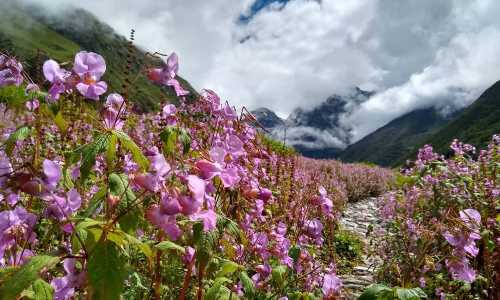
With a stunning backdrop of the imperial Himalayan ranges, the Valley of Flowers National Park presents an splendid view and an unforgettable experience for visitors. It is Spread over an area of 87 sq km in the Chamoli district, the Valley of Flowers National Park is a UNESCO World Heritage Site and forms one of the two core zones of the Nanda Devi Biosphere Reserve. The valley is believed to have been discovered in 1931, when three British mountaineers – led by Frank S Smythe – lost their way and reached by chance upon this spectacular valley. Attracted by the beauty of this place they named it the “Valley of Flowers”. As the name suggests, Valley of Flowers is a destination where nature blooms in full glory offering a breathtaking view. Exotic flowers (over 600 species) like orchids, poppies,primulas, marigold, daisies and anemones are spectacles to eyes. Sub-alpine forests birch and rhododendron cover parts of the park’s area. The trek to the valley haves some very amusing and cascading waterfalls and wild streams. It is Situated at an altitude of around 3,600 m above the sea level, the valley is also home to rare and amazing wildlife species like the gray langur, the flying squirrel, the Himalayan weasel, and black bear, the red fox, the lime butterfly, the snow leopard and Himalayan monal, to name a few. There exists an abundance of flowers here in july and september.
Welcome to the Current Affairs Section of Adda247. Get Daily & Latest Current Affairs 2021 for UPSC, IAS/PCS, Banking, IBPS, SBI, RBI, SSC, Railway, UPPSC, RPSC, BPSC, MPPSC, TNPSC, UKPSC, APPSC, MPSC, KPSC and other competitive exams.
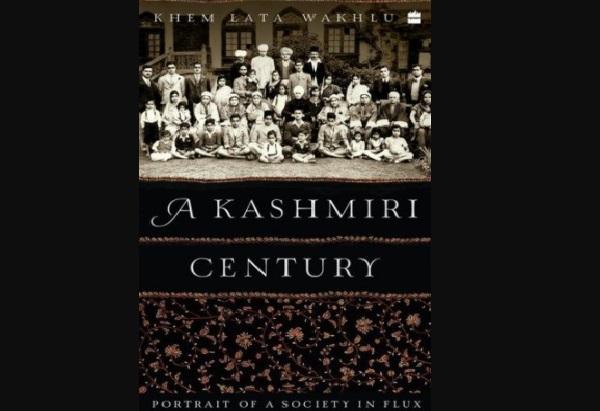
1. A Book Titled “Kashmiri Century: Portrait Of A Society In Flux” Released:-
A book titled “Kashmiri Century: Portrait of a Society in Flux” authored by Khemlata Wakhlu. She is a writer, a political leader and a social worker, who has devoted the past fifty years to using her many talents to improve a lot of the people of Jammu and Kashmir.
The essence of the book:–
A Kashmiri Century is a powerful and rare compilation of human-interest stories. Spanning a full century, it throws a compassionate light on the innocent and hard-working people who live in the beautiful valley of Kashmir.
The stories are all based on the author’s personal experiences and her intimate understanding of what it means to be a Kashmiri-speaking native. They cover the period from the late 19th century to the present day.
None of the available political treatises has ever delved deeply into the sociological and the human sides of living in the valley.
The author’s intimate insights into Kashmiri society, its evolution in an enticing, remote valley, and how her people dealt with Kashmir’s bitter and tempestuous history, are sprinkled liberally across the book.
2. Andhra Pradesh introduces SALT programme:-
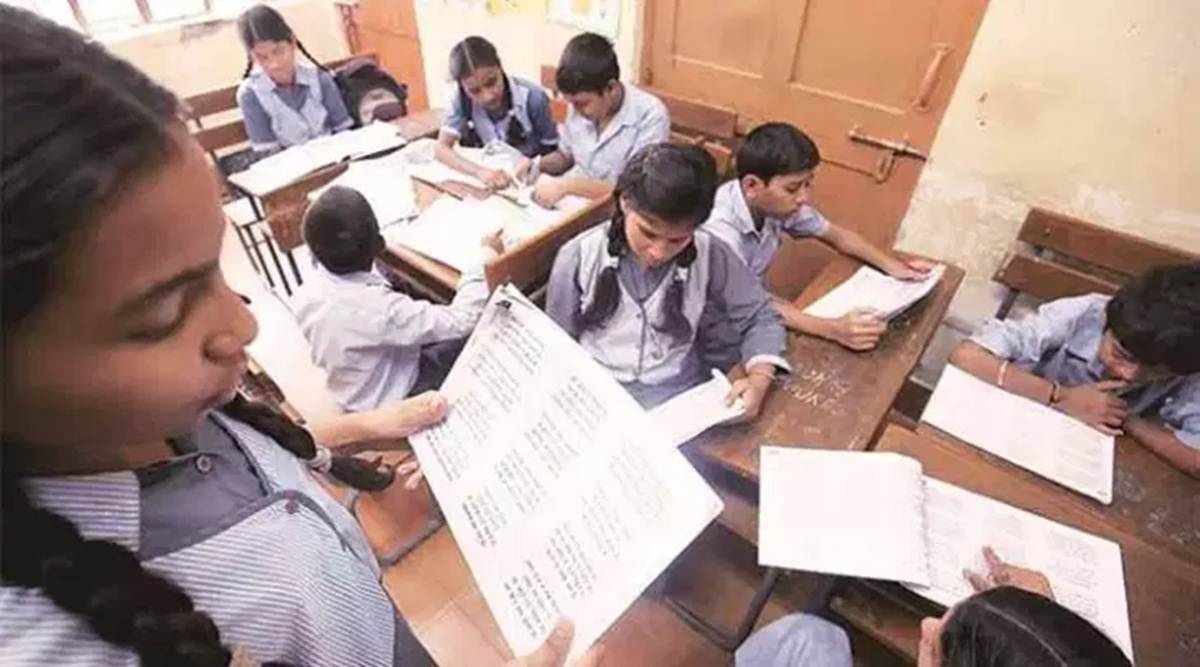
Andhra Pradesh has started a Supporting Andhra’s Learning Transformation (SALT) programme to transform foundational learning in government schools for which the World Bank has approved a loan of 250 million dollars. The main objectives of the programme are strengthening foundation schools and providing training and skill development to teachers. Andhra Pradesh’s public school education system has more than 40 lakh children and nearly 2 lakh teachers.
About the programme:–
The five-year programme is result-oriented with the WB releasing funds after key goals are achieved. The government has converted all Anganwadis into pre-primary schools and attached them to the nearest schools.
The government’s document on SALT documents several challenges to improving the learning outcomes.
These include inadequate facilities in schools and a need for increased focus on foundational learning, the need for upgrading teaching skills of teachers, improving teacher-student interactions in classes, and capacity development of state-level institutions such as the Andhra Pradesh State Council of Education Research and Training (SCERT), State Institute of Education Management and Training (SIEMAT) and District Institutes of Education and Training (DIETs).
The government is also setting up new administrative structures which will monitor the working of schools, like the AP School Education Regulatory and Monitoring Commission.
Important takeaways for all competitive exams:–
Chief Minister of Andhra Pradesh: YS Jagan Mohan Reddy; Governor: Biswa Bhusan Harichandan.
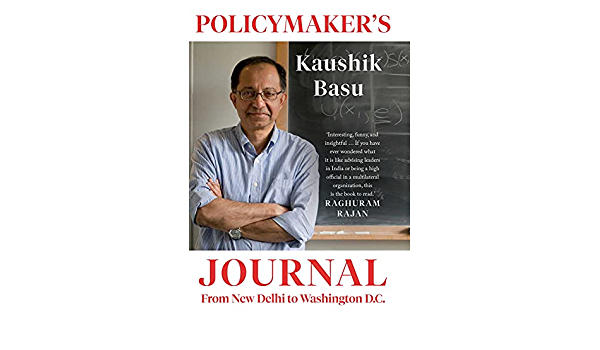
3. A book titled “Policymaker’s Journal: From New Delhi to Washington, DC” by Kaushik Basu:-
A book titled “Policymaker’s Journal: From New Delhi to Washington, DC” authored by Kaushik Basu released soon. This book charts the course of Kaushik Basu’s career over seven years, as he moved out of the cloisters of academe to the frenetic world of policymaking, first in India as Chief Economic Adviser to the Indian Government and after that as Chief Economist at the World Bank in Washington.
About Kaushik Basu:–
Kaushik Basu is an Indian economist who was the Chief Economist of the World Bank from 2012 to 2016. He is the C. Marks Professor of International Studies and Professor of Economics at Cornell University. From 2009 to 2012, during the UPA government’s second term, Basu served as the Chief Economic Adviser to the Government of India.
4.WhatsApp appoints Manesh Mahatme as Head of Payments in India:-
WhatsApp has appointed former Amazon executive Manesh Mahatme as a director to lead the growth of its payments business in India. As Director, WhatsApp Payments-India, Mahatme will focus on enhancing the payments experience for users, scaling the service and work towards contributing to the messaging app’s vision of digital and financial inclusion in India.
Important takeaways for all competitive exams:–
WhatsApp Founded: 2009;
WhatsApp CEO: Will Cathcart (Mar 2019–);
WhatsApp Headquarters: Menlo Park, California, United States;
WhatsApp Acquisition date: 19 February 2014;
WhatsApp Founders: Jan Koum, Brian Acton;
WhatsApp Parent organization: Facebook.
5. Swedish PM Stefan Lofven resigns following no confidence vote:-
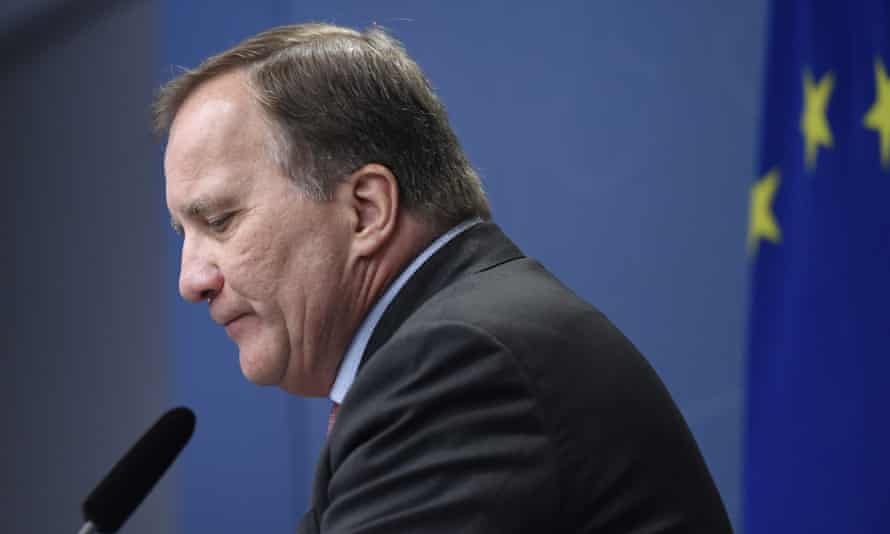
The Prime Minister of Sweden, Stefan Lofven, has announced his resignation on June 28, 2021, after he lost a confidence vote in parliament. The 63-year-old Lofven is the first Swedish government leader to be defeated by a no-confidence vote. He was serving as the prime minister of Sweden since 2014.The confidence motion was filed by the far-right Sweden Democrats after the Left Party said it was planning such a motion itself in protest against a plan to ease rent controls.
Important takeaways for all competitive exams:–
Sweden Capital: Stockholm; Currency: Swedish krona.
6.Two more complaints, call for legal action against Twitter India:-
Twitter India’s troubles continued on Tuesday after at least two more complaints being filed against the microblogging platform, and a political leader calling for legal action.
Twitter India Country Head Manish Maheshwari and news partnerships head Amrita Tripathi had been booked under Section 505 (2) of the Indian Penal Code and Section 74 of Information Technology (Amendment) Act 2008 for showing a wrong map of India on its website, on the complaint of a Bajrang Dal leader in Bulandshahr, Uttar Pradesh.
The issue revolves around a controversial map of India on the career section of Twitter, and showed Jammu and Kashmir and Ladakh as a separate country. This led to angry reactions on Twitter, and the microblogging platform removed the map on Monday night.
Later in the day, on Tuesday, Madhya Pradesh Home Minister Narottam Mishra said that he had asked the Director General of Police (DGP) to investigate the same issue and take legal action against Twitter for “distorting” India’s map.
In a separate case, the Delhi Police registered an FIR against Twitter, based on a complaint filed by the National Commission for Protection of Child Rights (NCPCR). The complaint alleges that Cchild pornographic videos and links were available on Twitter.
News reports said the Deputy Commissioner of Police, Cyber Cell had been summoned Tuesday by the NCPCR for not taking action against Twitter despite repeated letters.
“Twitter has a zero tolerance policy for child sexual exploitation (CSE) and we have a proactive approach to combating sexual exploitation of minors on our service. We have been at the forefront of responding to the evolving challenge of preventing the exploitation of children on the Internet and will continue to aggressively fight online child sexual abuse, as well as invest in the technology and tools that are essential to stay ahead of this issue. We will continue to invest in proactive detection and removal of content that violates the Twitter Rules and work with law enforcement and NGO partners in India to tackle the issue,” said a spokesperson at the microblogging platform.
According to Twitter, it uses PhotoDNA technology, its own proprietary tools, and other systems to detect behavioral signals and remove media. In many cases, it lets Twitter remove new accounts linked to this type of content before they have even sent their first tweet.
Twitter considers anyone under the age of 18 as a minor, and all viewing, sharing, or linking to child sexual exploitation (CSE) material, regardless of the intent, contributes to the re-victimization of the depicted children and is prohibited on our service, it says.
This includes media, text, illustrations, or computer-generated images. This also applies to content that may further contribute to the victimization of children through the promotion or glorification of child sexual exploitation, according to the social media platform.
Maheshwari has also been named in another FIR filed by UP Police in Ghaziabad. The Karnataka HC had on Thursday granted him interim relief in a case relating to an assault video that had gone viral on the microblogging platform. The HC had also directed that no coercive action be taken against him till Tuesday.
Karnataka HC said Tuesday it will hear the criminal case against Maheshwari on July 5.
The case relates to an ongoing complaint related to tweets on the assault of an elderly Muslim man in Ghaziabad.
Twitter on June 21 restricted tweets showing the video and images from it.
The government has been at loggerheads with Twitter ever since January, when the microblogging platform refused to take down some content related to the farmers’ protests in India, saying it goes against their company policies.
This further intensified after India enacted new rules for social media intermediaries. The government has said Twitter has not complied with the requirements, and may have lost its safe harbour protection under the IT Act.
7. Facebook, Google to soon publish reports as required by new IT Rules:-
Technology giants Facebook and Google will soon publish reports, as mandated by the new Information Technology Rules, providing information about the actions they took on user complaints in India.
While Facebook said on Tuesday it will publish an interim report on July 2 as mandated by the IT rules, Google will publish its transparency report as required under the new IT Rules in India.
“In accordance with the IT Rules, we’ll publish an interim report for the period May 15-June 15 on July 2. This report will contain details of the content that we have removed proactively using our automated tools. The final report will be published on July 15 containing details of user complaints received and action taken. The report on July 15 will also contain data related to WhatsApp, which is currently being validated,” said a Facebook spokesperson.
Twitter did not immediately respond to a request for comment.
The IT Rules, notified on February 25, ask significant social media intermediaries, or those with over 5 million users, to “publish periodic compliance report every month mentioning the details of complaints received and action taken thereon, and the number of specific communication links or parts of information that the intermediary has removed or disabled access to in pursuance of any proactive monitoring conducted by using automated tools or any other relevant information as may be specified”.
This was among the key issues that industry wanted clarity on in the new Rules. Many intermediaries were unclear about the format of these reports. A government official told Business Standard earlier that the compliance reports should have bare minimum details, on what type of content was removed or what other action was taken.
While most SSMIs publish annual or bi-annual transparency reports and would most likely publish compliance reports in a similar pattern, there was little clarity on whether those would be compliant with the new Rules.
Another issue that SSMIs are awaiting clarity on is that of the quantum of time required before which a user needs to be informed about their content being taken down. The kind of content on which intermediaries are required to do so includes content of pornographic nature, paedophilic, infringes trademarks and so on.
The government, it is understood, will bring out a standard operating procedure on the new IT Rules in consultation with industry and stakeholders, addressing some of the concerns that have been raised by them.
In addition, the Ministry of Electronics and Information Technology will be soon releasing a set of “frequently asked questions” to simplify the requirements in the Rules, on similar lines as done by the Ministry of Information and Broadcasting a few days ago.
While the Rules apply to all social media companies, the largest ones among these are Facebook, Google, WhatsApp, Twitter and the like.
According to data provided by the government, India has 530 million WhatsApp users, 410 million Facebook users, 210 million people on Instagram, and 17.5 million accounts on Twitter.
8. Top headlines: India approves Moderna vaccine; Sebi announces reforms:-
India approves Moderna’s vaccine for emergency use; Cipla to import jab:
Drug major Cipla has been approved by India’s drug regulator to import Moderna’s coronavirus vaccine for restricted emergency use in the country, the government said on Tuesday. Moderna is said to have applied for the emergency use approval in India following the US agreement to donate doses to India via Covax. Cipla on behalf of the US pharma giant has requested for import and marketing authorisation of these jabs.
Sebi overhauls norms for appointment, removal of independent directors:
The Securities and Exchange Board of India (Sebi) on Tuesday overhauled norms pertaining for appointment, removal and remuneration of independent directors (ID) in order to reduce the sway of promoters on them. The regulator also reduced the minimum application amount for REITs and InvITs to Rs 10,000-15,000, from Rs 55,000 at present, aligning them with equity IPOs.
Monetise reserves or get set for auction: Dharmendra Pradhan to ONGC, OIL:
Taking into account the acreage Oil and Natural Gas Corporation (ONGC) and Oil India Ltd (OIL) hold amid the country’s dependency on imports for oil, Petroleum Minister Dharmendra Pradhan today said that the reserves held need to be monetised else the government would take it away for auctioning.
Bharti to invest Rs 3,700 crore in OneWeb; become largest shareholder:
Bharti will invest an additional USD 500 million (over Rs 3,700 crore) into OneWeb, to become the largest shareholder in the satellite communications company that billionaire Sunil Mittal-run Bharti Group along with the UK government had rescued from bankruptcy last year.
SBI to levy charges for cash withdrawal beyond four free transactions a month:
The country’s largest lender SBI will levy charges for cash withdrawal beyond four free transactions in a month from customers holding the basic savings bank deposit (BSBD) accounts. These customers will also be levied charges for cheque book beyond 10 leaves in a year.
9. Covid-19: Over 11,000 ‘super-spreaders’ vaccinated in Ahmedabad:
More than 11,000 people categorised as ‘super-spreaders’ have been vaccinated against COVID-19 in Gujarat’s Ahmedabad city so far in a special drive started recently for their inoculation, local civic body said on Tuesday.
‘Super-spreaders’ are those who transmit an infectious disease to a large number of other people due to the nature of their job.
The Ahmedabad Municipal Corporation (AMC) recently started a special vaccination drive for ‘super-spreaders’, like vegetable vendors, grocers, petrol pump staff, barbers, courier and food delivery agents.
A total of 11,013 such people have been inoculated so far as part of the drive, the civic body said in a release.
A centre has been set up in each of the city’s seven civic zones to facilitate the vaccination of ‘super-spreaders’ so that they pose little danger of the spread of the disease to other people, the AMC said.
“To make the vaccination campaign more effective, it was decided to inoculate super-spreaders by running a special drive so that their chances of getting infected from COVID-19 are reduced, since they come in contact with many people due to the nature of their job,” it said.
On Monday, a total of 923 such people were vaccinated, including 582 in the age group of 18 to 44 years, and 341 in the 45 years and above category, he said.
Of late, Ahmedabad has seen a sharp drop in the number of coronavirus cases reported daily.
As per the AMC’s COVID-19 bulletin issued on Monday, there were 830 active COVID-19 cases in the city.
Ahmedabad has so far reported a total 2,30,660 coronavirus cases and 3,310 deaths due to the infection. Besides, 2,26,520 people have recovered from the disease, the bulletin said.
10. Monetise reserves or get set for auction: Oil minister Pradhan to ONGC, OIL:-
Taking into account the acreage Oil and Natural Gas Corporation (ONGC) and Oil India Ltd (OIL) hold amid the country’s dependency on imports for oil, Petroleum Minister Dharmendra Pradhan today said that the reserves held need to be monetised else the government would take it away for auctioning.
Speaking at BNEF Summit today, Pradhan said that the two state-owned firms cannot indefinitely sit on resources when the nation is a net importer of oil and gas.
“We have asked them to do two things – do it yourself, (produce oil and gas) through some joint venture (with domain experts and foreign companies) (and) through a new business model. But the government cannot permit you to hold resources for an indefinite time,” he said.
Despite India bidding out acreages to private and other companies since the 1990s, ONGC) and OIL hold a “sizeable number of acreage for years,” he said.
ONGC and OIL, which discovered and brought to production all of India’s eight sedimentary basins, produce about three-fourths of the nation’s oil and gas.
Pradhan said India needs energy for its ambitious economic growth agenda. “We want to reduce import dependency. We want to monetise our own resources.”
The two state-owned companies, especially ONGC, have faced criticism ranging from not being able to quickly bring discoveries to production to lower recovery.
“We have given policy guidance to our state-owned oil companies – either you do on your own through new partners and new economic model, (else) the government will after a particular period intervene and use its authority to bid out the resources,” he said.
The government has already taken away dozens of small and marginal discoveries from the two firms and auctioned them in what is known as Discovered Small Field (DSF) rounds.
DSF offers pricing and marketing freedom to operators, something which ONGC and OIL do not have currently, constraining their efforts to monetise smaller discoveries.
Pradhan indicated the government would not hesitate to take away larger idle discoveries and auction them to private and foreign players.
Earlier this month, the minister had stated that the Directorate General of Hydrocarbons (DGH), the oil ministry’s technical arm, had the “full mandate” to identify unmonetised major fields that could be offered for bidding.
“Resources don’t belong to a company. They belong to the nation and the government. They cannot lie with a company indefinitely. If somebody cannot monetise them, we will have to bring a new regime,” he had said.
The statement comes weeks after his ministry told ONGC to sell a stake in producing oil fields such as Ratna R-Series in western offshore to private firms and get foreign partners in KG basin gas fields.
In October 2017, the DGH had identified 15 producing fields with a collective reserve of 791.2 million tonne of crude oil and 333.46 billion cubic meters of gas, for handing over to private firms in the hope that they would improve upon the baseline estimate and its extraction.
A year later, as many as 149 small and marginal fields of ONGC were identified for private and foreign companies on the grounds that the state-owned firm should focus only on bid ones.
ONGC produced 20.2 million tonne of crude oil in the fiscal year ending March 31 (2020-21), down from 20.6 million tonne in the previous year and 21.1 million tonne in 2018-19. It produced 21.87 billion cubic meters of gas in 2020-21, down from 23.74 bcm in the previous year and 24.67 bcm in 2018-19.
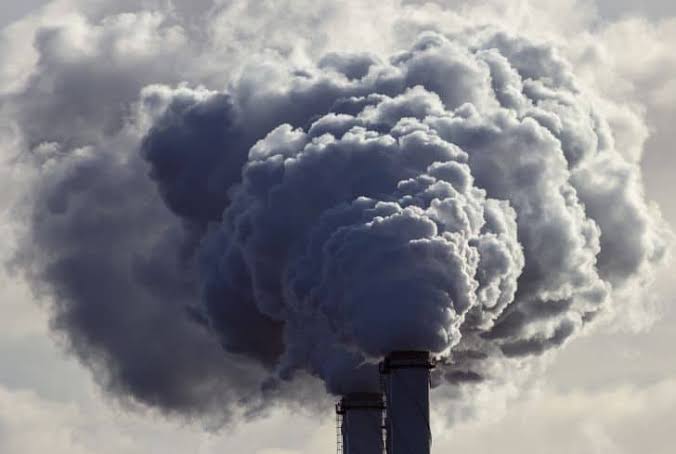
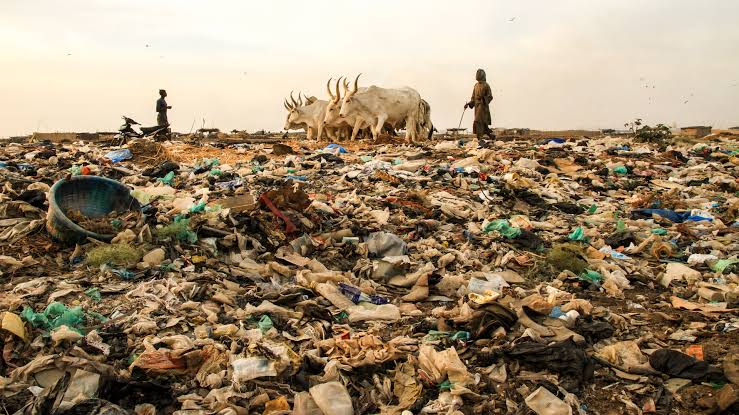
The condition in which harmful and hazardous materials get mixed with the environment making it impure is called pollution . The harmful materials that make the environment impure are called pollutants. Pollutants can be natural as well as man made. For example volcanic ash is a natural pollutant whereas trash or runoff produced by factories are the pollutants created by humans. Pollutants damage the quality of air, water, and soil.
Types of pollution
Usually there are three types of pollution. They are as follows :-
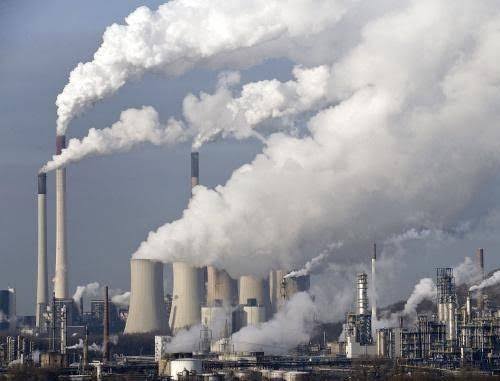
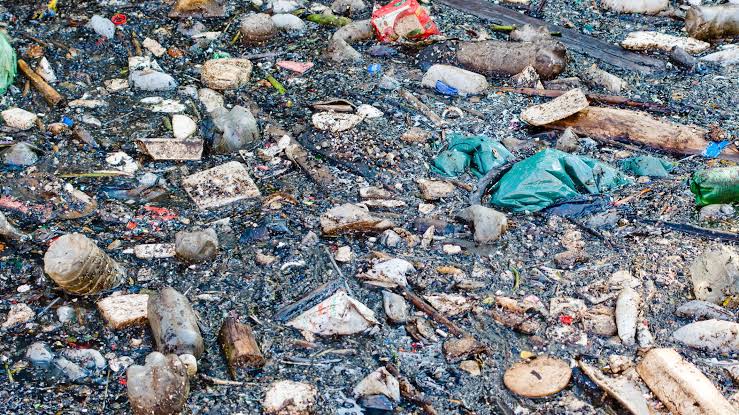
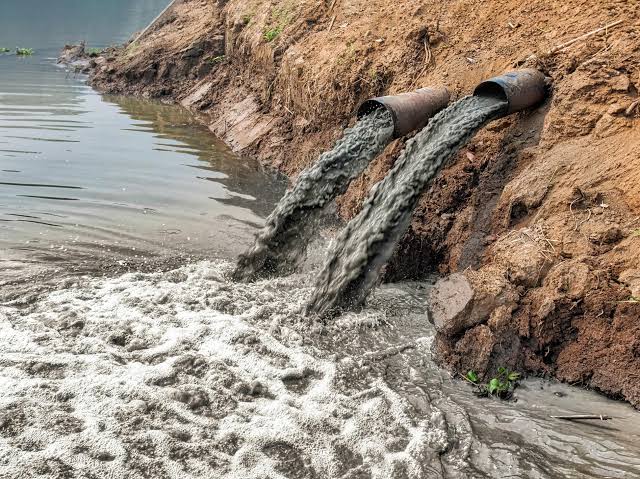
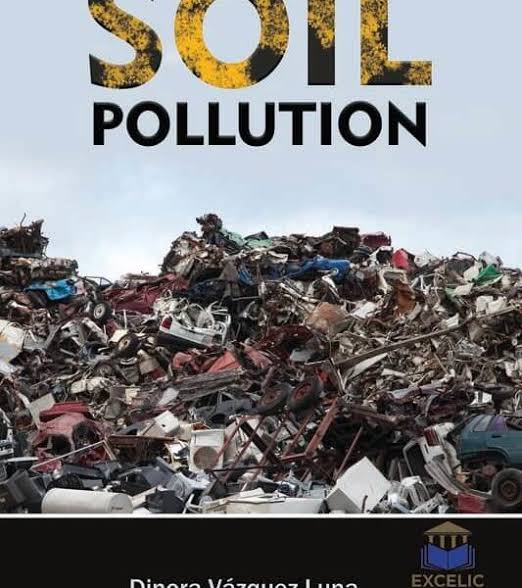
Air pollution : When the harmful hazardous substances mix with the air making it impure to breathe, it causes air pollution . According to the World Health Organization (WHO), every year almost seven million deaths occur because of air pollution. Nine out of ten human beings currently breathe air that exceeds the WHO’s guideline limits for pollutants, with those living in low- and middle-income countries suffering the most. Water pollution : Water pollution (or aquatic pollution) is the contamination of water bodies, usually as a result of human activities. Therefore when harmful pollutants and chemicals mix with the water of water bodies like lakes, rivers, oceans, aquifers and groundwater leads to water pollution. Water pollution is the leading worldwide cause of death and disease, e.g. due to water-borne diseases. Soil Pollution : The removal of useful substances from the soil or the addition of harmful substances to it is called soil pollution. Garbage, cotton clothes, newspapers, tree waste, are the causes of soil pollution. Plastic, glasses and metal objects may also cause soil pollution.
Causes of pollution in environment :
There are many causes of environmental pollution. The causes of pollution are as follows : Industries From the time of the industrial revolution,Industries have been polluting our environment. This is caused due to the increasing use of fossil fuels. In the 19th century and for a significant part of the 20th century, human force was being replaced by coal to make machines work faster.
Pollution by industries is the main cause of air pollution but it also causes contamination in soil and water. This is particularly the case for power-generating industries, such as plants producing electricity (May they be a dam, a nuclear reactor or some other type of plant). Transportation can also be harmful for the environment like petrol is transported through pipelines. A leak in the pipeline will automatically pollute the soil. At the same time, if the tanker transporting petrol from its production plant to the place where it will be consumed leaks or sinks then it will contaminate the water.
2. Transportation After the time when people r using petrol vehicles for transportation instead of using animal power the rate of environmental pollution has increased. Its levels have only been increasing day by day. Similarly to industries, pollution caused by transport can mainly be attributed to fossil fuels.
3. Agricultural Activities Agricultural waste is mainly a cause of water and soil pollution. This is caused by the increased use of pesticides, as well as by the intensive character of its production. Most of the pesticides are made from chemical substances and are meant to keep diseases and threatening animals away from the crops. However, by keeping these forms of life away, the harm is almost always made to the surrounding environment as well.
4. Trading Activities The production and exchange of goods and services fall under this category. As regards goods, pollution can be caused by packaging (which often involves the use of plastic, which is made from fossil fuels) or transport, mainly.
5. Residences Finally, residential areas provide their fair share of pollution as well. To build homes, the natural environment has to be destroyed in one way or another. Wildlife and plants are driven away and replaced by human constructions. As it requires the work of industries, construction itself is also a source of contamination of the environment.
Effects of Environmental Pollution
Now that we have identified the main causes of environmental pollution, let us study the negative effects it has:
1. Effects on Humans The effects of environmental pollution on humans are mainly physical, but can also turn into neuro-affections in the long term. It causes respiratory infections, in the form of allergies, asthma, irritation of the eyes and nasal passages, or other forms of respiratory infections. Environmental pollution has been proven to be a major factor in the development of cancer. This can happen, for example, when we eat reminiscences of pollutants used in the production of processed foods or pesticides from the crops. Other rarer diseases include hepatitis, typhoid affections, diarrhea, and hormonal disruptions.
2. Effects on Animals Environmental pollution mainly affects animals by causing harm to their living environment, making it toxic for them to live in. Acid rains can change the composition of rivers and seas, making them toxic for fishes; an essential quantity of ozone in the lower parts of the atmosphere can cause lung problems to all animals. Toxic algae overgrowth will be caused due to Nitrogen and phosphates present in water preventing other forms of life to follow their normal course.
Soil pollution will cause harm and, sometimes, even the destruction of microorganisms, which can have the dramatic effect of killing the first layers of the primary food chain.
3. Effects on Plants As for animals, plants, and especially trees, can be destroyed by acid rains ozone in the lower atmosphere block the plant respiration, and harmful pollutants can be absorbed from the water or soil.
4. Effects on the Ecosystem In short, environmental pollution, almost exclusively created by human activities, has a negative effect on the ecosystem, destroying crucial layers of it and causing an even more negative effect on the upper layers.
Prevention of environmental pollution
Environmental pollution can be reduced in many ways. The ways are as follows: The most important thing we can do is reduce , reuse and recycle goods like plastic things etc. We should lower the use of non biodegradable wastes Uses of chemical fertilizers must be reduced. To avoid pollution we should start afforestation. We must take care during sewage disposal so that the chemical does not contaminate the soil or water.
Bombay/Mumbai city of dreams, I get that, at a certain age my grandfather was such a believer too, and it didn’t disappoint him either, but does this belief still stand such waves of life and reality?
The answer is pretty simple to me, and that is a NO. Mind you, I am not demotivating the zeal that you have to come here, probably would take it as once in a lifetime opportunity to do and be better, and still for some it may hold true too.
Having being in conversations with people who came here to study, while also get their experience of Bombay, they are quite disappointed with what they have seen. A city with barely any space and hidden opportunities, that is difficult to tap into. So what is worth it? The experience perhaps, to live in a metropolitan region, to experience a diverse and translucent culture, to celebrate this divergence, but beyond that I don’t find a lot that makes me wanna stay in this city of shared nightmares.
Safety is an issue that we’ve never addressed with this region because it never sleeps, but someone who hasn’t ever slept has faced issues that tears at them, and similarly with this region security is something that isn’t even close to what it should ever be.
Moreover, I could just be a bitter biased person, because I stay here but since I have stayed here, I find that there isn’t much that city could offer me, and the thing that makes me stay here are connections, but I could just move on and find a better place and better opportunity that could suit my need and wouldn’t force me to be a certain way just so that I could stay at a certain place, there are definitely lot of factors to be considered and majority of which is personal and subjective to everyone of us.
So, do you consider that I wrap it up, k honestly can’t there is too much for me to say that might offend someone because I’m subjectively biased and therefore I’d ask you to let me know what you think of your own experience ad possibly change my prejudice.
This is when you are treated differently because of your race in one of the situations covered by the equality act.
The treatment could be a one-off action or as a result of a rule or policy based on race. It doesn’t have to be intentional to be unlawful.
There are some circumstances when being treated differently due to race is lawful, explained below.
What the equality act says about race discrimination?
The Equality Act 2010 says you must not be discriminated against because of your race.
In the Equality Act, race can mean your colour, or your nationality (including your citizenship). It can also mean your ethnic or national origins, which may not be the same as your current nationality. For example, you may have Chinese national origins and be living in Britain with a British passport.
Race also covers ethnic and racial groups. This means a group of people who all share the same protected characteristic of ethnicity or race.
A racial group can be made up of two or more distinct racial groups, for example black Britons, British Asians, British Sikhs, British Jews, Romany Gypsies and Irish Travellers.
You may be discriminated against because of one or more aspects of your race, for example people born in Britain to Jamaican parents could be discriminated against because they are British citizens, or because of their Jamaican national origins.
Different types of race discrimination.
There are four main types of race discrimination.
1. Direct discrimination
This happens when someone treats you worse than another person in a similar situation because of your race. For example : if a letting agency would not let a flat to you because of your race, this would be direct race discrimination
2. Indirect discrimination
This happens when an organisation has a particular policy or way of working that puts people of your racial group at a disadvantage.
For example: a hairdresser refuses to employ stylists that cover their own hair, this would put any Muslim women or Sikh men who cover their hair at a disadvantage when applying for a position as a stylist
Sometimes indirect race discrimination can be permitted if the organisation or employer is able to show to show that there is a good reason for the discrimination. This is known as objective justification.
For example : A Somalian asylum seeker tries to open a bank account but the bank states that in order to be eligible you need to have been resident in the UK for 12 months and have a permanent address. The Somalian man is not able to open a bank account. The bank would need to prove that its policy was necessary for business reasons (such as to prevent fraud) and that there was no practical alternative.
3. Harrassment
Harassment occurs when someone makes you feel humiliated, offended or degraded.
For example: a young British Asian man at work keeps being called a racist name by colleagues. His colleagues say it is just banter, but the employee is insulted and offended by it
Harassment can never be justified. However, if an organisation or employer can show it did everything it could to prevent people who work for it from behaving like that, you will not be able to make a claim for harassment against it, although you could make a claim against the harasser.
4. Victimisation
This is when you are treated badly because you have made a complaint of race related discrimination under the Equality Act. It can also occur if you are supporting someone who has made a complaint of race related discrimination.
For example: the young man in the example above wants to make a formal complaint about his treatment. His manager threatens to sack him unless he drops the complaint.
Jaipur or pink City, is the capital of Indian state of Rajasthan, and its largest city. The city was built in the 18th century by Sawai Jai Singh as India’s first planned city, and today it’s a major tourist attraction for Indians and for international visitors. It is a very picturesque city with splendid palaces, forts and historical monuments. Some of the tourists places are —
1 – City Palace in Jaipur
City Palace has stood at the heart of the Old City of Jaipur for nearly three centuries, shortly after Maharaja Sawai Jai Singh II decided to relocate his court from the city of Amber. Protected by huge guard walls, the fairy-tale-like structure is still the home of Jaipur’s modern-day royal family, and is more extravagant and enchanting than you might imagine.
City Palace is more than a sand-colored regal abode—it’s a sprawling complex of buildings built around a series of landscaped garden courtyards overlooking Jaipur and Lake Palace. The entire property is a stunning display of Rajasthani and Mughal architecture.
The current occupants reside in the most eye-catching building, the Chandra Mahal, an elegant structure with curved eaves and domed rooftops. Each of its seven stories features an entirely different style. The ground floor is included in the price of admission, but you’ll need to book a private tour to go upstairs.
2 – Jantar Mantar
At first glance, Jantar Mantar may look to be nothing more than a bunch of larger-than-life abstract sculptures. But this is not an art gallery—it’s a special collection of astronomical tools started by Rajput ruler Jai Singh II to measure the heavens nearly 300 years ago.
Each of the 20 or so structures at the UNESCO World Heritage Site serves a distinctive purpose. The observatory’s massive sun dial, known as Samrat Yantra, is particularly striking. At 27 meters tall, it casts a huge shadow that accurately measures time down to two seconds.
3 – Hawa Mahal
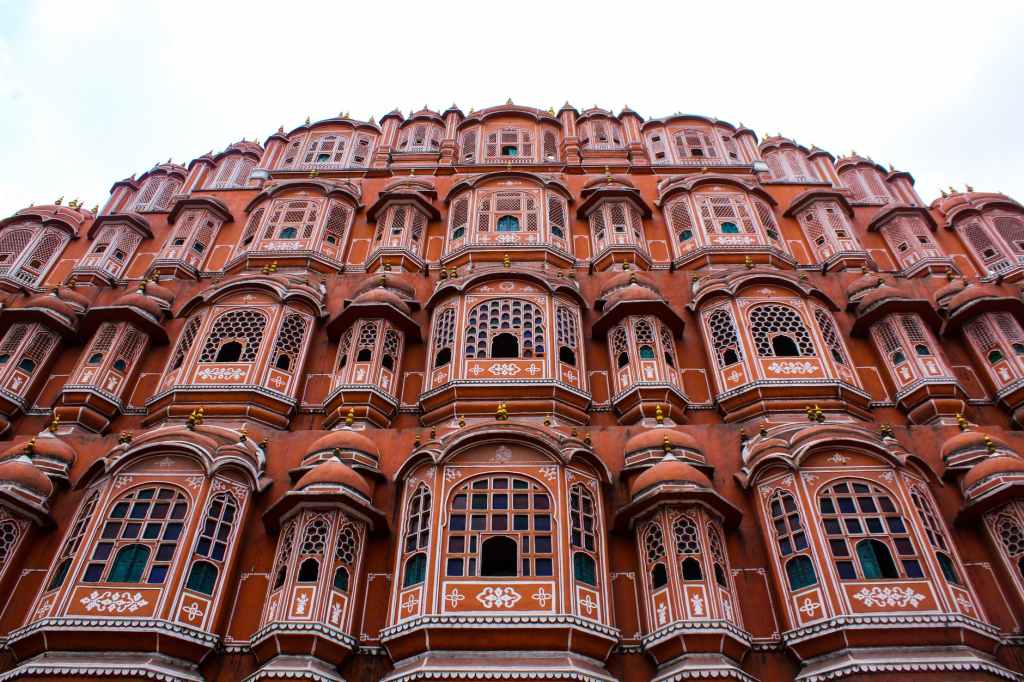
If you had any preconceived notions about how the buildings in Jaipur look, they probably came from Hawa Mahal (Palace of Breeze). It has all of the distinctive architectural features that appear in postcards of the city, from the salmon-pink, honeycombed facade, built to resemble the crown of Hindu god Krishna, to the geometric accents and rows of tiny windows.
The landmark was built in 1799 to allow royal ladies to watch festivals on the street without being seen by the public. Its 953 windows allow plenty of breeze to pass through, making it an ideal summer palace.
4 – Amber Fort
Jaipur is home to one of India’s most-visited forts: Amber Fort. Built in the year 1592, the sandstone and marble monolith stands atop a small hill roughly 20 minute’s driving distance northeast of the center of Jaipur. It’s best known for being a pristine example of Rajasthani architecture.
Getting to Amber Fort typically involves a short uphill hike that’s well worth the effort. It’s decked out with intricate patterns of inlaid marble in nearly every color of the rainbow. The fort is laid out into four separate sections, each of which has a spectacular garden courtyard outside. While you’d never know it from above, you can actually explore the fort’s underground tunnels, some of which have been restored.
5 – Albert Hall Museum
When English writer Rudyard Kipling visited the Albert Hall Museum in Jaipur, he wrote that it was a “rebuke to all other museums in India from Calcutta downwards.” That’s high praise coming from the son of a curator, and fitting for this renowned institution.
The oldest museum in Rajasthan, the Albert Hall Museum boasts an extensive collection of art and historically significant artifacts. Come for the Egyptian mummy, stay to see antique coins from different periods in India’s history, charming permanent exhibits of miniature paintings, 18th-century costumes worn by members of different castes, and a peculiar collection of 19th-century clay figures demonstrating all the yoga poses.
6 – Birla Mandir
In a city that seems to be dipped from top to bottom in pink, the stark white marble Birla Mandir stands out—big time. The Hindu temple pays tribute to Lakshmi, the goddess of wealth and purity, and Vishnu, one of the religion’s main deities.
7 – Nahargarh Fort
When it comes to sightseeing around Jaipur, the views don’t get better than what you’ll find at Nahargarh Fort. Also known as Tiger Fort, the nearly 300-year-old fort overlooks the entire city from atop the Aravalli Hills—a prime location for the structure to defend Jaipur against enemies many years ago.
More than just a formidable barrier though, this fort also contains Madhavendra Bhawan, a summer destination for royalty. The sumptuous Rajasthani building features a dozen identical boudoirs for the queens, which all connect to the king’s suite through mural-filled corridors.
8 – Jal Mahal on Man Sagar Lake
One look at the Jal Mahal, and you might think you’re seeing a mirage. The graceful palace seems to float atop the twinkling Man Sagar Lake , a calm sight compared to the rest of the frenzied city.
While it appears to have just one story, the Water Palace has four other levels submerged beneath a reservoir. Tourists can’t access the site, however, that may change in the future.
Something which caught my attention across all the classes I had was the striking connections between the advantages and disadvantages of globalization. It stopped me to think of the kind of world we live in.
People living in the 21st century had turned around the whole concept of globalization with the coming of inventions and technologies. It now connected every single thing in a whole new level. Not just commodities but culture and lifestyles are also exchanged between the people. With these advantages came the disadvantages. People made use of technology with religious fundamentalism making us go way back in time.
The Modern Era came with the cosmopolitan outlook among people and everyone was more secular. People left behind the conservative outlook towards life and were more adapting and absorbing. Or so we thought, because globalization spread the stereotypes of one place to another. Religious identities also were spread among people. A very bad effect of globalization was the spread of terrorism among the nations.
Now terrorists groups could make use of the technology to make large connections around the world, this has resulted in lots of attacks in different places. With the good side of technological advancements came this very bad side.
People have turned a blind eye to this twisted fact, a very common say that if something has a good side, there definitely will be a bad side. For a minute where we believed that people had changed from being ethnocentric, we directly get a blow from various examples like this.
From the beginning to this day, women have always been oppressed be it by men in their family or by the state that was and is still highly patriarchal. Earlier, the private (households) and the public (political, business world) were strictly kept separate. State had no roles in what was happening in the private sphere. And the major factor of this separation was that public was controlled by males and private appeared to be in control of females.
The separation between private (home) and public (work) made a significant difference in the lives of males and females, and of course, it was negative for women. For example, males were expected to work out and hence they dominated the outside world while females were expected to stay at home and decide the household decisions and thus they happened to be the controllers of the households.
However, the above situation was far away from reality. In most cases, as public was controlled by males it used to have a direct influence on the private sphere. And therefore, the then feminists and scholars labelled this distinction as baseless and started demanding for political rights of females like voting rights, reproductive rights and like. It was through the second wave of feminism in 1960s, feminists began to bring up more such marginalised communities and issues into the picture.
Earlier only a “white heterosexual male” normative was followed in the world and especially in western civilisations. Feminists have rejected the public-private boundary as an acceptable rationale for legal action or inaction. A feminist argument is that such a separation disadvantages women of their rights and advantages privileged groups like white heterosexual males.
Three major arguments that were brought by feminists which aimed to challenge the public-private distinction are, first, politics and society, both had ignored the domestic sphere, second, public-private distinction is deeply gendered and sexist as its assigns roles to people based on their biological characteristics and because of this women become the most affected underprivileged group, third, calling “family” a private sphere was an attempt to hide domination and abuse in the relationships in families from legal discourse.
To put an end to all of this ignorance, women activists fought against the injustices and demanded the states to intervene in household matters like laws against domestic violence, divorce rights to women, abortion rights and other rights to choose. Along with these domestic protection rights, many other rights on the public sphere were also demanded.
Feminists from the second feminist wave asked for equal representation in politics, law-making and other decision making procedures which were of both public and private significance.
Examples:
1) Paid Work:
Even though working environment has changed nowadays as compared to earlier times, females suffer from hard labour but less payment. From corporate houses to films and television everywhere females are paid less than their male counterparts even though all of them do the same work. At times, female actors do more work as they have dance sequences in addition in the movies but still get paid less for the work. This has witnessed a change in recent times where female actors have begun to charge lump sum amount.
2) Patriarchal State:
States can be extremely patriarchal to women in terms of legal and political rights. This can happen in two ways- one by creating patriarchal and misogynist laws for women, two by not doing anything progressive for women (because not interfering into women’s rights is also equal to creating misogynist laws for women). Over the past few decades, this has also witnessed a change where we have seen governments making women friendly laws like reservations and special commissions for women or anti dowry and anti-domestic violence rights.
3) Male Violence:
This can mean anything that happens both in public and private sphere. Sexual harassment at workplaces is at peak all over the world. Thanks to social activists and NGOs in India who all fought for implementation of sexual harassment act back in 1990s when a social worker was brutally sexually assaulted for stopping a child marriage in the Indian state of Rajasthan.
At the end, we all as a society collectively need to understand that opposite of patriarchy is gender equality, that is, feminism, nothing else.

















 Eduindex
You must be logged in to post a comment.