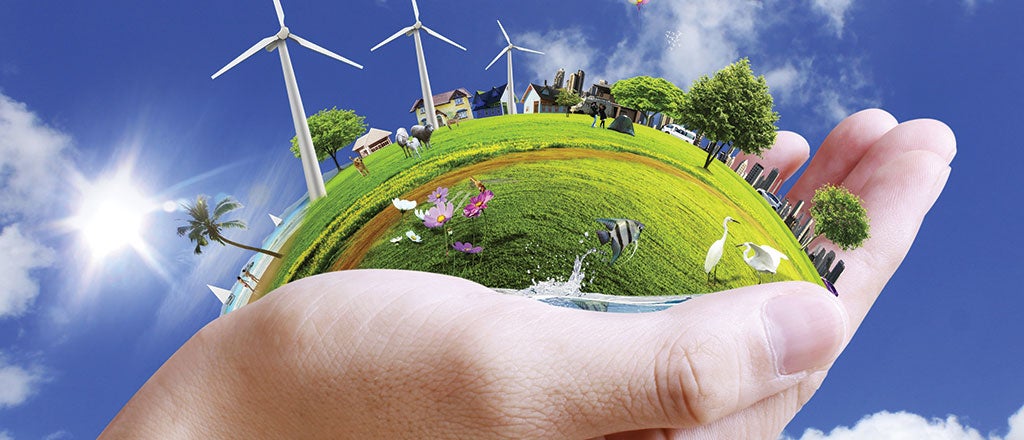
The environment plays a significant role to support life on earth. But there are some issues that are causing damages to life and the ecosystem of the earth. It is related to the not only environment but with everyone that lives on the planet. Besides, its main source is pollution, global warming, greenhouse gas, and many others. The everyday activities of human are constantly degrading the quality of the environment which ultimately results in the loss of survival condition from the earth.There are hundreds of issue that causing damage to the environment. But in this, we are going to discuss the main causes of environmental issues because they are very dangerous to life and the ecosystem.
Pollution – It is one of the main causes of an environmental issue because it poisons the air, water, soil, and noise. As we know that in the past few decades the numbers of industries have rapidly increased. Moreover, these industries discharge their untreated waste into the water bodies, on soil, and in air. Most of these wastes contain harmful and poisonous materials that spread very easily because of the movement of water bodies and wind. Greenhouse Gases – These are the gases which are responsible for the increase in the temperature of the earth surface. This gases directly relates to air pollution because of the pollution produced by the vehicle and factories which contains a toxic chemical that harms the life and environment of earth. Climate Changes – Due to environmental issue the climate is changing rapidly and things like smog, acid rains are getting common. Also, the number of natural calamities is also increasing and almost every year there is flood, famine, drought, landslides, earthquakes, and many more calamities are increasing.
Development recognises that social, economic and environmental issues are interconnected, and that decisions must incorporate each of these aspects if there are to be good decisions in the longer term.For sustainable development, accurate environment forecasts and warnings with effective information on pollution which are essential for planning and for ensuring safe and environmentally sound socio-economic activities should be made known.
Early times the Indian subcontinent appears to have provided an attractive habitat for human occupation. Toward the south it is effectively sheltered by wide expanses of ocean, which tended to isolate it culturally in ancient times, while to the north it is protected by the massive ranges of the Himalayas, which also sheltered it from the Arctic winds and the air currents of Central Asia. Only in the northwest and northeast is there easier access by land, and it was through those two sectors that most of the early contacts with the outside world took place.
Within the framework of hills and mountains represented by the Indo-Iranian borderlands on the west, the Indo-Myanmar borderlands in the east, and the Himalayas to the north, the subcontinent may in broadest terms be divided into two major divisions: in the north, the basins of the Indus and Ganges (Ganga) rivers (the Indo-Gangetic Plain) and, to the south, the block of Archean rocks that forms the Deccan plateau region. The expansive alluvial plain of the river basins provided the environment and focus for the rise of two great phases of city life: the civilization of the Indus valley, known as the Indus civilization, during the 3rd millennium BCE; and, during the 1st millennium BCE, that of the Ganges. To the south of this zone, and separating it from the peninsula proper, is a belt of hills and forests, running generally from west to east and to this day largely inhabited by tribal people. This belt has played mainly a negative role throughout Indian history in that it remained relatively thinly populated and did not form the focal point of any of the principal regional cultural developments of South Asia. However, it is traversed by various routes linking the more-attractive areas north and south of it. The Narmada (Narbada) River flows through this belt toward the west, mostly along the Vindhya Range, which has long been regarded as the symbolic boundary between northern and southern India.
India’s movement for Independence occurred in stages elicit by the inflexibility of the Britishers and in various instances, their violent responses to non-violent protests. It was understood that the British were controlling the resources of India and the lives of its people, and as far as this control was ended India could not be for Indians.
On 28 December 1885 Indian National Congress (INC) was founded on the premises of Gokuldas Tejpal Sanskrit School at Bombay. It was presided over by W.C Banerjee and attended by 72 delegates. A.O Hume played an instrumental role in the foundation of INC with an aim to provide Safety Valve to the British Government. A.O Hume served as the first General Secretary of INC. The real Aim of Congress is to train the Indian youth in political agitation and to organise or to create public opinion in the country. For this, they use the method of an annual session where they discuss the problem and passed the resolution. The first or early phase of Indian Nationalism is also termed as Moderate Phase (1885-1905). Moderate leaders were W.C Banerjee, Gopal Krishna Gokhale, R.C Dutt, Ferozeshah Mehta, George Yule, etc. Moderates have full faith in British Government and adopted the PPP path i.e. Protest, Prayer, and Petition. Due to disillusionment from Moderates’ methods of work, extremism began to develop within the congress after 1892. The Extremist leaders were Lala Lajpat Rai, Bal Gangadhar Tilak, Bipin Chandra Pal, and Aurobindo Ghosh. Instead of the PPP path, they emphasise on self-reliance, constructive work, and swadeshi. With the announcement of the Partition of Bengal (1905) by Lord Curzon for administrative convenience, Swadeshi and Boycott resolution was passed in 1905.
ONE INDIVIDUAL MAY DIE; BUT THAT IDEA WILL, AFTER HIS DEATH, INCARNATE ITSELF IN A THOUSAND LIVES.
Women’s Organisations emerged in India as a result of the spread of education and the establishment of the notion of the new woman. There was an improved level of communication among women which made them aware of the different problems that they faced and their rights and accountabilities in society. This awareness led to the upsurge of women’s organizations that fought for and signified women’s causes
An exclusive feature of the Indian women’s crusade is the fact that early efforts at women’s liberation were set in motion by men. Social reformers such as Raja Ram Mohan Roy, Maharishi Karve, and Swami Dayanand Saraswati challenged the conventional subservience of women, stimulated widow remarriage, and supported female education and impartiality in matters of religion, among other issues. Mahila mandals organized by Hindu reformist organizations such as the Arya Samaj and Brahmo Samaj encouraged women to go out of the boundaries of their homes and interact with other members of society. Pandita Ramabai, who was considered as one of the innovators of the feminist movement, with the help of Justice Ranade established the Arya Mahila Samaj in 1882. She envisioned creating a support network for newly educated women through weekly lectures and lessons at homes, where women could learn and gain confidence through interactions.
Women’s auxiliaries of general reform associations also served as a ground for women to deliberate social issues, express opinions, and share experiences. The Bharata Mahila Parishad of the National Social Conference was the most protruding among such opportunities. Though the National Social Conference was formed at the third meeting of the Indian National Congress in 1887, the Mahila Parishad was launched only in 1905.
The pre‐Independence period saw women’s issues related to the nationalist agenda at various junctures. In this period, a major enhancement of women was in terms of political participation of women, calling for a redefinition of conventional gender roles. Women began openly demonstrating their opposition to foreign control by supporting civil disobedience actions and other forms of protest against the British. Opportunities to organize and participate in agitations gave women much‐needed confidence and a chance to develop their leadership skills. Cutting across communal and religious barriers, women associated themselves with larger problems of society and opposed sectarian issues such as communal electorates. Political awareness among women grew, owing to a general understanding that women’s issues could not be separated from the political environment of the country. During this period, the initial women’s organizations formed within the historical background of the social reform movement and the nationalist movement were as follows.
•The Women’s India Association (WIA). National Council of Women in India (NCWI). •The All India Women’s Conference (AIWC) in 1917, 1925, and 1927 correspondingly. •Each of these organizations emphasized the importance of education in women’s progress. •The WIA, created by Margaret Cousins in Madras, worked widely for the social and educational emancipation of women. •Associated with the Theosophical Society, it encouraged non‐sectarian religious activity and did creditable work in promoting literacy, setting up shelters for widows, and providing relief for disaster victims. •Women in Mumbai, Chennai, and Kolkata through networks developed during World War I work, allied their associations together, and created the NCWI in 1925. A national branch of the International Council of Women, its most prominent member was Mehribai Tata, who aggressively campaigned against inert charity and advised men to support female education. •The most important of the women’s organizations of the time was the All India Women’s Conference. Though its initial efforts were directed towards improving female education, its scope later extended to include a host of women’s issues such as women’s franchise, inheritance rights.
The Constitution of India enlisted in 1950 which permitted equal rights to men and women. Rights such as the right to vote, right to education, right to enter into public service, and political offices brought in satisfaction among women’s groups. In this period, there was limited activity in the area of women’s rights. Many women’s organizations such as the National Federation of Indian Women (1954) the Samajwadi Mahila Sabha (1559) were formed to work for supporting the cause of Indian women. Since the country was facing a social, political crisis after British rule, many demands of the women activists were not supported by the Government. But during this period from 1945, the Indian women got an opportunity to participate in confrontational politics.
In post-independent India, the women’s crusade was divided, as the common opponent, foreign rule, was no longer there. Some of the women leaders formally joined the Indian National Congress and took a powerful position as Ministers, Governors, and Ambassadors. Free India’s Constitution gave universal adult franchise and by the mid-fifties, India had fairly liberal laws concerning women. Most of the demands of the women’s movement had been met and there seemed few issues left to organize around. Women’s organizations now observed that there was an issue of implementation and consequently there was a pause in the women’s movement.
Some women organizations such as the Banga Mahila Samaj, and the Ladies Theosophical Society functioned at local levels to promote contemporary ideas for women. These organizations deal with issues like women’s education, abolition of social evils like purdah and Child marriage, Hindu law reform, moral and material progress of women, equality of rights and opportunities.
It can be believed that the Indian women’s movement worked for two goals.
•Uplift of women. •Equal rights for both men and women.
Currently, there are many women organizations in India:
•All India Federation of Women Lawyers •All India Women’s Conference •Appan Samachar •Association of Theologically Trained Women of India •Bharatiya Grameen Mahila Sangh •Bharatiya Mahila Bank •Confederation of Women Entrepreneurs Durga Vahini •Friends of Women’s World Banking •Krantikari Adivasi Mahila Sangathan
The major objective of this organization is:
•Strengthening and building new initiatives, networks, forums, etc., for protecting women’s rights •Monitoring the Government of India’s commitments, implementing the Platform for Action with special focus on the eight-point agenda discussed at the Conference of Commitment, CEDAW, the Human Rights, and other United Nations Convention. •Advocacy, lobbying, and campaigning on women-related issues. •Information Dissemination and Documentation. •Solidarity and linkages with other regional and global forums.
Another women organization in India is Swadhina (Self-esteemed Women) which was formed in 1986. It is principally a civil society organization focused on the Empowerment of women and Child Development based on Sustainable Development and Right Lively hood. At Swadhina, it is believed that positive social change has a direct effect on the lives of women and that change is possible only through equal and spontaneous participation of Women. Organization members are active in five states across the country in remote tribal districts of Singbhums in Jharkhand, Purulia, and West Midnapur in West Bengal, Kanya Kumari in Tamil Nadu, Mayurbhanj in Orissa, and East Champaran in Bihar.
Due to the women’s movement, several legislations were passed like the Equal Remuneration Act, Minimum Wage Act, Maternity Benefit Act, etc. to ensure equal status to women in society & more importantly at work. However, illiteracy amongst the major women workforce (87% of women are employed in the unorganized sector), fear of losing employment & lack of awareness of the laws enacted to protect them, make it difficult for women to benefit from them.
The ocean’s beauty, mystery, and variety of life, are the main attractions for people to study marine biology. Marine biology is the more general science of biology applied to the sea. Most of the disciplined in biology are represented in marine biology. Marine biology has many branches, viewpoints, and approaches. It is also closely related to oceanography, the scientific study of the oceans. Geological oceanographers study the sea floor, chemical oceanographers study ocean chemistry, and physical oceanographers study waves, tides, currents, and other physical aspects of the sea.
Life on earth is believed to be originated in the sea, therefore the study of marine life teaches us much about all life on earth, not just in the sea. Marine life helps determine the very nature of our planet. Marine organisms produce much of the oxygen we breathe and help regulate the earth’s climate. Thus, to make full and wise use of the sea’s living resources, to solve any kind of problems marine organisms may create, and to predict the effects of human activities on the life of the sea, we must learn all we can about marine life. In addition, marine organisms provide clues to the earth’s past, the history of life, and even our own bodies that we must learn to understand. This is the challenge, the adventure, of marine biology.
The Phoenicians were the first accomplished Western navigators and by 2000 B.C. they were sailing around the Mediterranean Sea, Red Sea, Black Sea, eastern Atlantic Ocean, and Indian Ocean. Ancient Greeks had considerable knowledge of nearshore organisms in the Mediterranean region. They even used an electric ray (Torpedo) to deliver the first electrical simulation therapy. During the 4th century B.C., the Greek philosopher Aristotle described many forms of marine life. He even recognized, among other things, that gills are the breathing apparatus of fish. Therefore, Aristotle is considered by many the first marine biologist. During the 9th and 10th centuries the Vikings continued the exploration of the northern Atlantic Ocean and they discovered Vinland, what we now call North America. Furthermore, Arab traders and people in the Far East also continued to explore and learn about the sea.
During the Renaissance, a lot of voyages of exploration began by the Europeans. Christopher Columbus rediscovered the “New World” in 1492. In 1519 Ferdinand Magellan embarked on the first expedition to sail around the globe. Fairly accurate maps, especially of places outside Europe, began to appear for the first time. The explorers were soon interested and curious about the ocean they sailed and the things that lived in it. James Cook, an English sea captain, was one of the first to make scientific observations along the way and to include a full-time naturalist among his crew. Furthermore, Cook was the first to make use of a chronometer” that enable him to prepare reliable charts.
By the nineteenth century it was common vessels to take a naturalist along to collect and study the life forms that were encountered. Perhaps the most famous of these shipboard naturalists was the Englishman, Charles Darwin. He sailed around the world on HMS Beagle for five years, horribly seasick most of the time. The Beagle’s primary mission was to map coastlines, but Darwin used the opportunity to make detailed observations of all aspects of the natural world. This set off a train of though that led him, years later, to propose the theory of evolution by natural selection”. Darwin made many other contributions to marine biology. He explained, for example, the formation of the distinctive rings of coral reef called atolls.
“I felt the full breadth and depth of the ocean around the sphere of the Earth, back billions of years to the beginning of life, across all the passing lives and deaths, the endless waves of swimming joy and quiet losses of exquisite creatures with fins and fronds, tentacles and wings, colorful and transparent, tiny and huge, coming and going. There is nothing the ocean has not seen.”
We hear the word journaling very often. Almost every other day this term falls on our ears but we simply pay no heed to it. The reason is we humans have a tendency to think that the most ordinary or simplest things cannot bring us extraordinary greatness. Which is not true ofcourse.
When it comes to journaling, we sometimes underestimate how important it is to include this beneficial habit into our daily routines. Our lives can thrive from journaling in many different ways. From increased productivity overall to self-improvement and improved mental wellness, this habit is proven to be effective.
Writing down your thoughts, feelings, or anything else you want to in order to try to understand them better is what journaling is fundamentally all about. Every time we write down our thoughts in a journal, our mind starts to get more organised, making it simpler for us to prioritise our goals and every aspect of our lives that we want to work on. As a result, journaling helps us stay productive by allowing us to acknowledge what needs to be done after letting us self-assess ourselves in a way.
The ability to learn new things quickly, as well as your capacity for analytical and innovative thought, are more important indicators of productivity in today ’s digital economy than how much work you can get done in an hour. Journaling is therefore valuable spending a few minutes on, just like any practise that enables you to learn more acutely and think more effectively.
Outlining your goals in a journal enables you to think thoroughly about all aspects of it. Journaling helps you keep motivated during the arduous process of actually achieving your goals by providing a track of the work you’ve made in that direction. We refer to it as effective journaling for this reason.
Anyone who really wishes to deal with their emotions, possibly to prevent it from driving themselves in the realms of depression or anxiety, might benefit much from this mindful practice.
You can thoroughly examine your feelings, let out chaos, and mentally assimilate your experiences through writing.
Furthermore, it can support you in attaining a significant purpose or work with you to reduce certain sources of stress. Creating and reflecting on the story of your life, including all of the decisions you have committed and the moments that have shaped who you are today, is something you may do by keeping a diary.
In a word, journaling’s healing effects are “enlightening.
You can’t change it all in your life instantly, and attempting to create healthy habits and break negative ones in a single day is probably not going to work. Legitimate, lasting change occurs when you only take on something that you can manage; frequently, altering one significant habit can have knock-on impacts that enhance your life and move you forward to your commitments in other aspects.
One such discipline is writing; it may help you stay focused, determine your capabilities and limitations, provide an outlet for awareness of self , but also much more. Merely keeping track of your ideas, emotions, and doings can change your life in unanticipated ways.
A statement that holds a lot of emotion during rainy season in India. You never know how much will it rain. Sometimes it pours, sometime it just gives a short peek and passes by for us to enjoy the rainbow. In India, power cuts, roads filled with water, unseen manholes are opened, people driving in hurry to reach their destination, couples in love sharing hot food to the sides of the road, people removing helmets to feel the strong connection to earth, some standing by for it to pass and many more.
As a bike rider, I enjoy driving during the time it rains. I don’t care if it pours or drizzles, there is something about that moment that holds me close to it. The smell of petrichor, the slow drive, the sound of rain hitting the skin, and music just makes this meal heavenly. The destination may not be fulfilling but it’s the journey that fills me with a sense of joy.
As a person, I connect with mother earth on a deeper level during rain. It gives me a feeling of belonging to a deeper purpose. Mother Earth causes rain to hydrate herself and add water to it’s lovely citizens. As a student, it’s my best bet if the college would be cancelled. The sound of rain on a Monday morning always lifts my spirits because I knew school/college would be cancelled. Now, the same rain helps me find peace from the worldly pains.
Wherever you go, you hear the terms of budget, loans, bonds, stocks, crypto, and many more. Finance has become one of the highest searched topics that people want to learn. People want to get control, build different streams of income, build passive income, buy real estate, buy bonds and increase their wealth. Compared to 1980s to the present day, finance has developed and spread its branches across the world. With technology, finance has become easier to access.
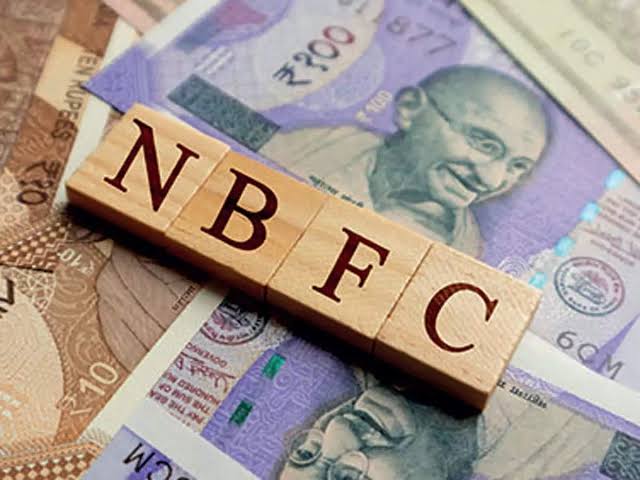
Small NBFCs( Non-Banking Financial Corporations) have created apps that people can get for small amounts of loan. From 100₹ to 1,00,000₹, these corporations have found an untouched market in loan requirements, small loans. The term may be quite little, but it has huge potential. A lot of people take loans or borrow money from loan sharks at high interest rates, but do they always have money to give?
This question itself has created this part of market. With technology, payments have become quicker and able to move in a matter of minutes. NBFCs found this to be their best advantage of all time. People sign up on these apps with all their details and take the loan at exorbitant rates. They charge interest for each passing day ( 3% or more) and disburse the amount with the click of a button.
As many people are, no one wants to go through the terms & conditions because it is long and boring. Here lies the secret to the destruction of your reputation between you and the world. Many think that these apps are to be taken simply and not to be minded when the payment date comes. These NBFCs aren’t banks so they don’t give repeated notices for the payment, instead, they send your contacts all your details, with the amount of money you have taken and ask them to pay. They use godawful ways to get the payment.
Few messages are so disgusting and low that it breaks your reputation into pieces. You cannot rebuild your reputation and it keeps going on till the payment has been done. It’s a small yet such powerful blow that you cannot recover from. After the payment has been made, they don’t send a message stating that you have made the payment which doesn’t help you in any way but makes you droop down more. These interest rates on meager amounts is how they make the most money on.
Every time you borrow money, you are robbing time from your future self.
Nathan W. Morris
Loans are not a joke. You learn from the mistakes you make. Scars are lessons for what we have gone through. Learn from your experiences, teach them to your kith and kin, no matter what they are aged. If an 18 year old with a bank account, comes across the app and doesn’t know the effect of not paying on time, it’s not a wound that they can recover from easily.
Teach your younger ones about finance, how to maintain, when and where to use them but not teaching them leads to a higher damage. Be careful and do not go down this path unless you know how to come back from it.
The youth are more affected by this culture & it’s making their life miserable and the most important thing is they just don’t know how to stop worrying enough about it.
The Orthodox or popular opinion of becoming successful and achieving it all very fast ; the ultimate respect status that comes with being the all achiever is Hustle culture, driven by the desire for more.
We are compelled to believe that time is running out and that we must do more, achieve more in less time. The most essential goal in your life should be to prioritise achievement over anything else. It shouldn’t be a big deal to sacrifice your mental and physical health for your life satisfaction. As a consequence, the youth begins to believe. We are constantly seeking more from ourselves, others, and our life. Hustle culture arose from this constant desire for more. It’s also on the upswing.
Now wanting more isn’t necessarily a bad thing, but when it becomes excessive, it’s time to act.
Signs that you are a hustler :
1. You never stop overthinking – Overanalyzing your life and ambitions lead you to constantly put self-limiting beliefs on yourself. Resulting in dread of the judgement, and assumption of the consequences which makes it worse.
2. You want to accomplish everything in one day – Being impatient with your goals and believing that completing more tasks more quickly than others will give you greater recognition and popularity.
3.You want to attain long-term goals in the short term- You focus on making the big leap instead of comprehending that it takes time, patience, and efforts to accomplish anything. Trying to skip the intermediate phases but fail and are left feeling unmotivated.
4. Trying to do all and more at once – You multitask all the time and put your work and aspirations before your needs for rest, sleep, and self-care.
5. Validation is what matters mostto you – when people appreciate your achievements and proficiencies, your desire is stoked, but when it doesn’t, you spiral into self-doubt.
6.You are a materialistic life seeker – Quality of life and ideas don’t interest you & latest trends do. You are leading a typical life because you don’t know how to live otherwise
7.You feel guilty for not being productive enough– Often you feel terrible for putting comfort before your goals. Exhausting yourself completely is part of the process towards success.
8. Being ignorant about you mental health– As you pursue a career-oriented lifestyle, believing that this is the only way to gain respect and prestige, you start comparing yourself to others who are ahead of you and the seeds of self-doubt begin to grown in you.
9.You don’t put your health first – Your health is your most valuable asset and should always be prioritised above all else. Unfortunately, people frequently disregard this and endanger it in pursuit of mediocre accomplishments.
If you think you’re hustler, it’s time to take a moment and reflect. Hope you found this helpful.
What is language? Linguists, psycholinguists, neurologists, evolutionary biologists, and philosophers have all tried to answer this question. ‘Language’ is often used interchangeably with ‘communication’, but they are not the same. Animals can communicate with each other, but they can’t be said to have language. Language, especially human language is unique and radically different from other types of tools of communication because of its immense vocabulary, ordered structure, use of metaphor and analogy, and syntactic flexibility. Human language can, thus, be broadly defined as an amalgam of lexicon, syntax, and semantics. Our identity is influenced by the language we speak. Identity can be broadly classified into ‘personal’ and ‘collective’ identity. Personal identity is, basically, a definition of yourself, and collective identity is how you define yourself in relation to others. Our identity is defined by myriad factors such as our beliefs, cognition, perception, culture, and tradition. The language we speak influences these factors and thus influences and cultivates our personal and collective identity.
Language affects the way we think. There is a hypothesis in linguistics known as linguistic relativity, also known as the Sapir-Whorf or the Whorf hypothesis. It concerns the relationship between language and thought. According to the Whorfian hypothesis, the language one speaks influences one’s cognition and perception of the world and thus people’s perception is relative to their spoken language. Nuances and idiosyncrasies in our language affect the way we communicate with and perceive the world, thus influencing our perception and cognition. There is empirical evidence available that establishes a link between language and thought, for example, the study of Chinese bilinguals and dialectical thinking. Eastern cultures and languages are proven to promote dialectical thinking. A group of researchers conducted a study in 2013 to see if Chinese bilinguals displayed different levels of dialectical thinking when communicating in different languages. The study concluded that the Chinese bilinguals displayed higher levels of dialectical thinking when primed by the Chinese language than with the English language (Chen et al., 2013).
The study regarding the gender of words and their effect on the speaker’s perception and cognition also helps establish a link between language and thought. The study conducted in 2003 asked German and Spanish speakers to describe objects that have opposite gender assignments in those 2 languages. When the speakers were asked to describe a “key” which is masculine in German and feminine in Spanish, German speakers used words like “hard”, “jagged”, “heavy” whereas Spanish speakers used words like “delicate”, “intricate”, and “lovely”. When asked to describe a “bridge”, feminine in German and masculine in Spanish, German speakers used words like “elegant” and “fragile” whereas Spanish speakers used “strong” and “sturdy” (Boroditsky 6).
These studies, to some extent, prove the Whorfian hypothesis. We think in our primary language, and we alter our thinking to fit our language. We can think without language, but we need language to know that we are thinking. Language thus influences our cognition and thought processes.
Language affects the way we perceive the world. Perception is subjective. The same objects evoke different meanings for different people and thus the way we experience the environment around us also differs from person to person due to different individual values, beliefs, culture, and language. Lera Boroditsky’s work with the Pormpuraaw community shows how language can influence a person’s perception of the world. The pormpuraaw community of aboriginal Australia think about time and space very differently. Their language does not use relative spatial terms like ‘left’ and ‘right’ but instead uses absolute directional terms like ‘north’, ‘south’, ‘south-east’. When asked to arrange cards that depicted temporal progression in the correct order, the Pormpuraawans sometimes arranged the cards from right to left and sometimes left to right. Their decision was not random but was instead dependent on their spatial orientation. If they were facing south the cards would be arranged from left to right and when facing east the cards would come towards the body and so on, thus always arranging the cards from east to west. The Pormpuraawans superior knowledge of spatial orientation stems from their immense vocabulary dedicated to describing time and space (Boroditsky and Gaby, 2010).
Another study was conducted in 2007 that establishes a link between language and perception. The study tested Russian speakers and English speakers on their ability to discriminate between different shades of blue. The result of the 2007 study indicated that the Russian speakers were faster to discriminate between the 2 shades of blue than the English speakers because the Russian language describes a clear distinction between light blue and dark blue unlike the English language (Winawer et al., 2007).
Thus, a person’s language can immensely influence how he views objects, colours, and even fundamental concepts like time and space.
Language is a carrier of culture and tradition. You communicate through language and when you communicate you pass and receive information that reflects your upbringing, your culture, history, and tradition. In a community, the history and culture of that community are passed down generation after generation through a shared language. This fact makes the task of preserving and saving language even more cardinal. When a language dies, it’s not just mere words that go out of existence. The history, heritage, tradition, and culture attached to that language also cease to exist. The Mahabharata and Ramayana were oral stories before they were written, same with the Iliad and Odyssey. The accumulated body of knowledge of a community dies when its language dies. If you lose your language, you also lose a sense of your personal and collective identity because “language carries culture, and culture carries the entire body of values by which we come to perceive ourselves and our place in the world” (Thiong’O, 118).
Humans are social creatures. We have an innate need to communicate with others and it is through communication that we come to define ourselves, our personal identity, and our place in the world, our collective identity. Language is located at the epicentre of our identity as it is through language we communicate with others. Our attachment to language thus cultivates our identities. Our personality, our individuality, our ego, and our existence are defined by the mere words we utter.
Works cited
Chen, Sylvia Xiaohua, et al. “Does Language Affect Personality Perception? A Functional Approach to Testing the Whorfian Hypothesis.” Journal of Personality, vol. 82, no. 2, 2013, pp. 130–43. Crossref, doi:10.1111/jopy.12040.
Boroditsky, Lera & Gaby, Alice. (2010). Remembrances of Times East. Psychological science. 21. 1635-9. 10.1177/0956797610386621.
Winawer, J., et al. “Russian Blues Reveal Effects of Language on Color Discrimination.” Proceedings of the National Academy of Sciences, vol. 104, no. 19, 2007, pp. 7780–85. Crossref, doi:10.1073/pnas.0701644104.
Thiong’O, Wa Ngugi. “The Language of African Literature.” Decolonising the Mind: The Politics of Language in African Literature, James Currey Ltd / Heinemann, 2011, pp. 109–27.
Football is one of the greatest sports of all time. It takes us into a fantasy of excitement and sometimes it hurts. Modern football originated in England in the 19th century. The game was a 120-yard pitch containing 2 goal posts in two equal half. the winner was decided by the goals.
There are two teams, each team contains 11 players including a goalkeeper. Today’s football is much improved by great players like Pele, Maradona, Cruyff, etc. The sport involves so much of emotional moments that broke so many hearts. The Munich air disaster, the Murder of Andres Escobar, and The death of Emiliano sala are some of the dark days of football.
Munich air disaster 1958
The Munich disaster occurred on 6 February 1958 in West Germany. players of the British club Manchester United were flying from Munich. the flight crashed after the third attempt to take off from a slushy runway.23 passengers died after that and 21 survived. that was one of the saddest days in football.
The Munich air crash, Germany
Andres Escobar’sdeath
Andres Escobar was a Colombian international player who played for Colombia in many championships including the world cup. The Colombian was played for like Athletico Nacional BSC young boys and the Colombian national team.
Escobar was murdered aftermath of the 1994 world cup for scoring their own goal in the world cup competition which leads them to knock out from that tournament. the incident degraded the image of the country.
Emiliano Sala’s death
The Argentine footballer Emiliano sala passed away on January 21, 2019. The young superstar was an emerging player who played for the French club Nantes. the separation of Emiliano sala was a heartbreaking moment for the football world. Sala was overcome by toxic gases from the unlicensed aircraft before dying in a plane crash.
There is enough in the world for everyone’s need, but there is not enough to meet everyone’s greed, said Mahatma Gandhi, Father of our nation. By these Mahatmaji is calling our attention towards the greed of the world’s most greedy species, namely the human being. As human beings are the only species which could think and feel, it is also the only species that exploits the nature in any which ways possible for their short-term gain. Ignoring the fact that human beings are comparatively new species when we consider the entire time frame of life on earth, we are behaving as if the entire planet and its resources are solely meant for making human lives easier.
The social and economic development of a country owes a lot to the development of energy resources. Man’s greed and uncontrolled use of these resources has resulted in its depletion and in turn has put a question mark on the future of this beautiful planet.
Scientists fear that the conventional energy sources like crude oil, natural gas, etc may become extinct before the end of this century. This has turned man towards the development and promotion of alternate energy resources.
The most important source is solar power because sun is the largest source of energy in this universe. Our country India receives 5000 trillion kilo watt of solar radiation per year. Most part of our country have not less than 300 clear days in a year. It is possible to generate 20 mega watt solar power per square kilometer land area. This energy can be used for a variety of applications like cooking, water heating, water pumping, lighting, etc. Latest innovations have made it possible to run vehicles like cars, trains and even small aircrafts. The German railway, a pioneer in the entire organization will be operated by solar energy by the end of another 25 to 30 years.
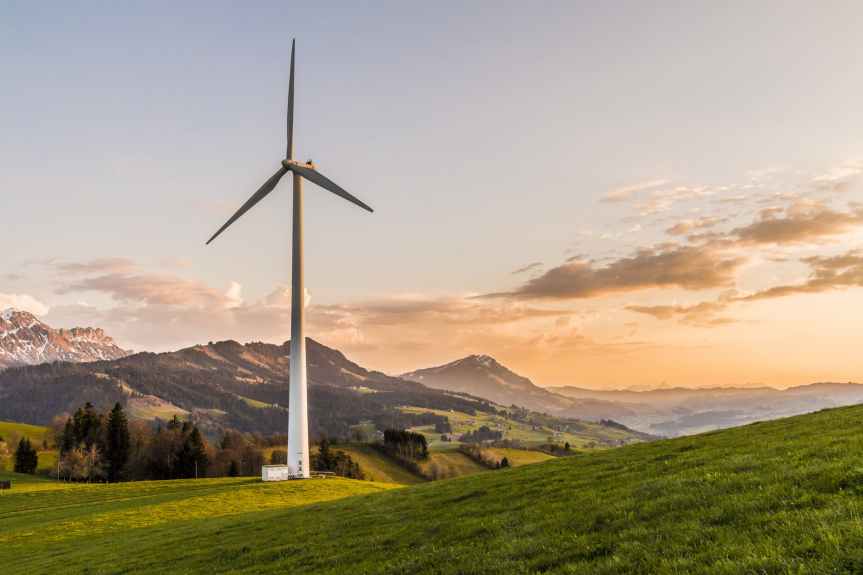
Another one is wind power. India now holds a significantly high position in the list of wind power capacity. The gross wind power potential of India is estimated to be above 45000 milli watt, while the present technical is only near one third of this capacity. It should be noted that the government has initiated several plans and policies to make use of this immense potential.
We can also obtain energy from biomass. It includes food and food waste, municipal waste, land fills gas and biogas. The use of Ethanol blended fuel and bio diesel is also an emerging trend which could replace several other means effectively.
Hydro power is also a prospect for the world with two third of the planet covered with water. If widely used hydro power could be generated from the enormous water resources available in this planet by setting up small hydro power plants.
As the eminent scholar professor Yashpal rightly quoted, “we have not inherited this world from our ancestors, but we have borrowed it from our children”. So, it is high time we turn to some alternative energy sources and leave something for our future generation also.
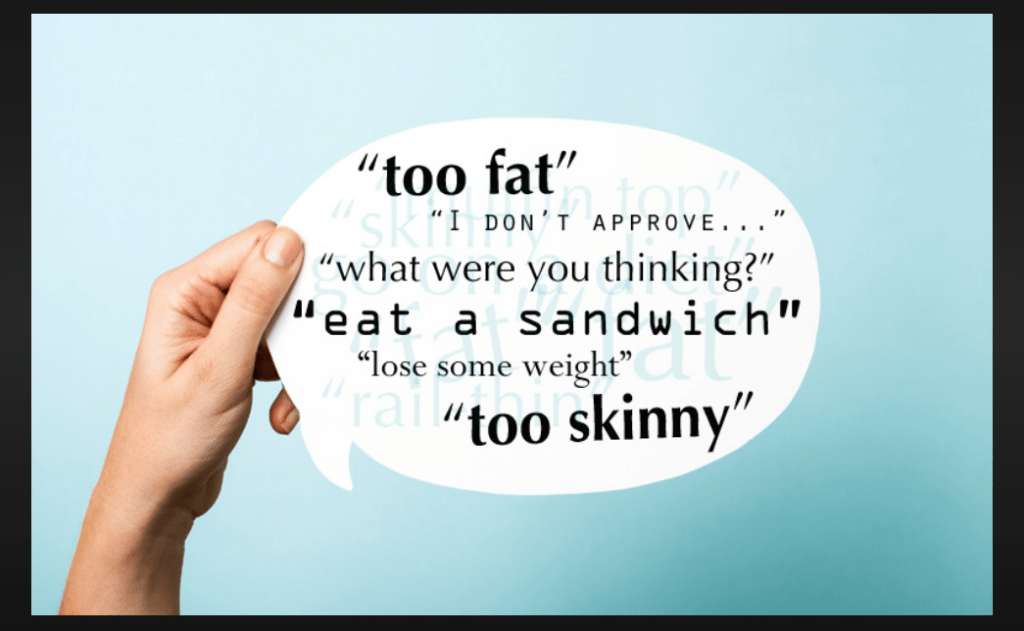
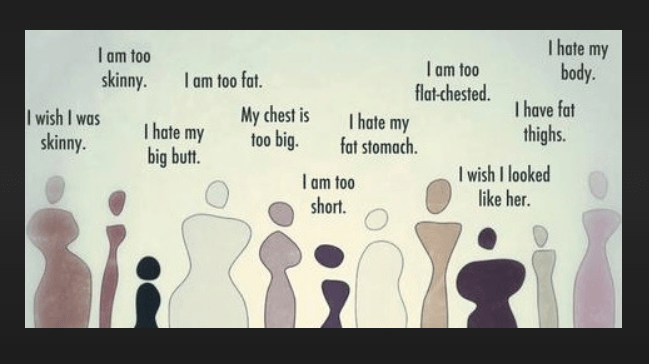
Ever heard these? I hear them daily and it’s either about my self or a group of people or a person talking , to be more clear gossiping about some one else.
So the society expects one to be perfect ,like fair color, good height and slim and fit ,but are every one built in the same way? of course no , just like all the five fingers of our hand are different ,every human being is different and beautiful in their own ways.
If a girl is dark the whole society gives advices ,how to become fair ,if she or he is fat they are given advices about how to reduce weight , if skinny then how to increase their weight, if short ,how to become tall , I just keep wondering if the society has problem with every one’s appearance ?
From my personal experience , I can tell you that I faced such things , I was bullied in my school by my classmates , my friends and even my relatives bullied for my appearance , I could not tolerate them and even I cried due to that , and used to be envious of others for their personalities. I too wanted to achieve what they had and for that I used to skip meals some times and due to that I would feel more hungry than ever and used to over eat. As the time passed I started to accept my body and for my health and fitness , I took healthy steps in my life and started exercising and developing good healthy food habits.
I understood that everyone is beautiful in their own ways and its something that everyone has to accept , I understood that this bullying and body shaming is not good , not for your mental neither for your physical health, body shaming can lead to mental health issues , people start to overthink and worry about their appearance and in order to look perfect and beautiful they will choose faster and dangerous ways , like trying to reduce fat in just a week or trying to increase height and all this is really dangerous for one’s health and can lead to other dangerous consequences.
People of every gender and of all ages must deal with body shaming , it not a big issues , but this can damage one’s mental health the one at whom we are laughing at , whom we are body shaming, or mocking, this may also lead to emotional damage and trauma and depression.
So who are the culprits behind this , one is the society and the other is we ourselves , the product advertisers are the main ones for creating a pain point and then offering a solution to it, making ourselves think that we are not worthy and if we are not of certain skin tone ,height or weight and all , secondly we have ourselves to blame because we do not believe in ourselves and our bodies and we do not treat them well , we do not accept ourselves for how we are and then all this leads to a solution to overcome our issues and that too in a quick and unhealthy way ,leading to more disasters .
I just want the society to accept everyone as they are and to appreciate everyone’s personality since its unique for everyone and to stop body shaming or bullying . Society can be more beautiful if we accept people how they are and try not to change their appearance and instead help build confidence with in them about how unique they are and how to accept and love your body . Not only the society but firstly you yourself have to accept your body and treat it in a proper way and you have to love yourself the way you are , because self love comes first and you have to your first priority.
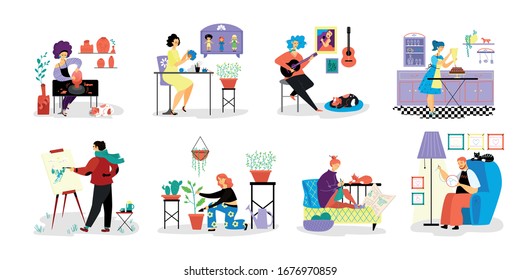
Getting bored in the summer heat? Or you simply want to catch a break from a monotonous life? Well, its summer time and there is no better season to pick up some new hobbies and skills to add to the feathers in your cap. Here are 5 things you can do this summer to feel productive-
Learn to swim
Swimming is a very handy skill and you are never too old to learn to swim. It’s great if you already know to swim too, take a dip in the pool and refine those strokes. Swimming keeps one physically fit, healthy and energised. It also tones your muscles and give you that tan you’ve been wanting.
2.Learn a foreign language
It could be the tongue native to a country you hope to visit someday or a language you’ve always wanted to learn just because you find it so beautiful. Learning the basics of a new language makes the world feel a little smaller, and numerous studies have indicated that being bilingual can give your brain a boost. There are so many free apps and videos that you can refer to at least get some basics of a language.
3.Make your own jewellery
Arts and crafts have always been at the tip-top of popular summer hobbies but have you tried making your own jewellery yet? Capture your own design aesthetic in wearable pieces that you can make from the comfort of your own home. Make them for yourself, gift them to a friend, sell them on Etsy… the possibilities are endless. There are some awesome kits, books, and Youtube videos (essential techniques, supplies to purchase, and of course, hacks) that will make getting started a whole lot easier. Redecorate your room with it or spruce up your collection of gems with some DIY jewellery making.
4. Develop a green thumb
Summertime is the perfect time for gardening: there’s loads of sunlight and the right temperature to grow an entire range of vegetables like tomatoes and cucumbers, or even some herbs and flowers. Gardening can be a nice, rewarding hobby to take up in the summertime. Starting a garden can be an intimidating task but thankfully, there are plenty of resources out there to help you get your green thumb on.
5. Go Camping
Camping is a favourite pastime for many during the summer days and can also be very inexpensive . This is a fantastic low-cost hobby for adventure and nature lovers who want to disconnect from the Wi-Fi and real around a campfire. However, you shouldn’t set out without preparation, so go through this guide to make sure you’re well-prepared! It is a fun way to meet up for some outdoor time with friends and loved ones! It doesn’t have to been in the complete wilderness , just set a tent in your back yard and gaze at those stars.
so what comes to your mind when you hear the words economy ,agriculture and industries ,they are somewhere linked right ?we do have a basic idea that agriculture does contribute to our country’s economy and so do these industries but how do they?
India is known as an agricultural country, as most of the population of villages depends on agriculture. Agriculture forms the backbone of the country’s economy. The agricultural sector contributes most to the overall economic development of the country.
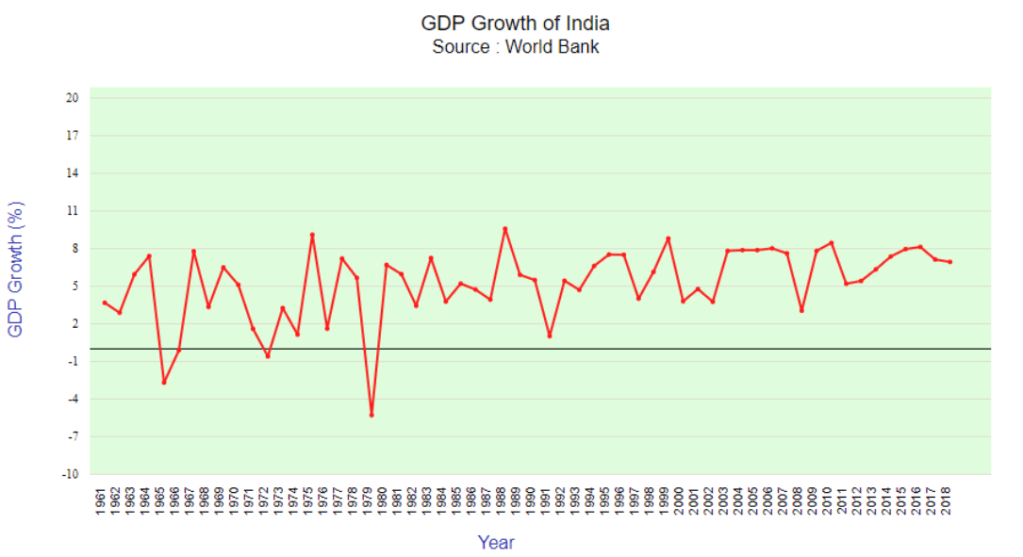
Did you know that historically, India was the largest economy of the world for most of two millennia from the 1st until the 19th century .Since the start of the 21st century, annual average GDP growth has been 6% to 7%,and from 2013 to 2018, India was the world’s fastest major growing economy, surpassing China. . The economy slowed in 2017, due to shocks of “Demonetisation” in 2016 and the introduction of the goods and service tax in 2017.In 2020, pandemic has affected trade and India was the world’s 14th largest importer and the 21st largest exporter.
For a continuous duration of nearly 1700 years from the year 1 AD, India was the top-most economy, constituting 35 to 40% of the world GDP .Under British rule, India’s share of the world economy declined from 24.4% in 1700 down to 4.2% in 1950. India’s GDP (PPP) per capita was stagnant during the mughal empire and began to decline prior to the onset of British rule .India’s share of global industrial output declined from 25% in 1750 down to 2% in 1900. At the same time, the United Kingdom’s share of the world economy rose from 2.9% in 1700 up to 9% in 1870.
There is no doubt that our grievances against the British Empire had a sound basis. As the painstaking statistical work of the Cambridge historian Angus Maddison has shown, India’s share of world income collapsed from 22.6% in 1700, almost equal to Europe’s share of 23.3% at that time, to as low as 3.8% in 1952. Indeed, at the beginning of the 20th century, “the brightest jewel in the British Crown” was the poorest country in the world in terms of per capita income. -MANMOHAN SINGH
In the 1980s and early 1990s the tides began to change. Liberalisation came to India and a growing belief contrary to what Nehru believed, began to rise . By the turn of the 21st century, India had progressed towards a free-market economy, with a substantial reduction in state control of the economy and increased financial liberalisation .
India experienced high growth rates, averaging 9% from 2003 to 2007. Growth then moderated in 2008 due to the global financial crisis. In 2003, Goldman Sachs predicted that India’s GDP in current prices would overtake France and Italy by 2020, Germany, UK and Russia by 2025 and Japan by 2035, making it the third-largest economy of the world, behind the US and China. India is often seen by most economists as a rising economic superpower which will play a major role in the 21st-century global economy.
India started recovery in 2013–14 when the GDP growth rate accelerated to 6.4% from the previous year’s 5.5%. The acceleration continued through 2014–15 and 2015–16 with growth rates of 7.5% and 8.0% respectively. For the first time since 1990, India grew faster than China which registered 6.9% growth in 2015. However the growth rate subsequently decelerated, to 7.1% and 6.6% in 2016–17 and 2017–18 respectively, partly because of the disruptive effects of 2016 Indian banknote demonetisation and to goods and service tax India. India’s GDP growth has been slowing rapidly, from a high of 8.3% in 2016 to just 4.2% in 2019.
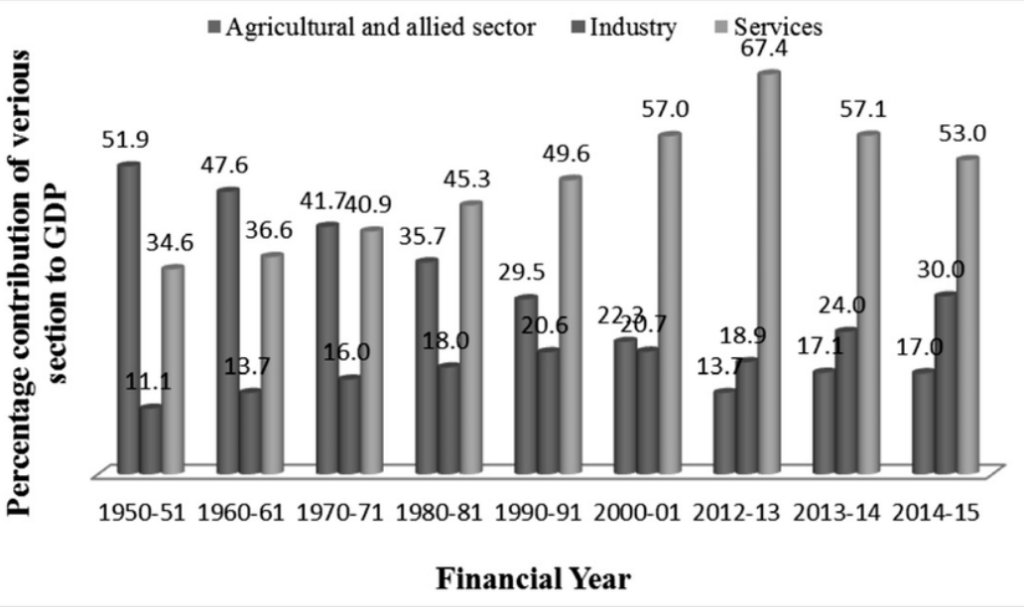
Historically, India has classified and tracked its economy and GDP in three sectors: agriculture, industry, and services.
Agriculture and allied sectors like forestry, logging and fishing accounted for 17% of the GDP, the sector employed 49% of its total workforce in 2014.Agriculture accounted for 23% of GDP, and employed 59% of the country’s total workforce in 2016. As the Indian economy has diversified and grown, agriculture’s contribution to GDP has steadily declined from 1951 to 2011, yet it is still the country’s largest employment source and a significant piece of its overall socio-economic development. Crop-yield-per-unit-area of all crops has grown since 1950, due to the special emphasis placed on agriculture in the five-year plans and steady improvements in irrigation, technology, application of modern agricultural practices and provision of agricultural credit and subsidies since the Green Revolution in India. However, international comparisons reveal the average yield in India is generally 30% to 50% of the highest average yield in the world. The states of Uttar Pradesh, Punjab, Haryana, Madya Pradesh, Andhra Pradesh, Telangana, Bihar, West Bengal, Gujarat and Maharashtra are key contributors to Indian agriculture.
At around 1,530,000 square kilometres (590,000 sq mi), India has the second-largest amount of arable land, after the US, with 52% of total land under cultivation.
Agriculture farming in India is a century-old activity, and is currently the highest contributor to the GDP of India. Agriculture remains the largest contributor to the country’s GDP and farmers constitute 58% of India’s population .Farming is one of the oldest economic activity in our country.
As per 2018, agriculture employed more than 50% of the Indian work force and contributed 17–18% to country’s GDP.
The economic contribution of agriculture to India’s GDP is steadily declining with the country’s broad-based economic growth. Still, agriculture is demographically the broadest economic sector and plays a significant role in the overall socio-economic fabric of India.
The main pillar of the rural economy is based on agriculture. Agricultural land and livestock are the primary means of production for people of the rural areas in any society. Livestock farming consists of the major part of the economy of the majority of people. It relies typically on labor-intensive methods for raising crops and healthy livestock. Livestock feed is shipped all over the country, and land is frequently needed for cultivation, farrowing, watering, and other activities.
The advent of modern technology has also revolutionized the agriculture sector. Farmers are adopting more sophisticated techniques to get more production from small pieces of land. So the use of advanced techniques is urging the farmers to focus on small land in order to get more production. But the farmers also need support from the government and also they need help in hard times like no enough rainfall or over rainfall etc. The government must extend a helping hand towards the farmers ,they are the ones who work selflessly and for the sake of the whole country’s population and they do not worry about in which season they are working in ,they put all their hard work and efforts into their work and they are the ones who worship their proffesion .
The rural economy mainly depends upon agriculture. Even though traditional farming still exists, the use of advanced technology has revolutionized the agriculture sector. It has proved a blessing for small-scale farmers. They can adopt modern agricultural techniques to get more produce from their small farms. Organic farming is another window of opportunity for farmers. They can grow more food to generate better revenue.
The cottage industry or the small scale industry plays a vital role in the rural economy of India. Majority of the population of India lives in rural areas; it is where the real India resides. Apart from agriculture, the cottage industry is the primary source of livelihood in rural India. Cottage industry or the small scale industry are those where the business is carried on at home with small numbers of workforce or labours . the members may be of the same family, religious groups or the community. Most of the workers of the small scale industry are the traditional artisans who have inherited their work as art from their ancestors.
In India, more than 74 per cent of the total population lives in the villages where their lot is linked with agriculture. They have to live in the villages as they cannot leave their fields which give them their ‘living’. Side by side they must be provided with some kind of cottage industries upon which they can depend during that period in which they remain idle and unengaged’.
After independence, our country has been taking gigantic strides towards industrialisation. Cottage industries can become and alternative means of employment for the people living in the rural areas. Cottage industries will be of benefit for our villages, which form the back bone of the nation.
The place of cottage industries in the national economy in the country has been unique since time immemorial. India was famous, in the past, for the wealth of the land and for the high artistic skill of her craftsmen. India was exporting wonderful jewellery and superfine embroideries to Europe. European merchants were attracted towards India more by her craft and industry than by the rich raw material.
It must not be forgotten that cottage industries are the back-bone of our rural economy and no rural uplift is possible without the protection of and encouragement to these small-scale industries. Apart from all other considerations, small-scale or cottage-industries are essential for providing employment to our tillers of soil in their leisure time or when they remain idle.
To improve and encourage the cottage-industry in our country we have to change the views of the general public. The people should be made interested in patronizing home-made goods. A ready market is a further urgency in this direction.
Rural Co-operatives and Rural Banks should be established and stabilized by the Government for advancing short-term loans on nominal interest.
Lastly, adequate marketing facilities should be arranged for them, as sale of goods has now-a-days become as complicated an affair as production itself.
Hence, the artisans must be helped to get the best price of their goods. Frequent exhibitions should be organized to enable the artisans to show their art and industry and give them impetus and inspiration to create still better patterns of handicrafts.
Basically the agriculture and cottage industries are the main sources of livelihood in India and they contribute most to our economy , we all know that these both professions are being practiced from very long period of time ,like around some centuries in India ,they have been contributing to the country’s economy from very beginning. the rural economy’s most percentage is received from agriculture and cottage industry and without their contribution our country’s economy might destroy or decline very rapidly ,even a small change in their contribution percentage might affect the economy of country ,but its economy right and GDP ,it wont stay constant there are many ups and downs ,in a year our GDP might good where as in the other it might be bad we cannot predict that ,there might be various reasons for the decline of GDP, like in 2017 it was demonitisation and in 2020 the pandemic hit us and it affected the whole world’s economy , and India’s GDP has been declined by 23.9% by 2020.
Agriculture and cottage industry are major contribution of rural economy , and for these people if government is trying to extend a helping hand to them then probably our economy might go to better figures and it’s a fact that our rural economy can be developed by agriculture and cottage industries and the Rural Economy in India is wholly agriculture based and it is of tremendous importance because it has vital supply and demand links with the other Indian industries. Agriculture is the main stay of the Indian economy, as it constitutes the backbone of rural India which inhabitants more than 70% of total Indian population.
watsapp which well known to people of all generations including kids,now a days it is main source of communication or intraction between people’s.
Now a days buisness are going online so meta company also introduced a best application for buisiness it is watsapp buisines, although everyone who are reading this blog are familiar with this application but please spend some of your valuable time in reading this in which we know best updated buisines watsapp Together with WhatsApp chatbot, WhatsApp Business is a very powerful tool for commerce. Thanks to many new features that the platform keeps on releasing, WhatsApp is becoming a great retail place, especially during remote times. Even if you are not going to build a WhatsApp chatbot, there
Let’s look closer at WhatsApp Business app features that you might enjoy as much as we do:
Create a business profile with helpful information for your customers, like your address, business description, email address, and website. Business accounts help brands to gain a user’s loyalty. A business profile gives the company a familiar “face” and identity. To have a “Verified” badge next to your company name, WhatsApp has to confirm that this is a verified business account.
Steps to add details about your business: Go to WhatsApp Business app – Open Settings > Business settings > Profile.
3.Quick Reply
These are frequent messages to answer common questions. Quick replies let you save and reuse messages you frequently send so you can easily answer common questions in no time. Simply press the “/” on your keyboard to select a quick reply and send.
3.Automatic Greeting Message
WhatsApp for business enables you to create a greeting message that users will receive when they start a dialog with your company or after 14 days of inactivity. By sending an instant message, you welcome and introduce a company to a new potential customer with no delays and waiting time.
Steps to set up a greeting message: Settings > Business settings > Greeting message. From here, you can create a new greeting message or edit an existing one.
4.Setting Away Message
Away messages are like greeting messages. They send a custom message to people who are trying to connect with the company after your working hours. You can write a custom message or send your working hours. You can set up for them to activate at the chosen time.
Steps to set up an away message: Settings > Business settings > Away message > “Activate away message
You can also edit your away message from here and schedule when you want to send this message. You can choose from Always send, Custom schedule, or after your work hours
5.Label Contacts
Businesses can organize their contacts and categorize them with labels for easy access. This way, you can easily search through your contacts and keep them grouped and organized.
Steps to add a label to a new contact: Click the menu button on the client’s chat page > choose a label and then save.
Steps to add a new label: Click the menu button on the client’s chat page > click “ New label” > click save
6.Access Message Statistics
WhatsApp for Business lets you access vital metrics like how many of your messages were sent, delivered, and read.
Steps to access statistics: Tap the Menu button > Settings > Business Settings > Statistics
7.Catalogs and Collections
The other feature that will be beneficial for your business is Catalogs. They look like this:
Catalogue for bakery
For each item in your catalog, you can add information, including price, description, and product code. This is so much easier for your customers than having to ask you about each item separately or go from WhatsApp to the website.
In October 2021, WhatsApp added Collections to make shopping even easier. They will act as folders to group items inside a business account. Users can navigate to the category they’re looking for right away without scrolling through the whole product list.Once added, you’re free to modify the Collection just like items to keep the information up to date.
Pro Tip: think of collections as categories on ecommerce websites. “Last chance” or “Sale” could be as converting in WhatsApp as they are on the website. Using these on WhatsApp Business account means providing similar well-paved shopping experience.














 Eduindex
You must be logged in to post a comment.