WHAT DOES IT MEAN TO HAVE A UNIFORM CIVIL CODE? In this context, a uniform civil code refers to a single law that applies to all Indian citizens in personal concerns including marriage, divorce, custody, adoption, and inheritance.
Its goal is to replace the current system of disjointed personal rules that govern interpersonal relationships and associated matters within religious groupings. “The state shall seek to provide for the citizens a uniform civil code across the territory of India,” says Article 44 of the Indian Constitution. In view of Article 44 of the Indian constitution, it is sometimes questioned if it is not past time for India to adopt a uniform civil code. Personal laws are civil laws that deal with issues like marriage, divorce, custody, adoption, and inheritance, among others. The article, as one of the state’s directive principles, should be “enjoyed” rather than “pressed” onto any society or communities. However, many important concerns must be answered before such a code may become a reality.
A civil code that is consistent is required. Almost every country on the planet has a civil code that applies to all of its residents. The fundamental goal of developing an universal civil code is to eliminate religious discrimination. Almost every religion’s personal law has been used to oppress women, with the majority of cases using religious and societal responsibilities as justifications. Gender discrimination has always been exacerbated by personal laws. The constitution’s promise of a uniform civil code has become a highly sensitive and contentious issue that has always been communalized by those with vested interests.
How has the Supreme Court dealt with the UCC issue?
Since its decision in the Shah Bano Case in 1985, the Supreme Court has focused on the UCC in numerous of its decisions. In several of these cases, the court favoured a common law system for all citizens and reminded Parliament of Article 44’s spirit. The Supreme Court, on the other hand, stayed within its constitutional bounds by refusing to provide any positive directives to the administration in this regard, emphasising that lawmaking is solely the province of Parliament.
Suggestions for Implementing a Uniform Civil Code include the following:
The following ideas must be considered immediately in order to achieve the DPSP’s goals and maintain legal uniformity:
• People should be encouraged to have a progressive and open-minded mindset in order to grasp the spirit of the UCC. •Education, awareness, and sensitization programmes must be implemented to achieve this. • The Uniform Civil Code should be written with the greatest interests of all religions in mind. • To maintain uniformity, a committee of distinguished jurists should be formed, and care must be taken not to offend the feelings of any particular group. • Given the sensitivity of the subject, it is always preferable if the initiative comes from the religious groups involved.
CONCLUSIONS Article 44 of the Indian Constitution mandates that the state ensure a Uniform Civil Code for all Indian nationals across the country’s territory. As previously said, India is a unique blend and fusion of Hindu, Muslim, Christian, and Parsi codified personal laws.
However, there is no unified family-related law for all Indians in a single legislative book that is acceptable to all religious communities that coexist in India. The issue is not one of minority protection or even national unity; rather, it is one of treating each human being with the respect that he or she deserves, something that personal laws have failed to do thus far.
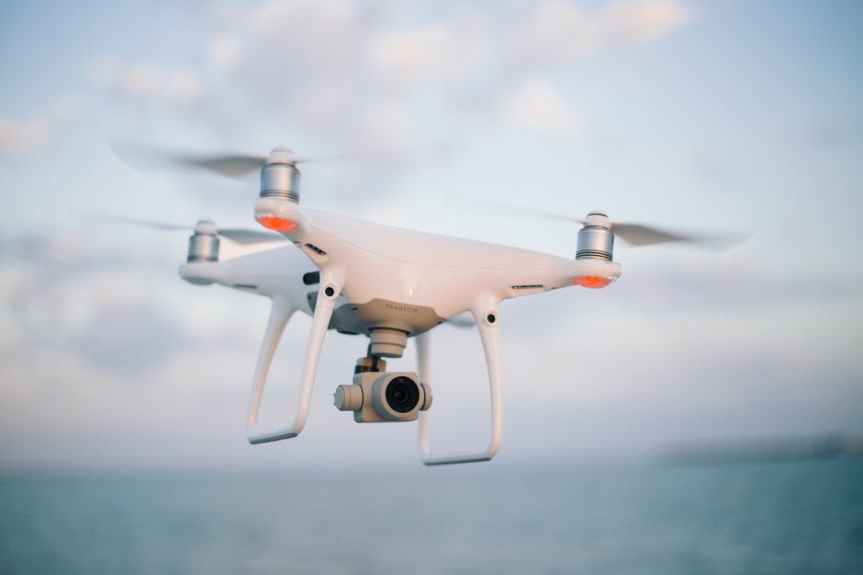
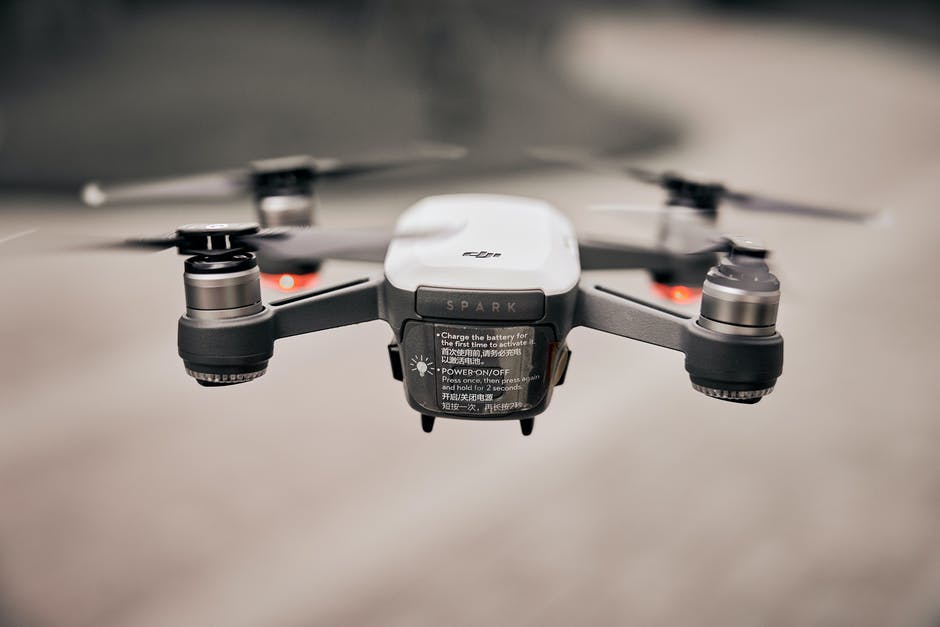
Unmanned aerial vehicles (UAVs), sometimes known as “drones,” are aircraft that have been in use since the early 1900s but do not have human pilots. Drones’ role developed to include not only more specialised military activities but also civilian applications as the digital revolution brought in tiny microprocessors and the ability to communicate over vast distances. Drones are frequently equipped with a variety of sensors, including GPS navigation systems, TV cameras, image intensifiers, radars, infrared imaging devices, and lasers, to aid in round-the-clock monitoring and targeting. Drones used by the military are also outfitted with laser-guided missiles.
Drones are classified into several types. A drone can operate in one of two modes:
Preprogrammed to run autonomously without human involvement or remotely operated by a pilot sitting in a faraway place. Drones can be divided into two categories: surveillance drones and unmanned aerial vehicles (UAVs). Drones with fixed wings and rotors.
The following are a few examples of drone applications in India:
Development of the city •Drones are being used by the Andhra Pradesh government to monitor development efforts in the capital city region, namely Amaravati, through dron-ebased outputs. •The Karnataka government is deploying drones as part of a pilot project to estimate property taxes and create a base map of a city or town for detailed planning and long-term governance. •Drones have been used by the Chandigarh administration as part of a pilot project to gain an overhead view of all properties in the city.
Transport •Drones were employed to monitor the 25-kilometer Seawoods-Belapur-Uran15 corridor by the Indian Railways. •The National Highways Authority of India (NHAI) has used drones to check accuracy in the Salem-Chennai green corridor highway project. •The Maharashtra government has deployed two drones as part of a trial project to monitor weekend rush hour traffic and accidents on the 95-kilometer section of the Mumbai-Pune Expressway between the Lonavala Exit and Khalapur Toll Plaza, as well as the six-lane Mumbai-Pune Expressway.
Agriculture •In 2016, a general insurance firm used drones to analyse crop damage caused by floods in a specific district in Maharashtra. •Drones were employed by the Maharashtra government above farms in the Marathwada region to estimate crop loss due to low rainfall. •Drones are being used by individual farmers in Andhra Pradesh’s capital region to spray crop pesticides and fertilisers in limited crop zones.
Management of Natural Disasters •In flood-ravaged Uttarakhand, the National Disaster Management Authority (NDMA) used four drones to scan areas where search and rescue crews couldn’t get to. •In Mandi, Himachal Pradesh, the National Disaster Relief Force deployed drones to track down 24 engineering students from Hyderabad who were swept away by the Beas river. •Several agencies used drones to seek for survivors to document toppled monuments, shattered heritage sites, and destroyed homes during the Nepal earthquake.
Conclusion Drone technology implementation necessitates a collaborative and inclusive approach that includes governance, strategic planning, security, legislation, and correct awareness. The successful adoption of drone technology necessitates the involvement of a variety of stakeholders.
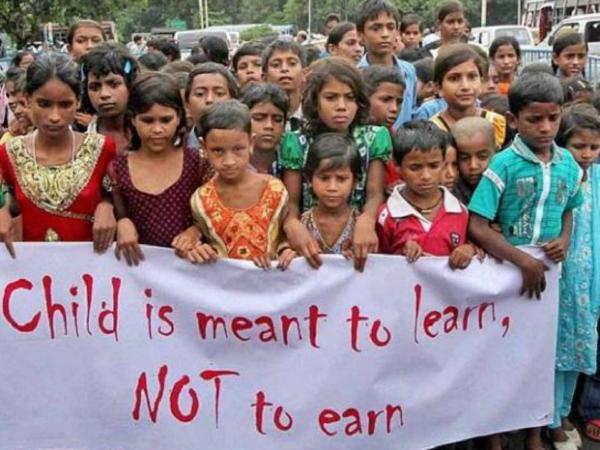
Child labour is a type of crime in which children are forced to work at a young age and do tasks that adults undertake by engaging in economic operations. We discover youngsters working as hotel suppliers, caretakers, industrial employees, prostitutes, and other ill-paying jobs all around the world in order to help their families survive. It is our job to ensure that every child experiences a happy childhood. Every child deserves the same care, and instead of working out their childhoods, they should be sent to school.
Reasons for Child labour
Poverty and a lack of education are the two main causes of child labor’s rising societal evil.Because parents view their children as money-making machines, they carry babies to make extra money on the street by begging.They then take them as beggars and eventually sell them to employers as they mature.This disease has spread over India’s length and breadth.Child labour is caused by a variety of factors other than poverty and a lack of education.Some of the causes may be universal in some nations, while others are exclusive to certain locations.
To begin with, it occurs in nations where there is a high level of unemployment rather than poverty. When a family’s earnings are insufficient, the children are forced to work in order to help the family survive. Similarly, if the elders in the family are unemployed, the younger members of the family must fill in for them. Furthermore, when individuals lack access to education, they would eventually force their children to work. Because they are ignorant, they are only concerned with the short term outcome, which is why they force children to work in order for them to live in the present. The children’s future will be the same as their parents’, who are illiterate and let their children work at a young age.
Child Labour in the Worst Situation
After Africa, India has the second-highest rate of child labour. Slavery or bonded child labour is one of the most harmful forms of work for children.
Despite the fact that the Indian parliament enacted the bonded labour system in 1976, this practise still exists. It is estimated that there are around 10 million bonded children working as domestic servants in India, with almost 55 million bonded children employed in other countries. The children are sold to money lenders since the money borrowed cannot be repaid at home. Street children are another kind of child labour, in which youngsters work on the streets as beggars, flower sellers, and other types of street vendors rather than attending school. They are often forced to go hungry for days on end in order to make others feel sorry for them and offer charity. Child labour, when combined with child maltreatment, has become one of the world’s most pernicious diseases. Year after year, statistics reveal an increase in child maltreatment, particularly among girls. To disguise the fact that a girl has been abused at home, she is sold to a city employer as domestic assistance or later as a bride to an older man.
Child Labour is to be banned.
Child labour is to be considered if state parties acknowledge the right of children to be safeguarded from economic exploitation, according to article 32 of the Convention on the Rights of the Child. Any employment that is likely to interfere with a child’s education should be damaging to the child’s health, according to United Nations guidelines. If we are to eliminate child labour, we must devise effective solutions that will save our children. It will also benefit the future of any country dealing with these social challenges to form multiple unions dedicated entirely to the prevention of child labour. These unions should assist children who are engaged in this job and penalise those who force them to do so. Furthermore, we must keep parents informed in order to instil in them the value of education.
We will be able to educate more and more children who will not be forced to work as children if tuition is made free and people are made aware. Furthermore, raising public awareness about the negative repercussions of child labour is essential. In order to eliminate it, we must also implement family control measures. This will relieve the family’s financial burden, and because there will be less food to feed, the parents will be able to work for themselves rather than the children. To exist, the government must provide a basic income to every household. Because there are areas where no accounting has been done on how many children are working or forced to work in violation of the child labour laws, the best important information about child labour cannot be brought to the tree size. Many workshops and industries have fantasised about areas where children can work, eat, and sleep. No one from the outside world would even know they were working there, and those working for the welfare of child labour have been able to rescue numerous children from such units thanks to a tip from insiders. The national strategy on child labour, which was established in 1987, aims to take a progressive and sequential approach, with an emphasis on the rehabilitation of children who work in dangerous jobs. Not only must steps be done to halt this crime against children, but they must also be taken to ensure that every kid has a healthy and normal childhood.
At last I would say that “Make our Future Bright Shape our Future Right Stop Child Labour”
The three main Himalayan rivers are the Indus, the Ganga and the Brahmaputra. The river Ganga starts from the glacier called Gangothri Glacier, which is in Uttarakhand. At its birthplace, it is known as the Bhagirathi. the Brahmaputra also originates from a glacier, the Angsi glacier in Tibet. Indus originates from the Tibetan plateau near Lake Manasarovar and enters India in Ladakh.
THE GANGA
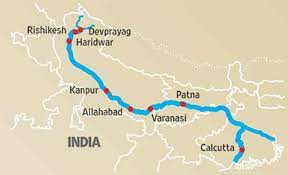
The mighty Ganga isn’t confined to one country. Its valleys stretch across India and Bangladesh. In fact its basin covers parts of China and Nepal too. Born in the lofty peaks of Himalayas, in the Gangotri glacier, it begins its journey as Bhagirathi. The Bhagirathi rushes down to meet the Mandakini, and then the Alaknanda at Dev Prayag. From then on, the river is known as Ganga. After cutting through the Himalayas, the Ganga breaks out of the foothills at Haridwar, and flows across the vast Gangetic plain. Midway in its course, near Allahabad, it is joined by one of its chief tributaries, the Yamuna river. The Ganga is one of the greatest rivers. The 2525 km long journey finally ends at Bay of Bengal. Thus it is called a river without boundaries.
Tributaries of the Ganga
Rivers have headstreams, tributaries and distributaries. A headstream is a stream that is a source of a river. The Ganga’s headstreams are the Alaknanda, DhauliGanga, Nandakini, Pindar, Mandakini, and Bhagirathi rivers. A tributary is a freshwater stream that joins a larger river. Most large rivers are formed from many tributaries and the Ganga has more than a dozen. Among them are the Ghagara, Yamuna, Koshi, Ramganga, Gomti, Gandaki, Burhi Gandak, Mahananda, Tamsa, Son, Punpun. the Ghaghara is the largest tributary of the river Ganga followed by Yamuna and Koshi. Though Yamuna is a separate river system in itself it is a tributary of the Ganga. A distributary is a branch of rivers that flows away from it. The Hooghly is a distributary of the Ganga that provides water for irrigation for west Bengal. It leaves Ganga just before the river enters the Bangladesh.
Rivers that join the Ganga
The river Ganga actually begins at Dev Prayag, the meeting place of two of its headstreams- the Bhagirathi and Alaknanda. After merging from the mountains of Rishikesh, the Ganga is joined by Ramganga. Later, it joins the Allahabad. The Hindus believe that the mythical river Saraswati too joins here. Hence the name Triveni Sangam, means the meeting place of three rivers. Next the Ganga flows east to meet the river Tamsa, later on, the river Gomti joins it. The next river to join the Ganga is the Ghaghara. Further downstream, the river Son joins the Ganga from the south, the river Koshi from the north. By the time the Ganga reaches the bay of Bengal, its waters have mingled with those of several other rivers, making it mystically representative of a soul of India itself.
Why is the Ganga important to Bangladesh?
The Ganga’s river basin is one of the most fertile and densely populated in the world. It covers an area of1000000 sq.km. For most 150 km, the Ganga forms the boundary between India and Bangladesh. When it enters Bangladesh, it is known as the Padma. The upper Padma flows southeastward to receive the mighty Brahmaputra river. The Brahmaputra is known as the Jamuna river in Bangladesh. The Padma joins the Meghna river, before it empties into the bay of Bengal. The Padma river is known for the frequent erosion of its banks, and sandbars that continually emerge in its course. The river is a busy waterway, and fishing is an important industry along its banks. A number of fast developing urban centres have also come up along its banks.
Yamuna
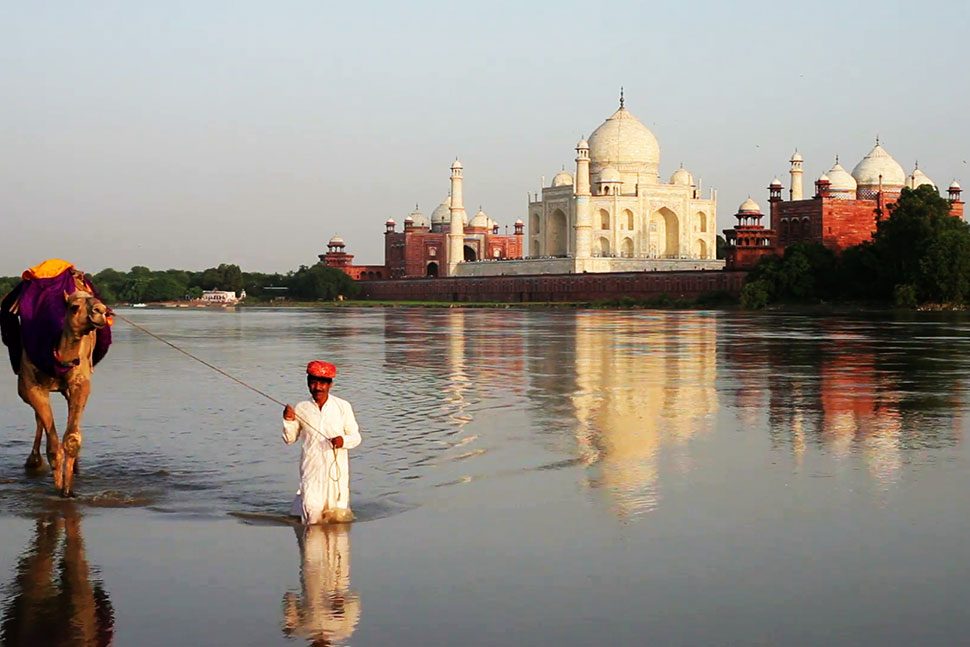
The river Yamuna is the most famous and greatest tributary of Ganga. One of the country’s most sacred rivers, its birthplace is the Yamunotri glacier, high up in the Himalayas in Uttarakhand. It flows through the foothills of the Himalayas into the Indo-Gangetic plain, flowing through Uttar Pradesh, Himachal Pradesh, Haryana, Rajasthan, Madhya Pradesh and Delhi. After 1376 km, the Yamuna meets the Ganga at Allahabad. Their confluence is well known. The important tributaries of the Yamuna river are Tons, Chambal, Hindon, Betwa and Ken. Other small tributaries of the Yamuna river include the Giri, Sind, Uttangan, Sengar and the rind. Thus, though the Yamuna is a tributary of the Ganga, it has many tributaries of its own as well. Therefore, the Yamuna is considered to be a river system in itself.
Ghaghara
The Ghaghara is the largest tributary of the Ganga. It is a river that crosses many countries in the journey. Born in Himalayas in Tibet, it flows southeast through Nepal. Later it splits into two branches that rejoin south of Indian border. The Ghaghara flows through Uttar Pradesh and Bihar, and then joins the Ganga. Its major tributaries – the Kuvana, the Rapti and the little Gandak rivers – all flow into the Ghaghara from the mountains to the north. The river’s flow is influenced by both the glacial melt and the monsoon together with the Ganges and its tributaries, the Ghaghara has helped to form the vast, fertile, alluvial plain of northern Uttar Pradesh.
Gomti
The river Gomti, a tributary of the Ganga, has great mythological significance. Most Hindus believe that a ritual dip in its waters will purify a person from all sins. According to legend, the river the daughter of sage Vasishta, who brought the river from heaven to earth. The river is also associated with the epic Ramayana. Lord Rama is believed to have taken a dip in the river on the advice of sage Vasishta. Lakshmana, the younger brother of lord Rama, is believed to have Lakshman Teela – part of present day Lucknow on the banks of river Gomti. Some even trace the name of Lucknow city to Lakshmana. The Gomti rises in northern Uttar Pradesh, and flows through the state, draining an area of 18750 sq. km. It is joined by one of its own tributaries before flowing into Ganga.
Gandak
The river Gandak is formed by the union of two rivers that have their own source in the Himalayas in Nepal. These rivers are the Kali and the Trisuli, and once they merge, the river is known as the Narayani in Nepal. The river then flows southwards into India. It is joined at the Indo – Nepalese border by two other rivers from Nepal – the Panchnad and Sohna. Once it enters India, the river is known as the Gandak. After winding its way through 765 km, it merges with the Ganga opposite the Patna. The Gandak is one of the major rivers in Nepal and India. It is distinguished for the deep gorge across which it flows, and for a large hydroelectric facility in Nepal. This river also provides water for a major irrigation and hydroelectric power facility at the Indo Nepal border at Valmikinagar.
Koshi
The Koshi river also called the Kosi – is an important tributary of the Ganga. It flows through Tibet and Nepal, before entering India from the Himalayas. The river is joined by major tributaries, approximately 48 km north of the Indo Nepal border, breaking into more than 12 distinct channels. These channels shift during flooding and so, the river shifts course frequently. The river basin is surrounded by the ridges separating it from the Brahmaputra in the north, the Gandaki in the west, the Mahananda in the east, and by the Ganga in the south. The river, along with its tributaries, drains a total area of 69300 sq.km up to its confluence with the Ganga in India.
Tamsa
The Tamsa river flows through Madhya Pradesh and Uttar Pradesh. A tributary of the Ganga, its origin is at Tamakund in Kaimur range. The Tamsa is 264 km long. It is famous for the many waterfalls through which it tumbles during its journey to meet the Ganga. The river has great significance for Hindus for their belief that lord Rama spent his first night during 14 years of forest exile on the banks of Tamsa. There is also a belief that the rare and elusive Fwindoju fish lives in this river. The ashrams of the sage Valmiki and Bharatwaj are also believed to have been located on the banks of the Tamsa.
Son
The Son, a tributary of the Ganga, is one of the largest rivers in India. It starts near Amarkantak in Madhya Pradesh and has a total length of 784 km. The Son’s main tributaries are the Rihand and the North Koel. It flows through Uttar Pradesh, Jharkhand, and Bihar to join the Ganga just above Patna. When fed by the monsoons, it becomes a roaring force. However, during the summer, it dries up in places, leaving large pools of water along its course. The Indrapuri barrage is located on the Son. It is one of the longest dams of India and it irrigates vast areas of agricultural land.
“E-commerce” and “online shopping” are often used interchangeably, but the scope of e-commerce is much broader: it embodies the concept of doing business on the Internet, for example, it includes many different services. Make online payments, book flights, etc. Buying and selling goods or services electronically via the Internet is called e-commerce.
Courierdelivery model Traditional order fulfillment model
E–commerce
Including network marketing, also known as online marketing. Internet marketing is the process of using tools that help generate potential customers and sales to promote a company or brand and its products or services on the Internet.
Content marketing Content marketing aims at Your personal brand and your target audience Keywords and research. Focus and content commitment. What will you create? How often do you post? Where will you post? You need to define these basics to create consistent and qualitycontent. Content Creation Content Promotion
SEO (Search Engine Optimization)
The process of maximizing the number of visitors to a given website by placing the websiteat the top of the search engine results list. SEO stands for search engine optimization, which means increasing the quantity and quality of website traffic through regular search results.
SEM (Search Engine Marketing)
Search Engine Marketing(SEM) is one of the most effective ways to develop business in an increasingly competitive market. Online advertising is important to millions of businesses, and search marketing is the most effective way to promote your products and grow your business.
Email marketing
Email marketing is an efficient digital marketing strategy for sending emails to potential customers and customers. Effective marketing emails turn potential customers into customers and long-termcustomers into loyal and enthusiastic followers.
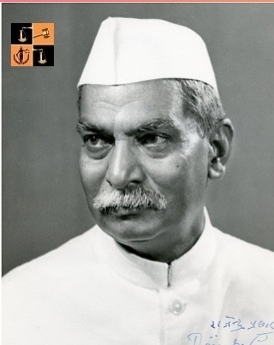
Advocate’s Day is celebrated in our country by the lawyer community on 3rd december every year to mark the birth anniversary of Dr. Rajendra Prasad, the First President of India and a very eminent lawyer.
Dr. Rajendra Prasad First President of india
Rajendra Prasad was born on December 3, 1884. Having graduated from school, he studied at the Presidency College in Calcutta and the University of Calcutta. Initially Prasad was a science student. In 1907, he completed his M.A. in economics and began teaching.
In 1909, Prasad decided to pursue law studies. He completed his Bachelor in Law in 1910 and passed his Masters in Law in 1915, receiving a gold medal. The following year, Prasad joined the High Court of Bihar and Odisha. He also practiced law in the city of Bhagalpur.
A supporter of Mahatma Gandhi, Prasad was imprisoned by British authorities during the Salt Satyagraha of 1931 and the Quit India movement of 1942. After the 1946 elections, Prasad served as Minister of Food and Agriculture in the central government. Upon independence in 1947, Prasad was elected as President of the Constituent Assembly of India, which prepared the Constitution of India and served as its provisional parliament.
As President of India, he duly acted as required by the Constitution, independent of any political party. He travelled the world extensively as an ambassador of India, building diplomatic rapport with foreign nations. He was re-elected for two consecutive terms in 1952 and 1957, and is the only President of India to achieve this feat. The Mughal Gardens at the Rashtrapati Bhavan were open to public for about a month for the first time during his tenure, and since then it has been a big attraction for people in Delhi and other parts of the country.
He died on 28 February 1963, aged 78. Rajendra Smriti Sangrahalaya in Patna is dedicated to him.
SignificantRolePlayedbyAdvocatesinSociety:-
Any person who supports or recommends for the cause of others or for a change is said to be advocating for the cause. However, a person who takes up the noble profession to plead for the cause of others, to fight for the rights of others and to fight for justice is called an “Advocate”
1. Advocates have been instrumental in spearheading movements in the society for a positive change. In modern times lawyers in various countries have given leadership to their nations. In the great American and French Revolutions many of the leading figures were lawyers.
2. The reason why many great leaders in various countries were lawyers is that the legal profession is objectively in the position of producing statesmen.
This is due to two reasons:-
1) Lawyers belong to an independent profession, they are not subordinate to the Government or to anyone else. 2) they are directly in contact with society in its entirety as they have to deal with all kinds of problems of people from all sections of society, unlike say, doctors who are confined to medical problems or engineers who are confined to technical problems.
3. The central function of the legal profession is to promote the administration of justice. Every civilised society sustains itself on the “Rule of Law” and the lawyers being the primary supporters of it aid and assist its operation in a meaningful measure.
4. The legal profession is different from other professions in that what the lawyers do, affects not only an individual but the administration of justice which is the foundation of the civilised society. It is to be noted that when people suffer from medical problems, they have to endure and suffer, whereas when people are meted out with injustice, it is intolerable and they pull down the whole structure.
In modern times, many lawyers have given leadership to India, like Prashant Bhushan, and Ram Vilas Paswan, and this happens because this profession itself holds pure knowledge about the laws of various fields. And it is indeed a fascinating field which is why a lot of people wish to become lawyers in different types. Lawyers of our country have been noteworthy in shaping revolutionary movements in the society for a constant positive change, and they truly deserve a day on their name due to their huge contribution in society.
Celebration
During this special day of celebration, people take time to remember Rajendra Prasad and lawyers also join together to celebrate their profession and honour Rajendra Prasad who was one of the most successful lawyers in the country. Another promising reason to celebrate this day is the respectable lawyers we have got, and these lawyers make justice prosper. They help the wrongly accused get free. They similarly help in fair settlements and many other things. And this is why lawyers deserve to be honoured during this special Advocate’s Day.
In the year 2020, on August 28th several fans of the Black Panther were deeply disheartened due to the death of the lead actor Chadwick Boseman. Chadwick passed away due to a disease known as colon cancer, he was diagnosed with cancer in the year 2016. Although he was suffering from the disease for the past four years, he never gave up on his filming career. He was awarded by the Screen Actors Guild for outstanding performance in a motion picture in the year 2018. In the past four years, he appeared in four MCU films.
Several tributes were given to this amazing actor who led the Marvel Universe on a completely new path. The social media was raged up by several tributes and tweets to the man we knew as the Black Panther. Marvel even went ahead and created a video to pay tribute to the departed man. Chris Evans formerly known as Captain America stated Chadwick had a lot of work to be done in the Marvel Universe that would change everything as we know it. Furthermore, Robert Downey Jr famously known as the Iron Man applauded Boseman for the fight he put out to save his life from cancer.
Fans over the world are now concerned about the role of Boseman in the upcoming movies. The main question remains is who will step up into the shoes of the Black Panther, all we know is that T’Challa will not be recast. Few actors could step up to the role of Black Panther, but the most probable as of now appears to be Shuri. Shuri plays the role of the Black panther’s sister and is a tech genius in all of Wakanda.
It has been clearly stated that Ryan Coogler is currently in the works of writing and directing a sequel to the 2018 movie. The sequel would be named ‘Black Panther: Wakanda Forever’; Kevin Feige the main man behind the Marvel Universe recently stated in the Black Widow global fan event that everyone is keen to bring out the world of Wakanda back to its fan very soon. He also stated that the sequel would be made in such a way that it would make Boseman proud.
The initial film that was released in 2018 had a budget of a little over 200 million dollars but made over a billion dollars worldwide. Additionally, it was the only Marvel movie that has the best review on Rotten Tomatoes of 96%. This tells us that Black Panther is by far one of the greatest movies Marvel has ever made. It would be a great disappointment if Marvel discontinues this series.
The uplifting news for the fans worldwide is that production has begun for the sequel in Atlanta. The movie is scheduled to release on July 8th, 2022. Although, things remain unclear about how Marvel will continue the movie and storyline. All we can expect is a completely fun and thrill-packed sequel in the coming year. Hence, let’s patiently wait for the sequel Black Panther: Wakanda Forever.
1. The product manufacturing unit in a factory is referred to as the shop floor. It is that place where production tasks are performed in a continuous flow while manufacturing a product.
The efficiency is determined by the amount of work done by a person as well as the machine in a particular time frame.
Shop floor automation is the integration of manufacturing hardware with software. Human pace cannot match with a machine’s speed, hence shop floor automation proves to be a great breakthrough for industrial advancement. As we all know the Industrial Revolution 4.0 is mainly about integrating new technology to a very great extent in the industries, or the manufacturing sector, hence making way for automated machines to do precise jobs can be helpful.
A manufacturing task requires high precision. So, if a person is considered, it is his skill, speed and accuracy that determines the quality of a product and that too, for every single piece.
Compare this to a machine that is programmed to do a particular task. It reuses the code and hence only the code mainly determines the quality of the product.
Automation saves time, reduces wastage and increases productivity. Hence large industries can apply this
2. IoT can help us send information regarding delivery insufficiencies and this void can be filled with the help of drones for small products for faster delivery in a specific radius.
3. We know that India has a large potential for utilizing its human resource, but the problem is illiteracy, lack of digital resources etc.
If these people are given proper training in small skills such as hardware and software development and maintenance, it would prove helpful in the proper utilization of human resources in the digital domain. More importantly, with a large digital setup in the whole country, more technical problems would arise. With these skilled people in the picture, problems can be resolved in a much quicker manner and efficiently.
As we all know that there is that more and more startups are coming up these days. For this technological revolution among people, startups and youth having basic knowledge of software can help to make technology available for all. Startups do not have many liabilities as compared to tech giants. Hence, they can be more helpful at the ground-zero level. Doing this can also bring startups to the attention of many techies, and it would be an innovational breakthrough.
4. Securing the Network Against Cyber Threats- This applies to companies currently having a large digital base. Although rare, a cyberattack could be devastating to your organization’s reputation and bottom line. Whether it’s ransomware or a targeted, zero-day attack, these incidents can be detected and prevented with the right plan in place. First, your organization must have an up-to-date inventory of its digital assets to develop an understanding of its network to pinpoint any existing vulnerabilities within it. Second, you need to have authentication processes in place to guard your digital and physical assets. Third, your organization needs to have the ability to detect anomalous activity. The most effective way to achieve this is to deploy a continuous monitoring solution. Finally, your organization should have a contingency plan in place to quickly respond and recover from a potential cyberattack.
5. It is estimated that by 2023, industry 4.0 and cyber-physical systems will be at a much larger level as compared to today. With changing scenarios of technology, the current technology will not be sufficient. The nature of jobs will change. Hence, keeping that in mind, upcoming techies and also the current techies in the market should be given the knowledge of A.I., machine learning, big data analytics and IoT to efficiently adapt to the changing nature of work.
CONCLUSION–
“Industry 4.0 is opening significant opportunities for organizations,” says Stankard. “From re-evaluating business models to new data-driven revenue streams, the sky is the limit and we’ve only begun to see the possibilities.“ But on the other side of the coin, there is going to be a significant incremental risk, likely posed by cyber and the immense – and growing –the amount of connectivity. There is a risk reduction element here as well. With such levels of connectivity, Industry 4.0 is likely to isolate and improve quality issues and enhance the overall customer experience. Rising to these challenges is going to be key if we are to fully take advantage of the amazing new opportunities the fourth industrial revolution will offer.”
Musk is a physicist, entrepreneur, philanthropist and a great deal of an investor. he was born on 28th June, 1971 in Pretoria, South Africa to an African father and a Canadian mother. His childhood was not a bit happy. After his parents divorced he chose to live with his father. the relation of dad and son was eventually embittered; he called it the worst decision of his life. as a child he was bullied also. This rather turned him towards book. He was an avid reader and an independent learner. At the mere age of 12, he created a video game “Blastar” which he sold to a computer magazine.
He completed his bachelor’s in Economics and then again in Physics from University of Pennyslyvania. He left his Master’s in Applied Physics from Standford University just after 2 days to become an entrepreneur.
Foundations
ZIP2
X.com and PayPal
SpaceX
In 1995, Elon and Kimbal (brother) founded web software company. Zip2 provided and licensed an Internet city guide for the newspaper publishing industry, with maps, directions, and yellow pages. It allowed a two-way communication between users and advertisers.
X.com, which was later named as PayPal is one of the oldest online payment company. It was co-founded by Musk in March 1999. In March 2000, X.com merged with Confinity Inc., a software company based in Silicon Valley. Musk was attracted to Confinity because of its easy payment system. The name was changed to PayPal. eBay bought the company for US$1.5 billion in 2002.
Towards the coming of 2001, Musk was deeply inclined towards settling life in Mars. He traveled to Moscow to buy refurbished Intercontinental Ballistic missiles (ICBMs) that could send the greenhouse payloads into space. But he was overlooked as a novice. This put the founding stone of SpaceX in 2002. Musk decided to start a company that could build affordable rockets. The company holds expertise in it’s production of reusable thrusters (a small rocket attached to a spacecraft and used to control its attitude or translational motion).
This private company holds enormous achievements; from being the first private company to launch fully liquid-fueled rocket that reached orbit to becoming the largest commercial satellite constellation operator in the world. SpaceX has definitely distinguished itself with the reusable thrusters. On June 17, 2021, it launched GPS III-05 on Flacon 9 which was the second flight of booster B1062, for a ‘national security‘ mission (National security missions had previously only used new boosters).
Investments
“When something is important enough, you do it even if the odds are not in your favour.”
Elon Musk in an interview
An independent learner as he is, he has never believed in degree. He always gives importance to potential. With the same potential he could achieve such milestones, nevertheless having no former degree. Let us take a look at some eye-catching investments of the CEO of SpaceX and Tesla.
TESLA
Tesla is an American based company. it was originally founded by Martin Ebberhard and Marc Tarpenning as Tesla Motors. It is majorly based on electric vehicle and clean energy. Elon came up as an investor when the company was facing crisis in 2008. Later the board decided to appoint him the as CEO, noting his potential. Tesla first built an electric sports car, the Roadster, in 2008. With sales of about 2,500 vehicles, it was the first serial production of all-electric car to use lithium iron battery cells. This innovation was an instant success. Tesla stock has risen significantly; it became the most valuable carmaker in summer 2020.
HYPERLOOP
In 2013, Musk assigned a dozen engineers from Tesla and SpaceX to establish the conceptual foundations and initial designs of an airplane without wings. It is a concept for ultra-fast inter-city travel using travel pods inside metallic tubes.
THE BORING COMPANY
With an aim to enable rapid point-to-point transportation, Elon’s hopes that Boring Co. Tunnels will revolutionise transport by carrying people in giant, electric underground sleds.
On being asked about the number of tunnels that would fit, he replied “The deepest mines are much deeper than the tallest buildings are tall, so you can..”.
NEURALINK
In 2016, Musk co-founded Neuralink, a neurotechnology startup company to integrate the human brain with AI. Neuralink’s purpose is to create devices that are implanted in the human brain surgically, and with it, one will be able to communicate with machines. Musk has predicted that it would one day give people telepathy, cure paralysis, and enable vision.
STARLINK
Starlink is a low latency, high speed broadband intternet system aimed at providing free internet across the globe. The starlink satellites are a link of 12,000 satellites circling the earth. Starlink satellites are over 60 times closer to Earth than traditional satellites, resulting in lower latency and the ability to support services typically not possible with traditional satellite internet.
Musk’s thoughts are really beyond the world!
OPEN AI
This is a not-for-profit AI system. It aims to develop artificial general intelligence in a way that it is safe and beneficial to humanity. Musk is really concerned about the artificial intelligence technology as the field has not been studied fully yet. He therefore, always emphasizes on proper knowledge before application.
To conclude with the article, we learn an important lesson from Elon Musk’s life up till now;
Execution is greater than innovation.
Elon is just so fearless, even after facing numerous obstacles, he has overcome each of them. He never hesitates in taking risks. This boldness is serving us with unimaginable inventions.
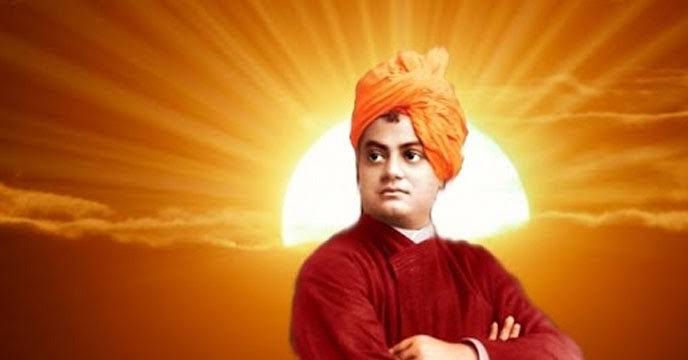
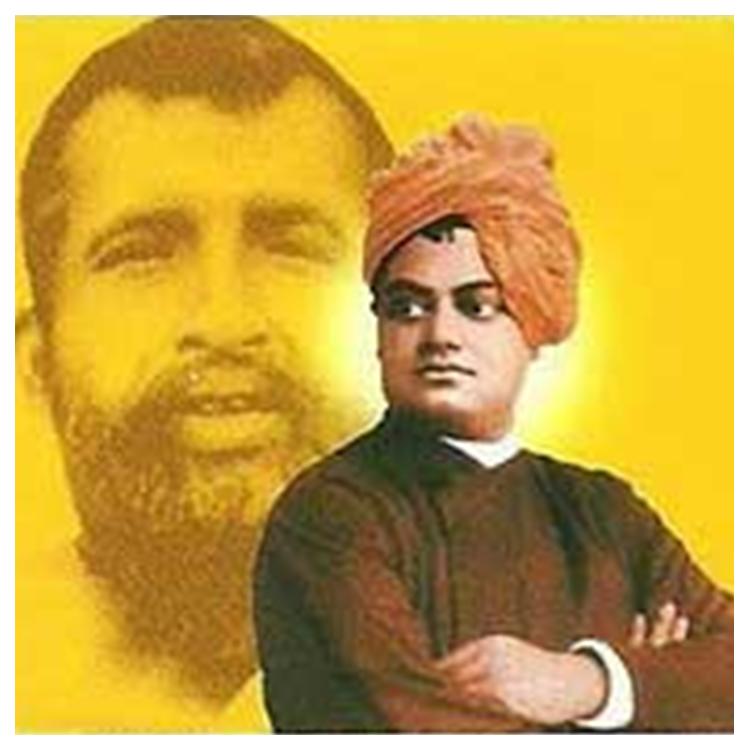
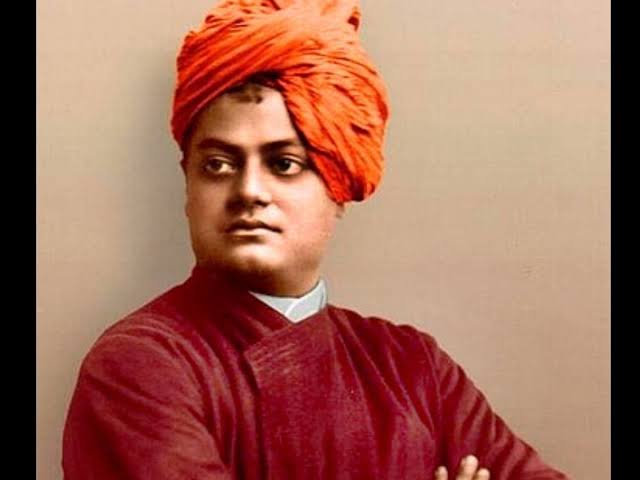
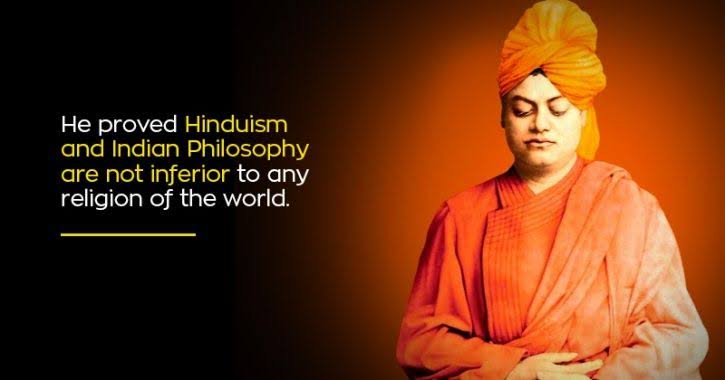
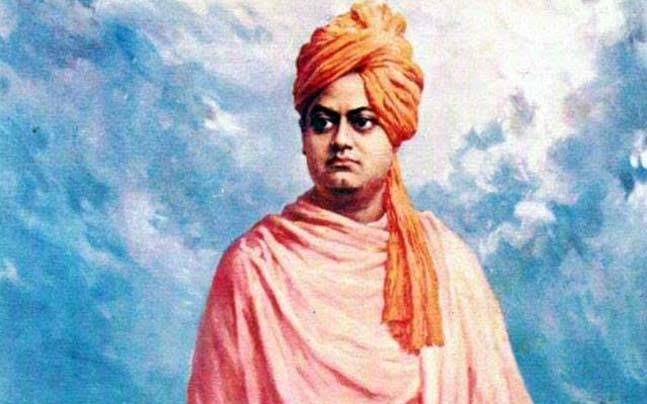
Swami Vivekananda, born Narendranath Datta, was an Indian Hindu monk. He was a chief disciple of the 19th-century Indian mystic Ramakrishna.
Born: 12 January 1863, Kolkata
Died: 4 July 1902, Belur Math, Howrah
Full name: Narendra Nath Datta
Guru: Ramakrishna
Narendra Nath Data (1863 – 1902) , later known as Swami Vivekananda, was the prime follower of Ramakrishna Paramahamsa. An educated youth, he was drawn to Ramakrishna’s message. Dissatisfied with conventional philosophical positions and practices, he advocated the practical Vedanta of service to humanity and attacked the tendency to defend every institution simply because it was connected with religion.
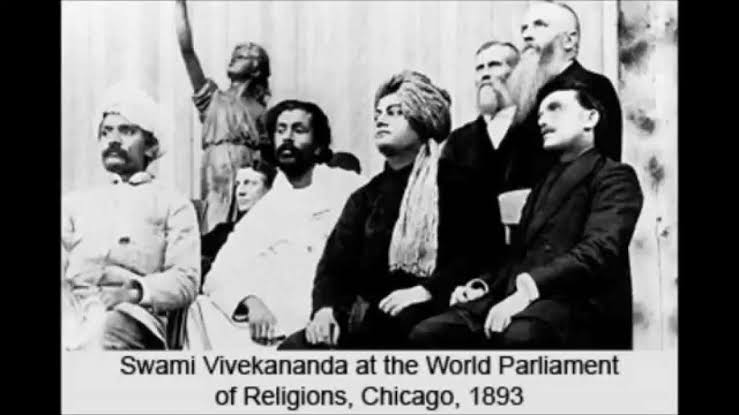
He emphasized a cultural nationalism and made a call to Indian youth to regenerate Hindu society. His ideas bred a sense of self – confidence among Indians who felt inferior in relation to the materialist achievements of the West. He became famous for his addresses on Hinduism at the 1893 World Congress of Religions in Chicago.
Despite his fame, he was condemned by orthodox Hindus for suggesting that the lower castes should be allowed to engage in the Hindu rituals from which they were traditionally excluded. Vivekananda’s activist ideology rekindled the desire for political change among many western-education young Bengalis. Many of the youths who were involved in the militant nationalist struggle during the Swadeshi movement following the Partition of Bengal were inspired by Vivekananda.
Swami Vivekananda Statue
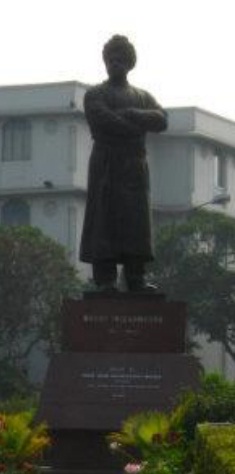
The Swami Vivekananda statue is a bronzestatue of the Hindu Indian monk Swami Vivekananda (1863–1902), located in Golpark neighbourhood in the Indian city of Kolkata. The original statue, made of marble and unveiled in 1966, was the oldest statue of Swami Vivekananda in the city. The old statue was replaced by a new, taller one in 2005.
New bronze statue
Vivekananda’s Speech
I am proud to belong to a religion which has taught the world both tolerance and universal acceptance. We believe not only in universal toleration, but we accept all religions as true. I am proud to belong to a nation which has sheltered the persecuted and the refugees of all religions and all nations of the earth.
Vivekananda’s Chicago Speech
Swami Vivekananda gave a historic speech in Chicago on this day, still fills Indians with pride. 127 years ago, Swami Vivekananda gave his famous speech in 1893 in the Religion Parliament of Chicago, USA. He started his speech by saying ‘my American brothers and sisters‘.
Swamiji’s Principle
His teachings focused on four cardinal principals: The non-duality of the Godhead, the divinity of the soul, harmony of religions, and oneness of existence.
Quotes
✓Arise,awake and donot stop until the goal is reached.
✓Truth can be stated in a thousand different ways, yet each one can be true.
✓You cannot believe in God until you believe in yourself.
✓You have to grow from the inside out. None can teach you, none can make you spiritual. There is no other teacher but your own soul.
DIED
Swami Vivekananda died at an early age of 39 years on July 4, 1902, due to rupture in the blood vessel of his brain. His disciples say that he attained Mahasamadhi (the act of consciously and intentionally leaving one’s body at the moment of death) while meditating.
Cultural history brings to life a past time and place. In this search, cultural historians study beliefs and ideas, much as intellectual historians do. In addition to the writings of intellectual elites, they consider the notions (sometimes unwritten) of the less privileged and less educated. These are reflected in the products of deliberately artistic culture, but also include the objects and experiences of everyday life, such as clothing or cuisine. “Culture” can also imply everyday attitudes, values, assumptions and prejudices, and the rituals and practices that express them, from magical beliefs to gender roles and racial hierarchies. In this sense, our instincts, thoughts, and acts have an ancestry which cultural history can illuminate and examine critically. Historians of culture at Yale study all these aspects of the past in their global interconnectedness, and explore how they relate to our many understandings of our varied presents.Cultural history is an effort to inhabit the minds of the people of different worlds. This journey is, like great literature, thrilling in itself. It is also invaluable for rethinking our own historical moment. Like the air we breathe, the cultural context that shapes our understanding of the world is often invisible for those who are surrounded by it; cultural history allows us to take a step back, and recognize that some of what we take for granted is remarkable, and that some of what we have thought immutable and natural is contingent and open to change. Studying how mental categories have shifted inspires us to think how our own cultures and societies can evolve, and to ask what we can do as individuals to shape that process.
5 Fascinating Culture and History Topics to Explore Today:-
If you’re absolutely in love with the experience of reading and learning, then it only stands to reason that you’ve read your share of non-fiction books over the years. It’s not hard to see why, either. Non-fiction literature on topics like history, culture, and people are so much more than just collections of information. They’re also part of our collective story as human beings. That said, if regional interest reading material isn’t on your radar yet, it definitely should be. Local interest books are a wonderful way to explore a wide range of different topics from unique points of view that you might not have the chance to experience otherwise. The following are just a few options to consider the next time you’re looking for something new to explore.
1. Business and Entrepreneurship:-
Thanks to modern technology and the Internet, more people than ever before are exploring the wide, wonderful world of going into business for themselves. Topics like economics, business management, and product development are no longer just topics of interest for CEOs and company managers. These days, just about everyone is interested in what makes businesses of all types tick.Thanks to modern technology and the Internet, more people than ever before are exploring the wide, wonderful world of going into business for themselves. Topics like economics, business management, and product development are no longer just topics of interest for CEOs and company managers. These days, just about everyone is interested in what makes businesses of all types tick.
2. Ethnic Studies and Immigrants:-
Many people tend to think of America as not having much of a culture of its own. However, it would be more accurate to say that it’s a perfect patchwork of all the cultural influences that have made it what it is today. Our country would quite simply not be the same wonderful place without the immigrants that have called it home over the years.Exploring regional interest books on various communities and ethnic groups in America is a wonderful way to discover the amazing backstories of American immigrants and minorities through the ages. Learn how the contributions of immigrant Japanese, Italians, Irish, Chinese, and more helped shape their communities throughout history. Enrich your understanding of notable African American communities from all over the nation. Explore the many cultural influences as they relate to your own hometown’s backstory.
3. Food, Drink, and Restaurants:-
Food and drink is another incredibly hot topic these days. Just about everyone is exploring the possibilities offered by farm to table dining, food truck culture, craft brewing, or fusion cuisine. Local interest literature offers you the opportunity to dig even deeper and get to know your favorite culinary topics on an entirely new level.Explore the origins and influences behind the local cuisine in your hometown or in regards to your favorite vacation spots. Discover the rich traditions behind Cajun cuisine or learn all about how food trucks came to be considered such an essential Los Angeles staple. Explore the backstories behind individual eateries, farms, and local ingredients throughout history.
4. Hauntings and Paranormal:-
You’d be hard-pressed to find anyone who doesn’t appreciate a well-told ghost story. Stories of hauntings, paranormal phenomena, and unexplained happenings only become more fascinating when they’re rooted in history and based on real-life accounts.Regional interest literature is perhaps one of the best, most detailed ways to explore the history of hauntings and paranormal phenomena in America. Devour fascinating volumes devoted to some of America’s most infamously haunted cities, like Nashville, Boston, Charleston, and New Orleans. Even Reno and Las Vegas come alongside their own chilling tales of historic hauntings rooted in a fascinating past.
5. American Sports History:-
It’s hard to think of anything more American than sports. Whether you’re into baseball, football, hockey, or golf, the chances are excellent that you’ve been following your favorite teams in one capacity or another since childhood. However, there’s a lot more to being an avid sports enthusiast than stats and averages.Local interest history allows you a rivetingly intimate look at your favorite sports as they relate to American culture throughout history. Absorb the personal backstories of local legends that influenced the way sports are played forever. Learn more about the nation’s finest, most noteworthy college teams. Delve into the histories of famous venues, techniques, and strategies.With Arcadia Publishing’s robust collection of regional and local interest literature in your corner, the possibilities are wide open as far as all you can discover and learn. Start exploring today, and get to know all of your favorite topics, cities, and points of interest on an intimate new level.
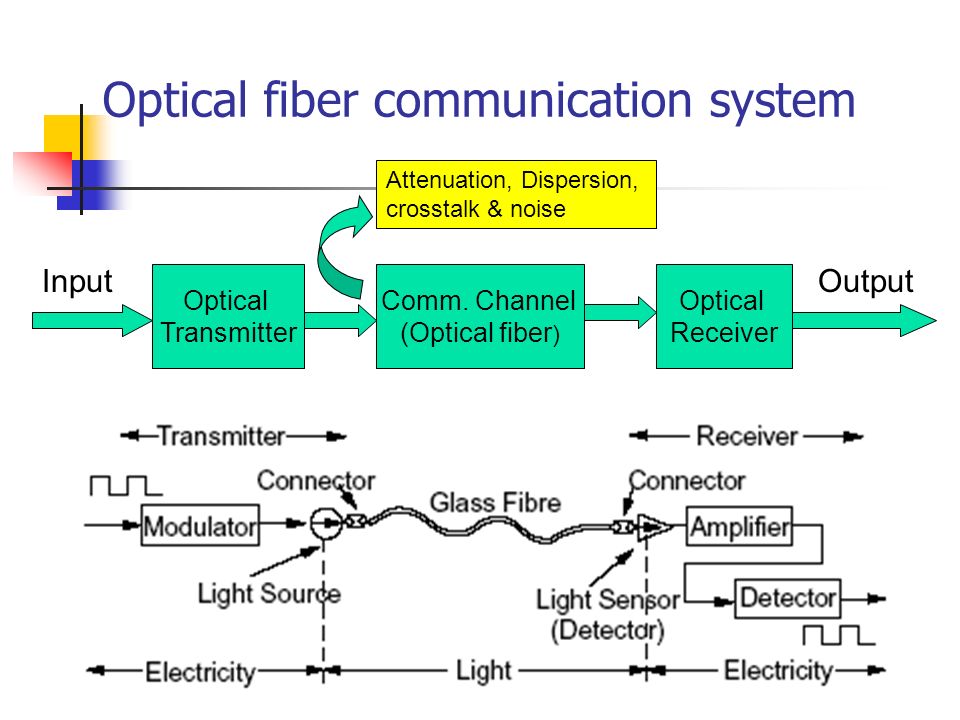
It is thin strands of pure glass which carry data over long distances. At very high speeds. The Fiber can be bent or twisted. Fibers are used instead of metal wires because signals travel without loss. Also, fibers are immune to the electromagnetic interference.
In an general optic fiber there is a core which is surrounded by cladding material which has lower refraction index than core.
Communication Systems
Basic Blocks
Transmitter : transmitter is one of the key elements of any fiber optic communications system and the choice of the correct one will depend upon the particular application that is envisaged.
Communication channel (medium) : A fiber-optic link (or fiber channel) is usually a part of an optical fiber communications system which provides a data connection between two points.
Communication channel
Wired
Wireless Glass
Destinations and Receiver : Fiber optic receivers convert light signals into electrical signals for use by equipment such as computer networks.
A commercial bank is that financial institution which accepts deposits from the people and offers loans for the purpose of consumption or investment.
The rate if interest charged by the commercial banks(for the loans the offer) is higher the the rate of interest paid by them (for the deposits the accept ).The difference between two rates is called ‘spread’, which is the source of profit for the banks.
BASIC FUNCTION OF COMMERCIAL BANKS
Commercial banks perform two basic function:
1.Aceepting deposits
2. Advancing loans.
CREDIT CREATION PROCESS OF COMMERCIAL BANKS
Commercial banks create credit on the basics of their cash reserve .
Let assume all banks in the economy receive cash deposit of RS.10000. The banks are guided by their historical experience that all the depositors never withdraw their deposits at a single time. Thus, the bank find it safe to keep cash reserve of only 10% of their demand deposit. That is RS. 10000.
Now , the banks can safely advance loans of RS.9000 and earned profit. The banks never offer loan on cash so the loan amount again returned back to banking system of an economy. Now the total deposit of bank is RS.10000+RS.9000= RS.19000.
By keeping 10%of secondary deposit that is RS.9000 of 9000 he again lend RS.8100 and this process is going to continue until all cash balance are not going to exhaust.
With the help of credit multiplier a bank can know maximum of credit creation .
• Collapse of international tourism -cost the world at least $4 trillion.
• Report -jointly released by UN Conference on Trade and Development (UNCTAD) and UN World Tourist Organization (UNWTO).
• India – 54% drop in tourist arrivals in 2020.
• Tourism is not expected to return to pre- COVID levels until 2023. Cost the world -$1.7 trillion and $2.4 trillion in 2021.
• Three scenarios. Optimistic. Pessimistic. Uneven roll-out of vaccines. • Developing countries -majority in losses due to the asymmetric roll-out of vaccines. • Tourism likely to pick up faster this summer
North America and Europe.
• Loss in tourism sector -Felt particularly by women and young people. • 100-120 million tourism jobs are at stake.
• Recommended quick roll-out of vaccines globally. • Appreciated The EU Digital COVID Certificate initiative. Facilitate safe free movement of citizens in the EU during the COVID-19 pandemic.
• Recommended socio-economic measures to protect livelihoods.
• Grim warning -some tourism-related businesses would not survive even after restrictions are removed.
Globalization is the word used to describe the growing interdependence of the world’s economies, cultures, and populations, brought about by cross-border trade in goods and services, technology, and flows of investment, people, and information.
Globalization is driven by the convergence of political, cultural and economic systems that ultimately promote — and often necessitate — increased interaction, integration and dependency amongst nations.
The more that disparate regions of the world become intertwined politically, culturally and economically, the more globalized the world becomes.
These international interactions and dependencies are enabled and accelerated by advances in technology, especially in transportation and telecommunications. In general, money, technology, materials and even people flow more swiftly across national boundaries today than they ever have in the past. The flow of knowledge, ideas and cultures is expediated through Internet communications.
There are three types of globalization:
1. Economic globalization. This type focuses on the unification and integration of international financial markets, as well as multinational corporations that have a significant influence on international markets. 2. Political globalization. This type deals mainly with policies designed to facilitate international trade and commerce. It also deals with the institutions that implement these policies, which can include national governments as well as international institutions, such as the International Monetary Fund and the World Trade Organization. 3. Cultural globalization. This type focuses on the social factors that cause cultures to converge — such as increased ease of communication and transportation, brought about by technology.













 Eduindex
You must be logged in to post a comment.