360 WANDER WRITER

WELCOME TO TECHIE WORLD

CODING


if(brain!=empty)

{

keep coding();

}

else

{

order Coffee();

}


Coding is nothing but the computer language through which we can develop apps and any other software required for this technological world.

Most of them think it to be a difficult task . Actually it is not!. You have to be patient enough to learn and take effort to learn it with persistence. Do you know that all Indians have the capacity to be a good coder! Yes, Most Indians are good at mathematics. This logical thinking helps in problem-solving. Hence having a greater chance to be a good coder.

Computer coding is an important skill in the current job market. It serves as a valuable skill in several fields and job opportunities across the oceans. Knowing how to code is a valuable skill for anyone looking for a job in the technology or computer science fields.

Coding Languages

  • C Programming
  • HTML
  • CSS
  • JAVASCRIPT
  • C++
  • PYTHON
  • PHP
  • SQL …and many more

Careers to coders

  • Database Administrator 
  • Web Developer 
  • Information Security Analyst
  • Applications Developer
  • Instructional Designer
  • Digital Marketing Manager

sharpen the coding skills

Reading Books

Reading books to acquire knowledge is a primary way. The technology might have changed but the importance of books and its impact on human minds on gaining knowledge remains the same. Here are some books listed for reference:

Something new each day…

You should take some time out each day and challenge yourself with something new. Of course, it doesn’t have to be complicated.

Play a coding game 

Here are some :

Platforms to practice:

  • geek for geeks
  • Leetcode
  • Hackerrank
  • Codechef
  • Topcoder

Media Bias: the shoddy practice

Media Bias is a term used to describe biases and personal prejudices of a journalist in the selection of events that will be reported and the manner in which they’ll be reported.

In earlier times, every media organisation had a political backing, that is, funded by any political party or group. It was only with late 19th century and early 20th century, journalists began to feel the need for a truth and unbiased reporting.

Types of Media Bias:

A) Bias by Omission

This is one of the methods in which journalists wipe out one side of the story or series of facts over a period of time.

B) Bias by Selection of Sources:

In this method, journalists usually approach those sources who will favour their own prejudices. Both sides of a story aren’t given any importance.

C) Bias by Story Selection.

This mostly happens when a media organisation is funded by a political party. In this, journalists only highlight those issues and stories that pertain to one political party. For example, only talking of achievements of a political party and ignoring its failures.

D) Bias by Placement.

This means where an editor places the story and how much they consider the story is important. For example, if a news organisation is supporting a certain political party and there’s a humanitarian crisis in any city because of that political party, in this case, news editor would place the story at the end so that it gets less importance.

E) Bias by Spin.

In this, reporters and journalists give their own “subjective comments” to a factual story and make it appear before the public their own way. These interpretations can be harmful as they divert the minds of public from actual facts.

Some examples of Media Bias:

A) Ethnic Bias:

This is the form of bias which includes racism, nationalism or xenophobia. For example, western media’s portrayal of India as a poverty stricken country with no toilets. Yes, India suffers with poverty but the western media made it look like it’s the only thing India is all about.

B) Corporate Bias:

Media is also extremely biased at times when reporting about corporate misconduct. This is because some media channels are funded by big industrialists and business people.

C) Class Bias

Media houses are extremely bias when it comes to class. Higher class cases are handled with dignity whereas oppressed classes are treated with lack of respect and humanity.

D) Religious Bias

Certain media houses favour one religion according to their own religious ideologies and thus even start supporting or give a biased reporting when their religious community is doing something wrong.

E) Political Bias

Probably the most famous form of bias in which a media house supports a political party right from the beginning of covering their political campaigns to trying to hide their political mismanagements.

Journalists must separate fact from opinions and do an unbiased reporting for a better transportation of news information to the public. This way it would also be able to hold the system responsible.

A Survey Of Pens Across The Globe!

“A Pen Is The Tongue Of The Mind.”

  • Horace

Today’s article is a work of fiction as it conducts a survey with all the ‘Pens’ across the globe. As you very well know, Pens are associated deeply with the writing process because they pose as a medium to disseminate our thoughts onto that sheet of paper before us. Yes, I totally agree that one has to whack their brains for this as well, but pens make your thinking process worth it!

I conducted a survey with all the Pens across the globe and received certain responses regarding the writing process.

The questions were, “What are your thoughts regarding the Writing Process?” and a Yes or No question being “Do you think Writing is Boring?”

The Responses Were As Follows:

A Pen From The United States Of America, Indiana

I find the writing process fun and love it when people begin working on it while using me as a medium. I am glad that I have some worth and value in this world. But the sad part is that pens are only looked upon when it comes to writing, while other times, we lose our worth.”

Yes Or No Question:

No, writing is not a boring task. Instead it is an interesting job that helps awaken your imagination.

A Pen From The United Kingdom, Wales

“Writing is a subjective process and totally depends on the perspective of the person involved. If the person admires the process and remains keen in imagining and coming up with creativity then it is fun, otherwise it isn’t. I, as a pen can only wait for the right person to initiate writing, who wholeheartedly surrenders himself to the process without any sort of disturbance.”

Yes Or No Question:

As I just said, this is a subjective process, so it could be either Yes or No, depending upon the person involved.

A Pen From Berlin, Brandenburg

“Writing is an art that can’t be learned. It is a god gifted talent that not every person possesses. It is because creativity is something that needs to be within. The urge to think and come up with something unique needs to sprout from within. These things can’t actually be learned. We pens, do not form the intellect of the writer, but prove to be important when it comes to initiate the process. For me, every writer is important because they make us productive and increase our worth.”

Yes Or No Question:

Yes, writing is a boring task for a person who isn’t interested but is just into it, for the sake of livelihood. This art requires love because when you love writing, not only that particular write up but also the pen loves you back! 😉

A Pen From France, Brittany

“I, as a Pen can only say that write ups require sheer practice, dedication, love, patience, devotion and focus. The writer needs to be acquainted with holding me 24/7 in order to enrich the process. We pens need to be held frequently because it is easy to receive thoughts on the upper floor of the human body, but to jotting those umpteen thoughts down is a complex task. A writer can’t possibly occupy an entire day for writing. Thus, practice with us (pens) is important, very important!

Yes Or No Question:

Writing is boring for a person who finds it a pesky job to maintain the word count. Thus, practice is essential. After all, Practice Makes Perfect, doesn’t it?

A Pen From Saudi Arabia, Mecca

“Write when a stable mind is ensured. Writing isn’t all about jotting down anything one pleases. It is also about writing the sensible thing with utmost creativity. However, it depends on the genre whether you are expected to use creativity or reality more.”

Yes Or No Question:

No, writing is not a boring task because it comes with convenient branches comprising of various genres. One has complete freedom to choose any genre to work on. Also, you are free to choose your own set of topics. What more does one need?

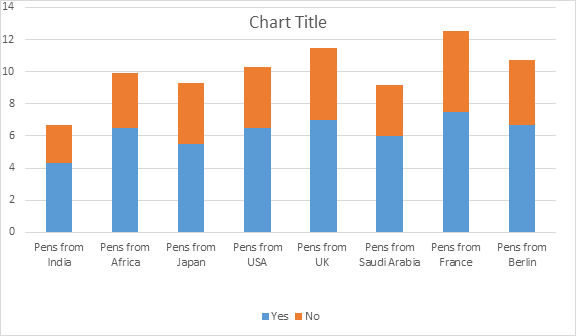
Interesting responses aren’t they? These are some of the pens that responded while others just voted with a Yes or No.

These are the Pens from countries that actually responded. As visible, the responses are mostly No, stating that writing is not a boring task. We thank all the Pens who participated in the survey and helped it become a success! So, what are you waiting for? Writing isn’t a boring task after all. Begin writing now!

Happy Writing!

Thank You For Reading!

Happiness and Virtue!

t is believed that if we do something hoping for the sake of its own good will, then it will be in a realm of ultimate good. People shouldn’t be doing something good because they want something out of it, but for the sake of the good will only they should do it. When people do attain the ultimate good, its usually ends there with the end as its highlight. Aristotle has remarked that politics is what governs everything in life, we can’t find an activity around us that does not involve politics. All the sciences have politics in them and so the end of such sciences is the end of politics too.

Aristotle thinks that happiness can only be chosen in itself and not any other principles. It can only be attained directly, and there is no short cut or other way around it. We do something for various pleasures and wants in life but we want happiness for its own sake. Man, always want to be the best in everything they can achieve, this is with their soul’s conformity. It is always aligned with their certain principles and man always sets standards he wants to achieve. If he achieves these certain elements with the full passion he had put in to for its result, then he has attained his virtue. 

Happiness is an action that is to be lived well and achieved justly. It shouldn’t be deceived or cheated because only if you put the most efficient of work and passion, it can be achieved. Then only it becomes a virtue. It should be lived well to the virtue of the conformity. People aren’t born happy, but they find happiness on their journey of life. It is an activity throughout a person’s life achieved over time. Happiness is something that we gather across our life, through our experiences. It is not something that can be bought with. It is the result of certain actions attached with virtue.

Virtue is of two types o Intellectualo Moral 

Intellectual focuses on the intelligence, theoretical and wisdom of the virtue while the moral part focuses on kindness and generosity. No man should be less of one of the virtues. Both the virtues are important to lead a life. No man should be void of practical wisdom nor intelligence. Intellectual virtue is acquired though learning and training. You acquire it through your experiences and you learn new things on your way. While Moral virtues are attained out of habit(ethos).

Practical wisdom comes under the intellectual virtue, it is about the wisdom that one gains over a course of time in life. It is not something that you can learn while attending a class nor a seminar but it is something that you attain while learning life and adjusting to different circumstances in life. At each stage of our life, we come across different circumstances where we learn and become the better versions of ourselves. 

Political Wisdom and Practical Wisdom: Even though they are similar in some ways their core aspect is quite different. Political wisdom completely deals with the politics and legislation and it is quite different from Practical wisdom because it revolves around one’s thoughts. Political wisdom is different from the other one since we cannot have one’s views on making laws for the citizens. 

Political wisdom and Deliberation: Deliberation in action is quite a slow process, it is about investigating the whole picture and finding the end result through the right means. It requires calculation and proper understanding unlike guessing which goes quite quickly.

Practical wisdom is important in one’s life to make fair and good choices, to act in accordance with the goodwill of all and oneself. It is to achieve virtue in its highest form with a rational beginning for the end. 

Unlike any other we attain virtue only by practice, just like how an artist’s paints or a writer writes, we can only achieve virtue by putting it into practice. This is where the role of a lawgiver comes in, he is said to inculcate the good habits into its citizens. This is the duty of a good lawgiver. Accordingly, Aristotle believes more in the moral aspects which are to be attained over habits in one’s course of life. 

Virtue is highly associated with pleasure and pain in one’s life. A man must go through both pain and pleasure from the start of their childhood, then and then only they will be able to achieve true virtue. The right amount of pleasure and pain in certain circumstances lead to whether it was morally right or wrong. Pleasure should be attained at the right time and not the wrong one so as to develop. If pain is attained at a wrong time then it will only led to deterioration of the character and will not achieve virtue.

Rani of Jhansi

Birth of Lakshmibai

Her father Moropant Tambe worked as an adviser to the court of the peshwa,of the Maratha empire,Baji Rao II.As Manikarnika’s mother lost her mother at her age of four,she moved to the court along with her father.Bai had an unusual upbringing for a Brahmin girl.She was educated,and was more independent in her childhood than others of her age.She was trained with martial arts and became proficient in sword Fighting and horse riding.

Early life of Jhansi

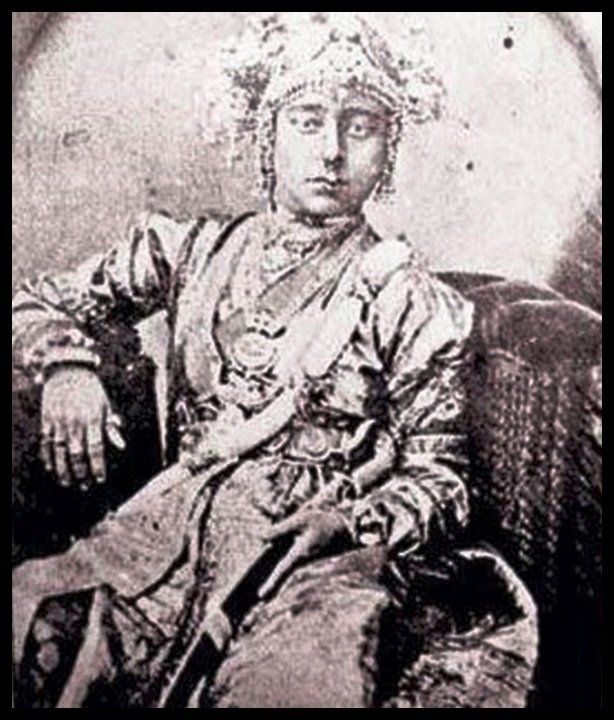
Lakshmibai,Rani of Jhansi,was born on 19th November 1828 at Varanasi.She was born into a Marathi karhade Brahmin family.She was named Manikarnika and was nicknamed Manu.Rani Lakshmibai one of the warriors of India’s struggle for independence,lost her mother at the age of four.

Marriage with Maharaj of jhansi

She married the Maharaja of Jhansi,Gangadhar Rao in 1842.After wedding she changed her name to lakshmibai,in honour of goddess Lakshmi.In the year of 1851,she gave birth to a boy.But he died when he was only few months old.Once,Maharaj became ill.By following the Hindu tradition they adopted a five year old boy .He was named Damodhar Rao and declared to be the heir of the throne of Jhansi.

Doctrine of lapse

The east India company took advantage of the maharaj’s death and applied the doctorine of lapse.

Doctorine of lapse is an annexation policy followed by Lord Dalhousie. ⭐According to this, any princely state under the direct or indirect control of the East India Company where the ruler did not have a legal male heir would be annexed by the company.

⭐As per this, any adopted son of the Indian ruler could not be proclaimed as heir to the kingdom.

So ,due to this policy,Britishers did not accept Damodhar Rao as the legal heir.

By applying the doctorine of policy, Dalhousie annexed the states of Satara,Jaitpur and Sambalpur,Baghat,Udaipur,Nagpur.The plan of the Britishers was to annex Jhansi.They seized the state jewels,granted her pension and asked her to leave the fort forever.

Revolt of 1857

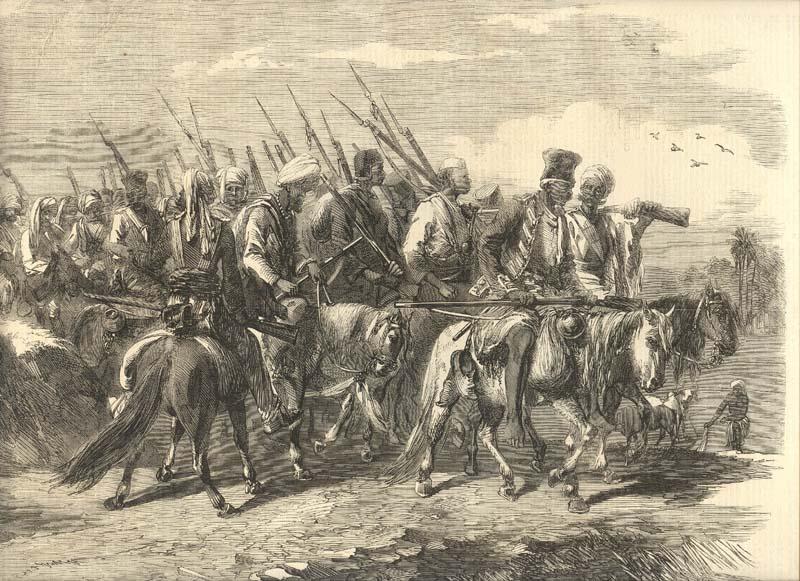
The Revolt of 1857 had broken out in Meerut and the Rani was ruling over Jhansi as regent for her minor son. British forces under the command of Sir Hugh Rose arrived at Jhansi fort with the intention of capturing it in 1858. He demanded that the city surrender to him or else it would be destroyed.

⭐ As many factor led to the revolt,the main factor is the introduction of greased cartridges by the East Indian company.

⭐The sepoys had to bite the cartridges by their teeth.This was unaccepted by the soldiers as the cartridges were greased with beef and pork.

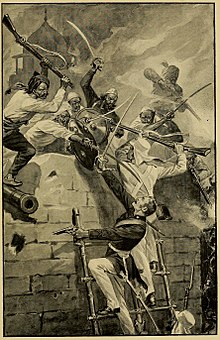
⭐In January 1858, the English army started marching towards Jhansi and besieged the city. Lakshmibai gave a great fight against the British as the siege of jhansi lasted for about two weeks.

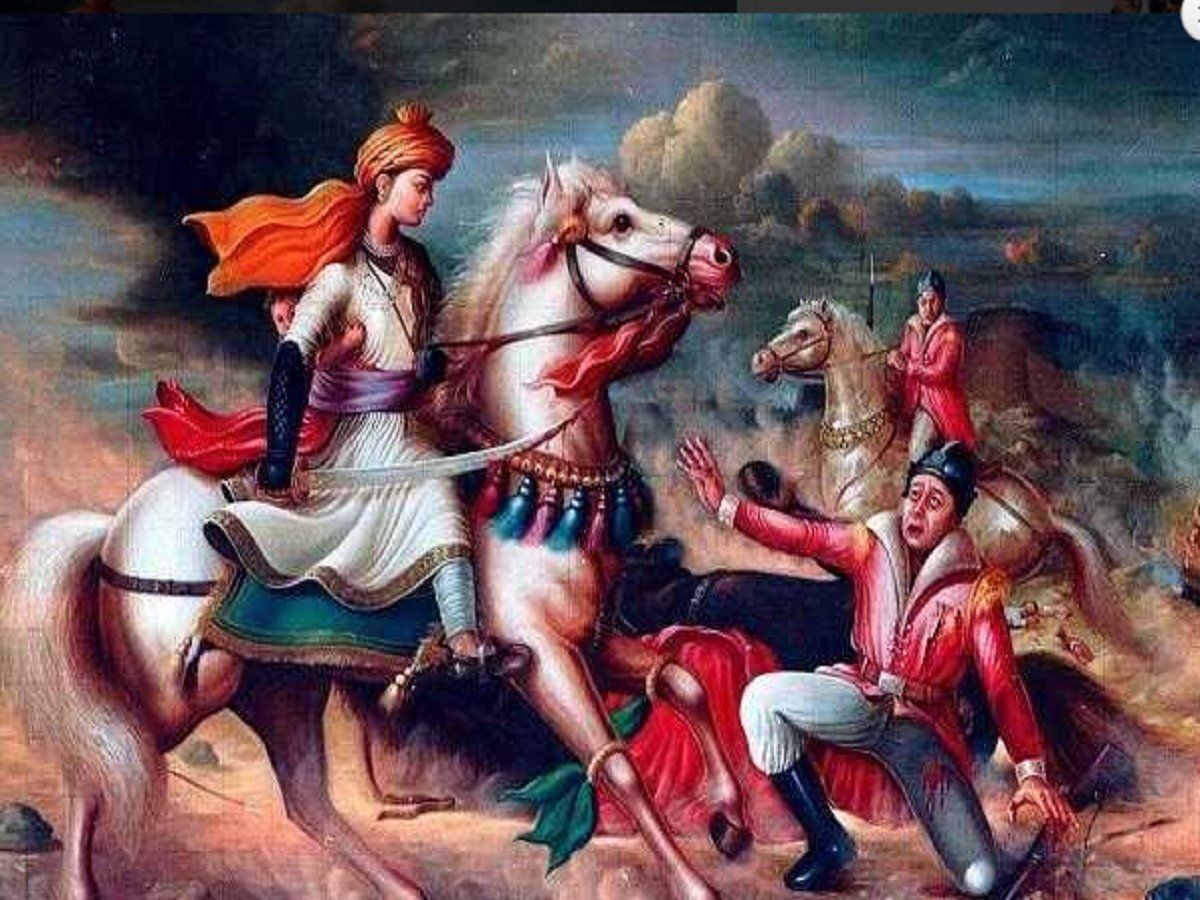
⭐After a fierce war,when the British army entered jhansi,Rani lakshmibai tied her son Damodhar rao to her back and faught bravely .

⭐She escaped to kalpi and was accompanied with other rebellions.She then departed to gwalior and a fierce battle was taught between the British and lakshmibai’s army.

Death of lakshmibai

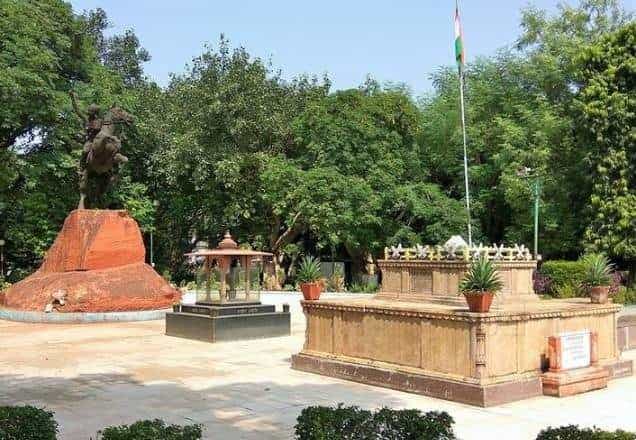
On June 18th 1858, Rani Lakshmibai of Jhansi, one of the most important figures of India’s First War of Independence, died while fighting against the British in Gwalior.

India’s freedom struggle had seen many freedom fighters over the years, but the name of Rani Lakshmibai stands out among them. Lakshmibai, the Rani of the princely state of Jhansi, was a brave and fearless woman who fought courageously against the British and eventually lost her life in battle on June 18th 1858 in Gwalior.

“If defeated and killed on the field of battle ,we shall surely earn eternal glory and salvation”

AGNI CLASS OF MISSILES

• Agni-1, Agni-2, Agni-3, Agni-4, Agni-5 and Agni-P.

• Designed & developed by DRDO.

• Family of medium to intercontinental range
ballistic missiles.

• can be fired from road- and rail-mobile launchers.

• powered by solid propellants.

• Agni-1 to Agni-5 – product of the Integrated Guided Missile Development Project (IGMDP).

• Inducted into Services to act as deterrence & meet the country’s security requirements – credible deterrence against China and Pakistan.

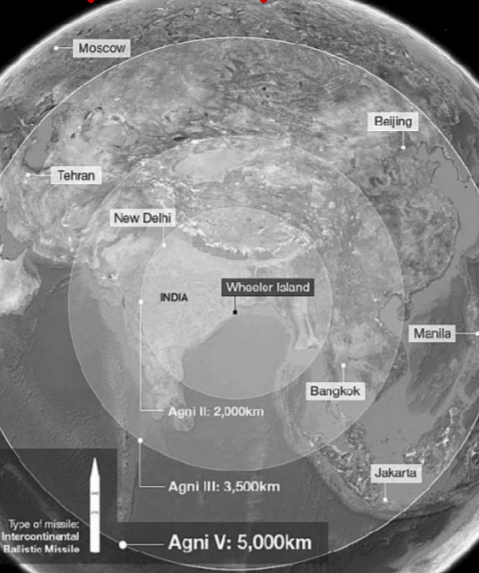
Agni missile range on map, source-Indiasnucleartraids pdf

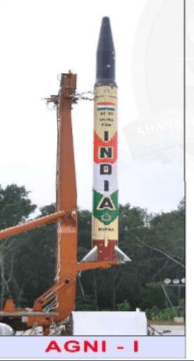
Agni-1

• medium-range ballistic missile – range of 700-800 km. • weight – 12 tonnes; length – 15 meters.

• capable of carrying a conventional payload of
1,000 kg or a nuclear warhead at a speed of
2.5 km/s.

• operational with the
Strategic Force Command
of Indian Army.

Source- http://www.drdo.gov.in

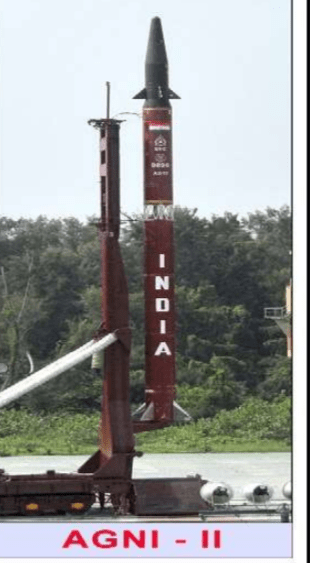
Agni-2

• surface-to-surface nuclear-
capable missile.

• Intermediate-Range Ballistic Missile (IRBM) – capable to cover the range of 2,000- 2,500 km.

• length is 20 meters, with the diameter of 1 meter.

• weight – 18 tonnes.

• 2 stages – solid propellant in
both of its stages.

Source- http://www.drdo.gov.in

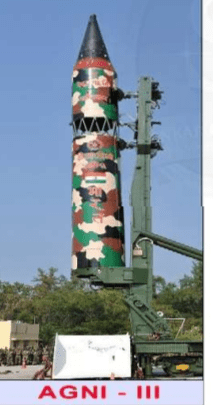
Agni-3

• It is an IRBM – range of 2500-3,000 km.

• powerful solid propellant in its both stages.

• can carry a warhead of 1.5 tonnes.

• claimed that the missile’s circular error probable
(CEP) lies within of 40
meters – most accurate
and deadliest strategic
ballistic missiles of range
class in the world.

Source- http://www.drdo.gov.in

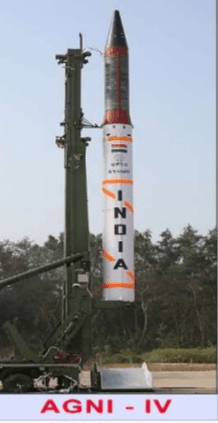
Agni-4

• range of 3500-4000km.

• earlier termed as Agni II
prime

• can carry a warhead of 1
tonne.

• two-stage missile.

• length is 20 meters and
launch weight is about 17
tonnes

Source- http://www.drdo.gov.in

Agni-5

• intercontinental surface-to-surface ballistic missile.

• India’s first ICBM.

• range – more than 5,000 km

• long-range

• Length – 17.5 m; weight – 50
tonnes.

• 3 propulsion stages.

• can carry a warhead weighing more than a tonne. • uses a canister launch missile system or Canisterisation of missile.

Canisterisation of missile

• warheads are pre-mated to the delivery vehicle and kept sealed for storage and transport.

• provides increased readiness – shorter
response time with an ability to launch in “just a few minutes”.

• provides necessary operational flexibility to
the forces.

• enhances missile longevity – protects the solid fuel from the elements.

Agni-P missiles

• successfully test-fired.

• new-generation advanced variant of Agni class of missiles – advanced
version of the ‘Agni-1’ missile.

• designed and developed by DRDO.

• will strengthen India’s credible deterrence capabilities.

Features:
 Nuclear-capable ballistic missile.
 Canisterised missile.
 range – between 1,000 and 2,000 kms.
 surface to a surface missile that can
carry a payload of around 1,000 Kg or a nuclear warhead.
 two-stage missile – composite rocket motors.
 guidance systems equipped with electromechanical actuators.
 solid-fuelled weapon system – state-of- the-art navigation system.
 Can be fired from road and rail-mobile launchers.
 complete technology upgrade in every way possible – improved parameters, manoeuvring and accuracy.
 sleek missile that weighs less than its previous variant – due to the integration of new technologies.

CONSTITUTIONAL BODIES IN INDIA

What is a Constitutional Body?

1. Those bodies whose formation is prescribed by the Indian Constitution itself are known as Constitutional Bodies.

2.They derive their powers and authority from the Indian Constitution.

3. A constitutional amendment is often required to change any powers or functions related to such bodies.

List of Constitutional Bodies in India

  1. ATTORNEY GENERAL OF INDIA

● Article 76 of the Constitution provides for the Attorney General of India.

● He is considered the highest law officer in the country.

● He is appointed by the president and holds office during his pleasure.

● A person who is qualified to be appointed as the judge of the Supreme Court is eligible for the office of Attorney General of India.

Duties of AG:

• To advise the government on the legal matters referred to him by the president.

• To appear on behalf of the GOI in SC in all the cases concerning the government.

• To represent GOI in the references made by the president to the SC under Article 143.

• To appear in HC in the cases concerning GOI when required.

Rights of AG:

• AG has the right to audience in all the courts in the territory of India.

• He has the right to speak and take part in the parliamentary proceedings. However, he doesn’t enjoy the right to vote.

• All the privileges and immunities available to a member of parliament are granted to the AG

2. COMPTROLLER AND AUDITOR GENERAL OF INDIA

● Article 148 of the Constitution provides for an independent office of Comptroller and Auditor General of india.

• CAG is considered as the guardian of the public purse. Along with the Supreme Court, the Election Commission, and the Union Public Service Commission, the office of CAG is treated as one of the bulwarks of the democratic system.

Appointment:

• President of India appoints CAG by a warrant under his hand and seal.

• He holds office for a period of six years or up to the age of 65 years, whichever is earlier.

• CAG can be removed from his office in the same manner as a judge of the Supreme Court.

Independence:

● CAG is provided with the security of tenure.

• His rights cannot be altered to his disadvantage after his appointment.

• All the expenses of the office of CAG are charged on the Consolidated Fund of India.

• His salary is equal to that of a judge of the Supreme Court.

Duties:

● The duties and powers of CAG are mentioned in article 149 of the Constitution.

• All the accounts related to the expenses from the Consolidated Fund of India, Consolidated Fund of the States, and Union Territories are audited by CAG.

● Also, the expenditure from Contingency Fund and Public Account of India and States are audited by CAG.

• CAG acts as a guide, friend, and philosopher of the Public Accounts Committee.

● All the receipts and expenditure of bodies financed from the central or state revenue are also audited by CAG.

• The audits of any other body as and when requested by the President or Governor are audited by CAG.

• Three reports are submitted by CAG to the President. They are:

(1) Audit report on appropriation accounts

(2) Audit report on finance accounts

(3) Audit report on public undertakings

Role of CAG:

• The office of CAG secures the accountability of the executive to the Parliament in the sphere of financial administration.

• The CAG acts as an agent of the Parliament and is responsible only to the Parliament.

● Along with legal and regulatory audits, CAG also conducts propriety audits.

3.ADVOCATE GENERAL OF THE STATE

● Article 165 of the Constitution provides for Advocate General for the states.

● He is considered the highest law officer in the state.

● The Advocate General is appointed by the governor and holds the office during his pleasure.

• A person qualified to be appointed as a judge of a high court is eligible for the office of Advocate General.

Duties and Rights of Advocate General:

• To advise the government of the state on the matters referred to him by the governor.

• To discharge those functions conferred upon him by the Constitution of India.

• He has the right to speak and take part in the proceedings of both the houses of the state legislature. However, he doesn’t enjoy the right to vote.

4. STATE FINANCE COMMISSION

● The governor of a state shall, after every five years, constitute a finance commission.

• Articles 243-1 and 243-Y deal with the formation of this body.

• The composition, qualifications of members, and the manner of their selection is decided by the concerned state legislature.

Functions:

● The distribution of the net proceeds of taxes, tolls, and fees between the state and local bodies.

• The determination of such taxes, duties, and tolls to be assigned to local bodies.

The grants-in-aid to be given to the local bodies from the consolidated fund of the state.

• Measures to be taken for improving the financial position of local bodies.

●Any other matter referred to the commission by the governor of the state.

5.STATE ELECTION COMMISSION

• The elections to the panchayats and municipalities are looked after by the State Election Commission.

● Articles 243-K and 243-ZA deal with the elections to the rural and urban local bodies.

● SEC consists of a state election commissioner who is appointed by the governor.

• The removal of the state election commissioner is the same as that of a judge of the state high court.

6.DISTRICT PLANNING COMMITTEE

• A district planning committee is constituted and given the task to consolidate the plans of both panchayats and municipalities.

• It prepares a draft development plan for the district.

• Article 243-ZD deals with the committee for district planning.

• The composition, manner of election of chairperson and members is decided by the state legislature.

● Four-fifths of the committee are elected by the elected members of panchayats and municipalities.

• The representation of these members is proportional to the ratio of the rural and urban population in the district.

• In preparing the plan, DPC should consider the following:

  1. Matters of common interest between the rural and urban local bodies regarding sharing of resources, infrastructure development, and conservation of environment.
  2. Extent and type of resources available.

7. METROPOLITAN PLANNING COMMITTEE

• A metropolitan planning committee is constituted for every metropolitan area.

• Article 243 -ZE deals with the committee for metropolitan planning.

• The composition, manner of election of chairpersons and members, functions, etc are decided by the concerned state legislature.

There are many other bodies also ….

HOW TO BECOME A SOCIAL MEDIA MANAGER

Social Media the world in which almost everybody is living ,you can hardly heard someone saying “I don’t use social media” . This is the keychain that connects us with the world , with its fastest growing usage it has started getting into other field other than just being a communication service provider , people had started using it for their business growth , big companies had started using social media as a tool to connect with their customers and provide their services directly to them it has converted into Marketing media , this extra usage has given rise to the post of “Social Media Manager”.

Who is a Social Media Manager?

Manager are those who manage certain thing for some specific purpose , so Social Media Manager is the one who manages the social media handles of various Companies , Business, NGO , Non-profit organization . With the world going digital every other person need their space in the social media for their business growth . All the business , companies , organization need to be active on social media , to expand their work , to connect with their target audience for which they hire a social media manager to handle their social media platforms.

What does Social Media Manager DO?

The work of Social Media Manager involve working on different social media platforms, managing the social media handle in an effective way to bring the best out of it , posting , creating content ,communicating with the audience , updating about new features , managing the websites , making strategies to expand the business online , creating traffic , making ads campaign , all these are the role of social media manager it may differ as per the requirement of the client but these are the most basics role that a social media manager need to perform.

Qualification and Skills required.

For being a Social Media Manager one need to have a Bachelor Degree in Marketing or Mass Communication or in any field related to marketing .

For skills , you need to have a knowledge of atleast 4 to 5 social media platform such as ” Youtube , Facebook , Pinterest , LinkedIn and Instagram , now knowledge here does not just mean, a raw idea about these platforms but you need to be expertise in using these platform . You need to have a good knowledge of marketing strategies as using the right platform for the right information does play a great role . You need to be aware of the SEO optimizer , have some Graphic designing skill also as this will help alot.

How to start and Growth aspects.

This field has a very wider scope as compared to other as it is very sure that social media is going to expand in the upcoming days , that means more gates will get open for you . The average pay of a Social media manager in “USA is $45K – 55K and in “India is RS 3 lAKHS ,in the initial it might be low but as per your work experience it will increase afterward. Initially you can start your work in this field as a social media coordinator , or marketing coordinator or work as a freelancer .By freelancing you can get the experience of working with many companies which will help you to get your feet fixed strongly , firstly do prefer to take 1 or 2 projects as it will help to give better work , then after getting fully aware of the work, you can take as many projects as you want . Do build portfolio or portfolio websites for better projects .

So , IF you are willing to build a career in this field and have the above mentioned skills than you should go for it as it a great career option to choose for the upcoming future and even if you don’t have the skills , and want to get into this field , than you can learn these skills online as there are so many courses available these days like you can try skill share , or there are courses in google also .Go give it a try

PRODUCTIVITY TIPS FOR PROCRASTINATORS

1. MAKE AN ATTRACTIVE TO-DO LIST

We often make a to-do list but the point we mostly miss out on is making it attractive and that’s the reason why to-do list fail. But, there is one way to make the list attractive and that is by making it more specific and actionable.

For example, instead of writing doing the workout, be more specific and write wearing workout clothes, which one is easy and attractive? Hope you got my point.

2. BREAK IT INTO SMALL PIECES.

The most common reason we procrastinate is we get overwhelmed by the size of the task and the time it will require to finish that task.

Thus try to break down your task into very small pieces that would be super easy for performing.

3. USE THE 10 MINUTE RULE

If the work is overwhelming or you can’t give a start and procrastinate, tell yourself that you are going to do it only for 10 minutes. Then once you get started you will be much more likely to keep going. This is a highly effective hack that helps break the pattern of stalling or dreading work.

4.REWARD YOURSELF

Rewarding yourself will always work best for you, what you have to do is just set a reward for accomplishing a task and if a task is completed get that reward, and if not don’t reward yourself.

Rewarding yourself will make it attractive to do and at the same time, you will feel satisfied for getting your favorite thing as a reward.

Basic rules of netiquette

Successful relationships, whether in our personal or professional lives, depend on effective communication.

In today’s world most of the meetings occur online, communication isn’t just a nice skill to have – it’s essential. Good communication can be the difference the way you answer an email or what you say on social media directly affects people’s perceptions of you.

Now that such a considerable amount of our daily lives is facilitated by the internet, digital communication skills are essential to ensure messages are delivered and received correctly. We are lucky to have incredible 4G connectivity to help us communicate digitally.

Teleconferencing programs, group chat apps, and other digital tools are part of everyday life now as we attempt to strike a balance between isolation and connection. 

As we all know, there aren’t many chances to improve the first impression. Some of you may have heard the term “netiquette” being used in online circles. Netiquette defined simply refers to the code of courtesy and respect followed when communicating with others on the Internet. 

Start speaking at a normal volume when talking over the phone or video chat. Be as polite as you would be in offline encounters.

Do not send emails and text messages in ALL CAPS. Writing in all caps can oftentimes be interpreted as YELLING! and will be viewed as impolite. Make sure your emails are easy to read.

Avoid sending spam to others, keep your messages meaningful. Don’t send forwarded content created by others. 

Be yourself. Don’t say anything to anyone you wouldn’t say in person. Don’t be funny, sarcastic, passive or aggressive. A joke can oftentimes be perceived as a rude remark. A light-hearted joke can be viewed differently in text. While in-person, we communicate with the help of facial expressions and gestures. Conveying the same message online can prove more challenging.

Tone is important when you can’t speak in person. Chances of miscommunication are high when you’re relying on communication through the phone or computer. Sometimes things just go wrong. 

Stay on topic. When there is a discussion happening, it’s crucial that everyone stays on topic. Make sure that you understand what the discussion is about and only reply with things relevant to it. 

Use respectful language. It’s not just what you say, but how you say it.

Don’t let your point get lost in translation by typing too many unnecessary words. 

Online communication can easily be improved through proofreading. Check for: Grammar and punctuation errors, Poor sentence structure, Incorrect use of tenses. Use real words and complete sentences, and skip the emojis.

Verify facts before sharing information. You should be careful when providing information. It’s important to fact-check everything you read and possibly include sources when giving advice or information.

Being open to guidance and feedback, which means researching different options and tools of communication

Your day with some Motivation

Change your life today. Don’t gamble on the future, act now, without delay.

Simone de Beauvoir

What’s stopping you, is it your fear ?

From whom you are running , is it a failure ?

When to start , am I getting late ?

What if I hesitate , will they understand ?

How am I going to talk to them ?

In different phases of our life we faced different challenges that may be hard to accept and makes you feel ashamed of yourself.

Most of the time we think our fear might harm us but what we don’t understand is that , if we don’t face them it would never leave .

We hesitate , we fear , we run , we ignore , we lack and in the end we loose hope .

And what we are going to is to reconstruct that hope and trust ourselves . We might need some tools for that and one of them is MOTIVATION .

What is MOTIVATION ? How it works? Will it help ? And so on … There are many questions and the time is limited. So let’s begin .

Introduction

Being successful is not enough in today’s world . To keep the success we need a companion and that is Motivation.

Motivation has a powerful aura it can be your solution if only you used directly on your aim . I might play some tricks with you but the result will always be on your side .

Well it is going to be very hummy dumpy article but who cares (that’s not me ) . What’s important is what you learn from it .

The author Steven Pressfield wrote a great line in his book , The War of Art, which I think gets at the core of motivation.

“At some point, the pain of not doing it becomes greater than the pain of doing it.”

Well said pressfield , in other words (or my words) It is easier to take action , rather than sitting and self,- petrified ourselves.

Like it is easier for MOJO to prepare for his exam rather than think about the result OR It is easier for OJO to workout in the gym rather than sitting in the chair eating junk food . (Well I prefer junk food over gym , just ignore I said that .)

This I think is the core of motivation . To gain something we need to pay the price first . It may be time , energy , sacrifice , risk or it can be anything .

Take action

A lot of people get confused that how to find motivation and when to take action . They are wasting too much time for making plans and than for process . To make it easy find motivation and get started. The more you delay the more it get difficult.

If you waste resources trying to decide when or where to work, you’ll impede your capacity to do the work.

Their are some rituals needs to perform if you want to get motivated :

1. Exercise daily .

2. Become more creative.

3. Start your day stress free .

4. Sleep better .

5. Last but not the least do whatever makes you happy . ( But don’t do nasty things ) .

You’ve gotta dance like there’s nobody watching, love like you’ll never be hurt, sing like there’s nobody listening, and live like it’s heaven on earth.”

― William W. Purkey

Link

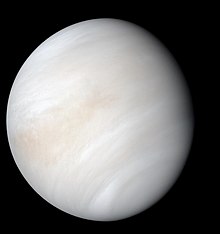
Venus- Earth’s Twin

Venus is the second planet from the Sun. in our Solar System. It is the brightest natural object in Earth’s night sky after the Moon. Venus is one of the four terrestrial planets in the Solar System, meaning that it is a rocky body like Earth. It is similar to Earth in size and mass, and is often described as Earth’s “sister” or “twin”. The diameter of Venus is 12,103.6 km (7,520.8 mi)—only 638.4 km (396.7 mi) less than Earth’s—and its mass is 81.5% of Earth’s. Conditions on the Venusian surface differ radically from those on Earth because its dense atmosphere is 96.5% carbon dioxide, with most of the remaining 3.5% being nitrogen. The surface pressure is 9.3 megapascals and the surface temperature is 737 K (464 °C; 867 °F), above the critical points of both major constituents and making the surface atmosphere a supercritical fluid(distinct gaseous and liquid phases do not exist).

Some facts about Venus: 

Diameter- 12,103.6  km

Orbital period-  224.7 days

Length of a day-   117 days

Axis tilt-  177.3 degrees

Distance from the Sun- 108 million km (0.72AU)

Moons- none

Atmosphere and climate 

Venus has an extremely dense atmosphere composed of 96.5% carbon dioxide, 3.5% nitrogen—both exist as supercritical fluids at the planet’s surface—and traces of other gases including sulfur dioxide. The mass of its atmosphere is 92 times that of Earth’s, whereas the pressure at its surface is about 93 times that at Earth’s—a pressure equivalent to that at a depth of nearly 1 km (58 mi) under Earth’s oceans.

Studies have suggested that billions of years ago, Venus’ atmosphere could have been much more like the one surrounding the early Earth, and that there may have been substantial quantities of liquid water on the surface. After a period of 600 million to several billion years, solar forcing from rising luminosity of the Sun caused the evaporation of the original water. A runaway greenhouse effect was created once a critical level of greenhouse gases (including water) was added to its atmosphere. Although the surface conditions on Venus are no longer hospitable to any Earth-like life that may have formed before this event, there is speculation on the possibility that life exists in the upper cloud layers of Venus, 50 km (30 mi) up from the surface, where the temperature ranges between 303 and 353 K (30 and 80 °C; 86 and 176 °F) but the environment is acidic. The apparent detection of phosphine in Venus’ atmosphere, with no known pathway for abiotic production, led to speculation in September 2020 that there could be existing life currently present in the atmosphere.

Structure

The similarity in size and density between Venus and Earth suggests they share a similar internal structure: a core, mantle, and crust. Like that of Earth, the Venusian core is most likely at least partially liquid because the two planets have been cooling at about the same rate, although a completely solid core cannot be ruled out. The slightly smaller size of Venus means pressures are 24% lower in its deep interior than Earth’s. The predicted values for the moment of inertia based on planetary models suggest a core radius of 2,900–3,450 km.

Missions to Venus:

Many missions have been sent to Venus in the past decades. Venera 4 and 5, were the first to enter the atmosphere and send information. Venera 9  sent back the first images from Venus. Some other missions include- The Magellan Mission( a thirteen-year-long Venus radar mapping project ), The Pioneer Venus orbiters and Venus Express.

References: https://en.wikipedia.org/wiki/Venus#Atmosphere_and_climate https://en.wikipedia.org/wiki/Supercritical_fluid

Career counselling

Career counselling provide correct and consolidate information to our young brigade by giving them whole basket of available option after school is par excellence.The exposure to technology ,Media and Social Networking on a larger scale has made our youth aware to a great extent ,but they are little aware of the authenticity of information which are exposed to on a regular basis .ITS VERY IMPORTANT for our young and dynamic students to have proper and worthy information which is only possible through proper and useful career counselling.

Free Trade Policy . (Meaning , Advantages , Disadvantages)

What is Free trade policy?

Free trade policy refers to a trade policy without any tariffs , quantitative restrictions and other devices obstructing the trade of goods between countries ..

According to Adam Smith,
The policy of free trade is a system of commercial policy which draws no distinction between the domestic and foreign commodities and thus neither impose additional burden on the latter nor grants any special favour to the former “

The theoretical case for free trade is based on Adam Smith’s argument about absolute comparative advantage , that the division of labour among countries leads to specialization, greater efficiency, and higher aggregate production.

Free trade therefore , signifies a non discriminatory trade policy that places no artificial barriers upon free international movement of goods and services .

Definitions :-

Prof Jagdish defines free trade policy as , ” absence of tariffs , quotas, exchange restrictions , taxes , subsidies on production , factor use and consumption “

Prof Lipsey gives a very simple definition ,
“A world of free trade would be one with no tariffs and no restrictions of any kind on importing or exporting . In such a world a country would import all those commodities that it could buy from abroad at a delivered price lower than the cost of producing at home .”

In Haberler’s words , ” free trade is the external trade system of liberation which opposes every interference by the state with the free play of economic forces .”

Thus ,the policy of free trade means simply complete freedom of international trade without any restrictions on the movement of goods between countries.

Free trade, also called laissez-faire,
a policy by which a government does not discriminate against imports or interfere with exports by applying tariffs (to imports) or subsidies (to exports).

However sometimes, governments with generally free-trade policies still impose some measures to control imports and exports.
For instance , in the United States, most industrialized nations negotiate “free trade agreements(FTA ),” or , with other nations which determine the tariffs, duties, and subsidies the countries can impose on their imports and exports.

Theories Of Free Trade :-


The years of debates over the benefits versus the costs of free trade policies to domestic industries, two predominant theories of free trade have emerged: mercantilism and comparative advantage.

Mercantilism

The theory of maximizing revenue through exporting goods and services is Mercantilism. High tariffs on imported manufactured goods are a common characteristic of mercantilist policy.
Mercantilist policy helps governments avoid trade deficits, in which expenditures for imports exceeds revenue from exports.
The goal of mercantilism is a favorable balance of trade, in which the value of the goods a country exports exceeds the value of goods it imports.
Mercantilism lost its popularity as it often led to colonial expansion and wars.

Today many multinational organizations such as the WTO work to reduce tariffs globally, free trade agreements and non-tariff trade restrictions supersede mercantilist theory.

Comparative Advantage

David Ricardo in his book “Principles of Political Economy and Taxation,” 1817 , stated the law of comparative advantage which refers to a country’s ability to produce goods and provide services at a lower cost than other countries.
The Comparative advantage theory is that worldwide openness in trade will improve the standard of living in all countries.
Comparative advantage holds that all countries will always benefit from cooperation and participation in free trade.


Advantages ( pros ) of Free Trade Policy.

Free trade policy has many advantages for a country.
The following are some pros of free trade policy :-

1: Maximum of Output :- Under free trade the country specialises in the production of those commodities which it is relatively best suited to produce and exports them in exchange for those imports which it can obtain more cheaply . This maximises the output of all the participating countries because all gain from trade which in turn , increases the real national income of the world economy . Thus free trade leads to the maximisation of output income and employment.


2: International Specialization :-
Free trade causes international specialisation as it enables the different countries to produce those goods in which they have comparative advantage . International trade enables countries to obtain the advantage of specialisation . If there were no international trade many countries would have to go without some products .

3: Optimisation of Consumption :-
Free trade secures the optimisation of consumption . In other words ,it benefits the consumers when they are able to buy a variety of commodities from abroad at the minimum possible prices . This results in raising their standard of living .

4:. Link with others Countries :-
International trade and commercial relations often lead to an interchange of knowledge ,ideas and culture between nations . This often produces a better understanding among those countries and leads to amity and reduces the possibility of commercial rivalry and war .

5:. Prevent Monopolies :-
Free trade prevents the establishment of monopolies . Under free trade, the country specialises in the production of a few commodities ,and the firms or industries are of the optimum size so that the cost of production of each commodity is the minimum . Thus , free trade ensures a lower price for exports as well as imports and the price mechanism under perfect competition prevents the formation of Monopolies.

6:. Higher Efficiency and optimum Utilisation of Resources :-
Free trade stimulates home producers who face to foreign competition to put forth their best efforts and thus increase managerial efficiency . Again as under free trade each country produces those goods in which it has the best advantages , the resources of each country are utilised in the best possible manner.

7:. Best policy for Economic Development :-
Haberler points out that “substantial free trade with marginal insubstantial corrections and deviations is the best policy from the point of view of economic development “
Besides the direct gains of free trade noted above , free trade fosters development in the following ways
(a) it leads to the importation of capital goods , and raw material ;
(b) it instills new ideas and brings technical know-how, skills , managerial talents and entrepreneurship to the developing countries ;
(c) it facilitates the flow of foreign capital and fosters healthy competition and checks inefficient and exploitative monopolies.


Disadvantages ( cons ) of Free Trade

Despite having several advantages , there are certain theoretical and practical difficulties in following free trade policy .

Some of those disadvantages are :-

1:
Excessive dependence :- Free Trade policy leads to unwanted dependence for goods among countries which leads to major problems in a countries economy if there is some conflicts between the Countries due to some matter .

2:
Obstacles to Development of home Industries :-
If foreign goods are imported freely , the domestic industries of the developing countries would not be able to develop rapidly due to the superior strength of foreign industries .

3:
Empire Builder :- Under the free trade the foreign traders particularly the dominant ones may try to become empire builders in future . In the past it is see ,free trade gave rise to colonialism and imperialism.

4:
Import of Expensive Harmful Goods :- With no restrictions it’s easy to import expensive harmful foreign goods . This leads to diminution of social welfare . Trade restrictions on import goods become necessary.

5:
Less job opportunity :- While free of tariffs, products imported from foreign countries may be seemingly good for consumers, it makes it hard for local companies to compete, forcing them to reduce their workforce. It causes job loss through outsourcing: Tariffs tend to prevent job outsourcing by keeping product pricing at competitive levels. with lower wages cost less.


In conclusion , we can say that at present no country in the world follows the policy of free trade . Every country imposes some restrictions on the import and export of goods .
T.Scitovsky has pointed out that free trade can be shown to be beneficial to the world as whole but has never been proved to be the best policy for a country .


However , poor countries that have adopted free-trade policies have experienced high economic growth, with China and India as prime examples. Free trade allows companies from rich countries to directly invest in poor countries, sharing their knowledge, providing capital and giving access to markets.

Know asteroids better on World asteroid day

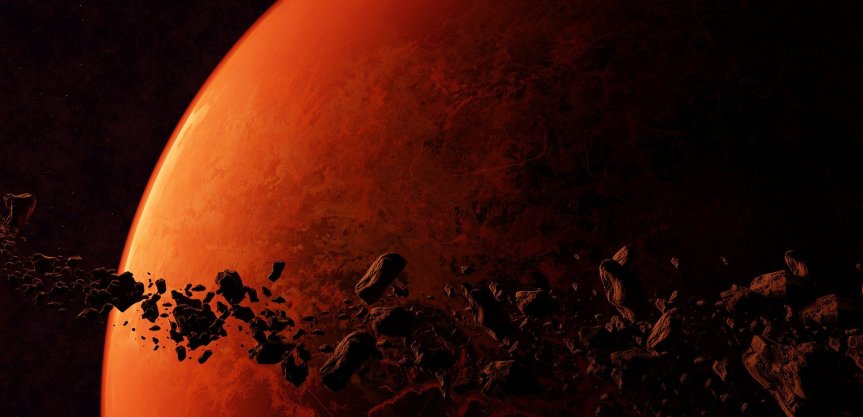
June 30 is the world asteroid day and it is held on the anniversary of Siberian Tunguska event which is known as one of the most dangerous asteroid related event on earth. This day is designed by United Nations general assembly to raise awareness about the harmful effects of asteroids and measures to be taken to avoid these effects. On this day lets know more about the asteroids.

After the formation of the solar system, some of the rocky remains which failed to form a planet started to revolve around the sun around 4.6 billion years ago and these are called asteroids. Asteroids are made of same starting materials as earth and the other planets. But they are not big enough to be called a planet. Currently 1,097,065 is the known asteroid count and there is an asteroid belt between Jupiter and Mars which contains more than 200 asteroids of size larger than 60 miles in diameter. And many asteroids are present outside the belt also.

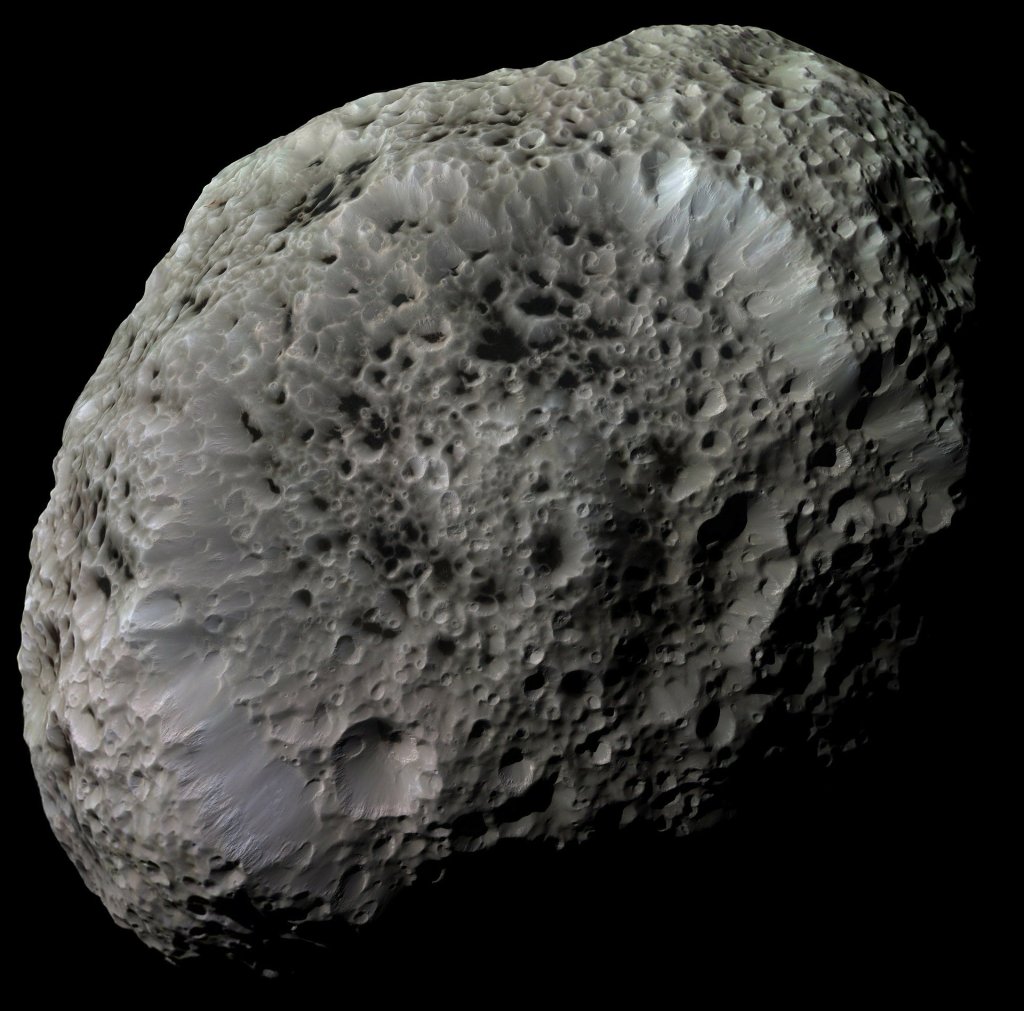
asteroids can be very big of 940km and can be very small of 6-foot-wide. They are irregularly shaped although some are nearly spherical. Their surface is pitted as moon`s surface. Some of the asteroids also have their own moon. There are binary asteroids also present which revolve around the sun in pair and revolve around each other too. The average temperature on their surface is minus 73 degree Celsius.

THERE IS A CLASSIFICATION FOR ASTEROIDS BASED ON THEIR COMPOSITION
asteroid

C-type asteroids: They are also called as carbonaceous asteroids. This is the most common type of the asteroid making 75% of the population. They are mostly grey in color. They have large amount of carbon with rocks and minerals. They inhabit the main belt`s outer region.

M-type asteroids: They are also called as metallic asteroids. They are mostly made of nickel and iron and small amount of stone. They are moderately bright and red in color. They are in the middle region of the main belt.

S-type asteroids: They are also called as siliceous asteroids. They are of 17% of the total asteroids present at inner region of the asteroid belt. They are mostly made of silicate materials. Their composition is similar to meteorites.

CAN ASTEROIDS BE A SPACE COLONY FOR HUMANITY?

The desperation of the humanity for survival is the main driving force to think about colonizing the asteroids. But this has many obstacles. The main challenge is the transportation. Asteroid belt is 204.43 million miles away from the earth & journey to them may take more than 18 months. And size of the asteroids is not enough to produce gravity. This makes landing on them difficult. Another problem is the temperature which is very less. Scientist are studying to remove all these obstacles and possibility of habiting on the asteroids is quite at the far end of the future.

MINING ON ASTEROIDS
mining

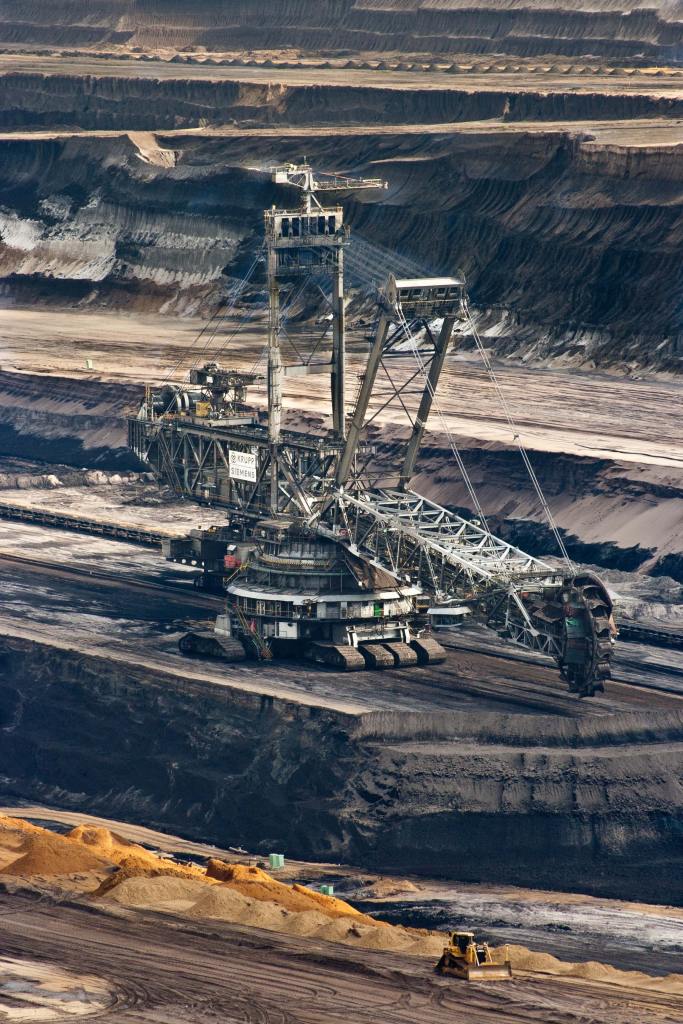
Mineral depletion is becoming a major thing on the earth. It is predicted that earth will run out of the minerals in coming 50-60 years. So extraction of minerals from the space that too asteroids sounds interesting and hopeful. Asteroids also contain water which can be used as fuel for the spacecrafts used. Its been said that the world`s first trillionaire will be a person who owns asteroid mining. Asteroid mining will bring the essential economic progress.

Mining on asteroids requires a  lot amount of resources. Some of may include mining robots and haulers. Construction and maintenance of infrastructure is important. In-space manufacturing should be enabled to do mining effectively. Bringing the mined materials back to earth is also a challenge.

The technology for asteroid mining is being constructed by a company called Deep space industries. They are developing 3 types of spacecrafts. They are: Fireflies to examine the asteroids, Dragonflies to bring back samples to the earth and Harvesters to voyage to the asteroids and gather tons of minerals and return back to the earth. TransAstra is another company which is developing technologies for the same. If all these companies succeed then the dream of mining on asteroids will come true and will benefit the earth`s economy.