Brazil’s fight against deforestation

The Amazon rainforest is considered to be the largest rainforest in the world spread over 6 lakhs sq. km it contributes to more than half of the forests present in the world. Home to a variety of species of animals like the Amazon River dolphin, the Howler monkey and many other rare and endangered species. It also hosts the most beautiful and diverse flora and fauna that cannot be found anywhere on the planet except here.

The Amazon currently lies in almost nine different countries, but a major part of it is situated in Brazil. It is the home of over 2 million insect species and thousands of varieties of plants and at least 1000 different species of mammals and birds. It is considered a haven for several thousands of migratory birds that reside in these thick rainforests.

During the pre-Columbian period, parts of the forest were highly populated solely for agriculture. Once the Europeans arrived in the 16th century, the hunt began for Gold and rubber. But later on, these settlements were abandoned due to famines and some slavery revolts. The Amazon has not only been home to flora and fauna and several other species, but it has also provided immense support and resources for the local tribes to sustain their lives in the forest.

Presently, environmentalists are severely concerned about the future of the Amazon rainforest. They are concerned about the loss of biodiversity that might occur due to deforestation. Due to deforestation, there might also be a huge imbalance in the carbon cycle which could lead to severe issues.

Deforestation has increased exponentially over the past few years; we have witnessed the most amount of deforestation this month over the past 12 years. Deforestation mainly occurs due to many factors like exploitation of resources, cattle grazing, agriculture and many others.

Well according to a paper published by the World bank in 2004 the cattle sector which contributed towards beef and leather industries contributed to over 80% of the deforestation caused. In the year 2019, a devastating forest fire lasted for over half a year shrinking the forest cover by around 1300 sq.km. To add on to this in the year 2020 deforestation caused rose by almost 50% in the first three months.

In efforts to curb the rates at which deforestation is occurring the President of Brazil has ordered troops into the forest to protect the forest by preventing illegal activities like mining and slaughtering of wild animals. This action was forced onto the president after the severe surge in deforestation and criticism from numerous international organizations and media houses.  

The move from the President was applaudable but did not contain any details on the number of troops sent into the forest or the target they intend to achieve in this fight against deforestation. Moreover, it is immensely important to note that a move has been taken to control deforestation.

The Vice President stated that the operation will be kept active for two months since the current season in the Amazon is very dry and allows easy mobility into the forests. The government’s main intention is to take control over the illegal activities occurring in the rainforest and help make the forest a haven for the species dependent on it.

Scope of SEO in india

The developing utilization of online applications has opened diverse vocation roads for youth across the globe. Regardless of an applicant is a fresher or an accomplished one, these new position profiles help one in better proficient future and furthermore great motivations.

One of such occupation profile is of Search Engine Optimization (SEO) proficient. As a large portion of individuals across the world use web crawlers like Google to determine their questions. Website design enhancement is one of the advanced showcasing methods that assistance in better streamlining of a site and rank it top in web search tools for applicable questions.

There are many type of improvement, for example, on location content and site page enhancement or site backlink streamlining. Web optimization not just plans to rank better sites or drive quality traffic yet in addition assist with building brand perceivability in the online world.

Different ongoing investigations recommend that SEO will be a significant showcasing device for creating leads and procuring new clients. It has constrained pretty much every organization to put more in SEO prompting expanded interest of SEO experts in India. The developing interest of SEO experts has constrained alumni and website specialists to learn SEO for a superior profession ahead.

Mental Wellness

According to WHO ,mental Wellness means that your mind is in order and functioning in your best intrest .You are able to think ,feel and act in ways that create a positive impact on your social and physical well-being.According to report by WHO , depression is the most common illness worldwide ,with more than 264 million people affected.Close to 800,000 people die due to suicide every year .Suicide is the second leading cause of death in 15-29 years-olds.A friendly reminder to check in on your family and friends to make sure they doing okay and they know you’re there for them .

Self help and personality development

INTRODUCTION:-

While self-improvement is essentially a solo act i.e. usually picking up a book and learning the technique of improving the target area on your own and at your own pace. Personality Developing on the other hand, usually involves some external help. … You cannot get there without Personal Development and self-improvement.

Self help:-

Self Help Word Cloud, Health Concept Stock Photo, Picture And Royalty Free  Image. Image 41206493.
SELF Help Group are small groups of 15-20 members of rural people in particular women belonging to one neighbouhood who meet and saves regularly. The members of the group can take small loan to meet their needs on low interest rate.

Functioning:

  • Most of the decisions regarding the savings and loan activities are taken by the group members.
  • The group decides as regards the loans to be granted- the purpose, amount, interest to be
    charged, repayment schedule etc.
  • Group is responsible for the repayment of the loan.
  • Any case of non-repayment of loan, by any one member is followed up seriously by other members in the group.
  • The SHG help borrowers overcome the problem of collateral.
  • They provide timely loans for a variety of purposes and at a reasonable interest rate.
  • The group provrdes a platform to discuss and act on a variety of social issues such as health, nutrition, domestic violence, etc.

Personality development:-

Definition:

Personality development is the development of the organized pattern of behaviors and attitudes that makes a person distinctive. Personality development occurs by the ongoing interaction of temperament , character, and environment.

Description:

Personality is what makes a person a unique person, and it is recognizable soon after birth. A child’s personality has several components: temperament, environment, and character. Temperament is the set of genetically determined traits that determine the child’s approach to the world and how the child learns about the world. There are no genes that specify personality traits, but some genes do control the development of the nervous system, which in turn controls behavior.
A second component of personality comes from adaptive patterns related to a child’s specific environment. Most psychologists agree that these two factors—temperament and environment—influence the development of a person’s personality the most. Temperament, with its dependence on genetic factors, is sometimes referred to as “nature,” while the environmental factors are called “nurture.”
While there is still controversy as to which factor ranks higher in affecting personality development, all experts agree that high-quality parenting plays a critical role in the development of a child’s personality. When parents understand how their child responds to certain situations, they can anticipate issues that might be problematic for their child. They can prepare the child for the situation or in some cases they may avoid a potentially difficult situation altogether. Parents who know how to adapt their parenting approach to the particular temperament of their child can best provide guidance and ensure the successful development of their child’s personality.
Finally, the third component of personality is character—the set of emotional, cognitive, and behavioral patterns learned from experience that determines how a person thinks, feels, and behaves. A person’s character continues to evolve throughout life, although much depends on inborn traits and early experiences. Character is also dependent on a person’s moral development .
In 1956, psychiatrist Erik Erikson provided an insightful description as to how personality develops based on his extensive experience in psychotherapy with children and adolescents from low, upper, and middle-class backgrounds. According to Erikson, the socialization process of an individual consists of eight phases, each one accompanied by a “psychosocial crisis” that must be solved if the person is to manage the next and subsequent phases satisfactorily. The stages significantly influence personality development, with five of them occurring during infancy, childhood, and adolescence .

Infancy:

During the first two years of life, an infant goes through the first stage: Learning Basic Trust or Mistrust (Hope) . Well-nurtured and loved, the infant develops trust and security and a basic optimism. Badly handled, the infant becomes insecure and learns “basic mistrust.”

Toddlerhood:

The second stage occurs during early childhood, between about 18 months to two years and three to four years of age. It deals with Learning Autonomy or Shame (Will) . Well-parented, the child emerges from this stage with self-confidence, elated with his or her newly found control. The early part of this stage can also include stormy tantrums , stubbornness, and negativism, depending on the child’s temperament.

Preschool:

The third stage occurs during the “play age,” or the later preschool years from about three to entry into formal school. The developing child goes through Learning Initiative or Guilt (Purpose) . The child learns to use imagination; to broaden skills through active play and fantasy; to cooperate with others; and to lead as well as to follow. If unsuccessful, the child becomes fearful, is unable to join groups, and harbors guilty feelings. The child depends excessively on adults and is restricted both in the development of play skills and in imagination.

School age:

The fourth stage, Learning Industry or Inferiority (Competence) , occurs during school age, up to and possibly including junior high school. The child learns to master more formal skills:
  • relating with peers according to rules
  • progressing from free play to play that is structured by rules and requires teamwork (team sports)
  • learning basic intellectual skills (reading, arithmetic)
At this stage, the need for self-discipline increases every year. The child who, because of his or her successful passage through earlier stages, is trusting, autonomous, and full of initiative, will quickly learn to be industrious. However, the mistrusting child will doubt the future and will feel inferior.

Adolescence:

The fifth stage, Learning Identity or Identity Diffusion (Fidelity) , occurs during adolescence from age 13 or 14. Maturity starts developing during this time; the young person acquires self-certainty as opposed to self-doubt and experiments with different constructive roles rather than adopting a negative identity, such as delinquency. The well-adjusted adolescent actually looks forward to achievement, and, in later adolescence, clear sexual identity is established. The adolescent seeks leadership (someone to inspire him or her), and gradually develops a set of ideals to live by.
The Child Development Institute (CDI) rightfully points out that very little knowledge is available on the type of specific environment that will result, for example, in traits of trust being more developed in a person’s personality. Helping the child through the various stages of emotional and personality development is a complex and difficult task. Searching for the best ways of accomplishing this task accounts for most of the research carried out in the field of child development today.
Renowned psychologist Carl Rogers emphasized how childhood experiences affect personality development. Many psychologists believe that there are certain critical periods in personality development—periods when the child will be more sensitive to certain environmental factors. Most experts believe that a child’s experiences in the family are important for his or her personality development, although not exactly as described by Erikson’s stages, but in good agreement with the importance of how a child’s needs should to be met in the family environment. For example, children who are toilet trained too early or have their toilet training carried out too strictly may become rebellious. Another example is shown by children who learn appropriate behavior to their sex lives when there is a good relationship with their same-sex parent.
Another environmental factor of importance is culture. Researchers comparing cultural groups for specific personality types have found some important differences. For example, Northern European countries and the United States have individualistic cultures that put more emphasis on individual needs and accomplishments. In contrast, Asian, African, Central American, and South American countries are characterized more by community-centered cultures that focus on belonging to a larger group, such as a family, or nation. In these cultures, cooperation is considered a more important value than competitiveness, which will necessarily affect personality development.

Common problems:

Infants who are just a few weeks old display differences between each other in how active they are, how responsive they are to change, and how irritable they are. Some infants cry constantly while others seem happy and stay fairly quiet. Child development research conducted by the CDI has identified nine temperamental traits that may contribute to a child’s personality development being challenging or difficult:
  • activity level (how active the child is generally)
  • distractibility (degree of concentration and paying attention when the child is not particularly interested)
  • intensity (how loud the child is)
  • regularity (the predictability of biological functions like appetite and sleep)
  • sensory threshold (how sensitive the child is to physical stimuli: touch, taste, smell, sound, light)
  • approach/withdrawal (characteristic responses of a child to a new situation or to strangers)
  • adaptability (how easily the child adapts to transitions and changes such as switching to a new activity)
  • persistence (stubbornness, inability to give up)
  • mood (tendency to react to the world primarily in a positive or negative way)
Temperamental traits are enduring personality characteristics that are neither “good” nor “bad.” Early on, parents can work with the child’s temperamental traits rather than oppose them. Later, as the child grows up, parents can help the child to adapt to his or her own world in spite of inborn temperament.

Parental concerns:

Most children experience healthy personality development. However, some parents worry as to whether their infant, child, or teenager has a personality disorder. Parents are usually the first to recognize that their child has a problem with emotions or behaviors that may point to a personality disorder.
Children with personality disorders have great difficulty dealing with other people. They tend to be inflexible, rigid, and unable to respond to the changes and normal stresses of life and find it very difficult to participate in social activities. When these characteristics are present in a child to an extreme, when they are persistent and when they interfere with healthy development, a diagnostic evaluation with a licensed physician or mental health professional is recommended.

When to call the doctor:

Parents who suspect that their child has a personality disorder should seek professional help. It is a very important first step in knowing for sure whether there is a disorder, and if so, what treatment can best help the child. Child and adolescent psychiatrists are trained to help parents sort out whether their child’s personality development is normal.

KEY TERMS:

Behavior —A stereotyped motor response to an internal or external stimulus.
Character —An individual’s set of emotional, cognitive, and behavioral patterns learned and accumulated over time.
Cognition —The act or process of knowing or perceiving.
Cognitive —The ability (or lack of) to think, learn, and memorize.
Gene —A building block of inheritance, which contains the instructions for the production of a particular protein, and is made up of a molecular sequence found on a section of DNA. Each gene is found on a precise location on a chromosome.
Identity —The condition of being the same with, or possessing, a character that is well described, asserted, or defined.
Maturity —A state of full development or completed growth.
Personality —The organized pattern of behaviors and attitudes that makes a human being distinctive. Personality is formed by the ongoing interaction of temperament, character, and environment.
Socialization —The process by which new members of a social group are integrated in the group.
Temperament —A person’s natural disposition or inborn combination of mental and emotional traits.

Resources:-

BOOKS:

AACAP and David Pruitt. Your Child: Emotional, Behavioral, and Cognitive Development from Infancy through Pre-Adolescence. New York: Harper Collins, 1998.
AACAP and David Pruitt. Your Adolescent: Emotional, Behavioral, and Cognitive Development from Early Adolescence through the Teen Years. New York: Harper Collins, 1999.
Allen, Bem P. Personality Theories: Development, Growth, and Diversity. Harlow, UK: Allyn & Bacon, 2002.
Berger, Elizabeth. Raising Children With Character: Parents, Trust, and the Development of Personal Integrity. Lanham, MD: Rowman & Littlefield Publishers, 1999.
Erikson, Erik. Childhood and Society. New York: W.W. Norton & Company, 1993.
Erikson, Erik. The Erik Erikson Reader. New York: W.W. Norton & Company, 2000.
Goleman, Daniel. Working With Emotional Intelligence. New York: Bantam, 1998.
Rogers, Carl. On Becoming a Person. Boston: Mariner Books, 1995.
Shaffer, David R. Social and Personality Development. Independence, KT: Wadsworth Publishing, 1999.
“Social, Emotional, and Personality Development.” Handbook of Child Psychology , edited by William Damon and Nancy Eisenberg. 5th ed. New York: Wiley, 2000.

PERIODICALS:-

Biesanz, J. C. et al. “Personality over time: Methodological approaches to the study of short-term and long-term development and change.” Journal of Personality. 71, no. 6 (December, 2003): 905–41.
Hart, D. et al. “Personality and development in childhood: a person-centered approach.” Monographs in Social Research on Child Development. 68, no. 1 (2003): 1–119.
Jensen-Campbell, L. A. et al. “Interpersonal conflict, agreeableness, and personality development.” Journal of Personality. 71, no. 6 (December, 2003): 1059–85.
Roberts, B. W. and R. W. Robins. “Person-Environment Fit and its implications for personality development: a longitudinal study.” Journal of Personality. 72, no. 1 (February, 2004): 89–110.
Roberts, B. W. et al. “The kids are alright: growth and stability in personality development from adolescence to adulthood.” Journal of Personality & Social Psychology. 81, no. 4 (October, 2001): 670–83.
Shiner, R, and A. Caspi. “Personality differences in childhood and adolescence: measurement, development, and consequences.” Journal of Child Psychology & Psychiatry. 44, no. 1 (January, 2003): 2–32.

ORGANIZATIONS:-

American Academy of Child & Adolescent Psychiatry (AACAP). 3615 Wisconsin Ave., N.W., Washington, DC. 20016–3007. (202) 966–7300. Web site: http://www.aacap.org.
American Academy of Pediatrics (AAP). 141 Northwest Point Boulevard, Elk Grove Village, IL 60007–1098. (847) 434–4000. Web site: http://www.aap.org.
American Psychological Association (APA). 750 First Street, NE, Washington, DC 20002–4242. (800) 374–2721. Web site: http://www.apa.org.
Child Development Institute (CDI). 3528 E Ridgeway Road, Orange, California 92867. (714) 998–8617. Web site: http://www.childdevelopmentinfo.com.

WEB SITES:-

CDI. Child Development Basics. Available online at: http://www.childdevelopmentinfo.com/development (accessed March 5, 2005).
Great Ideas in Personality. Available online at: http://www.personalityresearch.org/ (accessed March 5, 2005).
The Personality Project. Available online at: http://www.personality-project.org/personality.html (accessed March 5, 2005).
Monique Laberge, Ph.D.

Reference Links:

https://ask.learncbse.in/t/what-are-self-help-groups-describe-in-brief-their-functioning/43084
http://www.healthofchildren.com/P/Personality-Development.html

What is Catcalling?

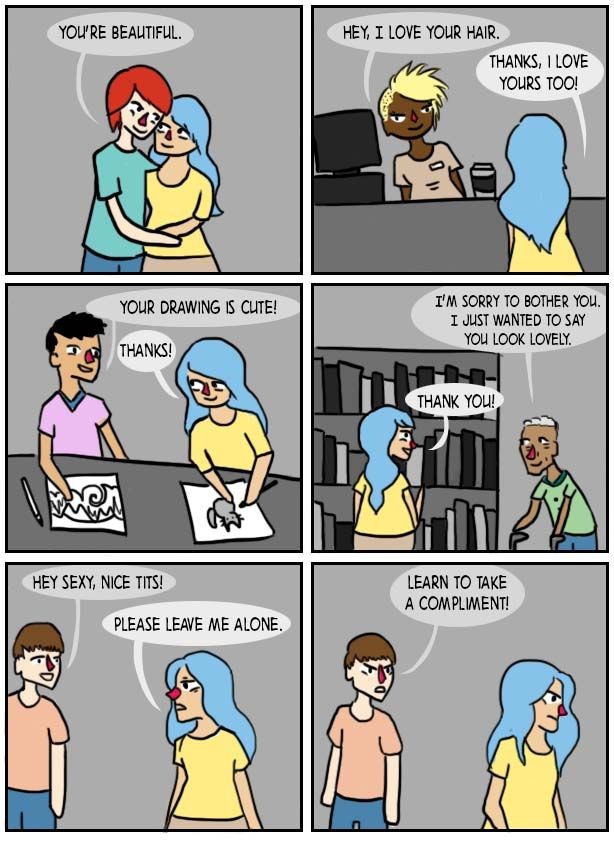
Catcalling is a form of harassment primarily consisting of unwanted sexual comments. This may include honking, wolf-whistling and indecent exposures. Most of the time, it is a man who catcalls and a woman who is catcalled.

According to surveys by Stop Street Harassment (a non-profit organization):

  • Nearly 95% of female respondents were honked at one or more times
  • Nearly 82% of female respondents were the target of a vulgar gesture at least once
  • Nearly 81% of female respondents were the target of sexually explicit comments from an unknown man at least once
  • Just over 77% of women said they were the target of kissing noises from men.

Where catcalling takes place?

Catcalling doesn’t only happen on the streets. Sexual harassers find targets on campus sidewalks, in restaurants and movie theaters, at work, inside homes – literally anywhere. Similarly, anyone can be a catcaller – including a person’s acquaintances. Online catcalling is also an issue just as severe as in-person catcalling. What’s worse, people on social media are able to say more because they are protected by a screen.

The Problems with Catcalling

  • It’s disrespectful: Catcalling is uncalled-for and usually makes the victim feel exposed and uncomfortable. In some cases, catcalling is used as a method of expressing power over someone, rather than the misperception of it being a “compliment”.
  • It’s not impressive: Someone may catcall in order to impress their friends, or the person they are catcalling at, but it’s actually unimpressive and immature.

Catcalling is not a compliment, it’s a harassment!!

Whilst compliments and flirting can be harmless and fun, shouting at strangers is not flattering, it leaves “targets” feeling exposed.

Catcalling is degrading, demeaning, and disgusting.

Women have the right to be treated with as much respect and dignity when walking down the street as any man. Women deserve to feel safe.

How to react if you are being catcalled?

  • Catcallers usually look for a reaction. Don’t give them one, especially fear.
  • Get to a safe or crowded place as soon as you can. Seek help if needed.
  • If you are around other people and it’s safe, you can use a simple comeback like “that’s harassment” or “don’t do that”.
  • While snapping back (if you choose to do so), make sure to keep walking and don’t stop.
  • Avoid the use of swear words or eye contact.
  • If it’s online, you can block and report them. Choosing to reply is also an option (e.g., asking “would you find it okay if someone spoke to your mother or sister in that way?”).
  • Document it: write it down or take a picture/screenshot. By doing this you can call them out later.
  • Share your story if you feel comfortable.

How to intervene if someone is being catcalled?

  • Call out the harasser if it is safe to do so.
  • Create a distraction or start chatting with the target (e.g., drop your keys and ask “are these yours?”).
  • Approach the target afterwards to see if they need company or if there is anything else you can do to help.
  • Whatever you do, don’t put the person who is catcalled at greater risk (e.g., becoming aggressive).

Catcalling has become normalized, as it is often disregarded as a “joke”, or even a compliment. These are some tips to learn why this is absolutely not the case.

The success story of OYO Rooms and India’s youngest entrepreneur- Ritesh Agarwal.

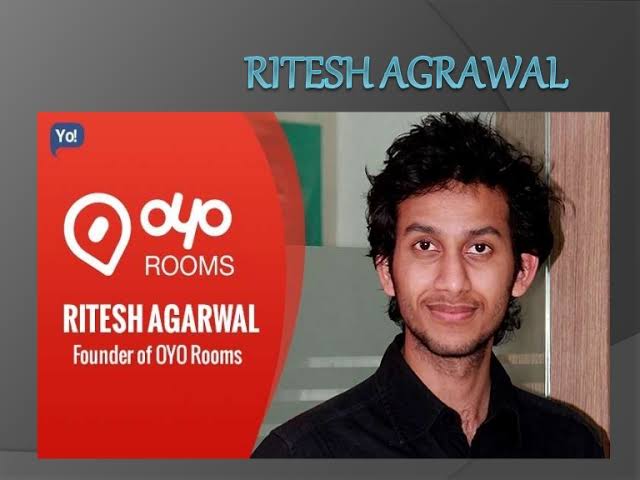
So we all know about OYO Rooms, also known as OYO Hotels and Homes, which is an Indian multinational chain of hospitality leased and franchised hotels, homes, and living spaces. But what many of us don’t know about OYO is; the man behind the idea- Ritesh Agarwal.

Ritesh Agarwal was born in Bisham Cuttak, Rayagada(district), Odisha. Ritesh Agarwal is the Founder and CEO of OYO Rooms. In 2020, he is known as the 2nd youngest billionaire in the world. Also, he received awards such as the Business World Young Entrepreneur award and Thiel Fellowship.

From where did he got this idea?
For the answer let us look into his past life.

Ritesh always has a keen interest in software. He started coding when he was just 8yrs old. After 10th grade, in 2009, he decided to go to Kota for IIT. In no time he figured out that Kota was anything but a place where one could learn coding. So he puts his dream of coding in the backseat and started attending classes at Bansal tutorials. In his free time, he used to chill and travel around a lot.

Ritesh also has written a book called India. Engineering Colleges: A Complete Encyclopedia of Top 100 Engineering Colleges. That book was a great success on Flipkart and sold out in a while.

At the age of 16, he was selected to be a part of the Asian Science Camp held at the Tata Institute of Fundamental Research (TIFR) in Mumbai.

During that time; Ritesh used to travel a lot and stayed in budget hotels and PG. He also used to travel to Dehli so often to attend events and conferences to meet entrepreneurs because at that time he couldn’t afford the registration cost.

In 2011, he moved to Delhi to start up something of his own and also to prepare for SAT for further studies in the U.S.

Sat never happened. And that time, he used to meet and read about entrepreneurs, start-ups, business ideas, and especially AirBnB.

When he used to travel, he had seen that the budget hotels in India didn’t meet the basics of budget travelers. So in 2012, he started his first venture- Oravel Stays. It was an aggregator of beds and breakfast stays all over India. He secured his funding of 30 lakhs from VentureNursey.

He also presented his idea at Thiel Fellowship. He was listed among the top ten winners who received a sum of $100,000 and as well as guidance and other resources.

Unfortunately, due to hard luck, the company was not able to pick the pace in the market.

This is when Ritesh thought that the biggest problem of traveling is to find good, affordable, and most importantly available rooms. This idea motivated him to create an online platform where one can find all the information available about good, and budget places.

In 2013, after tweaking his business model, he relaunched Oravel Stays as OYO Rooms. In which OYO stands for On Your Own.

At present OYO has over 13,000 franchised and leased hotels, and over 450,000 rooms, adding 64,000 rooms every month, globally.

OYO App has been downloaded over 50 million-plus times and rated amongst the best-rated apps on the Google play store.

In 2020, the market valuation of OYO was 8 billion dollars.

India’s Geographical Blessings

Introduction

The Current World powers have always had some sort of geographical shields protecting them. India is no exception and is blessed by many natural geographical factors which has effectively shielded the country from various external forces. The Himalayas, Indian Ocean and the Thar desert are some of the of regions which act as a shield for India.

The Himlayas

The Himalayas are largest and tallest mountain ranges in the world. Many of the world’s tallest peaks like Mt.Everest, K2, Kanchenjunga, Nanda Devi are situated in this majestic range. The Himalayas stretch from the edges of the Hindu Kush mountains of northeastern Afghanistan, through the Indian states of Jammu & Kashmir, Ladakh, Himachal Pradesh, Uttarakhand, Sikkim and Arunachal Pradesh and countries like China(Tibet), Nepal, Bhutan and Northern Myanmar. The Himalayas have historically acted as a buffer between India and China and was even considered as a factor which prevented Genghis Khan’s ferocious Mongol Armies from invading India. During the 1971 Bangladesh Liberation war, India chose to declare war on Pakistan in winter as it was almost impossible for China to mobilize their armies during the brutal Himalayan winter. India has fought many wars with it’s neighbor Pakistan in the region to maintain the status quo as both understand how vital control over this region is.

The Thar Desert

The Thar desert in Rajasthan acts as a natural border between India and Pakistan. The scorching desert and sand means it’ll be difficult for Pakistan to maintain supply lines and logistics incase of an invasion of India. This applies for India as well but it would be far easier to defend than to attack through this frontier.

The Seas

India is a peninsula, as it is surrounded by water on three sides. The Arabian sea to the west, Indian ocean to the south and the Bay of Bengal to it’s east. All these water bodies ensure India will be well protected by a natural barrier as it would require an external navy to invade, ensure naval supremacy so a land invasion is possible which is an almost impossible task given India’s naval strengths.

https://en.wikipedia.org/wiki/Himalayas

MAHATMA GANDHI (1869)

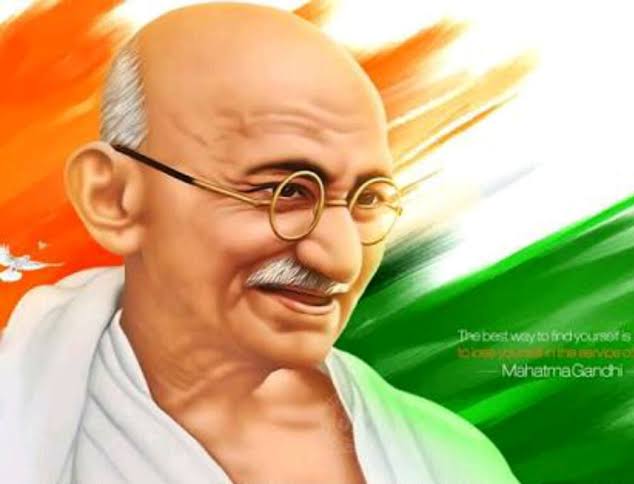
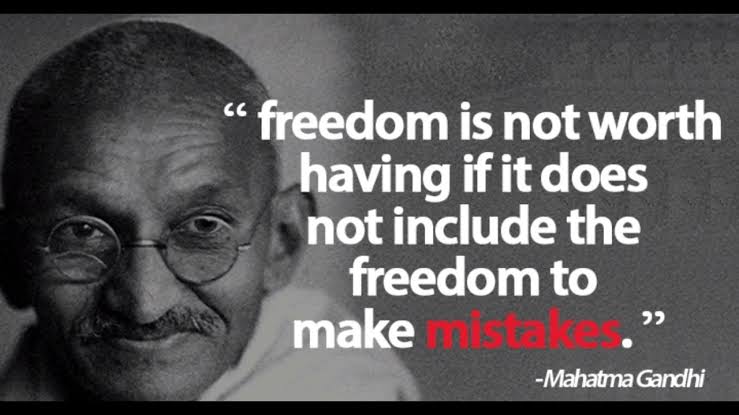
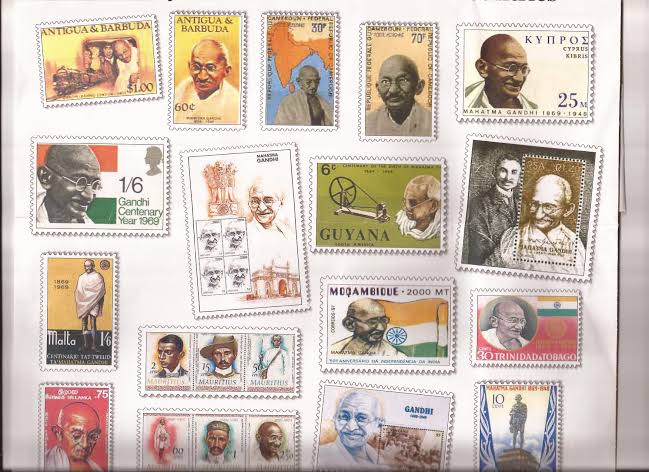
Mohandas Karamchand Gandhi (2 October  1869- 30th January 1948), Popularly known as MAHATMa Gandhi or Bapu (Father of Nation ),he was the pre-eminent leader of Indian nationalism in British -ruled India . Employing non-violent Civil disobedience, Gandhi led India to independence and inspired movements of non-violence ,civil rights and freedom across the world.

     He is known in India as the Father of Nation ;his birthday, 2 October, is celebrated as Gandhi Jayanthi, a National holiday and world -wide as the international Day of Non-violence .world-wide Gandhi’s philosophy was not theoretical but of pragmatism. Asked to give messages to the people, he responded, “My life is my messages “.

Civil rights movements in South Africa (1893-1914)

Gandhi was 24 when he arrived in South Africa to work as a legal representative for the Muslim Indian Traders based in the city of Pretoria.He spent 21 years in south Africa, where he developed his political view,ethics and political leadership skills.

     In South Africa, Gandhi faced the discrimination directed at all coloured people. Heels thrown off a train at Pietermaritzburg after refusing to move from the first -class though he had a first-class  ticket.

Struggle for Indian Independence (1915-47)🇮🇳🍚

In 1915,Gandhi returned to India permanently . He attained an international reputation as leafing Indian nationalist ,theorist and organizer . He joined the Indian National congress and was introduced to Indian issues, politics and the Indian people primarily  by Gopala Krishna Gokhale. Gokhale was a key leader of the Congress Party best known for his  restraint and moderation,and his insistence on working inside the system .Gandhi took Gokhale’s liberal approach based on British Whiggish tradition and transformed it to make it look wholly Indian.

Champaran and kheda

        Gandhi’s first major achievements came in 1918 with the Champaran and Kheda agitations of Bihar and Gujarat. The Champaran  agitation pitted the local peasantry against their largely British landlords who were backed by the local administration. The peasantry was forced to grow Indigo, a cash crop whose demand had been declining over two decades, and were forced to sell their crops to the planters at a fixed price

Khilafat movements


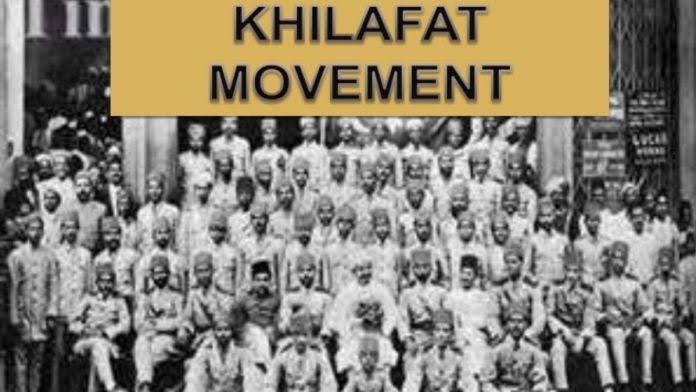
      In 1919 Gandhi ,with his weak position in congress, decided to broaden his base  by increasing his appeal to Muslims.  The opportunity came from the khilafat movement, a worldwide protest by Muslims against the collapsing status of the caliph,the leader of their religion. His success made him India’s first national leader with a multicultural base and facilitated his rise to power  within congress,which had previously been unable to reach many Muslims. In 1920 Gandhi became a major  leader in congress.
      Gandhi always fought against “communalism “,which pitted Muslims against Hindus in politics, but he could not reverse the rapid growth of communication  after 1922.

Salt Satyagraha(Salt  March)🍚🧂

     Gandhi stayed out of active politics and,as such,the limelight for most of the 1920s. He focused  instead on resolving  the wedge between  the swaraj party and the Indian National Congress, and expanding initiatives  against  untouchability , alcoholism,ignorance  and poverty. He returned to the fore in 1928.In the preceding year, the British government  had appointed a new constitutional reform commission under sir John Simon, which did not include any Indian  as its member.
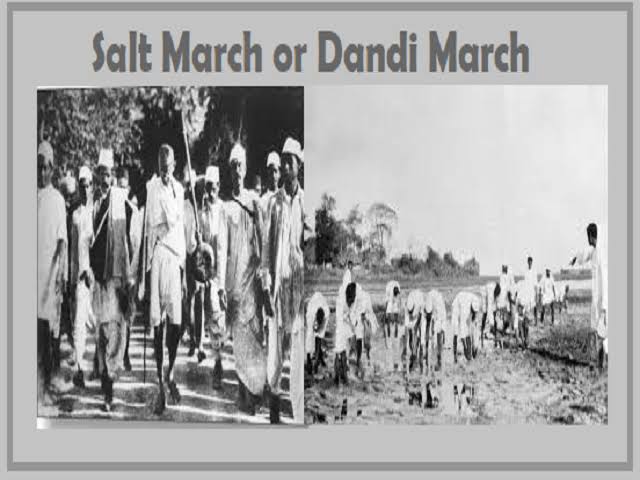
      Gandhi then launched a new Satyagraha against  the tax on slat in March 1930.This was highlighted by famous Salt March  to Dandi.

Quit India Movement🏳⚪


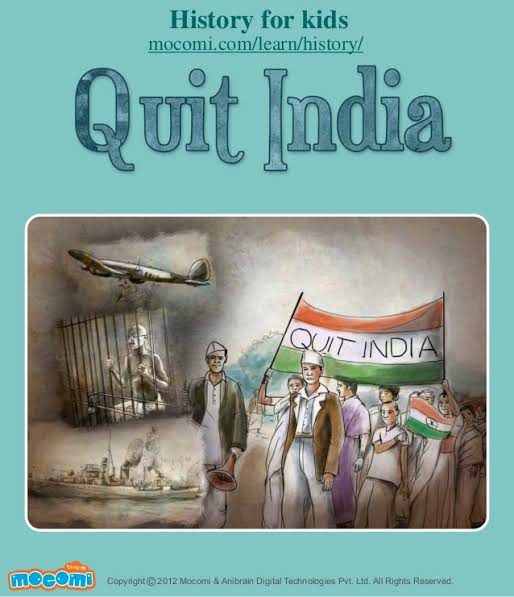
     Quit India became the most forceful movement in the history of struggle,with mass arrests and violence on an unprecedented  scale.
      In 1942  although  stillb committed in hid efforts to “launch a non-violent movement “,Gandhi clarified that the  movement would not be stopped by individual act of violence, saying that the ” ordered  anarchy ” of “the present system  of administration ” was “worse than real anarchy “.He called on all congressmen and Indians to maintain discipline via ahimsa,and Karo ya maro (“Do or die”) in the cause of ultimate freedom 

Non-violence🙅‍♀️

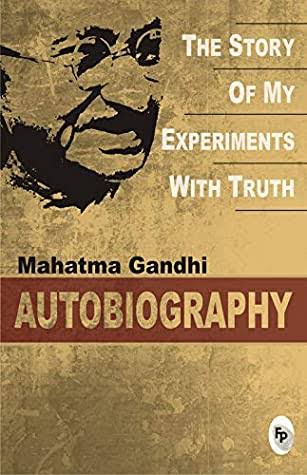
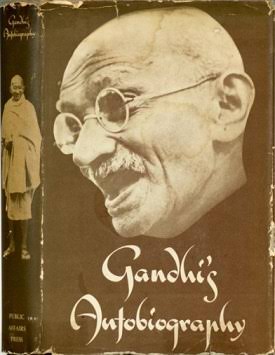
     Gandhi explains  his philosophy and way of life in his autobiography “The story of My Experiments with Truth “.

Literary works📝✍📖

        Gandhi was a prolific writer. One of Gandhi’s earliest  publications, Hind Swaraj,Published language; Indian Opinion while in South America and, Young India, in English, and Navajivan ,a Gujarati monthly, on his returns to India. Later,Nakajima was also published in hindi. In addition, he wrote letters  almost every day to individuals and newspapers.
     Gandhi  also wrote several books including his autobiography, “The Story of My Experiments with Truth “.
Rabindranath Tagore is said to have accorded the title ” Mahatma” to Gandhi.

World Farm Animals Day🐐🐓

        Gandhi’s birthday is chosen as a commemoration for the billions of non-human animals that are slaughtered  by the human farming industry each year. The practice started in 1983.

Assassination👨‍🏭

       On 30 January 1948,just five months of coyntry’s Independence, the Mahatma was on his way to his usual prayer meeting in the Birla Mandir in the capital city. His smiling face revealed only a divine serenity. Suddenly a middle-aged man named Nathuran Godse entered his path and directly facing him fired three shots point and blank at the 79 year old disarmed leader. Dignitaries Jawaharlal Nehru declared: “The lights has gone out of our lives”.
     It is nearly six decades that Gandhiji departed from us,but Gandism is still very much alive and kicking in the national psyche of India.

Current impact within Indiai🇮🇳

    Gandhi’s birthday, 2 October, is National holiday in India, Gandhi’s date of death death,30 January, is commemorated as a Martyrs’ Day in India.
        There are two temples in India dedicated to Gandhi,One is located sambalpur in orissa and the other at Nidaghatta village nera kadur in chikmangalur district of Karnataka.  The Gandhi Memorial in Kanyakumari resembles central Indian Hindu temples and the Tamukkan or Summer palace in Madurai now houses the Mahatma Gandhi Museum.

Euthanasia: Should it be legalized?


Life is the most valuable and opulent gift that God has ever bestowed onto the inhabitants of our world. And we have qualities that no other creature or species possesses. Some people, on the other hand, are not so fortunate to exist and endure because of serious and fatal diseases, unbearable torment, endless miseries and pain that they cannot tolerate, and so they choose to terminate their lives. Euthanasia is the outcome of this wish.
Euthanasia is the practise of ending one’s life and choosing death in order to alleviate oneself of pain and suffering. Voluntary euthanasia is lawful in some countries, such as the United States and several Canadian provinces, but non-voluntary euthanasia is always deemed murder and is thus prohibited elsewhere. The question is whether or not it is justified and feasible to consider Euthanasia to be legal or unlawful.
Depending on the situation and surrounding conditions, this could have both advantages.

It is legal and so permissible as follows:

1. Death with dignity: Those who are in excruciating pain look forward to death because they prefer to die with dignity rather than in agony. Nobody knows how much suffering they are in, thus it is understandable if they seek death to be free of it.
2. Government regulation: It is possible that if Euthanasia becomes legal, it could be exploited in harmful and disruptive ways by many people, but I believe that if stringent regulations governing its application are enacted, it will be managed and administered securely for those who need it.
3. Patient’s choice: It may also be considered a patient’s will if he or she begs to die, believing that there is nothing more to live for but to die and be at peace for the rest of one’s life.


The words and classifications associated with euthanasia

A. Physician Assisted Suicide (PAS) is a type of assisted suicide in which a doctor deliberately provides medical help to a patient who is suffering from unbearable pain and suffering. The doctor conducts a thorough examination of the patient’s medical state and selects the most painless and effective manner of death.
B. Voluntary Euthanasia occurs when a person decides to end their life with the assistance of another person. It necessitates complete understanding of the topic and procedure.
C. Non-Voluntary Euthanasia is when someone else, such as a family member or a partner, makes the decision to end a person’s life. When a person is in a persistent condition of unconsciousness and is unable to be treated, this occurs.
D. The term “active euthanasia” refers to a situation in which a doctor can immediately end a person’s life. This procedure is also known as ‘Positive Euthanasia’ or ‘Aggressive Euthanasia.’ The doctor may intervene directly and suggest a painless manner of ending a person’s life.
E. Passive Euthanasia, also known as “Negative Euthanasia” or “Non-Aggressive Euthanasia,” is the deliberate killing of a person by withholding necessary and vital care, food, or drink. It’s a deliberate stoppage that also entails the removal of artificial life support systems. It is a more pleasant procedure than the active method and is called a slow killer.d a person’s life. This procedure is also known as ‘Positive Euthanasia’ or ‘Aggressive Euthanasia.’


Conclusion
Today, there is a debate going on all over the world over its legal status, as well as ethical and moral difficulties. Those in favour of Euthanasia show some zeal in defending their ideas after seeing that the law isn’t ill-equipped to re-evaluate earlier unbending attitudes regarding the sanctity of life . Euthanasia opponents argue that there are good, ethical, and moral commitments that cannot be ignored. They argue that no one, including the individual, has the authority to end a person’s life.
Euthanasia may be beneficial for someone who is in excruciating pain, but it may also be dangerous if used improperly, thus it is critical that it be carried out under strict supervision and in accordance with the rules. In any case, the ramifications of the euthanasia connotation should be re-examined at regular periods, based on societal growth in terms of providing medical treatment to the handicapped and those who cannot be treated and will inevitably die.

E – Waste : the Digital Dark Side


We live in a technology-driven world, and technology is rapidly evolving. Mobile phones have been replaced by smart phones, televisions have been replaced by LEDs and LCDs, and desktop computers have been replaced by laptops and tablets. When a new model of a product is introduced to the market, the previous one quickly becomes obsolete, and outmoded items are often discarded as waste. These unwanted, broken, or obsolete electrical goods have reached the end of their useful life. Those who have reached the end of this are known as e-waste, in which some electronic products are included for quitting, such as computers, mobile phones, TVs, washing machines, refrigerators, and so on.


Millions of tonnes of e-waste are produced annually in rich countries; worse, e-waste from illegal countries such as Japan, Malaysia, Ghana, Nigeria, Pakistan, and India, as well as developed countries such as the United States and Japan, should be dumped in developing countries. It used to be like way. In developed countries, the expense of treating e-waste is significant. This is due to the relatively low cost of shipbuilding, which encourages garbage shipment to underdeveloped countries..
Local residents, industry owners, and labourers are allowed to collect valuable goods from this garbage according to their needs in underdeveloped countries, where waste is put into the underground, consuming and ill-equipped recycling facilities. The majority of them amass important information in order to leave the others behind. Acid baths and electrical burns are employed to recover valuable components. These tactics, in turn, cause major health issues and may harm individuals who participate in them.
Hazardous metals such as lead, mercury, arsenic, copper, cadmium, nickel, zinc, gold, silver, and beryllium are likely utilised in monitors such as circuit boards, electric parts, mono boards, and cables.

These metals are known to emit toxic poisons into the environment through soil, causing health problems in both animals and humans. Chemicals can likely be generated on land, resulting in pollution of both land and water. Important components of e-waste, polychlorinated biphenyl and polybrominated defanel ether have a hazardous side effect.
They are the primary contributors to ozone depletion. Food chains and food traps also store these chemicals, posing a major hazard to all animals on the earth.

In fact, the growing environmental footprint of e-waste is a source of concern. Consumers and producers are jointly responsible for managing the growing amount of e-waste. The majority of electronic materials include reusable components. Metals such as copper, aluminium, lead, and iron are found in this reusable component. To properly remove this substance from trash materials, an unique eco-friendly process should be created.
Recycling models must be promoted by both manufacturers and approved recyclers. Producers can join the recycling chain by offering a collection service and, in comparison to the unorganised sector, can increase their buyback offer. Consumers have a natural tendency to derive economic value from rubbish, and this is where financial incentives to participate in the formal recycling system can be provided. They should be urged to get rid of all of their electronics and electronic items. Many corporations, including as Dell, Apple, and HP, have launched recycling programmes. When it comes to trash management, the 3R concept, which entails reuse and recycling, can be quite useful.


In the Indian context, E-Parisissa is a fantastic effort for e-waste management. Bangalore generates 8000 tonnes of computer garbage each year, which is subsequently sold to scrap merchants. E-Parisia, an environmentally friendly recycling facility on the city’s outskirts, is India’s first e-waste recycling facility. Its goal is to reduce pollution and landfill waste by recycling valuable metals, plastic, and glass in an environmentally acceptable way.

Digital Life

Education is the important part of our life to be an independent person education is the first key to achieve the success. But ever wonder how due to Covid19 so many dreams got destroyed whole world is moving Digital. The villages where government schools were established for the poor children their RIGHT TO EDUCATION how they will continue their education in this present situation. They don’t have smart phones, tablets, PC how they will get the privilege opportunities. We people are lucky to live a life where in the lockdown scenarios also we are able to continue our education. Indeed digital world is strong many lives became easy now due to technology platforms like zooms, google meet playing an important roles for education , students from kindergarten started their education online. It’s affecting the life of the children from the poor family due to lack of opportunities they have to discontinue their education . People from the middle class, poor class families became unemployed lost their jobs due to Covid19, Only one thing they have question now “ how to run their family ?” . Mostly people working from home and earning money chilling Netflix .But in this situation also many people started working hard risking their life , so that their family can eat one time meal and even the children also started working to support their family . Whole world is about privilege opportunities , fighting competitions to achieve dreams so that everyone can live peaceful , searching for perfect life where world rotating with scars, only one dream they started watching the poor parents dreaming their children going to school carrying books and living their dreams but due to the situation they lost the opportunities .

Digital education is fine for privilege families but think about the poor families, don’t you think some steps should be taken immediately for their betterment for the poor kids who also want to set in the digital world , many places in India don’t have electricity , no internet connection then how they will survive in the digital world. Government mid day meal also organized for the poor kids even they lost their one chance. We all ordering food from Zomato and Swiggy living our best life . Think about the small kids they lost their faith to live their dreams and even their health situation is weak to survive in this way . Many people got positive in Covid19 due to their state because they can’t afford the life living in lockdown and lack of medical facilities in their villages. In the city life mostly people treated in hospitals and also in home online appointment and medicines facilities are available too .

This is how digital life background in the environment but for some people they can’t get close to it .

Written by : Rasmita Dey

History of Unix

Origins of Unix

UNIX development was started in 1969 at Bell Laboratories in New Jersey. Bell Laboratories was (1964–1968) involved on the development of a multi-user, time-sharing operating system called Multics (Multiplexed Information and Computing System). Multics was a failure. In early 1969, Bell Labs withdrew from the Multics project.

Bell Labs researchers who had worked on Multics (Ken Thompson, Dennis Ritchie, Douglas McIlroy, Joseph Ossanna, and others) still wanted to develop an operating system for their own and Bell Labs’ programming, job control, and resource usage needs. When Multics was withdrawn Ken Thompson and Dennis Ritchie needed to rewrite an operating system in order to play space travel on another smaller machine (a DEC PDP7 [Programmed Data Processor 4K memory for user programs). The result was a system called UNICS (UNiplexed Information and Computing Service) which was an
’emasculated Multics’.

Unix Development

The first version of Unix was written in the low-level PDP-7 assembler language. Later, a language called TMG was developed for the PDP-7 by R. M. McClure. Using TMG to develop a FORTRAN compiler, Ken Thompson instead ended up developing a compiler for a new high-level language he called B, based on the earlier BCPL language developed by Martin Richard. When the PDP-11 computer arrived at Bell Labs, Dennis Ritchie built on B to create a new language called C. Unix components were later rewritten in C, and finally with the kernel itself in 1973.

Since it began to escape from AT&T’s Bell Laboratories in the early 1970’s, the success of the UNIX operating system has led to many different versions: recipients of the (at that time free) UNIX system code all began developing their own different versions in their own, different, ways for use and sale. Universities, research institutes, government bodies
and computer companies all began using the powerful UNIX system to develop many of the technologies which today are part of a UNIX system. By the late 1970’s, a ripple effect had come into play.

Key Factors

1969 The Beginning

The history of UNIX starts back in 1969, when Ken Thompson, Dennis Ritchie and others started working on the “little-used PDP-7 in a corner” at Bell Labs and what was to become UNIX.

1980 Xenix

Microsoft introduces Xenix. 32V and 4BSD introduced.

1983 System V

Computer Research Group (CRG), UNIX System Group (USG) and a third group merge to become UNIX System Development Lab.
AT&T announces UNIX System V, the first supported release. Installed base 45,000.

1991

UNIX System Laboratories (USL) becomes a company – majority owned by AT&T. Linus Torvalds commences Linux development.
Solaris 1.0 debuts.

1998 UNIX 98

The Open Group introduces the UNIX 98 family of brands, including Base, Workstation and Server. First UNIX 98 registered products shipped by Sun, IBM and NCR. The Open Source movement starts to take off with announcements from Netscape and IBM. UnixWare 7 and IRIX 6.5 ship.

2007

Apple Mac OS X certified to UNIX 03.

Sotorasib, the new fighter for lung cancer:

Lung cancer, which is considered as the deadliest cancer, takes lakhs of lives every year.

Sotorasib, the new Amgen drug has bring a new ray of hope in this field.

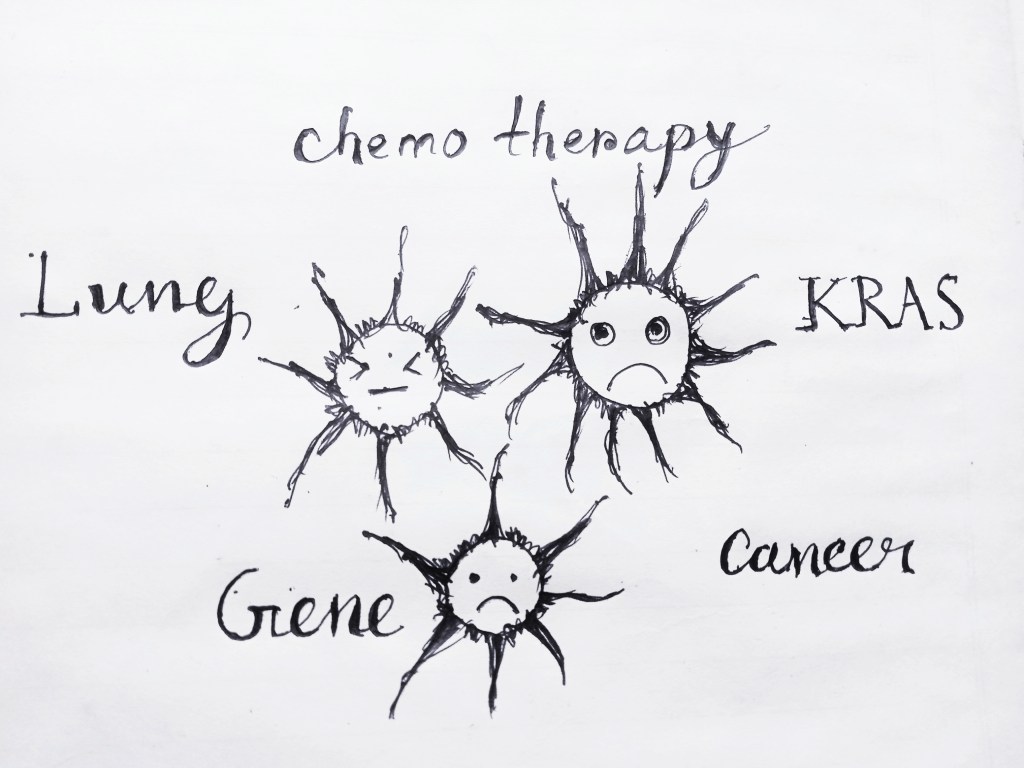
U.S. food and administration has approved this drug for small cell lung cancer, which will be sold under the brand name Lumakras. Patients having small cell lung cancers with the KRAS mutation, non-small lung cancer with KRASG12C mutation, and some colorectal and other type of cancers will be benefitted via this; because chemotherapy and other medicines didn’t show expected results in treating these.

 The company officials assured that the drug can have U.S. list price of $17,900 per month

.

|Ways of acquiring Mate|

How does one gets married? Normally people get married by publishing matrimonial ads in newspapers, online sites, or with the help of relatives who acts as mediators. This was about the modern industrial society, but the tribal society is unique, so their ways of getting married are also unique. Tribes have nine different ways of acquiring a mate.

In this article, I will show the different ways of acquiring a mate prevalent in tribal society.

Marriage by capture– When a man snatches away a woman from her village and marries her, it is called marriage by capture. This form of marriage is most popular among the Naga who invade villages and capture girls. 

Marriage by exchange- Under this marriage, two households exchange women with each other and thus avoid paying the bride price. Bride price is the payment made by the groom’s side to the bride’s side to marry her. This form of marriage is found all over India and is also found among the non-tribals.

Marriage by purchase- In this form of marriage bride price is the central theme. Among the Munda, Ho, Santhal it is the most prevalent. The high bride price has the worst consequences as is seen in the case of the Ho tribe of Chotanagpur where to escape the bride price many youth resorts to marriage by capture or remain unmarried.

Marriage by elopement- It is a peculiar feature of tribal India. Anthropologists believe this kind of marriage has emerged as a result of boys and girls shedding their traditional submissiveness. If the parents’ consent is not forthcoming, they resort to elopement and get married.

Marriage by service- In this form of marriage the groom serves in the house of the bride as suitor-servant and marries her after a lapse of few years. they have to work in the bride’s household for three years and have to fulfill all the responsibilities of a son. This form of marriage is a way to avoid payment of bride price completely or minimizing it through service rendered by the prospective groom at the bride’s residence. For example, marriage by service is found among the Gond Baiga, Birhor.

Marriage by intrusion- Here a girl desirous of marrying an unwilling young man thrust herself on the groom and his parents. She tries to serve her prospective in-laws and can be tortured in return. If she persists in her intentions and her endurance lasts for a considerable period she is finally accepted as a daughter-in-law.

Marriage by trial- In this form of marriage, the prospective groom has to prove his prowess before he can claim the desired girl. Thus he is required to undergo a trial.It is most popular among Bhils. During Holi festival, young men and women perform a folk dance known as ‘gol gadhedo’ around a pole or a tree to the top of which there is a coconut and jaggery tied. The girls make a ring around the tree and the boy to marry the girl has to break the ring and eat the coconut and jaggery after climbing the tree. In all this, he is beaten up, and inspite of all this if he succeeds he gets the right to demand any girl from the group as his wife.

Marriage by mutual consent- In this formalities of marriage are arranged by parties concerned through the process of mutual consent and consultation. This practice is result of tribal contacts with Hindus, Christians, etc.

Marriage by probation-  Under this the prospective husband and wife are expected to live together for some time for marriage in the bride’s house. If they like each other and willing to marry, elders arrange their marriage.Otherwise, the man has to pay compensation to the girl’s parents. This form of marriage can be called a primitive version of the modern practice of courtship. It is prevalent among Kuki tribes of Andhra Pradesh.

Hence this was the nine different ways of acquiring mate found among the tribals. These kind of marriages is in contrast to the marriages in mainstream society. These interesting ways of getting married make the tribes even more unique.

MAHATMA GANDHI – Mohandas Karamchand Gandhi

MAHATMA GANDHI (1869)Mohandas Karamchand Gandhi (2 October 1869- 30th January 1948), Popularly known as MAHATMa Gandhi or Bapu (Father of Nation ),he was the pre-eminent leader of Indian nationalism in British -ruled India . Employing non-violent Civil disobedience, Gandhi led India to independence and inspired movements of non-violence ,civil rights and freedom across the world. He is known in India as the Father of Nation ;his birthday, 2 October, is celebrated as Gandhi Jayanthi, a National holiday and world -wide as the international Day of Non-violence .world-wide Gandhi’s philosophy was not theoretical but of pragmatism. Asked to give messages to the people, he responded, “My life is my messages “.Civil rights movements in South Africa (1893-1914)Gandhi was 24 when he arrived in South Africa to work as a legal representative for the Muslim Indian Traders based in the city of Pretoria.He spent 21 years in south Africa, where he developed his political view,ethics and political leadership skills. In South Africa, Gandhi faced the discrimination directed at all coloured people. Heels thrown off a train at Pietermaritzburg after refusing to move from the first -class though he had a first-class ticket.Struggle for Indian Independence (1915-47)In 1915,Gandhi returned to India permanently . He attained an international reputation as leafing Indian nationalist ,theorist and organizer . He joined the Indian National congress and was introduced to Indian issues, politics and the Indian people primarily by Gopala Krishna Gokhale. Gokhale was a key leader of the Congress Party best known for his restraint and moderation,and his insistence on working inside the system .Gandhi took Gokhale’s liberal approach based on British Whiggish tradition and transformed it to make it look wholly Indian.Champaran and khedaGandhi’s first major achievements came in 1918 with the Champaran and Kheda agitations of Bihar and Gujarat. The Champaran agitation pitted the local peasantry against their largely British landlords who were backed by the local administration. The peasantry was forced to grow Indigo, a cash crop whose demand had been declining over two decades, and were forced to sell their crops to the planters at a fixed priceKhilafat movementsIn 1919 Gandhi ,with his weak position in congress, decided to broaden his base by increasing his appeal to Muslims. The opportunity came from the khilafat movement, a worldwide protest by Muslims against the collapsing status of the caliph,the leader of their religion. His success made him India’s first national leader with a multicultural base and facilitated his rise to power within congress,which had previously been unable to reach many Muslims. In 1920 Gandhi became a major leader in congress. Gandhi always fought against “communalism “,which pitted Muslims against Hindus in politics, but he could not reverse the rapid growth of communication after 1922.Salt Satyagraha(Salt March)Gandhi stayed out of active politics and,as such,the limelight for most of the 1920s. He focused instead on resolving the wedge between the swaraj party and the Indian National Congress, and expanding initiatives against untouchability , alcoholism,ignorance and poverty. He returned to the fore in 1928.In the preceding year, the British government had appointed a new constitutional reform commission under sir John Simon, which did not include any Indian as its member. Gandhi then launched a new Satyagraha against the tax on slat in March 1930.This was highlighted by famous Salt March to Dandi.Quit Undia MovementQuit India became the most forceful movement in the history of struggle,with mass arrests and violence on an unprecedented scale. In 1942 although stillb committed in hid efforts to “launch a non-violent movement “,Gandhi clarified that the movement would not be stopped by individual act of violence, saying that the ” ordered anarchy ” of “the present system of administration ” was “worse than real anarchy “.He called on all congressmen and Indians to maintain discipline via ahimsa,and Karo ya maro (“Do or die”) in the cause of ultimate freedomNon-violenceGandhi explains his philosophy and way of life in his autobiography “The story of My Experiments with Truth “.Literary worksGandhi was a prolific writer. One of Gandhi’s earliest publications, Hind Swaraj,Published language; Indian Opinion while in South America and, Young India, in English, and Navajivan ,a Gujarati monthly, on his returns to India. Later,Nakajima was also published in hindi. In addition, he wrote letters almost every day to individuals and newspapers. Gandhi also wrote several books including his autobiography, “The Story of My Experiments with Truth “.Rabindranath Tagore is said to have accorded the title ” Mahatma” to Gandhi.World Farm Animals DayGandhi’s birthday is chosen as a commemoration for the billions of non-human animals that are slaughtered by the human farming industry each year. The practice started in 1983.AssassinationOn 30 January 1948,just five months of coyntry’s Independence, the Mahatma was on his way to his usual prayer meeting in the Birla Mandir in the capital city. His smiling face revealed only a divine serenity. Suddenly a middle-aged man named Nathuran Godse entered his path and directly facing him fired three shots point and blank at the 79 year old disarmed leader. Dignitaries Jawaharlal Nehru declared: “The lights has gone out of our lives”. It is nearly six decades that Gandhiji departed from us,but Gandism is still very much alive and kicking in the national psyche of India.Current impact within IndiaGandhi’s birthday, 2 October, is National holiday in India, Gandhi’s date of death death,30 January, is commemorated as a Martyrs’ Day in India. There are two temples in India dedicated to Gandhi,One is located sambalpur in orissa and the other at Nidaghatta village nera kadur in chikmangalur district of Karnataka. The Gandhi Memorial in Kanyakumari resembles central Indian Hindu temples and the Tamukkan or Summer palace in Madurai now houses the Mahatma Gandhi Museum.MAHATMA GANDHI (1869)Mohandas Karamchand Gandhi (2 October 1869- 30th January 1948), Popularly known as MAHATMa Gandhi or Bapu (Father of Nation ),he was the pre-eminent leader of Indian nationalism in British -ruled India . Employing non-violent Civil disobedience, Gandhi led India to independence and inspired movements of non-violence ,civil rights and freedom across the world. He is known in India as the Father of Nation ;his birthday, 2 October, is celebrated as Gandhi Jayanthi, a National holiday and world -wide as the international Day of Non-violence .world-wide Gandhi’s philosophy was not theoretical but of pragmatism. Asked to give messages to the people, he responded, “My life is my messages “.Civil rights movements in South Africa (1893-1914)Gandhi was 24 when he arrived in South Africa to work as a legal representative for the Muslim Indian Traders based in the city of Pretoria.He spent 21 years in south Africa, where he developed his political view,ethics and political leadership skills. In South Africa, Gandhi faced the discrimination directed at all coloured people. Heels thrown off a train at Pietermaritzburg after refusing to move from the first -class though he had a first-class ticket.Struggle for Indian Independence (1915-47)In 1915,Gandhi returned to India permanently . He attained an international reputation as leafing Indian nationalist ,theorist and organizer . He joined the Indian National congress and was introduced to Indian issues, politics and the Indian people primarily by Gopala Krishna Gokhale. Gokhale was a key leader of the Congress Party best known for his restraint and moderation,and his insistence on working inside the system .Gandhi took Gokhale’s liberal approach based on British Whiggish tradition and transformed it to make it look wholly Indian.Champaran and khedaGandhi’s first major achievements came in 1918 with the Champaran and Kheda agitations of Bihar and Gujarat. The Champaran agitation pitted the local peasantry against their largely British landlords who were backed by the local administration. The peasantry was forced to grow Indigo, a cash crop whose demand had been declining over two decades, and were forced to sell their crops to the planters at a fixed priceKhilafat movementsIn 1919 Gandhi ,with his weak position in congress, decided to broaden his base by increasing his appeal to Muslims. The opportunity came from the khilafat movement, a worldwide protest by Muslims against the collapsing status of the caliph,the leader of their religion. His success made him India’s first national leader with a multicultural base and facilitated his rise to power within congress,which had previously been unable to reach many Muslims. In 1920 Gandhi became a major leader in congress. Gandhi always fought against “communalism “,which pitted Muslims against Hindus in politics, but he could not reverse the rapid growth of communication after 1922.Salt Satyagraha(Salt March)Gandhi stayed out of active politics and,as such,the limelight for most of the 1920s. He focused instead on resolving the wedge between the swaraj party and the Indian National Congress, and expanding initiatives against untouchability , alcoholism,ignorance and poverty. He returned to the fore in 1928.In the preceding year, the British government had appointed a new constitutional reform commission under sir John Simon, which did not include any Indian as its member. Gandhi then launched a new Satyagraha against the tax on slat in March 1930.This was highlighted by famous Salt March to Dandi.Quit Undia MovementQuit India became the most forceful movement in the history of struggle,with mass arrests and violence on an unprecedented scale. In 1942 although stillb committed in hid efforts to “launch a non-violent movement “,Gandhi clarified that the movement would not be stopped by individual act of violence, saying that the ” ordered anarchy ” of “the present system of administration ” was “worse than real anarchy “.He called on all congressmen and Indians to maintain discipline via ahimsa,and Karo ya maro (“Do or die”) in the cause of ultimate freedomNon-violenceGandhi explains his philosophy and way of life in his autobiography “The story of My Experiments with Truth “.Literary worksGandhi was a prolific writer. One of Gandhi’s earliest publications, Hind Swaraj,Published language; Indian Opinion while in South America and, Young India, in English, and Navajivan ,a Gujarati monthly, on his returns to India. Later,Nakajima was also published in hindi. In addition, he wrote letters almost every day to individuals and newspapers. Gandhi also wrote several books including his autobiography, “The Story of My Experiments with Truth “.Rabindranath Tagore is said to have accorded the title ” Mahatma” to Gandhi.World Farm Animals DayGandhi’s birthday is chosen as a commemoration for the billions of non-human animals that are slaughtered by the human farming industry each year. The practice started in 1983.AssassinationOn 30 January 1948,just five months of coyntry’s Independence, the Mahatma was on his way to his usual prayer meeting in the Birla Mandir in the capital city. His smiling face revealed only a divine serenity. Suddenly a middle-aged man named Nathuran Godse entered his path and directly facing him fired three shots point and blank at the 79 year old disarmed leader. Dignitaries Jawaharlal Nehru declared: “The lights has gone out of our lives”. It is nearly six decades that Gandhiji departed from us,but Gandism is still very much alive and kicking in the national psyche of India.Current impact within IndiaGandhi’s birthday, 2 October, is National holiday in India, Gandhi’s date of death death,30 January, is commemorated as a Martyrs’ Day in India. There are two temples in India dedicated to Gandhi,One is located sambalpur in orissa and the other at Nidaghatta village nera kadur in chikmangalur district of Karnataka. The Gandhi Memorial in Kanyakumari resembles central Indian Hindu temples and the Tamukkan or Summer palace in Madurai now houses the Mahatma Gandhi Museum.