Journey of the Flying Sikh

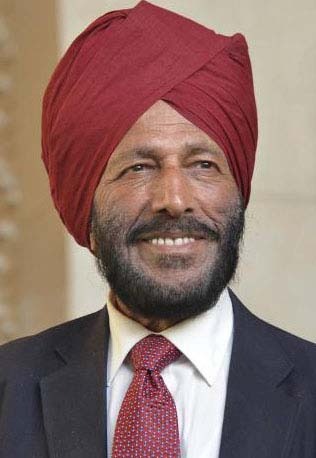
Flying Sikh Milkha Singh dies of Covid

Overview and Early Life 

Milkha Singh, a legend in the history of Sports and Athletics was an Indian track and field sprinter born on 20th November, 1929. He was born in a Sikh family in Govindpura, a village 10 km from Muzaffargarh city in Punjab Province. He had 14 other siblings, eight of them died during the partition of India. Milkha was orphaned during the partition, when his parents were killed by a Muslim mobs in violence. He witnessed the killings. 

After seeing the deadly situation in Punjab, he decided to escape and came to Delhi, India in 1947 and lived with the family of his married sister for a short period of time. He was imprisoned in Tihar Jail for travelling in Train without ticket. His sister, Ishvar helped him in getting released. He spent his further some time at Refugee Camp , at Purana Quila and at a resettlement colony in Shahdara, both in Delhi.  

Milkha was discontented with his life and decided to become a dacoit, but was instead persuaded by his brother, Malkhan, to attempt to the recruitment to the Indian Army. He successfully gained entrance on his fourth attempt, in 1951, and while stationed at the Electrical Mechanical Engineering Centre in Secunderbad he was introduced to athletics. He had run the 10 km distance to and from school as a child and was selected by the army for special training in athletics after finishing sixth in a compulsory cross-country run for new recruits.  Singh has acknowledged how the army introduced him to sport, saying that “I came from a remote village, I didn’t know what running was, or the Olympics”.  

International Career      

He was introduced to athletics and sports when he was recruited in Indian Army, at the Electrical Mechanical Engineering Centre in Secundarbad. He represented India in the 200 and 400 m competitions held in Olympics at Melbourne in 1956. In 1958, Singh set records for the 200m and 400m in the National Games of India, held at Cuttack,  and also won gold medals in the same events at the Asian Games. He then won a gold medal in the 400m (440 yards at this time) competition at the 1958 British Empire and Commonwealth Games  with a time of 46.6 seconds. This latter achievement made him the first gold medalist at the Commonwealth Games from independent India. Before Vikas Gowda won the gold in 2014, Milkha was the only Indian male to have won an individual athletics gold medal at those Games. 

Jawaharlal Nehru tried to convince Milkha Singh to set aside his memories of his past during the Partition era, to focus on the to race successfully in 1960 against Abdul Khaliq in Pakistan, where a post-race comment by the then General Ayub Khan led to him acquiring the nickname of The Flying Sikh. At the 1962 Asian Games, held in Jakarta, Singh won gold in the 400m and in the 4 x 400m relay. He attended the 1964 Olympic Games in Tokyo, where he was entered to compete in the 400m, the 4 x 100m relay  and the 4 x 400m relay. He did not take part in either the 400m or the 4 x 100m relay and the Indian team of Milkha Singh, Makhan Singh, Amrit Pal and Ajmer Singh were eliminated when they finished fourth in the heat stages of the 4 x 400m. 

There have been claims that Singh won 77 of his 80 races, but these are spurious. The number of races in which he participated is not verified, nor is the number of victories, but he lost a 400m race at the 1964 National Games in Calcutta to Makhan Singh and he did not finish first in any of his four races at the 1960 Olympic Games or the aforementioned qualification races at the 1956 Olympics. 

Singh’s time in the 1960 Olympics 400m final, which was run on a cinder track, set a national record that stood until 1998 when Paramjit Singh exceeded it on a synthetic track and with fully automatic timing that recorded 45.70 seconds. Although Singh’s Olympic result of 45.6 seconds had been hand-timed, an electronic system at those Games had determined his record to be 45.73. 

Later Life  

Milkha was promoted from the rank of sepoy to junior commissioned officer in recognition of his successes in the 1958 Asian Games.  He subsequently became Director of Sports in Punjab Ministry of Education, a post he retired from in 1998. 

Milkha was awarded the Padma Shri, India’s fourth-highest civilian award, following his success in 1958. In 2001, he turned down an offer of the Arjuna Award from the Indian government, arguing that it was intended to recognize young sports people and not those such as him. He also thought that the Award was being inappropriately given to people who had little notable involvement as active sports people at all. He said that “I have been clubbed with sportspersons who are nowhere near the level that I had achieved” and that the award had become devalued. While sharing his wealth of experience in a college in Goa on 25 August 2014, he also said, “The awards nowadays are distributed like ‘prasad’ in a temple. Why should one be honored when he or she has not achieved the benchmark for the award? I rejected the Arjuna I was offered after I received the Padma Shri. It was like being offered an SSC [secondary school] certificate after securing a Masters degree.” 

All of Singh’s medals have been donated to the nation. They were displayed at the Jawaharlal Nehru Stadium in New Delhi and later moved to a sports museum in Patiala, where a pair of running shoes that he wore in Rome are also displayed. In 2012, he donated the Adidas shoes that he had worn in the 1960 400m final to be sold in a charity auction organized by actor Rahul Bose. 

Milkha was admitted to the intensive care unit at Fortis Hospital in Mohali on 24 May 2021 with pneumonia caused by COVID-19. His condition was, for a while, described as stable, but he died on 18 June 2021 at 11:30 PM IST. His wife, Nirmal Kaur, had died a few days earlier on 13 June 2021, also due to COVID-19.  

Introduce Yourself (Example Post)

Are you confused?
Every morning waking up and not being able to pull up the socks that you planned the night before and leaving you behind with disappointment? Are you thinking it’s that only me doing so? Questions questions and questions but no clue of answers. This is a mere task of controlling your mind. All you have to do is not look at the clock so to pass the time that you’ve set prior to be in your study table but to complete it before time.
Confusion will be a part but should be the last thought before you go to bed.

tonmoyeesaikia047733's avatarSite Title

This is an example post, originally published as part of Blogging University. Enroll in one of our ten programs, and start your blog right.

You’re going to publish a post today. Don’t worry about how your blog looks. Don’t worry if you haven’t given it a name yet, or you’re feeling overwhelmed. Just click the “New Post” button, and tell us why you’re here.

Why do this?

  • Because it gives new readers context. What are you about? Why should they read your blog?
  • Because it will help you focus your own ideas about your blog and what you’d like to do with it.

The post can be short or long, a personal intro to your life or a bloggy mission statement, a manifesto for the future or a simple outline of your the types of things you hope to publish.

To help you get started, here are a few…

View original post 210 more words

Test Championship Final (Day-1)

Southampton 18-06-2021

India vs New Zealand: Play was called off on Day 1 due to rain without a ball being bowled in Southampton.

The opening day of the WTC Final was called off because of inclement weather without a single ball being bowled. 
The toss was delayed as rain held firm since the beginning, with the players turning into spectators till late in the evening. 
As the day progressed, rain stopped and players stepped out to take a stroll and observe the situation, which didn’t improve much.
Finally, BCCI confirmed via tweet that Day 1 would be called off. BlackCaps revealed that 98 overs would be bowled on Day 2.
Hopefully we’ll have some cricket under our belt.

CHILD MARRIAGE

INTRODUCTION

Child marriage usually refers to a social phenomena practised in some societies in India , where a young child (usually a girl below the age of fifteen) is married to an adult man. A second form of practice of child marriage is that in which the parents of the two children (the girl and boy) arrange a future marriage. In this practice, the individuals (the boy and girl) do not meet one another until they reach the marriageable age, when the wedding ceremony is performed. As per law, the marriageable age is 21 for males and 18 for females. However, if any partner(s) engages in marriage at a younger age, (s)he can ask for the marriage to be declared void / annulled.

REASONS FOR CHILD MARRIAGE

Poverty

Low level of education of girls

Lower status given to the girls and considering them as financial burden

Social customs and traditions

EFFECTS OF CHILD MARRIAGE

Girls who get married at an early age are often more susceptible to the health risks associated with early sexual initiation and childbearing, including HIV and obstetric fistula. Young girls who lack status, power and maturity are often subjected to domestic violence, sexual abuse and social isolation. Early marriage almost always deprives girls of their education or meaningful work, which contributes to persistent poverty. Child Marriage perpetuates an unrelenting cycle of gender inequality, sickness and poverty. Getting the girls married at an early age when they are not physically mature, leads to highest rates of maternal and child mortality

GOVERNMENT AND NGO INITIATIVES

Framing laws against child marriages

Increasing access to girls education

Changing harmful cultural norms

Supporting community programs

Maximizing foreign assistance

Providing young women with economic opportunities

Addressing the unique needs of child brides

Evaluating programs to determine what works

CHILD MARRIAGE ACT

CHILD MARRIAGE ACT, 2006

Child marriage has been an issue in India for a long time. Because of its root in traditional, cultural and religious practises it has been a hard battle to fight. Child marriage is also associated with other problems like dowry and child widowhood. It is also associated with malnutrition, poor health of mothers and high fertility and hence over-population. The following is an overview of the act.

According to the act a child is a male who has not completed twenty one years of age and a female who has not completed eighteen years of age. Child marriage is a contract between any two people of which either one or both parties is a child. Child marriage that took place before or after this act can be made void by the person who was a child at the time of marriage. But the marriage must be voided before the person who was a child completes their second year of maturity.A court can decree that if it is the husband that is asking for a void of marriage then he or his family are responsible to pay for the maintenance of the girl until she is remarried. The amount of maintenance is to be determined by the district court. If there were any children born of the marriage, it is the court’s discretion as to where the child shall reside, with which parent, and how visits will be organised all in the best interest of the child. The court may also decide for one of the parties to provide maintenance for the child. Every child conceived before the voiding of the marriage is considered a legitimate child.

If a male adult above eighteen years contracts a child marriage shall be punishable unto two years imprisonment and/or a fine with may extend to Rs. 1 lakh. The same punishment will be given to person who performs, conducts or directs a child marriage. Unless proved otherwise, the parents or guardian of the child are considered to have failed to prevent the child marriage and hence are also held accountable.

There are certain situations in which a child marriage is deemed void even without a petition from one of the parties. If a child was detained away from her/his parents or guardians, forced to go to a different place, sold into marriage, or made to marry after which they are used for immoral purposes or trafficked then that marriage is considered to be null and void. The court has the power after the application of an officer or any person to issue an injunction prohibiting a suspected child marriage against any person, including a member of an organisation or an association of people. The court may also act against a suspected child marriage on its own motion but must provide the person/association with time to respond to the injunction. Ignoring a notice or injunction is a punishable offence. If the marriage is still carried out after the injunction, it is automatically voided.

The act calls for the instatement of a Child Marriage Prohibition Officer, who is responsible for ensuring no child marriage takes place in their jurisdiction by approaching the courts for an injunction, collecting evidence against people, creating awareness about the negative effects of child marriage, collect data concerning child marriages, etc. A child marriage prohibition officer is deemed a public servant in this act. Rules of this act are to be made by the respective state governments. The act calls for the Hindu Marriage Act, 1955 to be amended to meet its provisions as well as the repeal of The Child Marriage Restraint Act, 1929.

Writing Fails!

“Writing is powerful, but it can also be terrifying.”

  • Writer’s Doubt, The Book

Writing can be complex if not done in a particular fashion or without a set of rules. Not only writing, but also all other tasks follow a pattern which we are expected to follow, in order to be more efficient. Let us know some ‘Writing Fails’ through a step by step approach.

Writing Too Much!

Sometimes, we lose balance and exceed the word count just because we suddenly feel the need to say it all. But we must remember that maintaining the word count and explaining your point in fewer words is what we call creativity.

Giving Too Many Descriptions!

When writing, sometimes we tend to give too much description to a particular facet of the story which makes reading a boring task. We must remember to provide short and elaborate description that is relevant to the context instead of allotting an entire page for the description of a single object.

Providing Too Many Supporting Characters!

While writing, we tend to come up with too many supporting characters because we feel the need to introduce the relatives and the close ones of the protagonist in the story. But that only ends up making the story boring. Imagine having to introduce each and every member of the household and remembering each and every name! Grrrhh. You are sure to mess up!

Writing Without Understanding The Topic Fully!

A common mistake that comes with a simple solution. Only choose topics that you are acquainted with, instead of going for alien topics. However, if you do wish to go for such topics then it is advisable to go for appropriate research and read more and more, because when you read, can you write. ‘Books are our best friends’. They won’t judge us on the basis of our incomplete knowledge. So, don’t hesitate to open your friend at least once before beginning to write. Know your topic fully!

Compromising On The ‘Creativity’ Factor!

Sometimes, writers tend to just provide messages simply without incorporating any form of creativity. I do understand that according to them, it is good for readers to grasp the concept faster. However, some amount of creativity in the content is always welcome. Using some interactive, humorous, innovative, and indirect way of explaining the concept will glue the readers more to your content instead of simple imparting. In short, the message conveyed here is to incorporate creativity in your ‘content’ even if the topic is ‘straightforward’. That is what is termed as Talent, isn’t it?

Writing Anything!

Another mistake in the list that needs to be amended. Yes! You are allowed to write anything but there are certain limits to that as well. You are not permitted to write vulgar or aberrant content that could arouse the mob. You are not permitted to write on highly controversial topics or criticize any important leader or an organization through your content (unless you yourself are a public figure). Thus, you must select only relevant topics which you feel would leave an ‘impact’ and not those which could leave ‘aggression’. It is good to not select topics that are highly subjective because humans carry differing perspectives which could perhaps clash or collide in the future. Topics or genres should pertain to universal acceptance. Fiction is a great example for widely accepted genre. You could try your hands on that.

Writing Once In A Month!

Another grave mistake that reduces your efficiency in the task. Some people state that they are out of time and thus, are unable to write. I do understand that managing the daily chores and schedules is a tough job but then if, after a month or so, you decide to write a book, then sorry fellas! You can’t be efficient in that. You need to practice daily in order to open the windows of your mind to creative imagination. Not writing for an entire month and then suddenly claiming to write a book in the next, isn’t actually right because then it will be difficult to maintain a word count and lengthy manuscripts would seem a hard task to write! So, one must write frequently!

Thus, I would conclude stating that writing needs to follow a set of rules in order to make it escalate at a higher level of creativity and imagination. Now that you know some of the writing fails, vow to never repeat them, get your pen and notebook out and start writing as soon as possible!

Thank You For Reading!

NATURAL CALAMITIES

INTRODUCTION

A Natural disaster is an unforeseen occurrence of an event that causes harm to society. There are many Natural disasters that damage the environment and the people living in it. Some of them are earthquakes, cyclones, floods, Tsunami, landslides, volcanic eruption, and avalanches. Spatial extent measures the degree or severity of the disaster.

CAUSES OF NATURAL CALAMITIES

The disasters are different according to their occurrence. For example, the causes of an earthquake cannot be the same as that of forest-fire. Natural disasters are caused due to different reasons like soil erosion, seismic activity, tectonic movements, air pressure, and ocean currents etc.Natural activities taking place in the earth’s crust, as well as surface, are the main reasons for these disasters. Flooding and erosion can occur are really prone to the areas where mining, deforestation, and manufacturing have taken place.

LEVELS OF DISASTER

The severity or degree of damage can be further divided into three categories:

Small Scale Disasters: Small scale disasters are those that extend from 50 Kms. to 100 Kms. So this kind of disasters does not cause much damage.

Medium-scale disasters: Medium Scale disasters extend from 100 Kms to 500 Kms. These cause more damage than a small scale disaster. Moreover, they can cause greater damage if they occur in colonial states.

Large Scale Disasters: These disasters cover an area of more than 1000 Kms. These cause the most severe damage to the environment. Furthermore, these disasters can even take over a country if the degree is high. For instance, the wiping out of the dinosaurs was because of a large scale natural disaster.

TYPES OF DISASTER

Earthquake: An earthquake is the shaking or vibrating of the earth. An earthquake can range in sizes. As a result, some are so weak that they go unnoticed. But some are so strong that they can even destroy the whole city. Earthquakes can cause disruption of ground. Moreover, the can also cause landslides, avalanches, and Tsunami. However, the center of an earthquake falls mostly offshore.

Landslides: Landslides is the moving of big boulders of rocks or debris down a slope. As a result, landslides occur on mountains and hilly areas. Moreover, landslides can cause destruction to man-made things in many ways.

Avalanches: Avalanches are like landslides. But instead of rocks thousand tons of snow falls down the slope. Moreover, this causes extreme damage to anything that comes in its way. People who live in snowy mountains always have fear of it.

Tsunami: Tsunami is the production of very high waves in oceans and seas. Moreover, the displacement of the ground causes these high waves. A tsunami can cause floods if it occurs near shores. A Tsunami can consist of multiple waves. Moreover, these waves have a high current. Therefore it can reach coastlines within minutes. The main threat of a tsunami is if a person sees a Tsunami he cannot outrun it.

PREVENTION OF NATURAL CALAMITIES

The best that we can do is to stop the practices that are harmful to our environment and leading to environmental degradation and at the same time, we should also be prepared for a disaster with our disaster management plan. It is also required to dispose of the dead animals as well human bodies properly before an epidemic outbreak. Our environment should be saved from pollution. Stop burning plastics and save the earth. Stop cutting trees. The risk factors for increased infectious diseases transmission and outbreaks are mainly associated with the after-effects of the disasters

THE INHUMAN SATI SYSTEM

INTRODUCTION

The ancient Hindu tradition called sati, wherein a widow would throw herself on her husband’s pyre and burn to death, was initially a voluntary act considered courageous and heroic, but it later became a forced practice. Although sati is now banned all over India, it has a dark history.

MEANING OF SATI

“Sati” originally meant a woman who performed the act of immolating herself after her husband’s death. The word is derived from the Sanskrit word “asti’, which means “She is pure or true”.

In mythological terms, Sati was the name of the wife of Lord Shiva. Her father never respected Shiva and often despised him. To protest against the hatred that her father held for her husband, she burned herself. While she was burning, she prayed to be reborn as Shiva’s wife again. This did happen, and her new incarnation was called Parvati. People used to justify the practice based on this tale, but when Sati burned herself, she wasn’t a widow, and thus the practice is quite unrelated to this tale.

FROM VOLUNTARY TO FORCED

According to ancient Hindu customs, sati symbolised closure to a marriage. It was a voluntary act in which, as a sign of being a dutiful wife, a woman followed her husband to the afterlife. It was, therefore, considered to be the greatest form of devotion of a wife towards her dead husband.

With time, it became a forced practice. Women who did not wish to die like this were forced to do so in different ways. Traditionally, a widow had no role to play in society and was considered a burden. So, if a woman had no surviving children who could support her, she was pressurised to accept sati.

HISTORY OF SATI

Historical records tell us that sati first appeared between 320CE to 550CE, during the rule of Gupta Empire. Incidents of sati were first recorded in Nepal in 464CE, and later on in Madhya Pradesh in 510CE. The practice then spread to Rajasthan, where most number of sati cases happened over the centuries.Initially, the practice of sati was confined to royal families of the Kshatriya caste and only later spread to the lower castes, becoming widely practised among all social classes. Sati was at its peak between the 15th and 18th centuries. During this period, as many as 1000 widows were burned alive every year, most commonly in India and Nepal. However, records show that the practice was also popular in other traditions and in countries like Russia, Fiji and Vietnam.

SOCIETAL EXCEPTIONS TO SATI

There were, however, certain rules that exempted some women from this practice. The first sati rule stated that any widow who was pregnant, menstruating or had very young children, couldn’t partake in this ritual.

Women who committed sati were said to have died chaste, which, people believed, meant she would have good karma and a much better life in her next birth. But this justification didn’t work for Brahmin women as they already belonged to the highest caste, so karmically they couldn’t benefit from sati and thus did not have to practise it.

SATI HANDPRINTS AND SATI STONES

Sati was frequently practised in Rajasthan, more specifically by the women of royal families. A sati stone was created, which was a memorial of all the wives of the kings who died this way. Before giving up their lives, the queens left their handprints on the wall, to be remembered as valiant and devotional wives. Some of these handprints can still be found inside the Mehrangarh Fort.

DIFFERENT VERSION OF SATI- JAUHAR

Rajputs from Rajasthan and Madhya Pradesh practiced Jauhar. This was collective suicide by the widows of the royal families who preferred dying, rather than being captured, raped and disgraced by soldiers who defeated their kings in the wars. This practice grew in the 14th and 15th centuries, when the Hindu-Muslim wars were at their peak in northwest India. To commit Jauhar, special flammable rooms were built inside the forts out of lacquer and other combustible materials. The practice of Jauhar has been well depicted in the Bollywood movie Padmavat.

PROHIBITION OF SATI

If historical facts are to be believed, the practice of sati was prohibited many times between 15th and 18th centuries. In 1582, Mughal Emperor Akbar outlawed sati, and in 1663, Aurangzeb tried to end it again. Even the Portuguese, French and British, who came to India during the European colonial period, tried to stop sati. In 1850, the British hardened their rules against the practice. Sir Charles Napier ordered to hang to death any Hindu priest who presided over a widow burning. The princely states of India during that time were also pressurised to rule out sati completely. Raja Ram Mohan Roy was one of the key reformers who opposed the practice.

PREVENTION OF SATI ACT (1987)

In 1987, in the village of Deorala in Rajasthan, an 18-year-old married woman named Roop Kanwar was forced to become sati when her husband died after eight months of marriage. She refused. Consequently, a group of men from the village forcefully drugged and immolated her. Police investigated the case and those men were arrested. In light of this incident, the government created the Prevention of Sati Act, making it illegal to force or encourage a woman to commit sati, and anyone doing so would be punished by death. And yet, some widows still choose to become sati – at least four such cases were recorded between 2000 and 2015.

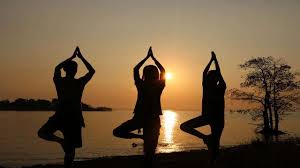
International yoga day

Yoga is a physical, mental, and spiritual discipline that originated in India. Yoga is a Sanskrit word that refers to connect or merge, and it represents the integration of body and consciousness. Yoga is a priceless gift from our old tradition. Yoga represents the union of mind and body, thought and action. a holistic approach that is beneficial to our health and well-being. Yoga is more than simply exercise; it is a means of discovering a sense of oneness with yourself, the world, and nature. It is now performed in various forms all around the world and is growing in popularity. Recognizing its universal reach, the United Nations declared 21 June as International Day of Yoga by resolution 69/131 on 11 December 2014. The International Day of Yoga strives to enhance global awareness of the numerous advantages of practicing yoga. India proposed the draught resolution creating the International Day of Yoga, which was approved by a record 175 member countries. Prime Minister Narendra Modi initially mentioned the notion in his speech at the start of the 69th session of the General Assembly.

THEME– The theme for International Yoga Day 2021 is “Yoga for Wellbeing”. The Day will be observed at a time when the COVID-19 pandemic is still wreaking havoc on people’s lives and livelihoods around the world. Beyond its immediate impact on physical health, the COVID-19 pandemic has intensified psychological distress and mental health problems, such as sadness and anxiety, in many countries, since pandemic-related restrictions remain in various forms. This has underlined the critical necessity to treat the pandemic’s mental health dimension in addition to the physical health issues. Yoga’s message of fostering both physical and emotional well-being has never been more relevant. During the pandemic, there has been an increasing trend of people over the world embracing Yoga to keep fit and revitalized, as well as to combat social isolation and depression. Yoga is also being used to help COVID-19 patients in quarantine and isolation with their psychosocial treatment and recovery. It is especially beneficial in calming their concerns and anxiety. Recognizing the importance of Yoga, this year’s International Day of Yoga observance focuses on “Yoga for well-being” – how the practice of Yoga can support the holistic health of every individual.

BENEFITS Yoga has been shown in studies to help with stress relief as well as blood pressure regulation. Individuals suffering from despair and anxiety can benefit from performing it every day. Some yoga asanas that can aid with stress and tension relief are savasana, seated forward twist, staying forward curves, and side stretches. When it comes to increasing your immunity, the simplest strategy is frequently the most successful. Sukhasana — a traditional meditation stance that allows your body to relax and breathe deeply. Furthermore, it can aid in the reduction of stress hormones and the maintenance of a healthy heart rate, which results in a strong immune system that protects the body from a variety of health disorders. Some yoga poses, such as plank pose, headstands, handstands, and side planks, might help enhance your body’s overall ability to work more efficiently daily. Some yoga asanas, such as Surya Namaskar, warrior position, plank posture, and others, are helpful and can help you lose weight if done regularly. Yoga, in addition to enhancing your physical health, can help you improve your mental health and sharpen your mind. It also helps your ability to concentrate. As a result, frequent yoga practice leads to enhanced mood, less depression, higher self-esteem, self-acceptance, and a positive outlook on life.

EXAMINATION

INTRODUCTION

Examination is a test of a person’s capacity, knowledge, and ability. It proves what standard of learning a person has acquired during a specific period of time in a specific syllabus. It is the most hated and most shunned things for some students who never like to indulge in it with pleasure until they have a charm of acquiring a degree. Otherwise, they compare it with a nightmare.

EDUCATION SYSTEM AND EXAMS

The system of education of mostly examination ridden which aims at the test of achievement and success. The examination is the center of studies and hard work. It is a motivating force to work.

Its importance and efficacy have been called in question. The most important point is that examinations are not the real test of knowledge and understanding. They are the test of ignorance or cramming. Still, we can say that examinations are necessary evil which cannot be avoided.

USES OF EXAMINATION

1) Difference between genius and dunce

Examinations have many uses. They help us find the most efficient individual among many. we can distinguish between the scholar and the dullard, the genius and the dunce. In this way, they help us discriminate between the genuine gold and the sparkling brass.

2)Compel to work hard

Secondly, the examinations compel us to work hard. the careless students become serious near the examinations. They buy books they had no intention to buy and gird up their loins.It is a fact that many students read for the sake of examinations. Thus, examinations are a very effective way of goading students to read.

3)Fitness for promotion to a higher grade/class

Thirdly, examinations are proof and guarantee of man’s efficiency. They provide us a proof of the fitness of the student for promotion to a higher grade/class. An employer can safely entrust a job to the degree holder. Without a degree, no one will higher his services. The factories, industries or mills cannot allow the person to perform a technical task without a specific degree/course.

4)Way to attain degrees / diplomas

Similarly, we do not ask everyone to prescribe medicine for us. Only the person holding a degree enjoys the right to operate upon our body. Hence, if we abolish examinations, we shall have to abolish degrees or diplomas.

ABUSES OF EXAMINATION

Examinations have certain abuses as well. Many students consider it a curse. They consider them to be a game of chance. The students are never sure of their success. There are always doubts in their minds. Success does not depend upon preparation. Even a student with selected studies may pass and the student with thorough preparation may fail.

1)Uncertainty of success

Some students keep studying the whole session but fail. On the other hand, many others who buy help books and cheap notes near the examinations and cram a few questions, pass. Such examinations are a curse for the shining students.

2)Test of memory

The examinations are a test of nerves. All examinations have a limit of time and place. A student is tested at a bad place and in a bad manner. The question arises how a student’s hard work and worth for a semester or full one year is judged in a short time. They are never a foolproof test of one’s ability. They are the test of one’s memory and writing/typing speed.

3)Use of unfair means

Some students try to use unfair means to pass out the examinations. The innocent, hardworking and intelligent remain in the background.

CONCLUSION

But in spite of all this, we cannot say that there should be no examinations. There must be some proper way of judging the real worth of the students. So proper changes are required to avoid the abuses and increase the usefulness of the examinations. The assessment criteria of the examinations must be improved in such a way that all the students can show their abilities and can pass them without any fear.

PUNCTUALITY

INTRODUCTION

Punctuality refers to the habit of a human being completing their tasks on time. We can say that punctuality is a great habit which surely results in success. All the leaders have punctuality in common as the habit is such. In other words, when you are on time, you will maintain the discipline and order in your life. It will, in turn, help you achieve your goals faster within a set time period.

Moreover, it also makes you a man of habit. This creates a very good impression in front of others. Punctuality is an etiquette which encourages us to complete our work in a timely fashion. It also makes us realize the importance of time. A person who is punctual will always know how to respect their time and others as well.

IMPORTANCE OF PUNCTUALITY

Punctuality is of great importance, it is truly underestimated and must be given utmost importance. When a person becomes punctual, everything else falls into place. You get discipline in life and also earn the respect of the others.

Subsequently, a punctual person works on time without any hindrance. The people who are employed in armies and navies are given rigorous training to become disciplined and punctual. They pay no heed to any circumstances be it rain or thunder, they care about their punctuality.

Furthermore, punctuality pushes the person to achieve success at faster rates than others. We must develop this quality in children from an early age which will make it easy for everyone to lead a better life. When a person is punctual, they get utmost respect and admiration by society and reach greater heights than an unpunctual person.

DOOR TO SUCCESS

It is evident that Punctuality is one of the key aspects to attain success in life. One who understands and values time can easily become a Punctual individual and in lieu become successful. It helps one to understand the value of time. And as we all know time is the most precious thing in our life. Time once lost, can never come back. We cannot make and get back to the lost time. It is the habit of punctuality which makes us understand and learns us to respect the value of Time. Becoming a successful person in life implies achieving ones’ goals in time with proper planning and dedication, which can again only be attained by being punctual in life. Knowing the value of time-aware an individual to utilize the time in the best way. And to utilize time in the best way is the definition of being punctual.

PUNCTUALITY IN STUDENT’S LIFE

For a student, punctuality is the stepping stone towards discipline and being sincere. It is utmost important for a student to be punctual to attain success during his/her school life. It is the base on which the student’s life during school and afterward shapes up. A student being punctual is considered having one of the noblest virtue. It helps them to cultivate the habit of completing their tasks in due time. Punctuality proves the great saying, “A stitch in time, saves nine” meaning completing ones’ task in due time and avoiding troublesome.

It is the virtue of punctuality which makes the students more discipline and responsibility. A sense of responsibility is attained by the virtue of punctuality. Being punctual a student can always be at the right time whether be it in school, in the lab, in class, at home, in the examination hall, at the playground, etc. The teachers and parents of other students highly appreciate the students who are punctual.

ADVANTAGE OF PUNCTUALITY

Punctuality leads to a happy mind. It is a key to happiness and having a healthy mind. Therefore, any person having this quality would always feel comfortable while doing his/her work. He/She wakes up early in the morning and always feel energetic to do more tasks. Punctuality brings positivity in our mind and heart. One is clear about his/her thoughts, plan and activities, which is also an essential element to move forward in life.

CONCLUSION

Punctuality is not being practiced only by human beings but also the nature around us. Every day, the sun rises in the morning, sets in the evening. After the day, comes the night. Each of the seasons follows their timeline. All these natural phenomena encourage us to be punctual in our life to attain a goal and have a peaceful mind. Thus, Punctuality is the essence of life. It is very important for us to develop such quality from a very young age and lead ourselves and our country to a greater high. The rate of growth of the Human Development Index is bettered in a country where everyone knows and understands the value of time by being punctual. It ultimately helps in the growth of the country. Therefore, punctuality is not only a key to success for an individual but also for the entire community, nation, globe.

Relevance of non-alignment movement (nam) in 21st century

In the contemporary international circumstances non-alignment or to put it more precisely its
role and usefulness in general has become a highly controversial issue, certainly more so than
earlier. Thus, the movement is passing through a critical period in its life. It finds itself today
at the crossroad and seems to be finding it difficult to comprehend the path it has to rake. It is
trying to find its identity, reorient its perception and endeavor to determine the role it has
to play in the changed context of international relations. This has resulted in a heated debate
about the validity and contemporary relevance of NAM and non-alignment as foreign policy
behavior in this post cold war “unipolar world”.
According to the critics, NAM is no longer relevant because of the changed international
environment. It is engaged that the policy of Non-alignment had some utility in the period of
cold war bipolarity, because it was child of cold war in the reaction of certain countries to the
cold war. The two main contenders for political ascendancy had almost reached the point of
extermination. It was the desire to preserve independence as distinct from merely formal
sovereignty, which led some nation to resist absorption into one or the other power blocks.
Presently the international system is no longer bipolar and the cold war is over, so what is its
relevance today is a great question.
In spite all the above statements regarding its irrelevance, the relevance of NAM in
international affairs is unquestionable. As a matter of fact, the policy of Non-Alignment was
not wholly related to a bipolar world and the cold war between the two super powers and the
block they lead. It just happened that the Non-Alignment flowered in the immediate post-world
war. Therefore, whatever the world is bi-polar or multipolar or unipolar, non-alignment as a
foreign policy choice option of the small Third World countries will remain valid. In other
words the policy will last as long as the sovereign nation system last.
The declaration of the Jakarta Summit conference 1992 assured, NAM has contributed to the
ending of bipolar in the world and to the elimination of the cold war. These new developments
have in fact fully vindicated the validity and relevance of Non-Alignment. They affirmed NAM’s
role is ensuring” its full participation in the building of the new world order”. No wonder,
then that the membership of the NAM has more than quadrupled from about 25 states in 1961 to
120 today.
The relevance of NAM continues as it looks after the interest of all Third World countries for
which the movement was created. The beginning of the Non-Alignment can be traced to
Afro-Asian resurgence as a reaction against European colonial systems and prior to that in the
struggle of underdeveloped countries against the hegemony of great European powers since the
birth of nation state system. Just when these countries begin to gain independence, they found
themselves in bipolar worlds. Seeking membership of either block meant compromised on
newly owned freedom by sovereign states, as well as an increased in international tensions,
which is turned threatened the prospects of development- socio-economic and political.
Although the term Third World has lost currency since the 1970s when other terms, such as
‘underdeveloped countries’, ‘developing countries’, and ‘South’ or ‘Global South’, became more
widely used, revisiting the term conveys a sense of the conceptual foundations on which non￾alignment rests.
As Nehru’s brainchild, in essence non-alignment means the pursuit of equality in world
affairs through pooling the diplomatic resources of Third World states in international
forums. Equality should here be understood in political-economic terms.NAM was a front of
political solidarity by supporting liberation struggles and making abstinence from military
pacts or alliances a criterion of membership.
Nevertheless, NAM together with the Group of 77 (G77–largely made up of NAM members)
succeeded to keep Third World issues on the agenda in most UN forums and agencies due to
their numerical strength. In the UN Educational, Scientific and Cultural Organisation
(UNESCO), NAM and the G77 promoted the New World Information and Communication
Order (NWICO) to rectify the perceived imbalances in information and communication
flows between the North and the South.
The end of the cold war has ended a period of strategic confrontations but an era of stable
global peace is yet to be created. In fact the cold war is dead but not the regional conflicts and
crises. The East-West conflict has dissolved but intense economic and technological
competition is emerging among several strong nations. The Non-Alignment countries have to
learn to maneuver among them and to successfully face the menace of new colonialism that is
sought to be imposed through various WTO rounds. Thus, the NAM continues to be
relevant so long as there is exploitation, war, hunger, poverty and disease on the earth.
The uniqueness of NAM lies in the fact that its goals do not merely serve the national interest of
member state but it stand to promote the cause humanity. They are universalistic in nature. It
would not be an exaggeration to say that recent positive developments on international scene
reflect the spirit of NAM.
NAM is progressively putting more emphasis on economic independence. The Non￾Alignment nations have been demanding for a legitimate share in world trades. The determination of the quality and quantity of foreign aid from developed to developing countries is also task for the Non-Alignment nation. Economic cooperation between developed and developing states forms part of the threefold strategy advocated by the NAM. These stands are:
reliance on their resources, promotion of cooperation among non-alignment states
themselves, fostering cooperation with the advanced states, with the subjects of promoting
self reliance as would restrict exploitation and contribute towards resolution of the problems of
world economy as a whole.
The fundamental concern of NAM has always been with global question of decolonization and
consolidation of freedom, disarmament and development of economies through mutual
cooperation as well as through a more equitable and just new international economic order. All
these are interrelated and to make the package of peace and prosperity for humanity.
Perhaps the most important role for NAM today lies in framing a concrete economic agenda
for a just and fair international economic order. The globalization and liberalization trends
worldwide have generated complex economic problems. The rich-poor divide has widened. The
WTO rules and procedures have failed to provide adequate economic gains to the Third World.
WTO summits have failed to reach a consensus on many issues. Its role in WTO negotiations to
advance and protect the trading rights and opportunities of developing countries and in muscling
up their negotiating position and skills would be the chief concerns. It should strive to reform
and reorient the globalization process through a strong developmental agenda. NAM has an
effective role to play in this regard provided member countries try to see the benefits from a
unified angle without any partisan considerations.
In 2007, Rejecting the US contention that Non-Aligned Movement has “lost its meaning”,
India quickly asserted that its relevance continues in promoting democratization of the
international system and New Delhi was committed to its ideals. External Affairs Ministry said
India’s “firm and abiding commitment” to non-alignment could not be questioned. “The Non￾Aligned Movement played a significant role in ending apartheid and colonialism. Today, itsrelevance continues in promoting South-South cooperation and democratization of the international system.
NAM must play the positive role in making the globalization inclusive and must strive to
achieve a faire, just international economic order.

CASTE SYSTEM OF INDIA

India’s caste system is among the world’s oldest forms of surviving social stratification. The BBC explains its complexities. The system which divides Hindus into rigid hierarchical groups based on their karma (work) and dharma (the Hindi word for religion, but here it means duty) is generally accepted to be more than 3,000 years old.

ORIGIN OF CASTE SYSTEM

Manusmriti is widely regarded to be the most important and authoritative book on Hindu law and dating back to at least 1,000 years before Christ was born, “acknowledges and justifies the caste system as the basis of order and regularity of society”. The caste system divides Hindus into four main categories – Brahmins, Kshatriyas, Vaishyas and the Shudras. Many believe that the groups originated from Brahma, the Hindu God of creation.

At the top of the hierarchy were the Brahmins who were mainly teachers and intellectuals and are believed to have come from Brahma’s head. Then came the Kshatriyas, or the warriors and rulers, supposedly from his arms. The third slot went to the Vaishyas, or the traders, who were created from his thighs. At the bottom of the heap were the Shudras, who came from Brahma’s feet and did all the menial jobs.

The main castes were further divided into about 3,000 castes and 25,000 sub-castes, each based on their specific occupation. Outside of this Hindu caste system were the achhoots – the Dalits or the untouchables.

WORKING OF CASTE SYSTEM

For centuries, caste has dictated almost every aspect of Hindu religious and social life, with each group occupying a specific place in this complex hierarchy. Rural communities have long been arranged on the basis of castes – the upper and lower castes almost always lived in segregated colonies, the water wells were not shared, Brahmins would not accept food or drink from the Shudras, and one could marry only within one’s caste.

The system bestowed many privileges on the upper castes while sanctioning repression of the lower castes by privileged groups. Often criticised for being unjust and regressive, it remained virtually unchanged for centuries, trapping people into fixed social orders from which it was impossible to escape. Despite the obstacles, however, some Dalits and other low-caste Indians, such as BR Ambedkar who authored the Indian constitution, and KR Narayanan who became the nation’s first Dalit president, have risen to hold prestigious positions in the country.

Historians, though, say that until the 18th Century, the formal distinctions of caste were of limited importance to Indians, social identities were much more flexible and people could move easily from one caste to another. New research shows that hard boundaries were set by British colonial rulers who made caste India’s defining social feature when they used censuses to simplify the system, primarily to create a single society with a common law that could be easily governed.

EVIL FACES OF THIS SYSTEM

UNTOUCHABILITY

Many villages are separated by caste and they may not cross the line dividing them from the higher castes. They also may not use the same wells or drink in the same tea stalls as higher castes.

DISCRIMINATION

They often do not have the facility to electricity, sanitation facilities or water pumps in lower caste neighbourhoods. Access to better education, housing and medical facilities than that of the higher castes is denied.

DIVISION OF LABOUR

They are restricted to certain occupations like sanitation work, plantation work, leather works, cleaning streets, etc.

SLAVERY

They are subjected to exploitation in the name of debt, tradition, etc., to work as labourers or perform menial tasks for generations together.

GOVERNMENT INITIATIVES

The Indian Government has enacted laws to remove untouchability and has also brought in many reforms to improve the quality of life for the weaker sections of society. Few among them are: Constitutionally guaranteed fundamental human rights

Abolition of ‘ untouchability’ in 1950

Scheduled Caste and Scheduled Tribe (Prevention of Atrocities) Act, 1989

Provision of reservation in places like educational institutions, for employment opportunities etc.

Establishing social welfare departments and national commissions for the welfare of scheduled castes and tribes

These measures adopted by the government have brought some relief to the weaker sections of society. The urban areas have shown good amount of impact and some improvement. However, people in rural areas and villages still face extreme discrimination. We indeed have a long way to go in achieving the objectives set to eradicate and abolish discrimination, on the basis of caste and creed. It now depends on our efforts and a change in our mindset is sure to see a perpetual change, bringing about equality for all.

CASTE POLITICS

Many political parties in India have indulged in caste-based votebank politics. Parties such as Bahujan Samaj Party (BSP), the Samajwadi Party and the Janata Dal claim that they are representing the backward castes, and rely on OBC support, often in alliance with Dalit and Muslim support, to win elections.

Sustainable development and its pillars

Sustainable development is development that meets the needs of the present without compromising the ability of future generations to meet their own needs….The concept of sustainable development was introduced in early 1980’s (in particular through the publication of the World Conservation Strategy by IUCN, UNEP and WWF, 1980), in order to reconcile conservation and development objectives.

Sustainable development consists of a long-term, integrated approach to developing and achieving a healthy community by jointly addressing economic, environmental, and social issues, whilst avoiding the over consumption of key natural resources.

The 3 pillars of sustainable development is
Social development, economic development,environmental protection.

Economic Development
It requires that a business or country uses its resources efficiently and responsibly so that it can operate in a sustainable manner to consistently produce an operational profit.

Social Sustainability Social sustainability is the ability of society, or any social system, to persistently achieve a good social well being. Achieving social sustainability ensures that the social well being of a country, an organisation, or a community can be maintained in the long term.

Environmental Sustainability Environmental sustainability means that we are living within the means of our natural resources.To live in true environmental sustainability, we need to ensure that we are consuming our natural resources, such as materials, energy fuels, land, water…etc, at a sustainable rate. Some resources are more abundant than others and therefore we need to consider material scarcity, the damage to environment from extraction of these materials and if the resource can be kept within Circular Economy principles.

Music: what’s your thing?

Allegory of Music, by François Boucher, 1764

Music is the art of arranging sounds in time to produce a composition through the elements of melody, harmony, rhythm, and timbre. It is one of the universal cultural aspects of all human societies. General definitions of music include common elements such as pitch (which governs melody and harmony), rhythm (and its associated concepts tempo, meter, and articulation), dynamics (loudness and softness), and the sonic qualities of timbre and texture (which are sometimes termed the “color” of a musical sound). Different styles or types of music may emphasize, de-emphasize or omit some of these elements.

Okay! So in simple words music gives us a thrilling experience, it lowers down our stress and gives us a reliefable experience. Many of us might have different-different artists. Different types, different tastes, but I love all the types of music. Depending upon the mood but you know we all have a phase where we do need a motivational song, Which motivates us, which gives us a idea that where we are and where do we have to go. Sometimes we need a song which make us feel good after a breakthrough it might be when you fought with your best friend may be your partner may be your siblings your parents, from those who mean alot to you.

And there are a lot of types of music it may be:

1. EDMs.

2. Motivational songs.

3. Romantic songs.

4. A breakthrough song.

5. Rock music.

6. A whole mood song. Which gives you a thrill and makes your legs move. That song will let you dance. It happened with me I was once travelling in the metro and I was using my earbuds and suddenly that song came and I was like ‘yea it’s a whole vibe’.

And etc etc there are many types of songs but yes for sure it depends upon our mood

So my moto to write an article on this topic was that if you’re angry sit alone listen to music if you’re happy listen to the music if you can’t handle things listen to the music if you’re in a phase you can’t tell anyone please listen to the music. It just lower down the stress and music is the only thing you’ll listen to at that time this is my experience.

Ordinance Making Power of the President

One of the important provisions in the Constitution of India is regarding the ordinance making power of the executive. The nature of the Indian Constitution can be called exhaustive citing the example of the above provision. The President is the Head of the State acting on the advice of the Council of Ministers. He can exercise the executive powers allotted to him either himself or through subordinates. The legislative power to promulgate ordinances is granted to the President under Article 123. The Indian Constitution clearly differentiates the powers and functions of the Parliament and the State Legislatures, providing no room for each to encroach upon the powers and functions of the other, in accordance with the theory of separation of power. To achieve the separation of power, the government is divided into three branches, namely The Legislative, The Executive, and The Judiciary. The powers and functions of these organs are sufficiently differentiated. The motive is to ensure a fair democracy through checks and balances.   

     The President is empowered to pass ordinances when the circumstances make it necessary. It is passed by the President to deal with emergency situations or unforeseen circumstances. These have the same legal status as that of laws passed by the Parliament. This power helps the government in urgent times. For example, the recent   Epidemic Act 1897 (Amendment) Act Ordinance, 2020. Any attack or abetment of violence against healthcare workers was made an offence. This paper explores the nature of ordinance making power, whether it is subject to judicial review, its usage over the years, its limitations and trends in promulgation of ordinances. This paper aims to critically analyse the power of ordinance promulgation granted to the executive by the Constitution.

Ordinance Making Power of the President

The ordinance making power of the President is explained under Article 123. Though India follows the theory of separation of powers and powers and functions are sufficiently differentiated, it is not incorporated in its strictest sense. The ordinance making power can be seen as an overlapping of executive and legislative. Article 123 explains the ordinance making power as follows:

(1) If at any time, except when both Houses of Parliament are in session, the President is satisfied that circumstances exist which render it necessary for him to take immediate action, he may promulgate such Ordinance as the circumstances appear to him to require

(2) An Ordinance promulgated under this article shall have the same force and effect as an Act of Parliament, but every such Ordinance

(a) shall be laid before both House of Parliament and shall cease to operate at the expiration of six weeks from the reassemble of Parliament, or, if before the expiration of that period resolutions disapproving it are passed by both Houses, upon the passing of the second of those resolutions; and

(b) may be withdrawn at any time by the President Explanation Where the Houses of Parliament are summoned to reassemble on different dates, the period of six weeks shall be reckoned from the later of those dates for the purposes of this clause

(3) If and so far as an Ordinance under this article makes any provision which Parliament would not under this Constitution be competent to enact, it shall be void.

This allows the President to promulgate ordinances during an emergency when the Parliament is not in session. The President can pass ordinances if one house is not in session. The nature of the ordinances is temporary. These ordinances have the legal force similar to any law passed by the legislation. Similarly, the Governor of an Indian state is empowered to pass laws under Article 213. Article 213 deals with the law making powers of the Governor of a state. These laws can be promulgated only when the legislative assembly is not in session and are temporary in nature. In the cases of states following bicameral form of legislature, the Governor can pass an ordinance if any one house is not in session. According to the Constitution, the ordinance may have a retrospective effect and may be passed to repeal other acts and ordinances. This power, however, cannot be used to amend the Constitution. This granting of legislative power was seen as a necessity during the drafting of the Constitution and the opinion is shared by many other experts and jurists. The ordinance making power of the President was justified by Dr. Ambedkar in the constituent assembly. 

“It is not difficult to imagine cases where the powers conferred by the ordinary law existing at any particular moment may be deficient to deal with a situation which may suddenly and immediately arise, what is the executive to do. The executive has got a new situation arisen, which it must deal with. Ex hypothesi it has not got the power to deal with that in the existing code of law. The emergency must be dealt with and it seems to me that the only solution is to confer upon the President the power to promulgate a law which will enable the executive to deal with that particular situation because it cannot resort to the ordinary process of law because, again ex hypothesi , the legislature is not in session. Therefore it seems to me that fundamentally there is no objection to the provisions contained in article 102.” 

To this, B. N. Rau observed that:

“The ordinance-making power has been the subject of greater criticism under the present Constitution. It must, however, be pointed out that the circumstances may exist where the immediate promulgation of a law is absolutely necessary and there is no time in which to summon the Union Parliament. . . .The President who is elected by the two Houses of Parliament and who was normally to act on the advice of ministers responsible to Parliament is not at all likely to abuse any ordinance-making power with which he may be invested.”

The article concerning ordinance making power drew inspiration from the previous The Government of India Act, 1935. Another appropriate could not be thought of at that time.

The Government of India Act, 1935 had two provisions dealing with the ordinance making power of the Governor General. According to Section 42 of this act, the Governor General had the power to introduce ordinances when the legislature was not in function. The Governor General could promulgate ordinances on his own or by following the advice of the ministers. The consultation with ministers was mandatory. According to Section 43 of this act, the Governor General could issue ordinances to carry out his functions or under the act which required him to act in his discretion. This can be seen as a parallel legislative power with a lifespan of only six months. The lifespan could be extended with the consent of the Crown. This act was also a source for the ordinance making power provided in the Indian constitution. In India, this provision has been met with mixed response. While some have supported the power citing emergency as a reason, others opposing the provision have reasoned that the power is undemocratic and an encroachment upon the legislative. 

The power vested in the executive is not without limitations. The president is empowered to pass legislation only in certain scenarios. He can pass legislations only when the Parliament is not in session. He can pass legislations even if one house is not in session. The President is allowed to legislation only when situation demands immediate action. Another necessary element, according to the Constitution, is that the President should be satisfied as to the circumstances that necessitate action. The legislation thus passed has to be approved within the prescribed time limit of six weeks after the reassembling of the Houses of the Parliament.