King\'s College London


Research grants in environmental studies vary widely in terms of scope, focus areas, and funding amounts. While it’s difficult to definitively list the “top ten” grants due to their diversity and changing nature, here are ten notable grants that have historically supported environmental research:
National Science Foundation (NSF) – Environmental Research and Education: NSF offers various grants supporting environmental research, covering areas like sustainability, climate change, biodiversity, and more. Their programs often focus on interdisciplinary approaches and collaborations.
National Institutes of Health (NIH) – Environmental Health Sciences: NIH funds research focusing on the impacts of environmental factors on human health, including air and water quality, exposure to pollutants, and related health risks.
Environmental Protection Agency (EPA) Grants: The EPA provides grants for research on environmental issues such as pollution prevention, ecological conservation, environmental justice, and sustainable practices.
National Geographic Society Grants: National Geographic supports research through various grants aimed at conservation, exploration, and understanding the interconnectedness of human and natural systems.
The Nature Conservancy Grants: This organization offers grants to support research and conservation efforts focused on protecting ecosystems, wildlife, and promoting sustainable land and water use.
The World Wildlife Fund (WWF) Grants: WWF provides grants for scientific research that contributes to conservation efforts, biodiversity protection, and sustainable development.
Smithsonian Tropical Research Institute (STRI) Grants: Focused on tropical ecosystems, STRI offers research grants for studying biodiversity, climate change impacts, and ecosystem dynamics in tropical regions.
The Gordon and Betty Moore Foundation Environmental Conservation Grants: This foundation funds research in environmental conservation, with a focus on promoting sustainability and supporting innovative approaches.
The David and Lucile Packard Foundation Grants: Packard Foundation supports research and initiatives aimed at sustainable ocean and land use, biodiversity conservation, and mitigating climate change impacts.
The European Commission Horizon Europe Grants: Horizon Europe provides funding for various research projects, including those addressing environmental challenges such as climate change, renewable energy, and sustainable resource management.
Funding opportunities are made available through the Collaborative Research Programme (CRP) – ICGEB Research Grants, which is a dedicated source of funding aimed at financing projects addressing original scientific problems of particular relevance for the host country and of regional interest.
Established in 1988, the programme aims to stimulate collaborative research in Member States and with the ICGEB Component laboratories, to promote training of young scientists and to facilitate the creation of appropriate research facilities. The programme provides support for research projects in basic science, human healthcare, industrial and agricultural biotechnology and bioenergy. A call for applications is launched yearly.
We are pleased to confirm that over 510 applications from across 44 Member States have been received under the 2021 call for Grants.
Grants are awarded to contribute to the implementation of outstanding scientific research projects. An important element of successful applications is the feasibility of the proposed project within the designated time-frame (maximum 36 months). The maximum annual contribution from ICGEB is Euro 25,000.
Funds can only be used to cover expenditures that are directly relevant to the project. This may include purchasing consumable items, scientific literature and basic standard laboratory equipment. Travel and training costs can also be covered.
Salaries of the Principal Investigators and infrastructural support (e.g., normal administrative and overhead expenses of the Institution, maintenance and rental of capital equipment, building, etc.) are not admissible and cannot be funded.
To read about the kind of ground-breaking research on infectious diseases, cancer, metabolic and genetic diseases, plant science, immunity, genetics and many biotechnology applications that are being supported by ICGEB
Applicants for research grant proposals (identified as “CRPs”) should hold positions at Universities or Research Institutes in any of the ICGEB Member States.
International collaboration is an essential feature of all ICGEB grants and must be fully integrated into the project. Active collaboration with ICGEB Research Groups is welcome but not mandatory. Particular attention will be given to projects addressing issues of interest for specific geographic regions and presented by groups collaborating across more than one country.
Investigating groups do not qualify for submission of applications:if previously awarded projects have not been evaluated and satisfactorily concluded;
if the University or Research Institute of the Principal Investigator is based in Italy.
A special category of CRP-ICGEB Early Career Return Grants is intended to fund young researchers with an outstanding track record, who have spent a minimum of 2 years abroad and have recently returned to an ICGEB Member State to establish their own independent laboratories.
Applicants for Early Career Return Grants should be no more than 40 years of age at the time of application.
Applicants should have returned to an ICGEB Member State (except Italy) no more than 2 years prior to submitting the application.
Thanks to a contribution of the Italian Agency for Development Cooperation (AICS) within the framework of the BIOTECHNET initiative (AID n. 12098), dedicated resources are available for candidates from Ethiopia and Djibouti applying to the CRP–Research Grants Call for proposals.
These grants often support a wide range of research, including fieldwork, data analysis, policy development, and community engagement. Researchers in environmental studies can explore these opportunities to advance knowledge and contribute to addressing pressing environmental challenges.
20 diverse research grants available across various fields:
These grants cater to diverse research interests, providing opportunities for scientists, scholars, and innovators worldwide to pursue impactful projects in their respective fields.
You can also refer to Research Grants
Are you interested in conducting research in Germany or pursuing a research career in Germany? Here you will find information about where you can conduct research and work in Germany, as well as the various opportunities science and research can offer in Germany. Support ranges from funding for conferences to language programs in Germany.

The German Academic Exchange Service, known as DAAD (Deutscher Akademischer Austauschdienst), offers an array of research grants for PhD students and postdoctoral researchers from around the world. These grants provide financial support, allowing recipients to pursue research opportunities at universities, research institutions, or other academic organizations in Germany.
DAAD’s research grants play a vital role in fostering international collaboration, supporting academic exchange, and promoting innovative research endeavors. They contribute significantly to the development of global academic networks and the advancement of knowledge across various fields of study. Prospective applicants should regularly check DAAD’s official website for updated information regarding available programs, eligibility criteria, and application deadlines.
Click on the links below to see what opportunities may be relevant for you.

©
GO ABROAD
There are several different Research Grants available ranging from short time periods to several years. If you would like to pursue research in the field of German Studies, you may want to consider looking into our German Studies Research Grant.

©
DISCOVER ABROAD
DAAD has partnered with other research institutes in order to offer you a breadth of research opportunities in various fields. Take a look at the offers below to find just the right fit for you.

©
GAIN EXPERIENCE ABROAD
You can gain practical research or work experience by doing an internship in Germany. From research in academia to internships at German companies – the choice is yours.

©
LANGUAGE ABROAD
The best way to learn German is to spend time in Germany. Take a look at the grant opportunities below to further your studies of the German language.
The National Institutes of Health (NIH) stands as a cornerstone of biomedical and health-related research, driving innovation and scientific breakthroughs. At its core, NIH functions as the primary agency of the United States government, dedicated to advancing knowledge about health and disease. Among its myriad initiatives, the NIH offers grants that serve as lifeblood for researchers, funding groundbreaking studies across diverse scientific domains. These grants provide not only financial support but also an invaluable endorsement and recognition that catapults research endeavors forward.

The NIH grants cater to a wide spectrum of research areas, covering everything from basic science to clinical trials, public health interventions, and translational research. This expansive reach ensures that investigations into fundamental biological processes, disease mechanisms, therapeutics, and population health are consistently supported and propelled forward.
The significance of NIH grants lies not just in the financial backing they offer, but also in the stamp of credibility they confer upon researchers and their work. The NIH grant review process is rigorous, emphasizing scientific merit, innovation, and potential impact. Successful applicants gain more than just financial resources; they also receive validation and recognition within the scientific community, paving the way for future collaborations and opportunities.
Securing an NIH grant, however, is no easy feat. The process demands meticulous planning, a well-crafted proposal, and a clear understanding of NIH guidelines and priorities. Here are key steps to navigate the NIH grant application process:
The National Institutes of Health is the largest public funder of biomedical research in the world. In fiscal year 2022, NIH invested most of its $45 billion appropriations in research seeking to enhance life, and to reduce illness and disability. NIH-funded research has led to breakthroughs and new treatments helping people live longer, healthier lives, and building the research foundation that drives discovery.

NIH’s central resource for grants and funding information.

NIH offers funding for many types of grants, contracts, and even programs that help repay loans for researchers.

Grant applications and associated documents (e.g., reference letters) are due by 5:00 PM local time of application organization on the specified due date.

Instructions for submitting a grant application to NIH and other Public Health Service agencies.

An orientation to NIH funding, grant programs, how the grants process works, and how to apply.

By accepting a grant award, recipients agree to comply with the requirements in the NIH Grants Policy Statement unless the notice of award states otherwise.

News, updates, and blog posts on NIH extramural grant policies, processes, events, and resources.

Explore opportunities at NIH for research and development contract funding.

The NIH Loan Repayment Programs repay up to $50,000 annually of a researcher’s qualified educational debt in return for a commitment to engage in NIH mission-relevant research.
Send paper for publication to editor@pen2print.org
.contact-form-widget{margin-left:auto;margin-right:auto;width:600px;max-width:100%;padding:0}hr{position:relative;height:.75em;border:0;overflow:hidden;margin:0}hr:before{content:””;display:block;position:absolute;top:0;left:0;height:.75em;width:5.1em;background:#C4DD83;box-shadow:5em 0 0 0 #F4FCC9,10em 0 0 0 #FDCD78,15em 0 0 0 #ED786F,20em 0 0 0 #D99DBF,25em 0 0 0 #C39EDC,30em 0 0 0 #679DE2,35em 0 0 0 #62C2E3,40em 0 0 0 #F4FCC9,45em 0 0 0 #FDCD78,50em 0 0 0 #ED786F,55em 0 0 0 #D99DBF,60em 0 0 0 #C39EDC}.contactf-name,.contactf-email{float:left;width:49.25%}.contactf-name{margin-right:1.5%}.contact-form-name,.contact-form-email,.contact-form-email-message,.contact-form-name:hover,.contact-form-name:focus,.contact-form-email:hover,.contact-form-email:focus,.contact-form-email-message:hover,.contact-form-email-message:focus{width:100%;max-width:100%;margin:25px 0 0;padding:10px;font-size:15px;color:#ccc;border-color:#E8E8E8;border-width:2px 2px 4px;-webkit-box-shadow:none;-moz-box-shadow:none;box-shadow:none}.contact-form-name,.contact-form-email{height:40px}.contact-form-email-message{height:100px}.contact-form-button-submit,.contact-form-button-submit:hover{margin-top:25px;width:100%;height:40px;font-size:15px;color:#fff;text-align:center;text-shadow:0 1px 2px rgba(0,0,0,0.25);background:#EE786F;border:0;border-bottom:2px solid #D4685C;outline:none;cursor:pointer;-webkit-box-shadow:inset 0 -2px #D4685C;box-shadow:inset 0 -2px #D4685C}.contact-form-button-submit:active{top:1px;outline:none;-webkit-box-shadow:none;box-shadow:none}.contact-form-cross{border:medium none !important;box-shadow:none !important;padding:0 !important;height:11px !important;width:11px !important;}
Edupedia Publications Pvt Ltd provide its members and associates to get book published at subsidised rate. One free book publication is allowed with this membership. Get membership from below link.
It sounds like you’re interested in discounted book publication memberships. EduPub publishing platform and organizations that offer memberships or programs with discounts for authors.
LINK to GET One Book Published Each Yaar with This Membership Plan.
After taking membership, send a mail to editor@pen2print.org for book publication.
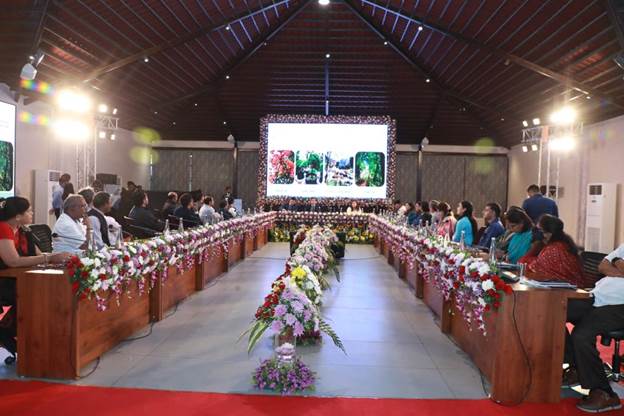
Ministry of Tourism organized a two-day National Conference on Adventure Tourism at Ekta Nagar, Gujarat with the theme ‘Viksit Bharat@2047: Making India a Global Adventure Tourism Hub’. The aim of the conference was to provide a platform to deliberate and devise strategies and initiatives to make India a Global Adventure Tourism Hub.

On the second day of the National Conference of State Tourism Secretaries, the Ministry of Tourism focused on Destination Planning, Development and Management. The Government of Gujarat made a detailed presentation on the Statue of Unity as a tourist destination, its evolution, master plan, destination development and management authority and way forward.
The Ministry of Tourism shared the ongoing exercise of preparing destination master plans and development under Swadesh Darshan 2.0.

The Ministry also discussed progress on engagement with the States on Incredible India Portal, Meet in India campaign, Wed in India campaign, Travel for LiFE program and Best Rural Tourism Village and Homestay competition.
The States were requested to work closely with the Ministry of Tourism on these initiatives which will help holistic and sustainable development of the tourism sector in the States.
The States were also encouraged to participate in various national competitions launched by the Ministry, which will help discover best practices in the country in various areas and their subsequent replication.
***
Pradhan Mantri Gram Sadak Yojana (PMGSY-I) is a one-time special intervention of Government of India to provide rural connectivity by way of a single all-weather road, to the eligible unconnected habitations in the core network.
Subsequently, new intervention/verticals namely PMGSY-II, Road Connectivity Project for Left Wing Extremism Areas (RCPLWEA) and PMGSY-III were added under the ambit of PMGSY for upgradation of rural roads, construction of strategically important roads in LWE Areas and for consolidation of 1,25,000 Km Through Routes and Major Rural Links connecting habitations, inter-alia, to Gramin Agricultural Markets (GrAMs), Higher Secondary Schools and Hospitals.
Under PMGSY-I, 99.38% of the eligible habitations have been provided all-weather road connectivity.
Under PMGSY-II, against the target of 50,000 km, 49,857 km has been sanctioned and 48,691 km has been completed.
Under RCPLWEA, 12,100 km has been sanctioned and 8,290 km has been completed.
Under PMGSY-III, against the target of 1,25,000 km, 1,07,454 km has been sanctioned and 69,507 km has been completed.
Since inception till 13.12.2023, 1,86,541 roads of 8,14,522 Km road length and 11,587 bridges have been sanctioned at the value of projects of Rs. 3,76,472.36 crore, out of which 1,77,628 roads of 7,49,363 Km road length and 8,435 bridges have been completed at an investment of Rs. 3,12,986.17 crore (including State Share).
The Mission Amrit Sarovar was launched on 24th April 2022, with an objective to conserve water for the future. The Mission aimed at developing / rejuvenating 75 Amrit Sarovars (Pond) in each district of the Country, totaling about 50,000 Amrit Sarovars in the country. Amrit Sarovar has been a visible manifestation of the actions during Azadi ka Amrit Mahotsav.
As on 15.12.2023, a total number of 68,521 Amrit Sarovar have been constructed. State/UT-wise details of constructed Amrit Sarovar are given below:
|
State/UT-wise details of constructed Amrit Sarovars (as on 15.12.2023) |
||
|
SI. No. |
State/ UT |
Constructed Amrit Sarovar |
|
1 |
Andhra Pradesh |
2196 |
|
2 |
Arunachal Pradesh |
2044 |
|
3 |
Assam |
2836 |
|
4 |
Bihar |
2717 |
|
5 |
Chhattisgarh |
2916 |
|
6 |
Goa |
165 |
|
7 |
Gujarat |
2649 |
|
8 |
Haryana |
1732 |
|
9 |
Himachal Pradesh |
1644 |
|
10 |
Jammu And Kashmir |
2653 |
|
11 |
Jharkhand |
2088 |
|
12 |
Karnataka |
3649 |
|
13 |
Kerala |
856 |
|
14 |
Madhya Pradesh |
5330 |
|
15 |
Maharashtra |
3013 |
|
16 |
Manipur |
1160 |
|
17 |
Meghalaya |
685 |
|
18 |
Mizoram |
1000 |
|
19 |
Nagaland |
266 |
|
20 |
Odisha |
2385 |
|
21 |
Punjab |
1415 |
|
22 |
Rajasthan |
3000 |
|
23 |
Sikkim |
199 |
|
24 |
Tamil Nadu |
2325 |
|
25 |
Telangana |
1888 |
|
26 |
Tripura |
948 |
|
27 |
Uttarakhand |
1281 |
|
28 |
Uttar Pradesh |
14788 |
|
29 |
West Bengal |
25 |
|
30 |
Andaman & Nicobar |
247 |
|
31 |
The Dadra Nagar And Haveli, Daman And Diu |
117 |
|
32 |
Ladakh |
152 |
|
33 |
Puducherry |
152 |
|
|
TOTAL |
68521 |
The National Mineral Policy, 2019 [NMP 2019], states that minerals are valuable natural resources, which are essential raw materials for the core sectors of the economy. The exploration, extraction, and management of minerals are guided by national goals and perspectives, integrated into the overall strategy of the country’s economic development. NMP 2019 also focuses on promoting domestic industry, reducing import dependency, and contributing to the Make in India initiative. NMP 2019 emphasizes on a fair and transparent allocation of mineral resources to ensure equitable distribution of mineral wealth to serve the common good. NMP 2019 aims to ensure environmentally sustainable mining, with stakeholders’ participation; devolution of benefits of mining to mining-affected persons and areas; maintaining high level of trust among all stakeholders; conducive regulatory environment for ease of doing business in the sector; simpler, transparent, and time-bound procedures for obtaining clearances for mining.
Mineral Conservation and Development Rules (MCDR), 2017 was framed under Section 18 of MMDR Act, 1957 for the mineral conservation, systematic development of minerals and protection of environment by preventing or controlling any pollution which may be caused by prospecting or mining operations. As per Rule 12(1) of MCDR (amendment) 2017, the prospecting and mining operations shall be carried out in such a manner so as to ensure systematic development of mineral deposits, conservation of minerals and protection of the environment. Rule 35 to 44 under Chapter V of MCDR, 2017 is provided for Sustainable Mining. Adequate emphasis has been given on Sustainable Development in Mining areas in the NMP 2019. Further, to implement the Sustainable Development Framework (SDF), Ministry has evolved a system of Star Rating of Mines.
India is not a member of Extractive Industries Transparency Initiative (EITI). However, India has adopted the United Nations Framework Classification (UNFC) to report the mineral resources, status of exploration and feasibility of extractions. Further, as per the MMDR Act, 1957 and rules framed thereunder, every lease holder has to adhere to the conditions prescribed under various clearances issued by the different Ministries /Departments of State and Central Government. The lease holders are also mandated to submit the prescribed reports like monthly / annual return, result of exploration, yearly report on progressive mine closure activities, etc. to statutory authorities.
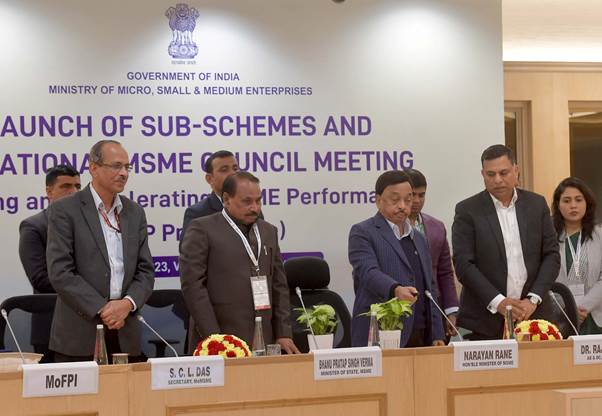
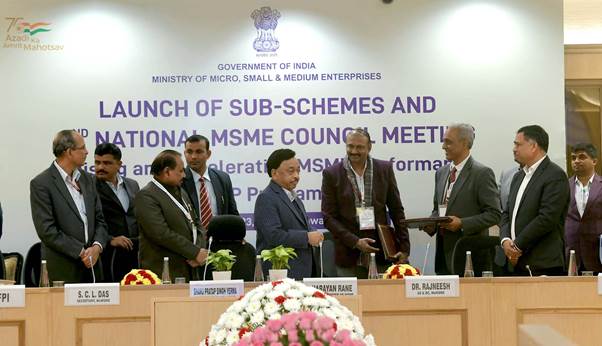
Union Minister for MSME Shri Narayan Rane launched three sub-schemes under the aegis of the RAMP programme today. These are MSME Green Investment and Financing for Transformation Scheme (MSE GIFT Scheme), MSE Scheme for Promotion and Investment in Circular Economy (MSE SPICE Scheme) MSE Scheme on Online Dispute Resolution for Delayed Payments.

The first scheme – The MSME Green Investment and Financing for Transformation Scheme (MSME GIFT Scheme) intends to help MSMEs adopt green technology with interest subvention and credit guarantee support.
The MSE Scheme for Promotion and Investment in Circular Economy (MSE SPICE Scheme) is the first ever scheme in the Government to support circular economy projects which will be done through credit subsidy and will lead to realising the dream of MSME sector towards zero emissions by 2070.

The MSE Scheme on Online Dispute Resolution for Delayed Payments is a first of its kind scheme to synergise legal support with modern IT tools and Artificial Intelligence to address the incidences of delayed payments for Micro and Small Enterprises.
The Ministry is also taking new initiatives under the existing schemes to provide enhanced support to the MSMEs. The Support for Commercialisation of IP Programme (MSME – SCIP Programme) will enable the innovators in the MSME sector to commercialize their IPR. In addition, the ZED Scheme of the Ministry has now been made completely free for women led MSMEs. The government guarantees payment of 100 percent financial support for the certification cost. These two interventions were also launched by the Union Minister .
The Ministry exchanged Memorandum of Understanding (MoUs) with the implementing agencies SIDBI (for MSME GIFT and MSME SPICE schemes) and with National Informatics Centre Services Inc. (for NICSI) for MSE ODR scheme.

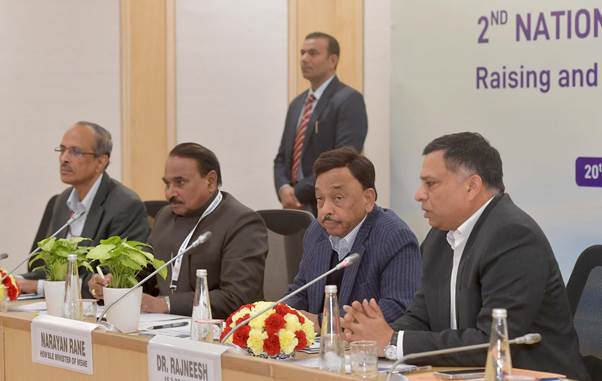
The 2nd meeting of the National MSME Council was also chaired by Shri Narayan Rane. Addressing the participants he asked all the States / UTs to work towards promotion and development of MSME Sector so that their efforts could result in increase in income and employment in the sector and contribute towards country’s economic growth.
Shri Bhanu Pratap Singh Verma,Union Minister of State for MSME also graced the occasion as Vice Chairperson of the National MSME Council. He reiterated the need for supporting MSMEs in becoming globally competitive and emphasised need for developing synergies between the Central and state level initiatives.
Shri SCL Das, Secretary, Ministry of MSME, while addressing the participants urged the representatives from the States/ UTs and other stakeholders to take advantage of the initiatives of the Ministry of MSMEs and ensure the benefits of the schemes are availed by the MSMEs and contribute towards success of the RAMP programme and contribute to achieving the national MSME agenda of MSME development in the country.
The Meeting was attended by the Secretaries of Central Ministries / Departments and Principal Secretaries and Nodal Officers from States / UT governments, CMDs of SIDBI and ONDC, CEO of NICSI, along with other dignitaries.
The National MSME Council has been set up by the Ministry to work as an administrative and functional body of the World Bank supported RAMP Programme to oversee inter-Central Ministerial/Departmental co-ordination, Centre State synergies and advise / monitor progress on the reforms mandated in the MSME sector. RAMP Programme aims at improving access to market and credit, strengthening institutions and governance at the Centre and State, improving Centre-State linkages and partnerships, addressing issues of delayed payments and greening of MSMEs.
The Government has taken various steps for the economic development of UTs such as promoting tourism, augmentation of telecom & web connectivity, development of road, sea and air connectivity, development and promotion of clean and green energy, waste management including initiatives for waste to energy, commissioning of new power projects, boost to infrastructure, etc.
Tourism has been identified as a key sector due to its multiplier effect. The Government is actively promoting various kinds of tourism like eco-tourism, heritage tourism, adventure tourism, monsoon tourism,
promotion of niche tourism activities, tourist circuits, religious tourism, astro- tourism, cruise tourism, MICE tourism etc. In UT of J&K tourism sector has been accorded the status of industry, UT of DNH&DD have developed world class sea fronts and premier river fronts, in Island UTs eco-tourism resorts are being developed. In the UT of Ladakh first ever dark sky reserve of the country has been set up in Hanle to promote astro-tourism and livelihood of local communities. All these initiatives have resulted in a boost to tourism and other allied economic activities, improvement in civil aviation and other infrastructure, promotion of clean and green energy and “waste to wealth” in the UTs.
Internet/broadband and mobile/digital connectivity in the Island UTs have been considerably enhanced with the commissioning of the Chennai Andaman Nicobar Islands (CANI) Optical Fiber Cable Project at a cost of about ₹ 1,224 cr. This project has revolutionized internet connectivity and increased the bandwidth utilization in the UT of A&NI from 4.1 Gbps to 70.31 Gbps, internet speed has increased from 100 kbps to upto 300 Mbps, total mobile connections have increased to about 7 lakh from 4.7 lakh and Fiber-to-the-Home (FTTH) services, which provide high broadband speeds directly to home and offices, have increased to about 34,500. 5G services were also launched in the UT. As a result, the Islanders have benefitted significantly through greater access to online Government to Citizen (G2C) services, tele-medicine, online education, development of tourism, e-commerce, enhanced participation in the digital economy (the number of digital transactions have increased from about 10 lakh to 2.2 crore) etc. Similarly, The Kochi Lakshadweep Islands Submarine Optical Fiber Cable Project (KLI Project), with a cost of about ₹1,072 Cr, has connected the mainland (Kochi) and all the inhabited Islands of the Union Territory of Lakshadweep through submarine cable. The KLI Project is designed to offer speeds upto 100 Gbps and support 4G as well as 5G networks. Trial traffic has been fed in the network. At present 3,972 FTTH connections have been provided through this network. The KLI Project is expected to benefit the public significantly through enhanced online access in the fields of education, tele-medicine, e-commerce, digital governance, tourism etc.
The Government has also been focusing on air, road and sea connectivity in the UTs. A new terminal building of Veer Savarkar International Airport at Port Blair has come up with a cost of about ₹710.00 crore with a capacity to handle 50 lakh passengers per year. ‘Azad Hind Fauz Setu’ on Humphrey Strait at a cost of ₹ 203.00 crore has significantly improved the road connectivity in the island UT of A&NI.
Several infrastructure projects to boost road connectivity have also been completed/under way in the other UTs like the construction of Zojila tunnel in UT of Ladakh.
Several steps have also been taken to promote ease of doing business and bring in governance reforms in UTs. To promote industry and business activities compliance burden has been significantly reduced. Single window clearance system has also led to faster clearance of proposals. UTs have implemented suitable policies to promote businesses and entrepreneurship including industrial policy, land allotment policy, logistics policy, policies to promote handicrafts, agriculture, MSMEs through suitable incentivisation etc. Investment promotion schemes have been formulated to encourage investment by way of providing capital and interest subsidy. The thrust sectors identified are tourism, manufacturing, production, IT and ITes, shipping, agriculture, fisheries etc. The Prime Minister’s Employment Generation programme, PM VISHWAKARMA, Pradhan Mantri Formalisation of Micro food processing Enterprises (PMFME) scheme, PM SVANidhi etc. are also being effectively implemented in the UTs with an aim to generate employment, provide financial support and skill development support. UTs have also identified certain priority economic sectors for accelerated economic growth of UTs, based on their unique strengths and resources, such as developing a Blue Economy, transforming into regional knowledge/IT/medical hubs, promoting tourism etc.
The Government’s policy of zero tolerance towards corruption and introduction of IT enabled initiatives have brought greater accountability, transparency and financial transformation resulting in a big push to businesses and economic development in the UTs and also promoting them as new drivers of economic prosperity (Aatmanirbhar Arthvyawastha) and Viksit Bharat.
Initiatives under Aatmanirbhar Bharat have been taken to provide better services to consumers & improvement in operational & financial efficiency in electricity distribution in certain UTs.
Further, a robust monitoring mechanism has been put in place to monitor the implementation of various flagship/development schemes and programmes of Government of India in the UTs.
It is the endeavour of Government of India to make UTs role models of good governance and development. Moreover, it is envisioned to holistically develop the island UTs as global hubs of tourism, raise the standard and quality of living of residents in UTs, create better infrastructure including social infrastructure, achieve saturation of health and educational indicators, enhance health infrastructure to ensure universal access to quality healthcare, promote green energy by leveraging technology, etc. This is a continuous process.
To promote fisheries and blue economy in the island union territories of Andaman & Nicobar Islands and Lakshadweep, the Government has taken various initiatives. The focus is primarily on development of infrastructure & logistics, deep sea fishing, aquaculture, capacity building and fisheries management for overall development.
Assistance to fishermen/fish farmers is provided for modernization of existing fishing crafts and acquisition of new fishing vessels. Further, initiatives like creation and upgradation of post-harvest handling & processing infrastructure, export oriented processing units and use of technological advancements like Fish Aggregating Devices have also been taken.
The Government is also creating forward market linkages and promoting fisheries related co-operative societies and Self Help Groups (SHGs). Agencies like the Marine Products Export Development Authority (MPEDA), Export Inspection Agency (EIA) and Central Marine Fisheries Research Institute are providing technical support and training to the fishermen and fish farmers for their capacity building.
The Government is also implementing various subsidy programme under the Pradhan Mantri Matsya Sampada Yojana to improve the post-harvest infrastructure, promote deep sea fishing, and aquaculture, mariculture activities, fish marketing and shore based infrastructure. Institutional credit is extended through Kisan Credit Card scheme.
Seaweed cultivation is also being promoted with the participation of Self Help Groups and fisheries co-operatives.

‘Police’ and ‘Public Order’ are State subjects as per the Seventh Schedule of the Constitution of India. The States/UTs are primarily responsible for the prevention, detection, investigation and prosecution of crimes including cyber crime through their Law Enforcement Agencies (LEAs). The Central Government supplements the initiatives of the States/UTs through advisories and financial assistance under various schemes for capacity building of their LEAs. To strengthen the mechanism to deal with cyber crimes in a comprehensive and coordinated manner, the Central Government has taken steps which, inter-alia, include the following:
In a significant enhancement to the D-Remit process, the Pension Fund Regulatory and Development Authority (PFRDA) has now allowed National Pension System (NPS) subscribers to deposit their contributions through the convenience of the Unified Payments Interface (UPI) QR code. This advancement aims to simplify the contribution process, making it more accessible and efficient for NPS participants.
The National Pension System (NPS) has long been a reliable savings avenue for those looking to secure their financial futures. Under the NPS, subscribers make voluntary contributions to their NPS Tier I and II accounts. However, the process of directly depositing these contributions, known as D-Remit or Direct Remittance, has just become more user-friendly.
The introduction of QR code – UPI for D-Remit is a positive & revolutionary step towards making NPS contributions more accessible, efficient, and flexible. This initiative by PFRDA empowers NPS subscribers to take control of their retirement savings and benefit from the advantages of systematic investment planning.
D-Remit Virtual Account with UPI QR code
Under this new mechanism, subscribers will utilise the UPI QR Code to transfer their contributions. It is important to note that the D-Remit virtual account is distinct from the Permanent Retirement Account Number (PRAN). Furthermore, the virtual account numbers differ for Tier I and Tier II NPS accounts and so do the QR codes.
Key Benefits of D-Remit QR code
The D-Remit process offers several advantages for NPS subscribers:
Set up SIP in NPS through D-Remit:
For NPS account holders with a PRAN, the D-Remit process opens up the possibility of starting a systematic investment plan (SIP). This can be done online (D-Remit), allowing subscribers to set up standing instructions for SIP payments to their NPS accounts.
SIPs in NPS offer subscribers the convenience of making regular contributions, helping them build a disciplined and convenient approach to retirement savings without the need to time the market. Similar to mutual funds, SIPs enable NPS participants to benefit from rupee cost averaging. Adjusting existing investments becomes a straightforward process, with the potential for higher returns.
How to Use D-Remit QR Code:
To utilise D-Remit, subscribers must possess a virtual D-Remit ID with the trustee bank. This virtual account can only be used for remitting NPS contributions. Setting up an SIP through net banking involves adding the virtual account as a beneficiary to the subscriber’s net banking account and providing a standing instruction for the SIP amount. With a fund receipt cut-off time of 9:30 AM, subscribers receive the same-day Net Asset Value (NAV) in their NPS accounts. Contributions received after this time or on non-working days will reflect the NAV of the next working day.
****
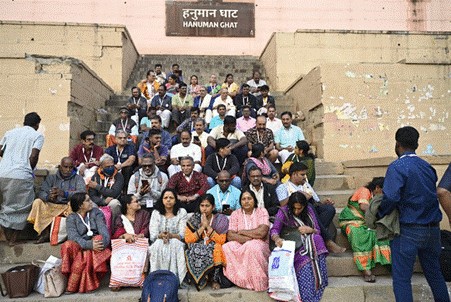
The delegation group comprising teachers (Yamuna) of the Kashi Tamil Sangamam II visited Hanuman Ghat and learnd about the history of various ghats of Ganga from the Acharyas.
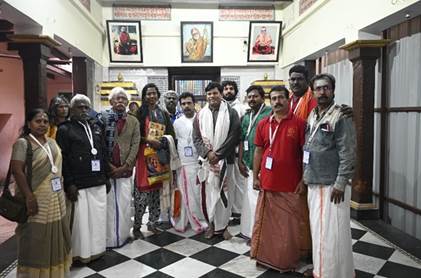
Later, the delegates visited the ancient temples on the ghats and learned about their history, divinity and grandeur. The group also visited the residence of Shri Subramanya Bharati located at Hanuman Ghat and met the family members. The group visited the Kanchi Math and learnt about its history.
The group learnt about the deep connection between Kashi and Tamil Nadu and visited the areas around the Hanuman Ghat, Kedar Ghat, and Harishchandra Ghat where several Tamil families have been residing for many years, exemplifying the spirit of Kasi Tamil Sangamam.
The second phase of the Kashi Tamil Sangamam will continue till 30th December 2023. Last year, the first phase of Kashi Tamil Sangamam was organized from 16th November to 16th December 2022. Nearly 1400 (7 Groups of 200 persons each) people are expected to be travelling from different parts of Tamil Nadu, representing varied walks of life. The first two groups have already arrived at Varanasi. During their stay in Kashi, as per their tour itinerary, they will also visit Prayagraj and Ayodhya.


***
You must be logged in to post a comment.