Top 5 Career Opportunities In Chemistry

If you are someone who admires chemistry more than just a subject & aspires to build your future in it. This is your place. Doesn’t matter if you have just passed out your high-school or seeking change in career. If you are dedicated to the subject & willing to diligently work for it. Then it has some wonders in store for you.

   So mentioned below are the top 5 career options you can seek in chemistry after completion of degrees at certain levels.

https://www.pexels.com/

A] Following are specifically for the one’s who have or are willing to pursue MSc as a degree in chemistry :

1 ]   Teaching field

Now if you are someone who is quite fascinated with the life of teachers or professors as I am. Then this is all you need to know :

  • ‌Post qualifying NET + Ph.D., you can apply for the post of assistant professor in various govt. colleges all over India. And if not then you might try for SET for the same, but the only limitation is you can’t apply outside that particular state.
  • ‌Next is you can think of clearing the B. Ed exam if you wish to be a teacher at +2 colleges.
  • ‌Clear the GATE entrance examination after MSc/Btech to teach in engineering colleges.

All these shall make you earn a handsome salary additionally offering some good peace of mind.

2 ]  Research

If you want to build your career in Research & Development then you must clear the CSIR – NET exam & apply for a Ph.D. as a JRF scholar in a govt. college with a good amount of stipend in hand.

3 ]  Industry

With a valid GATE score, you can apply in PSUs like ONGC, IOCL, HPCL, NTPC for jobs at various posts.

Without any entrance exam, you may apply at private industries like paint, agriculture, paper, sanitation, plastic, cement, textile & forensics as a QC trainee.

4 ] Government Jobs

One can appear for various govt. entrances to apply in various govt posts.

B] Now if you are someone who has completed Btech in chemical engineering then refer below-mentioned data :

1 ] Research

After completing a Ph.D. in chemical engineering & apply for research & scientists in Govt Organizations or MNCs.

2 ] Designing Industries

This field involves designing a process & it’s related equipment, machinery, or chemical plants too. They provide a starting package of 9 LPA plus providing a good foreign exposure.

3 ] Production Industries

Just like the above-mentioned companies (in A3) you can apply for them with just merely a graduation degree in chemical engineering.

4 ] Project Engineer

A chemical engineer can also work as a project engineer in the design companies. The role of project engineering is all about maintaining coordination between clients, all engineering departments for the smooth execution of the project.

Lock-down Woes

Woeful heart.

Due to the COVID-19 lock-down, I went back home in March. COVID-19 outbreak came to light in December, 2019 and started from Wuhan, China; when it was declared to WHO that cluster cases of pneumonia-like disease were spreading due to unknown causes. Later, WHO declared it pandemic seeing the enormous increase in cases all over the world.

In India, the first case of COVID-19 was reported on January 30, 2020 which originated from China. When the pandemic started wreaking havoc, as a preventive measure the Government of India announced a nationwide lock-down for 21 days starting from March 24. Since then we saw four phases of lock-down and for phases of unlock as well.

When corona-virus is prevalent in society and everybody is scared and anxious because of the pandemic, when we all are fighting at our own levels; during lock-down period, there was one fight which was fought by daily wagers, low class workers, and by their mothers, sisters and wives as well as their sons, brothers or husbands who had gone to different states as migrant workers. They were anxious and worried about their family members as they didn’t know how their family members would be surviving far away from their homes when they had no jobs and money with them and no way to return as well.

Today, I am going to share the story of my house help, Rajkumari, whose three sons Kamlesh, Vimlesh and Mithilesh had gone to Gujarat for work. Two of them worked in brick factories whereas the younger one worked as road or tiles labourer. But because of the lock-down there was no work for them, hence they were not getting paid and their ration also got finished in the first week of the lock-down. All the three members stayed at different parts of Gujarat as they all work at different places.

In the first few weeks Rajkumari cried a lot and called us daily. My mother consoled her and we helped her and her sons in whatever way we could. One day she came to our house somehow, sat outside and started crying uncontrollably, we asked her what the reason was? To which she replied that her son was telling her to come home by foot and as she was listening to many accident stories, she was scared. We called her son and told him to wait for some days in the view that maybe the government thinks of helping these people so that they could also reach their safe place which is home. Firstly, he was not listening but at last we were able to persuade him to wait there and not come home by foot.

In some days his wait was over as the government relaxed the lockdown and started Shramik Train Sewa from May 7 and by God’s grace his contractor helped him to get his pass. He reached home in some days and was staying outside his home to complete the quarantine period. Rajkumari’s family members had built a makeshift hut for him. Her second son, Vimlesh also got his pass made and he also reached home after some days after going through quite an ordeal.

Vimlesh stayed with four other friends who were from the same place. Vimlesh’s contractor asked for Rs. 1000 from each of them for getting the pass made. They thought that anyhow they will reach home so they gave the money. The contractor ran away with the money and stopped picking their call. When they got totally frustrated, they texted him that if he wouldn’t get the pass made, they would go to the police. The threat worked and he received the call as soon as he saw that message. He made an excuse of his phone not working and affirmed that he would get their passes made soon and not more than two days passed, he came with the passes and with money as well. So, in a week they also started their journey.

The third son whose factory continued running in the first two months of lock-down as his contract was getting over after that so he didn’t go through any such problems. After two months, his contractor helped his pass getting made without hassle and he came home back without facing any problem.

Here Rajkumari who was happy beyond limits as her sons came back told us that she was worried sick about their sons as she was afraid whether she would be able to see her sons or not. When all of her sons returned back, she promised to herself that she wouldn’t let her sons go back. She said that even if they had less money, they would survive happily but she was not able to survive without knowing how her sons would be. She even went on to extend that even at her age she could happily feed her sons but can and will never put their lives in danger.

The problem of one Rajkumari and her sons were solved but there were many whose situations never saw a daylight as due to lack of ration, food, money and help, many of the workers set out for the journey back home on foot with the blisters on the foot, not adequate food, with their family which comprised of the women, kids and old members. They went for days walking and some even couldn’t reach home because of misshapen like train accidents, road accidents and many people passed away in the middle of the route because of walking for days in April-June heat which is really scorching heat without much water or food which led to dehydration, heat-stroke and other such health problems.

This pandemic many people lost their jobs, hopes, careers, integrity and even their lives. But this lock-down has also made us become more resilient and patient. Many of the people came on the road to help these walkers. People pooled in to help each other. The fight with COVID-19 is continuing and we all will fight it, keep each other safe and try to be happier as we all live once.

Steps colleges need to take before they open after Covid-19

This pandemic has brought us all into a dilemma regarding the position of academics of students. Online classes are already being carried on by schools and colleges. Yet, this cannot be continued for long as the effectiveness of classroom education lacks in online classes. No one actually knows when the pandemic will be flattened and students flock to campuses.

The only thing that is known is that a large number of students and teachers would come together at their colleges. Students are already mentally fatigue and dying to be back to the campus.

The Government had earlier instructed a gradual opening of colleges with caution and precautionary measures from September 1st. But with more than 3.6 million Coronavirus cases in India, the date was shifted and the next plausible one may go for the dawn of the new year, with one semester going online.

Colleges have to be opened someday. When the day comes, there are many chances of arising this pandemic again. We can avoid this situation to an extent by following certain steps and safety measures.

Here are the steps colleges need to take before the reopen after Covid-19 :

1) To start with, all educational institutes need to quickly migrate to the digital mode through the use of existing massive online courses (MOOCs) and create their own MOOCs for the domains they deal in, provided they can muster the courage and the resources. Going ahead, it will by PhyGital or blended learning, with physical being the base and digital being the larger engagement period. Even virtual labs and studios will do half the practical work as well. This is a big call and for digital content creation and aggregation along with engaging delivery need to be ensured.

2) It goes without saying, that no campus can ensure a batch coming in for all 5 days or 6 days to the campuses physically for a long time ahead. It will be two to a maximum of three days a week, and that too, with temperature checking, gloves and masks, ideally with full sleeves and legs covered, and a head cover might be ordered also.

3) Many campuses will and should have a sanitising tunnel to walk through, will have to walk with a minimum 4 feet distance from the nearest peer and sit at a distance from the next buddy.
This will make it necessary for half the batch to sit in a classroom, and half the team working in studios at a point of time, which stretches the infrastructure to a hilt and doubles the workload of mentors, who anyways shall be rarer and lesser paid in these Corona times.

4) The lunch-time will be staggered to reduce crowding at eating places, while session timings will be changed to reduce commotion on corridors. Lunch-time is a weaker time period during which the students tend to form groups for informal talks.

5) Campuses will call for creating a digital persona for all learners thus making it compulsory for all to have networked smartphones, specific apps to be downloaded for regular use, a good laptop, WiFi-driven high-speed digital access at homes, and cameras, to assist tech-driven learning. Though many schools banned mobiles sometime earlier, today, schools need mobile handsets more than ever. The tool of wasting time is the harbinger of besting time today.

6) While an individual student may need to come to campuses for two to three days a week, most staff and faculty members may in fact need to be on campus for five to six days to cater to the staggered and smaller batches, while continuing to guide those online at homes. That’s a double whammy for the staff in times of fewer colleagues and insecure salaries.

7) Another major need is to revolutionise the assessment system with loads of formative assessments online through quiz and open book tests. Instead of conducting exams offline, online exams would give a way to reduce the chances of another pandemic.

8) Libraries need to go digital, and mentors need to be thoroughly trained to create and deliver an engaging learning content and aggregated learning resources, apart from management becoming flexible on fees and add-ons.

9) Hostels may be hit hard for a while, and learners may choose to have home food and water. This will harm economic interests of the related service providers.

10) We are in for a plethora of surprises. But college campuses with a quick migration to a robust yet easy-to-use learning management systems, and with a sanitised environment are expected to do better.

How to host a Virtual party

In this uncertain time of social isolation – there has become a need to socialise while keeping your distance. It seems weird. It seems strange. It’s certainly unprecidented – but as far as we’re concerned – the show must go on… and for us at least – the parties still can!

We’ve actually been helping people host remote parties for some time. COVID-19 has meant more people than ever are having to socialise apart – but before all this started, we still had customers who were playing remotely with students and friends who lived in different countries, or who were trying to run team building across different continents.

So… while this may seem new for most of us – in reality we’re just a little behind the times.

How do you do it?
Teenagers have been chatting via the x-box for years. And in business teleconference has been going on even longer.

Which means the resources for on-line parties are already out there to make this possible and many of them are low cost or even free!.

You can play very simple games by each taking a turn to talk on Facebook and answering questions posed in group chats. You can also have groups on Google Hangouts. Don’t quiz us on it as we’re also still very new to the on-line group meeting thing too! But if you ask a teenager – they know it all!

Zoom is one we’ve heard a lot about recently – and it’s one we use ourselves at the office as we can all see each other and chat while working remotely. House Party is another ap we’ve been told is really simple to use, and for small groups you can also easily do a join call using facebook messenger and that is really simple too!

There are also a variety of other teleconference options and aps available – any one of those will probably work for you in the same way.

Former President Pranab Mukherjee passed away at 84

Pranab Mukherjee, who served as the 13th President of India from 2012 to 2017 passed away Monday evening at the age of 84. His son, Abhijit Mukherjee has confirmed his dismissal through his tweet. Mukherjee had suffered a fall at his Rajaji Marg house and had been operated to remove a blood clot in his brain on August 10. He was also tested positive for Covid-19. Doctors on Monday morning warned that there was a decline in his condition. Soon after, Abhijit Mukherjee also tweeted a request to people, asking them to pray for his father. “He is a fighter & with all your good wishes & prayers , He will surely recover !” Abhijit tweeted.

Three hours later, Abhijit made the announcement on social media.

“With a Heavy Heart , this is to inform you that my father Shri #PranabMukherjee has just passed away in spite of the best efforts of Doctors of RR Hospital & prayers ,duas & prarthanas from people throughout India !,” he tweeted.

Mukherjee was born on 11 December 1935 in Mirati. His political career spanned five decades, the highest point of which came when he became President of India. He was Minister of Finance between 2009 and 2012, Minister of Defence (2004-2006), Minister of External Affairs (2006-2009).

Pranab Mukherjee was also awarded India’s highest civilian honour, Bharat Ratna in 2019 by the current President of India, Ram Nath Kovind.

Politicians like Narendra Modi, Rahul Gandhi, Arvind Kejriwal, Amit Shah and many others are giving their condolences to his family through their tweets.

India’s contraction of GDP could be worst among the G-20 countries.

As it is known to everyone about the UK’s slowdown of economy which was the worst hit since 11 years.UK went into the deepest recession of this time.Now,what the analysis says according to that India will be facing worst contraction of GDP in the June quarter which will be worst including G-20 countries.

The contraction which India is going to face will be worst due to the pandemic hit situation all around the country due to which everything was at standstill.Today the National Statistical Office is going to release the data from April-June period for FY21.It is said that it is going to be worst since 1996.As India’s lockdown started on 25th March and ended in May end.From June not a complete unlock was done but partial lifting was started.But for the businesses in the month of April and May were complete washouts.

Abheek Barua,chief economist at HDFC bank said that he expects GDP growth to contract 21% in June quarter compared with a growth of 3.1% in the March quarter.However,State Bank of India released a report it stated that Q1 FY21 real GDP de-growth would be now around 16.5%.Frequency indicators like Index of Industrial Production,PMI manufacturing,auto sales and many more.IIP contracted to around 36% and commercial vehicle sale contracted to around 84.8%.In this period if we check only the positive sign would be of farm sector which will grow around 3-4%.

NSO has to still predict many numbers into this,till now they have given a less number of data.They gave the reason of not providing data is due to glitch because there were many sectors which were not operating in this period.Chief India Economist of HSBC Pranjul Bhandari has said that there can be an overestimation of data by the NSO due to the lockdown situation,”The statistics office could announce GDP contraction to 17.5% without including the informal sector,if the sector is added than it would be almost 25% contraction when proper survey is included.

As the number of GDP number have started to come lets see what is the final report coming by the end of the day.By analysing that another article will be on that.

We will launch ‘Project Dolphin’ for protecting ocean and Gangetic dolphins : PM MODI

The Gangetic dolphins have been declared as the National Aquatic Animal of India. This decision was first taken in the meeting of the National Ganga River Basin Authority (NGRBA) chaired by then Prime Minister Dr.Manmohan Singh on 5th October, 2009.

Ganges river dolphins once lived in the Ganges-Brahmaputra-Meghna and Karnaphuli-Sangu river systems of Nepal, India and Bangladesh. But the species is extinct from most of its early distribution ranges. The Ganges river dolphin can only live in freshwater and is essentially blind.

Ten years after Gangetic dolphins were declared National aquatic animals, Prime Minister Narendra Modi announced on 15th August, 2020 a conservation project for the species. This conservation project is named as the Project Dolphin’.

This project aims to give a stronger impetus for conservation of the aquatic mammals in the lines of ‘Project Tiger’ – a tiger conservation programme launched in April 1973 and ‘Project Elephant’ launched in 1992 to provide financial and technical support to wildlife management efforts by states for their free-ranging populations of Wild Asian Elephants.

According to the environment ministry, the project envisages to address conservation concerns and empower the stakeholders such as the river-dependant population in reducing the pollution and allowing sustainable fishery and river-based other livelihood options through scientifically oriented conservation methods. Implementation of the “Project Gangetic Dolphin” envisions a healthy river ecosystem not only protecting the biodiversity of the river but also taking into consideration the well-being of the people depending on its resources.

Addressing the nation from the ramparts of the Red Fort on India’s 74th Independence Day, Modi said, “We will launch ‘Project Dolphin’ for protecting ocean and Gangetic dolphins”. It may be mentioned here that the Ministry of Environment, Forest and Climate Changes has made elaborate plans to launch the 10-year project ‘Gangetic Dolphin’ led by Environment Minster Prakash Javadekar.

The Gangetic river dolphin is a species of freshwater dolphins primarily found in the Ganga and Brahmaputra rivers and their tributaries in India, Bangladesh and Nepal. Ganges river dolphins prefer deep waters, in and around the confluence of rivers. The distribution range of the Ganges river dolphins in India covers seven states namely Assam, Uttar Pradesh, Madhya Pradesh, Rajasthan, Bihar, Jharkhand and West Bengal.

There are around 3700 Gangetic River Dolphins in Indian river systems, according to official figures. The Ganga dolphin is one of only three freshwater dolphins left in the world. There are about 1800 left in the Indian part of the Ganga-Brahmaputra-Meghna basin, down from about 4500 as recently as 1982. There may be around 600 more left in Bangladesh, a few in Nepal, all part of the same basin. In Bhutan, the fourth country in the basin, the Ganga dolphin has not been seen for many years.

The Ganga dolphin is given the highest level of protection possible under the 1972 Indian Wildlife Protection Act. It is categorised as “endangered” by the International Union for conservation of Nature.

As river dolphins acts as indicators of healthy river ecosystems, their conservation would also ensure controlling river pollution and improving the availability of fishes and enhancing economies of local communities through sustainable fishery, the ministry said. They were declared National Aquatic Species in 2010.

Does it cost only ₹1?

The Supreme Court of India gave the final judgment of the criminal contempt case against the prominent lawyer, Mr. Prashant Bhushan on Monday. A fine ₹1 was imposed on him and if the lawyer fails to do so, he will be jailed for 3 months besides a debarment from practice for a period of 3 years.

It was the two tweets of Mr. Bhushan which were said to be derogatory and “scandalising” the court. Scandalising the court broadly refers to statements or publications which have the effect of undermining public confidence in the judiciary. The Contempt of Court Act, 1971, outlines the procedure in relation to investigation and punishment for contempt. The objective behind this is to prevent the degradation of the court’s image in the eyes of the people, thereby securing the public confidence in the courts.

The case against Mr. Bhushan was filed because of his tweets where he accused CJI Bobde of hypocrisy, posting the judge’s image on a luxurious Harley-Davidson bike. He wrote that the CJI is riding a bike without helmet and mask, keeping the doors of the court closed for the public. In another of his tweets, Mr. Bhushan had targetted the SC especially the last four CJIs and held them responsible for the “destruction of democracy” in India.

The case was historical as it focused on the limitations to the Fundamental Right of freedom of speech and expression guaranteed under Article 19(1)(a) of the constitution. The contempt of case is a “reasonable restriction” to free speech. There has always been a clash between free speech on one hand and the public/national interests on the other. The SC judgement of imposing a fine of ₹1 can be said to be an attempt to strike a balance between the two. The lawyer was punished in a way that he is declared guilty while also not being too harsh on him in the sentence. The case against Mr.Bhushan was seen as a test of free expression in the world’s largest democracy.

Let the words take you on a journey

“A reader lives a thousand lives before he dies” – George R.R Martin.

I remember, I was on Mangalore station with my family, waiting for our train to arrive ; we were returning to Mumbai. I didn’t have a phone at that time, and the thought of spending 24hrs in train without having anything to do troubled my brain. So my dad decided to buy me a book, luckily of my choice or else I would have ended up reading a book on some random sport or some religious book I have no interest in. That was my first book ever, I was enthusiastic as holding the novel in my hand instantly made me feel like an adult. Sounds stupid but for a 11years old, it made sense.

When you sit down with readers and ask them about their childhood memories of reading a book; they will always tell you there was a book they loved that introduced them to the love of reading, or they had a book they loved and lost it along the way. They will be so emotional while telling you this because those books had an enormous effect in their lives. They will pay top dollar to read it again or they would love their children to read it too. So, why not save the day and buy these special books for your loved ones?Don’t you agree that books are the best thing to gift someone? And also to receive? Or a best thing in general?
I know it sounds vague but you have lived with your loved ones and you know what their interests are and what they want to achieve in their lives, help them accelerate the process by buying them books in that area. For example, your friend loves to cook, and you see them on you tube everyday trying new cooking classes. Even if they do not read, they will appreciate and read a special cook book that will enhance their love for cooking.
Icelanders have a beautiful tradition of giving books to each other on Christmas Eve and then spending the night reading. This custom is so deeply ingrained in the culture that it is the reason for the Jolabokaflod, or “Christmas Book Flood,” when the majority of books in Iceland are sold between September and December in preparation for Christmas giving.

Exchanging books with a friend, or buying second hand book is a whole different experience as a reader. When you open a second hand book and notice the markings, random sentences underlined by the previous reader, little notes ; you can feel the ghost of all the previous readers while reading that book. Sharing books feels like sharing a piece of yourself with someone and isn’t that a beautiful feeling? Unless that person isn’t a book person, goodness that’s like a knife being twisted in your chest.
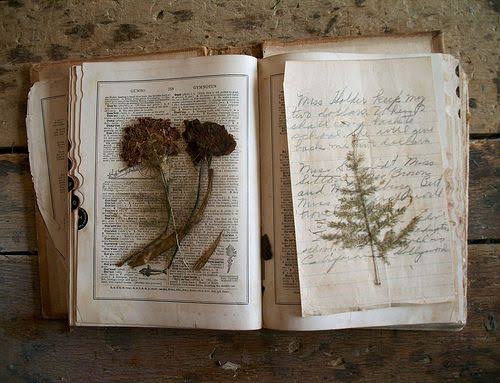
While reading a second hand book or an exchanged book, you can almost feel the previous readers’ soul imprinted on the book just like an old flower inside a book. Also to mention, we need to be aware of this weird, dangerous breed of people out there : people who don’t return our books. They’ll soon be decalred ‘vicious’.

From reading tinkle as a kid in school to reading book thief during lectures in college ; reading while in local train is a different reading experience in itself because 98% of the time the person next to you is reading with you even if they understand nothing. I am glad they don’t turn the page themselves or else one day am sure I’ll end up making the compartment a WWE ring. (which it already is) Let’s not forget about books as a companion. They make you travel without even moving you in 3D.

So grab a book and how about a trip during this quarantine? 

India: The Joint Winner of FIDE Chess Olympiad

India and Russia, the two finalists of FIDE online Chess Olympiad have been announced as the joint winners of the tournament, following a server failure that caused many players to lose connections.

At first, Russia was initially declared the winner, when two Indian players, Nihal Sarin and Divya Deshmukh, lost their games at in the finals on a time basis while their time was lost due to loss of internet connection.

India had lodged the official appeal after the controversial result and said that players’ internet connection had gone down due to server failure. The two countries were declared joint winners after India’s appeal. The International Chess Federation Fide issued a statement saying that it’s chairman Arkadi Dborkovich decided to award gold medals to both teams. This was the first time that FIDE conducted the Olympiad in an online format.

The first round was a 3-3 draw between the two teams in the final. The second round was also on par with Nihal and Divya being declared defeated on time. India was represented in the tournament by Vidit Gujarati, former world champions Viswanathan Anand, Koneru Hampi, D Harika, R Pragananda, P. Harikrishna, and Divya Deshmukh.

India rested Anand in the first round and were drawing six bets in the first round. In the second round, Anand, Vidit and Harika played with the likes of lan Nepomaniacchi , Danil Dubov and Aleksandra Kosteniuk respectively, while Divya was leading her side to victory against Polina Shuvalova. Hampi and Aleksandra were on a par with Goryachkina and Nihal and Andrei Espenko.

A sudden server failure caused both Nihal and Divya to lose their internet connection with their games and lost them on time. In the final the score went 4.5-1.5 in favor of Russia. But India appealed to the appeals committee, favouring this technical aspect and FIDE changed the decision and declared the two countries joint winners.

Mental health,an serious issue

“We all have our demons, that doesn’t mean you’ll stop fighting
to it”
Mental illness is a really serious issue at the same time being the
most unpredictable as well as unnoticeable. we can never predict
just by looking at the person what he/she is going through.
Mental illness are basically chronic distruption in neural circuits of
the brain. The distrupted neural circuit affect the functioning of
brain in the ways of how a person thinks, feels, acts, behave etc.
The distrupted neural circuit eventually dramatically effect the
person’s mood and make them hallucinate or believe the things
that actually doesn’t exists or make sense.
It can be caused either by biological factors or environmental
factors such as genetic, drug,alcohol,stress or lack of sleep.
The society we’re living in, most of the people tend to avoid the
problem of mental illness, or hesitate to share these kinds of
issues, but remember if you’re not speaking it you’re storing it and
that’s get heavy.
It’s extremely hard for the society to understand you unless you
speak to them.
There is no cure for this but the recovery is definitely possible.
Just by doing self care & little things you can keep your brain
healthy ,calm & avoid the mental illness
1-stay socially active, the more you communicate the more you
get comfortable with people around you.

2.practice mindfulness on daily basis

3.spend more time with loved ones

4.have balanced diet

5.have proper 8hr sleep

What does freedom mean to you? ; Set those wings free.

According to several search engines “Freedom is the power and ability to think, act and speak without hindrance or restraint. Freedoms are often enshrined in the charters and constitutions of nations as foundations of law. It is also common for laws to restrict freedoms in various ways.” But the meaning of freedom for every individual is different. According to a few people, freedom means the right attitude which can transform a barrier into a blessing, an obstacle into an opportunity, or a stumbling block into a stepping stone. In other words, breaking barriers is freedom. The barrier to success is not something that exists in the real world; it is composed purely and simply of doubts about ability. Setting our wings open to fly high and high until you touch the clouds and achieve your dreams is freedom. Freedom is something that lets you fight all the challenges to accomplish your goal. Your task is not to seek for love, but merely to seek and find all the barriers within yourself that you have built against it.
You’re a free man in a beautiful world
Living the dream they say
You got to wake up and shake off
All the laziness that’s in your way
Hey dreamer why are you dreaming
What are you doing still sleeping

You’re a nightmare, to handle,
And this life you’re living is a scandal
Freedom in a jail, cozy in a hole,
All that dripping wax in a candle bowl
What a waste of life that’s too much to bear
Take me seriously and start to care

Freedom is a choice, choose it with your wisdom
There isn’t any comfort zone, in any living organ
Try and take a chance, you never know the outcome
It will be hard,
But you’re going to earn freedom.
You can be the most beautiful person in the world and everybody sees light and rainbows when they look at you, but if you yourself don’t know it, all of that doesn’t even matter. Every second that you spend on doubting your worth, every moment that you use to criticize yourself; is a second of your life wasted, is a moment of your life thrown away. It’s not like you have forever, so don’t waste any of your seconds, don’t throw even one of your moments away and this is freedom. You said you knew the perfect place to run to. A place that was empty of people, and buildings, and far, far away. A place covered in blood-red earth and sleeping life. A place longing to come alive again. It’s a place for disappearing, you’d said, a place for getting lost… and for getting found.
I’ll take you there, you’d said. And I could say that I agree and this is freedom. Freedom lies within us. Endings are powerful. Get the ending wrong, and your growth could be stunted by lingering baggage that saps your energy and attention. A properly executed ending however, provides closure and cleanliness, readying you to attack the new with refreshed vigour. Build your life on your dreams; because dreams never have bad endings. As one grows older, one views many things with a more relaxed perspective. However, there are also certain things that all of a sudden start to become more difficult: climbing the stairs, pulling on roller shutter belts and using a manual handle to extend the awning – all these things require a considerable expenditure of energy. However, one thing is a non-negotiable for you: you continue to value your independence. Above all, within your own four walls.
“BE FREE to achieve your goals and this is real freedom, this is the really independence.

By. Kumari lili

Muharram Procession Of Only 5 Persons With One Videographer

Considering the dangerous, dreaded and deadly corona virus impact especially in Maharashtra and in Bombay in particular, the Bombay High Court most recently on August 28, 2020 in a noteworthy case titled All India Idara-E-Tahafuz-E-Hussainiyat Vs The State of Maharashtra & Ors. in AD-HOC No. WP-LD-VC-350 of 2020 has in a significant order allowed only five persons with a videographer to carry Tazia, replica of the tomb of Husain who was the martyred grandson of Prophet Muhammad in processions during Muharram on August 30 from 4.30 pm to 5.30 pm from Zanabia Bhendi Bazar to the Shia Cemetry at Mazgaon. The Bombay High Court in this notable case also clarified that it will be the only Tazia to be carried in the entire State of Maharashtra! This restriction has been made primarily to ensure that this Covid-19 pandemic does not spread rapidly due to contact among many people! Very rightly so!

                                   To start with, the ball is set rolling by  a two Judge Bench of  Justice SJ Kathawalla and Justice Madhav J Jamdar of the Bombay High Court in para 1 wherein it is observed that, “The Petitioner All India Idara-E-Tahafuz-E-Hussainiyat through its General Secretary Shri Habib Nasir has stated in the above Petition that they are one of the oldest organization of the Shia Community.”

                              While stating the purpose of the petition, it is then pointed out in para 2 that, “By the above Writ Petition, the Petitioner is seeking appropriate writ, order or direction to allow the rituals of Muharram to be performed during the present pandemic from 27th August, 2020 till 30th August, 2020 daily for two hours.”

                             To put things in perspective, it is then enunciated in para 3 that, “In the above Petition, this Court passed an order in the present matter on 27th August, 2020 whereby the Principal Secretary, Home Department and Secretary, Disaster Management Department were directed to hear the President and the General Secretary of the Petitioner Organization at 5.00 p.m. yesterday itself. Both the aforesaid Secretaries were directed to submit their decision with reasons to this Court by 11.00 a.m. today.” 

                           As a corollary, it is then stated in para 4 that, “Accordingly, the parties have been heard by both the aforesaid Secretaries and they have taken a decision with detailed reasons today i.e. on 28th August, 2020. The same has been submitted with this Court at 11.00 a.m. as directed. A copy thereof, has also been served on the learned Advocates for the Petitioner.”

                                  To be sure, it is then stated in para 5 that, “We have perused the aforesaid decision dated 28th August, 2020 and we have heard the learned Senior Advocate for the Petitioner, as also the learned Advocate General for the State of Maharashtra, who was requested to appear in the matter for the State, along with the learned Government Pleader and Additional Government Pleader.”

                              For the sake of clarification, it is then made clear in para 6 that, “Both the parties have agreed that in view of the limited order, that is being passed hereunder, no reasons in support of this Order be recorded, especially since this Order is being passed as and by way of as exception, which is not intended to be used as a Precedent by other persons, to seek permissions, to hold any festival/festivities, which would involve by their very nature congregation of people.”

                                          Be it noted, it is then stated in para 7 that, “On behalf of the Petitioner, the General Secretary Shri Habib Nasir, has attended the hearing and we have heard him personally via Video Conferencing, though limited to the extent mentioned hereunder.”

                                 Most significantly, the Bench then makes it known in para 8 that, “The said General Secretary, Mr. Habib Nasir has given following undertakings to this Court, which are hereby accepted:

i.                  In a representative capacity for and on behalf of the entire Shia community residing in the State, there will be only one Taziya, which will be carried from Zainabia (Bhendi Bazar) Mumbai to Byculla Mazgaon, Shia Cemetry, situated at Mumbai, in the entire State. No other Taziya other than the one mentioned hereinabove, will be carried anywhere in the State.  

ii.               The aforesaid one Taziya will be carried/transported from Zainabia (Bhendi Bazar) Mumbai to Byculla Mazgaon, Shia Cemetry, situated at Mumbai, via J.J. Hospital, Prince Ali Khan Hospital, Sales Tax Office circle in a trust i.e. transport vehicle large enough to accommodate it. These will not be any procession as such, for carrying the said one Taziya, in the aforesaid manner.

iii.             In no case whatsoever, any congregation of people at any point from the beginning till the end of the said journey of aforesaid one Taziya will be allowed.

iv.            The aforesaid one Taziya will be carried along strictly aforesaid one route.

v.               The aforesaid one Taziya will be carried along the aforesaid route on Sunday 30th August, 2020 from 4:30 p.m. to 5.30 p.m.

vi.            Not more than five persons will carry the aforesaid one Taziya on a truck, as aforesaid along with one videographer. However, after taking the aforesaid one Taziya down near the graveyard, it will be carried on foot, for a distance of not more than hundred meter. The names, ages and addressed of these five persons will be submitted with the office of the Commissioner of Police, Mumbai by 5.00 p.m., on 29th August, 2020.

vii.         The Petitioner and all its members will strictly abide by the rest of the guidelines issued by the Home Department, State of Maharashtra, regarding Muharram-2020, dated 19th August, 2020, a copy of which is annexed to the above Writ Petition as Exhibit-A.”

                                   In addition to what has been stated above, it is then also added further in para 9 that, “The State Government shall, if not already imposed, impose a restriction over gathering of people at the appropriate places, by issuing appropriate orders, including the point where aforesaid one Taziya is to start its journey, up to and including the graveyard, where its aforesaid journey will and, by passing appropriate orders under Section 144 of the Code of Criminal Procedure, 1973. The State shall also provide an escort as also a pilot car for the aforesaid truck, carrying aforesaid one Taziya and will take appropriate measures to keep the traffic away and the road clear along the aforesaid route, which is hereinabove prescribed as a route for carrying aforesaid one Taziya.” 

                                          Needless to say, it is then observed in para 10 that, “The Writ Petition is accordingly disposed of.”

                                       Finally, this notable judgment is concluded in para 11 wherein it is stated that, “This order will be digitally signed by the Personal Assistant of this Court. All concerned will act on production by fax or email of a digitally signed copy of this order.”

                                        To sum up, we thus see that when corona pandemic has hit worst Bombay and the State of Maharashtra in particular, the Bombay High Court Bench of  Justice SJ Kathawalla and Justice Madhav J Jamdar of the Bombay High Court has permitted one Taziya to be carried out in the entire State of Maharashtra and Muharram procession of only 5 persons with one videographer! This is certainly a right step in the right direction also! The religious sentiments of Shia Muslims have been taken into account but simultaneously many terms and conditions have also been imposed which the petitioner “All India Idara-E-Tahafuz-E-Hussainiyat” through its General Secretary “Shri Habib Nasir” has accepted also as has already been discussed also hereinabove! Very rightly so!  

Sanjeev Sirohi, Advocate,

s/o Col BPS Sirohi,

A 82, Defence Enclave,

Sardhana Road, Kankerkhera,

Meerut – 250001, Uttar Pradesh

One China Policy: Should India Reconsider It?

A group of experts recently held a webinar organised by Udaipur-based NGO Usanas foundation on “Rethinking India’s ‘One China Policy’: Tragedy of Tibet”. The list of speakers had names of Former Special Secretary, Krishan Varma, Prof. Srikanth Kondapalli, Abhijeet Iyer-Mitra Senior Fellow, Institute of Peace and Conflict Studies and Tibetan Activist and Writer Tenzin Tsundue.

Experts have said that India should support the democratic government in Hong Kong, must establish economic and technological relations with Taiwan. On 18 Apr, 2018, The Modi Government announced its revised Foreign Direct Investment Policy which stated that for China to invest in any venture in India it will have to take the Indian Government’s approval first.

Since last few years Taiwan has also invested in Indian Energy and Technology sector so the question arises that will the new policy stop Taiwan’s Investment too? The answer is no as India has declared that the revised policy will not apply on Taiwan hence continuing its friendly relations with Taiwan.

Background


Since 1949, India has followed One China policy and in 1950, India became the first non-published country to establish diplomatic relations with China.

China was ruled by Qing Dynasty from 1644 to 1912. In 1894, Japan attacked on China and captured the present day country known as Korea, a part of Island and Present known island country Taiwan. It came to be known as 1st Sino-Japan War. In the aftermath of the war the Qing Dynasty started to fall apart.

To unify the fallen China, a brave person named as Sun-Yat-San came forward. In 1912, he formed a party named as Kaumin Tang Party (Republic of China). He succeeded in his mission but, the success did not stay for long. After the death of Mr. Sun-Yat-Sun in 1925, the party got divided into two parts namely Nationalists and Communists. The Nationalists party was led by Chang Kai Skek while the latter was led by Mao Zedong. Both the leaders wanted to retain the dream of Sun-Yat-Sun but began to grow distant due to the difference of opinions. Further, mao Zedong wanted to have full control of China.

The distribution took place due to the difference of views of the two parties:

  • The nationalists believed that the citizens shall be given the power to decide on how they should live while the communists believed that the party should decide that how the citizens should live.
  • The nationalists believed in democracy while the communists believed in dictatorship.

 In 1927, however the difference took the shape of civil war wherein the nationalists began to kill the members of the communist parties along with their families in Shanghai.

On the other hand, Japan in 1931 captured one of the largest states of China, Manchuria. It tortured the people of China like hell. Whoever spoke Chinese was shot dead. Later, declared 2nd Sino-Japan War in1935 which ended in 1945 after nuclear attack.

After Japan’s retreat Manchuria came to China and communists started to plot against Nationalists. They took the help of Russia (also a communist country) to eliminate the latter. Later, in 1949, communists declared mainland China as a communist country and named it as People’s Republic of China (PRC). The nationalists, who were around 20 lakh, under the leadership of Chang Kai Skek took all the cattle and all the needful things and moved to an island named Formosa known as Taiwan today. With this the civil war continued till 1950.

Chang Kai Skek declared the island to be Republic of China (ROC) and pledged to bring the other counterpart with his country which he claimed to be ‘real’ China.

 Washington and other countries recognized Taiwan as Real China. United Nations which was established in 1945 gave Taiwan a permanent seat. But, in 1971, Washington’s President Richard Nixon began to shift to People’s Republic of China and Taiwan lost its permanent seat in United Nations as well.

People’s Republic of China (PRC) claims that there is only ‘one’ China and that Taiwan is it inalienable part.

In 1992, an agreement was signed between Chinese communist party and Kuomintang named as “Consensus”. It states that there is only one China but allows for differing interpretations and that Taiwan will not seek independence. However, in January 2019, the President of Republic of China (Taiwan)   Tsai Ing -Wen declared that ‘one country, two systems’ framework will no longer be acceptable thereby, rejecting the ‘Consensus’.

Present Scenario

Amidst the face-off between China and India on Line of Actual Control (LAC), Taiwan had released a poster showing Lord Rama preparing a arrow to shoot the Chinese Dragon citing “We Conquer. We Kill”. This shows how much Taiwan supports India. Furthermore, it provided masks to India and warned it about COVID 19 in 2019.

Although the diplomatic relation between Taiwan and India are unofficial but they have improved a lot and should continue to develop further.

The webinar has raised various rational points.

  • It is believed that India should show its full support to Taiwan.
  • It should support the efforts Tibetians to have self-rule.
  • India shall allow Uighur leaders to visit the country which has been denied several times in the past.
  • It should increase its relations with Taiwan since it’s a technology and economic superpower.
  • It should refrain from recognizing the annexation of Tibet and Turkestan.

Former Deputy National Security Advisor Arvind Gupta has expressed his concerns that India is not taking a dynamic approach and has not moved much in revising policy and taking forward. During a webinar recently organized by Law and Society Alliance and Defence, he suggested that India should be supporting the attempts of the Tibetans to achieve self-rule and should provide Dalai Lama more recognition and position in diplomatic engagements, aside from visibility in India’s political circles. Along with this, India must begin economic and technological engagements with Taiwan, besides supporting it politically. He also recommended garnering India’s support to the democratic movement in Hong Kong, albeit India doesn’t join the western countries’ joint efforts at isolating China in geopolitics. He also recommended Indian support to the voices against human rights violations in Xinjiang at global fora.[1]

Conclusion

If China mandates the countries to sign One China Policy to allow them to do trade with it then India should also make it mandatory for all countries to sign One India Policy stating that Jammu & Kashmir and Arunachal Pradesh are India’s part. China should know that this is not 1962 (in reference to Indo-China War, 1962). This is New India.

Plus, I believe that when in India during the fight for Independence, Pakistan was given to Muslim League (Mohammad Ali Jinnah) as an independent State then why can’t China do the same for Taiwan?

India should fully support Taiwan and bring technology from it. This will reduce our dependence on China for electrical goods which comprises of maximum part of goods exported to India from China. In return India can sell weapons and missiles (Brahmos) to Taiwan to strengthen its defense. This will show our full support to Taiwan.

After all this, this is for sure that India needs to ReThink its One China Policy.


[1]S. Manish, “Experts ask India to revise ‘One China’ policy, urges it to consider these five points immediately’, 23 Jun, 2020

The Consumer Protection Act, 2019: All You Need To Know!

The Consumer Protection Act, 2019 has come into enforcement from 20 Jul, 2020. Mr. Ram Vilas Paswan, Union Minister of Consumer Affairs, Food and Public Distribution, did the briefing of the act to the media on the same date through video conference. It will replace the old Consumer Protection Act, 1986.

Background

On 8 Jul, 2019, Mr. Ram Vilas Paswan introduced the Consumer Protection Bill, 2019 in the Lok Sabha. It was passed in the Lok Sabha on 30 Jul, 2019. Later, on 6 Aug, 2019, it was passed in the Rajya Sabha. The bill got assent from Hon’ble President Shri

The Consumer Protection Act, 2019 has come into enforcement from 20 Jul, 2020. Mr. Ram Vilas Paswan, Union Minister of Consumer Affairs, Food and Public Distribution, did the briefing of the act to the media on the same date through video conference. It will replace the old Consumer Protection Act, 1986.
Background
On 8 Jul, 2019, Mr. Ram Vilas Paswan introduced the Consumer Protection Bill, 2019 in the Lok Sabha. It was passed in the Lok Sabha on 30 Jul, 2019. Later, on 6 Aug, 2019, it was passed in the Rajya Sabha. The bill got assent from Hon’ble President Shri Ram Nath Kovind on 9 August, 2019 and was notified in The Gazette of India on the same date.
The date of enforcement of the act was mentioned on the bill as 20 Jul, 2020. So, the act came into enforcement on the prescribed date. From now on, all the cases on consumer disputes will be decided according to the provisions of this particular Act.
What’s New?
As expected the new Act is full of new and improved provisions. One of them is Mediation mentioned from Sec 74 to 81 of the respective Act which will help in the speedy disposal of the disputes. Others are:
Sr. no. Title Explanation

  1. Covers E-Commerce Transactions The New Act has broadened the definition of ‘consumer’. The updated definition includes a person who buys any goods, whether through offline or online transactions, electronic means, teleshopping, direct selling or multi-level marketing. The earlier Act did not specifically include e-commerce transactions, and this shortfall has been taken care of by the New Act.
  2. Enhancement of Pecuniary Jurisdiction Revised pecuniary limits are fixed under the New Act. Accordingly, the district forum can now entertain consumer complaints where the value of goods or services paid is below INR 10,000,000 (Indian Rupees Ten Million). The State Commission can entertain disputes where the worth of products is more than INR 10,000,000 (Indian Rupees Ten Million) but less than INR 100,000,000 (Indian Rupees One Hundred Million), and the National Commission can exercise jurisdiction where such value is more than INR 100,000,000 (INR One Hundred Million).
  3. E-Filling of Complaints The New Act provides flexibility to the buyer to file complaints with the jurisdictional consumer forum located at the place of residence or work of the buyer. This is unlike the present practice of filing it at the place of purchase or where the vendor has its registered office address. The New Act also contains enabling provisions for consumers to file complaints electronically and for hearing and/or examining parties through video-conferencing. This is aimed to supply procedural ease and reduce inconvenience and harassment for the consumers.
  4. Establishment of Central Consumer Protection Authority The New Act initiated the establishment of a regulatory authority known as the Central Consumer Protection Authority (CCPA), with extensive powers of enforcement. The CCPA will have an investigation wing, headed by a Director-General, which will conduct inquiry or investigation into the consumer law violations.
  • The CCPA has been granted wide powers to take suo-moto actions (an action when the court takes its own control over the case), recall products, order reimbursement of the price of goods/services, cancel licenses and file class-action suit, if a consumer complaint affects more than one individual.
  1. Provision for ADR (Alternative Dispute Resolution) The New Act provides for mediation as an Alternate Dispute Resolution mechanism, making the process of dispute adjudication simpler and faster. This will help with the speedier resolution of disputes and decrease the pressure on consumer courts, which already have a lot of cases pending before them.
  2. Product Liability & Penal Consequences The New Act has instituted the concept of merchandise liability and brings within its scope, the merchandise manufacturer, merchandise service provider and merchandise seller, for any claim of compensation. The term ‘merchandise seller’ refers to a person who is involved in placing the merchandise for a commercial purpose and as such includes e-commerce platforms too. The defense that e-commerce platforms merely act as ‘platforms’ or ‘aggregators’ will no longer be accepted. There is increased liability risk for manufacturers as compared to the merchandise service providers and merchandise sellers, considering that under the New Act, manufacturer will be liable in merchandise liability action albeit he proves that he wasn’t negligent or fraudulent in making the express warranty of merchandise. Certain exceptions have been provided under the New Act from liability claims, such as, that the merchandise seller won’t be liable where the merchandise has been misused, altered or modified.
  3. Penalties for Misleading Advertisements The CCPA may impose a penalty of up to INR 1,000,000 (Indian Rupees One Million) on a manufacturer or an endorser, for a false or misleading advertisement. The CCPA can also sentence them to imprisonment for up to 2 (two) years for the same. In case of a subsequent offence, the fine of maximum INR 5,000,000 (Indian Rupees Five Million) and imprisonment of up to five years. Furthermore, the CCPA can prohibit the endorser of a misleading advertisement from endorsing that specific product or service for a period of up to one year. For every subsequent offence, the period of prohibition can be of maximum three years.
  • The New Act fixes liability on sellers considering that there are various instances in recent past where consumers have fallen prey to unfair trade practices under the influence of celebrities acting as brand ambassadors. In such cases, it becomes important for the endorser to take the onus and exercise due diligence to verify the veracity of the claims made in the advertisement to refute liability claims
  1. Unfair Trade Practices The New Act introduces a specific broad definition of Unfair Trade Practices, which also includes sharing of personal information given by the consumer in confidence, unless such disclosure is made in obedience to the provisions of any other law.

Conclusion
It is clear that the scope of the new Consumer Protection Act, 2019 has been widened by the Indian Legislature. The Act has strengthened the consumer’s rights by establishing authorities, imposing strict liabilities etc. With the enforcement of the new act gone are the days when the consumer had to ‘beware’. Now, consumers will be treated like Kings. Sellers will now have to become more attentive regarding their malpractices and will have to be extra cautious. Through this, now, we know for sure that the world is changing and our Indian Legislature is improving. We are now good to go!!

on the same date.

The date of enforcement of the act was mentioned on the bill as 20 Jul, 2020. So, the act came into enforcement on the prescribed date. From now on, all the cases on consumer disputes will be decided according to the provisions of this particular Act.

What’s New?

As expected the new Act is full of new and improved provisions. One of them is Mediation mentioned from Sec 74 to 81 of the respective Act which will help in the speedy disposal of the disputes. Others are:

Sr. no.TitleExplanation
1.Covers E-Commerce Transactions The New Act has broadened the definition of ‘consumer’. The updated definition includes a person who buys any goods, whether through offline or online transactions, electronic means, teleshopping, direct selling or multi-level marketing. The earlier Act did not specifically include e-commerce transactions, and this shortfall has been taken care of by the New Act.  
2.Enhancement of Pecuniary JurisdictionRevised pecuniary limits are fixed under the New Act. Accordingly, the district forum can now entertain consumer complaints where the value of goods or services paid is below INR 10,000,000 (Indian Rupees Ten Million). The State Commission can entertain disputes where the worth of products is more than INR 10,000,000 (Indian Rupees Ten Million) but less than INR 100,000,000 (Indian Rupees One Hundred Million), and the National Commission can exercise jurisdiction where such value is more than INR 100,000,000 (INR One Hundred Million).  
3.E-Filling of ComplaintsThe New Act provides flexibility to the buyer to file complaints with the jurisdictional consumer forum located at the place of residence or work of the buyer. This is unlike the present practice of filing it at the place of purchase or where the vendor has its registered office address. The New Act also contains enabling provisions for consumers to file complaints electronically and for hearing and/or examining parties through video-conferencing. This is aimed to supply procedural ease and reduce inconvenience and harassment for the consumers.  
4.Establishment of Central Consumer Protection Authority The New Act initiated the establishment of a regulatory authority known as the Central Consumer Protection Authority (CCPA), with extensive powers of enforcement. The CCPA will have an investigation wing, headed by a Director-General, which will conduct inquiry or investigation into the consumer law violations. – The CCPA has been granted wide powers to take suo-moto actions (an action when the court takes its own control over the case), recall products, order reimbursement of the price of goods/services, cancel licenses and file class-action suit, if a consumer complaint affects more than one individual.  
5.Provision for ADR (Alternative Dispute Resolution)The New Act provides for mediation as an Alternate Dispute Resolution mechanism, making the process of dispute adjudication simpler and faster. This will help with the speedier resolution of disputes and decrease the pressure on consumer courts, which already have a lot of cases pending before them.  
6.Product Liability & Penal ConsequencesThe New Act has instituted the concept of merchandise liability and brings within its scope, the merchandise manufacturer, merchandise service provider and merchandise seller, for any claim of compensation. The term ‘merchandise seller’ refers to a person who is involved in placing the merchandise for a commercial purpose and as such includes e-commerce platforms too. The defense that e-commerce platforms merely act as ‘platforms’ or ‘aggregators’ will no longer be accepted. There is increased liability risk for manufacturers as compared to the merchandise service providers and merchandise sellers, considering that under the New Act, manufacturer will be liable in merchandise liability action albeit he proves that he wasn’t negligent or fraudulent in making the express warranty of merchandise. Certain exceptions have been provided under the New Act from liability claims, such as, that the merchandise seller won’t be liable where the merchandise has been misused, altered or modified.  
7.Penalties for Misleading AdvertisementsThe CCPA may impose a penalty of up to INR 1,000,000 (Indian Rupees One Million) on a manufacturer or an endorser, for a false or misleading advertisement. The CCPA can also sentence them to imprisonment for up to 2 (two) years for the same. In case of a subsequent offence, the fine of maximum INR 5,000,000 (Indian Rupees Five Million) and imprisonment of up to five years. Furthermore, the CCPA can prohibit the endorser of a misleading advertisement from endorsing that specific product or service for a period of up to one year. For every subsequent offence, the period of prohibition can be of maximum three years. – The New Act fixes liability on sellers considering that there are various instances in recent past where consumers have fallen prey to unfair trade practices under the influence of celebrities acting as brand ambassadors. In such cases, it becomes important for the endorser to take the onus and exercise due diligence to verify the veracity of the claims made in the advertisement to refute liability claims
8.Unfair Trade PracticesThe New Act introduces a specific broad definition of Unfair Trade Practices, which also includes sharing of personal information given by the consumer in confidence, unless such disclosure is made in obedience to the provisions of any other law.

Conclusion

It is clear that the scope of the new Consumer Protection Act, 2019 has been widened by the Indian Legislature. The Act has strengthened the consumer’s rights by establishing authorities, imposing strict liabilities etc. With the enforcement of the new act gone are the days when the consumer had to ‘beware’. Now, consumers will be treated like Kings. Sellers will now have to become more attentive regarding their malpractices and will have to be extra cautious. Through this, now, we know for sure that the world is changing and our Indian Legislature is improving. We are now good to go!!