PM greets people on Ganesh Chaturthi

The Prime Minister, Shri Narendra Modi has greeted the people on the auspicious festival of Ganesh Chaturthi and wished joy and prosperity everywhere.

In a tweet, the Prime Minister said,

“आप सभी को गणेश चतुर्थी की बहुत-बहुत बधाई। गणपति बाप्पा मोरया! 

Greetings on the auspicious festival of Ganesh Chaturthi. May the blessings of Bhagwan Shri Ganesh always be upon us. May there be joy and prosperity all over.”

Snead State Community College

 Snead State Community College began its tradition of educational excellence in 1898. It is the mission of Snead State to provide educational opportunities and enhance the quality of life for the community – a mission that has carried the College through over a hundred years of success. No matter what educational or career path you choose, Snead State is the place to set the foundation for your college career. Snead State Community College offers the complete college experience with quality instruction and an active campus life.

Located in the heart of Sand Mountain, the Boaz campus of Snead State Community College is within driving distance of Birmingham and Huntsville. The 43-acre campus contains instructional facilities, athletic facilities, a dormitory, Learning Resource Center, and cafeteria, all designed to meet the needs of students. 

Within its academic transfer and career technical programs, Snead State serves students within the Marshall, DeKalb, Blount, and Etowah counties and the surrounding area. With one of the largest distance education programs in the State, the College reaches out to students beyond its service area. The convenience of flexible scheduling and online classes allow students to pursue their education while balancing their hectic lifestyle.

Snead State Community College is the oldest community college in Alabama to award the two-year Associate’s Degree. The affordable tuition, challenging curriculum, cutting-edge technology, and knowledgeable and experienced faculty and staff tie together to prepare students for their future

Mission Statement

Snead State Community College, a member of the Alabama Community College System, is dedicated to excellence in meeting the educational needs of those we serve through the completion of degree and certificate programs, workforce development, and community engagement.

Vision

Snead State Community College is recognized as an outstanding comprehensive college of distinction where caring faculty and staff serve to awaken students’ passion for learning. The College is a destination of choice known for its historical and state of the art facilities, excellence in education, civic engagement, and citizenship development. Snead State is responsive to community needs by offering high quality, relevant educational programs and fosters educational innovation through cutting edge teaching-learning strategies and platforms. Through immersion in a welcoming learning environment that values diversity, experiential learning, and leadership development our graduates become productive and engaged citizens who make a positive difference in their community.

College Departments

At Snead State Community College, your success matters to us, and we are here to help guide and direct you to your ultimate educational and career goals. We provide an array of services which will help you succeed in achieving success. The faculty and staff is committed and eager to provide you with quality programs, services, and opportunities to reach your personal, academic, and professional goals. We are confident that you will find the variety of resources and available to you supportive and beneficial.

Spinach As Heart.

Vegetables are good for health, but now there’s a whole new mat that one veggie could help our heart. Spanich can be used as a scaffold for beating human heart cell, a new study finds.

Spinach (Spinacia oleracea), a leafy vegetable which is rich in vitamin K and other nutritions. It acts as anti cancer agent, which is also necessary for blood clotting and for mantainance of bone, suitable for anaemia, helps in low fat diets.

Our relation with world of plant may soon be a lot more interwined that any of us could have imagined. Researchers found that spinach is not just good fit our heart but it can be our heart. While researchers have found success using technology such as 3D printing to build more substantial part of human heart. They had a cimparatively harder time for reconstruction of tiny blood vessels that heart tissue needs to function. They thought that Spinach may help to solve the problem.

They did this by perfusing spinach leaves with a detergent solution, which stripped them with their plant cells. The proof of concept study suggest that multiple spinach leaves could be used to grow layers of healthy heart muscle that could one day be used to treat heart attack patients. The researchers said that “we have lot of work to do, but so far this is so promising”. Glenn Gaudette, the study’s senior researcher and a Profession of Biomedical Engineering at the Worcester, Massachusetts said in a statement ‘adapting abundant plants that farmers have been cultivating for thousands of years for use in tissue engineering could solve a host of problems limiting the field.

“In addition, the researchers said they think they could deliver blood and oxygen to developing tissue by pouring fluids through the spinach leaves veins”. “When I looked at the spinach leaf, it’s stem reminded me of an aorta” said Joshna Gershalk, a graduate student of biomedical engineering at WPI and the study’s lead researchers. “So I thought, let’s perfuse right through the stem”.

Spinach leaves make a good scaffold because once the plants cell are washed away a cellulose structure remains, the researchers said.

“Cellulose is a biocompitable and has been used in a wide variety of regenerative medicine applications, such as cartilage tissue engineering, bone tissue engineering and wound healing,” the researchers wrote in the study. In addition to spinach leaves also removed plant cells from parsley. Artemesia annua (sweet wormwood) and peanut hairy roots. Scaffolds from these plants, and perhaps others could be helpful for other types of specialized tissue regeneration, they said.

Although spinach leaves have many veins, making them a well-suited scaffold for heart tissue, other plans show promise for other medical uses. Namely the “Cylindrical, hallow structure of the stem” of jewelseed plant could be used as a graft fur any artery, they said. In addition wood from trees “might be useful I bone engineering”, due in parts to its strength, they wrote.

Thus plants as these not only good for our health, but also they provide many economic and environmental advantage to the field of biomedical. Plants are easy to grow and are eco-friendly.

Climate Change

The phenomenon of rising temperatures of the Earth resulting in change of climate, seasons, rainfall patterns etc. Is called global warming. Global warming and its effects are together referred to as Climate Change. While these changes have been seen before but the rate of change has increased rapidly from the middle of the 20th century. Findings from different recognized scientific organizations support these claims. According to the Intergovernmental Panel on Climate Change (IPCC), “human influence on climate has been the dominant cause of observed warming since the mid-20th century”. The emission of greenhouse gases as a result of human activities have been one of the largest causes for this. Fossil fuels, Chloro-fluro carbons (CFCs), deforestation, rise in different forms of pollution are all behind this.

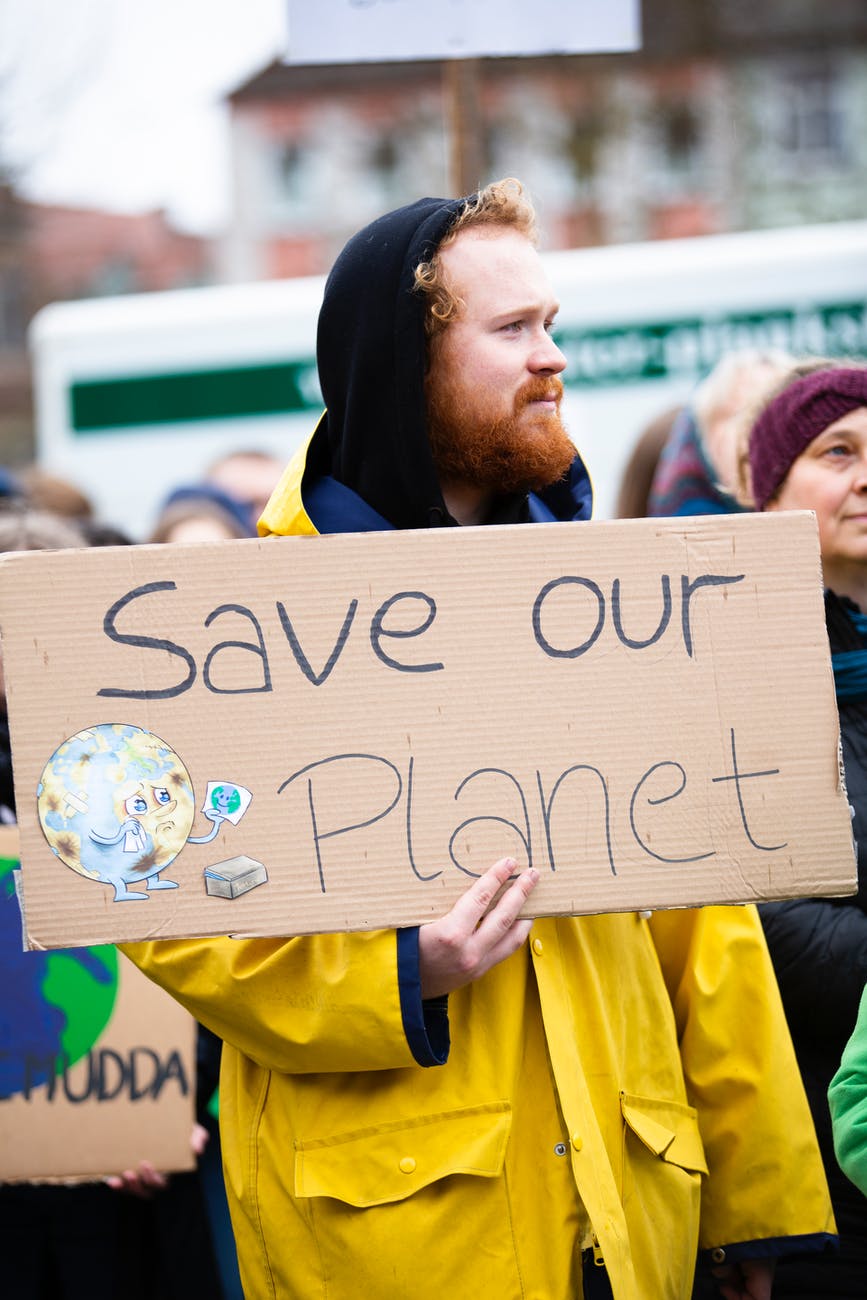
Photo by Markus Spiske on Pexels.com

Temperature change is also accompanied by loss of snow cover, melting permafrost, frequent natural disasters like cyclones. Land surfaces heat more quickly which have resulted in heat waves, forest fires, increase in desert area. These temperature changes are the highest in the Arctic region. Changes in environmental conditions have led to extinction of several wildlife species in forests, coral reefs etc. Rising carbon dioxide emissions lead to rising sea levels, ocean temperatures and ocean acidification. These changes bring in frequent droughts, extreme weather conditions affecting the equilibrium and natural balance.

Almost all countries have come together for climate change under the umbrella of the United Nations Framework Convention on Climate Change (UNFCCC). The convention aims to “prevent dangerous anthropogenic interference with the climate system”. It has instructed policy makers that there is much greater risk to human and natural systems if the warming goes above 1.5 °C compared to pre-industrial levels. Under the Paris Agreement, nations have made climate pledges to reduce greenhouse gas (GHG) emissions, but even after following those, global warming would still reach about 2.8 °C by 2100. To prevent this from happening and limit the warming to 1.5 °C, methane emissions need to decrease to near-zero levels and carbon dioxide emissions should reach net-zero by the year 2050.

Photo by Markus Spiske on Pexels.com

Governments should act immediately and policies should be constructed to reduce fossil fuel emissions, increase reforestation, forest prevention, use of low carbon energy technologies, food preservation. All societies should work together towards dealing with future global warming problems in a scientific way. Development of more resistant crops, better disaster management should also be considered.

Several international movements have taken place like Fridays For Future where school students take time off from school to aware people and demand climate change action from governments. They demand action from political leaders of the world for the fossil fuel industry to convert to renewable energy and take immediate measures for climate change. This movement was publicised after Greta Thunberg started a protest outside the Swedish parliament with a poster saying “School strike for climate”. She is an environmental activist who has spoken at several internationally recognised platforms. She started her journey as an activist from the time when she had convinced her parents to change their lifestyle for reducing their carbon footprint. She is known for her straight forward manner of speaking at public platforms and criticizing world leaders for their failure to address climate change. She has participated in the United Nations Climate Change Conference (2018) and UN Climate Action Summit (2019). She has also got several awards and made it into the Forbes list of The World’s 100 Most Powerful Women (2019). Though her popularity at such a young age has made her a target of critics, but she continues to work and struggle towards her goal with indomitable spirit.

Street Food Around the World

One of the best ways to know about the history and culture of a place is to try out its cuisine. Not only does it provide one with a delicious treat, it also speaks a lot about the place and its people. Local cuisines range from elaborate meals to roadside snacks. But I feel, to get the real taste of a place you need to try out its street food. While trying out various dishes from the streets you get to explore a place in the best way possible. Here are some amazing food items from all around the world!

Aloo Chat – South Asia

It is a dish which is made with boiled potatoes, cut into cubes and mixed with different spices and chutney. It is popular in Pakistan, parts of Northern and Eastern India and Bangladesh. Aloo chat is a snack or side dish and it varies from region to region in terms of spices and taste.

Crepe – France

Crepe is a popular pancake like pastry which is popular in France and Belgium. They are made with all kinds of fillings and flavours. There are two types of Crepe – ones that are sweet that are made with wheat flour and ones that are savory which are made with buckwheat flour. Sweet crepes are eaten with fruits, custards, whipped cream or chocolate and savory crepes are served with eggs, mushrooms, cheese and ratatouille.

Chuan – China

Chuans are a type of meat kabab served with spices like black pepper, cumin seeds, sesame and red pepper flakes. These kababs are roasted over charcoal or deep fried in oil. It originates from the Uighur and other Muslim communities of China.

Gelato – Italy

Often confused with ice cream, Gelato is an Italian dessert made with milk, sugar, cream, nuts, fruits and toppings. It is much low in fat than traditional American ice cream and has more flavors which makes it a rich and delicious dessert. There are a lot of flavors including vanilla, chocolate, hazelnut, pistachio.

Hot Dog – United States of America

It is a classic American street food and you can find it in food trucks and restaurants across cities like New York and Chicago. A grilled sausage is served in between a steamed hot dog bun along with mustard, ketchup, onion, cheese and chilli. There are a lot of varieties which differ in shapes, taste and sizes.

Mango Sticky Rice – Thailand

Mango Sticky Rice, also called Khaoniao Mamuang is a popular Thai dessert. It is also eaten in Cambodia, Vietnam and other Southeast Asian countries. A specific form of sticky rice is mixed with coconut milk and is served with Mango slices. The coconut milk is added so that the rice absorbs all the flavour and tastes sweet. It is popular during the peak mango season in Thailand during the summer months of April and May.

Naan – Central Asia & Middle East

Naan is a traditional bread which originated in Central Asia and the Indian subcontinent. It is made with flour, water and ghee. Additional ingredients like milk and yoghurt are also added in different varieties. Made in a tandoor oven, it is a flat bread which is served with other items like curries and fillings. It is served hot brushed with butter and ghee.

Swachh Survekshan 2020

The results of Swachh Survekshan 2020 were announced recently. And for the fourth consecutive year Indore (Madhya Pradesh) came at the first position being the cleanest city in India. Indore was followed by Surat (Gujarat) Navi Mumbai (Maharashtra) Ambikapur (Chhattisgarh) and Mysore (Karnataka) to become the top 5 cleanest cities.

The Swachh Survekshan survey is conducted by the Quality Council of India (QCI) which comes under the Department of Industrial Policy and Promotion within Ministry of Commerce and Industry. Swachh Survekshan survey is part of the Swachh Bharat Abhiyan which was launched by PM Narendra Modi on Mahatma Gandhi’s 150th anniversary.

The objective of this service to make more and more people participate in the swachh Bharat abhiyan and also to include cities in a healthy competition to maintain cleanliness. Swachh Survekshan 2020 is the world’s largest cleanliness survey. It included 4,242 cities and the survey was completed within 28 days. This time proper documentation was done buy open local bodies and the images captured were geotagged. 19 crore citizen feedbacks were collected. Not just this time the survey was fully digitalised that is it was a paperless survey. the survey was marked on total of 6000 marks which was divided into Citizen Feedback (1500), Direct Observation (1500), Certification for Garbage and Open Defecation Free (1500) and Service Level Progress (1200), Swachh Survekshan League 2020 (200).

No Big Discounts This Festive Season

Over the past few months from the period of lockdown not a single mall,retail shops were open.Due to which there was no demand and supply of any particular goods.As in the phased manner the malls and retail shop owner were given permission to get back on to their work.But the trend of buying has already come down of the people due to the financial crisis that they have faced.Many have lost jobs or many were sent on unpaid leaves for time being.

In the upcoming festive season that has started from Raksha Bandhan it has been noted that the season end sale was not there as it used to be previously.Malls have just started their operation and many have not given discounts to the customers and even many online selling sites have not put up their discount hoardings.The reason behind not putting discounts for malls and retail outlets is the fear of Covid-19.This is all applied in the case of apparels and electronic items offline.

The company heads are saying that these trend will definitely be followed as the festive season continues.Less discounts are given because either they have limited stock mostly what remained unsold before the lockdown.If we talk about particular categories like television,discounts that have been given are lowest in 5 years.This is due to shortage of production and supplies.Many retailers are witnessing around 30 to 50% of their average pre-pandemic sales,it has been noted that people are buying only particular thing what is needed.

If we talk about Flipkart and Amazon they did not replied to the comments which were seeking discounts.They said that discounts have already came down.The period from Onam to Diwali account more than 40 to 50% of the electronic sale for most of the companies.It is being noted that demand could exceed supply in the coming months.So this festive season and specially on Diwali we will not be able to see the tagline of “Diwali Khushiyonwali”.Lets hope for the best this festive season.

Women Empowerment: Wind Of Change.

Women empowerment implies the ability in women to take descision with regard to their life and work and giving equal rights to them in all spheres like personal, social, economical, political, legal and so on. Women empowerment has become the buzzword today with women working alongside men in all spheres. They profess an independent outlook, I whether they are living inside their home or working outside. They are increasingly gaining control over their lives and taking their own decisions with regard to their education, career, profession and lifestyle.

With steady increase in the number of working women, they have gained financial independence, which has given them confidence to lead their own lives and build their own identity. They are successfully taking up diverse profession to prove that they are second to none in any respect. But while doing so, women also take care to strike a balance between their commitment to their home and family. They are playing multiple roles of a mother, daughter, sister, wife and working professional with remarkable harmony and ease.

While it is true that women, by and large, do not fave discrimination in society today, unfortunately, many of them face exploitation and harassment which can be of diverse types: emotional, physical, mental, and sexual. They are often subject to rape, abuse and other forms of physical and intellectual violence.

The successive government have implementated various constitutional and legal rights to help women lead purposeful and meaningful lives. There is an increasing awareness about women’s rights which is evident know the emergence of several NGOs and self -help groups. At the individual level too, women are now breaking the shackles if suppression and making their voices hard for their rights.

The parliament of India too has passed various legislations to save momen from various forms of injustice and discrimination. Following are some of these laws to empower women: Equal Remuneration Act – 1976, Dowry prohibition Act-1961, Medical Termination of Pregnancy Act-1971, Maternity Benefit Act-1961, Commission of Sati (prevention) Act -1987, Prohibition Of Child Marriage Act-2006.

More recently in the wake of Nirbhaya case involving the rape and brutal murder of para medical student in Delhi, the Government passed the the Juvenile Justice (Care and protection of Children)Bill,2015. This act makes a significant departure from the earlier Juvenile Justice (Care and Protection of Children) Act, 2000, as the Juvenile age inviting punishment for offense now stands reduced from 18 to 16 years.

If we want to bring about women empowerment in the true sense, there is crying need for the elimination of the male superiority and patriarchal mindset. Also, women need to be given equal opportunities for education and employment without any sense of discrimination. Unless there is attitudinal change in arming them with legal and constitutional rights will be simply inadequate.

Registry Is Part And Parcel of The System: SC

In a fresh, welcome and interesting development, the Supreme Court has just recently on July 6, 2020 in a latest, landmark and extremely laudable judgment titled Reepak Kansal vs. Secretary-General, Supreme Court Of India & Ors. in Writ Petition (Civil) No. 541 of 2020 has taken a stern view of the increasing tendency to blame the Registry for listing some cases more swiftly as compared to others. Justice Arun Mishra who authored this notable judgment for himself and Justice S Abdul Nazeer observed that the Registry which is part and parcel of the judicial system, is blamed unnecessarily for no good reasons. Very rightly so!

                                    To start with, the ball is set rolling in para 1 of this noteworthy judgment wherein it is observed that, “The petitioner, who is an Advocate practicing in this Court, has filed the writ petition under Article 32 of the Constitution of India against various officers of the Registry of this Court and the Union of India. Prayer has been made to issue an appropriate Writ, Order or Direction in the nature of Mandamus directing the respondents not to give preference to the cases filed by influential lawyers/petitioners, law firms, etc. Prayer has been made to direct the respondents to give equal treatment to the cases filed by ordinary lawyers/petitioners and not to point out unnecessary defects, refund the excess court fee and other charges, and not to tag the cases without order or direction of the Court with other cases. A prayer has also been made to direct the Secretary General of this Court to take action against the erring officers for their involvement in the listing, clearing and bench hunting.”

                                      While mentioning the chief grouse of the petitioner, the Bench notes in para 2 that, “It is averred in the petition that equal treatment has not been given to the ordinary lawyers/litigants. They favour some law firms or Advocates for reasons best known to them.”

                                 While mentioning of the first instance, it is then unfolded in para 3 that, “The petitioner’s first instance is that a Writ Petition (Civil) D. No. 10951 of 2020 was filed by him on 16.4.2020. The Registry pointed out three defects, i.e. (1) Court Fee of Rs 530 was not paid, (2) Documents to be placed as per index, and (3) Details given in index were incomplete and annexures were not filed, matter to be rechecked. The petitioner had clarified vide email dated 18.4.2020 that he had paid the court fee of Rs. 730/- and there was no annexure with the petition. However, the petitioner was forced to pay more court fees to get the matter listed. Despite the letter of urgency, the Registry failed to register and list the writ petition. The petitioner requested the Secretary, Supreme Court Bar Association, about not listing the writ petition. On 27.4.2020, the writ petition was listed before the Court.”

                                         While mentioning of the second instance, it is then narrated in para 4 that, “The second instance given by the petitioner is that a Writ Petition (Civil) D. No. 11236 of 2020 was filed on 12.5.2020, which has not been listed by the Registry till today. He was informed that there were no defects in the writ petition, but a copy of the writ petition was missing. After that, no update was given by the Registry.”

                                                 Now coming to the third instance, it is then mentioned in para 5 that, “The third instance given is about Writ Petition (Civil) No. 522 of 2020 (Diary No. 522 of 2020) filed by the petitioner on 20.05.2020. The Dealing Assistant pointed out defects on 26.5.2020. The defects were pointed out by the Dealing Assistant after six days of filing, though the application for urgency was filed in the petition. The following note was made by the Registry:

            “MATTER NEEDS TO BE RECHECK AS WHOLE INDEX IS BLANK, PETITION, AFFIDAVIT, VAKALATNAMA, MEMO OF APPEARANCE AND APPLICATION ALL ARE UNSIGNED AND DEFICIT COURT FEE ETC.”

       The petitioner clarified that the signed documents were already uploaded. The matter was urgent, and he had uploaded them again along with signed documents on 26.5.2020. Again the defects were pointed out on 29.5.2020 by the Dealing Assistant to the following effect:

             “APPLICATION IS NOT PROPER AS HEADING NOT TALLY WITH INDEX AND BE SPECIFIC ABOUT THE SUBJECT AND PRAYER OF APPLICATION.”

       The petitioner cured the defects on 29.5.2020. After that, the Dealing Assistant did not recheck the matter. On 2.6.2020, the petitioner made a call and requested the Branch Officer concerned to direct the Dealing Assistant to recheck the matter. On 2.6.2020, the matter was rechecked and numbered as Diary No. 11552 of 2020. The case was verified on 6.6.2020 and listed for 6.7.2020 (computer-generated) which would make the case infructuous. The application for urgency was not considered. The petitioner was informed that the case was likely to be listed on 6.7.2020. He sent an email about the urgency. The Registry was not willing to list the Diary No. 11552 of 2020 despite the application for urgency. Hence, the writ petition has been filed.”

                                      Truth be told, para 6 then states that, “It is averred that on 23.4.2020, W.P. Diary No. 11006 of 2020 titled as Arnab Ranjan Goswami v. UOI was filed at 8.07 p.m. without annexure. The Registry had chosen not to point out any defects, and a special supplementary list was uploaded on the same day. The category was not specified in the notification to be heard during a nationwide lockdown. No procedure was followed by the Registry for urgent hearing during the lockdown. The petitioner made a complaint to Secretary-General against illegal activities of the Registry but the same is without response.”

                                            To put things in perspective, it is then illustrated in para 9 stating that, “Although defects were noted, Writ Petition (C) Diary No. 10951 of 2020 was listed, heard and finally decided on 27.4.2020. It was filed on 17.4.2020. 18th and 19th April 2020 were the holidays. There were only five working days, and during the nationwide lockdown, the court functioning was minimal. The case was mentioned in the cause list on 26.4.2020 to be listed on 27.4.2020. Thus, it could not be said that there was delay much less inordinate one by the officials of the Registry in listing the matter mentioned above.”      

                                        While continuing in the same vein, it is then revealed in para 10 that, “Concerning the second instance, i.e., Diary No. 11236 of 2020, which was filed by petitioner on 9.5.2020, the Registry has noted several defects on 14.5.2020. The petitioner is still lying with defects.”

                                      Not stopping here, it is then further revealed in para 11 that, “Concerning the third instance i.e., Writ Petition No. 522 of 2020 (D. No. 11552 of 2020), the same was filed on 20.5.2020. Again, a defective petition and defects were pointed out by the Registry on 26.5.2020 that the whole index was blank. Petition, Affidavit, Vakalatnama, Memo of Appearance, and Application were all unsigned with a deficit court fee, etc. The petitioner removed the defects. However, other defects were caused, such as the application filed was not proper as heading did not tally with the index, and specific subjects and prayers were not mentioned. The defects were re-cured, and the petition was re-filed on 3.6.2020. The matter was processed and listed on 9.6.2020 and was heard and dismissed on 12.6.2020 as other matters on the similar issues were pending as such the matter was not considered to be necessary. The petitioner has not disclosed about listing of the case for 12.6.2020, and its decision and averred that the computer-generated date was 6.7.2020. The Registry did not follow the computer-generated date, and the case was listed for 12.6.2020 on which it was dismissed. The petitioner himself was responsible for 12-13 days of delay in removing the defects.”

                                      While dwelling on the out of turn hearing given to eminent journalist Arnab Goswami, it is then pointed out in para 12 that, “As to case of Arnab Goswami, it was listed urgently in view of order of competent authority. It pertained to liberty and freedom of media.”

                                        Of course, it is then also very rightly pointed out in para 13 that, “In the aforesaid circumstances, considering the ongoing pandemic caused by COVID-19, the Registry of this Court is working with less strength, and because of the facts described above and circumstances, we find that there was no justification for the petitioner to allege discrimination vis-à-vis to him and to favour any particular individual. The defects were there in all the three cases filed by the petitioner.”

                                        Furthermore, it is then envisaged in para 14 that, “The petitioner has filed this writ application in a hurry. When it was listed, he circulated a letter to the effect that, as per procedure, he expected that he would be called for interaction by Registrar of this Court to find out his fitness whether he could argue a case in person. The petitioner ought to know that he is an Advocate of this Court and argues the matter in this Court. As such, it was not necessary to summon him for adjudging his capability as to whether he could argue the case. Be that as it may circulating such a letter was not appropriate at his stance and why he doubted his ability to argue. There was no justification to entertain this kind of apprehension in mind. He ought to have been careful in circulating such a letter seeking a wholly unjustified adjournment.”

                                          As if this was not enough, it is then further stated in para 15 that, “In the letter circulated by him, it was further stated that he wanted to collect the evidence and to file it, and for that purpose, he prayed for six weeks time. The conduct indicates that the petitioner was careless and not serious while he made the allegations. He filed writ application without due inquiries, and without collecting the requisite material. Such conduct was least expected of an officer of this Court. Petitioner ought to have been careful before cast of unnecessary aspersions on the Registry and staff of this Court.”

                                     Making matters worse, it is then also brought out in para 16 that, “The petition as filed could not be said to be maintainable. The petitioner has impleaded the Secretary General, various Registrars, and officers of the Registry, SCBA, and Union of India in his writ application. In contrast, Writ is filed against this Court itself. He ought to have impleaded the Supreme Court of India in the Writ Application through Secretary General. The omission indicates careless conduct on the part of the petitioner. The petition was filed in undue haste.”

                                            More significantly, it is then underscored in para 17 that, “We take judicial notice of the fact that a large number of petitions are filed which are defective; still, the insistence is made to list them and mention is made that they should be listed urgently. It happens in a large number of matters, and unnecessary pressure is put upon the Assistants dealing with the cases. We find due to mistakes/carelessness when petitions with defects are filed, it should not be expected that they should be listed instantly. To err is human and there can be an error on the part of the Dealing Assistants also. This is too much to expect perfection from them, particularly when they are working to their maximum capacity even during the pandemic. The cases are being listed. It could not be said that there was an inordinate delay in listing the matters in view of the defects. The Court functioned during the lockdown, the cases were scanned and listed by the Registry. The staff of this Court is working despite danger to their life and safety caused due to pandemic, and several of the Dealing Staff, as well as Officers, have suffered due to Covid-19. During such a hard time, it was not expected of the petitioner who is an officer of this Court to file such a petition to demoralize the Registry of this Court instead of recognizing the task undertaken by them even during pandemic and lockdown period.”   

                                             Let us discuss now in brief the salient points of para 18 wherein the Bench holds that, “We see, in general, it has become a widespread practice to blame the Registry for no good reasons. To err is human, as many petitions are field with defects, and defects are not cured for years together. A large number of such cases were listed in the recent past before the Court for removal of defects which were pending for years. In such situation, when the pandemic is going on, baseless and reckless allegations are made against the Registry of this Court, which is part and parcel of the judicial system. We take judicial notice of the fact that such evil is also spreading in the various High Courts, and Registry is blamed unnecessarily for no good reasons. It is to be remembered by worthy lawyers that they are the part of the judicial system; they are officers of the Court and are a class apart in the society.” Some relevant case laws discussed in detail in this para about the expectations from lawyers include R. Muthukrishnan v. The Registrar General of the High Court of Judicature at Madras, Writ Petition (C) No. 612 of 2016 and Kamini Jaiswal v. Union of India & Anr. (2018) 1 SCC 156.

                                           Most significantly, the Bench then minces no words in para 20 to hold that, “We expect members of the noble fraternity to respect themselves first. They are an intellectual class of the society. What may be proper for others may still be improper for them, the expectations from them is to be exemplary to the entire society, then only the dignity of noble profession and judicial system can be protected. The Registry is nothing but an arm of this Court and an extension of its dignity. Bar is equally respected and responsible part of the integral system. Registry is part and parcel of the system, and the system has to work in tandem and mutual reverence. We also expect from the Registry to work efficiently and effectively. At the same time, it is expected of the lawyers also to remove the defects effectively and not to unnecessarily cast aspersions on the system.”

                                 Be it noted, it is then held in para 21 that, “Thus, we find no ground to entertain the petition. We expect the petitioner to be more careful and live up to the dignity of the profession which it enjoys.”

                                             Finally, it is then held in para 22 that, “We dismiss the petition and impose cost of Rs. 100/- (Rupees One Hundred only) on the petitioner as a token to remind his responsibility towards noble profession and that he ought not to have preferred such a petition.”

                                         In essence, the long and short of this extremely laudable judgment is that lawyers must appreciate and admit that registry is part and parcel of the system and just like Bar is an arm of the Court. Lawyers must refrain from casting aspersions on Registry at the drop of a hat. For the system to operate smoothly, it is imperative that the Bar and the Registry work in tandem and mutual reverence as very rightly pointed out in para 20 that was discussed earlier! There can be no denying or disputing it!

Sanjeev Sirohi, Advocate,

s/o Col BPS Sirohi,

A 82, Defence Enclave,

Sardhana Road, Kankerkhera,

Meerut – 250001, Uttar Pradesh