The law on real estate has not been properly organisaed in the past, which has left the home buyers in lurch, as they ended up paying their hard earned money in the hands of fraudulent builders. We analyse various options under prevailing laws:
The Real Estate Regulation Act, 2016
The Insolvency and Bankruptcy Code, 2016
The Consumer Protection Act, 1986
PROVISIONS UNDER THE REAL ESTATE REGULATION ACT, 2016
RERA seeks to bring clarity and fair practices that would protect the interest of buyers and also impose penalties on errant builders. It enhances certain norms to enhance transparency in real estate sector. Gist of major benefits of RERA are as follows:
Standardized carpet area– in the absence of standard definition of carpet area, the builders followed biased policies and calculation method to their advantage. Sec 2(k) now defines carpet area to mean the net usable floor area.
Reduces the risk of insolvency– Earlier builders were free to divert the funds raised from one project to another or anywhere, in the absence of no end-use monitoring norms. But now, the builder is required to deposit 70% of the amount realized in a separated bank account to be withdrawn as per completion of project, and based on certificate of a civil engineer, architect or Chartered Accountant.
Rights in case of defected possession – in case of any structural defect or any defect in workmanship, quality, provisions or service is discovered within 5 years after the possession, such defect will be rectified by the builder at no extra cost within 30 days. Similarly, buyers have been given rights in case of false promises leading to refund + interest and compensation.
PROVISIONS UNDER THE INSOLVENCY AND BANKRUPTCY CODE, 2016
Under the code the creditors are categorized into two types: Financial or Operational. Financial creditors includes person who have lent money to the debtor against the payment of interest, whereas Operational Creditors includes person who have established certain types of relationship with the debtor company such as the provision of goods and services, employment or Govt. dues. Therefore prior to the amendment “Home buyers” were treated as an orphan as, they were considered to be neither financial creditors nor operational creditors. The delay or default could however be intentional or unintentional such as funding issues, demand and supply situation, developer’s negligence, delay in land clearance, labour availability, ground water, land. Now after this amendment, the allottee1 of home buyers are termed as Financial Creditors.
The sums paid by the Home Buyers to a builder will be considered as financial debt. This enables home buyers to file petition u/s 7 of the code to start insolvency proceedings against a defaulting builder company. Further, according to section 238 of the IBC, if there is any inconsistency between IBC and another law then the IBC will prevail. In the light of same provision both the enactments i.e. RERA and IBC shall be read harmoniously to provide relief to the homebuyers and in case of inconsistency, IBC shall prevail over RERA enabling the homebuyers to approach NCLT without any hesitation.
PROVISIONS UNDERTHECONSUMER PROTECTION ACT, 1986
The widely used Consumer Protection Act had been best choice for the consumers to seek redressal of their disputes. However, the pecuniary jurisdiction has always been a matter of debate. Sometimes consumer courts were found to be highly burdened with the complaints, resulting into unreasonable delay in disposal of complaints. This delay has not encouraged consumers to take up their disputes. The tendency of consumers is that whenever there is any urgency there must be fast remedy. The delay practice has made consumer courts at par with the civil courts. The object of creating special forum under special law has been defeated. Under the law exploring multiple options at a same time is not allowed, unless the additional remedy is a criminal proceeding starting from registration of FIR against the respondent for having committed a criminal offence.
Pecuniary jurisdiction: District commission will have jurisdiction over the cases where the value of goods and services and the compensation claimed does not exceed Rs. 20 lakhs. State Commission shall have jurisdiction if value exceeds Rs. 20 lakhs but does not exceed 1 crore[1]. The National Commission will have jurisdiction where value exceeds Rs. 1 Crore.[2] However, with the amended Act, the jurisdiction has increased to Rs. 1 Crore, and 10 Crore as against Rs.
20 lakhs and Rs. 1 Crore respectively.
Arbitration: An alternative
The consumers, particularly the home buyers started looking at arbitration as an alternative remedy. Arbitration is certainly a fast remedy and has proved to be effective in most of the cases. But in respect to disputes of home buyers, the arbitration clause is so twisted in favour of builders that the innocent home buyers cannot have say in appointment of arbitrator. The builders will usually appoint an arbitrator of their own choice; hence the controlling power is vested with the builder. Although, there has been an amendment in the Arbitration Act, 2015. The amendment has inserted 7th schedule which specifically prohibits appointment of related party as Arbitrator. So, be careful while drafting such clauses on Arbitration so that the contract can be enforced. This is generally a myth that the appointing party shall conduct the affairs of arbitration. Whereas the conduct of Arbitrator is regulated and the law puts various checks and balance so that the arbitrator does not deliver biased orders, in addition to decision of arbitrator called arbitral award can be challenged in certain situations, and if found week on the given parameters, the award can be set aside and not binding.
Therefore, with great initiatives of the current Govt. to promulgate new laws, buyers are expected to get effective remedies.
Social media platforms such as Instagram and Facebook have become very popular in the lives of many people. With adolescents and young adults, especially young women, being the first users of such platforms, it is an important question whether the use of social media contributes to self-esteem, self-esteem, body image, and physical dissatisfaction. Researchers have begun to question the intensity of these questions, and recent studies have shown mixed results. The current article attempts to review these findings and provide possible explanations for the effects of social media use on physical dissatisfaction, with a focus on Instagram, Facebook, and other popular photo-based platforms.
“Social media is not real life,” said Essena O’Neill, a 19-year-old Australian Internet star who quit social media in November 2015 to prove that social media is a way for self-promotion. Essena has been a star on Instagram, Tumblr, YouTube and other social media platforms, with more than 600,000 followers on Instagram alone (McCluskey, 2016). As soon as he was silent, his followers and friends were in a commotion. They called the Australian man and accused him of deliberately closing his social media accounts in order to attract more attention and attention. His followers, friends and acquaintances began posting blogs and videos in response to Essena’s withdrawal from social media, with some even sending death threats.
In the same week Essena left Instagram, The Guardian’s Mahita Gajanan (2015) asked some young women about their self-esteem and confidence and their experience with social media. His discovery was in line with Essena’s; most of the women interviewed felt insecure. Many young women have reported staring at the number of “likes” they get, fearing that they don’t look good with their photos, think people think they look different on social media than in real life, and ask what aspects of their lives people can get the glory of. It was a common theme for women to spend a lot of time thinking about what image they should upload, upload a picture and constantly look at their page to see calculations such as, “which in turn increases their self-esteem.” Although many women are aware of these practices, they are consumed by their need to enter social media and strive to disrupt their habits. Many young women have reported that they live their lives through social media and view media presence as more important than real life. This focus on social media sources and subsequent compulsive behavior may contribute to physical satisfaction. To date, however, the findings of the study have been mixed, and the exact relationship between social media behavior and physical dissatisfaction is unclear.
The Influence of the News
The use of social media in particular has grown significantly in the last decade and continues to be a problem. The Pew Research Center shows that 71% of 13- to 17-year-olds use Facebook, 52% use Instagram, and 41% use Snapchat in 2015. Young girls using social media platforms are more frequently used than their male counterparts; 61% of girls use Instagram compared to 44% of boys. This increase in social media use, particularly Facebook and Instagram, could negatively affect adolescent girls and young women in terms of their self-esteem and physical satisfaction (Lenhart, 2015).
Some researchers have suggested a link between physical dissatisfaction and eating disorders with exposure to fashion magazines or television shows for women (Grabe et al., 2008; Levine & Murnen, 2009). These studies examined the emergence of media forms and body image to show that there may be a link between looking at small body images and dissatisfaction with her body. Another study by Becker and colleagues (2011) shows that media effects can occur even externally. The authors have learned whether direct and indirect media exposure (e.g., television, videos, CD players, MP3 players, internet access, phone access) is associated with pathology diets in young Fiji girls. They found a link between direct media exposure (e.g., personal media exposure) and mass media exposure (e.g., media exposure to people in the same peer group) on pathology diets in Fiji girls. Although there are limitations, such as the question of whether the findings can be documented in general (Becker et al, 2011), this study suggests that at least in this case, social networks play an important role in media interactions and dietary pathology, which may increase media interactions and physical dissatisfaction.
However, these findings should be taken with the knowledge that some investigators did not find a link between viewing media-based images and physical dissatisfaction. Holmstrom (2004) conducted a meta-analysis on pre-existing literature and focused on general media exposure and body dissatisfaction, body image and dietary pathology. Holmstrom focused on 34 subjects that used the media as an independent variant and a dissatisfaction with body image as the reliability and size of the overall result were minimal. Surprisingly, research has shown that women report that they feel better about their bodies after looking at excessively fat photos and have no change in body image after looking at thin bodies. These findings undermine the relationship between the image and the media and suggest the need for further investigation.
A recent meta-analysis by Ferguson (2013) enhanced the work of Holmstrom (2004), Grabe and colleagues (2008) and other researchers, and included the findings from 204 studies. The main point Ferguson honored was the publication of choice; precisely, that significant statistical results are likely to be published and empirical findings are non-existent, by a meta-analysis of a collection of biased findings. Ferguson (2013) did not find a relationship between media and physical satisfaction for men, however, there was a high, but very small, increase in women, especially for those with a desire for body image problems. Overall, meta-analyzes have encouraged researchers to be more secure in their studies of the relationship between social media and physical dissatisfaction because of the magnitude of the impact effect, the design limitations of the study, and the bias bias.
In a Summary
The popularity of the media, especially the media, in its youth makes it a powerful force for good. The findings discussed above provide the basis for future research and open up important discussions on how the use of social media can influence physical dissatisfaction. However, a lot of research is related, and the mechanisms for triggering possible relationships are still unknown. Most of the findings may apply to one person and may not be available to the general public. More work is needed in the future to distinguish between possible annoyances such as peer pressure and image editing. Scientists have identified specific areas to focus on, such as the need to specify moderate formulations (i.e., whether the result may be foodborne illness, physical dissatisfaction, etc.) and design a comprehensive study based on the limitations of previous research (Holmstrom, 2004; Ferguson, 2013). All in all, apart from the mixed findings and limitations of previous studies, previous research seems to note the relationship between social media and physical dissatisfaction, even though the nature and strength of the relationship remains unknown.
The Code was enacted in 2016 following decades of recommendations suggesting improvements to the previous insolvency regime, which was fragmented, fraught with delays and resulted in poor recoveries for creditors. [1]
The insolvency resolution process in India has in the past involved the simultaneous operation of several statutory instruments.
These include the Sick Industrial Companies Act, 1985, the Securitisation and Reconstruction of Financial Assets and Enforcement of Security Interest Act, 2002, the Recovery of Debt Due to Banks and Financial Institutions Act, 1993, and the Companies Act, 2013.[2]
Broadly, these statutes provided for a disparate process of debt restructuring, and asset seizure and realization in order to facilitate the satisfaction of outstanding debts. [3]
As is evident, a plethora of legislation dealing with insolvency and liquidation led to immense confusion in the legal system, and there was a grave necessity to overhaul the insolvency regime.
All of these multiple legal avenues, and a hamstrung court system led to India witnessing a huge piling up of non-performing assets, and creditors waiting for years at end to recover their money. [5]
The Bankruptcy Code is an effort at a comprehensive reform of the fragmented regime of corporate insolvency framework, in order to allow credit to flow more freely in India and instill faith in investors for speedy disposal of their claims. [4]
The Code consolidates existing laws relating to insolvency of corporate entities and individuals into a single legislation.
The Code has unified the law relating to enforcement of statutory rights of creditors and streamlined the manner in which a debtor company can be revived to sustain its debt without extinguishing the rights of creditors[5]:-
1) The scheme of the Code marked a sea change from the previous regime. In respect of corporate entities, the Code introduced a creditor-in-control regime (with a focus on empowering financial creditors), a time-bound resolution process and reduced scope for judicial intervention, and established institutions such as the Insolvency and Bankruptcy Board of India, insolvency professionals and information utilities.[6]
Since the implementation of this new regime, the constitutional validity of various provisions of the Code has been challenged before various High Courts, and the Supreme Court.
Applicability
The Code provides creditors with a mechanism to initiate an insolvency resolution process in the event a debtor is unable to pay its debts. The Code makes a distinction between Operational Creditors and Financial Creditors. [7]
A Financial Creditor is one whose relationship with the debtor is a pure financial contract, where an amount has been provided to the debtor against the consideration of time value of money (“Financial Creditor”).
Recent reforms have sought to address the concerns of homebuyers by treating them as ‘financial creditors’ for the purposes of the Code. [7]
By a recently promulgated ordinance, the Insolvency and Bankruptcy Code (Amendment) Ordinance, 2018 (“the Ordinance”), the amount raised from allottees under a real estate project (a buyer of an under-construction residential or commercial property) is to be treated as a ‘financial debt’ as such amount has the commercial effect of a borrowing.[7]
The Ordinance does not clarify whether allottees are secured or unsecured financial creditors. Such classification will be subject to the agreement entered into between the homebuyers and the corporate debtor.
In the absence of allottees having a clear status, there may be uncertainty about their priority when receiving dues from the insolvency proceedings. [7]
An Operational Creditor is a creditor who has provided goods or services to the debtor, including employees, central or state governments (“Operational Creditor”). A debtor company may also, by itself, take recourse to the Code if it wants to avail of the mechanism of revival or liquidation. [7]
In the event of inability to pay creditors, a company may choose to go for voluntary insolvency resolution process – a measure by which the company can itself approach the NCLT for the purpose of revival or liquidation. [7]
What was the judicial approach to the Insolvency and Bankruptcy Code?
SERIES OF JUDICIAL PRONOUNCEMENT
With almost more than two years since the introduction of the Code, there have been various challenges in the effective implementation of the Code. However, constructive interpretation by the judiciary coupled with effective amendments to the Code has helped in eradicating most of these teething issues. [8]
Some of the key judicial pronouncements are discussed below:
The Insolvency and Bankruptcy Board of India which is the regulatory and supervisory body in charge of the IBC, has done a commendable job in proactively spreading awareness and regulating the space. [9]
Many important judgments were pronounced throughout the year, including certain landmark cases, where in the Supreme Court has tried to ensure that the spirit of the Code is given primacy over procedural requirements. [9]
Suspended Board of Directors of Corporate Debtor Entity are entitled to access the resolution plan and other related documents:-
In a significant judgments delivered on January 31, 2019, the Hon’ble Supreme Court of India decided on an important aspect with respect to the rights of the suspended board of directors of the Corporate Debtor Entity to receive and access the resolution plan and other related documents, whose case has been admitted by the Adjudicating Authority under the relevant provisions of the Code. [10]
Facts of the Case:
In respect of Mr. Vijay Kumar Jain, Director of Corporate Debtor (‘Appellant’) vs. Standard Chartered Bank and Ors. (As ‘Financial Creditors’), the NCLT had approved the appointment of Resolution Professional (‘RP’) to conduct Corporate Insolvency Resolution Process of Corporate Debtor Company i.e. Ruchi Soya Industries Limited (‘RSIL’). [10]
The appellant, being a member of the suspended board of RSIL, was given notice and agenda for the first meeting of Committee of Creditors (‘CoC’) and was permitted to attend the meeting of CoC. The appellant alleged that he was not granted permission to participate in subsequent meetings of CoC. [10]
As a result, the appellant filed a miscellaneous application before the NCLT to allow his participation in the subsequent meetings of CoC. The appellant also executed a Non-Disclosure Agreement (‘NDA’) to keep information received through participation in the CoC meeting strictly confidential and even undertook to indemnify RP. [10]
However, NCLT vide its order dated August 1, 2018 dismissed the said application of appellant with liberty to the appellant to attend the COC meetings, but not to insist upon the CoC or RP to provide information which is considered as confidential by the CoC or RP. [11]
Against the said order of NCLT, the appellant filed an appeal before the Appellate Tribunal, which recognized the right of appellant to attend and participate on the CoC meetings but Appellate Tribunal vide its order dated August 9, 2018 [12] denied the prayer of the appellant to have access to certain documents including sensitive resolution plan.
The appellant aggrieved by the order of the NCLAT, filed an appeal before the Hon’ble Supreme Court of India. [13]
Apex Court Observations and Findings:
On advertising relevant provisions of the Code and arguments of parties to the dispute, the Supreme Court opined that notice of each meeting of the CoC will have to be given to the suspended board of directors of the corporate debtor entity. [14]
The Supreme Court further noted that the statutory scheme of IBC makes it clear that though the suspended board are not members of the CoC, yet, they have a right to participate in each and every meeting held by the CoC and also have a right to discuss along with members of the CoC, resolution plan that are presented at such meeting. [14]
The Supreme Court further observed that Section 31(1) of the Code make it clear once the resolution plan is passed by the Adjudicating Authority, it shall be binding on the corporate debtor together with guarantors and other stakeholders. [14]
This being the case, it is clear that the erstwhile board of directors, which consists of persons who may have given personal guarantees for the debts owed by the corporate debtor, will be bound by the resolution plan, and therefore, have a vital stake in what ultimately gets passed by the CoC’s.[14]
The Supreme Court also made it clear that so far as confidential information is concerned, RP can take an undertaking in the form of NDA from suspended board of directors of the corporate debtor entity with an objective to maintain strict confidentiality in regard to resolution plan and other related documents. [14]
Further, according to Regulation 39(5) of IBBI (Insolvency Resolution Process for Corporate Persons) Regulations, 2016, the RP shall forthwith send a copy of the order of the Adjudicating Authority approving or rejecting a resolution plan to the participants and resolution applicant. The term ‘Participants’ includes members of the erstwhile Board of Directors of Corporate Debtor. [14]
Thus in view of the above, the Supreme Court allowed the appeal and set aside the impugned order of the Appellate Tribunal. [14]
What was the result of Insolvency and Bankruptcy Code in the present scenario? Also cite relevant case laws.
IBC came into being repealing SICA (Sick Industrial Companies Act), SICA was repealed with effect from 1 December 2016. [15]
To know the background of IBC, it is important to know more about SICA and why it failed to prevail as a law. [15]
This is the exact rationale for the existence of The Insolvency and Bankruptcy Code in India which has been into effect since 2016. [15]
To know the background of IBC, it is important to know more about SICA and why it failed to prevail as a law. [15]
The journey from SICA to IBC
The SICA, 1985:-
The name SICA, itself connotes the reason for its actuality. India witnessed an atmosphere of rampant industrial sickness in the 1980s in furtherance of which the Government of India came up with key legislation i.e. the Sick Industrial Companies Act to combat the issue. [15]
Widespread industrial sickness affects the economy in a number of ways, thus The Act came into being to spot the sick or potentially sick companies owning industrial undertakings and take speedy remedial measures for their revival or in a scenario where there is no such measure, close such units. [15]
This was an action to get the locked up investment in such industrial units released and use them in a more productive manner. SICA was repealed and replaced by the Sick Industrial Companies (Special Provisions) Act of 2003, which diluted certain provisions of SICA and filled certain gaps. [15]
One of the main changes to the new law was that, in addition to combating occupational diseases, it also aimed to reduce the growing incidence by ensuring that companies do not use a medical certificate simply to evade legal obligations and access concessions granted to financial institutions to receive. [15]
The comprehensive performance of the Act did not live up to the expected results and thus, IBC was notified as on 28th May 2016 and the repeal of SICA came into full effect from December 1, 2016. [15]
IBC Kicks In
Mistakes of the past were taken in view and The Insolvency and Bankruptcy code came into being with a wider scope and aiming to resolve the issues via more effective provisions and implementation. It is an act to consolidate and amend the laws having reorganization and insolvency resolution issues as the subject-matter. [15]
The provisions of the Act shall apply to the following in case of insolvency, liquidation, voluntary liquidation or bankruptcy; [15]
“An Act to consolidate and amend the laws relating to reorganisation and insolvency resolution of corporate persons, partnership firms and individuals in a time bound manner for maximisation of value of assets of such persons, to promote entrepreneurship, availability of credit and balance the interests of all the stakeholders including alteration in the order of priority of payment of Government dues and to establish an Insolvency and Bankruptcy Board of India, and for matters connected therewith or incidental thereto.
Whether the expression “and” occurring in section 8(2)(a) may be read as “or”?
The Court held that the expression “and” occurring in section 8(2)(a) may be read as “or” in order to further the object of the statute and/ or to avoid an anomalous situation – once the operational creditor has filed an application, which is otherwise complete, the adjudicating authority must reject the application under Section 9(5)(2)(d) if notice of dispute has been received by the operational creditor or there is a record of dispute in the information utility – So long as a dispute truly exists in fact and is not spurious, hypothetical or illusory, the adjudicating authority has to reject the application – A “dispute” is said to exist, so long as there is a real dispute as to payment between the parties that would fall within the inclusive definition contained in Section 5(6). [16]
2) Surendra Trading Company Vs. Juggilal Kamlapat Jute Mills Company Ltd. & Others- Supreme Court:
The time limit prescribed in IBC, 2016 for admitting or rejecting a petition or initiation of CIRP under proviso to sub-sec. (5) of Sec. 9, is directory. [17]
The question before the NCLAT was to whether time of fourteen days under section 9(5) given to the adjudicating authority for ascertaining the existence of default and admitting or rejecting the application is mandatory or directory. [17]
NCLAT hold that the mandate of sub-section (5) of section 7 or sub-section (5) of section 9 or sub-section (4) of section 10 is procedural in nature, a tool of aid in expeditious dispensation of justice and is directory. [17]
Further question (with which supreme Court is concerned) was as to whether the period of seven days for rectifying the defects under proviso to sub-section (5) of Section 9 is mandatory or directory. The aforesaid provision of removing the defects within seven days is directory and not mandatory in nature. [17]
3) Essar Steel India Ltd. Vs. Reserve Bank of India-
RBI is authorized to direct any banking company to initiate insolvency resolution process- Gujarat High Court. [18]
A long-drawn legal battle for Essar Steel ends with this Supreme Court judgment. In one of the most discussed cases under IBC i.e. the case of Essar Steel Limited, the Supreme Court delivered its judgment which would probably be the final judgment of the case. Key highlights of the Essar Steel Supreme Court judgment are as follows: [19]
The requirement of completing the corporate insolvency resolution process within 330 days from the insolvency commencement date as introduced by the 2019 Amendment Act was held as non-mandatory. [19]
CoC can delegate its administrative powers or power of negotiation with the resolution applicants to a smaller committee (sub-committee) since such acts would be ultimately required to be approved and ratified by the CoC. [19]
Prospective resolution applicant has a right to receive complete information as to the CD, debts owed by it, and its activities as a going concern and as such it cannot suddenly be faced with “undecided” claims after the resolution plan submitted by it has been accepted. [19]
To put an end to uncertainty, parameters were laid down for limiting the scope of interference of Adjudicating Authority and Appellate Authority with the commercial decision taken by the requisite majority of CoC. [19]
The Supreme Court has re-emphasized the primacy of the commercial wisdom of the CoC in relation to resolution of the corporate debtor as well as difference in treatment of unequally placed creditors based on its earlier decisions in Swiss Ribbons and K. Sashidhar cases. [19]
Why are the judgments of the Insolvency and Bankruptcy cases pending with court?
The judgments of the cases are pending with the Court due to the Causes for the delays which range from frivolous challenges by operational creditors and promoters to basic issues like shortage of judges. [20]
There is no stipulated time-line for operational creditors to challenge the rejection of their claim, shortage of members at the bench, allowing intervention by promoters at the admission stage and long gaps between conclusion of hearing and passing of written orders are all causing delays,” said Sapan Gupta, national head banking and finance practice at Shardul Amarchand and Mangaldas. [20]
To be fair, delays are not a peculiarly Indian phenomenon. Many advanced countries struggle to provide quick, high-quality justice to citizens. But in India the scale of the problem is unprecedented. Focusing on capacity alone won’t reduce delays. [21]
A pervasive reason for the delays is adjournments. Many advanced countries struggle to provide quick, high-quality justice to citizens. But in India the scale of the problem is unprecedented.[21]
Conclusion
In conclusion, the Insolvency and Bankruptcy Code, 2016, is a progressive legislation that is intended to improve the efficiency of insolvency and bankruptcy proceedings in India. The new legislation provides for the early detection of financial distress and a time bound process for resolution. [22]
However, many details on the IBC’s implementation need to be worked out in the regulations, and its success will depend to a large extent on how quickly a high quality cadre of insolvency resolution professionals will emerge and on whether the time bound process for insolvency resolution will be adhered to in practice. [22]
The IBC has taken its first steps to regularize the insolvency process in India. It has amended over 11 legislations in India, bringing about one of the most significant changes to commercial laws in India in recent times. However, the 22 months of this nascent legislation have been ridden with controversies and speedy resolutions. [23]
It has also become a very important tool for banks to regularize multitudes of non-performing assets plaguing the country’s economy. Within 7 months of the enactment of the IBC, the Reserve Bank of India released a list of 12 companies which held about 25% of the gross non-performing assets of the country.[23]
With more than 11% of all loans in India being terms as bad loans, the IBC has become the need of the hour. The IBC has brought a plethora of changes to insolvency laws in India and aims to reduce the amount of bad loans that has saddled the economy over the last few years. [23]
We are beginning to see this through various companies successfully concluding their insolvency process. The first successful case of a CIRP was that of Bhushan Steel wherein TATA Steel agreed to purchase Bhushan Steel for Rupees Thirty-Two Thousand Five Hundred Crores. [23]
With many more insolvency resolution processes in the pipeline, only time will tell if the IBC will prove to be a successful tool with its objective of streamlining the insolvency process in India. [23]
1) Bankruptcy Law Reforms Committee, The Interim Report of the Bankruptcy Law Reforms Committee (2015).
2) Rule 2.1.1. of RBI Master Circular – Prudential Norms on Income Recognition, Asset Classification and Provisioning – Pertaining to Advances defines an NPA as ‘An asset, including a leased asset, becomes non-performing when it ceases to generate income for the bank. A ‘non-performing asset’ (NPA) was defined as a credit facility in respect of which the interest and/ or installment of principal has remained ‘past due’ for a specified period of time.
3) It must be noted that creditors having outstanding debts continue to have the right to approach an appropriate forum like civil courts or arbitral tribunals for recovery of debts which would be a contractual right of recovery.
4) As cited in the “Abstract” of “Emerging Jurisprudence on Corporate Insolvency” by Shipra Sayal Institute of Law, Nirma University, Ahmedabad, Gujarat, India.
5) As cited in the “Introduction” Para of “A Primer on the Insolvency and Bankruptcy Code, 2016” by Nishith Desai Associates:- The Legal and Tax Counseling Worldwide.
6) As cited in the “Introduction” para of “Understanding the Insolvency and Bankruptcy Code, 2016:- Analysing the developments in jurisprudence” by “Vidhi Bankruptcy Research Programme” at the Vidhi Centre for Legal Policy and the Legal Division of the Insolvency and Bankruptcy Board of India.
7) As cited in the “Applicability” Para of “A Primer on the Insolvency and Bankruptcy Code, 2016” by Nishith Desai Associates:- The Legal and Tax Counseling Worldwide.
8) As cited in the “4th Para ,viz, Series of Judicial Pronouncement” of “Series of Judicial Pronouncement – Insolvency and Bankruptcy Code, 2016” written by Rushabh Ajmera on TaxGuru.
9) As cited in the “Introduction” Para of “Insolvency and Bankruptcy Hotline:- ANALYSING 2018 THROUGH THE LENS OF THE INSOLVENCY CODE” written on January 17, 2019 by Nishith Desai Associates.
10) As cited in the “4th Para” viz, Series of Judicial Pronouncement” of “Series of Judicial Pronouncement – Insolvency and Bankruptcy Code, 2016” written by Rushabh Ajmera on TaxGuru Website India 11 months ago.
11) As cited in “NCLT pronounced order on August1, 2018”.
13) As cited in “Facts of the Case Para” of “Series of Judicial Pronouncement – Insolvency and Bankruptcy Code, 2016” by Rushabh Ajmera 11 Months ago on TaxGuru India Website.
14) As cited in ” Apex Court Observations and Findings Para” in “Series of Judicial Pronouncement – Insolvency and Bankruptcy Code, 2016” by Rushabh Ajmera 11 Months ago on TaxGuru India Website.
15) As cited in “IBC (Insolvency and Bankruptcy Code, 2016) – The Bankruptcy Law of India” written by Vidushi Trehan, LL.M from Symbiosis Law School, Pune , Intern at Khurana & Khurana, Advocates and IP Attorneys.
16) As cited in “Brief about decision para” in ” “and” occurring in section 8(2)(a) may be read as “or”- Mobilox Innovations (P) Ltd. Vs. Kirusa Software (P) Ltd.- Supreme Court” written by IBC LAWSon September 21, 2017.
17) As cited in “Case Name: M/S. Surendra Trading Company Vs. M/S. Juggilal Kamlapat Jute Mills Company Limited and Others” written by IBC LAWS on September 18, 2017
18) As cited in “RBI is authorised to direct any banking company to initiate insolvency resolution process- Essar Steel India Ltd. Vs. RBI- Gujarat High Court” written on July 17, 2017 by IBC LAWS.
19) As cited in “The Insolvency And Bankruptcy Code In 2019 : Recent Amendments And Key Judgments” written by Mayur Shetty and Chintan Gandhi of Rajani Associates on 12th March 2020.
20) As cited in “Delay becomes the norm in insolvency & bankruptcy cases” by Joel Rebello & Saikat Das, ET Bureau on Aug 15, 2019 at 11:25pm.
21) As cited in “Hidden factors that slow our courts and delay justice” written by Arghya Sengupta.
22) As cited in “Insolvency And Bankruptcy Code” written on 12 September 2017 by Samvad Partners.
23) As cited in “2016: Overview Of The Insolvency And Bankruptcy Code, 2016” written by Namrata Bhagwatula , Senior Associate on 20 September, 2018.
Legal concepts of animal cruelty reflect the morality of our society regarding the rights of animals. These concepts especially expose dominant behaviour towards animal exploitation. Omissions in the law which permit abusive animal treatment without legal penalty or threat to prosecution indicate the unquestioning support of such abuse by society. However though our society has acknowledged the need for laws on animal protection, animal welfare is usually not the main focus of these laws. Too often the underlying reason for such legislation is a public interest in shielding property or in avoiding malicious and suspicious activities.
The terminology of anti-cruelty statutes, the implementation of such laws in court, and particular regulatory provisions resulting in the absence of legal prerequisites for practices such as animal laboratory experiments all lead to an obvious conclusion: animals may cherish some levels of immunity, but they do not have rights under the constitution. Unless the legislation acknowledges more than the human interests in avoiding animal cruelty, animals would have no right to be safe from human inhibited pain and suffering.
HISTORY
The very first scriptures of Hinduism, The Vedas (originating in the second millennium BCE), teach all living beings ahimsa or nonviolence. Killing an animal in Hinduism is considered a breach of the ahimsa and cause for bad karma, his prompted many Hindus to adopt vegetarianism. However, Hindu principles do not require vegetarianism and allow the sacrificing of animals in sacred rituals and ceremonies.
India’s first National Animal Welfare Act, the Prevention of Cruelty to Animal Act or the PCA Act (1960), forbids animal cruelty, with exceptions to animal treatment for medicinal or experimental purposes. Consequent legislation has imposed controls and limitations on the use of domestic animals, livestock transport, animal slaughter, animal experimentation and employment of performing animals. General requirements for breeding and usage of animals for research have been set by The Breeding of and Experiments on Animals (Control and Supervision) Rules, 1998. According to the amendment of 2006, animals “lowest on the phylogenetic scale” must be used for experiments. 95% statistical assurance in using the minimum number of animal species and justification should be given for not using non-animal substitutes. Use of living animals in medical education experiments is banned by amendment of 2013. In 2014, ban was imposed on all cosmetic testing done on animals and the import of animal-tested cosmetics products, with this India became the 1st country in Asia to bring out such change.
HOW THE LEGAL RIGHTS OF ANIMALS AGAINST CRUELTY ARE PROPOUNDED?
Animal cruelty is wilful harming, abusing and neglecting of an animal. It is subjecting any animal to cruel mistreatment. Some forms of animal cruelty consist of deliberately placing animals in conditions that harm them, frighten them, and terrorize them.
A precedent was released in 2014 by the Supreme Court of India. It extended the shield of Article 21 of the constitution of India, which safeguards human life and liberty, to all animals. The court said, “Having an inalienable right to live in a safe and clean environment, not to be battered, kicked, bitten, tortured, pried by humans with alcohol or forced to stand in small enclosures amid bellows and crowd groans.”[1]
SOME LEGAL RIGHTS
Article 51A (g) of Constitution of India: It is the fundamental duty of every citizen of India to have compassion for all living creatures.
IPC Sections 428 and 429: To kill or maim any animal, including stray animals, is a punishable offence.
3. Section 11(1) (i) and Section 11(1) (j), PCA Act, 1960: Abandoning any animal for any reason can land you in prison for up to three months.
4. Rule 3, of PCA Act (slaughterhouse rules) 2001 and Ch.4 Food Safety and Standards Regulations, 2011: No animal (including chickens) can be slaughtered in any place other than a slaughterhouse. Sick or pregnant animals shall not be slaughtered.
5. ABC Rules, 2001: Stray dogs that have been operated for birth control cannot be captured or relocated by anybody including any authority.
6. Section 11(1) (h), PCA Act, 1960: Neglecting an animal by denying her sufficient food, water, shelter and exercise or by keeping him chained/confined for long hours is punishable by a fine or imprisonment of up to 3 months or both.
7. Wildlife (Protection) Act, 1972: Monkeys are protected and cannot be displayed or owned.
8. Section 22(ii), PCA Act, 1960: Bears, monkeys, tigers, panthers, lions and bulls are prohibited from being trained and used for entertainment purposes, either in circuses or streets.
9. Rule 3, Slaughterhouse Rules, 2001: Animal sacrifice is illegal in every part of the country.
10. Section 11(1) (m) (ii) and Section 11(1) (n), PCA Act, 1960: Organizing of or participating in or inciting any animal fight is a cognizable offence.
11. Rules 148-C and 135-B of Drugs & Cosmetics Rules, 1945: Cosmetics tested on animals and the import of cosmetics tested on animals is banned.
12. Section 38(J), Wildlife (Protection) Act, 1972:Teasing, feeding or disturbing the animals in a zoo and littering the zoo premises is an offence punishable by a fine of Rs. 25000 or imprisonment of up to three years or both.
13. Section 9, Wildlife (Protection) Act, 1972: Capturing, trapping, poisoning or baiting of any wild animal or even attempting to do and disturbing or destroying eggs or nests of birds and reptiles or chopping a tree having nests of such birds and reptiles or even attempting to do so constitutes to hunting so is punishable by law, with a fine of up to Rs. 25000 or imprisonment of up to seven years or both.
14. Section 11(1) (d) Prevention of Cruelty to Animals, (Transport of Animal) Rules, 2001 and Motor Vehicles Act 1978: Displaying or carrying animals, either in or on a vehicle, in any manner or position that causes discomfort, pain or distress, is a punishable offense under the two Central Government Acts.
CONCLUSION
The claim that animals are not supposed to be mistreated rely upon the same moral values, which offer human beings several fundamental rights. There are not simply a utilitarian criterion for respecting those rights. For example, we don’t accept slavery, even though slaves as oppressed persons are not able to confront people holding rights. It would be safer, at least economically, to hold slaves in the field according to a utilitarian viewpoint. This gross inequality is reprehensible, and the law acknowledges it. Animals, however, are not humans. There are also absurd associations between the exploited people and animals. Today, the notion that animals should have civil rights seems progressive and radical. Therefore, law in all fields importantly take an active part in encouraging animal rights.
Reservation is a fiend that is present in the Indian system for ages now. Right from the education sector till jobs and recruitment, reservation is everywhere. In simple terms, reservation in India is all about reserving access to seats in the government jobs, educational institutions, and even legislatures to certain sections of the population.
Also known as affirmative action, the reservation can also be seen as positive discrimination. Reservation in India is a government policy, backed by the Indian Constitution (through various amendments).
What is the principle of reservation in India?
The two main motives to provide reservation as per the Constitution of India are:
1. Advancement of Scheduled Castes (SC) and the Scheduled Tribes (ST) OR any socially and educationally backward classes of citizens (E.g.: OBC) OR economically weaker sections (EWS) – Article 15 (4), Article 15 (5), and Article 15 (6),
2. Adequate representation of any backward class of citizens OR economically weaker sections (EWS) in the services under the State. – Article 16 (4) and Article 16 (6)
The extent of Reservation in India
In India, reservation is provided in:
1. Government Educational Institutions (like IITs, IIMs etc.) – as per Article 15 – (4), (5), and (6)
2. Government Jobs (like IAS, IPS etc.) – as per Article 16 – (4) and (6)
Before 2019, the reservation was provided mainly based on social and educational backwardness (caste). However, after the 103rd constitutional amendment in 2019, economic backwardness is also considered.
Apart from the reservation quota, additional relaxations like upper-age relaxations, additional attempts, and lower cut-off marks are also provided for various reservation categories.
A vacancy reserved for SCs or STs or OBCs cannot be filled by a candidate other than an SC or ST or OBC candidate, as the case may be.
As seen from the above table, about 60% of seats are reserved in India – for various sections like ST, SC, OBC, and EWS – for Government jobs and Higher Education Institutions. 3% of seats are also reserved for differently-abled persons across all categories.
This also means that only 40% of seats are available under merit. In the merit seats, not only the general category candidates but all other categories like SC, ST, OBC, and EWS can also compete.
History of Reservation System in India – Rectifying the Historical Injustice
To an extent, reservation as a policy is pursued by the State to correct the historical injustice done to certain castes by the so-called “upper castes”. The caste system prevailed in India had alienated many “lower castes” from the mainstream – hindering their development. To a great extent, the repercussions are still felt.
Original Constitution of India has provided reservation only for quota in legislatures – that too only for 10 years until 1960 (article 334). Subsequent amendments to the constitution extended the period of reservation for quota in legislatures.
Provisions of reservations in Educational Institutions and Government Jobs – article 15(4) and Article 16 (4) – were too created employing Constitutional Amendments later. No period is given for the validity of the reservations mentioned in article 15(4) and Article 16(4).
The initial reservations were only for SC and ST [article 15(4) and Article 16(4)]. OBCs were included in the ambit of reservation in 1991 [Article 15(5)]. In 2019, Economically Weaker Sections are also included [article 15(6) and Article 16(6)].
SC/ST Reservation
The objective of providing reservations to the Scheduled Castes (SCs), Scheduled Tribes (STs) in services is not only to give jobs to some persons belonging to these communities. It aims at empowering them and ensuring their participation in the decision-making process of the State.
Besides, the state is also keen to end practices such as untouchability.
Scheduled Castes (SC) are given 15% quota in jobs/higher educational institutions while Schedule Tribes (ST) is given 7.5% quota in jobs/higher educational institutions.
Reservation is provided not only concerning direct recruitment but also for promotions for SC/ST category (Article 16(4A)).
There is no concept of ‘creamy layer’ for SC/ST reservation. This means that irrespective of the income status or the government posts held by the parents, children of SC/ST parents will get SC/ST Reservation.
OBC Reservation
Reservation for Other Backwards Classes (OBC) was introduced based on the Mandal Commission Report (1991). The quota for OBCs is 27% in government jobs and higher educational institutions.
However, there is a concept of ‘creamy layer’ to the OBC reservation. Only those from OBC who comes under Non-Creamy Layer would get OBC reservation.
The creamy layer concept brings income and social status as parameters to exclude some of the privileged members of OBC from the extent of reservation. This concept also keeps a check to ensure that the benefits of reservation do not get extended to subsequent generations.
EWS Reservation
The Central Government of India recently introduced the EWS Reservation. 10% quota is provided for the Economically Weaker Sections (EWS) among General Category candidates in government jobs and educational institutions. This is done by adding clauses for the same in the Indian Constitution (103rd Constitution Amendment Act, 2019).
Reservation is one of the tools against social oppression and injustice against certain classes. Otherwise known as affirmative action, reservation helps in uplifting backward classes.
However, reservation is just one of the methods for social upliftment. There are many other methods like providing scholarships, funds, coaching, and other welfare schemes.
The way the reservation is implemented and executed in India is largely governed by vote-bank politics.
Indian Constitution allowed reservation only for socially and educationally backward classes. However, in India, it became a caste-based reservation instead of class-based reservation.
Initially, the reservation was intended only for SC/ST communities – that too for 10 years (1951-1961). However, it got extended ever since. After the implementation of the Mandal Commission report in 1990, the scope of the reservation was widened to include Other Backward Communities (OBCs).
The benefits of the reservation were successively enjoyed only by a few communities (or families), excluding the truly deserving ones. Even 70 years after independence, the demand for reservation has only increased.
Now, with the introduction of economic criteria for reservation, in addition to the caste-criteria which already existed, things have become more complicated.
Unequal’s should not be treated equally, but is reservation the only solution?
There is no doubt that unequal’s should not be treated equally. However, is the current system of unequal treatment perfect? Is it creating more injustice? Is it the only way out in a welfare-nation? It’s time to introspect.
Reservation based entirely on economic criteria is not an all-in-one solution, though family income can be one of the parameters. Also, it’s time to fix a period for the reservation system – rather than extending it to eternity.
Denying India, the service of the meritorious candidates, who see them being overtaken by others with lesser academic performance or brilliance, is also a crime and injustice.
Aren’t there any alternative mechanisms to uplift the marginalised so that everyone gets equal opportunities? How is affirmative action done in other countries?
A reform in the reservation system of India is the need of the hour. However, as the subject of reservation revolves around a lot of votes, parties are reluctant to disrupt the existing system.
Implications of the Judgement of the Supreme Court:
After this judgement, the members of the SC and ST communities, as mentioned in the Presidential List under Article 341 and 342 of the Constitution of India, will be presumed to be backward on account of their castes.
Such communities will be given reservation in job promotions without the need of any data to act as a proof of their backwardness.
• M Nagaraj vs Union of India, 2006: In this judgement, the Supreme Court ruled that if the state wishes to make a provision for reservation in promotions for SCs/STs, it must:
Collect quantifiable data showing backwardness of a particular class.
Prove inadequacy of representation of that class in public employment.
Prove that such a reservation in promotion would not affect the overall efficiency of public administration.
There is no second question that all castes/classes should be adequately represented in government services. However, which percentage can be called adequate – without compromising the merit or efficiency of the administration?
Is the current level of reservation adequate? Or is it less? Or has it already compromised the merit? What do you think?
Newspapers are one of the most important documents. They can be said to be the powerhouse of information. Moreover, they offer us other benefits as well which helps us in our lives. You become better informed through newspaper reading and it also broadens your perspective. However, newspaper reading is becoming a dying habit. As the world is moving towards digitalization, no one really reads the newspaper. At least not the present generation. The readership is maintained mostly because of the older generations only.
Benefits of Newspaper Reading
Newspaper reading is one of the most beneficial habits. It helps us get acquainted with the current affairs of the world. We get to know about the latest happenings through a reliable source. Similarly, we also get an insight into the different domains including politics, cinema, business, sports and many more.
Furthermore, newspaper reading also results in opening doors to new employment opportunities. Reliable companies post their ads in the newspaper for business and employment opportunities so we see how it is a good place to seek jobs.
Furthermore, we can easily promote our brands and products with the help of newspapers. The consumers learn about the latest deals and launch which connects them to businesses.
Most importantly, it also improves the vocabulary and grammar of a person. You can learn new words and rectify your grammar through newspaper reading.
In addition, a person who reads a newspaper can speak fluently on various topics. They can socialize better as they are well aware of the most common topics. Similarly, it also saves us from getting bored. You won’t need any company if you have a newspaper in hand.
The Dying Habit
Unfortunately, despite having so many benefits, newspaper reading is becoming a dying habit. As people are getting instant updates on their mobile phones and computer systems, they barely read the newspaper. Moreover, electronic gadgets are more convenient for them so they don’t bother to pick up the newspaper.
Moreover, we see that everything has become very convenient and instant now. You can learn about what is happening in the other part of the world as it is taking place. People do not wait for newspapers anymore, as they feel it only states what they have already been informed about. In addition, they do not wait for the next day to read the newspaper about current affairs, as they get it instantly thanks to the internet.
Most importantly, people are themselves running out of the habit of reading itself. Everything has become so visual now that no one bothers to read newspapers, books, novels or more. The internet has made it worse as now there is a video for everything. People won’t mind watching a five-minute video, but will however not prefer to read a five-minute-long article.
It just shows how we’re becoming so inactive and lazy. Everyone just needs things to be served on a platter. Therefore, we must not let this become a dying habit as newspapers are very reliable sources of news. In the absence of these, there will be hardly anyone left to verify the data and information we’re being fed.
It’s essential to know the exact answer to the question: “What is EEO?” The basic EEO definition (or equal employment opportunity) is the idea that everyone should be treated fairly when they’re considered for various employment decisions (including hiring, promotion, termination, compensation, etc.). This means, for example, that anyone competing for a position at a company should have the same chances of succeeding if they’re right for the job.
In the legal sense of the EEO definition, “same chances” or “equal opportunity” means that employers cannot use certain characteristics as reasons to hire or reject candidates or make other employment decisions; in other words, they cannot discriminate against those characteristics. In many countries, protected characteristics include:
Race / color
National origin / ethnicity
Religion
Age
Sex / gender / sexual orientation
Physical or mental disability
EEO doesn’t guarantee that people of underrepresented groups will get hired. The purpose of EEO regulations is to make sure nobody will face rejection or difficulties because they’re in a protected group.
For example, under several EEO laws, you cannot reject a candidate simply because they’re Jewish or Christian, African or Caucasian, or because they’re pregnant. Similarly, you cannot advertise jobs asking for candidates of a certain age, and you cannot promote men over women – you can only base this decision on each person’s proven capabilities, performance and other objective criteria, rather than biases against protected groups.
If your company fails to comply with equal employment opportunity regulations, you may face complaints, lawsuits and fines. There are also the intangible costs associated with having a uniform instead of diverse workforce; you’re missing out on the benefits of different perspectives and approaches to the work at hand.
To keep track of how EEO compliant organizations are, U.S. regulations require some employers to file the EEO-1 report. Generally, if you have more than 100 employees, or you’re a federal contractor with more than 50 employees and a federal contract worth more than $50,000, you’ll need to file an EEO-1 report.
Bona fide occupational qualification
Equal employment opportunity that concerns protected characteristics does have some exceptions. These exceptions of the EEO definition are bona fide qualifications (or “genuine occupational qualifications” in the UK) for a specific job. The nature of certain jobs may allow you to make an employment decision based on one of the protected characteristics.
For example, if you’re hiring for an actor to play a teenager, you can hire a person more closely to the age of the film character, rather than a middle-aged actor. Or, if a company makes clothes for men, it can advertise for male models. Another example is when a religious organization of a certain faith hires only candidates who share that faith if their job is related to it (for instance, when they are members of the clergy.)
Affirmative action
There’s another special case when considering specific protected characteristics. This comes in the form of affirmative action: the conscious, proactive pursuit of gender balance and diversity in an organization by supporting protected groups who are traditionally discriminated against.
For example, if your software development team is all white males, you can lawfully partner with associations of female, African or Asian engineers to find great candidates and assemble a team that is more representative of the society where they’ll be working. You still shouldn’t make the final hiring decision because of a person’s protected characteristic; you can only try to attract diverse candidates to broaden your talent pool.
This logic extends to fully formed programs that support affirmative action through education. Introducing training programs to combat hidden biases of hiring teams is an effective way to reduce unconscious discrimination.
Yet, because race-based affirmative action was banned in some U.S. states, the road is open for other effective EEO strategies. At the very least, craft an EEO policy to ensure your employees know you value fairness and diversity.
Equal Employment Opportunity should extend beyond the law
Using arbitrary and non-job-related criteria is the surest way to unfairly discriminate against people, even unwittingly. For example, when screening resumes, consider whether a person’s degree from a prestigious school truly speaks to their suitability for the job you’re hiring for. It’s not illegal to only hire candidates from Ivy League schools, but it certainly narrows your talent pool and reduces the chances of you finding the absolute best candidate out there. Make sure you always use the most objective criteria possible.
Of course, equal opportunity, diversity and relevant laws keep evolving. Different countries or states might enact new regulations, and companies might try out new EEO strategies. Be sure to check for updates regularly and don’t be afraid to test new ways of building a fair, ethical workplace.
The keydifference between motivation and morale is that morale is a feeling of enthusiasm and encouragement that comes from an individual, whereas motivation refers to an individual’s drive to get a task done.
Motivation and morale are two concepts for establishing a positive work environment. Both these can ultimately contribute to high productivity, and low staff turnover. However, it is important to understand the difference between motivation and morale in order to make use of these concepts.
What is Motivation?
Motivation is the process of stimulating people to actions to accomplish goals. In other words, motivation involves stimulating desire and energy in people so that they show continuous interest and commitment to a job or role or to make an effort to achieve a goal. Human Resource models describe two types of motivation: intrinsic motivation and extrinsic motivation.
Extrinsic motivation refers to motivation that comes from external factors. For instance, you can motivate employees by offering incentives or promotions. In contrast, intrinsic motivation refers to motivation that comes from self-satisfaction. It is important to note that intrinsic motivation is more favourable than extrinsic motivation.
Factors that motivate people differ from one person to another. However, motivation is something that needs to be activated within the individual. There are different theories that describe motivation and factors that affect it.
In a workplace with high motivation, employees are willing to work beyond the boundaries of their job description. Enthusiasm, interest or commitment make someone to work beyond his responsibility. Moreover, the employees think in a proactive manner for the betterment of the company. This will increase productivity, efficiency, and quality of work and. Thus, when the staff is highly motivated, businesses are usually geared towards success.
What is Morale?
Morale is a psychological condition or a feeling of a person that determines his or her willingness to cooperate.
There are two states of morale as high morale and low morale. High morale indicates determination at work, which is essential in achieving management objectives. You can see the following features in a workplace with high morale.
An enthusiastic team
Organizational commitment
Proper conflict management
Healthy and safe work environment
Sense of belonging in the employees’ mind
Effective communication in the organization
Increase in productivity and efficiency, fewer customer complaints and claims
Greater motivation
In contrast, you can note the following features in a workplace with people having low morale.
Too many conflicts in the organization
A high rate of employee absenteeism and turnover
Job dissatisfaction and frustration among employees
Poor working conditions.
A decrease in productivity, efficiency and high number of customer complaints and claims
Lack of motivation
What is the Relationship Between Motivation and Morale?
Both morale and motivation are a fundamental part of creating a positive working environment. Sometimes, both morale and motivation go hand in hand. When employees have high morale, they work harder, and are motivated to achieve goals; there is also an increase in production and quality of work. At the same time, when employees have low morale and low motivation, they tend to work slower; there is a decline in production and low quality of work. However, there are exceptions to this case.
In certain instances, there can be highly motivated employees who work harder to achieve the goals, but with low morale. Negative factors such as job insecurity and fear of supervisor may drive these employees to work harder. In these instances, motivation is high, while morale is low. You can also note cases where morale is high, but motivation is low.
Difference Between Motivation and Morale?
Morale is a feeling of enthusiasm and encouragement that comes from an individual, whereas motivation refers to an individual’s drive to accomplish a task. So, this is the key difference between motivation and morale. Higher motivation can often lead to higher morale of employees; however, high morale does not essentially result in highly motivated employees as their attitude may not encourage them to work more efficiently. Thus, high motivation leads to higher productivity, whereas higher morale may not lead to higher productivity. Moreover, motivation is considered as an individual concept, whereas morale is a group concept. Therefore, this is another difference between motivation and morale.
Below infographic presents more comparisons regarding the difference between motivation and morale.
Summary – Motivation vs Morale
Although morale and motivation are fundamentals for a positive work environment, there is a distinct difference between motivation and morale. Morale is a feeling that comes out from an individual to cooperate, whereas motivation refers to an individual’s drive to get a task done. Thus, motivation is considered as an individual concept, whereas morale is a group concept.
Parle-G is a brand of biscuits manufactured by Parle Products in India. A 2011 Nielsen survey reported it is the best-selling brand of biscuits in the world. Parle G or Parle Glucose is one of the most popular brands of biscuits not only in India but the entire world. Parle G is a brand of biscuits manufactured by Parle Products in India, and it has been in the market for decades.
In 2011, Nielsen, a market research company, published a report stating that Parle G has consolidated its position as the world’s largest selling biscuit brand. In fact, Parle G has topped other leading brands such as Kraft’s Oreo, Mexico’s Gamesa and Wal-Mart’s private labels. This may come as a surprise to many but India is the world’s leading market for biscuits, moving past some of the biggest markets in the world – the US, Mexico, China, Italy and Spain.
History
Parle Products was established as a confectionery maker in the Vile Parle suburb of Mumbai, in 1929. Parle Products began manufacturing biscuits in 1939. In 1947, when India became independent, the company launched an ad campaign, showcasing its Gluco brand of biscuits as an Indian alternative to British-branded biscuits.
Parle-G biscuits were earlier called ‘Parle Gluco’ Biscuits until the 1980s. The “G” in the name Parle-G originally stood for “Glucose”, though a later brand slogan also stated “G for Genius”. In 2013, Parle-G became India’s first FMCG brand to cross the ₹ 5,000 crore mark in retail sales.
Popularity
Primarily eaten as a tea-time snack, Parle-G is one of the oldest brand names in India. For decades, the product was instantly recognized by its iconic white and yellow wax paper wrapper. The wrapper features a young girl (an illustration by Everest creative Maganlal Daiya back in the 1960s).
Parle-G has recently become available in plastic wrapping. The modern packaging retains its traditional design. The change in materials was promoted with advertisements showing a Parle-G packet placed into a fish tank.
As of January 2013, Parle-G’s strong distribution network covered over 6 million retail stores in India. The Brand Trust Report ranked Parle-G as the 42nd most trusted brand of India in 2014.
The low price is another important factor in Parle-G’s popularity.Outside India, it is sold for 99 cents for a 418 gram pack as of 2012. A more common 80-gram “snack pack” is sold for as low as 15 cents (5 INR) at Indian grocers, and 40 cents at major retailers. By 2016, smaller 56.4-gram packs were being sold as eight for one dollar at Indian grocers in the United States. Also the first TV commercial for Parle-G was made in 1982. Kids favorite Indian superhero Shaktiman also endorsed the brand in the 1990s
Parle G came into existence in 1939 and today, it is a household name when it comes to biscuits. In fact, it is consumed by people of all ages and all classes. It is not only one of the oldest brands of biscuits in India but it is also the most trusted brand in this category. The reason why Parle G has made its way into so many homes is because of its diverse ways of consumption. Many people view biscuits as snacks or teatime food, but Parle G has changed this perception. Today, Parle G is not just seen as an accompaniment for tea but as a substitute for meals.
This is especially beneficial in India where malnutrition is rampant. So, when poor people are unable to afford meals, they can consume a few biscuits and they will get the required nutrients for the day – one pack of Parle G biscuits offers 450 calories.
In addition, Parle G can be consumed by diabetics too. So, Parle G biscuits can be consumed by anyone and everyone. This is how Parle Products has positioned this product and it has proven to be beneficial for the company. Apart from providing the necessary nutrients, Parle G is value for money. Parle G biscuits are sold in various packs ranging from Rs 1 to Rs 50, making it affordable for the masses. Parle G’s positioning as a brand for the masses has enabled it to be the largest selling biscuit brand in the world.
Today, Parle G is exported to Afghanistan, Bangladesh, Bhutan, Sri Lanka, Maldives, Nepal, the US, Europe, and Africa. Parle G is valued at over Rs 2,000 crores and enjoys a 70 percent market share in the glucose biscuit industry. Two brands that are strong competitors of Parle G are Britannia Tiger and ITC’s Sunfeast Glucose.
In India, Parle Products is not just a commercial entity; it is an organisation that cares about the people. Apart from producing world-class biscuits that are unmatched in terms of taste and nutritional value, Parle Products carries out corporate social responsibility (CSR) programmes throughout India. It conducts free eye check-up and treatment in rural areas, develops facilities such as libraries for children and plants trees as a way of promoting clean and green environment.
Parle G is a biscuit brand that not only satisfies one’s hunger and tantalises the taste buds but it also looks into the welfare of the community. This is a great differentiating point between Parle G and other biscuit brands, and all these factors combined together have bestowed upon Parle G its deserving position in the world.
The term patience is taken from the Latin word pati which implies pain, suffering, bear. Patience is the ability to stay patient when waiting on an result you expect or desire. So patience is a struggle for most of us. Getting the opportunity to endure waiting, uncertainty, or irritation without being irritated or angry is very challenging.We should keep full power of our thoughts or desires and act confidently in the face of challenging or stressful circumstances.
Nevertheless, becoming diligent in today’s environment is already becoming challenging due to the instant technological developments we get into habit that enable us to acquire knowledge and absorb almost everything we want-right away. Then why should someone even be patient enough to wait for anything.
However, completing our target or sustaining good partnerships or maintaining calm mind patience often plays a major role in our existence. Something worth doing takes a great deal of energy, commitment and effort to achieve on schedule with the aid of patience alone.I still reinforce the point that you should first fully understand it in order to properly overcome or fix a issue. Which is why you have to know that the initial level of patience derives from before you understand how to become more compassionate.
Your childhood is the initial root of patience.
In later life the coping style you learned as a child is generally the same. If you realized that fighting and crying forced your mom and dad to give in forcefully and let you “win it” you undoubtedly started with an initial low patience.
From the other side, whether your mom or dad is strict yet supportive, when confronted with difficulty, they definitely established a new mind frame and hopefully began with a higher degree of tolerance beginning. When you grow older and matured through adulthood, the maturity you now have is determined by your experiences with others.
Patience is important for success and you can make a lot of effort to learn this “ability.” And if in all areas of your life you want to be successful you should make every effort to become a more patient person.
Here are the main benefits you`ll get by becoming more patient:
Patience and perseverance have a magical effect before which difficulties disappear and obstacles vanish. – John Quincy Adams
Reduces stress levels and make you happier and healthier person:Once we have learned to control our emotions, we would naturally be in a stronger state to cope with all the stressful and challenging circumstances of our life without getting frustrated with grace and poise.
2. Results in better decision making:When we are patient, we can treat any problem confidently because we will look at the circumstance with the massive because constructive sinerio and assess the benefits and drawbacks. The risks of having a huge error are so low so we will not do things in a hurry.
3. Helps develop understanding, empathy and compassion.If you are patient yourself, you are inherently more understanding and caring for others. Patients have the opportunity to evaluate what they are going through, so they are willing to decide what it means to resolve challenges so that they appreciate people better. It contributes to stronger, more satisfying connections with families, mates, children and employers.
4. Helps you understand and appreciate the process of growth.As described earlier it takes time and energy to accomplish something worthwhile. As the old saying goes, “Rome wasn’t constructed in a day.” This all takes time to prepare, develop, analyze and calculate and it requires courage to take time.
Tips to develop patience:
These strategies will help you mold yourself into a more patient, easy-going person.
Take a day where you make patience your goal for the entire day. :
This lockdown is the perfect chance to cultivate the discipline of patience. Just make a deliberate attempt to take your time to reflect about what you do, be conscious to stay in the moment. At the end of the day, consider all the times you’ve made better decisions, get along with others, and really appreciate what occurred. Prepare to do it on a regular basis. Much is needed to develop patience like physical exercise.
• Slow down.
Most people struggling with patience can never answer this question.
“Why are you in such a hurry?”
If you have the tendency to rush around and try to hurry things up, want things done immediately and can’t wait for things to take their natural course, STOP. Take several deep breaths before you act or make a move. For example, if you’re in a long lineup at the grocery store or in heavy traffic, make the decision to pause and not get worked up. Do some isometrics, listen to the radio, or just enjoy the view. Getting impatient won’t make things move along any faster, so why get worked up for nothing?
• Practice delaying gratification.When you choose to have the dessert, have a second beer, or purchase your tenth pair of red trainers, pause and think about it first. Perhaps after all, you don’t need or want all of them that much. You can save yourself a little time or add calories. •
Practice thinking before you speak.
At times, we distort the first idea that comes into our minds without realizing the implications. If we are patient, hesitate and go through what we intend to convey, we will avoid hurting or insulting anyone.
Increase Your Self-Confidence
Impatience typically raises its ugly head when you feel let down, or when you don’t feel in control, or maybe you feel like your hands are tied. You want anything to change NOW, but you really don’t want to be willing to do something to move it quicker. A individual with a high degree of confidence would embrace the condition as it is; they will not combat it or protest about it. They ‘re going to deal on it, rather.
To become more patient, know that patience and confidence go hand in hand. Throughout life, you have to choose and select your battles. Yes, there are occasions where you have to take a firm stance and move against the wind, but in much of the day-to-day instances, it’s not only healthier, but also simpler to go with the flow of events and have the courage to cope with life when it unfolds.
Put On Your “Positive” Glasses
Patience is more about understanding and the way you react at circumstances.
For example, if you miss a bus, don’t dwell on negativity, but consider positive things like walking outside or loving fresh air. So consider having a good outlook to everything you do; you’ll discover that you’re not only going to alleviate stress, but you’re going to be a much happier person.
Always turn a negative situation into a positive situation. ― Michael Jordan
Understand & Counteract Your Triggers
Impatience is something that is triggered. This trigger is different for everybody but it has the same purpose. To become more patient try to “understand“ what your trigger is. What is that thing that you think about or feel right before you lose it? Maybe your trigger is when someone screams at you? or if someone calls you a certain name?Reality is that the trigger — the first step to overcoming it is to recognize it and seek to expose the deep-rooted anxiety that allows this trigger to occur in the first place.
If you realize what the trigger is, you will try to overcome it by using relaxing activities or strategies if you sense the trigger is building up.
For certain situations, the release of holed-up is impatient.
Relive stress and anxiety:
There are many ways to release this pent up stress and anxiety inside of you, But the methods I like the best include:
• Exercising Regularly
• Taking Time For Short Meditation Sessions
• Doing Breathing Exercises
• Practicing “ME” Time where you daily track where you are in the day, how you feel, why you feel how you feel, what is triggering any negative feelings and being compassionate to yourself and treating yourself with love. Use this time to help yourself like you would a really dear friend who has had a tough day. Self-love goes a long way.
A Few Motivational Quotes About Patience
Apparently, this isn’t a “tip” of its own, but I consider quotes to be so effective. Here are some of my favorite quotes on patience that may help you know that this “ability” isn’t anything new, but a calm individual has always been respected and has been known as a good person across human history.
1 A man who is a master of patience is master of everything else. -George Savile
2 Patience is a necessary ingredient of genius. -Benjamin Disraeli
3 It is hard! But what cannot be removed becomes lighter through patience. -Horace
4 He that can have patience can have what he will. -Benjamin Franklin
5 I have just three things to teach: simplicity, patience, compassion. These three are your greatest treasures. -Lao Tzu
Indian National Rupee and US Dollar are the legal tenders in India and the US respectively. Both USD and INR are accepted in the US and India respectively because they meet following conditions which are necessary for anything to be called as money –
1. General Acceptability 2. Unit of account 3. Store of storage 4. Medium of Exchange
For general acceptability means that no one should refuse from accepting it; unit of account means that is can be used to represent the real value of an economic item; for store of value, it means that if it is stored, it value must not perish; and for medium of exchange, it means that it can be used as a medium for exchange of goods and services.
As the aforesaid conditions are satisfied for Rupee in India and Dollar in the US, both the currencies are used as money in respective countries. However, in international trade when the nations carryout exchange of goods and services among themselves, Rupee lacks the general acceptability while Dollar, Gold, Special Drawing Rights (SRD) of International Monetary Fund (IMF) and some other hard currencies like Euro, Japanese Yen, etc. are accepted by almost all countries as a medium of exchange. Thus dollar becomes the international currency while Rupee remains a currency in India only.
Rupee Vs Dollar
As it is already explained why Rupee is a national currency while Dollar is an international currency, now let’s take a look on the factors which make Dollar stronger than the Rupee.
1. Current Account Deficit
The value of any currency in terms of international currency is determined by the demand and supply of the international currency in a particular country and the demand and supply depends on the nature of Balance of Payments (BOP) of a country. BOP is the foreign trade account divided into two parts – Current Account and Capital Account. All the trade in goods and services and foreign remittances are entered in current account while financial exchanges like loans, or overseas investments, Foreign Direct Investment (FDI) or Foreign Institutional Investment (FII) etc. are the part of capital account. If the value of exports is higher than the value of imports, then their will be a current account surplus and there will be a current account deficit if vice versa.
The export from a country determines the supply of dollar as they will receive dollar from international market for their sold goods and services. Similarly, the imports determine demand of dollar. If imports from a country are higher than the exports from that country, then the demand of dollar will be higher than supply and the domestic currency like Rupee in India, will depreciate against the dollar. Similarly, if exports outpace the imports, then supply of dollar will exceed demand and Rupee will appreciate against dollar in India. In other words, if a country is having current account deficit, the local currency will depreciate against dollar while if it is having a current account surplus, the local currency will appreciate.
In case of India, if BOP account will continue to have a current account deficit, Dollar will continue to overpower the Rupee.
2. Movement Of Capital
Not only just current account but capital account of BOP also determines the value of dollar against a currency. The capital account details the flow of foreign capital in and out of the country. If there is net foreign capital inflow in India in the form of FDI or FII, then the supply of dollar will be much higher than demand and Rupee will strengthen against the dollar. Similarly if there is net capital outflow, Rupee will depreciate.
3. Other Factors
There are several other factors also which determine the supply of dollar into the country. The foreign capital usually flows into the region which provides minimum risk and maximum returns. Higher interest rates in a country suggests higher returns. Therefore whenever Fed Reserve of the US increase the interest rates, there is turmoil in all financial markets across the globe because there is a risk of flight of Dollar back to the US. Since US is the largest economy of the world, it is also minimises the risk. As the risk factor also determines capital movement, most countries give significance to the risk rating by international agencies like Moody’s, Fitch etc. It is because of the risk factor that despite high interest rates in Zimbabwe, most investors ignore it.
And last but not the least, Dollar is an international reserve currency and it is because of this reason, it overpowers most currencies across the world. The strength of US economy vis a vis Indian economy is another reason why Dollar overpowers the Rupee.


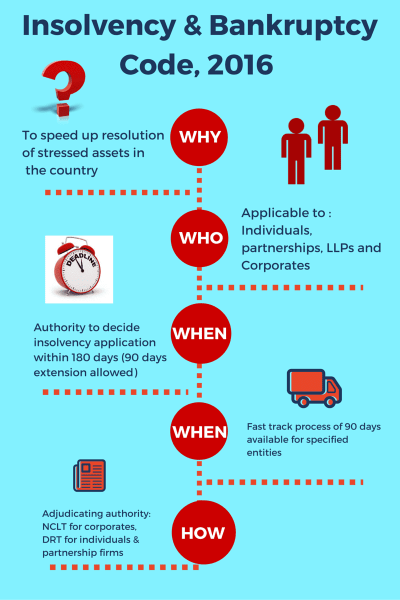



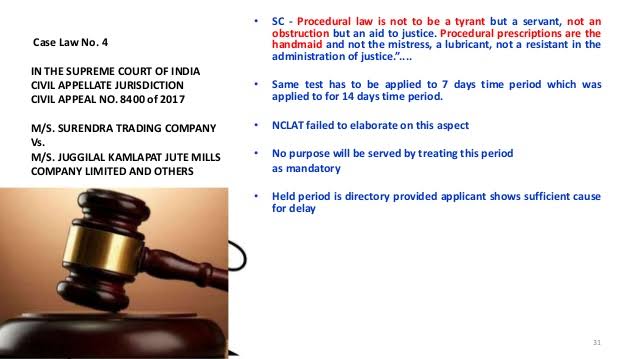
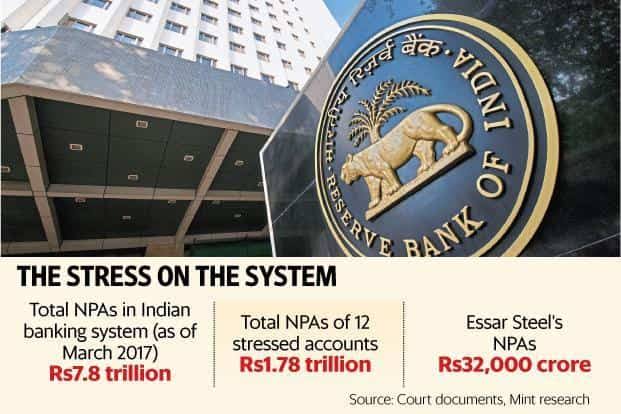


 Eduindex
You must be logged in to post a comment.