Should Animals be Used for various Experiments/ Testings??

Animals, from the fruit fly to the mouse, are widely used in scientific research. They are crucial for allowing scientists to learn more about human biology and health, and for developing new medicines. The use of animals in scientific research has long been the subject of heated debate.  On the one hand it is considered morally wrong to use animals in this way solely for human benefit.

On the other hand, removing animals completely from the lab would impede our understanding of health and disease, and consequently affect the development of new and vital treatments. Although sometimes these studies do reduce the quality of life of these animals, thorough regulations are in place to ensure that they are carried out in a humane way.

Millions of mice, rats, rabbits, primates, cats, dogs, and other animals are locked inside barren cages in laboratories across the country to be used in experiments. They languish in pain, suffer from extreme frustration, ache with loneliness, and long to be free. Instead, all they can do is sit and wait in fear for the next terrifying and painful procedure that will be performed on them. The lack of environmental enrichment and the stress of their living situation cause some animals to develop neurotic types of behavior, such as incessantly spinning in circles, rocking back and forth, pulling out their own fur, and even biting themselves. After enduring pain, loneliness, and terror, almost all of them are killed.

There are many non-animal research methods that can be used in place of animal testing. Not only are these non-animal tests more humane, they’re also more relevant to humans and have the potential to be cheaper and faster. Each of us can help prevent animal suffering and take a stand against vivisection by buying cruelty-free products, requesting alternatives to animal dissection at school, donating only to charities that don’t experiment on animals, and demanding the immediate implementation of humane, effective non-animal tests by government agencies and corporations.

Proponents of animal testing say that it has enabled the development of numerous life-saving treatments for both humans and animals, that there is no alternative method for researching a complete living organism, and that strict regulations prevent the mistreatment of animals in laboratories.

Opponents of animal testing say that it is cruel and inhumane to experiment on animals, that alternative methods available to researchers can replace animal testing, and that animals are so different from human beings that research on animals often yields irrelevant results.

Despite the use of over 115 million animals in experiments globally each year,  only 59 new medicines were approved in 2018 by the leading drug regulator, the U.S. Food and Drug Administration. Many of these are for rare diseases. The US drug industry invests $50 billion per year in research, but the approval rate of new drugs is the same as it was 50 years ago.Only 6% of 4,300 international companies involved in drug development have registered a new drug with the U.S. Food and Drug Administration since 1950.

Diseases that are artificially induced in animals in a laboratory, whether they be mice or monkeys, are never identical to those that occur naturally in human beings. And because animal species differ from one another biologically in many significant ways, it becomes even more unlikely that animal experiments will yield results that will be correctly interpreted and applied to the human condition in a meaningful way.

What can we do to stop experiments on animals:-

Tell research-funding agencies to kick their animal experimentation habit.Virtually all federally funded research is paid for with your tax dollars. NIH needs to hear that you don’t want your tax dollars used to underwrite animal experiments, regardless of their purpose. When writing letters, be sure to make the following two points:
•    Animal experimentation is an inherently unethical practice, and you do not want your tax dollars used to support it.
•    Funding for biomedical research should be redirected into the use of epidemiological, clinical, in vitro, and computer-modeling studies instead of cruel and crude experiments on animals.

Refrences:-

Home

Do These Things When You Are 30, and You Will Enjoy Them at 50

Do not Smoke, and if you’ve started, stop
Smoking is dear , smells gross, and it’s 100% bound to cause health problems. There is no other way around. If you would like to be cancer-free at 50, it’s crucial that you simply stop smoking while you’re 30.

Stop eating food
When you have money, you can buy the whole world. The one thing you can’t buy is health, which is that the one thing that matters. Stop eating junk food, fast food, and easily put, crap. Processed foods are even as dangerous as smoking for our health.

Maintain relationships with parents and siblings
Too many families have been driven apart nowadays. People forget how important family is. Chances are you are doing not see eye to eye with a number of your siblings, cousins, or maybe maybe parents. But family can assist you learn valuable lessons, the way to get along side people you are doing not accept as true with on many issues.

Do not go out in the sun without sunblock
You might think, “the sun doesn’t do me any damage now”. But wait until you’re 50, and you’ll see the results of all that sun exposure. Do you want a wrinkled skin or clean skin? Well, if you would like the latter, limit sun exposure, and don’t leave without sunblock.

Exercise regularly
Lately, exercise has become a well-liked trend and topic. And rightfully so. Exercising is one of the best ways to improve the quality of your life. If you build a lively lifestyle while you’re in your 30s, you won’t have troubles maintaining it in your 50s. Try to not gain weight, as weight does all types of bad things for your body.

Start saving money, even tiny bit
It might be boring, trite, and unsexy suggestion, but it’s one among the foremost valuable ones. Save money in your 30s, when you have a lot of disposable income. Some of that income can easily be put aside to be used later in life.

Be content with what you have
Happiness is what matters the most. If you’re content with what you’ve got , you’ll be a touch less likely to finish up a millionaire. But you will definitely have a happier life. And if you somehow become a very wealthy person, there is no reason why not, you will be more happy. But don’t crave millions only for having millions.

Get some sleep
Make sure to take care of a correct and healthy sleep management. If you would like to sleep well, use sleep shades which will block out light. Try to stay away from bright screens before bedtime. Go to bed at an equivalent time, and awaken at an equivalent time. That is healthy sleep schedule.

Do not delay life goals
If you want to buy a house, go for it. If you would like to write down a book, do it. If you would like to urge a second degree or a complicated degree, absolutely choose it. And if you would like to vary your career, don’t delay pursuing that life goal also . Start today, and stop putting things off.

Take care of your teeth
Go to the dentist on a regular basis. Make sure to get cavities fixed as they come up. Dental problems only worsen with times, and things like crowns and implants are uncomfortable, and admittedly , expensive.

Give something back
Give to others, as not all are happy enough to possess what they have . Give to those in need. However you give, roll in the hay with full heart and soul. Do not expect anything in return.

Collect memories, not things
Do not waste your life gathering possessions. Memories, unlike things, don’t dissolve and can’t be burned during a fire. They stay with you forever.

Be curious, and try to do one thing that scares you
Get out of your comfort zone. Get out of the house and have a honest adventure. And do it right now. Make it as big as you’ll manage, and take as many pictures as you’ll . The activity needs to be measured in days, not hours or minutes. You will laugh about it when you are old.

Read 10 books per year
Nobody at 50 says “I wish a spent longer watching TV and playing video games”. Instead, they assert “Gee I wish I read more books”. Your brain never stops growing, so confirm you exercise it on a daily basis. And that means a minimum of 10 books per annum .

Travel as much as you can
Traveling will change your life like nothing else within the world. Traveling will put you in places which will force you to worry for issues that are bigger for you. Traveling is all about experiencing true risk and adventure.

The day your body stars to point out the signs of all the wear and tear and tear, you’ll not see any fun in partying or trying to impress people around you. Embark on the journey of self-discovery once you are 30, and you’ll be stronger once you are 50.

Learn to meditate
There are a number of benefits and reasons to meditate. And it only costs you a small amount of your time per day. Nothing more. The change you will experience is priceless.

Become a homeowner
When you buy a house at 30, you’ll nearly buy it by the time you’re 50.

Keep a journal
You will forget more of your precious memories than you’ll remember. Nowadays, with a computer and everything, it’s easy to stay a journal and make the archiving easier.

Take care of your friends
Choose people that cause you to desire you already are your best self, but also challenge you by example. Nurture your friends, and contribute to their survival and delight of life. Take the time to be in touch.

Why You Need to Abstain from Using the Word ‘FIGHT’

Have you noticed that words ‘fight’ or ‘fighting’ are often employed by people that want to uproot negative habits, make changes within the environment or change the world?

I am sure you have heard the following phrases or similar ones, and maybe even used them yourself:

“I am going to fight for peace.
“I fight for freedom.”
“I am going to fight this habit.”
“I am going to fight to achieve my goal.”
“I will fight them until I win.”
There are many variations of theses sentences.

What do they mean? They mean that you expect difficulties, problems and opposition. You expect obstacles and you expect people to fight you.

Anything the mind thinks it also creates, so before you even started, you’re creating problems, which you’ll got to fight. Is this a wise thing to do?

Don’t Think about Fighting, Think about Creating

It is far better and wiser to create what you want, not fight what you do not want.

If you say, “I will fight against my enemies and win”, you are creating a situation of war. You are going to be always in a situation of war. Is that what you want?

Why not take a special stance, and stop considering people that are different from you, or people that don’t like, as your enemies? Why declare them as your enemies? Repeating statements that you simply have enemies, which you’re getting to fight them will only create animosity, anger, conflicts, opposition and even wars.

If you regularly use the word ‘fight’ and think often about it, you’re creating for yourself and for others situations that need fighting.

How to Think and Act Constructively
The words ‘fight’ and ‘fighting’ evoke corresponding emotions within the person thinking or saying them, and within the people that hear it. In this way, politicians, leaders, and people in all walks of life can manipulate people’s feelings and actions.

However, they can do this also in a constructive way, by awakening positive emotions and motivation, by using different, positive words that appeal to the emotions and affect the subconscious mind.
You Need to Abstain from Using the Word ‘FIGHT’

  1. Think about solutions.
  2. Focus on solutions.
  3. believe the results that you simply want to realize and specialise in them, not on fighting to urge them.
  4. You should focus on creating good habits, not on fighting the bad habits. Do not fight them, because you’ll only waste energy by engaging during a constant war, rather than changing your habits.
  5. If you would like to be free, specialise in freedom. In your mind, see it as a reality in your life. Eventually, it would become a reality in your life.
  6. you are doing not got to fight for your goals, just go and achieve them stupidly of failure and without caring about obstacles.
  7. Do not fight problems. Instead, visualize them as solved, and work on solving them.
  8. Do not fight your weight. Exercises and build good eating habits.
  9. Do not fight until you win. Just focus your mind and all your energies on winning, not on fighting others or fighting obstacles.
  10. You bring peace not by fighting, but by spreading peace, by teaching people to make their minds peaceful. It might come as a surprise to you, but inner peace is a sign of great strength. Unfortunately, only alittle number people appreciate it and know what it really means.

You need to abstain from using the word ‘fight’ in your mind and in your conversations. You need to prevent thinking on fighting, because if you are doing , this is often what you’ll get.

Always focus on what you really want, not on what you do not want, or on the things you want to avoid.

Using the word ‘fight’ shows fear. It means that you expect difficulties, obstacles and problems.

You do not need to fight your way. You can go in a straight line, fearless, courageous and not admitting failure. Using constructive words and displaying inner strength will get you anywhere faster, and with less opposition.

This approach does not mean that the path would be always easy, but you will create fewer problems and people will be more supportive and helpful.

Be active, not passive, move things, be courageous and walk tall. Make things happen by thinking and acting constructively, not by fighting them. To move a mountain, you do not have to fight it. You can dig it out by work and by constructive actions.

6 Tips to Stay Calm During College Applications

Applying for college is a stressful phase for both students and their parents. With such a lot already happening in highschool , college applications bring with them the added pressure to form the proper decision, gather important documents, work on the appliance and of course, submit a stellar personal statement.

The hopes are high and so is the stress. Everyone is within the race to be the ‘perfect’ applicant, which doesn’t make life any easier. While you can’t help feeling overwhelmed, it’s important to form conscious efforts to remain calm for the betterment of your own psychological state .

Don’t let anxiety take over. Here are 6 ways you’ll manage stress during this significant period.

Narrow Down on Colleges

You might want to apply to 20 odd colleges in order to keep your “options open”, but such an approach is not advisable. Not only will it turn out to be an expensive affair, you will end up juggling with too many applications and do justice to none.

Start with an elaborate list and start prioritizing the colleges basis factors such as the programs available, location, tuition fees, admission requirements and amenities among others. Have all the knowledge opened up during a tabular format, weigh your options, and narrow down on 7-10 colleges. It’s an honest idea to rank them beforehand , so it’s easier to form decisions later.

So, do begin early and invest enough time in doing quality research on the universities . Check their website, visit the college if possible and get feedback from the alumni to be able to work on your shortlist.

Stay Organized

You are applying to 7-10 colleges – each of them has their unique set of requirements. The last thing you want is to get lost in the plethora of information and lose track.

So, once you know which colleges you want to apply to, start organizing this information on a master spreadsheet. From deadlines and prerequisites to the point of contact and tracking progress – it needs to be your go-to list for all things related to college applications. If you are applying for scholarship, do factor in scholarship essays and their requirements to stay on track.

As you’ll be handling multiple documents, create separate folders for every college, so you’ve got all the materials organized accordingly.

Focus on the Essay

Personal statements are an integral element of application forms. They let the admission committee understand more about you and assess whether you’re suitable for candidacy.

So, confirm you put aside ample time for it because it requires you to brainstorm ideas, research on the subject , outline the essay after which you’ll get down to writing it. Don’t make the error of using one personal statement for all colleges. It’s always advisable to possess a tailor-made approach so as to face out.

If you see that you are running out of time, seek help from essay writing services and get original, high quality essays even within few hours. Leaving this essay for the eleventh hour and doing a shoddy job at it’ll only increase your stress because there’s no room for substandard essays.

Talk it Out

Owing to the stress and anxiety that college applications bring with them, there will be times when you will experience sleepless nights and restlessness. The fear of what lies ahead might consume you and take over your life.

At such times, don’t hesitate to turn to your family and friends. Lean on your support system and talk to them about what you are going through. Share your fears and let it all out. Venting out might not always give you a solution but it surely helps in relieving the tension.

Take a Break

Another plus point of starting early is that you can break down the application process and give yourself a break from time to time in order to not reach a stage of burn out.

Writing one essay after the other and running in all directions to scope recommendation letters and transcripts can get exhausting. What you would like is a few downtime wherein you’ll relax and enjoys activities that take your mind off applications and assist you rejuvenate.

Maintain a Positive Outlook

A lot of your stress are often tackled counting on the state of mind you’re in. It’s important to maintain a positive outlook, overcome perfectionism and believe that the best will happen. Don’t attach your self-worth to the result of school applications and take rejection personally.

There are bound to be rejections along the way, but you need to learn from them and plan your next move. So, just do your best and quit worrying about factors that are not in your control.

ANTI-CELL WALL ANTIBACTERIAL DRUGS

Selective toxicity is the important characteristic of antimicrobial drugs which means that any drug is selective against a particular microorganism and also selectively act on a particular site. Not all drugs can act on every site. There are many sites at which any drug acts such as cell wall, cell membrane of the bacterial cell. Basically selective toxicity explains that any drug will only act on the pathogen and not on the host.
ANTI-CELL WALL DRUGS
Anti-cell drugs are those drugs which act on the cell wall of the bacterial pathogen and not the host. There are variety of drugs which fall under this category. The major class is of beta-lactam antibiotics among which penicillin is the drug which is studied the most. The drugs can be administered into the patient’s body by different ways like intramuscular, intravenous, or can be applied as topical preparations. But mostly, these drugs are intramuscular or intravenous drugs. The following points explain the further different mechanisms of anti-cell wall drugs.
There are 3 different mechanisms by which anti-cell wall drugs work and thus they are also classified as following:

  1. First classification involves the drugs that directly interact with Penicillin-Binding-Proteins (PBPs) and inhibit the transpeptidase activity which in turn inhibits the attachment of newly formed peptidoglycan subunit to the pre-existing one.
    This is the main mechanism of β-lactam antibiotics. These antibiotics include Penicillin (penams), cephalosporins, Penems, Carbapenems, and monobactams.
    These antibiotics bind to the penicillin-binding proteins which are enzymes present in the bacterial cell wall. Different β-lactam antibiotics bind in a different way. After the antibiotics bind to the enzyme, it changes the morphological response of the bacteria to the antibiotic.
  2. Second classification involves the drugs that bind to the peptidoglycan subunit, blocking different processes.
    The important class of compounds called as glycopeptides are mainly involved in this mechanism of anti-cell wall antibiotics.
    Vancomycin and Teicoplanin are the major examples of glycopeptide antibiotics.
    Vancomycin kills only gram-poitive bacteria whereas Teicoplanin is active against both. The overall mode of action of glycopeptides antibiotics is blocking transpeptidation i.e. similar to β-lactam antibiotics, they also inhibit the transpeptidase activity, and transglycosylation i.e. they being large in size attach to the peptidoglycan subunits thus creating a blockage which does not allow the cell wall subunits to attach to the growing peptidoglycan backbone.
  3. Third classification involves the drugs that block the transport of peptidoglycan subunits across cytoplasmic membrane.
    The main example of such type of drugs is bacitracin, which is a simple peptide antibiotic originally isolated from Bacillus subtilis.
    The mode of action of these class of drugs is blocking the activity of specific cell membrane lipid carriers which act as the attachment surface for peptidoglycan precursors and help in their movement from cell cytoplasm to exterior of the cell. This activity of lipid carriers is inhibited by bacitracin like drugs and they finally prevent the incoroporation of those precursors into cell wall thus inhibiting its biosynthesis.

Although, its route of administration is mostly oral or intramuscular, bacitracin is also known to show its effects when used as topical ointments like Neosporin.

The Shadow Lines: A review of the Major Experiment by Amitav Ghosh

Source: Google

The shadow Lines by Amitav Ghosh

Publisher: Penguin Random House PVT India

Publication date: 22nd April 2009

Book-length -288

ISBN 10- 0143066560

ISBN 13-980143066569

Price- 350

“Everyone lives in a story…. because stories are all there to live in, it was just a question of which one you choose”.The Shadow Lines is a major experiment of Amitav Ghosh. He uses an anonymous narrator to create a bildungsroman where the boy-hero slowly weaves memories and reality together in a way that it creates an infinite bond between two continents and three countries. the boy-hero moves backward and forwards in time and bits and pieces of stories by breaking the chronological exploitation of time. The author keeps explaining his half-remembered and half-imagined thoughts until he comes to realize and understand the interconnected picture of the world where borders and boundaries mean nothing and are mere shadow lines that we draw dividing people and nations from each other physically and psychologically. Therefore, in this narrative, Ghosh asks an overwhelming question- which is woven into the title. Is there anything called the border that separates one man from another? Is the border artificially constructed?

About border, or shadow lines, Ghosh says: “ They had drawn their borders, believing in that pattern in the enchantment of lines, hoping perhaps that once they had etched their borders upon the map, the two bits of land would sail away from each other like the shifting tectonic plates of the prehistoric Gondwanaland. What had they felt, I wondered when they discovered that they had created not a separation, but a yet-discovered irony- the irony that killed Tridib”.

Structurally the novel has two parts. The first part is called ‘Going Away’ and the second one is ‘Coming Home’.Calcutta as the center there are several departures followed by sometimes pleasant and sometimes unpleasant returns. All these have been depicted through a cluster of memories by the narrator. The narrator’s consciousness becomes the center around which a web relation is woven, by using the stream of consciousness technique.

The characters in this novel blend memory and desire in such a way that it becomes difficult to separate the dream from the real, the memory from the fantasy. This trend is present in all characters like Tha’mma, Ila, Tridib, but the narrator Tha’mma and Ila are presented in contrast. Tridib is a bohemian character, who is the narrator’s hero and ideal above everybody in this novel. Tha’mma is an iron lady, Ila is also a vague character, and childhood crush of the narrator. As time goes character changes, reality changes.

The book is worth reading because it has a vivid depiction of the partition time, the riots, the broken heart, the unsatisfied desire, and every subtle element to fetch the reader to read the book. But I felt some parts of the book a bit monotonous and vaguely explained which makes the story uncomfortable to read. The author’s travel from the present to the past, reality to the imagination is a bit complicated. When the author was giving a description of May’s home, pictures, the world war, bullet holes on the wall in London, I had to pay extra attention and read those twice or thrice the time to under this as a whole. Otherwise, by the material, it is another masterpiece by Amitav Ghosh and a “must-read” book also.

Diary of a final year student

Let me show you my Diary

16th March

Due to Corona pandamic I received a mail, that University will be closed for a month and asked us to pack our things from hostel. Our wardens told us to book tickets so that we can reach our homes as soon as possible. Whole hostel is celebrating this unexpected pandamic vacation while I was thinking when will be my final year farewell party. As I went into my room I saw my friends packing their stuffs. I took my keys to open my cupboard to pack my stuffs along with them.


The last supper of my university life with my friends. Tomorrow we all will be leaving to the our native places. We hugged tightly one last time and walked around our campus. This is my Online Diary.

28th April,

All the classes which we left half way are completed as online classes. Final year project reviews are also conducted on online. Basically all my classes and exams are over.


5th May

Those who are placed on campus placements are suddenly started getting mails like work as an intern or will call you after this pandamic over. Only few managed to stay placed. I planned to do higher studies in abroad and now I am left with no job in my hand.


1st June

My goals are changed. I am leading my life in a new path which I can’t even dream before this pandamic. I started preparing for civil services examination. I am a volunteering teacher in a village school. I am teaching online class to the underprivileged children.
Never in my all 21 years of life I taught I will have a goal to become a civil services officer, because my past goal is used to be. To study masters in a Ivy league college and to do further researches in my dream field.
But there is a saying,

“Once you replace negative thoughts with positive ones, you’ll start having positive results.”
           

— Willie Nelson


15th June

This pandamic made me realise that I am a person who is filled with lots of emotion and craving for satisfaction in all the things that I am doing. My frozen heart which always runs towards money is now running towards humanity. 


22nd June

Everything changed from what it used to before corona. There is still a chance to follow my past dreams or I can pursuit my new goals. Eventhough thousands of questions arises in my mind and everything is not hundred percent perfect I am confident in myself that I can overcome this.


30th June

I am finally graduated! No farewell… No graduation ceremony… No job fair… All these things are telling me situation is not normal yet. But I am proud of myself that I faced everything which I couldn’t even dare to imagine a year before.


“I always like to look on the optimistic side of life, but I am realistic enough to know that life is a complex matter.”    

-Walt Disney
The first step is to take a step first.

5 Ways to Have Effective Communication

Picture Courtesy: Google

As belonging to the society, communication is very important. One’s character gets decided by the way one communicates. An effective communication skills not only positively defines one’s personality but also helps to make good relations all along. Communication is not enough until it is done effectively. Let’s know about

5 ways of effective communication

Listen

Listening is very important to have effective communication. If one doesn’t listen to others, the person wouldn’t be able to understand the root cause of a problem and eventually will end up with nothing. Once you listen perfectly, you will be able to communicate accurately according to the need of the receiver. If one doesn’t listen and keeps delivering his thoughts other people can get irritated and will have a negative impact.

Follow the nonverbal signs

One needs to notice the nonverbal signs while you are talking. It will let you understand if the person is interested or not. If a person yawns during the communication, you must understand you are not making good and effective communication. If a person seems restless, it might indicate that the person wants to stop the communication. So, following the nonverbal signs are important so that you can improve yourself.

Control your emotions

It’s better to not to go far while you are discussing some sensitive subjects. Try not to be stubborn and biased to your point. Sometimes stress, sadness, love also can lead to having some unpleasant conversations. So, it’s better to have control over your feelings during conversing. If you are doing some presentations, try to make some points which you can follow.

Choose good language

Language is the most important to have successful communication. Be it verbal language, be it nonverbal. During nonverbal communication choosing the right word is important. Word choosing can impress the listener and they might get interested to continue the conversation and try to understand it with the whole heart and mind.

Express yourself

While you are conversing or making any presentation, it is necessary to express yourself. You must involve yourself in the topic and follow the way the flow takes you on. Sometimes being expressive about what you think and what you feel, can help other people to connect with you. If you are doing a presentation and always thinking about the technical things can make distractions. The more you express yourself with relatable examples the more you will experience effective communication.
In this busy world, all we will get a very short time to express our thoughts fully. People won’t pay attention if you can’t converse properly. Not every people can’t express themselves properly as they are supposed to. So, to be an effective communicator you have to understand what the person meant. The devil takes all details. Follow all the details minutely so that you can get into the person’s thoughts. Once you crack the point the person wanted to express but couldn’t you get closer to have effective communication. You might communicate little but whatever you say it must be effective.

Girl Trafficking More Heinous Offence Than Drug Trafficking

While taking a very serious note of the notorious crime of girl trafficking, none other than the Orissa High Court itself has just recently on June 29, 2020 in a latest, landmark and extremely laudable judgment titled Panchanan Padhi Vs State of Odisha in Case No.: BLAPL No. 2612 of 2020 has minced no words to categorically observe that trafficking of girls is an offence more heinous than drug trafficking but ironically less stringent. How can our lawmakers still take this for granted? How can our law makers still justify less stringent punishment for trafficking of girls as compared to drug trafficking?

                         At the outset, Justice SK Panigrahi who authored this commendable, comforting and courageous judgment makes it a point to first and foremost recollect what the legendary Justice VR Krishna felt about this woman issue by stating that, “No nation, with all its boasts, and all its hopes, can ever morally be clean till all its women are really free – free to live without sale of their young flesh to lascivious wealth or commercializing their luscious figures…..” It is our lawmakers who must bear this in mind always while enacting laws! How can less stringent punishment be ever justified by anyone for heinous offences like girl trafficking?

                                          To start with, the ball is set rolling in para 1 of this noteworthy judgment wherein it is first and foremost observed that, “The instant case has once again given an opportunity to this Court to ponder as to how the opportunistic predators seize upon the vulnerability of some desperate and impoverished girls. The accused herein is allegedly notorious for his aplomb in identifying girls and capitalizing their distress condition but caught red-handed by police. The Petitioner herein has preferred the instant application under Section 439 of the Code of Criminal Procedure vide BLAPL No. 2612 of 2020 against the C.T. Case No. 379 of 2020 pending before the court of the Learned SDJM Bhubaneswar (T), CSI, Bhubaneswar for alleged offences punishable under Sections 4/5 of the Immoral Trafficking (Prevention) Act, 1956 read with Section 370(3)/467/471/120B and 34 of the Indian Penal Code. The court of the Addl. Sessions Judge, Bhubaneswar has rejected the application seeking grant of bail vide B.A No. 260 of 2014 filed by the Petitioner herein u/s 439 Cr.PC on 4.3.2020.”

                                        While elaborating on the facts, it is then stated in para 2 that, “The factual matrix of the instant case as set out in the F.I.R. is that on 21.01.2020 at around 10:00 AM Shri Alok Kumar Jena, Inspector of Police, STF/informant received information from a reliable source that one Ibrahim Khan and one Ruksar Begaum of Danagohiri, from Pipili, Dist. Puri are regularly trafficking girls from Kolkata and other places and engage them in sexual exploitation for commercial purposes from which he derive income. It was also informed that the girls were being procured from Kolkata and they were housed in a rented house at Bishnukunj Ratha Road, PS-Shree Lingaraj, Bhubaneshwar. They were being exploited at the instance of Ibrahim Khan and Ruksar Begum. These girls were forcefully sent to various hotels and lodges where they were subjected to sexual abuse and exploitation. Upon receiving such information, the informant apprised the Superintendent of Police, STF, Bhubaneswar who recorded the said facts vide Station Diary Entry No. 4 dated 21.01.2020 and directed the informant to reach the spot along with a team of police officers including some lady officers to conduct the raid.”

                                       Going forward, it is then brought out in para 3 that, “Accordingly, the informant accompanied by a team of police officers including some lady officers proceeded to the aforementioned house where the kingpin Ibrahim Khan and his wife were residing. After reaching at the said house, which is a double storied building, they gheraoed the said building to prevent the egress or ingress by anyone. The informant proceeded to the first floor and knocked at the door of the first room and in response to the same one of the girls opened the door and he could notice the presence of six girls in the room. He, thereafter disclosed his as well as his team’s identity by showing their Identity Cards and asked for production of their identity cards. The six girls disclosed their respective identity and they were stated to have been brought from Kolkata by alluring them to work in some beauty parlors in the city.”

                                       Be it noted, it is then revealed in para 4 that, “Before conducting the said raid, the informant secured the presence of two respectable persons of the locality as witnesses to the search and seizure operation. Thereafter, while conducting the personal search of the girls by the lady police officers, they found six mobile phones, thirty unused condoms etc. Those articles were seized in presence of the seizure witnesses and a seizure list was prepared on the spot which was duly signed by the witnesses as well as the victims.”

                                        More damningly, it is then unfolded in para 5 that, “During examination of the victims, they revealed that the aforesaid Ibrahim Khan and Ruksar Begum and certain other unknown persons have procured them from Kolkata and on some false pretext of employment in beauty parlors forced them into sexual slavery and prostitution. As per victims’ statement made under Section 161 of Cr.P.C. the present petitioner was forcibly sending them to various hotels and lodges and were arranging customers for such illegal act. The Petitioner herein was acting in concert with aforesaid principal accused by making wide publicity among the prospective customers to be in touch with them for such act. The victims have further disclosed that Ibrahim Khan and Ruksar Begum have kept them in the said rented house and they used to give them a sum of 1000/- per day as allowance and lion’s share of the amount received was pocketed by them. The informant and other officers nabbed Ibrahim Khan and Ruksar Begum from the adjacent rooms of the said building. On being interrogated they confessed that they were running a prostitution racket by forcefully exploiting the victims in the adjoining rooms. During the search of Ibrahim Khan, 5 Aadhaar Cards of the girls along with a mobile phone and cash of 40,000/- were recovered from his pant pocket and were seized in the presence of witnesses. During interrogation, the above-named accused persons also confessed that the Aadhaar Card were forged documents to facilitate the business of prostitution.”  

                                As a corollary, what follows next is then stated in para 6 as: “The victims were rescued and were kept in shelter homes. The accused persons were apprehended U/s. 4 and 5 of Immoral Trafficking (Prevention) Act read with Sections 370(3), 467, 471 & 120B/34 of Indian Penal Code who were later produced along with seized articles before STF. Accordingly, the FIR was drawn and these accused persons have been forwarded U/s. 4/5 Immoral Trafficking (Prevention) Act read with Section 370(3), 467, 471 & 120B/34 of Indian Penal Code on 22.01.2020.”  

                                  To put things in perspective, it is then observed in para 9 that, “Perused the up-dated case diary and the rival submissions of the parties, wherein it is deciphered that the victim girls have clearly stated against the accused persons in their statements recorded U/s. 161 of Cr.PC. It prima facie reveals that the principal accused Ruksar and Ibrahim have kept them in the house for the purpose of sexual exploitation. The statement of the victim girls also hints that the accused persons were threatening them to face starvation if they try to flee from the said house. In addition, the accused have fabricated their Aadhaar Cards and the seizure list also reveals that 30 unused condoms along with their mobile phones were seized from the possession of victim girls. The instant petitioner was also alleged to have been working in partnership with principal accused. Prima facie, it appears to be a complete racket run by the principal accused and his accomplice though the complete picture will emerge from a thorough trial.”

                                       While lambasting the trafficking crime, it is then held in no uncertain terms in para 10 that, “The crime of trafficking girls is dehumanizing as well as utterly shameful to our civilized society. This issue has sufficiently captured the attention of our Constitution makers and also appeared on the radar screen of modern Indian Law. Despite constitutional dictums and legal provisions, the humanity is still struggling to combat human trafficking. It is a complex policy challenge which intersects many policy paradigms. The international policy frameworks have also been in place since long, especially, since 1904, the international community has been working together to understand and put together the pieces of the human trafficking puzzle. There are six international treaties that explicitly address issues related to human trafficking. However, this issue has only topped the policy agendas of the international community in 2000. [United Nations drafted the Protocol to Prevent, Suppress and Punish Trafficking in Persons, Especially Women and Children (UN Anti Human Trafficking Protocol-2000)].”

                                             While lamenting the deep inroads made by this menace of trafficking, it is then underscored in para 13 that, “Unfortunately, despite the protection afforded by the Constitution, the stringent laws and large number of treaties and conventions, commercial sexual exploitation with its concomitant human rights abuse is expanding multi-fold. The human rights discourse is profoundly silent on this grave issue. Such exploitation is now not confined to conventional brothels, but is spreading everywhere including residential areas, hotels, clubs etc. as apparent in the present case. One cannot be oblivious of the fact that the ‘flesh trade’ today is evolving into varied forms with the advent of new technologies. This makes the strict enforcement of these laws even more challenging. The Parliamentary Standing Committee Report on the Immoral Traffic (Prevention) Amendment Bill, 2006 dated 23.11.2006 notes that there were about 30 lakh women in the prostitution trade. According to the National Crime Records Bureau, 5264 human trafficking cases were reported in India in 2018. Disturbingly, about 25 percentage of such cases were for the purposes of sexual exploitation for prostitution and child pornography. The commercialization of sexuality is seen as a part of the explanation for prostitution. It is seen as a worst expression of the unequal distribution of power between men and women. Despite the substantial role of poverty in promoting sex commerce and human trafficking, the complexities of cultural values, attitudes and practices towards sex deserve serious consideration as well. The multi pronged approach to gender reforms – one that ranges from institutional education to grass-root activism – will provide the rupture in the tradition of a perverted imagined values towards sexuality.”       

                                More significantly, it is then very rightly pointed out in para 15 that, “The High Courts of several states have not only recognized the menace of human trafficking but also taken up cases for strengthening the Institutional Machinery and various statutory agencies mandated by various laws. The High Court of Delhi in Bachpan Bachao and Ors. vs. Union of India (UOI) and Ors. ILR (2010) Supp (5) Delhi 376, High Court of Gauhati (Agartala Bench) in Tara Das vs. State of Tripura 2009 (1) Crimes 745 (Gau.) and High Court of Gujarat in Sahyog Mahila Mandal and Ors. vs. State of Gujarat and Ors 2004 GLH (2) 236 : (2004) 2 GLR 1764 have delved into issues of human trafficking, prostitution and its implications on the society. It has been emphasized on the fact those courts and other instrumentalities of the State have to deal with these issues in a sensible manner and there is a need to come out of stereotype attitude. Even if the accused had a limited role in selling the victims or in the prostitution business, no leniency can be shown to him inasmuch as he played a major role in the racket to push the helpless and innocent girls into prostitution. If any leniency is shown for committing such heinous crime, like forcing a girl into prostitution, it would amount to an affront to the statutes which govern the field and, more importantly, the Constitution of India.”

                                               Most significantly, no words are then minced to say in simple and straight language in para 17 that, “The kingpins behind such sex rackets exert considerable influence in the area and are bound to intimidate the victims. More importantly, the safety and security of the witnesses is a major concern, especially in view of the fact that these are organized crime syndicates. The nature of crime is such that grant of bail will only embolden such hardened criminals, who keep evading the law and punishment, to perpetuate such heinous crimes. The complex and troubling issue as emerged in the instant case, in essence, demonstrates a conflict between collective morality of the society and markedly skewed legislations which mismatches the culpability of the participants in question (i.e. service provider, facilitator) and the recipient of the services. Though it involves clandestine and unlawful trafficking of girls but the law makers have missed the opportunity to prescribe a stringent punishment regime, even though the present offence is far more heinous than drug trafficking. There seems to be an all-pervasive puritan, moral, anti-prostitution posture of the Government, but in practice, there is a yawning gap between the law and its enforcement which results in abysmally low conviction rates.”   

                                     In essence, what is then chiefly mentioned in para 18 is that, “The principal accused, other accomplices and the co-accused, namely, Ibrahim Khan, Ruksar Begum, Ajay Bihari, Sunil Kumar Moharana, Keshab Sahoo, Aluddin Khan, Prashant Kumar Pradhan have already been granted bail by this court. This court is, therefore, constrained to grant bail to the accused in the instant case on the grounds of parity alone.”

                                            Finally, para 19 then concludes by holding that, “In view of the facts and circumstances of the case as discussed above, it is directed that the petitioner may be enlarged on bail on some stringent terms and conditions as deemed just and proper by the learned S.D.J.M, Bhubaneswar. It is, however, clarified that the above observations shall not come in the way of a fair trial before the Ld. Trial Court and it will proceed to decide the matter on its own merits, uninfluenced by any of the observation made hereinabove. The bail application is accordingly disposed of.”

                      In conclusion, the bottom line of this latest, landmark and extremely laudable judgment is that it is high time and now the offence of girl trafficking must be taken most seriously! It very rightly laments that this offence is more serious than drug trafficking yet ironically less stringent. It also very rightly cites in para 14 the Report of the Committee on Amendments to Criminal Law which was headed by Justice JS Verma (Retd) and which submitted its report on 23.01.2013 stating that human trafficking is no less a serious crime than drug trafficking. It is high time and now our law makers must take the initiative to make offence of girl trafficking a more serious crime than drug trafficking and so hugely increase the quantum of punishment and fine so that it can act as a powerful deterrent to offenders!     

Sanjeev Sirohi, Advocate,

s/o Col BPS Sirohi,

A 82, Defence Enclave,

Sardhana Road, Kankerkhera,

Meerut – 250001, Uttar Pradesh.

‘Exceeded Jurisdiction’: Division Bench Of P&H HC Sets Aside Single Bench Order

At the outset, it must be stated that the Punjab and Haryana High Court just recently on June 30, 2020 in a noteworthy judgment titled Punjab and Haryana High Court through its Registrar (Computerization) v. Zahur Haider Zaidi & Ors. in Case No. : LPA No. 401/2020 (O&M) & Case No. : LPA No. 402/2020 (O&M) has set aside a single Bench order on administrative side passed during judicial hearing. The Division Bench of Punjab and Haryana High Court comprising of Chief Justice Ravi Shankar Jha and Justice Arun Palli while setting aside the order of a single Judge whereby orders pertaining to administrative side of the High Court were passed during hearing of two criminal matters said clearly, categorically and convincingly that, “Running of the High Court on the administrative side cannot be permitted to be taken up by each and every Judge on the judicial side as he thinks fit as that would lead to collapse of the system of the administration of the High Court.” It was also clarified that if any Judge faces technical problem during hearing of cases via video conferencing, the proper course would be to bring the same to the notice of the Registrar General of the High Court.

                              Needless to say, it is pointed out at the beginning itself that, “With the consent of learned counsel for the parties, the matter is being taken up and heard via video conferencing.” The ball is then set rolling by observing that, “Both these appeals have been filed by the Punjab and Haryana High Court being aggrieved by the orders dated 21.05.2020 and 10.06.2020 passed by the learned Single Judge in CRM-M No. 7051 of 2020 and CRM-M No. 7434 of 2020 directing the High Court to ensure that technical persons are available at the time of hearing of cases through video conferencing and that such technical persons should ensure that every case is available on-line on the computer by downloading the cause list onto the laptop/computer and make an icon on the desktop of that computer as also download the pleadings of all the cases listed on that day onto the computer and make individual icons on the desktop so that the Court can access each case at the click of the mouse. It is also directed that such technical person should ensure that the cases so downloaded are as per the cause list and are properly and accurately uploaded.”

                                       To say the least, the Bench then notes that, “It is submitted by learned counsel for the appellant that the said directions were issued in the criminal matters that were being heard by the learned Single Judge. It is submitted that they have no grievance and have not challenged the orders passed in the criminal cases but are only aggrieved by the directions issued to the High Court regarding making available of technical persons for regular court work.”  

                         While elaborating further, the Bench then observes: “It is submitted that in CRM-M No. 7051-2020, the petitioner was praying for regular bail whereas in CRM-M No. 7434 of 2020, the order passed by the Special Judge, CBI Court, Chandigarh cancelling the bail of the petitioner therein was assailed. Thus, the High Court (appellant) was not a party to those proceedings. However, being aggrieved by the directions/orders that are being assailed in the present appeals, the High Court in the first instance moved two applications in each of the cases; seeking to be impleaded as party and for recalling the order(s) dated 21.05.2020. Vide order dated 10.06.2020, the learned Single Judge impleaded the appellant as party to the proceedings. But the prayer for recalling/modifying the order dated 21.05.2020 has since been declined vide order dated 10.06.2020 and instead it was observed that “as regards recalling/modification of the order, I see no reason to do so because if training had already been imparted to the staff of each Court, it is the duty of such court staff to ensure, in tandem with other officers/officials of the Registry, to upload all case files on to the computers/laptops/i-pads etc. available to each Court”. Thus these appeals.”

                                       More to the point, the Bench then observes that, “Learned counsel for the appellant having taken us through the grounds on which the order dated 21.05.2020 was sought to be recalled as also the grounds of appeal at hands has demonstrated that the impugned directions issued by the learned Single Judge are rather causing practical difficulties and have made it nearly impossible for the High Court (appellant) to regulate and manage the video conferencing process. He submits that the role of the technical staff of the Computer Section of the High Court is confined only to resolving the technical issues concerning connectivity or audio/video disturbances during the hearing. Whereas the task of downloading the cause list, pleadings, making individual icons on the desktop, downloading the cases as per the cause list, has specifically been assigned to the secretarial staff attached to each Court/Judge. Thus, he submits in the wake of the directions issued by the learned Single Judge, the technical staff is now required to take up even the secretarial work. It is, therefore, prayed that the impugned directions be set aside.”

                                            Be it noted, the Bench then brings out that, “It is informed that the number of technical staff available in the High Court is very limited whereas adequate and sufficient trained staff including Special Secretary/Secretary/Private Secretary/Judgment Writer/Stenographers (stenography line) and Special Secretary/Court Secretary/Reader/Superintendent (Reader Line) and Law Researchers have already been provided to each Court/Judge and they have also been directed to ensure that the Court is able to take up the video conferencing without any hindrance by downloading the paper books, making icons on the desktop and ensuring downloading of the cause list in accordance with the serial numbers notified. It is the secretarial staff that is responsible for the aforesaid task and has to be utilized for that purpose and not the technical staff of the High Court.”

                                        Importantly, it is also clarified by the Bench that, “Thus, the secretarial staff attached to each Court/Judge that consists of Special Secretary/Secretary/Private Secretary/Judgment Writer/Stenographers (stenography line) and Special Secretary/Court Secretary/Reader/Superintendent (Reader Line) and Law Researchers is obliged to ensure that the court proceedings through video conferencing are held unhindered. Undoubtedly, the technical staff of this Court are fully skilled/trained to deal with any technical snag/issue during the video conferencing but not equipped to manage the procedural functioning of the Court which is a specialized task of a regular court staff. In the circumstances, we are of the considered opinion that the impugned directions deserve to be set aside.”

                                        More importantly, the Bench then observes that, “We are also impelled to observe that of the two matters listed before the learned Single Judge, in one regular bail was prayed for and in the other the order of cancellation of bail was under challenge in which the issues regarding the problems arising in the video conferencing were neither involved nor raised. In such circumstances, if any inconvenience was faced by the learned Single Judge owing to lack of any technical/secretarial assistance, the proper course that should have been adopted was to bring the problem to the notice of the Registrar General of this Court for its resolution.”

                                           Most importantly, the Bench then makes it a point to say clearly, categorically and convincingly that, “We are of the considered and firm opinion that the learned Single Judge exceeded his jurisdiction in issuing directions purely relating to the administration of the High Court “in a criminal matter” as the extraordinary and inherent powers of the Court cannot be invoked in purely administrative matters. Judicial powers cannot be invoked to run the administration of the High Court, which task vests in the Chief Justice or in the Full Court of the High Court and is regulated by Rules and instructions issued in that regard. Running of the High Court on the administrative side cannot be permitted to be taken up by each and every Judge on the judicial side as he thinks fit as that would lead to collapse of the system of the administration of the High Court.”

                                                Going ahead, it is then held that, “Moreover, as the issue in respect of which the impugned directions have been issued was neither subject matter of challenge nor within the roster assigned to the learned Single Judge and therefore, the learned Single Judge exceeded the jurisdiction vested in him rendering the directions nonest. The law in respect of the issue has been clarified by the Supreme Court in the case of Campaign for Judicial Accountability and Reforms v. Union of India and another (2018) 1 SCC 196.”

                                    Finally, it is then held that, “In the circumstances, the impugned directions issued by the learned Single Judge vide orders dated 21.05.2020 and 10.06.2020 to the extent that the technical staff of the High Court has been directed to take up the secretarial work are set aside. It is made clear that the responsibility as delineated in the preceding paragraphs about the technical staff shall be followed and implemented by the Registry subject to any modification or change that shall be caused by orders passed subsequently on the administrative side. Both the appeals are accordingly allowed and stand disposed of in the above terms.”  

                                  No doubt, all the High Court Judges must always pay heed to what the Division Bench of Punjab and Haryana High Court has held so explicitly in this leading case! This will save them from getting their order overturned by a Division Bench as we see in this leading case! No denying or disputing it!

Sanjeev Sirohi, Advocate,

s/o Col BPS Sirohi,

A 82, Defence Enclave,

Sardhana Road, Kankerkhera,

Meerut – 250001, Uttar Pradesh.

THE ACT OF GOD: CONTINUOUS EARTHQUAKE IN DELHI

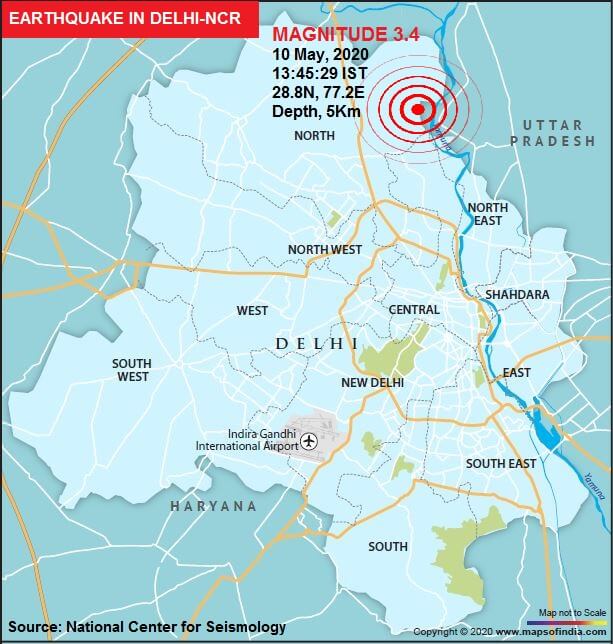
According to experts, Delhi’s geographical location makes it prone to frequent earthquakes, as it lies in the Himalayan foothills. Scientific studies have highlighted that the Indian plates are continuously driving towards the Eurasian plates at a rate of 5-6 cm per year.Delhi earthquakes: 11 mild earthquakes in Delhi since May have raised speculation about a big one, but scientists say these are not unusual. A look at why predicting an earthquake is difficult, and how an area should stay prepared.An earthquake of magnitude 2.1 was detected near Delhi on Monday. It was the eleventh minor earthquake recorded in and around Delhi since May, the most powerful of which happened to be of magnitude 3.4. These recent earthquakes have triggered discussions on the possibility of increased seismicity around Delhi, and fears of an impending big earthquake sometime soon. None of these apprehensions have any scientific basis.

Scientists are unequivocal in asserting that no unusual seismic activity is taking place around Delhi in the last few months. “There is absolutely nothing happening in Delhi that can be called unusual or abnormal,” said Vineet Gehlot, former head of the National Centre for Seismology in Delhi, who is now at the Hyderabad-based National Geophysical Research Institute (NGRI).

“If you look at the earthquake catalogue, Delhi and its surrounding areas, and this would extend till Jaipur, Ajmer, Mount Abut and the Aravallis, usually experience between two and three earthquakes of magnitude 2.5 and above every month. But there are monthly and annual variations as well. Geological and seismological processes are not very smooth. So sometimes you would expect to see higher number of earthquakes as well. I am pretty sure nothing special has happened in Delhi in the last couple of months,” he said.

Detection of earthquakes, especially those of smaller magnitude, being recorded in an area also depends on the number of seismic recorders installed in that area. The area around Delhi has the most dense concentration of seismometers anywhere in the country, even more than the Himalayan region which is seismically much more active. Out of the 115 detectors installed in the country, 16 are in or around Delhi. As a result, even the earthquakes of smaller magnitude, those that are not even felt by most people, are recorded, and this information is publicly accessible.Earthquakes of magnitude four or below hardly cause any damage anywhere and are mostly inconsequential for practical purposes. Thousands of such earthquakes are recorded around the world every year, and most of them are uneventful. And, they certainly do not signal any big upcoming event.

“The concept of foreshocks is something that is largely applied in hindsight. When a big event happens, all the smaller earthquakes that have occurred in that region in the near past are classified as foreshocks. Foreshocks are post-event definitions. The description does not exist before any big earthquake has happened. So all this talk of these being foreshocks of a big earthquake in Delhi have no basis at all,” said Harsh Gupta, one of India’s foremost experts on earthquakes and a former director of NGRI.

“A big earthquake might still occur. No one can rule it out. But they cannot be predicted. So to say that these small earthquakes are precursors to the big one is totally unscientific,” he said.

What, then, is a signal to an upcoming earthquake?

Scientists have been working for years to identify “precursors” to an earthquake, but have so far met with no success. Some special earthquakes, the ones that are triggered by volcanic activity, can be predicted to some extent — Gehlot calls them “much more well-behaved” than others — but nothing else.

Predicting earthquakes in a region like Delhi is all the more difficult because the place does not lie on any faultlines. “I would say we still understand a little bit about the tectonics in the Himalayan region, where two tectonic plates are meeting each other. But Delhi does not lie on a plate boundary. It is located on a single plate, and the seismic activity is generated by internal deformities. Here, we understand even less. Therefore, predicting earthquakes in advance is out of the question,” Gehlot said.

The Himalayan region, extending from the Hindu Kush to the Northeast and going south to Southeast Asia, is seismically one of the most active regions in the world. The region has experienced several big earthquakes in the past, most recently in 2015 in Nepal.

A magnitude 6 earthquake is typically associated with the kind of energy that was released by the atom bomb in Hiroshima. Since the magnitude of earthquakes are measured on a logarithmic scale, a magnitude 7 earthquake is about 32 times more powerful than a magnitude 6 earthquake. Accordingly, a magnitude 8 earthquake would be almost 1,000 times more powerful than a magnitude 6 event.

So, is a big one coming to Delhi?

No one knows, but a more relevant question, Gupta said, is what even if we knew. “Supposing we know that a magnitude 6 earthquake is going to occur in Delhi at 11 am tomorrow. What can we do after that? Can we get the entire city evacuated? Is that possible? Prediction is not going to make us safe against earthquakes. What is important is that we need to make our structures earthquake resistant, we need to follow prescribed drills when an event happens, everyone must know what is the best place to run to when we are in office, or at home, or in open spaces. It is these kinds of discussions that are meaningful. Instead, what we see is speculation, rumours and half-baked information in public discussions,” he said.

So a big earthquake is very much possible in Delhi. No one is ruling out that possibility. But they would occur when they have to. Earthquakes still like to come unannounced. They do not like to knock on our doors with foreshocks.

Why Presence, Not Time, Is Your Most Important Asset

“Wherever you are, be there. Lifestyle is not something we do; it is something we experience. And until we learn to be there, we will never master the art of living well.” ~Jim Rohn

I have been told again and again that our time is our most precious asset. But I disagree.

The blogosphere is filled with tips on time management—how to get more for our time. I am willing to bet my life that you have come across many such tips online yourself.

You have probably even adopted some of them.

I myself am notorious for scouting the internet to find any new tip to help me manage my time better. And yet I find that I am struggling. Yet I find myself constantly being a prisoner to my devices.

There is one thing that will beat time any day—presence. Time might be important, but our presence is paramount.

Tell me if you can relate: You are at a family gathering or a reunion and you cannot help but notice how disengaged everyone around is. Your cousin is busy taking selfies while your aunt is on the phone with her friend. Your dad is catching up on all the Donald Trump tweets and your sibling is making a tik tok video.

So, what do you end up doing? You pull out your phone and start checking Instagram.

I know it because I have been there myself.

Social gatherings are no longer what they used to be a decade ago. We are constantly connected now. Anxiety kicks in if we cannot find our phones or if the battery is about to die.

I am sitting in a cafe typing this and when I look around, I see a bunch of people sitting but busy on their phones. Present but only physically. Technology has made our worlds smaller, yet at the same time, made us more distant.

We have come to believe that just showing up is enough. As if just being present physically will make things better. It rarely ever does!

It is infuriating and frustrating at the same time—being there, yet not being present.

We show up to fit in, but if given a choice, we would rather not be there. Physically, we are in one place but mentally, we are busy wondering how life might be greener on the other side.

Mentally, we are busy trying to stay “up to date” with god knows what.

Presence is a big deal.

Imagine you’ve made a reservation at a fancy restaurant for a special night. You’ve heard good things about the food and the ambience of the place. You’re excited for one hell of a night, only to be served by a preoccupied server who ignores your table, messes up your order, and ruins your dining experience.

We have all been there, haven’t we?

Now, think back to the last time you got someone’s full attention. How did that make you feel? Tell me that the experience wasn’t memorable and pleasant.

It’s easy to tell the difference when someone is mentally absent versus when someone is fully present because presence cannot be delegated. You simply cannot hand it off to someone and get away with it.

You also cannot cut corners with your presence, because then you are as good as not there. You are either there or you are not. There is no in between!

All of us have to own our presence and choose to be in the moment.

In a world that is becoming more isolated, presence becomes a big deal because it is now a scarce commodity. There simply isn’t enough of it going around, which makes it more valuable than time.

As Maya Angelou said:

“I’ve learned that people will forget what you said, people will forget what you did, but people will never forget how you made them feel.”

Unlike gifts, our presence cannot be copied, imitated, or replicated. Just like our fingerprints, our presence is unique to us and without us, there is a void that nobody can fill.

Every opportunity you get—and trust me, they get fewer and fewer as you grow older—you should make a choice to be present.

Your relationship doesn’t need time, it needs you to be present. It needs you to take notice of the smiles, the laughter, the hugs, the sadness. It needs you to be an active participant in the uncomfortable moments, the difficult conversations, and the embarrassing pictures.

Next time, when you find yourself reaching for your phone, reach for it, switch it off, and put it away. This will allow you to one, be present and two, catch up with the people present in the room rather than stay up to date with the ones outside. In most cases, the ones that matter are right there with you.

Next time, choose presence because time only matters if you’re really there to enjoy it.

Why Tik-Tok should remain ban in India…

Recently, Indian government banned Tik-Tok along with 58 other Chinese apps. Whatever the government did was very good and there are many reasons why they did it.

Tik-Tok is basically a source of entertainment which we can get from anywhere else, so why to give our details to Chinese government and put ourselves in danger. So, it is very necessary to not to use Tik-Tok and don’t even let your family and friends to use the same.

It is necessary that Tik-Tok should remain banned in India. It is because Chinese government use this app as a spy for data collection. They are able to see the content which is present in our phone, the files, the apps which we have installed, and even the apps which we have deleted. It even hacks our personal data, so we can see how much it is dangerous for us

Our cyber laws are also not very strong, it is because our government is putting no attention in it. So we are not able to identify what type of content is present on ir, what is it’s nature of content and how it is affecting our mentality.

Tik-tok is so much dangerous that it can even track your location. The places you visit, whenever and wherever you are going these all are tracked by the Chinese government.

Apart from this they won’t let you know, what they are doing to you. They have a protection in their app which prevents it from reversing and debugging. Also the app gets slightly changed whenever they get to know that you are trying to reverse this app.

Also there are many cases of sexual abuse on this app. This app don’t provide any security to your details.

So we can se how much this app is dangerous to us. That’s why this app should be remain banned. And it is better not to use this app to keep yourself safe and secure.

PRODUCTIVITY SIMPLIFIED.

If you take a look around, you’ll notice very few people actually go “all in” on a single skill or goal for an extended period of time.

Rather than researching carefully and pouring themselves into a goal for a year or two, most people “dip their toes in the water” and chase a new diet, a new college major, a new exercise routine, a new side business idea, or a new career path for a few weeks or months before jumping onto the next new thing.

In my experience, so few people display the persistence to practice one thing for an extended period of time that you can actually become very good in many areas—maybe even world-class—with just one year of focused work. If you view your life as a 20-slot punchcard and each slot is a period of focused work for a year or two, then you can see how you can enjoy significant returns on your invested time simply by going all in on a few things.

My point here is that everyone is holding a “life punchcard” and, if we are considering how many things we can master in a lifetime, there aren’t many slots on that card. You only get so many punches during your time on this little planet. Unlike financial investments, your 20 “life slots” are going to get punched whether you like it or not. The time will pass either way.

Don’t waste your next slot. Think carefully, make a decision, and go all in. Don’t just kind of go for it. Go all in. Your final results are merely a reflection of your prior commitment. 

Productivity, Simplified

No need to draw this out. This productivity tip is straightforward: Do the most important thing first each day.

Sounds simple. No one does it.

Why It Works

We often assume that productivity means getting more things done each day. Wrong. Productivity is getting important things done consistently. And no matter what you are working on, there are only a few things that are truly important.

Being productive is about maintaining a steady, average speed on a few things, not maximum speed on everything.

That’s why this strategy is effective. If you do the most important thing first each day, then you’ll always get something important done. I don’t know about you, but this is a big deal for me. There are many days when I waste hours crossing off the 4th, 5th, or 6th most important tasks on my to-do list and never get around to doing the most important thing.

As you’ll see below, there is no reason you have to apply this strategy in the morning, but I think starting your day with the most important task does offer some additional benefits over other times.

First, willpower tends to be higher earlier in the day. That means you’ll be able to provide your best energy and effort to your most important task.

Second, in my experience, the deeper I get into the day, the more likely it is that unexpected tasks will creep into my schedule and the less likely it is that I’ll spend my time as I had planned. Doing the most important thing first each day helps avoid that.

Finally, the human mind seems to dislike unfinished projects. They create an unresolved tension and internal stress. When we start something, we want to finish it. You are more likely to finish a task after starting it, so start the important tasks as soon as possible.

Why We Don’t Do It

Most people spend most of their time responding to someone else’s agenda than their own.

I think this is partially a result of how we are raised by society. In school, we are given assignments and told when to take our tests. At work, we are assigned due dates and given expectations from our superiors. At home, we have tasks or chores to perform to care for our kids and our partners. After a few decades of this, it can become very easy to spend your day reacting to the stimuli that surround you. We learn to take action as a reaction to the expectations, orders, or needs of someone else.

So naturally, when it comes time to start our day, it doesn’t seem strange to open our email inbox, check our phone, and look for our latest marching orders.

I think this is a mistake. The tasks assigned to us by others might seem urgent, but what is urgent is seldom important. The important tasks in our lives are the ones that move our hopes, our dreams, our creations, and our businesses forward.

Does that mean that we should ignore our responsibilities as parents or employees or citizens? Of course not. But we all need a time and space in our days to respond to our own agenda, not someone else’s.

Not a Morning Person?

Does the word morning make you mourn?  Can you think of nothing worse than rays of golden sunshine streaming softly onto your pillow?

No worries, night owls. I noticed an important trend: There was no trend.

There is no one way to be successful. There are just as many night owls producing fabulous work as there are early birds. But no matter what their particular routine looked like, every productive artist embraced the idea of protecting a sacred time each day when they could work on their own agenda.

I find morning to work best. Your mileage may vary.

The phrase “Do the most important thing first each day” is just a simple way of saying, “Give yourself a time and space to work on what is important to you each day.”

Dealing With Cyberbullying

Most of us are familiar with the term bullying. We know what it is and why it is wrong. No one wants their kids to be bullied and well, frankly, no good parent wants their child to be a bully. However, since the advent of the digital age, bullying has also extended its claws to the cyber world. When adults torment, harass, humiliate, or threaten each other using support from the internet, it is known as cyber-harassment or cyber-stalking. But when a child, be it a preteen or a teen, gets involved, that is, both the parties are children, it is called cyber-bullying.

Cyber-bullying is usually not a one-time communication. Kids keep on changing their roles, going from the victim to the bully and back again. The person who is a cyberbully for one moment may become the victim the next moment. Many children don’t even realize that they are being a bully or being bullied online. As responsible adults, it is our duty to educate and warn them.

Signs of cyber-bullying

bullyAccess to a phone, computer, or any other communication device puts the kids in the way of cyber-bullying. Here are some of the common signs to look out for if you think a child is being cyber-bullied.

  1. Secrecy: Generally, a child beings active secretive or protective of a communication device in case of bullying. Check if your kid gets nervous about receiving a text or an email or is not interested in sharing his experience of the day with you.
  2. Mood swings: Often a child shows sudden changes in mood or behavior. His sleep and appetite patterns are disturbed and he gets agitated easily.
  3. Slipping grades: All the pent-up tension causes a child to lose his focus in his studies and his grades start slipping. He faces difficulty in understanding even the easiest of the topics.

Combat cyber-bullying

  1. bully2Talk: The first thing to do is make your ward comfortable around you and ask him questions to learn what is happening, how it started, and who is involved. Be a part of his virtual and real life.
  2. Document: Keep a record of what is happening and where it is happening. Take screenshots of harmful posts, it will help to document the bullying and may even serve as proof later on.
  3. Report: Many institutions have a strict policy on bullying and will take strict action on reporting the culprit to them. Social media platforms also have policies on cyber-bullying and reporting the offensive content to them may get it removed even.
  4. Support: At a sensitive time like this, the child needs the emotional support of his friends and family. Try to reach both, the bully and the target and express your concern. Sometimes a public intervention by a trusted adult can be helpful, shifting the focus from the negative or hurtful posts to the more positive aspects of the target. If the case worsens, try to seek professional help from a guidance counselor or mental health professional.

Image COurtesy: GOOGLE