We live in a society comprised of two classes called the rich and the poor with a lot of differences between them. These are also referred to as the dos and don’ts of the society. The rich make up barely 40% of the population and have control over 60% of the resources while 60% of the population makes use of the remaining 40% of the resources. However, the divide between rich and poor, despite all ‘isms’ such as communism, capitalism, and socialism keeps growing all the time making the condition of the poor worse than it has all along been. However, the financial condition is not the only difference between the rich and the poor.
• Control of Life:
• Rich believe they are in control of their lives.
• Poor feel they are subject to various of life and life controls events taking place in their lives.
• Money:
• Investing in schemes to make more money is like a game for rich.
• The poor are all the time terrified of investing in the stock market with the result that more often than not, they lose money.
• It is apparent to all that the poor are playing not to lose money while the rich are playing to win more.
• Opportunities and Obstacles:
• Rich people see the opportunities while poor see the obstacles first.
• Poor keep thinking how they will overcome these obstacles whereas rich keep their focus on opportunities as they have the resources to overcome obstacles easily.
• Dreaming:
• Rich dream big and, therefore, strike rich.
• Poor dream small with the result that they have to remain content with whatever they get.
• Doers and Dreamers:
• Rich are doers; they take concrete steps to fulfill their dreams.
• Poor just dream about their dreams.
• Company:
• The company of rich people includes rich and successful.
• Poor people have the company of unsuccessful and daydreamers.
• This difference in company proves vital in deciding the future of the rich and the poor.
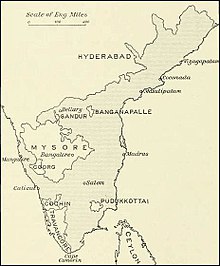
Pudukkottai was a kingdom and later a princely state in British India, which existed from 1680 until 1948.1913 map of the Madras Presidency showing location of Pudukkottai State.
1913 map of the Madras Presidencyshowing location of Pudukkottai State
The Kingdom of Pudukkottai was founded in about 1680 as a feudatory of Ramnad and grew with subsequent additions from Tanjore, Sivaganga and Ramnad. One of the staunch allies of the British East India Company in the Carnatic, Anglo-Mysore and Polygar wars, the kingdom was brought under the Company’s protection in 1800 as per the system of Subsidiary Alliance. The state was placed under the control of the Madras Presidency from 1800 until 1 October 1923, when the Madras States Agency was abolished, and until 1948 it was under the political control of the Government of India.
Pudukkottai State covered a total area of 1,178 square miles (3,050 km2) and had a population of 438,648 in 1941. It extended over the whole of the present-day Pudukkottai district of Tamil Nadu (with the exception of Aranthangi taluk which was then a part of Tanjore district). The town of Pudukkottai was its capital. The ruler of Pudukkottai was entitled to a 17-gun salute.
Geography.
The state of Pudukkottai extended from 10 degrees 7′ to 10 degrees 44’N latitudes and 78 degrees 25′ and 79 degrees 12′ E longitudes.and covered a total area of 1,178 square miles (3,050 km2). It extended for 52 miles (84 km) from east to west and 41 miles (66 km) from north to south.The state was bounded by Trichinopoly district to the west, Tanjore district to the east and south-east and Sivaganga estate of Madura district to the south.
The kingdom did not have fixed boundaries originally and was called “Tondaiman country” or “Tondaiman’s woods” until the end of 18th century. The kingdom started to have fixed boundaries since early 19th century. The easternmost point of Pudukkottai state was located 12 miles (19 km) from the sea. When the Pudukkottai district was formed in 1974 long after its incorporation into the Republic of India, the coastal Aranthangi taluk was detached from Tanjore district and merged with the new district.
For administrative purposes, the state was divided into three taluks: Alangudi, Kulathurand Thirumayam, each under the authority of a Tahsildar who was responsible for land revenue. There was also a few semi-autonomous zamindaris : Karambakadu, Nagaram, Palayavanam, Senthankudi and Seriyalur.
Demography..
As of 1931, the princely state of Pudukkottai had a total population of 400,694 with a population density of 340 people per square mile. Ponnamaravathi firka was the most densely populated with 498 people per square mile while Nirpalani was the most sparsely populated with 213 people per square mile.There were 435 towns and villages – 426 of them with a population less than 5,000 and nine – Pudukkottai, Ponnamaravathi, Varpet, Ramachandrapuram, Arimalam, Thirumayam, Alangudi, Kiranur and Pillamangalam-Alagapuri with population greater than 5,000.The male literacy rate was 21.62 percent and the female literacy rate, 1.87 percent.Between 1925 and 1929, the population of the state dropped by over 65 percent as more than 53,000 people left Pudukkottai for neighbouring districts due to widespread plague and famine.
Religion:
The kingdom was predominantly Hindu. However, there were significant Muslim and Christian populations. The affairs of Hindu temples was administered by a Devasthanams Department established in 1897.
According to the 1901 census, there were 353,723 Hindus who formed 93% of the state’s population. Muslims who numbered 12,268 formed 3.2% of the population while the Christians numbering 14,449 formed 3.8% of the population.In 1931, there were 367,348 Hindus (91.7 percent), 15,194 Muslims (3.8 percent) and 17,960 Christians (4.5 percent).
Languages :
The majority of the population spoke Tamil as their mother tongue. According to the 1931 census, Tamil was spoken by 378,741 people or 94.52 percent of the population as their mother tongue.Other languages spoken as mother-tongue included Telugu (12,250 speakers, 3.05%), Kanarese (5,118, 1.27%), Hindustani or Urdu (1,993, 0.49%), Saurashtri (1,172, 0.29%), Marathi (660, 0.16%), Malayalam (522, 0.13%), Hindi (187, 0.04%), Arabic (23, 0.005%), English (22, 0.005%), Danish (2, 0.0005%), Malay (1, 0.0003%), Sinhalese (1, 0.0003%), Konkani (1, 0.0003%) and Spanish (1, 0.0003%). The natives of Pudukkottai spoke Tamil which was also an official language of the state alongside English. Telugu-speakers were descendants of military chieftains who had migrated during the rule of the Vijayanagar Empire and the Madurai Nayak kingdom. Kanarese or Kannada was spoken largely by the Kuruba shepherds who had migrated from the Mysore kingdom.However, the Kurubars spoke a Kanarese dialect of their own with a heavy admixture of Tamil words.Hindusthani or Urdu was used by Pathani Muslims while Saurasthri and Marathi were spoken by the Saurashtra and Thanjavur Marathi migrants.
Prime Minister Narendra Modi has exhorted that traditional knowledge of Indian communities should be coupled with technology and skill sets of youth and Agriculture graduates to translate the full potential of Indian Agriculture in transforming rural areas. Reviewing the progress of agriculture research, extension and education in India through videoconference today, Mr Modi highlighted the need to orient Agricultural Education and research systems based on agro climatic requirements to meet the demands of the Farmers.
He said, the systems are to be geared towards enhancing farmer’s incomes while meeting International standards. The Prime Minister directed that ease of access to farm equipment and transport facility from field to markets shall be ensured. In this regard, the Department of Agriculture, Cooperatives and Farmers Welfare has launched an app – Kisanrath.
In order to enhance water use efficiency, he desired that awareness and outreach programs be conducted. Mr Modi highlighted the need to adopt organic and natural farming practices on a cluster based approach. ICAR has developed geo-referenced Organic Carbon Map of India , identified 88 bio control agents and 22 Bio pesticides which can promote organic agriculture.
The Prime Minister directed that start-ups and agri-enterprenues need to be promoted to ensure innovation and use of technology in Agriculture and allied sectors. He highlighted the need to leverage information technology to provide information on demand to the farmers.
Mr Modi directed that Hackathons may be organized twice a year to solve identified problems and meet design needs for tools and equipement that can reduce drudgery if farming activity, given that a large number of farm workers are women. He also exhorted the need to create awareness regarding inclusion of millets like Jowar, bajra, ragi and several other minor millets in diet to ensure healthy diet.
In an effort to bolster ‘Kuposhan Mukt Bharat’ (India free from Malnutrition) 70 bio fortified varieties with enhanced Iron, Zinc and Protein content have been developed.
Poshan Thali and Nutria-gardens are being promoted through Krishi Vigyan Kendras. Pilots were conducted in Madhya Pradesh and Chhattisgarh involving 76 Krishi Vigyan Kendras and 450 model farms. Anganwadi Workers and women from rural areas are being trained in raisingnutria-gardens to ensure balanced diet. Poshan Thali comprises of rice, local dal, seasonal fruit, leafy green vegetable, tubers, other vegetables, milk and other components like sugar, jiggery and oils. 100 Nutri Smart villages are to be created by 2022.
To meet the requirement for commercial processing varieties with processing traits like ArkVises, ArkAlesha and ArkYoji have been developed. Mr Modi appreciated the efforts towards developing varieties focusing on specific requirements of agro-climatic zones and exhorted the need for developing forward and backward linkages to assure better returns to farmers.
Karan -4, a sugarcane variety has enhanced sugar recovery and has replaced traditionally grown varieties in Uttar Pradesh. The Prime Minister highlighted that avenues for enhancing bio ethanol from sugarcane and other crops needs to explored.
While reviewing the contributions of ICAR in developing new breeds of cattle, sheep and goats, the Prime Minister highlighted the need for research on indigenous breeds of dogs and horses. He directed that a focused mission mode approach be adopted for vaccination drives for Foot and Mouth disease.
Mr Modi exhorted that study of grasses and local fodder crops should be undertaken to understand their nutritive value. He highlighted the need to study use of sea weeds for their impact on soil health apart from exploring commercial applications in nutraceuticals.
Minister of Agriculture, Rural Development & Panchayat Raj, both the Ministers for State for Agriculture joined the review meeting. In addition to the Senior officials from PMO, Secretaries from Departments of Agriculture, Animal Husbandry and Dairy and Fisheries were present.
Road Transport and Highways Minister Nitin Gadkari today reviewed the proposed Chambal Express Project with Madhya Pradesh Chief Minister Shivraj Singh Chauhan through a Video Conference. The project offers huge employment potential in the districts and adjoining areas.
Chief Minister Shivraj Singh Chauhan described this project as ‘Chambal Progress-Way’. Madhya Pradesh government is providing 100 percent land of 421 crore free of cost for this dream project.
Apart from this, the state government will also provide assistance of 781 crore. The ‘Expressway’ will be 309 km long in the state. It will connect the boundaries of Rajasthan and Uttar Pradesh via Sheopur, Morena and Bhind.
This route will be connected to the Golden Quarterletal (Agra-Kanpur) route in Bhind, North-South Corridor in Morena and Delhi Mumbai Corridor in Rajasthan. Union Minister Narendra Singh Tomar said that the construction of this expressway will help a lot in the development of this backward region.
In the video conference, Rajya Sabha MP Jyotiraditya Scindia suggested to build the Chambal Expressway along with the Bhind-Kota railway line.
More than 25 crore saplings will be planted under the ‘Mission Vriksharopan-2020’ across Uttar Pradesh today. This record plantation in a single day will be carried out with people’s participation and inter-departmental coordination.
AIR correspondent reports that Chief Minister Yogi Adityanath will inaugurate the ‘MissionVriksharopan-2020’ in Kukarel forest in capital city Lucknow. Under this mission, medicinal, fruit yielding , environmental, shady, fodder, and other important plants of more than 201 species will be planted in a day through extensive public participation and interdepartmental coordination. According to a government spokesperson ‘MissionVriksharopan -2020 will be contribution of 26 state departments including Environment, Forest and Climate Change Department and various social organizations, voluntary organizations, public representatives, students including others. Out of 25 crore plants Forest Department will plant 10 crore plant and rest of more than 15 crore plants will be planted by the other state departments and institutions.
Geo tagging of all plantation sites will also be done. The plantation drive is focused on prevention of malnutrition, biodiversity conservation and plantation along the banks of Ganga and tributaries.
Under the specific garden plantation in each district – Smriti Vatika, Panchavati, Navagraha Vatika, Nakshatra Vatika, Harishankari will be planted.
World Health Organization (WHO) has appreciated the works done by the Indian government to contain the spread of corona virus. Chief Scientist at WHO, Dr Soumya Swaminathan said that it is an achievement for India that in the last couple of months, India has become self-sufficient in testing kits.
She said, Indian government took serious steps from the beginning and put in place certain measures in January itself based on the WHO recommendations. She said, India should also focus on data management originating from the pandemic.
Indian Council of Medical Research (ICMR) has asserted that it is acting in accordance with the globally accepted norms to fast-track vaccine development for diseases of pandemic potential. It said, it is important to promote indigenous vaccine development while ensuring safety, quality, ethics and adherence to all regulatory requirement.
ICMR and Bharat Biotech have joined hands for the development of potential COVID-19 vaccine called Covaxin. The Drugs Controller General of India has accorded permission to conduct phase-1 and 2 human clinical trial.
ICMR said, in the larger public health interest, it is important for ICMR to expedite the clinical trials with a promising indigenous vaccine.
The Prime Minister Narendra Modi has launched Aatmanirbhar Bharat Innovation Challenge to identify the best Indian Apps that are already being used by citizens and have the potential to scale and become world class Apps in their respective categories.
Prime Minister Narendra Modi has urged people of tech community to participate in Aatmanirbhar Bharat App Innovation Challenge. This will run in two tracks- Promotion of Existing Apps and Development of New Apps.
In a LinkedIn post, Mr Modi said, for promotion of existing Apps and platforms across the categories of E-learning, Work-from-Home, Gaming, Business, Entertainment, Office Utilities, and Social Networking, Government will provide mentoring, hand-holding and support.
Track one will work in mission mode for identifying good quality Apps for the leader-board and will be completed in around a month. For incubating new Apps and Platforms, Track two initiative will work to help create new champions in India by providing support in ideation, incubation, prototyping and roll out along with market access.
The Prime Minister added that the outcome of this challenge will be to give better visibility and clarity to existing Apps to achieve their goals, and to create tech products to find solutions to tech conundrums with the help of mentorship, tech support and guidance during the entire life-cycle.
Prime Minister Narendra Modi has called for adoption of organic and natural farming in a cluster based approach. He said, Indian Council of Agricultural Research (ICAR) has developed a geo-referenced Organic Carbon Map of India and identified 88 bio control agents and 22 Bio pesticides which can promote organic agriculture.
Mr Modi reviewed the progress of agriculture research, extension and education in India through video conference yesterday. Prime Minister directed that start-ups and agri-entrepreneurs need to be promoted to ensure innovation and use of technology in Agriculture and allied sectors. He highlighted the need to leverage information technology to provide information on demand to the farmers.
Mr Modi directed that Hackathons may be organized twice a year to solve identified problems and meet design needs for tools and equipment that can reduce drudgery if farming activity, given that a large number of farm workers are women. He exhorted the need to create awareness regarding inclusion of millets like Jowar, bajra, ragi and several other minor millets in diet to ensure healthy diet.
Mr Modi said ease of access to farm equipment and transport facility from field to markets shall be ensured. In this regard, the Department of Agriculture, Cooperatives and Farmers Welfare has launched an app – Kisanrath. In order to enhance water use efficiency, Prime Minister desired that awareness and outreach programs be conducted.
Mr Modi said that study of grasses and local fodder crops should be undertaken to understand their nutritive value. He highlighted the need to study use of sea weeds for their impact on soil health apart from exploring commercial applications in nutraceuticals.
Education is an effort of the senior people to transfer their knowledge to the younger members.Hence an institution, plays a vital role in integrating an individual with the society and in maintaining the culture.The influence exercised by the adult generation upon those who are not yet ready for adult life.Society can survive only if there exists among its members a sufficient degree of homogeneity. A child through education learns basic rules, regulations, norms and values of society.Education thus is an essential prerequisite of modernization. It enables people to know the world beyond their own surroundings. It also transforms them to become rationalist or humanist in outlook and world view.
The traditional education system of India was quite different from the contemporary one. In traditional Indian society, the number of educational institutions were too small and the content of education was esoteric and essentially related with religion, philosophy, metaphysics and scriptural subjects.The education was confined to the ‘twice-born’ castes and the upper classes.The lower castes, particularly the scheduled castes, were denied education. Shisha Mandirs also have religion and tradition as parts of curriculum.
Modern education is exoteric, open and liberal. The world-view is scientific-rational; the theme consists of freedom, equality, humanism and denial of faith in dogma and superstitions. Science and technology, grammar and literature, history and culture, geography and ecology comprise the vast range of subjects which are taught in schools, colleges and universities.The modern education lays emphasis on the subjects like freedom, nationality, law, human rights, democracy. The other parts of education are the co-curricular and extra-curricular activities, which are often organized for total personality development of an individual.
The modern education is change-oriented and courses are modified time and again corresponding to the changes taking place in society with the needs of the changing situations in the wake of fast-changing industrial society.The present industrial society has opened up a multiplicity of occupations and professions and each one of them is associated with scientific knowledge and skills.The modern education fulfills needs of the industrial economy. A vast range of subjects like medicine, health, engineering, management etc, have become hot areas of professionalization and specialization at present.
The life of most of the working people basically revolves around their office and work. We go to huge buildings, sit at our desks all day, immerse ourselves in those laptops, and try to work relentlessly. Even when we reach home, all we can think about is the deadlines and targets that we have to achieve at work and what steps we are going to follow the next day to complete the tasks. Since most of us spend the majority of our time at work, it is given that the workplace environment plays an important role in both, our physical health as well as our mental health.
A healthy workplace is identified as the one where individuals feel valued and heard; a place that provides a positive workspace, and shows respect for all its members. As an employee, a manager, or even a CEO, you never should feel the toxicity oozing out of the place you have made your second home. Whereas a negative working environment is generally associated with depression and anxiety, harassment, and bullying among people in their prime years.
Risks to Mental Health at Workplace
Workplace Stress – Workplace stress is caused due to rigid working hours. It could also be when the employees are unclear about the organizational goals they have to achieve and the tasks they have to accomplish or there is limited participation of employees in the decision – making and they have little or no control over their area of work.
Lack of support – Colleagues often don’t support each other in decision making, there is poor communication between them. Even unproductive management practices and leadership qualities affect the employees in an organization.
Inadequate health and safety policies – Managers and leaders often neglect the health and safety of their employees by overlooking the provision of necessary health policies.
Can we create a Mentally Healthy Workspace Environment?
In reality, creating a mentally healthy workspace environment is not as difficult as it seems. Good mental health is the key requirement for workplace wellness.
Mental health should be promoted; there should be awareness and employees and employers should be able to talk freely about it.
Employees should be provided with a clean, functional, and well-lit space and have a good working relationship with all staff. Employees should feel respected, appreciated, incentivized, and rewarded. Signs of intimidation, bullying, sexual harassment, and fear should be immediately checked out and necessary action taken.
If a person has taken some measures to improve his mental health, others should support him. They could even take inspiration from him, and work on their own mental health.
Counseling sessions could be organized for the employees letting them know where they could find help if required.
There should be a provision of a comprehensive health insurance plan including smoking-cessation, weight-loss, and substance abuse programs.
It takes two to make a healthy workplace. Employees should be in a position to be held accountable for their actions. They should come with a “can-do” attitude and be willing to support each other as well as management.
10 Healthy Lifestyle Tips for Adults Last Updated :
1.Eat a variety of foods.
2.Base your diet on plenty of foods rich in carbohydrates.
3.Replace saturated with unsaturated fat.
4.Enjoy plenty of fruits and vegetables.
5.Reduce salt and sugar intake.
6.Eat regularly, control the portion size.
7.Drink plenty of fluids.
8.Maintain a healthy body weight.
9.Get on the move, make it a habit!
10.Start now! And keep changing gradually.
Eat a variety of food:. For good health, we need more than 40 different nutrients, and no single food can supply them all. It is not about a single meal, it is about a balanced food choice over time that will make a difference!
A high-fat lunch could be followed by a low-fat dinner. After a large meat portion at dinner, perhaps fish should be the next day’s choice?
Base your diet on plenty of foods rich in carbohydrates: About half the calories in our diet should come from foods rich in carbohydrates, such as cereals, rice, pasta, potatoes, and bread. It is a good idea to include at least one of these at every meal. Wholegrain foods, like wholegrain bread, pasta, and cereals, will increase our fibre intake.
Replace saturated with unsaturated fat: Fats are important for good health and proper functioning of the body. However, too much of it can negatively affect our weight and cardiovascular health. Different kinds of fats have different health effects, and some of these tips could help us keep the balance right:
We should limit the consumption of total and saturated fats (often coming from foods of animal origin), and completely avoid trans fats; reading the labels helps to identify the sources. Eating fish 2-3 times a week, with at least one serving of oily fish, will contribute to our right intake of unsaturated fats. When cooking, we should boil, steam or bake, rather than frying, remove the fatty part of meat, use vegetable oils.
Enjoy plenty of fruits and vegetables: Fruits and vegetables are among the most important foods for giving us enough vitamins, minerals and fibre. We should try to eat at least 5 servings a day. For example, a glass of fresh fruit juice at breakfast, perhaps an apple and a piece of watermelon as snacks, and a good portion of different vegetables at each meal.
Reduce salt and sugar intake: A high salt intake can result in high blood pressure, and increase the risk of cardiovascular disease. There are different ways to reduce salt in the diet:
When shopping, we could choose products with lower sodium content. When cooking, salt can be substituted with spices, increasing the variety of flavours and tastes. When eating, it helps not to have salt at the table, or at least not to add salt before tasting. Sugar provides sweetness and an attractive taste, but sugary foods and drinks are rich in energy, and are best enjoyed in moderation, as an occasional treat. We could use fruits instead, even to sweeten our foods and drinks.
Eat regularly, control the portion size: Eating a variety of foods, regularly, and in the right amounts is the best formula for a healthy diet.
Skipping meals, especially breakfast, can lead to out-of-control hunger, often resulting in helpless overeating. Snacking between meals can help control hunger, but snacking should not replace proper meals. For snacks, we could choose yoghurt, a handful of fresh or dried fruits or vegetables (like carrot sticks), unsalted nuts, or perhaps some bread with cheese.
Paying attention to portion size will help us not to consume too much calories, and will allow us to eat all the foods we enjoy, without having to eliminate any.
Cooking the right amount makes it easier to not overeat. Some reasonable serving sizes are: 100 g of meat; one medium piece of fruit; half a cup of raw pasta. Using smaller plates helps with smaller servings. Packaged foods, with calorie values on the pack, could aid portion control. If eating out, we could share a portion with a friend.
Drink plenty of fluids: Adults need to drink at least 1.5 litres of fluid a day! Or more if it’s very hot or they are physically active. Water is the best source, of course, and we can use tap or mineral water, sparkling or non-sparkling, plain or flavoured. Fruit juices, tea, soft drinks, milk and other drinks, can all be okay – from time to time.
Maintain a healthy body weight: The right weight for each us depends on factors like our gender, height, age, and genes. Being affected by obesity and overweight increases the risks of a wide range of diseases, including diabetes, heart diseases, and cancer.
Excess body fat comes from eating more than we need. The extra calories can come from any caloric nutrient – protein, fat, carbohydrate, or alcohol, but fat is the most concentrated source of energy. Physical activity helps us spend the energy, and makes us feel good. The message is reasonably simple: if we are gaining weight, we need to eat less and be more active!
Get on the move, make it a habit! Physical activity is important for people of all weight ranges and health conditions. It helps us burn off the extra calories, it is good for the heart and circulatory system, it maintains or increases our muscle mass, it helps us focus, and improves overall health well-being. We don’t have to be top athletes to get on the move! 150 minutes per week of moderate physical activity is advised, and it can easily become part of our daily routine. We all could:
use the stairs instead of the elevator, go for a walk during lunch breaks (and stretch in our offices in between) make time for a family weekend activity.
Start now! And keep changing gradually. Gradual changes in our lifestyle are easier to maintain than major changes introduced all at once. For three days, we could write down the foods and drinks we consume throughout the day, and make a note of the amount of movement we made. It won’t be difficult to spot where we could improve:
Skipping breakfast? A small bowl of muesli, a piece of bread or fruit, could help slowly introduce it into our routine Too few fruits and vegetables? To start with, we can introduce one extra piece a day. Favourite foods high in fat? Eliminating them abruptly could fire back, and make us return to the old habits. We can choose low fat options instead, eat them less frequently, and in smaller portions. Too little activity? Using the stairs daily could be a great frist move.
India Covid-19 update: 06:30 IST on Sunday 5 July (03:00 CEST)
According to the latest figures published by John Hopkins University,11,199,698 cases have been detected worldwide, with 528,953 deaths and 6,037,614 people recovered.
In India, there have been 648,315 cases confirmed, 18,655 people have died and 394,227 people have recovered from the virus.
WHO team in China next week to investigate coronavirus origins.
A team from the World Health Organisation will visit China next week to investigate the origins of coronavirus and its subsequent spread to human beings. In an exclusive interview with ANI, Dr Soumya Swaminathan, Chief Scientist, WHO said that a “thorough investigation” needs to be done into the origins of the virus.
“What is needed now is a good investigation going back before December to find out where and how it jumped from animal to human. Was there any intermediate animal or not or it directly jumped from bat to humans which are also possible? Bats have been implicated in other viral diseases — Nipah for example. It is possible it came directly. It is also possible that there was an intermediate animal-like in the case of SARS. That thorough investigation still needs to be done,” she said.
Attitude is a huge thing and small part of Attitude is EGO, Example if Attitude is a Continent then Ego is just a small country in it Attitude can be divided into two parts first Right attitude and Second is Wrong attitude people get confuse between ego and attitude because ego is the part of wrong attitude but the best part is that you can be a good attitude person without having an ego. Likewise, Every Indian is an Asian, but every Asian will be an Indian is not compulsory similarly,
“every Egoistic person will for sure have Attitude, but person who has Attitude doesn’t have Ego”.
Hence even you should be a person who has attitude you shouldn’t be a person who is egoistic or who has a bad attitude (wrong attitude) Now let’s talk about definition, Attitude shows what we think about other things How we feel and how we respond in any situation whereas Ego always allow us to think about our self-esteem and self-importance for example, person who has a Good Attitude will say No matter what happens I will win whereas an Egoistic person will say, that no matter what happens no one can beat me Good attitude person will live life as if he is the king of the world. Whereas bad attitude person lives a life as if everyone is their slave and everyone should always obey them.
Now let’s talk about today’s Book summary which is related to this Topic Author Ryan has accomplished huge successes in a very young age he was only 19 years when he became the youngest executive in the Talent Management Agency who later did signing of big rock bands, and also did consulting for many books which was sold in millions at the age of 21 he was the marketing director of an amazing Company AMERICAN PAREL. At the age of 25 he was also the best selling author everything was so perfect, but suddenly one day time changed and everything changed in his life he lost everything, he started failing in his life, he made a tattoo in his hand, he tattooed the most important reason of his failure in his hand so that he never forget that and should never repeat that same mistake in his life and can avoid such failure again.
The tattoo which he made in his hand was “EGO IS THE ENEMY” because his ego was the main and the most important reason for his failure and that reason he never wanted to forget Ryan defines Ego as an unhealthy belief which make us obsessed about self-importance. Ryan says that ego is “something which converts our Confidence to Arrogance Ego is that dangerous thing which ruins or destroys our long term goals by just giving us short term satisfaction, and by making us feel; superior from others for just for short time and such ego is not at all right”. Author says that every person in their lives always stays in one stage out of three first stage is ASPIRING, second is SUCCEEDING and third is FAILING:
Either person is aspiring, means working on something in order to achieve something in his life wanted to become something in his life.
Either person has already achieved in his life, means he already faced success.
Either person is failing in his life, he is not able to achieve anything huge in his life.
Now the biggest obstacle which stands firm in front of us during all three stages to defeat us is nothing but our OWN EGO. Now let’s see how EGO Comes between all three stages to destroy our goals:
1.Aspiring, Rohit has seen a video related to body building he loved that video, hence he decided that he will for sure become a bodybuilder no matter what happens after deciding. On first day he started posting workout pictures on social media pages by NO PAIN NO GAIN #WORKINGONMYDREAMS with this he started showing off more than his actions, he do less and show more after few days his entire motivation goes down, and he return to his normal life. Well this happens to many people and the reason for this is EGO Our Ego always makes us think what others are thinking about us therefore instead of taking maximum action for our goal completion. We started doing easy things to impress others such has we started talking more, we start uploading pictures on social media pages which in reality nor impress others not even allow us to complete our goals because in show off and talking same resources are required which is needed to complete our actual goals, which is our time, mental physical health /energy and our will power and mostly we use all these and finish it just by showing off and talking. Hence it will be best if you avoid wasting your energy on talking and in thinking about it all day, start using that same energy in taking action and in completing your goals.
2.Succeeding, at age 18 Howard Hughes took the biggest decision. He gave money to his relatives and bought 100 percent shares of his family business and became owner of that company. It was an Oil drill bit company this was the very bold decision because he wasn’t much aware about the business but still it proved to be the most brilliant move of his, Hughes shifted that company from 1 million dollar to 1 billion dollar he became very successful. His overconfidence or can say his Ego destroyed his success his ego made his career the most embarrassing the most dishonest and waste career in the history. The first huge Success of Hughes made him believe the he is very talented and he can be successful in any business, hence he get into Aviation field, film making and in stock market, and in every field he faced a huge loss in fact a biographer has shown Hughes end life in his book like he was sitting in his favorite chair naked, without taking care of his health, without bathing he was fighting with lawyers with investigators, investors by hiding his every wrong doings. So, that he doesn’t lose his everything Hughes Ego was the reason for his embarrassing end even after getting success he failed miserably most of the time when people get success, then their ego shift them from humble and learning person to overconfident person about their capabilities therefore they failed to maintain their success and hence they lose everything in their lives.
3.Failing, after many scandals and 300 million loss, company gave two options to American Apparel Founder Dove Chaney, first option to resign as a CEO from the company and to work as Creative Consultant and for that he will get a good pay or salary, and second to resign and completely leave the company at that Time Dove rejected both options and chose the third and the worst option which was to FIGHT. He filed a case against his company, he sue his company, instead of searching a better CEO for a company. He made that company to reach to bankruptcy his ego didn’t allow him to think better for his company instead he destroyed his company as well as himself because after that case his life was so devastated that he used to sleep on his friend couch because he was bankrupt, had no money. Ego is something which never allow us to understand our own shortcomings and faults just like an alcoholic who feels the whole world is doing wrong with him. He himself does the worst for himself, without realising that he is the biggest enemy of himself. Similarly, when we fail to achieve something, at that time instead of taking responsibility our ego starts making excuses starts blaming world and others our ego blames and make excuses so that our respect doesn’t decrease hence we do everything but never realize our mistakes and shortcomings because of which we fail to overcome it and fail to get success and achievements in our lives.







 A healthy workplace is identified as the one where individuals feel valued and heard; a place that provides a positive workspace, and shows respect for all its members. As an employee, a manager, or even a CEO, you never should feel the toxicity oozing out of the place you have made your second home. Whereas a negative working environment is generally associated with depression and anxiety, harassment, and bullying among people in their prime years.
 Employees should be provided with a clean, functional, and well-lit space and have a good working relationship with all staff. Employees should feel respected, appreciated, incentivized, and rewarded. Signs of intimidation, bullying, sexual harassment, and fear should be immediately checked out and necessary action taken.


 Eduindex
You must be logged in to post a comment.