“Site of Unlimited Possibilities-If Humans Could Breathe Under Water?”

Adventures and new experiences have always fascinated humans, thus have been a part of our cultures as soon as we came to live on this planet. The moment from one place to another in search of water, food, climbing mountains and diving deep inside the sea and many more activities have been performed by humans since ages. We have been visiting under the sea quite frequently in search of seafood and new discoveries about aqua life. But we humans can’t breath under water, we can but not for quite a while. Thus we have developed such an artificial system for us to stay under water  and enjoy the peace and silence under it. 

But what could be the scenario if humans could easily breath inside water and require no artificial equipment for the same?  This could surely help us solve many if the problem which surely include:

  1. The availability of land to serve for the upcoming generation as per the rate of population growth.We could shift building of much needed infrastructure in and under water without difficulty to  breathe initially.
  2. It would allow our knowledge about the sea and creatures living in it to increase and wider the area and time to spend underwater. 
  3. It could help us remain fit and obesity would not be an issue in humans.
  4. Also provide the experience of swimming with other creatures like fish and dolphins.
  5.  it would help us make our underground construction possible.
  6.  This would lead us to generate much of the natural resources hidden under the sea and also bring up the possibilities of discoveries if some new elements.
  7.  This would surely help these resources to be safe from the waste we humans throw in it as we would be able to  notice it more closely and no one would like to be surrounded with waste and unhygienic components.
  8.  New adventures of under water sea through  water subway would be possible and we could travel to vast distances which are hidden from us. 

It seems much of a great adventure and easy but on a serious note it is not that easy. If we were able to breathe underwater, still our body is not meant for that. Sea and ocean water could be  much colder and also as we go down and down, this would surely lead us to Hypothermia which is a condition when our body loses much of heat than it can produce, thus slowly our body organs would fail to work and thus could even cause death . Also our eyes are not much adapted to see cleaner under water. If we do buy glasses, it does not provide much if clearity. Also as we go down, the brightness goes on decreasing, which is not a great sign, since our eyes are not so much adaptive to create visible prints of objects under water, thus we wouldn’t be able to see much. We would not be able to talk, for obvious reasons which would definitely have an effect on our vocals thus frequent visits to sea would make them weak. 

It all seems a dream until it turns into reality. Maybe in the future we will be able to develop systems that would enable us to breathe underwater and thus construct much of our needs under them with water not entering the building and harming humans. Maybe we could genetically evolve, which thus brings us the opportunity to behave like reptiles and be able to control our breath for much period of time. Future is full of new possibilities and these possibilities for humans to stay and perform activities under water would definitely be a change maker and would help us to understand our earth closely by looking at its resources hidden deep under the sea, pure and untouched. 

BLACK HOLES – The great void

WHAT ARE BLACK HOLES ?

BLACK HOLES are points in space that are so dense they create deep gravity sinks. Beyond a certain region, not even light can escape the powerful tug of a black hole’s gravity. Because no light can get out, people can’t see black holes. They are invisible. Space telescopes with special tools can help find black holes. The special tools can see how stars that are very close to black holes act differently than other stars.

HOW ARE THEY FORMED ?

The most well-understood black holes are created when a massive star reaches the end of its life and implodes, collapsing in on itself.In their final stages, enormous stars go out with a bang in massive explosions known as supernovae. Such a burst flings star matter out into space but leaves behind the stellar core. when there are no longer forces to oppose that gravity, so the star core begins to collapse in on itself.

If its mass collapses into an infinitely small point, a black hole is born. Packing all of that bulk—many times the mass of our own sun—into such a tiny point gives black holes their powerful gravitational pull.

BLACK HOLES SWIRLING WITH STARS

Researchers have long estimated that the Milky Way is home to hundreds of millions of black holes, extremely dense objects whose gravitational fields are so intense, not even light can escape. But finding these dark objects has proven extremely difficult and majority of black holes in our galaxy are invisible, so the only way to find them is by observing their gravitational effects on surrounding objects.

After decades of black holes being known only as theoretical objects, the first physical black hole ever discovered was spotted in 1971. Then, in 2019 the Event Horizon Telescope (EHT) collaboration released the first image ever recorded of a black hole.

Using the Event Horizon Telescope, scientists obtained an image of the black hole at the center of galaxy M87

TYPES OF BLACK HOLES

The most common types of black holes are the stellar-mass and supermassive black holes. Stellar-mass black holes are created when massive stars explode, leaving behind a black hole with the mass of just a few suns. Supermassive black holes exist in the hearts of galaxies and usually contain the mass equivalent of millions of suns.

SUPERMASSIVE BLACK HOLES- BIRTH TO GIANTS

Small black holes populate the universe, but their cousins, supermassive black holes, dominate. These enormous black holes are millions or even billions of times as massive as the sun, but are about the same size in diameter. Such black holes are thought to lie at the center of pretty much every galaxy, including the Milky Way.Almost every galaxy, including our Milky Way, has a supermassive black hole at its heart, with masses of millions to billions of times the mass of the Sun. 

The supermassive black hole that lurks at the center of our galaxy, called Sgr A*, has a mass of about 4 million times that of our Sun. A black hole is a place in space where gravity is so strong that neither particles or light can escape from it. Surrounding Sgr A* is a dense cluster of stars. It is 26,000 light-years from the Solar System

On January 5, 2015, NASA reported observing an X-ray flare 400 times brighter than usual, a record-breaker, from Sagittarius A*. The unusual event may have been caused by the breaking apart of an asteroid falling into the black hole or by the entanglement of magnetic field lines within gas flowing into Sagittarius A*.

Sagittarius A* is the black hole at the center of the Milky Way galaxy. Credits: X-ray: NASA

FAMOUS BLACK HOLES

Cygnus X-1: a stellar-mass black hole and x-ray source that lies some 6,500 light-years away. It is a binary system that contains a blue supergiant variable star and the x-ray source thought to be the black hole.

Sagittarius A*: the supermassive black hole at the heart of the Milky Way Galaxy. It lies in the direction of the constellation Sagittarius. This black hole contains the mass of about 4 million suns.

M87: this elliptical galaxy has a 3.5 billion solar-mass black hole at its heart. The black hole is surrounded by a disk of super heated material and has a jet of super heated material streaming away from the black hole that extends across 5,000 light-years from the galaxy’s core.

Centaurus A: this galaxy, which lies in the direction of the constellation Centaurus, is a giant spiral galaxy with an incredibly active nucleus. It contains a 55 million solar-mass black hole at its heart, with two jets of material that stream away from the galaxy at about half the speed of light across a million light-years of space.

Amazing Facts :

1. Black holes will spaghettify you and everything else.

Black holes have this incredible ability to literally stretch you into a long spaghetti-like strand. Appropriately, this phenomenon is called ‘spaghettification’

2.Einstein didn’t discover black holes.

Einstein didn’t discover the existence of black holes – though his theory of relativity does predict their formation. Instead, Karl Schwarzschild was the first to use Einstein’s revolutionary equations and show that black holes could indeed form.

3. Black holes are the ultimate energy factories.

Black holes can generate energy more efficiently than our Sun.

4.Black holes slow down time

To understand why, think back on the twin experiment that is often used to explain how time and space work together in Einstein’s theory of general relativity: One twin stays on Earth while the other one zooms out into space at the speed of light, turns around, and returns home. The twin that travelled through space is significantly younger because the faster you move, the slower time passes for you. As you reach the event horizon, you are moving at such high speeds due to the strong gravitational force from the black hole, that time will slow down

5.Anything can become a black hole, in theory.

The only difference between a black hole and our Sun is that the centre of a black hole is made of extremely dense material, which gives the black hole a strong gravitational field. It’s that gravitational field that can trap everything, including light, which is why we can’t see black holes. You could theoretically turn anything into a black hole.

Best sites for online education

With the evolvement of technology, the way of education has changed over time. Now we can learn diverse technologies like machine learning, Artificial Intelligence or whatnot by sitting at our home and even can pursue an online degree from well-reputed colleges. There are many sites on the web which are providing an online platform for students or employers or anyone who keenly want to learn something new. Let look over the 6 best online course provider.

1.Coursera

Coursera is an online learning platform founded in 2012 that offers enormous online courses, specializations, and degrees from top universities like Yale, Michigan, Stanford.

They offer varieties of topics such as engineering, data science, machine learning, mathematics, business, computer science, digital marketing, humanities, sciences, and even musical chapters and whatnot. Numerous Specializations operate on a subscription costing between US$39-79 per month. They even offer several free online courses and one can also apply for financial aid in the case when one cannot afford to pay to access the paid courses. The mobile app makes learning more convenient and one can earn certification at the completion of course.

2.Udemy

Udemy is an online learning and teaching platform with over 130000 courses covering surplus of a subject like programming, marketing, data science and many more with supporting 60+ languages that are really great about this online course provider. It offers 1000 of free courses same like Coursera but it’s hard to find online free course one has to go through the effort of going through courses and the effort is worthy. The List rates range from $9 to $300, but it always offers a great discount and would fit in the budget.

3.edX

Edx is one of the best free online course provider created by Harvard and MIT. It is a nonprofit organization founded in 2012. It concentrates on delivering high-quality educational content to enrich learning. eDX host university-level course on psychology, languages, computer science and much more. It offers 2,500 courses from a majority of the top-ranked universities in the globe. It also provides paid content like another online education platform.

4.Khan Academy

Khan Academy is a non-profit educational organization founded in 2008 by Salman Khan, with the purpose of evolving a set of online tools that can benefit anyone from anywhere. All of Khan Academy’s offers standards-aligned videos, articles, practice questions, and lessons which are doesn’t cost you a single penny for anyone who wants to learn. It covers subject like mathematics, Programming, Economics, Humanities. One of the perks of this online platform is that it is totally free.

5.NPTEL

NPTEL is a mutual venture by Indian Institute of Technology and Indian Institute of Sciences to bring online courses in the field of advanced Sciences and technology. It is a totally free platform but you have to pay for the certification. You can learn through online courses without opting certifications. You have to complete an assignment if you are willing to earn a certificate and pass an exam conducted by them on their located centres.

There are many more like Alison, Unacademy, Ednerds and the choice of the online platform depends on which course one wanted to opt for.

Govt fails in controlling virus, may be lockdown re- imposed on us.

As We all know the cases of corona virus were not slowed down in the past days, it is now alarming the government to finish the Unlocking stage and just going to re-imposed lockdown on us. Yes, Maharashtra Government also saying this. Their Chief Minister requesting people to please take all the precautions seriously, and if they doesn’t ensure the safety ,so for them, govt will have to take a difficult action which is lockdown.

It is difficult because lockdown makes the economy down and many workers and daily labourers just in we mployed through it. And we all know that it is very difficult for state and as well as central government to feed everyone of them. And in past months, we had really seen the pictures of them too.

So, lockdown may be helpful in controlling of Covid-19 but it has several bad effects on whole nation. So we all had to understand the today’s situation seriously and follow all the precautions related to this Virus…

Pinjar

The Partition of India was one of the bloodiest and most distressing massacres in history. It not only divided India and Pakistan, but also changed the fate of the people. The partition of India announced by Lord Mountbatten led to riots and bloodshed among people. It gave birth to authors like Amrita Pritam, Bipsa Sadhwi, Khushwant Singh etc. They saw the partition through their eyes and represented it in the form of literature to the world. One such author was Amrita Pritam. She was sufferer of the partition. She saw everything through her eyes. One such famous novel of hers is PINJAR. It was originally written in Punjabi which was translated later by Khushwant Singh. Through Pinjar, she showed the situation of women at that period. Women were ‘raped’, ‘murdered’ and sometimes ‘converted’ for marriage. Women had to suffer double than men. 

The story revolves around a Hindu girl named ‘PURO’ who was going to marry a man named Ramchand. She was abducted by a Muslim guy named Rashid who did it because of family dispute. This depicts that during partition of India women were abducted by the men of other religions. Sometimes it was for family disputes and sometimes it was for sexual pleasure. The story moves on with emotional twists. Puro manages to escape, but she is rejected by her family. During that time, it was thought that if women returned from abduction, she was thought to bring ‘dishonor’ to the family. Not only Puro but her sister in law Lajo also had to suffer this. She was also abducted by a man. Puro didn’t want Lajo to suffer like her so with the help of Rashid she manages to break her free. The story ends with Puro converted into Hamida and accepting Rashid and Lajo reuniting with the family. Amrita Pritam has written this story with courage, passion and full devotion. This work shows us that Amrita Pritam was herself one of the eye-witnesses of the partition. She depicts the picture of male-centered society and its ethical codes of conduct. Pinjar is a loaded comment on the threat that communism has posted for women in the past, especially during the days of post-partition riots when violence became the order of the day and there was harsh damage caused by the erection of geographical and emotional barriers between the religions.

Whole significance of story comes at a point that at the time of independence, women were treated as a toy, a source of pleasure. Whole story tells about how women had to sacrifice their everything for the sake of society. 

There is a line in book by Puro which says ‘EK OR PINJAR` which simply means one more skeleton. This line depicts the amount of pain and suffering women had to go through at that time as they were treated only as a collection of bones which has no feelings inside. Women at that time were filled with loneliness and there was no one who stood by and for them. This story inspires a lot of women to stand out as Puro did and helped other women to prevent her from suffering what she suffered. 

Should India be renamed, Bharat?

William Shakespeare had his most celebrated heroine Juliet say in his Romeo and Juliet play, What’s in a name”. “That which we call a rose. By any other name would smell as sweet.”

But most people wouldn’t agree with Shakespeare in their daily lives. For, a name is the most prominent identity of a person, a family, a caste, a religion or a country. Every name has a history. This was hotly debated in the constituent assembly when India got Independence from British rule. The British called India “India”. Before them, the Mughals, the biggest empire in India, called it Hindustan. After an intense debate, the Constitution accepted two names for the country, India and Bharat. Now, a petition had been filed in the Supreme Court seeking removal of ‘India’ as the name of the country and keeping just Bharat as the solitary identity of the nation.

In The Discovery of India, a book that Jawaharlal Nehru wrote during his years of captivity (1942-1946) and published in 1946 :

Often, as I walked from meeting to meeting, I spoke to my audiences of this India of ours, of Hindustan and of Bharata, the old Sanskrit name consequential from the mythical founders of the race.

When the book was published, these names, Hindustan, Bharat (also Bharata), India, coexisted in the subcontinent. Of the endless usage also was Hind, as in ‘Jai Hind’ (Victory to Hind), the battle-cry that Patel, Nehru other several other political leaders, liked to proclaim at the end of his speeches. To capture these innumerable meanings today is not an easy task. It demands to be conscious of the simple and yet too often forgotten fact that words have a past of their own; they do not maintain the same significance throughout time.

Naming the Nation and Constitutional debates

The constituent assembly debated Article 1 of the then draft constitution prepared under the chairmanship of BR Ambedkar. It was a heated debate that saw sharp exchanges among the members on November 18, 1949 – just eight days before the Constitution was adopted by “We, the people”. The debate opened with HV Kamath, a constituent assembly member from the Central Province and Berar. Kamath opposed the Ambedkar committee’s draft that had two names – India and Bharat.

Kamath projected amendments to Article 1 putting Bharat or alternatively Hind as the primary name for the country and voicing India only as the name in the English language. He listed names such as “Hindustan, Hind and Bharatbhumi or Bharatvarsh” to have been recommended by people.

When Kamath began explaining the origin of the name of Bharat, Bharatbhumi or Bharatvarsh dating it to ancient times. Kamath was strongly opposed to the language of Article 1(1) that says, “India that is Bharat”. Another prominent name to oppose the language was Seth Govind Das, who said, “India, that is, Bharat” are not beautiful words for the name of a country. We should have laid down the words “Bharat known as India also in foreign countries.” Das quoted the Vedas, the Mahabharat, some of the Puranas and the works of Chinese traveller Hiuen-Tsang to say that Bharat was the original name of the country, hence India should not be put as the principal name in the constitution post-independence. He also invoked Mahatma Gandhi saying that the country fought the battle of freedom raising the slogan of “Bharat Mata Ki Jai” asserting that Bharat could be the only plausible name for the country.

Among others who wanted India being named only as Bharat included KV Rao from Andhra Pradesh. Rao went to the extent of suggesting that on the basis of historical nomenclature, Pakistan could be named as Hindustan. Rao emphasized, “we can now call ‘Pakistan as Hindustan because the Indus river is there. Hind has replaced Sind : (Ha) in Prakrit is pronounced as (‘sa)’ in Sanskrit. Greeks pronounced Hind as Ind. Hereafter it is apt that we should refer to India as Bharat.”

At the end, when Rajendra Prasad put the amendments to vote, all fell. Article 1 remained intact as “India, that is Bharat”. However, the debate has continued.

Naming the nation: a sensitive and intricate issue to this day

In 2014, Yogi Adityanath – the current chief minister of Uttar Pradesh – had moved a Private Member’s Bill in the Lok Sabha, seeking substitution of word “India” in the Constitution with “Hindustan” proposing “Bharat” as the primary name of the country. His bill proposed to amend the language of Article 1 as, “Bharat, that is Hindustan, shall be a Union of States.

The Supreme Court wanted  the Centre and the states to comment on a plea demanding change in the name of the country from ‘India’ to ‘Bharat’, in April this year. A 2 judge bench of Chief Justice H L Dattu and Justice Arun Mishra had issued the notice to all state governments and union territories on the PIL which called for restricting the Centre from using the name of India in official papers and for any government purposes.

On June 1, 2020, Niranjan Bhatwal filed a petition, claiming to be a social activist from Maharashtra, said that even the NGO’s and corporates should be ordered to use ‘Bharat’ for all official and unofficial purposes. The PIL detailed that even in the Constituent Assembly, the leading suggestions for naming the country were “Hind, Hindustan, Bharat and Bharatbhumi or Bharatvarsh and names of that kind”.

Among the several questions raised in the PIL were whether the addition of India in Article 1 of the Constitution was just for reference, in order to repeal the Government of India Act 1935, and the Indian Independence Act 1947, where this country had been referred to as India and wanted it to be repealed by Article 395 of the Constitution. Further, it asked whether the addition of ‘India’ was simply referential for de-jure acknowledgement of the country by countries of other parts of the world for political purposes. The PIL also said whether Hindi language extracts of Article 1 Clause 1 of the Constitution signify the same meaning, as it signifies in the English language of the Constitution with respect to establishing the name of the country.

While the government has told the Supreme Court, there is no need to rename India as Bharat. Article 1 (1) of the Constitution lays down that “name and territory of the Union.—(1) India, that is Bharat, shall be a Union of States”. In its affidavit, the Ministry of Home Affairs has said issues concerning the country’s name have been reflected upon lengthily by the Constituent Assembly during the drafting of the Constitution and there was no requirement for a review.

The Supreme Court on 3rd June ordered that a plea to change India’s name specifically to ‘Bharat’ should be forwarded to the Centre for an appropriate decision.

“Bharat and India are both names given in the Constitution, says CJI.

The apex court had rejected a similar petition in 2016. Then CJI, T.S. Thakur emphasized that every Indian had the right to choose between calling his country ‘Bharat’ or ‘India’ and the Supreme Court had no business to either command or decide for a citizen what one should call his country.

Is there a solution?

The policymaking of naming is part of the societal production of the nation. Its processes are moulded by broad socio-political conditions and can be understood from several angles. The purpose has been to look at some of the inherited discourses on ‘Bhārata’ both prior to and at the time of its official equation with ‘India’ in the Constitution of 1950. In the 19th century, the name Bhārata was used to refer to the geographicalpolitical and administrative entity that the colonial power called ‘India’. That Bhārata—a cultural space whose unity was to be found in the social order of dharma—was a pre-national construction and not a national project.

 At the time of independence, India and Bhārata were equally worthy candidates to bless the newly-born nation, along with ‘Hindustan’. But the first article of the Constitution discarded Hindustan and listed the nation under a dual and bilingual identity: ‘India, that is Bharat’. One name was to be used as the translation of the other as exemplified on the cover of the national passport, where the English ‘Republic of India’ corresponds to the Hindi ‘Bhārata gaṇarājya’, or, possibly, even more, telling, on Indian postage stamps, where the two words Bhārata and India are located. It is possible that all these names will continue to be understood and interpreted with new circumstances, to give new connotations to India’s national identity, a constant, open-ended process.

What are we to make of the comparison of Bharat and India in the Constitution? How did such a double-name plan come about? This is the main question to be dealt with. In the end, we should realise that the Constituent assembly’s decision should be understood as the outcome of a long historical process with deep cultural roots.


How to Open Your Eyes and Make the Most of Life

“The real voyage of discovery consists not in seeking new landscapes, but in having new eyes.” ~Marcel Proust

How can we expand our own perception of reality and surrender to our path?

1. Stop blaming.
Every decision you have or have not made has led you exactly where you are. So often we play the blame game with accusations of “this is their fault” or “they made me feel this way.”

Though we may have been victims in the past, and we didn’t get to choose our circumstances as kids, as adults we are responsible for our own emotions and circumstances. When we choose to no longer hold a victim mindset, we are empowered to take the reins of our own life and make choices in line with our highest path.

2. Focus on the now.
When we put our energy into thoughts of past regrets or future fears, we often suffer anxiety or depression. When we shift our thoughts to the present moment, we tune into the blessings that are happening right now. Yoga and meditation are great tools for practicing presence. The more we remain present with each moment as it comes, the less fear and anxiety we experience.

3. Connect to nature.
Nature heals. It’s that simple. Go outside. Put your bare feet on the Earth. Dig your hands in the dirt. Climb a tree. Look at the star-filled sky. Learn from the reliability and consistency of nature. The sun always rises and sets each day. The seasons change without fail. These truths remind us of the divine timing of everything, and we too are a part of this universal tapestry.

4. Connect with a friend.
We are social creatures. We crave connection—whether it’s FaceTime or face to face. While it is often necessary to go inward, sometimes what we need is to get out of our own head and spend time connecting with a close friend. Practice complete presence. Laugh and be silly. Cry and be vulnerable. Be real. Engage in friendships where you can show up exactly as you are, without judgment. Choose interactions and connections that leave you feeling lighter.

5. Give to others.
Often when we feel sorry for ourselves, the best way to get out of our “woe is me” space is to do something kind for someone else. There are so many ways we can give back to others or to the community. Get involved in charitable work. Send a care package to a loved one. Send your energy into something that creates a shift from your own perceived problems to helping those around you.

6. Live with purpose.
Engage in work that lights you up. You may already have a career that’s driven by passion and purpose. Or perhaps you have a side gig or hobby that fills you up. It could be drawing or playing music, teaching, or coaching others. Say yes to things that bring you joy and a sense of purpose. Say no to things that drain your spirit, unless they’re responsibilities you can’t neglect, and it will be much easier to find time, even if only small windows.

7. Establish a daily gratitude practice.
Gratitude is a daily choice. We can focus on what is missing or we can choose to focus on the blessings right before us. Put pen to paper. It can be something small, like a morning cup of coffee, or something more grandiose, like the ability to love and be loved. Focus your energy on what you are grateful and shift from a mindset of lack to one of abundance.

Waking up is a process that unfolds the moment we decide to relinquish control and surrender to the flow of life.

The more we trust our own path, the more peacefully we can navigate our way through this world. In each moment we can choose gratitude over disappointment, love over hate, abundance over lack, and trust over fear. Through these daily choices our original painting will transform into a landscape more magnificent than we ever could have dreamed of.

What are you not seeing because you are seeing what you are seeing? Are you ready to awaken to the illuminated path that is unfolding right before you? All you have to do is open your eyes.

Accidental Heroes- Book Review

Accidental Heroes by Danielle Steel is an emotional yet thrilling roller coaster of a story that’s deeper than most thrillers these days.

The plot revolves around three people: Bernice Adams, Ben Waterman and Helen Smith. The idea of this plot is so fresh. Usually, any book surrounding a plane either focuses on the aftermath of a crash or just acts as one of the settings. With Accidental Heroes, Steel turns this rather trite setting into one fraught with emotion, determination and slight creepiness. There is so much mystery revolving around a flight from New York to San Francisco each page is building upon who is responsible that I could not stop reading. Then in the end there is love, sigh. She couldn’t leave us without a touch of romance thrown in. At the airport, Bernice finds a suspicious postcard and alerts Ben, who investigates Helen, a pilot still reeling from her husband’s death in Iraq. Ben is convinced that someone on Helen’s flight is the one who sent the creepy message. Soon, their lives interweave. Helen is strong and confident. She’s willing to catch the mysterious stranger, and she joins forces with equally strong Ben and Bernice to stop tragedy before it strikes. Although the plot is fresh and the characters are confident, I did want a bit more traction. The first half of the story almost dragged by, and in a sense was predictable: The potential terrorist must and will be stopped.

In her stunning novel, Danielle steel combines intense action with stories of emotionally rich, intertwined lives. As the jet bears down on its destination of San Francisco, strangers are united desperate choices are made, and futures will be changed forever by a handful of accidental heroes.  The message of Accidental Heroes that stuck with me the most: Heroes aren’t born, they’re made. In just a short span of time, all three characters — and even the ones on the plane — become heroes. Everyone works together to stop the threat. 

Hyderabad’s high COVID-19 positivity rate worries experts

Telangana State Disaster Response and Fire Services Department workers sanitise the area surrounding Charminar in Hyderabad, to prevent the spreading of COVID-19

Report points to abysmally low testing rates in the State of Telangana Amidst apprehension that COVID-19 community transmission may be under way in large urban cities, Hyderabad’s high COVID-19 positivity rate (32.1% on June 23), the highest among major infected cities in India, coupled with low tests per 10 lakh population compared to other cities has been repeatedly red-flagged by worried Central government experts.

Pointing to the abysmally low testing rates in Telangana, the report ‘Testing Status: Hyderabad and Telangana’ accessed by The Hindu notes, “Only 1 out of 19 private labs in Telangana is conducting more than 500 tests per week and testing in Telangana is heavily focussed on Hyderabad. Tests per 10 lakh population in other highly infected districts (Ranga Reddy, Sangareddy, Warangal Urban and Jagaon) is extremely low.”

The document adds that Telangana has the highest positivity rate (June 10-23) in India (27.7%) and consistently ranges from 20 – 40% daily with the lowest tests per 10 lakh population (June 10-23) in India.

“All COVID-red States are being closely monitored and have been instructed to hike testing. Testing is vital to map out the growth and concentration of the virus in the general population. Several States have been instructed on this multiple times,” said a senior government official with ICMR who added that letters were issued to all States recently asking them to ramp-up COVID-19 testing.

The ICMR also has noted that COVID-19 escalation is sharpest in urban cities with Delhi, Gurugram, Mumbai and Chennai, also witnessing significant rise in the spread of the virus and added that Telangana has been repeated told to improve its testing scope and reach.

Bringing in the contrast, a senior health official added that neighbouring Andhra Pradesh is testing over 12,000 persons/day and also ramping-up testing to maintain a low mortality rate. “Andhra Pradesh has 336 TruNat machines and 42 labs for COVID-19 testing while Telangana has 21 machines and one lab,” the official added.

According to the Health Ministry, a Central team led by Lav Agarwal, Joint Secretary, in the Ministry is now in Gujarat, Maharashtra and Telangana to interact with the State officials and coordinate with them to strengthen ongoing efforts for management of COVID-19 there.

The Ministry added that they are expanding the COVID-19 testing labs network across the country, ICMR has inducted 11 new labs in the last 24 hours and the country now has 1,016 diagnostic labs dedicated to COVID-19 which includes — 737 in the government sector and 279 private labs.

“At present, India has Real-Time RT PCR based testing labs — 560 (Govt: 359 + Private: 201), TrueNat based testing labs : 369 (Govt: 346 + Private: 23) and CBNAAT based testing labs : 87 (Govt: 32 + Private: 55),” said ICMR.

‘Bring all helathcare facilities under one umbrella’

Meanwhile, in a statement issued by 26 national and Karnataka-based civil society organisations including Naavu Bharathiyaru Karnataka, All India Drug Action Network, All India Central Council of Trade Unions (AICCTU), Karnataka and Campaign for Dignified and Affordable Healthcare (CDAH), the group has noted that in order to successfully curtail the pandemic, a whole health systems approach is sorely required. This is missing in the current approach where provision of healthcare is seen in a segmented manner. There is a dire need to bring public, private, charitable, medical colleges, corporation facilities under a single umbrella with transparent and well-functioning referral and reporting mechanisms, said the group.

It added that the government could use the COVID-19 situation as a good opportunity to improve the reporting and assisted referral mechanisms from the various public as well private facilities so that the patients are not distressed going from one hospital to another and the treatment given to COVID-19 patients must be in strict adherence to Standard Treatment Guidelines, which should be issued by an appropriate government agency.


Jaipur Hospital Served Notice Over Trials in Patanjali COVID Drug

The Rajasthan Health Department has served a notice to the National Institute of Medical Sciences in Jaipur seeking an explanation on the trials of the Patanjali drug that claims it can cure COVID-19. Reports suggest that trials for the controversial ‘Coronil’ drug by Patanjali were conducted at NIMS, Jaipur before it was launched.

Chief Medical and Health Officer, Jaipur, Dr Narottam Sharma told PTI, “We served notice to the hospital on Wednesday evening seeking explanation in three days. The hospital did not inform the state government nor sought permission.”

NIMS has now however, reportedly distanced itself from the drug stating that no clinical trials for the drug were conducted at the hospital. NIMS Chairman, Dr. B.S. Tomar told The New Indian Express that there was no serious case in the patients admitted at the hospital.

“Only 100 asymptomatic patients were given few Ayurvedic medicines under the sponsorship of Patanjali. But we did not prepare any medicine nor did we know its name,” he reportedly said.

Dr. B.S Tomar reportedly claims that he had the ICMR’s trial wing, the Clinical Trials Registry – India’s permission for five ayurvedic medicines to be tested on coronavirus patients.

Earlier, the AYUSH ministry had sought information on the trial of the drug and banned Patanjali from advertising it as a medicine to cure COVID-19.

While the Uttarakhand government has served a notice to Patanjali for its claims about the drug, the states of Rajasthan and Maharashtra have reportedly refused to allow the Patanjali product to be used in their respective states till it received clearance from the AYUSH ministry.

We’ll get through this!

Vitamin D tips for home, COVID Lockdown

At present Corona, the virus is continuing its spread across the world with more than four million confirmed cases in 188 countries. Many people have lost their lives so far because of this pandemic. This is moving like a jet- one that may yet crash on those least able to cope. The best way to boost our immunity is healthy eating practices which may play a main role in determining our overall health during this pandemic period. All vitamins play a huge part in helping us maintain homeostasis and better health. In the age of “the virus” and many other bugs that seek to injure us, our immune system is called upon to soldier up and defends its home.  Many of are unaware of what does vitamin D dowhat are the benefits of vitamin D and so on. So here is an article on Vitamin D tips for home and everywhere.

Vitamin D

Vitamin D is also known as the sunshine vitamin, and the reason behind that nickname is that the primary source of vitamin D is the sun. Calcium and vitamin D should be combined to work correctly. Its primary functions are to protect and repair every bone structure which in return helps to grow immunity.

Vitamin D tips for home

Vitamin D is important. It acts differently than other vitamins. It acts like a hormone and every cell in your body has a receptor for Vitamin D. As it is an important component needed by our body we should start maintaining levels of vitamin D.

Bioavailability

Vitamin D can be activated by respiratory epithelial cells. Metabolism is directly involved in the immunity response to respiratory viruses.

Food enriched with Vitamin D

  • Salmon, Tuna, or fatty fish.
  • Orange juice
  • Egg yolks
  • Mushrooms
  • A supplement of cod liver oil
  • Yoghurt
  • Shrimp
  • Sardines

Fortified Food Sources of Vitamin D

Though there are very few foods which naturally contain Vitamin D, fortified products like milk, cereals, yoghurt and orange juice are readily available to boost your daily dosage. Vitamin D tips for the home include all these enriched foods which are easily available at home.

Supplements

There’s a big question in our heads that what are the supplements of vitamin D.

There’s no risk of your body making too much vitamin D from sun exposure, but always remember to cover up or protect your skin from sunburns. We are often told that if we don’t go a day call at the sun without sunscreen, we’ll eventually develop vitamin D deficiency, but that’s not gonna happen. Our bodies store vitamin D to such an extent, that you simply can go months without sun exposure in the least, and still not develop the deficiency. We surely get vitamin D through the exposure of our skin to short UV wavelengths (260-290), so blocking all UV seems to stop us from taking our daily vitamin D dosage right?

Well, actually no. which is because most folks don’t cover every inch of our exposed body with sunscreen. Maybe, we are really careful with our face, but are we that careful with the remaining of our body? Our ears, the rear of our neck, the rear of our knees? albeit we are at the start of the day, I don’t think most folks reapply on these areas throughout the day, so there’s no harm done, as far as vitamin D cares.

Deficiency Symptoms

  • Hair loss
  • Muscle and bone pain, Back pain
  • Getting sick often
  • Women, especially young, pregnant and breastfeeding.
  • Little exposure to sunlight
  • Darker skin tones
  • Depression and/or anxiety, mood swings
  • Hip, leg or pelvic stress fractures
  • Muscle pain or weakness
  • Bone pain and/or osteoporosis
  • Fatigue, general malaise

Benefits

  • Creates strong bones and teeth
  • Prevents depression
  • Helps with anxiety
  • Reduces the risk of cancer (different forms) and heart disease
  • Boosts immune function prevents colds and influenza
  • Boosts weight loss goals by suppressing appetite

Conclusion

Our immune system performs the task of protecting us from both foreign and domestic invaders.

Vitamin D promotes immunity by increasing the absorption of calcium from our diet via small intestines. It stimulates osteoclast activity (osteoclasts are cells within the bones responsible for bone restoration).

The Centers for Evidence-Based Medicine (CEBM), states that low vitamin D serum levels are the results of acute respiratory infection rates.

We need our lungs to be healthy and able to work properly. I think now you are clear with all the reasons and importance of conscientiously take your vitamins, get enough sunlight, nutritious diet, rest and exercise and be as healthy as you can.

Disclosure:

Consult a doctor for your health and supplements you take.

With the Covid-19 pandemic and everyone being indoors, we need to very carefully, get outside, and get some vitamin D from the sun. Vitamin D wards off depression and makes us happy. It also helps out immune systems, and various studies state that it can prevent flu.

However, we just can’t go out to a crowded park, or beach, and contribute to the pandemic. What we can do is go for walks in secluded places, go for walks early in the morning or at times when not many people are out. We can read in our back yards or front yard. We can do some gardening. Use a little sunscreen. Sunscreen can prevent skin cancer, and ageing your skin. Get outdoors anywhere, where there is not a bunch of people.

Acquire enough amount and start maintaining levels of vitamin D, with the help of our Vitamin D tips for home.

STAY SAFE AND HEALTHY!

Duty and power of prime minister

India is a democratic country. The Prime minister is indirectly selected by the citizens of India.

india, Prime minister is the head of government, cabinet and union council of ministers. He distributes the work or ministry among the ministers, he decides which department should be given to which ministers and can also change their departments & duties. Prime minister is also the prime advisable of President. He has the power to dismiss cabinet ministers. He can also recommend the president to dismiss any minister. Prime minister is the head of army. The new policies, strategies made for the army are implemented by the prime minister only. He is responsible for making and implementing foreign policies & rules. During disasters or natural calamities, prime minister is the head of disaster management department also, he takes all the decisions. He is the head of space and research department. Duty of Prime minister is to report to the president about the works done by the ministers, chief ministers at indian and foreign level.

In india, a prime minister is selected for a period of 5 years. Prime minister should be a member of a one of the two houses i.e. “Rajyasabha” or “Lok shabha”. He has to be a member of any of the political party. The prime minister is the member of party who has the majority in lok sabha.

During the tenure of a prime minister, if anything goes wrong with the prime minister and if there is no prime minister of a country at any time then all the works of the ministers are stopped.
Prime minister has so many powers along with huge responsibility on shoulders to handle everything which is not easy.

Digital Marketing has changed Today’s Business World : Big Exclusive >>>>>>>>>>>…

Credit : Third Party Reference

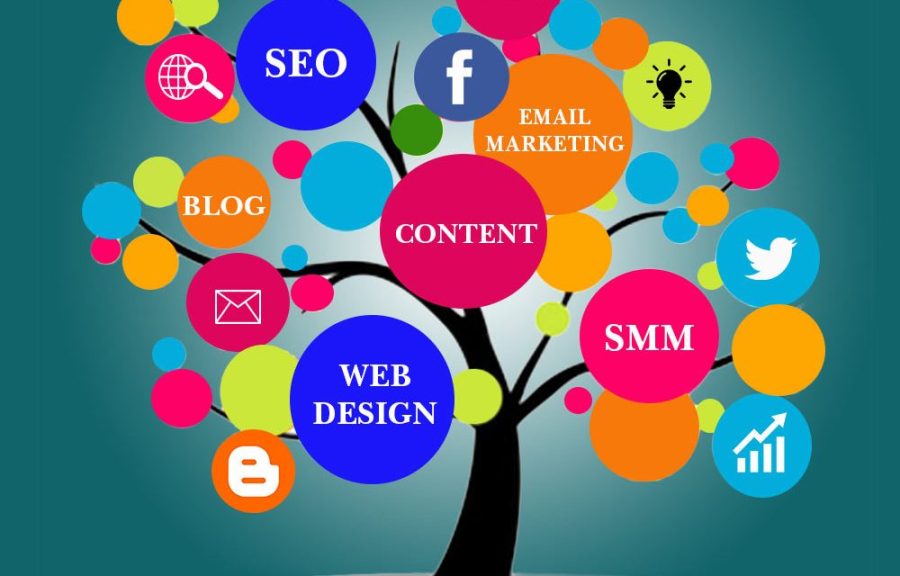
Digital marketing as you heard this word, you will certainly focus on online marketing or the non traditional marketing technique which can boost the market of important goods and things digitally. Basically digital marketing is the type of marketing which is delivered over the digital channels especially on the internet, smartphones and other digital mediums are technically included. Digital marketing can create a hyphen market space which can be utilized by both suppliers and customers.

Without facts and principles, data is useless.” –Bob Hoffman, Writer, Speaker and Type A Group Partner

Anyone who is using digital media or mediums can take advantage of exclusive offers and deals which have been provided by suppliers. Digital marketing can boost the business turnover of the companies. Digital marketing offers a huge return on small investment. Nowaday Companies are hiring digital marketing experts for better promotion of their products.

“We need to stop interrupting what people are interested in and be what people are interested in.” –Craig Davis, former Chief Creative Officer at J. Walter Thompson

“Content is not king, but a president elected by the votes of those whom it aims to rule.” –Raheel Farooq, Teacher, Writer and Voiceover Artist

Credit : Third Party Reference

Digital marketing can be divided into several types which is given as follows-

  1. Search Engine Marketing (SEM).
  2. Social Media Marketing (SMM).
  3. Email Marketing (EM).
  4. Content Marketing (CM).
  5. Pay-Per-Click (PPC).
  6. Television Marketing (TM).
  7. Affiliate Marketing (AM).
  8. Radio Marketing (RM).

“Does your content lead readers on a journey, or does it merely stuff them as leads into a pipeline?” –Ann Handley, Chief Content Officer of MarketingProfs

Digital marketing has consist several marketing benefits which is given as below-

  1. Low Cost: Marketing digitally offers more affordable alternatives than traditional methods. They create much impact yet cost less.
  2. Easy to Measure: Success of the digital campaign can be easily traced like email marketing software.
  3.  Easy to Adjust: Digital marketing can be easily adjusted accordingly or stopped all through with ease over traditional marketing.
  4. Brand Development: A well developed website that is highly interactive in some of the ways by which business can build its brand,
  5. Ease to Share: Digital marketing channels, feature sharing capabilities which allows campaigns to be shared with various followers.

“The consumer is not a moron; she is your wife.” –David Ogilvy, the Father of Advertising, Founder of Ogilvy & Mather

“Authenticity, honesty, and personal voice underlie much of what’s successful on the Web.” –Rick Levine, Author of The Cluetrain Manifesto

Hence, Digital marketing is the revolutionary step to increase the business capability and goals, promotes the goods and makes the business companies a big brand.

Apple catches TikTok reading user clipboards; won’t do now, says Chinese app

Chinese short-video-making app TikTok has announced it will no longer automatically access user clipboards on Apple iPhones after iOS 14 in Beta exposed the app’s constant reading of user clipboards.

TikTok told The Telegraph that it would stop “snooping on users’ clipboards after iPhone update showed app constantly reads copied text”.

“A security patch from Apple has suddenly exposed just how many smartphone apps are reading users’ clipboards every time they are on screen,” said the report.

In iOS 14 Beta, one of these features is a new banner alert that lets users know if an app is pasting from the clipboard.

This has exposed the behaviour of some popular apps like TikTok as annoyed users who upgraded to iOS 14 Beta went on social media with such complaints.

“For TikTok, this was triggered by a feature designed to identify repetitive, spammy behaviour. We have already submitted an updated version of the app to the App Store removing the anti-spam feature to eliminate any potential confusion,” the Chinese company said in a statement.

According to the report, other apps that read the iOS clipboard include AccuWeather, Call of Duty Mobile and even Google News.

iOS 14 is limited to developers now and the company plans to release a public beta version next month ahead of the launch later this year.

In iOS 14, all apps will now be required to obtain user permission before tracking.

Later this year, App Store product pages will feature summaries of developers’ self-reported privacy practices, displayed in a simple, easy-to-understand format.


Protection is must’: Experts call for following guidelines as India’s Covid-19 cases surpass 5 lakh

Medical professionals and security personnel during the inauguration of Sardar Patel Covid Care Centre and Hospital by Union home minister Amit Shah and Delhi chief minister Arvind Kejriwal at Radha Swami Satsang Beas campus in Chhatarpur New Delhi on Saturday

Medical professionals and security personnel during the inauguration of Sardar Patel Covid Care Centre and Hospital by Union home minister Amit Shah and Delhi chief minister Arvind Kejriwal at Radha Swami Satsang Beas campus in Chhatarpur, New Delhi on Saturday. (Vipin Kumar/HT Photo)

India’s Covid-19 tally crossed the five lakh mark on Saturday and it stands at 5,08,953, with the death toll at 15,685 according to Union health ministry. On the other hand, Delhi has 28,329 active cases with the total count reaching 80,188 and 2,558 deaths.

In this regard, medical experts told ANI that the rise in cases in India is still not high as compared to other countries but said that people should follow Covid-19 guidelines such as wearing face masks.

Dr Suresh Kumar, Medical Director, Lok Nayak Jai Prakash (LNJP) Hospital said that urban mobility is a likely cause in the spike in cases.

“I think as the numbers are rising, protection is must and we must follow the guidelines by the government wholeheartedly. There is a lot of urban mobility, especially in Delhi and Mumbai which may be a cause for the spike. The population density increases the chances of spreading the infection further. However, our recovery rate is also steadily rising which is encouraging,” Dr Kumar said.

Dr SP Byotra, Chairman, Department of Medicine, Sir Ganga Ram Hospital said, “We are yet to reach the optimum number of cases. However, there has been flouting of rules by people. We have been continuously insisting that wearing masks is of foremost importance and mandatory. We should be more responsible as a nation until there is specific treatment/vaccination available.”

In addition, Dr Byotra said, “One more important factor is testing. Now, almost 20,000 tests are being conducted which is helping in the detection of cases and ascertain whether they are symptomatic or asymptomatic.”

The Delhi government, in its media bulletin, stated that 19,180 tests were conducted on Saturday taking the total tests to 4,78,336.

Dr Randeep Guleria, Director, All India Institute of Medical Sciences (AIIMS), told ANI, “Rise in cases in India is still not as high as compared to other countries. In the United States, there have been almost 40,000 cases per day in the last two days. Compared to that, our numbers are not that high.”

“Cases per million population continues to be low and we still have low mortality. Considering the size of our population, the number of cases will be large in absolute terms. But if we are able to keep mortality down, it will be a big success for the country,” he said.

Union health minister Dr Harsh Vardhan stated that the Covid-19 recovery rate has surged over 58% in India with around three lakh cured and discharged patients.