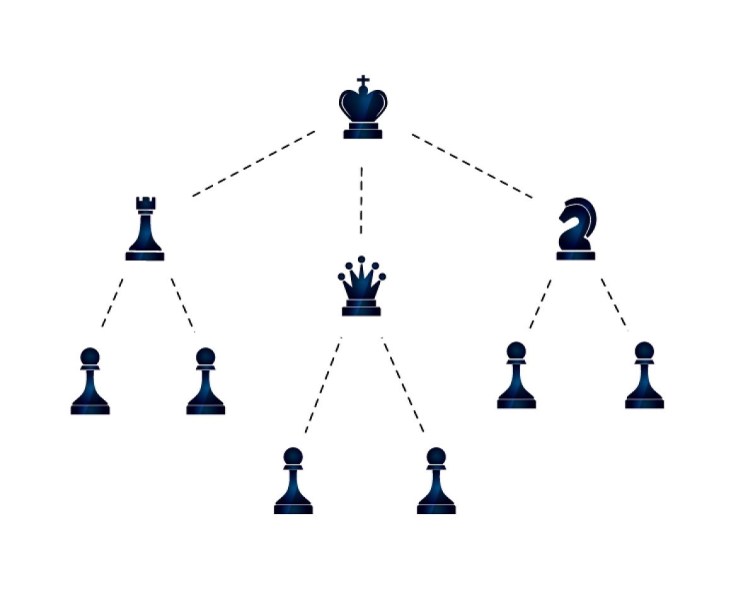
DECENTRALIZATION AND CENTRALISATION

DECENTRALIZATION

Decentralization is a systematic effort to delegate to the lowest levels of the authority except that which can be expected that can be exercised at central points. It is the pushing down of authority and power of the decision-making to the lower levels of the organization and the essence of decision making is dispersed throughout the organization. The essence of decentralization is the transference of authority from a higher level to a lower level. It is a fundamental principle of democratic management where each individual is respected for his inherent worth and constitution as Newman and Summer rightly said “Decentralization is simply a matter of dividing up the managerial work and assigning specific duties to the various executive skills”.

FEATURES OF DECENTALISATION

The following are the chief characteristics of decentralization:

  1. It is an extended form of delegation.
  2. It gives importance to the role of subordinates.
  3. It reduces the work-load of the managers in the top hierarchy.
  4. It is a process applied to the entire organization.
  5. Under it its decisions are taken by those employees who implement them; and
  6. Under it along with authority, responsibility is also transferred.

CENTRALIZATION

Centralization is the reservation or withholding of authority by individual managers within the organization and according to Henry Floyd “Everything that goes to increase the importance of the subordinate’s role in decentralization, everything which goes to reduce it is centralization”.

In centralization a little delegation of authority is the rule; power and discretion are concentrated in a few executives. Control and decision-making are in the hands of top-level management, however, absolute centralization is untenable because it would mean that the subordinates have no duties, power, or authority.

Centralization may be essential in a small organization to survive in a highly competitive world, but as an organization becomes more complex in terms of increasing size, the interdependence of work-flow, complexity of tasks and spatial physical barriers within and among groups, a requisite for efficiency is to move decision-making centres to the operating level. Thus, the larger the size of an organization, the more urgent is the need for decentralization and this does not mean that denaturalization is good and centralization is bad. According to Allen “ Centralization is the systematic and consistent reservation of authority at central points in the organization” and according to Fayol “Centralization is that organization where the role of subordinates is reduced”.


FEATURES OF CENTRALIZATION

          On the basis of the properties, the following are the characteristics of centralization:

  1. Right of decision is centralized and withhold with the top level of the management.
  2. The lower level of management executives only follows the decisions and necessary actions taken by top-level management.
  3. There is the least use of the process of delegating rights as it brings down the taken for making a decision and reduces the number of people involved as there is the direct involvement of the top-level management.
  4. There is reduction in the role of subordinates.
  5. There are a great distance work site and the decision-making place.

Balance Family and College: Student Story

Going back to school when you have children you need to take care of at home can be a really frightening thought. When will I have time for schoolwork? Will I ever get to study? What if my grades suffer because of my family commitments?
These are all valid fears, but if you make schoolwork a priority and practice good time management skills, you can be successful and reach your goals.
I returned to school as an online student when my oldest child was about 9 months old. I took breaks when we added our second, third and fourth children to the family, but came back to school as soon as we had settled into a routine. It took a while to balance it all with new babies, but now that my children are a little older (8, 6, almost 5, and 3 ½) it has become much easier.
Without implementing and adhering to a set daily schedule, I would never have had the passion to complete my bachelor’s degree or finish school with a 3.81 GPA. Once I knew I could manage going back to school while raising my family, I had the desire to eventually earn my MBA as well.
Here are some tips that help keep me organized and on the path to success:
  • Organize your school week on Sunday night. Write out all of your assignments and their due dates.
  •  Get a head start on your reading! The sooner you start reading, the quicker you can begin your assignments.
  • Make schoolwork a priority. Set reminders in your phone and in your day planner. Constant reminders can help keep you on track!
  •  Use sticky notes in your day planner. I like to use a different color for each course. I write the assignment on the note and put it in my planner on the due date. The best feeling is taking those notes out and throwing them away. This means I’ve completed my work!
  •  Post on the discussion boards every day. This maximizes your discussion point and creates a classroom feel to the online discussions. It also greatly enhances your understanding of course concepts.
  •  Study with your kids! Nothing teaches our children the value of education better than studying together. They’ll learn to be diligent in their studies and appreciate the time spent together.
Organization and time management may be a difficult task to master at first, but if you follow these tips and stay on top of the assignments, you’ll most definitely be a success!
Have a great term!
Heather Jones-Kipp is a graduate of Herzing University. She completed the Diploma of Medical Office Administration in September 2015 and the Associate of Science in Medical Assisting Services in December 2016. In January 2017, she will begin the Bachelor of Science in Healthcare Management at Herzing University. She has been married to her husband Chad for almost 10 years and she recently published her first novel. On top of all of this, she is also a mom of 4 amazing and busy children!

History of Drawing…

Homo sapiens created the world’s first known drawing on this stone about 73,000 years ago in what is now South Africa. A small rock flake no larger than a house key is covered with a colossal surprise: the first known drawing ever made by a human. It is believed that drawing was used as a specialized form of communication before the invention of the written language, demonstrated by the production of cave and rock paintings around 30,000 years ago. These drawings, known as pictograms, depicted objects, and abstract concepts.

World’s oldest drawing is Stone Age crayon doodle. ‘Hashtag’ pattern drawn on a rock in the South African cave is 73,000 years old. There are many uses for drawing. Drawing is a form of communication that preceded writing and that continues to serve as another form of communication. “Drawings can do amazing things, They can tell stories, educate, inspire, reveal, entertain, and inform.” Drawing is a form of visual art in which a person uses various drawing instruments to mark paper or another two-dimensional medium. Instruments include graphite pencils, pen, and ink, various kinds of paints, inked brushes, colored pencils, crayons, charcoal, chalk, pastels, various kinds of erasers, markers, styluses, and various metals. Digital drawing is the act of using a computer to draw. Common methods of digital drawing include a stylus or finger on a touchscreen device, stylus- or finger-to-touchpad, or in some cases, a mouse. There are many digital art programs and devices.

Drawing is one of the oldest forms of human expression, with evidence for its existence preceding that of written communication. It is believed that drawing was used as a specialized form of communication before the invention of the written language, demonstrated by the production of cave and rock paintings around 30,000 years ago. These drawings, known as pictograms, depicted objects, and abstract concepts. The sketches and paintings produced by Neolithic times were eventually stylized and simplified into symbol systems and eventually into early writing systems. Before the widespread availability of paper, 12th-century monks in European monasteries used intricate drawings to prepare illustrated, illuminated manuscripts on vellum and parchment. Drawing has also been used extensively in the field of science, as a method of discovery, understanding, and explanation.

The medium is the means by which ink, pigment or color are delivered onto the drawing surface. Most drawing media are either dry (e.g. graphite, charcoal, pastels, Conté, silverpoint), or use a fluid solvent or carrier (marker, pen and ink). Watercolor pencils can be used dry like ordinary pencils, then moistened with a wet brush to get various painterly effects. Very rarely, artists have drawn with (usually decoded) invisible ink. Metalpoint drawing usually employs either of two metals: silver or lead. More rarely used are gold, platinum, copper, brass, bronze, and tinpoint.

Paper comes in a variety of different sizes and qualities, ranging from newspaper grade up to the high quality and relatively expensive paper sold as individual sheets. Papers vary in texture, hue, acidity, and strength when wet. Smooth paper is good for rendering fine detail, but a more “toothy” paper holds the drawing material better. Thus a coarser material is useful for producing deeper contrast.

Newsprint and typing paper may be useful for practice and rough sketches. Tracing paper is used to experiment over a half-finished drawing, and to transfer a design from one sheet to another. Cartridge paper is the basic type of drawing paper sold in pads. Bristol board and even heavier acid-free boards, frequently with smooth finishes, are used for drawing fine detail and do not distort when wet media (ink, washes) are applied. Vellum is extremely smooth and suitable for very fine detail. Coldpressed watercolor paper may be favored for ink drawing due to its texture.

Shading is the technique of varying the tonal values on the paper to represent the shade of the material as well as the placement of the shadows. Careful attention to reflected light, shadows and highlights can result in a very realistic rendition of the image.

Blending uses an implement to soften or spread the original drawing strokes. Blending is most easily done with a medium that does not immediately fix itself, such as graphite, chalk, or charcoal, although freshly applied ink can be smudged, wet or dry, for some effects. For shading and blending, the artist can use a blending stump, tissue, a kneaded eraser, a fingertip, or any combination of them. A piece of chamois is useful for creating smooth textures, and for removing material to lighten the tone. Continuous tone can be achieved with graphite on a smooth surface without blending, but the technique is laborious, involving small circular or oval strokes with a somewhat blunt point.

Shading techniques that also introduce texture to the drawing include hatching and stippling. Several other methods produce texture. In addition to the choice of paper, drawing material and technique affect the texture. Texture can be made to appear more realistic when it is drawn next to a contrasting texture; a coarse texture is more obvious when placed next to a smoothly blended area. A similar effect can be achieved by drawing different tones close together. A light edge next to a dark background stands out to the eye, and almost appears to float above the surface.

Here are some advantages of drawing, which you can get:

1. Develops Fine Motor Skills

Fine motor skills include any specialized movement of the hands, wrists, and fingers. As an adult, you rely on fine motor skills when you type, drive, or even text. It’s important for your child to develop strong fine motor skills at a young age.

2. Encourages Visual Analysis

Young children do not yet understand some concepts that you may take for granted, such as distance, size comparison, and textural differences. Drawing provides the perfect opportunity for your child to learn these concepts deliberately. Having a child draw specific items, especially concerning each other, can help him or her perform a fundamental visual analysis of everyday spaces. To support this kind of drawing at home, prompt your child to draw examples of big and small, rough and smooth, far and near, and so on.

3. Helps Establish Concentration

Because most children enjoy drawing, this activity provides time to establish the concepts of concentration and practice. These concepts will be essential to your child’s academic success, even in elementary school. Learning how to observe small details, concentrate on achieving a specific result, and practice tricky tasks helps your child mature.

4. Improves Hand-Eye Coordination

In addition to improving fine motor skills, drawing enables your child to draw connections between what he or she sees and what he or she does. This hand-eye coordination is important in athletic and recreational situations, as well as in academic scenarios such as penmanship lessons.

5. Increases Individual Confidence

As a parent or guardian, you probably love to hear the phrase, “Look what I made!” When your child has an opportunity to create physical representations of his or her imagination, thoughts, and experiences, he or she gains confidence. Drawing can help your child feel more intrinsic motivation, self-worth, and validity. This affirmation will make him or her more confident in other areas that may not come as naturally as drawing.

6. Teaches Creative Problem Solving

Along with visual analysis and concentration, drawing encourages your child to solve problems creatively. When he or she draws, your child must determine the best way to connect body parts, portray emotions, and depict specific textures. Providing specific drawing tasks, such as creating a family portrait, and talking about your child’s color, method, or special choices can help him or she develop stronger problem-solving skills over time.


Piyush Goyal asks NPC to work closely with all the stakeholders

The 49th Governing Council Meeting of National Productivity Council (NPC) was held under the Chairmanship of Commerce and Industry Minister Piyush Goyal through video- conferencing. Mr Goyal suggested that adoption of technology and digital economy is going to play a vital role in not only transforming the business enterprises in the future, but also in achieving the target of a five  trillion dollar economy.

He said, productivity is always the result of commitment of excellence, intelligent planning and focused effort. Mr Goyal asked NPC to work closely with all the stakeholders and emphasised on the need to adopt the best practices from around the world. The participants endorsed the view that India can reposition itself only through productivity enhancement. Some of the suggestions  that emerged were  formulation of  sector specific action plans by NPC especially in agriculture and logistics.

Reserve Bank of India extends enhanced borrowing limit to banks under MSF till Sept 30

Amid the economic woes created by the Coronavirus pandemic, the Reserve Bank of India (RBI) has decided to extend the enhanced borrowing facility provided to the banks to meet their liquidity shortages till September 30.

The RBI, as a temporary measure, had increased the borrowing limit of scheduled banks under the marginal standing facility (MSF) scheme from 2 per cent to 3 per cent of their Net Demand and Time Liabilities (NDTL) with effect from March 27, 2020.

Under the MSF, banks can borrow overnight funds at their discretion by dipping into the Statutory Liquidity Ratio (SLR). This relaxation, which was granted till June 30, 2020, has now been extended till September 30. RBI, in its circular said that banks may continue to access overnight funds under the MSF against their excess SLR holding.

The marginal standing facility rate currently stands at 4.25 per cent. The RBI has also extended the relaxation on the minimum daily maintenance of the Cash Reserve Ratio (CRR) at 80 per cent for a further period of three months till September 25, 2020. On March 27, the minimum daily maintenance of the CRR was reduced from 90 per cent of the prescribed CRR to 80 per cent till June 26, 2020. This was done in view of the continuing of hardships faced by banks in terms of social distancing of staff and consequent strains on reporting requirements.

The Power of ATTITUDE💪 – Lion & Eagle

There are only two animals on the planet that the creator identified himself with the first one is the eagle and the second animal is the lion and when we study these two animals because if he is the leader of the universe and we want to be a leader on earth we need to better find out the nature of these animals and also the up attitude of those animals.

If we discover that both of them are the kings of their domain the Eagle is the king of the bird Kingdom and the lion is the king of the animal kingdom but let’s talk a little bit about the lion, the lion has the spirit of leadership and this word spirit here is referring to attitude everybody’s attitude a leader has attitude that makes him or her different from followers now the lion is the king of the jungle but the lion to is a great source of encouragement to all of us. I want you to write down this down remember this as long as you reside favorite the lion isn’t the tallest animal within the jungle number two the lion is not the largest animal in the jungle number three the lion is not the heaviest animal in the jungle number four the alliant is not the smartest animal or the foremost intelligent animal within the jungle and yet when he shows up all of them run away.

Your attitude matters in your life – Journey of life Continues
It really brings home the purpose a military of sheep led by a lion will always defeat a military of lions led by a sheep and therefore the answers thereto dilemma is that this because leadership can transform cowards into violent warriors the proper quite leadership can transform a timid into bold people that are fellows leadership is that powerful leadership can walk into a camp of depressed people on in 20 minutes. They are turned on into unbelievable powerful armies because leadership determines everything the lion is that the king of the jungle due to one-word attitude.

Attitude is Everything (@attitudetweets) | Twitter
Lion features a different attitude that creates every animal scared of him now we do not want to steer by fear but it does take respect for you to become a leader once I use the word fear within the jungle we’re talking about respect the elephant respects the lion the hyenas respect the lion they the giraffes they respect the life what makes these massive animals respect such a small cap the attitude is the difference for example, a lion will see an elephant and the thing that counts with mine one word lunch I could eat this thing and he acts the way he thinks now here’s another amazing mystery the elephant is larger, bigger, stronger, more powerful, heavier and more intelligent and yet when the elephant sees the lion one word involves mind eater attitude may be a product of belief you can’t have an attitude beyond your belief so your attitude comes from your belief system the lion is that the king due to what he believes about himself.

Flood affects 21 districts of Assam; 19,000 people shifted to relief camps

In Assam, flood situation remains grim as new areas have been inundated due to incessant rain. Two lakh 62 thousand people are reeling under the fury of flood in 21 districts. 18 persons lost their lives so far. The surging water caused massive damages to crop areas, roads and culverts.
 
Nearly 19 thousand people are taking shelter at temporary relief camps and administrations are disturbing food items to the flood hit people. Chief Minister Sarbananda Sonowal has instructed district administration to extend all helps to the flood affected people. 

Govt intensifies Locust control operations in seven states

Government has intensified Locust control operations in seven states. These are Rajasthan, Madhya Pradesh, Uttar Pradesh, Punjab, Haryana, Gujarat and Maharashtra. In total 60 ground control teams of Locust Circle Offices and 12 Drones are being used for Locust Control operations. The Locust Warning Organization and 10 Locust Circle Offices in coordination with State governments undertake locust control operations in schedule desert areas of Rajasthan and Gujarat. The State Governments through their Agriculture Departments undertake locust control in cropped area. This year starting from 11th April, in this season 1,27,225 hectares have been controlled till 26th of this month.
 
One swarm of 2 km x 4 km size which was previously controlled in Jhunjhunu district of Rajasthan on 26th June moved to Rewari district in Haryana. This swarm in Rewari was controlled by the State Agriculture Department deploying 40 tractors and 4 fire brigade vehicles. Two Ground control teams and officers of Locust Circle office were also present and joined them. Control operations were carried out from midnight to early morning yesterday. The left over swarm initially moved towards Jhajjar district in the morning and thereafter turned towards east following the wind direction. This swarm split into 3 to 4 smaller swarms.
 
One moved towards Nuh in Haryana and two swarms moved over Gurugram, moving further towards U.P. Two teams deployed in Haryana are following these swarms. Five more ground control teams have been moved from Nagaur and Jaipur in Rajasthan to join the operations in U.P. Drones have also been moved from Jaisalmer to join operations. State Agriculture Departments of Haryana and U.P. have been continuously kept informed and they are making necessary arrangements for control wherever the swarm finally settles.
 
Yesterday morning, apart from control operations at Rewari, locust controls have been undertaken by ground control teams of Locust Circle offices in coordination with agriculture department officials of State Government  in Jaisalmer,  Barmer,  Jodhpur,  Bikaner, Nagaur,  Jaipur and Sikar. The control operations have also been undertaken at one location in UP. Agriculture Ministry has said that India is the first country to control locust by using drones after finalizing the protocols and getting all statutory approvals. Major operations are concentrated in Rajasthan where maximum resources are committed. State governments have deployed tractor mounted sprayers and fire tender vehicles in large numbers to undertake locust control in cropped area. Ten ground spray equipments were imported from UK to strengthen locust control capabilities in the country.
 
Additional 45 ground spray equipments will reach next month  and Locust Circle Offices have more than 100 ground control equipment by July. Presently 60 control teams and more than 200 Central Government personnel are engaged in locust control operations.For effective control of locusts on tall trees and in inaccessible areas, 5 companies with 12 drones are deployed for spraying of pesticides for locust control. 55 additional vehicles have been purchased to strengthen the control capabilities. Enough stock of pesticides is being maintained with the locust control organization and there is sufficient availability with State Governments also. Home Ministry has included admissibility of hiring of vehicles and tractors with spray equipments for spraying of plant protection chemicals for pest control.
 
Under Sub-Mission on Agriculture Mechanization, assistance for purchase of 800 tractors mounted spray equipments sanctioned for Rajasthan. Financial assistance of 14 Crore rupees sanctioned for the State  for hiring of vehicles, tractors and for purchase of pesticides is under sanction. A total of 1.80 crore rupees sanctioned for Gujarat  for purchase of vehicles, spray equipments, safety uniform, android application and training with regard to locust. Review meetings were organized at different levels, Video Conferences were organized for different State Governments and Locust control preparedness is being reviewed.
 
Local awareness literature, SOP of approved pesticides and awareness videos were also shared with all stakeholder States. The Ministry said no significant crop losses have been reported in  Gujarat, Uttar Pradesh, Madhya Pradesh, Maharashtra, Chhattisgarh, Bihar and Haryana. However, some minor crop losses have been reported in some districts of Rajasthan.

Karnataka govt decides to impose lockdown across state every Sunday from 5th July

Karnataka Government has announced to impose state wide lockdown every Sunday to contain the pandemic. A decision to this effect was taken at the high level meeting chaired by Chief Minister BS Yediyurappa yesterday. This measure will start from July 5th.
 
In another decision taken, all the non essential Government offices will remain shut on every Saturdays and Sundays starting July 10th. In addition, night curfew has been extended from 8 pm to 5 am. It was also decided to increase ambulance services, and make public the information related to availability of beds and also the phone numbers of all nodal officers involved in containment of Covid-19.

Jharkhand govt extends lockdown till 31st July

Jharkhand government has decided to extend lockdown till July 31st across the state. The decision comes in the wake of increasing number of COVID19 cases in the state. 66 new cases were reported during the past 24 hours, taking the total tally to 2,360. The recovery rate in Jharkhand has improved to 73 percent. With the implementation of new directives issued by the Jharkhand government for enforcement of Lockdown, all movement except for essential services shall remain prohibited from 9 pm to 5 am in morning. Inter-state and intra-state bus services will also not be operational during this period.

All religious places, educational institutions, coaching classes, shopping malls, hotels, cinema halls, multiplexes, theatres, entertainment parks, bars, spa and saloons, gymnasiums and swimming pools will remain closed till July 31 across the state during the extended Lockdown orders. Relaxations provided earlier to those sectors and industries for economic activities outside the Containment Zones shall continue. Chief Minister Hemant Soren said that we have achieved success in prevention of spread of the COVID19 virus but more precautionary steps must be taken further for another period of a month to prevent the viral spread.

PM Modi to share his thoughts with people in Mann Ki Baat at 11 AM today

Prime Minister Narendra Modi will share his thoughts with the people in the country and abroad in the ‘Mann Ki Baat’ programme on All India Radio at 11 AM today. It will be the 66th episode of the monthly radio programme. It will be broadcast on the entire network of AIR and Doordarshan and also on AIR News website www.newsonair.com and newsonair Mobile App.
 
It will also be streamed live on the YouTube channels of AIR, DD News, PMO and Information and Broadcasting Ministry. AIR will broadcast the programme in regional languages immediately after the Hindi broadcast. The regional language versions will be repeated at eight in the evening.

Google Scholar

Google Scholar provides a simple way to broadly search for scholarly literature. From one place, you can search across many disciplines and sources: articles, theses, books, abstracts and court opinions, from academic publishers, professional societies, online repositories, universities and other web sites. Google Scholar helps you find relevant work across the world of scholarly research.

You can visit Google Scholar at https://scholar.google.com/

Features of Google Scholar

  • Search all scholarly literature from one convenient place
  • Explore related works, citations, authors, and publications
  • Locate the complete document through your library or on the web
  • Keep up with recent developments in any area of research
  • Check who’s citing your publications, create a public author profile

How are documents ranked?

Google Scholar aims to rank documents the way researchers do, weighing the full text of each document, where it was published, who it was written by, as well as how often and how recently it has been cited in other scholarly literature.

Google Scholar Citations

Google Scholar Citations provide a simple way for authors to keep track of citations to their articles. You can check who is citing your publications, graph citations over time, and compute several citation metrics. You can also make your profile public, so that it may appear in Google Scholar results when people search for your name, e.g., richard feynman.

Best of all, it’s quick to set up and simple to maintain – even if you have written hundreds of articles, and even if your name is shared by several different scholars. You can add groups of related articles, not just one article at a time; and your citation metrics are computed and updated automatically as Google Scholar finds new citations to your work on the web. You can choose to have your list of articles updated automatically or review the updates yourself, or to manually update your articles at any time.

Research Gate

ResearchGate is the professional network for scientists and researchers. Over 17 million members from all over the world use it to share, discover, and discuss research. We’re guided by our mission to connect the world of science and make research open to all.

It started when two researchers discovered first-hand that collaborating with a friend or colleague on the other side of the world was no easy task.Founded in 2008 by physicians Dr. Ijad Madisch and Dr. Sören Hofmayer, and computer scientist Horst Fickenscher, ResearchGate has more than 17 million members today. We strive to help them make progress happen faster.Here’s how it worksShare your publications, access millions more, and publish your data.

Connect and collaborate with colleagues, peers, co-authors, and specialists.

Visit Research Gate at https://www.researchgate.net/

Get stats and find out who’s been reading and citing your work.

ResearchGate and publishers will cooperate in educating users about their rights in relation to copyright-protected content by providing users with more and better information about how and when they may share their journal articles on the network

Ask questions, get answers, and solve research problems.

Publishers will get better visibility into the usage of new content on the platform that was originally published in their journals

Find the right job using our research-focused job board.

Accelerating science is what drives us – we’ve built a platform that gives the world’s scientists the tools and services they need to connect, collaborate, and advance their research.

Share updates about your current project, and keep up with the latest research.

We believe that learning never stops, and we help each other get better. You’ll get the autonomy, mentorship, and training you need to excel at what you do.

We’re a diverse group of like-minded individuals who have fun while working towards our goal. Together we enjoy cultural events, team outings, and celebrating our successes.

We make ResearchGate a great place for skilled and passionate people to thrive. Join us to find and keep the talent we need to achieve our mission.

https://www.researchgate.net/

Academia

Academia.edu is a platform for academics to share research papers. The company’s mission is to accelerate the world’s research.

Academics use Academia.edu to share their research, monitor deep analytics around the impact of their research, and track the research of academics they follow. Over 129 million academics have signed up to Academia.edu, adding 25 million papers. Academia.edu attracts over 63 million unique visitors a month.

Guided by a mission to accelerate the world’s research, Academia.edu aims to make every academic paper ever published available for free online and accessible by anyone in the world.  Academia.edu was founded in 2008 in San Francisco by Richard Price who recognized the need for open access of scholarly work while he was a doctoral candidate in philosophy at Oxford University.

Visit academia.edu at https://www.academia.edu/

Follow Academia.edu on Facebook, LinkedIn, and Twitter

Academia’s new mobile app represents a significant breakthrough in ensuring that scholarly research reaches beyond the Ivory Tower and into the real world where its true impact can be harnessed, all through the convenience and accessibility of a simple smartphone.

Mobile app users will be able to read millions of academic papers on over two million research interests, all for free. An Android version of the mobile app will be released in the coming months.

Academia.edu announced its acquisition of peer review platform Plasmyd, with the intention of proving that the two academic startups do indeed intend to generate an industry-wide shakeup.

Plasmyd is itself a peer-review platform, that has handled thousands of scientific papers and provided a space for scientists to discuss and critique each other’s work. Plasmyd sees itself as binding its scientific search engine platform with Academia.edu’s user base (which just hit 5 million yesterday). The two companies view this as a way to begin promoting new online academic platforms. “[Academia.edu has] built the largest online community of scientists while we’ve been working on building the next generation tools of peer review,” said Plasmyd’s co-founder Adnan Akil.

Research sharing platform Academia.edu is adding an analytics dashboard in order to allow measurement of the reach of academic papers shared on the site.

The new dashboard enables researchers to see who is accessing their research and how it is being referenced, both by academics and by non-academics. This information becomes invaluable when academics need to defend the merit of new research by noting, for example, that an individual’s research is being cited in Congressional hearings, public interest press releases, journal articles and news briefs.

The dashboard is now fully available for members after previously being available in a beta form.

Metrics available for members to browse include:

  • Total profile and research views for each member’s material;
  • Information on which search engines have driven traffic to a profile page;
  • Details on specific keywords that drive traffic; and
  • Breakdowns on which countries’ citizens are viewing specific research.

One of the things that might help such profile sites as Academia.edu grow is the presence of other researchers with whom you can network and whose work you can follow, as they maintain their profiles. Communities based around particular disciplines or research groups might well form around different sites like this one. I have chosen to “follow” a couple of my colleagues on Academia.edu and it works a bit like Facebook or LinkedIn or lots of other “Web 2.0” or social networking sites in the sense that my home page tells me about the activity of the people I have chosen to follow.

Apart from networking opportunities which are reliant upon community use, researchers could use this site as a place to promote their publications and their research expertise/interests. I uploaded my papers when I set up the profile and it was interesting to see recently that someone had viewed my profile after searching for keywords that are key to the topic of one of my papers. My own papers are of niche interest to librarians, so I won’t have a lot of activity to keep track of(!), but for researchers who are keen to monitor and to be able to demonstrate impact of their research, they could do worse than to see how often people are finding out about their work and which keywords are bringing people to their profile.

I do recommend that researchers put listings of their publications on lots of sites, but rather than uploading the full text of papers to external sites like this one, I think it best to put reference details up here and link back to the WRAP repository for the full text. I recommend this because it will boost the search engine ranking of a page if there are lots of links to it from an external domain, so you can use profile sites like this one to help the ranking of your paper at the web location you prefer most. Also, it makes sense if you want to collate statistics about those who read the full text of your work if you are always referring people to one source.

Planetizen

Eduindex News tries to bring in focus organisations working for the betterment of the society and institutions providing quality contents and services to scholars.

Planning

Planning is the professional practice and an academic study focused on the future of built environments and connected natural environments—from the smallest towns to the largest cities and everything in between.

Planning: A professional practice and an academic study focused on the future of built environments and connected natural environments—from the smallest towns to the largest cities and everything in between.

Planetizen: The independent resource for people passionate about planning and related fields.

Planetizen

Planetizen is a fiercely independent platform that creates, curates, and amplifies stories and resources to inform planning and people passionate about planning.

Scholars can visit the site of the Planetizen at https://www.planetizen.com/

Planetizen published its first story, by Anthony Downs, on August 1, 2000. The first Planetizen server ran on a used desktop computer connected to a telephone line in Chris’s house, and the site published 3-4 stories a day.

Within months, thousands were reading, and Planetizen expanded to cover news throughout California. By 2003, Planetizen contributors were submitting news from across the country, capturing the growing interest in the Internet and the need for an online community interested in planning.

Today, Planetizen reaches 90% of the U.S. urban planning community through news, editorial, job postings, online courses, books, and product sales. But one thing hasn’t changed: We are always looking for new ways to advance the field and work for healthier, more prosperous communities.

the mission of Planetizen Press is to provide innovative resources for students and professionals in the field.

Planetizen is the go-to news and information site for the urban planning, design, and development community. With a steady stream of fresh, relevant stories every day, our readers check in regularly to get the latest news on transportation, architecture, infrastructure, housing, economic development, and urban design. Our readers follow our influential bloggers and read original features from leaders in the field.


Publications
The Planetizen Press catalog currently includes a variety of titles available at the Planetizen Store.

Submissions
Planetizen Press accepts manuscripts for consideration from authors and opinion leaders. We favor manuscripts that are near completion on the subjects Planetizen covers on a regular basis:

  • Urban and regional planning and land use
  • Transportation and transit
  • Environmental issues
  • Energy and infrastructure
  • Historic preservation
  • Landscape architecture
  • Urban planning technology
  • Planning-related humor


We are open to ideas ranging from extended academic papers to popular non-fiction, like The Tipping Point. Our goal is to encourage debate and spread knowledge of the concepts and goals of urban planning. However, we are primarily interested in near-finished manuscripts. We are not seeking to develop books with authors from scratch.

Hope readers will be enrich themselves by visiting such resourceful forum. If you thing your organisation is working for the benefits of the scholars and community at large then let us know so that we can highlight their resource to our thousands of readers worldwide. For writing guest post and for informing about new and useful resources, write a mail to news@eduindex.org

We will try to give space in our News Portal free of charge. Keep reading and keep enriching yourself and keep helping others in getting good resources like Planetizen.

← Back

Thank you for your response. ✨