3-year partnership with Meta, Education to Entrepreneurship


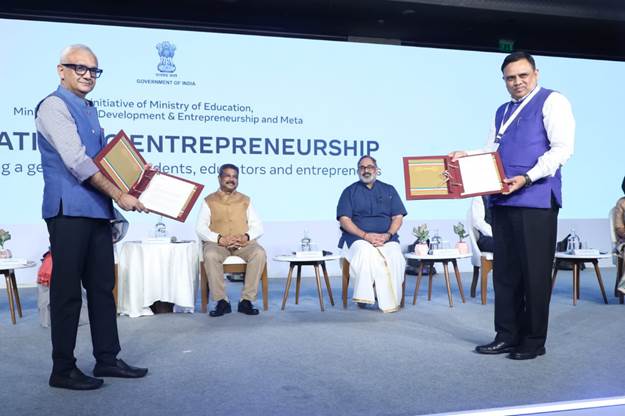
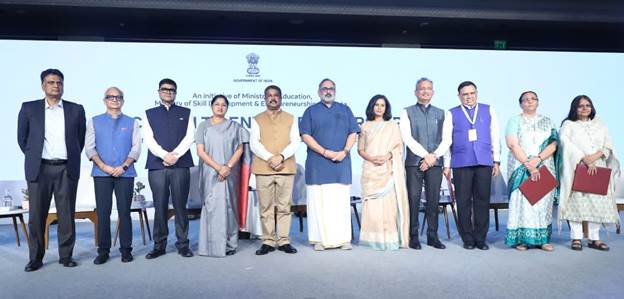
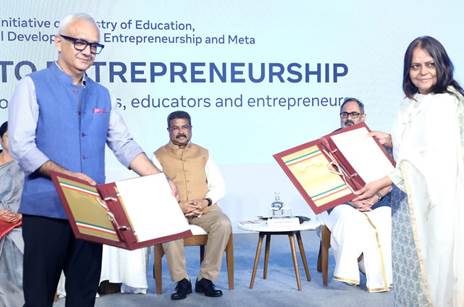
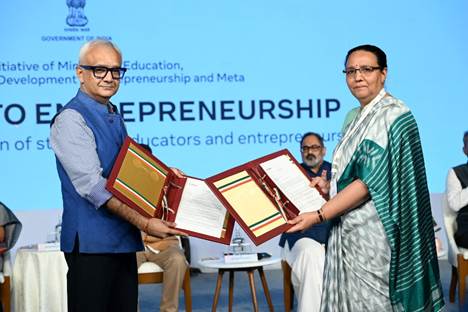
Union Minister for Education and Skill Development & Entrepreneurship Shri Dharmendra Pradhan launched a 3-year partnership “Education to Entrepreneurship: Empowering a generation of students, educators and entrepreneurs” between Ministry of Education, Ministry Skill Development & Entrepreneurship and Meta in New Delhi today. 3 Letters of Intent (LoI) were exchanged between Meta and NIESBUD, AICTE and CBSE. Minister of State for Education Smt. Annpurna Devi and Minister of State for Electronics & Information Technology and Skill Development and Entrepreneurship Shri Rajeev Chandrasekhar also graced the occasion.
 

Speaking at the event, Shri Dharmendra Pradhan said that the initiative launched today is in furtherance to Prime Minister Shri Narendra Modi’s vision of making India a skill capital of the world and empowering our Amrit Peedhi.

He further said that ‘Education to Entrepreneurship’ partnership is a game-changer, which will take Digital Skilling to the grassroots. This will build capacities of our talent pool, seamlessly connect students, youth, workforce & micro-entrepreneurs, with futuristic technologies and transform our Amrit Peedhi into new-age problem solvers and entrepreneurs.
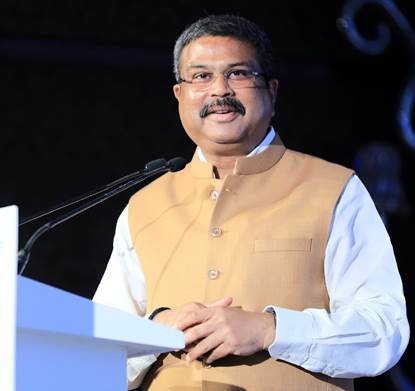


He stated that India’s democracy, demography, and diversity are to be connected with technology conversion so that technology becomes the equalizer for the entire society. Guided by the tenets of NEP, META’s partnerships with NIESBUD, CBSE & AICTE will catalyse infinite possibilities for equipping our population with critical digital skills and empowering micro entrepreneurs and small businesses, he added.

Shri Rajeev Chandrasekhar, in his address, highlighted the Government’s focus on preparing our youth and workforce in these rapidly transforming times, to be equipped with the skills to succeed and play important roles in the evolving landscape of technology and the global economy. Digital skills, while representing skilling and entrepreneurship in the innovation ecosystem, more importantly represents a bridge between lakhs of small rural, micro and self-employed entrepreneurs, enabling them to expand, grow and succeed, he added.

In a video message Meta President, Global Affairs, Sir Nick Clegg, thanked Shri Dharmendra Pradhan for his support in bringing the partnership together between the two most important sectors of the workforce, education and skilling. India’s talent base and rapid digital adoption make it the perfect place for us to invest in emerging technologies, he added. He looked forward to Meta’s contribution in empowering India’s students, young people and entrepreneurs, with significant focus on skill development for Indian startups and businesses, having worked closely with India during its G20 Presidency in areas such as education, job creation, skill development and user safety.

Under the partnership with NIESBUD, 5 lakh entrepreneurs will get access to digital marketing skills by Meta over the next 3 years. Budding and existing entrepreneurs will be trained in digital marketing skills using Meta platforms in 7 regional languages to begin with. Three short films were also showcased highlighting the details about the partnerships.


Secretary, Higher Education, Shri K. Sanjay Murthy; Secretary, Department of School Education & Literacy, Shri Sanjay Kumar; Secretary, MSDE Shri Atul Kumar Tiwari; Chairman, AICTE, Prof. T.G. Sitharam; Chairman, National Educational Technology Forum NBA NAAC, Prof. Anil Sahasrabudhe; President, Federation of Indian Chambers of Commerce and Industry (FICCI), Shri Subhrakant Panda and senior officials of the Ministries, AICTE, CBSE, National Institute for Entrepreneurship and Small Business Development (NIESBUD); Shri Shivnath Thukral, Director, Public Policy, India and South Asia, Meta and Sandhya Devanathan as the Vice President of Meta India were also present.

*****
Indian Heritage app and e-Permission portal

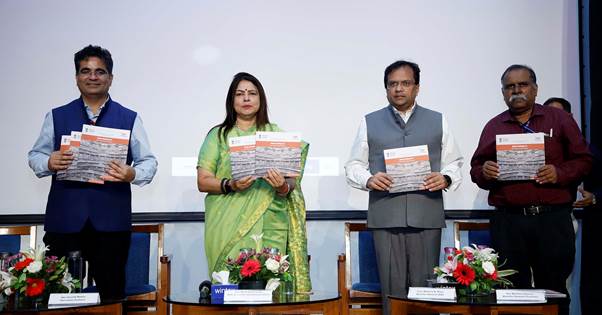
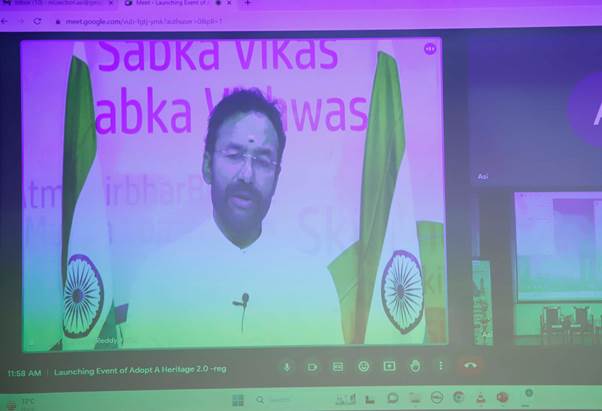
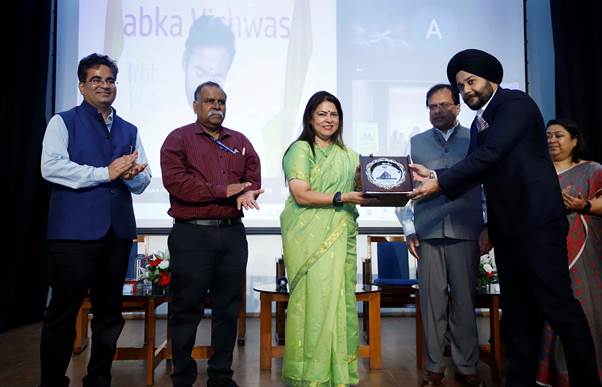
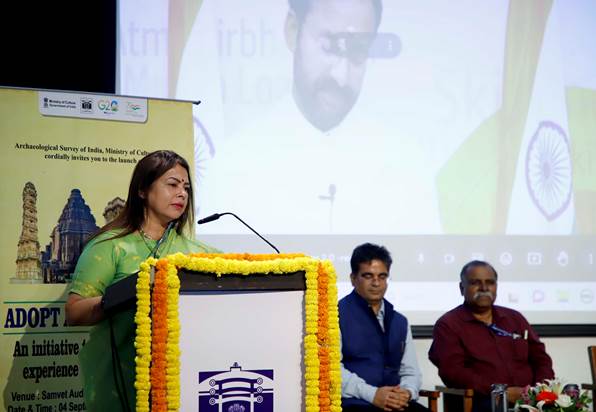
 The Archaeological Survey of India (ASI) has 3696 monuments under protection, which are spread, throughout the country. These monuments not only exhibit the rich cultural heritage of India but also play a significant role in fostering the economical growth. In order to sustain the rich cultural legacy, the heritage sites require time to time enhancement of the amenities. To this end and to further enhance the experience of visitors, ASI launched “Adopt a Heritage 2.0” programme on 4th September 2023 at Samvet Auditorium, IGNCA, New Delhi. Union Minister of Culture, Tourism and DoNER Shri G Kishan Reddy, who attended the launch programme virtually, urged all entities to come forward and help in better upkeep and rejuvenation of India’s rich cultural heritage, in line with the vision of ‘Virasat Bhi, Vikas Bhi’.

He further said that ‘Adopt a Heritage 2.0’ programme seeks to foster collaboration with corporate stakeholders through which they can contribute to preservation of these monuments for the next generations.


Under this programme, ASI invites corporate stakeholders to enhance the amenities at the monuments by utilizing their CSR funds. The programme is a revamped version of the earlier scheme launched in 2017 and clearly defines the amenities sought for different monuments as per AMASR Act 1958. The stakeholders can apply for adopting a monument or specific amenities at a monument through a dedicated web portal with URL http://www.indianheritage.gov.in, which contains details of monuments sought for adoption along with gap analysis and financial estimation of amenities. Union Minister of State for Culture Meenakashi Lekhi, Union Culture Secretary Govind Mohan and Director General of ASI, K. K. Basa, were present on the occasion.


Minister of state for Culture, Smt. Meenakashi Lekhi, elaborates the importance of cultural heritage in shaping the identity.  She said that G20 Presidency is an opportunity to showcase the Cultural heritage of our country. She said that he process for selection will be carried out after due diligence and discussions with various stakeholders and assessing the economic and developmental opportunities at each monument.

 The ‘Adopt a Heritage 2.0’ programme seeks to foster collaboration with corporate stakeholders through which they can contribute in preserving these monuments for our upcoming generations”, said the minister. The process for selection will be carried out after due-diligence and discussions with various stakeholders and assessing the economic and developmental opportunities at each monument.

The selected stakeholders will develop, provide and maintain amenities in hygiene, accessibility, safety and knowledge categories. In doing so, they will get an opportunity to be recognized as a responsible and heritage-friendly entity. The term of the appointment will be for a period of five years initially, which may be further extended up to five years.

Further, a user-friendly mobile app, named ‘Indian Heritage’ also launched on the same day, which will showcase the heritage monuments of India. The app will feature state-wise details of monuments along with photographs, list of public amenities available, geo-tagged location and feedback mechanism for citizens. The launch will be in a phased manner, with the ticketed monuments launched in Phase I, followed by the remaining monuments. An e-permission portal, with URL http://www.asipermissionportal.gov.in for obtaining permission for photography, filming and developmental projects on monuments was also launched. The portal will fast-track the process for obtaining various permissions and solve operational and logistical bottlenecks involved.

www.indianheritage.gov.in

www.asipermissionportal.gov.in

***

G20 Technical Workshop on Climate Resilient Agriculture on 4th – 6th September 2023 in Hyderabad

 The Department of Agricultural Research and Education (DARE), Ministry of Agriculture and Farmers Welfare is organizing the G20 Technical Workshop on “Climate Resilient Agriculture” on 4-6 September 2023 in Hyderabad. The Workshop aims to bring together experts from around the world to discuss and highlight the challenges of Climate Change and would emphasize the cooperation and exchange of information to enhance the skills and competencies of countries in addressing challenges posed by climate change. The eminent speakers

The three-day event began today with the Inaugural Session which was graced by Minister of State for Agriculture and Farmers Welfare, Ms. Shobha Karandlaje. The first day was focused on the “Climate Resilient Agriculture Research Needs and Innovations” wherein the eminent speakers shared their experiences in their respective countries to achieve resilience in agriculture. They shall also list out scientific and innovative solutions that are required to address these emerging challenges to reduce the uncertainty in the agriculture food systems. The event is attended by dignitaries including foreign delegates from G20 member states, Guest-invited countries, and International Organizations (IOs). Senior Officials from the Ministry of Agriculture and other Ministries also attended the meeting to deliberate in the technical sessions on the various issues of agriculture research predominantly on Climate Change and other techniques and methods for sustainable development of agriculture in the Global context.

Minister of State for Agriculture and Farmers Welfare, Ms. Shobha Karandlaje mentioned that agriculture is the most sensitive sector and is greatly influenced by climate change which is already happening in G 20 Nations. She said that the impacts of climate change are already being experienced by all of us and hope that the recommendations emanated from this workshop will give direction towards attaining climate-resilient agriculture.

Secretary DARE, and DG ICAR, Dr. Himanshu Pathak reiterated that agriculture in India is highly vulnerable to climate change and variability. He said that in recent years, the frequency of climatic extremes has increased resulting in increased risks to agricultural production and food security all over the World, including India and emphasized that the efforts of ICAR are very significant in meeting the challenges of climate change. Additional Secretary & FA, DARE, Ms. Alka Nangia Arora opined that Climatic risk is manifested in terms of the incidence of droughts, floods, and high intra-season variability in rainfall. Hence, risk – climatic and other forms of risk – remains a key challenge to researchers and policymakers.

DDG(NRM), ICAR, Dr. S.K, Chaudhari chairman of Technical Workshop for Climate-Resilient Agriculture, expressed that G20 Nations, mindful of G20’s leadership role, can position themselves as pioneers in developing climate-resilient practices for sustainable agriculture to enhance food security. Location-specific Climate Resilient Technologies (CRTs) are being demonstrated in India for coping with climate variability in vulnerable districts of India to generate awareness and to build the capacity of farmers and other stakeholders. Further ensured that the deliberations of this workshop would provide a road map for the research and development agenda to comprehensively address the climate change impacts on the agriculture sector. Director, ICAR-CRIDA, Dr. V.K. Singh profusely thanked the dignitaries and delegates for attending the Technical Workshop by travelling all the way from different nations.

The Theme of the G20 Indian Presidency is One Earth, One Family, and One Future, which celebrates the spirit of togetherness and harmony amongst us to ensure a bright future for the world. Upscaling Climate Resilient Agriculture Case studies and Experiences, Policy, Finance, and Institutional Needs for Climate Resilient Agriculture will be discussed in the upcoming technical sessions of the three-day event. As a part of the program, on 5th September 2023, the delegates would be taken on an excursion visit to ICAR-Indian Institute of Millets Research (IIMR) Hyderabad to showcase the scientific advances made in the field of research on Millets as part of the International Year of Millets 2023. India is looking forward to strengthening its Scientific Research and Development initiatives in the field of Millet and cooperating with other countries to help them develop these crops in their countries.

Later the delegates would be taken on a short trip to Shilparamam, Hyderabad on 5th September 2023 to witness the live dance performances of Indian folk artists depicting the traditional dance forms of music. The delegates would also explore the traditional products of India and the opportunity to buy them at the Shilparamam Complex, Hyderabad. The delegates on 6th September 2023 would be taken on an excursion visit to ICAR- CRIDA Hayathnagar Research Farm where they would be taken to field farms and given an overview of the crops and their management. The Department in close coordination with the support of district administration has made elaborate arrangements for the safety and security of the delegates. The delegates would leave for their respective countries on 6th 7th September 2023.

********

WHO Traditional Medicine Global Summit 2023

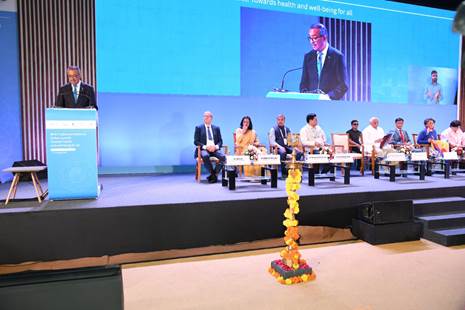
 World Health Organization (WHO) has released the outcome document of first WHO Traditional Medicine Global Summit 2023 in form of “Gujarat Declaration”. The declaration reaffirmed global commitments towards indigenous knowledges, biodiversity and traditional, complementary and integrative medicine. WHO underlined that the application of rigorous scientific methods is needed to better understand, assess and, where appropriate, apply more holistic, context-specific, complex and personalized approaches for health and well-being for all.

It reiterates that India as host of the WHO Global Traditional Medicine Centre at Jamnagar, Gujarat has an important role in scaling up WHO’s capacities to support member states and stakeholders in taking forward the summit action agenda and other relevant priorities.

The action points of two day WHO Traditional Medicine Global Summit 2023 held at Gandhinagar, Gujarat are based on the evidence, discussions and outcomes presented at the Summit. Deliberation were done on varied topics like Health and well-being of people and the planet, research and evidence, universal health coverage, primary health care and health systems, Data & routine information systems, digital health frontiers, biodiversity and sustainability, human rights, equity and ethics.

Union minister of Ayush Shri Sarbananda Sonowal had said, “Gujarat declaration is testimony of our  prime minister Shri Narendra Modi’s commitment to promote our ancient knowledge of Traditional Medicine system. Through collaborative efforts and sustainable practices, we can ensure a healthier future for generations to come.”

During the WHO traditional Medicine global Summit, Director General of the World Health Organization Dr Tedros Adhanom Ghebreyesus, had said that “Gujarat Declaration” will serve as a catalyst to harness the potential of traditional medicine through the lens of science and will focus on the integration of traditional medicines in national health systems and help unlock the power of traditional medicine.

Gujarat declaration talks about scaling up efforts to further implement evidence-based TCIM (Traditional complimentary integrative medicine) interventions and approaches in support of the goal of universal health coverage (UHC) and all health-related Sustainable Development Goals (SDGs). It states the role of multi-regional, multi-disciplinary and multi-stakeholder collaborations demonstrated at the Global Summit through the WHO GCTM that is aligned with and complementary to the work of WHO major offices, to maximize evidence based benefits of TCIM in global health.

Support the evidence-based integration in national health policies and systems based on the highest quality research. Accelerate the production, regulation, and formal utilization of scientifically proven TCIM products and practices. Advance policies that promote standardized TCIM documentation, including through expanded and accelerated use of the WHO International Classification of Diseases (ICD-11) to enable integration of evidence and data collection on TCIM in a standardized way within routine health information systems. Establish a global network of TCIM reference clinical centres that can routinely undertake standardized data collection and monitoring based on WHO ICD-11 coding of the implementation.

The highlight of summit was how to enable the appropriate development and application of digital health technologies, and artificial intelligence (AI) in particular, to advance digital health resources on TCIM for people’s health and well-being.

It mentions that actions should be promoted and taken at all levels to safeguard, restore and sustainably manage biodiversity, and to ensure the fair and equitable sharing of the benefits arising from the use of biodiversity resources, related genetic material and Indigenous knowledges. Fully recognize, respect and protect the rights of Indigenous Peoples, as provided in the UN Declaration on the Rights of Indigenous Peoples. Incorporate ethical methods and processes in TCIM research and practice.

The First global summit on Traditional Medicine was organised by the World Health Organization (WHO) and co-hosted by the Ministry of Ayush, from August 17-18, 2023, at Gandhinagar, Gujarat.

Top 20 Universities of India – Track2Training Research Ranking


1
Indian Institute of Science
2
Indian Institute of Technology Delhi
3
Indian Institute of Technology Kharagpur
4
Indian Institute of Technology Madras
5
Indian Institute of Technology Bombay
6
University of Delhi
7
All India Institute of Medical Sciences, New Delhi
8
Bhabha Atomic Research Centre
9
Indian Institute of Technology Kanpur
10
Banaras Hindu University
11
Jadavpur University
12
Vellore Institute of Technology
13
Indian Institute of Technology Roorkee
14
Postgraduate Institute of Medical Education & Research, Chandigarh
15
Anna University
16
Tata Institute of Fundamental Research, Mumbai
17
Aligarh Muslim University
18
University of Calcutta
19
Council of Scientific and Industrial Research India
20
Panjab University

Ranking Prepared by Track2Training Evaluation Team 
Give Reference to this publication in APA style as 

Track2Training Evaluation Team. (2023, September 4). Top 20 universities of India – Track2Training research ranking. Track2training.org. https://www.track2training.org/2023/09/to-20-universities-of-india.html


What are Top Ten Universities in India which Produces largest no. of Research Papers

Top universities in India known for producing a significant number of research papers. Please note that rankings and research output may have changed since then, so I recommend checking the latest rankings and statistics for the most up-to-date information. Here are ten prominent universities known for their research output:

Indian Institute of Science (IISc), Bangalore: IISc is renowned for its research in various fields, particularly in science and engineering.

Indian Institutes of Technology (IITs): Various IITs across India are known for their extensive research output, including IIT Bombay, IIT Delhi, IIT Madras, and others.

University of Delhi: The University of Delhi has several research-focused departments and institutes contributing to a significant number of research papers.

Jawaharlal Nehru University (JNU), Delhi: JNU is renowned for its social sciences and humanities research.

Tata Institute of Fundamental Research (TIFR): TIFR conducts research primarily in fundamental sciences and mathematics.

Indian Statistical Institute (ISI): ISI is known for its research in statistics, mathematics, and computer science.

Banaras Hindu University (BHU): BHU has a strong research tradition, particularly in the fields of science, technology, and humanities.

University of Calcutta: The University of Calcutta has a rich history of research output, especially in the sciences.

University of Mumbai: The University of Mumbai has several research centers and institutes contributing to research in various disciplines.

Anna University, Chennai: Anna University is known for research in engineering and technology.

Please keep in mind that these rankings may have changed, and the research output can vary by department within each university. To get the most current information on research output and rankings, it’s advisable to refer to recent sources and university websites.

What are different Types and Design of Blinds

 One of the popular item to make home and offices look nice is blinds. Blinds are versatile window coverings that serve both functional and aesthetic purposes in homes and offices. They offer control over privacy, light, and temperature while also contributing to the overall interior design. Peterjohn.co.uk provides different types of Blinds come in various designs, allowing individuals to choose the perfect option to suit their needs and style preferences.

Here are some of the most popular types and designs of blinds:

Photo by Pixabay on Pexels.com
  1. Vertical Blinds:
    • Vertical blinds consist of individual slats that hang vertically from a track.
    • They are an excellent choice for large windows and sliding glass doors.
    • Available in various materials, including fabric, vinyl, and wood, allowing for customization.
  2. Horizontal Blinds:
    • Horizontal blinds have slats that run horizontally and can be adjusted to control light and privacy.
    • Common materials include aluminum, wood, and faux wood.
    • Venetian blinds are a popular type of horizontal blind with wider slats.
  3. Roman Blinds:
    • Roman blinds are made of fabric that folds up into neat horizontal pleats when raised.
    • They create an elegant and soft look in any room and are great for bedrooms and living areas.
  4. Roller Blinds:
    • Roller blinds consist of a single piece of fabric that rolls up and down using a pulley system.
    • They are simple and functional and come in a wide variety of patterns and colors.
  5. Pleated Blinds:
    • Pleated blinds have a concertina-like structure and are made from pleated fabric.
    • They are perfect for adding texture and style to windows, especially in contemporary interiors.
  6. Cellular or Honeycomb Blinds:
    • These blinds are designed with a unique honeycomb structure that traps air, providing excellent insulation.
    • They are energy-efficient and help regulate indoor temperatures.
  7. Bamboo and Woven Wood Blinds:
    • These blinds are crafted from natural materials such as bamboo, reeds, and grasses.
    • They add a warm and earthy feel to interiors and are often used in eco-friendly designs.
  8. Panel Blinds:
    • Panel blinds consist of large fabric panels that slide horizontally along a track.
    • They are ideal for covering large windows and creating room dividers in open spaces.
  9. Motorized Blinds:
    • Motorized blinds can be controlled remotely or through a smart home system.
    • They offer convenience and can be programmed to adjust automatically based on time of day or sunlight levels.
  10. Blackout Blinds:
    • Blackout blinds are designed to block out all light and are perfect for bedrooms or home theaters.
    • They often have special light-blocking features and are available in various styles.
  11. Custom Blinds:
    • Many blinds can be customized to fit specific window sizes and design preferences.
    • Custom options include fabric choices, color, slat width, and decorative elements.

Blinds play a significant role in interior design, providing both functionality and aesthetics. When choosing blinds for your space, consider factors like light control, privacy, insulation, and style to find the perfect blinds that complement your decor and meet your needs.

Medical education affordable and accessible

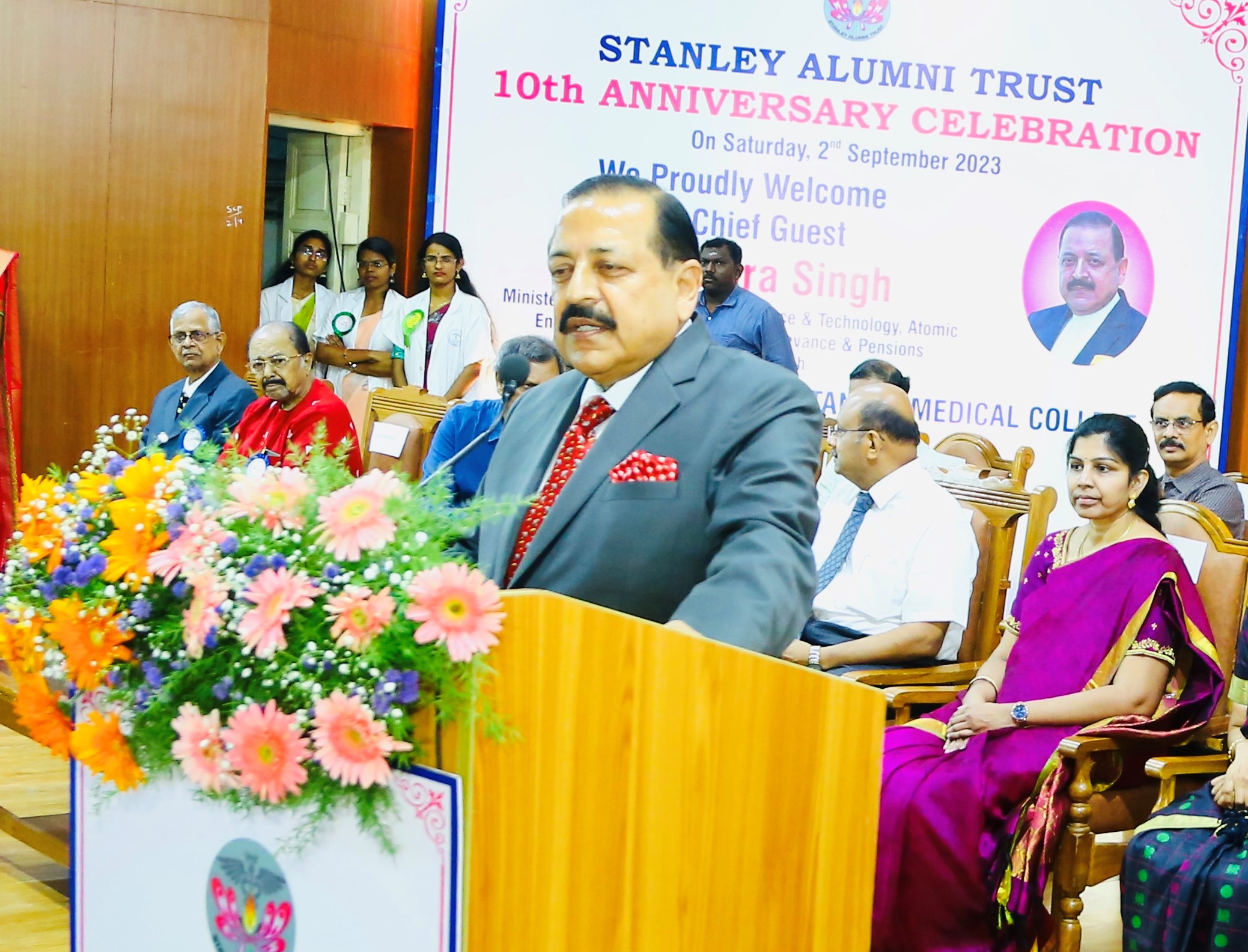
 Union Minister of State (Independent Charge) Science & Technology; MoS PMO, Personnel, Public Grievances, Pensions, Atomic Energy and Space, Dr Jitendra Singh, who is also a known Diabetologist and Professor of Medicine, today said that the Government headed by Prime Minister Shri Narendra Modi aims at making  Medical Education affordable and accessible, so that no deserving candidate should face disadvantage because of socio- economic status. 

Addressing an Academic Meet, as chief guest, at one of India’s most prestigious institutions, Stanley Medical College in Chennai, Dr. Jitendra Singh said, medical education has been one of the top priorities of this government, which can be judged from  the statistics that from mere 145 government medical colleges, the number has increased to 260. Under the Central Sector Scheme for setting up of new AIIMS, 22 AIIMS have been approved, while Undergraduate courses have started in 19 AIIMS, he added.

The Minister said, the number of MBBS UG seats have increased from 51,348 in 2014 to 91,927 seats which is an increase of 79%. The number of PG seats have increased by 93% from 31,185 seats in 2014 to 60,202 seats, he said. 

Dr Jitendra Singh said, the National Medical Commission has sought to revise the criterion for NEET UG, aiming to bring transparency into the medical admission process and stop backdoor admissions in colleges against the NRI quota. 

Dr Jitendra Singh recalled that PM Modi has given a call to provide Medical and Engineering education in regional Indian languages such as Hindi, Tamil, Telugu, Malayalam, Gujarati & Bengali. 

“Medical education has commenced in Hindi and soon Engineering studies will also begin in Hindi and translation of Engineering books has commenced in eight languages across the country, and in times to come, students across the nation will be able to pursue Technical and Medical education in their mother tongue,” he said.

Dr Jitendra Singh said that India is being looked up to by the rest of the world in the field of healthcare after the successful handling of the pandemic. Technologically and in human resources, we are much ahead of most other countries, he said.

Thanking PM Modi for bringing ‘Preventive Health Care’ into focus in the country for the first time, Dr Jitendra Singh said, under the leadership of PM Modi, in just a span of two years, India could produce two DNA vaccines and one nasal vaccine.

“The whole world recognised India’s leadership role during COVID-19, as it achieved the rare feat of delivering over 220 crore vaccinations through a fully digital platform – COWIN and the process continues,” he said, adding, “India, with 130 crore people, showed the way to the world in its fight against COVID-19 and also helped many countries particularly the neighbours with vaccines.”

The S&T Minister said, during the COVID even the West started looking up to India in search of immunity building techniques drawn from Ayurveda, Homoeopathy, Unani, Yoga, Naturopathy etc.

“Healthcare sector in India is expected to grow to reach a size of $50 billion by 2025, while the global medical tourism market is estimated to be worth about $72 billion. India’s share in medical tourism is expected to be around 10 billion dollars by this year-end. Moreover, the country is the world’s largest supplier of generic drugs,” he said.

Dr Jitendra Singh said, it was the farsightedness of PM Modi that soon after coming to power in 2014, he shared the powerful vision of ‘Digital India’ much before COVID-19 hit the world.

Dr Jitendra Singh asserted that Ayushman Bharat is so far the world’s best health insurance scheme and credit goes to Prime Minister Narendra Modi for it.

Dr. Jitendra Singh said that New India will become Atmanirbhar in healthcare only by integrating various sciences and domains of medicine.

*****

Tool-kits and machineries to artisans under 'Gramodyog Vikas Yojna'

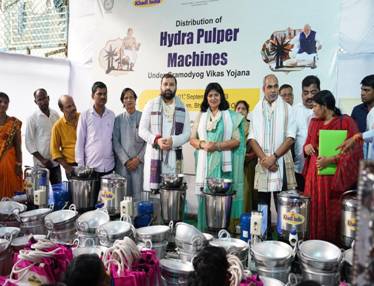
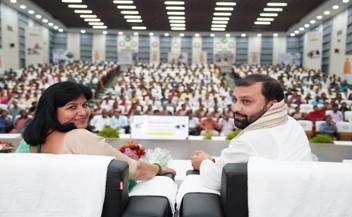
 The Chairman of the Khadi and Village Industries Commission (KVIC), Ministry of Micro, Small and Medium Enterprises, Shri Manoj Kumar distributed tool-kits and machineries to artisans in a distribution ceremony in Bhubaneshwar (Odisha) on September 01, 2023. During this event, Electric Wheels were distributed to 100 potters, Footwear Toolkits were provided to 75 Leather Artisans and Paper Massey Machines were given to 60 artisans as a part of the Gramodyog Vikas Yojana. The Member of Parliament from the Bhubaneswar Lok-Sabha Constituency, Smt. Aparajita Sarangi and Shri Manoj Kumar Singh, Member East Zone KVIC were also present on the occasion.

An Artisan Sammelan and a Pottery-Expo organized under the Gramodyog Vikas Yojana was organised at the Kalinga Institute of Industrial Technology campus in Bhubaneshwar. Smt. Aparajita Sarangi highlighted the commendable achievements of KVIC in the last 9 years under the leadership of the Prime Minister Shri Narendra Modi. She emphasized that KVIC is actively contributing to the realization of the “Atmanirbhar Bharat” vision and playing a vital role in generating employment opportunities in rural India.

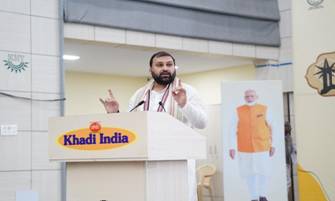
Addressing at the event, Shri Manoj Kumar said that over the course of the past 9 years, the Prime Minister Shri Narendra Modi has actively elevated India’s cherished national heritage called “Khadi,” to various international platforms. Through his dedicated endeavours, Khadi has now evolved into a prominent global brand. Shri Manoj Kumar further articulated that during India’s struggle for independence, Khadi was embraced as the central tool in the Swadeshi movement by the father of the nation Mahatma Gandhi. Remarkably, in the contemporary context, Prime Minister Shri Narendra Modi has now effectively positioned ‘Khadi’ as a potent and successful instrument for alleviating poverty, empowering artisans, ensuring food security, promoting women’s empowerment, and addressing unemployment. Under his capable leadership, KVIC’s products achieved an unprecedented turnover of over Rs.1.34 lakh crores in the previous fiscal year, marking a historic milestone.

Citing data from NITI Aayog, the Chairman of KVIC highlighted that over the past 5 years, a remarkable 13.5 crore individuals have successfully transcended the poverty line in India. Notably, Khadi, under the visionary guidance of the Prime Minister Shri Narendra Modi, has played a substantial role in uplifting people from poverty in rural areas throughout the nation.During the fiscal year 2022-23, KVIC has contributed significantly to employment generation, by providing impressive total of 9,54,899 new job opportunities.

During the inauguration of the three-day Pottery Expo at the Kalinga Institute of Industrial Technology campus, Shri Manoj Kumar further emphasized that, under the insightful guidance of the Prime Minister, KVIC is dedicatedly equipping artisans engaged in traditional Indian village industries with essential tools and machinery through the Gramodyog Vikas Yojana. This strategic initiative is significantly enhancing the quality of life for these artisans by augmenting their income levels. Up to this point, as part of the ‘Kumhar Sashaktikaran’ initiative, over 25,000 electric-driven pottery wheels have been disbursed to potters nationwide. In Odisha, the Gramodyog Vikas Yojana has facilitated the distribution of more than 900 electric-driven pottery wheels, with a cumulative value of approximately Rs. 2 crores. This concerted effort has notably propelled the income of Odisha’s potters to increase three to four folds. Shri Manoj Kumar further stressed the importance of embracing the dual approach of ‘Make in India’ and ‘Make for World’ to realize the the Prime Minister’s vision of local-to-global initiative. Under the ‘Kumhar Sashaktikaran Yojana’, a hundred potters from diverse districts in Odisha have received electric pottery wheels, accompanied by a comprehensive ten-day training program. As a result of these interventions, these skilled artisans are now capable of generating a monthly livelihood ranging from 25,000 to 35,000 rupees.

Shri Manoj Kumar articulated that the state has a robust network of 62 Khadi institutions, which are effectively providing employment opportunities to over 4000 individuals. A noteworthy initiative, the Prime Minister Employment Generation Programme (PMEGP), has witnessed the establishment of 11,352 PMEGP units within Odisha, over the past three years. These units have received margin money subsidies exceeding Rs.308 crores from the Government of India, thereby fostering employment for more than 90,000 people. Number of officers and staff of Government of Odisha and KVIC were present in the above distribution programme.

****

National Conference on KCC for Fisheries

 Union Minister of Fisheries, Animal Husbandry and Dairying, Shri Parshottam Rupala will chair a one day “National Conference on KCC for Fisheries” on 4th September 2023 at Yashwantrao Chavan Centre in Mumbai, Maharashtra. The Conference is being jointly organized by Department of Fisheries (DoF) and Department of Animal Husbandry Dairying (DAHD) to resolve pressing on-ground issues. The other dignitaries present during the event will be Minister of State, MoFAH&D – Dr. L. Murugan, Minister of State, Ministry of Finance, -Dr. Bhagwat Kishanrao Karad, Minister for Fisheries, Govt. of Maharashtra – Shri Sudhir Mungantiwar, Minister for Revenue, Animal Husbandry and Dairy Development, Govt. of Maharashtra –Shri Radhakrishna Eknathrao Vikhepatil, Secretary,DAHD- Ms Alka Upadhyaya, Secretary, DoF – Dr Abhilaksh Likhi, Joint Secretary (Inland Fisheries), Additional Secretary, DAHD – Ms Varsha Joshi, Joint Secretary (Inland Fisheries), DoF- Shri Sagar Mehra and Chief Executive, NFDB – Dr. L. Narasimha Murthy, ARS along with key representatives from financial and banking institutions namely Reserve Bank of India (RBI), Dept of Financial Services (DFS) and NABARD.

Representatives from Fisheries Department of States/UTs, NFDB and other relevant Departments/Ministries, KCC beneficiaries, fishermen, fish farmers, entrepreneurs and other stakeholders from across the nation are expected to participate. The program is being organised in hybrid mode and is expected to have around 500 participants.

During the event, Minister of FAH&D will distribute KCC cards to eligible fishers and fishermen. He will interact with them and address the gathering in accordance with the discussion during the conference and the way forward from welfare and policy perspectives. Special address will be shared by representatives from RBI, DFS and NABARD. During the program, guidelines/SOPs on KCC in vernacular language will be distributed. The interaction between all the stakeholders is expected to pave way for addressing issues and give long term and practical solutions for seamless flow of available credit with simplified process, checks and balances.

Fisheries and aquaculture activities are an important source of food, nutrition and employment generation and is an important source of livelihood for 2.8 crore fishers and fishermen. In the last decade the sector has exhibited growth in a constituent manner and one of the key aspects that have been gained attention is availability of institutional finance to small scale fisheries’ stakeholders. 

Kisan Credit Card scheme was extended by the Government of India in the 2018-19 to fisheries and animal husbandry farmers to help them meet their working capital requirements. Reserve Bank of India issued the guidelines on KCC to fishers and fish farmers on 4th February 2019. Subsequently, to streamline the process of credit delivery through KCC to the Animal Husbandry and Fisheries farmers, a Standard Operating Procedure (SOP)/Guidelines was issued in consultation with the stakeholders including Ministry of AHDF, RBI, National Bank for Agriculture and Rural development (NABARD) and Indian Bank’s Association (IBA).

In order to mobilise beneficiaries and boost uptake of KCC, Department of Fisheries has been pursuing all States/UTs and State Level Bankers Committee (SLBC) to sensitize and disseminate information amongst the fishers and fish farmers. In spite of various challenges, all the States/UTs and SLBC are being pursued to enhance awareness and visibility about the usefulness of KCC facility amongst the potential beneficiaries through different mode of campaigns and outreach and promotional activities. Through these continued efforts, 1.49 lakh KCC have been issued till date to fishers and fish farmers across the country.

A special drive for mobilization of KCC applications was organized from 1st June to 31st December 2020 by DoF. Followed by a Nationwide campaign launched on 15th November 2021 to 31st July 2022 under the leadership of Minister of FAH&D. “Nationwide AHDF KCC Campaign” was resumed 15th September 2022 till 15th March 2023 and is now continuing from 1st May 2023 till 31st March 2024. Special KCC campaigns were also organized during Sagar Parikrama program in coastal districts. Through these campaigns, DoF endeavours to understand the bottlenecks and challenges in extending KCC facility by the financial and banking institutions while also attempting to understand the beneficiary perspective regarding their problems and constraints faced.

The Kisan Credit Card is a powerful tool for financial inclusion and collaboration where activity like agriculture, fisheries, animal husbandry and dairying are treated as vital components for livelihood and income generation for large numbers of poor and marginal farmers and fishers. It represents the determination of the centre and the state entities to support its farmers and promote equitable growth.

****

National Teachers’ Award 2023 to 75 selected teachers on 5th September 2023

 Hon’ble President of India Smt Droupadi Murmu shall confer the National Teachers’ Award 2023 to 75 selected Awardees on 5th September 2023 at Vigyan Bhawan, New Delhi. Every year, India celebrates 5th September, the birth anniversary of Dr. Sarvepalli Radhakrishnan, as National Teachers’ Day. The purpose of National Teachers’ Award is to celebrate the unique contribution of teachers in the country and to honor those teachers who, through their commitment and dedication, have not only improved the quality of education but also enriched the lives of their students. Each award carries a certificate of merit, a cash award of Rs. 50,000 and a silver medal. The awardees would also get an opportunity to interact with Hon’ble Prime Minister.

Department of School Education & Literacy, Ministry of Education has been organising a National level function on Teachers Day every year to confer the National Awards to the best teachers of the country, selected through a rigorous, transparent selection process. From this year, the ambit of National Teachers’ Award has been expanded to include teachers of Department of Higher Education and Ministry of Skill Development & Entrepreneurship. 50 School Teachers, 13 teachers from Higher education and 12 teachers from Ministry of Skill Development & Entrepreneurship will be awarded this year.

With a view to recognize innovative teaching, research, community outreach and novelty of work the nominations were sought in online mode to maximize participation (Jan Bhagidari). Hon’ble Shiksha Mantri constituted three separate Independent National Jury comprising of eminent persons for selection of teachers.

Below is the list of Awardees from Dept of School Education : 

SI. No.

Name & School Address

State/UT/ Org


1.

Satyapal Singh

Gsss Buroli (06170301402) Rewari, Khol, Rewari, Haryana – 123411

Haryana

2.

Vijay Kumar

Govt. Sen. Sec. School (02020806002) Mohtli, Indora, Kangra, Himachal Pradesh – 176403

Himachal Pradesh

3.

Amritpal Singh

Govt. Sen. Sec. School Chhapar, Pakhowal, Ludhiana, Punjab – 141204

Punjab


4.

Arti Qanungo (07040122202)

Skv Laxmi Nagar, East Delhi, Delhi – 110092

Delhi


5.

Daulat Singh Gusain (05061204902)

Govt. Inter College Sendhikhal,

Jaiharikhal, Pauri Garhwal, Uttarakhand – 246155

Uttarakhand

6.

Sanjay Kumar

Govt. Model High School, Sector 49d, Cluster 14, Chandigarh – U.T., Chandigarh – 160047

Chandigarh


7.

Asha Rani Suman

Govt. Upper Primary School Kharkhada, Rajgarh, Alwar, Rajasthan – 301408

Rajasthan


8.

Sheela Asopa

Ggsss, Shyam Sadan,

Jodhpur, Rajasthan – 342003

Rajasthan

9.

Shyamsundar Ramchand Khanchandani

Government Higher Secondary School,  Silvassa, Daman And Diu – 396230

Dadra And Nagar Haveli And Daman & Diu

10.

Avinash Murlidhar Parkhe

Disha School For The Special Children,  Panaji, Tiswadi, North Goa,

Goa – 403110

Goa

11.

Deepak Jethalal Mota

Shree Hundraibag Primary School, Kachchh,

Gujarat

Gujarat

12.

Dr. Ritaben Nikeshchandra Fulwala

Sheth Shree P.H. Bachkaniwala Vidhyamandir

Surat

Gujarat

13.

Sarika Gharu

Govt. H. S. School,

Sandiya District, Hoshangabad

Madhya Pradesh

14.

Seema Agnihotri

CM Rise Govt. Vinoba H.S. School, Ratlam

Madhya Pradesh

15.

Dr. Brajesh Pandey

Swami Atmanand Govt. English School, Sarguja

Chhattisgarh

16.

Md. Ejazul Hague

MS Diwankhana, Chatra, Jharkhand

Jharkhand

17.

Bhupinder Gogia

Sat Paul Mittal School,

Ludhiana, Punjab

C.I.S.C.E.

18.

Shashi Sekhar Kar Sharma

Kenduapada Nodal High School

Bhadrak

Odisha

19.

Subhash Chandra Rout

Brundaban Govt. High School,

Jagatsinghpur

Odisha

20.

Dr. Chandan Mishra

Raghunathpur, Nafar Academy, Howrah

West Bengal

21.

Reyaz Ahmed Sheikh

Govt. Middle School, Poshnari, Chittergul, Anantnag, Jammu and Kashmir-192201

Jammu And Kashmir

22.

Asiya Farooqui

Primary School, Asti Nagar, Fatehpur,

Uttar Pradesh-212601

Uttar Pradesh

23.

Chndr Prakash Agrwal

Shiv Kumar Agarwal Janta Inter College, UP, Moh,

Jatiyan Ahar Bypass Road, Jahangirabad, Bulandshahr, Uttar Pradesh-203394

Uttar Pradesh

24.

Anil Kumar Singh

Adarsh Girls Senior Secondary School, Ramgarh, Kaimur-Bhabua, Bihar-821110

Bihar

25.

Dwijendra Kumar

N.S. Madhuban, Bangaon Bazaar, Bajpatti,

Sitamarhi, Bihar-843314

Bihar

26.

Kumari Guddi

High School Singhia Kishanganj, Bihar

Bihar

27.

Ravi Kant Mishra

JNV, Beekar, Datia, Madhya Pradesh-475661

Navodaya Vidyalaya Samiti

28.

Manoranjan Pathak

Sainik School, Tilaiya Kanti, Chandwara, Kodarma, Jharkhand – 825413

Sainik Schools

Under M/o Defence

29.

Dr. Yashpal Singh

Eklavya Model Residential School, Phanda, Bhopal, Madhya Pradesh-462026

Eklavya Model Residential Schools

Under Ministry of Tribal Affairs

30.

Mujib Rahiman K U

Kendriya Vidyala, Kanjikode, Pudussery, Malampuzha, Palakkad, KeraIa-678623

Kendriya Vidyalaya Sangathan

31.

Chetna Khambete

Kendriya Vidyalay No.2, BSF, Indore,

Madhya Pradesh-452005

Kendriya Vidyalaya Sangathan

32.

Narayan Parmeshwar Bhagwat,

Shri Marikamba Govt. PUC High School Section,

Sirsi, Uttara Kannada Sirsi, Karnataka-581402

Karnataka

33.

Sapna Shrishail Anigol

29021112803 – K.L.E. Society’s S.C.P. Jr College High School, Bagalkot

Karnataka

34.

Netai Chandra Dey

Ramakrishna Mission School, Narottam Nagar, Deomali, Tirap, Arunachal Pradesh-792129

Arunachal Pradesh

35.

Ningthoujam Binoy Singh,

Chingmei Upper Primary School, Keibul Lamjao, Moirang, Bishnupur, Manipur-795133

Manipur

36.

Dr. Purna Bahadur Chhetri,

Govt. Senior Secondary School, Soreng, Sikkim-737121

Sikkim

37.

Lalthianghlima

Govt. Diakkawn High School, Kolasib, Bilkhawthlir, Kolasib, Mizoram-796081

Mizoram

38

Madhav Singh

Alpha English Higher Secondary School, Lumsohdanei, Umling, Ri Bhoi,

Meghalaya

Meghalaya

39

Kumud Kalita

Pathshala Senior Secondary School, Muguria,

Pathsalal, Raiali, Assam-781325

Assam

40

Jose D Sujeev

Govt. Model Girls Higher Secondary School, Pattom, Thiruvananthapuram, Kerala-695004

Kerala

41

Mekala Bhaskar Rao

Mcps Kondayapalem Sw. Sc. Colony Kondayapalem, 20thDivision,

Spsr Nellore, Andhra Pradesh – 524004

Andhra Pradesh

42.

Murahara Rao Uma Gandhi

Gvmcp School Sivajipalem, 21, Visakhapatnam,

Andhra Pradesh – 530017

Andhra Pradesh

43.

Settem Anjaneyulu

S.R.R. Z.P. High School Masapeta, Rayachoti, Annamayya,

Andhra Pradesh – 516270

Andhra Pradesh

44.

Archana Nooguri

Mpps Rebbanapally Rebbanpally, Luxettipet, Mancherial,

Telangana – 504215

Telangana

45.

Santhosh Kumar Bhedodkar

Mandal Parishad Upper Primary School Nipani, Bheempur, Adilabad, Telangana – 504312

Telangana

46

Ritika Anand

St. Marks Sec Public School, Paschim Vihar,

A- Block Meera Bagh, West Delhi, Delhi – 110087

CBSE

47

Sudhanshu Shekhar Panda

K.L. International School, Meerut,

Uttar Pradesh – 250005

CBSE

48

Dr. T Godwin Vedanayagam Rajkumar

Government Boys HR Sec. School, Alanganallur,

Madurai, Tamil Nadu – 625501

Tamil Nadu

49

Malathi S. S. Malathi

Government Higher Secondary School

Veerakeralampudur, Keelappvoor, Tenkasi,

Tamil Nadu – 627861

Tamil Nadu

50

Mrinal Nandkishor Ganjale

Z P School Pimpalgaon Tarfe, Mahalunge, Ambegaon, Pune, Maharashtra – 410503

Maharashtra


Below is the list of awardees from Dept. of Higher Education :

1.

Dr. S. Brinda, HoD

PSG Polytechnic College, Coimbatore – 641 004

Tamil Nadu

2.

Ms. Mehta Zankhana Dilipbhai, Lecturer

Government Polytechnic,

Ahmedabad – 380 015.

Gujarat

3.

Shri Keshav Kashinath Sangle, Professor

VJTI, Mumbai – 400 019.

Maharashtra

4.

Dr. S.R. Mahadeva Prasanna, Professor

IIT, Dharwad – 580 011

Karnataka

5.

Dr. Dinesh Babu J, Associate Professor

International Institute of Information Technology,

Bangalore – 560 100.

Karnataka

6.

Dr. Farheen Bano, Assistant Professor

Dr. A.P.J. Abdul Kalam Technical University,

Lucknow – 226 007.

Uttar Pradesh

7.

Shri Suman Chakraborty, Professor

IIT, Kharagpur – 721 302

West Bengal

8.

Shri Sayam Sen Gupta, Professor

IISER, Mohanpur – 741 246 Kolkata.

West Bengal

9.

Dr. Chandragouda Raosaheb Patil, Professor

R.C. Patel Institute of Pharmaceutical Education and Research, Shirpur, Dist. Dhule – 425 405

Maharashtra

10.

Dr. Raghavan B. Sunoj, Professor

IIT, Mumbai – 400 076.

Maharashtra

11.

Shri Indranath Sengupta, Professor

IIT, Gandhinagar – 382 055

Gujarat

12.

Dr. Ashish Baldi, Professor

Maharaja Ranjit Singh Punjab Technical University,

Bathinda – 151 001.

Punjab

13.

Dr. Satya Ranjan Acharya, Professor

Entrepreneurship Development Institute of India,

Bhat – 382 428, Dist. Gandhinagar.

Gujarat.


Below is the list of awardees from Ministry of Skill Development & Entrepreneurship :

1.

Ramesh Rakshit, Instructor, Government Industrial Training Institute, Durgapur P.O Durgapur-12 Dist, Paschim Bardhaman West Bengal Pin-713212

2.

Raman Kumar, Fitter Instructor, Government ITI Hilsa, Nalanda, Bihar-801302

3.

Shiyad S, Senior Instructor, Government ITI, Malampuzha, Palakkad, 678651

4.

Swati Yogesh Deshmukh, Craft Instructor – Computer Operator and Programming Assistant (COPA), Government Industrial Training Institute, Lower Parel, Mumbai-11

5.

Timothy Jones Dhar, Mmv Instructor, Government ITI, Shilong

6.

Ajith A Nair, Senior Instructor, Government ITI, Kalamassery, H.M.T. Colony PO, Ernakulan, 683503

7.

S. Chithrakumar, Assistant Training Officer, Government Industrial Training Institute (Women), Natham Road, Kullanampatti, Dindigul-624003

8.

Rabinarayan Sahu, Training Officer, Special ITI for PwDs, At-Khudpur(Near Nageshwar Temple), Post-Jatni, District-Khordha, Pin Code-752050

9.

Sunita Singh, Assistant Training Officer (A.T.O.), Govt. Industrial Training Institute, Bhubaneswar Govt. Industrial Training Institute, Near Governor house, Post:- Nayapalli, Unit-8, Bhubneswar-751012

10.

Mrs. Pooja R Singh, Training Officer, National Skill Training institute, Bangalore, Beside ESIC hospital-peenya, Outer Ring Road, Yeshwanthpur, Bengaluru

11.

Mrs Divy L, Training Officer, National Skill Training Institute for Women, Hosur Road, Bengaluru, Karnataka

12.

Dr. Dibyendu Choudhary, Faculty Member, School of Enterprise Management (SEM) National Institute for Micro, Small and Medium Enterprises, Yousufguda, Hyderabad


******

THE INDIAN NAVY QUIZ – SAIL BEYOND HORIZON

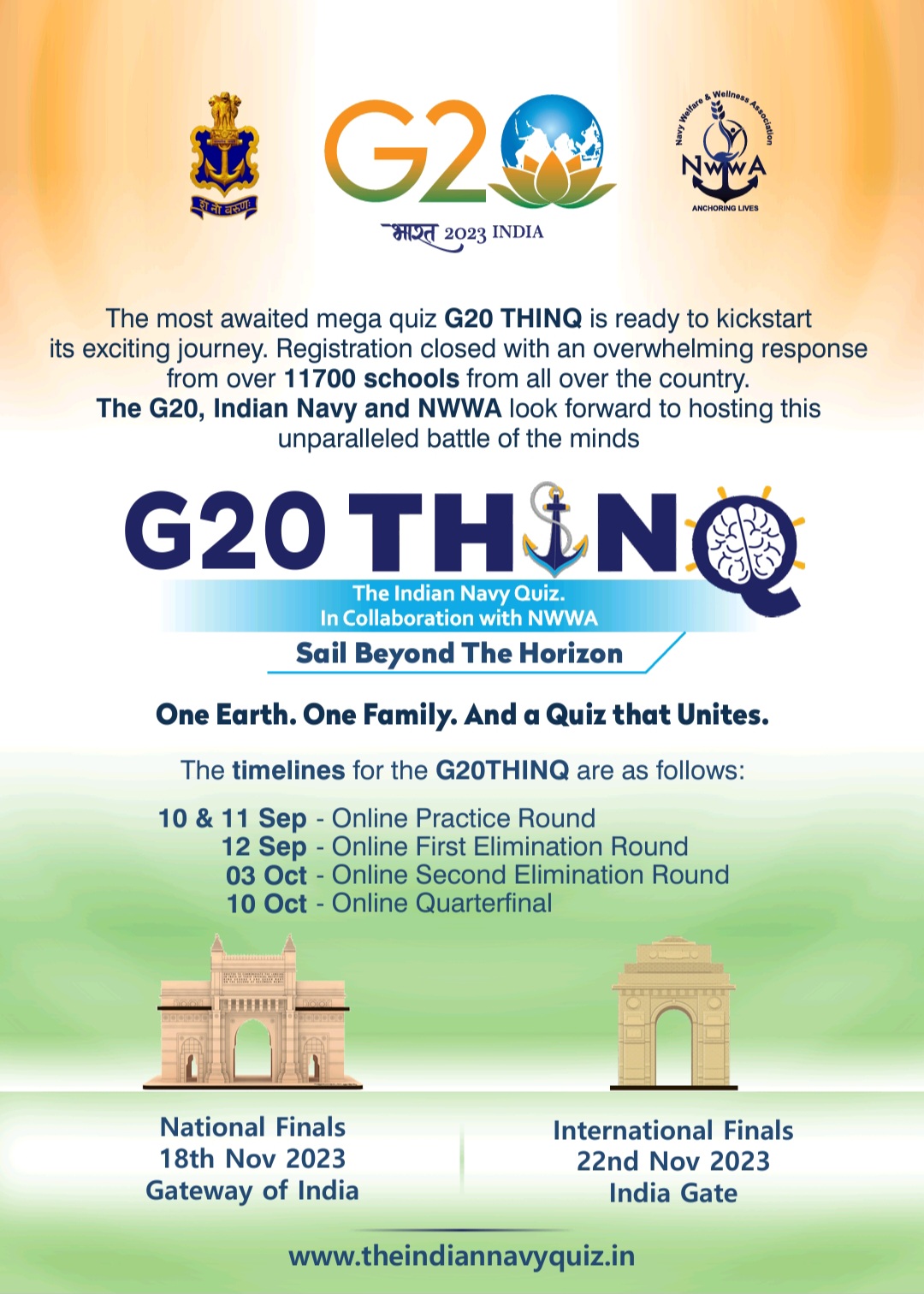
 To commemorate Azadi ka Amrit Mahotsav, Indian Navy had scaled up the Inter School Quiz competitions held at various stations to a National Level School Quiz Competition – The Indian Navy Quiz (THINQ). This year on India assuming Presidency of the prestigious G20, THINQ has become an international event and rechristened “G20 THINQ”. The event is being conducted by the Navy under the aegis of the G20 Secretariat and in partnership with NWWA (Navy Welfare and Wellness Association) and will have two levels National and International.

The National Round of the G20 THINQ will see participation of school children studying in Classes IX to XII. Over 11700 schools have registered for the quiz.

Two online elimination rounds will be held, the first on 12 Sep 23 and the second on 03 Oct 23. This will be followed by an online quarter-final on 10 Oct 23, from which 16 teams will qualify for the semi-final round (four schools from each zone). The semi-finalists will converge at Mumbai for the national semi-finals at the NCPA auditorium on 17 Nov 23. The top 08 teams will subsequently be in a battle of wits in the National final round planned to be held at the Gateway of India on 18 Nov 23. On completion of the national round, two best quizzers among all finalists will be chosen to represent Team India in the international round.

The International Round of G20 THINQ will see a representation of young and bright minds from across the world – students that will strengthen Bridges of Friendship within G20 partners. This round will see the participation of teams from G20+9 nations, each team comprising of two students. All delegates, including the 16 national semi-finalists and international participants, will have the opportunity to experience India’s diverse heritage and culture during their visit and will be taken to various popular sites and locations in the country. The international finals are planned to be held on 22 Nov 23 at New Delhi.

To streamline the registration process for schools and provide all event-related information, a dedicated website (www.theindiannavyquiz.in) has been established for G20 THINQ.

As India hands over the G20 baton to Brazil on 01 Dec 23, the G20 THINQ will be the concluding chapter of a series of significant events held since Dec 22. It will serve as a remarkable finale to India’s Presidency that witnessed many unique achievements of the G20 at the global level.

***