blind cricket team for winning the Gold at the IBSA World Games

 The Prime Minister, Shri Narendra Modi has congratulated Indian women’s blind cricket team for winning the Gold at the IBSA World Games. 

Shri Narendra Modi posted on X

“Kudos to the Indian women’s blind cricket team for winning the Gold at the IBSA World Games! A monumental achievement that exemplifies the indomitable spirit and talent of our sportswomen. India beams with pride!”


***

Climate Change Narrative from Total Emissions to Per Capita Emissions of each country


The Union Minister for Power and New & Renewable Energy Shri R. K. Singh has called for a change in the global climate change discourse and narrative, shifting from a focus on total emissions to per capita emissions of each country. “India’s per capita emissions are one third of global average, one of the lowest in the world; despite that, the developed countries until recently had been putting pressure on large countries like India, to reduce emissions. Their per capita emissions remained 3 – 4 times the global average. The narrative was on total emissions of each country.”
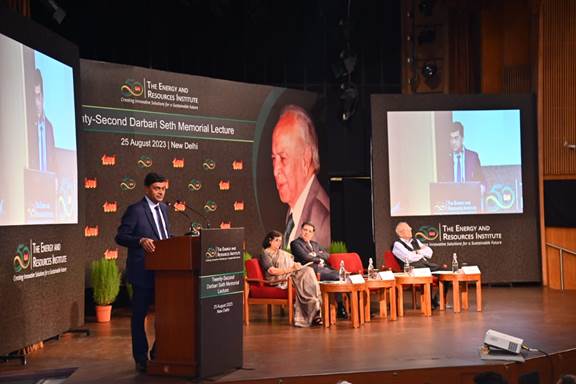
“Point of comparison should be Per Capita Emissions”

The Minister asserted that the narrative and discourse should not be about total emissions. “If we talk about total emissions, the country with minimum emissions could be an island nation with small population, even though they may be consuming huge amounts of energy and emitting huge quantities of carbon dioxide per person. Hence, the point of comparison has to be per capita emissions. This is the change in discourse which is needed, and I want institutions like TERI to talk about this.”

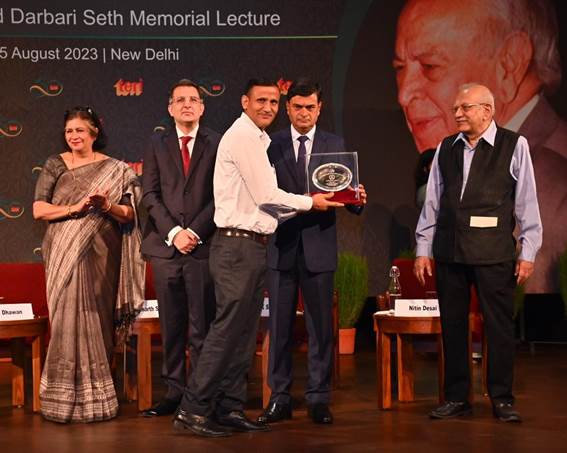
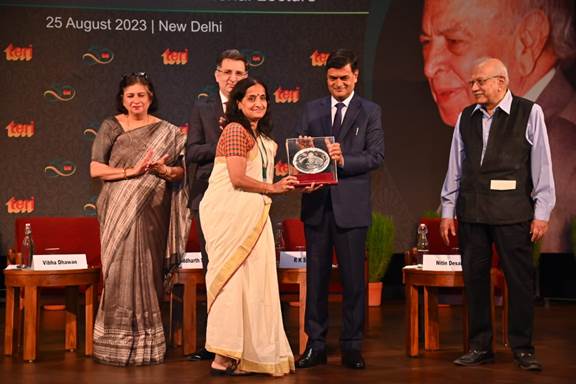
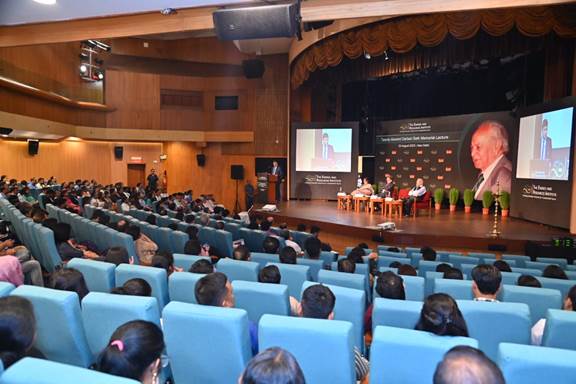
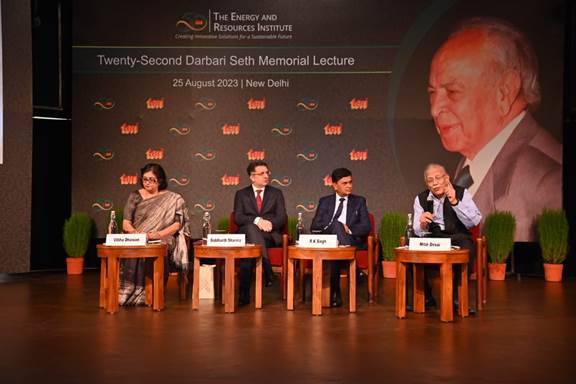
The Minister said this, during his Presidential Address at the Twenty-Second Darbari Seth Memorial Lecture, held in New Delhi today, August 25, 2023, in memory of Late Shri Darbari Seth, the founder of TERI.

Noting that developed countries would talk about phasing out of coal, but not about phasing out of natural gas or other fossil fuels, the Minister exhorted TERI to come out with studies on climate actions by various countries. Once the global South starts controlling the narrative, the world will be a much fairer place, said the Minister, adding that India has been insisting on phasing out of all fossil fuels.
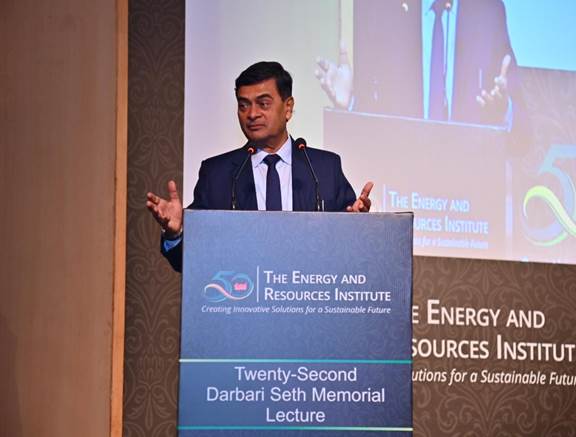
Speaking about India’s actions towards reducing carbon emissions, the Union Minister said that India has achieved its NDC target of 40% of our installed electricity capacity coming from non-fossil energy sources nine years ahead of schedule, in 2021 itself. “Today, 43% of our capacity is from non-fossil fuel sources. No other country has added renewable energy capacity at a rate at which we have done. We pledged at COP-21 in 2015, that we will reduce our emissions intensity by 33% by 2030; we did this by 2022, eight years in advance. So, in Glasgow, we have said that by 2030, we will have 50% of our capacity coming from renewables and that we will reduce our emission intensity by 45%. We will achieve that too well before time.”

“The truth needs to be told, developing countries need space to grow”

Shri Singh said that the developed countries have reached their peak of development; so, their emissions will either remain static or come down. “However, the building stock of developing countries will multiply, since we are developing; we will need more cement, steel and aluminium to construct those buildings and plants. This will lead to more emissions. So, we need space to grow. This point needs to be made by think tanks like TERI, that this is the space which is required by developing countries to grow.”

The Minister said that the nation is not going to compromise on the availability of energy for our growth, adding that the country is responsible for only 4% of legacy carbon dioxide load in the environment, whereas our population is around 17% of world population.

The Minister said that this discourse needs to be changed not at only at the level of world leaders, but also among the people around the world in the developed countries. “The truth needs to be told, I want institutions like TERI to step up and change the discourse.”
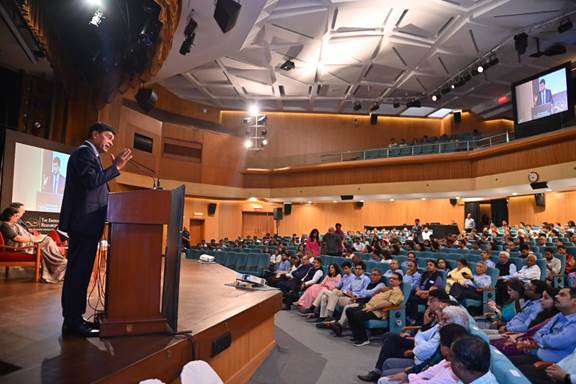
“Can you imagine someone thinking about climate change in the year 1974?”

Paying tribute to Shri Darbari Seth, the founder of The Energy and Resources Institute (TERI), the Union Power and New & Renewable Energy Minister asked the gathering, “can you imagine someone thinking about climate change in the year 1974?” The Minister said that this occasion serves to honour Shri Seth’s unwavering determination, entrepreneurial spirit, and strength of mind. “As a towering figure of his era, Shri Seth moulded Tata enterprises’ destiny, dedicating his time and effort fervently to the noble cause of sustainable development. This commitment steered TERI’s journey, propelling it toward a future committed to fostering a greener world and a safer planet.”

The Minister said that the organization which Shri Seth founded has grown and spans the total spectrum of issues which affect sustainability. “TERI has done well. It has earned reputation for probity and publications which we can rely upon.”

The 22nd Darbari Seth Memorial Lecture

The 22nd Darbari Seth Memorial Lecture year marks the 102nd birth anniversary of Shri Seth and brought together thought leaders, industry, and policymakers for insightful discussions, inspired by the ideals of Shri Seth, towards fostering collaborative efforts and finding meaningful solutions for climate change.

The 22nd Darbari Seth Memorial Lecture was delivered by Shri Siddharth Sharma, Chief Executive Officer, Tata Trusts. On the occasion, Winners of “TERI Roll of Honour” were felicitated and mementos were presented to TERI employees who have completed 20 and 10 years of service in TERI. Chairman, TERI Governing Council, Shri Nitin Desai delivered the welcome address and Director General, TERI, Dr. Vibha Dhawan delivered the vote of thanks.
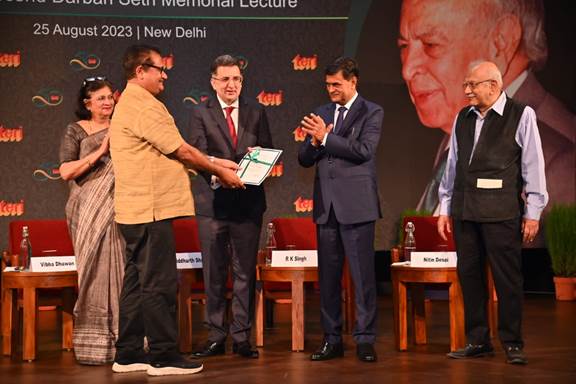
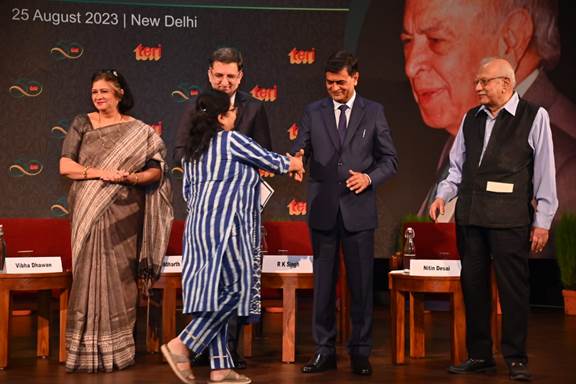
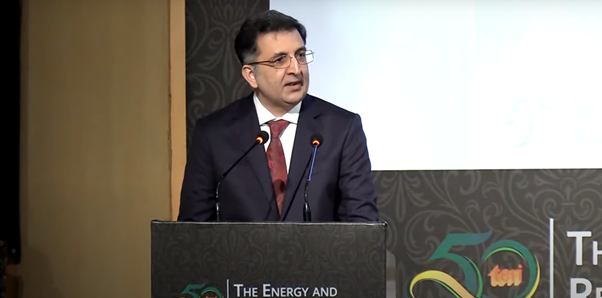
In the 22nd Darbari Seth Memorial Lecture, Chief Executive Officer, Tata Trusts, Shri Siddharth Sharma said that Shri Darbari Seth was an extraordinary leader who could get his people to move mountains. “It is his defining interest in his energy, energy conservation and environmental sustainability much before it became the existential issue of our times which made him take the lead and set up TERI. He said that men like him leave behind enduring legacies and uplift the generations that follow.”

Shri Sharma said that TERI has grown from humble beginnings into a globally renowned institution at the forefront of sustainable development and environmental research and that the institute has taken pioneering steps in addressing climate change. He said that the institution must continue to push the boundaries of knowledge, drive transformative change and advocate for policies which promote sustainable development.
 

“Tata Group has committed to Net Zero aspiration by 2045”

Speaking of the need for a just energy transition and recounting India’s climate action commitments including climate justice and sustainable lifestyles, the speaker said that the Tata Group as a responsible partner in national development has committed to a Net Zero aspiration by the year 2045, riding on the pillars of deep decarbonization, circular economies and preserving nature and biodiversity.


“Citizens need to come together and build new frameworks to address the climate crisis”

Speaking of the climate crisis, Shri Sharma pointed out that markets have a critical role in shaping the future of India’s economy, highlighting the need for cross-sectoral collaboration among academia, civil society, private sector and the state. “India’s response to climate change has major repercussions, both domestically and globally. While India has become a world leader in promoting policies and practices for addressing climate change, mitigation of risks cannot rest with the state alone.”

The speaker said that citizens need to come together and build new frameworks to respond to the crisis. Here, institutions like TERI can not only find solutions for the nation but also influence global responses based on India’s learnings, he added.

The Tata Trusts CEO spoke also of the philosophy of the Tata Group and the contribution of the Group to nation building over its long history since 1868. He said that the Tatas represent one of the finest examples of a distributive model of wealth, where a substantial portion of the profits of businesses are shared with the communities from which they are derived, in the form of welfare initiatives.  

The event can be watched here (Part I) and here (Part II). A film on TERI @ 50 was played on the occasion, which can be watched here.


***

NCGG completes training of 27th batch of civil servants from Maldives

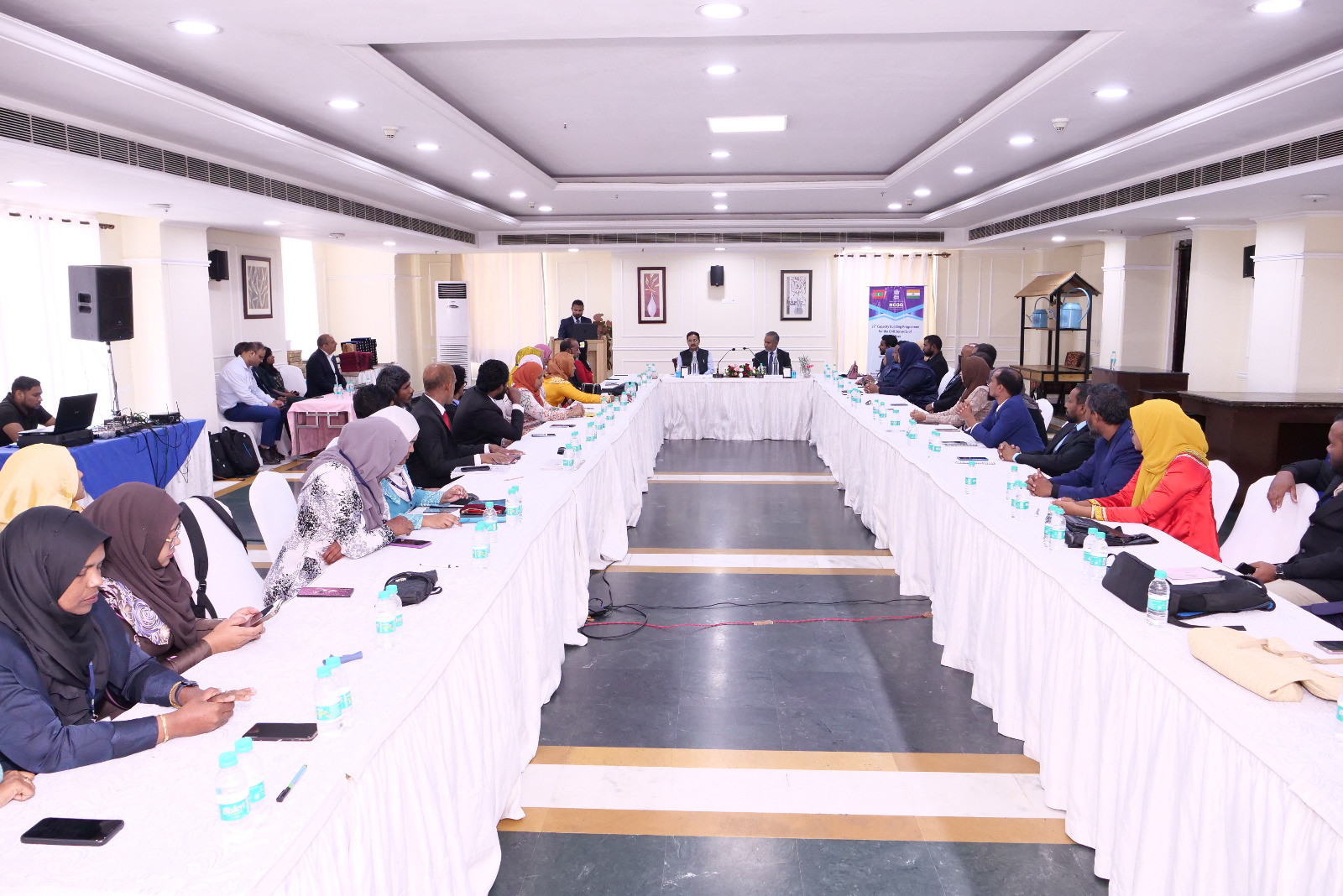
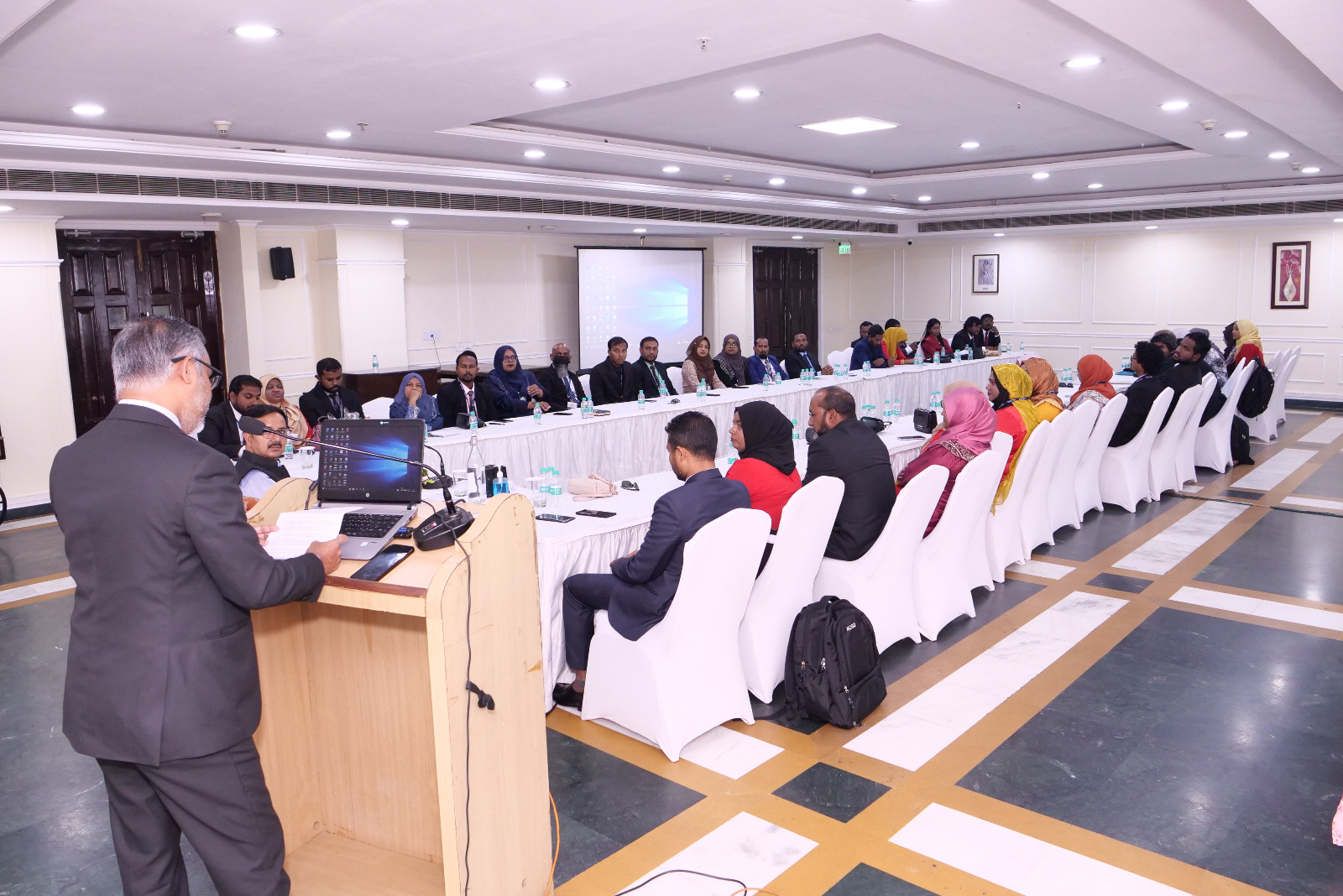
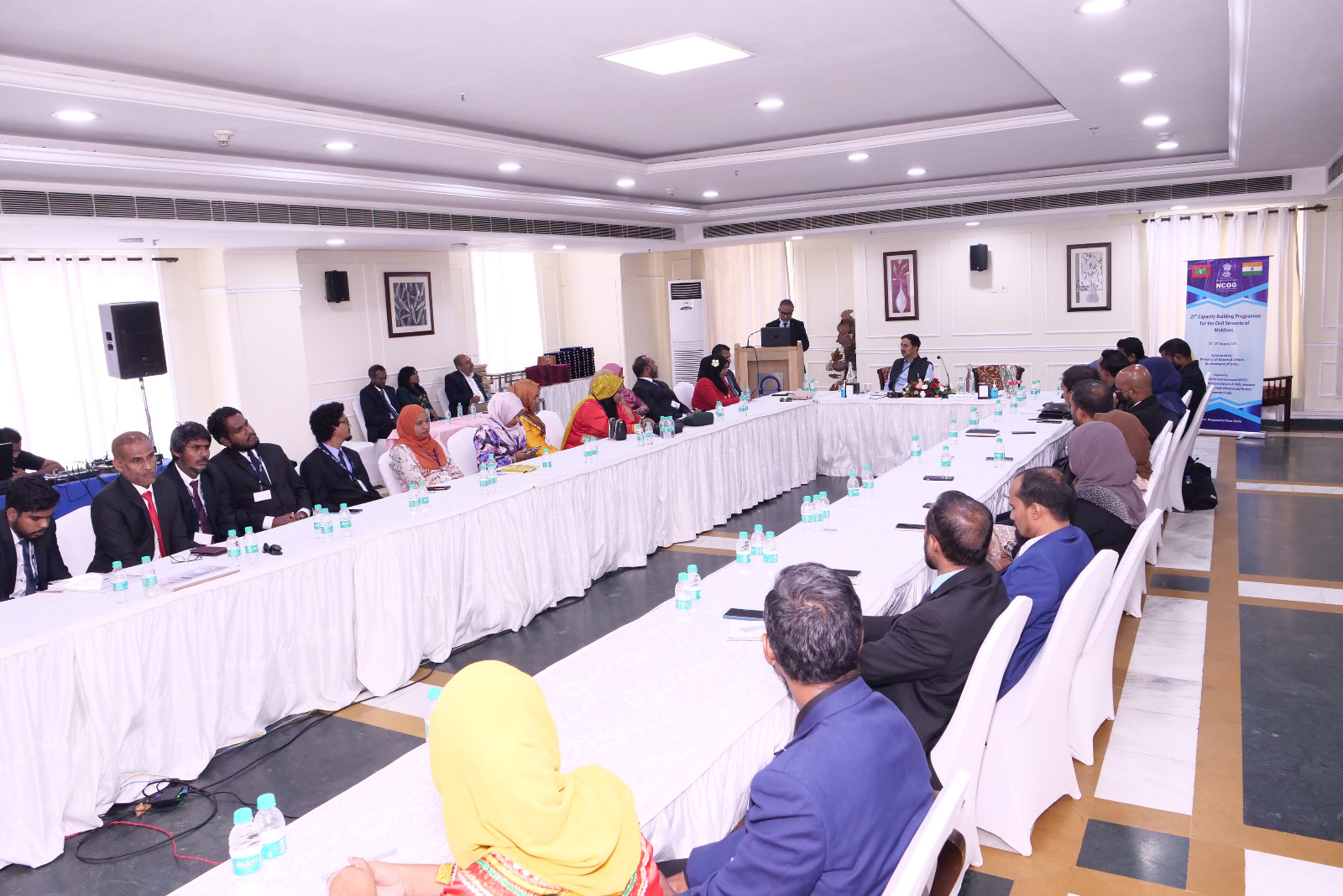
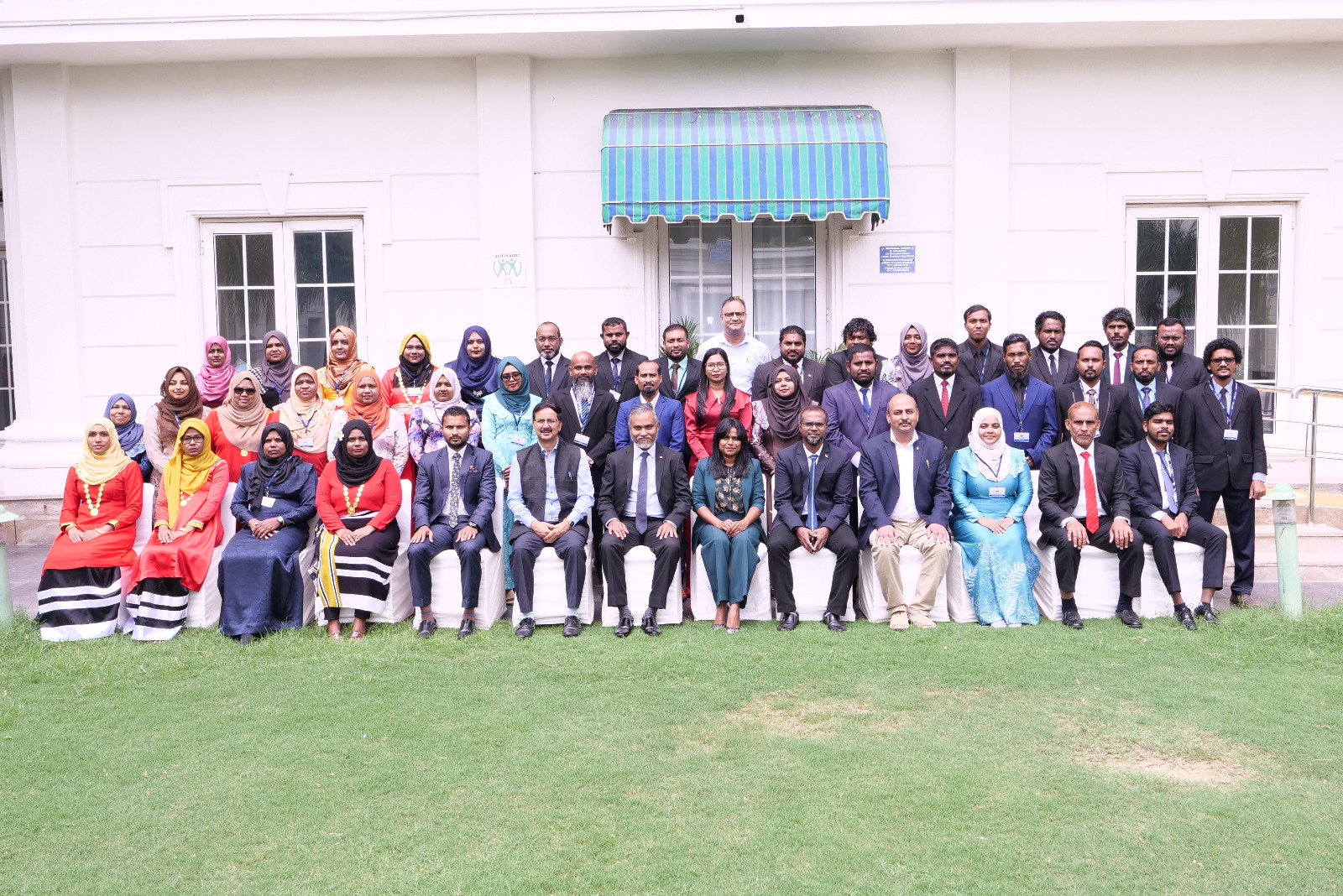
 The 2-week Capacity Building Programme (CBP) for civil servants of Maldives organised by the National Centre for Good Governance (NCGG) in partnership with the Ministry of External Affairs (MEA) concluded on 25th August, 2023 today at New Delhi. NCGG has signed MoU with the Government of Maldives to enhance the skills and capabilities of 1,000 civil servants in the field of public administration and governance by 2024. As part of the agreement, NCGG has already imparted training to 858 officers from Maldives which includes 29 officers of ACC, Maldives.

NCGG’s efforts are aligned with Prime Minister Narendra Modi’s philosophy of “Vasudhaiv Kutumbkam” and “Neighbourhood First” policy and keeping citizens at the forefront while designing developmental strategies and implementing public policies. It is in this context that these programmes reinforce the principles of citizen centric governance and promote the exchange of knowledge, information and innovations and promote the adoption of best practices and digital governance. It is also an effort in the direction of strengthening bilateral ties and fostering regional cooperation with neighbouring countries.

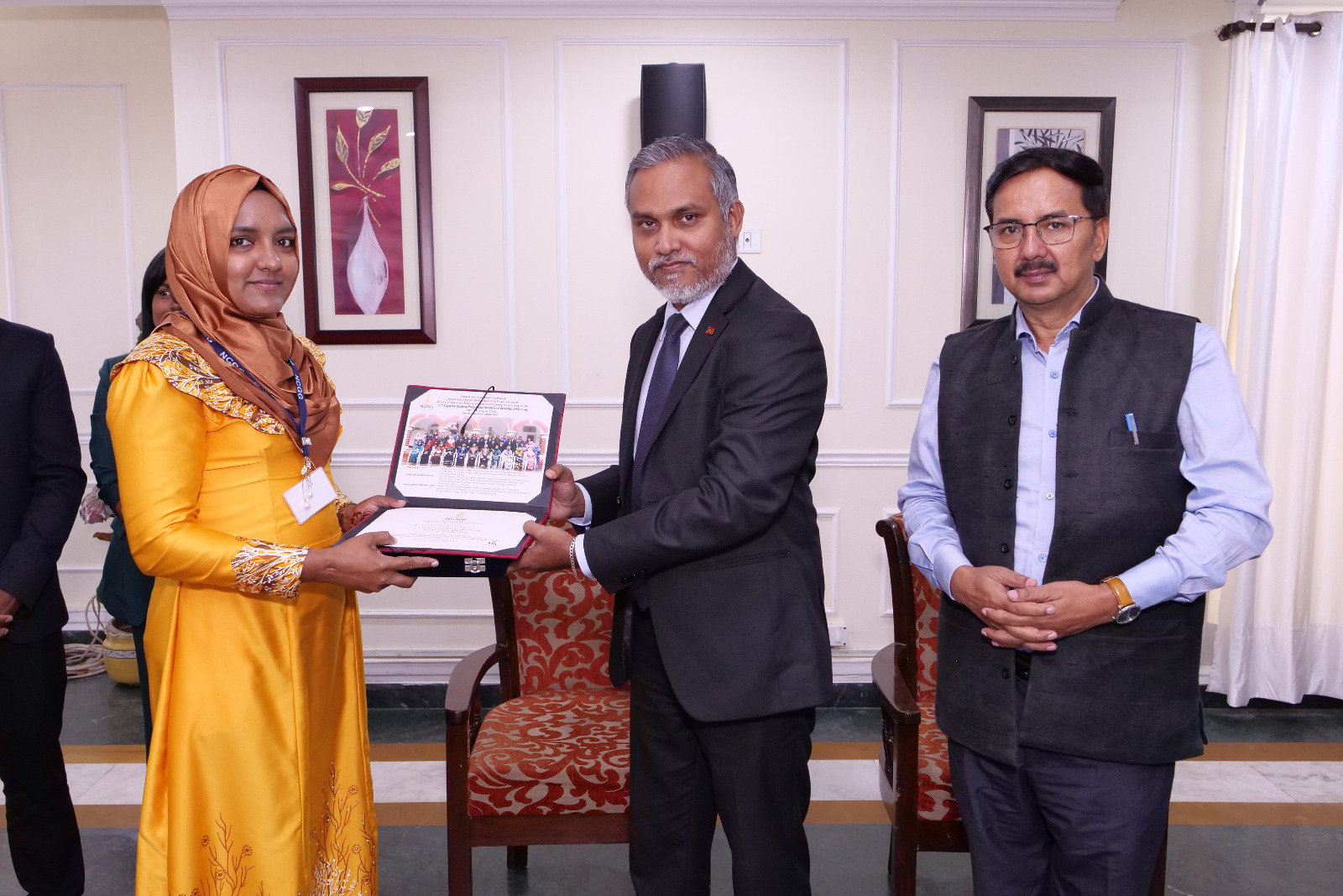
The valedictory session was presided over by H.E. Mohamed Najeel, Deputy High Commissioner, Republic of Maldives. He requested the participating officers to make full use of the exposure that they had during the programme and take advantage of the opportunity and urged to share knowledge and work in groups as effective team building is essential to foster good ideas which can be utilized to improve the quality of life of citizens. He stressed on the importance of harnessing the programme’s maximum potential and learning from best practices, which can be modified to suit their own contextual settings. He said that these programmes will further the historical and traditional relations between the two nations. He also stressed that these will also assist in realizing the global goals.

He thanked Government of India for the support provided for capacity building of its officers and appreciated the effective and pro active participation of officers from Maldives. He was extremely happy to see the elaborate and wonderful presentations of the participating officers on “digital education and health in Maldives and “Vision 2030 Maldives ” as part of learning outcomes of the programme.  He urged them to stay connected and work together for betterment of their country.

Giving the overview of the programme, Dr. B. S. Bisht, course coordinator said that in the 27th capacity building programme, NCGG shared various initiatives taken in the country.  such as changing paradigm of governance, India Maldives relations, overview of All India  Services, Public Policy and Implementation, Public Private Partnerships, Digital Governance and Public Service Delivery, Approach to achieve SDG, Leadership and Communication Skills, Performance Management, Total Quality Management, Disaster Management, Agro –based practices in Coastal Regions, e-Governance and Digital India, Gender and Development, Government e- Marketplace, Centralized Public Grievance Redressal and Monitoring System, Low Cost Desalination for safe Drinking water among others.

The participants were also exposed to visits aimed at observing a diverse range of developmental projects and institutions. These visits offer them invaluable insights and first-hand experiences of prominent initiatives and organizations, including but not limited to the Smart City, Dehradun, Pradhanmantri Sanghralaya, AIIMS among others.

The overall supervision and coordination of the 27th capacity building programme was carried out by Dr. B. S. Bisht, course coordinator for Maldives, along with Dr. Sanjeev Sharma, co-course coordinator, and the capacity building team of the NCGG.

***

Integration of the Tele-Law & Pro Bono programs into Tele-Law 2.0

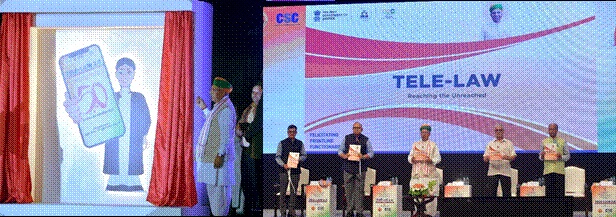
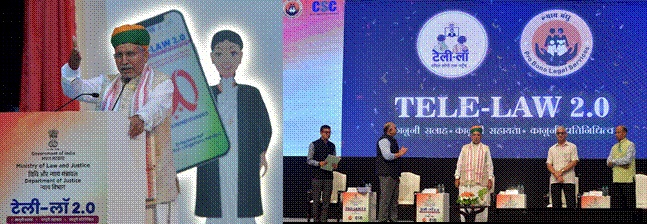
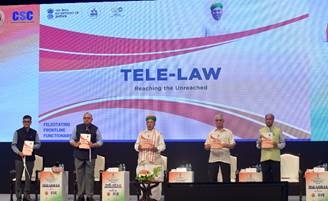
 In a momentous event, the Tele-Law 2.0 initiative was launched today marking an important chapter in the evolution of the Tele-Law program of the Department of Justice, Ministry of Law & Justice. This ground-breaking program, operating under the DISHA Scheme, has achieved a significant milestone by delivering 50 lakh legal consultations, reinforcing its unwavering dedication to ensuring justice reaches every corner of the nation. The event was graced by the esteemed presence of Shri Arjun Ram Meghwal, Minister of State (Independent Charge) for Law and Justice as Chief Guest, who made a historic announcement by inaugurating Tele-Law 2.0. This version entails the fusion of Tele-Law Services with Nyaya Bandhu pro bono legal services, a merger to further enhance citizen accessibility to legal aid. He emphasized the pivotal role this achievement plays in democratizing legal services accessibility across India.

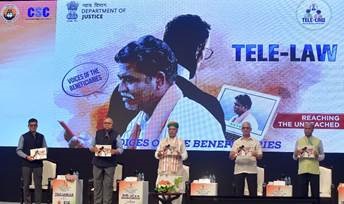
In his keynote address, Shri Meghwal expressed his delight in being part of the Tele-Law 2.0 launch, heralding it as the commencement of a new era in digitally dispensed citizen-centric legal services. He recognized the indispensable role technology plays in citizens’ lives and stressed the imperative of aligning justice delivery with technological advancements. He also mentioned that under the leadership of Hon’ble Prime Minister Shri Narendra Modi ji the number of beneficiaries of the Tele-Law Scheme have reached 50 Lakhs milestone. The integration of legal guidance, support, and representation through a single registration process stands as a testament to the commitment to nurture a digitally literate and empowered populace. Shri Meghwal called upon legal professionals to contribute pro bono services to ensure that no citizen is deprived of essential legal assistance. During the event the 4th Edition of Voices of Beneficiaries Booklet released by the Minister of State Shri Arjun Ram Meghwal.

The event witnessed the formal unveiling of the integration between Tele-Law and Nyaya Bandhu pro bono legal services by the Minister of State Shri Arjun Ram Meghwal, accompanied by a brief film detailing the journey of Tele-Law thus far and an e-tutorial illustrating the integration process. This seamless amalgamation is set to establish a direct connection between those seeking legal aid and pro bono advocates, fostering a dynamic ecosystem that guarantees accessible justice for all citizens.

During the Event, the Minister of State Shri Arjun Ram Meghwal passionately called upon legal professionals to contribute Pro Bono services, ensuring that no citizen is left without essential legal assistance. He elaborated on the philosophy of pro bono, urging law students and the legal fraternity to delve into India’s cultural heritage to comprehend the roots of this concept. He stated, “यह भारतीय ज्ञान परंपरा है कि मुसीबत में कोई आदमी हो तो हम उसकी मदद करते हैं, यही प्रो बोनो है” (It’s an Indian tradition that when someone is in trouble, we help them; that’s pro bono). He said, “दिये में भीगी बाती है, तेल है;  टेली लॉ के माध्यम से चिंगारी आपको लगानी है,  आंधी आयेगी, बारिश आयेगी,  लेकिन ये बाती आपको जलानी है”  [There is a wick and oil in the lamp, You have to light a spark through Tele-Law, a storm will come, rain will come, but you have to light this wick], highlighting the imperative of relentless efforts of every stakeholder in this ecosystem, urged the Department of Justice to surpass its targets and strive for universal access to justice across India. Law Minister emphasized that compassion and positive intent must be at the core of pro bono, as they are fundamental to the success of the Nyaya Bandhu program in fostering a culture of pro bono in India.

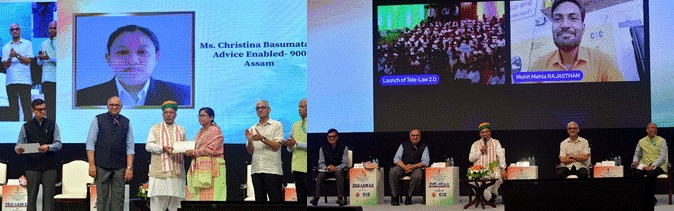
The Minister of State Shri Arjun Ram Meghwal engaged in an interactive session with Village Level Entrepreneurs (VLEs), beneficiaries, and panel lawyers fostering a direct exchange of ideas and insights. Hon’ble MoS also recognized and honoured frontline functionaries with certificates during the event, lauding the pivotal role they play in bridging the gap between technology and citizens within the Tele-Law program. He underscored the importance of early dispute resolution and the role of para legal volunteers and village-level entrepreneurs in averting minor disputes from escalating into full-fledged litigation. The event also saw the release of Voices of Beneficiaries, highlighting real-life stories of individuals whose lives were positively impacted by Tele-Law.

Looking ahead, Shri Meghwal urged the further evolution of Tele-Law into a more robust platform. He announced that Tele-Law services will soon be extended to all 2.65 lakh Gram Panchayats through common service centres, ensuring that even the remotest corners of the nation have access to justice. The overarching goal of the Tele-Law program is to touch the lives of one crore beneficiaries well before 2026. During the event, Special Secretary, Department of Justice, Shri Rajinder Kumar Kashyap in his address emphasized that the right of access to the Judiciary is the cornerstone of society, and to expand its reach Department’s Tele-Law plays a pivotal role, bringing the judiciary to the last mile.

In his address, Secretary Justice Shri S.K.G Rahate provided a concise overview of the Tele-Law program’s innovative approach to delivering legal advice through communication and information technology. He highlighted the program’s achievements over the years, its expansion from 1800 CSC centers to 2.5 Lakh Gram Panchayats, signifying remarkable growth, and that the target is to provide legal aid to 1 crore beneficiaries by 2026.  Secretary Justice commended the integration of Tele-Law and Nyaya Bandhu pro bono legal services as a transformative and strategic step. This unified pathway ensures citizens have access to legal guidance and free representation seamlessly.

At the event , the dias was shared by Secretary Justice, Shri S.K.G Rahate; Special Secretary, DoJ, Shri Rajinder Kumar Kashyap; JS (A2J, DoJ) Shri Niraj Kumar Gayagi; and Shri Akshay Kumar Jha, COO, CSC.

***

First edition of the Best Web Series (OTT) Award

 The Information and Broadcasting Ministry has extended the date of submission of entries of the inaugural edition of the Best Web Series (OTT) Award from August 25 to 6pm on September 4 for online submissions, while the hardcopy of the series can be submitted by September 12, 2023.

In the event that September 12, 2023 is declared a holiday, the next working day will be considered as the final date for receipt of the application.

The decision to extend the date of submission was taken by the I&B Ministry with an effort to ensure that maximum number of Web Series’ can participate for the award which intends to recognise the creative prowess of the OTT platform which has grown manifold in the last two years.

An eminent jury, consisting of personalities from the entertainment industry, will choose the Best Web Series and the winner will be awarded Rs 10 lakh as cash prize, along with certificates at the 54th International Film Festival of India (IFFI).

To be eligible for the award, the web series has to be an originally created/shot series in any Indian language and has to be an original piece of work either commissioned or produced. Further, the series should have been co-produced, licensed, or acquired with the purpose of releasing ONLY on the OTT platform.

Also, to be eligible for the award, all episodes of the entry (web series/season), should have been released on an OTT platform from January 1, 2022, to December 31, 2022.

Further details of the eligibility for the awards is available on the websites of the Ministry of Information and Broadcasting, National Film Development Corporation (NFDC) and IFFI.

*** 

Best Web Series (OTT) Award

 The Information and Broadcasting Ministry has today extended the last date of submission of entries of the inaugural edition of the Best Web Series (OTT) Award from August 25 to 6pm on September 4 for online submissions, while the hardcopy of the series can be submitted by September 12, 2023.

In the event that September 12, 2023 is declared a holiday, the next working day will be considered as the final date for receipt of the application.

The decision to extend the date of submission was taken by the Ministry with an effort to ensure that maximum number of Web Series’ can participate for the award that intends to recognise the creative prowess of the OTT platform which has grown manifold in the last two years.

An eminent jury, consisting of personalities from the entertainment industry, will choose the Best Web Series and the winner will be awarded Rs 10 lakh as cash prize, along with certificates at the 54th International Film Festival of India.

To be eligible for the award, the web series has to be an originally created/shot series in any Indian language and has to be an original piece of work either commissioned or produced. Further, the series should have been co-produced, licensed, or acquired with the purpose of releasing ONLY on the OTT platform.

Also, to be eligible for the award, all episodes of the entry (web series/season), should have been released on an OTT platform from January 1, 2022, to December 31, 2022.

Further details of the eligibility for the awards is available on the websites of the Ministry of Information and Broadcasting, National Film Development Corporation and IFFI.

****

India Smart Cities Awards Contest (ISAC) 2022- Winners Announced

 Smart Cities Mission launched on 25 June 2015, is aimed at providing core infrastructure, clean and sustainable environment and a decent quality of life to their citizens through the application of ‘smart solutions’.It is a transformational mission aimed to bring about a paradigm shift in the practice of urban development in the country. Of the total proposed projects under SCM, 6,041(76%) projects worth ₹1,10,635 crore have been completed and the remaining 1,894 projects worth ₹60,095 crore will be completed by 30 June 2024.

Most notable milestone achieved in the Mission has been, the Integrated Command and Control Centers (ICCC) which is operational in all 100 Smart Cities. These ICCCs work as the brain and nervous system for city operations, using technology for urban management. The urban services have significantly improved in diverse fields like crime tracking, safety & security of citizens, transport management, solid waste management, water supply, disaster management etc.

100 Smart Cities have taken up projects across diverse sectors related to mobility, energy, water, sanitation, solid waste management, vibrant public spaces, social infrastructure, smart governance, etc. For instance, in smart mobility, 1,174 projects have been completed worth ₹ 24,047 crore and another 434projects are ongoing worth ₹ 15,940 crore. In smart energy, 573 projects have been completed and 94 are ongoing. In Water Supply, Sanitation and Hygiene (WASH), more than 1,162 projects have been completed worth ₹ 34,751 crore and another 333projects worth ₹ 18,716 crore are ongoing. 100 Smart cities have already developed more than 1,063 public spaces worth ₹ 6,403 crore and another 260 projects worth ₹ 5,470 crore are ongoing. Further, 180 Public Private Partnership (PPP) projects worth ₹ 8,228 crore have been completed and another 27 are ongoing. 652 projects have been completed related to economic infrastructure such as market redevelopment and start-up incubation centers and another 267 projects are ongoing. In social infrastructuresector (health, education, housing etc.), 679 projects have been completed and 153 are ongoing.

The India Smart Cities Award Contest (ISAC) is organized under the Smart Cities Mission, Ministry of Housing and Urban Affairs, Government of India. This is one of the important activities initiated under the Mission, where pioneering city strategies, projects and ideas are recognized to award the exemplary performance, enable peer-peer learning and disseminate best practices. The ISAC recognizes and reward the cities, projects and innovative ideas that are promoting sustainable development across the 100 smart cities, as well as stimulating inclusive, equitable, safe, healthy and collaborative cities, thus enhancing quality of life for all.

In the past, the ISAC has witnessed three editions in 2018, 2019 and 2020. The fourth edition of the ISAC was launched in April 2022 during the ‘Smart Cities-Smart Urbanization’ event in Surat. The ISAC 2022 award had a two-stage submission process consisting of ‘Qualifying Stage’, which involved overall assessment of the city’s performance, and the ‘Proposal Stage’ which required the smart cities to submit their nominations for six award categories as follows:

  • Project Awards: 10 different themes,
  • Innovation Awards: 2 different themes,
  • National/Zonal City Awards,
  • State Awards,
  • UT Award, and
  • Partners Awards, 3 different themes

A total of 845 nominations were received for ISAC 2022 from 80 qualifying smart cities. These entries were evaluated in 5 stages. In the first stage, a pre-screening of the 845 proposals was carried out. 50% (423 proposals) moved to the next stage. In the second stage, for each award category top 12 proposals were identified by a jury of the National Institute of Urban Affairs (NIUA). In the third stage, each proposal proponent made a presentation to a panel of subject experts, leading to selection of Top 6 proposals. Finally, in the fourth stage, top 6 proposals made an elaborate presentation to a jury headed by MoHUA directors and comprising subject matter experts.Post this fourth stage, top 3 proposals have been identified for each award category by the Apex Committee of Smart Cities Mission. Of the total 845 applications received under the five awards categories, 66 final winners have been identified – 35 in Project Award, 6 in Innovation Award, 13 in National/Zonal City Award, 5 in State/UT Award and 7 in Partner Award categories. The final list of 66winners is available in the Annexure 1.

The Hon’ble President of India will felicitate the winners of ISAC 2022 awards on 27th September 2023 at Indore, Madhya Pradesh.


*******

RJ


Annexure – I: List of winning Smart Cities under ISAC 2022

Sl. No.

Award Name

Award Winner

Video Link

  1.  

Built Environment

  1. Coimbatore: Model Roads, Restoration and Rejuvenation of Lakes

Video Linkhttps://youtu.be/rQDcnrJNlXo

  1.  

Built Environment

  1. Indore: Riverfront Development (Stretch 1 from Rambagh bridge to KrishnapuraChhatri)

Video Linkhttps://youtu.be/9XDEjpv7LOI

  1.  

Built Environment

  1. New Town Kolkata: Landscape Redevelopment of NeemBanani Park and other Green Open Spaces

Video Linkhttps://youtu.be/iNCBAeNvgXc

  1.  

Built Environment

  1. Kanpur: Modernisation and Development of Palika Sports Stadium

Video Linkhttps://www.youtube.com/watch?v=6893E5Cunm8&feature=youtu.be&ab_channel=KanpurSmartCityLimited

  1.  

Culture

  1. Ahmedabad: Revamping and up keep of heritage structure and development of the heritage tourism using technology

Video Linkhttps://youtu.be/x5TIVnolnUc

  1.  

Culture

  1. Bhopal: Restoration of heritage buildings near SadarManzil precinct under Heritage Walk Project

Video Linkhttps://www.youtube.com/watch?v=wqhf4DOG43w

  1.  

Culture

  1. Thanjavur: Conservation of Ponds – Ayyankulam

Video Linkhttps://youtu.be/_DuRGIb-S-U

  1.  

Economy

  1. Jabalpur: Incubation Centre

Video Linkhttps://youtu.be/It4owfXrX3I

  1.  

Economy

  1. Indore: Value Capture Financing (VCF)

Video Linkhttps://youtu.be/pj_NmADthkY

  1.  

Economy

  1. Lucknow: Rojgar Training Centre

Video Linkhttps://youtu.be/lMKsDT_fLE8

  1.  

Governance

  1. Chandigarh: E Governance Services for Chandigarh Smart City

Video Linkhttps://youtu.be/6TybzAFg640

  1.  

Governance

  1. PimpriChinchwad: Smart Sarathi app

Video Linkhttps://youtu.be/aJU0hUONI3c

  1.  

Governance

  1. Jabalpur: Implementation of 311 App

Video Linkhttps://youtu.be/suT_8tBPiNo

  1.  

Governance

  1. Udaipur: Smart City Application

Video Linkhttps://youtu.be/60_vAyi_Vc0

  1.  

ICCC Business Model

  1. Ahmedabad: Traffic Management through ICCC

Video Linkhttps://www.youtube.com/watch?v=1R5VrhronA8

  1.  

ICCC Business Model

  1. Surat: Revenue Generation from different sources through ICCC

Video Linkhttps://www.youtube.com/watch?v=-B3H80Cn7s0&t=57s

  1.  

ICCC Business Model

  1. Agra: Revenue generation through ICCC and Carbon emission reduction

Video Linkhttps://youtu.be/bJTdTg_5Kok

  1.  

ICCC Business Model

  1. Gwalior: Intelligent traffic management system

Video Linkhttps://www.youtube.com/watch?v=Ee1IaD_VvPc

  1.  

Mobility

  1. Chandigarh: Public Bike Sharing (PPP) along with cycle tracks

Video Linkhttps://youtu.be/heKMVPxhZGQ

  1.  

Mobility

  1. New Town Kolkata: Promoting Non- Motorized Transport

Video Linkhttps://youtu.be/y893R3cyHFg

  1.  

Mobility

  1. Sagar: Intelligent Traffic Management System improving road safety

Video Linkhttps://youtu.be/VUrVQibliaE

  1.  

Sanitation

  1. Indore: Gobardhan Bio-CNG Plant

Video Linkhttps://youtu.be/kV-x51MlPSo

  1.  

Sanitation

  1. Kakinada: Solid Waste Management System

Video Link:https://youtu.be/wBrRx64H9aU

  1.  

Sanitation

  1. Ahmedabad: Door-to-door waste collection monitoring 

Video Linkhttps://www.youtube.com/watch?v=PhLAmQOf5Pc

  1.  

Sanitation

  1. Chandigarh: Provision of SCADA for Solid Waste Management

Video Linkhttps://youtu.be/44k5CvyDsK8

  1.  

Social Aspects

  1. Vadodara: Implementation of Hospital Management Information System (HMIS)

HMIS project video:https://www.youtube.com/watch?v=itD_cGKoXn4

HMIS citizen Feedback video: https://youtu.be/xyVMX_yPvbc

  1.  

Social Aspects

  1. Agra: Smart Health Centers (PPP) and Upgradation of municipal schools

Video Linkhttps://youtu.be/PysQRJfcjH0

https://youtu.be/N7wJSNt1yuY

  1.  

Social Aspects

  1. Raipur: B.P Pujari School – Upgradation of Hindi Medium Schools to School of Excellence in English Medium

Video Linkhttps://youtu.be/pGZVMu9-xYE

  1.  

Social Aspects

  1. Thoothukudi: Smart Classroom and E-Monitoring

Video Linkhttps://www.youtube.com/watch?v=DArIBNU04gQ

  1.  

Urban Environment

  1. Indore: Air quality improvement and Ahilya Van along with Vertical Garden

Video Linkhttps://youtu.be/6nKNvYYKMzk

https://youtu.be/-PCiarXwwqI

  1.  

Urban Environment

  1. Shivamogga: Development of Conservancies in Package-2

Video Linkhttps://youtu.be/0pqHC5BivBM

  1.  

Urban Environment

  1. Jammu: E-auto for old city

Video Linkhttps://www.youtube.com/watch?v=gK1M1BVmp_c&t=9s

  1.  

Water

  1. Indore: Saraswati and Kahn Lifeline Project (SANKALP), Rainwater Harvesting – “WATER PLUS TO WATER SURPLUS” and Rejuvenation of Lakes, Wells and Stepwells

Video Linkhttps://youtu.be/QhFSlSuHCRQ

https://youtu.be/GMJOkjKSqx0

https://youtu.be/4BXDACk9DAA

  1.  

Water

  1. Agra: Proving 24/7 water supply to ABD area along with smart water meters and SCADA systems

Video Linkhttps://youtu.be/PXUSOBdG1oA

  1.  

Water

  1. Rajkot: Rejuvenation of Atal Sarovar

Video Linkhttps://youtu.be/ObRF5J4ZzEw

  1.  

Innovative Idea Award

  1. Hubbali Dharwad: Open Space Upgradation 2 – Nalla Renovation and Green Corridor

Video Linkhttps://youtu.be/KZP4Mjbah_s

  1.  

Innovative Idea Award

  1. Surat: Self Sustaining of Public gardening Canal Pathway (Corridor)

Video Linkhttps://youtu.be/AgxJYKJnvW4

  1.  

Innovative Idea Award

  1. Raipur: NalandaParisar (Oxy Reading Zone Library)

Video Linkhttps://youtu.be/TK-bDKEmzBw

  1.  

Covid Innovation Award

  1. Surat: Covid 19 Response Category – Multiple Initiatives

Video Linkhttps://www.youtube.com/watch?v=uklX21I2Rh0

  1.  

Covid Innovation Award

  1. Indore: Covid 19 Response Category – Multiple Initiatives

Video Linkhttps://youtu.be/IZWLf_qOUDM

  1.  

Covid Innovation Award

  1. Agra: Covid 19 Response Category – Multiple Initiatives

Video Linkhttps://youtu.be/TnG2oohCQW0

  1.  

Partner Award: Industry (Infrastructure)

  1. L&T

Video Link:https://youtu.be/ue6mFL-kPSY


  1.  

Partner Award: Industry (Infrastructure)

  1. Enviro Control Private

Video Link:https://youtu.be/RGWNKISqn84

  1.  

Partner Award: Industry (Infrastructure)

  1. LC Infra Projects Pvt. Ltd.

Video Link:https://www.youtube.com/watch?v=0KyQjao5Kn8&t=6s

  1.  

Partner Award: Industry (MSI)

  1. L&T Construction- Smart World Division

Video Link: https://www.youtube.com/watch?v=INhFwjZ1aM4

  1.  

Partner Award: Industry (MSI)

  1. NEC

Video Link:https://www.youtube.com/watch?v=x8d_0yMD1-0

  1.  

Partner Award: Industry (MSI)

  1. Honeywell Automation India Limited

Video Link:https://youtu.be/xsxLAIZ7WYc

  1.  

Partner Recognition: PMC

PwC India

 
  1.  

Zonal Smart City Award (Eastern Zone)

Ranchi

 
  1.  

Zonal Smart City Award (Eastern Zone)

Bhubaneswar

 
  1.  

Zonal Smart City Award (Northeast Zone)

Kohima

 
  1.  

Zonal Smart City Award (Northeast Zone)

Namchi

 
  1.  

Zonal Smart City Award (Northern Zone)

Varanasi

 
  1.  

Zonal Smart City Award (Northern Zone)

Udaipur

 
  1.  

Zonal Smart City Award (Southern Zone)

Coimbatore

 
  1.  

Zonal Smart City Award (Southern Zone)

Belagavi

 
  1.  

Zonal Smart City Award (Western Zone)

Ahmedabad

 
  1.  

Zonal Smart City Award (Western Zone)

Solapur

 
  1.  

National Smart City Award

  1. Indore
 
  1.  

National Smart City Award

  1. Surat
 
  1.  

National Smart City Award

  1. Agra
 
  1.  

UT Award

  1. Chandigarh
 
  1.  

State Award

  1. Madhya Pradesh
 
  1.  

State Award

  1. Tamil Nadu
 
  1.  

State Award

  1. Rajasthan
 
  1.  

State Award

  1. Uttar Pradesh


Sustainability and climate resilience must be embedded across the lifecycle of built environment.

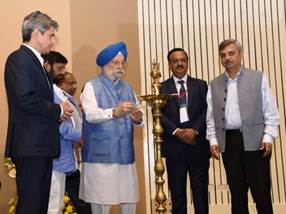
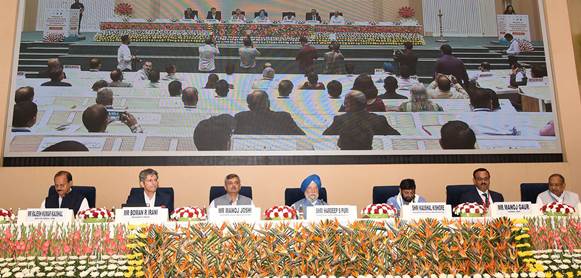
 Shri Hardeep S. Puri, Minister for Housing and Urban Affairs and Petroleum and Natural Gas stressed the need to view urban planning from the perspective of embedding sustainability and climate resilience across the lifecycle of built environment. Inaugurating the Conference on Adoption of New and Emerging Building Materials and Technologies in Construction Industry, the Minister said that the Modi government has viewed urbanisation as an opportunity for multifaceted growth and therefore India boasts one of the most comprehensive programmes for planned urbanisation. It is against this backdrop, that the Pradhan Mantri Awas Yojana-Urban (PMAY-U), the flagship housing scheme of the Ministry, gains particular significance as it has addressed the issue of affordable housing for India’s urban poor while creating sustainable and green infrastructure. Highlighting the use of green construction technologies in PMAY-U, Shri Puri informed the gathering that about 43.3 lakh houses are being constructed under the mission using sustainable building materials such as flyash bricks/blocks and AAC blocks. These houses will contribute to a reduction of 9 million tonnes of CO2 emissions by the end of December 2024.

To bring a paradigm shift in the housing construction sector, the Ministry of Housing and Urban Affairs (MoHUA) shortlisted 54 innovative construction technologies from all over the world, under the Global Housing Technology Challenge (GHTC). Further, 6,368 houses are being built under six light house projects currently being implemented in Chennai, Rajkot, Indore, Lucknow, Ranchi and Agartala. The Minister shared the multiple benefits of using these innovative construction technologies, including reduction in construction cost, time, cement used and waste generated apart from the enhanced thermal comfort and low lifecycle costs.

Shri Kaushal Kishore MoS, MoHUA, reiterated the need to provide quality housing to all strata of society, using latest and innovative technologies, as this would contribute to a better quality of life in the new and self reliant India.  Shri Manoj Joshi, Secretary MohUA, also underscored the importance of promoting and mainstreaming the modern and green construction technologies which will help the country to address the rising housing demand. These building materials facilitate faster and better quality housing construction to suit different geo-climatic and hazard conditions of the country. The conference organised by CREDAI, in collaboration with CPWD and NBCC, brought together some of the brightest minds in the construction and real estate industries.

***

‘Aatmanirbharta’ in defence

 Ministry of Defence, on August 25, 2023, signed a contract with Hindustan Shipyard Limited (HSL), Visakhapatnam for acquisition of five Fleet Support Ships (FSS) for the Indian Navy at an overall cost of approx. Rs 19,000 crore. It would be a major boost towards achieving the goal of self-reliance in defence manufacturing as these ships will be indigenously designed and constructed by HSL, Visakhapatnam. The Cabinet Committee on Security had approved the acquisition of these ships during its meeting on August 16, 2023.

The FSS will be employed for replenishing ships at sea with fuel, water, ammunition and stores, enabling the Indian Naval Fleet to operate for prolonged periods without returning to harbour. These ships would enhance the strategic reach and mobility of the Fleet. The induction of these ships will significantly enhance the blue water capability of the Indian Navy. The ships can also be deployed for evacuation of people and human assistance and disaster relief (HADR) operations.

The Fleet Support Ships of 44,000 Tons will be the first-of-its kind to be built in India by an Indian Shipyard. This project will generate employment of nearly 168.8 lakh mandays over a period of eight years. The construction of these ships will provide a new dimension to the Indian shipbuilding Industry and encourage active participation of associated industries, including MSMEs. With majority of the equipment and systems being sourced from indigenous manufacturers, these vessels will be a proud flag bearer of ‘Aatmanirbhar Bharat’ in consonance with the ‘Make in India’ initiatives of the Government.

*****

India is hosting the G20 Group

  “India has arrived,” said Union Minister Dr Jitendra Singh today, adding, “This is one of the most auspicious times happening in India.”

“India is hosting the G20 Group this year, we will be hosting the G20 summit in New Delhi’s Bharat Mandapam after few days; International Year of Millets is also being observed this year, this is the second occasion such an event is being held at the behest of India and Prime Minister Shri Narendra Modi after the International Day of Yoga, and after 75 years (of India’s Independence) on the 15th August, we have entered the Amrit Kaal, and this week, just two days ago, Chandrayaan happened,” he said.

Dr Jitendra Singh said that now the time has come when India not only stands even with other countries, but has proven that it can lead the world.

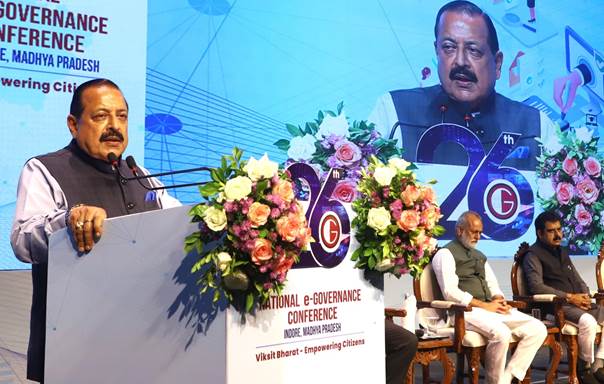
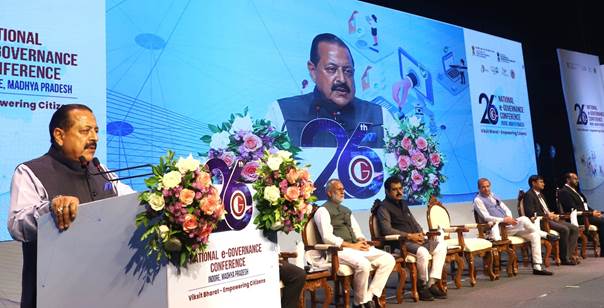
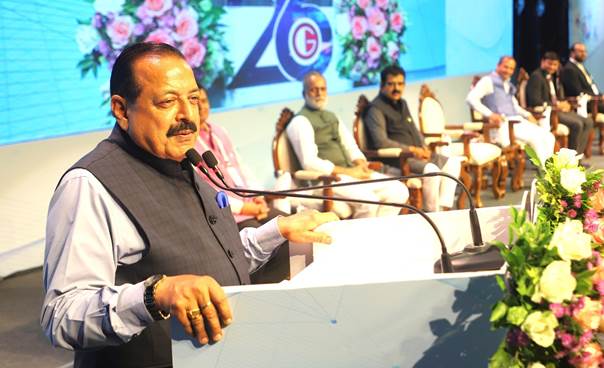
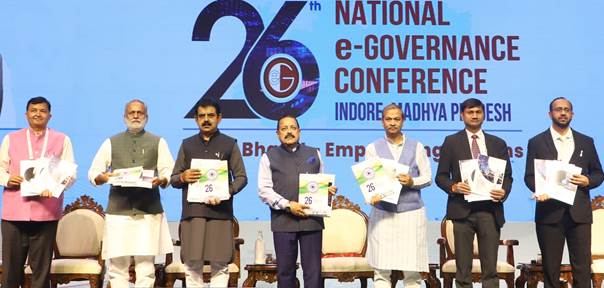
The Union Minister of State (Independent Charge) Science & Technology; MoS PMO, Personnel, Public Grievances, Pensions, Atomic Energy and Space, was addressing the Valedictory Session of the two-day 26th National Conference on e- Governance in Indore.


Dr Jitendra Singh said PM Modi has broken shackles of the past and set India free on the path to development.

“PM Modi opened the Space sector, and today there are more than 150 private Startups,” he said.

Dwelling on Administrative Reforms, Dr. Jitendra Singh said many reforms have been initiated by PM Modi in the last nine years.

“During the Covid period, life came to a standstill, but there was no delay in the Government of India’s administrative machinery, because we had already gone digital while others were just preparing for it,” he said, referring to transfer of benefits to the common man through DBT.


Dr Jitendra Singh said the Prime Minister gave us the mantra of ‘Minimum Government – Maximum Governance’. The DARPG took initiatives such as the practice of Attestation by Gazetted officers was done away with, Interviews were scrapped abolishing malpractices. Most of the functioning was converted online and in order to bring in transparency, accountability and citizen participation, the human interface was reduced to the bare minimum.

The Minister said, DoPPW introduced Digital Life Certificate (DLC) and later the Aadhar based scheme for online submission of DLC. Initially submission of DLCs was through biometric devices and now the Face-Authentication Technology-based system based on UIDAI Aadhaar software has been introduced.


Speaking about the transparency and accountability in the governance, the Minister said that the benchmark for clean and effective government is the robust grievance redressal mechanism. The CPGRAMS receives about 20 lakh grievances every year in comparison to just 2 lakhs annually earlier because this government followed a policy of time bound redressal and gained the confidence of the people.

Dr Jitendra Singh listed DigiLocker and SVAMITVA scheme bringing transparency in land registry, among technology driven reforms towards Ease of Living.

“Our goal is to gear up and work towards making India a developed nation by 2047, and we will accomplish this with speed and scale, leveraging the potential of digital transformations in e-governance,” he said.


***

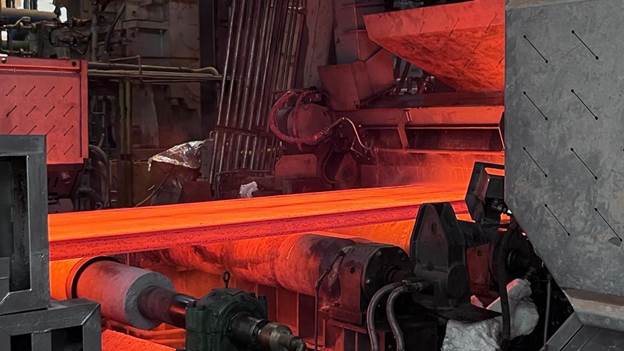
Nagarnar Steel Plant scripts history as it rolls out the first Hot Rolled coil

 In what is being described in steel circles as unprecedented, the Nagarnar Steel Plant yesterday, achieved the feat of producing its final product of HR (Hot Rolled) Coil, 9 days after the production of Hot Metal. This feat by NMDC is nothing less than astounding, considering that the mining major doesn’t have prior experience of steel making.

“NMDC joins the coveted league of Indian steel makers. This is the fulfillment of a dream that the local community of Bastar had long looked forward to.”, Sh. Amitava Mukherjee, Chairman-Cum-Managing Director of NMDC, mentioned. Industry veterans remarked that it is a rare feat to commission three critical units in the hot zone – Blast Furnace, Steel Melting Shop and the Mills (Thin Slab Caster – Hot Strip Mill) in such a short period of time. 


Nagarnar Steel Plant 

The 3 million tonne per annum capacity steel plant has been built at a cost of approximately ₹24,000 crores. The Plant is set to establish its mark in the Hot Rolled market with its repertoire of high grade Hot Rolled (HR) steel that is slated to meet the requirements of several key consuming sectors on the strength of its technology that includes its most modern Mill. Nagarnar Steel Plant’s competitive advantage also stems from its iron ore supply linkage with Bailadila mines, barely 100 kms. from Nagarnar.  

The product mix of Nagarnar Steel Plant consists of low carbon steel, HSLA & Dual Phase Steel and API quality steel that can be rolled into a thickness range from 1mm to 16mm. With its capability to roll 1650 mm wide HR, the Thin Slab caster at Nagarnar Steel Plant is the widest Mill in the public sector. HR Coils, Sheets and Plates coming off from India’s latest and most modern mill are expected to meet the growing demand for quality HR required in the manufacturing of LPG cylinders, bridges, steel structures, ships, large diameter pipes, storage tanks, boilers, railway wagons and pressure vessels and in construction of tanks, railway cars, bicycle frames, engineering and military equipment, automobile & truck wheels, frames and body parts. The plant will also be producing a special type of steel to be used in manufacture of generators, motors, transformers and automobiles at a later stage.  

Domestic Steel Industry calls it an unprecedented achievement 

Nagarnar Steel Plant has the unique distinction of internationally being the only steel plant to be set up by a mining company. With the roll out of the first Hot Rolled coil yesterday, 9 days after hot metal production began on 15th August, Nagarnar steel plant has managed to set another precedent, feel industry veterans.  

It may be recalled that Nagarnar Steel Plant had conducted cold trials of its Steel Melting Shop, months before initiating the commissioning of blast furnace. Though there have been instances of faster steel making, Nagarnar Steel Plant’s production of HR Coil within nine days of hot metal production is unusual. This was made possible by testing the capability of the Mills by rolling slabs and producing HR Coil even as preparations were underway for commissioning of the blast furnace.

Generally it takes a couple of weeks for the functioning of the blast furnace itself to stabilize which is followed by the synchronization of blast furnace production with the working of the Steel Melting Shop. This being a very dangerous zone, it is approached with extra caution after which the production process at the Mills is stabilized. That this was successfully accomplished in such a short duration attests to the latest equipment and technology used, as also the expertise of involved  professionals.  

With the production of HR Coil initiated yesterday, the Plant is engaged in stabilization of the production process to ensure that its produce is commercialized at the earliest. It is felt that the rapid commercialization of the Plants’ produce is expected to greatly minimize, or even offset the losses that a green-field steel plant generally suffers in the first year of its commissioning.  


******

National Action for Mechanised Sanitation Ecosystem (NAMASTE)

 Although, with the efforts under Self Employment Scheme for Rehabilitation of Manual Scavengers (SRMS) and other efforts of the Government, the menace of manual scavenging has been almost eliminated, a number of sewer/septic tank related deaths due to hazardous cleaning of sewers and septic tanks, are reported in the press from time to time. Such cases are taken up with the concerned State Government for payment of compensation of Rs.10 lakh as per Supreme Court orders. Thus, the main problem these days is hazardous cleaning of Sewer and Septic tanks and non observance of safety precautions due to which precious human life is lost. To eliminate hazardous cleaning, stop deaths of sewer and septic tank workers and ensure their safety and dignity, Ministry of Social Justice and Empowerment (MoSJE) and Ministry of Housing and Urban Affairs (MoHUA) have jointly formulated a Scheme namely National Action for Mechanised Sanitation Ecosystem (NAMASTE). The existing components of SRMS have been kept as components of NAMASTE Scheme. The scheme is to be implemented in all 4800+ Urban Local Bodies (ULBs) of the country, during the three years upto 2025-26 with an outlay of Rs. 349.70 crore.

Interventions of NAMASTE Component:

  1. Profiling of SSWs: NAMASTE envisages profiling of the Sewer/Septic Tank Workers (SSWs). List of SSWs would be obtained from the concerned ULBs and thereafter detailed profiling of the SSWs would be undertaken through profiling camps.
  2. Occupational Safety Training and distribution of Personal Protective Equipment (PPE) Kits to SSWs
  3. Assistance for Safety Devices to Sanitation Response Units (SRUs) for hazardous cleaning operations.
  4. Extending Health Insurance Scheme Benefits: For providing a safety net to identified SSWs and their families, they will be covered under the Ayushman Bharat- Pradhan Mantri Jan Arogya Yojana (AB-PMJAY). The premium for AB-PMJAY for those identified Manual scavengers and SSWs families who are not covered earlier shall be borne under NAMASTE.
  5. Livelihood Assistance: The Action Plan will promote mechanization and enterprise development. National Safai Karamcharis Finance & Development Corporation (NSKFDC) will provide funding support and capital subsidy to the Manual Scavengers, sanitation workers and their dependents to procure sanitation related equipment and vehicles under Swachhata Udyami Yojana (SUY) to make them “Saniprenure”. In addition to this, providing capital subsidy to identified manual scavengers and their dependents for self employment project will be continued.
  6. Identified manual scavengers and their dependents will be provided skill development training for a period upto two years with monthly stipend of Rs.3000/-.
  7. Convergence of Programmes of MoSJE & MoHUA: The safety of SSWs is a joint responsibility of MoSJE and MoHUA. Hence, the intent of NAMASTE is to strengthen convergence amongst both Ministries for governance and implementation of the NAMASTE components. The Action Plan leverages the available financial allocations of existing SRMS, Swachh Bharat Mission (SBM), Deendayal Antyodaya Yojana-National Urban Livelihoods Mission (DAY-NULM) and NSKFDC and brings in a focused approach to provide occupational, social and financial safety nets to the SSWs.
  8. IEC Campaign: Massive campaigns would be undertaken jointly by the ULBs & NSKFDC to spread awareness about the interventions of NAMASTE. Electronic and print media and hoardings at prominent locations shall be used for the campaign in local language and English/Hindi. Maximum use of social media during the publicity would be ensured.
  9. MIS and Website: There will be strong MIS implementation and monitoring with the help of dedicated website for NAMASTE.

Link for the following achievements have been made under erstwhile Self Employment Scheme for Rehabilitation of Manual Scavengers (SRMS) during the last 9 years under :

Link for the Silent feature, In order to implement NAMASTE Scheme, following action needs to be taken by States/UTs and ULBs: 


*****

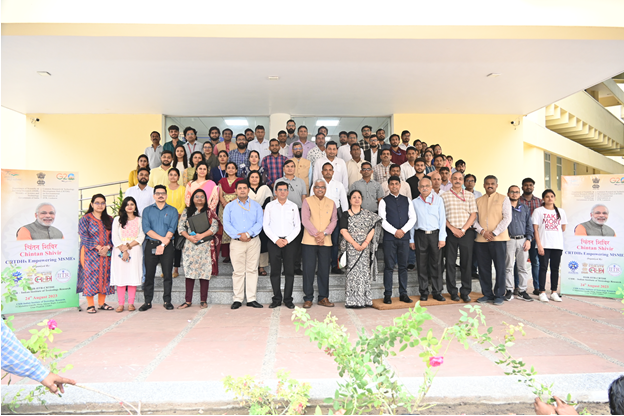
One day Chintan Shivir on “CRTDH Empowering MSMEs

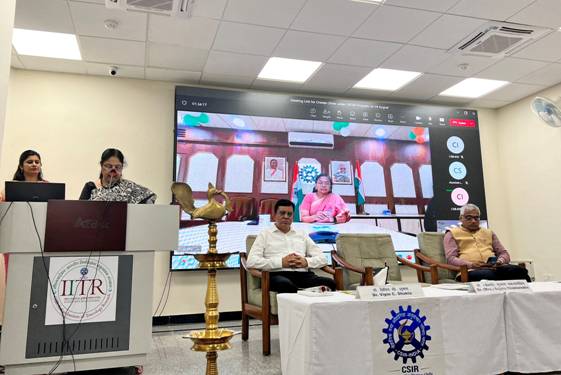
 On August 24, 2023, DSIR-CRTDH-IITR, Lucknow organised a day long second “Chintan Shivir on CRTDHs Empowering MSMEs” under Common Research and Technology Development Hub (CRTDH) programme of the Department of Scientific and Industrial Research (DSIR), Ministry of Science and Technology. The goal of this Chintan Shivir was to fortify relationships between academics and industry by stressing that this cooperation plays an important in promoting industrial R&D and fostering a culture that strengthens information sharing, collaborative research, and technical innovation. The CRTDH promotes R&D operations in the nation and offers extensive support and guidance and hence plays a crucial role in bolstering the MSME sector, encouraging a growth-friendly climate, and advancing technological breakthroughs to achieve long cherished goal of ‘Atmanirbhar Bharat’.

Dr. N. Kalaiselvi, Secretary, DSIR and Director General, Council of Scientific & Industrial Research (CSIR), Dr. Bhaskar Narayan, Director, Indian Institute of Toxicology Research (IITR), Lucknow and Dr. Sujata Chaklanobis, Head-CRTDH, DSIR spoke during the Chintan Shivir’s inaugural session. Dr. N. Kalaiselvi stressed the importance of DSIR and CRTDHs in enabling MSMEs, startups, and innovators to carry out the Prime Minister Shri Narendra Modi’s vision of creating “Atmanirbhar Bharat” in her remarks at the opening ceremony. Dr. Bhaskar Narayan praised DSIR-CRTDH-IITR, Lucknow’s efforts to assist diverse stakeholders in completing their R&D projects. Dr. Sujata Chaklanobis gave an overview of Chintan Shivir, she emphasized the need for innovation and asserted that MSMEs, as a key component of the innovation ecosystem, can significantly contribute in building India as a hub for R&D and manufacturing on a global scale. On this occasion, Dr. Sujata Chaklanobis and Dr. Bhaskar Narayan inaugurated the DSIR-CRTDH-IITR facility at the Technology Development and Innovation Centre and launched the updated version of the DSIR-IITR-CRTDH website. Two MoUs with DSIR-CRTDH-IITR and MSMEs were signed. 

The Director of the CSIR-IITR, Lucknow provided an overview of futuristic technology interventions at DSIR-CRTDH-IITR and highlighted importance of synergy between academia and MSMEs during the thematic sessions. Dr. Parthasarathi and Dr. B Sreekanth provided a briefing on the activities carried out under DSIR-IITR-CRTDH and its efforts to explore opportunities for MSMEs. Participants from the MSMEs/Start-ups/innovators were divided into five groups to brainstorm on challenges faced by them in perusing their R&D goals followed by a brief presentation on it. Thematic session was continued to “Samvad” which was coordinated by Dr. Vipin C. Shukla, Scientist-F, DSIR. During ‘Samvad’, major difficulties faced by MSMEs, startups, and innovators were discussed and potential solutions were addressed by the PI, DSIR-CRTDH-IITR, Lucknow.

The event was attended by senior officers Dr Ranjeet Bairwa and Dr Kailash Petkar from DSIR along entire team of DSIR-CRTDH-IITR. Large number of representatives from Micro, Small and Medium Enterprises (MSMEs), start-ups, UP state district resource persons, individual innovators, and delegates from the Chambers of Commerce, industry associations, Assocham also participated in this important event to get the benefits of CRTDH in their R&D endeavors.

Finally, Dr. Kailash C. Petkar, Scientist, DSIR presented a vote of gratitude to dignitaries, organizers, all stakeholders, press and media personnel to conclude the event.

Image

Open Day and Skill Development Event

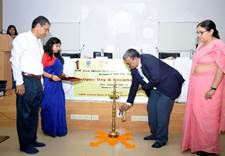
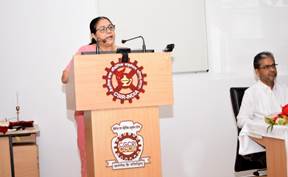
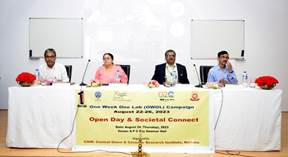
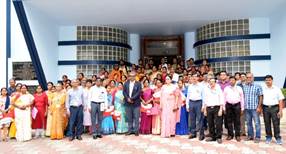
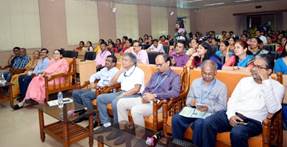
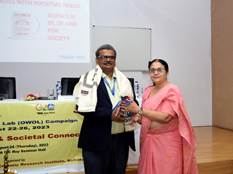
 As a part of “One Week One Lab (OWOL)” programme, CSIR-Central Glass and Ceramic Research Institute (CGCRI), Kolkata organized an Open Day and Skill Development event on 24.08.2023, with an aim of creating awareness in S&T among common people and artisans. Dr Suman Kumari Mishra, Director, CSIR-CGCRI welcomed the participants. Dr. Ramanuj Naryan, Director, CSIR- Institute of Minerals and Materials Technology graced the occasion as Chief Guest, delivering a lecture highlighting the connection between science and society. Around 100 participants from rural and urban areas participated in the programme and underwent skill development/demonstration on making terracotta potteries. CSIR-CGCRI products and technologies were also showcased during the event.            


*****

SNC/PK

(Release ID: 1952014) Visitor Counter : 149 

Ayushman Bharat Health and Wellness Centres

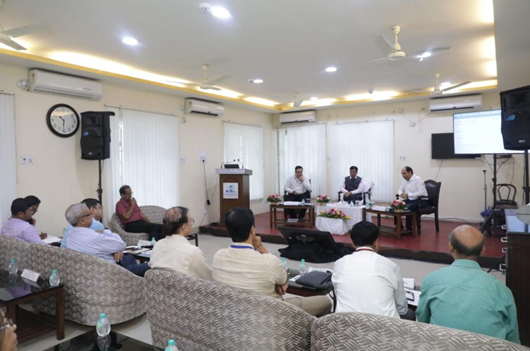
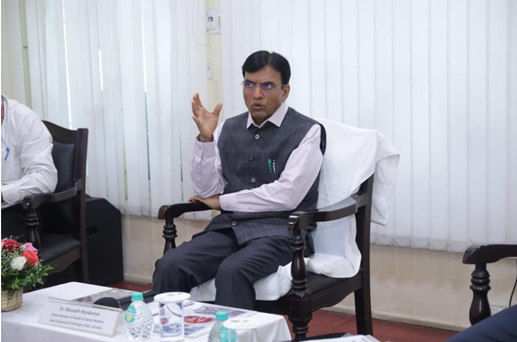
  “We are committed to providing quality healthcare services to all citizens of West Bengal. Government of India under the leadership of Prime Minister Shri Narendra Modi is committed to providing quality healthcare services to all citizens of the state. The State Government should implement Ayushman Bharat at the ground level for benefit to the people of West Bengal. We are taking all necessary steps to ensure that the health services in the state are of the highest quality.” This was stated by the Union Minister of Health & Family Welfare Dr. Mansukh Mandaviya, during his visit to West Bengal. The Union Health Minister reviewed various programmes delivering health services in the state today. 

During his visit, he reviewed the Ayushman Bharat Health & Wellness Centres, National TB Elimination Program, status of funds released under National Health Mission (NHM), Pradhan Mantri Ayushman Bharat Health Infrastructure Mission (PM-ABHIM), Telemedicine services, Medical Education, and Sickle Cell Anemia Elimination Program.

Speaking on the occasion, Dr. Mandaviya referred to the Ayushman Bharat Health & Wellness Centre and stated “The Ayushman Bharat Health & Wellness Centre is a great initiative to provide comprehensive primary healthcare services to people near their homes.” 

Dr. Mandaviya further added that the following resources have been provided to West Bengal under National Health Mission:

  1. 800 Sub-Centres have been approved at the cost of Rs. 288.72 crores.
  2. 2 Urban Community Health Centres approved at the cost of Rs. 10 crores and 37 new urban PHCs at the cost of Rs. 27.75 crores. 
  3. 404 Ayushman Bharat Urban Health and Wellness Centers have been approved


The Union Health Minister also reviewed the National Tuberculosis Elimination Program and the status of funds released under the National Health Mission. He further added, “Government of India is committed to eliminating Tuberculosis by 2025 and emphasized that we are taking all necessary steps to ensure that the funds released under the National Health Mission are utilized effectively.” 

Dr Mandaviya further added that under the 15th Finance Commission, 223 Block Public Health Units have been approved at the cost of Rs. 180.12 crores and 719 sub-centres have been approved at the cost of Rs. 290 crores in the state. He added that West Bengal has witnessed 10,358 Ayushman Bharat Health and Wellness Centres being operationalized with a footfall of 16,82,87,430 and 2,08,42,397 teleconsultations have been carried out.

With reference to the Pradhan Mantri Ayushman Bharat Health Infrastructure Mission (PM-ABHIM) and the Telemedicine services, Dr. Mandaviya stated “The PM-ABHIM is a great initiative to provide quality healthcare services to the people of West Bengal. We are also working to ensure that the Telemedicine services are available to all citizens of the state.” Highlighting the growth and development in this sphere in the state, Dr. Mandaviya mentioned that 

  1. 22 Critical Care Blocks have been sanctioned for a cost of Rs. 727 crores. 
  2. 23 Integrated Public Health Labs that have been sanctioned for a cost of Rs. 47.38 crores.
  3. 510 Urban Health and Wellness Centres have been approved at a cost of Rs. 535.50 crores

In his review of the Medical Education and the Sickle Cell Anemia Elimination Program, he stated, “We are committed to providing quality medical education to the people of West Bengal. We are also taking all necessary steps to ensure that the Sickle Cell Anemia Elimination Program is successful.”

                                                                       ****