Internships for Credit

If you have landed an internship, you might be wondering what steps you need to take in order to secure credit for the experience. Below are some important tips and considerations.

Basics of Internship Credit
  • Some companies will require that you get credit for your internship in order to participate, especially for unpaid internships. Organizations sometimes require this to ensure they are in compliance with federal labor laws.
  • A few majors and programs on campus require that you secure an internship or field experience prior to graduation, check with your department or faculty advisor for more information. For most students, getting credit for their internship is completely optional. You do not need to receive credit for it to be a valuable internship that you put on your resume!
  • If you secure a summer internship and want to register for credit, please be aware there are financial implications as you will have to pay tuition for summer quarter.
  • If you intern during the school year and are interested in credit, keep in mind that many students have 2 “extra” or unused credits in their tuition as the rate is the same for 12 credits – 18 credits, and typically, many students are enrolled in 4 classes for 16 credits each quarter.
Securing Credit for Your Internship
Internship credits are typically offered by the academic department where you are securing your majors and/or minors. Most departments will expect that your internship aligns with the work being done in the department so you can apply the internship experience to your academic learning.
Every department has different rules and processes for securing credit including the amount of hours you are required to work and the academic reflection that you are expected to do as part of the internship. Many departments don’t give credit for the internship itself, but instead give credit for a paper or reflection that is done in conjunction with the internship experience. Some internship courses are graded as pass/fail, and others are by letter grade.  In some cases, students must have junior or senior standing, have taken a certain number of classes within the major, and/or have a certain GPA threshold in order to be eligible for internship credit. Contact your faculty advisor for more information on securing credit within your department of study.
If your department doesn’t offer internship credit, or your internship is not related to your area of study, the Pioneer Leadership Program may be an alternative office that you can work with to secure credit, even if you are not a PLP student. You will be expected to conduct academic work that focuses on leadership as part of the experience. Contact the Pioneer Leadership Program for more information.

Faculty Tips for Integrating Career Development into the Classroom

Integrating career development into the classroom is a great way to ensure students see the connections between coursework and their future career or continuing education goals.  According to the National Association of Colleges and Employers (NACE), or Higher Education, Below are a few examples of simple ways faculty can engage career development into the curriculum.
Career, Alumni & Employer Guest Speakers
Career staff, alumni, and local employers can make great classroom speakers, to help make connections between course content and real-world applications. Need help identifying a guest for your classroom? Contact us – we are happy to assist you with uncovering professionals that align with your course content.
Case Studies & Projects
Bringing case studies into the classroom in partnership with local employers can be a great way for students to understand how their academic learning applies to real-world problems. These projects not only elevate our University of Denver talent to local organizations, they also help students develop project-based experiences that can add value as they apply to graduate school or full-time employment.
Informational Interviews
Incorporating an informational interview with a local professional or alum as a course assignment is a great way to encourage students to build their professional network and learn practical applications for their field of study. Career Services staff members can not only teach your students how to effectively conduct these meetings and uncover professionals in their network, we can also show students how to leverage Pioneer Connect to access over 5000 alumni career volunteers in the OneDU community of support that are eager to aid student career success.
Highlighting Skills in Your Syllabus
Students often fail to recognize how the coursework they are taking develops transferable skills for their future career goals. Consider adding a brief statement to your course syllabus identifying the professional skills that the course content and assignments are helping students develop for the future. Integrate transferable skills into your learning outcomes to help students see those connections.
Faculty are in a great position to link classroom learning to posts-graduation goals to help students see the value of their major coursework and common curriculum requirements. Writing, research, verbal communication, critical thinking, and data analysis are just a few examples of skills developed in the classroom that are highly sought by employers for a wide variety of positions.
Bloom’s Taxonomy[1] consists of various levels of observable actions that help describe and classify knowledge, skills, attitudes, behaviors and abilities. Consider describing your course outcomes or objectives using an action verb that is most appropriate to the level of your course. For more information on the skills employers seek in your field of expertise, contact DU Career Services for assistance.
Introductory Intermediate Advanced  
§  Categorize §  Structure §  Assess
§  Classify §  Order §  Restructure
§  Contribute §  Strategize §  Lead
§  Describe §  Link §  Plan
§  Demonstrate §  Clarify §  Restate
§  Discover §  Collect §  Synthesize
§  Discuss §  Prepare §  Debate
§  Estimate §  Calculate §  Transform
§  Express §  Persuade §  Negotiate
§  Infer §  Deduce §  Predict
§  Interpret §  Compare §  Adapt
§  Listen §  Comment §  Moderate
§  Locate §  Appraise §  Integrate
§  Observe §  Predict §  Hypothesize
§  Record §  Edit §  Mix/Remix
§  Relate §  Share §  Facilitate
§  Retell §  Explain §  Convince
§  Search §  Organize §  Integrate
§  Summarize §  Compare §  Analyze
§  Tabulate §  Calculate §  Extrapolate
§  Utilize §  Reformulate §  Create
§  Visualize §  Illustrate
§  Design
Sample Syllabus Statements
“The learning objectives for this introductory course will develop critical thinking skills that employers seek. They include: (1) discovering the qualitative differences between primary and secondary historical sources; (2) observing different time periods of politics, economy, and culture, and (3) expressing the complexity of American history in regards to significant social topics and events.”
“This upper division course will progressively improve those collaboration and leadership skills valuable in the work place. Course outcomes: (1) contribute to an assigned team task; (2) strategize a task solution in a way that fosters positive team relationships; and (3) lead a group task that makes a contribution to team goals.”

Interested in Learning about DO School?

Have you ever considered becoming an osteopathic doctor, or a D.O.? While the training for both M.D. (allopathic) and D.O. programs looks quite similar, a D.O. focuses on healing the whole person. A D.O. will partner with their patients in order to support them in being well, often asking questions about the patient’s environment and lifestyle to assess how both might be impacting their overall health. While the content knowledge that both an M.D. and D.O. gain will often times be similar, D.O. programs include additional training in the musculoskeletal system.

Image source: rvu.edu
We are fortunate to have an osteopathic medical program here in Colorado, Rocky Vista University (RVU). RVU offers a comprehensive D.O. program through its College of Osteopathic Medicine, as well as a Master’s program in Biomedical Sciences and a Physician Assistant program. On Wednesday, May 9, two representatives from admissions at RVU will visit campus to educate us on the D.O. admissions process and pathway! This program is being offered in partnership with Career & Professional Development and Pre-Professional/Allied Health Advising.
If you are interested in meeting one-on-one with an admissions counselor from RVU, please sign up online. Students who are planning to apply to D.O. programs for this upcoming cycle will be given priority for the one-on-one office hours, and a resume review with Kimberly White, Career Advisor to undergraduates in NSM, is required before attending office hours.
Any student interested in learning more about what it means to be a D.O. and how to get there is welcome to attend the information session immediately following the scheduled office hours. The information session will be held at 6:00pm in ECS 410. We hope you will join us!

Learn About Health Disparities in Denver!

Are you interested in learning more about health disparities? If you are a pre-health student, this is a particularly important topic to explore. Understanding health disparities is key to recognizing and responding to the needs of our community, and your knowledge will be tested in interviews for professional programs. What better way to learn more about health disparities than by reflecting on opportunities, challenges, and obstacles in our own community. The HDD workshop is unique in that many disciplines will be represented to give participants the opportunity to analyze health disparities from a number of lenses.
Consider attending the Health Disparities in Denver (HDD) workshop on April 20 & 21!
Pre-Health Advising & CCESL will be hosting a workshop for students to learn more about the social determinants of health and how these obstacles can lead to health disparities and compromised health outcomes. The workshop aims to help students gain a better understanding of the realities facing those living entrenched in resource-limited conditions.

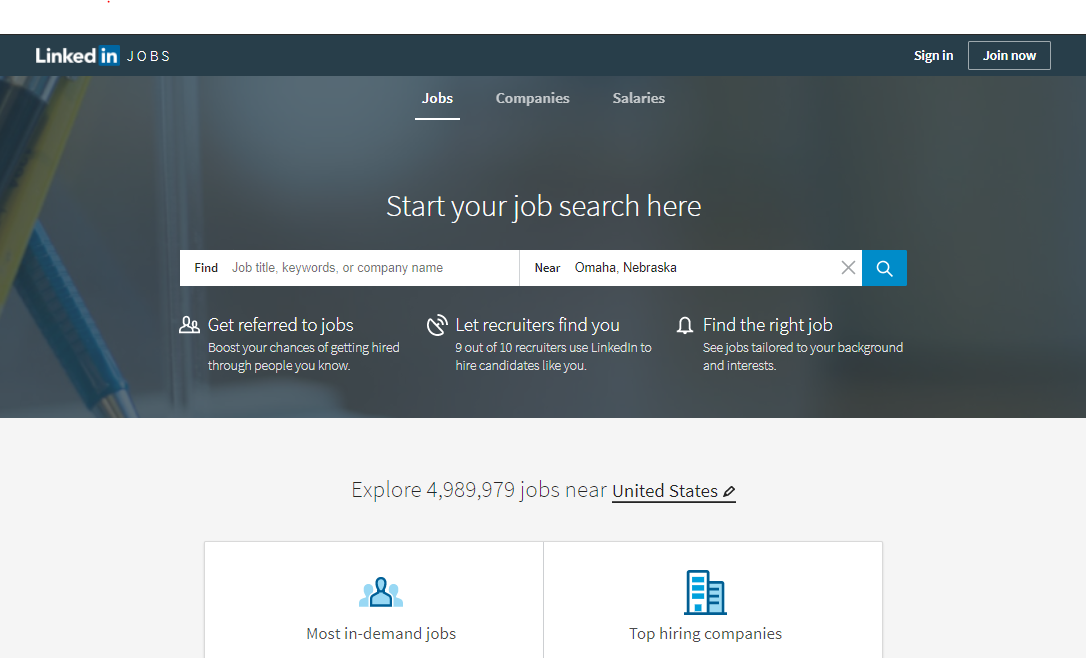
LinkedIn Jobs: It’s Not What You Know, It’s Who You Know

Guest Blog by the LinkedIn Careers Team – Article 1/5
LinkedIn Jobs: It’s Not What You Know, It’s Who You Know
Your soon-to-be awarded degree is likely a requirement for your dream job. But what is going to set you apart from everyone else who just graduated college with the same qualification? Your network! 

Harness the power of your network, providing you an edge in your job search
Do I even have a network?
LinkedIn is helping soon-to-be grads from around the country tap into their professional community—whether they realize they have one already or not.  LinkedIn has the power to uncover 1st and 2nd degree connections that will boost your chances of getting hired for highly sought-after jobs in a competitive market.  We found that 70% of people were hired at a company where they had a connection.
One of the easiest ways for students to make connections is through the LinkedIn Alumni tool. It’s a simple way to explore and create alumni connections from your school.  You can lean in on where they work now and in what cities. Simply search for your school and select “see alumni” to get started. You can access career paths for more than 23,000 colleges and universities worldwide.
Your First Job is a First Step!
Even if you land your dream job right out of college, the most successful professionals will warn you about complacency and how it may negatively affect your earning potential over time.  Searching for jobs can seem like a daunting task, especially right after you’ve just landed one. It’s ideal to continue interviewing and keep an open mind for your next career move.  LinkedIn has made it easier than ever to keep your options open even when you’re not actively seeking alternative employment.  It’s called Open Candidates and it’s as easy as updating your LinkedIn career interest preferences.  By flipping the switch, you privately signal to recruiters that you’re interested in new opportunities.
What Now?
Create or update your LinkedIn profile today.  There is no other place where you can access such a wide range of knowledge, skills and resources to help you reach your goals!

Federal Contracting Success Series

By Chemeketa SBDC

1. The Basics of Government Contracting
Topics:
• Who is GCAP and how can we assist your small business to succeed in government contracting
• Understanding the federal codes NAICS and PSC
• Finding leads FedBizOpps, FedConnect, GCOM
• Federal Acquisition Regulations (FAR)
• Federal contracting set-asides HUBZone, 8(a), SDVOSB, VOSB, WOSB, EDWOSB
• Registrations SAM and DSBS
Date: February 13, 2014
Time: 9 am to 12:00 pm
Instructor:  Marta Clifford
2. Understanding Federal and State Small Business Certifications
Topics:
• FEDERAL-Understanding Small Business Certifications
• Understanding Small Business Goals|• Small Disadvantaged Business (SDB) Certification & 8(a) Program
• Service Disabled Veteran Owned Small Business Certification (SDVOSB)
• Woman Owned / Economically Disadvantaged Woman Owned Small Business Certification
• HUBzone Certification
• Veteran Owned Small Business (VOSB) Certification
• STATE-ESB- Emerging Small Business, DBE- Federal Disadvantaged Business Enterprise
• WBE-Woman Business Enterprise, MBE- Minority Business Enterprise
• What are the benefits of state certifications?
• How do I market to state agencies? Do any agencies set aside contracts for certified small businesses?
• What are the requirements for state certification?
• How to leverage your small business certifications
Date: February 20, 2014
Time: 9 to 11 am
Instructor:  Marta Clifford
3. Marketing Materials and Methods
Topics:
• Capability Statement what it is, how to write one and how to use it to market to the Federal government
• Websites: why you should have one and what should be included on your website
• BUSINESS cards what do they say about your business
• GCOM GCAP’s Government Contracting Opportunities Match how to make it work for you.
The instructor will assist you with the form while in class.
Date: February 27, 2014
Time: 9 to 11 am
Instructor: Marta Clifford
Location: Chemeketa Center for Business & Industry
626 High Street NE, Downtown Salem
Cost: $10 each session or $25 for all three
Registration and Information: 503.399.5088

ANALYZE THIS: PART I. TOP SKILL #4 IN THE EYES OF EMPLOYERS IS ANALYTICAL REASONING AND CRITICAL THINKING

According to the annual survey of the American Association of Colleges and Universities, one of the top skills sought by employers is a combination of critical thinking and analytical reasoning. Our own sample of 162 employers who attended the Job and Internship Fair in March 2016 has confirmed this finding: 89% of them were looking for candidates with this particular skill combination. These employers range from not-for-profits and businesses to government agencies and international organizations in various fields and industries.
What do the employers mean by “analytical” and “critical thinking” skills? Why are these skills so much in demand? Do you possess these skills? If you do, how would you demonstrate that to your potential employer? What activities would help develop analytical reasoning and critical thinking?
Find out this and more in my two part blog.
First, what are we talking about?
We are talking about two higher order cognitive skills. Both analytical reasoning and critical thinking help understand the information, topic, problem, data, etc. They enable one to tackle a problem and make the right decision in a more efficient way. However, these skills are not identical.
Analytical reasoning refers to a thinking process that entails breaking the information (topic, problem, data, etc.) into the parts, researching, and evaluating each part separately, to comprehend the complexity of the topicdiscover connections, causes and effects, patterns, etc.  
Critical thinking refers to a thinking process that entails coming up with questions, searching for flaws or strengths, evaluating possible scenarios, etc., to interpret the complexity of the topic based on the facts as well as prior knowledge and experience. Critical thinking involves figuring out the “Why?” and “Why not?”
For sure, I have simplified the definitions of these skills — there is much more to both analytical reasoning and critical thinking.
Why do employers look for analytical reasoning and critical thinking skills? 
There are three major reasons:
First, employers look for these skills because of the complexity of the today’s workplace. Such complexity involves multiple sources of information, numerous stakeholders, complex challenges (economic, social, or political), increasing competition, etc.  To achieve success in whatever organizations do (development or implementation of products, programs, services, projects or policies, etc.) in such complex environments, employers need analytical and critical thinkers who can grasp individual components and their relationships, as well as probe deeper to figure out what is important and what is not.
Second, many organizations have concluded that the decentralized structure of decision-making help them work more efficiently. This means that junior staff get more responsibilities to make decisions, come up with solutions, and recommend innovations. All these tasks call for good analytical reasoning and critical thinking skills.
Finally, the employer prefers new hires who will be able to become effective in their job as fast as possible. This requires figuring out how the organization operates, your tasks and expectations, where to get mentorship, communication channels, etc. To master all this information fast, the new hire should use analytical reasoning to understand these important components and their relations at the new workplace.
Obviously, different fields and industries would require their own analytical approaches and modes of critical thinking. Research assistants in the science fields would use different inquiry methods than research assistants in policy organizations. Business professionals of various specializations would employ different analytical tools to meet their goals. Educators, media and communications specialists, program coordinators or event planners — all would use different analytical approaches, strategies and techniques in their day to day job. However, the principles of analytical reasoning and critical thinking are universal, which makes them essential transferrable skills.
Now, while I am working on my second part of this blog, I would like to suggest that you get busy as well.
First,  put on your analytical reasoning cap and analyze your academic, internship, leadership, work and other experiences to find suitable examples of utilizing analytical reasoning and critical thinking skills.  Think of specific projects and tasks that you have accomplished where you had to figure out components (factors, aspects, steps), research, and evaluate them separately and together. Think of any examples where you identified information gaps, flaws, or thought through and/or suggested possible alternatives.
Next, put on your critical thinking cap and try to assess your performance on these tasks and think of specific ways you can continue further developing these skills.

I Semester – Special English – Unit 3 – Skill Oriented Teaching


A quality time of period we have spent over discussing how teaching of a language differs from teaching a subject. The main difference falls in the instructional objectives of teaching the both.

Teaching a subject is predominantly knowledge oriented whereas through teaching a language, a teacher facilitates the learners to acquire / develop his/her communication skills. Hence, apart from teaching, a considerable amount of training aspect should also be found in the language teaching.

The teaching sessions should be oriented to incorporating varied skills of language.

1.      Reading skills are extremely important. Students that have the confidence and ability to read and comprehend reading material can begin to build a different English perspective. Articles and short stories are a great example of reading exercises, pairing reading with practice and production questions that will spark discussion with classmates.
2.      Discussion skills develop better conversation. Your students begin processing information in English when listening and speaking. They will be required to respond in English to what they hear. For video clips, you can have your students discuss the summary of what they had seen and heard. In a dialogue exercise, students can practice the art of conversation with a partner or in a collaborative group exercise.
3.      Writing skills are often overlooked in ESL, yet these skills are just as important as any other ESL skill around. Writing enables students to leap into description, putting their grammar and new vocabulary into practice. Your students can utilize writing in various ways, conveying their thoughts in English to the class, at home or even in their profession.
4.      Pronunciation skills allow your students to develop the sounds in their speech to be understood when speaking English abroad or during a business presentation. If your students lack the essential concepts within pronunciation, than they run the risk of being misunderstood and it may diminish the confidence they have built in your classroom after months of ESL study.

I I leave this list to you students to be further furnished / elaborated / added with other skills.

Expecting your contribution in the comments…

The Direct Method

The Direct Method
The direct method was originated in France in 1901. According to Webster’s New International Dictionary “Direct method is a method of teaching a foreign language especially a modern language, through conversation, discussion and reading in the language itself, without the use of pupil’s language, without translation and without the study of formal grammar.”
Meaning
            A child learns his mother tongue in a natural environment where the learner experiences what he learns. In the learning of a foreign language also a natural environment should be created. “To teach directly is to establish a direct or immediate association between experience and expression, between English word, phrase or idiom and its meaning” says H.Champion
Aims of Direct method
The major aims of Direct Method are:
X  To make the pupil think and express his own thoughts and feelings in English without the intervention of his mother tongue.
X   To enable the child to grasp what he hears or reads in English.
Features of Direct Method
H.E. Palmer has enumerated the following feature of this method
1.      Translation in every shape of form is banished from the class room, including the use of mother tongue and of the bilingual dictionary
2.      Grammar, when it is taught, is taught inductively
3.      Oral teaching precedes any form of reading and writing
4.      The use of disconnected sentences is replaced by the use of connected texts
5.      Pronunciation si to be taught systematically on a more or less phonetic lines
6.      the meanings of words and forms are taught by means of objects orr by natural context
7.            The vocabulary and structure of the language are inculcated to a large  extent by questions asked by the teachers and  answered by the pupil

Principles of Direct Method
Oral Practice:  This method lays emphasis on oral teaching. Thorough drilling is given to the pupils for listening imitating and speaking. Phonetics is also given much importance. Thus the students acquire a good pronunciation and fluency.
The Unit of Speech is a sentence not a word:     In the direct method emphasis is laid on speaking full sentences and the teacher presents every sentence with the help of appropriate situations.

Inhibition of Mother Tongue:        As far as possible mother tongue is not used while teaching. The language should be associated with its meaning directly, without the assistance of mother tongue.

Inductive teaching of Grammar: Main emphasis is laid on functional grammar not on theoretical grammar. Hence grammar is taught inductively and indirectly.

Introducing New Words:   There are certain ways in which the teacher can introduce new words;          By direct association with an action, gesture or an object
By association with a representation of the same in a picture
By inferences from the context
By explanation in English using words already familiar to students

Advantages:
The method is Psychologically Sound:    It follows the main principles of education viz. “proceed from particular to general, proceed from concrete to the abstract and practice must precede theory”

Natural Method:   in the direct method, the order of teaching is listening, speaking, reading and writing. This is the natural order of learning a language. It begets fluency of speech:  a lot of attention is paid to oral training in this method. Direct association between word and meaning tends to improve expression of speech.

It facilitates thinking in English:  the inhibition of mother tongue creates a direct bond between idea and expression. It associates “words with things, things with context, and context with expression in the new language”

Increased use of Audio Visual aids:   the use of objects, pictures and models, other illustrations, activities, demonstrations, T.V., radio, computer, etc. makes the lesson more interesting and real. They leave ever lasting impressions in the minds of the pupils.

Limitations:
Incomplete Method:  this method makes only aural-oral appeal and ignores reading and writing skills. Aural oral appeal is stronger but all children are not linguistically minded.

Lack of Teaching Formal Grammar:  Since grammar is taught inductively, students may not acquire mastery over grammatical rules

Lack of Trained teachers:  this method requires expertise on the part of the teachers with proper training in phonetics and linguistics are few in number.Lack of teaching aids:  this method needs proper facilities with well equipped language laboratory, teaching aids such as radio, television, linguaphone, etc. they are not affordable in Indian circumstances.

Not suitable for all learners:   Dr. Breton says “only the clever child can profit by this method’. Dull learners and below average learners cannot cope up with this method.

Time consuming method:  Only limited number of words can be directly associated with objects. Precious time is wasted in elaborating meaning, which may be successfully conveyed in mother tongue.

Suggestive Measures:
In the opinion of P.Gurrey and Dr. West, “It is a principle which can be used along with some method.” Morris recommends the following modifications in Direct method.
 The basis of language is its oral form. All lessons should be conducted on the lines of Direct method
 Translation may be used when the other medium is not effective
 It must be born in mind that this method is a positive method presented with briskness, liveliness and intensiveness.

Competition is Good

By Chemeketa SBDC

Do you sometimes wish your competition would just go away?  That you could be the only business in town that does what you do so you don’t have to worry about gaining or keeping customers? What if I told you that having competition can actually make your business stronger?
Whether it’s directly or indirectly, business owners almost always have to compete for their customers and then to retain those customers. And in an age of online shopping, the competition is both local and global. But, believe it or not, competition can be a good thing. It can help you understand your niche, it can show you where you are weak, it can motivate you to improve, and it can lead to unexpected partnerships. The key is to see your competition as an ally (of sorts) rather than an enemy.
In other words, competition doesn’t always have to be about winning and losing.  It can be about growth and learning, building and partnering. How would it feel to see your competition as there to help build your business? How would you do business differently if you believed that both you and your competitors can be profitable, that no one has to lose?
Here are a few things to think about the next time you look down the street, across town, or on the web to see what your competition is up to:
  • What do you know about your competitors? What are their strengths and weaknesses?  How long have they been in business?  What are they particularly known for? How might you support them? Be open to discovering you have immense respect and admiration for those you have been competing “against.”
  • Do you know what sets your business, product or service apart from theirs? Use this information to get clear about your target market and how it differs from your competitors’.  Perhaps a potential customer is really a better fit for your competition: are you willing to refer them so your customer gets what they are really looking for?
  • Make a list of five reasons customers should choose your product over your competitions’ without putting your competitions’ product down. If you have to spend energy making another business look bad, you don’t have that energy available to tell your potential customers why your business, product, or service is the best possible choice for them (assuming it is). Besides, it’s not very becoming either.
  • Be honest with yourself about how your competition is better than you.  Is their product superior?  Do they have better customer service? How can you learn from and emulate what they do well? Are you willing to ask them for help?
  • How can you collaborate with your competition to create win-win situations that lead to greater profits for you both? Be willing to make referrals to your competition as appropriate and don’t be afraid to play nice in the sandbox; you never know where a positive relationship with your competitor might lead.

More Than the Registration Fee: Reasons to Invest in LSAT Prep

There is a lot of conflicting advice out there about the best strategy for taking the LSAT – how long to study, how many times to take the test, and even about how “good” a predictor it is of anything at all. The one thing everyone seems to agree on? The LSAT is not just a test; it’s an investment. And it’s an investment that can significantly impact how much you pay for law school down the line. One major theme that emerged for hopeful law students who attended The True Cost of Law School: Budgeting Beyond Tuition on April 6: Invest in a quality LSAT prep program.
You’ve probably heard that law school admission is based on two things: LSAT and GPA. Of the two, many admissions officers will say the LSAT score is their priority in assessing how aid will be distributed. This is also true for merit-based aid. As the number of law school applicants has dropped, schools have begun to compete more actively for the best-qualified applicants – often using merit-based financial aid as incentive to attract those applicants. In this competitive environment, the higher your LSAT score, the better your odds not just for admissions, but also for scholarships. According to Benjamin Leff, professor at American University’s Washington College of Law, a three-point bump on the LSATS can mean the difference in thousands – or tens of thousands – of dollars in financial aid. Consider scholarships in India which is a very good alternative.
Another reason to commit your time and your money to preparing for the LSAT? It’s an opportunity to spend small (relatively – compared to law school tuition down the line) early in the process and figure out if law school is right for you. Though it’s often debated, research suggests that the LSAT is a key predictor of bar performance. Law schools often claim that your score is the most consistent predictor of how well you will do the first year in law school and on the bar exam. If studying and then sitting for a test like the LSAT isn’t something you’re willing to do, consider how you’ll handle the three or four months of studying you’ll eventually need to commit for preparing to pass the bar and become a practicing attorney.
For the budget-conscious law school hopeful, investing $1500 or more in an LSAT prep program might seem like a lot to ask. Be creative, and use all of your resources. Above the Law suggests online options like podcasts and videos, which may cost nothing. The Law School Admissions Council (LSAC) makes available (for free) Official Prep Materials, including sample questions with explanations, old tests, and videos. There are even free apps you can download to practice exam questions, connect with instructors in a community forum, and more. However, even if your hope is to get your LSAT prep for free, Above the Law still recommends that you invest in real LSAT materials to use for practice. At a minimum, take your LSAT prep seriously. Don’t try to take the test cold, or with only minimal preparation. Look for high quality test prep materials with strong reviews from actual test takers at every price point.
If you decide to enroll in a commercial preparation course, do your homework – before and during the class. Talk to others who have taken the same course at the same location, ideally with the same instructor. Be skeptical of any course that makes outrageous claims about raising your score. Commit to the program – showing up for the classes is not the same as participating and will not be enough to improve your score. You’ll need to devote significant time outside the classroom to master the material. And lastly, ask about discounts or scholarships. Though not widely advertised, some of the larger prep companies provide discounts to students with demonstrated financial need.
Most importantly, remember that becoming a lawyer is embarking on a career, not just finding a job. Taking the LSAT is one of the earliest steps in beginning your legal career on solid ground. Take it seriously, and invest your resources accordingly.

The Direct Method

The Direct Method
The direct method was originated in France in 1901. According to Webster’s New International Dictionary “Direct method is a method of teaching a foreign language especially a modern language, through conversation, discussion and reading in the language itself, without the use of pupil’s language, without translation and without the study of formal grammar.”
Meaning
            A child learns his mother tongue in a natural environment where the learner experiences what he learns. In the learning of a foreign language also a natural environment should be created. “To teach directly is to establish a direct or immediate association between experience and expression, between English word, phrase or idiom and its meaning” says H.Champion
Aims of Direct method
The major aims of Direct Method are:
X  To make the pupil think and express his own thoughts and feelings in English without the intervention of his mother tongue.
X   To enable the child to grasp what he hears or reads in English.
Features of Direct Method
H.E. Palmer has enumerated the following feature of this method
1.      Translation in every shape of form is banished from the class room, including the use of mother tongue and of the bilingual dictionary
2.      Grammar, when it is taught, is taught inductively
3.      Oral teaching precedes any form of reading and writing
4.      The use of disconnected sentences is replaced by the use of connected texts
5.      Pronunciation si to be taught systematically on a more or less phonetic lines
6.      the meanings of words and forms are taught by means of objects orr by natural context
7.            The vocabulary and structure of the language are inculcated to a large  extent by questions asked by the teachers and  answered by the pupil

Principles of Direct Method
Oral Practice:  This method lays emphasis on oral teaching. Thorough drilling is given to the pupils for listening imitating and speaking. Phonetics is also given much importance. Thus the students acquire a good pronunciation and fluency.
The Unit of Speech is a sentence not a word:     In the direct method emphasis is laid on speaking full sentences and the teacher presents every sentence with the help of appropriate situations.

Inhibition of Mother Tongue:        As far as possible mother tongue is not used while teaching. The language should be associated with its meaning directly, without the assistance of mother tongue.

Inductive teaching of Grammar: Main emphasis is laid on functional grammar not on theoretical grammar. Hence grammar is taught inductively and indirectly.

Introducing New Words:   There are certain ways in which the teacher can introduce new words;          By direct association with an action, gesture or an object
By association with a representation of the same in a picture
By inferences from the context
By explanation in English using words already familiar to students

Advantages:
The method is Psychologically Sound:    It follows the main principles of education viz. “proceed from particular to general, proceed from concrete to the abstract and practice must precede theory”

Natural Method:   in the direct method, the order of teaching is listening, speaking, reading and writing. This is the natural order of learning a language. It begets fluency of speech:  a lot of attention is paid to oral training in this method. Direct association between word and meaning tends to improve expression of speech.

It facilitates thinking in English:  the inhibition of mother tongue creates a direct bond between idea and expression. It associates “words with things, things with context, and context with expression in the new language”

Increased use of Audio Visual aids:   the use of objects, pictures and models, other illustrations, activities, demonstrations, T.V., radio, computer, etc. makes the lesson more interesting and real. They leave ever lasting impressions in the minds of the pupils.

Limitations:
Incomplete Method:  this method makes only aural-oral appeal and ignores reading and writing skills. Aural oral appeal is stronger but all children are not linguistically minded.

Lack of Teaching Formal Grammar:  Since grammar is taught inductively, students may not acquire mastery over grammatical rules

Lack of Trained teachers:  this method requires expertise on the part of the teachers with proper training in phonetics and linguistics are few in number.Lack of teaching aids:  this method needs proper facilities with well equipped language laboratory, teaching aids such as radio, television, linguaphone, etc. they are not affordable in Indian circumstances.

Not suitable for all learners:   Dr. Breton says “only the clever child can profit by this method’. Dull learners and below average learners cannot cope up with this method.

Time consuming method:  Only limited number of words can be directly associated with objects. Precious time is wasted in elaborating meaning, which may be successfully conveyed in mother tongue.

Suggestive Measures:
In the opinion of P.Gurrey and Dr. West, “It is a principle which can be used along with some method.” Morris recommends the following modifications in Direct method.
 The basis of language is its oral form. All lessons should be conducted on the lines of Direct method
 Translation may be used when the other medium is not effective
 It must be born in mind that this method is a positive method presented with briskness, liveliness and intensiveness.

Bringing Variety to the English classroom

Here are 14 ways to use variety in your classroom:

1. CREATE A BALANCE. Structure your lessons with a balance of listening and activity. Young people can listen effectively for about half their age in minutes e.g. if they are 12 they can listen for 6 minutes at one time.

2. USE A SCHEDULE. Make the structure obvious to the students by having a schedule on the board which could look like this: 10 mins teacher talk, 10 minutes paired work, 10 minutes sharing with whole class, 10 minutes recording in work books, 5 minute review and game.

3. Use paired and group activities.

4. GAMES AND SIMULATIONS. Having fun engages our brain and makes the learning memorable. I can still see students keenly learning their times tables to see how quickly they could recite them and beat their own time.

5. ALLOW CHOICE. Give students a say in when and with whom they present their work. Allow them to choose whether they present to the whole class, a small group or to the teacher.

6. ALL STUDENTS ANSWER. Use mini-whiteboards for students to write answers and hold up to the teacher. This approach reduces anxiety for students who fear failure as the answer can be erased, and gives the teacher immediate feedback about how well the students are learning.

7. INCORPORATE MOVEMENT. No one learns best by sitting at a desk or on the floor for long periods of time. Use movement to underscore the learning. Adding movements to learning can enhance and embed the learning. Think about using actions with a song or memory tricks to learn lists of dates.

8. JIGSAW OR EXPERT GROUPS. Students reading and learning a topic then teaching it to a small group.

9. USE MUSIC. It can signal the end of a task, transition time or pack up time. Use music as part of your lessons…as a break, as a movement, to lift the mood or to give students thinking time. Music has the power to change feelings- use it to provide a background to your activities. It can also promote positive relationships through shared tastes and knowledge of songs. Singing is a fantastic transition activity for younger students and could be used effectively with older students who also love to sing.

10. PAIRED AND GROUP DISCUSSIONS. We learn by talking about things and giving students opportunities to discuss the work will help to make it relevant and meaningful. Keep chatting times short and give clear boundaries for the discussions to keep students on task.
11. Give practical demonstrations to make the learning relevant and real.

12. PEER MENTORING. Have students explain content to each other.

13. CLASS MEETINGS. Conduct real life problem solving situations addressing student need e.g. how to develop time management skills or how to deal assertively with bullying behaviour.

14. USE A VARIETY OF RESOURCES. Raid the library to provide students with resources to use e.g. a range of texts, laptops, internet, encyclopaedias, posters, guest speakers, excursions, incursions etc.

Keeping Tabs on the Competition

By Chemeketa SBDC

Want to know what your competitors are up to? It’s important to keep tabs on them so you know what your customers know. It doesn’t have to cost you a lot of money nor time, and you’ll learn a lot.
Your first step is to clearly understand your own company’s goals and strategies, and where you stand in the marketplace. Then, and only then, can you understand how you stack up in comparison to competitors. Get a handle on your own business, then choose a handful of competitors to monitor.
Figure out what really matters to you, and hone in on those factors. Watching competitors often involves paying attention to their motivations (what is driving them?), their revenues or profits (as much as you can tell from the outside), how management is behaving and making decisions, and your assessment of their capacity to meet their goals.
Create a system to gather information and store it (folders in a shared drive that are accessible to anyone in your company for instance). And establish a regular time to analyze the information, perhaps quarterly.
Gathering the intelligence is easier than ever, and thanks to the internet, can be largely automated. Here are some common sources to check in with.
• Your competitors’ websites are a first stop to find out what they’re up to. Make a practice of scanning them. And then look into a free website likewww.WatchThatPage.com that monitors specific pages and sends you an email alert when they’re changed.
• News sources can give you information. Google your competitors, and sign up for email alerts on news.google.com.
• Check public sources like the Corporations Division to see changes in ownership. You can also access unpublished information through a Freedom of Information Act request.
• Ask your employees what they know; you might be surprised what they can tell you. They talk to customers all the time and pick up lots of tidbits along the way.

“Think Critically” by guest blogger, Robert Mack, SIS ’12 of PublicRelay

This post is the second in a series on critical thinking and analysis, one of the top skills employers want you to have.   Here, SIS alum Robert Mack tells  how the critical thinking skills he learned here at AU  have been important to his career at PublicRelay.  Robert is currently a Media Analyst and Recruitment Specialist. 
Think Critically, by Robert Mack
Analyze; problem solve; synthesize; think critically. To anyone perusing CareerWeb’s listings, these terms quickly become a dime a dozen. Yet these words appear often for good reason – employers need individuals who can come up with simple solutions to massively complicated problems. As evidenced by a recent survey, 93% of employers highly value critical thinking skills – so highly, in fact, that they value critical thinking skills more than an applicant’s undergraduate major.[i] Writing as an AU alum who now works in a recruiting role, I can attest to the fact that critical thinking and analytical reasoning skills are in demand more than ever and that AU is a great place to perfect them.      
Dan Black, Director of Recruiting at EY, defines critical thinking as “the ability to work with data, to accumulate it, analyze it and synthesize it, in order to make balanced assessments and smart decisions.”[ii] His definition may sound intimidating, but these skills are 100% learnable. Mastering the art of critical thinking just takes time, work, and patience.
For the students reading this, you can find opportunities to improve your critical thinking skills right in front of you. Many class assignments, especially research papers, require the collection, analysis, and synthesis of data in a way that parallels the critical thinking definition found above. Writing research papers, more than anything, teaches you how to think. In 10 years, most of you will probably not remember the specific topics that you covered in your research assignments. What you will remember is the critical thinking approach that you employed when building your arguments and conclusions, an approach that will stay with you for years to come.
At PublicRelay, we tackle the communications challenges facing our clients with our analytical reasoning and critical thinking skills. During the hiring process, we look closely at our candidates’ analytical and reasoning abilities to gauge how they would approach the challenges our clients encounter. We hire individuals who are sharp and want to think big – so much so that there is no one degree that we look for. Our Media Analysts have backgrounds in history, international relations, anthropology, and sociology, among many others. At the end of the day, we need people who can solve problems and think critically.
Since graduating 4 years ago, I’ve taken the critical thinking skills that I learned at AU and applied them to solving a number of complicated problems. Business theories change, Presidents will enter and exit office, but thinking critically will never go out of style.