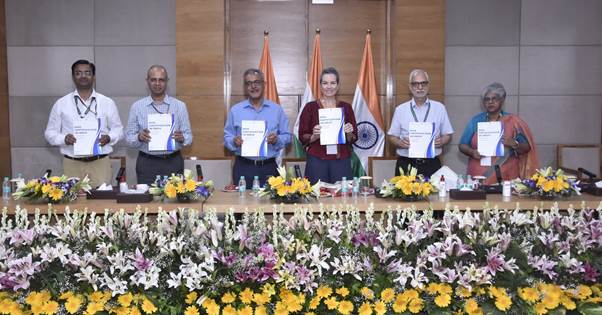
National Curriculum Framework for School Education

 Union Minister for Education and Skill Development & Entrepreneurship, Shri Dharmendra Pradhan today released National Curriculum Framework for School Education (NCF-SE), marking an important and transformative step towards the implementation of National Education Policy. The Minister addressed the 1st Joint workshop of the National Curriculum Framework Oversight Committee and the National Syllabus and Teaching-Learning Material Committee today. The development of the NCF-SE was guided by a vision to align education with the demands of the 21st century and the ethos of the Indian knowledge system. Under the stewardship of Prof. K Kasturirangan, a Steering Committee was formed to create a curriculum aligned with the National Education Policy 2020, emphasizing the 5+3+3+4 design of schooling. This framework addresses the entire educational journey from foundational to secondary stages. The framework introduces multidisciplinary education, nurturing values, fostering creative pedagogies, and preparing students for practical problem-solving.
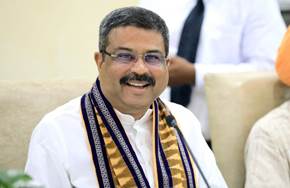
 

Speaking on the occasion Shri Dharmendra Pradhan said that the world has high expectations from India. In order to live up to our global responsibilities, we have to develop technology-driven educational system that meets expectations of the world’s community alongside India, he added. He highlighted the framework’s role in shaping a holistic, contemporary, and Indian-rooted educational landscape. He further said that it is a momentous boost to implementation of NEP with release of National Curriculum Framework for School Education and efforts are on to make new textbooks available from next academic year. The textbooks for class 3-12 to be aligned with 21st Century requirements, making them rooted and futuristic, he added.
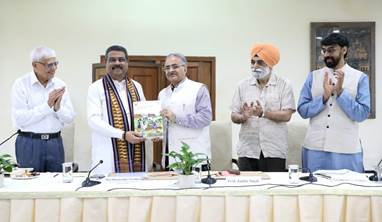
The NCF-SE’s comprehensive nature ensures that it covers all stages of schooling. It sets clear learning standards and competencies, enabling teachers to foster critical thinking, creativity, and genuine understanding. The framework empowers educators, encourages engaging pedagogies, and emphasizes the importance of school culture and values.

Art Education, Physical Education & Well-being, Environmental Education, and Vocational Education are reinvigorated under the NCF-SE. Multilingualism, conceptual understanding in Mathematics, and capacities for scientific inquiry also receive renewed attention. The curriculum’s interdisciplinary approach encourages students to study the relationships between individuals, society, and the environment.

The National Curriculum Framework for School Education (NCF-SE) is the curriculum framework for the 5+3+3+4 design of schooling as proposed by the National Education Policy 2020 (NEP 2020). It also recommended the formulation of a new and comprehensive National Curriculum Framework for School Education (NCF-SE) to respond to this four-stage school design. The entire curriculum framework for all the four stages – Foundational Stage, Preparatory Stage, Middle Stage, and Secondary Stage – was released. Some of the key related points:

  • Comprehensive curriculum framework covering all 4 stages of schooling. The NCF-SE comprehensively covers all the four stages of schooling. The NCF-SE has articulated the learning standards to be achieved and the principles for selection of content, pedagogy, and assessments for achieving the learning standards.
  • Enable real improvement in practise of education in the country. The NCF-SE is designed to enable and help actual change in practise on the ground. The NCF-SE has made conscious and deliberate effort to communicate to all stakeholders in school education including Curriculum and Syllabus developers, so that it is useable in practical circumstances. Teachers and parent community can also comprehend the intention of the curricula that is developed on the basis of the NCF-SE.
  • Learning Standards with clear, specific, and rigorous flow-down. It articulates specific learning standards for all school subjects that gives clear direction for action for all stakeholders in the school system, particularly Teachers. The Learning Standards have defined specific competencies to be achieved at the end of each stage for each school subject. There is a clear, specific, and rigorous flow-down of curricular logic from the broad aims of school education to specific curricular aims of each subject, resulting in curricular goals and competencies for a specific stage in that subject.
  • Development of Knowledge, Capacities, and Values. The curriculum focuses on development of knowledge with genuine understanding, fundamental capacities such as critical thinking and creativity, and constitutional and human values.
  • Empowering teachers and schools. The NCF-SE designed to enable and empower teachers and schools for the full flowering of their creativity and enhanced engagement.
  • Engaging and effective pedagogy. It enables the entire range of age and context appropriate pedagogy, from play-based, activity-based, inquiry-based, dialogue based, and more. This would also use effective, widely available, and highly engaging teaching-learning-material, including textbooks.
  • Transforming assessment including exams. Assessment and exams at all levels to be transformed, to enable genuine learning and reduce stress, including the Board exams.
  • Importance of School Culture. School culture and practises are to be developed as an integral and important part of the curriculum. 
  • Rooted in India. The curriculum is rooted in India and is informed by the wealth of Indian knowledge and thought on education. Contributions to the knowledge in various disciplines by Indians from the ancient to contemporary times have been integrated into the curricular goals of all school subjects.
  • Multidisciplinary education. All children to go through multidisciplinary education to develop an integrated and holistic perspective and learning.
  • Equity and inclusion. The NCF-SE is informed by principles to ensure equity and inclusion in all its aspects, from content and pedagogy, to, school culture and practises.
  • Renewed emphasis on Art, and, Physical Education & Well-being. The school subjects of Art Education and Physical Education & Well-being are given a renewed emphasis in the curriculum by defining specific learning standards to be achieved and recommended time allocation in the school timetables. Art Education encompasses both visual arts and performing arts and has equal emphasis on making, thinking about, and appreciating artwork. Physical Education and Well-being gives emphasis to sports, mind-body wellness through practices like Yoga, and ideas on incorporating traditional Indian games and sports into the curriculum.
  • Environmental Education. Responding to the triple challenge of climate change, biodiversity loss, and pollution, and the criticality of environmental awareness and sustainability in today’s world, Environmental Education is given due emphasis across all stages of schooling culminating in a separate area of study in the Secondary Stage.
  • Vocational Education. The NEP 2020 has made strong recommendations for Vocational Education to be an integral part of school education and the NCF-SE has included specific learning standards, content, pedagogy, and assessments for Vocational Education for all stages of schooling. The curriculum proposes engagement in the three different forms of work – work with life forms (agriculture, animal husbandry), work with materials and machines, and work in human services.
  • Multilingualism and Indian Languages. The NCF-SE has given the necessary emphasis on multilingualism and on learning languages native to India. Given the rich multilingual heritage of India, it expects all students to be proficient in at least three languages, at least two of which are native to India. It expects students to achieve a “literary level” of linguistic capacity in at least one of these Indian languages.
  • Conceptual understanding and procedural fluency in Mathematics. The school subject of Mathematics & Computational Thinking has emphasis on conceptual understanding along with procedural fluency – with a goal to appreciate the beauty and universality of mathematics and reduce fear of the subject. Higher order curricular goals such as problem solving, mathematical thinking, coding, and communication are given due importance.
  • Capacities for Scientific Inquiry. Science Education emphasises the development of capacities for scientific inquiry along with acquiring knowledge of fundamental theories, laws, and conceptual structures of science in disciplines such as Biology, Chemistry, Physics, and Earth Science.
  • Interdisciplinary understanding of Social Science through themes. The social science curriculum expects students to systematically study human societies and explore the relationships between individuals, society, the natural environment, social institutions, and organizations. This is to be studied through themes in an interdisciplinary manner in the Middle Stage and developing disciplinary depth in the Secondary Stage.
  • Flexibility and Choice in Secondary Stage. The Secondary Stage has been significantly redesigned to offer more flexibility and choice for students. There are no hard separations between academic and vocational subjects, or between science, social science, art, and physical education. Students can choose interesting combinations of subjects for receiving their school-leaving certificates.
  • Interdisciplinary Areas of Study. Interdisciplinary Areas of Study has been introduced as a separate subject of study in the Secondary Stage. In this subject, students develop the ability to reason about contemporary challenges using knowledge from multiple disciplines including moral and ethical concerns. They are expected to use these abilities to understand and respond effectively to the concerns of environmental degradation that include climate change and biodiversity loss.

The NCF-SE is organised into five parts.

  • Part A articulates the broad aims of school education, and the desirable values and dispositions, capacities and skills, and knowledge that are required for achieving these aims. It also lays down the principles and approaches for content selection, pedagogy, and assessment and gives the rationale and design principles for the four stages of schooling.
  • Part B focuses on some of the important cross-cutting themes of NCF-SE, viz., rootedness in India, education for values, learning and caring about the environment, inclusive education, guidance and counselling, and use of educational technology.
  • Part C has separate chapters for each school subject. Each of these chapters have Learning Standards defined for all the relevant stages of schooling along with specific guidelines for content selection, pedagogy, and assessments appropriate for that subject. The part also has a chapter on the Foundational Stage and one on design and range of subjects in Grades 11 and 12.
  • Part D handles school culture and processes that enable a positive learning environment and inculcate desirable values and dispositions.
  • The last part, Part E, outlines the requirements for an overall ecosystem of schooling that would enable the achievement of the aims of the NCF-SE. This includes aspects of teacher capacities and service conditions, physical infrastructure requirements, and the role of the community and family. 

*****
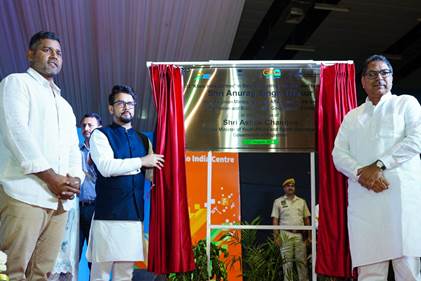
33 Khelo India Centres across Rajasthan

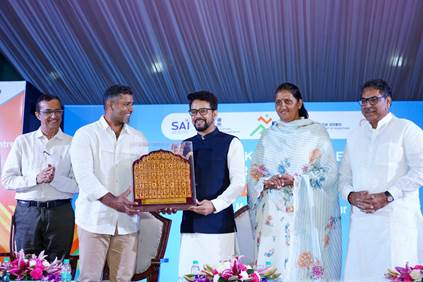
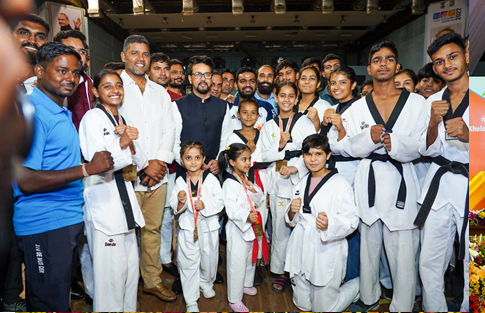
 The Union Minister of Youth Affairs and Sports, Sh. Anurag Singh Thakur inaugurated 33 Khelo India Centres in the State of Rajasthan this morning at the Sawai Mansingh Stadium in Jaipur. The Union Minister announced that a National Center of Excellence with a dedicated Sports Science Centre will be set up in Rajasthan along with additional 18 Khelo India centres, thus taking the total number of Khelo India centres in the State to 51.


It was also announced that  Competitions will be organised  between the Khelo India Centers while Coaching the Coaches programme will also be extended to the Khelo India Center.  Coaches as well & the KIC coaches will be trained by getting them attached with our national & international coaches.

Also present in the event was Sh. Ashok Chandna, Minister of Youth Affairs and Sports, Govt. Of Rajasthan, as well as other eminent dignitaries from the State, YAS Ministry and SAI.

Addressing the event, Shri Anurag Singh Thakur mentioned, “We want all States to grow in terms of sports. When State Governments work in tandem with Central Govt with a unanimous vision for sports, more medals will come for India.

“Success of the Khelo India scheme as well as the Target Olympic Podium scheme has resulted in the highest number of medals internationally over the last few years, be it in Olympics or Paralympics or Commonwealth Games or a historic event like a Thomas Cup win. Antim Panghal too created history by becoming U20 wrestling world champion twice. In chess too, Praggnanandhaa reached the final of the FIDE World Cup. This is an unbelievable phase for Indian sports. In 60 years, there were only 18 medals at the World University Games. This year itself, we won 26 medals in the tournament.”

Mentioning the importance of Khelo India, the Minister added, “The Khelo India games have a big role to play in all of this success. Every year, so many athletes participate in the Youth, University and Winter Games, and the exposure is taking them to big competitions. Through these Khelo India Centres, I am hopeful that more and more athletes from Rajasthan will be moulded from here. The present, past and future athletes are also getting equipped through these.”

Currently, over 17,000 Athletes are getting trained in KICs and 699 Past Champion Athletes are already hired across the country. The total number of Khelo India Centres currently notified across India is 960, out of which 715 are operational KICs. The total number of KICs notified in Rajasthan is 33, out of which 32 KICs are operational. These KICs are specific training centres looking after sports disciplines like cycling, basketball, wushu, hockey and more.

In order to augment the utilisation of existing sports infrastructure available at schools, organizations and other eligible agencies at the block or district level, the small Khelo India Centres assist in the strengthening of the sports ecosystem at the grassroots level. In the KICs, Past Champion Athletes become coaches and mentors for youngsters, run the sports training centre in an autonomous manner and earn their livelihood. Under the Khelo India Scheme, initial and annual financial support is also provided to these past champions as well as these centres for running the sports training, coaching and operations.

*****

Eklavya Model Residential School (EMRS)

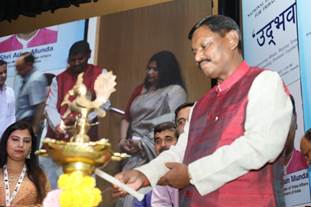
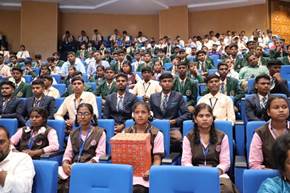
 As part of an educational visit organised by the Ministry of Tribal Affairs and NESTS on 22nd September 2023, Eklavya Model Residential School (EMRS) students interacted with the Union Minister of Tribal Affairs, Shri Arjun Munda at the Dr BR Ambedkar International Centre in New Delhi.

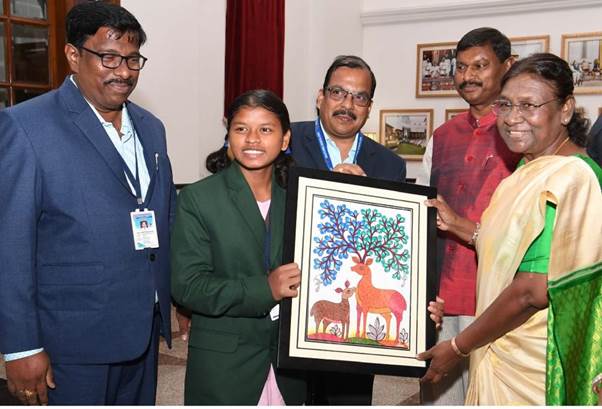
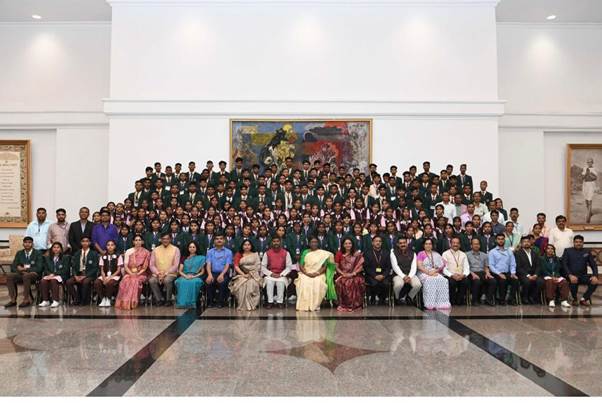
During the day, the students also received the opportunity to visit Rashtrapati Bhawan and meet with the President of India, Smt. Droupadi Murmu. In addition, the students received a guided tour of the Amrit Udyan, Rashtrapati Bhawan Museum and Library.


460 students and 40 teachers from  Eklavya Model Residential Schools from six states, namely Rajasthan, Uttarakhand, Jharkhand, Madhya Pradesh, Odisha, and Chhattisgarh participated in the programme.

Speaking on the occasion, Union Minister, Shri Arjun Munda remarked, that tomorrow is an important day and Chandrayaan 3 will land on the moon and by this landmark feat India will reach the skies. He urged the students they should have the courage to aim for the sky but keep their feet on the ground. He also asked the students to watch the landing of the Chandrayaan 3.

He added that the Culture of tribals  is inspired from the connectivity they feel for the mother earth.  He also added that Constitution ensures new opportunities for tribals and their empowerment and in the similar terms, EMRS aims to give opportunities for all round development of students and provide quality education to the tribal students.


He asked students to meet their seniors who have benefitted from the scholarship schemes and are pursuing higher education in field of medical, education, or are preparing for civil services, and add their own hard work in the guidance received to touch the sky. He urged the students to reflect on their goals and achieve these with the hard work and patience. He asked the students to have personal and collective goals for society and nation also.

He mentioned that EMRS number will reach 740 and which will help education reach the grassroots level. He also said that teachers are being recruited for old and new schools.

On the occasion, Secretary, Ministry of Tribal Affairs, Shri Anil Kumar Jha said that our Ministry is focused on giving impetus for the overall education of tribal youth through our Eklavya Model Residential Schools in various states. He added that students are invited to explore our educational schemes and opportunities to the fullest, as these will benefit you in the future.

During the interaction, the students and scholarship recipients from the various EMRSs shared their experiences in a candid manner with the Ministers, dignitaries, and the students. EMRS Students and EMRS Scholarship beneficiaries also put forth various questions and concerns to the Ministers.

Further, Shri Asit Gopal, Commissioner, NESTS delivered a brief background about the objective of establishing Eklavya Model Residential Schools across the country.

This was followed by a brief overview about Scholarship Schemes of the Ministry of Tribal Affairs by Dr Navaljeet Kapoor, Joint Secretary, MoTA.

EMRS students of Odisha, Jharkhand, Chhattisgarh, Uttarakhand, and Madhya Pradesh presented scintillating performance in a Cultural Program organised at the venue in the spirit of Ek Bharat Shrestha Bharat.

A photo session of the students with the Ministers during the closing ceremony was also organised.

The students are scheduled to visit the Parliament House on August 23, 2023, in the morning hours. Their visit to this prestigious institution will provide them with a unique opportunity to familiarise themselves with Parliament House’s functioning and gain a comprehensive understanding of the duties and responsibilities related to the Parliament.

*******

Global Maritime India Summit 2023

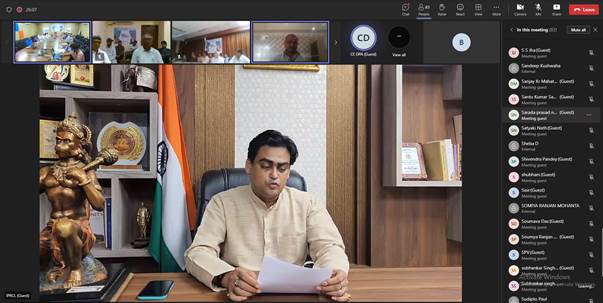
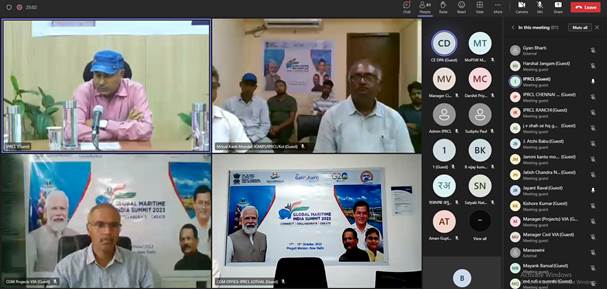
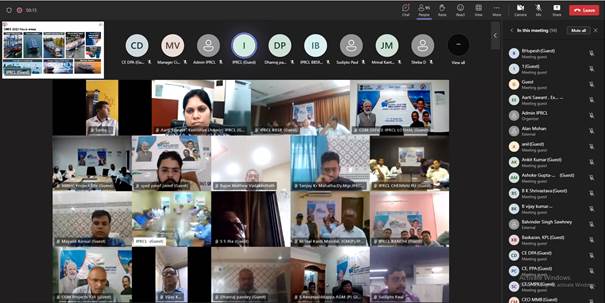
 As part of series of roadshows under the guidance and direction of Ministry of Ports, Shipping & Waterways for inviting and attracting clients and various stakeholders to participate actively in forthcoming Global Maritime India Summit scheduled to be held in October in New Delhi, Indian Port Rail & Ropeway Corporation Limited (IPRCL) organized a virtual roadshow today. This had a pan India presence involving corporate and regional & site offices of IPRCL across various States in India. Representatives from Zonal Railways, State Maritime Boards, MoRTH, Major Ports, major Government sector units like Coal India Ltd., NICDC, NTPC, OMC, NALCO participated in the roadshow. Various industrial bodies and corporate units like JSW, Vedanta, Tata Steel, Jindal Power, Thriveni, Pipava Port, Rungta Mines, Legacy Warehouse, Ennore Tank Terminal, URC and various other units were active participants in the roadshow. More than 190 participants were available in the roadshow consisting of Central and State Government agencies, Railways, Ports, Maritime Boards and various officials from different corporate and industrial units related to maritime, infrastructure, logistics and other sectors.

The Minister of State for Ports, Shipping & Waterways (MoPSW) Shri Shantanu Thakur virtually graced the occasion inspiring the stakeholders to join and participate in GMIS – 23. He said that GMIS-23 will provide viable opportunity to connect with industry leaders, innovators and business experts in maritime sector around the world and to collaborate and discuss. He further highlighted that the summit will also offer an unparallel opportunity to showcase talent and forge new partnership for gaining insights into national and global port related industrial, infrastructure and logistics opportunities. He mentioned that this event is inspired by our Prime Minister Shri Narendra Modi Ji’s inspiring vision of making Indian maritime sector as a leading blue economy of the world.

A person sitting at a desk looking at a piece of paperDescription automatically generated

In his inaugural speech Managing Director, IPRCL Shri Anil Kumar Gupta emphasized that the roadshow will be an enlightening experience, focused on providing stakeholders with comprehensive insights into forthcoming GMIS-23 involving global participation. Summarizing business opportunities in the GMIS-23, Shri Gupta explained that by attending this event, clients will gain access to a wealth of knowledge, expert perspectives, opportunity to collaborate and build a wider network.

A screenshot of a video conferenceDescription automatically generated

A presentation was shown to all clients highlighting the professional profile of IPRCL and essential information about GMIS-23. Presentation widely covered the success journey of Indian Maritime sector and the growth trajectory since last decade in various areas of maritime industry. The smart port, green shipping, capacity enhancement through automation, ship building & recycling, maritime tourism, inland waterways grids, maritime safety & security were deliberated for the knowledge of clients. Corporate video of GMIS was also presented to enlighten clients about business opportunities in GMIS. Shri Anang Pal Malik, Director Works and Shri R.K. Lal, CGM Business Development, IPRCL interacted with clients flagging advantages for business growth and collaboration by participating in Global Maritime India Summit 2023.

A screenshot of a video conferenceDescription automatically generated

Senior officers from South-Eastern Coalfields Ltd. and JNPA represented their companies as Guest speakers and highlighted business opportunities which companies will gain during GMIS-23.

*****


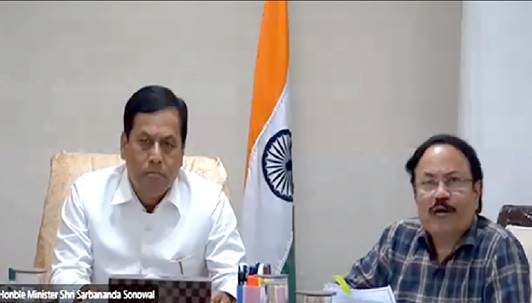
Deliberating on the growth prospects of Indian maritime industry, the Minister of Ports, Shipping & Waterways, Shri Sarbananda Sonowal extended a warm invitation to all the Indian Ambassadors from the East and the West Zones to explore the investment opportunities in the domestic maritime sector.

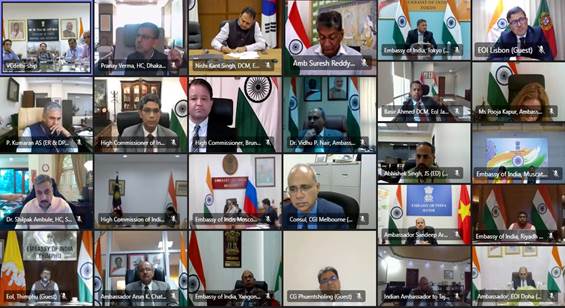
The meeting saw a remarkable display of collaboration and commitment to maritime excellence with participation from more than 45 Indian missions including USA, UK, France, Canada, Singapore, Russia, UAE, Australia, Korea, Spain, Sweden, Switzerland, Denmark, Netherlands, Brazil etc. to name a few. Indian missions from the Commonwealth of Independent States, BIMSTEC, Middle east, Gulf and other neighbouring countries on eastern side were also present.

Shri Sonowal alluded to the upcoming Global Maritime India Summit (GMIS) 2023 and urged ambassadors to leverage their positions to drive participation from respective governments and corporates in various countries across the globe. Highlighting India’s emergence as the 5th largest economy in terms of GDP and the 3rd largest in purchasing power parity, Shri Sonowal outlined that the nation’s progress in the maritime domain, characterised by a commitment to 100% Foreign Direct Investment through automatic routes.

“With a potential investment of more than INR 10 lakh crore (US$12,000 million), we can drive economic transformation that resonates within our borders and reverberates globally. We recognize the importance of robust international trade relations for its economic growth and are taking various initiatives to enhance global cooperation on the maritime front” the Minister noted.

The emphasis on the blue economy was visible as the Minister invited investors to participate in diverse industries, creating an expansive canvas for growth. From cruise tourism to shipbuilding and maritime education, the vision encompasses multiple domains that present opportunities for international collaboration.

Reflecting on the collaboration potential, Shri Sonowal concluded, “India has already entered bilateral agreement & MoUs with 34 countries on maritime transport & cooperation and signed MoUs on recognition of certificates of seafarers with 40 countries. We have also been an active participant in various multinational maritime forums for equitable and sustainable development. Through your support, we shall attain mutual growth and reap the rewards, cultivating a legacy of collaboration, innovation, and prosperity”

Shri T K Ramachandran, Secretary, Ministry of Ports, Shipping & Waterways discussed the goals of the upcoming Global Maritime India Summit (GMIS) during his introductory remarks. He underlined the global aspect, emphasising three key elements: advancements in ports and interior waterways, partnerships with foreign businesses for technology and project execution, and the unique trade requirements of many nations.

Additionally, Shri Periasamy Kumaran, Additional Secretary (ER & DPA), Ministry of External Affairs provided an overview of the transformative phase in India’s ports and shipping, focusing on potential for domestic and foreign investment. He went on to discuss how Indian missions aid in business networking and matchmaking, encouraging participants to find possible investors and partners, promote conversations, and serve as information hubs for the sector.

About Global Maritime India Summit (GMIS), 2023:

GMIS 2023 is a premier maritime sector focussed event to bring together pivotal figures from the industry to explore opportunities, understand challenges, and stimulate investment within India’s maritime sector. Building upon the legacy of its preceding editions, this third instalment aims to unveil broader prospects for domestic and international maritime stakeholders and investors. Ready to make its presence felt on the global stage and spotlight India’s maritime industry, the Maritime India Summit has now evolved to the ‘Global’ Maritime India Summit this year. The summit is slated for 17th to 19th October 2023, at Bharat Mandapam, New Delhi.

For more details on the Global Maritime India Summit 2023, including a complete agenda and registration details, please visit the official website at www.maritimeindiasummit.com

*****

India is set to achieve $150 billion Bio-Economy by 2025

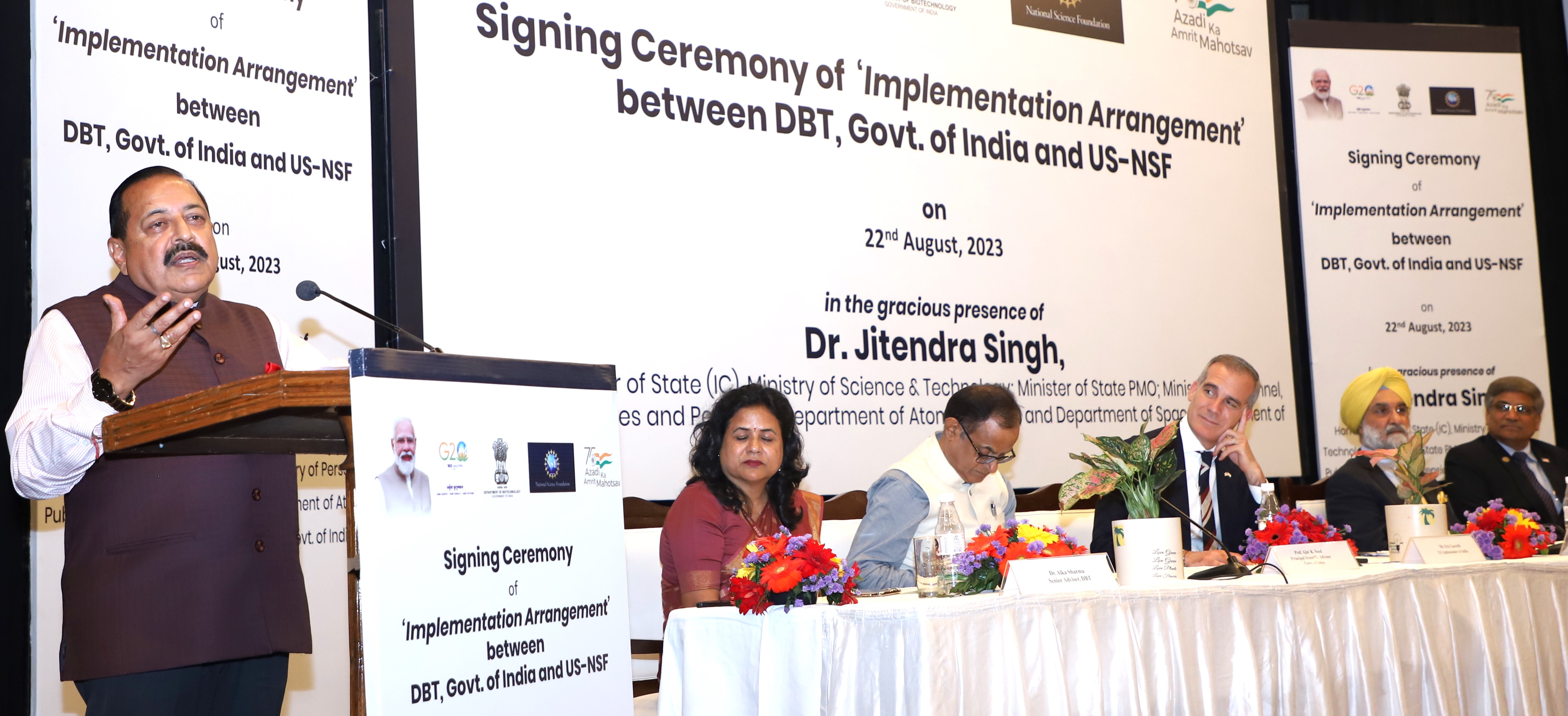
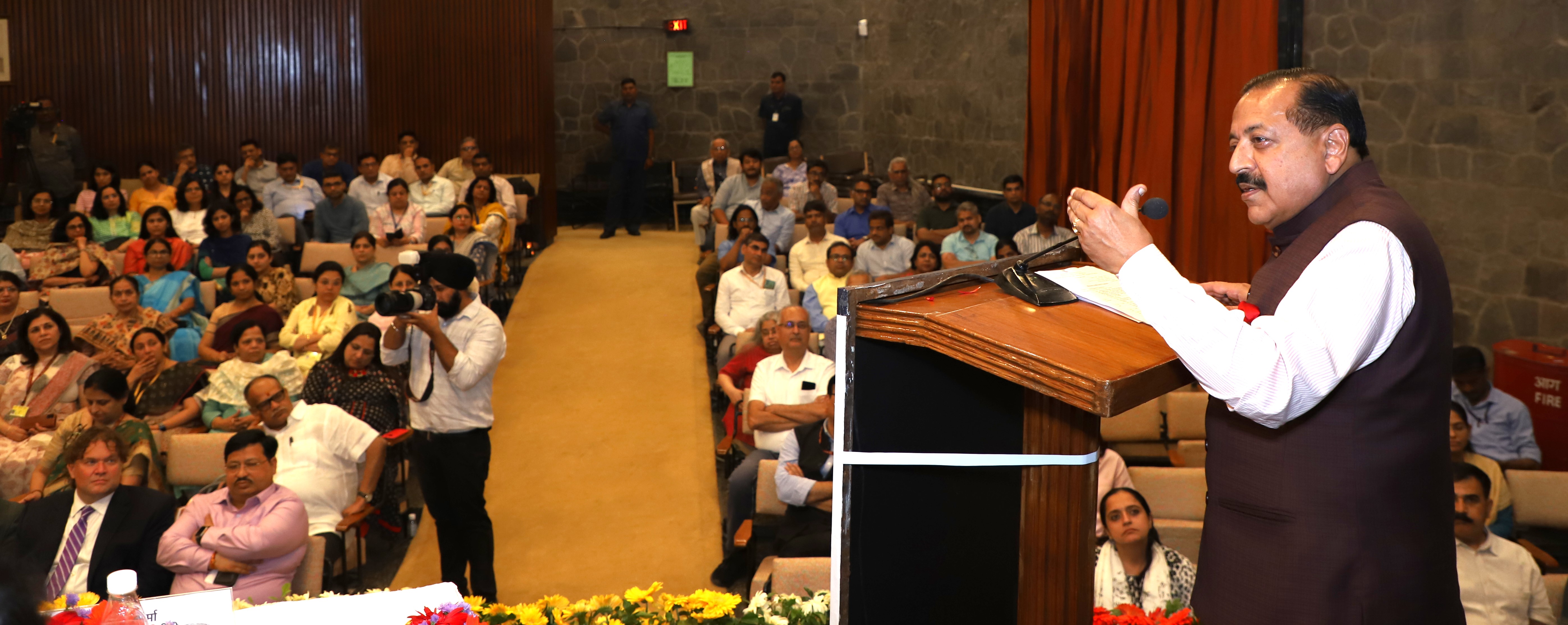
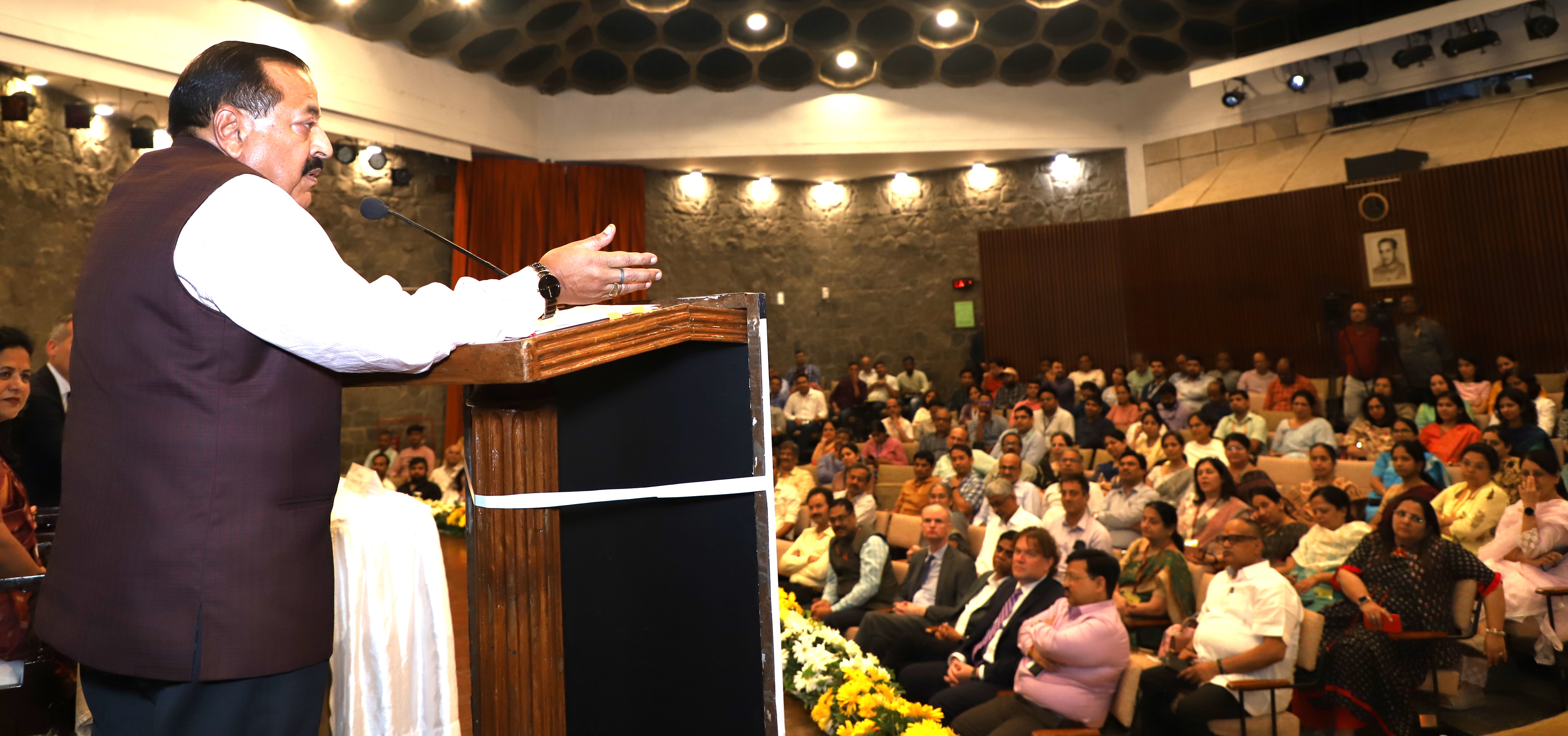
 Union Minister of State (Independent Charge) Science & Technology; MoS PMO, Personnel, Public Grievances, Pensions, Atomic Energy and Space, Dr Jitendra Singh today said, India is set to achieve $150 billion Bio-Economy  by 2025, which stood at over $100 billion in 2022.

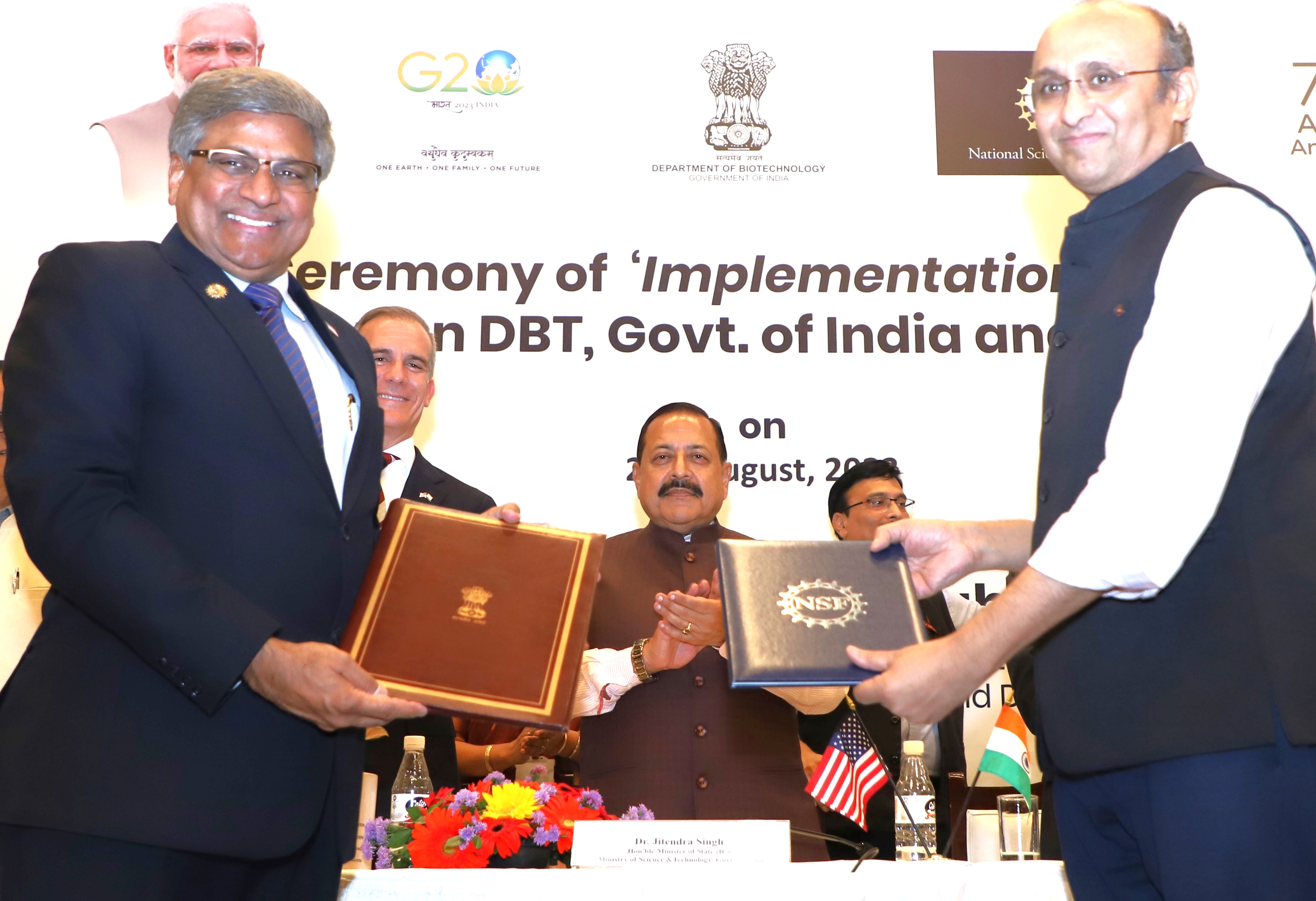
The Minister was speaking, while overseeing the signing up of the ‘Implementation Arrangement’ between the Department of Biotechnology (DBT) and the United States-National Science Foundation (US-NSF) today in New Delhi.  This was a follow-up of the discussion meeting held between Dr. Rajesh S. Gokhale. Secretary, DBT and Dr Sethuraman Panchanathan, Director, NSF in June, 2023 to discuss opportunities for developing ‘Strategic Partnership’ between DBT and US-NSF.

Dr Jitendra Singh recalled that during the recent visit of Prime Minister Narendra Modi to the US in June 2023, the leaderships of the both the countries called on their administrations to extend the existing partnerships to advanced biotechnology and biomanufacturing, and enhance biosafety and biosecurity innovation, practices, and norms.

Dr Jitendra Singh said, India’s ever-growing Bio-Economy graph is going to contribute significantly to India’s Overall Economy. He said, India has a 3-5% market share in the global biotechnology industry and it ranks 12th in the world in biotech and 3rd in Asia-pacific.

 The Minister said, India has the 3rd largest Startups ecosystem globally; and the largest vaccine manufacturer. Moreover, India’s ranking in global science and technology indices continues to rise and India has been ranked 40th among the innovative economies as per Global Innovation Index, 2022.

Dr Jitendra Singh pointed out that the Department of Biotechnology has created and nurtured a strong foundation in biotechnology innovation, research and manufacturing across segments such as bio-pharma, bio-services, agri biotech, industrial biotech, and bioinformatics through public-private partnership, Make-in-India and Atma Nirbhar Bharat initiatives of the Government.

Dr Jitendra Singh said, Indian Government has always supported technology-driven innovation towards the creation of a ‘future-ready’ technology platform in line with the Prime Minister Modi’s vision of Aatmanirbharta and he congratulated DBT and NSF for building on the bilateral collaborations between India and USA through this Implementation Arrangement.

Dr Jitendra Singh said, the climate change, inadequate resource utilization, an unsustainable pattern of material consumption and waste generation are global threats and require concerted sustainable interventions and therefore called for futuristic research and innovation strategies for accelerating Biomanufacturing are essential to address global sustainable goals. He said, accordingly, DBT has undertaken a major initiative on “Fostering High Performance Biomanufacturing- An integrated approach towards promoting circular economy for Green, Clean and Prosperous India” and added that it exemplifies ‘Lifestyle for the Environment (LIFE)’launched by Prime Minister that urges all stakeholders to pursue green and friendly environmental solutions in every aspect of life to effectively achieve climate and energy goals;

The Minister said, the ‘Implementation Arrangement’ will lay the foundation for collaboration between the two countries on accelerating innovations in the area of ‘Biotechnology Innovation and Biomanufacturing’.This will advance knowledge, technologies, and innovation through supportive collaborative research to empower biotechnology industries and promote bioeconomy of both the countries, he added.

Dr Sethuraman Panchanathan, Director, NSF, said that “USA and India can together address pressing global needs such as climate mitigation and energy goals through biotechnology innovation and biomanufacturing”.

Dr Rajesh S. Gokhale, Secretary, DBT added that “this partnership will be an important step to mutually address the challenges in the innovation space as well as for enhancing technological opportunities. This will also bring synergy to DBT’s initiatives for fostering high performance Biomanufacturing- an integrated approach towards promoting circular economy for Green, Clean and Prosperous India”.

About Department of Biotechnology (DBT)The Department of Biotechnology (DBT), Ministry of Science and Technology,Government of India creates and nurtures strong foundation in biotechnology innovation, research and development across segments such as bio-pharma, bio-services, agri-biotech, industrial biotech, and bioinformatics.

The U.S. National Science Foundation (US-NSF) is an independent federal agency that supports science and engineering in the United States. It was established to promote the progress of science, advance the national health, prosperity and welfare, and secure national defence, through administering grants.

***

India's Chandrayaan-3 Lunar Mission

 Chandrayaan, India’s lunar exploration program, has been a trailblazing endeavour launched by the Indian Space Research Organisation (ISRO). Chandrayaan represents India’s dedication to unravelling the mysteries of the Moon and contributing to the global space community’s understanding of lunar geology, atmosphere, and resources.


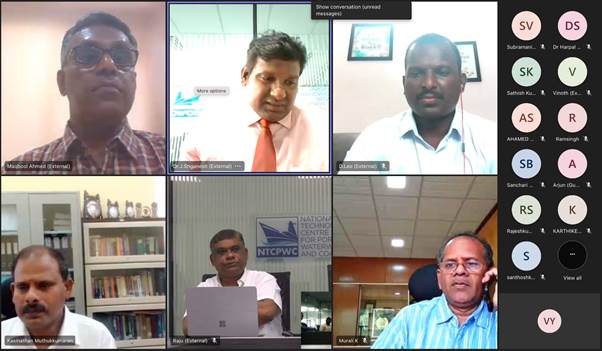
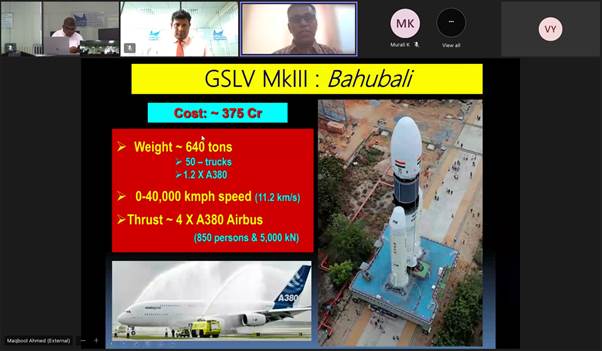
As India’s Chandrayaan- 3 mission approaches a crucial milestone – a successful lunar landing, National Level Workshops were organized under the aegis of Ministry of Ports, Shipping and Waterways (MoPSW) by the National Technology Centre for Ports, Waterways and Coasts,(NTCPWC) IIT Madras and Centre for Inland & Coastal Maritime Technology, (CICMT) IIT Kharagpur to increase awareness, understand the significance and delve into the intricacies of Chandrayaan-3 mission. The workshop aimed to shed light on the profound importance of India’s lunar mission in advancing scientific knowledge and technical innovation in the realm of space exploration.  The workshop was attended by participants from all walks of life including scientists, researcher, academicians, students, government officials and general public.

The distinguished speakers, including Dr. Syed Maqbool Ahmed, Mr. Leo, Dr. K. Muthukkumaran, and Dr. Tapas Kumar Nandi, shared insights gained from previous Chandrayaan missions, discussed the complexity of the current mission and its propulsion systems, and highlighted India’s achievements in planetary science and technological innovation.

The successful landing of Chandrayaan-3 will not only mark another historic achievement for India but will also unlock new avenues of scientific discovery and exploration, shaping the future of lunar research.

On this occasion, Union Minister for Ports, Shipping and Waterways Shri Sarbananda Sonowal said “The achievements of Chandrayaan missions exemplify India’s dedication to advancing the frontiers of human knowledge and exploration. The journey of discovery continues with upcoming landing of Chandrayaan- 3 which will unlock the mysteries of the cosmos and pave the way for future generations to reach for the stars.”

*****

Annual Capacity Building Plan of Department of Rural Development, Department of Land Resources and Ministry of Panchayati Raj

 Minister of Rural Development and Panchayati Raj Shri Giriraj Singh launched the Annual Capacity Building Plan of Department of Rural Development, Department of Land Resources and Ministry of Panchayati Raj in New Delhi today. While launching the ACBP, Shri Giriraj Singh said that this Plan will play a Pivotal role in service delivery, program implementation and performing core governance functions and will enhance the abilities of the officials by attending need based training to acquire relevant competencies to enable them to perform better so that the Ministry/Department can achieve the objectives set out with citizens centricity for improved performance.

With an objective to achieve PM’s Vision New India @ 2047, Capacity Building Commission has devised the approach for preparation of Annual Capacity Building Plan through 3 lenses namely National Priorities, Citizen Centricity, Emerging Technology and 3 Pillars- Individual, Organizational and Institutional, that are used as the guiding light for development of an ACBP to positively contribute for achievement of the objective. ACBP will have a profound impact in improving the efficiency and work ethics of all Departments, thereby, expedite the achievements of PM’s Vision for New India @2047.

Annual Capacity Building Plan (ACBP) is a plan document that is developed based on the competency enhancement requirements of the officials of the Ministry/Department/Organization (MDO), that is ascertained through carrying out Competency Need Analysis (CNA) and prioritization of the competencies based on requirement of the officials and also importance of the competency to the ministry so that the resources invested by MDO on Capacity Building are optimized.

A Capacity Building Unit (CBU) has been notified in all three Departments to implement and sustain ACBP. A budgetary outlay of 2.5 % of salary head of the Department will be ear-marked for implementation of ACBP. CBU will prioritize the training needs of officers for Quarter 2, Quarter 3 & Quarter 4. The trainings will be both in online and offline mode. CBC has identified institutes and knowledge partners to impart trainings in various issue to officers. The Ministry will also assess the impact of the trainings imparted to various officials and staff to ascertain the efficacy of ACBP.

On this Occasion, Secretaries and Officers of Department of Rural Development, Department of Land Resources and Ministry of Panchayati Raj and Member(Human Resource), Capacity Building Commission were present.

****

Mentor young generations to embellish efforts in the march toward Viksit Bharat of 2047

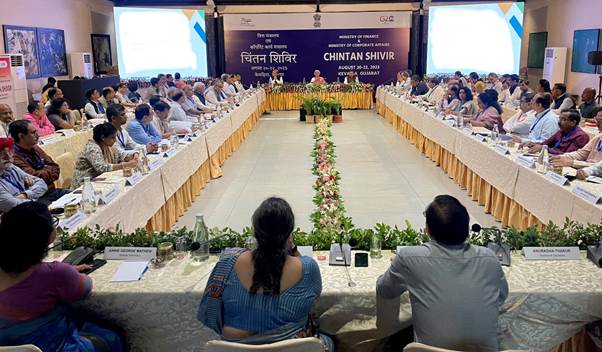
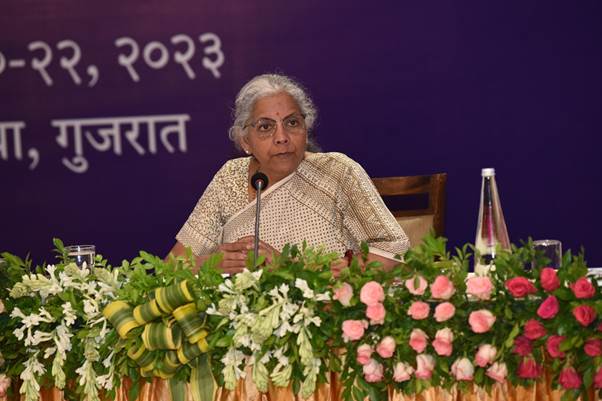
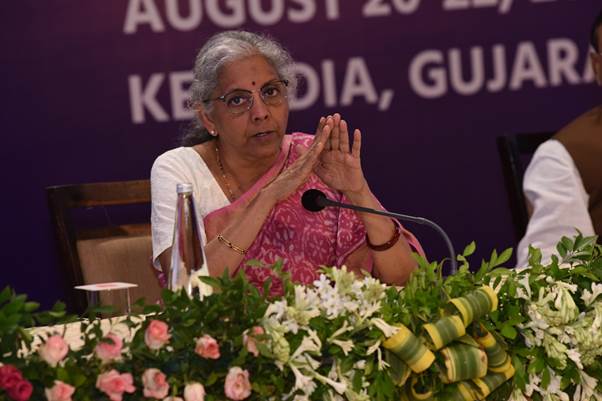
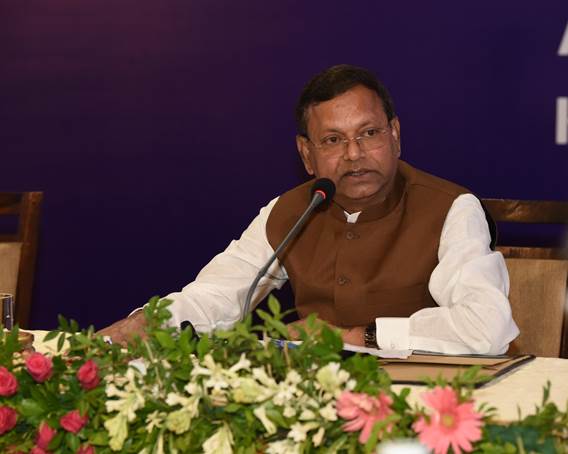
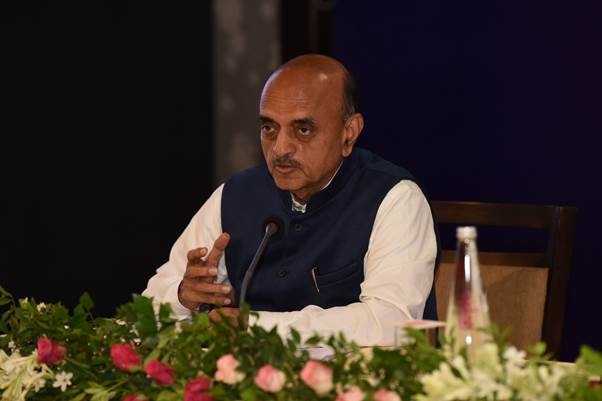
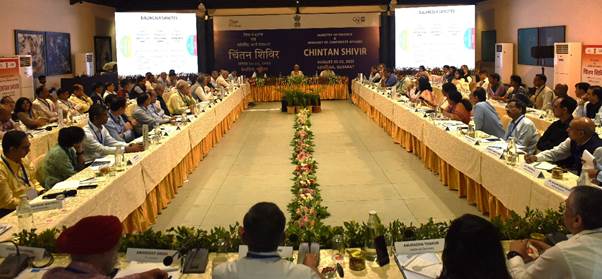
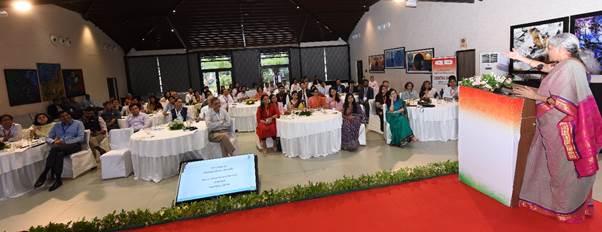
 The three-day Chintan Shivir of the Ministry of Finance and Ministry of Corporate Affairs concluded in Kevadia, Gujarat, today. Union Minister for Finance and Corporate Affairs Smt. Nirmala Sitharaman chaired the Chintan Shivir in presence of Union Ministers of State for Finance Shri Pankaj Chaudhary and Dr. Bhagwat Kisanrao Karad.

The Chintan Shivir was attended by senior officials of Ministry of Finance and Ministry of Corporate Affairs. The Finance Secretary, Secretaries from D/o Economic Affairs (DEA), D/o Investment and Public Asset Management (DIPAM), D/o Revenue (DoR), D/o Financial Services (DFS) and Ministry of Corporate Affairs, Chief Economic Advisor, Chairmen of CBDT and CBIC were also part of the deliberations.

Free and frank discussions were held by more than 100 senior officers of MoF and MCA on how to re-orient to achieve the Amrit Kaal goals by embracing the Panch Pran as envisioned by Prime Minister Shri Narendra Modi.

Interactive sessions were held on the “Role of Ministry of Finance and Ministry of Corporate Affairs in Amrit Kaal”, “Building our Capacities”, and “Improving our Efficiencies”.

Smt. Sitharaman advised the officers to optimally utilise the vast pool of resources and experience at disposal in the Government. The Finance Minister underlined mentoring of young generations to embellish efforts in the march toward Viksit Bharat of 2047 in the Amrit Kaal.

Smt. Sitharaman urged the officers to go beyond to explore frontiers beyond their set roles and make an extra impact on other domains as well so that synergistic thoughts emerge which can be useful for the overall Ministry.

In her concluding remarks during the Chintan Shivir, the Union Finance Minister stated that both effectiveness and efficiency are long-term phenomenon and consistency in reform policy, with focus on both, individual and institutional efficiencies, are vital ingredients in public service delivery.

Referring to phenomenon of information overload as counter-productive to effectiveness and efficiency, the Union Finance Minister emphasised that both MoF and MCA must strive for simplification of processes with focus on not just the whole-of-Government-approach, but also whole-of-the-country approach to maximise delivery and engagement.

Smt. Sitharaman urged MoF and MCA senior officers to continuously mentor the new entrants/younger colleagues to develop the wherewithal in delivering results in the Amrit Kaal and beyond making Viksit Bharat by 2047. The Union Finance Minister also emphasised on the need to continuously reorient policy in the cultural context and to instil a sense of ownership in decision-making, to enhance effectiveness with efficiency.

During the discussions, Union Minister of State for Finance Shri Pankaj Chaudhary called for ambitious target-orientation for productively achieving goals towards India’s journey in becoming a developed country by 2047.

In his remarks during the session, Union Minister of State for Finance Dr. Bhagwat Kisanrao Karad emphasised on building self-confidence through knowledge and skilling. Dr. Karad said that decisions must be made in consultation with knowledgeable partners and stakeholders besides developing appropriate feedback mechanism for real-time assessment of delivery.

The Session on the “Role of Ministry of Finance and Ministry of Corporate Affairs in Amrit Kaal” focused on enabling growth and stability, and focused on the following four themes:

  1. Capital Formation and Retention
  2. Inclusive Growth
  3. Aatmanirbhar Bharat
  4. Strengthening Public Finance

During the session on “Building our Capacities”, discussions revolved around:

  1. Building Professional Capacity
  2. Building Personal Capacity
  3. Work-life Balance Capacity
  4. Institutional Capacity

The discussions during the session were focused on various aspects of capacity-building in the areas of human resource and institutions, role of technology and software-enabled systems, intra and inter-ministerial consultations, importance of training at various levels, and mentoring young blood for leading roles in Amrit Kaal in the journey towards building strong and resilient India Viksit Bharat by 2047.

During the session on “Building our Efficiencies”, in-depth discussions were held on:

  1. Enabling skilled and motivated workforce
  2. Robust internal processes
  3. Coordination and engagement with internal stakeholders
  4. Focus on external stakeholders
  5. Changing organisational culture

The discussions in the session revolved around skilling, maintaining robust organisational processes, streamlining file management systems and expediting decision-making in MoF and MCA, onboarding of stakeholders from the start, citizen-friendly technology tools, leveraging technology and use of AI for future-readiness, whole-of-Government-and-holistic approach towards public service delivery, time-bound delivery of citizen-centric services, removing duplicity of effort, and leveraging technology and use of AI for future-readiness.

On the sidelines of the Chintan Shivir, Union Finance Minister also interacted with the G20 Finance Track India Team. The G20 Finance Track Team shared thoughtful introspections with Smt. Sitharaman on various aspects of navigating the first nine months of Indian G20 Presidency.

***

Union Education Minister questions rationale of Karnataka Government over scrapping of NEP in the state

 Union Education & Skill Development Minister Shri Dharmendra Pradhan while addressing media today raised serious concerns over the Karnataka Government’s decision to scrap NEP in the state. The Minister asked about the repercussions, which such a decision will have for the younger generation.

He asked whether the Karnataka Government was opposed to early childhood care and education as a part of formal education, wondering if the State Government did not want children to achieve Foundational Literacy and Numeracy by the time they complete grade 2. He questioned if the State Government opposed Indian toys, games, play-based learning and ‘Chennemane’ in Karnataka.

He further asked if the State Government opposed education in Kannada and other Bharatiya Bhasha, along with the conducting of examinations, like NEET, CUET, JEE in Kannada, in a transparent manner.

He questioned if the State Government opposed multidisciplinary education, integration of vocational education, physical education, arts and sports as critical areas of study in school education. Does the State Government not want youth of Karnataka to avail world-class research facilities through the National Research Foundation, he further asked.

He questioned the decision of the State Government as to why it did not want students to learn about new and emerging technologies and consequent life skills in the 21st century, while utilising new textbooks relevant for 21st century education. He expressed concerns over the missed opportunities for earning while learning for Karnataka students.  Does the State Government not want teachers’ capacity building to be strengthened through reimagining DIETs and SCERTs as centers-of-excellence, Shri Pradhan further questioned. It’s a decision which would impact the collective future of the state,known for its IT prowess, in the future.

He asked the State Government not to weaponize Education, as such statements on NEP compromise the interests of students of Karnataka.

MoU signed between Ministry of Development of North Eastern Region and UNDP

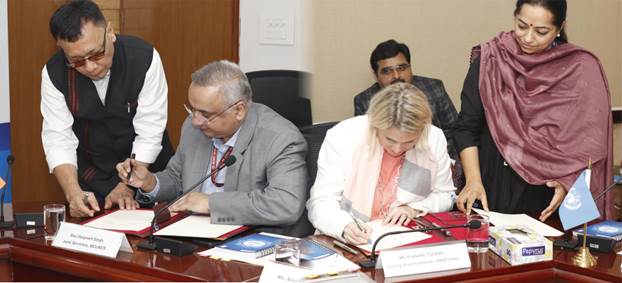
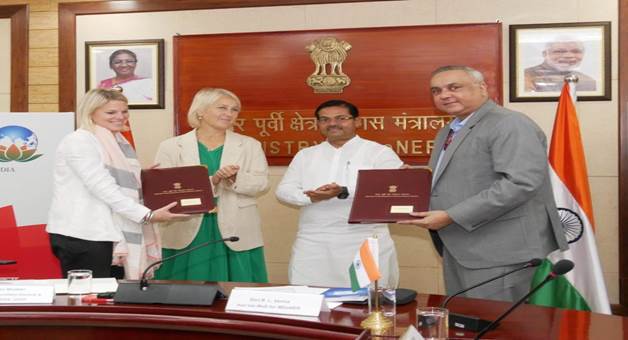
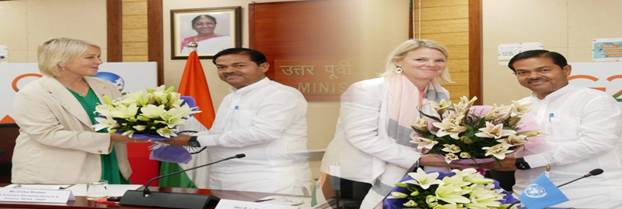
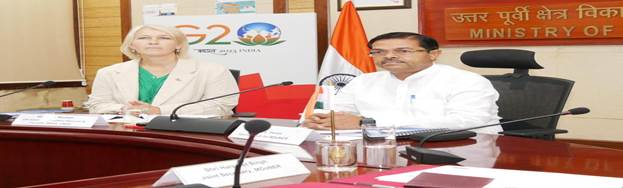
 On 22nd  August, 2023, Ministry of Development of North Eastern Region (MDoNER) and UNDP, in the presence of  Minister of State for Ministry of DoNER and Ministry of Cooperation,  Shri B.L.Verma and UN Assistant Secretary-General & Director of the United Nations Development Programme (UNDP) Bureau of External Relations and Advocacy (BERA), Ms Ulrika Modéer,   entered into an MoU wherein UNDP would provide MDoNER with technical support on fast-tracking progress on the SDGs; monitoring, evaluation and capacity building; support Aspirational districts and blocks; support in the deployment of emerging technologies in governance and in scaling up good practices.


WhatsApp Image 2023-08-22 at 3.56.06 PM.jpeg

WhatsApp Image 2023-08-22 at 4.08.47 PM.jpeg


Minister of State, MDoNER, Shri B.L. Verma   addressed the delegates and said, Prime Ministers’ main focus is development of Social and Infrastructure connectivity in NER and hope UNDP will help the Ministry in achieving this goal.  He also said, “The Ministry of DoNER has taken remarkable strides across critical sectors such as infrastructure, connectivity, health, education, climate change and economic growth to transform the lives of the people in the region. In this journey, UNDP has been our key partner in promoting data-driven decision-making, especially through the North East Region District SDG Index”

MoS also stated that the NER District SDG Index helped in forming the flagship PM-DevINE scheme, which provides infrastructure and social development funding to boost livelihood opportunities in the region, especially for women and youth.


WhatsApp Image 2023-08-22 at 4.03.42 PM.jpeg


Ms. Ulrika Modéer appreciated the Government of India’s efforts towards fast-tracking the development of the North Eastern Region. She said, “UNDP is privileged to sign this MoU with the Ministry of Development of North Eastern Region. We are committed to supporting national and sub national efforts to accelerate progress on the goals by providing technical support on SDG localization and improved capacities towards implementation and monitoring of programmes.”

***

Defence Correspondents Course – 2023 Commences at ENC, Visakhapatnam

 The 2023 edition of Defence Correspondents Course (DCC), a three week course conducted by the Ministry of Defence for select journalists from National and Regional Media organisations, commenced at Eastern Naval Command (ENC), Visakhapatnam on 21 August 2023. Vice Admiral Sameer Saxena AVSM, NM Chief of Staff, ENC delivered the inaugural address and Shri A Bharat Bhushan Babu, Spokesperson (MoD) and Additional Director General (Media & Communication) gave an insight into Defence Journalism of the course at the Maritime Warfare Center. The aim of DCC is to bring media and military closer and enable a pool of journalists at all levels to have better appreciation of the Armed Forces and are cognizant of the domain when reporting on stories relating to the maritime environment.

 During the one-week naval attachment, the participants will be addressed by subject matter experts from within the Navy and the Coast Guard. They will acquaint the journalists with various aspects of the Navy including naval operations, naval diplomacy, Humanitarian Assistance and Disaster Relief and the organisational structure of the Navy and Coast Guard. As part of the course, the participants visited the Indian Naval ship and submarine on 21 Aug 2023 and they were briefed on various facets of life onboard. The participants will also have a scheduled tour at Naval Dockyard, Naval Air Station and onboard Coast Guard ships at Visakhapatnam in this week.  A sea sortie onboard a front-line warship of the Indian Navy is the highlight of the naval leg of the course, which will provide the journalists an insight into naval operations at sea.

****

INS SUNAYNA ENTERS DURBAN, SOUTH AFRICA

 INS Sunayna entered port of Durban, South Africa on 21 Aug 23. The ship undertook passage exercise with South African Navy Ship SAS King Sekhukhune I off Durban. Post exchange of pleasantries at sea, the ship entered Durban harbour. The ship was received by Cdr Kenneth Singh officiating Flag Officer Commanding Naval Base Durban and HCI Pretoria Officials.

The visit apart from commemorating 30 years of diplomatic partnership between India and South Africa is aimed at enhancing interoperability, jointness and mutual cooperation between both Indian Navy and South Africa Navy. During the port call, the two navies will share best practices and experiences through professional interactions, subject matter expert exchanges and cross deck visits, additionally social interactions with senior military and civil dignitaries are also planned.

______________________________________________________________________

VM/JSN                             

Indian Coast Guard signs MoU with Philippines Coast Guard

 In a significant step towards bolstering the bilateral cooperation between India and Philippines, Indian Coast Guard has signed a Memorandum of Understanding (MoU) with Philippine Coast Guard (PCG) on enhanced maritime cooperation. The MoU was signed by DG Rakesh Pal, Director General Indian Coast Guard and CG Admiral Artemio M Abu, Commandant, PCG at the Coast Guard Headquarters, New Delhi on 22 August 2023. Both the sides held their first bilateral meeting on a range of maritime issues.

The MoU inked today seeks to enhance the professional linkage between the two Coast Guards in the domain of Maritime Law Enforcement (MLE), Maritime Search & Rescue (M-SAR) and Marine Pollution Response (MPR). The implementation of this MoU will enhance bilateral maritime cooperation between the two nations for ensuring safe, secure and clean seas in the region.The first ever bilateral meeting between both the maritime agencies signifies the dedication in strengthening the professional bonds by sharing best practices, conducting joint exercises and enhancing training collaborations.

A five member delegation of PCG is on an official tour of India from 20-24 August 2023.  Earlier, the delegation visited Goa on 21 August, where they witnessed the operational capabilities of the Indian Coast Guard ships and aircraft under ‘Atmanirbhar Bharat’. During the visit, the delegation was also provided with a customer demonstration flight on the Indian Coast Guard Advance Light Helicopter MK-III. The delegates also visited Indian Coast Guard Ship Sujeet built by Goa Shipyard Limited.

*****

G20 Culture Working Group (CWG)

 The 4th G20 Culture Working Group (CWG) Meeting will begin tomorrow in Varanasi culminating in the Culture Ministers’ Meeting (CMM) on 26th August 2023. Delegates from G20 member nations, invitee countries, and various international organizations will attend the meeting.

 Building upon the success of the previous three CWG meetings in Khajuraho, Bhubaneswar and Hampi, as well as the four Global Thematic Webinars, the 4th CWG meeting in Varanasi, from 23-25th August 2023, aims to arrive at actionable outcomes while positioning culture at the heart of policy making.

The insights and recommendations from the expert-driven Global Thematic Webinars on the priority areas of the CWG have been collated in a comprehensive report titled “G20 Culture: Shaping the Global Narrative for Inclusive Growth”. This insightful report, by India’s G20 presidency’s Culture Working Group, will be launched in Varanasi as a part of the Culture Ministers’ Meeting.

 The Culture Ministers’ Meeting in Varanasi will aim to catalyze collective actions for accelerating progress on the four priority areas articulated by the Indian Presidency- Protection and Restitution of Cultural Property, Harnessing Living Heritage for a Sustainable Future, Promotion of Cultural and Creative Industries and Creative Economy, and Leveraging Digital Technologies for the Protection and Promotion of Culture.

The CWG, under India’s G20 presidency, had launched the ‘Culture Unites All’ campaign to highlight India’s unwavering belief in multilateralism based on peaceful coexistence among diverse cultures and communities. The CWG is releasing a special stamp to commemorate the campaign on 26th August 2023. The ‘Culture Unites All’ postage stamp has been crafted as a distinctive emblem combining the ideas of connectivity, communication, and journey representing a cultural exchange and establishing cultural context.

 During the meet, the delegates will have the opportunity to experience world-renowned Ganga Aarti on the banks of the river Ganga, and explore the beautiful history of the lion capital of Sarnath. The G20 Global Orchestra performance titled “Sur Vasudha” celebrating the rich musical knowledge and heritage of G20 member nations and invitee countries will be presented in Varanasi. The delegates will also witness cultural performances including Indian classical music and dance forms during their time in Varanasi.

In 2020, under the Saudi Arabian Presidency, the Culture Ministers’ met for the first time on the side-lines of the G20. In 2021, Culture was formalised as a Working Group during the Italian Presidency, leading to the inaugural G20 Culture Ministers’ Meeting and the consequential ‘Rome Culture Ministers’ Declaration’. The ‘Bali Declaration’ of 2022 under the Indonesian presidency further stressed the role of culture in sustainable development. In Varanasi, this would be the fourth time that the Culture Ministers of the G20 members and invitee countries would be meeting.

***

One Day National Seminar on Rice Fortification

 The Department of Food and Public Distribution, Ministry of Consumer Affairs, Food & Public Distribution organised a one-day National Seminar on Rice Fortification” here today.

While addressing the seminar, Secretary, DFPD, Shri Sanjeev Chopra mentioned, “We are on track to achieve the target of 100% distribution of fortified rice across all rice consuming districts in the country.”

Government of India is committed to ensure the nutritional security of the country through fortified rice distribution across government food safety net schemes. The seminar served as a dynamic platform for multistakeholder discussions where besides government stakeholders, technical experts from institutions and academia provided meaningful insights on different aspects of rice fortification programme such as evidence, safety of consumption, operational challenges and quality assurance and quality control. The prevailing challenges and queries of states were addressed by the group of experts and deliberations were made to derive a roadmap to the programme for the coming year. 


From Left to Right: Dr. Kapil Yadav (AIIMS), Shri Ashok K K Meena (CMD, FCI), Shri Sanjeev Chopra (Secretary, DFPD), Ms. Elisabeth Faure (Country Director WFP India), Sunil Bakshi (Advisor FSSAI) and Dr. Sirimavo Nair (MSU Baroda)

The seminar was divided into four technical sessions, each deliberating on discussions held in prior working group meetings focussing on key aspects of rice fortification. The first of these sessions emphasised on concerns regarding safety of consumption of fortified rice for the general population as well as individuals with Haemoglobinopathies and SCD. Dr. Reena Das, Dept. of Haematology, PGIMER, Chandigarh recommended on behalf of the panel that fortified rice consumption is safe and addressed the prevailing myth regarding toxicity from its consumption. The second session led by Dr. Prashant T., Associate Professor at St. Johns Research Institute, Bangalore aimed at providing evidence-based insights from National and International experiences on rice fortification. He shared numerous studies which pointed out the effectiveness of iron fortification in the reduction of anaemia. In the third technical session, a group of experts from organisations like FSSAI, FCI, BIS, WFP, Microsave and IIT Kharagpur working at the national level as well as at the field, engaged in a discussion to explore strategies to address on-ground operational challenges to streamline the distribution process. Concluding the day’s discussions, the last technical session led by Dr. Balasubramaniam, Joint Director, FSSAI focussed on providing insights into the quality aspects and recommended strategies that may be adopted to improve the quality of fortified rice being distributed.

The seminar witnessed the launch of a national IEC campaign developed by the Department for awareness generation at the beneficiary level and release of a guidance handbook on rice fortification which will act as a ready reckoner for all guidelines, notifications and orders related to rice fortification.

The event brought together technical experts, leaders from government ministries, research institutes and international organizations fostering an enriching dialogue to build a common understanding and leverage universal supply of fortified rice in food safety net schemes.

Food Secretaries from States/UTs across the country along with technical experts in the domain and development partners working on-ground participated in the Seminar jointly reflecting upon the challenges and opportunities together for achieving the transformation of food and nutrition security ecosystem in the country.

****