Short Essay on \’Monument I Like Most\’ (118 Words)

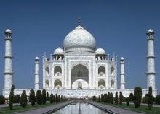
I have visited many monuments but the beauty of Taj Mahal attracted me the most. Taj Mahal is the monument I like most and its my favourite monument. 

The Taj Mahal can be referred to as a symbol of eternal love since Shah Jahan built it for his beloved queen upon her death in 1631 A.D. 

It is located in Agra, Uttar Pradesh, India and considered one of the Seven Wonders of the World. The Taj Mahal was built by Emperor Shah Jahan as a Mausoleum for his wife Empress Mumtaz Mahal. 

It\’s matchless beauty draws visitors from all parts of the world. The Taj Mahal got the highest ranking among the seven wonders of the world after 

Short Essay on \’Monument I Like Most\’ (118 Words)

I have visited many monuments but the beauty of Taj Mahal attracted me the most. Taj Mahal is the monument I like most and its my favourite monument. 

The Taj Mahal can be referred to as a symbol of eternal love since Shah Jahan built it for his beloved queen upon her death in 1631 A.D. 

It is located in Agra, Uttar Pradesh, India and considered one of the Seven Wonders of the World. The Taj Mahal was built by Emperor Shah Jahan as a Mausoleum for his wife Empress Mumtaz Mahal. 

It\’s matchless beauty draws visitors from all parts of the world. The Taj Mahal got the highest ranking among the seven wonders of the world after 

Short Essay on \’Monument I Like Most\’ (118 Words)

I have visited many monuments but the beauty of Taj Mahal attracted me the most. Taj Mahal is the monument I like most and its my favourite monument. 

The Taj Mahal can be referred to as a symbol of eternal love since Shah Jahan built it for his beloved queen upon her death in 1631 A.D. 

It is located in Agra, Uttar Pradesh, India and considered one of the Seven Wonders of the World. The Taj Mahal was built by Emperor Shah Jahan as a Mausoleum for his wife Empress Mumtaz Mahal. 

It\’s matchless beauty draws visitors from all parts of the world. The Taj Mahal got the highest ranking among the seven wonders of the world after 

Good Interactive Design Taps Into Student Engagement

Source: Inequality Is

It goes without saying that in the world of our students today static doesn’t cut it. We get it, and we’ve abandoned many old PowerPoints, moved away from textbooks, and discarded our opus of worksheets. That’s why we are constantly on the prowl to find resources to help make learning participatory. When content is combined with good design, it provides a context for stronger understanding; when the design of information is interactive, it prompts students to engage with the material in a physical way.

Each of the interactive infographics below offer students active ways to connect with content. Each one is designed slightly differently, but they all hook users into wanting to know more.

Inequality Is

In this interactive infographic about income inequality, the audience is made to feel that the issue is “personal,” and it’s hard not to stay engaged when the user is told how much they will earn based on gender, age, education, and ethnicity. It also allows for custom comparisons that instantly adjust on the screen.  Check out the video under the “created” link, adjust income distribution under \”real,\” or head over to “fixable” for some possible solutions to the issue. Inequality Is is an eye-opening way for students see the correlation between education and personal income.

Source: Inequality Is

Evolution Of Insight

This interactive infographic tells the story of market research using a timeline to navigate from 1890 to today. As participants travel through the decades, they learn how the growth of consumer research began from the early development of public opinion polls and focus groups to the age of big data today. It provides just enough useful bits of information for students to grasp the history of media and marketing. Evolution of Insight is a good resource for media literacy lessons, or in discussions on the ethical uses of gathering data.

Source: Evolution Of Insight

115 Years Of American Homes

This interactive is designed as if the user is taking a road trip looking at homes across the decades. In this case, the design is conducive to the timeline of travel, and with each new era the car transforms to adjust to the style of the decade. There are also interesting tidbits of information regarding fashion, home furnishing, and more as the user travels through time. Use this website in social studies classes to make historical comparisons between then and now, or perhaps even to predict what’s next.

Source: 115 Years Of American Homes


Designing content to be interactive elevates the participatory part of what modern learners want. The more active they are in the pursuit, the more likely the content will stick.

For other resources please visit The Benefits Of Good Design

Creating Logos With Students – Understanding Visual Metaphor And Symbolic Meaning

Source: DesignMantic (click for full-size image)

Logos are short-hand, visual cues that companies use to evoke their brands. Effective logos represent automatic associations between a corporation and a customer. They connect a unique icon with an emotional reaction.

This type of tidy pictorial design can also be employed to winning effect in the classroom. Students can use logos to study visual metaphors and symbolic meanings. They can experiment with thesis and synthesis, in boiling down a range of meanings into a concise, original image.

Source: ASIDE 2015

History students, for example, can sketch logos to embody specific presidents or time periods. We had our U.S. history classes brainstorm logos for the era of the Great Depression. The designs featured in this post range from a juxtaposition of the Empire State Building going up while the stock market goes down, to a financial Dust Bowl of lost dollars.

In studying literature, learners can similarly design logos to accompany a book or a character. It’s no surprise that the Hunger Games mockingjay pin became so popular among fans. Science students can draft logos for key principles or elements, or global thinkers can draw emblems to capture current events.

Source: ASIDE 2015

By translating their understanding into self-created icons, students can climb a level in their comprehension, from decoding to encoding. They can capture the essential significance or recurring tropes via clever designs that will in turn help educate their peers.

Steps for creating logos with students:

  1. Begin by having learners identify logos and brands from current media. We use these sheets of letters and symbols as games to get students excited and to introduce the range of possibilities.
  2. Invite students to rank their favorite logos and explain why some stand out in their minds. For example, we had children rate the logos of presidential candidates in 2012.
  3. Introduce some tips for contemporary design. DesignMantic has a helpful infographic of the “10 Commandments Of Logo Design.” FastPrint also offers a terrific infographic about “How To Design The Perfect Logo.”
  4. Ask them to brainstorm the key characters, themes, or takeaways that they would want a logo to evoke.
  5. Finally, give them a range of tools to use, from hands-on pen and paper to visual apps like Pencil by FiftyThree.
Source: FastPrint

Above all, a logo should present a clear, somewhat unexpected relationship between picture and subject. The video below, “49 Years Of Super Bowl Logos,” reveals how images can evolve with the times to add layers of significance.

For further ideas, we recommend:

Short Biography of ‘Chandrasekhara Venkata Raman’ (C V Raman) (200 Words)

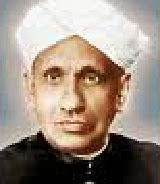
‘Sir C. V. Raman’ was born on 7 November 1888 at Thiruvanaikoil, Tiruchirappalli, Madras Province, India. His full name was Chandrasekhara Venkata Raman. He was the son of R. Chandrasekhara Iyer and Parvati Ammal (Saptarshi Parvati). His father was a lecturer in mathematics and physics at Presidency College in Madras. 

C. V. Raman passed his B.A. examination in 1904 in first place and won the gold medal in physics, and in 1907 he gained his M.A. degree with the highest distinctions.

Sir C. V. Raman was an Indian physicist whose work was influential in the growth of science in India. He was the first Indian scientist to be honoured with the prestigious Nobel Award in Physics in the year1930. 

His discovery ‘Raman effect’ or ‘Raman scattering’ is popularly known as an inelastic scattering of a photon.He was honoured with a large number of honorary doctorates and memberships of scientific societies. He died on 21 November 1970 at the age of 82 at Bangalore. 

National Science Day is celebrated in India on February 28 each year to mark the discovery of the Raman effect by Indian physicist Sir Chandrasekhara Venkata Raman on 28 February 1928. 

Short Essay on ‘Flower I Like Most’ (130 Words)

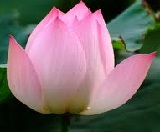
Among the flowers I like Lotus the most. The Lotus is scientifically known as ‘Nelumbo Nucifera’. It is a sacred flower and occupies a unique position in the art and mythology of ancient India and has been an auspicious symbol of Indian culture since time immemorial. It is also the national flower of India.

Lotus flower is found only in two colours that are pink and white. The flower grows in murky waters and rises on a long stalk above the surface to bloom glorious. It is a beautiful flower which symbolises divinity, fertility, wealth, knowledge and not to forget enlightenment. Untouched by the impurity, lotus symbolises the purity of heart and mind. According to Hindu mythology Lotus is m

Short Biography of \’Dr. Rajendra Prasad\’ (251 Words)

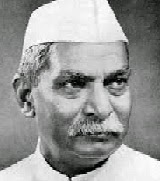
\’Rajendra Prasad\’ was born on 3rd December, 1884 in the Ziradei village, Siwan district of Bihar, India. His father\’s name was Mahadev Sahai, who was a scholar of Sanskrit and Persian languages. His mother\’s name was Kamleshwari Devi, who was a religious woman.

After the completion of elementary education, Rajendra Prasad went to study at T.K. Ghosh\’s Academy in Patna. He joined the Presidency College, Calcutta in 1902. Once an examiner wrote on his answer sheet \’examinee is better than examiner\’. It proves that he was a great scholar. Rajendra Prasad served in various educational institutions as a teacher. He joined the High Court of Bihar and Odisha as a lawyer in 1916.

Rajendra Prasad was a good political leader, lawyer, statesman and social worker. He took active part in the freedom movements of India. He joined the Indian National Congress in 1911. He was elected as the President of the Indian National Congress during the Bombay session in October 1934. He was sent to Jail many times. He was elected the President of Constituent Assembly on 11 December 1946. Dr. Rajendra Prasad was elected the first President of the Republic of India.

Dr Rajendra Prasad died on 28 February 1963. His death was a great loss for the nation. He was subsequently awarded the Bharat Ratna, the India\’s highest civilian award. He authored many books. He was a great educationist and a man of world fame. High principles and ideals of Dr. Rajendra Prasad will always alive to show the right path. 

Short Biography of \’Dr. Rajendra Prasad\’ (251 Words)

\’Rajendra Prasad\’ was born on 3rd December, 1884 in the Ziradei village, Siwan district of Bihar, India. His father\’s name was Mahadev Sahai, who was a scholar of Sanskrit and Persian languages. His mother\’s name was Kamleshwari Devi, who was a religious woman.

After the completion of elementary education, Rajendra Prasad went to study at T.K. Ghosh\’s Academy in Patna. He joined the Presidency College, Calcutta in 1902. Once an examiner wrote on his answer sheet \’examinee is better than examiner\’. It proves that he was a great scholar. Rajendra Prasad served in various educational institutions as a teacher. He joined the High Court of Bihar and Odisha as a lawyer in 1916.

Rajendra Prasad was a good political leader, lawyer, statesman and social worker. He took active part in the freedom movements of India. He joined the Indian National Congress in 1911. He was elected as the President of the Indian National Congress during the Bombay session in October 1934. He was sent to Jail many times. He was elected the President of Constituent Assembly on 11 December 1946. Dr. Rajendra Prasad was elected the first President of the Republic of India.

Dr Rajendra Prasad died on 28 February 1963. His death was a great loss for the nation. He was subsequently awarded the Bharat Ratna, the India\’s highest civilian award. He authored many books. He was a great educationist and a man of world fame. High principles and ideals of Dr. Rajendra Prasad will always alive to show the right path. 

Short Biography of \’Dr. Rajendra Prasad\’ (251 Words)

\’Rajendra Prasad\’ was born on 3rd December, 1884 in the Ziradei village, Siwan district of Bihar, India. His father\’s name was Mahadev Sahai, who was a scholar of Sanskrit and Persian languages. His mother\’s name was Kamleshwari Devi, who was a religious woman.

After the completion of elementary education, Rajendra Prasad went to study at T.K. Ghosh\’s Academy in Patna. He joined the Presidency College, Calcutta in 1902. Once an examiner wrote on his answer sheet \’examinee is better than examiner\’. It proves that he was a great scholar. Rajendra Prasad served in various educational institutions as a teacher. He joined the High Court of Bihar and Odisha as a lawyer in 1916.

Rajendra Prasad was a good political leader, lawyer, statesman and social worker. He took active part in the freedom movements of India. He joined the Indian National Congress in 1911. He was elected as the President of the Indian National Congress during the Bombay session in October 1934. He was sent to Jail many times. He was elected the President of Constituent Assembly on 11 December 1946. Dr. Rajendra Prasad was elected the first President of the Republic of India.

Dr Rajendra Prasad died on 28 February 1963. His death was a great loss for the nation. He was subsequently awarded the Bharat Ratna, the India\’s highest civilian award. He authored many books. He was a great educationist and a man of world fame. High principles and ideals of Dr. Rajendra Prasad will always alive to show the right path. 

Central theme of Bharat Parv 2020 is ‘Ek Bharat Shreshtha Bharat’ and ‘Celebrating 150 Years of Mahatma Gandhi’

To celebrate the spirit of India, the annual event Bharat Parv is being organised in Delhi this year too. Special Secretary & Financial Adviser of Ministry of Tourism Shri Rajesh Kumar Chaturvedi will inaugurate the Bharat Parv tomorrow at Red fort ground in New Delhi. Bharat  Parv,  2020  is  being  celebrated  from  26th to 31st  January, 2020   in  front  of  Red  Fort  at  Gyan  Path  and  Red Fort grounds. The  objective of  Bharat Parv  is  to  encourage  Indians  to visit  different  tourism  places  of  India and to inculcate  the spirit  of  ‘Dekho  Apna  Desh’.

The  Central theme  of  this  year’s  Bharat  Parv  is   ‘Ek  Bharat  Shreshtha  Bharat’ and  ‘Celebrating  150 Years of  Mahatma Gandhi’. Bharat Parv will be open for the General Public on 26th January, at 5.00 PM till 10.00 PM.  On the remaining days 27th to 31st January, 2020 the Bharat  Parv would   be  open  from  12.00 Hrs  till  10.00 PM.

Bharat Parv have many attractions for public like display of Tableaux of the Republic Day parade, performance by armed forces bands, tourism theme pavilion by State Governments/ Union Territory Administrations and line Ministries, handicraft & Handloom Stalls by the State Governments/Union Territory Administrations, Commission Handloom / Handicrafts / TRIFED, food Court by State Governments, Institutes of Hotel Management and other organizations, cultural Performances by North Central Zone Cultural Centre (NCZCC) and State Governments / UT Administrations and cookery  demonstrations  by  State Governments  and Institute of  Hotel  Management.

Entry to the Bharat Parv  is  free though  the  visitors  will  have to show  their  identity proof  for  entering  the Parv.

*****

NB/AKJ/OA

RPF /RPSF Personnel awarded Police Medal for Gallantry (PMG), President’s Police Medal (PPM) for Distinguished Services and Police Medal (PM) for Meritorious Services

On the occasion of Republic Day 2020, the Hon’ble President of India has awarded Police Medal for Gallantry (PMG), President’s Police Medal (PPM) for Distinguished Services and Police Medal (PM) for Meritorious Services to the following Railway Protection Force (RPF)/ Railway Protection Special Force (RPSF) personnel:

Police Medal for Gallantry (PMG):

  1. Late Shri Jagbir Singh Rana, Constable/ Northern Railway (posthumously)


President’s Police Medal (PPM) for Distinguished Service


  1. Shri Ambika Nath Mishra, Principal Chief Security Commissioner/Eastern Railway,
  2. Shri Bharat Singh Meena, Commandant, 8 BN/RPSF.


Police Medal (PM) for Meritorious Service


  1. Shri Yugal Kishore Joshi, DIG/RPF,
  2. Shri Anil Kumar Sharma, Assistant Commandant/ RPSF,
  3. Shri P. P. Joy, Assistant Security Commissioner/ Konkan Railway,
  4. Shri Deep Chandra Arya, Assistant Security Commissioner/ Northern Railway,
  5. Shri T. Chandrasekhar Reddy, Inspector/South Central Railway,
  6. Shri K. Chakravarthi, Inspector/ South Central Railway,
  7. Shri Satish Ingle, Head Constable/ South East Central Railway,
  8. Shri Deo Kumar Gond, Sub-Inspector/Konkan Railway,
  9. Shri G. S. Vijaykumar, Sub-Inspector/ Central Railway,
  10. Shri D. Balasubrahmanyam, Sub-Inspector/Training Centre, Moula Ali,
  11. Shri Mahfajul Haque, Inspector/4 BN RPSF,
  12. Shri Darshan Lal, Sub-Inspector/ 6 BN RPSF,
  13. Shri Nemee Chand Saini, Assistant Sub-Inspector/North Western Railway,
  14. Shri Alok Kumar Chatterjee, Assistant Sub-Inspector/Eastern Railway,
  15. Shri Ashok Kumar Yadav, Inspector/Western Railway.


***

SG/AP

Union Minister for Coal and Mines Shri Pralhad Joshi reviews mineral exploration projects and activities of Rajasthan

The Union Minister for Mines, Coal and Parliamentary Affairs Shri Pralhad Joshi chaired review meeting of mineral exploration projects and activities of Rajasthan in New Delhi today. Union Minister of State for Parliamentary Affairs and Heavy Industries and Public Enterprises Shri Arjun Ram Meghwal was present in the meeting.  Senior representatives of Geological Survey of India (GSI), NLC India Limited and Mineral Exploration Corporation Limited (MECL) made presentations on the exploration related activities undertaken by them in Rajasthan.


The Mines Minister also took stock of the issues of the organizations related to exploration of minerals including Potash and Lignite in Rajasthan. He asked the representatives to expedite the projects in Rajasthan and directed them to take up the matter  with State Government.


Senior officials of the Ministry of Mines and Ministry of Coal including Dr. K. Rajeswara Rao, Additional Secretary, Ministry of Mines and Sh. Vinod Kumar Tiwari, Additional Secretary, Ministry of Coal were also present.


****

Award of President’s Medals to Fire Service, Home Guards (HG) and Civil Defence (CD) personnel on the occasion of Republic Day, 2020

104 personnel have been awarded Fire Service Medals on the occasion of the Republic Day this year. Of these, President’s Fire Service Medal for Gallantry have been awarded to 13 personnel, Fire Service Medal for Gallantry have been awarded to 29 personnel, President’s Fire Service Medal for Distinguished Service to 12 personnel and Fire Service Medal for Meritorious Service to 50 personnel.

49 personnel have also been awarded Home Guard & Civil Defence Medals on the occasion of the Republic Day this year. Of these, President’s HG & CD Medal for Distinguished Service have been awarded to 02 personnel and Home Guards and Civil Defence Medal for Meritorious Service to 47 personnel.

The list of Fire Service Medals and Home Guards & Civil Defence Medals awardees are enclosed as Annexure. 

ANNEXURE

FIRE SERVICE MEDALS AWARDED TO FIRE SERVICE PERSONNEL ON THE OCCASION OF REPUBLIC DAY, 2020 AS PER THE FOLLOWING DETAILS

President’s Fire Service Medal For Gallantry
  Delhi


1 Sh. Avtar Singh

Asst. Divisional Officer


2 Sh. Vijender Pal Singh

Fireman


  Karnataka


1 Sh. Ravishanker Hiriyannagowda Javagal

Deputy Director


2 Sh. Naveen Malappa Pavaadi

Fireman


3 Sh. Ashoka Kenchappa Vader

Fireman


4 Sh. Siddappa Ramappa Uppaar

Fireman Driver


5 Sh. Dharanesh Govindaiah Honnenahalli

Fireman


  Uttar Pradesh


1 Sh. Sunil Kumar Singh

Chief Fire Officer


2 Sh. Shrinarayan Singh

Fire Station Officer


3 Sh. Sachin Saini

Fireman


4 Sh. Jogendra Singh

Fireman


5 Sh. Piyush Kumar

Fireman


6 Sh. Yogendra Chaurasia

Fire Station Officer


Fire Service Medal For Gallantry


  Delhi


1 Sh. Anil Kumar

Fireman


2 Sh. Ram Kumar

Fire Operator


3 Sh. Arvind Dagar

Fire Operator


  Maharashtra


1 Sh. Prabhat Surajlal Rahangdale

Chief Fire Officer


2 Sh. Rajendra Abhaychandra Chaudhary

Dy. Chief Officer


3 Sh. Ravindra Narayanrao Ambulgekar

Divisional Fire Officer


4 Sh. Milind Namdeo Donde

A.D.F.O.


5 Sh. Abhijit Gangaram Sawant

Station Officer


6 Sh. Sudhir Ramesh Vartak

Driver Operator


7 Sh. Dilip Mahadev Palav

Dy. Chief Fire Officer


  Tamil Nadu


1 Sh. Sivakumar Pandiyarajan

Station Officer


2 Sh. Mohan Sekar

Fireman


3 Sh. Govindasamy Appavu

Leading Fireman


4 Sh. Sathishkumar Palanisamy

Fireman Driver


5 Sh. Durairaj Chinnusamy

Fireman


  Uttar Pradesh


1 Sh. Ravindra Shankar Misra

Chief Fire Officer


2 Sh. Ram Kumar Rawat

Fire Service Officer


3 Sh. Dharmendra Kumar Mishra

Fireman


4 Sh. Surya Pratap Singh

Driver


5 Sh. Arun Kumar Singh

Chief Fire Officer


6 Sh. Mamchand Bargujar

Fire Station Officer


7 Sh. Rameshwar

Leading Fireman


8 Sh. Satendra Kumar Bhati

Fire Service Driver


9 Sh. Mahender Pratap Singh

Chief Fire Officer


10 Sh. Siddh Nath Singh

Leading Fireman


11 Sh. Sudesh Kumar Babu

Fire Service Driver


12 Sh. Dharmendra Kanojia

Fireman


13 Sh. Vishwa Pratap Singh

Fireman


14 Sh. Sushil Kumar

Fire Station Officer


  President’s Fire Service Medal for Distinguished Service


  Delhi


1 Sh. Atul Garg

Chief Fire Officer


2 Sh. Virendra Singh

Dy. Chief Fire Officer


  Kerala


1 Sh. D. Balaram Babu

Asst. Station Officer


2 Sh. Sree Kishore. P.S.

Asst. Station Officer


  Odisha


1 Sh. Parsuram Barik

Station Officer


2 Sh. Rabinarayan Behera

Leading Fireman


  Uttar Pradesh


1 Sh. Nagendra Prasad Dwivedi

Fire Service Second Officer


2 Sh. Jitendra Pratap Pandey

Leading Fireman


  Uttarakhand


1 Sh. Anil Kumar Tyagi

Fire Station Second Officer


  CISF, MHA


1 Sh. Rashpal Dass

Asst. Sub Inspector (Fire)


2 Sh. Darmiyan Singh

Asst. Sub Inspector (Fire)


3 Sh. A. Narayanan

Asst. Sub Inspector (Fire)


  Fire Service Medal for Meritorious Service


Andaman & Nicobar


1 Sh. Suk Charan Mondal

Head Constable


  Andhra Pradesh


1 Sh. Chintada Krupavaram

District Fire Officer


2 Sh. B. Veerabhadra Rao

Asst. District Fire Officer


  Bihar


1 Sh. Rajdev Prasad

Sub-Officer


  Chhatisgarh


1 Sh. Shyam Sunder Yadav

Fire Driver


  Dadra & Nagar Haveli


1 Sh. Prataprao Krishnrao Chauhan

Sub-Officer


  Delhi


1 Sh. Debabrata  Mukherjee

Divisional Officer


2 Sh. Rajinder Atwal

Divisional Officer


3 Sh. Ashok Kumar Jaiswal

Asst. Divisional Officer


4 Sh. Dhrambir Singh

Fireman

  Goa


1 Sh. Dnyaneshwar S. Sawant

Sub-Officer


  Himachal Pradesh


1 Sh. Sanjeev Kumar Sippy

Station Fire Officer


2 Sh. Sudhakar Prasad

Leading Fireman


  Karnataka


1 Sh. Mahesh  Renukaradhya

Regional Fire Officer


 2 Sh. M. Gopal

Asst. Fire Station Officer


 3 Sh. Kurubaru Revanna Siddappa

Leading Fireman


4 Sh. Moidu Kunhi Kuntapadavu

Fireman


Kerala


1 Sh. Ajithkumar. P.

Station Officer


2 Sh. Ayoob Ghan. A.V.

Leading Fireman


  Maharashtra


1 Sh. Vithalrao Kailash Hiwrale

Dy. Chief Fire Officer


2 Sh. Vijaykumar Narsingh Panigrahi

Dy. Chief Fire Officer


3 Sh. Yeshwant Ramchandra Jadhav

Dy. Chief Fire Officer


  Meghalaya


 1 Sh. Aljwin Rani

Leading Fireman


 2 Sh. Anith Marak

Leading Fireman


  Nagaland


1 Sh. T. Shilu Jamir

Dy. SP (F&Es)


  Odisha


1 Sh. Anup Kumar Das

Station Officer


2 Sh. Ajay Kumar Parija

Station Officer


3 Sh. Malaya Kumar Mohanty

Leading Fireman


4 Sh. Suryamani  Rout

Driver Havildar


  Sikkim


1 Sh. Dilip Kumar  Darnal

Asst. Sub Fire Officer/Driver


  Tamil Nadu


1 Sh. Syed Mohamed Shah Syed  Yusuff

District Officer


2 Sh. Panneer Selvam Rajappa Mudaliyar

Station Officer


3 Sh. Sagayaraj Raju

Fireman


4 Sh. Murugesan Arumugam

Fireman


  Telangana


1 Sh. Raj Kumar Janagama

Station Fire Officer


2 Sh. Bhaskar Rao Kamatala

Fireman


  Tripura


1 Sh. Aniruddha Dey

Fireman


  Uttar Pradesh


1 Sh. Matlub Hussain

Fire Station Officer


2 Sh. Ainuddin Khan

Leading Fireman


3


Sh. Harigyan Singh Tomar

Fire Service Driver


  Uttarakhand


1 Sh. Sunil Kumar Singh

Fire Service Driver


2 Sh. Rakesh Kumar

Leading Fireman


West Bengal
1 Sh. Gopal Chandra Chatterjee

Station Officer


2 Sh. Dipankar Das

Sub-Officer


3 Sh. Pratip Kumar Bose

Fire Operator


  CISF, MHA


1 Sh. Damodar Jayawant Thakur

Asst. Sub Inspector (Fire)


2 Sh. Mahendra Kumar Sharma

Head Constable (Fire)


  M/O Pet. & Natural Gas


1 Sh. Karan Vir Singh

General Manager ( Fire & Safety), HPCL


2 Sh. Dipen Gayan

Operator-II (Fire Engine), OIL


  M/O Defence


1 Sh. Surendra Manohar Ghag

Leading Hand

Naval Dockyard, Mumbai


HOME GUARDS AND CIVIL DEFENCE MEDALS AWARDED TO HG & CD PERSONNEL ON THE OCCASION OF REPUBLIC DAY 2020 AS PER THE FOLLOWING DETAILS

President’s Home Guards & Civil Defence Medal For Distinguished  Service


Goa


1 Shri John Carlos Aguiar

Honorary Company Commander (HG)

 
Odisha


1 Shri Barun Kumar Mitra

Company Commander(HG)

 
Home Guards & Civil Defence Medal For Meritorious Service


Andaman & Nicobar Islands


1 Smt. J. Girija Kumari

HG(R)/140

 
2 Shri  T. Raveendran

HG(R)/246

 
3 Shri  C. Velu Samy

HG(R)/41

 
Assam  
1 Shri Simanta Sarmah

Assistant Deputy Controller (Sr)Civil Defence

 
2 Shri Mathur Mohan Kalita

Constable(HG)

 
3 Shri Bhupen Hazarika

Home Guard Volunteer

 
4 Shri Dhiren Chandra Deka

Havilder(HG)

 
Bihar


1 Shri Parag Kumar Sinha

Company Commandar(HG)

 
2 Shri Ajit Kumar Upadhyay

Company Commandar (HG)

 
3 Shri Arun Pandey

Home Guard

 
Chandigarh


1 Shri Baldev Raj

Honorary Platoon Commander (HG)

 
2 Shri Inderpal Singh

Home Guard Volunteer

 
Chhattisgarh


1 Shri Shiv Kumar Kathutiya

District Commandant (HG)

 
2 Shri Balram Dhruw

Home Guard Sainik


Goa


1 Shri Raulu Dataram Gawas

Honorary Section Leader (HG)

 
2 Shri Santan Francis Dias

Home Guard Volunteer

 
Gujarat


1 Shri Jagjivanbhai Jethabhai Makwana

Section Leader (HG)

 
2 Shri Jashvantsinh Muljibhai Gadhavi

Company Commander (HG)

 
3 Smt. Nimisha Rameshchandra Patel

Platoon Sergent (HG)

 
4 Shri Jayram Karshanbhai Desai

Sub-Inspector Instructor (HG)

 
5 Shri Pravinkumar Bhupatbhai Bhatt

Sub-Inspector Instructor (HG)

 
6 Shri Haribhai Narsinhbhai Parmar

Sub-Inspector Instructor (HG)

 
7 Shri Vibhakar Natvarlal Antani

Leader (CD)


Himachal Pradesh


1 Shri Hari Swaroop Sharma

Commandant (HG)

 
2 Shri Luder Mani

Company Commander (HG)

 
3 Smt. Urmila Devi

Platoon Commander (HG)

 
4 Shri Chet Ram

Home Guard

 
Karnataka


1 Shri S. Murugeshan

Unit Officer (HG)

 
2 Shri K. Rajapeer

Platoon Commander (HG)

 
3 Shri Hanumantaraya Iranna Ilager

Company Sergeant Major  (HG)

 
4 Dr. B. H. Veerappa

Commandant (HG)

 
5 Shri Imtiyaz Allabakash Kamdod

Driver (HG)

 
6 Shri HullanasaTulajanasaTulasikatti

Platoon Sergeant (HG)

 
7 Shri Nambur Panduranga Nagendra Babu

Divisional Warden (CD)

 
Meghalaya
1 Shri Newstarland Wanniang

Havildar (HG)

 
Odisha


1 Shri Sidharth Sankar Pati

Home Guard-225

 
2 Shri Khiroj Kumar Das

Civil Defence Volunteer

 
3 Shri Bauri Bandhu Bej

Civil Defence Volunteer

 
Tamil Nadu


1 Shri Kannan Ravi

Company Commander (HG)

 
2 Shri J. Lesly

Company Commander (HG)

 
3 Shri Jayaraman Sugumar

Area Commander (HG)

 
Tripura  
1 Shri Subal Ranjan Datta

Home Guard Volunteer

 
2 Smt. Uma Laxmi Debbarma

Women Home Guard Volunteer

 
Uttar Pradesh


1 Shri Ramesh Singh

Leading Fireman (CD)


Uttarakhand


1 Smt. Hema Karki

Paid Inspector (HG)

 
2 Shri Satish Agarwal

Chief Warden (CD)

 
3 Shri Rajesh Kumar Sonker

Wireless Operator (CD)


*****

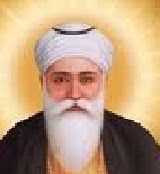
Short Essay on \’Guru Nanak Jayanti\’ (200 Words)

\’Guru Nanak Jayanti\’ is also known as Gurpurab. It is one of the biggest festivals of Sikhs. The birthday of Guru Nanak Dev is celebrated as Guru Nanak Jayanti. Guru Nanak Jayanti is celebrated in the month of Kartik on the day of full moon known as Kartik Purnima.

Guru Nanak was the founder of the Sikh religion. He was the first Sikh Guru. Guru Nanak Dev Ji was born on 15th April 1469 in Rai-Bhoi-di Talwandi in the present Shekhupura District of Pakistan, which is now known as Nankana Sahib.

On Guru Nanak Jayanti , Sikhs wear new clothes and go to the Gurudwaras. The morning of Guru Nanak Jayanti starts with Prabhat Feris in the Gurudwara followed by processions in localities singing hymns. Sikhs offer their prayers and pay homage to the Guru Granth Sahib. On this day, the holy book of Sikhs, the Guru Granth Sahib is continuously read and recited in the Gurudwaras. Lamps are lit, processions are taken out, free langars (meals) are arranged and a sweet prasad is distributed all over the country. The Nanakpanti Hindus and the other followers of Guru Nanak’s philosophy apart from the Sikhs also observe this sacred festival.