Special Skill Initiative for North-East Region

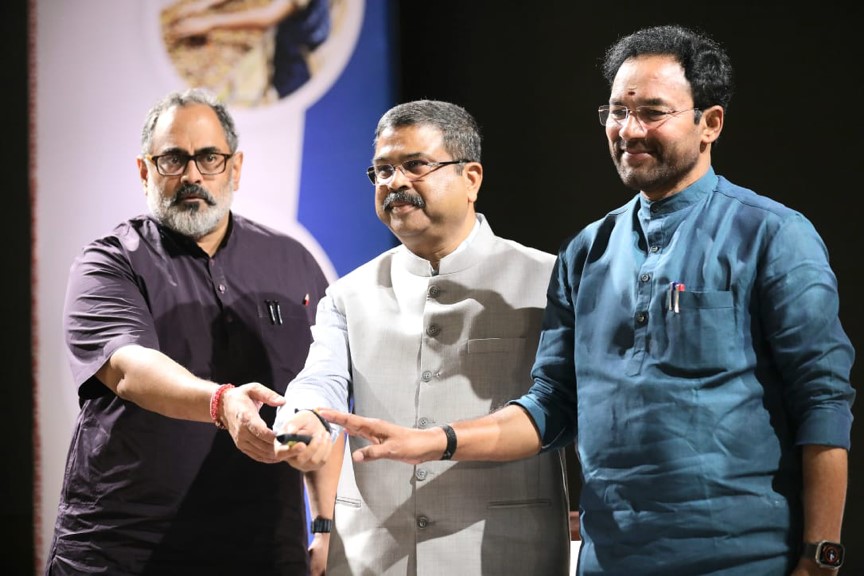
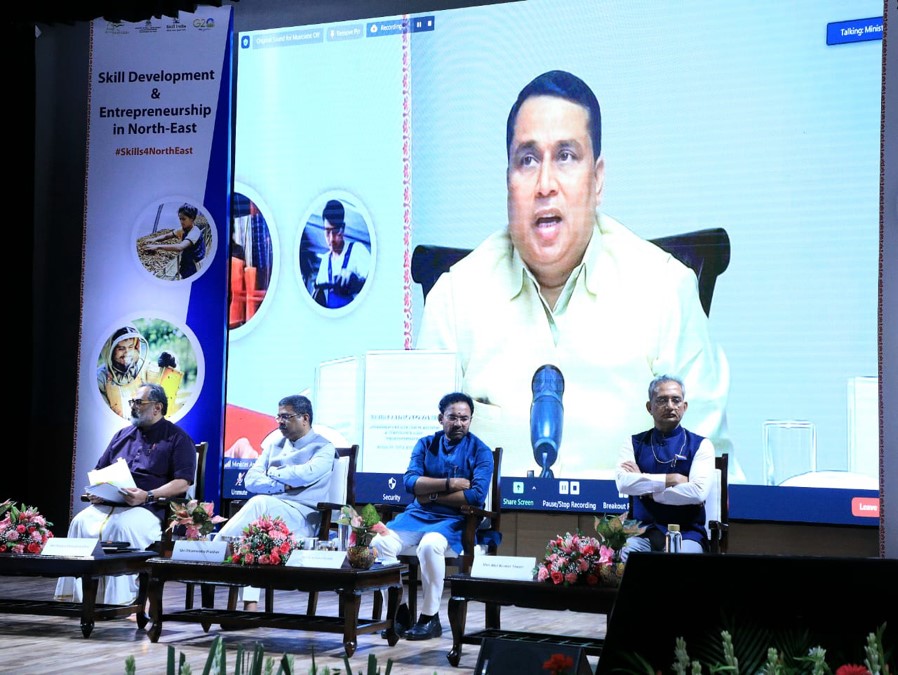
 To create a robust skill-centric and industry ready ecosystem in North-Eastern Region (NER), Union Minister for Education and Skill Development & Entrepreneurship, Shri Dharmendra Pradhan and Union Minister for Culture, Tourism & Development Of North Eastern Region (DoNER) Shri G. Kishan Reddy and Minister of State for Skill Development and Entrepreneurship, Electronics & IT today Shri Rajeev Chandrasekhar launched a special initiative ‘Transforming Lives, Building Futures: Skill Development and Entrepreneurship in North-East in New Delhi today.

As part of the initiative, 2.5 lakhs youth of the NER will be provided with industry relevant skill training programmes through a wide array of schemes and initiatives, including Pradhan Mantri Kaushal Vikas Yojana (PMKVY), National Apprenticeship Promotion Scheme (NAPS) and Jan Shikshan Sansthans (JSS). The Government has earmarked a substantial fund of Rs360 crore to facilitate inclusive development, nurture entrepreneurial talent, and propel the socio-economic growth of the region. To fuel further growth, the concerted efforts are being made to provide vocational education and skill development programs to cater to the demand for skilled professionals across sectors, including agriculture, tourism, handicrafts, and information technology.

Minister, Public Health Engineering, Skill Development Employment & Entrepreneurship and Tourism; Government of Assam, Shri Jayanta Malla Baruah; MLA, Advisor to Labour, Employment, Skill Development & Entrepreneurship and Excise Department, Government of Nagaland, Shri Moatoshi Longkumer; Minister, Public health engineering and Water security, Water resources & River Development, Skill Development & Entrepreneurship, Government of Sikkim, Shri Bhim Hang Limboo and Secretary, Union Ministry of Skill Development and Entrepreneurship, Shri Atul Kumar Tiwari addressed the event.

Speaking on the occasion, Shri Dharmendra Pradhan said that the program will create unprecedented skilling opportunities for the youth in line with their interest areas and lead to unlocking the potential of N-E youth. He also said that the north-eastern region of our country is abundant with natural resources and demographic dividend and with a whole-of-government approach, our government has worked to drive unprecedented development of the region. Today’s program will further give impetus to these efforts and lead to socio-economic transformation of the region, he further added. He also said that the Prime Minister Shri Narendra Modi has envisioned to make India developed and Aatmanirbhar and a robust skill development mission is essential to make this dream a reality. We are working to make India, the skill-capital of the world, he further added.

Lauding the initiative, Shri G. Kishan Reddy said that this initiative of MSDE will benefit more than 2.5 lakh youth in phase one, which will make them job ready for domestic as well as international markets. This is yet another endeavour of Shri Narendra Modi’s government to make the NER the engine of growth.

Shri Rajeev Chandrashekar said that over the past 9 years, our Prime Minister has worked relentlessly to create a conducive skill ecosystem by laying emphasis on education, skilling and innovation. We are now looking into the future with current trends that can shape our skilling strategies. We are one of the youngest countries in the world with a demography that is of great relevance to global economies, he added. With the tremendous number of new opportunities being created in both entrepreneurship and in jobs, the need for skills have heightened. Transforming Lives and Building Future is not just a slogan, this is a mission for our Young Indians of North-East. We believe that the future of New India is bright and skilling is the passport for prosperity, he further added.

The Skill Development and Entrepreneurship in North-East initiative lays emphasis on alignment of courses with National Skills Qualifications Framework (NSQF), bolstered by a digital infrastructure to develop well-rounded professionals. The event also deliberated on the need of enhancing industry participation in aggregating skill demand, simplifying training modules, curriculum development and augmenting training infrastructure to upgrade their skill sets in ‘earn while learn’ mode.

The special Initiative of “Transforming Lives- Building Futures: Skill and Entrepreneurship Dev in North-East will include:

  1. 2 Lakh skill training under Pradhan Mantri Kaushal Vikas Yojana (PMKVY)

  2. 30,000 Apprenticeship Engagement under National Apprenticeship Promotion Scheme (NAPS)

  3. 20,000 to be skilled under Jan Shikshan Sansthans (JSS)

  4. Quality enhancement of ITIs under skill strengthening for industrial value enhancement (STRIVE)

  5. Strengthening of Polytechnics

  6. Special projects will be taken up for the special needs of North-East region under SANKALP.

  7. Skill India International Centre to be set up to promote overseas job opportunities.

Over the last nine years, MSDE has increased the network count of ITIs to 106 in north-eastern region. It has trained over 3 lakh beneficiaries and assisted 1000 entrepreneurs through Indian Institute of Entrepreneurship (IIE). MSDE has also trained about 12 lakh candidates under Pradhan Mantri Kaushal Vikas Yojana (PMKVY) in textile, handloom, construction, apparel, agriculture, electronics and healthcare.

The National Apprenticeship Promotion Scheme (NAPS) has facilitated training to 38,240 candidates across 1,693 establishments in the last 7 years in north-east. Moreover, the centre has achieved significant success in training more 98000 beneficiaries with more than 72% women beneficiaries across JSS which stands as a testament to creating a robust skill ecosystem in the northeast region, empowering youth with domain and employability skills.

*****

Steps taken by Government of India to improve Women’s Health

Government of India implements various schemes/initiatives  to make healthcare more accessible to all  throughout the country including women, rural and SC/ST population.These schemes/initiatives include:

Comprehensive Primary Health Care (CPHC) through Ayushman Bharat- Health and Wellness Centres (HWCs):In February 2018, the Government of India announced 1,50,000 Ayushman Bharat- Health and Wellness Centres (AB-HWCs) to be established across the country by December 2022. The existing Sub- Health Centres (SHC), Primary Health Centres (PHC) and Urban Primary Health Centres (UPHC) are transformed into AB-HWCs to deliver Comprehensive Primary Health Care (CPHC) that includes preventive, promotive, curative, palliative and rehabilitative services which are universal, free, and closer to the community. As on 31.07.2023 a total of 1,60,816 AB-HWCs have been operationalized across the country.

Photo by Jennifer Murray on Pexels.com
  • Health Melas are organized at the level of AB-HWCs to optimize utilization of health care services and generate awareness. Ayushman Health melas are ‘one-stop’ platforms to address a comprehensive range of health issues have proven to be an effective strategy to reach the masses and augment the utilization of healthcare services.
  • Teleconsultation services, through eSanjeevani, are available at functional AB-HWC to ensure specialist services closer to the people. As on 31st July 2023, more than 14.35 crore Teleconsultations have been provided via eSanjeevani portal.  Screening of women is also being done at AB-HWCs for breast cancer, oral cancer and cervical cancer.
  • National Free Drugs Initiative: States/UTs are supported to provide essential drugs based on the level of public health facilities free of cost to all who access these facilities.
  • Free Diagnostics Initiatives. (FDI): Under the initiative, support provided to States/UTs to provide a set of essential diagnostics (14 tests at Sub Centre/ Health and Wellness Centre level, 63 tests at PHC/ PHC-HWC level, 97 tests at CHC level, 111 tests at SDH level and 134 tests at DH level) at various levels of care, free of cost.
  • National Ambulance Services (NAS) –  Under the NHM, technical and financial support is provided for emergency medical services in States/UTs through a functional National Ambulance Service (NAS) network linked with a centralised toll-free number 108/102.
  • National Mobile Medical Units (NMMU) – are supported to facilitate access to public health care at the doorstep particularly to people living in remote, difficult, under-served and unreached areas to provide primary care services.

Apart from above mentioned schemes,Government has also implemented following schemes especially for pregnant women:

  • Surakshit Matritva Aashwasan (SUMAN) provides assured, dignified, respectful and quality healthcare at no cost and zero tolerance for denial of services for every woman and newborn visiting public health facilities to end all preventable maternal and newborn deaths.
  • Janani Suraksha Yojana (JSY), a demand promotion and conditional cash transfer scheme for promoting institutional delivery.
  • Under Janani Shishu Suraksha Karyakram (JSSK), every pregnant woman is entitled to free delivery, including caesarean section, in public health institutions along with the provision of free transport, diagnostics, medicines, blood, other consumables & diet.
  • Pradhan Mantri Surakshit Matritva Abhiyan (PMSMA) provides pregnant women a fixed day, free of cost assured and quality antenatal check up by a Specialist/Medical Officer on the 9th day of every month.
  • LaQshya improves the quality of care in labour room and maternity operation theatres to ensure that pregnant women receive respectful and quality care during delivery and immediate post-partum.
  • Functionalization of First Referral Units (FRUs) by ensuring manpower, blood storage units, referral linkages to improve the access to quality of care for pregnant women
  • Outreach camps are provisioned for improving the reach of health care services especially in tribal and hard to reach areas. This platform is used to increase the awareness for the Maternal & Child health services, community mobilization as well as to track high risk pregnancies.
  • IEC/BCC campaigns: One of the key focus areas of Maternal Health is to generate demand through Information Education & Communication (IEC), Inter-personal Communication (IPC) and Behaviour Change Communication (BCC) activities.

Steps taken by Government of India to improve Women’s Health

Government of India implements various schemes/initiatives  to make healthcare more accessible to all  throughout the country including women, rural and SC/ST population.These schemes/initiatives include:

Comprehensive Primary Health Care (CPHC) through Ayushman Bharat- Health and Wellness Centres (HWCs):In February 2018, the Government of India announced 1,50,000 Ayushman Bharat- Health and Wellness Centres (AB-HWCs) to be established across the country by December 2022. The existing Sub- Health Centres (SHC), Primary Health Centres (PHC) and Urban Primary Health Centres (UPHC) are transformed into AB-HWCs to deliver Comprehensive Primary Health Care (CPHC) that includes preventive, promotive, curative, palliative and rehabilitative services which are universal, free, and closer to the community. As on 31.07.2023 a total of 1,60,816 AB-HWCs have been operationalized across the country.

Photo by Jennifer Murray on Pexels.com
  • Health Melas are organized at the level of AB-HWCs to optimize utilization of health care services and generate awareness. Ayushman Health melas are ‘one-stop’ platforms to address a comprehensive range of health issues have proven to be an effective strategy to reach the masses and augment the utilization of healthcare services.
  • Teleconsultation services, through eSanjeevani, are available at functional AB-HWC to ensure specialist services closer to the people. As on 31st July 2023, more than 14.35 crore Teleconsultations have been provided via eSanjeevani portal.  Screening of women is also being done at AB-HWCs for breast cancer, oral cancer and cervical cancer.
  • National Free Drugs Initiative: States/UTs are supported to provide essential drugs based on the level of public health facilities free of cost to all who access these facilities.
  • Free Diagnostics Initiatives. (FDI): Under the initiative, support provided to States/UTs to provide a set of essential diagnostics (14 tests at Sub Centre/ Health and Wellness Centre level, 63 tests at PHC/ PHC-HWC level, 97 tests at CHC level, 111 tests at SDH level and 134 tests at DH level) at various levels of care, free of cost.
  • National Ambulance Services (NAS) –  Under the NHM, technical and financial support is provided for emergency medical services in States/UTs through a functional National Ambulance Service (NAS) network linked with a centralised toll-free number 108/102.
  • National Mobile Medical Units (NMMU) – are supported to facilitate access to public health care at the doorstep particularly to people living in remote, difficult, under-served and unreached areas to provide primary care services.

Apart from above mentioned schemes,Government has also implemented following schemes especially for pregnant women:

  • Surakshit Matritva Aashwasan (SUMAN) provides assured, dignified, respectful and quality healthcare at no cost and zero tolerance for denial of services for every woman and newborn visiting public health facilities to end all preventable maternal and newborn deaths.
  • Janani Suraksha Yojana (JSY), a demand promotion and conditional cash transfer scheme for promoting institutional delivery.
  • Under Janani Shishu Suraksha Karyakram (JSSK), every pregnant woman is entitled to free delivery, including caesarean section, in public health institutions along with the provision of free transport, diagnostics, medicines, blood, other consumables & diet.
  • Pradhan Mantri Surakshit Matritva Abhiyan (PMSMA) provides pregnant women a fixed day, free of cost assured and quality antenatal check up by a Specialist/Medical Officer on the 9th day of every month.
  • LaQshya improves the quality of care in labour room and maternity operation theatres to ensure that pregnant women receive respectful and quality care during delivery and immediate post-partum.
  • Functionalization of First Referral Units (FRUs) by ensuring manpower, blood storage units, referral linkages to improve the access to quality of care for pregnant women
  • Outreach camps are provisioned for improving the reach of health care services especially in tribal and hard to reach areas. This platform is used to increase the awareness for the Maternal & Child health services, community mobilization as well as to track high risk pregnancies.
  • IEC/BCC campaigns: One of the key focus areas of Maternal Health is to generate demand through Information Education & Communication (IEC), Inter-personal Communication (IPC) and Behaviour Change Communication (BCC) activities.

Pradhan Mantri Kisan Sampada Yojana (PMKSY

 The Ministry of Food Processing Industries (MoFPI) has been implementing an umbrella scheme- Pradhan Mantri Kisan Sampada Yojana (PMKSY) since 2017-18 across the country. PMKSY is a comprehensive package of component schemes, which is aimed at creation of modern infrastructure with efficient supply chain management from farm gate to retail outlet. It provides boost to the growth of food processing sector in the country, helps in providing better prices to farmers, creates employment opportunities especially in the rural areas, reduces wastage of agricultural produce, increases the processing level and enhances export of the processed foods.

682 projects with grants-in-aid of Rs. 3530.25 crore during the last four years  (2019-20 to 2022-23) and 33 projects with grants-in-aid of Rs. 160.22 crore during the current year  2023-24 (till 31.07.2023) have been approved under various component schemes of PMKSY across the country. Out of this, 53 projects with grants-in-aid of Rs. 248.44 crore and 4 projects with grants-in-aid of Rs. 13.30 crore have been approved during the last four years and current financial year (till 31.07.2023) respectively in the State of Tamil Nadu.  

Fund amounting to Rs. 3925.89 crore has been allocated to PMKSY and out of this, Rs. 2648.41 crore has been released under various component schemes of PMKSY across the country including the State of Tamil Nadu for the period from 2019-20 to 2023-24 (till 31.07.2023). The details of the same are provided at Annexure.

Annexure

Details of fund allocated / grants-in-aid released under various component schemes of PMKSY from 2019-20 to 2023-24 (till 31.07.2023)

                                                           (Rupees in crore)

S. No.

Component scheme of PMKSY

Financial

Year

Funds allocated

Grants-in-aid

released

1

Mega Food Parks (MFP)


2019-20

139.40

106.34


2020-21

61.25

61.22


2021-22

53.60

51.52


2022-23

24.00

21.68


2023-24

54.00(BE)

0.00


Total

332.25

240.76


2

Integrated Cold Chain & Value Addition Infrastructure (Cold Chain)


2019-20

324.16

269.13


2020-21

250.58

204.89


2021-22

260.82

223.44


2022-23

220.00

201.64


2023-24

194.00(BE)

31.51


Total

1249.56

930.61


3

Creation of Infrastructure Development for Agro Processing Clusters (APC)


2019-20

49.83

43.53


2020-21

56.59

48.68


2021-22

53.50

49.08


2022-23

56.15

46.42


2023-24

81.00(BE)

5.73


Total

297.07

193.44


4

Creation/Expansion of Food Processing & Preservation Capacities (CEFPPC)


2019-20

200.72

169.98


2020-21

217.30

200.84


2021-22

241.00

236.58


2022-23

217.68

168.11


2023-24

319.00(BE)

26.62


Total

1195.70

802.13

5

Food Safety & Quality Assurance Infrastructure (FTL)


2019-20

39.80

26.85


2020-21

36.63

28.84


2021-22

46.60

34.14


2022-23

32.80

18.53


2023-24

44.50(BE)

2.47


Total

200.33

110.83


6

Operation Greens (OG)


2019-20

28.03

2.37


2020-21

38.00

38.00


2021-22

71.50

65.15


2022-23

73.34

69.91


2023-24

212.34(BE)

12.01


Total

423.21

187.44


7

Creation of Backward Forward Linkage (CBFL)


2019-20

48.96

42.13


2020-21

55.85

53.67


2021-22

40.39

32.85


2022-23

18.58

9.33


2023-24

5.19(BE)

0.42


Total

168.97

138.40


8

Human Resources & Institutions (HRI)


2019-20

23.69

17.70


2020-21

15.59

14.40


2021-22

8.89

7.80


2022-23

5.82

4.77


2023-24

4.81(BE)

0.13


Total

58.80

44.80


Grand Total

3925.89

2648.41

Production Linked Incentive Scheme for Food Processing Industry (PLISFPI)

 The Production Linked Incentive Scheme for Food Processing Industry (PLISFPI) was approved by the Union Cabinet on 31st March 2021 with a budget of Rs. 10,900 crores, to be implemented from 2021-22 to 2026-27. It consists of three components: incentivizing manufacturing in four major food product segments, promoting Innovative/Organic products of SMEs, and supporting branding and marketing abroad for Indian brands. Additionally, the PLI Scheme for Millet-based Products (PLISMBP) was launched in FY 2022-23 with an outlay of ₹800 crore, utilizing savings from PLISFPI. The scheme boosts the capacity of the food processing industry by supporting food manufacturing entities that are willing to expand their processing capacity, incentivizing the growth of strong Indian brands, enhancing the presence of Indian food brands in the global market, creating more employment opportunities, and ensuring higher income for farmers.

The Ministry is actively implementing three major schemes to promote the food processing sector: Pradhan Mantri Kisan SAMPADA Yojana (PMKSY), Pradhan Mantri Formalization of Micro Food Processing Enterprises (PMFME) scheme, and Production Linked Incentive (PLI) Scheme. These schemes offer comprehensive support across the entire food processing value chain, aiding the food industry in meeting international quality and safety standards for their food products. One of the objectives of the R&D scheme under PMKSY is to promote research and development in the field of food quality and safety standards in the food processing sector. Through this scheme, financial support is provided through grant-in-aid, covering 50% of equipment costs in general areas and 70% in difficult areas. Under another component scheme of PMKSY, known as “Food Safety and Quality Assurance Infrastructure,” financial assistance is provided to Central/State Government and private sector organizations/universities for the establishment and enhancement of food testing laboratories across the country. This initiative plays a crucial role in ensuring compliance with FSSAI regulations, which, in turn, facilitates the maintenance of high-quality and safety standards of processed food products to meet global demands.

To increase ethanol production, the Government is implementing the Ethanol Blended with Petrol (EBP) Programme nationwide. Various Ethanol Interest Subvention Schemes were introduced from 2018 to 2022, encouraging entrepreneurs to establish new distilleries or expand existing ones. The scheme offers an interest subvention of 6% or 50% of the interest charged by banks/financial institutions for five years, whichever is lower, along with a one-year moratorium, to promote ethanol production growth. Ethanol production from grain was also included under these schemes in 2021 to further promote ethanol production.

The Ministry of Food Processing Industries (MoFPI) has been implementing the Pradhan Mantri Kisan Sampada Yojana (PMKSY), which addresses the infrastructure challenges being faced by SMEs and promotes technology adoption in the food processing sector. PMKSY supports establishment of cold chains, and other processing facilities, which contribute to improving the supply chain and storage capabilities in the food processing sector. 1,281 projects have been approved under PMKSY.

The PMKSY provides significant support and incentives to food processing SMEs, encouraging their growth and development. Through financial assistance and other benefits, PMKSY facilitates the establishment of modern infrastructure/ technology, and capacity expansion for SMEs. This has led to increased processing levels, improved product quality, and enhanced market access for these SMEs. The Yojana has significantly boosted employment opportunities, particularly in rural areas, assisting in the generation of jobs for 13.09 Lakh people.

The Ministry is implementing three major schemes – PMKSY, PMFME scheme, and PLI Scheme – to promote the food processing, thereby reducing food losses and promoting sustainability. The R&D Scheme under PMKSY aims to enhance production, including tech- based food processing innovation, quality, safety, and trade while promoting sustainability. The PLI Scheme for Food Processing Industry incentivises MSMEs that focus on innovative products, boosting innovation in the food processing sector. Additionally, the PLI Scheme for Millet-based Products promotes millets, which are special grains that need less resources to grow, provide excellent nutrients, and can withstand changes in the weather, which helps in achieving the goal of sustainability.

 To promote “Brand India” globally, the PLI Scheme for Food Processing Industry supports companies with branding and marketing abroad, boosting emergence of strong Indian brands. Companies receive 50% financial incentives for expenditure on international branding, capped at 3% of food product sales or ₹50 Crore per year, whichever is less. Presently, 77 applications are covered under this PLI component.

13th BRICS Trade Ministers' Meeting

 Union Minister of Commerce and Industry, Consumer Affairs, Food & Public Distribution and Textiles, Shri Piyush Goyal attended the 13th BRICS Trade Ministers’ Meeting held yesterday under the BRICS Presidency of South Africa virtually. The theme of BRICS this year is “BRICS and Africa: Partnership for Mutually Accelerated Growth, Sustainable Development and Inclusive Multilateralism”. Shri Piyush Goyal, touched upon issues related to WTO, Supply chain, Digitalisation, MSMEs and on the issue of Mispricing and under-invoicing in the meeting.

The Minister lauded the South African Presidency on having an ambitious Agenda and successfully completing outcome oriented activities under the Contact Group on Economic and Trade Issues (CGETI). He extended strong support to BRICS spirit of equality, openness, inclusiveness, consensus, mutual respect and understanding.

Shri Piyush Goyal stressed upon building trust among each other and expressed strong belief in small, achievable, incremental steps towards WTO Reform. He also expressed how India wishes to see invigorated, improved, inclusive WTO as it completes three decades, talking about ’30 for 30’, which is an effort to bring at least 30 operational improvements to the WTO before the Organization completes 30 years, i.e., by 1 January 2025.

Reflecting India’s efforts to meet its commitments towards global efforts to fight the climate related challenges, the Minister apprised the BRICS Member countries about India’s achievement and its recent ranking at 5th position as per Climate Change Performance Index, published by German Watch. In this context, he also mentioned that India was the only G20 country in the top 10 rank. As BRICS members are also a part of G20, he sought cooperation for significant outcomes under the ‘Trade and Investment Working Group’ of G20 under India’s Presidency.

Shri Goyal also made it clear that for collective efforts amongst the BRICS countries, the utmost important issue would be to work in a trust based open atmosphere through transparency and sharing information. In this context, he also expressed disappointment that even within BRICS membership, a few Members had expressed concerns on Transparency. There are concerted efforts to bring in non-tariff barriers through the use of non science based Sanitary and Phyto-Sanitary measures to stall the collective efforts of the BRICS countries, which is the core of collaborative efforts for trade. Our efforts to get the agreement amongst the Members to be fair under the prevailing system, unfortunately did not bring in the desired result. He made it clear that unless trade and investment activities are carried out cooperatively in a transparent manner, it would not yield the desired results.

On Supply Chains, Shri Goyal stressed that the principles of trust and transparency along with security and diversification being the most important factors for resilient and robust supply chains. This will be the foundation for an ensuring early warning system amongst BRICS countries which would play an important role in preventing wide ranging disruptions as were experienced during COVID-19.

On digital economy, while acknowledging that technology is a great equalizer and not a source of division, the Minister expressed deep concern over deprivation of the access to virtual platforms, tele-medicine, distance education and e-payments. He mentioned about pro-active actions and concerted decision taken by India to adopt whole- of-society approach to digital technology and improved public services. Shri Goyal mentioned the initiatives taken by India under the able leadership of the Prime Minister, Shri Narendra Modi, aiming at bridging the digital divide by leveraging cost-effective technology-based solutions.

As MSME’s are an integral part of the BRICS Members, Shri Piyush Goyal brought the importance of cooperation and collective efforts to the foreground for MSME’s. He expressed the need to focus on key areas like, exploring cooperation in the form of Research and Development, Technology transfers and joint Ventures as well as the Business development opportunities for possible partnerships in the future.

On Mispricing and underinvoicing, the Minister expressed his concern about the negative impact trade mis-pricing and under-invoicing has on the economies. He even mentioned that India had acknowledged its importance under its Chairship in 2021 and included it as an outcome through Capacity Building Workshop. He commended the efforts made by the South African Presidency for conducting a workshop in the continuity on the initiative taken by India.

In conclusion, the Minister laid stress upon the importance of collaborative efforts and commitment along with resilience, unity and transparency to face challenges under the principles of compassion, empathy and understanding, for a common brighter future.

***

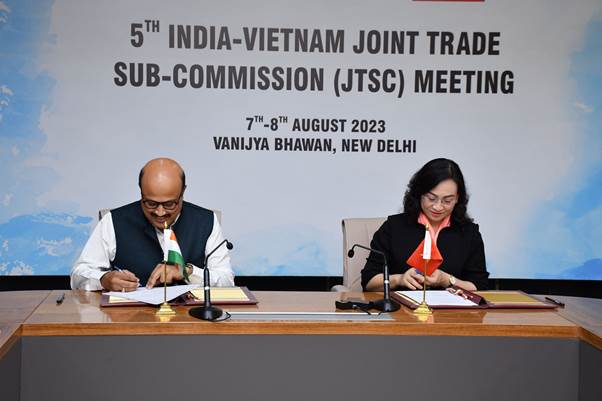
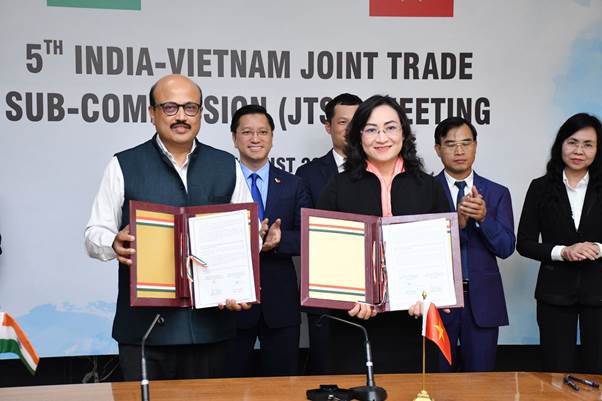
5th India-Vietnam Joint Trade Sub-Commission meeting in New Delhi

 The 5th meeting of India-Vietnam Joint Trade Sub-Commission (JTSC) was held in New Delhi today. The meeting was co-chaired by the Additional Secretary, Department of Commerce, Ministry of Commerce & Industry, Shri Rajesh Agrawal from the Indian side and Deputy Minister, Ministry of Industry and Trade, Ms. Phan Thi Thang from the Vietnam side. This meeting was held after a gap of more than four years since 4th JTSC meeting held in January 2019, on account of COVID-19 pandemic and other factors.


Vietnam is the 23rd largest global trade partner of India and the 5th largest among ASEAN countries with bilateral trade of USD 14.70 Bn during 2022-23. Vietnam accounts for 11.2% of India’s total trade with ASEAN. Vietnam is an important destination for India’s iron & steel and agricultural and animal products mainly meat products, animal fodder, cereals and marine products.


Both sides reviewed the progress on bilateral trade and economic cooperation and discussed ways to unlock the vast untapped potential in bilateral trade to enable the business communities from the two sides to benefit from the partnership of two of the fastest growing economies.

Both sides identified potential sectors such as agriculture, fisheries, textiles, footwear, pharmaceuticals, chemicals, fertilizers, machinery and equipment, consumer products, energy and automobile industry, for expanding trade cooperation and agreed to work together to resolve market access issues and technical barriers faced by the exporters through regular and sustained bilateral discussions.

The Indian side raised the issues of pending registration of Indian fishery and meat establishments for export, restricted market access in public procurement of drugs for Indian pharmaceutical companies and high anti-dumping duties imposed on Indian polyster filament yarn products and sorbitol.

The Indian side highlighted the potential in service sector cooperation and suggested cooperation in IT, financial services, education sector, tourism, healthcare, tele-medicine, medical tourism and start-up ecosystem. The Indian side also suggested Mutual Recognition Agreements (MRAs) on professional services, internationalization of RuPay card, QR based payment system, and domestic currency trade settlement.

Both sides discussed logistics challenges affecting bilateral trade and agreed to continue efforts for exploring direct shipping services, collaboration in freight movement and improving air connectivity.

 ***

Promotion of Organic Farming

 Government has been promoting organic farming on priority in the country since 2015-16 through the schemes of Paramparagat Krishi Vikas Yojana (PKVY) and Mission Organic Value Chain Development for North Eastern Region (MOVCDNER). Both the schemes stress on end-to-end support to farmers engaged in organic farming i.e. from production to processing, certification and marketing and post-harvest management. Training and Capacity Building are integral part of the scheme. Incentives to farmers for producing and using organic fertilizers/manure are inbuilt in these schemes as on-farm and off-farm organic inputs.  Direct Benefit Transfer (DBT) is provided to the farmers for using organic inputs including organic fertilizers. PKVY is being implemented in all the States other-than North Eastern (NE) States across the country whereas MOVCDNER scheme is being implemented exclusively in the NE States.

Under PKVY, an assistance of Rs.50,000 per ha for a period of three years is provided to States including States of Tamil Nadu & Rajasthan for promotion of organic farming to cover different components like Training & Capacity Building, Data Management, PGS Certification, Value Addition, Marketing and Publicity. Out of this, assistance of Rs. 31,000 per ha for a period of three years is provided to farmers through DBT for on- farm /off –farm organic inputs. Whereas under MOVCDNER, an assistance of Rs. 46,575/ha for 3 years is provided for creation of FPO, support to farmers for organic inputs, quality seeds/ planting material and training, hand holding and certification.  Out of this, assistance @ Rs. 32500/ ha for 3 years is provided to farmers for off -farm /on –farm organic inputs under the scheme including Rs. 15,000 as DBT to the farmers and Rs. 17,500 for the planting material to be given to the farmers by State Lead Agency  (SLA) in kind.

In view of the increasing demand of organic farming products of India in the global market, Government is facilitating value addition, certification and marketing. As per requirement of International market, Government has initiated third party certification under National Programme for Organic Production (NPOP) in 2001.

Under PKVY assistance @ Rs 8800/ha for 3 years is provided to facilitate value addition, marketing and publicity to all the states/UTs including Tamil Nadu. Assistance is provided for certification and training, handholding & capacity building respectively @ Rs 2700/-ha for 3 years and Rs 7500/- ha for 3 years under PKVY for farmers of all the States including Rajasthan. Where  as under MOVCDNER scheme assistance is provided @ Rs 10,000/-ha for 3 years for training, capacity building & certification.

The scheme-wise and state-wise details of funds allocated, released and utilized under organic farming (under PKVY & MOVCDNER) schemes during the year 2022-23 are given at Annexure –I.

A long-term experiment, at selected sites, for comparative evaluation of organic and conventional management conducted by Indian Council of Agriculture Research (ICAR) indicated that yield was found to be higher during kharif and rabi /summer crops for coarse/ basmati rice based cropping systems, soybean-based systems compared to inorganic approaches indicating better suitability of these systems under long-term organic management approaches. Soil organic carbon was found to be significantly higher under long-term organic approach for coarse rice, basmati rice and soybean-based systems.

To disseminate information on organic and natural farming as well as on on- farm production and use of various kinds of organic fertilizers, National Center for Organic and Natural Farming (NCONF) and its Regional Center for Organic and Natural Farming (RCONF) located at Ghaziabad, Nagpur, Bangalore, Imphal and Bhubaneswar are organizing various trainings namely, One Day Farmers’ Training, Two Days Training for Extension Officers/Staff, Two Days Training on PGS, 30 Days Certificate course, One day Jaivik evam Prakratik Kisan Sammelan for 500 participants, One Day Stakeholder consultations/ conferences on Natural Farming for 100 participitants, Orientation Program on Natural Farming and awareness programmes across the country. NCONF and RCONF also organize online awareness campaign and training programmes on organic and natural farming and production and use of organic and bio-fertilizers.

The ICAR also imparts trainings, organizes front-line demonstrations, awareness programs etc. to educate farmers on organic farming and organic fertilizers.

Scheme-wise (PKVY & MOVCDNER) and State-wise details of funds allocation, released and expenditure under organic farming during the year 2022-23.

Rs in lakh

S. No.

Name of the State

2022-23

Allocation

Release

Expenditure*

PKVY

1

Andhra Pradesh

826.35

0.00

0.00

2

Bihar

2830.65

1547.68

789.75

3

Chhattisgarh

3504.93

0.00

571.03

4

Gujarat

20.50

0.00

0.00

5

Goa

1025.10

0.00

283.05

6

Haryana

10.25

0.00

0.00

7

Jharkhand

1397.27

0.00

0.00

8

Karnataka

1045.61

512.55

256.35

9

Kerala

1971.12

1712.07

647.52

10

Madhya Pradesh

5925.51

0.00

1375.93

11

Maharashtra

745.90

449.67

776.74

12

Odisha

741.44

370.72

311.97

13

Punjab

222.46

0.00

0.00

14

Rajasthan

2452.64

1783.26

3363.94

15

Tamil Nadu

704.87

0.00

170.56

16

Telangana

30.75

0.00

0.00

17

Uttar Pradesh

12972.55

5089.32

2111.16

18

West Bengal

555.39

555.39

240.41

19

NE (Aspirational & Committed liabilities)

0.00

0.00

7.58

20

Himachal Pradesh

1121.36

0.00

1124.32

21

Uttarakhand

6030.68

5969.00

7652.94

22

All Union Territories (UTs)

893.02

193.55

0.00


Total

45028.35

18183.20

19683.25

MOVCDNER

S. No.

Name of the State

2022-23

Allocation

Release

Expenditure*

1

Assam

2681.80

2059.15

2059.15

2

Manipur

2915.37

2915.36

2815.36

3

Meghalaya

2011.88

621.57

524.33

4

Nagaland

1961.01

1390.60

1289.60

5

Mizoram

1604.25

1140.90

876.63

6

Arunachal Pradesh

1860.77

1642.17

1526.26

7

Sikkim

4005.10

1538.83

1398.25

8

Tripura

2759.82

3000.26

2819.01


Total

19800.00

14308.84

13308.59

*Expenditure column also includes expenditure incurred from the releases made in the previous years


National Food Security Mission

 In order to increase the production and productivity of rice, wheat, pulses, coarse cereals (maize and barley), nutri-cereals (Shree Anna) and to fulfil the objectives of the National Food Security Mission (NFSM), assistance is being provided to the farmers through States/Union Territories for interventions like cluster demonstrations on improved package of practices, demonstrations on cropping system, seed production and distribution of high yielding varieties/hybrids, improved farm machineries/resource conservation machineries/tools, efficient water application tools, plant protection measures, nutrient management/soil ameliorants, processing &post-harvest equipment, cropping system based trainings etc. Initiatives like distribution of seed minikits of newer varieties of pulses, production of quality seed, creation of seed hubs at Indian Council of Agricultural Research (ICAR) Institutes/ State Agricultural Universities (SAUs)/ Krishi Vigyan Kendras (KVKs), technological demonstrations by KVKs have also been included under NFSM.

To meet the objectives of NFSM-Oilseeds,incentives/ subsidies are being provided for purchase of breeder seeds, production of foundation seeds & certified seeds, distribution of certified seeds, distribution of seed mini kits, demonstrations (block demonstrations /front line demonstrations /cluster front line demonstrations), farmers field school, training, supply of water carrying devices, plant protection equipments, soil ameliorates, micro-nutrients, weedicides, insecticides, bio-fertilizer/bio agents, etc. 

Government of India has launched a separate Mission i.e. National Mission on Edible Oils – Oil Palm (NMEO-OP) in August 2021 to promote oil palm cultivation with the aim to augment the availability of edible oil in the country by harnessing area expansion, increasing crude palm oil production and productivity with the aim to reduce the import burden.

Per Drop More Crop (PDMC) is being implemented from 2015-16 in the country to focus on enhancing water use efficiency at farm level through Micro Irrigation namely Drip and Sprinkler Irrigation systems. Indian Council of Agricultural Research (ICAR) has developed cost effective, location specific scientific technologies viz. rainwater harvesting and recycling, precision technologies for irrigation and farming practices, adoption of modern agronomic practices, diversifying cropping pattern from water guzzling crops like low land rice and sugarcane to pulses, oilseeds, maize and agro-forestry etc. Further, ICAR imparts training and organizes field demonstrations to educate farmers in these regard.

Under the Command Area Development & Water Management (CADWM) programme of Pradhan Mantri Krishi Sinchayee Yojana (PMKSY) implemented by the Department of Water Resources, River Development & Ganga Rejuvenation (DoWR, RD & GR), lined field channels are constructed and wherever possible underground pipeline network is laid for providing last-mile connectivity to the irrigation system to enhance irrigation efficiency. The DoWR, RD & GR has set up Bureau of Water Use Efficiency (BWUE) on 20.10.2022 for promotion, regulation and control of efficient use of water in irrigation, industrial and domestic sector. The Bureau facilitates promotion of improving water use efficiency across various sectors namely irrigation, drinking water supply, power generation, industries etc. in the country. National Water Mission (NWM) launched the ‘SahiFasal’ campaign in 2019 to nudge farmers in water stressed areas to grow crops which are not water intensive but use water efficiently and are economically remunerative, healthy and nutritious and suited to the agro-climatic-hydro characteristics.

The net irrigated area in the country has increased from 692.70 lakh hectare in the year 2016-17 hectare to 777.29 lakh hectare in the year 2020-21.

This information was given by the Union Minister of Agriculture and Farmers’ Welfare, Shri Narendra Singh Tomar in a written reply in Lok Sabha today.

******

Public Private Partnership Mode

 Government has constituted a Screening Committee on leveraging agriculture innovations for farmer to facilitate combined implementation on pilot scale of selected technologies/interventions by Private companies/startups to develop and refine products based on field-level observations, data and inferences for a fixed period.

Further, government has built Digital Public Infrastructure for Agriculture as an open source, open standard at interoperable public goods as per budget announcements for the 2023-24. In this regards, Architecture of three core registries i.e. Farmer registry, Geo referencing of village map registry, crop sown registry has been finalized. These registries can be used to develop various farmers centric solutions by the state governments as well as private sector entities.

Expenditure Finance Committee has approved a Central Sector Scheme for blended Capital Support to finance startups for agriculture and rural enterprise relevant for Farm Produce Value Chain.

Looking into the unique advantages of Drone technologies in agriculture, the Department of Agriculture & Farmers Welfare has released the Standard Operating Procedures (SOPs) for use of drones in pesticide and nutrient application in public domain in December 2021, which provide concise instructions for effective and safe operations of drones. In order to make this technology affordable to the farmers and other stakeholders of this sector, financial assistance @ 100% for purchase of agricultural drones and its attachments (actual cost of expenditure and its attachments or Rs. 10.00 lakhs, whichever is lower) together with the contingent expenditure is extended under Sub-Mission on Agricultural Mechanization (SMAM) to the Farm Machinery Training & Testing Institutes of Indian Council of Agricultural Research, Krishi Vigyan Kendra (KVK) and State Agricultural Universities (SAUs) and @ 75% to FPO’s for its demonstration on the farmer’s fields. In order to provide agricultural services through drone application, financial assistance @ 40% of the basic cost of drone and its attachments or Rs. 4 lakhs, whichever is less also provided for drone purchase by existing and new Custom Hiring Centers (CHCs) and also a general category farmers and @ 50% of the basic cost of drone and its attachments or Rs. 5 lakhs for SC/ST/women/small and marginal farmers and the agriculture graduates.

A component called “Innovation and Agri-Entrepreneurship Development” has been launched under Rashtriya Krishi Vikas Yojana (RKVY-RAFTAAR) in 2018-19 with the objective of promoting innovation and agri-entrepreneurship by providing financial support and nurturing the incubation ecosystem. Under this programme, start-ups are encouraged to use innovative technologies to resolve challenges faced in agriculture and allied sectors. A total of 1176 start-ups have been selected in various areas of agriculture and allied sectors under this programme for providing financial support through Knowledge Partners and Agri Business Incubators appointed by the Department for implementation of this programme.

The Indian Council of Agriculture Research (ICAR) has been supporting Agri-based startups under the project called National Agriculture Innovation Fund (NAIF) initiated in year 2016-2017. It has two components viz. (I) Innovation Fund; (II) Incubation Fund and National Coordinating Unit (NCU):

Component I: 10 Zonal Technology Management Units and 89 Institute
Technology Management Units (ITMUs) established in 99 ICAR institutes provide a single-window mechanism to manage innovations, showcase intellectual assets, and pursue matters related to intellectual property (IP) management and transfer/commercialization of technologies in these institutes.

Component II: Agri-business Incubator Centres (ABICs) are set up to speed up the delivery of the new technologies to stake holders. The ABICs are the nodal point to provide the desired link for Agriculture Research &Development (R&D) Institutions for incubation/ commercialization of the validated technologies. So far, 50 Agri-Business Incubation Centers have been established and are operational in the ICAR network under the NAIF scheme.

This information was given by the Union Minister of Agriculture and Farmers’ Welfare, Shri Narendra Singh Tomar in a written reply in Lok Sabha today.

******

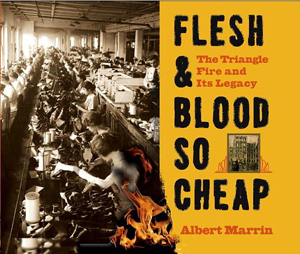
Flesh & Blood So Cheap


Flesh & Blood So Cheap cover

I liked this book. People who are interested in national disasters and US history as well as immigration will most probably be interested in reading this book.

Readers can gain knowledge of what it was like to work in New York City in the early 1900s. One of the things that was especially interesting was that there were no safety laws at work. Also, there was a big contrast between the rich and the poor. Some people may not like this book because it is very depressing, but it is an important event in history to remember.

This book was very well written. It has black and white photos along with descriptions of the photos. These photos give us a better idea of what people’s lives were like. This book is suitable for 9-20 year olds.

I give this book 5 stars.

Book Review: If I Never Forever Endeavor


If I Never Forever Endeavor cover

This book was about a bird who didn’t yet know how to fly.

The bird has to decide if it will try to fly, but it was not sure if it wants to. The bird thought, “If I never forever endeavor” then I won’t ever learn. On one wing, he worries he might fail and on the other wing he thinks of how he may succeed. He worries that if he tries, he may get lost in the world. That makes him want to stay in his nest where he’s safe.

I think this book would help other children to learn that trying new things can be scary, but sometimes when we try, we can find things that make us happy too. And this book will help others know that mistakes are okay and part of learning.

My favorite part is that the bird tried and learned that she could fly. I also liked that I read this book because it gave me a chance to talk to mom about making mistakes and how I don’t like making them. Then I learned they are good and part of learning.

Boys and girls who are 3 to 8 years old would like this book because it teaches about trying a new thing and how it’s important to get past being scared so you can learn new things.

I give the book 5 stars since I think it’s important for other children to learn about courage.

Book Review Writing

 If you love to read, at some point you will want to share a book you love with others. You may already do this by talking about books with friends. If you want to share your ideas with more people than your circle of friends, the way you do that is by writing a review. By publishing the reviews you write, you can share your ideas about books with other readers around the world.

It’s natural for young readers to confuse book reviews with book reports, yet writing a book review is a very different process from writing a book report. Book reports focus on the plot of the book. Frequently, the purpose of book reports is to demonstrate that the books were read, and they are often done for an assignment.

A book review is a totally different task. A book review’s purpose is to help people decide whether or not the book would interest them enough to read it. Reviews are a sneak peek at a book, not a summary. Like wonderful smells wafting from a kitchen, book reviews lure readers to want to taste the book themselves.

This guide is designed to help you become a strong book reviewer, a reader who can read a book and then cook up a review designed to whet the reading appetites of other book lovers.

Form: What should the review look like?

How Long Should It Be?

The first question we usually ask when writing something is “How long should it be?” The best answer is “As long as it takes,” but that’s a frustrating answer. A general guideline is that the longer the book, the longer the review, and a review shouldn’t be fewer than 100 words or so. For a long book, the review may be 500 words or even more.

If a review is too short, the review may not be able to fulfill its purpose. Too long, and the review may stray into too much plot summary or lose the reader’s interest.

The best guide is to focus less on how long to write and more on fulfilling the purpose of the review.

How Do You Create A Title?

The title of the review should convey your overall impression and not be overly general. Strong titles include these examples:

  • “Full of action and complex characters”
  • “A nail-biter that will keep you up all night”
  • “Beautiful illustrations with a story to match”
  • “Perfect for animal lovers”

Weak titles may look like this:

  • “Really good book”
  • “Three stars”
  • “Pretty good”
  • “Quick read”

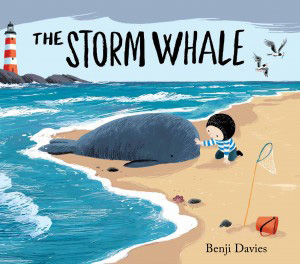
The Storm Whale cover

How Should It Begin?

Although many reviews begin with a short summary of the book (This book is about…), there are other options as well, so feel free to vary the way you begin your reviews.

In an introductory summary, be careful not to tell too much. If you retell the entire story, the reader won’t feel the need to read it him/herself, and no one appreciates a spoiler (telling the end). Here are some examples of summaries reviewers from The New York Times have written:

“A new picture book tells a magically simple tale of a lonely boy, a stranded whale and a dad who rises to the occasion.”

“In this middle-grade novel, a girl finds a way forward after the loss of her mother.”

“Reared by ghosts, werewolves and other residents of the hillside cemetery he calls home, an orphan named Nobody Owens wonders how he will manage to survive among the living having learned all his lessons from the dead. And the man Jack — who killed the rest of Nobody’s family — is itching to finish the job.”

“In vivid poems that reflect the joy of finding her voice through writing stories, an award-winning author shares what it was like to grow up in the 1960s and 1970s in both the North and the South.” Other ways to begin a review include:

  • Quote: A striking quote from the book (“It was a bright cold day in April, and the clocks were striking thirteen.”) can make for a powerful beginning. This quote begins George Orwell’s novel 1984.
  • Background: What makes this book important or interesting? Is the author famous? Is it a series? This is This is how Amazon introduces Divergent: “This first book in Veronica Roth’s #1 New York Times bestselling Divergent trilogy is the novel the inspired the major motion picture.”
  • Interesting Fact: For nonfiction books in particular, an interesting fact from the book may create a powerful opening for a review. In this review of The Middle East by Philip Steele, Zander H. of Mid-America Mensa asks, “Did you know that the Saudi Arabia’s Rub’ al-Khali desert reaches temperatures of 140 degrees Fahrenheit in the day and plummets to the freezing point at night?”
  • Explanation of a term: If a word or phrase in the book or title is confusing or vitally important to understand, you may wish to begin the review explaining that term.

Process: What should I write about?

Deciding what to say about the book can be challenging. Use the following ideas as a guide, but remember that you should not put all of this into a single review — that would make for a very long review! Choose the things that fit this particular book best.

General Information
What the reader ought to know

  • What kind of book is it? (Picture book? Historical fiction? Nonfiction? Fantasy? Adventure?)
  • Does the book belong to a series?
  • How long is the book? Is it an easy or a challenging read?
  • Is there anything that would be helpful for the reader to know about the author? For instance, is the author an expert in the field, the author of other popular books, or a first-time author?
  • How does the book compare to other books on the same topic or in the same genre?
  • Is the book written in a formal or informal style? Is the language remarkable in any way?
  • What ages is the book geared to?
  • Is the book written in normal prose? If it is written in poetic form, does it rhyme?

Plot
What happens?

Writing about the plot is the trickiest part of a review because you want to give the reader a feel for what the book is about without spoiling the book for future readers. The most important thing to remember is that you must never give away the ending. No one likes a spoiler.

One possibility for doing this is to set up the premise (A brother and a sister find themselves lost in the woods at the mercy of an evil witch. Will they be able to outsmart her and escape?). Another possibility is to set up the major conflict in the book and leave it unresolved (Sometimes the waiting is the hardest part or He didn’t know what he stood to lose or Finding your purpose in life can be as easy as finding a true friend.)

Try to avoid using the tired phrase “This book is about…” Instead, just jump right in (The stuffed rabbit wanted more than anything to live in the big old house with the wild oak trees.)

The Storm Whale cover

Characters
Who lives in the book?

Reviews should answer questions about the characters in fiction books or non-fiction books about people. Some possible questions to answer include:

  • Who are the main characters? Include the protagonist and antagonist.
  • What makes them interesting?
  • Do they act like real people act or are they too good or too evil to be believable?
  • Are they human?
  • What conflicts do they face?
  • Are they likeable or understandable?
  • How do they connect with each other?
  • Do they appear in other books?
  • Could you relate to any of the characters in the story?
  • What problems did the main characters face?
  • Who was your favorite character, and why?
  • We learn about characters from things they do and say, as well as things other characters say about them. You may wish to include examples of these things.

Theme
What is the book about at its heart?

What is the book really about? This isn’t the plot, but rather the ideas behind the story. Is it about the triumph of good over evil or friendship or love or hope? Some common themes include: change, desire to escape, facing a challenge, heroism, the quest for power, and human weaknesses.

Sometimes a book will have a moral — a lesson to learn. If so, the theme is usually connected to that moral. As you write about the theme, try to identify what makes the book worth reading. What will the reader think about long after the book is finished? Ask yourself if there any particular lines in the book that strike you as meaningful.

Setting
Where are we?

The setting is the time and place the story occurs. When you write about the setting in a review, include more than just the location. Some things to consider:

  • Is the book set in the past, present or future?
  • Is it set in the world we know or is it a fantastical world?
  • Is it mostly realistic with elements of fantasy (animals that can talk, for example)?
  • Is the setting unclear and fuzzy, or can you easily make the movie in your mind?
  • How much does the author draw you into the setting and how does s/he accomplish that?

The Storm Whale cover

Opinion & Analysis
What do you really think?

This is where the reviewer shares his/her reactions to the book that go beyond the essential points described above. You may spend half of the review on this section. Some possible questions to address include:

  • Why do you think other readers would enjoy it? Why did you enjoy it (if you did) or why didn’t you (if you didn’t).
  • What ages or types of readers do you think would like the book?
  • How does it compare with other books that are in the same genre or by the same author?
  • Does the book engage your emotions? If a book made you laugh or cry or think about it for days, be sure to include that.
  • What do you like or dislike about the author’s writing style? Is it funny? Is it hard to follow? Is it engaging and conversational in tone?
  • How well do you think the author achieved what s/he was going for in the writing of the book? Do you think you felt what the author was hoping you would feel?
  • Did the book feel complete, or did it feel as though key elements were left out?
  • How does the book compare to other books like it you’ve read?

Are there parts that are simply not believable, even allowing for the reader’s understanding that it is fiction or even fantasy?

  • Are there mistakes?
  • Would you describe the book as for entertainment, self-improvement, or information?
  • What was your favorite part of the book?
  • Would you have done anything differently had you been the author?
  • Would any reader enjoy this book? If not, to what ages or type of reader would it appeal?

Special situations: Nonfiction and young reviewers

Some of the tips and ideas above work best for fiction, and some of it is a little too complicated for very young reviewers.

Nonfiction
What to do if it’s real

When reviewing a book of nonfiction, you will want to consider these questions:

  • What was the author’s purpose in writing the book? Did the author accomplish that purpose?
  • Who is the target audience for the book?
  • What do you think is the book’s greatest value? What makes it special or worthwhile?
  • Are the facts shared accurate?
  • Is the book interesting and hold your attention?
  • Would it be a useful addition to a school or public library?
  • If the book is a biography or autobiography, how sympathetic is the subject?
  • Is it easy to understand the ideas?
  • Are there extra features that add to the enjoyment of the book, such as maps, indexes, glossaries, or other materials?
  • Are the illustrations helpful?

Young Reviewers
Keeping it simple

Reviewing a book can be fun, and it’s not hard at all. Just ask yourself these questions:

  • What is the book about? You don’t need to tell the whole story over — just give an idea of what it’s about.
  • Do you think other people would like it?
  • Did you think it was funny or sad?
  • Did you learn something from the book?
  • l Did you think it was interesting?
  • Would you want to read it again?
  • Would you want to read other books by the same author or about the same subject?
  • What was your favorite part?
  • Did you like the pictures?

Remember! Don’t give away the ending. Let’s keep that a surprise.

General Tips & Ideas

Use a few quotes or phrases (keep them short) from the book to illustrate the points you make about the book. If there are illustrations, be sure to comment on those. Are they well done? Has the illustrator done other well-known books?

Make sure you include a conclusion to the review — don’t leave it hanging. The conclusion can be just one sentence (Overall, this book is a terrific choice for those who…).

You can use the transition word handout at the end of the Writer’s Toolbox to find ideas for words to connect the ideas in your review. If you would like to read some well-written reviews, look for reviews of books for young people at The New York Times or National Public Radio.

Rating Books
How to award stars?

Most places you post reviews ask you to rate the book using a star system, typically in a range of from one to five stars. In your rating, you should consider how the book compares to other books like it. Don’t compare a long novel to a short poetry book — that’s not a valid comparison.

It’s important to remember that it’s not asking you to only give five stars to the very best books ever written.

  • 5 Stars: I’m glad I read it or I loved it (this doesn’t mean it was your favorite book ever).
  • 4 Stars: I like it. It’s worth reading.
  • 3 Stars: It wasn’t very good.
  • 2 Stars: I don’t like it at all.
  • 1 Star: I hate it.