\’Newspaper\’, as we know, is an essential part of our life. For a newspaper reader, it is the first and foremost thing that he would like to have early in the morning. It connects us with every field and every part of the world. Be it politics, entertainment, sports, films etc.
Newspaper provides information about the burning topics from all over world and keeps us well informed. Though news is also displayed on television and radio, there we don\’t have an option to choose. It results in wastage of time, as the news is repeated over and over again and is followed by a number of advertisements.
Apart from the information newspaper provides, it can be useful in a number of ways. The puzzles given in it develop the thinking ability. The job vacancies column help the people. A regular reader can improve his knowledge of language in which language he reads the newspaper. Newspaper also tells us about the different policies introduced by the Government and makes us aware about everything happening around us.
We can conclude by saying that the newspaper broadens our outlook and is an enormous source of information. Therefore one must develop the habit of reading newspaper everyday.
\’Newspaper\’, as we know, is an essential part of our life. For a newspaper reader, it is the first and foremost thing that he would like to have early in the morning. It connects us with every field and every part of the world. Be it politics, entertainment, sports, films etc.
Newspaper provides information about the burning topics from all over world and keeps us well informed. Though news is also displayed on television and radio, there we don\’t have an option to choose. It results in wastage of time, as the news is repeated over and over again and is followed by a number of advertisements.
Apart from the information newspaper provides, it can be useful in a number of ways. The puzzles given in it develop the thinking ability. The job vacancies column help the people. A regular reader can improve his knowledge of language in which language he reads the newspaper. Newspaper also tells us about the different policies introduced by the Government and makes us aware about everything happening around us.
We can conclude by saying that the newspaper broadens our outlook and is an enormous source of information. Therefore one must develop the habit of reading newspaper everyday.
\’Newspaper\’, as we know, is an essential part of our life. For a newspaper reader, it is the first and foremost thing that he would like to have early in the morning. It connects us with every field and every part of the world. Be it politics, entertainment, sports, films etc.
Newspaper provides information about the burning topics from all over world and keeps us well informed. Though news is also displayed on television and radio, there we don\’t have an option to choose. It results in wastage of time, as the news is repeated over and over again and is followed by a number of advertisements.
Apart from the information newspaper provides, it can be useful in a number of ways. The puzzles given in it develop the thinking ability. The job vacancies column help the people. A regular reader can improve his knowledge of language in which language he reads the newspaper. Newspaper also tells us about the different policies introduced by the Government and makes us aware about everything happening around us.
We can conclude by saying that the newspaper broadens our outlook and is an enormous source of information. Therefore one must develop the habit of reading newspaper everyday.
On August 25, 2016, the National Park Service (NPS) turns 100. After a century of shepherding America\’s splendor, the Park Service and its personnel will rightfully be feted as dedicated, humble stewards of our country\’s most precious landscapes.
Personally, we have been lucky enough to visit many of the nation\’s 59 parks on all points of the compass. Each site has never failed to live up to its consecration as a place of American rarity, pride, and beauty. From the unspoiled trails to the popular overlooks, every curated destination within the wilderness is a testament to the work and vision of the Parks Service.
This august anniversary introduces many opportunities to weave the Parks into authentic classroom lessons. For example, the \”Every Kid In A Park\” initiative seeks to connect our nation\’s youth to its most treasured spaces. Additionally, a wide range of visualizations now provide easy ways to incorporate the centennial into state standards and skill-based curricula. At their least, these videos and graphics offer terrific kick-offs to a morning\’s discussion. At their best, these charts and illustrations support critical student proficiencies. They also bring to life the gorgeous panoply of natural wonder that would make any Disney confection blush.
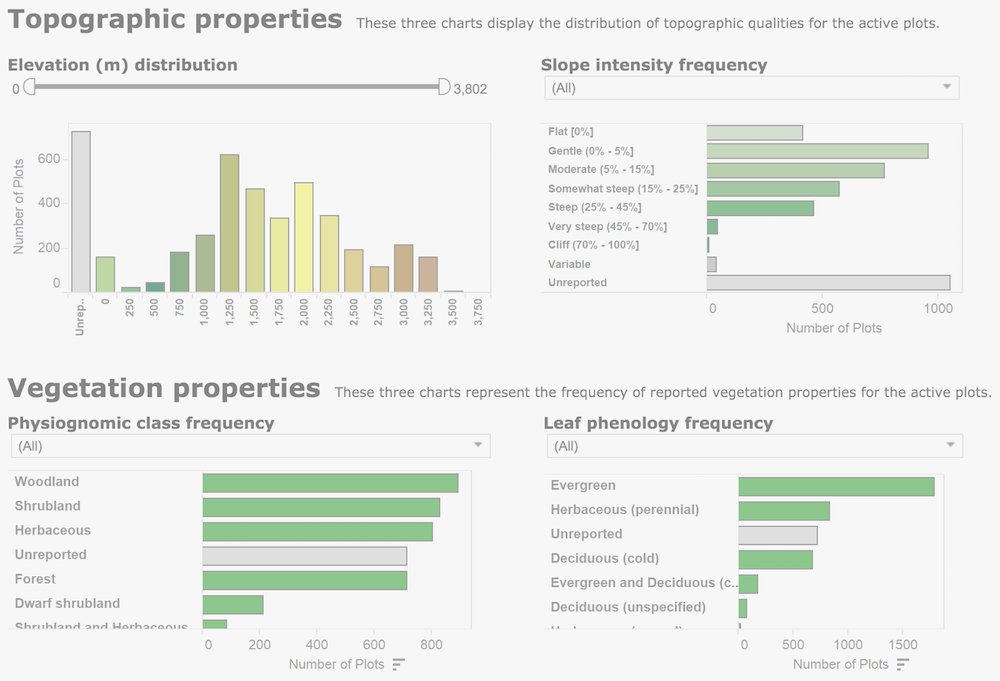
To start, the \”Find Your Park\” website gathers videos and social media interactions of everyday first-person testimonials about the grandeur of America\’s vistas. As a companion, the NPS has opened its Geographic Information Systems (GIS) data to the public, for educators and graphic artists to tap in building models of terrains and visitations.
Some of the best renderings of the National Parks come from the Works Project Administration during the 1930s New Deal. These art deco posters from the Federal Arts Project capture the majesty of the otherworldly settings in colorful and appealing travel enticements. National Geographic has assembled a nice collection of these posters from the Library Of Congress.
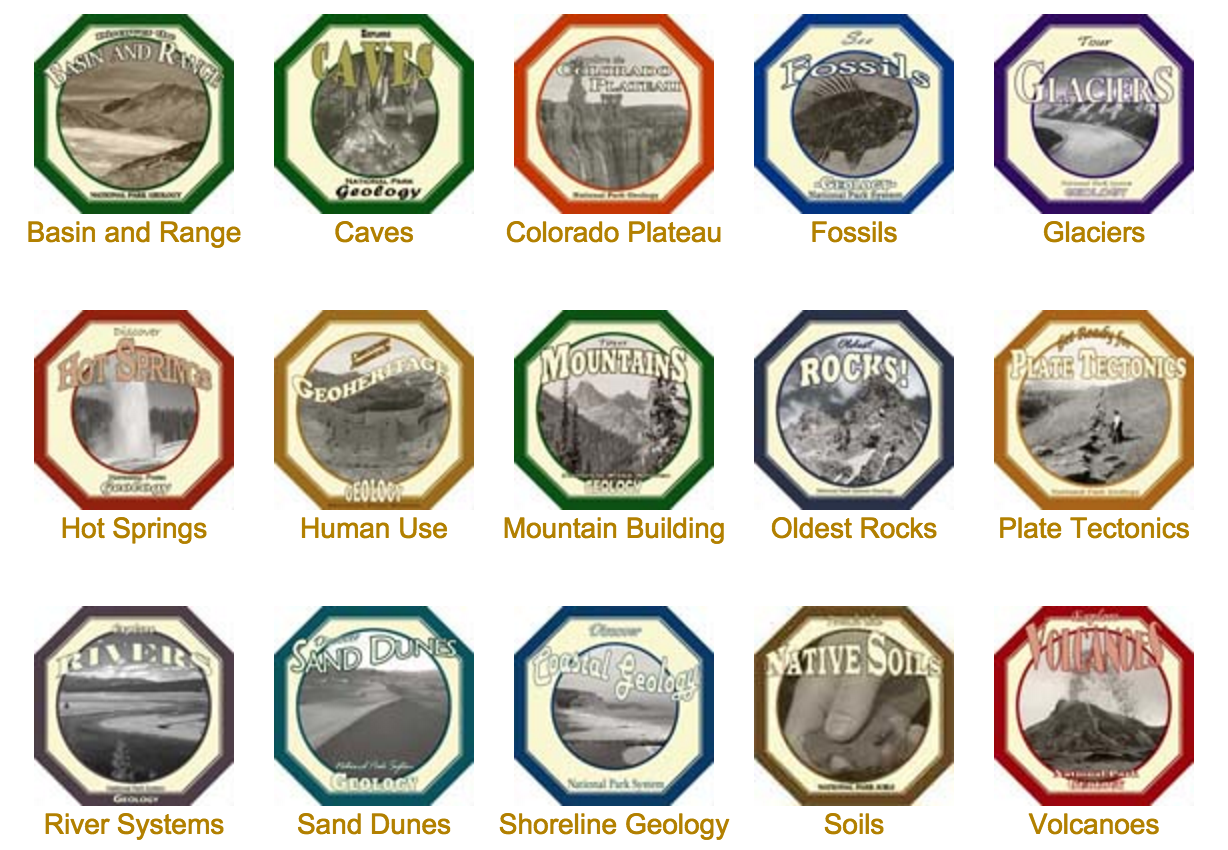
In a video homage, the outdoor outfitter O.A.R.S. has put together a stunning tribute to the Parks, told through the stirring words of Theodore Roosevelt. As befitting its founder, the NPS takes seriously its safeguarding of America\’s geology. It invites students of energy, minerals, and paleontology to explore the singular contours and cliffs through open online access and badging of restoration and geoscience. These resources are terrific for earth science and environmentally minded teachers to investigate with their students.
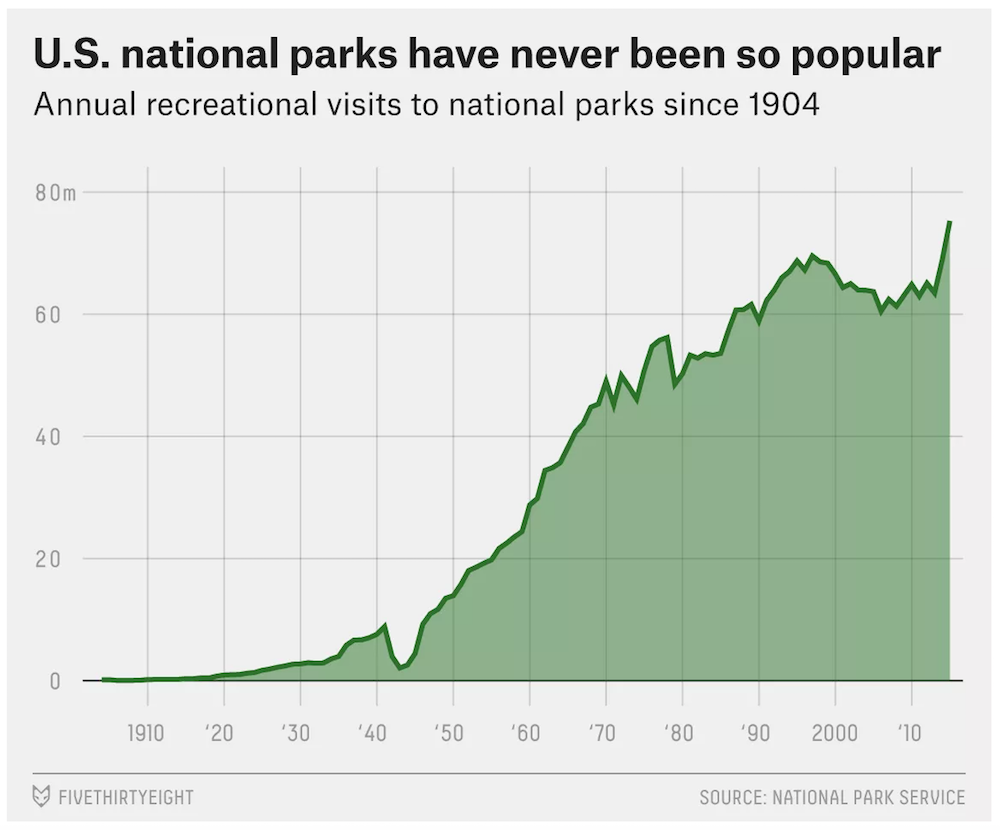
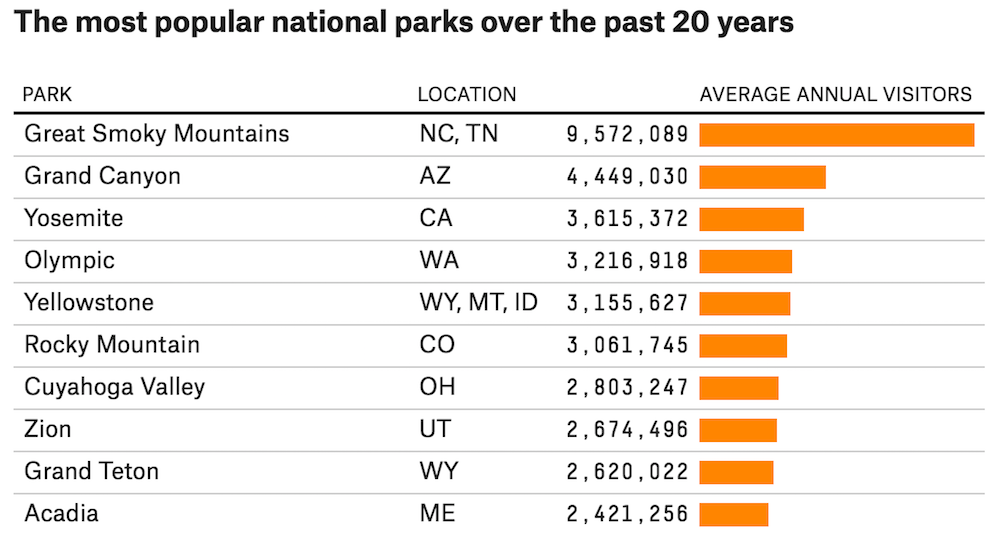
In math and statistics, the minds at FiveThirtyEight (who usually spend their time worrying about political polls and baseball ERAs) have analyzed the popularity of each park. They crafted crisp graphs and charts for STEM educators to draw from in ranking the visitors to each venerated location. As they note, \”the U.S. national parks have never been so popular,\” and the Great Smoky Mountains continues its reign as the most-visited National Park, due to its location and exquisiteness.
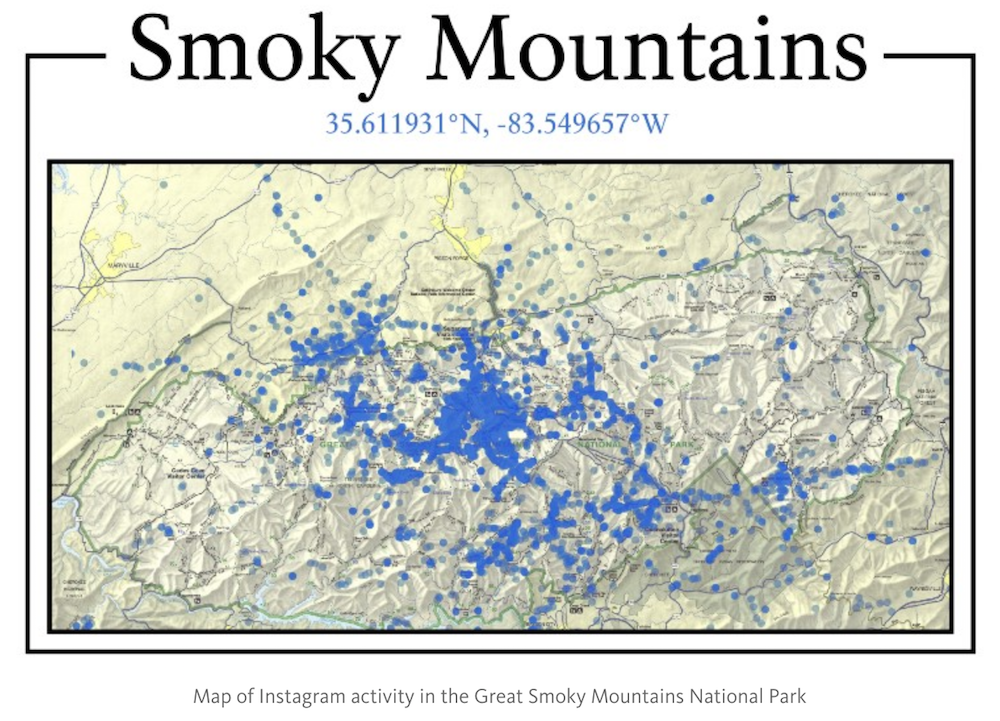
In probing the specifics beneath the Great Smoky Mountains\’ charm, researcher John Farrell raked the Instagram API to determine where in the Park photographs were most frequently snapped. His visualization layers social media atop traditional coordinate geography to present a new picture of the Park\’s usage. He includes similar map mash-ups for other coast-to-coast sites.
For its part, the NPS has put together its own retro advertisement, in the classic style of antique movie reels or 1950s television ads. This wry film is a perfect nod to the 100-year heritage of the organization. It also displays a warm embrace of every citizen who passes through the Parks\’ gates.
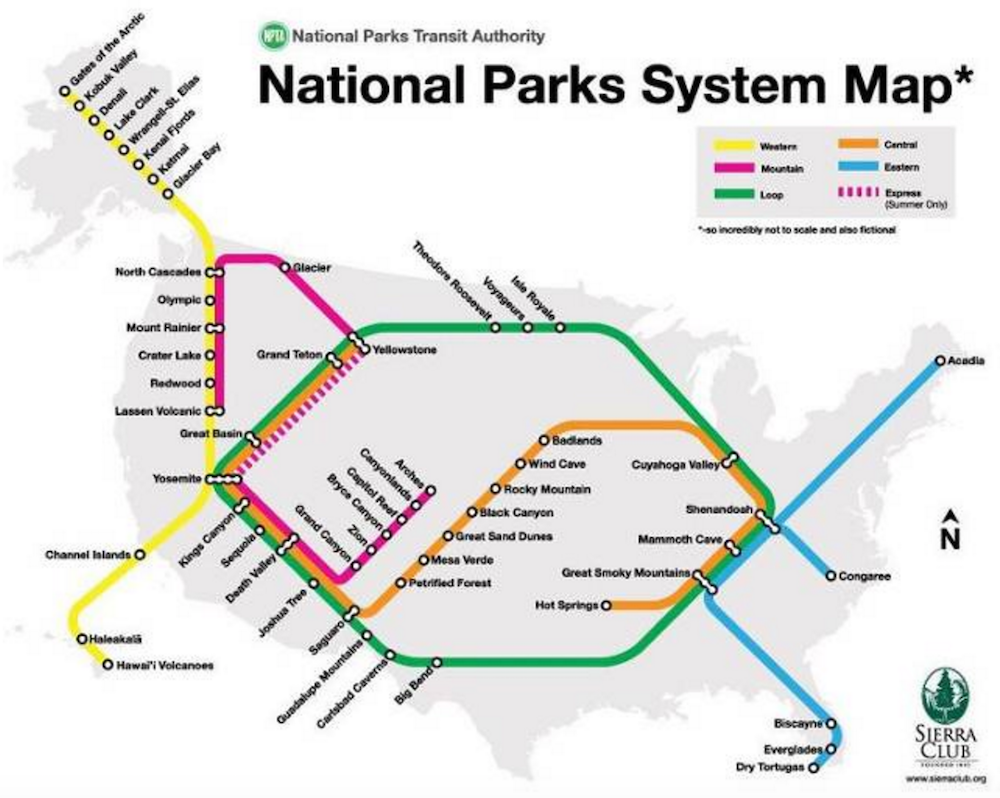
In order to help navigate the Parks, the Sierra Club has designed a System Map based on the urban subway template. This seemingly humorous rendering actually gives travelers a valuable guide in planning their vacations and in connecting the dots between regional marvels.
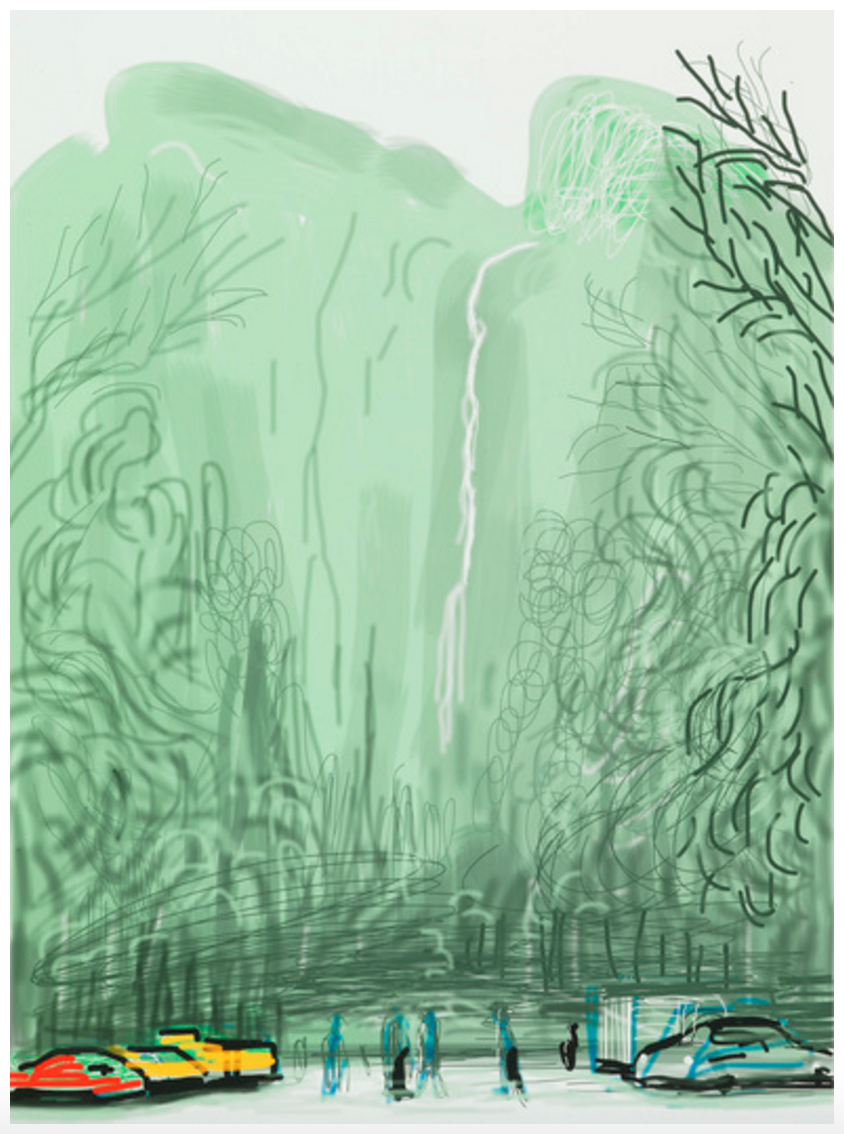
Finally, the purest representations of America\’s National Parks have always come from the minds of the country\’s painters. Beginning with the light portraits of Thomas Moran, many artists have sought to capture the glory of glaciers and geysers. Most recently, David Hockney scratched a series of brilliant sweeps on his iPad in his \”Yosemite Suite.\” These personal, stylized views prove to any viewer that the nation\’s Parks are love letters to its wilderness. They are the last vestige against urbanity and a hallmark of global distinction.
On August 25, 2016, the National Park Service (NPS) turns 100. After a century of shepherding America\’s splendor, the Park Service and its personnel will rightfully be feted as dedicated, humble stewards of our country\’s most precious landscapes.
Personally, we have been lucky enough to visit many of the nation\’s 59 parks on all points of the compass. Each site has never failed to live up to its consecration as a place of American rarity, pride, and beauty. From the unspoiled trails to the popular overlooks, every curated destination within the wilderness is a testament to the work and vision of the Parks Service.
This august anniversary introduces many opportunities to weave the Parks into authentic classroom lessons. For example, the \”Every Kid In A Park\” initiative seeks to connect our nation\’s youth to its most treasured spaces. Additionally, a wide range of visualizations now provide easy ways to incorporate the centennial into state standards and skill-based curricula. At their least, these videos and graphics offer terrific kick-offs to a morning\’s discussion. At their best, these charts and illustrations support critical student proficiencies. They also bring to life the gorgeous panoply of natural wonder that would make any Disney confection blush.
To start, the \”Find Your Park\” website gathers videos and social media interactions of everyday first-person testimonials about the grandeur of America\’s vistas. As a companion, the NPS has opened its Geographic Information Systems (GIS) data to the public, for educators and graphic artists to tap in building models of terrains and visitations.
Some of the best renderings of the National Parks come from the Works Project Administration during the 1930s New Deal. These art deco posters from the Federal Arts Project capture the majesty of the otherworldly settings in colorful and appealing travel enticements. National Geographic has assembled a nice collection of these posters from the Library Of Congress.
In a video homage, the outdoor outfitter O.A.R.S. has put together a stunning tribute to the Parks, told through the stirring words of Theodore Roosevelt. As befitting its founder, the NPS takes seriously its safeguarding of America\’s geology. It invites students of energy, minerals, and paleontology to explore the singular contours and cliffs through open online access and badging of restoration and geoscience. These resources are terrific for earth science and environmentally minded teachers to investigate with their students.
In math and statistics, the minds at FiveThirtyEight (who usually spend their time worrying about political polls and baseball ERAs) have analyzed the popularity of each park. They crafted crisp graphs and charts for STEM educators to draw from in ranking the visitors to each venerated location. As they note, \”the U.S. national parks have never been so popular,\” and the Great Smoky Mountains continues its reign as the most-visited National Park, due to its location and exquisiteness.
In probing the specifics beneath the Great Smoky Mountains\’ charm, researcher John Farrell raked the Instagram API to determine where in the Park photographs were most frequently snapped. His visualization layers social media atop traditional coordinate geography to present a new picture of the Park\’s usage. He includes similar map mash-ups for other coast-to-coast sites.
For its part, the NPS has put together its own retro advertisement, in the classic style of antique movie reels or 1950s television ads. This wry film is a perfect nod to the 100-year heritage of the organization. It also displays a warm embrace of every citizen who passes through the Parks\’ gates.
In order to help navigate the Parks, the Sierra Club has designed a System Map based on the urban subway template. This seemingly humorous rendering actually gives travelers a valuable guide in planning their vacations and in connecting the dots between regional marvels.
Finally, the purest representations of America\’s National Parks have always come from the minds of the country\’s painters. Beginning with the light portraits of Thomas Moran, many artists have sought to capture the glory of glaciers and geysers. Most recently, David Hockney scratched a series of brilliant sweeps on his iPad in his \”Yosemite Suite.\” These personal, stylized views prove to any viewer that the nation\’s Parks are love letters to its wilderness. They are the last vestige against urbanity and a hallmark of global distinction.
On August 25, 2016, the National Park Service (NPS) turns 100. After a century of shepherding America\’s splendor, the Park Service and its personnel will rightfully be feted as dedicated, humble stewards of our country\’s most precious landscapes.
Personally, we have been lucky enough to visit many of the nation\’s 59 parks on all points of the compass. Each site has never failed to live up to its consecration as a place of American rarity, pride, and beauty. From the unspoiled trails to the popular overlooks, every curated destination within the wilderness is a testament to the work and vision of the Parks Service.
This august anniversary introduces many opportunities to weave the Parks into authentic classroom lessons. For example, the \”Every Kid In A Park\” initiative seeks to connect our nation\’s youth to its most treasured spaces. Additionally, a wide range of visualizations now provide easy ways to incorporate the centennial into state standards and skill-based curricula. At their least, these videos and graphics offer terrific kick-offs to a morning\’s discussion. At their best, these charts and illustrations support critical student proficiencies. They also bring to life the gorgeous panoply of natural wonder that would make any Disney confection blush.
To start, the \”Find Your Park\” website gathers videos and social media interactions of everyday first-person testimonials about the grandeur of America\’s vistas. As a companion, the NPS has opened its Geographic Information Systems (GIS) data to the public, for educators and graphic artists to tap in building models of terrains and visitations.
Some of the best renderings of the National Parks come from the Works Project Administration during the 1930s New Deal. These art deco posters from the Federal Arts Project capture the majesty of the otherworldly settings in colorful and appealing travel enticements. National Geographic has assembled a nice collection of these posters from the Library Of Congress.
In a video homage, the outdoor outfitter O.A.R.S. has put together a stunning tribute to the Parks, told through the stirring words of Theodore Roosevelt. As befitting its founder, the NPS takes seriously its safeguarding of America\’s geology. It invites students of energy, minerals, and paleontology to explore the singular contours and cliffs through open online access and badging of restoration and geoscience. These resources are terrific for earth science and environmentally minded teachers to investigate with their students.
In math and statistics, the minds at FiveThirtyEight (who usually spend their time worrying about political polls and baseball ERAs) have analyzed the popularity of each park. They crafted crisp graphs and charts for STEM educators to draw from in ranking the visitors to each venerated location. As they note, \”the U.S. national parks have never been so popular,\” and the Great Smoky Mountains continues its reign as the most-visited National Park, due to its location and exquisiteness.
In probing the specifics beneath the Great Smoky Mountains\’ charm, researcher John Farrell raked the Instagram API to determine where in the Park photographs were most frequently snapped. His visualization layers social media atop traditional coordinate geography to present a new picture of the Park\’s usage. He includes similar map mash-ups for other coast-to-coast sites.
For its part, the NPS has put together its own retro advertisement, in the classic style of antique movie reels or 1950s television ads. This wry film is a perfect nod to the 100-year heritage of the organization. It also displays a warm embrace of every citizen who passes through the Parks\’ gates.
In order to help navigate the Parks, the Sierra Club has designed a System Map based on the urban subway template. This seemingly humorous rendering actually gives travelers a valuable guide in planning their vacations and in connecting the dots between regional marvels.
Finally, the purest representations of America\’s National Parks have always come from the minds of the country\’s painters. Beginning with the light portraits of Thomas Moran, many artists have sought to capture the glory of glaciers and geysers. Most recently, David Hockney scratched a series of brilliant sweeps on his iPad in his \”Yosemite Suite.\” These personal, stylized views prove to any viewer that the nation\’s Parks are love letters to its wilderness. They are the last vestige against urbanity and a hallmark of global distinction.
On August 25, 2016, the National Park Service (NPS) turns 100. After a century of shepherding America\’s splendor, the Park Service and its personnel will rightfully be feted as dedicated, humble stewards of our country\’s most precious landscapes.
Personally, we have been lucky enough to visit many of the nation\’s 59 parks on all points of the compass. Each site has never failed to live up to its consecration as a place of American rarity, pride, and beauty. From the unspoiled trails to the popular overlooks, every curated destination within the wilderness is a testament to the work and vision of the Parks Service.
This august anniversary introduces many opportunities to weave the Parks into authentic classroom lessons. For example, the \”Every Kid In A Park\” initiative seeks to connect our nation\’s youth to its most treasured spaces. Additionally, a wide range of visualizations now provide easy ways to incorporate the centennial into state standards and skill-based curricula. At their least, these videos and graphics offer terrific kick-offs to a morning\’s discussion. At their best, these charts and illustrations support critical student proficiencies. They also bring to life the gorgeous panoply of natural wonder that would make any Disney confection blush.
To start, the \”Find Your Park\” website gathers videos and social media interactions of everyday first-person testimonials about the grandeur of America\’s vistas. As a companion, the NPS has opened its Geographic Information Systems (GIS) data to the public, for educators and graphic artists to tap in building models of terrains and visitations.
Some of the best renderings of the National Parks come from the Works Project Administration during the 1930s New Deal. These art deco posters from the Federal Arts Project capture the majesty of the otherworldly settings in colorful and appealing travel enticements. National Geographic has assembled a nice collection of these posters from the Library Of Congress.
In a video homage, the outdoor outfitter O.A.R.S. has put together a stunning tribute to the Parks, told through the stirring words of Theodore Roosevelt. As befitting its founder, the NPS takes seriously its safeguarding of America\’s geology. It invites students of energy, minerals, and paleontology to explore the singular contours and cliffs through open online access and badging of restoration and geoscience. These resources are terrific for earth science and environmentally minded teachers to investigate with their students.
In math and statistics, the minds at FiveThirtyEight (who usually spend their time worrying about political polls and baseball ERAs) have analyzed the popularity of each park. They crafted crisp graphs and charts for STEM educators to draw from in ranking the visitors to each venerated location. As they note, \”the U.S. national parks have never been so popular,\” and the Great Smoky Mountains continues its reign as the most-visited National Park, due to its location and exquisiteness.
In probing the specifics beneath the Great Smoky Mountains\’ charm, researcher John Farrell raked the Instagram API to determine where in the Park photographs were most frequently snapped. His visualization layers social media atop traditional coordinate geography to present a new picture of the Park\’s usage. He includes similar map mash-ups for other coast-to-coast sites.
For its part, the NPS has put together its own retro advertisement, in the classic style of antique movie reels or 1950s television ads. This wry film is a perfect nod to the 100-year heritage of the organization. It also displays a warm embrace of every citizen who passes through the Parks\’ gates.
In order to help navigate the Parks, the Sierra Club has designed a System Map based on the urban subway template. This seemingly humorous rendering actually gives travelers a valuable guide in planning their vacations and in connecting the dots between regional marvels.
Finally, the purest representations of America\’s National Parks have always come from the minds of the country\’s painters. Beginning with the light portraits of Thomas Moran, many artists have sought to capture the glory of glaciers and geysers. Most recently, David Hockney scratched a series of brilliant sweeps on his iPad in his \”Yosemite Suite.\” These personal, stylized views prove to any viewer that the nation\’s Parks are love letters to its wilderness. They are the last vestige against urbanity and a hallmark of global distinction.
On August 25, 2016, the National Park Service (NPS) turns 100. After a century of shepherding America\’s splendor, the Park Service and its personnel will rightfully be feted as dedicated, humble stewards of our country\’s most precious landscapes.
Personally, we have been lucky enough to visit many of the nation\’s 59 parks on all points of the compass. Each site has never failed to live up to its consecration as a place of American rarity, pride, and beauty. From the unspoiled trails to the popular overlooks, every curated destination within the wilderness is a testament to the work and vision of the Parks Service.
This august anniversary introduces many opportunities to weave the Parks into authentic classroom lessons. For example, the \”Every Kid In A Park\” initiative seeks to connect our nation\’s youth to its most treasured spaces. Additionally, a wide range of visualizations now provide easy ways to incorporate the centennial into state standards and skill-based curricula. At their least, these videos and graphics offer terrific kick-offs to a morning\’s discussion. At their best, these charts and illustrations support critical student proficiencies. They also bring to life the gorgeous panoply of natural wonder that would make any Disney confection blush.
To start, the \”Find Your Park\” website gathers videos and social media interactions of everyday first-person testimonials about the grandeur of America\’s vistas. As a companion, the NPS has opened its Geographic Information Systems (GIS) data to the public, for educators and graphic artists to tap in building models of terrains and visitations.
Some of the best renderings of the National Parks come from the Works Project Administration during the 1930s New Deal. These art deco posters from the Federal Arts Project capture the majesty of the otherworldly settings in colorful and appealing travel enticements. National Geographic has assembled a nice collection of these posters from the Library Of Congress.
In a video homage, the outdoor outfitter O.A.R.S. has put together a stunning tribute to the Parks, told through the stirring words of Theodore Roosevelt. As befitting its founder, the NPS takes seriously its safeguarding of America\’s geology. It invites students of energy, minerals, and paleontology to explore the singular contours and cliffs through open online access and badging of restoration and geoscience. These resources are terrific for earth science and environmentally minded teachers to investigate with their students.
In math and statistics, the minds at FiveThirtyEight (who usually spend their time worrying about political polls and baseball ERAs) have analyzed the popularity of each park. They crafted crisp graphs and charts for STEM educators to draw from in ranking the visitors to each venerated location. As they note, \”the U.S. national parks have never been so popular,\” and the Great Smoky Mountains continues its reign as the most-visited National Park, due to its location and exquisiteness.
In probing the specifics beneath the Great Smoky Mountains\’ charm, researcher John Farrell raked the Instagram API to determine where in the Park photographs were most frequently snapped. His visualization layers social media atop traditional coordinate geography to present a new picture of the Park\’s usage. He includes similar map mash-ups for other coast-to-coast sites.
For its part, the NPS has put together its own retro advertisement, in the classic style of antique movie reels or 1950s television ads. This wry film is a perfect nod to the 100-year heritage of the organization. It also displays a warm embrace of every citizen who passes through the Parks\’ gates.
In order to help navigate the Parks, the Sierra Club has designed a System Map based on the urban subway template. This seemingly humorous rendering actually gives travelers a valuable guide in planning their vacations and in connecting the dots between regional marvels.
Finally, the purest representations of America\’s National Parks have always come from the minds of the country\’s painters. Beginning with the light portraits of Thomas Moran, many artists have sought to capture the glory of glaciers and geysers. Most recently, David Hockney scratched a series of brilliant sweeps on his iPad in his \”Yosemite Suite.\” These personal, stylized views prove to any viewer that the nation\’s Parks are love letters to its wilderness. They are the last vestige against urbanity and a hallmark of global distinction.
On August 25, 2016, the National Park Service (NPS) turns 100. After a century of shepherding America\’s splendor, the Park Service and its personnel will rightfully be feted as dedicated, humble stewards of our country\’s most precious landscapes.
Personally, we have been lucky enough to visit many of the nation\’s 59 parks on all points of the compass. Each site has never failed to live up to its consecration as a place of American rarity, pride, and beauty. From the unspoiled trails to the popular overlooks, every curated destination within the wilderness is a testament to the work and vision of the Parks Service.
This august anniversary introduces many opportunities to weave the Parks into authentic classroom lessons. For example, the \”Every Kid In A Park\” initiative seeks to connect our nation\’s youth to its most treasured spaces. Additionally, a wide range of visualizations now provide easy ways to incorporate the centennial into state standards and skill-based curricula. At their least, these videos and graphics offer terrific kick-offs to a morning\’s discussion. At their best, these charts and illustrations support critical student proficiencies. They also bring to life the gorgeous panoply of natural wonder that would make any Disney confection blush.
To start, the \”Find Your Park\” website gathers videos and social media interactions of everyday first-person testimonials about the grandeur of America\’s vistas. As a companion, the NPS has opened its Geographic Information Systems (GIS) data to the public, for educators and graphic artists to tap in building models of terrains and visitations.
Some of the best renderings of the National Parks come from the Works Project Administration during the 1930s New Deal. These art deco posters from the Federal Arts Project capture the majesty of the otherworldly settings in colorful and appealing travel enticements. National Geographic has assembled a nice collection of these posters from the Library Of Congress.
In a video homage, the outdoor outfitter O.A.R.S. has put together a stunning tribute to the Parks, told through the stirring words of Theodore Roosevelt. As befitting its founder, the NPS takes seriously its safeguarding of America\’s geology. It invites students of energy, minerals, and paleontology to explore the singular contours and cliffs through open online access and badging of restoration and geoscience. These resources are terrific for earth science and environmentally minded teachers to investigate with their students.
In math and statistics, the minds at FiveThirtyEight (who usually spend their time worrying about political polls and baseball ERAs) have analyzed the popularity of each park. They crafted crisp graphs and charts for STEM educators to draw from in ranking the visitors to each venerated location. As they note, \”the U.S. national parks have never been so popular,\” and the Great Smoky Mountains continues its reign as the most-visited National Park, due to its location and exquisiteness.
In probing the specifics beneath the Great Smoky Mountains\’ charm, researcher John Farrell raked the Instagram API to determine where in the Park photographs were most frequently snapped. His visualization layers social media atop traditional coordinate geography to present a new picture of the Park\’s usage. He includes similar map mash-ups for other coast-to-coast sites.
For its part, the NPS has put together its own retro advertisement, in the classic style of antique movie reels or 1950s television ads. This wry film is a perfect nod to the 100-year heritage of the organization. It also displays a warm embrace of every citizen who passes through the Parks\’ gates.
In order to help navigate the Parks, the Sierra Club has designed a System Map based on the urban subway template. This seemingly humorous rendering actually gives travelers a valuable guide in planning their vacations and in connecting the dots between regional marvels.
Finally, the purest representations of America\’s National Parks have always come from the minds of the country\’s painters. Beginning with the light portraits of Thomas Moran, many artists have sought to capture the glory of glaciers and geysers. Most recently, David Hockney scratched a series of brilliant sweeps on his iPad in his \”Yosemite Suite.\” These personal, stylized views prove to any viewer that the nation\’s Parks are love letters to its wilderness. They are the last vestige against urbanity and a hallmark of global distinction.
‘Dr. Martin Luther King, Jr.’ was born on 15th January, 1929 in Atlanta, Georgia. He was born Michael King, but his father changed his name in honor of German reformer Martin Luther.
Dr. Martin Luther King, Jr. was a legendary activist and leader in the African-American civil rights movement (1955-1968). He received the Nobel Peace Prize in 1964 for combating racial inequality through nonviolence. He was assassinated on April 4, 1968. Dr. Martin Luther King, Jr. is best known for being an iconic figure in the advancement of civil rights in the United States and around the world, using non-violent methods following the teachings of Mahatma Gandhi.
‘Paul Laurence Dunbar’ was born on June 27, 1872 in Dayton, Ohio. He was the son of ex-slaves. His father’s name was Joshua and his mother’s name was Matilda.
Paul Laurence Dunbar wrote his first poem at age 6 and gave his first public recital at age 9. At an early age he edited and published many newspapers.
Paul Laurence Dunbar wrote many short stories, novels, plays, songs, essays and poetry. Due to racial discrimination, he could only find work as an elevator operator. He wrote most of his works while taking people up and down the elevator. Paul Laurence Dunbar was among the first African-American poets to gain national prominence. He passed away on February 9, 1906.
‘Harry Houdini’ was born on March 24, 1874 in Hungary. His real name was ‘Eric Weisz’. His parents were Rabbi Mayer Samuel Weisz and Cecília Weisz. When Harry was still a baby, his parents decided to go and live in the U.S.A.
Harry Houdini was a great escape-artist. When he was nine years old he gave his first public performance. Houdini was so very interested in magic, that he practiced many tricks until they were perfect.
Houdini’s most famous trick was to escape. On stage he would be tied up or locked up with chains and in a few minutes he would get free. He performed many other famous tricks. Some of his tricks were very dangerous.
Harry Houdini died on October 31, 1926 at the age of 52. He had shown in his life that he was ready to meet any challenge.
‘Louis Braille’ was born on 4th January 1809 in France. Due to an accident in early life he was completely blind in both eyes.
Louis Braille himself was a blind and worked in a blind school in Paris. He perfected a system of reading and writing especially for the blind. This writing is called Braille. The system that he developed in 1834 was not used much until about the time of his death.
Louis Braille died on 6th January, 1852 at the age of 43. He will always be remembered for his system remains known worldwide simply as braille.
‘Siegfried Sassoon’ was born on 8th September, 1886 in England. His full name was Siegfried Loraine Sassoon. His father Alfred Ezra Sassoon was a member of the wealthy Baghdadi Jewish Sassoon merchant family. Siegfried Sassoon was an eminent English poet and writer.
Siegfried Sassoon served during the first world war as a captain. At first he was very excited and felt honoured to be in the war and fighting for his country; but then, when he saw the horrors of the war at first hand, he began to speak out against it. He wrote some moving poetry about the hardships and tragedy felt in war. Siegfried Sassoon died on 1st September 1967 at the age of 80.
‘Jagdish Chandra Bose’ was born on 30 November 1858 in Bengal, India (Now in Bangla Desh). His father, Bhagawan Chandra Bose was a leader of the Brahmo Samaj. Jagdish Chandra Bose was raised in a home committed to pure Indian traditions and culture.
Jagdish Chandra Bose attended Cambridge University after studying physics at Calcutta University. He returned to India in 1884 after completing a B.Sc. degree from Cambridge University. He made many discoveries in biology and physics. He showed that plants have feelings. He found that metals get ‘tired’ after some time. He invented a machine to measure the growth of plants.
Jagadish Chandra Bose is one of the most prominent first Indian scientists who proved by experimentation that both animals and plants share much in common. He authored two illustrious books, ‘Response in the Living and Non-living’ and ‘The Nervous Mechanism of Plants’. He set up the Bose Institute at Calcutta. He was honoured with many notable awards for his great work.
Jagdish Chandra Bose passed away on 23 November 1937 at the age of 78.


 \’Newspaper\’, as we know, is an essential part of our life. For a newspaper reader, it is the first and foremost thing that he would like to have early in the morning. It connects us with every field and every part of the world. Be it politics, entertainment, sports, films etc.







 Eduindex
You must be logged in to post a comment.