Short Article on ‘Uses of Domestic Animals’ (160 Words)

The ‘Domestic Animals’ are the animals that have been tamed and kept by humans as a work animal, food source or pet. There are different kinds of domestic animals. Cow, buffalo, sheep, goat, dog, cat, elephant, horse, camel, cock, hen, parrot, pigeon are some example of domestic animals.

Domestic Animals are very useful to man. Cow gives us milk. bullocks help the farmers in farming. Furs of sheep are very soft and long. These furs are sheared and made into wool. We get milk from the she-goats. Dogs are very faithful animals and they watch our houses. Elephants are used to carry heavy logs of wood. Horses are used to ride. Camels are used in deserts. The parrot is a talking bird. Most of the domestic animals are greatly devoted to their masters. Our domestic animals are quite friendly to us. They do very useful jobs for our benefit. Hence, we should treat them with all kindness.  

‘Care to be taken while completing Life Insurance Proposal Forms’ (150 Words

A contract of life insurance is a contract of utmost good faith technically known as uberrima fides. The principle of disclosing all material facts is embodied in this important concept which applies to all form of life insurance. It becomes the duty of the proposer to inform the insurer of everything likely to affect the judgement of the insurer, however unimportant it may seem to him/ her (the proposer).

Hence, the proposer should ensure that all questions in the proposal form are correctly answered. Any misrepresentation, non- disclosure of facts/ information which is material to acceptance of risk, or fraudulent information in any document leading to the acceptance of the risk will render the insurance contract null and void.

Hence, it is quite important that the policyholders and his dependants provide the correct and full information to secure the precious benefits of the insurance policy for his near and dear ones. 

Short Biography of ‘A.J. Cronin’ (74 Words)

Full name of ‘A.J. Cronin’ was Archibald Joseph Cronin. A.J. Cronin was born on 19 July 1896 in Cardross, Scotland. He was a great physician and a writer from scotland.

A.J. Cronin wrote several novels and short stories. His works are renowned for their memorable characters and powerful portrayal of the injustices in the society. His best-known novel was ‘The Citadel’. A.J. Cronin was passed away on 6 January 1981 at the age of 84. 

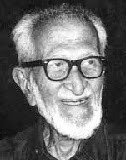
Short Biography of ‘Salim Ali’ (122 Words)

Full name of ‘Salim Ali’ was Salim Moizuddin Abdul Ali. He was born on 12 November 1896 in Mumbai, India. His father’s name was Moizuddin and his mother’s name was Zeenat-un-nissa. His parents died in the very early age of Salim Ali.

Salim Ali was a famous ornithologist and naturalist of India. He is known as the ‘Bird Man of India’ because he was an expert on Indian Birds. He studied the habits and lifestyles of Indian birds all his life. Salim Ali has written books on the birds of India. For his great work he was awarded the Padm Bhushan and Padma Vibhushan by the Government of India.

Salim Ali was passed away on 20 June 1987 at the age of 90. 

Short Biography of ‘Lala Lajpat Rai’ (132 Words)

‘Lala Lajpat Rai’ was born on 28 January 1865 in Punjab state of India. His father’s name was Radha Krishan, who was a was an Urdu teacher.

Lala Lajpat Rai was a large believer in the idea of Hinduism. He joined Indian National Congress and took active part in the freedom struggle of India. He was a great Indian freedom fighter and for this he was deported to Burma. Lala Lajpat Rai was elected President of the Congress party in the Calcutta Special Session of 1920.

Lala Lajpat Rai worked with great Energy and enthusiasm to improve education and social conditions in India. He was popularly known as ‘Punjab Kesari’ meaning the lion of Punjab also known as ‘Sher-e- Punjab’. He was died on 17 November 1928 at the age of 63. 


Indian Economic Service / Indian Statistical Service Examination, 2019

Based  on  the  results  of  the  written  examination of the Indian Economic Service / Indian Statistical Service Examination, 2019 held  by  the Union Public Service Commission from 28th to 30th June, 2019 followed by interviews  for  Personality  Test  in December, 2019 and January, 2020,  the  lists,  in  order  of  merit, of  the  candidates who have been recommended for  appointment  to  the  posts in Indian Economic Service and Indian Statistical Service are appended.

            The number of vacancies reported by the Government for posts to be filled is as under:-

Service GEN EWS OBC SC ST Total
Indian Economic Service 14 03 08 05 02 32

[Incl. 01 PwBD-1]

Indian Statistical Service 14 03 09 05 02 33

[Incl. 01 PwBD-1, 01 PwBD-3,

01 PwBD-4 & 5]

     The number of candidates recommended for appointment to the posts in Indian Economic Service and Indian Statistical Service is as under:

Service GEN EWS OBC SC ST Total
Indian Economic Service 14

[incl. 01 PwBD-1]

03 08 05 02 32

[incl. 01 PwBD-1]

Indian Statistical Service 10

[incl. 01 PwBD-3]

05 10

[incl. 01 PwBD-1]

05 02 32

[incl. 01 PwBD-1  & 01 PwBD-3

            Appointments shall be made strictly in accordance with the extant rules and the number of vacancies available.

            The Result of following Roll Nos. of recommended  candidates  are provisional :

Indian  Economic  Service (06 Nos. )

0470285 0870008 0870471 0870579 0870998
0871425        

Indian Statistical Service (11 Nos.)

0880344 0880973 0881551 0881725 0881762
0882260 1080073 1080493 1180510 2680088
2680798        

      The offer of appointment to the candidates whose result has been kept provisional will not be issued till the Commission verifies the original documents awaited from such candidates and till clarifies the provisional status of these candidates. The provisionality of these candidates will remain valid only for a period of three months from the date of declaration of Final result. In case the candidate fails to submit the requisite documents as required by the Commission within this period, their candidature will be cancelled and no further correspondence would be entertained in this regard.

           UPSC  has  a ‘Facilitation Counter’  near Examination Hall in its campus. Candidates  can obtain any information/clarification regarding their examination/ recruitment on the working day  between 10.00 hrs. to 17.00 hrs in person  or over telephone nos.  011-23385271 / 23381125.  Result  will  also  be  available  on  the  UPSC  web  site  i.e. www.upsc.gov.in Marks  of  the  candidates  shall  be  made  available  on the  website  within  fifteen  days  from  the  date  of  publciation  of  the  result.

Results – IES

Results – ISS

********

RCJ/PK

IEA Launches First In-depth Review of India’s Energy Policies

In partnership with NITI Aayog, International Energy Agency (IEA) today released the first in-depth review of India’s energy policies.

The report highlights the achievements of India’s energy policies and provides recommendations to support the government’s goals of promoting well-functioning energy markets and boosting deployment of renewables.

Dr Fatih Birol (Executive Director of the IEA) presented the key findings of the review in New Delhi in the presence of Shri Pralhad Joshi (Minister of Coal), Shri Dharmendra Pradhan (Minister of Petroleum and Natural Gas and Minister of Steel), Shri R K Singh (Minister for Power and Renewable Energy), Dr Rajiv Kumar (Vice Chairman, NITI Aayog), Shri Amitabh Kant (CEO of NITI Aayog), key energy secretaries, ambassadors and think tanks.

IEA regularly conducts in-depth reviews of energy policies for its member and association countries.This is the first review carried out for India, which has been an IEA-association country since March 2017.

Introducing the report, NITI Aayog Special Secretary Shri RP Gupta welcomed and commended the hard work of the IEA. He said, ‘As India builds on the remarkable growth and development of its energy sector, this in-depth review will help the Government in meeting its energy objectives by setting out a range of recommendations in each energy policy area.’

NITI Aayog CEO Amitabh Kant, who had brought up the idea with IEA to conduct the review, said: ‘With clear goals in place, the country is making great strides towards affordable, secure and cleaner energy for all its citizens. India is working hard to move towards its aspirations of transforming the energy sector.’

‘IEA has the privilege of enjoying a close relationship with India. This first in-depth review of the country’s energy policies illustrates the value of our growing collaboration,’ said Dr Birol.

‘The energy choices that India makes will be critical for Indian citizens as well as the future of the planet. This was demonstrated at IEA’s 2019 ministerial meeting, which mandated the Agency to start consultations with India for a strategic partnership that could serve as a path to eventual membership, a game-changer for international energy governance.’

The IEA report congratulates the Indian government on its outstanding achievements in extending citizens’ access to electricity, affordable efficient lighting and clean cooking in record time through historic schemes like SAUBHAGYA, UJALA and UJJWALA,while pursuing energy market reforms and the swift deployment of renewable technologies. The report highlights the strong growth of renewables in India, which now accounts for almost 23% of the country’s total installed capacity. The review also found that energy efficiency improvements in India avoided 15% of additional energy demand, oil and gas imports, and air pollution as well as 300 million tonnes of CO2 emissions between 2000 and 2018.

India is becoming increasingly influential in global energy trends. The country’s demand for energy is set to double by 2040, and its electricity demand may triple, according to the IEA report. Indian oil consumption is expected to grow faster than that of any other major economy. This makes further improving energy security a key priority for India’s economy, says the IEA.

IEA welcomes Indian government policies designed to conduct large-scale renewable energy auctions, open up coal mining to private companies, and promote access to oil and gas markets for foreign investors. The report offers a wide range of recommendations for reforms in support of India’s goal of promoting open and well-functioning energy markets in sectors such as coal, gas and electricity. These include building strong regulators to ensure non-discriminatory access, moving from state allocation to market pricing, and further rationalizing energy subsidies.

In India’s renewables-rich states, the share of variable renewables in electricity generation is already above 15%, a level that calls for dedicated policies to ensure they integrate smoothly into the power system. NITI Aayog can play a strong role in working with the states to implement power sector reforms, advance grid integration, improve flexibility and coordinate energy policy decisions.

The review also strongly encourages India to institutionalise energy policy coordination across government with a national energy policy framework.

Power and Renewable Energy Minister R K Singh congratulated IEA and NITI Aayog for the launch of the report: ‘India’s energy policy is a global story. India has the largest unified power grid that operates in a single frequency. India has moved from scarcity to surplus electricity over the past few years, while implementing the largest and the fastest energy access improvement and energy efficiency programmes in the world.’

Coal Minister Joshi said,‘With the support of Amitabh Kant and Dr Rajiv Kumar, India recently launched commercial mining operations. IEA’s report will be very helpful for designing our future course of action in the energy sector.’

Petroleum and Natural Gas Minister Pradhan said:‘NITI Aayog has already started preparing a National Energy Strategy, and I would like to propose an annual event where NITI and IEA can bring together global energy stakeholders to have a structured energy dialogue. We look forward to engaging with IEA on oil security and on helping India move towards a natural gas-based economy.’

NITI Aayog Vice Chairman Dr Kumar emphasised that India’s energy goals cannot be achieved without a strong coordination of policies and targets between Central and state governments, notably on electricity market design and renewable targets, and that a stronger cooperation is therefore needed on these fronts.

The report will help India to design implementation strategies to achieve secure and sustainable energy access for its citizens.

***

23rd National Youth Festival-2020 to be organized from 12th to 16th January, 2020

Ministry of Youth Affairs and Sports and State Government of Uttar Pradesh are jointly organizing 23rd National Youth Festival (NYF) 2020 at Indira Pratishthan, Lucknow from 12th to 16th January, 2020. Chief Minister, Uttar Pradesh Yogi Adityanath   and Minister of State (I/C) for Youth Affairs & Sports, Shri Kiren Rijiju will inaugurate the  NYF 2020  on 12th January on the occasion of birth anniversary of Swami Vivekananda, the great Youth icon. The inauguration will be followed by cultural/musical performance by local and renowned artists.

The closing ceremony of the festival on 16th January will be graced by the Governor of Uttar Pradesh and Shri Kiren Rijiju.

The Government has been organizing National Youth Festival (NYF) since 1995. The objective of NYF is to provide a platform to bring the youth of the country together in an attempt to provide them opportunity to showcase their talents in various activities. It also provides an arena, by creating a mini-India, where youth interact in formal and informal settings and exchange their social and cultural uniqueness. This blend of diverse socio-cultural milieu proves the Hon’ble Prime Minister’s commitment and belief in  ‘Ek Bharat Shrestha Bharat’.

The theme of the 23rd National Youth Festival 2020 is ‘FIT YOUTH FIT INDIA’ in pursuance of the goal of Hon’ble Prime Minister Narendra Modi for New India to be a fit India. NYF 2020 would leverage on the knowledge and ideas that Youth of today bring to the table where they are hugely connected and integrated through online and offline communication channels than ever before. The NYF 2020 intends to focus on bringing the attention of the Youth towards dialogue and discussions on selected thematic interfaces so that the outcome feeds into a National Level.

The National Youth Festival is like a mega National Integration Camp. NYF 2020 would have around 6000 participants (volunteers from NYKS, NSS and local youth) from each State of the country. As the theme of 2020 NYF suggests, the youth will inculcate physical activity and sports in their everyday lives which is essential to make new India a Fit India.

From 13th January to 16th January, different Competitive (Folk Dance, One Act Play, Hindustani Vocal Solo, Carnatic Vocal Solo, Elocution, harmonium Light, Tabla, Mridangam, Veena, Flute, Sitar, Guitar, Dances Manipuri, Odissi, Kuchupuri, Bharatnatyam, Kathak) and Non Competitive Events (Young Artist Camp, Yuva Kriti, Food festival, Adventure Camp, Suvichar, Youth Convention) will be organized.

****

Shri Dharmendra Pradhan to launch ‘Purvodaya’ : Accelerated development of Eastern India through an Integrated Steel Hub

Ministry of steel in partnership with CII and JPC is organising the launch of Purvodaya-Accelerated Development of Eastern Region through an Integrated Steel hub, in line with Prime Minister’s Vision  for focused development of the Eastern States. Shri Dharmendra Pradhan, Minster for Petroleum & Natural Gas and Steel will launch the Purvodaya on 11th January 2020 at The Oberoi Grand Kolkata. Prime Minister Shri Narendra Modi  has highlighted the need for focused development of the Eastern states in order to unleash their untapped potential thereby ensuring the growth of the region as a whole and the country at large.

Creation of such a world-class steel hub would significantly contribute to Purvodaya by propelling socio-economic development in the Eastern region. Steel capacity addition as envisioned in the hub would entail capital investments of >70 Bn. $ and lead to an incremental GSDP of >35 Bn. $ through steel alone. Growth of steel industry through such a hub would lead to significant employment opportunities across the entire value chain, creating over 2.5 Million jobs in the region. Creation of world-class logistics and utilities infrastructure would also spur development of other manufacturing industries across sectors. This would also be accompanied by social infrastructure in the form of cities, schools, hospitals, skilling centres etc. Such development, especially in the most under-developed regions in these states, will play a significant role in overall socio-economic growth of Eastern India, thus reducing the disparity between the East and other regions of the country.

Background

The Eastern region of India, though extremely rich in resources, lags behind other states in terms of development. Eastern states of India (Odisha, Jharkhand, Chhattisgarh, West Bengal and Northern Andhra Pradesh) collectively hold ~80% of the country’s iron ore, ~100% of coking coal and significant portion of chromite, bauxite and dolomite reserves. In addition to its rich mineral reserves, these states also have a significant locational advantage. There is a presence of major ports such as Paradip, Haldia, Vizag, Kolkata etc. with >30% of India’s major port capacity, 3 major National Waterways as well as strong road, rail connectivity to most parts of the country. Despite these advantages, these states are currently behind many other Indian states in terms of economic and development indicators such as GSDP per capita and Human Development Index (HDI).

In India’s march towards a $5 trillion economy, the 5 Eastern states can play a major role where steel sector can become the catalyst. The presence of natural resources, coupled with an already established steel industry, presents an excellent opportunity for Eastern India to spearhead the expected growth in the domestic steel industry, the region at large and the country as a whole. This Eastern belt has the potential to add more than 75% of the country’s incremental steel capacity envisioned by the National Steel Policy. It is expected that out of the 300 MT capacity by 2030-31, over 200 MT can come from this region alone, driven by Industry 4.0.Rs.100 lakh crore infrastructure investment announced by the Government in the next 5 years will result in additional boost to construction and infrastructure through various initiatives such as Pradhan Mantri Awas Yojana, Jal Jeevan Mission, Sagarmala, Bharatmala, etc. Steel industry has a multiplier effect in the GDP as well as in employment. These States would march ahead on the development index because of which the Ministry of Steel has envisioned an Integrated Steel Hub in this region, which will serve as a catalyst in the transformation of Eastern India by developing a vibrant steel industry.

  Integrated  Steel  Hub

The  proposed  Integrated  Steel  Hub, encompassing  Odisha, Jharkhand, Chhattisgarh, West Bengal and Northern Andhra Pradesh, would serve as a torchbearer for socio-economic growth of Eastern India.

The objective of this hub would be to enable swift capacity addition and improve overall competitiveness of steel producers both in terms of cost and quality. In addition to increased steel capacity, this hub would also help enhance best-in- class value addition capabilities. The Integrated Steel Hub would focus on 3 key elements:


  1. Capacity addition through easing the setup of greenfield steel plants
  2. Development of steel clusters near integrated steel plants as well as demand centres
  3. Transformation of logistics and utilities infrastructure which would change the socio-economic landscape in the East

These elements would be supported through additional enablers such as ensured availability of raw materials, presence of supporting industries such as capital goods and well-established avenues for skill development.

Steps Taken by Ministry of Steel

Various steps to make this hub a reality are already being taken by the Ministry. The Central Ministries, the State Governments and Private Players across the spectrum are allied to the cause of Purvodaya. The following actions have already been initiated by the Ministry of Steel, in co-ordination with the various stakeholders:


  1. A policy facilitating the creation and upgradation of steel clusters has been put up after due consultation with Central Ministries, State Governments and industry. Kalinganagar and Bokaro have been identified as pilot locations for steel clusters around ISPs. Task Forces and Working Groups, with the support of the respective State Governments, have been created. Detailed planning for operationalization of these clusters is currently underway.
  2. In an effort to ease capacity addition through greenfield route, a framework policy is being created to address the challenges faced in land acquisition, raw material linkage and obtaining
    This being done in consultation with Central Government Ministries, State Governments and industry stakeholders.
  3. Critical logistics and infrastructure projects are being identified for expedition across the 12 major steel zones identified in the region (Kalinganagar, Angul, Rourkela, Jharsuguda, Nagarnar, Bhilai, Raipur, Jamshedpur, Bokaro, Durgapur, Kolkata, Vizag). These include major rail, road and port capacity expansion projects to debottleneck existing capacity and create world-class multimodal logistics infrastructure across these zones.


****

Quick Estimates of Index of Industrial Production and Use-Based Index for the month of November, 2019 (BASE 2011-12=100)

The Quick Estimates of Index of Industrial Production (IIP) with base 2011-12 for the month of November 2019 stands at 128.4, which is 1.8 percent higher as compared to the level in the month of November 2018. The cumulative growth for the period April-November 2019 over the corresponding period of the previous year stands at 0.6 percent.

2.     The Indices of Industrial Production for the Mining, Manufacturing and Electricity sectors for the month of November 2019 stand at 112.5, 130.2 and 139.9 respectively, with the corresponding growth rates of 1.7 percent, 2.7 percent and (-) 5.0 percent as compared to November 2018 (Statement I). The cumulative growth in these three sectors during April-November 2019 over the corresponding period of 2018 has been (-) 0.1 percent, 0.9 percent and 0.8 percent respectively.

3.     In terms of industries, thirteen out of the twenty three industry groups (as per 2-digit level of National Industrial Classification-2008) in the manufacturing sector have shown positive growth during the month of November 2019 as compared to the corresponding month of the previous year (Statement II). The industry group ‘Manufacture of wood and products of wood and cork, except furniture; manufacture of articles of straw and plaiting materials’ has shown the highest positive growth of 23.2 percent followed by 12.9 percent in ‘Manufacture of basic metals’. On the other hand, the industry group ‘Other manufacturing’ has shown the highest negative growth of (-) 13.5 percent followed by (-) 12.6 percent in ‘Manufacture of motor vehicles, trailers and semi-trailers’.

4.     As per Use-based classification, the growth rates in November 2019 over November 2018 are (-) 0.3 percent in Primary goods, (-) 8.6 percent in Capital goods, 17.1 percent in Intermediate goods and (-) 3.5 percent in Infrastructure/ Construction Goods (Statement III).  The Consumer durables and Consumer non-durables have recorded growth of (-) 1.5 percent and 2.0 percent respectively.

5.     Details of item groups exhibiting larger variations in production in absolute terms and weighted terms are at Statement IV.

6.    Along with the Quick Estimates of IIP for the month of November 2019, the indices for October 2019 have undergone the first revision and those for August 2019 have undergone the final revision in the light of the updated data received from the source agencies.

7.     Statements giving Quick Estimates of the Index of Industrial Production at Sectoral, 2-digit level of National Industrial Classification (NIC-2008) and by Use-based classification for the month of November 2019, along with the growth rates over the corresponding month of the previous year including the cumulative indices are enclosed.

8.    Release of the Index for December 2019 will be on Wednesday, 12 February 2020.

Note: –
1.    This Press release information is also available at the Website of the Ministry – http://www.mospi.nic.in
2.    Press release in Hindi follows and shall be available at: http:// mospi.nic.in/hi

STATEMENT I: INDEX OF INDUSTRIAL PRODUCTION – SECTORAL
(Base : 2011-12=100)
Month Mining Manufacturing Electricity General
(14.372472) (77.63321) (7.994318) (100)
2018-19 2019-20 2018-19 2019-20 2018-19 2019-20 2018-19 2019-20
Apr 102.6 107.8 123.1 126.2 153.7 162.9 122.6 126.5
May 107.6 110.1 130.1 135.8 164.7 176.9 129.6 135.4
Jun 104.9 106.5 128.6 129.0 159.9 173.6 127.7 129.3
Jul 95.5 100.2 127.6 133.7 162.0 170.5 125.7 131.8
Aug 92.0 92.0 130.6 128.4 167.2 165.7 128.0 126.2
Sep 94.5 86.4 131.6 126.4 162.9 158.7 128.8 123.2
Oct 108.2 99.5 133.9 130.8 166.0 145.8 132.8 127.5
Nov* 110.6 112.5 126.8 130.2 147.3 139.9 126.1 128.4
Dec 114.4   135.8   150.4   133.9  
Jan 119.1   135.5   150.9   134.4  
Feb 112.5   129.3   137.9   127.6  
Mar 132.7   144.6   160.1   144.1  
Average              
         
Apr-Nov 102.0 101.9 129.0 130.1 160.5 161.8 127.7 128.5
             
Growth over the corresponding period of previous year        
         
Nov* 2.7 1.7 -0.7 2.7 5.1 -5.0 0.2 1.8
         
Apr-Nov 3.7 -0.1 4.9 0.9 6.6 0.8 5.0 0.6
                 
* Figures for Nov 2019 are Quick Estimates.
NOTE : Indices for the months of Aug’19 and Oct’19 incorporate updated production data.


STATEMENT II:  INDEX OF INDUSTRIAL PRODUCTION – (2-DIGIT LEVEL)
(Base: 2011-12=100)
Industry Description Weight Index Cumulative Index Percentage growth
code     Nov’18 Nov’19* Apr-Nov* Nov’19* Apr-Nov*
          2018-19 2019-20   2019-20
10 Manufacture of food products 5.3025 130.3 128.3 108.1 116.8 -1.5 8.0
11 Manufacture of beverages 1.0354 97.7 101.6 109.1 110.0 4.0 0.8
12 Manufacture of tobacco products 0.7985 104.1 100.3 91.1 94.8 -3.7 4.1
13 Manufacture of textiles 3.2913 113.6 115.7 119.0 114.7 1.8 -3.6
14 Manufacture of wearing apparel 1.3225 135.7 139.1 142.3 155.7 2.5 9.4
15 Manufacture of leather and related products 0.5021 107.9 114.6 124.2 122.6 6.2 -1.3
16 Manufacture of wood and products of wood and cork, except furniture; manufacture of articles of straw and plaiting materials 0.1930 94.0 115.8 103.0 116.5 23.2 13.1
17 Manufacture of paper and paper products 0.8724 99.0 92.0 106.9 93.3 -7.1 -12.7
18 Printing and reproduction of recorded media 0.6798 91.5 84.4 94.8 90.2 -7.8 -4.9
19 Manufacture of coke and refined petroleum products 11.7749 126.7 129.0 126.7 125.9 1.8 -0.6
20 Manufacture of chemicals and chemical products 7.8730 110.9 120.7 117.6 124.0 8.8 5.4
21 Manufacture of pharmaceuticals, medicinal chemical and botanical products 4.9810 220.9 228.4 209.6 217.3 3.4 3.7
22 Manufacture of rubber and plastics products 2.4222 101.8 100.5 108.8 101.8 -1.3 -6.4
23 Manufacture of other non-metallic mineral products 4.0853 115.5 116.3 120.6 118.6 0.7 -1.7
24 Manufacture of basic metals 12.8043 139.5 157.5 138.8 156.9 12.9 13.0
25 Manufacture of fabricated metal products, except machinery and equipment 2.6549 92.9 87.5 105.5 91.2 -5.8 -13.6
26 Manufacture of computer, electronic and optical products 1.5704 147.4 132.8 172.9 162.2 -9.9 -6.2
27 Manufacture of electrical equipment 2.9983 105.2 114.2 108.5 106.7 8.6 -1.7
28 Manufacture of machinery and equipment n.e.c. 4.7653 113.5 109.0 120.5 108.5 -4.0 -10.0
29 Manufacture of motor vehicles, trailers and semi-trailers 4.8573 112.7 98.5 124.9 104.3 -12.6 -16.5
30 Manufacture of other transport equipment 1.7763 138.6 139.9 152.4 142.6 0.9 -6.4
31 Manufacture of furniture 0.1311 186.1 196.6 215.3 197.8 5.6 -8.1
32 Other manufacturing 0.9415 75.5 65.3 92.5 82.8 -13.5 -10.5
                 
05 Mining 14.3725 110.6 112.5 102.0 101.9 1.7 -0.1
10-32 Manufacturing 77.6332 126.8 130.2 129.0 130.1 2.7 0.9
35 Electricity 7.9943 147.3 139.9 160.5 161.8 -5.0 0.8
                 
  General Index 100.00 126.1 128.4 127.7 128.5 1.8 0.6
* Figures for November 2019 are Quick Estimates.


STATEMENT III: INDEX OF INDUSTRIAL PRODUCTION – USE-BASED
(Base :2011-12=100)
  Primary goods Capital goods Intermediate goods Infrastructure/ Construction goods Consumer durables Consumer non-durables
Month (34.048612) (8.223043) (17.221487) (12.338363) (12.839296) (15.329199)
  2018-19 2019-20 2018-19 2019-20 2018-19 2019-20 2018-19 2019-20 2018-19 2019-20 2018-19 2019-20
Apr 119.7 125.8 97.6 96.2 120.1 123.7 135.9 135.0 124.4 127.1 132.8 140.0
May 129.0 131.9 106.1 103.9 123.4 138.8 140.8 145.0 133.5 133.8 138.6 149.8
Jun 127.1 127.8 109.5 101.9 121.8 136.5 142.4 140.6 133.6 120.0 128.5 138.0
Jul 123.6 128.1 98.7 91.8 121.4 140.4 136.1 140.1 133.5 130.3 135.1 146.6
Aug 120.7 121.9 112.2 88.7 126.6 135.9 138.6 130.7 135.1 122.0 140.0 144.4
Sep 120.0 113.8 115.0 91.6 125.6 134.4 137.2 127.9 136.9 123.3 145.6 145.0
Oct 129.5 121.7 114.1 89.0 125.5 154.3 143.9 129.9 139.7 113.5 143.4 140.8
Nov* 124.8 124.4 100.0 91.4 120.2 140.7 135.5 130.8 118.3 116.5 148.6 151.6
Dec 126.6   114.7   129.9   146.1   124.2   163.4  
Jan 131.0   107.1   127.0   147.2   128.7   159.2  
Feb 121.1   107.7   118.5   141.1   125.1   153.9  
Mar 140.0   118.6   154.4   155.4   131.7   156.6  
Average                        
             
Apr-Nov 124.3 124.4 106.7 94.3 123.1 138.1 138.8 135.0 131.9 123.3 139.1 144.5
                         
Growth over the corresponding period of previous year                
             
Nov 3.2 -0.3 -4.1 -8.6 -4.1 17.1 4.8 -3.5 -3.0 -1.5 -0.3 2.0
             
Apr-Nov 4.8 0.1 7.2 -11.6 0.7 12.2 8.3 -2.7 7.8 -6.5 4.0 3.9
* Indices for Nov 2019 are Quick Estimates.
NOTE : Indices for the months of Aug’19 and Oct’19 incorporate updated production data.


STATEMENT IV
Sl No Item Group Weights (%) Production Growth (%)
Item Groups with high positive growth in production
1 Fragrances & Oil essentials 0.20 161.5
2 MS slabs 0.84 151.1
3 Electric heaters 0.25 146.0
4 Pipes and tubes of Steel 0.34 87.2
5 Vaccine for veterinary medicine 0.45 52.1
Item Groups with high negative growth in production
1 Bars and Rods of Alloy and Stainless Steel 0.57 -61.0
2 Harvesters and threshers 0.21 -58.3
3 Printed Circuit Boards (whether or not mounted with IC chips /components) 0.22 -52.7
4 Sugar 0.76 -48.5
5 Printing machinery 0.46 -39.7
Sl No Item Group Weights (%) Contribution to IIP Growth
High Positive Contributors
1 MS slabs 0.84 1.8322
2 HR coils and sheets  of mild steel 1.35 0.3177
3 Electric heaters 0.25 0.2916
4 Fragrances & Oil essentials 0.20 0.2794
5 Pipes and tubes of Steel 0.34 0.2589
High Negative Contributors
1 Bars and Rods of Alloy and Stainless Steel 0.57 -0.6654
2 Sugar 0.76 -0.4756
3 Electricity 7.99 -0.4691
4 Steel Structurals (including angles, shapes, sections, etc.) 0.79 -0.3281
5 Auto components/ spares and accessories 2.59 -0.2857


Click here to see in PDF

*****

VRRK/VJ

Prime Minister to proceed on a two day official visit to Kolkata on 11th and 12th January 2020

Prime Minister Shri Narendra Modi is proceeding on a two day official visit to Kolkata on the 11th and 12th January 2020.

Dedication of Heritage Buildings to the Nation

On the 11th of January, the Prime Minister shall dedicate to the Nation Four Refurbished Heritage Buildings in Kolkata to the Nation.

These are the Old Currency Building, the Belvedere House,  the Metcalfe House and the Victoria Memorial Hall. The Union Ministry of Culture has renovated these 4 iconic galleries and refurbished them with new exhibitions while curating the old galleries.

Ministry of Culture under the direction of the Prime Minister Shri Narendra Modi is developing cultural spaces around iconic buildings in various metro cities in the country. To begin with the cities of Kolkata, Delhi, Mumbai, Ahmedabad and Varanasi are being taken up under this project.

Sesquicentenary Celebrations of the Kolkata Port Trust (KoPT)

The Prime Minister shall also participate in the grand Sesquicentenary Celebrations of the Kolkata Port Trust on the 11th and 12th January 2020.

Shri Narendra Modi shall be handing over a Cheque of Rs 501 Crore towards final instalment to meet the deficit of pension fund of retired and existing employees of the Kolkata Port Trust.

In a memorable event, the Prime Minister shall also be felicitating two oldest pensioners of the Kolkata Port Trust Shri Nagina Bhagat and Shri Naresh Chandra Chakraborty (105 and 100 years respectively).

The Prime Minister shall also launch the Port Anthem during the event.

Shri Modi shall also unveil a plaque of 150 years of commemorative installation at the site of original Port Jetties.

The Prime Minister shall also inaugurate the upgraded Ship Repair Faciility of Cochin Kolkata Ship Repair Unit at Netaji Subhas Dry Dock.

Shri Narendra Modi shall inaugurate the Full Rake Handling Facility while dedicating the upgraded Railway Infrastructure of Kolkata Dock System of KoPT for smooth cargo movement and improving turnaround time.

Prime Minister shall also launch the Mechanisation of Berth No.3 at Haldia Dock Complex of KoPT and a proposed riverfront development scheme.

Prime Minister shall also inaugurate Kaushal Vikas Kendra and Pritilata Chhatri Avas for 200 Tribal girl students of Sunderbans, a project undertaken by KoPT with Purvanchal Kalyan Ashram, Gosaba, Sunderbans affiliate to Akhil Bharatiya Vanvasi Kalyan Ashram.

Union Power Minister releases State Energy Efficiency Index 2019

Shri Raj Kumar Singh,  Minister of State (Independent Charge) for Power and New & Renewable Energy and Honourable Minister of State for Skill Development & Entrepreneurshiptoday released here today the ‘State Energy Efficiency Index 2019’, which tracks the progress of Energy Efficiency (EE) initiatives in 36 states and union territories based on 97 significant indicators. The index was released on  the occasion of RPM ( Review, Planning and Monitoring) meeting, which is being held on 09-10 Jan 2020 at Pravasi Bharatiya Kendra, New Delhi.

The index is developed by Bureau of Energy Efficiency (BEE) in association with Alliance for an Energy Efficient Economy (AEEE). It will help states contribute towards national goals on energy security and climate action byhelping drive EE policies and program implementation at the state and local level, tracking progress in managing the states’ and India’s energy footprint and institutionalising the data capture and monitoring of EE activities by states.

The first such Index, the “State Energy Efficiency Preparedness Index 2018”, was launched on August 1, 2018. Taking forward the State Energy Efficiency Preparedness Index 2018, the State Energy Efficiency Index 2019 incorporates qualitative, quantitative and outcome-based indicators to assess energy efficiency initiatives, programs and outcomes in five distinct sectors – buildings, industry, municipalities, transport, agriculture, and DISCOMs. New indicators for this year include adoption of Energy Conservation Building Code (ECBC) 2017, energy efficiency in MSME clusters, etc.

The required data was collected from the concerned state departments such as DISCOMs, Urban Development departments and other departments with the help of State Designated Agencies (SDAs).  This year, a total of 36 states and union territories have been assessed based on their efforts and achievements in policy and regulation, financing mechanisms, institutional capacity, adoption of energy efficiency measures and energy savings achieved.

For rational comparison, States/UTs are grouped into four groups based on aggregated Total Primary Energy Supply (TPES) required to meet the state’s actual energy demand (electricity, coal, oil, gas, etc.) across sectors. TPES grouping shall help states compare performance and share best practices within their peer group. Under four categories based on TPES, Haryana, Kerala, Karnataka, Maharashta, Himachal Pradesh, Uttarakhand, Puducherry and Chandigarh have been evaluated as progressive states/UTs in the State Energy Efficiency Index 2019.


Key Takeaways for States

State EE Index 2019 shows that majority of the initiatives taken by states are related to Policies and Regulations. Most of the first-generation energy efficiency policies prepared by BEE under programmes on Standards & Labelling (S&L), ECBC, Perform Achieve & Trade (PAT), etc. are understood by states and as the next steps they should focus on ensuring greater compliance to achieve savings. Based on the analysis of responses submitted by states this year, a three-point agenda is suggested for consideration by state agencies:

  1. Proactive role by states in policy formulation and implementation to shift the focus from “policies in place” to “policies successfully implemented”.
  2. Strengthening the mechanism for data capture, management and public availability of data: For this year’s Index, SDAs proactively contacted various state departments to gather data. However, SDAs should further enhance their engagement with state departments and private sector to enable a robust mechanism for Energy Data Management System.
  3. Enhancing the credibility of EE schemes: Ensuring the integrity of programs that have direct or indirect linkages with common consumers is significant to energy efficiency market transformation.States must demonstrate an approach which includes enforcement and compliance checks as well as independent monitoring and verification of savings, which is integral to all EE policies andprograms.


***

RCJ

In-depth Review of India’s Energy Policies report launched;

In-depth Review of India’s Energy Policies report by International Energy Agency (IEA) was launched in New Delhi today by Shri Dharmendra Pradhan, Minister of Petroleum and Natural Gas & Steel, Shri Pralhad Joshi, Minister of Coal, Mines and Parliamentary Affairs, Shri Raj Kumar Singh, Minister of State (I/C) for Power and New and Renewable Energy, Shri Rajiv Kumar, Vice Chairman, Niti Aayog,  Ambassadors, Dr Fatih Birol, Executive Director, International Energy Agency, and Shri Amitabh Kant, CEO, Niti Aayog.


Thanking Dr. Fatih Birol and his IEA team for coming up with a comprehensive Report covering India’s energy sector in its entirety, Shri Pradhan said that IEA’s findings are a vindication of the significant advances made in realizing the energy vision enunciated by Hon’ble Prime Minister Shri Narendra Modi, anchored by Energy Access, Energy Efficiency, Energy Sustainability and Energy Security, with Energy Justice at its core.


Shri Pradhan said that India is now the third largest energy consumer in the world.  India is in the midst of a major transformative shift in its energy sector. The energy polices already put in place by the Government and also those on the anvil, clearly demonstrate our determination to embrace this energy transition in a sustainable and responsible manner.


The Minister said that a number of pathbreaking initiatives launched by Indian Government since 2015, have redefined India’s commitment to sustainable energy. “Our key challenge as a developing country, with per capita energy consumption below the global average, is to meet the growing demand for energy. India made great strides in recent years towards achieving universal access to modern energy, including clean cooking and electricity, affordable, secure and cleaner energy for its people. The Report captures well the progress made in achieving sustainable energy for all, as reflected in the UN Sustainable Development Goal 7 (SDG 7).  It does also highlight the persisting challenges to be focused in the coming days.”, he added.


Talking about the Ujjwala Yojana, Sh Pradhan said that the remotest corners of India have been touched for cleaner fuel access under it. “We are also sharing our experience with our friends in Africa and Asia to enable them to benefit from the best practices in promotion of LPG. I do recognize that we have more ground to cover and also to ensure that the initiatives are implemented for achieving universal coverage in the country.”, the Minister said.


Shri Pradhan said that India’s transformation to a gas-based economy and developing indigenously produced biofuels, apart from renewable energy and energy efficiency measures, can potentially achieve the much-needed carbon reductions. As part of the energy transition, decarbonisation of the energy sector is picking up momentum in India. “Given India’s development imperative, our thrust is on building oil and gas infrastructure to ensure access to affordable energy to all our citizens. The report notes that India is moving towards a gas-based economy.”, he said.

Shri Pradhan said that an estimated investment of 100 billion dollar in oil and gas infrastructure has been lined up. The gas pipeline network will soon be covering the length and breadth of the country; from Kutch in Western India to Kohima in the East, and from Kashmir in the North to Kanyakumari in the South. “In yet another important decision, our Government has approved viability Gap Funding/ Capital Grant at 60 percent of the estimated cost of Rs 9265 crore for the North East gas grid project to develop gas pipeline grid of 1656 Km in the eight States of the North-eastern region.”, he said.


The Minister said that We are aggressively working to build City Gas Distribution Network covering more than 400 districts of India. This network will serve 72% of India’s population with cleaner and affordable gas over more than 50 % of India’s geography. Talking about the proposed Workshop on Natural Gas on 23 January in New Delhi, he said that it will bring together for the first time all relevant stakeholders under one roof. “I am confident that these initiatives in the gas sector would bring about a transformative change in India’s energy landscape.”, Shri Pradhan said.


The Minister said that the Report acknowledges Government’s efforts in making energy security as a prime policy priority, and recognizes the efficiency achieved due to Government’s relentless march in undertaking tectonic reforms in the energy sector and continued pursuit of market-based solutions. He said “We have taken note of IEA’s recommendation for reinforcement of India’s oil emergency response policy.  Enhancing international engagement on global oil security issues is already an active goal being pursued by my Ministry. Energy has become an essential commodity in our bilateral trade engagements with several key trading partners and in positioning India as an important strategic player in global energy landscape.”


Talking about the diversification of oil sources and development of alternate resources of energy as such bio-fuel, he said that these are being undertaken on an accelerated mode. “We are on the way to achieve 20% ethanol blending in petrol and 5% bio-diesel in diesel by 2030. Indeed, to promote energy sustainability, our new National Biofuel policy focuses on waste-to-wealth creation and targets to generate various types of bio-fuels from agriculture residue and municipal waste.”, Shri Pradhan said.


Expressing deep concerned about the crude oil price volatility, the Minister said that ttoday, we are meeting in the backdrop of rising tensions in the Middle East and its impact on stability and security in the region.


He said “We have taken several measures to ensure investor friendly environment. IEA has noted that during the period 2015 to 2018, investments in the energy sector in India recorded the second highest growth in the world. We are happy that global oil and gas majors like Saudi Aramco, ADNOC, BP, Shell, Total, Roseneft and ExxonMobil are making their significant presence in India.”


*****

YB/SK

“Government has nothing to hide,” says MoS Dr. Jitendra Singh

“Government has nothing to hide,” said DrJitendra Singh, Union Minister of State (Independent Charge) Development of North Eastern Region (DoNER), MoS PMO, Personnel, Public Grievances, Pensions, Atomic Energy and Space, participating in a Facebook Live session on Citizen Grievance Redressal, here today. “Great headway has been made with the launch of this MyGov Live platform on Facebook to carry forward the Prime Minister Shri Narendra Modi’s mission of Minimum Government, Maximum Governance by deploying e-Governance tools. The aim of the Government is to reach out to the last man in the last queue. This will help achieve maximum outreach, bring transparency in Governance and help interact directly with the citizens,” he added.

DrJitendra Singh is the first Union Minister to participate in a Facebook Live session ever.


Answering online queries during the one hour programme, DrJitendra Singh assured efforts are on to help citizens lodge their grievances on the Centralized Public Grievance Redress And Monitoring System (CPGRAMS) portal in Indian languages and the process will be expedited. “Many States have already replicated the CPGRAMS model and already some States have provisions to lodge grievances in respective regional languages,” he said.

The Minister said a big leap has been taken in the newly carved out Union Territory of Jammu and Kashmir with the launch of the “Awaaz-e-aam” UT Grievance Redressal Cell and it will soon be linked with the CPGRAMS portal, he added.

Interacting with more than 8,000 active viewers during the Live programme, DrJitendra Singh appealed citizens to submit their entries in the first Online Hackathon on Data-Driven Innovation for Citizen Grievance Redressal, being conducted by the Department of Administrative Reforms and Public Grievances (DARPG). The Hackathon was made live on 5th November last year in a DARPG Workshop and over 53 proposals have been submitted by 1,329 registered teams. Upon popular demand, the Hackathon has been extended by two days, till 12th January by 5 pm. “The response has been amazing and I appeal the GenX to come forward with their ideas in Artificial Intelligence on designing Innovative Apps in improving the public grievances mechanism,” said DrJitendra Singh.


Also participating in the session, Secretary, DARPG, Dr. KshatrapatiShivaji said the Department’s effort is to meet the aspirations of the people with effective and efficient solutions. “Pathbreaking innovations will help the Government come to your doorstep; you don’t need to run pillar to post to get your grievances redressed,”he said.

Additional Secretary, DARPG, Shri V. Srinivas said as many as 13 awards are up for grabs during the Hackathon. “First prize worth Rs.1 lakh, 2nd prize – Rs. 50,000 and 3rd Prize Rs. 25,000 will be given to the three best entries. Ten consolation prizes of Rs. 10,000 each, besides Merit Certificates for all participants who reach Jury stage from the Screening Committee will also be given out,” he said. “The awards will be presented by the Minister during the 23rdNational Conference on e-Governance to be heldin Mumbainext month, on February 7-8, 2020,” he added.

CEO, MyGov India, Shri Abhishek Singh said this was the first Hackathon on Public Grievances and offered an interactive opportunity with the citizens. He said, the MyGov portal has a base of more than one crore users.

Deputy Director General, National Informatics Centre (NIC), Smt. Alka Mishra also participated in the Facebook Live session with DrJitendra Singh.


***

MHRD Secretary Shri Amit Khare holds meetings with JNU administration and students of JNU

Secretary, MHRD, Shri Amit Khare held a meeting with Vice Chancellor, (VC), Prof. M. Jagadesh Kumar along with Rectors and Registrar of Jawaharlal Nehru University (JNU) at 11:30 AM today at Shastri Bhawan, New Delhi. Later, he also met a delegation of JNU students led by president elect of JNUSU Ms Aishe Ghosh at 3.30 pm today.

The University authorities informed the Secretary that the administration is taking all steps to implement the decisions arrived at as per the Record of Discussions held on 10th and 11th December, 2019 in MHRD.

Prof. Jagadesh Kumar also informed that a circular has already been issued by JNU on 09th January, 2020 clarifying that Service and Utility charges for the hostel residents are not being charged from the students. However, as per records of discussions held on 10th and 11th December 2019 the revised hostel room fees is payable by the students.

UGC has been requested to bear the cost of Service and Utility charges. The same was also communicated to the JNU students during the meeting with Secretary today. As informed by VC, more than 3500 students have already registered for the winter session of JNU.

A meeting was also held by Secretary, MHRD with Chairperson, UGC, Dr D.P.Singh today to discuss the matter. Shri Amit Khare later disclosed that the modalities in this regard are being worked out.

In view of the above developments, the Secretary Shri Amit Khare appealed to the students to withdraw their agitation.


*****