AI & machine learning will contribute Usd 1 trillion to Indian economy by 2035; government committed to ensuring stable environment for investors and startups- Piyush Goyal

Commerce and Industry & Railways Minister Piyush Goyal today inaugurated the National Stock Exchange (NSE) Knowledge Hub in New Delhi, an Artificial Intelligence (AI) powered learning ecosystem that will assist the banking, financial services and insurance (BFSI) sector. Speaking on this occasion Commerce & Industry Minister said that although India has developed as the second largest fintech hub in the world, a lot of work still needs to be done in the BFSI sector. He hoped that the Knowledge Hub created by NSE will fill in these gaps and help the financial sector to move into the future.

The NSE Knowledge Hub will enhance skills and help academic institutions in preparing future-ready talent for the financial service industry. It is also available on mobile and attempts to bring together world class content and learners through this state- of- the- art and future- ready platform.

Commerce and Industry Minister said that this industry driven learning eco systemwill help India in building next generation skills and capabilities in the BFSI sector. The use of AI will ensure that the skill upgradation is affordable and accessible and helps in the creation of a workforce that is adequate for the requirements of the sector said Piyush Goyal. AI and Machine Learning will contribute USD 1 trillion by 2035 and this is a good beginning by NSE to tap the potential of AI and use it as a tool to create a workforce in the BFSI sector in India added the Minister.

Commerce and Industry Minister assured continued Government support to investors and startups and said that India is a safe investment destination today for investors, even the smallest of investors and this Knowledge Hub by NSE will strengthen and empower those working in the BFSI sector and will benefit investors and the financial services to give world class services through knowledge, innovation and value- addition.

***

Election Commission of India Announces Schedule for General Election to the Legislative Assembly of NCT of Delhi, 2020– Polling to be held on 8th February, 2020 and Counting on 11th February, 2020

Election Commission of India  today announced the Schedule for General Election to the Legislative Assembly of NCT of Delhi, 2020.  Please see the following link for due details.

            Pl. click here to see the details


*************

Call on Prime Minister by Mr. Tharman Shanmugaratnam, Senior Minister and Coordinating Minister for Social Policies, Singapore

Mr. Tharman Shanmugaratnam, Senior Minister and Coordinating Minister for Social Policies, Singapore called on Prime Minister Shri Narendra Modi today.

Prime Minister welcomed Mr. Shanmugaratnam to India and extended his warm wishes on the occasion of New Year to Mr. Shanmugaratnam and through him to Mr. Lee Hsien Loong, Prime Minister of Singapore.

Prime Minister and Mr. Shanmugaratnam expressed satisfaction at the rapid pace of bilateral relations.  They discussed several matters of mutual interest in the sphere of economic cooperation, including infrastructure, skills, India-Singapore Comprehensive Economic Cooperation Agreement (CECA), and digital economy.  Mr. Shanmugaratnam lauded Prime Minister Shri Narendra Modi’s leadership in social transformation of India and in encouraging digital economy.

Prime Minister also expressed his desire to strengthen further cooperation between India and Singapore in the areas of infrastructure, tourism, digital payment systems, innovation and governance.

*************

PM attends the centenary celebrations of Kirloskar Brothers Ltd.

Prime Minister Shri. Narendra Modi graced the centenary celebrations of Kirloskar Brothers Ltd. (KBL) organised in New Delhi today. Prime Minister released a postage stamp to commemorate 100 years of KBL. The PM also unveiled the Hindi version of the biography of Late Shri. Laxmanrao Kirloskar, founder of Kirloskar Brothers, titled ‘Yantrik ki Yatra – The man who made machines.’

Congratulating the Kirloskar Brothers Limited for their centenary celebrations, PM said that this sense of taking risks, expanding into new areas, is still the identity of every Indian entrepreneur. India’s entrepreneur is impatient for the development of the country and to expand his capabilities and successes.

“Today, when we are entering a new year, we are entering a new decade, I have no hesitation in saying that this decade will be for Indian entrepreneurs,” PM added.

PM stated that the true power of the people of the country can come to the fore only when the government stands not as a hindrance to India, Indian and Industries, but as their partner.

’Reform with Intent, Perform with integrity, Transform with intensity’ has been our approach in the last few years. We have tried for a governance that is professional and process driven. In the last five years there is an environment in the country to work with integrity and complete transparency. This has given the country the courage to set big goals and achieve them on time.

PM said, “In the Financial Year 2018-19, there was a transaction of about 9 lakh crore rupees through UPI. In this financial year till December only about 15 lakh crore rupees have been transacted through UPI. You can guess how fast the country is adopting digital transactions. The Ujala Scheme has completed 5 years only yesterday. It is a matter of satisfaction for all of us that more than 36 crore LED bulbs have been distributed throughout the country”.

“Similarly success stories of Make in India campaign are the strength of our industry. I want success stories from every field of Indian industry”, the PM added.

Text of PM’s speech at the centenary celebrations of Kirloskar Group

आप सभी को नववर्ष की बहुत-बहुत शुभकामनाएं। Kirloskar समूह की और उनके लिए तो ये एक दोहरे से‍लिब्रेशन का अवसर है। राष्‍ट्र निर्माण में सहयोग के सौ वर्ष पूरे हो रहे हैं और Kirloskar समूह को मैं बहुत-बहुत बधाई देता हूं।

साथियो, Kirloskar समूह की सफलता भारतीय उद्यम और भारतीय उद्यमियों की सफलता की भी पहचान है। सिंधु घाटी सभ्‍यता से लेकर आज तक भारतीयों की spirit of enterprise देश के विकास को नई ऊर्जा, नई गति दे रही है। जब देश गुलामी की जंजीरों में जकड़ा हुआ था, तब श्री लक्ष्‍मण राव किर्लोस्‍कर जी ने और ऐसे उद्यमियों ने भारत की spirit को, इस जज्‍बे को जीवित रखा; किसी भी परिस्थिति में उसे कमजोर नहीं होने दिया।

यही वो भावना थी, जिसने स्‍वतंत्रता के बाद भी देश को आगे बढ़ने में मदद की। आज का ये दिन लक्ष्‍मण राव किर्लोस्‍कर जी की सोच और उनके सपनों को सेलिब्रेट करने का तो है ही, उद्यमियों के लिए innovation और dedication  की प्रेरणा लेने का भी एक अमूल्‍य अवसर है। आज के दिन लक्ष्‍मराव जी की बायोग्राफी का और नाम भी बहुत अच्‍छा रखा है- यांत्रिकी यात्रा- उसका विमोचन, ये भी मेरे लिए एक सौभाग्‍य की बात है। और मुझे विश्‍वास है कि उनकी यात्रा के अहम पड़ाव भारत के सामान्‍य युवा को innovation और enterprise spirit के लिए प्रेरित करते रहेंगे।

साथियो, कुछ कर गुजरने की ये भावना, जोखिम उठाने की ये भावना, नए-नए क्षेत्रों में अपना विस्‍तार करने की ये भावना आज भी हर भारतीय उद्यमी की पहचान है। भारत का उद्यमी अधीर है देश के विकास के लिए, अपनी क्षमताओं और सफलताओं के विस्तार के लिए। आप सोच रहे होंगे कि आज जब world economy और साथ ही हमारी अर्थव्‍यवस्‍था की गति को लेकर अलग-अलग तरह की खबरें आ रही हैं तो मैं इतने विश्‍वास से ये कैसे कह रहा हूं।

सा‍थियो, मेरा विश्‍वास भारतीय उद्योग जगत पर है, आप सभी पर है। परिस्थितियों को बदलने के लिए, हर चुनौती से पार पाने के लिए जिस इच्‍छा शक्ति की जरूरत होती है, वो भारतीय उद्योग जगत की रग-रग में समाई है। और इसलिए आज जब हम एक नए वर्ष में प्रवेश कर रहे हैं, नए दशक में प्रवेश कर रहे हैं, तो मुझे ये कहने में कोई हिचक नहीं है कि ये दशक भारतीय उद्यमियों का होगा, भारत के entrepreneurs का होगा।

सा‍थियो, इस दशक में five trillion dollar की अर्थव्‍यवस्‍था का लक्ष्‍य तो एक पड़ाव है। हमारे सपने और बड़े हैं, हमारी उम्‍मीदें और बड़ी हैं, हमारे लक्ष्‍य और बड़े हैं। और इसलिए 2014 के बाद से देश में निरंतर ये प्रयास हुआ है कि भारतीय उद्योग जगत के सपनों को, उनके विस्‍तार को किसी रुकावट का सामना न करना पड़े। इस दौरान हर फैसले, हर कार्रवाई के पीछे एक ही सोच रही है कि भारत में काम करने वाले हर उद्यमी के सामने की हर प्रकार की रुकावट दूर हो, उसके लिए एक बेहतर business environment बने।

साथियो, देश के लोगों को उनका सही सामर्थ्य तभी सामने आ सकता है, जब सरकार, इंडिया, इंडियन और इंडस्ट्रीज के आगे बाधा बनकर नहीं, बल्कि उनका साथी बन करके खड़ी रहे। बीते वर्षों में देश ने यही मार्ग अपनाया है। बीते वर्षों में देश में reform with intent, perform with integrity, transform with intern city, process driven and  professional governance देने की कोशिश लगातार होती रही है। उद्योग जगत की मुश्किलों को समझा गया है, उन्‍हें दूर करने का प्रयास किया गया है।

साथियो, आजकल insolvency और bankruptcy  code IBC की इतनी चर्चा होती है, लेकिन ये सिर्फ इतना पैसा वापस आया, उतना पैसा वापस आया- वहां तक ही सीमित रहती है। लेकिन वो उससे भी आगे है। आप सभी ये बेहतर जानते हैं कि कुछ स्थितियों में धंधे से बाहर निकलना ही कई बार समझदारी माना जाता है। ये जरूरी नहीं की जो कंपनी सफल न हो रही हो, उसके पीछे कोई साजिश ही हो, कोई गलत इरादा हो, कोई लालच हो; ये जरूरी नहीं है। देश में ऐसे उद्यमियों के लिए एक रास्ता तैयार करना आवश्यक था और IBC ने इसका आधार तय किया। आज नहीं तो कल, इस बात पर अध्‍ययन जरूर होगा कि IBC ने कितने भारतीय उद्यमियों का भविष्‍य बचाया, उन्‍हें हमेशा-हमेशा के लिए बर्बाद होने से रोका।

साथियो, भारत के टैक्‍स सिस्‍टम में पहले किस तरह की कमियां थीं, इससे आप भलीभांति परिचित हैं। इंस्‍पेक्‍टर राज, टैक्‍स से जुड़ी नीतियों में भ्रम, और अलग-अलग राज्‍यों में टैक्‍स के जाल ने भारतीय उद्योग जगत की स्‍पीड पर जैसे ब्रेक लगाया हुआ था। देश अब इस ब्रेक को भी हटा चुका है। हमारे टैक्स सिस्टम में transparency आए, efficiency आए, accountability बढ़े, taxpayer और tax departments के बीच human interface समाप्त हो, इसके लिए एक नई व्यवस्था का निर्माण किया जा रहा है। आज देश में corporate tax और corporate tax rates जितने कम हैं, उतने पहले कभी नहीं रहे।

साथियो, goods and services tax reform या public sector bank reform, इनकी मांग लंबे अर्से से होती रहती थी, हर किसी ने मांग की। ये सब आज सच हुआ है तो इसी सोच की वजह से कि India industry के सामने की हर रुकावट दूर की जाए, उसे विस्‍तार का हर मौका दिया जाए।

साथियो, कुछ लोग ये छवि बनाने में अपनी ऊर्जा लगाते हैं कि भारत सरकार उद्यमियों के पीछे डंडा ले करके चल रही है। कुछ बईमान और भ्रष्‍टाचारियों के खिलाफ कार्रवाई को India industry पर सख्‍ती का रूप दिया जाना मैं समझता हूं एक बहुत बड़ा दुष्‍प्रचार है। भारतीय उद्योग, एक पारदर्शी माहौल में भय के बिना, बाधा के बिना, आगे बढ़े, देश के लिए wealth create करे, खुद के लिए Wealth create करे, यही हम सभी का प्रयास रहा है। ये निरंतर कोशिश की गई है कि भारतीय उद्योग जगत को कानूनों के जाल से मुक्ति मिले। देश में डेढ़ हजार से ज्‍यादा पुराने कानून इसी कोशिश की वजह से खत्‍म कर दिए गए हैं। कम्‍पनी लॉ से जुड़ी छोटी-छोटे technical mistake के लिए भी उद्यमियों पर किस तरह criminal prosecution होता था, मैं इसके विस्‍तार में जाना नहीं चाहता। अब ऐसी अनेक गलतियों को decriminalize किया जा चुका है। जिन labor courts पर अभी काम चल रहा है, वो भी labor compliance को simplify करने की प्रक्रिया है, जिसका लाभ industry और workforce, laborers, दोनों को होगा।

साथियो, भारतीय अर्थव्‍यवस्‍था को मजबूत करने के लिए देश में तत्‍कालिक उपायों के साथ ही long term solution पर एक साथ काम किया जा रहा है। देश में ऐसे फैसले लिए जा रहे हैं जिनसे न सिर्फ वर्तमान, बल्कि आने वाली पीढ़ियों को भी लाभ मिलेगा।

सा‍थियो, पिछले पाँच साल में, देश में निष्ठा के साथ काम करने का, पूरी ईमानदारी के साथ काम करने का, पूरी पारदर्शिता के साथ काम करने का माहौल आज देश में सर्वत्र दिखाई देता है। इस माहौल ने देश को बड़े लक्ष्य तय करने, और तय समय पर उसे प्राप्त करने का हौसला दिया है। भारत में 21वीं सदी के infrastructure के लिए 100 लाख करोड़ रुपए से ज्‍यादा का निवेश हो, लोगों की ease of living के लिए हर स्‍तर पर योजनाएं हों, देश की human capital पर invest करना; हर मोर्चे पर काम चल रहा है और पहले के मुकाबले कई गुना ज्‍यादा तेजी से काम हो रहा है।

साथियो, मैं जिस transforming with intensity की बात आपसे कर रहा हूं, वो आंकड़ों में भी नजर आती है। तेज गति ये जमीनी स्‍तर पर काम करने का ही नतीजा है कि सिर्फ पांच साल में ease of doing business  की ranking  में 79 ranks का सुधार आया है। इनोवेशन को बढ़ावा देने के लिए देश में जिस तेज गति से नीतियां बनाई गई, निर्णय लिए गए, उसी का असर है कि सिर्फ पांच साल में Global innovation index में 20 rank का सुधार आया है। लगातार कई सालों से एफडीआई आकर्षित करने वाले दुनिया के top 10 countries में बने रहना भी भारत की एक बहुत बड़ी उपलब्धि है।

साथियो, बीते कुछ वर्षों में देश में एक और बहुत महत्वपूर्ण परिवर्तन आया है। ये परिवर्तन आया है युवा उद्यमियों की संख्या में। आज देश के युवा उद्यमी, नए Ideas, नए Business Models लेकर सामने आ रहे हैं। अब वो दौर भी बीत रहा है जब इंडस्‍ट्री के कुछ खास सेक्टर्स जैसे कमोनिटीज, माइनिंग, हैवी इंजीनियरिंग पर ही जोर रहता था। हमारे आज के युवा नए सेक्‍टर्स को भी विस्‍तार दे रहे हैं। और इसमें भी खास ये कि देश के छोटे से छोटे शहरों से निकलकर ये नौजवान बड़ी मंजिलें हासिल कर रहे हैं।

साथियो, एक जमाना था जब कहा जाता था कि Bombay Club देश के उद्यमियों का, उनके बिजनेस इंटरेस्‍ट का प्रतिनिधित्‍व करता था। अब आज अगर ऐसा कोई Club बने तो उसे Bharat Club ही कहा जाएगा, जिसमें अलग-अलग क्षेत्रों में अलग-अलग सेक्टर्स, पुराने दिग्गज और नए entrepreneurs, सभी का प्रतिनिधित्व होगा। मैं समझता हूं कि भारत के बदलते बिज़नेस कल्‍चर, उसके विस्‍तार, उसके सामर्थ्‍य, उसका बहुत उत्‍तम उदाहरण होगा। और इसलिए भारत के सामर्थ्‍य को, भारतीय उद्यमियों के सामर्थ्‍य को कोई कम करके आंक रहा है, तो वो गलती कर रहा है। नववर्ष की शुरुआत में, आज इस मंच से मैं भारतीय उद्योग जगत को फिर कहूंगा कि निराशा को अपने पास भी मत फटकने दीजिए। नई ऊर्जा के साथ आगे बढ़िए, अपने विस्तार के लिए आप देश के जिस भी कोने में आप जाएंगे, भारत सरकार आपके साथ कंधे से कंधा मिलाकर चलेगी। हां, आपका मार्ग क्‍या होगा, क्‍या होना चाहिए- इस बारे में मैं लक्ष्‍मणराव जी के जीवन से ही प्रेरणा लेते हुए इसे विस्‍तार देना चाहता हूं।

साथियो, लक्ष्‍मणराव जी देश के उन प्रेरक व्‍यक्तियों में से एक थे, जिन्‍होंने भारत की आवश्‍यकताओं के अनुसार टेक्‍नोलॉजी के इस्‍तेमाल और मशीनों के निर्माण का बीड़ा उठाया। देश की आवश्‍यकताओं और उससे जुड़े निर्माण की यही सोच भारत के विकास की गति और इंडियन इंडस्‍ट्री के विकास की गति को तेज करेगी। हमें zero defect, zero effect के मंत्र पर चलते हुए विश्‍व स्‍तर के प्रोडक्ट बनाने होंगे, तभी हम एक्‍सपोर्ट बढ़ा पाएंगे, विश्‍व बाजार में अपना विस्‍तार कर पाएंगे। हमें Indian solutions, Global applications के बारे में सोचना होगा, उसी के मुताबिक अपनी योजनाओं को अमल में लाना होगा। मैं यहां पर दो योजनाओं की चर्चा करना चाहता हूं। एक है Financial transaction से जुड़ी UPI योजना और दूसरी है देशभर में LED bulb पहुंचाने वाली उजाला योजना।

साथियो, आज का भारत तेज banking transaction चाहता है, टेक्‍नोलॉजी का बेहतरीन इस्‍तेमाल होते हुए देखना चाहता है। सिर्फ तीन साल में UPI के बढ़ते हुए नेटवर्क ने उसकी इस इच्‍छा को पूरा किया है। आज स्थिति ये है कि 24 घंटे-सातों दिन देश आसान और online transaction कर रहा है। आज Bhim App बहुत बड़ा ब्रांड बन चुका है।

साथियो, 2018-19 के Financial Year में, UPI के जरिए करीब 9 लाख करोड़ रुपए का ट्रांजेक्शन हुआ था। इस वित्तीय वर्ष में दिसंबर तक ही लगभग 15 लाख करोड़ रुपए का लेनदेन UPI के जरिए हो चुका है। आप अंदाजा लगा सकते हैं कि देश कितनी तेजी से डिजिटल लेन-देन को अपना रहा है।

साथियो, देश को ऐसे समाधान की जरूरत थी जो बिजली कम बिजली के पीछे कम खर्च करे, रोशनी ज्‍यादा दे और उसकी कीमत भी कम हो। इसी आवश्‍यकता ने उजाला योजना को जन्‍म दिया। LED manufacturing को बढ़ावा देने के लिए जरूरी कदम उठाए गए। नीतियों में परिवर्तन किया गया। इससे बल्‍ब की कीमत कम हुई और एक बार लोगों ने इसके लाभ को अनुभव किया तो डिमांड भी बढ़ी। कल ही उजाला स्कीम को 5 वर्ष पूरे हुए हैं। ये हम सभी के लिए संतोष की बात है कि इस दौरान देशभर में 36 करोड़ से ज्यादा LED बल्ब बांटे जा चुके हैं। इतना ही नहीं देश के Traditional Street Light System को LED आधारित बनाने के लिए भी 5 साल से प्रोग्राम चल रहा है। इसके तहत एक करोड़ से अधिक LED Street Light Install की जा चुकी हैं। इन दोनों प्रयासों से ही करीब 5,500 करोड़ kilowatt/hour बिजली की बचत हर वर्ष हो रही है। इससे हर वर्ष हजारों करोड़ रुपए का बिजली खर्च कम हो रहा है और कार्बन डायआक्‍साईड के emission  में भी बड़ी कमी आ रही है। और ये हम सबके लिए खुशी की बात है कि भारत से निकले ऐसे innovations चाहे UPI हो या उजाला, दुनिया के कई देशों के लिए भी प्रेरणा का माध्‍यम बन रहे हैं।

साथियो, ऐसी ही Success Stories हमारे मेक इन इंडिया अभियान, हमारे उद्योग जगत की शक्ति है, ताकत है। मुझे ऐसी ही Success Stories भारतीय उद्योग जगत से, हर क्षेत्र में चाहिए। जल-जीवन मिशन हो, renewable energy हो, electric mobility हो, disaster management हो, डिफेंस हो; हर सेक्‍टर में आपके लिए अनेकों Success Stories आपका इंतजार कर रही हैं। सरकार हर तरह से आपके साथ है, आपकी हर जरूरत के साथ है।

आप इस माहौल का पूरा लाभ उठाएं, निरंतर innovate करते रहें, invest करते रहें, राष्‍ट्र सेवा में अपना योगदान देते रहें। इसी कामना के साथ मैं अपनी बात समाप्‍त करता हूं और एक बार फिर किर्लोस्‍कर समूह को, किर्लोस्‍कर परिवार को अनेक-अनेक शुभकामनाएं देता हूं। शानदार शतक के लिए भी बहुत-बहुत बधाई देता हूं।

धन्‍यवाद।

*****

eLearner profiles: Diversity in Learning

I was very interested in a report of a Tertiary eLearning research fund project 2005 which looked at learner profiles – learning styles and preferences of students for elearning. Samuel Mann was on the research team and you may have seen the questionnaire. i have requested a copy of the questionnaire on CD from the lead researcher.

Jeffrey, L. Atkins, C. Laurs, A. & Mann, S. (2005). eLearner profiles: Diversity in Learning. Ministry of Education, TeLRF project report. Available at: http://cms.steo.govt.nz/eLearning/Projects/Tertiary+eLearning+Research+Fund.htm you need to scroll down the page.

What I liked about this research report is the comparison between student preferences for traditional lectures, tutorials and blended forms of online and f2f learning. You may find that these findings mirror some of the feedback you may be getting from your students about online learning. For example, they do not particularly want to be self-directed and do group work. They want lectures and are not particularly keen on online learning which can cause them a lot of anxiety. This is a NZ-based project

\”The sample size was 1811 and came from six universities, five polytechnics or institutes and six private training organisations.\”

Also the researchers categorised the learner profiles as: cognitive voyagers, strategic competitors and multimedia collaborators. If you read the executive summary of the report you will get the gist of the different profiles.

The researchers measured things such as extrinsic and intrinsic motivation, learning styles, dependent versus independent learning preferences, achievement motivation, relativistic reasoning rather than factual,working collaboratively rather than alone, time poorness, global versus sequential learning and reflective versus analytical and much more. It is a fascinating study. I hope you will take a look. Do you believe that this is the same situation for your students.

Part One: Open Pedagogy – A model for Open Education Practice

This is the first part in a series about Open Education Practices. I welcome your comments. 

Open Pedagogy – A model for Open Education Practice 
Models that are developed to describe Open Education Practice must include the concept of openness in learning and teaching, as this needs to be understood before practitioners can engage with open education. Five principles for openness informing the adoption of open education practices are described by Conole (2013). The approach:
1. facilitates a broader approach to being ‘open’;
2. enables dialogue around learning and teaching ideas and strategies;
3. uses social media to facilitate “collective aggregation”, potentially benefiting learners and teachers over time;
4. supports digital scholarship through sharing good practice and peer critiquing; and
5. encourages spontaneous innovation, creativity and different viewpoints.

Open pedagogy as a theoretical basis for open education also needs to be considered. From my perspective, and according to Conole’s (2013) work on openness, an open pedagogy has eight interconnected and dynamic attributes. These include:

  • technology that is participatory (Web 2.0 and mobile) – includes social media and applications  used by mobile devices;
  • people who have trust in others’ work, are confident and demonstrate openness;
  • innovation and creativity – involves spontaneity and a willingness to adopt another view and different approaches;
  • sharing of ideas and resources freely so that knowledge and materials can be disseminated;
  • connected community so that practitioners can network and become part of a community of practice;
  • learner-generatedness – facilitating learners’ contributions by enabling and encouraging them to create and share information, resources and ideas;
  • opportunities for reflective practice –  initiated by participation in critical analysis of practices, professional learning and connection with others’ perspectives; and
  • peer review – the open critique of others’ work and scholarship.

These attributes are shown in the diagram. The ability to freely access resources and Reuse, Revise, Remix and Redistribute them (known as David Wiley’s four Rs, 2013) is essential for these attributes to be enacted and is an integral component of an open pedagogy.  Wiley (personal communication, IT Forum, 2014) is not in favor of using the term ‘open’ to describe something unless it is clear how it differs from the norm. Each of the attributes for open pedagogy, as shown, can arguably occur separately and without being linked to open pedagogy but in this model, they are interconnected and contributing holistically to open practices. This model assumes that the conditions, as described by Wiley (2013), for open pedagogy are met.

Pedagogy 2.0
Another pedagogy that integrates well with Open pedagogy, relates to the use of social software tools for learning, and is claimed to be part of implementing what McCloughlin and Lee (2008) label as Pedagogy 2.0. They consider that this pedagogy includes the following: 

  • Content – learner-generated;
  • Curriculum – dynamic with formal and informal learning;
  • Communication – open, peer-to-peer, and multifaceted;
  • Process – situated, reflective, and inquiry based;
  • Resources – multiple informal and formal global media sources;
  • Scaffolds – support for students from a wide ranging network;
  • Learning tasks – authentic, personalized, learner-driven, and experiential (adapted from McCloughlin and Lee (2008, p. 2).

As you can see, Open pedagogy and Pedagogy 2.0 are very similar. They both rely on a dynamic, and innovative learner-generated curriculum design. Content is generated and shared by learners who participate actively in learning that is relevant to them, creative and able to be personalised. Open methods of communication and interaction are used within a global community of learners who provide peer support and review. However, Open pedagogy places more emphasis on the concept of open practices such as openness, sharing,  connectedness and reflective practice.

When Grammar Is Animated, Usage Sticks

Source: TED Ed

We are huge fans of TED Ed: Lessons Worthing Sharing. The short, animated videos on a variety of topics deliver the perfect dose of information to help students with content areas. Because educators write the scripts for these animations, they hit that sweet spot of just enough to make the point while engaging the eye as well. We also routinely publish some of these videos that don’t necessarily fit into our curriculum on our Humanities Enrichment Tumblr. As a result, our students have become big fans as well.

This summer, TED published a host of videos about grammar that we thought were extremely helpful with our learners. Two deal with punctuation, and the others talk about word usage. Emma Bryce is the author of three of the four, and she has a real knack for simplifying tricky grammatical problems.

When To Use Apostrophes 

In the first video, entitled “When To Use Apostrophes,” educator Laura McClure reviews the sometimes complicated usage. The visuals make it easy for learners to understand.


How To Use A Semicolon

Emma Bryce’s’s video called “How To Use A Semicolon” explains the correct way to use the semi-colon, and the animator, Mark Storer, creates a playful character that knocks out periods as if in an arcade game. She “clarifies best practices for the semi-confusing semicolon.”


When To Use Me, Myself, and I

In Bryce’s second video, she addresses “When To Use Me, Myself, and I.” Once again, she skillfully clarifies the different role each one plays in a sentence, even though all three refer to the same thing.


How Misused Modifiers Can Hurt Your Writing

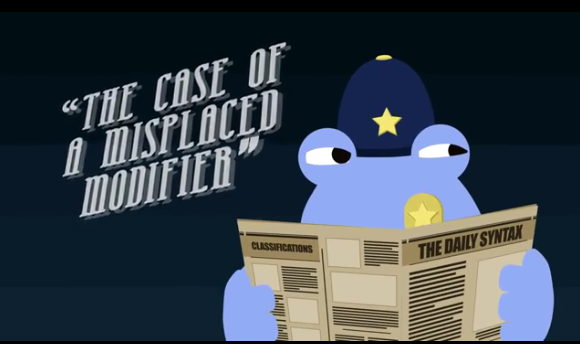
The last Bryce video, called “How Misused Modifiers Can Hurt Your Writing,” follows in the same vein as the others. She uses her expertise to explain how misplaced modifiers create ambiguity. The animation makes it easy to see how words, phrases, and clauses in the wrong places create problems instead of adding helpful information.


Gaming The 2016 Election – Videos & Toolkits To Let Students Join The Debates

Source: PBS Learning Media


In the modern era, presidential debates have become must-see theater. In many cases, these general election showdowns have produced critical moments to determine the November outcomes. Even at their most pedantic, these debates are rare opportunities to hear the nation\’s leaders speak directly to citizens and to each other. Voters can judge how the candidates handle themselves on the world\’s largest stage.

The first debate between Democratic nominee Hillary Clinton and Republican nominee Donald Trump at Hofstra University (down the road from us here on Long Island) on Monday, September 26, 2016, is predicted to shatter television viewing records. Not incorporating this event into a day\’s lesson, therefore, would constitute educational malpractice.

Source: Watch The Debates


Teachers need to foster in their students an appreciation for civics. They need to guide young people toward understanding rhetoric and messaging. They need to use policy discussions as springboards to social awareness and future voting choices. One way to do this is by incorporating the practices of game interactions. This \”gamification\” approach to learning puts students in the driver\’s seat.

Source: PBS Learning Media

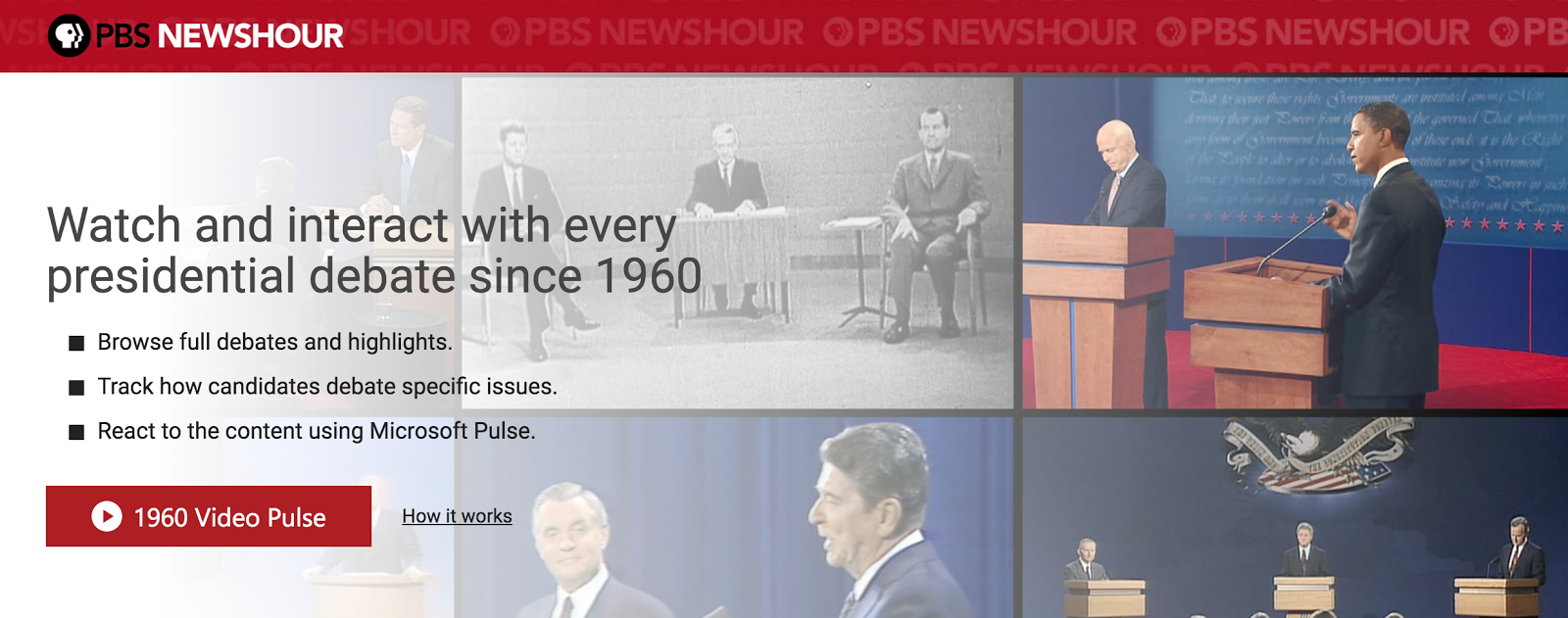
Fortunately, PBS has put together two terrific resources to bring the debates to life. The first is \”Watch The Debates\” from PBS Newshour. It allows users to view and interact with every candidate confrontation since 1960. Students can watch full encounters or highlights, and they can respond with their own verdicts.

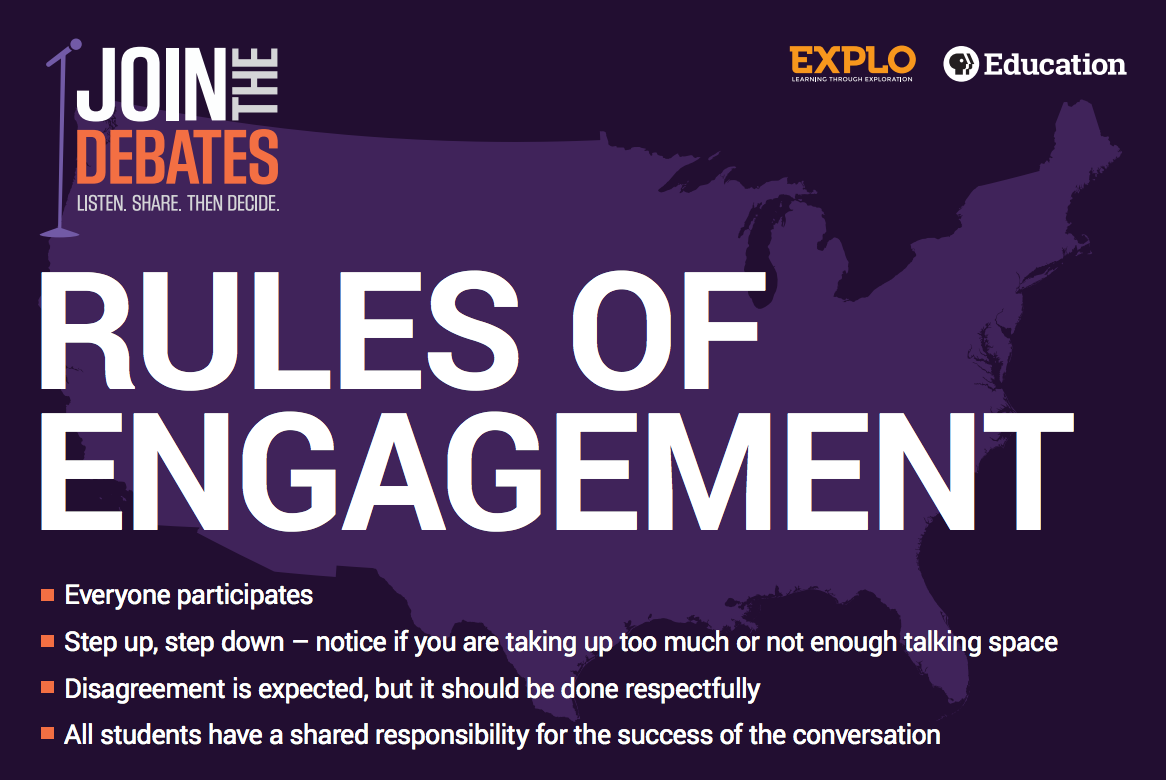
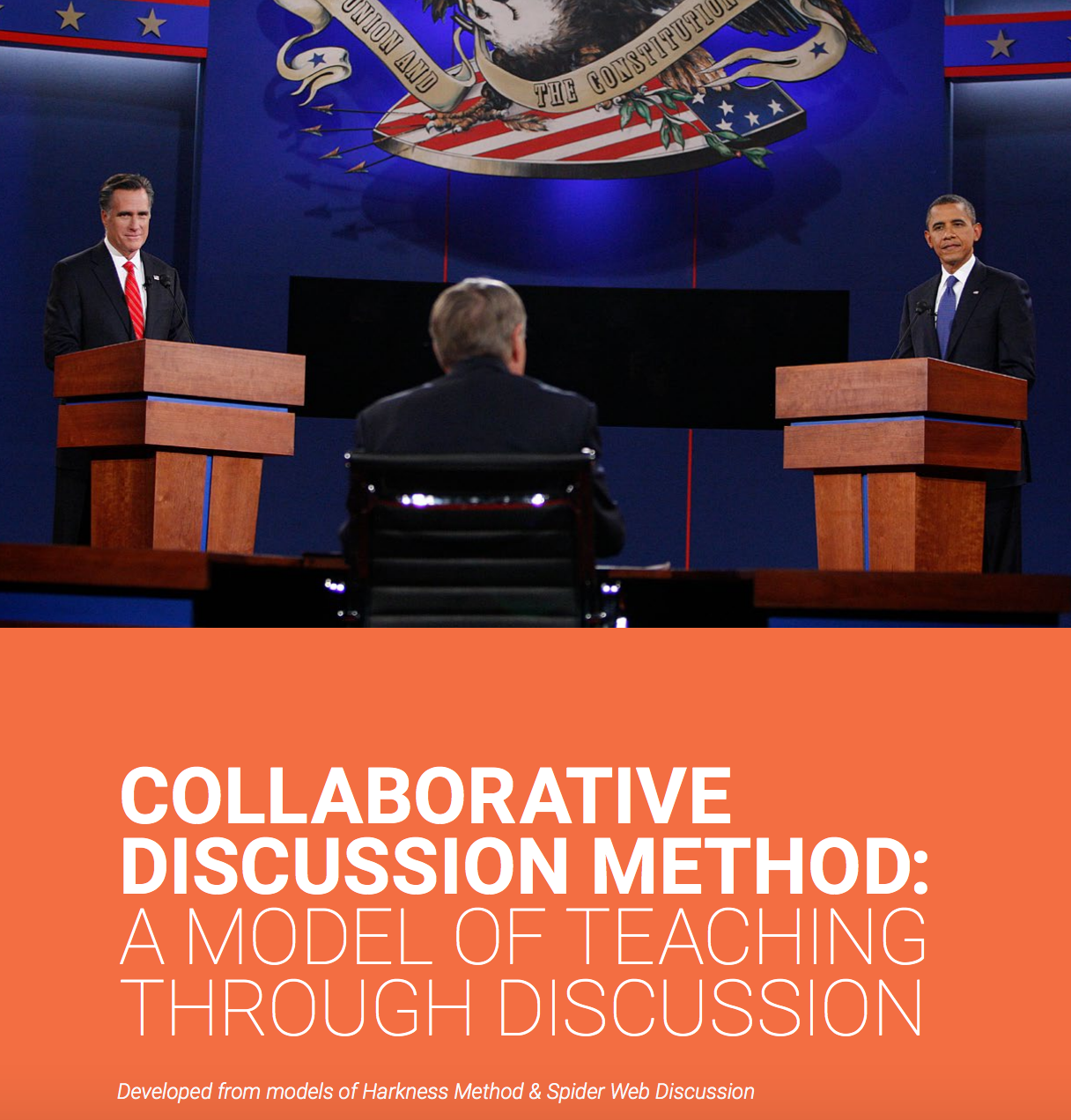
The second resource is \”Join The Debates,\” from PBS Learning Media. This site provides educators with a poster and toolkit to stage student dialogues in their own classrooms. Based on the Harkness Method and Spider Web discussion, these detailed guides allow children to reenact the debate format. Kids become owners of their own opinions, and they gain a better appreciation of the rigors of presidential parleys and the complexities of global issues.

Charts, Graphs, And Visual STEAM – Teaching The Super Bowl By The Numbers

Source: Asbury Park Press


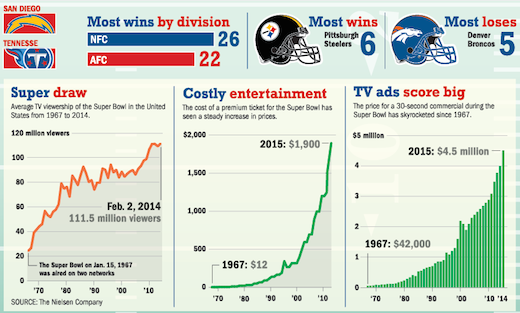
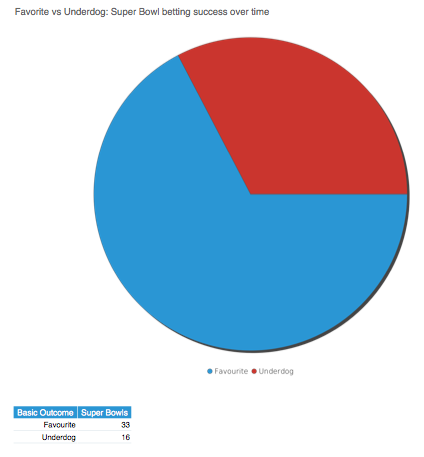
Aside from the physical drama and the halftime theatrics, the Super Bowl provides prime fodder for data analytics. The enormous volume of communication and marketing around this shared cultural moment offers a case study for exploring numbers and significance.

These days, graphs are no longer the sole purview of math class. This fall, for example, we spent a “math week” in social studies talking about how historians incorporate statistics and charts in probing the details behind pivotal events. Similarly, the Super Bowl bridges academic disciplines as an appealing touchstone for students to get excited about analytical reasoning and data design. That’s how right-brained and left-brained mindsets can merge perfectly in a contemporary STEAM study.

Some examples of lessons and visual aids that use graphs and charts include:


Source: Yellowfin

On Super Bowl Sunday, 1.25 billion chicken wings are expected to be consumed. The number of tweets is predicted to top 25 million, up significantly from the 13.4 million last year. And the average American is projected to consume 2,400 calories of Super Bowl chow.

The emphasis here is on the visual presentation of numerical sets. Graphic literacy (or “graphicacy”) means that learners can “read” the grammar of lines and bars. Understanding trends and anomalies are key skills in interpreting mathematical and scientific figures.

As every educational institution searches for ways to blend STEAM proficiencies into the curriculum, the pop draw of the Super Bowl can be just the ticket to grab kids’ attentions in discovering the day’s dynamic details. Any of the tables or diagrams below would be terrific examples to show on Monday in kicking off a week of visual STEAM activities. The logical reasoning of numbers meets the illustrative narrative of the liberal arts:

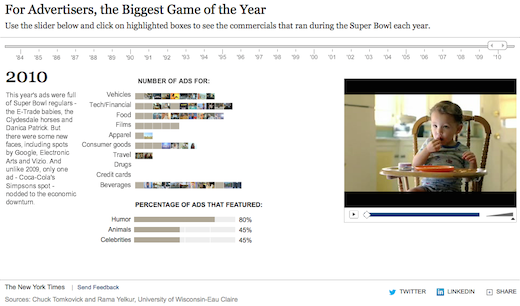
Source: The New York Times


Super Bowl ads often get the most attention from both football diehards and passing revelers alike. This interactive tool from the New York Times allows students to compare a timeline of percentages as they parse the media blitz across the years.

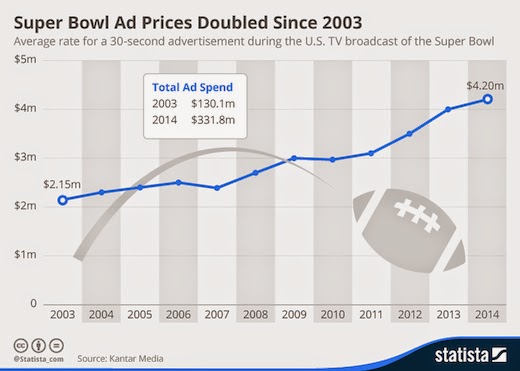
Source: Yellowfin


The media literacy component of Super Bowl mayhem cannot be overlooked. Many avenues exist for teachers to guide students in realizing the emotional tug of advertising during this high profile event. Yellowfin has designed an easily understood graph of Super Bowl ad prices to engage any student.

Source: Yellowfin


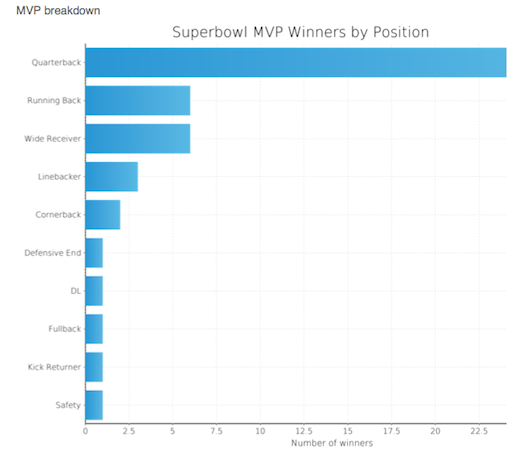
For aficionados of the sport itself, Yellowfin has assembled a horizontal bar chart of MVP winners by position. The results are familiar enough to let the content drive the comprehension. In other words, even the youngest mathematicians can expect QBs to win awards, and thus the extended blue bar becomes a visual signifier for their predictions. 

Source: Yellowfin


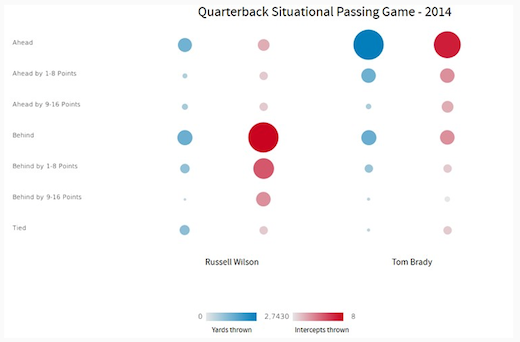
For strategists of team offenses, bubble graphs can blend with traditional tables to illuminate the choices of quarterbacks in certain situations.

For other Super Bowl educational resources, we recommend these posts:

virtual classrooms and cognitive load theory

In response to a request for material on virtual classrooms, I stumbled across some interesting theory around cognitive processing and Virtual classrooms by Dr Ruth Clark.

Dr Ruth Clark runs a training and consultancy website. There are lots of courses you can enrol in but they are pretty expensive. The graduate certificate in Applied eLearning does much the same and is a lot cheaper so we are really lucky to have this qual in NZ.

here is a link to an article by ruth clark on harnessing virtual communities. 
It has some good pointers about keeping learners engaged during a standard virtual lecture/session averaging 60 minutes:
1. maintain a lively pace
2. visualize your content
3. incorporate frequent participant responses – you will notice in the audio lecture on cognitive processing she asks lots of questions and uses polling a lot and she also gets participants to do activities during the session.
4. use small group breakout rooms.
it is a short article and worth a look.

My comments on the audio: Personally i think such long lecture sessions are a bit much but I was only listening to the audio and she did have slides – she seems to do a good job of getting input from the class using text only. The participants don\’t seem to feature on the audio so cant have used mics. some interesting stuff about cognitive load and learning styles. e.g. differences between learning styles of different learners are minor in comparison to the ways our brains are set up to process information overall. She talks about the modality principle – best learning is when you have audio to explain visuals.

See also an article I stumbled across about A Learner-Centered Approach to Multimedia Explanations: Deriving Instructional Design Principles from Cognitive TheoryBy Moreno, R. & Mayer, R. (2000). This is published online in the Interactive Multimedia Electronic journal of computer-enhanced learning…phew.

The diagram of working memory was informative.illustrates how words and images move from sensory memory to working memory and into long-term memory. Remember working memory can only hold so much information and is easily overloaded.
Dr Ruth Clark also said that cognitive overload can occur if several modalities. For example, the use of visual, text and audio together causes a redundancy effect because we are overloading the visual processing area. using audio and text together is better but use of one modality at a time is best.
Dr ruth does not like people multitasking e.g. checking emails when in VC and likes texting in VC to be on task not texting to each other off task or privately. she says this causes split attention effects.
see what you think when you listen to the audio.
——————————————————————————–
also a link to a presentation (pdf) called: Leveraging the virtual classroom
——————————————————————————————————————–
AND her new book at the bookstore.

The New Virtual Classroom:
Evidence-based Guidelines for Synchronous e-Learning

Contents:
Introduction: Meet the New Virtual Classroom
Part I: Learning and the New Virtual Classroom
Part II: Engaging Participants in the New Virtual Classroom
Part III: Optimizing Your Virtual Events
Part IV: Creating Effective Learning Events in the New Virtual Classroom

Part Two: Open Pedagogy – What is web-based Open Education Practice, really?

What is web-based Open Education Practice?
Open Educational Practices (OEP) constitute the range of practices around the creation, use and management of open educational resources with the intent to improve quality and innovate education (OPAL, 2011).

This definition is simple, yet the concept is more complex than realised at first. What are these open education resources (OER) and how did they come about? What is their potential for learning and teaching? How can they be created, used and managed in our educational organisations? Why could they potentially improve quality and innovation in education? What are the benefits and what are the barriers? Who should be doing this? This series will hopefully assist you to identify the meaning of open education practices and find answers to these questions.

A history
To understand what the terms Open Education Resource (OER) and Open Education Practice (OEP) mean, it is necessary to look back at how the concepts has arisen. The arrival of the Internet probably triggered the widespread use of this term because it was considered a disruptive technology when it landed on our educational doorstep many years ago. This “global platform” disrupted or changed how learners and teachers could access and share information and materials, and encouraged a new culture of learning.  A culture where learners could access any materials they needed with or without the help of a teacher, and share anything and everything (Thomas & Seely Brown, 2011).

Disruptive technology 
A term attributed to electronic tools that change the way we think, act and work. The Internet has led to significant changes in society and is therefore regarded as disruptive as are many technologies associated with it.    

In the mid-2000s, when Web 2.0 tools and approaches emerged as a phenomenon, they enabled global sharing of information, knowledge, ideas and also the materials that educators created (Brake, 2013). According to Conole, de Laat, Dillon and Darby (2008) the arrival of “new forms of mobile, internet and social software technologies” enabled “distributed collaboration” and a new direction for learning and the way we could  “consume and produce new artefacts’ (p. 511).  This changed the status quo. Teachers and learners could now interact more easily, share their work and collaborate in the learning environment. This disruption, or as some practitioners believe, innovation, led to the Open Education Resource (OER) movement and the Cape Town Open Education Declaration inviting managers and practitioners to engage with open educational resources (Open Society Institute & Shuttleworth Foundation, 2007 –  http://www.capetowndeclaration.org/). Presently, 2712 signatories have contributed to the Declaration.

Otago Polytechnic signed the declaration in 2008 when educational development work at the organization was foremost in international efforts for Open Education (Blackall & Hegarty, 2011).
In the declaration, open education is described as more than open educational resources and is regarded as a mechanism that makes use of open technologies to “facilitate collaborative, flexible learning and the open sharing of teaching practices that empower educators to benefit from the best ideas of their colleagues” (para 4). It also has the potential to change not only how we teach and learn but also how we assess. 

How has history changed Open Education Practices?
Disruptive technologies are the foundation of open education resources and practices. They can be a good thing for pedagogical innovation and act as a catalyst to transform practice (Conole, de Laat, Dillon & Darby, 2008). However, the changes may occur too fast and exceed the rate at which teachers can adopt them confidently or before the infrastructure of an organization is prepared enough to manage them.  Ruth Jelly has compiled an overview of the literature and therein presents a number of case studies describing the evolution of the open education movement in Open Education Practices: A User Guide for Organisations and Individuals written by Leigh Blackall and edited by Bronwyn Hegarty (2011).

Out of the disruption caused by open education resources, web-based social learning and informal learning was born. Participation is the core component of social learning. Knowledge and understanding is constructed through the conversations and interactions learners have with others, generally about issues and actions (Brown & Adler, 2008). The focus shifts from what is learned to how people learn, and the connectivity amongst learners is enhanced. 

In the new culture of learning, the “stable infrastructure of the twenty-first century” has become a more dynamic infrastructure where technologies are changing constantly (Thomas & Seely Brown, 2011, p. 17). Even so, learning environments in this new culture do need boundaries and structure. These need to be designed to inspire the learner to move freely within the educative opportunities provided, regardless of whether this occurs in formal education or in everyday life (Thomas & Seely Brown, 2011).

This new wave of learning is considered by Thomas and Seely Brown (2011) to be “arc-of-life learning”, where play, questioning and imagination are pivotal to the continual quest for knowledge (p. 19).  The key is that learning occurs seamlessly between the classroom and everyday activities. Most importantly the concepts of ‘play’ and ‘tinkering’ are encouraged so that learning throughout life becomes more like a game; it is fun. This new culture of learning requires two things, according to Thomas and Seely Brown (2011), firstly, ready access to a network of information and secondly a “bounded and structured environment” with unlimited scope to experiment (p. 19).  To facilitate this, open and collaborative networks and communities and openly shared repositories of information that are readily accessible and in which anyone can participate are essential. In the new culture of learning, engagement in the process is key (Thomas & Seely Brown, 2011). 

Having “time and permission to play, openness and learning from play” were key themes that emerged from case study research conducted into digital information literacy by Jeffrey, Hegarty, Kelly, Penman, Coburn and McDonald in 2011 (p. 394). For participants, engagement in accessing open digital web-based networks and platforms led to a transformation in how they learned and in their personal development. 

Keeping openness in mind when designing learning is also discussed by Conole (2013) and she acknowledges several challenges associated with this, for example, the varying definitions and lack of agreement on what the term means. Some aspects of openness were explained in part one of this series using a model for Open Education Practices.

Inspiration Plus Creativity Equals Innovative Teaching And Learning

Source: ASIDE, 2015

Education is smack in the middle of an earth swell of change. No matter how hard the system tries to maintain a rigid set of evaluative assessments, something has to give. Otherwise, we will lose too many teachers over restrictions, and worse, too many young people who know that outside of school the freedom to learn, experiment, and create exists.

Source: ASIDE, 2015

Sure, we know that the fundamentals of reading and writing are key to understanding complex information. We are not advocates for throwing the baby out with the bath water. But perhaps the recent change in Finland to dump teaching subjects in favor of topics should send shockwaves through a system that constantly tries to reinvent itself with nothing more than new standards.

Source: ASIDE, 2015

One of our mantras over the last few years with our learners has been to, “Look at more stuff. Think about it harder.” We don’t claim to take this as our own, but recently we felt compelled to revisit one of our favorite books, Look At More: A Proven Approach to Innovation, Growth, and Change, by Andy Stefanovich.

While we know that schools are not businesses, we also know that the insights Stefanovich tries to bring to companies apply to any institution with the desire to promote innovative thinking. His ideas and concepts cross over into any discipline. His fundamental formula:

 I + C = I, or Inspiration + Creativity = Innovation


This equation also applies to education. We seek to inspire our learners to use creative thinking to come up with innovative ideas; likewise, we hope to do the same with our approach to teaching.

To inspire others is, after all, why we teach. We rely on inspiration as the fuel for engagement. Just like a business, we want to encourage an environment of productivity for learners. To do this, we can no longer sacrifice inspiration for efficiency.

Source: ASIDE, 2015

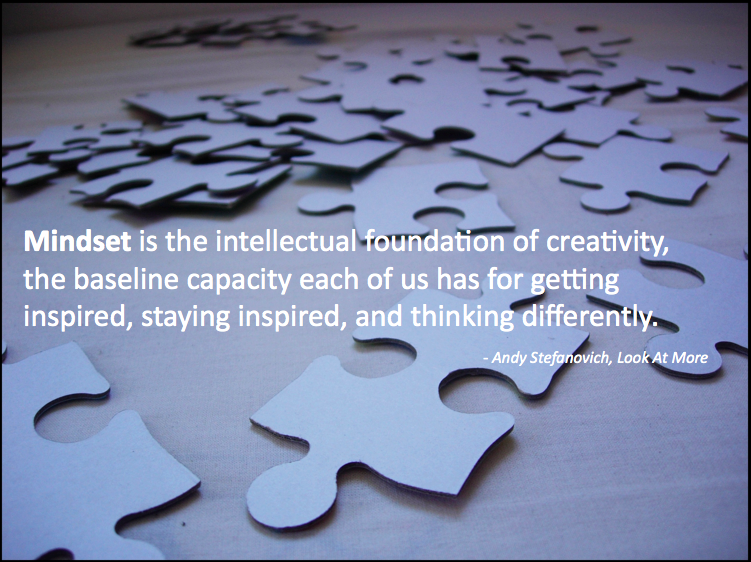
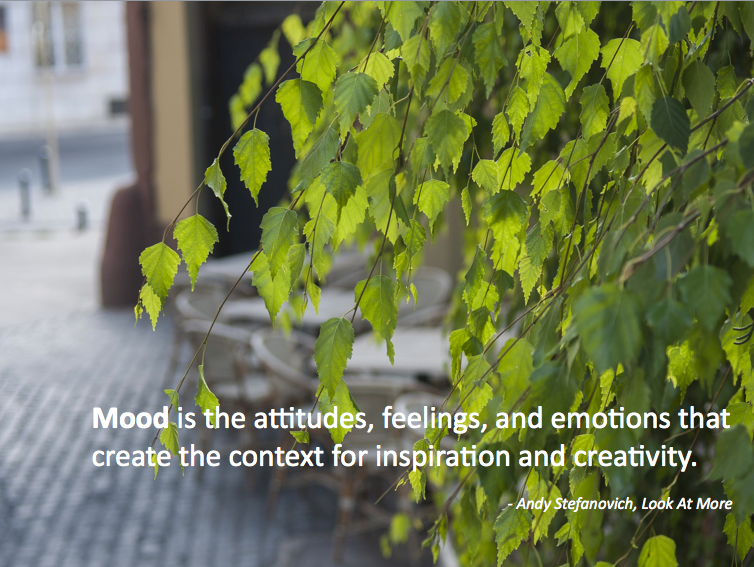
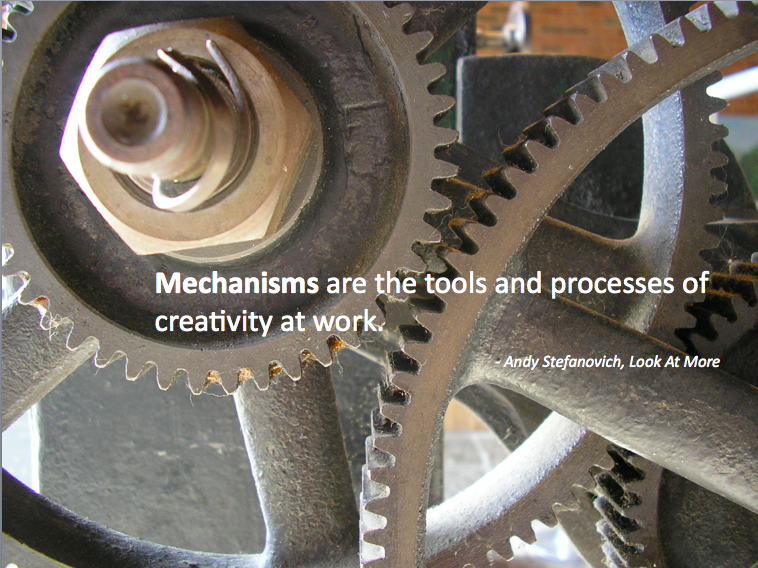
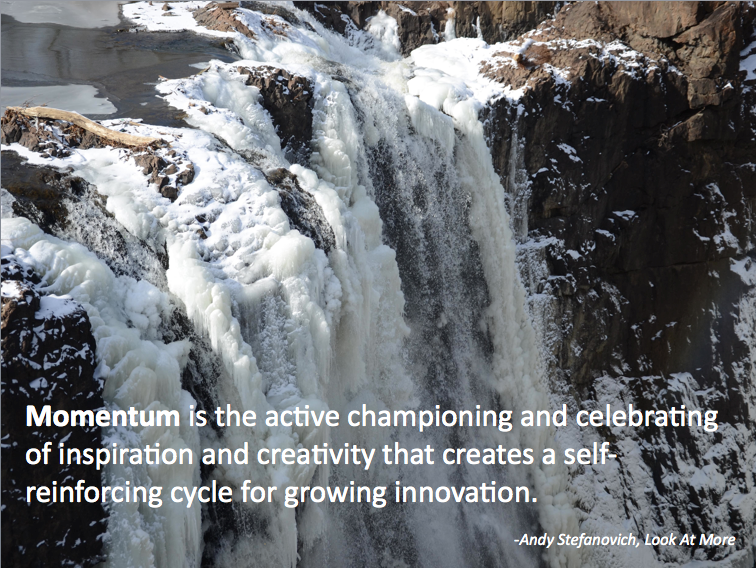
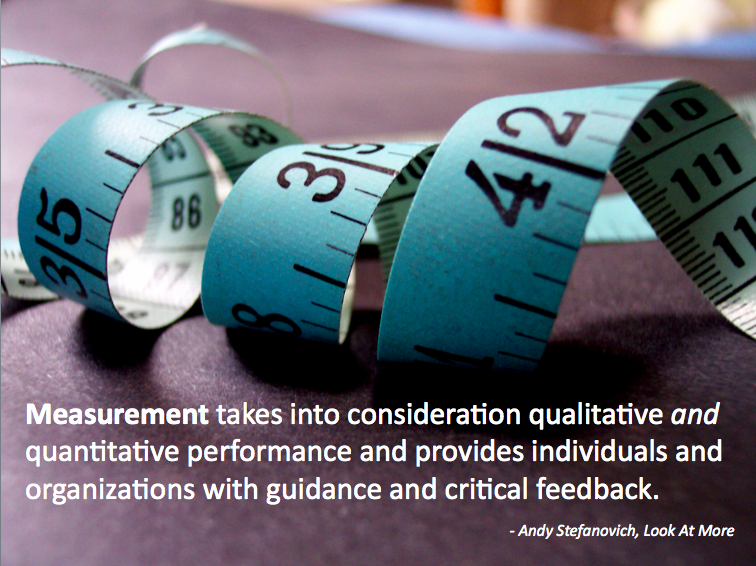
The framework behind LAMSTAIH includes five key drivers, including mood, mindset, mechanisms, measurement, and momentum to push the thinking and change the behavior in order to extract new ideas.

The concept behind each “M” not only provides a way for leadership to look at the needs of an institution, but it also helps to promote innovative ways of teaching and learning. Educational conversations circle around many of the same ideas.

So perhaps we could learn a thing or two by looking at more, including the insightful description of the three kinds of curators mentioned the book. On the one hand we have the traditionalist, who is the keeper of objects with the role of making sure that people of the future benefit from the collection of knowledge, and the Zeitgeist curator, who captures the essence of today and connects it to the not too distant future. This sounds like the role of the teacher. And then there is the hunter-gatherer curator, who constantly searches for anything that interests him or her and shares it with the world. Sound familiar? This represents most of the learners we teach.

Source: ASIDE, 2015

So where are teachers and learners as curators? More importantly, where do we want to be? At the moment, many educators are in the middle, yet our students outside of school are hunting and gathering.

Life-long learning is far more like the migrating hunter-gatherer, and technology has opened that door. We need to harness that energy, that inspiration, and that understanding of the power of connections to explore ideas. We can’t keep kids from exploring, connecting, and learning; we want them to be inspired,

The Benefits Of Good Design – Resources For Community College Learners

Source: ASIDE 2015


Community college students everyday interact with a range of materials: handouts, worksheets, outlines, templates, PowerPoints, etc. From the simplest to the most complex, these resources are sometimes the primary conduits for information and training. The design of these materials, therefore, matters. The visual presentation of instructional tools can make the difference between detachment and engagement, between reticence and retention.

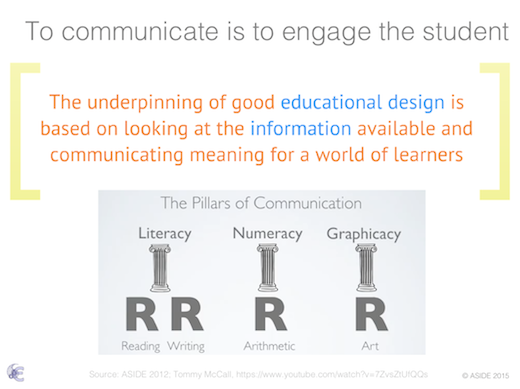
One of the touchstones of the design world is the unity of form and function. This “big picture / small picture” harmony is an equally crucial lesson for teachers and learners of all ages. Whereas art is something we look at, design is something we use everyday. It gives context to content and supports the relationship between the two. Good design of information delivers content that is engaging to the eye without becoming a distraction. It guides the attention through carefully controlled and selected visual components; it retreats to the background, enabling the purpose of the finished product to come forward.

Source: ASIDE, Tommy McCall

In creating both tangible and digital presentations for college learners, educators can ask themselves about the desired purpose, audience, and format of their materials. Similarly, considerations of layout, font, color, and alignment can make positive differences in conveying crucial concepts. A few notions to keep in mind include:

  • Visual media bombard the modern eye
  • Images increase the level of engagement and retention
  • Design creates meaning and relationships
  • The eye reads many types of “texts”
  • Simple tools and techniques can aid understanding
  • Emphasis, typography, hue, layout, and balance are key
Source: ASIDE 2015


We recently had the privilege of discussing these ideas with the faculty of the Department Of Reading And Basic Education at Nassau Community College (NCC) in New York. It was a pleasure speaking to them for their spring professional development. Our session was entitled, “The Benefits Of Good Design: Simple Strategies For Creating Elegant and Effective Materials To Engage Students.” All of the slides, links, and resources from our presentation can be found here.

Many thanks to the warm and welcoming educators at NCC for inviting us and for being such gracious hosts. It was a pleasure sharing ideas and exploring the potential of visuals to make a difference in the lives of learners. We look forward to staying in touch and continuing the dialogue about design!

The Blue Heart Campaign To End Human Trafficking

Source: UN

While we know many schools are not in session, we felt it important to write about the United Nations’ Blue Heart Campaign on the second World Day Against Trafficking of Humans. The first was on July 30, 2014.

Source: UN


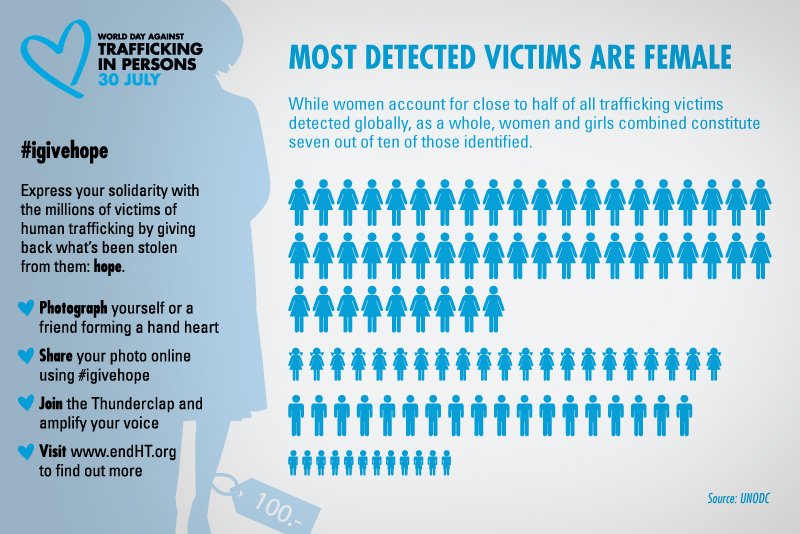
With the growing problem of human trafficking, particularly of women and children, this day hopes to raise awareness of the plight of these victims and to protect their rights.


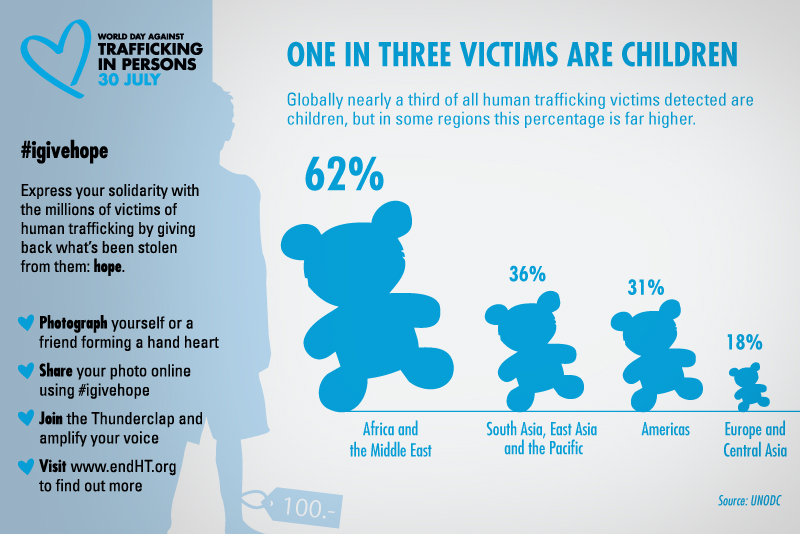
The Blue Heart Campaign seeks to educate others about the impact of this crime on society by inspiring others to take action through a show of solidarity. We spend a significant amount of time talking with our students about human rights abuses that all too often seem a regular feature on the nightly news. Since the issue of human trafficking can be a sensitive topic, we are always in search of resources that we can use with our learners. The infographics in this post provide visual tools to help.

Source: UN


Last year, we did our own push to make students aware of the International Declaration of Human Rights and what they mean for them. We used the website Youth for Human Rights and watched each of the 30 videos. Our students were surprised by the information and statistics, and in their innocence, they could not fathom these violations happening today. This made a huge difference in their understanding of historical and current issues.

Source: UN

As we get ready to start the school year, we plan to continue to integrate human rights into the conversation, and we hope others do as well.