A Philosophy Of Education: Energy, Inspiration, And Understanding

Source: ASIDE 2015

This week we were asked to share our philosophies of education. It was a worthy question and a worthwhile endeavor. Even though like most teachers we’ve gone through many versions of these philosophies over the years, it was thought-provoking to reframe our tenets as both learning and we have evolved. We thought we might publish our current thoughts, to see what other educators think and to invite feedback about other philosophies of teaching in today’s learning climate:

~
If students were given a choice about which classes to attend each day, would they choose our classes? Is there something about the tone, the environment, the practice, or the design of information that makes our time seem worthwhile to learners?
One of our mantras with learners has been to “Look at more stuff; think about it harder.” We seek to inspire learners to use creative thinking to come up with innovative ideas; likewise, we hope to do the same with our approach to teaching. In their schooling, students hope to experience moments of wonder. An instance of surprise or curiosity, even if brief, can make all the different in motivating learners to explore and delve deeply. Insight leads to ownership, which makes meaningful the internalization of skills or concepts. One “ah ha” moment is worth one hundred perfect test scores.
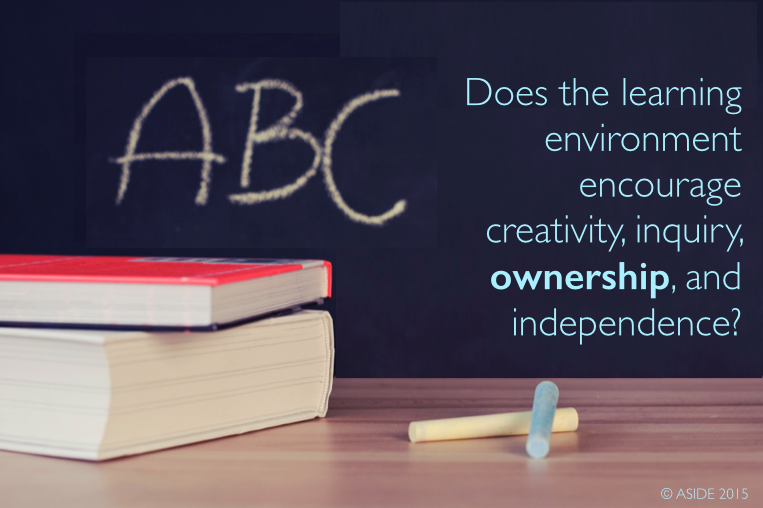
To inspire others is, after all, why we teach. We rely on inspiration as the fuel for engagement. We want to encourage an environment that fosters creativity, inquiry, ownership, and independence. Learners need a stimulating environment that fuels inspiration and a hunger for knowledge. This atmosphere refers to both the physical space and the personality of the teacher. Is the room stimulating and engaging? Is the layout flexible and complementary to the learning? Furthermore, is the temperament of the teacher encouraging, with an authentic sense of optimism about the journey the learner and the educator are about to take together?

It is not about efficiency and compliance; instead, it is about things like mindset, mood, mechanisms, measurement, and momentum that push the critical thinking process in order to extract new ideas. What is the tone of the instructor’s language? What is the tenor of the student-teacher relationship? A bit of humor, for example, can be key to keeping the mood light and productive. A sincere repartee can make the minutes tick by with less tedium and maybe even some anticipation.
Source: ASIDE 2015

The more interdisciplinary, collaborative, and challenging approaches we use, the greater the chance to develop individuals that are confident to take risks. In this vein, teaching and learning is a partnership. A conversational style or technological savvy can help validate students’ daily experiences and show an effort to connect to their worlds – to what is important to them. This connection stems from mutual trust. Students want to trust that their teachers are laying out clear expectations, that their grades are based on fair assessments, that their learning is in the hands of an expert. If students don’t trust that we as teachers are going to keep our word, treat them with decency, and give them the benefit of the doubt, then they will tune out everything else we try to communicate.

Today, learning is no longer limited to the teacher as keeper of the knowledge, nor to the moment with little connection to the future. It has to be deeper; it is about understanding. We want students to be more like hunter-gatherers, who constantly search for anything that interests them and who share it with the world. Life-long learning is far more like the migrating hunter-gatherer, and technology has opened that door. 
We hope to harness that energy, that inspiration, and that understanding of the power of connections to explore ideas. Our hope is to tap a learner’s inspiration and creativity so that they develop as innovative thinkers and knowledge seekers.
As teachers, we want to engage students:

  • To think like designers to transform the way they learn and look at the world
  • To develop flexibility in their thinking about ways to learn, and to tap their curiosity
  • To grow to be open-minded individuals who are knowledgeable about historical events
  • To gain confidence about what they know to share their understanding and enthusiasm for history and geography with others
  • To help them develop a curiosity for learning through the creation of their own work
  • To provide a range of choices for them to visually map their ideas to realize there is more than one way of seeing
  • To design curriculum to meet the information, technology and new media literacies needs of today’s learners through current best practices that incorporate digital learning, technology integration, and social media
  • To develop flexibility in their thinking about ways to learn, and to help them feel comfortable with being uncomfortable
  • To promote honest discussions about disparities in society such as race and class to promote empathy for our differences
  • To recognize, value, and assess the many diverse ways children learn and how to meet them there

How To Comment In Social Media – An Infographic Of Tips For High Quality Feedback


Students are writing more than ever before. They are tapping out rapid-fire fingerstrokes across multiple platforms. From text messages to social media, children and adults of all ages are engaging like never before with the written word. This type of transliteracy emphasizes more than ever the need for thoughtful conversations and clear instructions that guide students in how best to express high quality feedback.

Most remarks in the comment sections of Instagram and YouTube are useless. They are either crass or curt, sprinkled with emoji that do more to satisfy the ego of the commenter than to further the richness of the page.

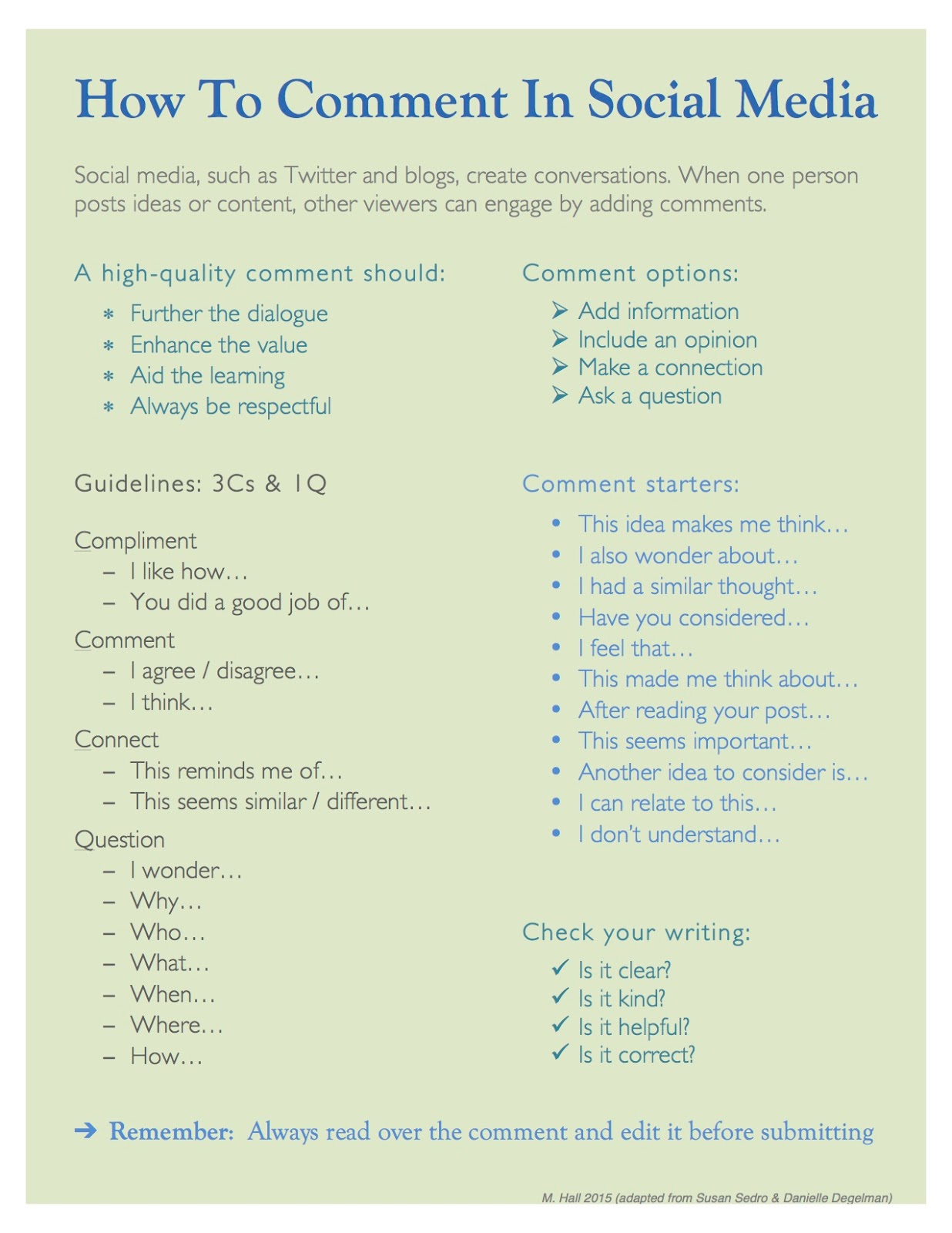
Instead, high quality comments on blogs and social media should create a dialogue that furthers the colloquy and deepens the learning. Replies on Twitter, for example, should offer suggestions or make interpersonal connections. Thoughtful comments in social media should add information, incorporate links, or most importantly, ask questions.

Susan Sedro offers a terrific post about “Teaching Children To Comment On Blogs” on her site, “Adventures In Educational Blogging.” She includes a presentation, a document, and a rubric to help teachers incorporate successful commenting into their lessons. Similarly, Danielle Degelman recently shared on Twitter (@deedegs) a photo of her whiteboard with excellent tips on helping students comment successfully.

We learned a lot from both Sedro’s and Degelman’s suggestions. For our own learners, we combined these two teachers’ ideas with a few of our own to make a handy one-sheet for our students. For example, our seventh-graders used it to exchange feedback via Twitter (#BCDSHist7) on their Thirteen Colonies research projects.

Here is the infographic we made to promote positive engagement through social media:

Student Video Projects In Vine: The Six-Second Constraint Encourages Creativity


Source: Vine

Poets have long considered the sonnet and the quatrain as the highest forms of poetry. The strict meters, the rigid rhyme schemes, and the unbreakable line limits force poets to create elegant verse within exacting structures. In other words, if writers can craft soaring language under such restrictive rules, then they have true talent.

Making Vine videos with students falls into a similar category. Vine is a social network owned by Twitter that allows users to record or upload clips no more than 6.5 seconds in length. With over 200 million users and 1.5 billion daily loops, Vine has created overnight celebrities and has changed the way kids watch, generate, and share content.


The ease of publishing makes Vine a terrific tool for the classroom. The strict time limit of the videos forces students to maximize the pithiness of their messages. In other words, the short videos demand:

  1. Efficiency of narration
  2. Effectiveness of visuals
  3. Concision of message

Students cannot be wasteful in language or vague in communication. They must get their points across succinctly and above all creatively. They are compelled to invent novel ways to pack a lot of meaning into a tight space.


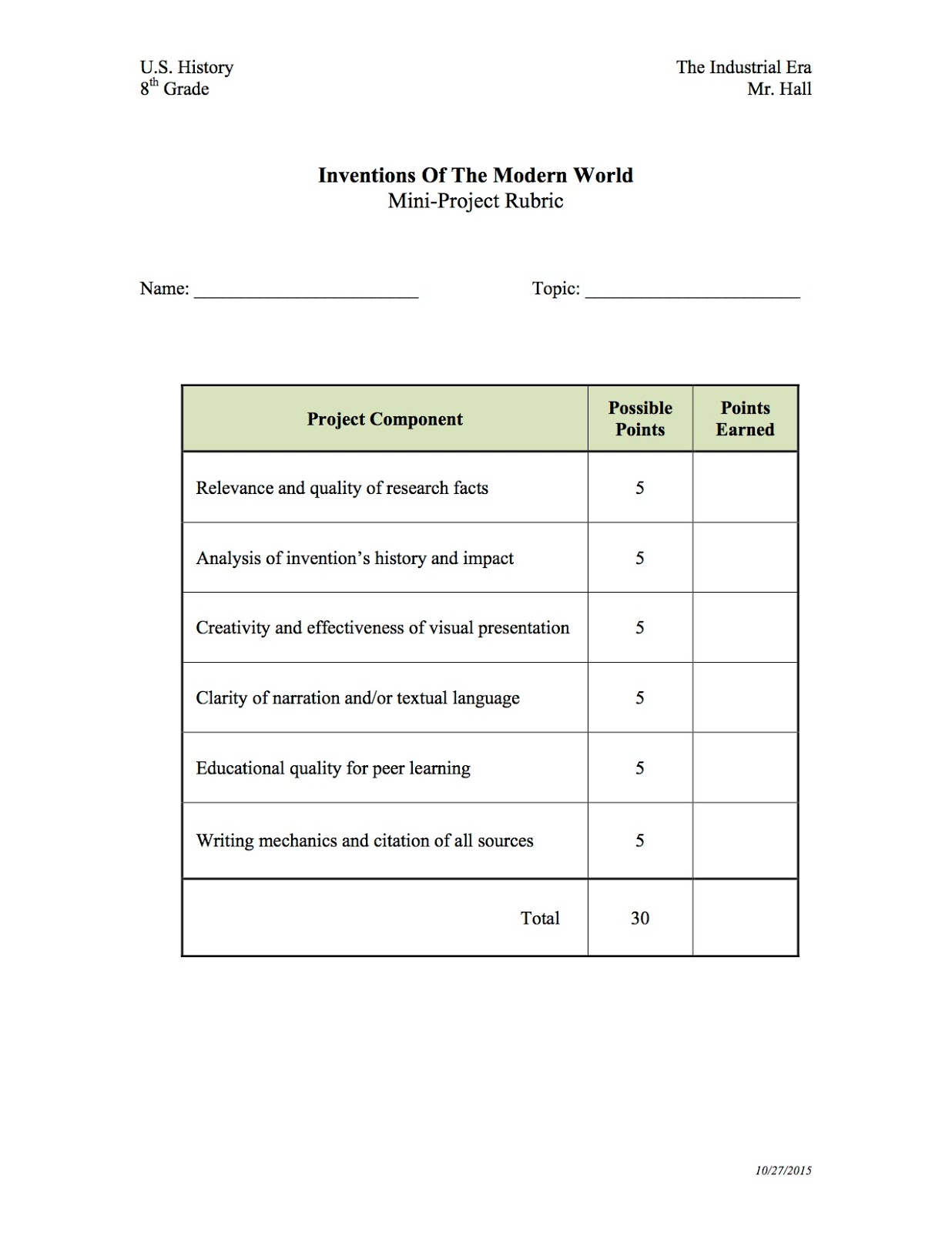
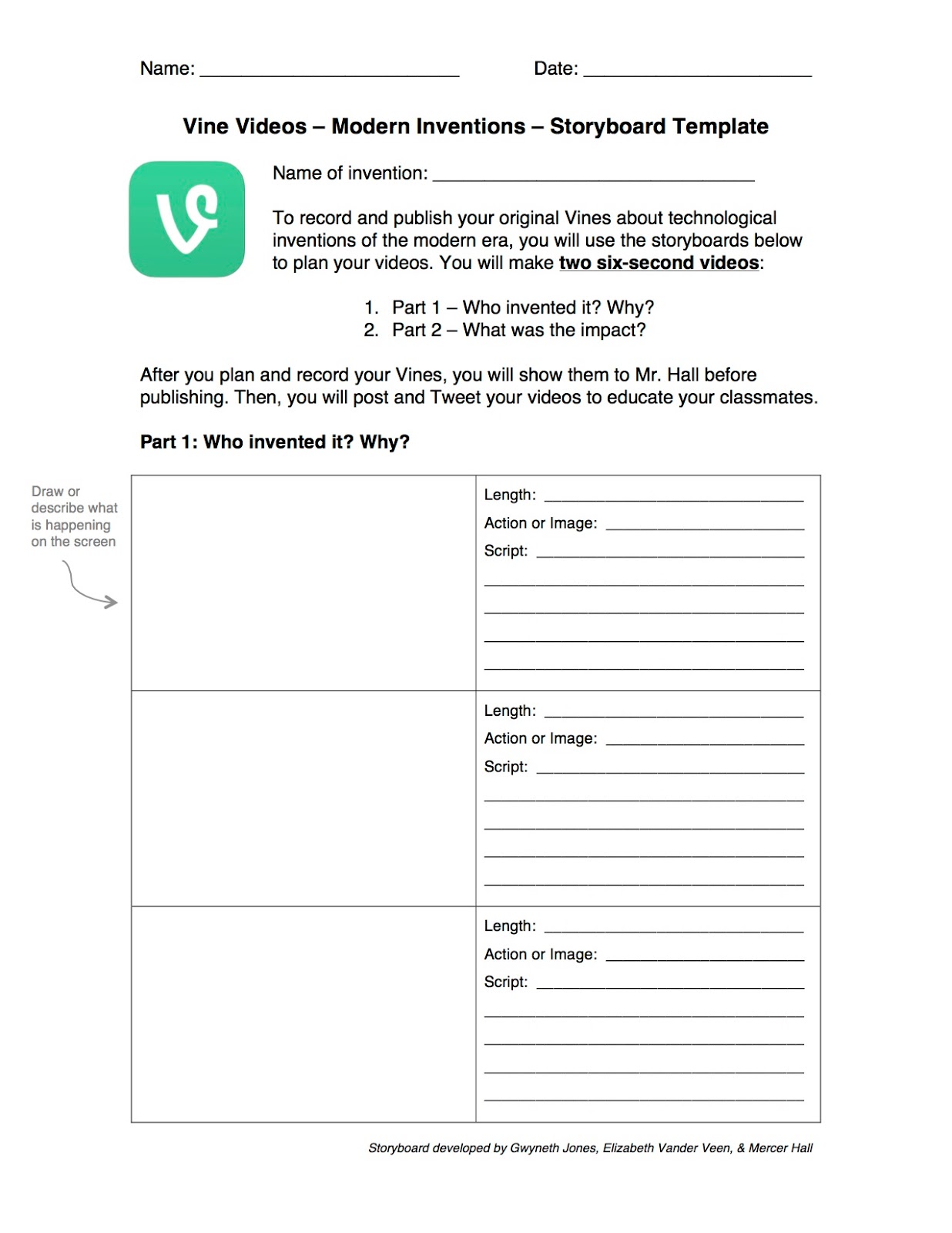
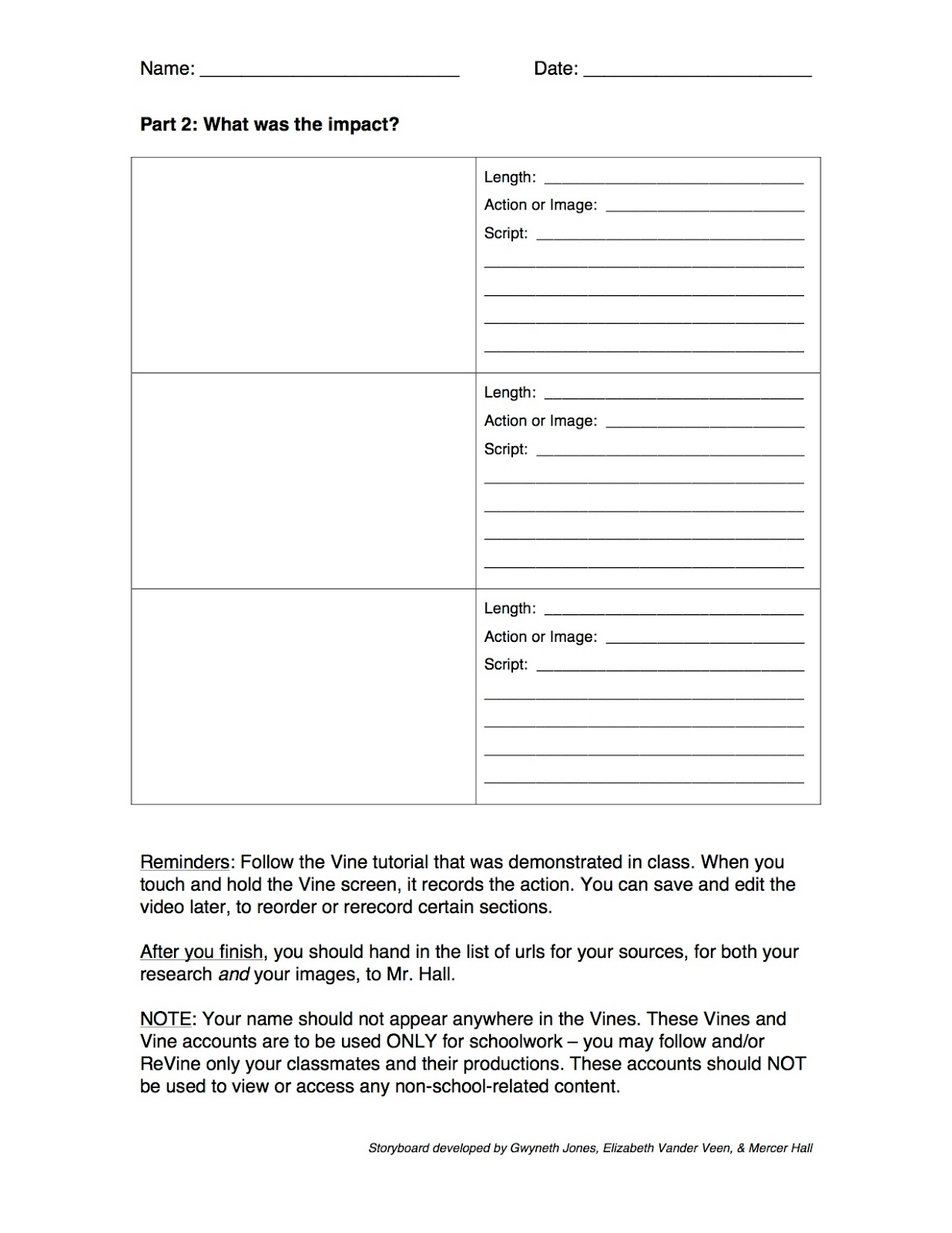
For example, our eighth-graders have been studying how technology and inventions transformed society in the late 1800s. We, therefore, invited them to conduct a mini-research project about modern inventions in the contemporary era that have similarly revolutionized daily life. Our instructions, storyboards, and rubrics are included in this post. We have also included several examples of the innovative approaches that students took to produce these brief films. For other ideas about incorporating Vine in the classroom, check out 20 Ways To Use Twitter’s Vine In Education.

As with all social media, there is plenty of content on Vine that would not be appropriate for all ages. That is why digital citizenship needs to be a crucial partner with digital publishing. As with all online activities, educators need to encourage students to be their own filters, to use their own good judgment in engaging with social media.

Social Media Is An Opportunity – Not A Problem In The Classroom

Source: ASIDE 2015


The resolute attitude of many schools to resist the “Social Age” by blocking websites within their walls strikes at the core of what it means to collectively share ideas. The system seems stuck in the notion that kids will do bad things if they have access to social media. Hello! They have access to it anyway, just not in school. We shake our heads every time we hear educators who want to share digital projects but can’t because of a school’s firewall. Some educators depend on the very students they teach to share when the leave the building in order to promote their work.

Source: ASIDE 2015

We value the opportunities at our disposal for creating digital portfolios with our students, running Tumblr pages for the humanitiesmaps, and classwork, using Twitter (@BCDS_History_56@BCDS_History_78>)and Kidblog, and sharing through Padlet to engage in the open practice of real-life skills.

Social media is not the culprit. In this day and age, digital environments are not separate from physical environments. If we want our students to understand the importance of building a healthy, digital footprint for prospective college applications and employment, then practice is imperative. It can’t be taught from a book.

Source: ASIDE 2015

Like other educators, we see the value in using social media. We are fortunate to work in a school that believes students learn by actively and responsibly participating in an online community of practice. We firmly believe that learning communities that allow students to use social media in their education build stronger digital citizens. They also encourage parents to be more proactive in the online behavior of their children by participating as digital partners.

We made a passionate plea to educators in our presentation, entitled “Tear Down This Firewall: Using Social Media To Engage Students And Parents,” at the annual NYSCATE conference. We showed multiple ways that we have incorporated social media in the elementary and middle school classrooms, as well as demonstrated how the skills learned from social media include context, framing, information, perspective, questioning, and problem-solving. We hope the solid foundation in instruction behind our students’ work will provide motivation for others to approach their administrations to unblock valuable web resources for learning. We included our SlideShare presentation here.

Tear Down This Firewall: Using Social Media To Engage Students & Parents from The American Society For Innovation Design In Education

The value of modeling, practicing, and incorporating social media into the curricula to better educate learners for a world that exists now is vital to their development. It builds the collectiveness of the community and a trusted bond between all participants, including administrators, faculty, students, and parents. Most importantly, it takes the fear out of the equation.

 In 2010, Rachel Botsam coined the term “collaborative consumption” in her critically acclaimed book, What’s Mine is Yours: How Collaborative Consumption is Changing the Way We Live. The theory of “collaborative consumption” is the reinvention of traditional market behaviors that are taking place at a rate not seen before as a result of technology. These changes affect more than just the economy; they influence and disrupt traditional learning environments as well. It shouldn’t be a “Them vs. Us” mentality; instead, it should build a collaborative network of makingsharing, and responding.

Source: ASIDE 2015

Yet despite this social revolution in an on-demand, real-time world, schools are still resistant to change, even though educators try desperately to show the value of collaborative work by using social networking.

As for the students, the firewalls may not be crumbling yet inside the bricks and mortar, but outside, learning takes on a life of its own, unfiltered without restrictions. They hunt and gather wherever they can, and technology has opened that door.

Students need to construct their social capital through shared networks, and schools need to participate in building it, not restricting it.

For other resources please see:

The 5 Best STEM Animations For 2016

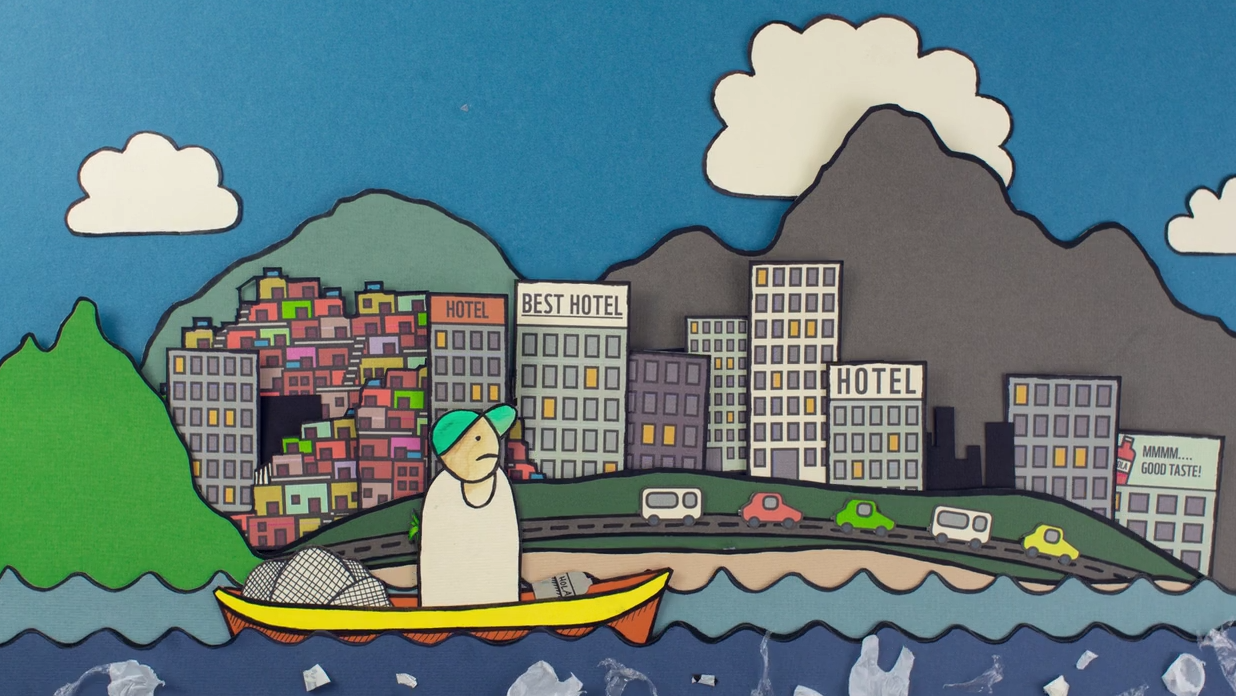
Source: scenes.https://vimeo.com/126733859WWF Brazil – Marine Program


2015 was a banner year for animations to engage students. These dynamic explainer videos proved definitively that print textbooks cannot keep up with educational, up-to-date motion graphics, especially in the sciences.

The sphere of subjects that fall into STEM’s orbit keeps expanding. For better or for worse, K-12 courses are now binarly split into either “STEM” or “Humanities” categories. We would argue that this bifurcation is harmful, erasing the natural overlaps between the sciences and the liberal arts.

The effect, however, is that more and more designers and educators are creating brilliant interactive companions to traditional learning. Here are five favorite animations from the past year that will allow science and math teachers (as well as those in the Humanities) to kick off 2016 with a bang:

1. Math


This lively explainer video from Vox offers a primer in chart theory, as well as a caveat for undiscerning viewers of graphs. Entitled “Shut Up About The Y-Axis. It Shouldn’t Always Start At Zero,” the clip reminds math students that context is key in both reading and creating data graphics.

2. Environmental & Marine Science


B- Marine Program from scenes. on Vimeo.

This beautiful stop-motion animation offers a moving case study about the effects of urbanization on pollution. The “WWF Brazil – Marine Program” video, made in collaboration between scenes. and Wildgroeiers, highlights critical issues of conservation and biodiversity for any age group.

3. Astronomy


BC Earth has designed a clear and compelling motion graphic to emphasize the size of the universe and the speed of earth’s galactic travels. The 3D visualization employs time and scale to bring astrophysics to life.

4. Oceanography & Earth Science

Source: Cameron Beccario


Software engineer Cameron Beccario (@cambecc) has programmed a stunning representation of the earth’s weather conditions. With regularly updated ocean currents, waves, temperatures, and anomalies, this interactive globe allows students to zoom in and rotate a la Google Earth. The educational opportunities range from oceanographers analyzing climate change to historians studying ancient trade routes.

5. Medicine


Source: The Washington Post


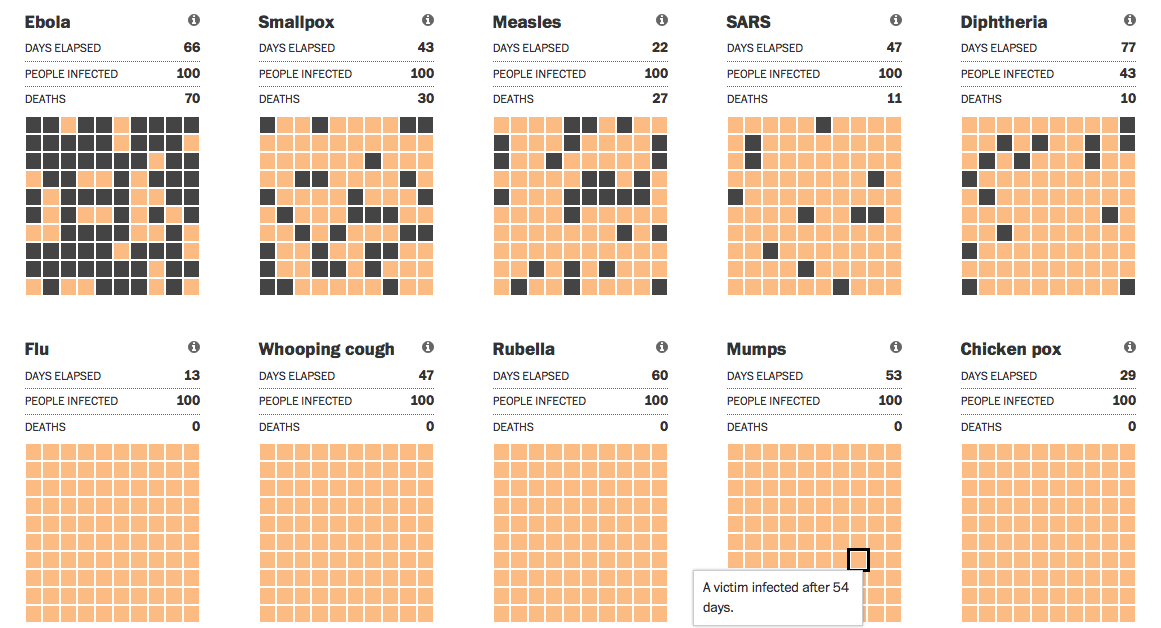
The recent Ebola panic prompted The Washington Post to create this precise simulation that compares the disease’s spread to other historical pandemics. Although the original interactive graphic pre-dates 2015, the updates are important to medical students and social scientists who are trying to track contraction, infection, transmission, and vaccination.

Honorable Mention: Ecology & Forestry


This seemingly simple motion graphic by Nature Video brings into startling relief the rate of global deforestation. Researchers made 421,529 separate measurements around the world to produce an irrefutable data-driven image of the changing planet.

For more resources, take a look at last year’s five best animations, or some of our other posts about animations in the classroom:

The GIFT Box – Help Unwrap Human Trafficking In 2016

Source: London Olympics 2012 – UN

With each passing year, we see a growth in awareness of the plight of the less fortunate, particularly those suffering at the hands of human traffickers. We’ve written posts about the topic of slavery and Human Rights, but recently we came across the GIFT box project that is currently on view at The Cathedral Church of Saint John the Divine in New York City.

Source: UN GIFT

The United Nations Global Initiative to Fight Human Trafficking and STOP THE TRAFFIK worked together to create the GIFT box to raise awareness of the more than 21 million people forced into labor. The GIFT box project was launched during the London 2012 Olympics.

Since that time, STOP THE TRAFFIK partnered with other organizations and governments to build more GIFT boxes around the globe. To date, its journey has introduced over 55,000 people in approximately 100 locations across 6 countries to the issue of human trafficking.

At this time of year when gift giving is so much a part of the holiday spirit, it seemed fitting to write about it as we close out the year of 2015 to help this effort. The beautifully wrapped GIFT box on the outside reveals the horrors that plague the victims of human trafficking on the inside. The exterior promises a better life, an education, a good job, and a loving relationship, but the interior presents a very different reality.

Source: UN GIFT


Build human rights into the curricula at your school. The Youth for Human Rights website makes it easy to take any of the 30 principles all individuals are entitled to under The Universal Declaration of Human Rights and incorporate them into a learning environment. It offers teachers a wealth of resources that can be easily downloaded to use in the classroom. It also provides short video clips for each of the rights. If your school is has a 1:1 program, we encourage educators to use its free app with students.

Let’s make 2016 the year we all help to unwrap the dreadful truth about human trafficking.


For other resources, please see:

We're Big Fans: World Sketchnote Day 2016

Source: Sketchnote Army

Sketchnoting plays an integral part in our curricula, and we incorporate them whenever we can to help learners connect to content. This personal form of note-taking allows students to use the visual thinking process to design information in real-time through words and images. So it is with great pleasure that we recognize the inaugural, kick-off event for World Sketchnote Day. Follow the day on Twitter using the hashtag #SNDay2016 to see some amazing examples.

We’ve been huge fans of the process and have witnessed its extraordinary appeal to our students. While we encourage them to use sketchnotes whenever they choose, we often hear cheers of delight when we make it an active part of a lesson.

Source: ASIDE 2016


Our students understand that the visual cues in the sketchnote process help them connect to the material and enhance their recall of the content. Visually engaging with the information broadens connections and opens up the design process to think about the relationships between text and image.

We’ve watched the evolution in how students use sketchnotes to visually organize their information and to create a structural framework for the content they are learning.

There are lots of resources available to educators, and one of the most comprehensive is Kathy Shrock’s guide to using Sketchnoting In The Classroom.

For a quick reference to help our students, we developed the one-page cheat sheet in this post as a handy guide to keep in their binders. Click here to download the PDF.

For other posts about sketchnoting in the classroom, please see:

We're Big Fans: World Sketchnote Day 2016

Source: Sketchnote Army

Sketchnoting plays an integral part in our curricula, and we incorporate them whenever we can to help learners connect to content. This personal form of note-taking allows students to use the visual thinking process to design information in real-time through words and images. So it is with great pleasure that we recognize the inaugural, kick-off event for World Sketchnote Day. Follow the day on Twitter using the hashtag #SNDay2016 to see some amazing examples.

We’ve been huge fans of the process and have witnessed its extraordinary appeal to our students. While we encourage them to use sketchnotes whenever they choose, we often hear cheers of delight when we make it an active part of a lesson.

Source: ASIDE 2016


Our students understand that the visual cues in the sketchnote process help them connect to the material and enhance their recall of the content. Visually engaging with the information broadens connections and opens up the design process to think about the relationships between text and image.

We’ve watched the evolution in how students use sketchnotes to visually organize their information and to create a structural framework for the content they are learning.

There are lots of resources available to educators, and one of the most comprehensive is Kathy Shrock’s guide to using Sketchnoting In The Classroom.

For a quick reference to help our students, we developed the one-page cheat sheet in this post as a handy guide to keep in their binders. Click here to download the PDF.

For other posts about sketchnoting in the classroom, please see:

Teaching Tolerance: America's Story Is An Immigration Story

Source: ASIDE 2016

With the continual debate in our nation’s government over the immigration policy, and the political rhetoric of the current crop of presidential candidates, it is no wonder that our students have misinformation and questions about immigration. No matter how you slice it, the United States is a nation of immigrants who contributed their blood, sweat, and tears to build the country we are today. America’s story is an immigration story, of people who continue to become productive citizens, defend our country, work hard, and help this country grow.

We are increasingly alarmed by the lack of understanding of just how much immigrants have contributed to who we are as a nation. The following motion graphic, entitled “Immigration and Growth,” was produced by the George W. Bush Institute, and the statistical information brings to light just how much of an impact immigrants have made to the economy. The students are surprised to learn that immigrants account for one-third of new small business owners, or that 40 percent of Fortune 500 companies were founded by first or second generation immigrants.


The motion graphic called Just The Facts provides an additional, straightforward delivery of information about immigration in order to try to debunk some of the misinformation that leads people to make assumptions based on political alliances. It offers some enlightening statistics about who’s here, who commits crimes, and who works.


Lastly, the recent article titled “The Secret Of Immigration Genius” by Eric Weiner in The Wall Street Journal sheds further light on the geography of genius that results from the influx of foreigners. He drives home the point that having your world turned upside down sparks creative thinking. Weiner points to recent research on the role of “schema violations” in intellectual development.

Source: The Wall Street Journal

This occurs when your world is full of turmoil, causing temporal and spacial cues to be thrown off balance. People uprooted from the familiar see the world from a different angle, giving them another perspective that enables them to surpass the merely talented, including Albert Einstein, Sigmund Freud, and Marie Curie to name a few.

Weiner refers to studies based on historical analysis that support how creativity is spurred by the intermingling of cultures, and perhaps “we should be wise to view the welcome mat not as charity, but, rather, as enlightened self-interest.”

As we enter into a presidential year, which from the outset seems more combative that ever, we need to constantly provide our students with a variety of viewpoints and build a learning community that questions information by not accepting everything they hear as gospel truth. As a nation built on the contributions of immigrants, it is our responsibility.

Powerful Visualization On Gun Violence And Why We Should Show This To Our Students

Source: Washington Post

With the continual barrage of news about gun violence in America, it’s important that we use all available resources to help students give context to content, and visualizations help us do that. This motion graphic titled, 2015: A Year In Mass Shooting and produced by The Washington Post, is a powerful tool to educate young people about this issue. The headline, “374 mass shooting in 365 days in one extraordinary graphic,” travels across the calendar year, pausing only once for the longest period without a shooting. As you watch, the headlines from newspapers around the country appear as the timeline progresses, but it is the voices from the 911 calls that capture the enormity of the human toll.


This motion graphic could easily be tied into any media or news literacy lesson using the headlines connected with the timeline of events. It is worth the watch with middle and high school students, and it is guaranteed to invite and spur discussions about the topic.

Teaching Tolerance: America's Story Is An Immigration Story

Source: ASIDE 2016

With the continual debate in our nation’s government over the immigration policy, and the political rhetoric of the current crop of presidential candidates, it is no wonder that our students have misinformation and questions about immigration. No matter how you slice it, the United States is a nation of immigrants who contributed their blood, sweat, and tears to build the country we are today. America’s story is an immigration story, of people who continue to become productive citizens, defend our country, work hard, and help this country grow.

We are increasingly alarmed by the lack of understanding of just how much immigrants have contributed to who we are as a nation. The following motion graphic, entitled “Immigration and Growth,” was produced by the George W. Bush Institute, and the statistical information brings to light just how much of an impact immigrants have made to the economy. The students are surprised to learn that immigrants account for one-third of new small business owners, or that 40 percent of Fortune 500 companies were founded by first or second generation immigrants.


The motion graphic called Just The Facts provides an additional, straightforward delivery of information about immigration in order to try to debunk some of the misinformation that leads people to make assumptions based on political alliances. It offers some enlightening statistics about who’s here, who commits crimes, and who works.


Lastly, the recent article titled “The Secret Of Immigration Genius” by Eric Weiner in The Wall Street Journal sheds further light on the geography of genius that results from the influx of foreigners. He drives home the point that having your world turned upside down sparks creative thinking. Weiner points to recent research on the role of “schema violations” in intellectual development.

Source: The Wall Street Journal

This occurs when your world is full of turmoil, causing temporal and spacial cues to be thrown off balance. People uprooted from the familiar see the world from a different angle, giving them another perspective that enables them to surpass the merely talented, including Albert Einstein, Sigmund Freud, and Marie Curie to name a few.

Weiner refers to studies based on historical analysis that support how creativity is spurred by the intermingling of cultures, and perhaps “we should be wise to view the welcome mat not as charity, but, rather, as enlightened self-interest.”

As we enter into a presidential year, which from the outset seems more combative that ever, we need to constantly provide our students with a variety of viewpoints and build a learning community that questions information by not accepting everything they hear as gospel truth. As a nation built on the contributions of immigrants, it is our responsibility.

Born Digital, Live Digital, And Our Students' Obsession With Documenting Their Lives

Source: Spencer Brown

Does our obsession with technology and documentation go too far? This powerful, short film titled “The Boy With The Camera Face” by filmmaker Spencer Brown is a satirical fairy tale about a boy born with a camera instead of a head who cannot escape the lens. From the moment of his birth, everything about his life is recorded. Does this sound like our students, or maybe you?


 The Boy with a Camera for a Face from Spencer Brown on Vimeo.


The narration by Steven Berkoff tells the story in a nursery rhyme or somewhat Seussical way. As the tale unfolds, it’s clear that the effect on people’s fixation with the daily life of the “Camera Boy” is hypnotic. They stop noticing things around them and become transfixed as if in a catatonic state — a scenario we witness on a daily basis with our students on their devices.

Perhaps even more important is the issue of privacy in the always-on world. As educators, we want to take advantage of the liminal web while still preserving the anonymity of our learners. That task is a lot harder today then it was a decade ago.

This award-winning film is worth 14 minutes of your time. It puts modern reality into focus in a beautiful, strange, and moving way.

Born Digital, Live Digital, And Our Students' Obsession With Documenting Their Lives

Source: Spencer Brown

Does our obsession with technology and documentation go too far? This powerful, short film titled “The Boy With The Camera Face” by filmmaker Spencer Brown is a satirical fairy tale about a boy born with a camera instead of a head who cannot escape the lens. From the moment of his birth, everything about his life is recorded. Does this sound like our students, or maybe you?


 The Boy with a Camera for a Face from Spencer Brown on Vimeo.


The narration by Steven Berkoff tells the story in a nursery rhyme or somewhat Seussical way. As the tale unfolds, it’s clear that the effect on people’s fixation with the daily life of the “Camera Boy” is hypnotic. They stop noticing things around them and become transfixed as if in a catatonic state — a scenario we witness on a daily basis with our students on their devices.

Perhaps even more important is the issue of privacy in the always-on world. As educators, we want to take advantage of the liminal web while still preserving the anonymity of our learners. That task is a lot harder today then it was a decade ago.

This award-winning film is worth 14 minutes of your time. It puts modern reality into focus in a beautiful, strange, and moving way.

The Great Homework Debate: Where Does Authenticity Meet Redundancy?

Source: anotherplace.tv
It may seem counterintuitive, but homework doesn’t get nearly the attention it deserves. For all the well-intentioned noise, the Great Homework Debate is still one of the least publicized (and most internalized) consternations for today’s students and families.
Yes, there is a deep Lexus Nexus catalogue of articles about the pros and cons of homework in American education. And yes, Alfie Kohn has a quotable list of jeremiads against the ills of busy-work. But the real tug-of-war takes place at dinner tables each night, when school children have not yet completed their hours of worksheets.

This same push-and-pull continues in faculty meetings where educators wrestle with “how much is too much.” The rebranding of homework as “flipping the classroom” has only muddied the waters. Now instead of reading 20 pages of the textbook, kids watch 20 minutes of instructional videos. At bedtime, though, the question still lingers: where do authentic practice and independent learning meet redundant worksheets and desultory assignments?

Many institutions that have investigated the homework issue report increased learning when nightly burdens are lessened. Especially when it comes to ”studying,” the shifting of emphasis away from teacher-prescribed tasks to student-initiated review makes a world of difference in mastery and understanding.
Source: anotherplace.tv


We’ve offered ideas before about ways to teach without worksheets. This concept can hopefully apply to homework, too. Some terrific ideas come from this Jo Townsend “60 Minutes” video from Australia. It addresses the decline in time spent with friends and hobbies. It also mentions that 71 percent of parents feel they aren’t spending enough quality time with their children. They are instead worrying with homework and running the household. The video ends by referencing Finland, where students have no homework at all, and which consistently outranks other nations in its literacy achievements.


60 Minutes, ‘Homework’ infographic. from anotherplace.tv on Vim

Using Brain Science To Study Smarter, Not Harder

Source: ASIDE 2016


Finding the optimum study technique is the holy grail for educators. Parents and teachers alike are joined in their quest to discover the most effective yet the most efficient process for helping their children learn. Countless conversations in the weekly parent-teacher Twitter chat (#ptchat), one of our favorites, have been dedicated to pinpointing the ideal strategies for evening study.

Source: Benedict Carey


Several peer-reviewed scientific studies have actually conducted real-world experiments to determine which methods are the most successful. The terrific explainer video, “How to study smarter, not harder,” offers some surprising findings about what helps children retain information. This animated infographic comes from Benedict Carey’s book, How We Learn: The Surprising Truth About When, Where, and Why It Happens (Random House, 2015). An award-winning science reporter, Carey explains the benefits of daydreaming and distraction to amplify learning – both of which are anathema to the conventional thinking about nighttime study.

Source: Benedict Carey


Carey clarifies that the brain is not a muscle. It doesn’t grow simply from hard work. Most educational theorists state that the more studying, the better – the more hours of focus, the deeper the memorization. Brain-based research, though, says the opposite. Consistency is often the enemy of learning. In fact, a control-based study proved that a simple change in venue can yield a measurable increase in the internalization of material.


Parents and teachers owe it to their children to take advantage of scientific findings to aid young people’s development. If proven data points to more salient learning techniques, then the skill-and-drill mentality of flashcard homework deserves to be shuttered.

For more ideas about effective learning, check out: