

Dance forms of India

India is a land of rich cultural diversity and heritage, and dance is an integral part of its culture. Indian dances have a long history, with some forms dating back several thousand years. Each dance form is unique in its own way, with its own distinct style, costume, and music.
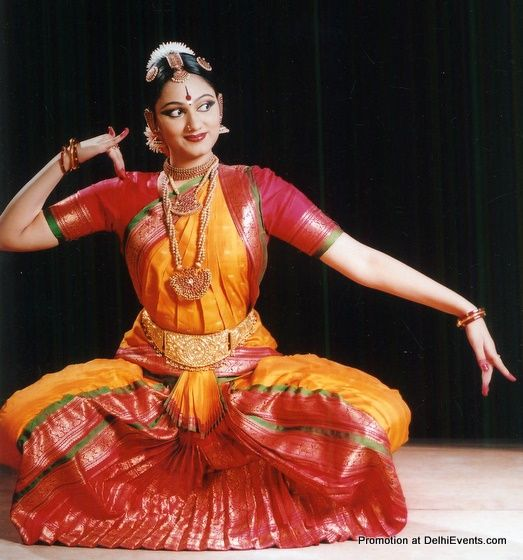
Source – Pinterest

Here are some of the most popular dance forms in India:

  1. Bharatanatyam: Bharatanatyam is a classical dance form from Tamil Nadu in South India. It is one of the oldest dance forms in India, with a history that dates back over 2,000 years. Bharatanatyam is known for its graceful movements, intricate footwork, and expressive hand gestures. The dance form is usually performed solo and is accompanied by Carnatic music.

  2. Kathak: Kathak is a classical dance form from North India that originated in the Mughal courts. It is characterized by fast footwork and intricate spins. The dance form tells stories through its movements, with the dancer using facial expressions, hand gestures, and body movements to convey different emotions. Kathak is usually accompanied by Hindustani music.

  3. Kuchipudi: Kuchipudi is a classical dance form from Andhra Pradesh in South India. It is known for its fluid movements and storytelling through dance. The dance form has a history that dates back over 2,000 years and is performed to both Carnatic and Hindustani music. Kuchipudi is usually performed by a group of dancers and is characterized by its use of colorful costumes and makeup.

  4. Manipuri: Manipuri is a classical dance form from Manipur in Northeast India. It is known for its graceful movements and use of vibrant costumes and props. Manipuri tells stories through its movements, with the dancer using facial expressions, hand gestures, and body movements to convey different emotions. The dance form is usually accompanied by classical Manipuri music.

  5. Mohiniattam: Mohiniattam is a classical dance form from Kerala in South India. It is known for its slow and graceful movements and storytelling through dance. The dance form is usually performed by a solo dancer and is accompanied by classical music. Mohiniattam is characterized by its use of white and gold costumes and jewelry.

  6. Kathakali: Kathakali is a classical dance form from Kerala in South India. It is known for its elaborate makeup, costumes, and facial expressions that tell stories from Hindu mythology. The dance form has a history that dates back over 500 years and is usually performed by a group of male dancers. Kathakali is accompanied by classical music and percussion.

  7. Bhangra: Bhangra is a folk dance form from Punjab in North India. It is characterized by energetic movements and is often performed to celebrate harvest festivals. Bhangra is usually performed by a group of dancers and is accompanied by traditional Punjabi music and instruments.

  8. Garba: Garba is a folk dance form from Gujarat in West India. It is performed in a circular formation and is known for its energetic movements and use of colorful costumes. Garba is usually performed during Navratri, a festival that celebrates the victory of good over evil.

  9. Odissi: Odissi is one of the famous classical Indian dances from Odisha. It is generally based on themes of Dashavatar, Lord Krishna’s love and Lord Jagannath’s Philosophy. It is a graceful and sensous dance style and involves tribhanga( three bends) posture. The Tribhanga posture symbolises the means to escape the limitations of the body.

In conclusion, India has a rich and diverse dance culture that is deeply rooted in its history and traditions. Each dance form is unique in its own way and reflects the cultural diversity of India. From classical dances to folk dances, India has something to offer for everyone who is interested in dance.

International Conference on Multidisciplinary Research (ICMR) 2023

International Conference on Multidisciplinary Research (ICMR) 2023. Organized by Track2Training aims to provide a platform for scholars, intellectuals and professionals to share and generate forum on the current local and global issues, address solutions to the problems and to provide opportunity for participants to exchange and share knowledge and information, establish business or research relationships and find global partners for future collaboration.

All prospective participants/authors are cordially invited to submit original and unpublished works for publication and presentation at the conference. All submissions are subjected to peer review before an acceptance decision is made. Our review committee will also select potential papers that have the merits for indexed publication and inform the corresponding authors for further decision. Papers may address, but not restricted to, the main theme from any of the sub-themes as mentioned in the conference website. Unlisted but related sub-topics are also acceptable.


The full manuscript must be submitted as an MS Word file in DOC or DOCX format (PDF format is not accepted). Please submit your full paper before the submission deadline and all manuscripts must be thoroughly checked for errors and formatted according to the Full Paper template that can be downloaded from the website. Manuscripts that are not properly prepared will be returned to the authors for revision and resubmission. Special discount will be given for group registration (3 participants or more). For more details visit us at https://icmr.edupub.org 

Submit your Paper for the conference to icmr2023@edupub.org

Conference Proceedings Details 

ISBN Number

Title

Author/Editor

Year Of Allotment of ISBN

Country of Publication

Imprint 

Publisher 

978-93-94433-17-5

International Conference on Multidisciplinary Research (ICMR) 2023

SN Sharma

2023

INDIA

IJR

Edupedia Publications Pvt Ltd

The French Revolution (1789 -1799)

The French Revolution was a period of radical social and political upheaval that lasted from 1789 to 1799. It was a time of great change and transformation in France, as the old regime of absolute monarchy and aristocratic privilege was overthrown and replaced with a new system of democratic government and social equality.


Source – Pinterest.com

The causes of the French Revolution were many and varied, but they can be traced back to the economic, social, and political problems that France was facing in the late 18th century. The country was burdened with a heavy debt, which had been incurred from years of costly wars and lavish spending by the monarchy. This debt was exacerbated by a poor harvest in 1788, which led to widespread famine and starvation.

At the same time, there was growing discontent among the French people, who were unhappy with the way that the country was being run. The monarchy was seen as corrupt and ineffective, and the aristocracy was viewed as parasitic and out of touch with the needs of ordinary people.

The Revolution began in 1789, when a group of deputies from the Third Estate (the common people) gathered in Versailles to demand political representation and reform. When the king refused to listen to their demands, the people of Paris rose up in revolt, storming the Bastille prison on July 14, 1789.

The fall of the Bastille was a turning point in the Revolution, and it marked the beginning of a period of radical change and experimentation. Over the next few years, France was governed by a series of different regimes, as the country struggled to find a new system of government that would be fair and effective.

The early years of the Revolution were marked by a series of important reforms, including the abolition of feudalism and the establishment of a system of universal education. However, the Revolution was also marked by violence and bloodshed, as rival factions fought for control of the government and executed their opponents.

The most violent period of the Revolution was the Reign of Terror, which lasted from 1793 to 1794. During this time, thousands of people were arrested and executed on suspicion of being counter-revolutionaries. The leader of this period, Maximilien Robespierre, was eventually overthrown and executed himself in 1794, bringing an end to the Reign of Terror.

The Revolution came to an end in 1799, when Napoleon Bonaparte seized power in a coup d’etat and established the First French Empire. Although Napoleon was a product of the Revolution, he represented a return to authoritarian rule, and his reign was marked by military conquest and imperial expansion.

Overall, the French Revolution was a period of profound change and transformation in France. It marked the end of the old regime and the beginning of a new era of democratic government and social equality. However, the Revolution was also marked by violence and bloodshed, and its legacy continues to be debated and contested to this day.

Technological advancements

We are living in a high tech society . Life has become so easier and comfortable even for normal people. Medical advancements have grown but mental health has worsened.Security has increased but at the same time crime and fear has also increased.

Despite having advance technology climate change is main environmental problem.No moral values are left in societies.problems are growing. People are suffering from mental disorders .

Is this advancement we need ?or there is something we need to understand that technology can give us comfort but not satisfaction and security. It comes from moral values and ethical values. And this is sad to know “now values are left only in story books”.

Technological advancements

We are living in a high tech society . Life has become so easier and comfortable even for normal people. Medical advancements have grown but mental health has worsened.Security has increased but at the same time crime and fear has also increased.

Despite having advance technology climate change is main environmental problem.No moral values are left in societies.problems are growing. People are suffering from mental disorders .

Is this advancement we need ?or there is something we need to understand that technology can give us comfort but not satisfaction and security. It comes from moral values and ethical values. And this is sad to know “now values are left only in story books”.

Indian society

India is the symbol of ‘Unity in diversity’ . Lots of different religion and culture exist together.We have different languages and rich heritage also. And we have also ancient knowledge of lots of things.

But today’s generation is more influenced by Western world. Even the young generation is more interested in criminal activities rather than justice oriented.

Even the cinemas have been changed a lot. Indian culture teaches you to be humble, being grounded, justice , forgiveness but young generation is becoming unethical.

This is the time where youngsters need more moral values .

Indian society

India is the symbol of ‘Unity in diversity’ . Lots of different religion and culture exist together.We have different languages and rich heritage also. And we have also ancient knowledge of lots of things.

But today’s generation is more influenced by Western world. Even the young generation is more interested in criminal activities rather than justice oriented.

Even the cinemas have been changed a lot. Indian culture teaches you to be humble, being grounded, justice , forgiveness but young generation is becoming unethical.

This is the time where youngsters need more moral values .

Why developing countries are so poor?

Natural, economic and social resources are the major components of economic development. But it is observed that some countries have limited resources yet development has taken place, for e.g. Switzerland, Denmark, Japan, etc. This is mainly due to human efforts and advance technology. On the other hand some countries have lot of resources yet they are less developed. 

Source – Blogger

In these countries, the wealth is unevenly distributed among the people. Rich people have excessive wealth, which is continuously increasing, while the poor are becoming more poor. Most of the people in these countries are engaged in subsistence agriculture. It is associated with low productivity. Manufacturing and employment is low. The geographical distribution of the population is mostly rural, despite recent rapid urban growth. Due to high birth rate and death rate, the structure of the population has a high proportion of non-productive people under the age of fifteen. Due to poverty, people get insufficient and low quality food, therefore, there is a serious problem of malnutrition. Due to the type of food they get, their energy level is low and they develop diseases related to malnutrition. As a result, there is low life expectancy. Infant mortality rate is extremely high.

Most of the countries are facing environmental problems. Climate has a direct effect on human activities. Many developing countries are in regions where activity rates are reduced and the body is more prone to diseases, because of the hot and humid climate. Uncomfortable climate along with poverty, diseases, ignorance and poor diet has led to very less development.

The climate affects agriculture, transport and other economic activities, that influences the development of country. Tropical countries have frequent droughts and occasional heavy rainfall that result in erosion and leaching of soils. Extreme climatic conditions also affect transport facilities, especially roads, which are easily washed out. Similarly heat, dust and water can badly affect transport machinery such as vehicles or railway locomotives.

Natural resources are very important in the process of development, providing a base for industrial growth or earning foreign currency from their export. However, the distribution of the world’s energy resources, especially coal and oil is very uneven. Many developing countries lack the raw material. Whereas the developed countries grow their wealth and power with these resources. On the other hand, the potential for hydro-electric and solar-generated energy is quite considerable in many parts of these countries. For example, Africa possesses 40 per cent of the world’s hydro-electric power potential. The difficulty is to realize this potential.

Despite their importance, lack of resources is not a problem of underdevelopment, because countries like Denmark, Switzerland and Japan have achieved high levels of development on a very limited resource base. Resources are neutral and only can be useful, when it applies technology & will to use it. Many of the problems arising from climatic difficulties can also be solved by the use of medical facilities, pesticides, scientific farming practices and so on. Those countries with an abundance of natural resources certainly have much better prospects for development, than those which do not have them. But in the regions where natural resources are in abundance, but the region is socio- economically backward, such regions fails to take advantage of the favorable environment. Hence regions remain underdeveloped.

There is a serious shortage of capital in the developing countries to finance the establishment of industry, agricultural improvement, and transport systems and so on. The size of the domestic market in these countries is often not large enough to sustain industrial development, because the purchasing power of the consumer is too low. The problem is compounded by the fact that, it is extremely difficult for a developing country to break into international markets, where they have to compete with the advanced industrial producers of the developed world.

The infrastructure in the less developed countries of the world is poorly developed. Power supply, transport networks, industrial and commercial services, education facilities are the elements that form the framework for the economic activity to develop. Such facilities are very expensive to establish and they give only small returns. The economies of most developing countries are imbalanced and inefficient. Despite the fact that at least 50 to 90 per cent of employment is in agriculture. On the other hand, some primary commodities, such as oil or scarce minerals, are rapidly becoming expensive, so the poor countries cannot afford to buy them. For example, minerals such as Copper, Tin, Zinc, and fuels such as mineral oil have become very expensive. The developing countries may not be able to compete with the developed countries to buy them. It might be argued that, there is a vast hydroelectric power potential in the tropics, which will help to solve these problems, but such installations are very expensive.

Women empowerment

is empowerment really empowering a woman? The answer we will have not sure because the empowerment is only for highly educated society but common women are still suffering. Whether it is property matter,basic needs or any growth in life, women are still dependent on others.But why it’s happening despite women’s participation in every thing. Some orthodox people are still not happy with the success of women because they think that their male members progress is inversely proportional to female members of the family. So this could be the one of the main reason that females are not getting enough opportunity as they deserve.A men have to take responsibility of their own capabilities and should invest in themselves to grow irrespective of creating hurdles in others path . And a woman should also stop being dependent on men. This both individual should grow individually and should help each other to grow.That is the only way society’s every aspect will flourish in life and so the country will flourish.

Women empowerment

is empowerment really empowering a woman? The answer we will have not sure because the empowerment is only for highly educated society but common women are still suffering. Whether it is property matter,basic needs or any growth in life, women are still dependent on others.But why it’s happening despite women’s participation in every thing. Some orthodox people are still not happy with the success of women because they think that their male members progress is inversely proportional to female members of the family. So this could be the one of the main reason that females are not getting enough opportunity as they deserve.A men have to take responsibility of their own capabilities and should invest in themselves to grow irrespective of creating hurdles in others path . And a woman should also stop being dependent on men. This both individual should grow individually and should help each other to grow.That is the only way society’s every aspect will flourish in life and so the country will flourish.

Sri Ganesh Nazre

 Articles written by Sri Ganesh Nazre

1 Nature of Bhakti Literature and its contribution to Indian Culture https://track2training.com/2023/01/29/nature-of-bhakti-literature-and-its-contribution-to-indian-culture/
2 How is India an age-old friend of Sri Lanka? http://track2training.com/2023/01/30/how-india-is-an-age-old-friend-of-sri-lanka/
3 The Medieval Indian Temple Sculptures Representing The social life of those days https://track2training.com/2023/01/31/the-medieval-indian-temple-sculptures-representing-the-social-life-of-those-days/
4 Under what circumstances can the Financial Emergency be proclaimed by the President of India? https://track2training.com/2023/02/01/under-what-circumstances-can-the-financial-emergency-be-proclaimed-by-the-president-of-india/
5 Clarify how mid-eighteenth century India was beset with the spectre of a fragmented polity. https://track2training.com/2023/02/02/clarify-how-mid-eighteenth-century-india-was-beset-with-the-spectre-of-a-fragmented-polity/
6 challenges in pds in india https://track2training.com/2023/02/21/what-are-the-major-challenges-of-the-public-distribution-system-pds-in-india/
7 the main contributions of Gupta period and Chola period to Indian heritage and culture https://track2training.com/2023/02/23/the-main-contributions-of-the-gupta-period-and-chola-period-to-indian-heritage-and-culture/
8 Analyzing the salience of ‘sect’ in Indian society vis-a-vis caste, region, and religion https://track2training.com/2023/02/23/analyzing-the-salience-of-sect-in-indian-society-vis-a-vis-caste-region-and-religion/
9 The 5 methods used by the Farmers’ organizations to influence the policy-makers in India and how effective are these methods? https://track2training.com/2023/02/06/the-5-methods-used-by-the-farmers-organizations-to-influence-the-policy-makers-in-india-and-how-effective-are-these-methods/
10 How does the cryosphere affect global climate? https://track2training.com/2023/02/07/how-does-the-cryosphere-affect-global-climate/
11 Explore and evaluate the impact of ‘Work From Home’ on family relationships https://track2training.com/2023/02/15/exploration-and-evaluation-of-the-impact-of-work-from-home-on-family-relationships/
12 The forces that influence ocean currents and their role in the fishing industry of the world https://track2training.com/2023/02/23/the-forces-that-influence-ocean-currents-and-their-role-in-the-fishing-industry-of-the-world/
13 Are tolerance, assimilation and pluralism the key elements in the making of an Indian form of secularism? https://track2training.com/2023/02/23/are-tolerance-assimilation-and-pluralism-the-key-elements-in-the-making-of-an-indian-form-of-secularism/
14 How did Communalism manifest in Indian political scene? Explain the background of the passing of the momentous Pakistan Resolution. https://track2training.com/2023/02/23/how-did-communalism-manifest-in-the-indian-political-scene-explain-the-background-of-the-passing-of-the-momentous-pakistan-resolution/
15 Assess the contributions of Ishwarchandra Vidyasagar to the making of modern India. https://track2training.com/2023/02/23/assess-the-contributions-of-ishwarchandra-vidyasagar-to-the-making-of-modern-india/
16 “Latecomer” Industrial revolution in Japan involved certain factors that were markedly different from what west had experience. https://track2training.com/2023/02/23/latecomer-industrial-revolution-in-japan-involved-certain-factors-that-were-markedly-different-from-what-the-west-had-experienced/
17 Africa was chopped into states artificially created by accident of European competition. https://track2training.com/2023/02/25/how-was-africa-chopped-into-states-artificially-created-by-the-accident-of-european-competition/
18 Critically examine the effects of globalization on the aged population in India. https://track2training.com/2023/02/25/the-effects-of-globalization-on-the-aged-population-of-india/
19 How difficult would have been the achievement of Indian independence without Mahatma Gandhi? https://track2training.com/2023/02/25/indian-independence-without-mahatma-gandhi/
20 To what extend can Germany be held responsible for causing the two World Wars? https://track2training.com/2023/02/25/can-germany-be-held-responsible-for-causing-the-two-world-wars/
21 The economic significance of the discovery of oil in the Arctic Sea and its possible environmental consequences? https://track2training.com/2023/02/25/the-economic-significance-of-the-discovery-of-oil-in-the-arctic-sea-and-its-possible-environmental-consequences/
22 the role of women in the freedom struggle especially during the Gandhian phase https://track2training.com/2023/02/25/the-role-of-women-in-the-freedom-struggle-especially-during-the-gandhian-phase/
23 Characteristics and types of primary rocks https://track2training.com/2023/02/20/characteristics-and-types-of-primary-rocks/
24 Is inclusive growth possible under market economy ? State the significance of financial inclusion in achieving economic growth in India. https://track2training.com/2023/02/21/is-inclusive-growth-possible-in-a-market-economy-state-the-significance-of-financial-inclusion-in-achieving-economic-growth-in-india/
25 the differences in the approach of Subhash Chandra Bose and Mahatma Gandhi in the struggle for freedom https://track2training.com/2023/02/25/subhash-chandrabose-vs-mahatma-gandhi-in-the-struggle-for-indias-freedom/
26 Has the formation of linguistic states strengthened the cause of Indian unity? https://track2training.com/2023/02/27/has-the-formation-of-linguistic-states-strengthened-the-cause-of-indian-unity/
27 To what extent globalisation has influenced the core of cultural diversity in India? https://track2training.com/2023/02/26/to-what-extent-globalization-has-influenced-the-core-of-cultural-diversity-in-india/
28 the significance of the lion and bull figures in Indian mythology, art and architecture https://track2training.com/2023/02/27/the-significance-of-the-lion-and-bull-figures-in-indian-mythology-art-and-architecture/
29 Clean energy is the order of the day https://track2training.com/2023/02/26/how-clean-energy-is-the-order-of-the-day/
30 the role of the Vice –Presidents of India as the chairman of the Rajyasabha https://track2training.com/2023/02/27/the-role-of-the-vice-president-of-india-as-the-chairman-of-the-rajyasabha/