

Planning Thesis Awards for Students of Urban Planning in India
Recommedations fro Smart City Mission
ISRO Announces Free Online Course With Certificates on Remote Sensing, GI System

ISRO has announced a five-day free online course on remote sensing and GIS, being conducted by IIRS for government officials, policy-makers, and research scholars. Read on for more details to apply.
Sounds Interesting? Share it now!

The Indian Space Research Organisation (ISRO) has invited applications for a free online course called RS and GIS Applications in Atmospheric and Oceanic Hazards. The five-day course has been organised by the Indian Institute of Remote Sensing (IIRS) under ISRO.
The course has been designed for all stakeholders that need to be aware of natural and man-made disasters — such as tsunamis, cyclones, floods, storm surges, extreme rainfall, and dust storm. It will provide participants with an overview of utilising remote sensing and GIS data to avert them.
The curriculum is suitable for central and state government officials, policymakers, professionals and specialists from universities, educational institutes, operational and research institutes, and research scholars.
Things to know
The course is free.
The course can be completed in five days.
Course study materials, such as lecture slides and video-recorded lectures, will be made available through e-class.
There is a limited number of seats available. Registration will be done on a first come first serve basis.
A certificate will be given to the participants who have 70 percent attendance in the course.
How to apply
Applications will be submitted online.
To participate in this programme, the interested organisations, universities, departments, and institutes have to identify a coordinator at their end.
The identified coordinator will have to register his/her institute as a nodal centre on the IIRS website.
The course can then be taken by registered participants through the e-class platform of IIRS-ISRO.
Important dates
The course will begin on 27 February 2023 and end on 3 March 2023.
Use this link for Registration
For more information, check the official notification.
Maa Kalijai Temple; Beauty of Chilika Lake
Chilika Lake is a brackish water lagoon located in the state of Odisha, India. It is the largest coastal lagoon in India and the second largest in the world. The lake is spread over an area of 1,100 square kilometers and has a unique ecosystem that supports a wide variety of flora and fauna. It is home to over 160 species of birds, including several migratory species that visit the lake during the winter months. The lake is also home to a variety of fish, crustaceans, and other aquatic animals. The lake’s ecosystem is highly productive, and it supports the livelihoods of thousands of people who depend on the lake for fishing, farming, and other activities.
Chilika Lake is also an important tourist destination and is known for its natural beauty and biodiversity. Visitors can take boat rides on the lake and observe the various bird species and other wildlife that inhabit the area. The lake is also home to several small islands that are popular among tourists.
Hisory of Maa Kalijai Temple
Kalijai Temple is a famous Hindu temple located on an island in Chilika Lake in the state of Odisha, India. The temple is dedicated to the goddess Kalajai, who is considered to be an incarnation of the goddess Kali.
According to legend, a newly married girl (named Jaai) and her father were on their way to meet her husband. Her in-house law’s was on an island in Chilika Lake, so they had to take a boat across the lake to get there. The coast of Odisha is prone to cyclones, and during this boat trip, they encountered a severe cyclone, causing their boat to capsize in Chilika Lake. Except for the girl Jaai, all of the boatmen and her father survived this incident. They looked for her but couldn’t find her. After the untimely death of that newlywed girl, she became the Goddess of the people who lived nearby, and she is still worshipped as an Excerpt of Kali. And, this is how the place got its name.

The temple is located on an island in the middle of Chilika Lake, and can only be reached by boat. Visitors to the temple can enjoy the scenic boat ride across the lake and take in the natural beauty of the area. The temple is also home to a variety of wildlife, including several species of birds, which can be seen on the island and in the surrounding water.
The Kalijai Temple is a popular pilgrimage site for devotees of the goddess Kalijai, who come from all over India to offer prayers and seek blessings. The temple is particularly crowded during the annual festival of Kalijai, which is held in the month of November and attracts thousands of devotees.
The temple is also a popular tourist attraction, and visitors can explore the temple complex and learn about the history and legends associated with the temple. The beautiful architecture of the temple, the scenic surroundings, and the spiritual atmosphere make it a must-visit destination in Odisha.
7 Challenges of Urban Planning in India by Dr Ashok kumar
Second World War(1939- 1945)
World War II was a global conflict that lasted from 1939 to 1945. It was the deadliest conflict in human history, with an estimated 50-85 million fatalities worldwide, including civilians and military personnel. The war was fought between two main alliances: the Axis powers, consisting of Germany, Italy, and Japan; and the Allied powers, consisting of the United States, Great Britain, France, and the Soviet Union, among others.
The war began on September 1, 1939, when Germany invaded Poland. Britain and France, who had guaranteed Poland’s security, declared war on Germany on September 3. The early years of the war were marked by German victories in Europe and the rapid expansion of the Axis powers, including the invasion of the Soviet Union in 1941.
The tide of the war began to turn in favor of the Allies in 1942, with significant victories in North Africa and the Soviet Union. In 1944, Allied forces landed in Normandy and began the liberation of Western Europe. The war in Europe ended on May 8, 1945, when Germany surrendered.
The war in the Pacific continued until August 15, 1945, when Japan announced its surrender after atomic bombs were dropped on the cities of Hiroshima and Nagasaki by the United States.
The aftermath of the war led to significant changes in the political and social landscape of the world, including the formation of the United Nations and the beginning of the Cold War between the Western powers and the Soviet Union.

Source – Wikipedia
Causes of World War II:
1. The Treaty of Versailles (1919): The treaty of Versailles had in itself the germs of the Second World War. The Germany was very badly treated. She was forced to sign the treaty at the point of a bayonet, in a spirit of revenge. To tear away the treaty of Versailles, Hitler joined hands with Mussolini of Italy.
2. Nationalist Movements of Germany & Italy: The rise of the national movement in Germany & Italy added fuel to the fire. Although Hitler tried to assure the world that he meant peace, he could not conceal his ambition for long. He embarked on a career of aggression which ultimately lead to war. The same was the case with Mussolini who had established his dictatorship in Italy in 1922.
3. Conflict of Ideology between Dictatorship & Democracy: Countries like Germany, Italy & Japan represented the ideology of dictatorship while Great Britain, France & USA represented the ideology of democracy. Mussolini described the conflict between the two ideology thus: ‘The struggle between the two worlds can permit no compromise. Either we or they’
4. Inefficiency of League of Nations: Unfortunately, when hostility was growing between the two camps there was no effective international organization which could bring the leaders of the two camps on a common platform and bring about a reconciliation between them. The League of Nations was practically dead.
5. Colonial & Commercial Rivalry: The colonial and commercial rivalry between England and France on one side, and Germany and Italy on the other brought them in conflict with each other.
6. Aggressiveness of Berlin-Rome-Tokyo Axis : Hitler had became very aggressive. He annexed the Saar Valley, occupied Rhineland and Austria captured Czechoslovakia etc. Mussolini attacked Abyssinia (Ethiopia) Japan attached China. This aggressive mood of the Fascist Power got its fullest expression when they formed an Axis providing for mutual aid in the international sphere.
7. Immediate Cause: The immediate cause of the war was the refuse of Poland to Surrender. Germany gave an ultimatum to Poland regarding : (i) surrender the port of Dazing, (ii) the right of establishing a rail link between Germany and East Prussia through the Polish corridor. These two demands were rejected by Poland. So Germany invaded Poland on Sept. 1, 1939. Britain and France as they were under treaty obligations to aid Poland, declared war against Germany on Sept. 3, 1393.
Is education worth it?
From a past few weeks I was curious to know whether education is really worth it or not. If yes then why literacy rate is growing but at the same time unemployment too.Their are lots of knowledge,information and opportunities and people also but they still criticise about unemployment. And this is because we have a quantity in education but some where we have loosed the quality. We have jobs to do but mostly people are underemployed or unemployed. Population growth is one of the main reason of it we have less opportunities compared to people being appeared, less resources more people ,less money with large families. And still in India lots of people are not getting this point that we don’t have enough resources and just simply giving birth to a child is very disasterous event in present time and then complaining about government it is completely unfair. People should learn to take responsibility and government also needs to take strict action .
Is education worth it?
From a past few weeks I was curious to know whether education is really worth it or not. If yes then why literacy rate is growing but at the same time unemployment too.Their are lots of knowledge,information and opportunities and people also but they still criticise about unemployment. And this is because we have a quantity in education but some where we have loosed the quality. We have jobs to do but mostly people are underemployed or unemployed. Population growth is one of the main reason of it we have less opportunities compared to people being appeared, less resources more people ,less money with large families. And still in India lots of people are not getting this point that we don’t have enough resources and just simply giving birth to a child is very disasterous event in present time and then complaining about government it is completely unfair. People should learn to take responsibility and government also needs to take strict action .
A Genius IAS officer also a Great Poet of Odisha
Pradeep Biswal is a former senior member of the Indian Administrative Service and an illustrious bilingual poet publishing both in English and Odia and his many poems have been translated into many Indian languages. He has authored seven anthologies of poetry in Odia. In addition, he has published two volumes- collections of poems in English. Also, his two collections of poems have been translated in Hindi. His many poems have been published in many Indian languages, also these have been published by National Book Trust, Sahitya Akademi, and Odisha Sahitya Academy. On many occasions, he represented the Odia Poetry conference at the national level and received a Fellowship in Literature from the Ministry of Human Resource Development, Department of Culture in 1995.
Recently I had the opportunity to read his two publications i.e., collection of poems (written by Pradeep Biswal. One was “A House Within An Anthology of Poems” published in 2018 published by Authorspress, New Delhi, and another one was “Pilgrimage to Ayodhya: A Timeless Journey” published by AABS Publishing House, Kolkata (2019). Both volumes have ISBN. In the case of first publication altogether 38 poems have been included. And the second volume has included 42 poems. All are lucidly written in English and easy to understand both content and meaning. Some have focussed on nature; some have touched lives, emotional feelings, spiritual evocativeness, etc. From both volumes, I am presenting a few lines from some poems for the benefit of readers albeit all (a total of 80) are worthy to read.
From the publication “A House Within: An Anthology of Poems” a few lines from some poems, I am presenting. In the poem “The Wild Flower”, the last two lines depict many things.
“A mere tiny flower
It contains the whole universe”, a beautiful meaning hidden in the poem.
In another poem “When the Braid was Kept Open” a few lines may be mentioned here which contain wonderful meaning.
“Like the princess
From the paradise
She was beaming
With a radiant smile
The world laid bare
At her feet”
In the poem “The Lost Smile” these few lines mean its content.
“I don’t know
When I lost it
But it’s lost anyway.
Never ask me To Smile again
It may look
Something else
Other than a smile”
In the poem Monorona’s Eyebrows, the poet has beautifully presented the importance of
eyebrows when he writes,
“Eyebrows could
Communicate in a flash
And disappear”
The poem “In Mourning” is a touchy one everyone on this earth will not survive as death is inevitable. In the poem “When we met”, the poet feels that “Life is juxtaposed”. In the poem “Where are You Now?” the poet has beautifully written,
“Come Bharat
Come sometime
We have many more
To discuss” In this poem “Where are You Now?” Biswal’s patriotic feelings have been reflected. All other poems viz., ’Dream Within”, The War Never Ends”, “Life in Recluse”, “Between Us”, “To My Son”, ‘Yayati”, “Lost Spring”, “The Liftman”, ‘The Void”, “Silence” etc., have been presented brilliantly keeping its essence in own ways.
Pradeep Biswal’s second poetry collection in English is “Pilgrimage to Ayodhya”, A timeless journey” which consists of 42 poems. All are excellent and carry wonderful/touchy meanings which can be understood from each poem’s title. Nature, love, patriotic feelings, Nero-like king’s behaviour importance of stone indicating human behaviour, etc. may be found in this volume.
In the poem “One Un-Starry Night” the poet makes an effort to romanticise a deep sense of loss and longing.
“In the midnight’s parlour
Full of broken promises
Like the bitten wings of an airy bird
I still crave for your tender touch
The naked curves of your body
Someday somewhere else.”
The meaning and expression in the poem “Invitation” are clear.
“Please descend the
stairs of the sky;
Let all anxieties
meet their dead end.”
His patriotic fervour has been reflected in the two poems, viz., “Bharat Varsh:1” and “Bharat Varsh: 2”. In both poems, after portraying Bharat (India) poet has concluded that “It’s my Bharat Varsh” i.e., my beloved country India.
King Nero’s character has been lucidly presented in the poem “Nero Isn’t Dead”. In the poem “Youth, Money & Power” the reality of life has been portrayed. According to the poet,
“Youth, money & power
Stay for a short while
With you
But to realise this
You need
Years of penance”
Similarly, in the poem “The Clouds” the behaviour of the clouds relating to human lives wonderfully has been depicted.
In “Do You Know?” poem, addressing the unknown listener, who could be a friend or any other or the entire human race, someone says that everyone fights war and may be wounded from the war. But all cannot win or lose the war but that does not prevent him from being a war veteran. So, the poet has presented
“Do you know
Like you I am a war veteran”
The poet has presented a symbolic journey that the soul embarks upon to achieve illumination in “The Pilgrimage to Ayodhya”, also the sublime smile on Ramlala’s face has an inspirational effect.
In the poem “Monalisa’s Smile” the poet tries to probe into the retreat of human consciousness hidden under the enigmatic smile.
“I don’t know
What they felt
About you
But I see
Shadows of deprivation
And shallow dreams
For ages
Turning into a volcano
And lurking behind
Your synthetic smile”
All poems in this volume have been wonderfully presented with intrinsic meaning. Some of them are – “I Know It Well”, “Me Too”, “Fatima On The Facebook”, “The Kunduli Girl”, “Metamorphosis”, “You”, “Last Night”, “Sunflower” etc. some names which can be mentioned here.
After reading both volumes (38 and 42 poems), I congratulate from the core of my heart to him as a bureaucrat by profession and a poet by passion who lived about four decades in the realm of poetry. His collections of poetries are in Odia and English also translations in other languages are assets to Indians.
Dr Shankar Chatterjee, Hyderabad
A Genius IAS officer also a Great Poet of Odisha
Pradeep Biswal is a former senior member of the Indian Administrative Service and an illustrious bilingual poet publishing both in English and Odia and his many poems have been translated into many Indian languages. He has authored seven anthologies of poetry in Odia. In addition, he has published two volumes- collections of poems in English. Also, his two collections of poems have been translated in Hindi. His many poems have been published in many Indian languages, also these have been published by National Book Trust, Sahitya Akademi, and Odisha Sahitya Academy. On many occasions, he represented the Odia Poetry conference at the national level and received a Fellowship in Literature from the Ministry of Human Resource Development, Department of Culture in 1995.
Recently I had the opportunity to read his two publications i.e., collection of poems (written by Pradeep Biswal. One was “A House Within An Anthology of Poems” published in 2018 published by Authorspress, New Delhi, and another one was “Pilgrimage to Ayodhya: A Timeless Journey” published by AABS Publishing House, Kolkata (2019). Both volumes have ISBN. In the case of first publication altogether 38 poems have been included. And the second volume has included 42 poems. All are lucidly written in English and easy to understand both content and meaning. Some have focussed on nature; some have touched lives, emotional feelings, spiritual evocativeness, etc. From both volumes, I am presenting a few lines from some poems for the benefit of readers albeit all (a total of 80) are worthy to read.
From the publication “A House Within: An Anthology of Poems” a few lines from some poems, I am presenting. In the poem “The Wild Flower”, the last two lines depict many things.
“A mere tiny flower
It contains the whole universe”, a beautiful meaning hidden in the poem.
In another poem “When the Braid was Kept Open” a few lines may be mentioned here which contain wonderful meaning.
“Like the princess
From the paradise
She was beaming
With a radiant smile
The world laid bare
At her feet”
In the poem “The Lost Smile” these few lines mean its content.
“I don’t know
When I lost it
But it’s lost anyway.
Never ask me To Smile again
It may look
Something else
Other than a smile”
In the poem Monorona’s Eyebrows, the poet has beautifully presented the importance of
eyebrows when he writes,
“Eyebrows could
Communicate in a flash
And disappear”
The poem “In Mourning” is a touchy one everyone on this earth will not survive as death is inevitable. In the poem “When we met”, the poet feels that “Life is juxtaposed”. In the poem “Where are You Now?” the poet has beautifully written,
“Come Bharat
Come sometime
We have many more
To discuss” In this poem “Where are You Now?” Biswal’s patriotic feelings have been reflected. All other poems viz., ’Dream Within”, The War Never Ends”, “Life in Recluse”, “Between Us”, “To My Son”, ‘Yayati”, “Lost Spring”, “The Liftman”, ‘The Void”, “Silence” etc., have been presented brilliantly keeping its essence in own ways.
Pradeep Biswal’s second poetry collection in English is “Pilgrimage to Ayodhya”, A timeless journey” which consists of 42 poems. All are excellent and carry wonderful/touchy meanings which can be understood from each poem’s title. Nature, love, patriotic feelings, Nero-like king’s behaviour importance of stone indicating human behaviour, etc. may be found in this volume.
In the poem “One Un-Starry Night” the poet makes an effort to romanticise a deep sense of loss and longing.
“In the midnight’s parlour
Full of broken promises
Like the bitten wings of an airy bird
I still crave for your tender touch
The naked curves of your body
Someday somewhere else.”
The meaning and expression in the poem “Invitation” are clear.
“Please descend the
stairs of the sky;
Let all anxieties
meet their dead end.”
His patriotic fervour has been reflected in the two poems, viz., “Bharat Varsh:1” and “Bharat Varsh: 2”. In both poems, after portraying Bharat (India) poet has concluded that “It’s my Bharat Varsh” i.e., my beloved country India.
King Nero’s character has been lucidly presented in the poem “Nero Isn’t Dead”. In the poem “Youth, Money & Power” the reality of life has been portrayed. According to the poet,
“Youth, money & power
Stay for a short while
With you
But to realise this
You need
Years of penance”
Similarly, in the poem “The Clouds” the behaviour of the clouds relating to human lives wonderfully has been depicted.
In “Do You Know?” poem, addressing the unknown listener, who could be a friend or any other or the entire human race, someone says that everyone fights war and may be wounded from the war. But all cannot win or lose the war but that does not prevent him from being a war veteran. So, the poet has presented
“Do you know
Like you I am a war veteran”
The poet has presented a symbolic journey that the soul embarks upon to achieve illumination in “The Pilgrimage to Ayodhya”, also the sublime smile on Ramlala’s face has an inspirational effect.
In the poem “Monalisa’s Smile” the poet tries to probe into the retreat of human consciousness hidden under the enigmatic smile.
“I don’t know
What they felt
About you
But I see
Shadows of deprivation
And shallow dreams
For ages
Turning into a volcano
And lurking behind
Your synthetic smile”
All poems in this volume have been wonderfully presented with intrinsic meaning. Some of them are – “I Know It Well”, “Me Too”, “Fatima On The Facebook”, “The Kunduli Girl”, “Metamorphosis”, “You”, “Last Night”, “Sunflower” etc. some names which can be mentioned here.
After reading both volumes (38 and 42 poems), I congratulate from the core of my heart to him as a bureaucrat by profession and a poet by passion who lived about four decades in the realm of poetry. His collections of poetries are in Odia and English also translations in other languages are assets to Indians.
Dr Shankar Chatterjee, Hyderabad
Bronze Age Civilization
The Bronze Age was a period of human history that began around 3000 BCE and lasted until around 1200 BCE. During this time, many civilizations emerged and developed in various parts of the world. Some of the most well-known Bronze Age civilizations include:
-
Mesopotamian Civilization: The Oldest Civilization of the world Mesopotamia means land between the rivers. Mesopotamia is the land that developed in the region between the Tigris and Euphrates rivers is often referred to as the cradle of civilization.
-
Egyptian Civilization: The civilization that developed along the Nile River in northeastern Africa is one of the most famous Bronze Age civilizations. The ancient Egyptians developed a sophisticated system of writing, art, architecture, religion, and government that influenced later cultures.
-
Indus Valley Civilization: This Bronze Age civilization developed in the northwestern region of the Indian subcontinent around 2500 BCE. The Indus Valley Civilization was known for its advanced urban planning, including a complex system of drainage and water management.
-
Chinese Civilization: The Shang Dynasty was a Bronze Age civilization that developed in China around 1600 BCE. The Shang Dynasty is known for its sophisticated system of writing, bronze metallurgy, and art.

Source – flagfen.com
Mesopotamian Civilization:
The Mesopotamian civilization emerged in the region that is now Iraq around 4000 BCE and lasted until the 6th century BCE. It is known as one of the earliest civilizations in the world, and its contributions to human history are numerous.
The Mesopotamians developed a system of writing called cuneiform, which involved pressing a reed stylus into clay tablets to create wedge-shaped marks. This system allowed for the recording of laws, contracts, and other important documents, making it possible to keep records and communicate across long distances.
The potter’s wheel was perhaps first used in Mesopotamia. They also developed the first written legal code, the Code of Hammurabi, which established a set of laws and punishments for crimes. They had discovered the Pythagoras Theorem and could also calculate the length of day and night.
Overall, the Mesopotamians were a highly influential civilization, and their innovations and achievements continue to shape the world today.
Egyptian Civilization:
The Egyptian civilization emerged along the Nile River and hence, Egypt is called the ‘Gift of the Nile’. The Old Kingdom is also called as the ‘Age of the Pyramids’. The Egyptians built impressive structures, including the pyramids, temples, and palaces. These structures were designed to honor the pharaohs, who were considered to be divine rulers.
The Egyptians had a complex religion, which included a pantheon of gods and goddesses, each of whom controlled different aspects of the natural world. They believed in the afterlife and developed elaborate burial practices, including the construction of tombs and the preservation of bodies through mummification.
The Egyptians also made significant contributions to mathematics and science, including the development of geometry, astronomy, and medicine. They developed a decimal system of numeration. The crowing achievement of the Egyptians was the Solar Calendar.
Overall, the Egyptian civilization was one of the most influential and long-lasting in human history, leaving behind a rich legacy of art, architecture, literature, and culture that continues to inspire us today.
Indus Valley Civilization:
The Indus Valley Civilization (also known as the Harappan Civilization) was an ancient civilization that flourished in the northwestern region of the Indian subcontinent from approximately 2600 BCE to 1900 BCE. It was named after the Indus River, which flows through the region.
The Indus Valley Civilization was one of the world’s earliest urban civilizations, and it had a highly sophisticated culture with a well-developed system of writing, impressive architecture, and advanced agricultural techniques. The cities of the Indus Valley Civilization were also notable for their efficient drainage systems, which were among the most advanced of their time.
Some of the major cities of the Indus Valley Civilization included Harappa, Mohenjo-Daro, and Dholavira, which were all located in present-day Pakistan. The civilization also had extensive trade networks that reached as far as Mesopotamia, Central Asia, and the Persian Gulf.
Despite its significant achievements, much about the Indus Valley Civilization remains a mystery, as the script used by the civilization has yet to be fully deciphered, and there is still much debate about the reasons for its decline and ultimate collapse.
Chinese Civilization:
Chinese civilization is one of the world’s oldest, dating back to around 2100 BCE. The civilization emerged in the Yellow River Valley of China and has contributed immensely to the world in fields such as philosophy, art, science, and technology.
The early Chinese civilization was characterized by a series of dynasties, which were ruled by emperors and marked by significant achievements in technology, art, and literature. The Shang Dynasty (1600 BCE-1046 BCE) was known for its bronze casting, oracle bone inscriptions, and advanced agriculture.
The Chinese civilization is also known for its significant contributions to philosophy, including the teachings of Confucius, Taoism, and Buddhism. Confucianism emphasizes the importance of moral values and ethics, while Taoism emphasizes the importance of harmony and balance in nature. Buddhism was introduced to China in the 1st century CE and became an influential religion in the country.
In the field of science and technology, the ancient Chinese civilization made significant contributions in areas such as astronomy, mathematics, medicine, and engineering. The Chinese were among the first to develop gunpowder, paper, printing, and the compass, which had a significant impact on the world.
Overall, Chinese civilization has had a profound impact on the world, with its contributions in various fields shaping the course of human history.
Fundamental Rights and Fundamental Duties for Indian Citizens
India is well-known for its cultural diversity. This great nation’s identity is formed by many religions, cultures, and languages. Along with this diversity, India has been the site of several significant political movements. The struggle for independence from British rule was one of these movements. Following our country’s independence in 1947, our leaders worked tirelessly to draught a constitution that would protect the rights of all citizens. The Indian Constitution is a document that discusses the fundamental rights and duties of Indian citizens. In this article, we will look at these fundamental rights in greater detail!

Picture Courtesy – https://www.nicholls.edu/
What are the fundamental rights?
The fundamental rights are the fundamental rights guaranteed to all Indian citizens by the Constitution. Part III of the Constitution enshrines these rights ( Articles 12-35). Fundamental rights are not absolute, but are subject to reasonable limitations. Every Indian citizen is guaranteed seven fundamental rights under the Indian Constitution.
Article 12-35 of the Indian constitution establishes seven fundamental rights. It includes the right to equality (Article 14-18), the right to freedom (Article 19-22), the right against exploitation (Article 23-24), the right to religious freedom (Article 25-28), cultural and educational rights (Article 29-30), the right to property (Article 31), and the right to constitutional remedies (Article 32). (Article 32). Courts have the authority to enforce fundamental rights, subject to reasonable limitations.
- Right to Equality (Article 14-18): The right to equality includes the prohibition of discrimination on the basis of caste, race, place of birth, sex, religion, and equal opportunity for employment.
- Right to Freedom (Article 19-22): These rights include the freedom to speak freely and express yourself, the right to form associations, unions, or cooperatives, the right to move, reside, and work.
- Right against Exploitation (Articles 23-24): This includes protection from human trafficking and forced labor.
- Right to Freedom of Religion (Articles 25-28): This right includes the freedom to choose, practice, and promote the religion of your choice.
- Cultural and Educational Rights (Articles 29-30): These rights include the right to protect minorities’ interests as well as the right to preserve their language, script, or culture.
- Right to Property (Article 31): The 44th Amendment Act of 1978 abolished this right and replaced it with a legal right under Article 300A.
- Right to Constitutional Remedies (Article 32): This is the most important right because it grants the authority to petition the Supreme Court for the enforcement of Fundamental Rights.
- Fundamental rights are not absolute, but are subject to reasonable limitations, as stated in the constitution. Except in declared emergencies, these rights cannot be waived.
What are the fundamental duties under the Indian constitution?
The fundamental duties of citizens under the Indian Constitution are mentioned in Part IVA of the constitution. They were added by the 42nd Amendment in 1976. The amendment was done to instill a sense of patriotism and national pride in the citizens. There are ten fundamental duties mentioned in the constitution.
These fundamental duties are not enforceable by law but the constitution aims to inculcate a sense of duty in every citizen. Some of the fundamental duties include:
– protect our composite culture’s rich heritage;
– protect our country and provide national service whenever the government requests it.
– promote harmony and a sense of common brotherhood among the people of India, regardless of regional, linguistic, or religious differences.
– value and preserve our country’s rich biodiversity;
– protect mother earth as well as rivers, wildlife, forests, and lakes.
– protect public property and avoid violence;
Apart from the fundamental duties mentioned above, Indian citizens are also required to perform additional duties.
Differences between fundamental rights and fundamental duties:
The major difference between fundamental rights and fundamental duties is that fundamental duties are binding on all citizens, whereas fundamental rights are not.
–The Fundamental Rights, as defined in Part III of the Constitution, are all citizens’ basic civil and political rights.
– The Fundamental Duties, as defined in Part IVA of the Constitution, are non-mandatory obligations that are regarded as moral obligations.
– The courts can enforce the Fundamental Rights, but not the Fundamental Duties.
– The Fundamental Duties were added to the Constitution recently, whereas the Fundamental Rights have been present since its inception.
Conclusion:
The Fundamental Rights are a set of rights to which all Indian citizens are entitled. These rights are enshrined in the Indian Constitution and protect the individual from abuse by both the government and private individuals and organizations. I tried to outline the seven fundamental rights that all Indians have, define fundamental duties, and differentiate between fundamental rights and fundamental duties in this blog post.
How to Write a Research Paper for Publication in SCI
Traffic Rules and Regulations
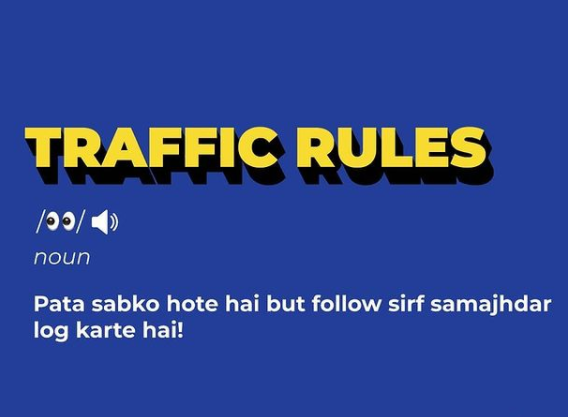
In 1914, the first legislation ‘Indian Motor Vehicle Act 1914’ was passed in our country to regulate the motor vehicles and as well as other road users. Since then, traffic pressure on Indian roads has multiplied several times, and the first Motor Vehicle Act 1914 has been amended and revised several times by the Government of India to form the ‘The Motor Vehicle Act 1988’. Traffic rules and regulations are designed to ensure the smooth flow of motor vehicles on the road, which includes not only drivers but also pedestrians, cyclists, hand carters, and other road users. Drivers and other road users must have a thorough understanding of traffic rules/regulations, traffic signs, and markings. The proper understanding of these rules can significantly reduce the number of accidents while also establishing a healthy and well-organized traffic system in our country.
Both pedestrians and the drivers should be disciplined & obey all the rules and regulations. So, I request every citizen of this country to follow the do’s and don’ts listed down below for pedestrians and drivers, respectively.
DO’s for pedestrians –
- DO walk in a straight line down the sidewalk.
- DO stop at crosswalks and pay attention to the signals.
- DO pay attention to your surroundings when walking, especially at night and alone.
- DO take the time to enjoy your walk even if you are in a hurry… look around and see.
- DO smile if you happen to make eye contact with another human being.
DON’Ts for pedestrians –
- DON’T stop randomly on the sidewalk without checking that people are right behind you.
- DON’T jaywalk without looking.
- DON’T wear headphones and have your music turned up so loud you can’t hear what’s happening on the street.
- DON’T cut across the sidewalk to get to a shop or something without looking behind you.
- DON’T walk into things while your head is down looking at your phone… trust me, it happens!
DO’s while driving –
- Do always wear a helmet while riding a 2 wheeler.
- Do always wear a seat belt.
- Do follow the speed limit.
- Do be courteous towards other drivers and riders.
- Do give pedestrians the right-of-way in crosswalks.
- Do make room for bicycles.
- Do pay attention while driving, even if you are familiar with the area. A surprising number of accidents take place only blocks away from home!
- Do use indicators.
- Always keep to the left.
- Do keep a safe distance.
- Do always carry the important papers and your driving license.
- Do drive cautiously in severe weather.
- Do plan your long route journeys in advance. Take proper gaps in between.
DON’Ts while driving –
- Don’t drive alcohol and drive, and don’t get in a car with a driver who has been drinking or using drugs.
- Don’t talk on your cell phone and drive at the same time. If you need to make or answer a call, pull over at a safe place and then resume your journey.
- Don’t let your emotions and frustrations get the best of you. Don’t engage in road rage, no matter how irritating another driver might be to you.
- Don’t tailgate other cars, pass on shoulders, run stoplights or stop signs, or break any other rules on purpose.
- Don’t drive if you are underage.
- Don’t overtake suddenly.
- Don’t use brakes suddenly.
- Don’t overspeed over potholes.
 Eduindex
You must be logged in to post a comment.