Utilization of public funds

The money the government collects is income from direct taxes, indirect taxes, non-tax revenues, and external funding. This public fund is only spent according to the law.
The use of public funds to provide public services, grants and aid to businesses and the disadvantaged, to provide social benefits such as social benefits and pensions to eligible citizens fair and equitable, and purchasing goods and services legally or ethically, the government is forced to consolidate financial activities, take into account the specificity of expenditures, determine the relationship production between spending and benefits, revealing immediate or future budgetary impact, implementing effective and efficient spending at all levels, adhering to performance-based budgets, and defining” public spending code”.
Public funds are best used if expenditures are in accordance with the law, in accordance with generally accepted standards, considered worthy of the money spent on something, and uphold responsibility. Financial accountability and control values ​​the most efficient use of operational resources and inputs.

The accounts of Government are retained in three parts:-

  1. Consolidated Funds of India
  2. Contingency Funds of India
  3. Public Account

Consolidated Funds of India

Government of India has received all revenue in the form of taxes like income tax, central excise tax, customs and other revenues paid to government in government business i.e. is the non-tax revenue credited to the Consolidated Fund. was established under Section 266(1) of the Constitution of India. Likewise, all government-contracted loans through the issuance of public notices, treasury bills (domestic debt) and loans from foreign governments and international organizations (foreign debt) are credited to this fund. All government expenditures are derived from this fund and no amount may be withdrawn from the fund without the permission of Parliament.

Contingency Funds of India

The Contingency Fund of India records the transactions related to the Provident Fund established by the Government of India under Article 267 of the Constitution of India. The figure of this fund is Rs. 50 crores. Advances from the fund made to meet unforeseen expenses will be fully deducted from the fund as soon as the National Assembly authorizes additional expenditure. Thus, this fund acts more or less like an imprest account of the Government of India and is held by the Secretary of the Government of India, Ministry of Finance, Department of Economic Affairs in the name of the President.

Public Account

In Public Accounts under Section 266(2) of the Constitution, transactions involving debts other than those included in the Consolidation Fund of India. Transactions under Accounts Payable, Deposits and Advances in this section are transactions for which the government is obligated to repay the amount received or to seek recovery of the amounts paid. Transactions related to “Money Transfer” and “Thrill” include all payment procedures. The initial debits or credits of these heads will eventually be offset by corresponding receipts or payments. Revenue from public accounts is not ordinary government revenue. Therefore, Congressional authorization for payments from public accounts is not required.

Factors constraining utilization of plan

Under- Utilization by States on the Plan can be attributed to institutional and procedural bottlenecks in the implementation of the Plan outlines and to deficiencies in the planning process at the district level. . These factors must be taken into account in order to strengthen States’ capacity to make more efficient use of the larger allocations to the social sectors. Decentralized planning is implemented in the periphery, due to lack of personnel to carry out planning activities, not enough attention has been paid to enhancing their capacity and participation role of the community in the planning process is small. The bottlenecks in the budget process in the programs, such as delays in capital turnover, the issuance of sanctions on expenditures, and decision-making in the states is centralized, not sufficient fiscal decentralization for district/county governments and uniform standards of centrally funded plans for all states. Furthermore, the absence of need-based budgeting in plans, which is often done without a proper unit cost analysis on the basis, means that allocations for some plans are decided upon. determined in a top-down and impractical manner. Systemic weakness, manifested in the lack of trained and regular staff in various key roles such as program manager, finance/accounting and frontline service delivery; this has contributed to weakening the capacity of the state government apparatus in implementing the mechanisms of the Plan. Regarding the systemic weaknesses in the state government system, it can be argued that unplanned state spending plays an important role in strengthening the overall capacity of the government apparatus. This affects the capacity of the state government apparatus in terms of the availability of qualified permanent staff and the adequacy of the government infrastructure to implement the Plan’s programmes. However, over the past decade, unplanned spending in the social sectors has been controlled by many states because of the current fiscal policy’s emphasis on reducing deficits by limiting public spending. As a result, the capacity of the government apparatus to implement the Plan’s programs/programs was controlled.

Emotional intelligence-concepts, and their utilities and application in administration and governance

One of the most fundamental and important aspects of the human experience is our ability to sense emotions. Without it, our existence would be one-dimensional and nowhere as rich and dynamic as it is. We feel joy and euphoria when we achieve something, sadness when we lose it, and disappointment when things don’t go our way. All of these are manifestations of the different emotions we experience.

NATURE OF EMOTIONAL INTELLIGENCE

The essence of emotional intelligence as envisioned by Goleman can be summarized as follows;
It is the ability to control the emotions of others, including groups, individuals and closed people. It is a process of knowing what is good or bad and how to go from bad to good. It is susceptible to development or damage as a result of one’s life experiences. It is not genetically fixed, rather it is widely learned and continues to develop throughout life. It develops with age and experience as a person moves from childhood to adulthood. Both men and women have a personal profile of strengths and weaknesses in emotional intelligence abilities. Women tend to be stronger in skills based on empathy and social skills, while men do better in skills based on self-regulation.

BENEFITS OF EMOTIONAL INTELLIGENCE

EI has implications for many types of our lives, from personal relationships to professional settings. Some of the benefits are as follows;
Allows individuals to harness not only thinking skills but also the information and power that emotions bring. Take a realistic and realistic view of emotions as opposed to traditional notions that encourage unhealthy emotional suppression. Facilitate understanding of self and others beyond superficial information. Encourage and enable empathy to the quality of interpersonal interactions
It adds a competitive advantage over mere cognitive intelligence and technical skill so that individuals can pursue excellence and success using a wide range of intelligences. Allows individuals to control their emotions. This means that a person can intensely feel desired emotions (e.g. joy, love, etc.) and avoid unwanted emotions like anger, jealousy, etc.

Application of emotional intelligence in administration and governance

Many administrative staff are extremely talented, exceptionally intelligent and have very high IQs. They excel in computer science, science, and math. But they have difficulty establishing social relationships. Many of them are rebellious and ruthless in their reactions to the outside world. They have little or no feelings for the people around them. They feel physiologically uncooperative in their relationships and lack social kindness or even a personal social life.

People with high emotional intelligence know how to listen to their feelings and control their intensity so that they are not influenced by others. Emotionally intelligent people know how to manage troublesome emotions. Emotionally intelligent people feel the effects of their emotions on others. People with emotional intelligence know how to use their strengths and compensate for their weaknesses. Emotionally intelligent people listen to other people’s feelings and can relate to them. Emotionally intelligent people act ethically and build trust through honesty and consistency. In the field of management and operations, emotional intelligence includes 5 main elements of emotional intelligence: Self awareness. Self-regulating. Motivation. Empathy. Social ability. These emotional intelligence skills are essential for successful leadership. Self-awareness and agency skills for accurate and confident self-assessment help emotionally intelligent decision-makers determine their appropriate role in the decision-making process (Goleman, 2001). Self-management and its behavioral components such as self-control, reliability, conscientiousness, adaptability, willingness to succeed, and initiative are important emotional intelligence skills for decision makers. decisions (Goleman, 2001). As an administrator and leader, you must manage these factors. 1. Self-Awareness: If people are self-aware, they always know how their feelings and emotions affect those around them. Perceiving themselves in an administrative or leadership position also means having a clear picture of their strengths and weaknesses.

2. Self-regulation: Managers and leaders who succeed in self-regulation do nothing to verbally attack others, make hasty or emotional decisions, stereotype people, or hurt others. harm their value. Self-regulation is about maintaining control. This element of emotional intelligence also implies the flexibility and commitment of directors and leaders to personal accountability. To improve his or her self-regulation, the person must Know the values. Take responsibility yourself. Practice calm.

3. Motivation: Directors and leaders are motivated to work consistently to achieve their goals. And they have extremely high standards for the quality of their work. Administrators can improve motivation by following the method: Double-check why they perform certain behaviors. Make sure their goal statements stay fresh and energized (goal setting). Know where they are. Let’s hope and find something good: Motivated leaders are optimistic no matter what they’re up against. Adopting this mindset can take some practice, but it’s well worth it.

4. Empathy: Empathy is essential to running a successful team or organization. Empathetic directors and leaders have the ability to put themselves in the shoes of others. They support and develop their team members, challenge those who act unfairly, provide constructive feedback, and listen to those in need

. 5. Social skills: Directors and employees should develop social skills. People who do well in this element of emotional intelligence are excellent communicators. They are equally open to bad news as well as good, and they are adept at getting their team to support them and get excited about a new task or project. Managers with good social skills are also good at managing change and skillfully resolving conflicts.

Linkages between development and spread of extremism

Development and extremism have been linked to each other in a complex manner.

All people have the right to improve their standard of living with adequate food, clothing, housing, quality education, health and a decent lifestyle.
History shows us that the lack of these necessities drives people to revolt against colonial authorities as they did at the time. The lack of development has led the general public to rely on radical means to claim their rights.

The relationship between the development and extremism

Undeveloped is creating conditions for the spread of uprisings and extremist ideologies among those who recognize that the government does not meet their needs. It’s a fact. It is the policy of governments around the world today to emphasize comprehensive development, but there are always groups in every state that feel marginalized because they feel left out of development efforts. These perceptions, coupled with inefficient and corrupt governance, set the stage for extremist and radical growth. Lack of effort, mismanagement, and the inability of systems to engage communities left out of society fuel violence and extremism more than lack of actual development. In the context of India, left-wing extremism or Naxalite is a good example of the correlation between development and extremism.

It has been observed that extremist activities are limited to certain areas where there is an administrative and development vacuum. Government growth programs have not trickled down to these regions.

Here are the reasons why underdevelopment activities lead to extremist actions:

Tribal grievances: Tribes that depend on forest products have been banned from using forest products under the Conservation Law Forest in 1980. The mass displacement of tribal people due to development projects, mining activities and other factors also angered the tribal community. The Naxals/Maoists took advantage of these emotions and provided these vulnerable people with weapons and money.

Unemployment: unemployment, poverty, lack of health care, lack of education and awareness, lack of access to electricity, internet connection and communication, are the list of problems that the government has not yet addressed. in these fields. The widening gap between rich and poor between such a backward region and the rest of the country has become the fuel for Naxalism to spread like wildfire.

Lack of management: Irregular management, lack of management in remote areas, poor implementation and poor management of government programs have caused people a feeling of suffering. Development projects are poorly executed, fueling extremism in the region. Social repression: Social discrimination against vulnerable communities and tribal communities is one of the main reasons for extremist activities when the Naxalites provide them support to promote the movement.

Travel: Tourism is doing more harm than good to the tribal areas of the Naxal belt. The introduction of foreign influence and commercialization caused the disintegration of tribal society, leading to radical activism.

Development and fall of extremism

Revolutionary ideology has lost its former appeal, evident in the residents’ disinterest in joining the militia. The improved performance of the state on the development and governance front makes it difficult for the insurgents to develop in the way they once did. The center initiated the development and good management practices deprived the insurgents of support for the affected populations. The most important steps taken by the Center were the enactment of a number of landmark laws that recognized the Adivasis’s right to access to forest resources and self-governance – the passage of the Forest Residents Act in 2006 in defiance of the strong opposition from environmentalists and NGOs. Strengthen security-focused measures to counter the burgeoning Maoist movement. They have arrested more than 7,000 activists in the past three years, while an equal number of Maoists have surrendered to authorities in various states. The loss of strongholds, a decline in ideological attractiveness, and a crisis of leadership, as well as the improved performance of affected states on the socio-economic fronts, could cause The uprising is unlikely to regain the momentum it had decades ago. Significant improvements in security agencies, especially the police force, improved security and intelligence infrastructure, as well as better command and control systems for tracking rebels and Their movement also contributes to security.

CONCLUSION

It is important to strengthen the State’s protective shield against the multifaceted exploitation of these populations. Civil and constitutional rights protections related to the law need to be made more effective against Scheduled Actors and Scheduled Tribes. Land policies must be made easier for the vulnerable classes of agrarian society. Developing beneficial land policies will improve food security and livelihoods, and reduce acts of extremism.

Livelihood security can be ensured by establishing quality infrastructure, technical assistance services and effective market linkages at the village or village group level to promote subsistence and sustainable activities in the region. livestock, aquaculture, gardening, growing mulberry, raising silkworms and poultry. The state needs to ensure more development work and its practical implementation with high priority, requiring a clean, corruption-free and accountable administration at all levels. grant. As we have seen, developments and extremism are closely related and must be approached from the same angle.

The National Rural Employment Guarantee Act (MGNREGA) is a critical component in ensuring that the poorest of the poor have access to livelihood support and protection.

SECULARISM

Secularism is defined as a doctrine where all religions are given equal status recognition and support from the state. In other words ,secularism simply means as a doctrine that promote separation of state from religion.

Secularism stands for that there should be no discrimination and partiality on grounds of religion and everyone should get an equal opportunity to follow the religion of their choice.

The tradition of secularism is inhibited In The Deep roots of the history of India. In a nation India the first face of secularism is reflected in the preamble of India where the word secular holds the most importance. Indian secularism is also reflected in its fundamental rights article 25 to 28 where the government guarantees each of its citizens the right to practice any religion.

In the words of PB Gajendragadkar ,a former Chief justice of India, secularism is defined as the state does not all loyalty to any particular religion as such it is not irreligious or anti religious it gives equal freedom to all religion.

Indian philosophy of secularism is related to “Sarva Dharma Sambhavana” ,meaning the destination of the parts followed by all religions is the same though the parts them self maybe different simply meaning secularism means equal respect to all religions.

India is a secular country and India does not attached its politics with any individual religion. We Indians together celebrate every festival as well as Indians have the entire freedom and say to celebrate their religion in the country regardless of the caste and creed.

The ideology of Secularism also allows people to express their opinions and beliefs freely. As in a secular state ,no religious group can apply pressure of dominance . Through this ideology, their has been an increasing effect on the right to speech.

The history of secularism in India way backs to 1976 ,where during the 42nd Amendment of the Indian Constitution. The leaders of Independent India had visualised India,  as a country where religion is no bar for its citizens.

SECULARISM IN MODERN INDIA

India was under the control of the East India Company and the British Raj after Aurangzeb. The British East India Company pursued a divide and rule policy, yet the spirit of secularism was strengthened and enriched by the Indian Freedom Movement. The politics of “divide and rule” has contributed to some extent to the conflict of communities between different communities. The partition of Bengal in 1905 followed this policy. The Council of the Indies Act of 1909 made available to other voters for Muslims. This provision was extended by the Government of India Act 1919 to seeks in certain states, Christians in India, Europeans, and Anglo-Indians. Separate voters further extended the co-representative principle by providing separate voters to the depressed class (planned caste), women and workers (workers) through the Indian Governance Act of 1935. The establishment of the Indian National Congress in 1885, with its secular values, united people of all denominations and led the free movement to a constructive and successful path. Nehru issued a long report (1928) calling for the abolition of another voter to create a secular state. Gandhi’s secularism was based on a commitment to brotherhood in the religious community based on respect and pursuit of truth, but J.L. Nehru’s secularism was based on a commitment to scientific humanism, adorned with a progressive view of historical change.

 To conclude , Secularism allows the people of various religions to live peacefully without any fear of the majority. It safeguard democracy by limiting the powers of the majority. It ensures harmony in the nation. In absence of secularism, religious persecutions may take place which may result in dissent, conflicts or even a civil war.

Tuberculosis: a global emergency

Tuberculosis is a specific infectious disease caused by myobacterium tuberculosis. The pathogen primarily affects lungs and causes pulmonary tuberculosis. It can also affect the intestine, bones, joints, lymph gland, skin and other tissues of the body. Tuberculosis remains a worldwide public health problem. There are 15-20 million cases of infectious tuberculosis in the world. Eight million new victims and 2.9 million deaths are known to occur every year. The disease is credited with killing over one million women and nearly 1,70,000 children every year. WHO has declared TB as a global emergency.

FACTORS CAUSING TUBERCULOSIS:

  1. Agent Factors: Tuberculosis is caused by a facultative intracellular parasite myobacterium tuberculosis. The most common source of infection is the affected human himself whereas the milk of the bovine (affected cattle) is also an active source of spreading the disease. Patients remain infected as long as they remain untreated. Effective antimicrobial treatment reduces infectivity up to 90% within 48hours.
  2. Host factors: Tuberculosis affects people of all age groups. It is more prevalent in males than the females. It is not a hereditary disease but inherited susceptibility is an important risk factor. Man has no inherited immunity against tuberculosis. It is acquired as a result of natural infection or BCG vaccination.
  3. Social factors: Social factors include many non- medical factors such as poor housing, poor quality of life, overcrowding, population explosion, malnutrition, lack of education, etc.

Tuberculosis is transmitted mainly by droplet infection which is generated by sputum positive patients with Pulmonary tuberculosis. In most cases the bacteria affects the lungs. Pulmonary tuberculosis destroys the lung tissue, rupturing blood vessels in the process.

CONTROL OF TUBERCULOSIS:

The control measures consists of two components, namely:

  • Curative component
  • Peventive component

CURATIVE COMPONENTS include case find in and chemotherapy whereas PREVENTIVE COMPONENTS include vaccination. The first step in tuberculosis control is early detection of sputum positive cases followed by chemotherapy.

To tackle this global emergency, the National Tuberculosis Program me was initiated in 1962. The long term goal of the programme is to “reduce the problem of tuberculosis in the community sufficiently and quickly to the level where it ceases to be a public health hazard.”

Despite effective case finding and therapeutic tools and declined mortality, tuberculosis still remains to be a serious communicable disease worldwide.

World Test Championship: Pakistan had a huge advantage by losing the Indian team, do you know why that happened?

Even after losing the final game of the five-game series, the Indian team suffered a setback when the team was fined for slow speed. Not only was the Indian team fined 40 percent of the match fee, but two points were also reduced, which directly benefited the Pakistan cricket team. With two points down, the Pakistani team has now overtaken the Indian team in the World Test Championship points table, which can be seen as a major blow to India. ICC Elite Panel Match Referee David Boon handed out this fine to the Indian team, who is 2 overs behind. According to Article 2.22 of the ICC Code of Conduct, 20 percent of the gaming fee will be charged to the players due to the minimum overrun. This penalty is based on the number of overs reduced per over. The Indian team was 2 overs behind in the allotted time in the Edgbaston test, leaving the team to bear the brunt. According to Article 16.11.2 of the ICC Code of Conduct, 1 point will be deducted per team points per over. After that, the Pakistani team overtook them in percentage terms in the World Test Championship points table. The Indian team has now slipped to fourth place with 75 points, while the Pakistani team has risen to third place. Speaking of points percentage, the Pakistan team is 52.38 compared to India’s 52.8. India captain Jasprit Bumrah has admitted his mistake, meaning there will be no further hearing about it.

World Test Championship: Pakistan had a huge advantage by losing the Indian team, do you know why that happened?

Even after losing the final game of the five-game series, the Indian team suffered a setback when the team was fined for slow speed. Not only was the Indian team fined 40 percent of the match fee, but two points were also reduced, which directly benefited the Pakistan cricket team. With two points down, the Pakistani team has now overtaken the Indian team in the World Test Championship points table, which can be seen as a major blow to India. ICC Elite Panel Match Referee David Boon handed out this fine to the Indian team, who is 2 overs behind. According to Article 2.22 of the ICC Code of Conduct, 20 percent of the gaming fee will be charged to the players due to the minimum overrun. This penalty is based on the number of overs reduced per over. The Indian team was 2 overs behind in the allotted time in the Edgbaston test, leaving the team to bear the brunt. According to Article 16.11.2 of the ICC Code of Conduct, 1 point will be deducted per team points per over. After that, the Pakistani team overtook them in percentage terms in the World Test Championship points table. The Indian team has now slipped to fourth place with 75 points, while the Pakistani team has risen to third place. Speaking of points percentage, the Pakistan team is 52.38 compared to India’s 52.8. India captain Jasprit Bumrah has admitted his mistake, meaning there will be no further hearing about it.

VARIOUS SECURITY FORCES AND AGENCIES AND THEIR MANDATE IN INDIA

There are external and internal threats to India’s security and various specialized Indian forces deal with these threats. External threats are typically handled by the armed forces of the Department of Defense, while internal threats are handled by the Department of Home affairs .

Security forces

1.Indian Armed Forces

2.Central Armed Police Force

Indian Armed Force

The defense forces are divided into four sub-heads.

  1. Indian Army Personnel.
  2. Indian Air Force Personnel.
  3. Indian Navy Personnel.
  4. Indian Coast Guard Personnel.

The Supreme Commander of the Indian Armed Forces is the President of India. All three of these services are under the Department of Defense.

Indian Army

The Indian Army is the land component of the armed forces. It evolved from the armed forces of the East India Company, eventually transforming into the British Indian Army and the Indian Army after independence.
It is commanded by the Chief of Staff of the Army (COAS). It is considered the second largest active army in the world. The mission of the Indian Army is to ensure national security and protect India’s sovereignty, territorial integrity and harmony against foreign aggression and threats. This also includes providing humanitarian assistance and aid to civilians during natural disasters and unexpected times.

Indian Navy

India has a coastline of 7516.6 km. The Indian Navy secures India’s maritime borders and interests. It also protected Indian merchant ships by fighting pirates on the high seas, and at the same time, it aided civilians in disasters. It is commanded by the Chief of Naval Staff, an Admiral. The Indian Navy is deployed under three commands: Eastern Naval Command – Vishakhapatnam is the headquarters. Western Naval Command – Mumbai is the headquarters The Southern Naval Command – Kochi is the headquarters. The navy is used to support foreign policy goals, build “bridges of friendship” and strengthen international cooperation.

Indian Air Force

The Indian Air Force was officially established on 8 October 1932. The force was known as the Royal Indian Air Force in recognition of its service during the Second World War. . After Independence, the term “Royal” was dropped. It is considered the 4th largest air force in the world. The primary responsibility of the Indian Air Force is to secure Indian airspace and conduct air wars in times of conflict. In addition to the wars of independence for India and humanitarian action, she has participated in many UN peacekeeping missions. An Air Marshal is the commander of the air forces in India. The Air Force Network (AFNet), launched September 14, 2010, is a digital information network that enables rapid and accurate response to threats. It is a fiber-based network.

Security Forces Dealing with Internal Threats

There are many divisions of Central Armed Police Force, which deal with internal threats.

Central Armed Police Force (CAPF)

  1. Assam Rifles (AR)
  2. Border Security Force (BSF)
  3. Central Industrial Security Force (CISF)
  4. Central Reserve Police Force (CRPF)
  5. Indo Tibetan Border Police (ITBP)
  6. National Security Guard (NSG)
  7. Sashastra Seema Bal (SSB)

Duties of various security forces and agencies The Ministry of Home Affairs (MHA) has many responsibilities, the most important of which are internal security, management of paramilitary forces, border management, center-state relations, administration of territories. of the Union, disaster management, etc. Article 355 of the Constitution ordered the Union to defend each State against external aggression and internal disturbances and to ensure that each State’s government was carried out in accordance with the provisions of the Constitution.

Operation Cactus by Indian Armed Forces which saved Maldives freedom.

Operation Cactus, led by the Indian Armed Forces in 1988, to stop a group of Maldives mercenaries led by businessman Abdullah Rutufi, and armed mercenaries of the Tamil Elam People’s Liberation Organization (PLOTE), a separatist Tamil organization in Sri Lanka. It’s strategy was to overthrow the government in the Maldivian island republic.

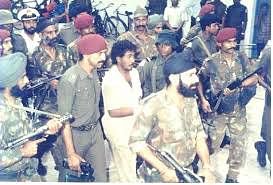
Thier were two coup attempr done before 1988.The 1980 and 1983 coup attempts against President Maumoon Abdul Game were not considered serious, but the third coup attempt in November 1988 surprised the international community. About 80 armed PLOTE mercenaries boarded a speedboat from a Sri Lankan cargo ship hijacked in the capital Male before dawn. A similar number has previously invaded Male in the guise of a visitor. The mercenaries soon gained control of the capital. This includes major government buildings, airports, ports, television and radio stations. The mercenaries then marched to the presidential residence, where President Gayoom lived with his family. However, before they arrived at the presidential residence, President Gayoom was escorted to the Defense Minister’s house by a Maldivian national security forces. The Secretary of Defense then took the president to a safe home.

Meanwhile, the mercenaries occupied the presidential residence and managed to take the Maldivian Minister of Education hostage. President Gayoom called on Sri Lanka and Pakistan government to intervene in the military, but both refused to help because of lack of military power. The president then demanded Singapore’s intervention, but Singapore refused for the same reason. He then contacted the United States and was told that it would take a couple of days for the US military to reach the Maldives from the nearest military base in Diego Garcia, which was almost 1000 km away. The president then contacted Britain and who advised them to seek help from India. After that, President Gayoom sought help from the Indian government. India soon accepted their request and an emergency meeting was convened at the Secretariat Building in New Delhi. Within 16 hours of SOS, India was ready for thier missions.

Rejaul Karim Laskar, a member of India’s then ruling party, the Indian National Congress, said that intervention of India in coup d’etat was necessary because without India’s intervention, outsiders powers were tempted to intervene and establish base in the Maldives. . Therefore, India intervened through “Operation Cactus”. On the night of November 3, 1988, the Ilyushin Il-76 aircraft of the Indian Air Force took elements of the 50th Independent Parachute Regiment, the 6th Parachute Regiment Battalion, and the 17th Parachute Field Paratrooper Regiment under Brigadier General Farsala from Agra Air. He flew non-stop for over 2,000 kilometers (1,240 miles) and landed at Male International Airport on Hulhule Island. Indian Army paratroopers arrived in Hulhule nine hours after President Gayoom proceedings.

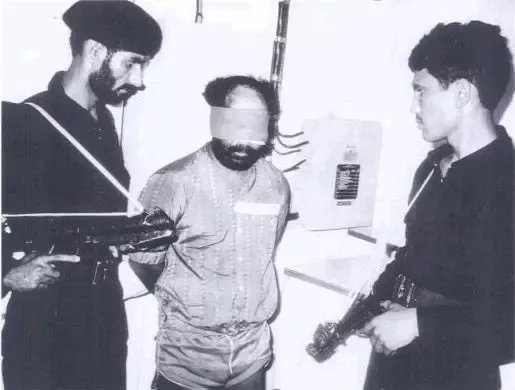
Indian paratroopers quickly secured an airfield and sailed to Male on a confiscated boat to rescue President Gayoom . Paratroopers handed over control of the capital to President Gayoom ‘s government within hours. Some of the mercenaries fled to Sri Lanka on a hijacked cargo ship. Those who could not arrive at the ship in time were immediately rounded up and handed over to the Maldivian armed Forces and government. According to reports, 19 people died in battle, most of them mercenaries. The dead included two hostages killed by mercenaries. And Operation Cactus took 18 hours for Indian Armed Forces from start to finish. Indian Navy frigate Godavari and Betwa intercepted a cargo ship off Sri Lanka and captured mercenaries. The swift intervention and accurate intelligence of the Indian Army was able to successfully subdue the coup attempted in the island nation.

Conservation, environmental pollution and degradation, environmental impact assessment

CONSERVATION

Environmental conservation is an activity that paves the way for the protection of the environment and natural resources at the individual, organizational and governmental levels. Various basic environmental problems are weighing on people’s lives. From overpopulation to hydrological problems, including ozone depletion, global warming, deforestation, desertification, and pollution, all these problems seriously threaten the existence of mankind. Unless environmental conservation becomes an effective mass movement, it is futile to expect positive growth, especially in an age of digital media that has the potential to bring about a revolution. revolution to save our destroying planet.

It has become important for the conservation of the environment in modern times. The following guidelines explain the essential need to protect the environment from further degradation:

To reduce pollution of air, water and soil,

Facilitating the conservation of natural resources for our future generations

To ensure the protection of biodiversity

To realize sustainable development To restore ecological balance

To save our planet from the harmful effects of global warming

ENVIRONMENTAL POLLUTION AND DEGRADATION

Environmental degradation is the decomposition or degradation of the environment due to the consumption of assets, such as air, water and soil; the destruction of the environment and the extinction of animals. It is characterized by any alteration or exacerbation of a natural territory that is considered cruel or undesirable. Ecosystem effects or degradation produced by the amalgamation of a substantial and effectively expanding human population, expanding monetary development or wealth per capita, and applying technologies that cause depletion and pollution.

It occurs when the earth’s natural resources are depleted, and the environment is compromised in the form of extinction of species, pollution in the air, water and soil, and rapid growth in population.

Environmental degradation is one of the biggest threats currently under consideration in the world. The United Nations International Strategy for Disaster Mitigation describes environmental degradation as the shrinking of the earth’s limits to meet social and environmental needs and destinations. Environmental degradation can occur in many ways. The moment the environment is destroyed or depleted of commons, the environment is considered broken and damaged. There are a number of different techniques used to prevent this, including environmental resource protection and general conservation efforts. There are number of types of environmental degradation- Land and soil degradation, Water degradation, air pollution, noise pollution etc.

ENVIRONMENT IMPACT ASSESMENT

Environmental Impact Assessment (EIA) is a process of assessing the possible environmental impacts of a proposed project or development, taking into account the socio-economic, cultural and environmental impacts of the project. and human health are associated with both benefits and negatives. UNEP defines an Environmental Impact Assessment (EIA) as a tool used to determine the environmental, social and economic impacts of a project before making a decision. It aims to predict environmental impacts at an early stage of project planning and design, seek to reduce negative impacts, shape projects to the local environment, present projects reporting and options for decision makers. Environmental impact assessment in India is legally supported by the Environmental Protection Act 1986, which contains different provisions on EIA methods and procedures.

The Environment Impact Assessment includes the steps mentioned below.

The EIA process is cyclical with interactions between different phases. Review: The project plan is reviewed based on the size of the investment, location and type of development, and whether the project requires statutory approval. Scope: Potential project impacts, impact areas, mitigation possibilities, and monitoring needs. Baseline data collection: Baseline data is the environmental condition of the study area. Impact prediction: Positive and negative impacts, reversible and irreversible, temporary and permanent impacts must be anticipated, assuming the rating agency has a good understanding of the project. Mitigation Measures and EIA Report: The EIA report should include actions and steps to prevent, minimize or ignore impacts or compensation for possible damage or loss to with the environment. Public Hearing: Once the EIA report is completed, community and habitat groups near the project site may be notified and consulted. Decision making: the impact assessment authority and experts consult with the project manager and consultant to make the final decision, keeping in mind the EIA and EMP (plan Environmental Management). Monitoring and implementation of the environmental management plan: The different phases of the project implementation are monitored. Evaluation of alternatives, identification of mitigation measures and EIA report: For each project, possible alternatives should be identified and environmental attributes compared . Alternatives must include both project location and process technology. After the alternatives have been considered, a mitigation plan must be developed for the selected alternative and supplemented by an environmental management plan (EMP) to guide the proponent towards improvement. environment friendly. Risk assessment: Inventory analysis and probabilistic and risk metrics are also part of the EIA procedure.

Science and Technology- developments and their applications and effects in everyday life.

Science and technology are widely recognized as important tool to promote and enhance the country’s socio-economic development. India has made considerable progress in various fields of science and technology over the years and can now boast of having a strong network of Science & Technology institutions, skilled manpower and infrastructure. innovative knowledge. Given the rapid pace of globalization, the rapid depletion of raw materials, the increasing competition between countries and the growing need for intellectual property protection, the importance of strengthening the knowledge base becomes even more important. Agenda is to enhance application-oriented research and development to create technology; promote human resource development, including encouraging bright students to pursue scientific careers; encouraging research and application of science and technology for forecasting, prevention and mitigation of natural disasters; integrate the development of science and technology into all areas of national activities; and exploiting science and technology to improve livelihoods and create jobs; environmental protection and ecological security. Science and technology is of great importance for economic growth at the macro level and for enhancing the competitiveness of enterprises at the micro level. Globalization and liberalization have created great opportunities and some challenges for Science and technology.

DEVELOPMENTS

In India, the role of science and technology in national development has been recognized by the government. The second five-year plan emphasizes that “the most important factor to promote economic development is the will of the community to apply modern science and technology”. In 1971, the Department of Science and Technology (DST) was established to promote new fields of science and technology. Similarly, State Councils of Science and Technology have also been established at the state level. As part of national policy, the government promotes various research and development programs to encourage scientific activities. Thus, we see that modern scientific and technological knowledge has had an impact on almost all fields such as agriculture, industry, nuclear energy, space technology, electronics, medicine and science. Development of Health Sciences. In addition to these key areas, India has also made progress in several other areas. These include the activities of the Petroleum and Natural Gas Commission in oil exploration and refining and the National Environmental Planning Commission in environmental protection and solar power generation. A Central Ganges Administration has been established to control Ganga pollution using wastewater treatment plants, etc. Currently, the country has a solid foundation in modern technology. It also has the third largest science and engineering workforce in the world. India has become a major destination for outsourced R&D activities. We currently have more than 1,100 R&D centers established by multinational enterprises (MNCs) such as IBM, Google, Microsoft, Intel, Lupin, Wockhardt, etc. These R&D centers cover areas such as information and communication technology, biotechnology, aerospace, automotive, chemical and materials technology. India’s relatively strong intellectual property regime will enable the country to emerge as a major R&D hub. Indian scientists are at the forefront of some of the world’s ground-breaking works. Recent contributions by Indian scientists to cutting-edge research and technology have been encouraging. For example, 37 Indian scientists from 9 Indian institutions who played a key role in the discovery of gravitational waves received the 2017 Nobel Prize in Physics. Indian scientists also contributed. on the discovery of neutron star mergers at the Laser Interferometer Gravitational-Wave Observatory (LIGO), USA. The development of Brahmos, advanced supersonic anti-aircraft interceptors, various types of missiles and missile systems, remote control vehicles, light combat aircraft, etc. are examples. highlights India’s advances in strategic and defense technology. India currently ranks among the few countries with reliable space technology capabilities. The upgrade of SLV to ASLV and PSLV to GSLV, the first lunar orbiter project Chandrayan-1, the Mars Orbiter Mission and the recent simultaneous launch of 104 satellites are remarkable achievements of India. India is currently the third largest country in terms of number of startups. This number is predicted to grow exponentially in the coming years. The government has established the Atal Innovation Mission (AIM) to completely transform the country’s innovation, entrepreneurship and startup ecosystem.


Applications and Effects in Everyday Life

Science and technology affect us all, every day of the year, as soon as we wake up, day and night. Our digital alarm clocks, the weather, the vehicles we drive, the buses we take, our decision to eat a baked potato instead of fries, our cell phones. me, antibiotics for your sore throat, clean water and all the lights have brought us the contributions of science. It affects socialization and productivity. The power of the Internet has made it easier for global communities to form and share ideas and resources. The modern world would not be modern at all without the knowledge and technology created by science. The influence of science on people’s lives is growing. Although the recent benefits to humanity are unprecedented in human history, in some cases harmful or long-term effects raise serious concerns. Today, the public distrust of science and fear of technology is a significant metric. This is partly due to the belief of some individuals and communities that they will be the ones to bear the indirect negative consequences of technical innovations introduced for the benefit of a special minority. permission. The power of science to bring about change forces scientists to proceed with caution in what they do and what they say. Scientists should reflect on the social consequences of technology applications or partial disclosures about their work and explain to the public and policymakers the degree of uncertainty. or the scientific incompleteness of their findings. At the same time, however, the exploitation of the full predictive power of qualified science should not be avoided to help humans cope with environmental change, especially in the face of direct threats such as natural disasters. or water shortage. Science and Technology offers simple and affordable science-based solutions that help individuals save time, energy and increase income. Technology adds value to handicraft products, playing an important role in enhancing their competitiveness. In general, S&T can play an important role in extending informatics to the most remote areas of the country by emphasizing computer literacy, making it accessible to those without formal education. Information Technology. Thus, “problem populations” can be transformed into valuable “human resources” through activity-oriented training and skill upgrading, which develop entrepreneurship and facilitate for independent employment through the use of new technologies. S&T provides solutions to long-term problems such as drought, disease, lack of domestic water, nutrition, sanitation, health, housing, etc. and other everyday issues, including the transition to unconventional energy sources and product packaging. Knowledge of science and technology helps to find ways for people to have the habit of using natural resources more wisely such as wood, bamboo, medicinal plants, etc. through the application of environmentally friendly technologies.

INVESTMENT MODELS

Before starting with investment models we must understand what investment is. Investing is the exchange of money for profitable assets. The same profit is used to invest in other assets. Investment is important for a country’s economic well-being, as it contributes to growth and development. When a government invests in a business, agriculture, manufacturing, or support industry, it can create employment opportunities for its people. However, a strong investment scenario is when the government and the private sector work together to create investment opportunities. Also, we make an investment and choose a proxy for a investment model, we should keep in mind that the following factors are involved: Savings rate. National tax rate. (Net profit after tax). inflation. Bank interest rates. Potential rate of return on investment. Availability of other factors of production (cheap land, labor, etc.) and the infrastructure that underpins them-transportation, energy, telecommunications. Market size and stability.

TYPES OF INVESTMENT MODELS

The following are the main investment models Public investment models: In public investment models, the government makes investments in specific goods and services through the central or state government or with support from the public sector using the revenue generated from this activity. . Private Investment Model: As is the case with India, there are times when public sector revenues are not sufficient to cover some of the revenue shortfalls that may arise. Therefore, the government invites private members to invest in some of its companies. This investment can be domestic or foreign. Foreign direct investment (FDI) can improve existing infrastructure and create jobs in the process. This model is one of the most sought-after in terms of outside investment. Public-private partnership model: A public-private partnership (PPP, 3P, or P3) is a partnership agreement between two or more public and private sectors, usually on a long-term basis. The following sectors in India already have projects based on the PPP model: Health, Power industry, Railways, Urban housing.

There are also other investment models. They are as follows: Country investment model: can be public company or PPP Foreign investment model: can be mostly foreign or a mixture of foreign – domestic Sector-specific investment models: where investments are made in special economic zones or other related sectors Cluster investment models: Investment in manufacturing industries is an example.

INVESTMENT MODELS USED IN INDIA

The following investment models are used:

Harrod-Domar model: This model is biased towards an industry model in which the driver of economic growth depends on policies that increase saving and technological progress.

The Solow Swan Model: This is an extension of the Harrod-Domar model, with a particular focus on productivity growth.

Feldman – Mahalanobis Model: This model focuses on improving the domestic consumer goods sector, where there is sufficient capital sector commodity capacity. It then evolved into the four-zone pattern also known as the Nehru-Mahalanobis model.

Rao ManMohan Model: Named after Narasimha Rao and Dr. Manmohan Singh, this model applies the policy of economic liberalization and FDI inflows in 1999. Lewis model of economic development through supply unlimited labor.

Sources: https://www.insightsonindia.com/indian-economy-3/investment-models/

INCLUSIVE GROWTH AND ISSUES ARISING FROM IT

Inclusive growth means economic growth that creates job opportunities and contributes to poverty alleviation. This means that the poor have access to basic education and health services. This involves ensuring equal opportunities for all, as well as empowering everyone through education and skills development. For rapid and sustainable poverty reduction, everyone must be able to both contribute to and benefit from economic progress. Rapid growth is necessary for poverty alleviation, but it must be widespread across all sectors and include a large portion of the country’s workforce to be sustainable in the long term.

FEATURES OF INCLUSIVE GROWTH

About Overcoming the constraints of excluded and marginalized people. Participation of all segments of society, Reduce the disparity in per capita income between: Different sectors of the economy, Different segments of society Rural and urban areas different genres

No – discrimination Poverty reduction potential is higher Ensure people have access to basic infrastructure and basic services/capabilities such as health and basic education. This approach should include not only the quantity but also the quality of these basic services. Includes poor and lagging socio-economic groups and lagging regions, as well as partners in this growth.

ELEMENTS OF INCLUSIVE GROWTH

The elements of inclusive growth are Skills development. Harnessing the demographic dividend will depend on the employability of the working-age population, their health, education, vocational training and skills. Skills development plays an important role here. India faces a dual challenge in skills development: Firstly, there is a shortage of skilled labor Second, there is no employment of conventionally trained young people.

UNICEF 2019 reports statistics that at least 47% of young Indians do not have the education and skills necessary to get a job by 2030. Financial inclusion Financial inclusion is the process of ensuring access to financial services at a reasonable cost to vulnerable groups. Financial inclusion is necessary for inclusive growth because it leads to a culture of thrift, creating a virtuous circle of economic development. Technological Advancement The world is moving towards the era of industrial revolution 4.0. These technological advances have the potential to reduce or increase inequality depending on how they are used. Several initiatives have been taken by the government, e.g. Digital India Mission, so that a digitally literate population can leverage technology for endless possibilities. Technology can also help address other challenges, for example: Agriculture – Modern technology can make the agricultural value chain from farmer to consumer more efficient and competitive. Production – Technology can solve financial problems, provide raw materials, land and link with the user market. GST is only possible with the help of solid technology. Education – Advanced digital technologies can create new forms of adaptive and peer-to-peer learning, increase access to faculty and mentors, and deliver actionable data in real time. Health technologies can transform the delivery of public health services – expanding care through telemedicine services Governance – Technology can reduce delays, corruption and inefficiencies in public service delivery Economic growth India is one of the fastest growing major economies in the world. However, the Indian economy is currently facing a slowdown due to both cyclical and structural challenges. However, the goal of becoming a $5 trillion economy by 2024-25 could enable India to reduce inequality, increase social spending and provide jobs for all. Social development This means empowering all marginalized sections of the population such as SC/ST/OBC/Minorities, Women and Transgenders. Empowerment can be accomplished by improving the institutions of the social structure, i.e. hospitals, especially primary care in rural areas, schools, universities, etc. Investing in social structures will not only promote growth , but also create a healthy and capable generation. for future work management.

INDIA’S NEED FOR INCLUSIVE GROWTH

Many thinkers and government officials have emphasized the importance of inclusive growth for long-term prosperity and fair income distribution. Comprehensive growth is a difficult task in India. In a democratic country like India, the vast majority of people live in rural areas, and integration into society is a major concern. The Government of India faces the daunting task of spreading progress across all sections of society and across the country. The best way to achieve inclusive growth is to empower people. Government officials argue that progress requires a multifaceted approach to education and skills development. Public-private partnerships can help solve the problem of lack of skills. Since independence, India’s economic and social growth has improved significantly, enabling India to prosper in the 21st century.

The factors listed below allow India to focus on inclusive growth.

Poverty

Unemployment

Agricultural backwardness

Regional disparities

Issues relating to social development

GOVERNMENT MEASURES FOR INCLUSIVE GROWTH

  1. Pradhan Mantri Jan Dhan Yojana
  2. MUDRA (Micro Units Development and Refinance Agency)Bank
  3. SETU(Self Employment and Talent Utilization)
  4. Skill India
  5. Mahatma Gandhi National Rural Employment Guarantee Act (MGNREGA)
  6. Kisan Card
  7. Pradhan Mantri Krishi Sinchayee Yojana (PMKSY)
  8. National Agriculture Market (NAM)
  9. Pradhan Mantri Jeevan Jyoti Beema Yojana
  10. Pradhan Mantri Jeevan Suraksha Yojana
  11. Atal Pension Yojana(Social Security Schemes)
  12. Digital India programme

All these measures and policies will help in achieving inclusive growth and hence will help in developing country.