Learning with toys develop the creativity and sensitivity in students and give wings to their imagination

 Learning with toys develop the creativity and sensitivity in students and give wings to their imagination said Dr Subhas Sarkar,  Minister of State for Education while addressing the valedictory session of the International Webinar on ‘Toys and Games to Play, Make and Learn’ organized by the NCERT under the agies of Ministry of Education with an objective to promote Toy Based Pedagogy in school education for joyful learning.

Shri Sarkar said that toys teach children from being possessive to sharing, co-operative to empathy, exploring toys to make one on their own, inculcates among them imagination, creativity, and much more. It is the need of hour that parents teach their children through the toys as it will make things comprehensible for the students.

The Minister highlighted that we have a rich heritage of traditional toys which has originated in the subcontinent several thousand years ago in the Indus Valley civilization. Indian toys not only entertain, but also teach us scientific theories such as ‘Lattu’ teaches us gravity and balance, ‘Gullel’ teaches us potential and kinetic energy, he added.

He expressed that the International webinar is an important step towards reinventing a timeless tradition of toys and games. He hoped that the webinar has provided a roadmap for the school education which has been envisaged by the National Education Policy of 2020 to be based on India’s rich heritage and knowledge systems and prepare our youth for the challenges of the 21st century.

On the  2nd day of the webinar today,  there were two technical sessions on Toys and Games to Play, Make and Learn, and Toys to address different societal concerns, mainly to address the concerns of Children With Special Needs and 9 scholars presented their papers.  There was a panel discussion on Innovative Toys and Technology, where innovators, educationists and entrepreneurs from different countries shared their views on the need for promoting innovation and entrepreneurship in toy making. There were 7 presentations by the practitioners and case studies on toys, toy design and startups.

 The Session started with Prof. Sridhar Srivastava, Director, NCERT welcoming the dignitaries present on the occasion and the participants who had joined from different locations of various countries. Prof. Anupam Ahuja, Head, Division of International Relations, NCERT and a member of the Organizing Committee of the Webinar presented the brief report of two days of deliberations. Smt. L. S. Changsag, Joint Secretary (Instt), Ministry of Education shared the initiatives taken by the Ministry of Education in regard to Toy Based Pedagogy and the way forward. Prof. Anil D. Sahasrabudhe, Chairman, AICTE addressed the participants and enlightened them with his views.

Towards the closing of the 2 days deliberations of the International webinar, Prof. Jyotsna Tiwari, Head, Department of Gender Education, NCERT and the coordinator of the webinar proposed a vote of thanks to all the dignitaries, participants and invited audience.

*****

Agri-Food Techathon at IIT Kharagpur

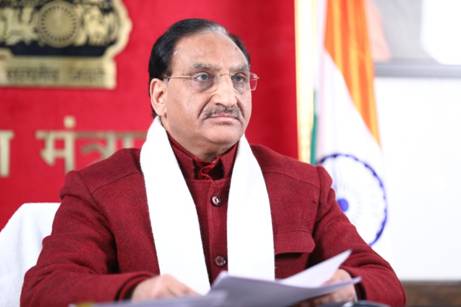
 Union Education Minister Shri Ramesh Pokhriyal ‘Nishank’ inaugurated the Agri-Food Techathon 2021 today virtually. He also laid the foundation for Agri-Business Incubation Centre (ABIC), which will incubate innovative ideas in the agriculture and food technology domain for creating ‘Agri-preneures.’ Prof. V.K. Tewari, Director, IIT Kharagpur, Mr. Dr. G.R. Chintala, Chairman, NABARD, and participants from across the country graced the occasion.  


Addressing the inaugural event, Shri Pokhriyal congratulated IIT Kharagpur and NABARD for this unique initiative. He emphasized that the vision of incubating startups to create an ecosystem under the Agri-Food Techathon 2021 will bring together science and technology, and agriculture to support the farmers of our country. Such initiatives will help take the ‘Vocal for Local and Local for Global’ initiative to each corner of our country. Highlighting that the Agri-Food Techathon has immense possibilities, Shri Pokhriyal said this Techathon will lay the foundation of an Atmanirbhar Bharat and help India emerge as a Vishwaguru.


Stressing that New Education Policy 2020 (NEP) will make India a global leader, he was happy to note that IIT Kharagpur is taking progressive steps in furthering the vision of NEP. He called upon all the stakeholders to come to the forefront for the successful implementation of NEP.


Indian Institute of Technology Kharagpur, in collaboration with NABARD, organised the ‘Agri-Food Techathon 2021’ (AFT 2021), a first-of-its-kind event to promote the participation of India’s youth in innovation and entrepreneurship in different domains of the Agri-Food sector.


For more information on AFT 2021 and ABIC, please visit:


https://kgpchronicle.iitkgp.ac.in/agri-food-techathon-aft-2021/

****

The India Toy Fair, 2021

 Government of India is organizing ‘The India Toy Fair, 2021′ from 27th February 2021 to 2nd March 2021 on a virtual platform. This initiative is in line with the Prime Minister’s vision of making India a global hub for the Toy Industry.

The Fair aims to provide an impetus to the underlying themes of “Atmanirbhar Bharat” and “vocal for local” campaigns, launched by the Government to promote indigenous industries. It also aims to leverage the potential of toys in making learning joyful across all ages in education.

The India Toy Fair 2021 intends to bring policy makers, toy manufacturers & distributors, investors, industry experts, MSMEs, artisans, start-ups, children, parents and teachers together on a common platform, in a bid to propel the growth of the Indian Toy Industry, giving it a global competitive edge.

The main attractions of the Fair include a Virtual Exhibition with over 1000 virtual stalls, webinars by State Governments, knowledge sessions with engaging panel discussions/webinars on diverse topics by experts on areas including toy-based learning, craft demonstrations, competitions, quizzes, virtual tours, product launches, etc. For the education sector in particular, the Knowledge Sessions involving various experts will focus on areas emphasized in the NEP 2020 such as play-based and activity-based learning, indoor and outdoor play, use of puzzles and games to promote critical thinking and overall on how to make learning more engaging and enjoyable.

The exhibitors include Indian businesses engaged in creating happy childhoods and educating children through play, as well as NCERT, SCERTs, CBSE along with their schools and teachers, IIT Gandhinagar, NID and Children University Ahmadabad. The fair is expected to feature millions of users from different parts of India and will give them an opportunity to buy products from a variety of different exhibitors.

The official website and online registration for the India Toy Fair was launched today. The Toy Fair can be visited virtually from 27th February to 2nd March 2021 by registering at https://theindiatoyfair.in/.

ASEAN-India Hackathon is well aligned with the vision of APASTI 2016-2025

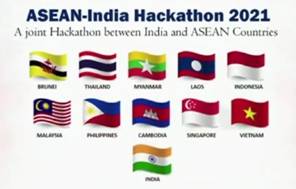
 Union Education Minister Shri Ramesh Pokhriyal ‘Nishank’ and Union Minister of External Affairs Shri Subrahmanyam Jaishankar attended the award ceremony of ASEAN- India Hackathon 2021 along with Ministers and dignitaries from ASEAN countries. The Hackathon concluded with more than 300 students, mentors, and officials participating from 10 ASEAN countries and India.

https://static.pib.gov.in/WriteReadData/userfiles/image/image0012IJ6.jpg

Addressing the participants of Hackathon, Union Education Minister said, “I would like to first congratulate all, for successfully completing the first ASEAN-India Hackathon. I am very thankful to all ASEAN countries for participating in this first-of-its-kind initiative. For the last 3 days, all 54 teams have worked really very hard on 11 problem statements and I was informed by juries and mentors that they are very happy with the quality of work done by participants during this Hackathon. The ASEAN – India Hackathon is well aligned with the vision of ASEAN – plan of action on science, technology and innovation (APASTI) 2016-2025”.

Shri Pokhriyal applauded the focus of the Budget on innovation and entrepreneurship and stressed on boosting the research ecosystem through the Prime Minister Research Fellowship, SPARC, STRIDE, IMPRINT and other research schemes.

Shri Pokhriyal said under the leadership of Prime Minister Shri Narendra Modi, the bond between India and ASEAN countries in the field of education, science and technology has strengthened. One of the main objectives of this hackathon has been to encourage working for sustainable development while creating employment to make our nations Atma Nirbhar. Today India and ASEAN countries have become perfect examples of energy, synergy and international collaboration for other countries to emulate. If the human resources and natural resources of India and ASEAN countries are properly utilized, then a new dimension will open for the betterment of humanity and the world, he added.

The Minister of External Affairs Shri Subrahmanyam Jaishankar stated that “ASEAN India Hackathon offers a unique platform for our youngsters to put their minds and energies together. It is an excellent means to inculcate cooperative spirit among the participants and also exposes them to diverse viewpoints, cultures and work ethics. cutting across national boundaries.”

Prof. Anil Sahasrabudhe, Chairman AICTE said, “It is a moment of pride for us to successfully conclude the first-ever edition of ASEAN-India Hackathon. In the last four days, we have seen how students developed solutions to address the challenges in the ‘Blue economy’ and the education sector. Students meticulously designed innovative solutions in the field of Blue Economy with the help of Artificial Intelligence, Machine learning, AIS Data and Real-Time Data monitoring.”

The program concluded with the announcement of Prizes for the winning teams, runner ups and encouragement awards for other participating teams. 

https://static.pib.gov.in/WriteReadData/userfiles/image/image0020R4K.jpg

The following dignitaries from ASEAN countries also attended the award ceremony of ASEAN- India Hackathon.

⮚      H.E Yang Berhormat Dato Seri Setia Awang Haji Hamzah bin Haji Sulaiman, Minister of Education, Brunei.

⮚      H.E. Mr. CHEA Vandeth, Minister of Post and Telecommunications, Cambodia.

⮚      Her Excellency, Datuk Seri Dr. Noraini Ahmad, Minister of Higher Education, Malaysia.

⮚      H.E. Mr. Lawrence Wong, Minister of Education, Singapore.

⮚   H.E. Dr. Anek Laothamatas, Minister, Ministry Higher Education, Science, Research, and Innovation, Thailand.

⮚      H.E. Prof. Ir. Nizam, Director General of Higher Education of Ministry of Education and Culture, Indonesia.

⮚      H.E. Dr. Phout SIMMALAVONG, Deputy Minister, Ministry of Education and Sports, Lao PDR

⮚      H.E. Mr. Nguyen Van Phuc, Deputy Minister, Ministry of Education and Training, Vietnam.

⮚  H.E. Gregorio B. Honasan II, Secretary, Department of Information and Communication Technology, Philippines.     

“I congratulate the government of India for organizing an event that gave youngsters a platform to come together and to showcase their talent in these hard times” said Her Excellency, Datuk Seri Dr. Noraini Ahmad from Minister of Higher Education, Malaysia.

His Excellency Yang Berhormat Dato Seri Setia Awang Haji Hamzah bin Haji Sulaiman, Minister of Education from Brunei expressed in his address that “India and ASEAN countries have established a longstanding partnership in many areas including Human Resource Development, Person to Person contact and Education”

“Today’s world faces problems that are on a different level altogether. Facing these problems requires equally novel technological solutions. We are living through a time of rapid change. With the increasing complexity of global relations and ever-changing global economy, we need new approaches to solve our problems.” Said H.E. Gregorio B. Honasan II, Secretary, Department of Information and Communication Technology (Minister rank), Philippines.

The Minister of Education from Singapore H.E. Mr. Lawrence Wong expressed that “At some point, this pandemic will be over. But the problems we face do not end there. Climate change remains a matter of concern for the world and especially for the ASEAN countries. We need to come together in the same spirit, as we did to fight against Covid 19”

The participating students from ASEAN and India were very happy with the opportunity provided by Indian Ministry of Education.

Syahshiyah Rohidah, a student participant from Indonesia said that “It was really an adventurous ride since past few days, I am getting to know new people and collaborating with them. His team proposed a solution on “Quantification of Marine Litter using Image Processing”

SEUN Siuphinga student from Cambodia said that “This hackathon has been a first of its kind experience for her”

Đinh Thanh Hiền, a student participant from Vietnam “I enjoyed this hackathon process and looking forward for more chances to participate in such international events”.

Clarisse Johanna Solis, a student participant from Philippines “The process was rigorous time consuming but interesting, It was truly a great and worthwhile experience” She expressed that wish to visit India when borders resume.

The ASEAN-India Hackathon-2021 aims at enhancing the cooperation between India and ASEAN countries in science, tech and education. All the ASEAN countries participated in this unique initiative of providing innovative solutions to overcome the challenges under two broad themes of Blue Economy and Education. Student teams from all the 10 ASEAN countries as well as India participated in this ASEAN-INDIA Hackathon. These teams comprised of 330 students and 90 mentors. The students were divided in 54 cross-country teams, where each team consists of six students and two mentors. These diverse teams competed on developing the best solution for 11 problem statements provided by various reputed organisations and government bodies.

The Ministry of Education’s Innovation Cell and the All India Council for Technical Education in collaboration with the Ministry of External Affairs (MEA) and ASEAN countries organized the first ASEAN-India Hackathon. Due to COVID-19 restrictions, the Hackathon was conducted online using a digital platform, indigenously developed by the Ministry of Education’s Innovation Cell.

*****

Residential schools/hostels funded under Samagra Shiksha named as Netaji Subhas Chandra Bose residential schools/hostels

 In a befitting honour to Netaji Subhas Chandra Bose, the Ministry of Education has decided to name residential schools/ hostels funded under Samagra Shiksha of MoE, as “Netaji Subhas Chandra Bose residential schools/hostels”. The association of these schools with Netaji Subhash Chandra Bose will act as an inspiration to the children and also motivate the teachers, staff and administration to enable them to achieve high standards of excellence. This will also help create awareness about the facility of these Residential Schools and Hostels in difficult areas and inspire these schools to achieve high standards of quality education.

The Ministry of Education under Samagra Shiksha provides financial assistance to states and UTs for opening and running of Residential Schools and Hostels in hilly terrain, small and sparsely populated areas for children who are in need of shelter and care, in addition to the provision of regular schools. The objective is to ensure universal enrolment and provide schooling facilities in areas which are sparsely populated (mostly tribal areas) where opening of schools may not be viable and for children in urban areas who are in need of care and protection.

The residential facilities are also provided to child labour rescued, migrant children who belong to poor landless families, children without adult protection, separated from their families, internally displaced persons, and children from the areas of social and armed conflict and natural calamities.  Preference is given to EBBs, LWE affected districts, SFDs and the Aspirational districts identified by NITI Aayog.

In these residential schools and hostels, in addition to regular school curriculum, interventions for all round development of children such as provision of Specific Skill Training, physical self-defense, medical care, community participation, monthly stipend are also made available to children.  A total of 1063 residential facilities (383 residential Schools and 680 Hostels) have been sanctioned to States and UTs so far.


Residential Schools and Hostels Approved under Samagra Shiksha (Cumulative )

S.

No

STATE NAME

Residential Schools

Hostels

1

ANDHRA PRADESH

3

14

2

ARUNACHAL PRADESH

155

54

3

ASSAM

3

1

4

BIHAR

6

9

5

CHHATTISGARH

67

39

6

DELHI

0

3

7

HARYANA

4

3

8

JHARKHAND

25

16

9

KARNATAKA

5

0

10

KERALA

0

6

11

LADAKH

0

2

12

MADHYA PRADESH

11

390

13

MAHARASHTRA

3

8

14

MANIPUR

9

8

15

MIZORAM

4

11

16

NAGALAND

7

11

17

ODISHA

3

18

18

PUNJAB

0

5

19

RAJASTHAN

7

34

20

SIKKIM

0

1

21

TAMIL NADU

13

0

22

TELANGANA

33

8

23

TRIPURA

4

14

24

UTTAR PRADESH

9

0

25

UTTARAKHAND

0

6

26

WEST BENGAL

12

19

Total

383

680

Generated as on Thursday, December 03, 2020

*************

Recognition of children with intellectual disabilities

 Department of School Education and Literacy (DoSE&L) runs SamagraShiksha Scheme from Class I to XII. It has a component called Inclusive Education (IE) for Children with Special Needs(CWSN). Under this Component, children with special needs are mainstreamed in regular schools in an inclusive manner. The CWSN being addressed under IE component covers all 21 categories of disabilities prescribed under RPwD Act-2016 which includes intellectual disability, Down syndrome and developmental delay. Under IE component, the support for CWSN is provided at two levels:

  1. Activities under Student Oriented Component (SoC)
  2. Resource Support (Special Educators)


Under Student Oriented Component, all States and UTs are provided financial assistance to   Government and Government aided schools for various categories which includes development of teaching aids, teaching learning materials(TLMs), aids and appliances, Braille stationery materials, identification and assessment camps, assistive devices, aids and equipments, corrective surgeries, environment building programme, transportation, escorts, scribers, sports events and exposure visits etc.

In order to ensure quality of education of CWSN, qualified and trained special educators are provided who work in an iterant mode and provide services in all the schools alongwith the general teachers to address the diverse and specific need of Children with Special Needs(CWSN). These provisions have also been included in the National Education policy 2020.

Education of children with disabilities

 The Department of School Education & Literacy supports inclusive education of children with disabilities. Under the Centrally sponsored scheme of Samagra Shiksha, various provisions for educational needs of children with disabilities have been made including, barrier free infrastructure through ramps with handrails and disabled friendly toilets in schools.

As per UDISE+ 2018-19 (prov.), there are 8,33,703ramps with handrails and 1,49,501 disabled friendly toilets for children with disabilities in government and government aided schools for classes I to XII.


The National Education Policy (NEP), 2020advocates full equity and inclusion as the cornerstone of education to ensure that all students are able to thrive in the education system. It also underscores within its framework, education of children with disabilities in order to ensure equitable quality schooling.

The policy specifies recommendations for quality home based education for children with severe or multiple disabilities through the support of resource centres and special educators. The NEP further specifies that,children under home-based education must betreated as equal to any other child in the general system.After the approval and announcement of NEP 2020, the States and UTs have been asked to prepare implementation plan based on the recommendations of the policy, including recommendations and provisions for access to school education for children with severe & multiple disabilities, in line with the RPwD Act, 2016.

Steps taken to provide online education amidst COVID-19 pandemic

 The Government has taken various steps to provide online education amidst COVID-19 pandemic. These include PRAGYATA Guidelines on Digital Education, Internet access under BHARAT NET scheme, etc

PRAGYATA Guidelines on Digital Education:Keeping in view the availability of digital infrastructure, guideline briefs on various modes of digital education including online mode that depends more on availability of internet, partially online mode that utilizes the blended approach of digital technology and other offline activities, partial and offline mode that utilizes television and radio as a major medium of instruction of education. The guidelines can be accessed at:

https://mhrd.gov.in/sites/upload_files/mhrd/files/pragyata-guidelines_0.pdf

Internet access under BHARAT NET scheme has been made available to Govt institutions and to improve the internet connectivity in rural areas the CSC e-Governance Services India Ltd (CSC-SPV) of MEITY has been assigned the task of providing Fibre to the Home (FTTH) connectivity to the Government Institutions, including schools. This project is for providing Internet connection to Government schools in respective Gram Panchayats.

The states & UTs have been advised to Map the students school wise with their individual performance. Accordingly, the state governments have been directed to act based on the situation prevailing at every place to meet the demands of all students for providing them with the digital access required for learning digitally.

In order to enable online education benefit to the children of every categoryandteachers,Learning Enhancement Guidelines have been issued.

https://www.mhrd.gov.in/sites/upload_filehs/mhrd/files/Learning_Enhancement_0.pdf

MANAGING EMOTIONS

“Emotions can get in the way or get you on the way”. -Mavis Mazhura

A. EMOTIONS

As we move forward with our daily lives, we experience a variety of emotions. Thus, emotions are feelings. Emotions are a fundamental character of what our identity and yet they can be chaotic, complicated and difficult to understand. Realization to how to name them and talk about them — with both yourself and other people — is a vital part of the creation of developing wellbeing. Emotions can be characterized as mental states, that include thoughts and sentiments, physiological changes, expressive practices, and tendencies to act.

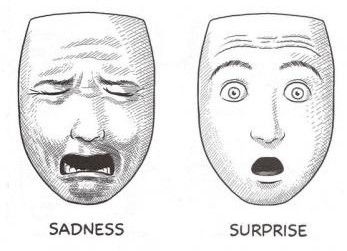
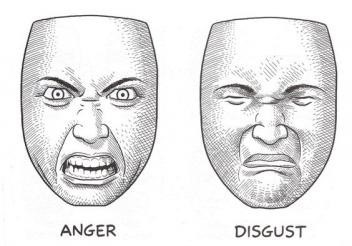
There are different types of emotion:

B. WHAT DOES MANAGING EMOTIONS MEAN?

Managing emotional reactions means choosing how and when to express the emotions we feel. Individuals who work effectively to manage their emotions realizes the beneficiality to communicate their sentiments — yet it’s important to how (and when) they express them. Also, they’re ready to respond to circumstances in a fruitful manner, such as:

  • They have knowledge of when it is appropriate to speak and when it’s better to wait before reacting or responding to what they feel.
  • They can decide that whether they want to react instead of allowing emotions to influence them to do or say something which they regret later.
  • The realization of the reaction to what’s to impact and its consequences -including how others react to them and the manner in which they feel about themselves.

You’ve most likely been in a circumstance where somebody responded in a way that was excessively emotional that made you feel humiliated, or bad for the individual, or you might have been in a circumstance where your own feelings were so strong that it took all your self-control to not go down to that path by yourself.

Possibly you can think about the time where you didn’t deal with your reactions. It happens, and when it does, forgive yourself and focus on what you can do to manage these emotions.

C. HOW TO IDENTIFY EMOTIONAL STATE?

You can start this process by asking yourself questions that will lead you in understanding the approach in which that particular feeling has influenced you. You need to ask yourself questions such as:

  • What am I feeling now?
  • What are my senses telling me?
  • What is it that I want?
  • What judgments or conclusions have I made (and are they accurate)?

The responses to these questions are important to utilize your feelings in the assistance of your life objectives, instead of permitting your feelings to utilize you.

Often, our body reactions are an important source or clues to understand the nature of emotions. Such as if your head pounds, your heart races, and you feel progressively tense and hot, you are most likely to be angry. On the other hand, a person can identify his/her emotions by the way they make you think, act and feel.

D. IMPORTANCE OF MANAGING EMOTIONS

1.  Comprehend the purpose of your feeling

The need to recognize an emotion to comprehend what it is and to understand what it’s indicating to advise us.  For instance, if a youngster is spending time in a gathering of individuals who makes him feel miserable, restless and under tension – it is significant that the adolescent can perceive this and understand that his feelings are designated him to follow the right circumstances.

2.NEGATIVE EMOTIONS CAN RESULT IN NEGATIVE THOUGHTS

The struggle to understand one’s feelings can result in negative thoughts. It’s very important to realize as an individual to know we are responsible of our own thoughts and that it can affect our mindset. Thus,

3. To help you feel more in control

The management of our emotions can influence one’s behaviour and mood. Facing a lot of negative emotions can result in disconnected from various daily activities. Thus, it is important to recognize these emotions and try to find a    solution to help a person be in control.

For example: if a person is feeling anxious, sad, angry or worried it can have a huge impact on their relationship with friends, partner, family or overall feeling of happiness.

E. REGULATING EMOTIONS

There are number of ways through which a person can regulate their emotions even though it is important to understand and differentiate between the way of being harmful and helpful in managing negative emotions. Below is a list of some helpful and harmful ways of regulating emotions:

HELPFUL WAYSHARMFUL WAYS
ExerciseDenial
Be good and kind to othersWithdrawal
  Distract yourselfSubstance use
Practise gratitudeSelf-Harm
Talk to someoneBullying
Practice mindfulness 

Let’s understand some helpful ways in detail.

1.Exercise: It’ a fact that doing exercise for atleast 45 minutes each day can make you feel better as it releases the chemicals such as endorphins that improves the mood and enhances self-esteem.

2. Be good to others as it will help you to stressing about yourself.

3. Distract yourself: It can be done by engaging yourself in certain activities such as watching T.V, reading books, gardening, cooking etc. (anything that a person adores do the most)

4. Practice gratitude: Gratitude refers to the quality of being thankful and it can be practiced by keeping a journal of gratitude or sharing your gratitude with your loved ones.

5. Talk to someone: Invest time on other people and appreciate each part of the conversation.

6. Spend time outside: Being in fresh air, particularly around nature, is useful for calming the feelings.

ENVIRONMENTAL EDUCATION

ENVIRONMENT

The environment can be defined as a sum total of all the living and non-living elements and their effects which influence human life. While all living or biotic elements are animals, plants, forests, fisheries, and birds, etc. The non-living or abiotic elements include water, land, sunlight, rocks, and air, etc or it is the complex of physical, chemical, and biotic factors (such as climate, soil, and living things) that act upon an organism or an ecological community and ultimately determine its form and survival.

ENVIRONMENTAL EDUCATION

Environmental education is a process that permits people to investigate environmental issues, take part in critical thinking, and make a move to work on the environment.

Accordingly, people foster a more profound understanding of environmental issues and have what it takes to settle on educated and dependable choices.

The point of environmental education is to develop a world population that knows about, and worried about, the environmental and its related issues, and which has the information, abilities, attitudes, inspirations and obligation to work separately and collectively towards arrangements of current issues and the avoidance of new ones.  

OBJECTIVES OF ENVIRONMENTAL EDUCATION

Given below are the objectives of environmental education:

•Mindfulness: This is one of the fundamental objectives that any subject of study offers. Through concentrating on environmental education, mindfulness about the environment, the issues of the environment and the answers for the issues are created. There is a legitimate understanding with respect to why there are different capacities present in the environment.

•Information: Environmental education assists an individual with acquiring information and data about the current happenings in the environment. There in-depth and proper education that is given with regards to the environment and the elements of the environment.  

•Obligation: It is just when we comprehend the purposes for the interruptions in the environment; we can find appropriate ways to prevent it. People comprehend which activities hurt the environment, be it in a little or a major manner, and avoid potential risk to confront the misfortunes. It likewise helps in making any future moves and choices mindfully.

•Participation: When we study in detail about a specific subject, we will quite often get more engaged with it. The environment is something that concerns every one of us, so it is our obligation to take an interest in saving the environment and keep it from being harmed. Though environmental education, individuals are encouraged to partition in saving and taking care of the environment as they become aware of the harm that it can cause to their lives.

•Making New Patterns: With expanded consciousness of the harm that man’s activities are causing to the environment, environmental education plans to make new pattern of behaviour and attitude that humans have towards the environment. This outcomes in less damage as the new pattern is pointed toward being environmentally friendly.

•Understanding the Complexity of Environment: The environment that we people live in is complex and includes different activities that occur inside it. Environmental education satisfies the intend to cause individuals to comprehend the complexity of working in the environment and the interaction that happens in it. By getting this, individuals become more indulged in saving and securing the environment.

Thus, environmental education is necessary because it teaches us about ourselves. It advises us that nature and individuals are not independent, we are nature and nature are us. EE is essential since we should be in every way educated and mindful of the effects of our choices. Education shapes the premise of everything in today’s world including environment. Environmental Education imparts information about the current circumstance and future possibilities of nature. It encourages individuals to investigate all the issues connected with environment, and take part in ways of safeguarding it.

IMPORTANCE OF ENVIRONMENTAL EDUCATION

Every individual has to be aware about the functions in an environment. Only at that time we will become responsible for our environment. The information given below will help in understanding the significance of environmental education.

  • Environmental education is one of the subjects in the educational program in schools. At a point when children study about the environment and its capacities, they develop a feeling of understanding towards the environment in the beginning phase of their life.
  • It is essential to build the attention of people towards the environment. With the assistance of environmental education, individuals’ information about the environment is instilled into the citizens of a state or a country.
  • There are numerous environmental issues that the world is confronting. To stay away from them later on, individuals need to study the environment and take appropriate consideration of it. It can be done with the assistance of environmental education.
  • Environmental education polishes various other skills of an individual. The ability to make decisions is strengthened with the study of environmental education as people become more responsible and aware.
  • People can manage any sort of environmental issue through environmental education. This, thus, brings about an expansion in critical thinking abilities.
  • One creates sensitivity towards the environment as a result of the multitude of environmental issues that have been occurring for quite a while. Thusly, every individual makes any move by remembering the damage it can cause to the environment.
  • Simply nobody can address the issues that emerge in the environment. Environmental education makes individual rich in the information about the environment with the goal that the most ideal arrangements can be accommodated even the smallest of circumstances the environment faces.

MINDFUL EATING

Mindful eating refers to the act of being present while eating or drinking.

You are likely to eat while working, sitting in front of the TV, chatting on the telephone, or doing various task throughout your day. You may not see when you’ve eaten a couple of sweets, presented yourself with one more mug of espresso, or finished the crust from your child’s breakfast, because eating is second nature to you.

Thus, mindful eating permits you to stop, slow down, and truly focus while eating.

There are countless examinations recommending the effect of food on psychological wellness. Uma Naidoo, MD refers to the association among diet and mental and neurological wellbeing as the “gut-brain romance.” Similarly, early-stage cells which founded our brain and nervous system additionally founded the gastrointestinal framework, Dr. Naidoo clarifies, and these frameworks remain inextricably connected through the vagus nerve which controls our “rest and digest” system. The relationship between food and psychological well-being goes a lot further than many figure it out. Investigations have discovered that diet, along with exercise can really balance neurological and mental problems, like epilepsy and dementia. It is also closely tied to anxiety, depression, and sleep.

PRACTICING MINDFUL EATING

Life can move rapidly, and stopping to eat without interruption and interference can feel impossible now and again, however mindful eating doesn’t need to be time- consuming. You should simply slow down and focus. Here are a few methods for practicing mindful eating consistently:

Be aware of the activity: Follow a single bite from beginning to end, Dr. Naidoo suggests, and focus on the sounds of cutting the food, the smell as it floats up to your noses, the surface of the food as it arrives in your mouth, the flavors that change as you bite, and the feeling as you swallow your food.

Perceive your body’s signs: We’ve all experienced that profound, snarling feeling in our stomach when we’re hungry. This is a sign. Cravings are also a sign; however, they don’t really mean you want food. Once in a while we experience desires when we’re feeling worried or restless. As you start mindfully eating, journal what you’re eating and the way you feel before, during, and later.

Slow down your eating so your body and mind can communicate: At a point when you eat rapidly, you don’t typically experience fullness as fast, and this can prompt overeating. During the time slow down, to permit your body and brain to convey.

Socialize over food: “The demonstration of getting ready and offering dinners to others is a social movement that has withstood the turbulent test of time, and we realize that social commitment is a critical element in our well-being,” says Dr. Naidoo. Joining a companion for dinner or preparing with a friend or family member can assist you with rehearsing more mindful eating, all while supporting your mental health.

Focus on the sensory details: With each new food, Dr. Naidoo proposes focusing on one sensory aspect, for example, the smell of an orange as you unpeel it, your lunch pack unzipping, or seeing the bright carrots and beet hummus.

Practice mindfulness throughout your day: In order to work on mindful eating, it will assist with joining mindfulness into different parts of your life. Dr. Naidoo recommends adding affirmations to your morning schedule, rehearsing yoga, working out, or attempting guided meditation. Mindfulness, in any structure, can assist you with remaining grounded and present.

CONCLUSION

Thus, Mindful eating isn’t a diet. The motivation behind mindful eating isn’t to get thinner or cut back calories; the object is to work on your relationship with food and overall eating experience.

“Dieting or restricting, in any form, doesn’t work,” says RanDee Anshutz. “The pursuit of weight loss or controlling the size of our body causes more harm than good.”

Knowing the adverse consequence of specific food varieties on your body doesn’t mean you need to eliminate those food varieties from your eating routine. With mindful eating, you can learn to enjoy the taste and feel of a single chocolate chip cookie, for example, as opposed to eating half a dozen without realizing it.

FOREST BATHING

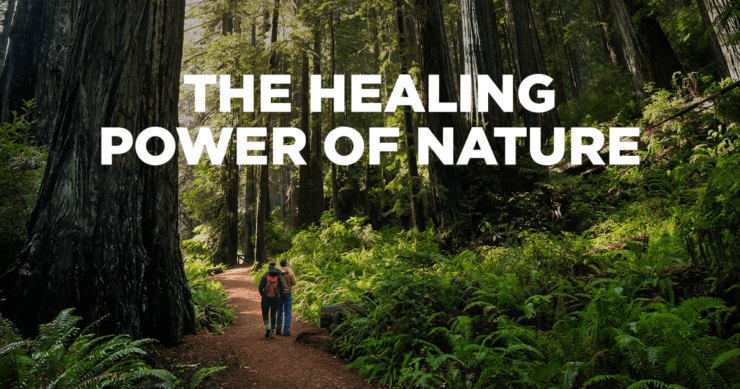
Forest bathing is based on the Japanese practice, shinrin-yoku, which can be interpreted as “taking in the medication or air of the forest.” While forest bathing started in Japan during the 1980s, it has developed well known around the world.

Brought into the world because of significant degrees of work pressure and a spike in paces of immune system illness, forest bathing was likewise adjusted to work on the economy of country regions that lost individuals moving to urban communities. Forest bathing has turned into an eco-friendly, health remedy to our tech-immersed world.

It turns out that walking and relaxing in this type of immersive experience amongst the trees may offer various health benefits. That’s the reason forest bathing is additionally called forest therapy.

ADVANTAGES

1. The advantages of going for a walk-in nature is moving away from screens. Simultaneously, when we spend time in nature, we are additionally switching off rumination, stress, and obsessive thinking. All things considered, we are enjoying some time off and permit ourselves an opportunity to re-energize and appreciate.

2. Breathing in forest air increase the degree of normal killer (NK) cells in our blood. Our body utilizes these NK cells to battle infection and cancer.

3. The constructive outcomes of forest bathing are turning out to be well known. In one study, members who constantly walk-through forests showed proof of lower blood pressure. Openness to the tree oil and walks around the forest may likewise add to decreased nervousness. Past scientific research observed that forest bathers showed proof of decreased pressure chemicals like adrenaline and noradrenaline in their bodies. Forest bathing has been demonstrated to help those encountering a brief upsetting circumstance as well as persistent pressure. Forest bathing is turning into an increasingly well-known stress decrease strategy. Analysts are prescribing forest treatment to diminish the danger of psychosocial stress-related sicknesses.

THINGS TO KEEP IN MIND

This is what you should focus on as you stroll through the forest:

What do you see?

Are there various types of trees here?

Do you hear birds close by singing?

Would you be able to hear the smash of the leaves and twigs on the ground as you walk?

Would you be able to hear the quiet?

Did a creature hurry some place close by?

Do you feel the stirring breeze?

Do you feel your body as you walk?

Would you be able to take in the aroma of the trees?

Would you be able to breathe in and breathe out profoundly?

Did you see the sky above you and its shade of blue?

Would you be able to feel your association with the forest?

Would you be able to connect and feel the delicate quality of the leaves or the sharpness of the pine needles?

Do you detect quietness?

Would you be able to relish the time you have here?

CONCLUSION

Forest bathing is a strong wellness tool. It’s a nature-based mediation so you don’t need to stress over side effects. It can likewise be a corresponding treatment to enhance standard treatment, particularly for emotional wellness hardships.

Simply make sure to forest bath consistently, regardless of whether you need to plan the time on your schedule.

This course of getting back to nature can carry you to an increased condition of tangible mindfulness and a feeling of serenity. Not long after entering a green space, your body unwinds, pulse balances out, stress chemicals decline, muscle strain diminishes, and medical advantages kick in.

POWER OF CREATIVE THINKING

WHAT IS CREATIVITY THINKING?

Creative thinking is the capacity to think about something in an another or new manner. It might be a new approach to a problem, a resolution to a conflict between employees, or a new result from a data set. Managers in all enterprises need representatives who can think creatively and carry new points of view to the work environment. Creative thinking implies thinking out of the box. Frequently, creativity includes lateral thinking, which is the capacity to see patterns that are not self-evident.

Creative thinking may mean devising better approaches to do task, take care of issues, and address difficulties. It implies bringing a new, and once in a while strange, point of view to your work. This perspective can assist department and associations with being more useful. Creative thinking isn’t restricted to artistic types. Creative thinking is an ability that anybody can sustain and create.

HOW TO IMPROVE YOUR CREATIVE THINKING?

1. Step outside of your comfort zone- Research has demonstrated that perhaps the greatest obstruction for creativity is working or thinking about thoughts we’re now acquainted with. At a point when you’re confronting a creative challenge, attempt to oblige your work to a specific level (for example, when making a presentation, drive yourself to start each slide with a verb in dynamic voice). This way, you’ll urge your brain to come up with more creative answers for your work, around the restrictions you’ve set for yourself.

2. Brainstorm-Brainstorming is an ideal blend of creative thinking abilities and cooperation. It depends on thinking about an answer for an issue or a creative task, and writing down all thoughts any member recommends paying little attention to how unbelievable or awkward these might appear. Out of all the thoughts, some will be likely to be both conceivable and imaginative.

3.  Force yourself to work when you’re feeling uninspired-. In any event, when you feel like creative work is the last thing you’re equipped for, on a given day, focus on doing it in any case, yet work in restricted, brief timeframes (for instance, 20 minutes). During these periods, let nothing divert you, don’t attempt to do anything expect work that you’ve resolved to do. Assuming you compose just 5 words, define only two boundaries, or note down a solitary thought that doesn’t appear to be legit, it’s fine. When the 20 minutes are finished, enjoy some time off. At whatever point you feel prepared, start an additional 20 minutes. After a couple of iterations, you’ll notice that you get more and more done within the set chunk of time and you’ll no longer feel relieved when it’s time for a break. Soon, you’ll be back to your creative best.

4. Work, daydream, work– Many studies have recommended that detaching mentally, fantasizing, moving, or even basically snoozing helps upgrade creative thinking abilities. It is discovered that daydreaming features a vital part of fantasizing: it only works once you’ve already invested a considerable amount of time in a given project. The deeper you are in the creative process, the more unplugging for a while or daydreaming can help you further.

6 WAYS TO APPLY CREATIVE THINKING IN YOUR EVERYDAY LIFE

The following are 6 ways to apply creative thinking in your life:

1)Risk Taking: Being bold and prepared for life’s difficulties pushes you a step forward to creativity.

2)Playing: Trying to play and be funny at times allows you the opportunity to control the given issue appropriately according to what you want.

3)Regularly inquiring as to Why: Being interested and nosy, needing to pose inquiries all the time opens unlimited opportunities and possibilities.

4)Generating huge number of thoughts: By creating a major number of potential arrangements, a brilliant, special, surprising response may be found.

5)Day Dreaming:  Wondering about things related to your project frees your mind to expand its horizons and explore new ways out there.

6)Reading: Going to the library and reading for hours can support your creative mind and develop further creative mastermind.

Major boost to education sector

 Union Education Minister Shri Ramesh Pokhriyal ‘Nishank’ lauded the Union Budget 2021-22 and expressed his gratitude to Finance Minister Smt Nirmala Sitharaman for giving a major boost to education.

ShriPokhriyal highlighted that the Budget allocation for the National Apprenticeship Training Scheme (NATS), has been substantially increased from Rs. 175 Cr to Rs. 500 Cr in next FY 2021-22 for providing post-education apprenticeship, training of graduates and diploma holders in Engineering.He also said that an outlay of Rs. 50,000 Cr over next 5 years for National Research Foundation (NRF) will give a major boost to Innovation and R&D.

The Minister said in a big boost to education sector allocation of KVS has increased by Rs 362.32 crore and allocation of NVS increased to Rs. 320 crore w.r.t. RE 2020-21. The budget allocation of NCERT increased to Rs.110.08 crore from RE 2020-21.
I202102011110.jpg


Highlights of Budget 2021-22 –Department of Higher Education


1.   In this FY 2020-21, the BE was Rs. 39466.52 Cr, which has been rationalised to  Rs. 32900 Cr, due to Covid-19. BE for the next year 2021-22 has been kept at  Rs.  38350.65 Cr, which is more than 5450.65 Cr more than the current year RE.


2.   Out of the Total BE of Rs. 38350.65 Cr, Provisions for Establishment, Autonomous Bodies(ABs), and Schemes are as below:

(i)Establishment: Rs. 247.44 Cr

(ii)Autonomous Bodies(ABs): 29023.78 Cr

(iii)       Schemes Total: Rs. 9069.43 Cr

(a)Centrally Sponsored Schemes: Rs. 3000 Cr [RUSA]

(b)Central Sector Schemes: Rs. 6069.43 Cr


3.   In our flagship scheme RashtriyaUchchatarShikshaAbhiyan (RUSA), a budget provision of Rs. 3000 Cr has been kept for the next FY 2021-22, in comparison to   Rs. 300 Cr in current year.


4.   Budget allocation for the National Apprenticeship Training Scheme (NATS), has been substantially increased from Rs. 175 Cr to Rs. 500 Cr in next FY 2021-22 for providing post-education apprenticeship, training of graduates and diploma holders in Engineering.


5.   Some New Initiatives like- Opening of BhartiyaBhasa University & Institute of Translation, Indian Knowledge System, Academic Bank of Credit, PM e-Vidya, Multidisciplinary Education and Research Improvement in Technical Education (MERITE) shall be implemented in line with the NEP recommendations, after approval of the competent authority. At present a Token Provision has been kept in the BE of FY 2021-22 for all the above initiatives.


Budget Announcements:


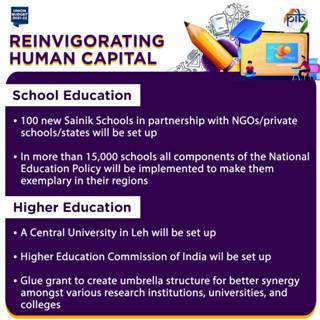
1.   Higher Education Commission of India (HECI) -an Umbrella Body, which will have 4 verticals- Accreditation, Standard Setting, Regulation, and Funding. Legislation for HECI will be introduced this year.


2.   In 9 cities where there are number of institutions supported by the GoI (like- Hyderabad etc.) we will create a formal umbrella structure– for better synergy, while retaining their internal autonomy.


3.   A new Central University(CU) will be set up in Leh.


4.   We will realign the existing scheme of National Apprenticeship Training Scheme (NATS) for providing post-education apprenticeship, training of graduates and diploma holders in Engineering. Over Rs. 3,000 crores will be provided for this in next 5 years.


5.   For promotion of Innovation and R&D, an outlay of Rs. 50,000 Cr over next 5 years has been kept for National Research Foundation (NRF). Its major beneficiaries will be Higher Education Institutions including CFTIs like- IITs/IISc/IISERs/NITs etc.

Highlights of Budget 2021-22 – Department of School Education & Literacy

 1.        Budget allocation for BE 2020-21 was Rs 59845 crore which was rationalized to Rs 52189.07 crore in RE 2020-21 post covid-19 situation. This has now increased to Rs 54873 crore in BE2021-22.

 2.        There has been an overall increase of Rs. 2684.59 crore (5.14%) in Budget allocation of Department of School Education & Literacy in BE 2021-22 from RE 2020-21.

 3.        The overall Budget allocation in BE 2021-22 is Rs. 54873.66 crore out of which scheme allocation is 43648.66 crore and non-scheme allocation is Rs. 11225.00 crore. The scheme allocation has been increased by Rs 1895.08 crore and non-scheme allocation by Rs. 789.51 crore as compared to RE 2020-21.

 4.        Budget allocation in the Flagship scheme of SamagraShikhsa has been increased to Rs. 31050.16 crore in BE 2021-22 from Rs. 27957.32 crore in RE 2020-21 by Rs. 3092.84 crore i.e. increased by 11.06% in comparison to RE 2020-21).

 5.        The budget allocation in PadhnaLikhnaAbhiyan (PLA) is also increased from Rs. 95.25 crore (RE 2020-21) to Rs. 250 crore in BE 2021-22 (an increase of Rs. 154.75 crore) i.e. by 162.47%.

 6.        Rs. 485 crore is also provisioned in the new created Centrally Sponsored Scheme of STARS.

 7.        Allocation of KVS is increased by Rs 362.32 crore and allocation of NVS increased to Rs. 320 crore w.r.t. RE 2020-21. Budget allocation of NCERT was also increase to Rs. 110.08 crore from RE 2020-21.

Initiatives on Education as part of NEP

·     Standards will be developed for all school teachers in the form of National Professional Standards for Teachers- NPST.  This will enhance the capabilities of teachers and will be followed by all 92 lakh teachers of public and private school system in the country.

·     Toys are both an expression of entertainment and learning.  A unique indigenous toy-based learning – pedagogy for all levels of school education will be developed.  This will transform classroom transactions from mundane and rote learning to an engaging and joyful experience.

·     A National Digital Educational Architecture (NDEAR) will be set up within the context of a Digital First Mindset where the Digital Architecture will not only support teaching and learning activities but also educational planning, governance and administrative activities of the Centre and the States/ Union Territories.  It will provide a diverse education eco-system architecture for development of digital infrastructure, a federated but inter operable system that will ensure autonomy of all stakeholders, specially States and UTs.

·     For children with hearing impairments, the Government will work on standardization of Indian Sign language across the country, and develop National and State Curriculum materials for use by them.

·     There are a number of senior and retired teachers.  They will be used for individual mentoring of school teachers and educators through constant online/offline support on subjects, themes and pedagogy.

·     Students have so far been evaluated on uni-dimensional parameters.  There will be a complete shift from using assessments to not only judge the cognitive levels of the learner but also using it as an opportunity to identify the unique strengths and the potential of the child. To this effect, a holistic progress card is envisaged to provide students with valuable information on their strengths, areas of interest, needed areas of focus and thereby helping them in making optimal career choices. 

·     To enable increased access of resources, online modules covering the entire gamut of adult education will be introduced.

·     During the year, despite the COVID-19 pandemic, we have trained more than 30 lakh elementary school teachers digitally, covering the whole gamut of education.   Taking this further, in 2021-22, we will enable the training of 56 lakh school teachers through the National Initiative for School Heads and Teachers for Holistic Advancement (NISTHA).

·     For the past few years our Prime Minister has been engaging with students every year before their Board Exams to help them overcome anxiety and stress.  In this direction, we will introduce CBSE Board Exam reforms in a phased manner to be effective from the 2022-23 academic session.  Exams will move away from rote-learning and students shall be tested on their conceptual clarity, analytical skills and application of knowledge to real life situations.

·     To promote enhanced academic collaboration with foreign higher educational institutions, it is proposed to put in place a regulatory mechanism to permit dual degrees, joint degrees, twinning arrangements and other such mechanisms.

*****

Procrastination

It often happens that whenever we are told by our mother to bring something from the store or wash the dishes or clean the bed, we delay it. Not only this, it happens in almost all the situations where we are asked to do something but we delay it. It does not mean that work is not done or left behind. The same person does it to whom the work is assigned but after some time. This is called Procrastination. The literal meaning of procrastination is the action of delaying or postponing something.


It is not a disease or a virus which happens to be in the person’s body but a thinking. Also, it can be termed as a mentality. The mentality where we think that we’ll do it later, after some time. Nothing is going away and we have some time. Not everything has to be done right away. And with this thought we keep on delaying and postponing work.


It seems very normal but from a practical aspect it is not good. With delaying and postponing, we tend to become like a person who does not concern himself or herself with the activity going on. According to us, there is no significance of the present moment because delaying things and doing it in the future is our habit. We are like this. We take it as a an assignment which can be performed or submitted wherever we want forgetting the fact that the result changes with the time of the submission. The medical drug is required when the person is ill. It is not like that it can be given at any time. The time holds importance and its own significance. It does not only depends on our own discretion.


According to the recent research report, it is observed that this habit of procrastination emerges from a very early age in the individual like when he or she is around 7-8 years. At that time, it is only an action but slowly it transforms into a habit when there is no one around to correct it. The act of correcting is the work of the parents and when they fail to perform their responsibility, their child develops a habit like this which cause him to compensate in the future.


With the procrastination, an individual misses out on a lot of opportunities. When we assign and engage ourselves with the tasks in the future, we’ll never be able to grab the opportunites that will come in the future then and there. Since we are already occupied with so many things, another assignment will cause stress and will further make us avoid the another one.


Not only missing on the opportunities given, sometimes it so happen that it becomes very hectic and stressful. We tend to delay and postpone and what finally happens is the last time comes. Some people are strong to come out from that situation but some people get really stuck there. Then it becomes very difficult from them to cope up with that. At that time, regret follows. We start thinking that Alas! We should have done it before hand only. If done before, this all wouldn’t have happened.


Lastly, I would like to conclude with my opinion that the individuals who have the habit of procrastinating things, should change that else they will miss out on a lot of things. Further, it can even cost them something very valuable. It’s not like that it can’t be changed. It’s just that efforts should be put into the place and the will to change and come out from that place.