ADDICTION OF SOCIAL MEDIA

Social media is network based on computer that allows people to communicate, interact or associate with friends and family via an internet connection. One can chat, share videos, pictures, views and many other activities are also accessible through social media. If compared the social media sites are most visited other than any websites. At present, around three billion people globally have a social networking account. Social networking sites such as Facebook, Whatsapp, Snapchat, Instagram, Twitter, Pinterest and LinkedIn enables us to stay connected to our closed ones and also keep us updated by the day to day happenings worldwide.

Social media sites are often visited with about more than one billion users active on daily basis in order to count the number of likes on their post and update their status. As per various surveys conducted, it can be inferred that an individual spends about an hour minimum on these networking sites. The line between addiction and habit is very thin. The situation of addiction arises when an individual desires for something more than their actual need. It becomes addiction when people start to spend more and more time on social networking sites. Therefore, it is observed that in the present generation social media is becoming addicting and it is a matter to contemplate seriously. The increased dependency of an individual over a particular thing be it, food or drink or activity makes the person to feel helpless and eventually the person starts to loose control over themselves. The condition gradually turns worse leading to complex diseases related to brain.

“Social media is a wonderful medium, problem starts with its addiction.”

-Anonymous

The addiction of social media is severe that the person every now and then logs in their account meaninglessly and checks in at every place they go in order to update their status. The purpose behind to do so is sometimes just to kill or pass time. Such individuals begin to consider that posting pictures and informing about the day to day activities or chores on the social media is their moral duty. They begin to obsess over their activities on the networking sites.

The post effects of social media is not worth the while. The mental and emotional health of an individual is greatly disturbed. The often seem frustrated and an ease of escalating peer pressure is seen in them while comparing oneself with the other. They are surrounded by the sense of dissatisfaction and hopelessness. The individuals found suffering from social media addiction are desperate, stressed and fatigued. There is a constant rise in their level of anxiety and consequent fall in productivity. The frequent pop up notifications prevent them from focusing on essentials things in their lives.

Thus, it can be concluded that it is important to recognize the addiction of social media at an early stage prior the situation becomes worse. People must remember that it is not their social duty to be in social media throughout the day rather they must give themselves time to self- reflect and divert their attention to more essential things in life.

” One day you will look back and recall all the time you spent on social media and wonder why you didn’t invest that time someplace else.”

– Germany Kent

National Girl Child Day Celebrated Across the Country to Promote Awareness about the Rights of Girl Child

 The Ministry of Women and Child Development celebrated the National Girl Child Day on 24th January, 2022. In view of COVID-19 situation in the country, the programmes were organised on virtual/online mode across the nation to promote awareness about the rights of the Girl Child and to celebrate their achievements in various fields.

Online Interactive Programmes     

As part of Azadi Ka Amrit Mahotsav, a virtual function was organised to recognise the exemplary achievements of children by conferring Pradhan Mantri Rashtriya Bal Puraskar (PMRBP) Awards-2022. Prime Minister Shri Narendra Modi interacted virtually with the winners of PMRBP-2022.  The children along with their parents and concerned District Magistrate of their respective district joined the event from their district Head Quarters.

A series of online live interactive programmes were also organised by various Ministries in which the Ministers interacted with young girls and motivated them to have belief in their ideas and to follow their heart.

(i)The Ministry of Women and Child Development together with UNICEF celebrated ‘Kanya Mahotsav,’ a festival of the girl child. Union Women and Child Development Minister, Smt Smriti Zubin Irani, engaged in an interactive online conversation with nine adolescent children from different States. The interaction and the digital campaign emphasized, ‘Har Ladki Khaas Hai’, i.e. ‘every girl is special’.

Delivering the keynote address, Minister Smt Irani welcomed the participation by the adolescent girls and boys who shared their stories of courage, determination and hope. Acknowledging UNICEF’s support in bringing forth these voices of children from across India and suggestions from the children, the Minister  requested for focus on mental health challenges faced by children and support the Samvaad programme with Ministry of WCD; to bring together a coalition of young girls who contribute to ending child marriage in their communities and incorporate the recommendations for services for children in alternative care and family based care situations through Mission Vatsalya.

The Regional Director, UNICEF South Asia, George Laryea Adjei appreciated India’s steadfast commitment and significant progress in preventing child marriage, promoting adolescent empowerment, and ending violence against women and girls. He emphasized UNICEF’s commitment to this agenda and working with the Government of India.

(ii)Union Minister, Ministry of Textile, Commerce and Industries, Consumer Affairs and Food & Public Distribution, Shri Piyush Goyal held a virtual interactive session with young girls who have made noteworthy innovations in different areas.

(iii)Union Minister of State, Ministry of Science and Technology, Dr Jitendra Singh also interacted on a virtual platform with young women entrepreneurs who have made noteworthy achievements in the field of science, technology and innovation.


Webinars

Following webinars were organised by the WCD Ministry on the National Girl Child Day:

(i)National Commission of Women (NCW) organised a virtual discussion on the topic “Save the Girl Child” through which their speakers contributed to raise awareness about the rights of girls and on the importance of girl education. Shri Om Prakash Dhankhar Ex Cabinet Minister, Haryana discussed on the “Ideologies, Mindset and Role of the society towards saving the girl child” and Ms Pragya Vats, Head of campaigns- Save the Children, Bal Raksha Bharat enlightened the attendees on “Awareness about the rights of girls and the importance of girl education and  various policies and its outcomes”.

(ii)The Ministry of Women and Child Development and the National Institute of Public Cooperation and Child Development (NIPCCD) organized a National Webinar on “Addressing Comprehensive Needs of Adolescent Girls in India #ladkiyanjahankhusiyanwahan” on 24th  January, 2022, the National Girl Child Day. The objectives of the Webinar were to: celebrate the National Girl Child Day; provide an understanding on the nutritional needs of adolescent girls; identify the challenges faced by adolescent girls with reference to education; and understanding the importance of psycho-social development among the adolescent girls. A total of 3000 participants from across the country participated in the Webinar. The participants included: adolescent girls from child care institutions, students from colleges, Government Officials, Counsellors, functionaries of Anganwadi Services Scheme and Child Protection Scheme, principals, teachers, PhD scholars, officials from civil society organisations, social workers, administrators, etc.

(iii)National Commission for Protection of Child Rights (NCPCR) organised a webinar on the topic, ‘Legislative Rights of a Girl Child’ which was live streamed on NCPCR’s Facebook and Twitter. Justice Shri Kalpesh Satyendra Jhaveri, former Chief Justice of Orissa High Court was the main speaker for the webinar.


Programs organized by different Ministries

(i)M/o Education, M/o Skill Development, M/o Youth Affairs & Sports, Ministry of Science & Technology organised informative webinars on various issues to highlight the achievements of their Ministries in empowering girl child in the field such as education, health, hygiene, marriage, empowerment, gender equality etc. on the occasion of the National Girl Child Day.


(ii)The Department of school Education & Literacy, Ministry of Education celebrated the achievements of girls on National Girl Child Day under 75th Azadi Ka Mahotsav. The theme of the programme was ‘Hamari Beti Hamari Shaan’. 75 Girl achievers in different fields of academics, sports, Kala Utsav,  Rashtiya Avishkar Abhiyan, environment and culture were  selected across India to participate in the programme.


In this programme, panellists namely, (i) Ms. Anita Karwal, Union Secretary, Ministry of Education, (ii) Ms. Tessy Thomas, Scientist, (iii) Ira Singhal, IAS, (iv) Ms. Ankita Sharma, IPS (v) Ms. Kanta Singh , Deputy Representative, UN Women India and (vi) Ms. Bhavna Kanth, First Fighter Pilot were invited to interact with the achievers and share their life experiences  and success stories with the girls. The profile of the panellists were shown highlighting their work and achievements in the programme and a show reel was also shown during the programme depicting the success stories and the achievements of all the 75 participants.


(iii) Ministry of Culture organized Rangoli Utsav ‘Umang’ to celebrate National Girl Child Day under Azadi ka Amrit Mahotsav. A nationwide event was organized where the participants drew rangoli decorations on the roads and squares named after the female freedom fighters or the female role models of the country. The rangoli decorations were made at more than 70 locations in 19 States.


Celebration under BBBP scheme in districts

All the 405 multi-sectoral districts under BBBP organised programmes such as:

(i)Gram Sabha/Mahila Sabha on CSR

(ii)Programme with schools (Gov/Privates) on value of girl child

(iii)Posters/Slogan-writing/Drawing/ Painting competition among school on STEM related topics

(iv)Stories in local media about BBBP local champions etc.

Some of the events organised by the districts are as follows:

(i)Felicitation of talented girls by Dr. Virendra Kumar, Hon’ble Minister of State, Ministry of Minority Affairs in the Tikamgarh district of Madhya Pradesh.

(ii)Webinar session on menstrual hygiene in Saraikela, Jharkhand.

(iii)Felicitation of block level toppers of 10th and 12 and district toppers of 10th and 12th by District Collector Saraikela, Jharkhand.

(iv)Drawing competition among the Child club members of Ramachandi child club, Kendrapara District, Odisha.

(v)Additional District Magistrate and the team of ICDS Nalanda, Bihar celebrated the National Girl Child Day by blowing the balloon and discussing on to improve the level of health, nutrition and education of the girl child.

(vi)In North Sikkim, National Girl Child Day was celebrated at Mangshila Gram Prashashan Kendra. Shri Pintso Namgyal Lepcha MLA, Panchayats, Zilla Member and Adolescent Girls participated in the programme. Programme started with awareness on the scheme of Girls like Suknya Samridhi Yojana, Child rights, POCSO etc. by DPO/Mangan./North Sikkim.

(vii)Paintings were drawn by the students of GSSS JASSIA Rohtak, Haryana to mark the occasion of National Girl Child Day.

Some Important Tweets on National Girl Child Day

********

Enhance voting and credibility of election process

 Vice President of India Shri M. Venkaiah Naidu today urged the Election Commission and the citizens to ensure a voter turnout of 75% in the next general elections to make electoral democracy more inclusive and also sought consensus on simultaneous polls to sustain the tempo of development.

In a message on the occasion of the 12th National Voters Day today, Shri Naidu stressed that no voter should be left behind and urged the citizens to judge the contestants in the elections on merit. As Shri Naidu is in home isolation in Hyderabad after testing corona positive, his address was  read out at the  event in New Delhi.

Referring to the increase  in  voter turnout from 44.87% in the first general elections to Lok Sabha during 1951-52 to the highest ever 67.40% for the 17th Lok Sabha in 2019, marking an increase of 50% in  voting, Shri Naidu complimented all stakeholders for the same. Alluding to the sustained efforts of the Election  Commission of India in this regard striving for excellence during the 70 years of the country’s electoral journey, Shri Naidu hailed the Commission as a  credible, responsive and forward looking institution every  votary of democracy can legitimately be proud of.

Shri Naidu noted that the challenge before the Election Commission is to ensure a steady increase in voting in every election to make our electoral democracy more inclusive by addressing the barriers to voter participation.

The Vice President urged: “In the 75th year of our Independence, let us resolve to leave no voter behind and aim to increase the voter turnout to at least 75% in the next general elections. Let each one realize that vote is not only a right but a responsibility. We, as a nation, must think and arrive at a consensus to have simultaneous polls to all the three tiers of federal set up and move towards better governance by focusing our attention on all round development of our people”.

Shri  Naidu referred to the substantial 8% increase in voter turnout from 58.21% in 2009 general elections to 66.44% in 2014, suggesting that it is feasible to reach 75%  voter turnout target from 67.40% in 2019. He complimented the SVEEP(Systematic Voter Education and Electoral Participation) initiative of the Election Commission launched in 2009 for improving voter participation.

Shri Naidu expressed delight over women voting more than men in the 2019 general elections by a margin of 0.17%, for the first time in 70 years, ending the gender gap in the country. (In 1962  general elections, men voter turnout was 16.71% more than that of  women)

Shri Naidu stressed on the need for more swift resolution of election disputes and creation of a more informed citizenry empowered to judge the merits of each  candidate in the elections. He urged the Commission to further explore innovative ways in which technology can enhance the credibility and accessibility of the voting process. He also referred to high voter turnout in the range of 74% to 84% in the elections to five State Assembly held under covid protocol last year.

The 12th National Voters Day is being organized on the theme “Making our Elections Inclusive, Accessible and Participative”. January 25th is being so celebrated as the Election Commission was set up on January 25, 1950, a day before the country became a Republic with the Constitution coming into force from January 26, 1950.

Following is the full text of the Vice President’s message (It was read at 12th National Voters’ Day celebrations organized by Election Commission of India today) –

Chief Election Commissioner Shri Sushil Chandra, Election Commissioners, senior officials from the Union and State Governments, distinguished invitees and friends from the media !

At the outset, I extend my hearty felicitations and  greetings to all of you and all fellow citizens on the occasion of 73rd Republic Day tomorrow. We are meeting at the confluence of 70 years of elections in our country, the 73rd Republic Day and the 75th year of our hard fought Independence.

Looking back at the past seven decades, we can legitimately be proud of our achievements in various fields. However, what is most remarkable is our continuous endeavour to strengthen our democratic structures to transform India, the world’s largest democracy, into a vibrant, inclusive, participative and progressive democracy where each citizen has a voice that is heard and each citizen contributes to the governance and development of the nation.

We not only took the bold step of introducing universal suffrage right from the time we became independent but established a credible institutional framework to conduct elections to ensure that the voting right of every citizen is protected.

I compliment the Chief Election Commissioner, the Election Commissioners, the staff of the Election Commission and the Chief Electoral Officers in the states as well as every functionary engaged in conducting elections right up to the polling station level for continuously enriching our democracy. You are, indeed, the proud inheritors of an illustrious legacy that your predecessors have  left behind.

We have come a long way from the first General Elections of 1952 when only 44.87%  of the eligible voters turned out to vote. In the last general elections in 2019,  67.40% or more than two-third of the eligible voters exercised their franchise. It is heartening to note that today, we are among the highest voting nations in the world with a substantial  increase of 50%  in voter turnout in 70 years.

All this calls for a celebration of the remarkable foresight of our constitution makers, the indefatigable efforts of countless dedicated officials, the media, civil society partners and the active involvement of people and the political parties as well as their implicit faith in the Election Commission.

This is what we are doing today as we look back at the 70 years of our country’s electoral history and the ceaseless quest for excellence that has made the Election Commission of India a credible, responsive and forward-looking institution every votary of democracy can legitimately be proud of.

The theme of today’s 12th National Voters Day is ‘Making our Elections Inclusive, Accessible and Participative’.

The challenge before the Election Commission and the country is to ensure a steady increase in the voter turnout in every election to make our electoral democracy more inclusive by addressing the barriers to voting. This year’s theme of inclusive,  accessible and participative elections is, hence, very apt.

I am pleased to note the consistent efforts of the Election  Commission of India to improve voter turnout and also enhance the integrity of the election process.

Thanks to initiatives like Systematic Voter Education and Electoral Participation (SVEEP), voter turnout has increased by  8% from 58.21% in 2009 to 66.44%  in 2014. I am delighted that in the last general elections in 2019 and for the first time, women voter turn was more than that of men by a margin of 0.17%. Elections to five State Assemblies last year held under Covid protocol formulated by the Commission has witnessed huge voter turnout in the range of 74% to 84%.

Voter registration process is now considerably simpler with the  Election Laws Amendment Act, 2021 enabling voters to  register  four times in a  year. The Election Commission has ensured access to voters in remote areas like the Spiti valley located at 15,256 feet above sea level and has been making sustained efforts to curb electoral malpractices. However, there is much more to be done including a swifter  resolution of election disputes and creation of a more informed citizenry empowered to judge the merits of each candidate. The Commission can further explore innovative ways in which technology can enhance the credibility and accessibility  of the voting process.

In the 75th year of our Independence, let us resolve to leave no voter behind and aim to increase the  voter turnout to at least  75% in the next general elections.  Let each one realise that vote is not only a right but a responsibility. We, as a nation, must think and arrive at a consensus to have simultaneous elections to all the three tiers of federal set up and move towards better governance by focusing our attention on all round development of our people.

I compliment the awardees being recognized today for their commendable performance in the last elections.

I extend my greetings to the Election Commission and all the officials, to the enlightened leaders of political parties, to the media, civil society partners and most importantly, every citizen of our country who are making democracy work and are continuously contributing to a robust, well-functioning democracy.

*****


3 Midwest Cities to Think About the Next Time You Move

The midwest is one of the most well-known areas of the country, with an extremely
recognizable culture of neighborly behavior and dairy-laden dishes: but there’s nothing
here quite as amazing as the cities and homes.

This is why the Midwest is an area you’ll fall in love with the moment you arrive: and
these are the top three cities you’ll want to consider moving to! 

 Why the Midwest? 

 The midwest is fortunate enough to have mild summers, but the winters can be wild and
turn this entire portion of the country into a winter wonderland. If you’re new to the area,
you’ll be stunned by how fun and inventive the food is, and if you’ve been here before,
you’ll be looking forward to getting a taste of a Culver’s burger while you wash it down
with a cool Vernor’s ginger ale.

The following cities are the best part of the Midwest and are why everyone should
consider moving out here to get a fresh start! Nowhere feels like home quite like this
portion of the country! 

 Brainerd, Minnesota 

 Possibly best known for being the location where the movie Fargo is based, Brainerd is
a great area that’s the county seat of Crow Wing County and is one of northern
Minnesota’s largest cities.

From the chilly winters to the incredibly cool and calm summers, this area is lucky
enough to be surrounded by plenty of rivers, lakes, and forests for recreation. Best of
all, this city is incredibly affordable to live in and has a very low unemployment rate. As
a result, this is an amazing place to settle down! 

 Milwaukee, Wisconsin 

 On Lake, Michigan’s western shore is the gorgeous city of Milwaukee. Best known for
its sports teams, this metro area boasts a population of over 1.5 million people. You can
enjoy entertainment by visiting the Harley-Davidson Museum or even check out the
large-scale European Village you can walk through in the Milwaukee Public Museum.


 Buying property here isn’t cheap, with Milwaukee houses for sale at a higher price than
any other city on this list: but it’s worth it to live here. 

 Des Moines, Iowa 

 Des Moines is a mid-sized city with a metro population of over 700,000 people living
there. Countless museums, art galleries, and exhibits ensure that this city captures your
mind and imagination. 
 Housing here is some of the most affordable in the country, making the harsher winters
so enjoyable. The summers here can get hot, peaking in the low 90s, but the average
home and apartment have an HVAC system that can handle it. This is an amazing
place to move to for anyone ready to settle down.
The 

Midwest is a Fantastic Place to Call Home 

 Whether you’re from a southern state or moving from California, you’ll find that paradise
lives in the midwest. This portion of the country has a lock on heaven from fantastic
food and people to endless things to do and see: don’t be afraid to move here and find
yours happily ever after!

demand for Grants for Education

 Union Education Minister Shri Ramesh Pokhriyal‘Nishank’ replied to the discussion on the demand for Grants of Ministry of Education for Year 2021-22, in LokSabha on 16th March, 2021.

Speaking on National Education Policy 2020, Union Minister said NEP will build strong foundations for an Atmanirbhar Bharat and help India claim its status as a Vishwaguru.ShriPokhriyal emphasized that NEP was formulated after holding broadbase and wider consultations with every stakeholders including teachers, students, academicians, parents and students among others.

The Minister said that NEP is national, international, impactful, interactive, innovative and inclusive and is based on firm foundations of equity, quality and accessibility. He spoke about features of NEP 2020 which includes imparting vocational education from class 6 onwards, Progress Card in place of report card, 5+3+3+4 structure, multidisciplinary education with easy entry/exit options and academic bank of credit.ShriPokhriyal also added that several countries have acknowledged NEP as the biggest reform of the world.

Speaking on the Budget allocation for Education for year 2021-22, ShriPokhriyal said that for Department of School Education and literacy, total budget allocation in BE 2021-22 is Rs 54873.66 crore, which is an increase of Rs 2,684.59 crore as compared to RE Budget allocation in 2020-21. For Department of Higher Education, the total Budget allocation in BE 2021-22 is Rs. 38350.65crore, which is an increase of Rs. 5450.65 crore as compared to RE Budget allocation for the year 2020-21. Speaking about Government’s impetus to boosting research and innovation, Minister mentioned about National Research Foundation. He also said that there is a shift from package culture to patent culture among students now. 

Enumerating initiative and efforts taken by the government to ensure continuity of education during challenging times of covid, ShriPokhriyal said education was provided via Online and Digital mediums throughSwayam, SwayamPrabha, E Pathshala, DIKSHA. He also mentioned that Manodarpan Portal was launched to provide 24*7 counselling services to the students.Board Exams and competitive exams (JEE and NEET) were conducted successfully, he added.

Minister also highlighted that in year 2019-20, 8.19 lakh students were being provided education through IGNOU, while the figure was 3.98 lakh students in year 2013-14. Number of Research Scholars in Higher Education in the year 2019-20 stood at 2.02 lakhs while it was 1.07 lakh in year 2013-14, he added.   

Bhavika

 https://track2training.net/2022/01/17/best-app-for-online-education-zoom/

https://track2training.net/2022/01/17/%e2%9a%ab-topic-top-4-loud-music-player-for-android/

https://track2training.net/2022/01/17/%e2%9a%abrise-of-covid-19-cases-day-by-day/

https://track2training.net/2022/01/18/%e2%ad%95teachers-day%e2%ad%95/

https://track2training.net/2022/01/18/what-is-journalism-and-mass-communication/

https://track2training.net/2022/01/18/apj-abdul-kalam-the-missile-man-of-india/

https://track2training.net/2022/01/18/pandit-jawahar-lal-nehru-the-first-prime-minister-of-india/

https://track2training.net/2022/01/18/indira-gandhi-first-woman-prime-minister-of-india/

https://track2training.net/2022/01/18/personality-development/

https://track2training.net/2022/01/18/%e2%ad%95interpersonal-communication-%e2%ad%95/

https://track2training.net/2022/01/18/beti-bachao-beti-padhao/

https://track2training.net/2022/01/19/%e2%ad%95clean-india-%e2%ad%95/

https://track2training.net/2022/01/19/%e2%9a%abrepublic-day%e2%9a%ab/

https://track2training.net/2022/01/19/%f0%9f%94%98sports-can-boost-learning-effectiveness-%f0%9f%94%98/

https://track2training.net/2022/01/19/doing-your-best-is-better-than-being-the-best/

https://track2training.net/2022/01/19/health-is-wealth/

https://track2training.net/2022/01/20/entrepreneurship/

https://track2training.net/2022/01/20/what-is-controllingimportance-of-controlling-in-management/

https://track2training.net/2022/01/20/what-is-the-role-of-youth-in-present-india/

https://track2training.net/2022/01/20/why-is-self-care-important/

https://track2training.net/2022/01/20/unemployment/

https://track2training.net/2022/01/20/career-planning/

https://track2training.net/2022/01/20/%f0%9f%94%98depression-%f0%9f%94%98/

https://track2training.net/2022/01/20/drug-addiction/

https://track2training.net/2022/01/21/woman-enpowerment/

https://track2training.net/2022/01/21/child-marriage/

https://track2training.net/2022/01/21/women-molestation-and-sexual-assault/

https://track2training.net/2022/01/21/tryst-with-destiny/

https://track2training.net/2022/01/21/family%e2%9d%a4/

https://track2training.net/2022/01/21/women-should-also-be-financially-independent/


POSITIVE PSYCHOLOGY AND     DEVELOPING POSITIVE PERSONALITY

  • POSITIVE PSYCHOLOGY

Positive Psychology is the logical investigation of the qualities that empower people and communities to flourish. The field is established on the conviction that individuals need to lead significant and satisfying lives, to develop what is best inside themselves, and to improve their experiences of affection, work, and play. It has focused on diminishing maladaptive feelings and practices, while for the most part ignoring positive and ideal working.

Positive psychology centers around both individual and societal prosperity. It is a field of study that has been developing consistently through the years as people and analysts search for shared view on better prosperity. Positive psychologist has recommended various variables that might add to happiness and subjective well-being. Those recommended ways incorporate social ties with a life partner, family, companions, associates, and more extensive organizations; participation in clubs or social associations; physical exercises and the act of meditation.

Positive psychology started as a new domain of psychology in 1998 when Martin Seligman picked it as the topic for his term as leader of the American Psychological Association. Martin Seligman and Mihaly Csikszentmihalyi characterize positive psychology as ” the scientific study of positive human functioning and flourishing on multiple levels that include the biological, personal, relational, institutional, cultural, and global dimensions of life.

Three Levels of Positive Psychology

•        SUBJECTIVE

•        INDIVIDUAL

•        GROUP

The subjective level incorporates the investigation of positive encounters, for example, delight, prosperity, fulfilment, satisfaction, bliss, good faith and stream. This level is tied in with feeling better, rather than accomplishing something beneficial or being a decent individual.

At a higher level, the aim is to distinguish the constituents of good life and the individual characteristics that are important for being a ‘decent individual”, through studying human qualities and virtues, future-mindedness, limit with regards to adore, mental fortitude, diligence, absolution, creativity, astuteness, relational abilities and skill.

At last, at group or community level, the emphasis is on civic virtues, social obligations, nurturance, altruism, politeness, resilience, hardworking attitudes, positive organizations and different variables that add to the advancement of citizenship and communities.

  • POSITIVE PERSONALITY

A positive character can altogether affect your success and happiness in everyday life. Very much like you have the ability to control your physical fitness, you likewise have some level of command over your mental health and positivity.

By learning what it takes to adopt a more positive personality, you too can adopt some of its most coveted traits. Seeing life through a more positive focal point appears to be straightforward, however in the end if that was actually the situation, we would all be confident people. Rather than just “being more positive,” you should prepare your mind to look for and take on more positive character qualities.

Positive personality is defined as:

“If you are positive about things, you are hopeful and confident, and think of the good aspects of a situation rather than the bad ones.”

POSITIVE PERSONALITY TRAITS

Inviting positive energy into your life implies controlling your positive and negative impacts. Along with this, even the positive individuals are represented by individuals they invest energy with. To turn into a more hopeful individual, you need to know how to recognize positive character qualities so you can invite the perfect individuals into your life.

  • Here is a rundown of positive character to assist you with recognizing those enchanted, hopeful individuals:

Alert: Positive individuals are mindful. They know their strength and limits and they regard them.

Empathetic: Positive individuals empower others rather than destroying them to take care of their own instabilities.

Happy: People with positive characters center around the positive qualities in their everyday life. They recognize negativity, yet they realize it is temporary.

Fearless: Positive individuals normally have a serious level of fearlessness since they have worked on building themselves. T

Honest: Positive individuals realize that dishonesty breeds negative feelings, so they generally strive to tell truth.

Of course, positive personality traits will look different on everyone. You may wish to visualize yourself as a positive person and identify which traits you want to work on. Make a list of all the words you want people to use when they describe you, such as warm, loving, creative, empathetic, nurturing and so on.

  • DEVELOPING POSITIVE PERSONALITY

“Your mind is like a garden. If you do not deliberately plant flowers and tend them carefully, weeds will grow without any encouragement at all.”

Just like we need to take care of our bodies with good food sources to further develop our actual personality, we additionally need to take care of our mind with positive information and thoughts to develop a more positive and constructive personality.

This involves taking control over your mind and eliminating negative thought cycles that may have held you back in the past. Mental health is basically the same as physical fitness, in that you won’t get results overnight. All things being equal, you will develop strength and flexibility through training and preparing.

Scientists say that 95% of your emotions are determined by how you talk to yourself throughout the day. This is the reason so many of us are secured in bad idea cycles that we can’t break free from.

Fortunately, you have a strong capacity to transform your pessimistic self-talk into positive self-talk by essentially being kinder and more compassionate to the most important individual in your life – you. It takes work, however by effectively changing the information you feed yourself, you can enhance your mind with positive character traits and spread energy any place you go.

SLEEP DISORDER

consistently. Regardless of whether they are brought about by a medical condition or by a lot of pressure, sleep disorders are turning out to be progressively normal.

Many people often experience sleeping issues because of stress, rushed timetables, and other external impacts. When these issues start to happen consistently and disrupt day to day existence, they might show a sleeping disorder.

TYPES

There are different types of sleep disorder:

An insomnia is defined as the inability to fall asleep or to remain asleep. It tends to be brought about by jet lag, stress and tension, hormones, or stomach related issues. It might likewise be an indication of another condition.

Sleep apnea is portrayed by pauses in breathing during sleep. This is a serious illness that makes the body take in less oxygen. It can likewise make you awaken during the evening.

Parasomnias are a class of sleep disorders that cause unusual movements and practices during sleep. They include:

sleepwalking

sleep talking

groaning

Restless leg syndrome (RLS) is a overwhelming need to move the legs. This inclination is now and again joined by a shivering sensation in the legs. While these side- effects can happen during the day, they are generally predominant around evening time.

Narcolepsy is described by “sleep attacks” that happen while awake. This implies that you will unexpectedly feel very drained and asleep without warning.

SYMPTOMS

Symptoms depend upon the seriousness and kind of sleeping disorder. However, general indications of sleep disorders include:

  • trouble falling or staying unconscious
  • daytime fatigue
  • compelling impulse to lay down for nap during the day
  • strange breathing patterns
  • unusual or unpleasant urges to move while falling asleep
  • unintentional changes to your sleep/wake plan
  • irritability or anxiety
  • impaired performance at work or school
  • absence of focus
  • depression
  • weight gain

CAUSES

1.Allergies, colds, and upper respiratory diseases can make it difficult to inhale around evening time. The inability to inhale through your nose can likewise cause sleeping difficulties.

2. Nocturia, or continuous pee, may disturb your sleep by making you awake during the evening. Hormonal imbalance and infections of the urinary tract might add to the advancement of this condition.

3. Constant pain can make it hard to fall asleep. The absolute most normal reasons for constant pain include:

  • arthritis
  • chronic fatigue syndrome
  • fibromyalgia
  • inflammatory bowel disease
  • persistent headaches
  • continuous lower back pain

4. Stress and anxiety can adversely affect sleep quality. It very well may be hard for you to fall asleep or to stay asleep. Bad dreams, sleep talking, or sleepwalking may likewise upset your sleep.

TREATMENT

Treatment for sleep disorders can vary depending on the type and underlying cause. However, it generally includes a combination of medical treatments and lifestyle changes.

Clinical treatment for sleep disturbance may incorporate any of the following:

  • sleeping pills
  • melatonin supplements
  • allergy or cold drug
  • prescriptions for any underlying medical problems
  • breathing device or surgery (generally for sleep apnea)
  • a dental guard (ordinarily for teeth grinding)

Lifestyle changes can incredibly further develop your nature of sleep, particularly when they’re done alongside clinical medicines. You might need to consider:

  • including more vegetables and fish into your eating routine, and lessening intake of sugar
  • reducing stress and anxiety by exercising and stretching
  • creating and sticking to a regular sleeping schedule
  • drinking less water before sleep time
  • restricting your caffeine intake, particularly in the late evening or evening
  • diminishing tobacco and liquor use
  • keeping a healthy weight based on your doctors suggestions

STRESS AND ITS STRESSORS

Stress can be characterized as a change that causes physical, emotional, or mental strain. Stress is your body’s reaction to attention or activity. Everybody encounters stress to some degree. The manner in which you react to stress, has a major effect on your general well-being. Stress happens when an occasion or stimulus expects us to change somehow or another. Stress fluctuates in view of an individual and their circumstance. Most stress is impermanent, in spite of the fact that there are circumstances where stress can keep going for quite a while.

At a point when we experience stress, our body is stimulated to deliver stress hormones that trigger a ‘fight or flight’ reaction and activate our immune system. This reaction assists us with reacting rapidly to hazardous circumstances. Some of the time, this stress reaction can be a suitable, or even advantageous response. The subsequent sensation of ‘pressure’ can assist us with pushing through circumstances that can be nerve-wracking or extreme, such as running a long-distance race, or giving a speech to a huge group.

However, there can be times when stress becomes extreme and an excessive amount to manage. Assuming our stress reaction is enacted more than once, or it continues over the long run, the impacts can bring about wear and tear on the body and can cause us to feel permanently in a state of ‘fight or flight’. Rather than assisting us with pushing through, this tension can cause us to feel overpowered or incapable to adapt.

Feeling this staggering stress for an extensive stretch of time is frequently called chronic, or long-term stress, and it can affect on both physical and psychological health. Stress is a reaction to a danger in a circumstance, while anxiety is a response to the stress.

STRESSOR

A stressor is a chemical or biological agent, environmental condition, external stimulus or an event seen as causing stress to an organism. Psychologically, a stressor can be an event or conditions that individuals might consider demanding, challenging, and/or threatening individual safety.

Various Stressors are: Environmental, Social, Psychosocial and Developmental.

1. ENVIRONMENTAL STRESSOR

Stressors that are found in our environmental elements are called environmental stressors. Everyday life is filled   with environmental stressors that cause minor disturbances. Assuming that you use a morning alarm to get up in the morning, the noise from your alarm is an environmental stressor. Extreme temperatures are additionally environmental stressors and can prompt uneasiness. Other normal environmental stressors include:

•        Noise

•        Crowding

•        Air quality

•        Colors

•        Tornadoes and other natural disasters

•        War and other manmade disasters

•        Light

•        Insects

2. SOCIAL STRESSOR

Social stress is a stress that stems from one’s associations with others and from the social environment overall.

There are three main categories of social stressors:

a) Life occasions are characterized as sudden, extreme life changes that require a person to adjust rapidly (ex. rape, unexpected injury).

b) Chronic strains are defined as persistent events which require an individual to make adaptations over an extended period of time (ex. separate, joblessness).

c) Daily issues are characterized as minor occasions that happen, which require variation over the course of the day (ex. terrible traffic, conflicts).

At a point when stress becomes constant, one encounters emotional, behavioural, and physiological changes that can put one under more serious danger for developing a psychological problem and actual sickness.

3.PSYCHO-SOCIAL STRESSORS

A day-to-day existence circumstance that makes a unusual or serious degree of stress that might add to the development of events or disturbance of mental problem, disease, or maladaptive conduct.

4. DEVELOPMENTAL STRESSORS

One class of stressors is called developmental or normative stress. Developmental stress accompanies the normal growing experiences of childhood.   A few instances of this kind of stressor are dealing with strangers as an infant: , being isolated from guardians, beginning or changing schools, and adjusting to puberty.

SPIRITUALITY

Spirituality is the expansive idea of faith in something beyond self. It might include religious practices focusing on the belief in a higher power, yet it can likewise include holistic faith in an individual association with others and to the world overall.

All things being equal, it recommends that there is something more that associates all creatures to one another and to the actual universe. It likewise suggests that there is continuous presence after death and strives to address inquiries regarding the significance of life, how individuals are associated with one another, facts about the universe, and different secrets of human life.

SIGNS

Spirituality is not a single path or belief system. There are numerous ways of encountering spirituality and the benefit of a spiritual encounter. For certain individuals, this may include the confidence in a higher power or a particular religious practice.

For other people, it might include experiencing a feeling of association with a higher state or a feeling of inter- connectedness with the rest of humankind and nature. A few indications of spirituality can include:

Extending connections with others
Encountering empathy and compassion for other people
Encountering sensations of interconnectedness
Looking for importance and reason
Asking deep questions about topics such as suffering and what happens after death
Wanting to make the world a better place
Seeking happiness beyond material possessions or other external rewards
Feelings of awe and wonder

 Not every person encounters or expresses spirituality similarly. Certain individuals might look for spiritual experiences in every aspect of their lives, while others might be bound to have these sentiments under specific conditions or in specific areas.

TYPES OF SPIRITUALITY

There are various types of spirituality, going from religious practices to more secular approaches. A portion of the significant types of spirituality include:

  • Buddhism
  • Christianity
  • Hinduism
  • Humanism
  • Islam
  • Judaism
  • New age spirituality
  • Sikhism

There are various reasons for why individuals might turn to spirituality:

1.To track down reason and meaning: Exploring spirituality can assist people observe replies to questions they have about philosophical inquiries, for example, “what is going on with life?” and “what purpose does my life serve?”

2. To cope up with the feeling of stress, depression, and tension: Spiritual experience can be useful when adapting to the burdens of life.

3. To re-establish trust and good faith: Spirituality can assist individuals with fostering a more confident point of view.

ADVANTAGES OF SPIRITUAL ACTIVITY

Coming up next are a couple of positive discoveries connected with spirituality and its effect on physical and emotional well-being:

1. Research has shown that religion and spirituality can assist people to adapt with the impacts of regular pressure. One investigation discovered that regular spiritual encounters assisted more seasoned grown-ups with better adapt to gloomy sentiments and upgraded good sentiments.

2. Research shows that aged women are more appreciative to God than older men, and they get more stress because of this appreciation.

  • Individuals who feel great and console while involving spirituality as a survival technique for stress can have confidence that there’s significantly more proof that this a good idea for them. Prayer works for youthful and old the same. Prayer and spirituality have been connected to:

1.Better wellbeing

2.More mental prosperity

3. Less depression

4. Less hypertension

5. Less pressure, in any event, during troublesome times

6. More good sentiments

7. Better capacity than handle pressure

Aggression in Sports

Aggression is inherent in animals and in human beings because biologically it serves an important purpose of facilitating organisms struggle for existence.

Aggression is a part of human behaviour and is accepted as social phenomenon to some extent but beyond that aggression becomes an anti social behaviour intended to harm others. 

Types of Aggression

  1. Hostile aggression: intent to harm, goal to harm, anger
  2. Instrumental aggression: intent to harm, goal to win, no anger
  3. Assertive aggression: no intent to harm, legitimate force, unusual effort and energy expenditure

Reflections of Aggression in Various Sports

In sports, the following five levels of aggression are recorded:

1) Direct and strong aggression in boxing, wrestling, American football.

2) Limited aggression in football, hockey, water polo etc.

3) Indirect aggression in handball, volleyball, tennis, table tennis etc.

4) Aggression directed only against objects in golf, throwing events in track & field.

5) Little observable aggression in gymnastics, figure skating, aesthetic events etc.

Effect of Aggression on Performance

  1. Aggression results in a decrement in performance of individual as well as team as whole. 
  2. The level of frustration produced by the particular situation usually determines the amount of aggression.
  3. There are some factors that influence aggression in sports are:
    • Win-at-all-cost
    • Perceived intention of the opponents
    • The reinforcement of violent behaviour by the coach
    • Spectators effects
    • Maturity and standard of players
    • High incentives
    • Rise of professionalism

How to Reduce Aggression in Sports

1) Most influential people actually promote rather than discourage violence because they believe it sells tickets. If this attitude is curtailed then it is possible to minimize aggression.

2) Anger behaviour and feelings can be modified through anger awareness training and role playing.

3) Athletes can learn to control their feelings of hostility and anger.

4) Athletes who engage in aggressive act must be severely penalised. 

5) Coaches who encourage should be fined or suspended from their coaches duty.

6) External stimuli capable of evoking hostile aggression on the field of play should be removed.

7) Coaches and referees should be encouraged to attend in-service training workshops on dealing with aggression on the part of players.

8) Social interaction between members of opposing teams should be encouraged by coaches and managers.

LONELINESS

Loneliness is a universal concept which is complex and which is unique to each and every human being or individual.For example, a lonely child at school struggling to make friends is different from an adult who feels lonely because his/her spouse is dead.

MEANING:

The common definitions of loneliness describes it as a state of solitude or being alone whereas loneliness is a state of mind.Loneliness leads to feelings such as alone, unwanted and empty.People who are lonely usually crave for human attention but its also difficult for them for form connections.

Different studies and research state that loneliness is associated with social isolation, poor social skills and depression.According to many experts, Loneliness is not necessarily a state of being alone.Instead the feeling of being alone and isolated creates loneliness.

LONELINESS VS SOLITUDE:

Being alone is not as same as being lonely. Researches therefore say that the feeling of loneliness and being isolated leads to both physical and mental despair.Solitude is actually important for many health benefits including allowing people to better focus and recharge.

  • LONELINESS

It’s the feeling of isolation despite wanting social connections. It is often perceived as an involuntary separation, rejection, or abandonment by other people.

  • SOLITUDE:

Solitude on the other hand explains people who enjoy spending time by themselves. Its voluntary. This group of people also spends time with others but they balance it off by spending some alone time with themselves.

HEALTH RISK ASSOCIATED WITH LONELINESS:

Well, Loneliness has a wide range of negative effects on both physical and mental health of an individual.

  • Alcohol and drug misuse
  • Altered brain function
  • Antisocial behaviour
  • Cardiovascular disease and stroke
  • Decreased memory and learning
  • Depression and suicide
  • Increased stress levels
  • Poor decision making capabilities

These are not the only areas where loneliness takes a toll. It also disrupts the regulation of cellular processes deep within the body which predisposes lonely people to premature aging.

People who are less lonely are more likely to be married, having high incomes and have higher educational qualifications.People who have higher level of loneliness are usually found living in small cities with small social networks and low quality social relationships.

CLOSE FRIENDSHIPS HELP COMBAT LONELINESS:

Statistics states that Loneliness is becoming quite prevalent especially among the younger generations. According to a study conducted in 2019, 25% adults between 18 to 27 age groups have no close friends while 22% reportedly have no friends at all. The rise of internet and social media are partially to be blamed.Study says that it’s not the quantity of social interactions but the quality which helps combat loneliness.

Having just a few close friends is more than enough to combat loneliness and reduce the negative health consequences associated with this state of mind. Research says that the experience of actual face to face contact with friends helps boost peoples sense of well-being.

WAYS TO OVERCOME LONELINESS:

Loneliness can be overcome but with a conscious effort to make a change. In the long run it helps with your physical health makes you feel happier and leather and enables you to impact around you in a positive way.

  • EXPECT THE BEST:

Lonely people often expect rejection so instead try to focus on the positive thoughts and attitudes in your social relationships.

  • FOCUS ON DEVELOPING QUALITY RElATIONSHIPS:

Seek people who share similar thoughts and ideas, interests and values within you.

  • STRENGTHEN CURRENT RELATIONSHIP:

Yes, it’s true that building new relationships are important but improving the current relationships are also important in a great way to help combat loneliness. Try talking to a friend or family member whom you haven’t spoken to in a while.

  • TALK TO SOMEONE YOU TRUST:

Reaching out to somebody in your life is very important and talking about what you feel is equally important. This could be a family member, a friend or your therapist.

  • REALISE THE EFFECTS OF LONELINESS:

There are physical and mental repercussions to loneliness. If you recognise some of these symptoms affecting how you feel, make a conscious effort to combat them.

CONCLUSION:

Loneliness can have a serious effect on your health so it is important to be able to recognise signs that you are feeling lonely. It is also important to remember that being alone isn’t the same as being lonely.If loneliness is affecting your well being then there are things that you can do that can help you form new connections and find the social support that you need.Work on new connections and develop the current relationships, spend time in talking to people. If you’re still struggling consider therapy but always remember that there is the right help and right way to deal with it.

DEATH PENALTY IN INDIA

A number of dynasties have risen and fallen with the course of centuries. But in order to administer justice, the use of death penalty was common. Though the termination of death penalty was protested by many organizations yet it is practiced in different countries. Capital punishment or death sentence has been prescribed as a crime against humanity in the Charter of Rights by the UN and also requested its members to terminate the same. However, India being one of its member has still not abolished the death penalty even though under the Article 21, the Constitution of India has stated that the government has no right to take away an individual’s life. As a result, the international stand of India on the death sentence both at the Human Rights Council and the General Assembly has always been against the resolution that stating that is goes against the country’s law statues where an in the rarest of rare cases, a capital punishment is carried out.

Crimes Punishable by Death Penalty in India:

  • Murder- Murder is regarded as an offence to be punishable under the Article 302. A death sentence can be awarded to a group involved in robbery and in the process even one member commits murder, when an individual is abducted in exchange of ransom and the person gets killed, being engaged in any unlawful association or criminal activities which results in an individual’s death as well as the act of assisting and committing Sati, under all these situations one shall be punished with death penalty.
  • Rape- Under the Criminal Law (Amendment) Act, 2013, a rapist who during the course of crime causes the victim’s death or the victim is left in the vegetative state of persistent shall be held punishable. Capital punishment shall be imposed for rape of girls below 12 years and punishment also includes a minimum imprisonment of 20 years including fine.
  • Offence related to terrorism- Any unlawful act involving the usage of any sort of special category of explosives which is probable of causing imperil to human life or property is considered as an death penalty offence.
  • Abduction- The act of kidnapping is also punishable under law even if the kidnapper only threatens to cause harm to the victim.
  • Treason- The act of attempting to wage or carrying on a war in opposition to the government, soldiers, Army or Navy members or even Air Forces in committing mutiny are liable to be punished under death penalty.

In India, the rate of execution have decreased significantly in the past 20 years. The Article 21 of the Indian Constitution assures its citizens the right to life as well as personal liberty including the right to live with dignity. As stated in the article, no person shall be impoverished of his personal liberty and life except in accordance to the established law procedure. This implies that an individual’s personal liberty and life can only be argued if that individual commits a crime. Therefore, by means of public order and law, the state can curtail or take away the right to life following the law established procedure.

However, in India, a number of NGOs are fighting in opposition to the cruel and inhuman punishment and perseverance of human rights. Although judiciary has evolved the principle of “rarest of rare cases” and has indicated that it is with special reasons that death penalty must be imposed in cases of exceptional and aggravating circumstances where offenses are very grave in nature, the application of the principle itself, as evident from a plethora of cases, is in violation of Constitutional provisions. According to Justice V.R. Iyer who was against the death penalty, God has given us life and thus, He only has the right to take it away. The state has no right to take away any individual’s right to life. This is mere inhumanity from the State’s side. Thus, the death penalty procedure must be prescribed as an offense in opposition to human rights as well as it is unconstitutional. It must be taken into consideration by the government, the negative aspects of sentencing to death and must take steps to delete such provisions relating to death sentence away from the law. Although actual executions of convicts punished with death penalty are decreasing in number, yet a lot has to be done to fasten the procedure for those waiting on death row and also comply with India’s international commitments.

Development

Development has been a topic of discussion and debate since several decades. It has a very deep meaning. When we talk about development of a particular thing, we should know it’s roots first. We need to understand 3 aspects of that object:-

  1. First existence:- where or how it came into existence?
  2. How it evolved with the passage of time? 
  3. It’s current stage.

These are the three aspects that determines rate of development. 

Development at personal level:-

Self development and analysis plays a cruicial role in personality development. It means evolution of our understanding and knowledge. When we were kids, we were dumber and easily manipulated. But as of now, we know what’s for our well being and what’s not. This growth is defined as development. There’s an ethical side of development too. For instance, if someone act rudely unnecessarily, we should confront them straight in the most decent way possible rather than abusing them, no matter what, we should not be unnecessarily cruel to anyone. This understanding can be a part of development as well. 

Development as a whole:-

The term national development is very comprehensive. It includes all aspects of the life of an individual and the nation.It is holistic in approach. It is a process of reconstruction and development in various dimensions of a nation and development of individuals. It includes full-growth and expansion of our industries, agriculture, education, social, religious and cultural institutions. Moreover, national development implies development of a nation as a whole. It can be best defined as the all-round and balanced development of different aspects and facets of the nation viz. political, economic, social, cultural, scientific and material. 

John Vaizey, noted economist defines:

“National development is the total effect of all citizen forces and addition to the stock of physical, human resources, knowledge and skill.”

Broadly, development of the nation encapsulates such parameters as:

(i) Development through a planned national economy

(ii) Increase in agricultural production through application of modern technical 

(iii) Harnessing industrial production

(iv) Development of human resource

(v) Application of science and technology in production sector

(vi) Provision of mass education and

(vi) Provision of various facilities to meet the needs and aspirations of disadvantaged, deprived and poorest of the poor segments of population.

What’s a Caldera?

A Caldera is a large depression or a hollow area that forms when a volcano erupts and the magma chamber below it empties. This results in the collapse of side and top of the volcano.Without any structural support below the area, the erupting volcano vent collapses inwardly due to gravity creating a bowl shaped Caldera. There is a difference between a Caldera and crater. Craters form by the outward explosion of materials from a volcano. Craters are more circular than a caldera because in the latter the land collapses unevenly.

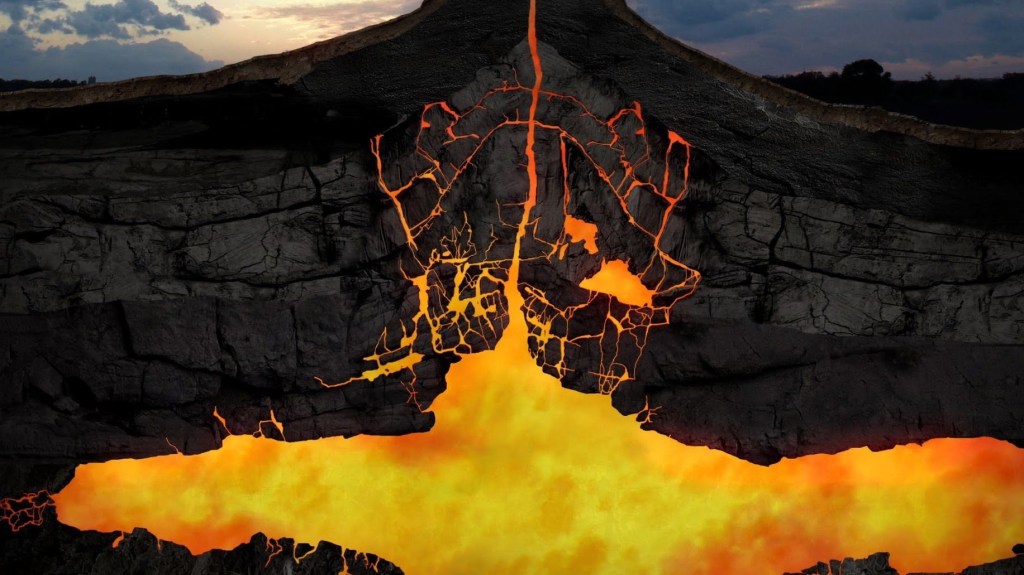
Magma chamber

It is a large pool of molten rock or magma below the surface of earth or under the existing volcano . The density of magma is less than that of the surrounding hard rocks so it starts to rise through cracks beneath the crust. When the magma is not able to find its way to the surface of the earth ,it is collected and pools into a magma chamber . Over the passage of time , this magma chamber grows in size due to the successive injections from horizontal and vertical magma and thus the pressure inside the chamber increases.

The magma chamber bears the weight of the volcano above it due to the buoyant forces which are acted upon the chamber by the surrounding rocks . The buoyant force gives a resultant upward push to the pool of magma chamber .

Sometimes when a volcano erupts, the whole pool of magma beneath it empties and this results in a void . Now there is nothing to support the weight of volcano. This causes volcano to collapse and form a caldera . Calderas are rare ; only 7-8 of them have known to occur in the last century. They are more than 25 kms in diameter and several kms deep.

Magma chamber ( pool of magma at the bottom)

Types of calderas

Explosive calderas

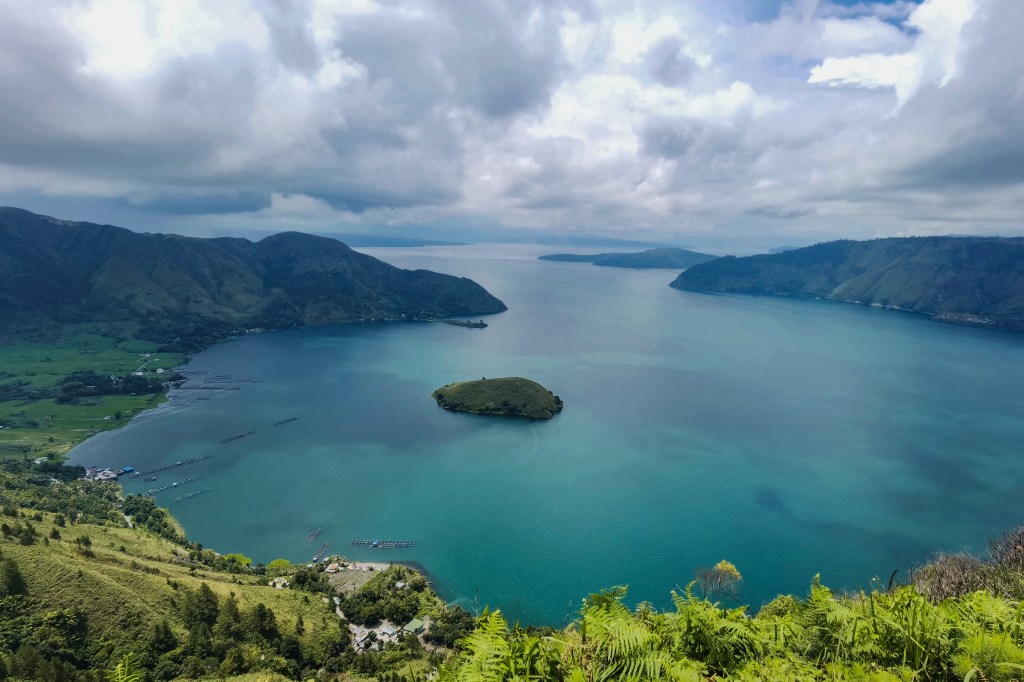
Explosive caldera forms when large magma chambers filled with silica (highly viscous)and gas move upwards. The high viscosity silica holds the gas bubbles under high pressures but as the material rises to the surface, due to decrease in the pressure the gas expands . This causes an enormous explosion which throws away rocks and magma to form a caldera . eg. Yellowstone caldera ,Toba caldera.

Toba caldera lake

Non-explosive calderas

When the matter is composed of basalt , which is much less viscous, the magma chamber is gradually drained by large lava flows rather than a single explosive eruption. eg. caldera atop Fernandina Island and Mauna Loa caldera.

Mauna Loa caldera

Calderas are not limited to Earth . Other planets like Venus and mars or our moon also has caldera formations.

Caldera of Olympus Mons( Volcano on Mars- largest volcano known in the Solar System)